
Immunosuppressant Drugs Market Size and Share
Market Overview
| Study Period | 2020 - 2031 |
|---|---|
| Market Size (2026) | USD 56.25 Billion |
| Market Size (2031) | USD 90.12 Billion |
| Growth Rate (2026 - 2031) | 9.85 % |
| Fastest Growing Market | Asia Pacific |
| Largest Market | North America |
| Market Concentration | Medium |
Major Players
*Disclaimer: Major Players sorted in no particular order Image © Mordor Intelligence. Reuse requires attribution under CC BY 4.0. |
|
Immunosuppressant Drugs Market Analysis by Mordor Intelligence
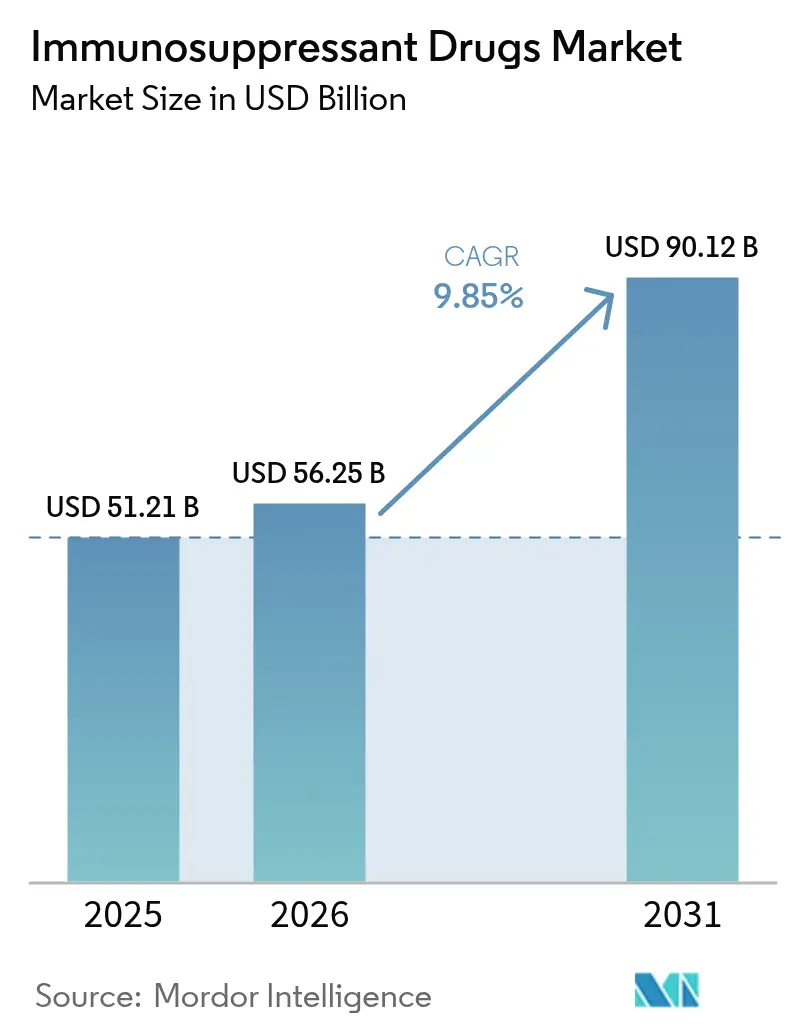
The Immunosuppressant Drugs Market size was valued at USD 51.21 billion in 2025 and estimated to grow from USD 56.25 billion in 2026 to reach USD 90.12 billion by 2031, at a CAGR of 9.85% during the forecast period (2026-2031).
Rising autoimmune-disease incidence, record organ-transplant volumes, rapid uptake of next-generation biologics, and Medicare inflation-rebate reforms combine to pull demand upward [1]U.S. Centers for Medicare & Medicaid Services, “Medicare Drug Inflation Rebate Program Fact Sheet,” cms.gov . Additional momentum comes from wider off-label dermatology use of JAK inhibitors and biologics, biosimilar penetration that broadens patient access, and artificial-intelligence platforms that individualize dosing patterns. Commercial strategies now extend far beyond traditional transplant centers, with direct-to-patient digital distribution driving a structural shift in pharmacy channels. Against this backdrop, the immunosuppressant drugs market faces simultaneous threats from cell- and gene-therapy substitutes and from stringent multi-regional regulatory surveillance, keeping competitive stakes high.
Key Report Takeaways
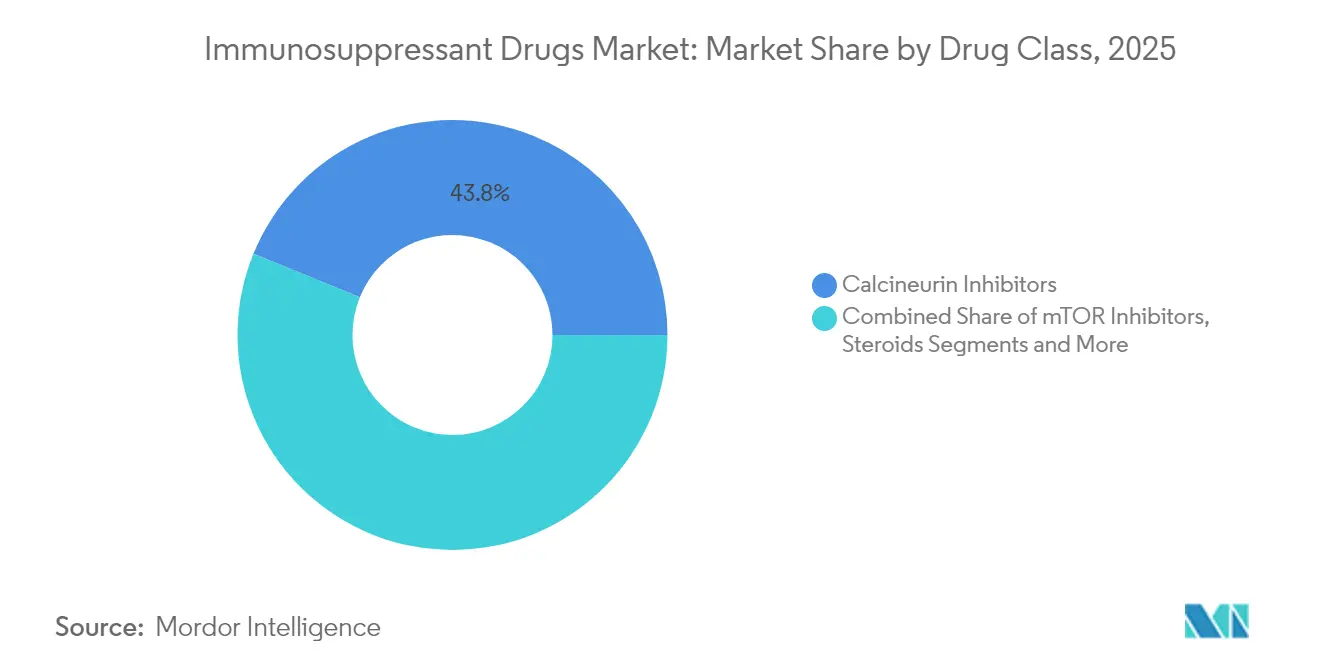
- By drug class, Calcineurin inhibitors held 43.83% immunosuppressant drugs market share in 2025; mTOR inhibitors post the fastest 10.52% CAGR to 2031.
- By application, Autoimmune diseases captured 55.35% of the immunosuppressant drugs market size in 2025, while organ-transplant therapy expands at a 10.55% CAGR through 2031.
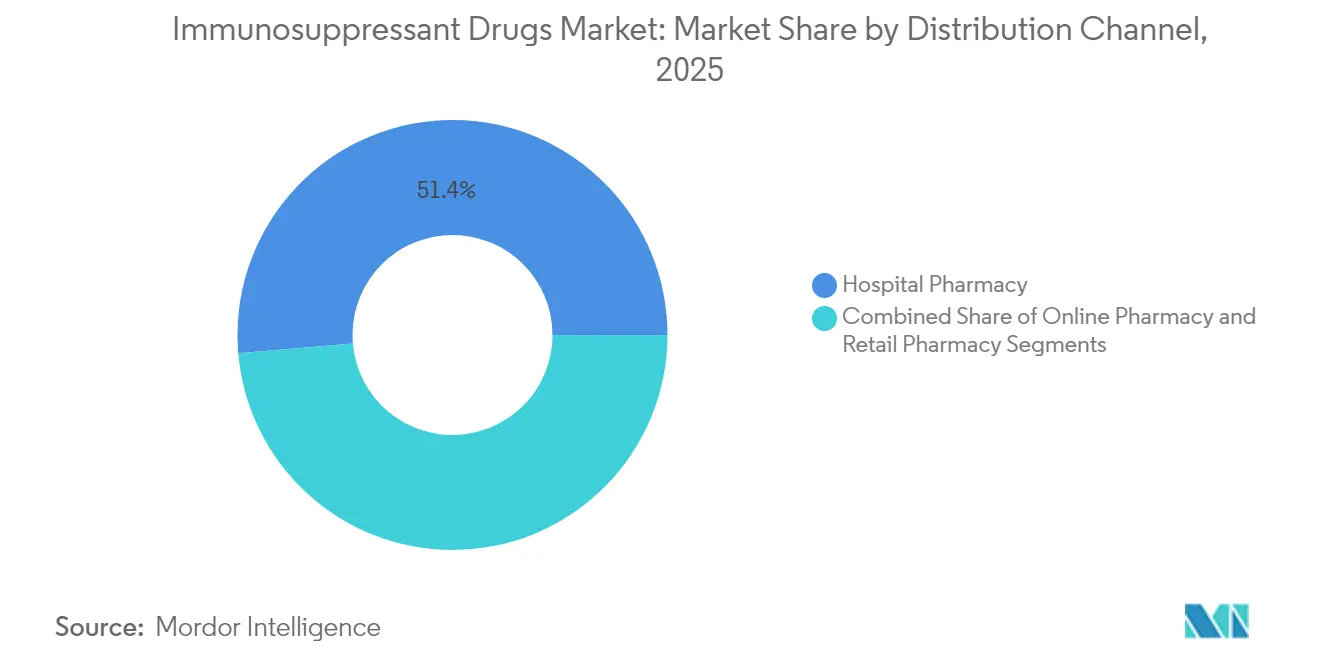
- By distribution channel, Hospital pharmacies accounted for 51.35% revenue share in 2025; online pharmacies advance at a 10.6% CAGR to 2031.
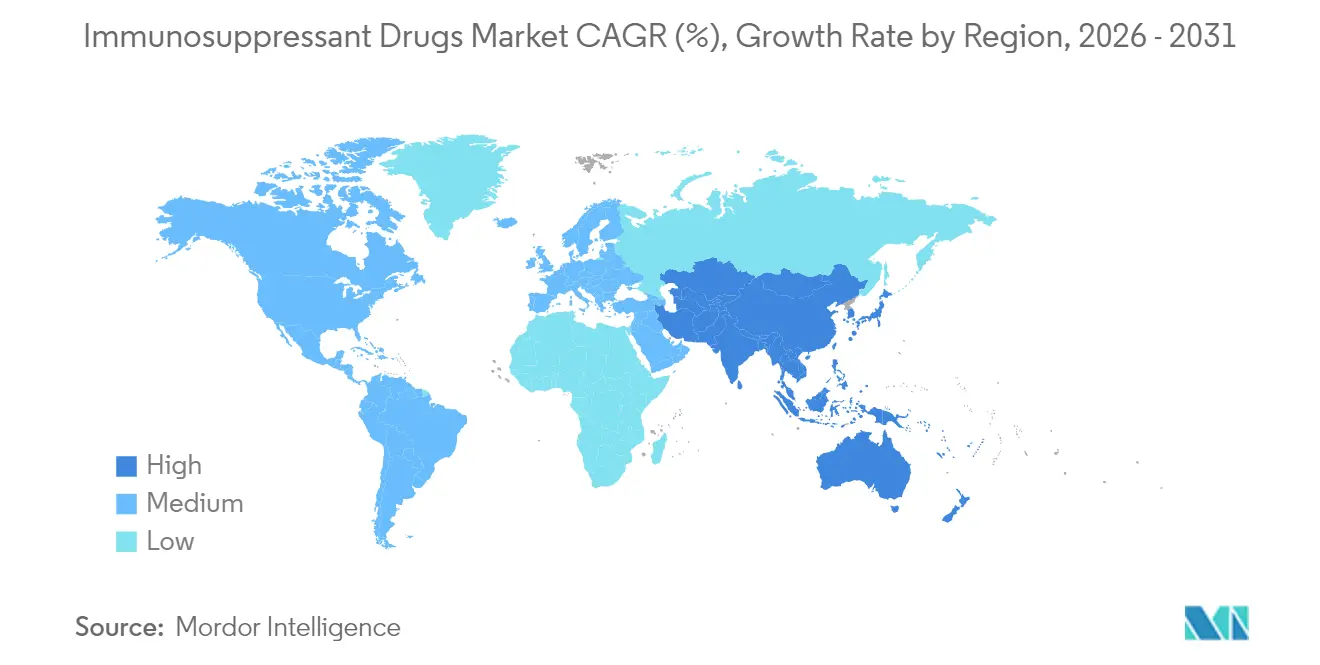
- By geography, North America commanded 40.42% of the immunosuppressant drugs market in 2025, whereas Asia-Pacific accelerates at a 10.58% CAGR through 2031.
Note: Market size and forecast figures in this report are generated using Mordor Intelligence’s proprietary estimation framework, updated with the latest available data and insights as of 2026.
Global Immunosuppressant Drugs Market Trends and Insights
Drivers Impact Analysis*
| Driver | (~) % Impact on CAGR Forecast | Geographic Relevance | Impact Timeline |
|---|---|---|---|
| Rising Prevalence of Autoimmune Diseases & Organ-Transplant Procedures | +2.8% | Global, with concentration in North America & Europe | Medium term (2-4 years) |
| Technological Advances in Tissue Engineering & Transplant Techniques | +2.1% | North America & EU leading, APAC adoption accelerating | Long term (≥ 4 years) |
| Launch Of Next-Gen Biologics & Small-Molecule Formulations | +1.9% | Global, with early adoption in developed markets | Short term (≤ 2 years) |
| Wider Adoption Of TDM-Driven Personalised Combination Regimens | +1.6% | North America & EU core, spill-over to APAC | Medium term (2-4 years) |
| Gene-Edited Xenotransplantation Breakthroughs | +1.2% | United States leading, regulatory approval pending globally | Long term (≥ 4 years) |
| Off-Label Dermatology Use Surges in EMS | +0.9% | Global, with highest penetration in developed markets | Short term (≤ 2 years) |
| Source: Mordor Intelligence | |||
Rising Prevalence of Autoimmune Diseases & Organ-Transplant Procedures
Autoimmune-disease recognition intensifies as advanced diagnostics uncover previously undetected patient pools requiring long-term pharmacologic suppression. The United States performed more than 48,000 organ transplants in 2024, a 3.3% rise over 2023, setting a new demand baseline for lifelong maintenance therapy [2] Health Resources and Services Administration, "Organ transplants exceeded 48,000 in 2024; a 3.3 percent increase from the transplants performed in 2023," optn.transplant.hrsa.gov. Enhanced organ-preservation technologies and expanded donor criteria raise procedure volumes further, while the OPTN target of 60,000 annual transplants by 2026 underscores sustained need for immunosuppressants. Aging demographics in developed economies add complexity to care plans, enlarging per-patient dosing and boosting aggregate spending. Collectively, these forces anchor the upward trajectory of the immunosuppressant drugs market.
Technological Advances in Tissue Engineering & Transplant Techniques
Gene-edited pig organs progress from proof-of-concept to early clinical evaluation, signaling a paradigm shift that could alleviate donor-organ scarcity and redefine immunologic protocols. FDA frameworks now detail expectations for xenograft submissions, positioning the United States at the forefront of next-generation transplant medicine. Concurrently, tissue-engineering innovations—such as biocompatible scaffolds and 3-D bioprinted constructs—lower immunogenicity, prompting novel immunosuppression regimens that blend biologics with nanoparticle-based delivery. Pharmaceutical companies that align R&D pipelines with these changes strengthen defensibility in an expanding immunosuppressant drugs market.
Launch of Next-Generation Biologics & Small-Molecule Formulations
Regulators continue to approve targeted agents that deliver superior efficacy-safety profiles. The 2024 authorization of axatilimab-csfr for chronic graft-versus-host disease exemplifies the trend toward mechanism-based innovation. JAK inhibitors—abrocitinib and upadacitinib—solidify positions beyond rheumatology, gaining dermatologist favor for atopic dermatitis and psoriasis. Small-molecule programs focus on improving bioavailability and mitigating metabolic liabilities, providing alternatives to calcineurin-cum-corticosteroid staples [3]U.S. Food and Drug Administration, “Workshop on In-Utero Exposure to Immunosuppressive Drugs,” fda.gov . M&A activity, including Sanofi’s USD 1.9 billion acquisition of Dren Bio’s DR-0201 asset, highlights industry commitment to replenishing portfolios that can compete effectively in the immunosuppressant drugs market.
Wider Adoption of TDM-Driven Personalized Combination Regimens
Integration of therapeutic drug monitoring (TDM) with artificial-intelligence eng ines moves dosing decisions from empirical averages to precision algorithms. Model-informed precision dosing frameworks already refine tacrolimus management, accounting for CYP3A5 polymorphisms that alter metabolism. FDA’s 2024 M15 guidance on model-informed development accelerates incorporation of AI-enhanced tools into regulatory submissions, reinforcing commercial viability. Home-based self-monitoring kits and cloud-linked apps reduce clinic visits, boosting adherence and freeing capacity in transplant centers. Vendors that embed digital health platforms into core products deepen switching costs and extend reach in the immunosuppressant drugs market.
Restraints Impact Analysis*
| Restraint | (~) % Impact on CAGR Forecast | Geographic Relevance | Impact Timeline |
|---|---|---|---|
| Stringent Multi-Regional Regulatory & PV Hurdles | -1.4% | Global, with highest impact in EU & Japan | Medium term (2-4 years) |
| High Therapy Cost & Patchy Reimbursement | -1.1% | Global, with acute impact in emerging markets | Short term (≤ 2 years) |
| Curative Cell- & Gene-Therapy Substitutes | -0.8% | North America & EU leading, limited APAC penetration | Long term (≥ 4 years) |
| Rising AMR Burden Complicating Immunosuppression | -0.6% | Global, with highest burden in hospital settings | Medium term (2-4 years) |
| Source: Mordor Intelligence | |||
Stringent Multi-Regional Regulatory & Pharmacovigilance Hurdles
Regulatory divergence forces companies to navigate disparate approval timelines, safety requirements, and real-world-evidence obligations. FDA scrutiny now extends to in-utero exposure studies, lengthening clinical programs and escalating costs. Although trans-Atlantic harmonization efforts improve alignment, region-specific pharmacovigilance still mandates custom infrastructures, tilting competitive advantage toward incumbents with robust compliance resources. In aggregate, these complexities compress margins and temper expansion across the immunosuppressant drugs market.
High Therapy Cost & Patchy Reimbursement
Global payers intensify cost containment, introducing stricter prior-authorization triggers and inflation-rebate claw-backs. Medicare’s Drug Inflation Rebate Program reduced coinsurance on 64 products effective January 2025, offering relief to more than 853,000 enrollees but squeezing manufacturer pricing latitude. Emerging economies apply sharper formulary discounts, boosting generic uptake yet limiting penetration of cutting-edge biologics. Differential reimbursement landscapes therefore shape go-to-market tactics across the immunosuppressant drugs industry.
*Our forecasts treat driver/restraint impacts as directional, not additive. The impact forecasts reflect baseline growth, mix effects, and variable interactions.
Segment Analysis
By Drug Class: Calcineurin Inhibitors Remain the Anchor While mTOR Catalyzes Future Upside
Calcineurin inhibitors retained 43.83% immunosuppressant drugs market share in 2025 owing to long-standing clinical familiarity and broad guideline endorsement. Yet nephrotoxicity worries open white space for mTOR inhibitors, whose 10.52% CAGR marks the fastest segment growth to 2031. The immunosuppressant drugs market size for mTOR-based protocols is projected to expand at a notably brisk clip, helped by favorable renal-function outcomes among liver and kidney recipients. Tacrolimus and cyclosporine will continue to dominate early-post-transplant dosing, but belatacept and everolimus drive steroid-sparing approaches that appeal to multidisciplinary transplant teams.
Momentum toward precision combinations accelerates as therapeutic-drug-monitoring platforms pair calcineurin inhibitors with low-dose mTOR inhibitors to balance rejection risk and adverse-event profiles. Antiproliferative agents such as mycophenolate mofetil and emerging costimulation blockers round out cocktail regimens, creating high-moat portfolios for innovators that own multiple mechanisms of action. As biosimilar tacrolimus diffusion lowers unit prices, innovators lean on differentiated delivery technologies—nanoparticle encapsulation, once-weekly patches—to protect franchise economics inside the immunosuppressant drugs market.



By Application: Autoimmune Diseases Drive Volume, Transplant Settings Propel Growth
Autoimmune pathologies supplied 55.35% of 2025 volume, yet organ-transplant therapy posts the quickest 10.55% CAGR, revealing divergent demand drivers inside the immunosuppressant drugs market size. Surgeons performed a record 48,000+ U.S. transplants in 2024, and the federal target of 60,000 annual procedures by 2026 extends visibility for drug-consumption expansion. Meanwhile, rheumatology and gastroenterology clinics keep autoimmune scripts on a steady ascent as diagnostics mature.
Off-label dermatology uptake adds an incremental leg to growth, especially across North America and Western Europe where regulatory flexibility and insurance alignment accelerate biologic adoption. Ophthalmology (uveitis) and nephrology (lupus nephritis) deliver steady tailwinds. As curative cell therapies inch closer to commercialization, pharmaceutical companies reposition chronic regimens toward maintenance niches or rare-disease subsets, safeguarding longer-term prospects in the immunosuppressant drugs market.
By Distribution Channel: Digital Pathways Chip Away at Hospital Supremacy
Hospital pharmacies owned 51.35% revenue in 2025, but online channels now rise 10.6% annually, reflecting broader direct-to-patient logistics. Remote prescription verification and cold-chain automation let specialty pharmacies ship biologics nationwide, eroding physical-hospital exclusivity. The immunosuppressant drugs market size tied to e-commerce models is set for sustained growth as Medicare’s 90-day-supply rule raises mail-order appeal.
Retail chains partner with specialty distributors to manage prior-authorization complexities, while integrated physician-pharmacy platforms close adherence gaps via real-time refill nudges. These innovations lower administrative costs and enhance quality-of-life metrics for patients juggling lifelong regimens. Consequently, manufacturers craft channel-agnostic support programs—virtual nurse educators, telehealth titration consults—to stay embedded across the immunosuppressant drugs market.
Geography Analysis
North America maintained 40.42% market share in 2025 grounded in robust transplant ecosystems, comprehensive Medicare coverage, and rapid guideline adoption for novel dosing algorithms. Clinical research networks speed time-to-practice for late-stage products, raising revenue certainty for developers. Canada’s provincial formularies and Mexico’s Seguro Popular upgrades extend reach, yet pricing differentials complicate cross-border procurement strategies, a factor requiring vigilant trade-compliance oversight across the immunosuppressant drugs market.
Asia-Pacific exhibits the most rapid 10.58% CAGR to 2031 as China and India scale transplant capacity and as Japan’s aging demographics swell autoimmune caseloads. Regional agencies craft accelerated review pathways for breakthrough biologics, which improves launch windows relative to historic precedents. Local biosimilar manufacturing cuts acquisition costs, spurring broader usage even in secondary-tier cities. Australia and South Korea lead uptake of AI-enabled TDM platforms, further enriching patient-management frameworks within the immunosuppressant drugs market.
Europe posts steady gains aided by universal coverage and strong pharmacovigilance structures, but health-technology-assessment price caps curb top-line growth for high-ticket entrants. Germany, United Kingdom, and France represent transplant volume leaders, while Southern European nations outpace on autoimmune prescriptions. Regulatory convergence with FDA eases multi-regional filing burdens; however, post-Brexit dual submissions add friction for manufacturers operating pan-European supply chains. Middle East & Africa and South America remain nascent but invest heavily in transplant-center accreditation and generic manufacturing respectively, signaling future relevance to the worldwide immunosuppressant drugs market.

Regulatory Landscape
Regulation is tightening around safety, modeling, and post-market obligations, while agencies also use expedited pathways for high-unmet-need indications. In the United States, FDA actions in 2024 pointed to closer scrutiny of immunosuppression risk management, including a workshop on evaluating in-utero exposure to immunosuppressive drugs and the issuance of final M15 guidance (December 2024), which formalizes expectations for model-informed drug development used in AI-enabled dosing submissions.
Market access and supply compliance dynamics are also shifting. CMS implemented Medicare Prescription Drug Inflation Rebate Program coinsurance reductions on 64 products effective January 2025, reinforcing payer-driven pricing and contracting pressure for immunology and transplant portfolios. In April 2026, the U.S. government announced Section 232 tariff actions targeting imported patented pharmaceuticals and certain ingredients, with a framework that emphasizes onshoring and compliance agreements to maintain preferential treatment. At the same time, regulators in Europe continued to authorize immunology-related therapies and biosimilars, including EMA and European Commission actions in 2026 for products such as Tuyory and Rezurock, sustaining multi-region filing and pharmacovigilance requirements for global manufacturers.
Competitive Landscape
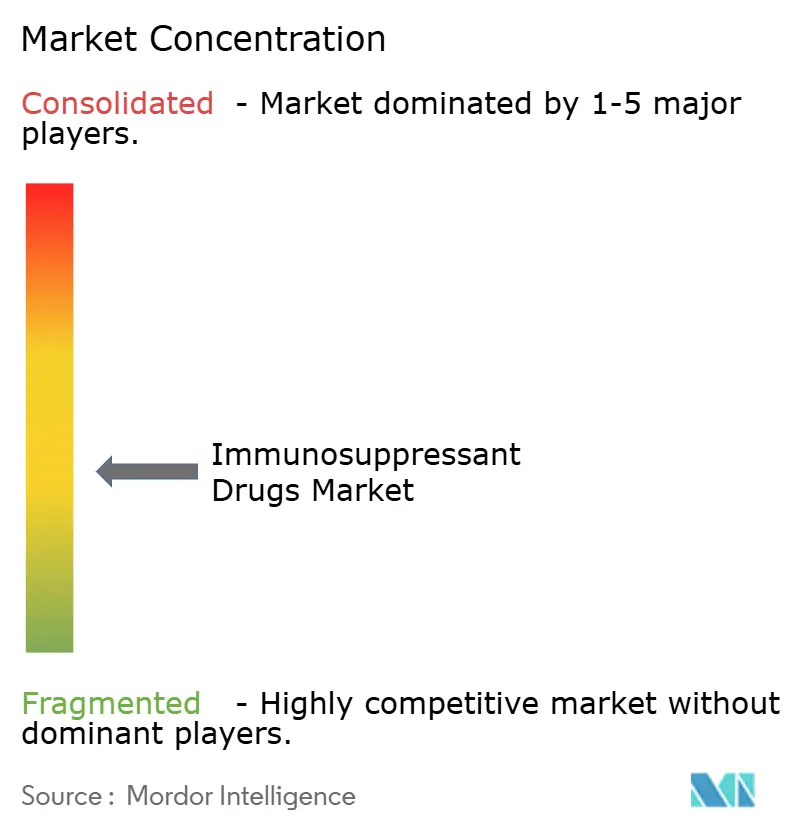
Market concentration is moderate: top multinationals defend share by layering AI-dosing software atop legacy molecules and by progressing differentiated mechanisms through late-stage trials. Novartis banked USD 6.1 billion from Cosentyx and USD 1.6 billion from Xolair in 2024, leveraging these anchors to cross-fund Phase III xenotransplant programs. Astellas reported CNY 203.1 billion in PROGRAF sales, buttressing cash flow for mTOR combination research. Bristol Myers Squibb’s growth collections delivered USD 6.4 billion (+21%), indicating success in pivoting toward biologic niches.
Biosimilar penetration hit 23% volume across the immunosuppressant drugs market; nevertheless, adalimumab copycats stalled at 2% penetration due to incumbent rebate structures that favor originators. White-space competition intensifies in pediatric dosing, AI-guided micro-titration platforms, and xenotransplant-specific regimens. Disruptors include CAR-T developers whose potential curative outcomes challenge chronic immunosuppression economics.
Manufacturers track patent sunsets—most notably for Stelara in 2025—and restructure portfolios to withstand generic erosion while leaning on life-cycle-management tactics such as subcutaneous reformulations and fixed-dose co-formulations, strategies pivotal to retaining relevance in the immunosuppressant drugs market.
Immunosuppressant Drugs Industry Leaders
-
Astellas Pharma, Inc
-
Sanofi (Genzyme)
-
Bristol-Myers Squibb Company
-
Novartis AG
-
F. Hoffmann-La Roche Ltd
- *Disclaimer: Major Players sorted in no particular order

Market Opportunities and Future Outlook
White space is opening where payers and providers seek more targeted immunomodulation with measurable outcomes, especially in immune-mediated kidney diseases and chronic graft-versus-host disease. The 2026 regulatory and pipeline cadence provides specific proof points: Vera Therapeutics received FDA accelerated approval for Trutakna (atacicept-vymj) in primary IgA nephropathy, and Roche received FDA Priority Review for an sBLA for Gazyva (obinutuzumab) in primary membranous nephropathy. Together, these moves support opportunity for differentiated B-cell and APRIL/BAFF-pathway modulation strategies that sit between broad chronic immunosuppression and curative cellular approaches.
Biosimilar adoption and digital dosing infrastructure also create commercially actionable opportunities, particularly as access broadens beyond tertiary transplant centers. EMA marketing authorization for the tocilizumab biosimilar Tuyory (2026) underscores continuing biosimilar expansion in immunology, intensifying price competition while supporting greater patient reach through specialty and online pharmacy channels. In parallel, manufacturers that pair established backbones (for example, calcineurin inhibitors and mTOR inhibitors) with therapeutic-drug-monitoring workflows aligned to FDA model-informed development expectations can improve adherence and persistence, especially for long-duration autoimmune and transplant maintenance regimens.
Recent Industry Developments
- July 2026: Bristol Myers Squibb announced that the US FDA accepted its New Drug Application for mezigdomide for patients with relapsed or refractory multiple myeloma. While oncology-focused, it reinforces continued regulator engagement around immune-modulating agents and can affect portfolio prioritization and investment capacity across immunology and immunosuppression franchises.
- June 2025: Bristol Myers Squibb and Bain Capital announced the creation of a new company dedicated to developing innovative immunology therapies to address unmet medical needs. This highlights ongoing capital formation around next-generation immune modulation and lifts competitive pressure for differentiated mechanisms beyond legacy immunosuppressant backbones.
- December 2024: Astellas Pharma US initiated a voluntary nationwide recall of one lot of PROGRAF (tacrolimus) and one lot of ASTAGRAF XL (tacrolimus extended-release) in the United States due to the risk that some bottles may contain empty capsules. The action brought attention to supply-chain and quality controls for high-stakes transplant maintenance drugs, where missed doses can elevate rejection risk and prompt tighter downstream oversight by providers and pharmacies.


Research Methodology Framework and Report Scope
Market Definition and Coverage
This market is defined as the revenue generated from prescription immunosuppressant drug therapies used to suppress immune response across transplant and autoimmune care, measured in USD at the global level across major regions.
Scope exclusions: We exclude diagnostic testing services, transplant procedures, and non-drug supportive care that may accompany immunosuppression therapy.
Segmentation Overview
-
By Drug Class
- Calcineurin Inhibitors
- Antiproliferative Agents
- mTOR Inhibitors
- Steroids
- Other Classes
-
By Application
- Autoimmune Diseases
- Organ Transplant
- Other Applications
-
By Distribution Channel
- Hospital Pharmacy
- Retail Pharmacy
- Online Pharmacy
-
By Geography
-
North America
- United States
- Canada
- Mexico
-
Europe
- Germany
- United Kingdom
- France
- Italy
- Spain
- Rest of Europe
-
Asia-Pacific
- China
- Japan
- India
- Australia
- South Korea
- Rest of Asia-Pacific
-
Middle East and Africa
- GCC
- South Africa
- Rest of Middle East and Africa
-
South America
- Brazil
- Argentina
- Rest of South America
-
North America
Data Sources, Market Sizing, and Validation
Desk Research
Desk research was used to build the core demand and treatment context before any modeling assumptions were set. We leaned on public health and utilization signals such as CDC publications, WHO Global Health Observatory, and OECD health statistics to understand chronic disease burden and care access patterns.
For transplant and immunology specifics, we reviewed sources such as the Organ Procurement and Transplantation Network (OPTN) updates, UNOS public dashboards, and peer reviewed articles indexed in PubMed that discuss immunosuppression protocols and persistence in practice. Product and label boundaries were cross-checked using FDA drug labels and safety communications, along with US SEC filings and investor presentations where therapy mix and geographic exposure are discussed. Select paid subscriptions for company financials and intelligence, patent databases, and import export shipment level data were used only to corroborate timelines, pricing direction, and supply signals. These sources are illustrative and not exhaustive, since many additional public documents were also used for data collection, validation, and clarification.
Primary Interviews and Surveys
Primary work focused on validating treatment volumes and the practical split between transplant maintenance therapy and autoimmune use, which can differ across regions. Inputs were taken from a mix of clinical stakeholders, pharmacy and procurement roles, payor and reimbursement experts, and distribution channel participants across APAC, EMEA, and the Americas, and then used to close gaps from desk findings while aligning pricing and uptake assumptions.
Distribution of primary research fieldwork respondents
| Company type | Respondent position | Region |
|---|---|---|
| Top tier: 36% | CXOs: 15% | APAC: 41% |
| Mid tier: 43% | Functional/Unit leaders: 36% | EMEA: 37% |
| Smaller Players: 21% | Managers: 49% | Americas: 22% |
Market-Sizing & Forecasting
Market sizing was first approached through a top-down demand pool build using organ transplant activity and treated autoimmune cohorts, which are then converted into therapy value using average annual therapy cost assumptions. To keep the logic grounded, key inputs included transplant procedure volumes, maintenance therapy duration patterns, the share of patients on multi drug regimens, switching rates between drug classes, and broad price movement (including generic entry effects where relevant).
Once that view was built, the totals were corroborated with selective bottom-up approximations, such as sampled product level revenue rollups from public financial disclosures, channel checks on pharmacy mix (hospital, retail, and online), and simplified ASP times volume checks for high use classes. Where data was thin for smaller countries, we filled gaps using proxy ratios tied to transplant volumes, healthcare spending intensity, and specialist access, and then adjusted the outputs using expert feedback.
Forecasting relied mainly on scenario analysis, because adoption and pricing can shift quickly when guidelines change or when new formulations expand use. The forward view was guided by expected transplant growth, autoimmune diagnosis and treatment rates, policy and reimbursement direction, and the pace of price erosion in mature molecules.
Data Validation & Update Cycle
Validation was handled through multiple checks so the final numbers are consistent with real world signals. Model outputs were compared against independent indicators, such as transplant volumes, therapy persistence findings from literature, and reported revenue exposure discussed in public documents, and then variances were investigated before sign-off.
Anomalies were reviewed in steps, starting with unit consistency and currency conversions, followed by region-by-region sanity checks and peer review by another analyst. If a key assumption moved, such as a noticeable shift in pricing or a change in treatment practice, respondents were re-contacted to confirm direction and timing. The report is refreshed annually, and interim updates are made when material events occur, with a final pre-delivery pass completed to reflect the most recent information.
Mordor Intelligence's Immunosuppressant Drugs Market Size Measured Against Other Published Estimates
Published market values for immunosuppressant drugs can look far apart because different studies draw the market line in different places and do not always align on the same year, currency timing, or demand driver set. Differences also show up when one estimate leans more on long-range growth narratives, while another stays closer to observable treatment volumes and near-term pricing.
The main gap comes from whether antibody based immunosuppressants and broader immunology biologics are folded into the total, and how quickly price erosion and switching are assumed after generic expansion. In this market build, Mordor Intelligence counts value only for defined immunosuppressant classes used in transplant and autoimmune care, and then refreshes the pricing and regimen mix checks against current utilization signals.
Benchmark comparison
| Source | Market Size | Gaps in Research Methodology |
|---|---|---|
| Mordor Intelligence | USD 56.25 B (2026) | |
| Industry Publisher A | USD 39.92 B (2026) | Uses a narrower value build that appears to undercount higher cost classes and may apply conservative therapy cost assumptions across regions, which can compress totals for the same year. |
| Research Group B | USD 42.72 B (2025) | Anchors on a different base year and includes a class split that can shift totals depending on what sits inside the antibody bucket, while currency timing and price progression details are not clearly stated. |
The comparison shows that year selection and what is included within drug classes create most of the spread, followed by how pricing and switching are treated over time. By tying the total to a clear treated pool and then pressure-testing it with practical pricing and channel checks, the estimate remains transparent and repeatable for decision-making.


Key Questions Answered in the Report
How large is the immunosuppressant drugs market today?
The market generated USD 56.25 billion in 2026 and is projected to climb to USD 90.12 billion by 2031.
Which drug class holds the biggest share?
Calcineurin inhibitors lead with 43.83% market share in 2025, reflecting long-standing clinical reliance.
What is the fastest-growing segment of the immunosuppressant drugs market?
MTOR inhibitors are forecast to advance at a 10.52% CAGR through 2031, outpacing all other drug classes.
Why is Asia-Pacific growing so quickly?
Expanding transplant infrastructure, rising autoimmune prevalence, and expedited biologic approvals support a 10.58% regional CAGR.
How are biosimilars affecting market dynamics?
Biosimilars account for 23% overall volume, pressuring prices but still facing low uptake in certain molecules due to contracting practices favoring originators.
Could cell or gene therapies disrupt the market?
Yes. Curative approaches such as CAR-T therapies for autoimmune disorders could limit long-term need for chronic immunosuppression, posing a strategic threat to incumbent portfolios.
Page last updated on:





