
Hydrocephalus Shunts Market Size and Share
Market Overview
| Study Period | 2020 - 2031 |
|---|---|
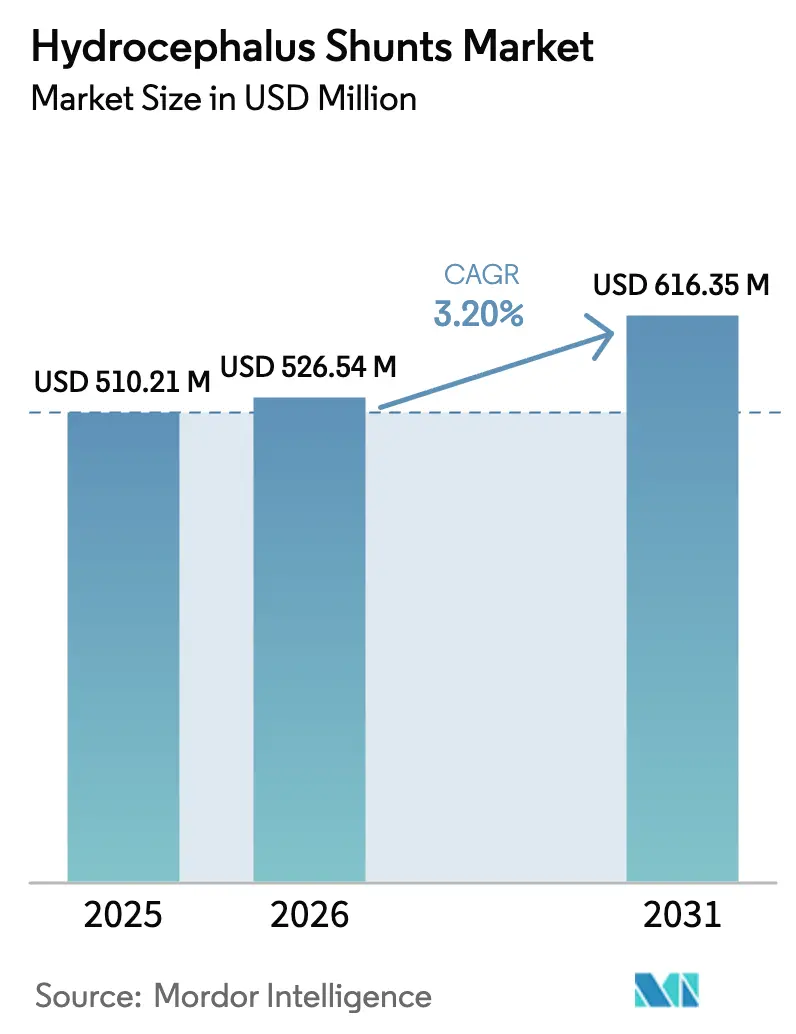
| Market Size (2026) | USD 526.54 Million |
| Market Size (2031) | USD 616.35 Million |
| Growth Rate (2026 - 2031) | 3.20 % |
| Fastest Growing Market | Asia Pacific |
| Largest Market | North America |
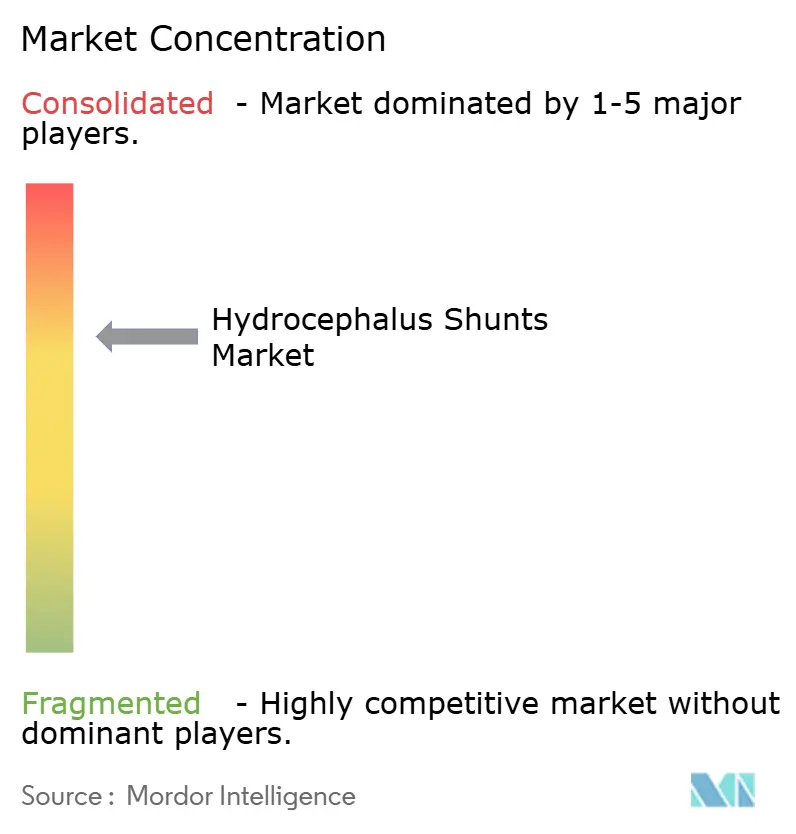
| Market Concentration | Medium |
Major Players *Disclaimer: Major Players sorted in no particular order Image © Mordor Intelligence. Reuse requires attribution under CC BY 4.0. | |
Hydrocephalus Shunts Market Analysis by Mordor Intelligence
The hydrocephalus shunts market size was valued at USD 510.21 million in 2025 and is estimated to grow from USD 526.54 million in 2026 to reach USD 616.35 million by 2031, at a CAGR of 3.20% during the forecast period (2026-2031). Demand tilts toward pediatric congenital cases, yet normal-pressure hydrocephalus (NPH) in adults over 65 is rising faster as aging populations and better diagnostics convert dementia misdiagnoses into shunt candidates. Reimbursement caps slow mature-market volumes, while public-private capacity-build programs in India, Indonesia, and Nigeria unlock latent demand. Product differentiation centers on programmable valves that lower revision risk, though magnetic-field interference prompts regulator scrutiny. Hospitals remain the dominant setting, yet payer push for cost control is steering suitable adult cases into ambulatory surgical centers (ASCs).
Key Report Takeaways
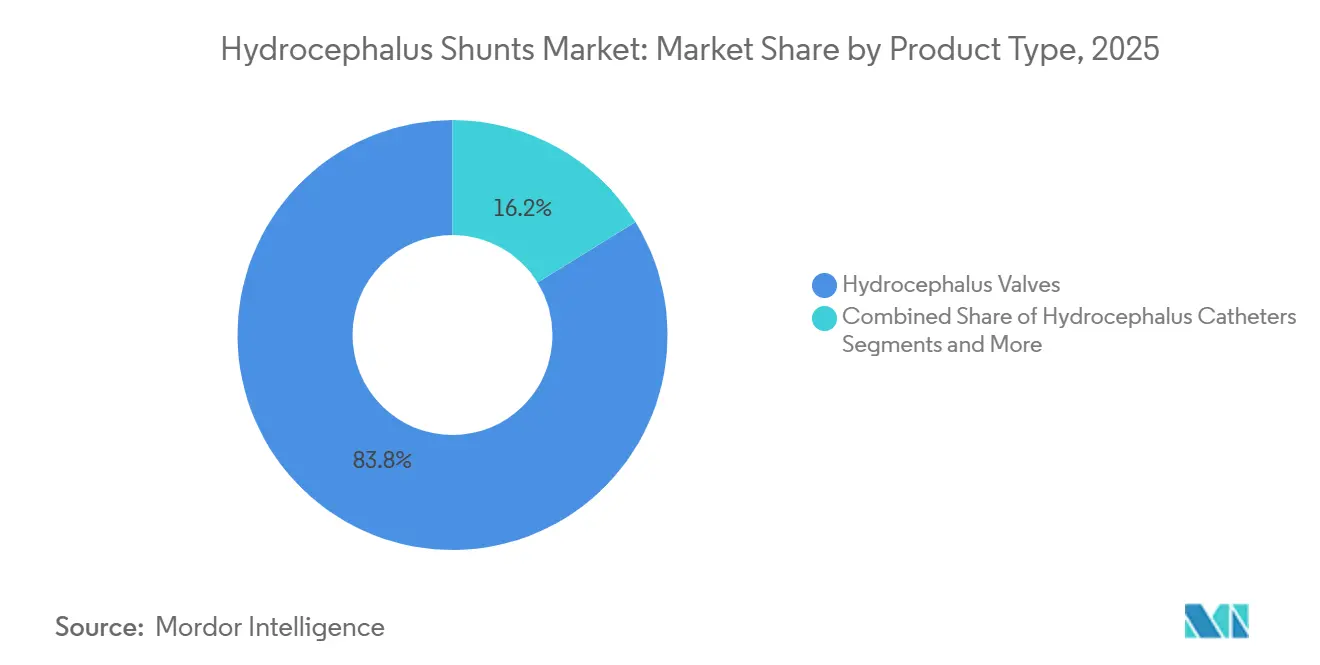
- By product type, hydrocephalus valves captured 83.81% of revenue in 2025, and programmable variants are forecast to grow at a 4.12% CAGR to 2031.
- By age group, pediatric procedures represented 70.23% of volume in 2025, while the adult segment is set to expand at a 4.21% CAGR through 2031.
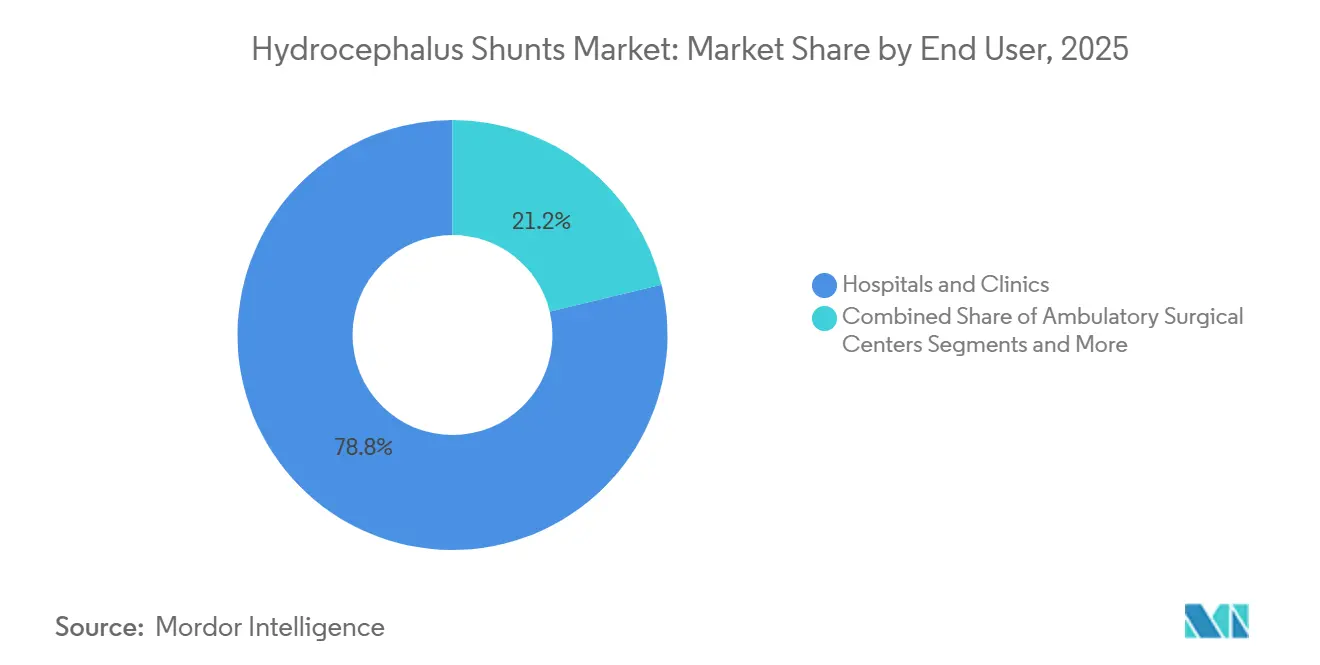
- By end user, hospitals and clinics held 78.76% share in 2025, whereas ASCs post the fastest growth at a 4.32% CAGR to 2031.
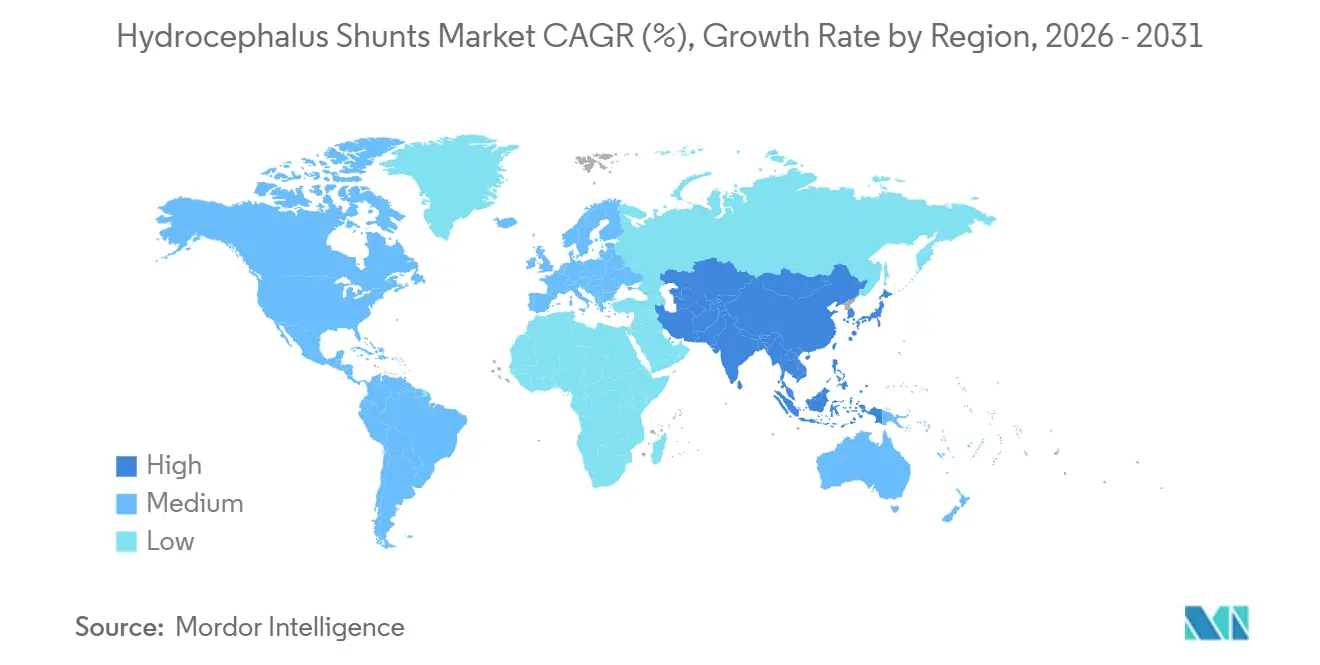
- By Geography, North America led with 42.23% of 2025 revenue; Asia-Pacific is projected to rise at a 4.52% CAGR, the quickest regional pace.
Note: Market size and forecast figures in this report are generated using Mordor Intelligence’s proprietary estimation framework, updated with the latest available data and insights as of January 2026.
Market Trends and Insights
Drivers Impact Analysis of Hydrocephalus Shunts Market*
| Driver | (~) % Impact on CAGR Forecast | Geographic Relevance | Impact Timeline |
|---|---|---|---|
| Rising prevalence of hydrocephalus & related neurological disorders | +0.8% | Global, with acute incidence growth in aging OECD nations and congenital case detection in APAC | Medium term (2-4 years) |
| Rapid growth of the geriatric population | +0.7% | North America, Europe, Japan, South Korea; emerging in China | Long term (≥4 years) |
| Accelerating adoption of programmable/adjustable-pressure valves | +0.6% | North America & EU core markets; gradual uptake in APAC urban centers | Short term (≤2 years) |
| Emergence of telemetric, sensor-enabled "smart" shunts | +0.5% | North America pilot sites; EU regulatory pathways under review; limited APAC penetration | Medium term (2-4 years) |
| PPP-funded neurosurgical capacity build-out in emerging markets | +0.4% | India, Indonesia, Nigeria, Kenya; selective Middle East initiatives | Long term (≥4 years) |
| Regulatory fast-track paths for novel shunts | +0.2% | North America, Europe, Japan, South Korea; emerging in India | Long term (≥4 years) |
| Source: Mordor Intelligence | |||
Rising Prevalence of Hydrocephalus and Related Neurological Disorders
Congenital detection is climbing as prenatal ultrasound becomes routine in middle-income countries, while NPH prevalence grows among adults over 65, a cohort expected to reach 1.6 billion by 2050. Revised American Academy of Neurology guidelines now recommend lumbar puncture when gait disturbance and cognitive decline coexist, redirecting previously misdiagnosed dementia patients toward shunt therapy. Post-hemorrhagic and post-infectious cases also expand where neonatal intensive-care capacity outpaces infection-control infrastructure. This dual epidemiological pressure sustains procedure volumes beyond baseline population growth. Device makers view these trends as reliable demand drivers because each new implant anchors a multiyear revision-replacement revenue stream. Health-system planners, however, weigh the long-term follow-up burden when allocating neurosurgery budgets.
Rapid Growth of the Geriatric Population
Individuals aged 65 and older will nearly double to 1.6 billion by 2050, with East Asia and Southern Europe leading the surge.[1]United Nations, “World Population Prospects 2024,” un.org NPH prevalence in this cohort ranges from 0.2% to 2.9%, translating into millions of potential recipients. Japan already recorded a 23% jump in NPH admissions from 2020 to 2024. In the United States, Medicare raised ASC payments for shunt placement by 4.2% in 2025, signaling payer intent to shift uncomplicated adult cases away from higher-cost inpatient wards. As longevity extends in emerging economies, similar volume waves are anticipated, although surgeon shortages risk lengthening wait times. Manufacturers are therefore adapting product mixes, offering fixed-pressure valves for stable adult cases and reserving premium programmable models for pediatric growth-related pressure changes.
Accelerating Adoption of Programmable Valves
Programmable valves allow non-invasive pressure setting adjustments that cut two-year revision rates from 38% to 24% versus fixed-pressure designs. Medtronic’s Strata and Integra’s CERTAS Plus jointly hold roughly 60% of the North American programmable segment.[2]Medtronic, “Investor Presentation Q4 FY2025,” medtronic.com Uptake lags in resource-constrained markets because these valves cost two to three times more and require magnetic tools for post-operative tuning. Safety concerns surfaced when 37 unintended reprogramming incidents were linked to MRI scans, prompting a 2024 recall and new pre-imaging protocols. Despite the setback, payers still favor programmability for its lower lifetime episode cost, and device makers are redesigning magnetic shielding to meet an upcoming ISO standard for implantable device immunity.[3]U.S. Food and Drug Administration, “Safety Communication: Programmable Shunt Valve Reprogramming Risks 2024,” fda.gov
Emergence of Telemetric “Smart” Shunts
CereVasc’s eShunt received FDA Investigational Device Exemption in May 2024, embedding a wireless sensor that streams intracranial pressure data to clinicians. A 30-patient pilot showed occlusions were detected 11 days earlier than symptom-based methods. If pivotal trials extend these findings, revenue could shift toward subscription-based monitoring services that complement the implant. Medtronic disclosed a competing telemetry-enabled valve under development, confirming incumbent recognition of connectivity as a new competitive axis. Regulators require cybersecurity risk assessments under EU Medical Device Regulation, raising development costs but creating a moat around compliant products.
Restraints Impact Analysis of Hydrocephalus Shunts Market*
| Restraint | (~) % Impact on CAGR Forecast | Geographic Relevance | Impact Timeline |
|---|---|---|---|
| High rates of shunt malfunction, revision & infection | -0.6% | Global, with higher revision burdens in resource-limited settings lacking sterile technique infrastructure | Short term (≤2 years) |
| Growing uptake of shunt-free alternatives | -0.4% | North America & EU where ETV expertise is concentrated; limited penetration in APAC and Africa | Medium term (2-4 years) |
| Magnetic-field–induced valve reprogramming risk | -0.2% | Primarily North America & EU with high MRI utilization; emerging concern in urban APAC centers | Short term (≤2 years) |
| EU circular-economy rules raising compliance costs for polymer shunts | -0.2% | European Union member states; indirect cost pass-through to global supply chains | Long term (≥4 years) |
| Source: Mordor Intelligence | |||
High Rates of Shunt Malfunction, Revision and Infection
Roughly 40% of pediatric shunts fail within two years, and infection rates reach 15% in facilities with suboptimal sterile technique. Each revision costs up to 50% more than the initial implantation when emergency imaging and intensive care are included. Mechanical obstruction drives 60% of failures, while valve defects and tubing disconnections account for the rest. Antibiotic-impregnated catheters cut infection risk by about 30% but add USD 200–400 per device, limiting adoption in public systems. The reliability gap strengthens the case for outcome-based reimbursement contracts that penalize high revision rates and reward devices demonstrating sustained patency.
Growing Uptake of Shunt-Free Alternatives
Endoscopic third ventriculostomy (ETV) now achieves success rates above 70% in aqueductal stenosis patients older than one year. North American and European payers have begun tiered reimbursement that steers eligible patients to ETV-capable centers. While ETV avoids hardware complications, it suits only 20–30% of total hydrocephalus cases and relies on advanced endoscopic skill sets absent in many emerging regions. Nonetheless, its existence pressures shunt pricing and compels manufacturers to differentiate on durability and remote monitoring rather than commodity components. Hospitals lacking ETV capability face competitive disadvantage when payers favor centers of excellence.
*Our forecasts treat driver/restraint impacts as directional, not additive. The impact forecasts reflect baseline growth, mix effects, and variable interactions.
Hydrocephalus Shunts Market Segment Analysis
By Product Type:
Valves Anchor Revenue, Systems TrailHydrocephalus valves held 83.81% of the hydrocephalus shunts market share in 2025 and are forecast to compound at 4.12% through 2031. Programmable versions gain momentum in North America and Europe due to reduced revision rates, whereas fixed-pressure models dominate cost-sensitive tenders in emerging markets. Standalone catheter sales grow where surgeons custom-build configurations for complex anatomies, yet bundled shunt systems remain attractive for inventory simplicity. The hydrocephalus shunts market size for valves is set to expand as telemetry layers new value propositions onto existing hardware. Sensor-enabled models under clinical evaluation could redirect profit pools toward data services, but extended regulatory pathways afford incumbents time to defend share.
Catheters and complete systems split the remaining revenue. Antibiotic-impregnated tubing gains traction in high-acuity pediatric centers, yet price premiums slow uptake in public hospitals. Fixed-package shunt kits appeal to ASCs that prioritize speed over customization. FDA 510(k) clearance timelines of under nine months enable quick iterative improvements, whereas sensor-integrated platforms must navigate the lengthier Premarket Approval route. Makers balancing both paths can hedge timelines and sustain portfolio breadth.



By Age Group:
Pediatric Volume Meets Adult GrowthPediatric patients accounted for 70.23% of 2025 implantations, reflecting a congenital incidence of 1–2 per 1,000 live births. These lifelong recipients generate recurring revision revenue, anchoring volume predictability even when birthrates plateau. Premature-infant survival improvements lift post-hemorrhagic demand in Asia and Africa, though infection risk complicates outcomes. The hydrocephalus shunts market size serving pediatric cohorts therefore remains resilient despite procurement budget pressures.
Adults over 65 represent the fastest-growing cohort with a projected 4.21% CAGR to 2031. Updated diagnostic protocols turn gait disturbance and cognitive decline into shunt referrals, particularly in Japan, South Korea, and the United States. ASCs capture many of these lower-complexity cases, aligning with payer incentives for outpatient care. Fixed-pressure valves often suffice for adult NPH physiology, creating a distinct product-mix compared with programmable pediatric demand. Manufacturers that segment offerings by age-specific clinical needs can optimize margin and market penetration.
By End User:
ASCs Gain MomentumHospitals and clinics commanded 78.76% of revenue in 2025 because complex pediatric and revision surgeries necessitate inpatient resources. However, ASCs are projected to record a 4.32% CAGR through 2031, the quickest among end users, after CMS removed shunt procedures from its inpatient-only list. National insurers followed, using differential cost-sharing to nudge uncomplicated NPH cases toward outpatient venues. The hydrocephalus shunts market size attributable to ASCs therefore expands even as average selling prices trend lower. Device makers now supply turnkey shunt kits optimized for ASC workflows, which favor rapid turnover and minimal intraoperative customization.
Regional ASC penetration varies. In the United States about 15% of shunt placements already occur in ASCs, yet hospital-centric payment models slow similar shifts in Europe. Regulatory compliance remains stringent: Joint Commission standards for infection control apply equally to ASCs, raising per-case overhead for smaller facilities. Still, payers continue to expand eligible procedure lists, suggesting outpatient settings will claim incremental share over the forecast horizon.
Geography Analysis
North America Hydrocephalus Shunts Market
North America generated 42.23% of 2025 revenue, driven by high reimbursement and rapid adoption of programmable and telemetric valves. Medicare’s 2025 outpatient payment uplift and FDA breakthrough designations ensure the region remains the launchpad for novel devices. Canada funds programmable implants through provincial systems, though cost-containment pilots tie payment to two-year revision outcomes. Mexico’s dual-track market sees private institutions adopt premium imports while public hospitals rely on lower-cost fixed-pressure valves.
APAC Hydrocephalus Shunts Market
Asia-Pacific is the fastest-growing geography at a 4.52% CAGR through 2031 as China and India expand reimbursement catalogs and hospital infrastructure. Domestic assembly by multinational device makers sidesteps tariffs, cutting retail prices and accelerating uptake. Japan and South Korea face aging-driven volume growth yet grapple with neurosurgeon shortages that lengthen wait times; capacity pilots now train general surgeons in basic shunt placement. Southeast Asian growth concentrates in urban medical hubs, while rural areas remain underserved.
Europe Hydrocephalus Shunts Market
Europe shows steady but slower expansion. Programmable valves enjoy reimbursement in Germany, whereas the United Kingdom’s National Health Service favors fixed-pressure models to curb device budgets. The region’s Circular Economy directive forces manufacturers to redesign polymer components for recyclability by 2028, raising compliance costs that likely translate into higher device prices. Southern Europe regains procurement momentum post-pandemic, though tenders remain intensely price-competitive.
MEA and South America Hydrocephalus Shunts Market
The Middle East and Africa record uneven performance. Gulf Cooperation Council nations allocate oil revenues to tertiary neurosurgery centers that specify premium programmable valves, while sub-Saharan growth depends on donor-funded PPPs that can stall when fiscal priorities shift. South America is anchored by Brazil, where reimbursement delays pressure hospital cash flows, and Argentina, where currency volatility curtails imports, prompting surgeons to adopt locally sourced alternatives.

Regulatory Landscape
Hydrocephalus shunts are regulated as implantable neurosurgical devices, with pathway requirements differing by jurisdiction and by whether a product is a conventional non-active shunt or a sensor-enabled platform. In the United States, cerebrospinal fluid (CSF) shunt systems are regulated by the FDA as Class II medical devices with special controls (21 CFR 882.4545/882.5550), typically through the 510(k) pathway for iterative hardware changes, while more novel, telemetry-enabled concepts generally face longer evidence generation and review expectations.
In Europe, shunts fall under the EU Medical Device Regulation (MDR 2017/745), which raises expectations for technical documentation (Annex II and III) and post-market surveillance artifacts such as Periodic Safety Update Reports (PSURs). A notable 2026 anchor is the European Commission Implementing Decision (EU) 2026/193, which recognized EN ISO 7197:2024 as a harmonized standard under MDR, giving manufacturers a clearer route to demonstrate conformity for sterile, single-use non-active hydrocephalus shunts (valves, tubes, and reservoirs) when aligning with the updated ISO 7197:2024 requirements.
Value Chain Analysis
The hydrocephalus shunt value chain starts with specialized inputs, including medical-grade silicone elastomers for catheters and valve housings, titanium alloy stock for select components, and rare-earth magnets for programmable valves. It then moves through precision manufacturing and calibration of valve mechanisms, assembly into sterile single-use systems, and validation to meet device and sterility requirements such as ISO 7197:2024 (published July 2024). Manufacturing hubs are concentrated in the United States, Germany, and Japan, where incumbents use validated processes and quality systems as a competitive barrier.
Downstream, sterilization (ethylene oxide or gamma) is a key throughput constraint because it requires stringent validation while avoiding polymer degradation. Any material or process change typically triggers extensive re-validation under both EU MDR and FDA expectations. Distribution is mainly through hospital purchasing and tenders, with growing supply configurations designed for ambulatory surgical centers that prioritize standardized kits and predictable inventory. Service elements are also expanding around programmability tools, MRI-related setting checks, and emerging remote-monitoring workflows that link implants to follow-up protocols.
Competitive Landscape
Global leadership is moderately consolidated. Medtronic leverages its Strata family and worldwide distribution spanning 150 countries; the firm also disclosed development of a telemetry-enabled valve slated for 2026 trials. Integra bundles shunts with dural grafts and cranial fixation products, exchanging volume discounts for multi-year supply-chain lock-ins. Niche competitors such as Sophysa, B. Braun, and Kaneka Medix win tenders in emerging markets through price or specialized features like dual-pressure posture control.
White-space competition centers on data connectivity and hardware-free procedures. CereVasc’s eShunt could shift competitive dynamics toward subscription monitoring if pivotal trials succeed. Incumbents answer with in-house telemetry projects or acquisitions targeting software analytics capabilities. Meanwhile, ETV adoption in obstructive cases introduces a procedural substitute that erodes implant demand in advanced markets. Manufacturers that demonstrate lower revision rates through real-world evidence may sustain premium pricing despite rising cost pressures.
Hydrocephalus Shunts Industry Leaders
Medtronic
Spiegelberg GmbH & Co. KG
Tokibo Co., Ltd. (Sophysa)
Natus Medical Incorporated
B. Braun SE (Christoph Miethke)
- *Disclaimer: Major Players sorted in no particular order
Hydrocephalus Shunts Market Companies Covered in this Report
- Anuncia Medical Inc.
- B. Braun
- Bıçakcılar A.Ş.
- Delta Surgical Ltd.
- Dispomedica GmbH
- Fuji Systems Corp.
- G. Surgiwear Ltd.
- Integra LifeSciences Corp.
- Johnson & Johnson (DePuy Synthes Codman)
- Kaneka Medix Corp.
- Longeviti Neuro Solutions
- Medtronic
- MicroPort Scientific Corp.
- Möller Medical GmbH
- Natus Medical
- Phoenix Biomedical Corp.
- Raumedic
- Sophysa SA
- Spiegelberg
- Tokibo Co. Ltd (Sophysa Japan)

Market Opportunities and Future Outlook
Technology whitespace centers on reducing revision burden and improving follow-up, especially when clinical decision-making still relies on symptoms rather than objective pressure or flow data. Part of this shift is already visible in CereVascs eShunt program progressing under an FDA IDE (May 2024), along with further capital committed to clinical development, and in academic work on implantable micro-sensors for intracranial pressure monitoring reported in April 2026 (first-in-human results in 20 patients with up to 18 months of monitoring). Together, these developments support opportunities for shunt makers and adjacent ecosystem players to attach monitoring, analytics, and workflow tools to hardware, particularly in adult normal-pressure hydrocephalus pathways where outpatient settings and repeat evaluations are common.
Regulatory and quality milestones also create room for differentiation in supply assurance, validated sterilization, and materials control. The January 2026 harmonization of EN ISO 7197:2024 under EU MDR provides a concrete compliance anchor for non-active shunts, while a 2026 FDA Class 2 recall impacting an external ventricular drain catheter (Integra LifeSciences, CerebroFlo EVD Catheter, out-of-specification endotoxin results) highlights continued scrutiny on bioburden and endotoxin controls. Manufacturers that strengthen post-market surveillance, document lower malfunction and infection rates, and design for MRI-heavy environments can compete beyond price in hospital tenders and in expanding outpatient care pathways.
Recent Industry Developments in Hydrocephalus Shunts Market
- June 2026: CereVasc raised USD 85 million in an oversubscribed Series C financing to advance its eShunt System, including support for the ongoing STRIDE pivotal trial in normal pressure hydrocephalus. The funding reflects sustained investor commitment to minimally invasive and next-generation CSF diversion approaches that could reshape R&D priorities and partnering activity across established shunt manufacturers.
- August 2025: Sophysa received CDSCO approval in India for its SOPHY adjustable cranial drainage valves and preattached drainage kits under the import license process. The clearance expands access to programmable or adjustable drainage technology in a large, price-sensitive market where hospital capacity expansion and tender-based procurement shape adoption.
- May 2025: Spiegelberg GmbH & Co. KG issued an Urgent Field Safety Notice for its Silverline Ventrikelsonde mit Schaedelschraube, referenced by Germanys BfArM (15613/25). The action reinforced the role of post-market surveillance in this category and can influence hospital purchasing criteria toward suppliers with strong quality controls and rapid field-corrective capabilities.


Hydrocephalus Shunts Market Report Scope and Research Methodology
Market Definition and Coverage
This market covers revenues earned from hydrocephalus shunt products used to divert cerebrospinal fluid in pediatric and adult patients, across hospital and outpatient surgical care settings, and reported in USD for each covered geography.
Scope exclusions: We do not count external ventricular drains, neuroendoscopy tools, imaging, neurosurgical capital equipment, or procedure and follow-up service revenues unless they are bundled into the shunt device price.
Segments Covered in This Report
- By Product Type
- Hydrocephalus Valves
- Adjustable-Pressure Valves
- Fixed-Pressure Valves
- Hydrocephalus Catheters
- Shunt Systems
- Hydrocephalus Valves
- By Age Group
- Pediatric
- Adult
- By End User
- Hospitals and Clinics
- Ambulatory Surgical Centers
- Other End Users
- By Geography
- North America
- United States
- Canada
- Mexico
- Europe
- Germany
- United Kingdom
- France
- Italy
- Spain
- Rest of Europe
- Asia-Pacific
- China
- Japan
- India
- Australia
- South Korea
- Rest of Asia-Pacific
- Middle East and Africa
- GCC
- South Africa
- Rest of Middle East and Africa
- South America
- Brazil
- Argentina
- Rest of South America
- North America
Data Sources, Market Sizing, and Validation
Desk Research
Desk work was used to set the demand pool and the clinical use pattern before any modeling was locked. We relied on public, non-paywalled sources such as CDC data tables and publications, OECD health statistics, national health service and hospital system publications, and peer-reviewed neurosurgery and pediatric journals that report incidence, revision rates, and outcomes.
To translate clinical signals into market math, we also reviewed sources such as the WHO Global Health Observatory, UN Comtrade for trade direction checks on relevant medical-device categories, and medical device recall and safety notice databases where applicable. On the supply side, we used company filings, investor presentations, and reputable press to confirm product mix shifts, for example programmable versus fixed-pressure valves, and channel patterns. In addition, we referenced paid subscriptions for company financials and intelligence, news and financials, patent databases, and an import/export shipment-level database to support cross-checks. These source examples are illustrative only, and many other public documents were used for data collection, validation, and clarification.
Primary Interviews and Surveys
Primary discussions were run with a mix of device-side experts, hospital procurement and OR stakeholders, and clinicians who routinely manage hydrocephalus, so assumptions could be tested against purchasing behavior. We used these inputs to validate usage rates by age group, typical replacement and revision patterns, pricing movement for key components, and the share shift toward programmable valves across major regions.
Distribution of primary research fieldwork respondents
| Company type | Respondent position | Region |
|---|---|---|
| Top tier: 35% | CXOs: 12% | APAC: 46% |
| Mid tier: 50% | Functional/Unit leaders: 35% | EMEA: 35% |
| Smaller Players: 15% | Managers: 53% | Americas: 19% |
Market-Sizing & Forecasting
Sizing started with a top-down build where treated hydrocephalus patient pools were reconstructed by region, then filtered through shunting rates, procedure setting mix, and the typical device configuration used per case. Once patient flow was established, the model applied split assumptions for valves, catheters, and full shunt systems, and then converted volumes to value using blended average selling prices that reflect programmable versus fixed-pressure adoption.
To keep outputs realistic, we corroborated totals with selective bottom-up approximations, including sampled ASP x volume checks from channel conversations, supplier-side mix indicators, and consistency checks against reported product portfolio emphasis. Key inputs used in the model included pediatric versus adult case mix, normal pressure hydrocephalus prevalence signals in older populations, revision and replacement frequency, programmable valve penetration, and hospital versus ambulatory surgical center share. Forecasts were produced using scenario analysis supported by expert views on procedure growth, adoption of adjustable-pressure valves, and reimbursement stability, followed by small adjustments where coverage gaps existed in country-level data within a region.
Data Validation & Update Cycle
Model outputs were checked against independent signals, including procedure trend proxies, regional healthcare spending direction, and observed pricing movement for shunt components, and then mismatches were investigated before sign-off. When a variance looked structural, for example a change in programmable valve share or an unusual pricing swing, we re-contacted relevant experts and revisited the affected assumptions.
Each dataset and calculation step goes through multi-stage analyst review so calculation errors and logic breaks are caught early. The report is refreshed annually, and interim updates are triggered when material events occur, such as major regulatory actions, product recalls, or meaningful pricing shifts. Before delivery, a final pass is completed to ensure the latest publicly available information is reflected.
Mordor Intelligence's Hydrocephalus Shunt Market Size Measured Against Other Published Estimates
Published market numbers for hydrocephalus shunts can vary even when they appear to track the same products, because assumptions about what counts as shunt revenue and how years are labeled are not always aligned. Differences also show up when one study anchors demand to treated cases and another relies more on supplier narratives or broad device categories.
The benchmark table shows a spread that is mainly driven by scope alignment, year selection, and how component revenue is counted, and then widened by pricing progression and regional weighting. In Mordor Intelligence's model, the total includes hydrocephalus valves, catheters, and shunt systems across hospitals, clinics, and ambulatory surgical centers, while adjacent CSF management devices and procedure-related service value are kept out so the number stays tied to device revenue only.
Benchmark comparison
| Source | Market Size | Gaps in Research Methodology |
|---|---|---|
| Mordor Intelligence | USD 526.54 M (2026) | |
| Global Research Publisher A | USD 474.01 M (2024) | Uses an earlier base year and a shorter horizon, and the scope summary emphasizes valves and catheters, which can understate totals when complete shunt systems and setting mix are treated differently. |
| Healthcare Consultancy B | USD 497.73 M (2024) | Anchors on a 2024 base and applies a forecast window to 2032, which can shift implied growth and pricing paths, and regional grouping can smooth out country-level differences in procedure volume and programmable valve uptake. |
The side-by-side comparison points to three practical drivers of variance, which are year alignment, whether full systems are rolled in with components, and how pricing and setting mix are projected. By keeping the model tied to treated-case indicators, verified adoption splits, and repeatable ASP logic, we can explain each step and adjust assumptions transparently when new evidence appears.


Key Questions Answered in the Report
What is the current value of the hydrocephalus shunts market?
The hydrocephalus shunts market is valued at USD 526.54 million in 2026 and is forecast to reach USD 616.35 million by 2031.
How fast is the market expected to grow?
The market is projected to expand at a 3.2% CAGR between 2026 and 2031.
Which product category holds the largest market share?
Hydrocephalus valves accounted for 83.81% of 2025 revenue and remain the leading product type.
Why are programmable valves gaining adoption?
They allow non-invasive pressure adjustments that reduce two-year revision rates from 38% to 24%, lowering lifetime treatment costs.
Which region is growing the fastest?
Asia-Pacific posts the highest forecast CAGR at 4.52%, propelled by expanded reimbursement and hospital capacity in China and India.
How will telemetric “smart” shunts affect the market?
If pivotal trials succeed, telemetric shunts could shift revenue toward subscription-based remote monitoring, challenging traditional hardware-only models.
Page last updated on:


 Your data is secure and never sold or shared.


