
Gluten-Free Beer Market Size and Share
Market Overview
| Study Period | 2021 - 2031 |
|---|---|
| Market Size (2026) | USD 228.97 Million |
| Market Size (2031) | USD 449.16 Million |
| Growth Rate (2026 - 2031) | 14.42 % |
| Fastest Growing Market | Asia Pacific |
| Largest Market | North America |
| Market Concentration | Low |
Major Players
*Disclaimer: Major Players sorted in no particular order Image © Mordor Intelligence. Reuse requires attribution under CC BY 4.0. |
|
Gluten-Free Beer Market Analysis by Mordor Intelligence
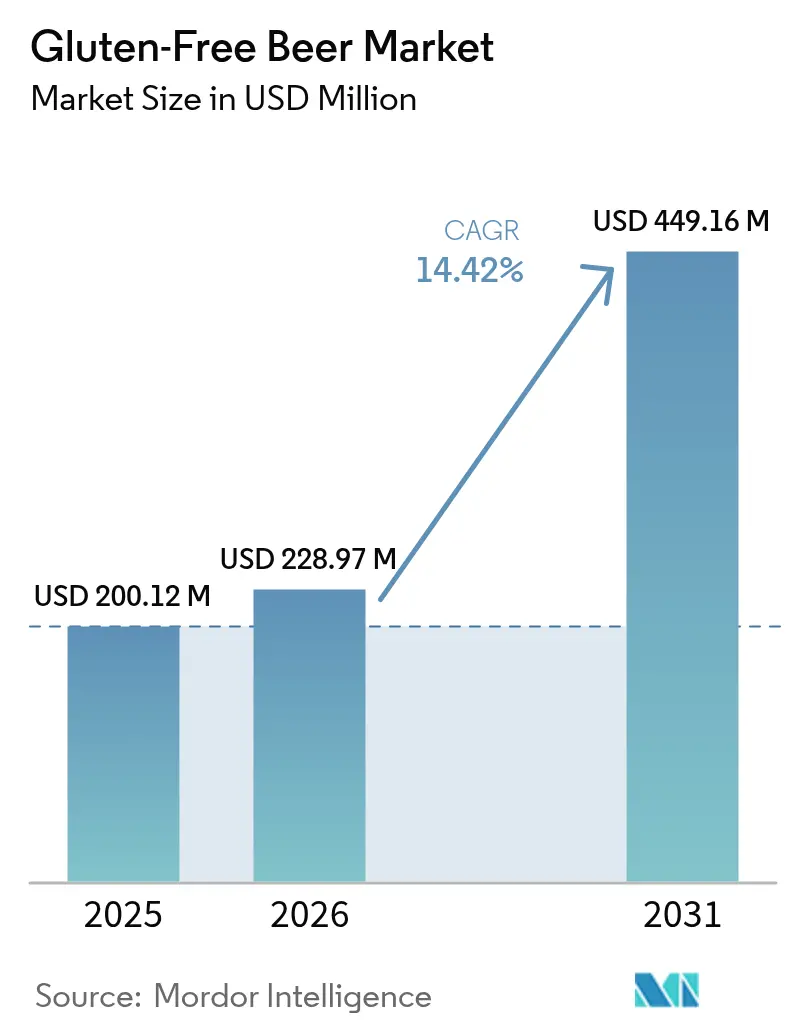
The gluten-free beer market size was valued at USD 200.12 million in 2025 and estimated to grow from USD 228.97 million in 2026 to reach USD 449.16 million by 2031, at a CAGR of 14.42% during the forecast period (2026-2031). This surge is largely driven by an uptick in celiac disease diagnoses, the establishment of clear U.S. labeling rules under TTB Ruling 2020-2, and a growing consumer shift towards health-oriented, clean-label alcoholic beverages. As reported by the Ministero della Salute, Italy had around 265,000 diagnosed celiac disease cases in 2023[1]. Ingredient diversification, a premium craft positioning, and the rising accessibility of e-commerce further fuel the market's momentum. Stability in sorghum and corn supplies helps buffer against fluctuations in input costs. While dedicated gluten-free breweries ramp up production, mainstream brewers are introducing specialized lines, both groups leveraging new enzyme processing and alternative-grain malting technologies to achieve traditional beer taste profiles. This has led to a moderate competitive intensity in the market. Moreover, regulatory alignment across North America, Europe, and the pivotal Asia Pacific regions is fostering investment, spurring innovation, and facilitating cross-border brand growth.
Key Report Takeaways
- By ingredient, sorghum led with 33.45% of gluten-free beer market share in 2025, while corn is poised to post a 15.55% CAGR through 2031.
- By product type, lager accounted for 67.10% of the gluten-free beer market size in 2025, and ale is projected to expand at a 15.89% CAGR over 2026-2031.
- By packaging, bottles retained a 51.28% revenue share in 2025, while cans are projected to advance at a 16.09% CAGR to 2031.
- By distribution, on-trade held a 59.10% share in 2025, whereas off-trade channels are forecast to rise at a 17.32% CAGR through 2031.
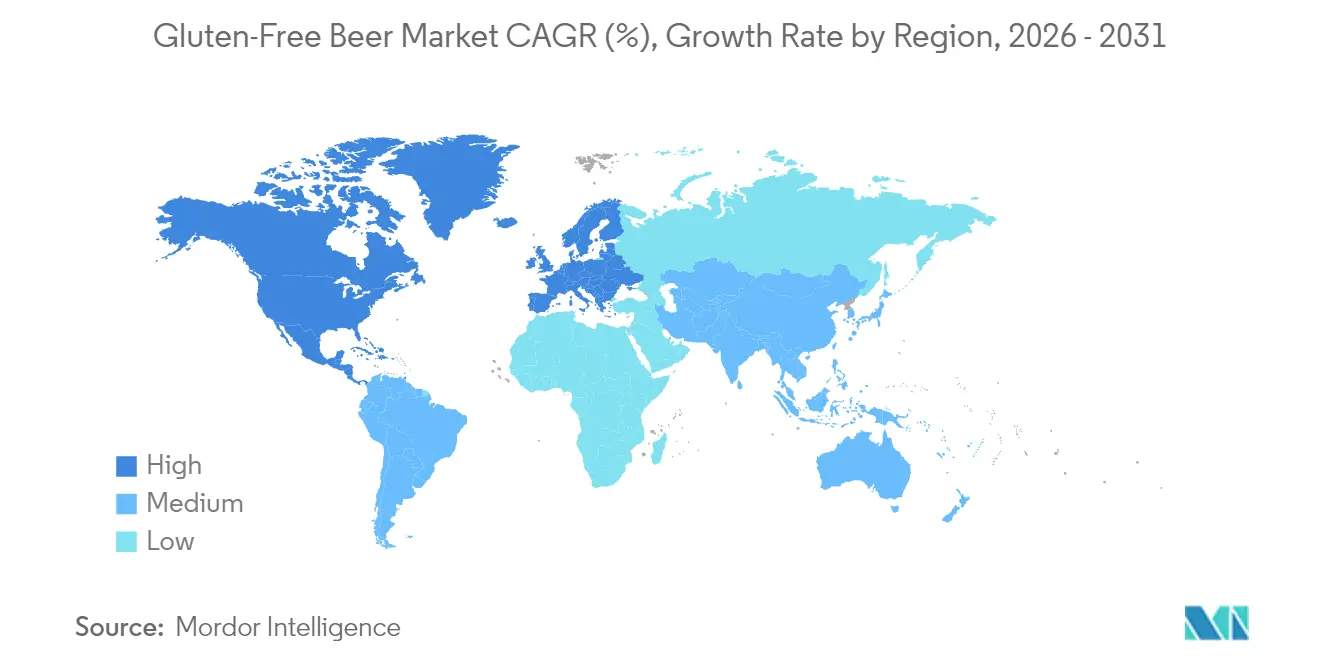
- By region, North America dominated with a 40.05% share in 2025, while the Asia Pacific is expected to grow at a 15.62% CAGR during the outlook period.
Note: Market size and forecast figures in this report are generated using Mordor Intelligence’s proprietary estimation framework, updated with the latest available data and insights as of 2026.
Market Trends and Insights
Drivers Impact Analysis of Gluten-Free Beer Market*
| Driver | (~) % Impact on CAGR Forecast | Geographic Relevance | Impact Timeline |
|---|---|---|---|
| Rising diagnosis of celiac disease and gluten sensitivity | +2.8% | Global, with higher impact in North America and Europe | Medium term (2-4 years) |
| Expansion and innovation in product variety | +2.1% | Global, concentrated in developed markets | Short term (≤ 2 years) |
| Technological advancements in brewing | +1.9% | North America and Europe, expanding to Asia-Pacific | Long term (≥ 4 years) |
| Shift toward premium and craft offerings | +2.3% | North America, Europe, Australia | Medium term (2-4 years) |
| Demand for clean-label and natural ingredients | +1.7% | Global, led by North America and Europe | Short term (≤ 2 years) |
| The rise of the no-and-low alcohol segment | +1.4% | Global, strongest in Europe and North America | Medium term (2-4 years) |
| Source: Mordor Intelligence | |||
Rising Diagnosis of Celiac Disease and Gluten Sensitivity
Rising consumer health awareness, enhanced diagnosis of gluten-related conditions, improved product quality, and supportive regulatory standards are fueling the surging demand for gluten-free beers. A key driver is the heightened awareness and diagnosis of celiac disease, a serious autoimmune disorder triggered by gluten, with a global prevalence hovering around 1%. Organizations like the Celiac Disease Foundation are at the forefront, championing improved diagnosis and visibility. They host events such as Celiac Awareness Month in May 2025 and Celiac Strong Day on May 16, 2025, to enlighten patients, schools, and communities. Concurrently, a growing number of individuals are embracing gluten-free lifestyles, not just for celiac concerns but for general wellness, citing perceived health benefits and a shift towards healthier dietary choices. This backdrop has ignited notable product innovations in the gluten-free beer sector. For example, in 2024, South African brewery Darling Brew enriched its Break Free gluten-free line with a new Red Ale, crafted from naturally gluten-free ingredients. In May 2025, Japanese brewery Rice Hack unveiled the Oryvia range, a collection of rice-based, gluten-free, and allergen-free beers, with the Miyabi variant as its centerpiece. These strides, coupled with broader market trends and heightened accessibility via online retail, underscore that the demand for gluten-free beer has evolved from a niche interest to a burgeoning global market, shaped by shifting consumer preferences and proactive industry initiatives.
Expansion and Innovation in Product Variety
Product diversification strategies are transforming gluten-free beer from a mere medical necessity into a trendy lifestyle choice, broadening its market appeal beyond those diagnosed with gluten sensitivities. Collaborative brewing efforts underscore this shift. For instance, Ghostfish Brewing collaborated with Deschutes Brewery to craft a limited-edition West Coast Pilsner, utilizing premium gluten-free malts and experimental hops, and showcasing advanced craft brewing methods tailored for gluten-free formulations. On the international front, Kati Patang's strategic move in January 2025 to acquire a 23% stake in the UK's Chadlington Brewery underscores the trend. This partnership aims to produce the gluten-free Saffron Lager, highlighting how blending flavor innovation with cultural nuances can effectively penetrate new markets. Research into alternative grains is not just enhancing product quality but also making them more cost-competitive. For example, studies on rice malt reveal that its production costs are only 17-20% higher than those of barley malt, yet it boasts superior brewing capabilities compared to rice adjuncts. Innovations in enzyme technology, such as DSM-Firmenich's Brewers Clarex – a staple in one in five beers globally – are revolutionizing gluten reduction processes. This advancement broadens production avenues for established breweries. Furthermore, the expansion in variety introduces diverse price points and flavor profiles, enticing consumers who once shied away from gluten-free options due to limited choices or concerns over quality.
Technological Advancements in Brewing
Brewing technology has evolved to tackle the challenge of crafting gluten-free beer that rivals the taste, texture, and shelf stability of its traditional counterpart. Investments in cross-contamination prevention systems are vital, with the Master Brewers Association of the Americas offering HACCP guidance tailored for allergen control and specialized production protocols. Gluten-free production faces heightened microbiological control challenges, given the unique fermentation traits of alternative grains and the lack of traditional antimicrobial compounds present in barley. Technologies such as sterile sampling systems at critical control points facilitate real-time monitoring, ensuring production integrity and preventing contamination. Malting processes for alternative grains, such as rice, necessitate specialized equipment and longer processing times. While these extended steeping, germination, and kilning cycles complicate operations, they produce self-saccharifying malts rich in free amino nitrogen. Despite advancements in analytical testing to meet regulatory standards, both TTB and FDA concede the absence of a scientifically valid method to quantify gluten in fermented products, posing persistent hurdles for process validation and labeling.
Shift Toward Premium and Craft Offerings
Premium positioning strategies capitalize on consumers' willingness to pay a premium for specialized products that cater to specific dietary needs, while offering an enhanced taste experience. The merger of Fort Point Beer Co. and HenHouse Brewing Co. in April 2025 resulted in Northern California's fifth-largest craft brewery, with an annual production of 40,000 barrels, underscoring the scale needed for sustainable craft operations. Trends in the Asia Pacific region, which are leaning towards premiumization, are bolstering the gluten-free positioning. This shift is driven by consumers' eagerness to discover craft brands and their willingness to pay more for distinctive offerings. With around 964 brewers, California alone boasts a significant presence in the U.S. craft beer market, as highlighted by the Brewers Association, paving the way for distribution opportunities for premium gluten-free brands[2]. Bellfield Brewery, recognized as the UK's first entirely gluten-free brewery, exemplifies successful premium positioning. Their focus on quality, accolades, and gradual entry into major supermarket chains, such as Aldi, Morrisons, and Asda, underscores their strategy. This premium approach not only counters the inherent cost challenges of gluten-free production but also fosters brand loyalty among consumers who perceive gluten-free beer as a lifestyle choice rather than merely a dietary necessity.
Restraints Impact Analysis of Gluten-Free Beer Market*
| Restraint | (~) % Impact on CAGR Forecast | Geographic Relevance | Impact Timeline |
|---|---|---|---|
| Sustained competition from traditional beers | -1.8% | Global, strongest in price-sensitive markets | Long term (≥ 4 years) |
| Supply chain disruptions and limited raw material availability | -1.2% | Global, concentrated in grain-dependent regions | Short term (≤ 2 years) |
| Cross-contamination risk and dedicated facilities | -0.9% | Global, higher impact in shared facility markets | Medium term (2-4 years) |
| Inconsistent regulatory frameworks and labeling confusion | -0.7% | Global, varying by jurisdiction complexity | Long term (≥ 4 years) |
| Source: Mordor Intelligence | |||
Sustained Competition from Traditional Beers
Traditional beer's stronghold in the market, bolstered by cost advantages, consistently hampers the penetration of gluten-free beer, confining its appeal largely to medically driven consumers. In 2023, Czechia led Europe in beer consumption, with an impressive 128 liters per capita, as reported by the Brewers of Europe. Notably, Czechia stood alone, being the only nation to surpass the 100-liter mark that year. Concurrently, the Beverage Information Group highlighted a staggering consumption of approximately 2.65 billion cases (each equivalent to 2.25 gallons) of beer in 2023. Major brewers, including Anheuser-Busch, showcased the dominance of traditional beer production. They adjusted contract terms multiple times and scaled back contracted acres for 2024, responding to an oversupply of malting barley, an outcome of robust crops and waning beer demand. In India, the beer market is projected to grow by 10%, reaching 450 million cases in 2024-25. With three dominant brewers accounting for 85% of sales, this underscores the distribution advantages and economies of scale that traditional beer enjoys, which gluten-free alternatives struggle to replicate. While research indicates younger consumers are leaning towards seltzers and mixed drinks over traditional beer, this shift favors non-beer alternatives broadly, rather than specifically propelling gluten-free beer into the limelight. The challenge amplifies in price-sensitive markets, where consumers, unless medically inclined, gravitate towards the more affordable traditional options, curtailing the market's expansion beyond the core audience of celiac and gluten-sensitive individuals.
Supply Chain Disruptions and Limited Raw Material Availability
Gluten-free beer producers grapple with cost pressures and availability risks due to the volatility and capacity constraints of alternative grain supply chains. The International Trade Centre reports that Bulgaria's grain sorghum exports saw a significant decline in value of EUR 87 thousand (-31.52%) from the previous year, highlighting vulnerabilities in the sorghum market dynamics[3]. An analysis of rice malt production shows it commands a 17-20% cost premium over barley malt. The processing of rice malt is intricate, involving longer steeping, germination, and kilning times, which not only reduce throughput but also inflate fixed costs per unit. While the corn market offers some stability, with USDA forecasting a supply of 16,907 million bushels at USD 4.40 per bushel for 2024/25, global forecasts for coarse grains production were trimmed by 1.4 million tons, primarily due to a dip in barley output. Limitations in specialized malting infrastructure hinder the processing capacity for alternative grains. Most malting facilities, tailored for barley, need extensive modifications to accommodate sorghum, millet, or rice. Furthermore, transportation and logistics costs for these alternative grains surge due to their smaller volumes and specialized handling requirements, especially when compared to the established barley supply chains. This scenario intensifies cost pressures for gluten-free beer producers, who find it challenging to match the economies of scale enjoyed by traditional brewers.
*Our forecasts treat driver/restraint impacts as directional, not additive. The impact forecasts reflect baseline growth, mix effects, and variable interactions.
Gluten-Free Beer Market Segment Analysis
By Ingredient Type:
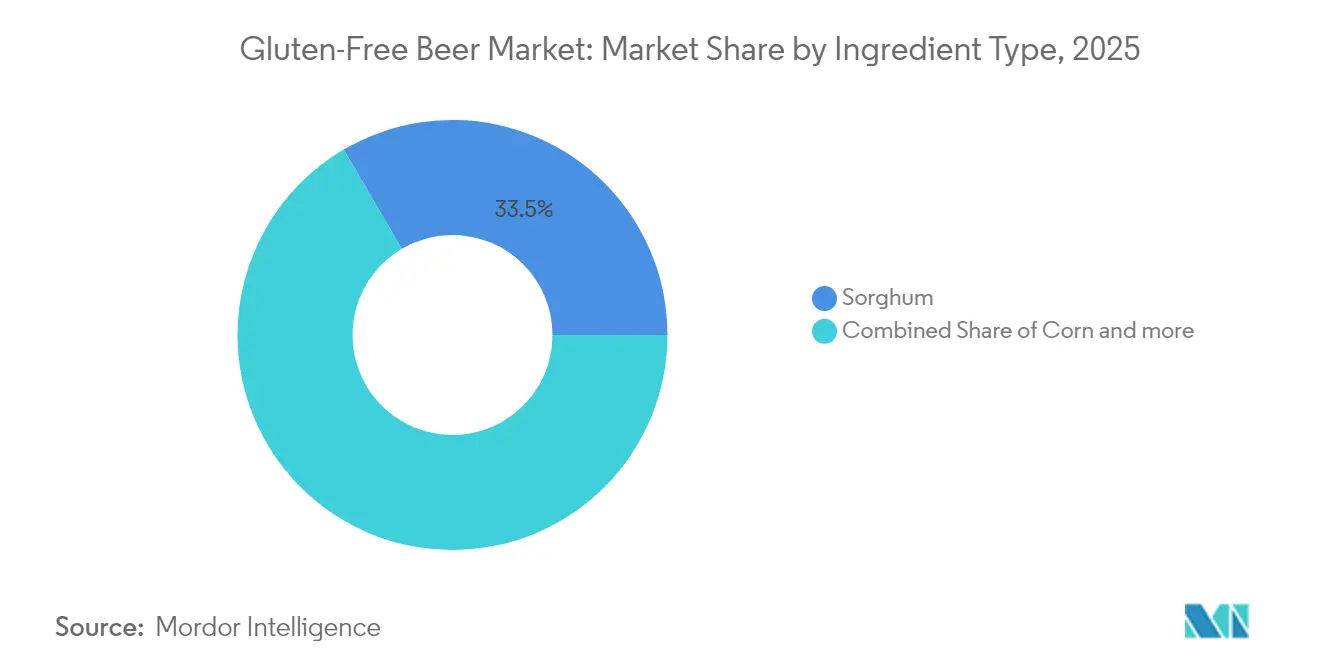
Sorghum Dominance Faces Corn ChallengeIn 2025, sorghum holds a dominant 33.45% market share, solidifying its status as the go-to gluten-free grain for brewing, thanks to its superior fermentation properties and neutral flavor profile. Meanwhile, corn is making waves as the fastest-growing ingredient, boasting a 15.55% CAGR from 2026 to 2031, thanks to its cost benefits and dependable supply chain. The USDA forecasts a steady corn supply of 16,907 million bushels for the 2024/25 period, priced at a predictable USD 4.40 per bushel, making it an attractive option for budget-conscious producers. Millet, although a smaller player, is gaining traction due to its nutritional benefits and traditional brewing significance in certain areas. Other ingredients, like buckwheat and quinoa, are carving out niche markets with premium strategies.
Research on rice malt highlights its versatility, noting that while its production costs are 17-20% higher than those of barley malt, its self-saccharifying trait eliminates the need for added enzymes. In 2024, sorghum faced supply chain challenges, with U.S. exports lagging behind as China dominated, accounting for 87% of global imports, underscoring the geopolitical risks associated with availability and pricing. The ingredient market mirrors larger agricultural patterns: rice yields 2-3 times more per hectare than barley, suggesting a potential 50-67% reduction in acreage for the same extract output. Under the Food Safety Modernization Act, the FDA mandates ingredient traceability and prevention of cross-contact, benefiting suppliers with specialized gluten-free facilities and certified supply chains.

By Product Type:
Lager Leadership Challenged by Ale InnovationIn 2025, Lager holds a commanding 67.10% market share, leveraging both consumer familiarity and established brewing processes that have been adeptly adapted for gluten-free methods. Ale, on the other hand, is on a robust growth path, boasting a 15.89% CAGR from 2026 to 2031. This surge is largely attributed to craft brewing innovations and flavor experiments that resonate with premium-seeking consumers. A testament to this evolution is the collaboration between Ghostfish Brewing and Deschutes Brewery, which produced a limited-edition West Coast Pilsner. Such partnerships demonstrate the seamless integration of traditional craft techniques into gluten-free formulations, while upholding stringent quality standards. Meanwhile, other beer varieties, like stouts, porters, and seasonal specialties, are carving out niches, presenting avenues for product differentiation and premium market positioning.
International flavor innovations hint at a broader potential for product type expansion. For instance, Kati Patang's gluten-free Saffron Lager melds Indian flavors with British brewing traditions, thanks to strategic production partnerships in the UK. The ale segment's upward trajectory mirrors the wider craft beer movement's tilt towards hop-centric profiles and avant-garde ingredients. However, producers face challenges, notably the TTB's labeling mandates. While health claims are off-limits, accurate ingredient declarations are allowed. Furthermore, enzyme technologies, like DSM-Firmenich's Brewers Clarex, are making waves. Used in one out of every five beers globally, these technologies facilitate gluten reduction, broadening lager production avenues for breweries without specialized gluten-free setups. As breweries diversify their product types, they must strike a balance: meeting consumer expectations for traditional beer styles while seizing opportunities for innovation. This delicate dance is crucial, especially when justifying the premium pricing that often accompanies gluten-free brewing's heightened production costs.
By Packaging Type:
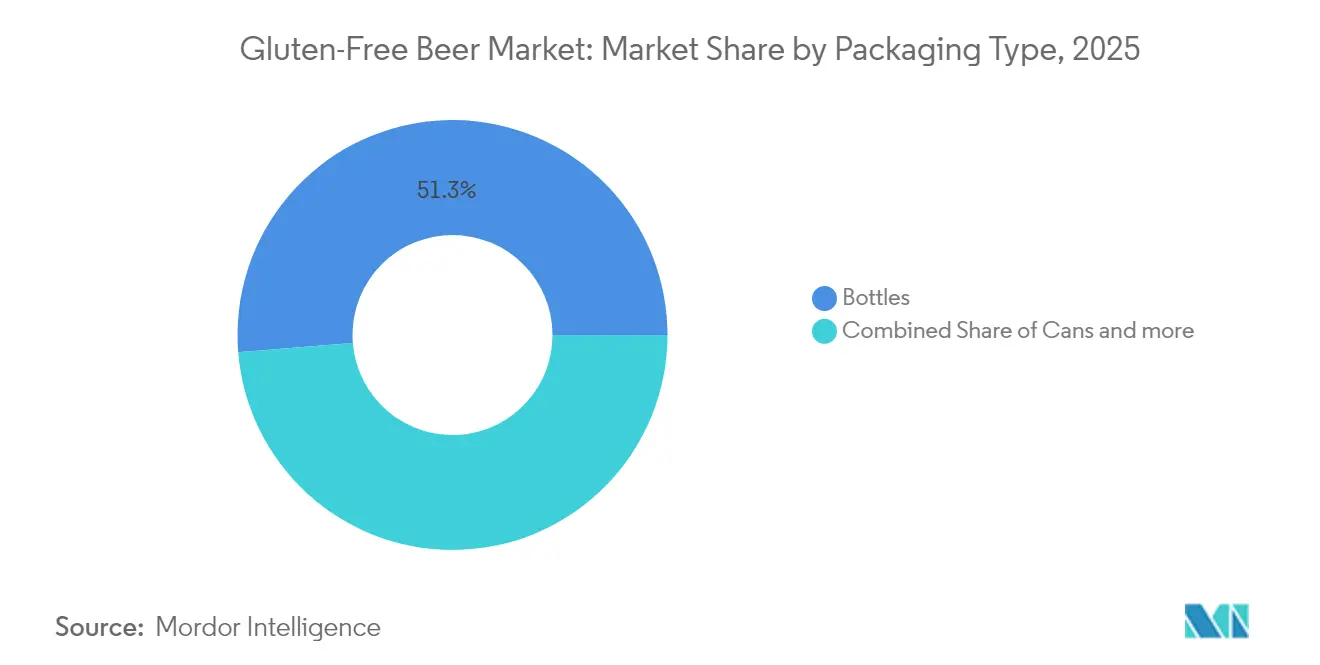
Bottles Lead While Cans AccelerateIn 2025, traditional bottle packaging commands a 51.28% market share, underscoring consumer preferences for premium presentation and established ties with on-premise venues. Meanwhile, cans are surging ahead, boasting a robust 16.09% CAGR growth rate projected from 2026 to 2031. This surge is largely attributed to the convenience of cans, their enhanced barrier properties, and their alignment with the premiumization trends in the craft beer market. The industry's pivot towards cans isn't just a trend; it's a strategic move. Canned formats offer superior shelf stability and transportation efficiency. This is especially crucial for gluten-free products, which have distinct storage needs compared to their traditional counterparts. Additionally, while kegs cater to on-premise services and specialty bottles target premium positioning, these formats address specific market segments with tailored value propositions.
As sustainability takes center stage, packaging choices are evolving. Aluminum cans, with their superior recyclability, are becoming the preferred choice. They not only outshine glass bottles in recyclability but also offer enhanced protection against light and oxygen. This is a significant advantage for maintaining the stability of gluten-free beers. The shift in packaging aligns seamlessly with distribution channel trends. Off-trade channels, witnessing a 17.32% growth, are gravitating towards cans, valuing their retail convenience and ease of inventory management. In Japan, there's a distinct preference for smaller, visually appealing packaging and portion-specific sizes. This opens doors for specialized packaging formats that resonate with regional consumer behaviors. While TTB labeling requirements are uniform across all packaging formats, the constraints of labeling space necessitate meticulous design. It's essential to balance mandatory gluten-free claims and qualifying statements with brand visibility and consumer appeal.
By Distribution Channel:
On-Trade Strength Meets Off-Trade GrowthIn 2025, on-trade channels command a 59.10% market share, underscoring the pivotal role of restaurants, bars, and taprooms in promoting gluten-free beers and educating consumers. Meanwhile, off-trade channels are on a growth trajectory, boasting a 17.32% CAGR from 2026 to 2031. This surge is fueled by the rise of specialty retail, the embrace of e-commerce, and the expansion of supermarket categories. Within off-trade channels, specialty and liquor stores play a crucial role, providing premium gluten-free brands with essential market access. Their knowledgeable staff and curated selections enhance consumer discovery and encourage product trials. Additionally, supermarkets, convenience stores, and online platforms broaden accessibility, making it easier for regular consumers to purchase gluten-free beers.
In Australia, distribution dynamics pose challenges. Major distributors, which hold about 85% of the market share, create hurdles for smaller gluten-free producers seeking retail visibility. Conversely, Japan's distribution scene offers a mixed bag. Convenience stores, boasting an 18% market share and round-the-clock accessibility, present golden opportunities for gluten-free beer trials and spur-of-the-moment purchases. However, the intricate multi-layered distribution systems necessitate collaborations with local partners. E-commerce emerges as a game-changer, offering niche dietary products a straightforward entry. These platforms facilitate direct-to-consumer sales, sidestepping traditional distribution hurdles while simultaneously amplifying brand visibility. This shift in channels mirrors evolving consumer shopping habits. Demand for specialty dietary products, especially gluten-free ones, is outpacing traditional retail growth, presenting a lucrative avenue for brands adept at harnessing digital marketing and efficient fulfillment strategies.
Geography Analysis
North America Gluten-Free Beer Market
In 2025, North America captured 40.05% of the gluten-free beer market share, driven by heightened awareness initiatives for celiac disease and stringent labeling mandates following the TTB Ruling 2020-2. U.S. surveys confirm a 0.75% prevalence of celiac disease, ensuring steady demand. National grocery chains now feature dedicated gluten-free sections, and with a surge in e-commerce alcohol sales, off-trade growth has been bolstered. Canada, benefiting from streamlined import processes due to aligned Health Canada thresholds, is witnessing a similar trend.
APAC Gluten-Free Beer Market
The Asia Pacific is poised to lead the gluten-free beer market, with a projected 15.62% CAGR through 2031. Japan's expansive food and beverage sector is embracing specialty diets, with urban-centric convenience stores and online grocers highlighting gluten-free products. China's premium beer market's growth indicates a readiness to invest in unique labels, paving the way for the import of gluten-free products. Meanwhile, India's government aims to achieve USD 1 billion in alcoholic-beverage exports by 2030, encouraging local breweries to develop gluten-free options that cater to both the diaspora and domestic health-conscious consumers.
Europe Gluten-Free Beer Market
Europe, while mature, remains pivotal, bolstered by the AOECS “Crossed Grain” symbol that fosters consumer confidence. In the U.K., Italy, and Spain, dedicated gluten-free breweries are partnering with supermarket chains, maintaining stable volumes amidst fierce shelf competition. Germany's Reinheitsgebot revisions now embrace alternative-grain beers, broadening domestic production. Though Eastern Europe is slower to adopt, major retailers are introducing private-label gluten-free products, signaling growth.
MEA and South America Gluten-Free Beer Market
In South America, Brazil's craft-beer surge is experimenting with sorghum-based lagers targeting health-savvy millennials. ANVISA's regulatory alignment with EU ppm standards is easing import processes for U.S. and European brands. The Middle East and Africa, still in its infancy, sees premium off-trade sales buoyed by duty-free and specialty retailers in Gulf expatriate hubs. As awareness initiatives expand, these burgeoning markets offer a fresh revenue stream, diversifying income from the fiercely competitive Western landscape.
Regulatory Landscape
Gluten-free beer labeling is anchored to the <20 ppm (20 mg/kg) gluten threshold used in major markets, but requirements differ by product type and process. In the United States, the FDA definition in 21 CFR 101.91 underpins the gluten-free claim for foods, while the Alcohol and Tobacco Tax and Trade Bureau (TTB) governs labeling for malt beverages and permits voluntary gluten content statements only under specific conditions, including qualifying language for products made from gluten-containing grains that have been processed to remove gluten because gluten content cannot be verified with a scientifically valid method for fermented products.
In Europe, Commission Implementing Regulation (EU) No 828/2014 restricts use of the term gluten-free to foods containing no more than 20 mg/kg of gluten as sold to the final consumer, reinforcing the role of standardized thresholds for cross-border trade. In Canada, alcoholic beverage labeling places emphasis on declaring gluten sources (for example, barley) even where full ingredient lists may be exempt, shaping how gluten-free and gluten-source messaging is presented to consumers. In January 2026, the FDA issued a Request for Information on labeling and preventing cross-contact of gluten for packaged foods, keeping attention on cross-contact controls and documentation practices that also affect ingredient and co-manufacturing choices for brewers operating multi-market portfolios.
Value Chain Analysis
The gluten-free beer value chain begins with specialty grain cultivation and sourcing (notably sorghum, corn, millet, and rice) and moves through specialized malting or pre-processing steps that can require non-standard equipment and longer cycles than barley. Ingredient and processing inputs include enzymes (such as prolyl-endopeptidase/proline-specific endoproteases) and filtration aids used to reduce gluten and stabilize finished beer, along with quality systems and in-process monitoring tools to manage batch consistency. Brewers then produce in dedicated gluten-free facilities or segregated lines, where allergen controls, sanitation validation, and recordkeeping are central cost and capability drivers.
Downstream, products are distributed through wholesalers, on-trade venues (taprooms, bars, and restaurants), and off-trade channels, with e-commerce and direct-to-consumer models supporting niche discovery and repeat purchase. Bottlenecks tend to cluster around availability and landed cost of specialty grains, limited dedicated processing capacity to prevent cross-contamination, and compliance documentation for gluten-free claims at the 20 ppm threshold in the United States (FDA) and the European Union (EU 828/2014). These constraints elevate the value of long-term supplier relationships, localized sourcing where feasible, and investments in HACCP-aligned allergen control programs that protect brand trust and reduce the risk of claim challenges.
Competitive Landscape
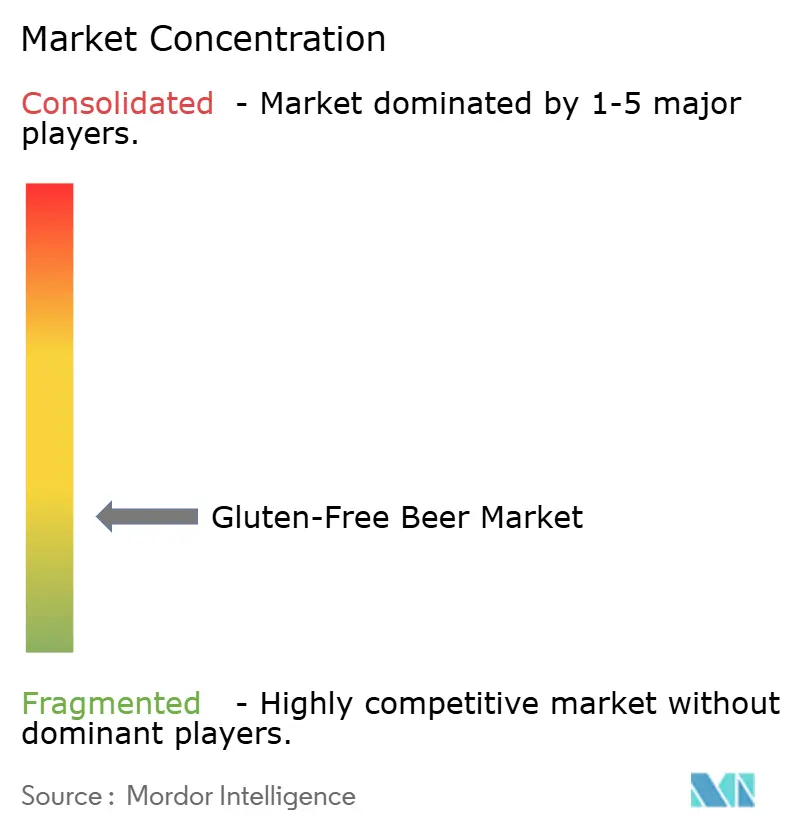
The gluten-free beer market is moderately fragmented, with dedicated specialty breweries, enzyme-enabled entrants, and conglomerate sub-brands vying for dominance through taste parity, distribution, and certification. Holidaily Brewing, boasting the largest dedicated gluten-free facility in the U.S., employs closed-loop grain handling to prevent cross-contact and enjoys strong regional loyalty. Similarly, Bellfield Brewery in the U.K. employs a single-site strategy, leveraging award accolades to secure shelf space at Aldi, Morrisons, and Asda, while scaling its volume and upholding certification standards.
Mainstream brewers are tapping into the gluten-free trend through specialized labels. Anheuser-Busch's Redbridge enjoys nationwide distribution, thanks to strategic partnerships with multi-state wholesalers that ensure its presence in chain stores. Meanwhile, Heineken's Spanish division promotes Ambar Gluten-Free, emphasizing its cross-site gluten removal method that aligns with EU labeling standards. Enzyme technology is broadening the playing field; breweries are adopting Brewer’s Clarex, enabling them to introduce gluten-reduced SKUs without the hefty costs of segregation. However, some regions impose labeling restrictions, preventing the use of “gluten-free” terminology.
Craft supply dynamics are shifting due to consolidation: Tilray Brands, in a series of deals wrapping up between August and September 2024, brought four Molson Coors breweries, along with Terrapin and Revolver, into its fold. This move catapults Tilray to the rank of the fifth-largest craft producer in the U.S., amplifying its beer distribution to 15 million cases. The merger between Fort Point and HenHouse, pooling their 40,000-barrel capacity, underscores the industry's trend towards scale, as they channel resources into research and development and self-distribution across the state. Cross-border collaborations, like Kati Patang's investment in Chadlington Brewery, are not just about capital; they seamlessly weave emerging-market brands into established retail frameworks, all while infusing gluten-free expertise into the local operations.
Competitive dynamics are influenced by supermarket shelf fees, the costs of acquiring online customers, and the cycles of certification audits. Producers who can clinch third-party gluten-free certifications and deliver appealing sensory profiles stand poised to seize a larger slice of the market as global awareness of the category grows.
Gluten-Free Beer Industry Leaders
-
Anheuser-Busch InBev
-
Bard's Brewing LLC
-
Ghostfish Brewing Company
-
Lakefront Brewery Inc.
-
New Belgium Brewing Company
- *Disclaimer: Major Players sorted in no particular order
Gluten-Free Beer Market Companies Covered in this Report
- Anheuser-Busch InBev (Redbridge)
- Bard's Brewing LLC
- Brasseurs Sans Gluten (Glutenberg)
- Holidaily Brewing Company
- Ghostfish Brewing Company
- Darling Brewery (Pty) Ltd
- Lakefront Brewery Inc.
- ALT Brew
- Armored Cow Brewing Co.
- Green’s Gluten-Free Beer
- Ground Breaker Brewing
- New Planet Beer Company
- Omission Brewing Co.
- Stone Brewing Co.
- Brasserie de Brunehaut
- Bellfield Brewery
- New Belgium Brewing Company
- Dogfish Head Craft Brewery
- Sapporo Holdings Ltd (G-Free)
- Asahi Breweries (Dry Zero Free)
Market Opportunities and Future Outlook
Clearer rule frameworks and documentation practices around gluten-free claims are shaping commercialization pathways, particularly for producers trying to scale beyond specialty retail into broader off-trade listings. In the U.S. market, the FDA gluten-free definitions and TTB guidance for alcoholic beverages create room for brands that can show robust process controls and use transparent qualifying statements when needed. The January 2026 FDA request for information on gluten labeling and cross-contact continues to sharpen scrutiny, which rewards manufacturers with stronger traceability and segregation capabilities.
On the supply side, capacity expansion and distribution build-outs by dedicated gluten-free brewers create tangible space for wider geographic availability and lower reliance on contract brewing. For example, Ghostfish Brewing Company integrated a larger Seattle production footprint acquired in late 2025 and discussed a step-change in output in 2026, which is intended to support broader regional distribution and a more consistent supply position. Product-side opportunity also hinges on technology adoption, including validated enzyme-assisted approaches and alternative-grain malting to improve taste parity and stability, supported by ongoing technical work on proline-specific endoproteases for gluten reduction alongside foam and colloidal stability work. These efforts align with premium craft positioning and with off-trade dynamics where cans and retailer shelf programs reward brands that can deliver repeatable quality at scale.
Recent Industry Developments in Gluten-Free Beer Market
- May 2026: Ghostfish Brewing Company highlighted the integration of a larger production facility in Seattle that it acquired in December 2025, positioning the brewer for materially higher output and more direct control of supply. The move supports scaling a dedicated gluten-free portfolio while reducing dependence on contract brewing and widening distributor coverage beyond its historical core markets.
- May 2025: Rice Hack launched the Oryvia range of rice-based, gluten-free and allergen-free beers in Japan, led by the Miyabi variant. The rollout broadened consumer-facing choice in a major Asia-Pacific market and reinforced rice as a commercially viable base grain for gluten-free beer styles.
- December 2024: Prime Drink Group reported that production issues affecting its Glutenberg line had been resolved, enabling a return toward near-normal production and the fulfillment of larger orders. Restored output improved on-shelf availability for key SKUs in Canada and the United States, supporting brand continuity in a category where supply disruptions can quickly shift retailer and consumer loyalty.
Gluten-Free Beer Market Report Scope and Research Methodology
Market Definition and Coverage
This market covers packaged beer products that are formulated and marketed as gluten-free, and that are sold through retail and on-trade channels for at-home or away-from-home consumption.
Scope exclusions: We exclude gluten-reduced beer that starts from barley or wheat and is only enzyme-treated to lower gluten content.
Segments Covered in This Report
-
By Ingredient Type
- Corn
- Sorghum
- Millet
- Others
-
By Product Type
- Ale
- Lager
- Other Beer Types
-
By Packaging Type
- Bottles
- Cans
- Others
-
By Distribution Channel
- On-Trade
-
Off-Trade
- Specialty/Liquor Stores
- Other Off-Trade Channels
-
By Geography
-
North America
- United States
- Canada
- Mexico
- Rest of North America
-
South America
- Brazil
- Argentina
- Rest of South America
-
Europe
- United Kingdom
- Germany
- France
- Italy
- Rest of Europe
-
Asia-Pacific
- China
- Japan
- India
- Australia
- Rest of Asia-Pacific
-
Middle East and Africa
- United Arab Emirates
- South Africa
- Rest of Middle East and Africa
-
North America
Data Sources, Market Sizing, and Validation
Desk Research
Desk work started by mapping how gluten-free beer is labeled, distributed, and priced across major regions, then aligning the working definition with public rules and reporting language. For the gluten-claim framing, we relied on open sources such as US Alcohol and Tobacco Tax and Trade Bureau (TTB) guidance, and we used national health agency materials like CDC resources to anchor context on celiac disease and gluten sensitivity.
To size demand signals and sanity check volumes, we reviewed government trade statistics and customs portals, and we cross-referenced public agriculture and grain availability releases that indicate supply of gluten-free inputs such as sorghum, millet, and rice. Company annual reports, investor presentations, and reputable press were used to capture brand launches, distribution expansion, and pricing changes. We also referenced paid subscriptions for company financial intelligence, patent databases, and shipment-level import and export views where available for validation. This list is not exhaustive, and other public and internal reference sources were also used for data collection, validation, and clarification.
Primary Interviews and Surveys
Primary calls and short surveys were conducted with brewery-side decision makers, ingredient and packaging participants, distributors, and retail channel operators, so that assumptions around mix, pricing, and availability could be checked in plain terms. Because this is a global market, inputs were balanced across Americas, EMEA, and APAC to reflect differences in labeling practice, consumer adoption, and route-to-market realities.
Distribution of primary research fieldwork respondents
| Company type | Respondent position | Region |
|---|---|---|
| Top tier: 25% | CXOs: 14% | APAC: 43% |
| Mid tier: 59% | Functional/Unit leaders: 40% | EMEA: 30% |
| Smaller Players: 16% | Managers: 46% | Americas: 27% |
Market-Sizing & Forecasting
Market sizing followed a top-down and bottom-up logic, where category demand was rebuilt from region-level beer consumption and gluten-free product adoption, then narrowed to products that meet gluten-free formulation and labeling conditions. To keep the model practical, we used a demand-pool build-up that connects adult population and beer participation rates, the share of consumers actively seeking gluten-free options, and the observed availability of gluten-free beer across retail and on-trade channels.
The totals were then corroborated through selective bottom-up checks such as sampled price per liter by package type, channel mix, and inferred volumes from distributor discussions. This helped adjust outlier regions and remove double counting. Key inputs that influenced the final market numbers included average selling price progression by region, packaging mix shifts between cans and bottles, the pace of new product launches, distribution reach changes (especially specialty retail and online), and how labeling and claim rules affect what can be sold as gluten-free. Where small brands did not disclose enough detail, gaps were handled by using peer pricing bands and channel presence signals, then stress testing the impact during validation.
For forecasting, we applied scenario analysis supported by simple trend fits. Drivers such as gluten-free food adoption, premiumization in craft-style beer, and retail shelf expansion were varied, then cross-checked against what interviewees described in their planning cycles. The final forecast path was kept realistic by limiting step changes and ensuring price and volume assumptions move in line with observed category behavior.
Data Validation & Update Cycle
After modeling, results were triangulated against independent checks such as regional consumption direction, reported channel expansion, and plausible pricing bands for gluten-free specialty products. Variance checks were run across regions and years, and any sharp jumps were reviewed to confirm they came from a clear driver like distribution gains, pricing reset, or a scope correction.
Before sign-off, the model and assumptions were reviewed in multiple steps, and follow-up outreach was triggered when interview feedback conflicted with desk signals or when one region drove an unusual share shift. Reports are refreshed annually, and interim updates are made when material events occur, such as major regulatory clarification, supply disruptions for key gluten-free grains, or sudden channel changes. Right before delivery, a final pass is completed so clients receive the latest updated view.
Mordor Intelligence's Gluten Free Beer Market Size Versus Other Published Estimates
Published market sizes for gluten-free beer can look far apart because the boundary is not always drawn the same way, and because different teams use different price and volume assumptions. The year chosen as the starting point, currency timing, and the speed at which pricing is assumed to climb can also move the total up or down.
Key gap drivers in this market usually come from whether gluten-reduced beer is counted together with gluten-free beer, and whether on-trade is treated with the same depth as retail. Some estimates also lean heavily on aggressive growth scenarios tied to wellness trends, while distribution reality remains uneven across countries. By tracking labeling-eligible product inclusion, refreshing currency conversion timing, and re-checking price bands through interviews, Mordor Intelligence keeps the model tied to what is actually sold as gluten-free beer within the defined scope.
Benchmark comparison
| Source | Market Size | Gaps in Research Methodology |
|---|---|---|
| Mordor Intelligence | USD 228.97 M (2026) | |
| Global Research Publisher A | USD 576.30 M (2025) | This estimate combines gluten-reduced and gluten-free beer into one pooled total, which expands the counted universe beyond strictly gluten-free formulations and shifts the base year earlier. |
| Industry Research Portal B | USD 570.00 M (2024) | This number reflects a broader definition that includes gluten-reduced alongside gluten-free, and it uses a different start year and longer forecast runway, which can raise implied volumes and price assumptions. |
The spread across sources is mainly explained by category boundary choices and base-year alignment, not by a disagreement that demand exists. When scope is held to only gluten-free labeled beer, and the implied volumes are checked with channel availability and realistic pricing, the resulting size is easier to audit and repeat year to year.
Key Questions Answered in the Report
Which regions lead demand for gluten-free beer?
North America currently holds a 40.05% share, driven by strong celiac awareness and clear labeling rules.
What ingredient is most used in gluten-free beer production?
Sorghum leads with a 33.45% share, though corn is the fastest-growing grain at a 15.55% CAGR.
How fast is Asia Pacific’s consumption expanding?
Asia Pacific is projected to log a 15.62% CAGR through 2031, the quickest worldwide.
Which packaging format is gaining ground fastest?
Cans are rising at a 16.09% CAGR, favored for portability and recyclability.
Are mainstream brewers active in this space?
Yes, Anheuser-Busch markets Redbridge and Tilray’s 2024 acquisitions position it among the top U.S. craft players.
What is the main regulatory hurdle for producers?
Maintaining <20 ppm gluten and documenting cross-contact controls to satisfy FDA and TTB rules.