
Glucosamine Market Size and Share
Market Overview
| Study Period | 2021 - 2031 |
|---|---|
| Market Size (2026) | USD 1.06 Billion |
| Market Size (2031) | USD 1.38 Billion |
| Growth Rate (2026 - 2031) | 5.30 % |
| Fastest Growing Market | Asia Pacific |
| Largest Market | North America |
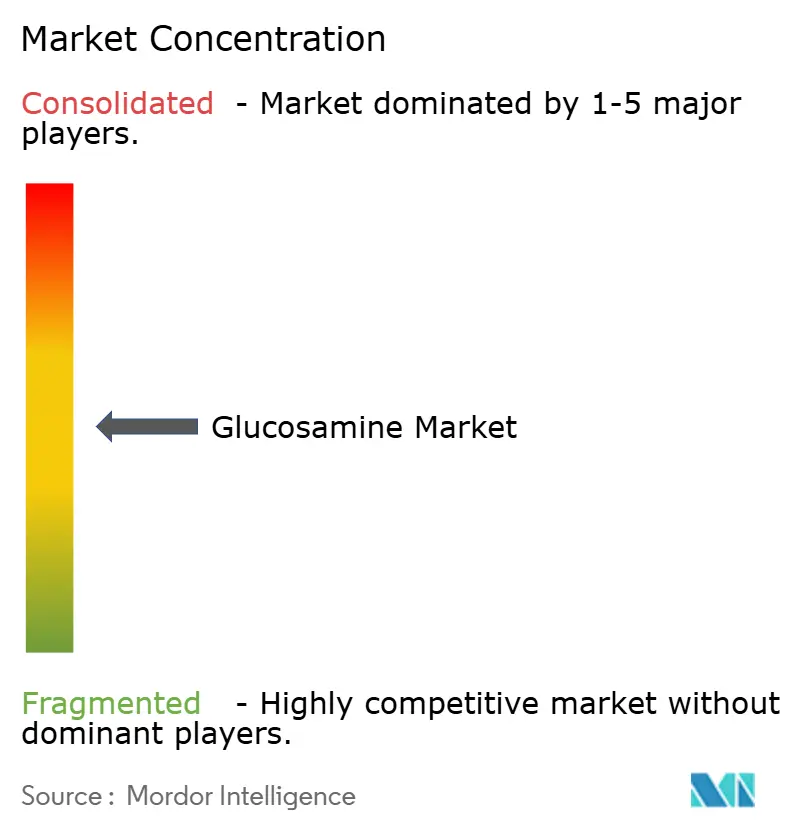
| Market Concentration | Medium |
Major Players
*Disclaimer: Major Players sorted in no particular order Image © Mordor Intelligence. Reuse requires attribution under CC BY 4.0. |
|
Glucosamine Market Analysis by Mordor Intelligence
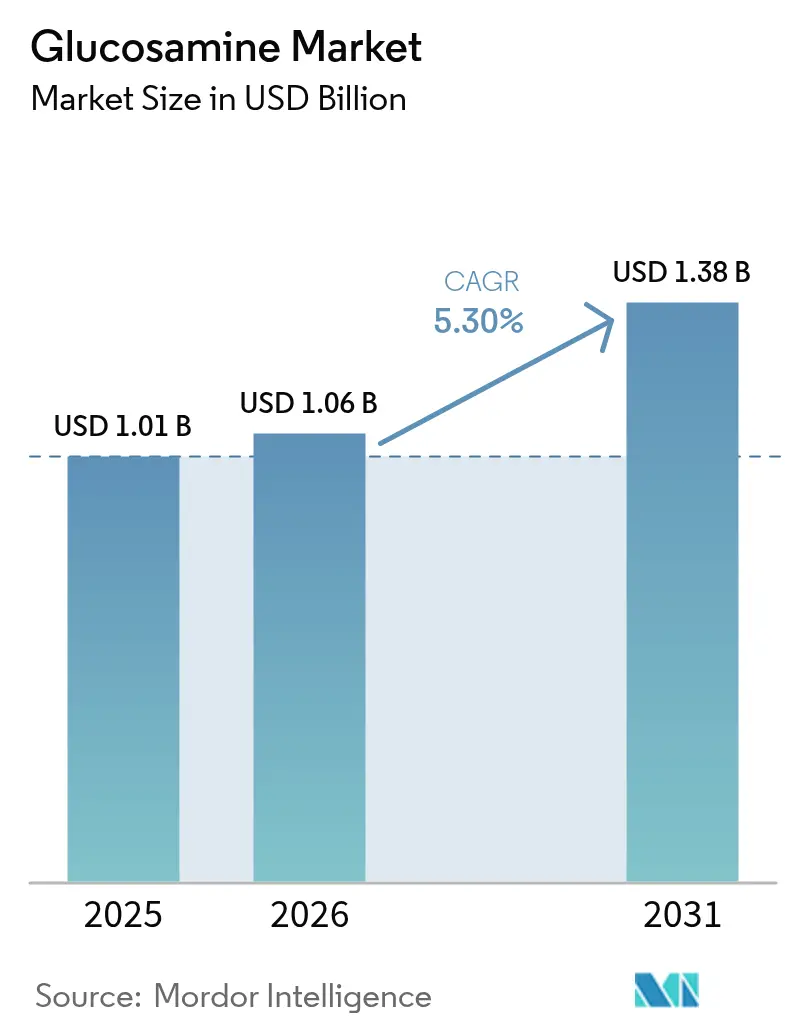
The glucosamine market size was valued at USD 1.01 billion in 2025 and estimated to grow from USD 1.06 billion in 2026 to reach USD 1.38 billion by 2031, at a CAGR of 5.30% during the forecast period (2026-2031). The market growth is driven by increased focus on healthy ageing, improved access to preventive healthcare, and evolving regulatory frameworks across regions. North America leads the market due to its established retail pharmacy network and high consumer awareness, while the Asia-Pacific region demonstrates the highest volume growth, supported by increasing disposable incomes and expanding nutraceutical distribution channels. Advancements in fermentation technology reduce allergen risks and ensure stable raw material supply, enhancing cost efficiency. Additionally, the FDA's revised notification procedures in March 2024 have reduced product launch timelines, enabling increased innovation in dosage forms and functional foods [1]US FDA, “New dietary ingredient notification guidance,” federalregister.gov.
Key Report Takeaways
- By type, glucosamine sulfate held 60.95% share of the glucosamine market in 2025, while glucosamine HCl is set to expand at an 8.79% CAGR to 2031
- By source, shellfish-derived glucosamine commanded 79.10% share in 2025; fermentation-derived variants are forecast to grow 7.74% annually through 2031
- By application, nutritional supplements captured 79.95% share of the glucosamine market in 2025; functional foods and fortified products record the quickest growth at 7.25% CAGR to 2031
- By geography, North America led with 38.85% revenue share in 2025; Asia-Pacific is projected to post the highest regional CAGR of 7.99% during 2026-2031
- The top players collectively control nearly 60% of sales, confirming a moderate concentration level that allows room for innovative entrants.
Note: Market size and forecast figures in this report are generated using Mordor Intelligence’s proprietary estimation framework, updated with the latest available data and insights as of 2026.
Global Glucosamine Market Trends and Insights
Drivers Impact Analysis*
| Driver | (~) % Impact on CAGR Forecast | Geographic Relevance | Impact Timeline |
|---|---|---|---|
| Rising prevalence of osteoarthritis and aging population | +1.8% | Global, highest in North America and Europe | Long term (≥ 4 years) |
| Increasing consumption of nutraceuticals | +1.2% | Global, led by North America and Asia-Pacific | Medium term (2-4 years) |
| Growing awareness of preventive healthcare and joint health | +0.9% | Global, early adoption in developed markets | Medium term (2-4 years) |
| Expansion of functional foods and fortified products market | +0.7% | North America, Europe, urban Asia-Pacific | Medium term (2-4 years) |
| Adoption of vegan-fermented glucosamine | +0.5% | Europe and North America, expanding into Asia-Pacific | Long term (≥ 4 years) |
| Growth in pet humanization and veterinary supplements | +0.4% | North America and Europe | Short term (≤ 2 years) |
| Source: Mordor Intelligence | |||
Rising Prevalence of Osteoarthritis and Aging Population
Osteoarthritis cases worldwide have increased significantly, with higher prevalence rates in developed and developing regions. The condition predominantly affects women and older adults, who require joint-care supplements throughout their lives. As a major cause of global disability, osteoarthritis results in economic losses through reduced workplace productivity, higher healthcare costs, and long-term medical care needs. The persistent health burden, aging global population, and growing awareness of joint health maintain consistent demand for glucosamine products. The chronic nature of osteoarthritis requires continuous management, supporting market stability.
Increasing consumption of nutraceuticals
The United States population regularly incorporates dietary supplements into their health routines. Both young and older adults emphasize preventive healthcare, which increases the sales of combination joint supplements containing glucosamine, chondroitin, and Methylsulfonylmethane (MSM). These supplements support joint health and mobility, particularly among active individuals and aging populations. The rise of personalized nutrition applications, subscription services, and tele-pharmacy platforms drives supplement consumption and expands the glucosamine market through digital channels. These digital platforms enable consumers to access supplements conveniently while receiving personalized recommendations based on their health goals and requirements.
Growing awareness of preventive healthcare and joint health
Healthcare providers and policymakers are shifting their focus toward preventive care solutions that offer cost benefits, aligning with glucosamine's role as a long-term maintenance supplement rather than a treatment for acute conditions. Medical professionals now emphasize mobility maintenance during regular patient visits, which has led to increased consumer trust in scientifically-supported nutritional supplements. The growing adoption of fitness trackers and wearable devices that monitor physical activity levels, movement patterns, and joint impact encourages active individuals to seek preventive joint care products. This trend particularly benefits manufacturers who can effectively communicate clinical evidence through clear product labeling and educational materials. The integration of digital health monitoring with preventive supplementation creates opportunities for brands to develop comprehensive joint health solutions that combine product efficacy with data-driven wellness tracking.
Expansion of functional foods and fortified products market
The food-as-medicine movement is influencing beverage, snack, and dairy companies to incorporate therapeutic doses of glucosamine into their mainstream products. This development aligns with consumers' increasing preference for functional foods and beverages that provide health benefits beyond basic nutrition. Manufacturers are responding to this trend by reformulating existing products and developing new offerings with glucosamine as a key ingredient. The integration spans various product categories, from sports drinks and smoothies to protein bars and yogurt products. According to Treatt, in Europe, 5% of food and drink launches in 2025 will include functional claims related to specific bodily functions, reflecting consumers' focus on maintaining healthy lifestyles [2]Treatt Plc, "UK and EU Functional Beverage Trends in 2025," treatt.com. This trend is particularly evident in markets where aging populations and health-conscious consumers drive demand for products supporting joint health and mobility. The incorporation of glucosamine in mainstream food products also makes these functional ingredients more accessible to consumers who prefer not to take supplements .
Restraints Impact Analysis*
| Restraint | (~) % Impact on CAGR Forecast | Geographic Relevance | Impact Timeline |
|---|---|---|---|
| Volatile supply of shellfish-based raw materials | -0.8% | Global, highest in shellfish-dependent regions | Short term (≤ 2 years) |
| Availability of effective alternatives | -0.6% | Developed markets with diverse treatment options | Medium term (2-4 years) |
| Stringent regulatory frameworks for novel foods and dietary supplements | -0.4% | Europe and North America | Medium term (2-4 years) |
| High production costs of vegan/fermentation-derived glucosamine | -0.3% | Global, affecting price-sensitive markets | Long term (≥ 4 years) |
| Source: Mordor Intelligence | |||
Volatile supply of shellfish-based raw materials
Glucosamine, primarily sourced from shellfish like shrimp and crabs, faces production disruptions and cost inflation due to fluctuations in shellfish availability. Environmental challenges, including ocean pollution, climate change, and rising sea temperatures, have degraded habitats and diminished shellfish populations in numerous regions. Unsustainable harvesting and overfishing practices further deplete the shellfish shells essential for glucosamine extraction. In Southeast Asia, shrimp farms have grappled with disease outbreaks, leading to marked declines in shellfish production. [3]Aqua Research Pte Ltd., "Marine Shrimp in Asia", www.aquaasiapac.com To safeguard marine ecosystems, regulatory measures such as harvesting quotas and seasonal bans have been implemented, but they also curtail supply. Moreover, geopolitical tensions and trade disruptions in major exporting nations, particularly China and Vietnam, introduce unpredictability to the market. Collectively, these factors contribute to supply instability, escalating costs, and challenges in production planning for glucosamine producers.
Availability of Effective Alternatives
The joint health treatment market encompasses pharmaceutical innovations and alternative therapies alongside glucosamine supplements. Prescription medications, particularly disease-modifying osteoarthritis drugs (DMOADs) in development, aim to improve outcomes for severe cases. These medications target specific pathways involved in joint degeneration and inflammation, offering potential breakthroughs in disease management. The treatment options include physical therapy, regenerative medicine procedures (platelet-rich plasma and stem cell therapies), and surgical interventions. Physical therapy focuses on strengthening muscles around affected joints and improving mobility, while regenerative medicine aims to stimulate natural healing processes. Advanced surgical techniques now include minimally invasive procedures and joint preservation methods. Regulatory requirements influence physician recommendations and insurance coverage policies, impacting the integration of glucosamine supplements into evidence-based medical protocols. These regulations encompass safety standards, clinical trial requirements, and documentation of therapeutic efficacy.
*Our forecasts treat driver/restraint impacts as directional, not additive. The impact forecasts reflect baseline growth, mix effects, and variable interactions.
Segment Analysis
By Source: Fermentation disrupts shellfish tradition
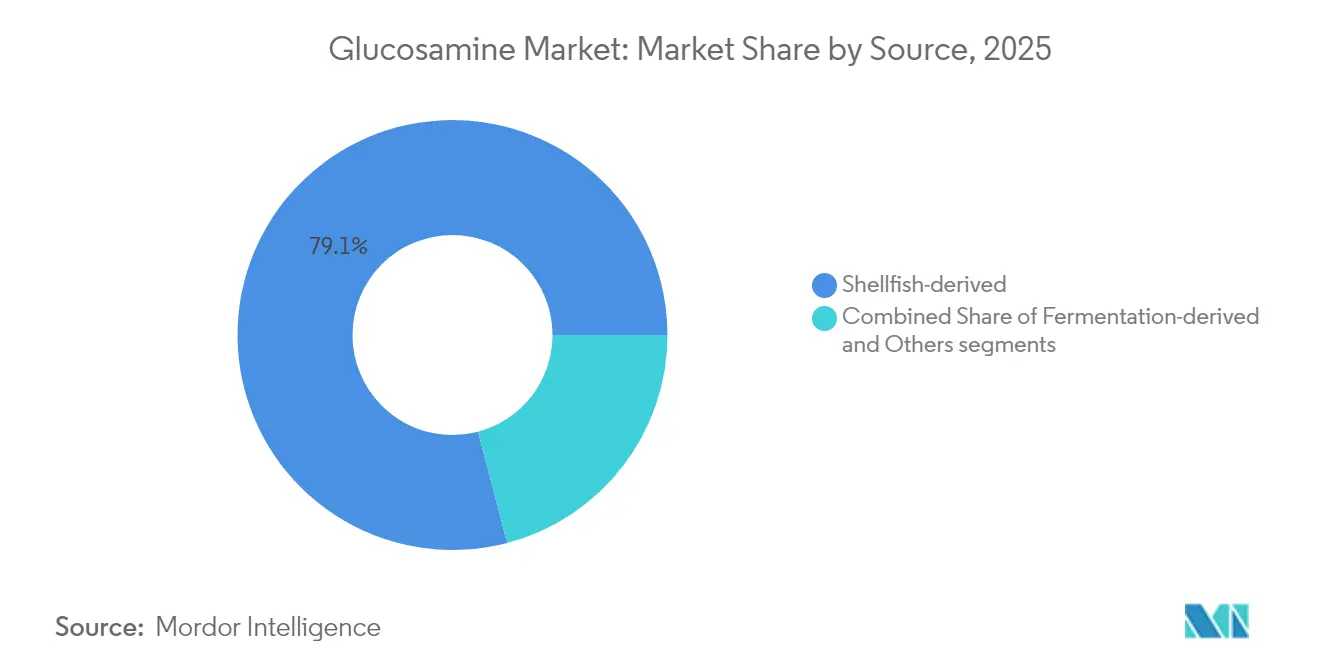
Shellfish-derived glucosamine maintains 79.10% market share in 2025, benefiting from established supply chains and consumer familiarity. Traditional extraction methods from crab and shrimp shells leverage existing seafood processing waste streams, creating cost efficiencies and environmental benefits through waste utilization. However, fermentation-derived alternatives exhibit 7.74% CAGR growth through 2031, driven by allergy avoidance, sustainability concerns, and supply chain diversification strategies.
The development of advanced production methods, including artificial enzymatic biosystems, enables high conversion efficiency from starch to glucosamine through fermentation. This innovative production method significantly reduces environmental impact while maintaining product quality. The fermentation process utilizes renewable resources and controlled manufacturing conditions, resulting in consistent product quality. This production method offers a sustainable alternative that addresses both supply security concerns and consumer preferences, particularly among those seeking environmentally responsible products.



By Type: Sulfate Dominance Faces HCl Innovation
Glucosamine sulfate holds 60.95% of the market share in 2025, supported by extensive clinical research and its pharmaceutical-grade status. The European Society for Clinical and Economic Aspects of Osteoporosis, Osteoarthritis and Musculoskeletal Diseases (ESCEO) endorses pharmaceutical-grade glucosamine sulfate as a standalone treatment, recommending against its combination with chondroitin. Glucosamine HCl exhibits the highest growth rate at 8.79% CAGR through 2031, due to its stability benefits and lower production costs.
Market competition among glucosamine formulations reflects both consumer needs and production efficiencies. N-acetyl-glucosamine emerges as a distinct segment, marketed for its improved bioavailability as a premium product. Fermentation-based production methods have improved glucosamine HCl yields significantly. These manufacturing advantages support glucosamine HCl's increasing market presence, especially in regions where price sensitivity influences purchasing decisions.
By Application: Functional foods challenge supplement supremacy
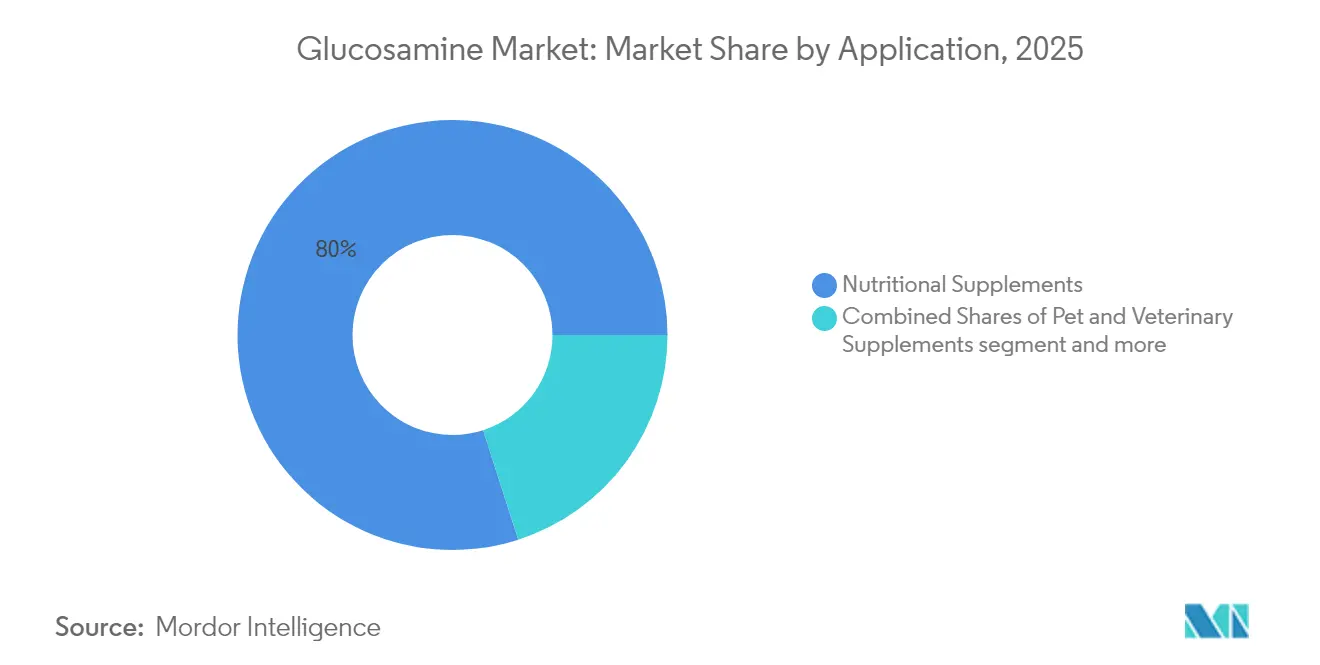
Dietary supplements represent 79.95% of the glucosamine market in 2025, primarily distributed through pharmacies and e-commerce platforms. The glucosamine supplements market continues to grow as consumers seek solutions for joint discomfort management. Customer retention mechanisms, including loyalty programs, subscription models, and bundled promotions with collagen supplements, drive consistent repeat purchases.
The functional foods and fortified products segment grows at 7.25% CAGR, offering convenient options through ready-to-drink formulations and protein snacks. Sports nutrition consumers, traditionally focused on protein and branched-chain amino acids (BCAA) supplements, increasingly adopt joint-support chews combining vitamin C and glucosamine. The pet nutrition segment provides additional market growth, with premium pet food manufacturers highlighting joint-care benefits as a key differentiator, despite limited clinical veterinary research.
Geography Analysis
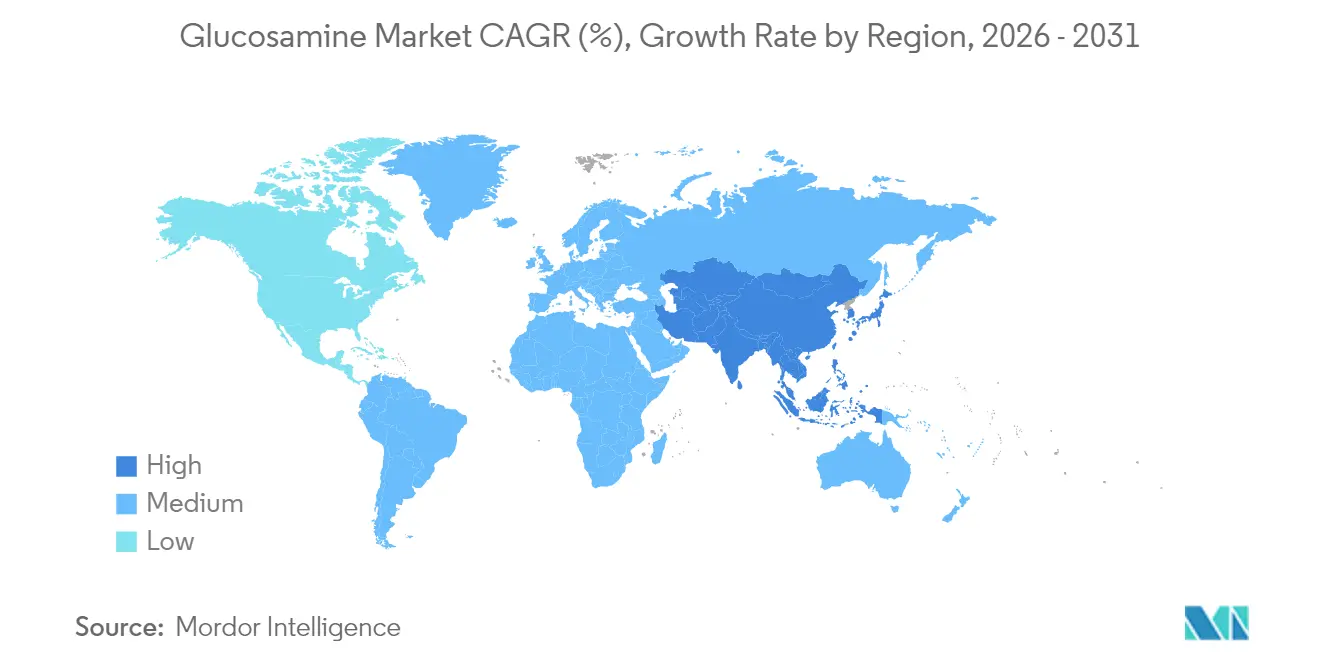
North America maintains market leadership with 38.85% share in 2025, supported by established healthcare infrastructure, high consumer awareness of joint health supplements, and favorable regulatory frameworks under FDA oversight. The region benefits from extensive clinical research conducted at major medical institutions and strong distribution networks through pharmacy chains and specialized retailers. Consumer spending patterns reflect integration of glucosamine into routine healthcare regimens, with insurance coverage occasionally available for pharmaceutical-grade formulations. The aging baby boomer demographic creates sustained demand, while younger consumers increasingly adopt preventive supplementation strategies influenced by fitness and wellness trends.
Asia-Pacific emerges as the fastest-growing region with 7.99% CAGR through 2031, driven by expanding middle-class populations, increasing healthcare expenditure, and growing awareness of Western nutritional approaches. China and India represent particularly dynamic markets, benefiting from domestic manufacturing capabilities and acceptance of traditional medicine natural health products. Japan's sophisticated functional foods market. The region's manufacturing cost advantages, particularly for fermentation-derived production, position Asia-Pacific as both a consumption and export hub for global glucosamine supply chains.
Europe represents a mature market characterized by stringent regulatory oversight and evidence-based healthcare approaches. The European Food Safety Authority's rigorous evaluation processes for health claims create barriers for new entrants while protecting established products with approved claims. Consumer preferences favor pharmaceutical-grade formulations with clinical documentation, reflecting the region's emphasis on evidence-based medicine. The market benefits from strong research institutions conducting osteoarthritis studies and established distribution through pharmacy channels. Brexit implications continue affecting regulatory harmonization, with the UK developing independent evaluation frameworks for dietary supplements and functional foods.

Regulatory Landscape
Glucosamine regulation varies by end-use (dietary supplement vs conventional food vs therapeutic product), which shapes labeling, claims, and route-to-market decisions. In the United States, supplement-positioned glucosamine products generally follow the dietary supplement pathway under FDA oversight, while conventional-food use cases commonly rely on the Generally Recognized as Safe (GRAS) framework and the FDA GRAS Notice inventory as a reference point.
In Europe, the European Food Safety Authority (EFSA) anchors safety assessment and health-claim substantiation, which raises the documentation burden for new functional-food claims relative to supplement positioning in several non-EU markets. Australia also creates additional divergence, with the Therapeutic Goods Administration (TGA) listing certain glucosamine hydrochloride products on the Australian Register of Therapeutic Goods (ARTG), which means manufacturers need separate compliance dossiers and product classifications by region.
Value Chain Analysis
The glucosamine value chain starts with feedstock sourcing, with shellfish processing byproducts (shrimp and crab shells) used for chitin recovery, followed by conversion (typically hydrolysis) into glucosamine hydrochloride and glucosamine sulfate. After purification to food-grade or pharmaceutical-grade specifications, ingredient suppliers then blend the material into finished formats. Downstream, nutraceutical and functional-food formulators and contract manufacturers produce capsules, tablets, powders, and ready-to-mix applications, with ingredient exporters such as Zhejiang Aoxing Biotechnology Co., Ltd. positioned between upstream seafood waste aggregators and downstream processors.
Key bottlenecks cluster around raw-material seasonality, contamination control, and purification consistency, with cost pressure also tied to chemical handling and waste disposal in acid-intensive shell processing. Fermentation-derived routes reduce allergen exposure and can improve batch consistency, but they shift dependencies toward carbohydrate feedstocks, bioprocess controls, and validation workflows that must satisfy multi-market expectations (food-grade and supplement-grade, and in some regions, more medicine-like quality-system requirements).
Competitive Landscape
The glucosamine market demonstrates moderate concentration, with established companies implementing vertical integration strategies while new entrants focus on innovation and product differentiation. Market leaders, including Koyo Chemical Co., Ltd., Cargill, Inc., and TSI Group Ltd., among others, gain advantages through economies of scale in raw material procurement and manufacturing operations, while smaller companies compete by offering specialized formulations and targeted distribution channels.
Major consumer brands distinguish themselves through investments in clinical studies and transparent sourcing practices. Mannatech, for example, utilizes proprietary formulations and maintains publicly accessible research archives on its corporate website to build healthcare practitioner loyalty. The industry's quality standards are maintained through cross-licensing agreements between ingredient manufacturers and contract manufacturers, with companies like Catalent operating more than forty facilities to ensure consistent product launches across multiple regions.
Companies are increasingly focusing on higher-margin distribution channels. FitLife Brands expanded its market presence by acquiring MusclePharm, securing direct access to sports nutrition distributors that now include joint-health supplements. Twinlab grows its physical retail presence through strategic acquisitions, while Ingredion enhances its ingredient portfolio by combining clean-label starches with glucosamine for bakery applications. Market success increasingly depends on scientific validation, with GRAS (Generally Recognized as Safe) certifications and stability data influencing retail placement decisions.
Glucosamine Industry Leaders
-
Koyo Chemical Co., Ltd.
-
Cargill, Inc.
-
Zhejiang Aoxing Biotechnology Co., Ltd.
-
TSI Group Ltd.
-
Golden-Shell Pharmaceutical Co., Ltd.
- *Disclaimer: Major Players sorted in no particular order

Market Opportunities and Future Outlook
Opportunities are most visible in allergen-aware and vegan positioning, where fermentation-derived glucosamine can be positioned as an alternative to shellfish-derived inputs, helping brand owners address the shellfish supply volatility noted across producing regions. The FDA update to dietary-ingredient notification procedures in March 2024 (as referenced in the report context) also supports faster iteration of supplement formats and combinations, which can encourage manufacturers to refresh portfolios across capsules, gummies, chews, and blends used for joint-health routines.
Beyond the dominant supplement channel, functional foods and fortified products provide another route, supported by the food-as-medicine shift cited in the report context and by formulation advances that stabilize actives in beverages and snacks. There is also room for evidence-led differentiation, where alignment with recognized quality expectations, including pharmaceutical-grade positioning and certification stacks referenced for TSI Group Ltd. in 2024, supports premium placement in pharmacies, practitioner channels, and export markets that require stronger documentation and traceability.
Recent Industry Developments
- January 2026: The United States FDA maintained GRAS as a primary pathway for conventional-food ingredient uses, keeping the GRAS Notice inventory as a key reference point for companies positioning glucosamine beyond supplements. This continued emphasis on documented safety and intended-use conditions supports suppliers that can produce consistent specifications and maintain strong regulatory files for customers in functional foods.
- July 2025: Zhejiang Aoxing Biotechnology Co., Ltd. commenced its Phase II Marine Biological Food-Grade Raw Material Project in Lianyungang, Jiangsu, including planned capacity for 2,000 tons of food-grade glucosamine hydrochloride and 2,000 tons of food-grade refined glucosamine sulfate annually. The added capacity strengthens supply availability for both core glucosamine salts and increases competitive pressure on pricing and lead times for downstream supplement and functional-food formulators.
- June 2024: DNP International launched a vegetarian glucosamine product line, expanding non-shellfish options for joint-health formulations. The launch reinforces the shift toward allergen-avoiding and vegan-friendly positioning, which also helps brand owners diversify away from shellfish-linked input variability.


Research Methodology Framework and Report Scope
Market Definition and Coverage
This market covers revenue generated from glucosamine ingredients and their direct salts used in finished formulations for joint-support and related health uses across human and animal health, tracked in value terms in USD.
Scope exclusions: We do not include broader bone and joint ingredients such as collagen, chondroitin, calcium blends, or multi-ingredient joint complexes when glucosamine cannot be separated cleanly.
Segmentation Overview
-
By Type
- Glucosamine Sulfate
- Glucosamine Hydrochloride (HCl)
- N-Acetyl-glucosamine
- Other Types
-
By Source
- Shellfish-derived
- Fermentation-derived
- Others
-
By Application
- Nutritional Supplements
- Pet and Veterinary Supplements
- Functional Foods and Fortified Products
- Other Applications
-
By Geography
-
North America
- United States
- Canada
- Mexico
- Rest of North America
-
Europe
- Germany
- United Kingdom
- Italy
- France
- Spain
- Netherlands
- Rest of Europe
-
Asia-Pacific
- China
- India
- Japan
- Australia
- Rest of Asia-Pacific
-
South America
- Brazil
- Argentina
- Rest of South America
-
Middle East and Africa
- South Africa
- Saudi Arabia
- United Arab Emirates
- Rest of Middle East and Africa
-
North America
Data Sources, Market Sizing, and Validation
Desk Research
Desk work is used to set the market boundaries, build the early demand map, and pin down the right units before interviews start. For glucosamine, we rely on public health and population signals that connect to joint health demand, plus trade and manufacturing context that indicates how supply is moving.
Sources reviewed include, for example, CDC arthritis and mobility statistics, NIH and PubMed literature on glucosamine usage and outcomes, and FDA dietary supplement and labeling guidance for how products are positioned in the market. We also refer to customs and trade statistics (such as UN Comtrade) to sense import and export flows for glucosamine-related products and key intermediates, followed by association and conference material that clarifies product forms and use patterns. Company annual reports, investor slides, and reputable press were then used to understand channel mix, pricing direction, and portfolio emphasis, and we used a paid subscription for company financials plus an import-export shipment-level database selectively to check scale and directionality. These desk sources are not exhaustive, and other public references were added for data collection, validation, and clarification during the work.
Primary Interviews and Surveys
Primary discussions were used to confirm how glucosamine demand is formed in supplements, functional foods, and veterinary products, and to test assumptions on typical dosages, formulation shares, and price movement by type. We spoke with stakeholders across ingredient supply, brand and formulation teams, and channel-side experts, then compared views across APAC, EMEA, and the Americas so regional differences in regulation, sourcing, and consumer adoption were not averaged away.
Distribution of primary research fieldwork respondents
| Company type | Respondent position | Region |
|---|---|---|
| Top tier: 36% | CXOs: 13% | APAC: 40% |
| Mid tier: 46% | Functional/Unit leaders: 27% | EMEA: 33% |
| Smaller Players: 18% | Managers: 60% | Americas: 27% |
Market-Sizing & Forecasting
Sizing starts with a top-down build that ties the addressable pool to joint-health consumption patterns, and then converts that pool into value using realistic usage and pricing assumptions. In practice, we reconstruct demand by combining indicators such as aging population share, osteoarthritis and joint pain prevalence signals, category penetration for joint-support supplements, and average daily dose ranges that are common for glucosamine formats.
To keep the numbers grounded, we use selective bottom-up approximations as a cross-check, where sampled brand and channel price points are paired with estimated volumes, and where supplier-side reality checks help validate the implied tonnage and mix. Key inputs that influence the model include the share of glucosamine sulfate versus hydrochloride and N-acetyl-glucosamine in finished products, the split between shellfish-derived and fermentation-derived supply, typical inclusion rates per serving, the mix of human versus pet and veterinary demand, and how online versus retail channels affect realized pricing. Where bottom-up signals are incomplete in smaller countries, gaps are handled through proxying with comparable markets using income level, supplement penetration, and regulatory accessibility, and then reviewed in interviews.
Forecasts are produced using scenario analysis supported by trend lines in the same variables, and then adjusted using primary feedback on pricing direction, ingredient substitution risk, and adoption changes. When the main drivers move differently by region, separate regional trajectories are built first, before they are rolled up to the global total.
Data Validation & Update Cycle
Validation is done by triangulating outputs against independent signals, and by forcing the model to reconcile with what is known about product mix, channel behavior, and regional adoption patterns. Analysts review for outliers such as sudden price spikes without a supporting cost driver, unrealistically high penetration rates, or sharp shifts in type mix that do not match formulation trends, and then revisit assumptions until the variance is explainable.
Before sign-off, the model and write-up go through multi-step checks so that definitions, units, currency conversions, and year mapping are consistent across sections. Reports are refreshed annually, and interim updates are triggered when there are material events such as notable regulatory shifts, major supply constraints, or a step-change in channel pricing. Right before delivery, a fresh review pass is completed so clients receive the latest updated view available at that time.
Mordor Intelligence's Glucosamine Market Size Compared Against Other Published Estimates
Published market sizes for glucosamine can vary even when the titles sound similar, since the reported totals depend heavily on what is counted as glucosamine revenue and what is treated as an adjacent joint-health ingredient market. Differences also show up when one estimate leans more on broad supplement sales growth, while another ties the build to dosage, form, and type mix in finished products.
The main gap comes from whether joint-health blends and multi-ingredient complexes are kept inside the glucosamine total or separated, and in Mordor Intelligence's model, only glucosamine and its direct salts are counted, with mix splits by sulfate, HCl, and N-acetyl treated explicitly before pricing is applied. Additional spread is created by how firms handle currency timing, whether 2025 is treated as a full-year normalized base, and how aggressively ASPs are moved forward in the forecast, especially when channel mix shifts toward online sales.
Benchmark comparison
| Source | Market Size | Gaps in Research Methodology |
|---|---|---|
| Mordor Intelligence | USD 1.01 B (2025) | |
| Market Publisher A | USD 1.01 B (2025) | Uses a different base year setup (2024 base) and can blend supplement category growth with limited clarity on how salts and derived forms are treated, which can compress or expand totals depending on price assumptions. |
| Research House B | USD 1.16 B (2025) | Broader segmentation and longer horizon can pull in wider end-user and application buckets, and the higher 2025 value is consistent with faster ASP progression and looser separation from joint-health blends where glucosamine is one of several actives. |
Overall, the spread across estimates is explained mainly by scope control around multi-ingredient products and by how pricing and mix are moved year to year. By keeping the sizing traceable to dosage patterns, type mix, and channel price signals, the total remains easier to replicate and to stress-test when assumptions change.


Key Questions Answered in the Report
What is the current size of the glucosamine market?
The glucosamine market is worth USD 1.06 billion in 2026 and is forecast to hit USD 1.38 billion by 2031.
Which glucosamine type grows the fastest?
Glucosamine HCl registers the highest CAGR at 8.79% through 2031, benefiting from superior processing stability and lower manufacturing costs.
Why is fermentation-derived glucosamine gaining attention?
Fermentation avoids shellfish allergens, delivers steadier supply, and aligns with sustainability mandates, producing a 7.74% CAGR growth path.
Which region shows the quickest demand up-swing?
Asia-Pacific leads with an 7.99% CAGR, driven by rising incomes, expanding e-commerce, and strong functional-food adoption.
Page last updated on:


 Your data is secure and never sold or shared.


