
Peripheral Vascular Devices Market Size and Share
Market Overview
| Study Period | 2020 - 2031 |
|---|---|
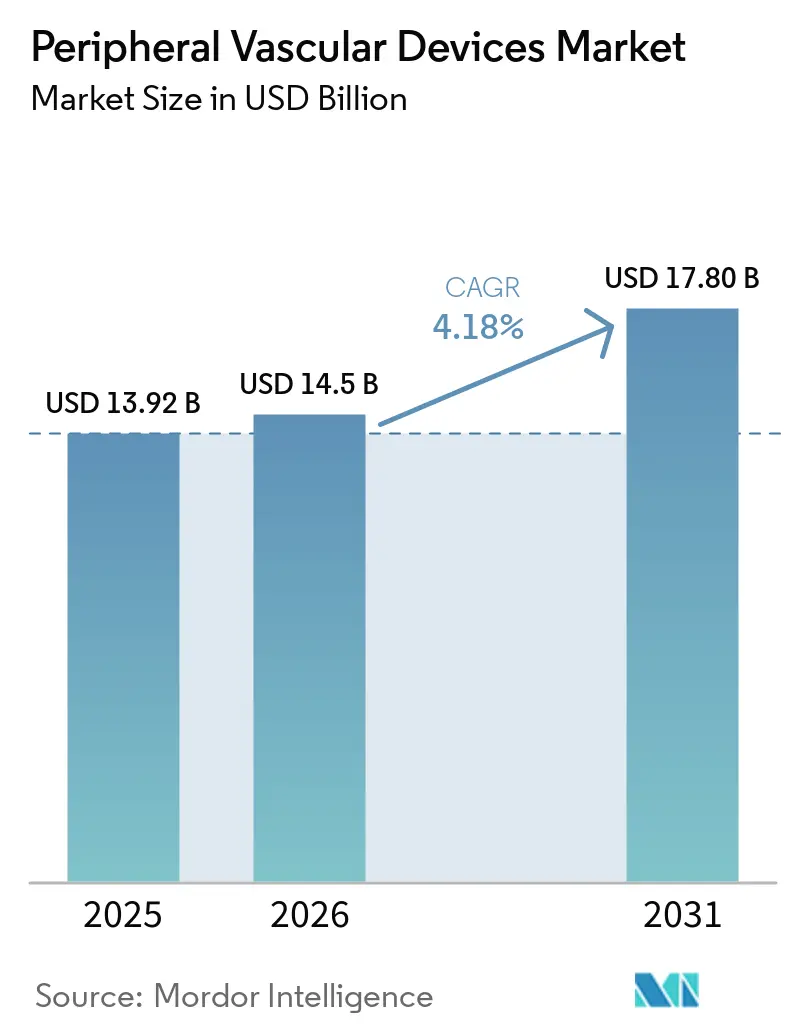
| Market Size (2026) | USD 14.5 Billion |
| Market Size (2031) | USD 17.80 Billion |
| Growth Rate (2026 - 2031) | 4.18 % |
| Fastest Growing Market | Asia Pacific |
| Largest Market | North America |
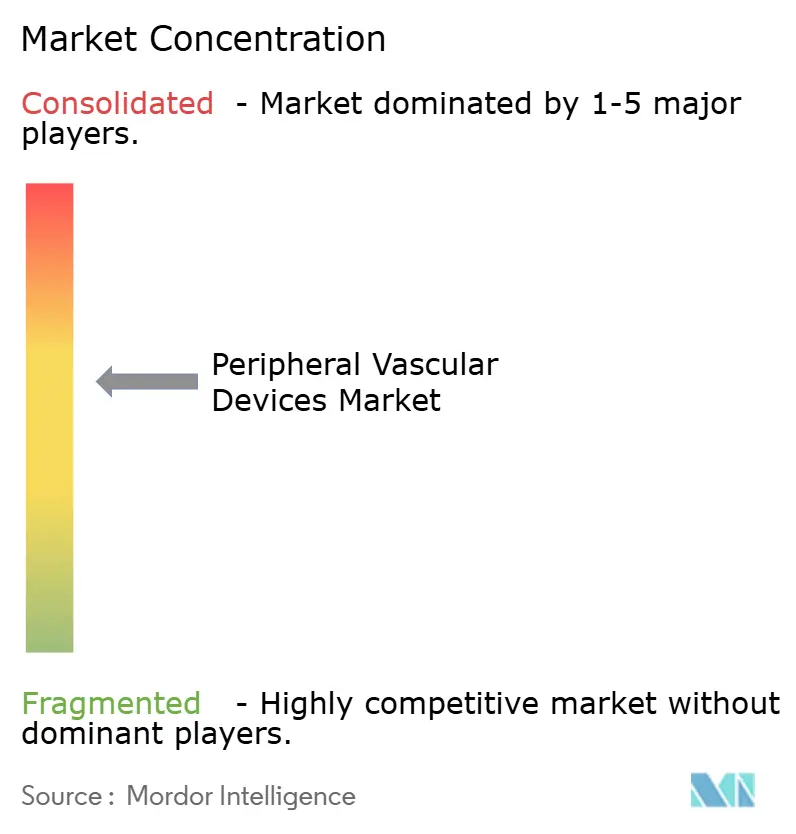
| Market Concentration | Medium |
Major Players *Disclaimer: Major Players sorted in no particular order Image © Mordor Intelligence. Reuse requires attribution under CC BY 4.0. | |
Peripheral Vascular Devices Market Analysis by Mordor Intelligence
The Peripheral Vascular Devices Market size is expected to increase from USD 13.92 billion in 2025 to USD 14.5 billion in 2026 and reach USD 17.80 billion by 2031, growing at a CAGR of 4.18% over 2026-2031.
Procedure volumes continue to climb, yet average device spend per case is leveling off as interventionalists migrate low-complexity work from inpatient suites to ambulatory surgical centers (ASCs) and office-based labs (OBLs). Angioplasty balloons retained the largest revenue slice in 2025, but atherectomy systems are closing the gap on the back of calcified-lesion prevalence and supportive reimbursement in Japan and Australia. Hospitals still dominate device procurement in value terms, though their share is slipping because CMS bundled-payment rules compel tighter formulary management and lower price ceilings. Geographic growth tilts to Asia-Pacific, where China’s Healthy China 2030 cardiovascular roadmap and India’s catheter-lab build-out are generating first-time demand for advanced balloons, stents, and thrombectomy platforms.
Key Report Takeaways
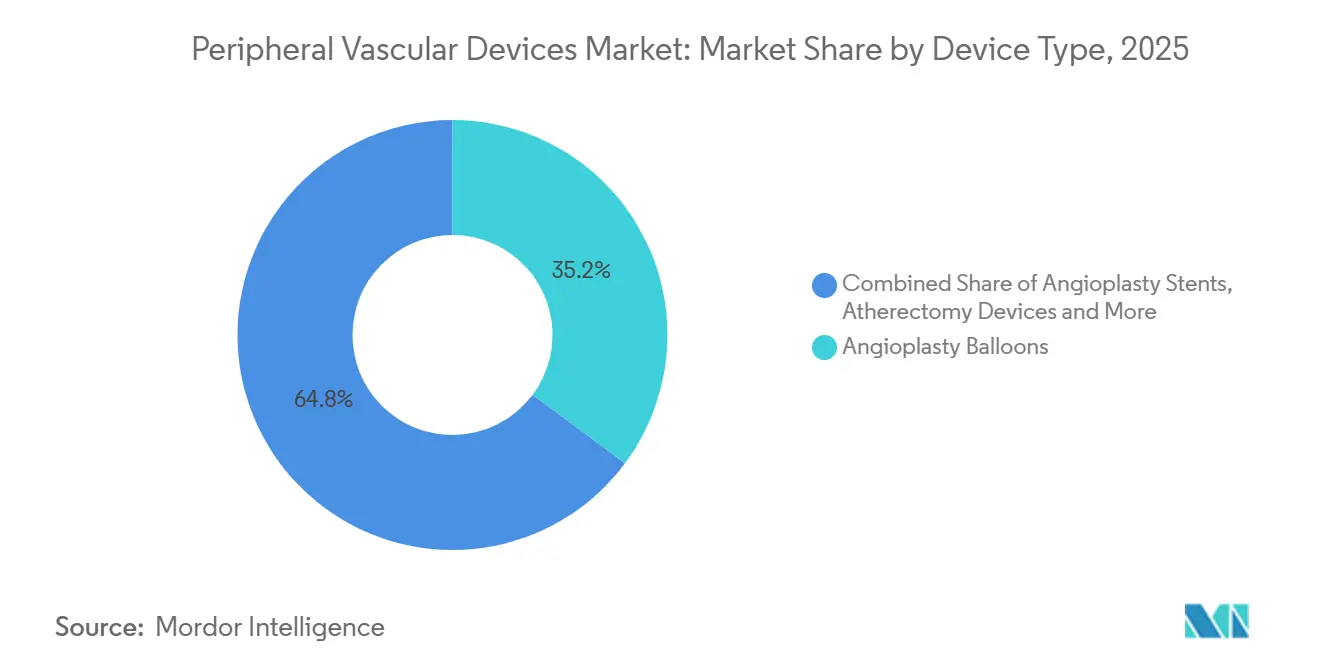
- By device type, angioplasty balloons led with 35.18% revenue in 2025, while atherectomy is forecast to advance at an 8.22% CAGR to 2031.
- By clinical application, peripheral arterial disease represented 45.21% of 2025 sales; deep-vein thrombosis procedures are projected to grow at a 5.65% CAGR through 2031.
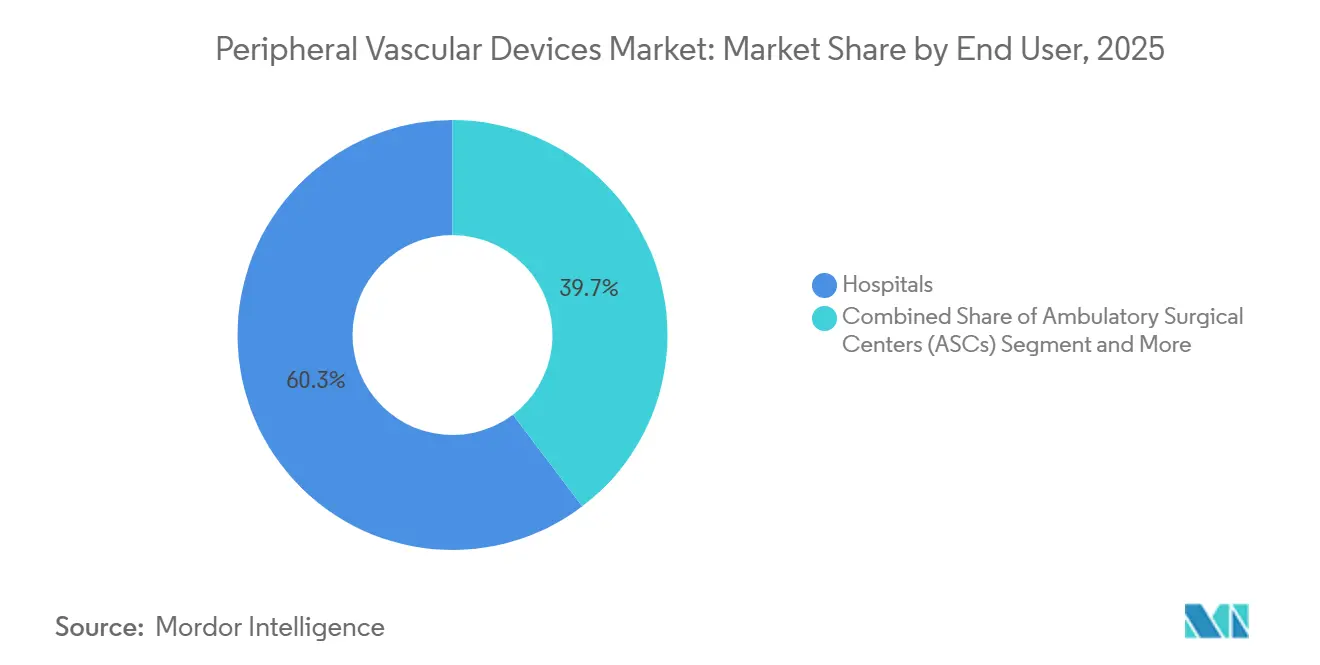
- By end user, hospitals accounted for 60.32% of turnover in 2025, yet ASCs record the fastest expansion at a 7.12% CAGR over 2026-2031.
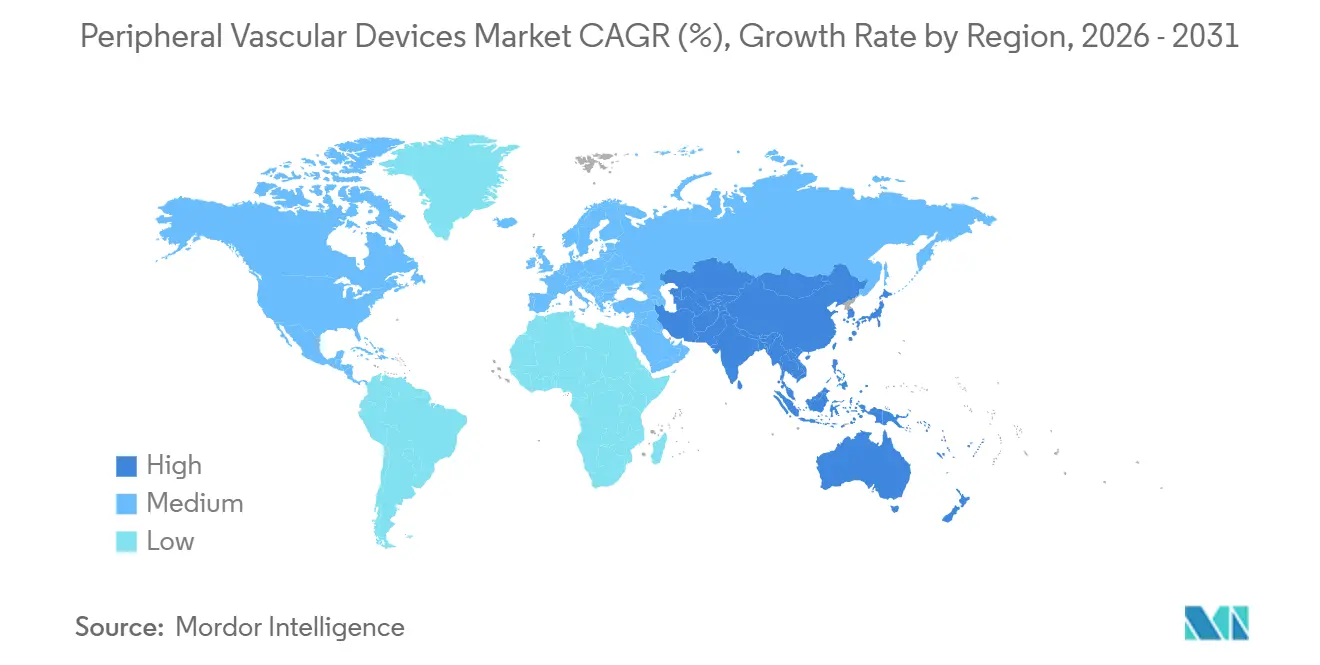
- By geography, North America held 42.25% of 2025 revenue; Asia-Pacific is expected to post a 7.68% CAGR during the forecast window.
Note: Market size and forecast figures in this report are generated using Mordor Intelligence’s proprietary estimation framework, updated with the latest available data and insights as of 2026.
Market Trends and Insights
Drivers Impact Analysis of Peripheral Vascular Devices Market*
| Driver | (~) % Impact on CAGR Forecast | Geographic Relevance | Impact Timeline |
|---|---|---|---|
| Rapid rise in peripheral artery & venous disease prevalence | +1.2% | Global, with highest burden in North America, Europe, and urban Asia-Pacific | Medium term (2-4 years) |
| Shift toward minimally-invasive, catheter-based revascularization | +0.9% | North America & Europe lead; APAC adoption accelerating | Short term (≤ 2 years) |
| Rapid adoption of drug-coated balloon technology | +0.7% | North America & Western Europe; emerging in Latin America | Short term (≤ 2 years) |
| Growth of office-based labs (OBLs) in OECD nations | +0.5% | United States, Germany, Australia; limited in Japan due to regulatory barriers | Medium term (2-4 years) |
| Hospital-to-ASC site-of-care migration for PAD procedures | +0.4% | United States (CMS-driven); gradual adoption in Canada and select EU markets | Short term (≤ 2 years) |
| National screening programmes for critical-limb ischemia (CLI) | +0.3% | China (Healthy China 2030), India (PMSSSY), United Kingdom (NHS vascular checks) | Long term (≥ 4 years) |
| Source: Mordor Intelligence | |||
Rapid Rise in Peripheral Artery & Venous Disease Prevalence
Medicare claims showed a 19% jump in lower-extremity revascularizations between 2019 and 2024, even while average length of stay fell 23%, underscoring the push for faster, device-intensive therapy. Devices held 65.02% of peripheral artery disease market share in 2025 as hospitals prioritized definitive revascularization over medical management. Deep-vein thrombosis incidence across OECD members increased 8% annually over 2020-2025, fueled by post-COVID sequelae and obesity. The American Heart Association positioned DVT as the third largest acute cardiovascular syndrome in its 2025 update, elevating it from a niche condition to a mainstream interventional focus.
Shift Toward Minimally-Invasive, Catheter-Based Revascularization
Open bypass volumes in the United States dropped 31% between 2015 and 2024, while percutaneous interventions rose 47%. Drug-eluting stents now deliver 78% 5-year patency in femoropopliteal disease, neutralizing the historic durability edge of surgery. Japan’s 2024 reimbursement decision on atherectomy prompted a 40% spike in procedure counts the next quarter.
Rapid Adoption of Drug-Coated Balloon Technology
Drug-coated balloons (DCBs) captured 29% of global angioplasty-balloon income in 2025. The COMPARE trial reported 83% 12-month patency with paclitaxel balloons versus 68% for uncoated options. Safety dialog continues: the FDA ordered 5-year surveillance studies and expanded mortality warnings in 2024, tempering U.S. growth but accelerating European interest in sirolimus-based alternatives.
Growth of Office-Based Labs in OECD Nations
OBLs handled 22% of U.S. peripheral interventions in 2025, translating to USD 2.1 billion in device sales at 35% lower facility cost relative to hospital outpatient departments. Germany and Australia widened OBL-eligible code lists in 2024-2025, propelling volume out of inpatient settings.
Restraints Impact Analysis of Peripheral Vascular Devices Market*
| Restraint | (~) % Impact on CAGR Forecast | Geographic Relevance | Impact Timeline |
|---|---|---|---|
| Device reimbursement cuts in the US & select EU markets | -0.6% | United States (CMS bundled payments), Germany (DRG revisions), United Kingdom (NICE restrictions) | Short term (≤ 2 years) |
| Safety concerns over paclitaxel-eluting peripherals | -0.4% | Global, with heightened scrutiny in United States (FDA), European Union (EMA), and Japan (PMDA) | Medium term (2-4 years) |
| Supply-chain fragility for specialty polymers & nitinol | -0.3% | Global, with acute shortages in North America and Europe during 2024-2025 | Short term (≤ 2 years) |
| Short product life-cycles driving inventory obsolescence | -0.2% | Primarily affects North America and Western Europe; less pronounced in price-sensitive APAC markets | Medium term (2-4 years) |
| Source: Mordor Intelligence | |||
Device Reimbursement Cuts in the US & Select EU Markets
The 2026 CMS bundled-payment ceiling of USD 18,500 per 90-day PAD episode forces hospitals to secure 15-25% device discounts. Germany trimmed lower-extremity DRG weights 8% in 2025; United Kingdom guidance now limits first-line DCB use to in-stent restenosis, curbing premium-technology uptake.
Safety Concerns Over Paclitaxel-Eluting Peripherals
FDA-mandated labeling revisions in 2024 follow a meta-analysis showing a 1.4% absolute mortality rise at five years. Japan’s PMDA paused new paclitaxel clearances pending local registry data, while EU regulators require annual imaging but have stopped short of withdrawal[1].
*Our forecasts treat driver/restraint impacts as directional, not additive. The impact forecasts reflect baseline growth, mix effects, and variable interactions.
Peripheral Vascular Devices Market Segment Analysis
By Device Type:
Atherectomy Drives Premium ShiftAtherectomy revenue is expected to post an 8.22% CAGR between 2026-2031, the highest among device classes. The peripheral vascular devices market share for angioplasty balloons was 35.18% in 2025, but aggressive price competition from Asian generics cut average selling prices 12% compared with 2022. The peripheral vascular devices market size for atherectomy systems is projected to reach a significant revenue by 2031, alongside the calcium-heavy lesion mix and supportive coding in Japan and Australia. Directional atherectomy plus DCB achieved 81% 18-month patency in calcified vessels per the DEFINITIVE LE data set. Hospitals, however, cap usage to imaging-confirmed severe calcification because a single catheter still costs USD 2,500-3,500.
Second-tier products illustrate polarization. Thrombectomy adoption surged after FDA clearance of aspiration systems for iliofemoral DVT in 2024. Self-expanding stents edge toward commoditization, with vendors pivoting to fracture-resistant alloys and thinner strut profiles. IVC filters have declined after updated ACCP guidelines against prophylactic use, whereas guidewires and sheaths anchor low-margin but indispensable recurring revenue streams.

By Clinical Application:
DVT Gains as PAD MaturesPeripheral arterial disease retained 45.21% revenue in 2025; nonetheless, deep-vein thrombosis procedures are forecast to grow 5.65% annually through 2031. The peripheral vascular devices market size for DVT interventions is set to expand as catheter-directed thrombectomy earns a Class IIa recommendation in the 2024 CHEST guideline[2]. Hospitals devote roughly 2.8 times more device spend treating Rutherford 5-6 critical-limb ischemia than claudication cases because multilevel lesions often require adjunct atherectomy and provisional stenting. Pelvic-venous-disorder work gains from dedicated stent launches, whereas acute limb ischemia volumes inch down under better systemic anticoagulation.
Cost-effectiveness remains under scrutiny. A 2025 JAMA Network Open analysis pegged catheter-directed thrombolysis at USD 12,000 per quality-adjusted life year above oral therapy, near payer thresholds. Vendors bankroll real-world registries to prove savings from avoided post-thrombotic syndrome, aiming to entrench the procedure.
By End User:
ASCs Reshape Purchasing DynamicsHospitals controlled 60.32% of 2025 turnover, yet ambulatory surgical centers clock a 7.12% CAGR for 2026-2031—the fastest across settings. The peripheral vascular devices market share of hospitals will dip by 2031 as CMS and private payers enlarge ASC-covered code lists. Group-purchasing leverage lets ASCs pay 23% less than hospitals for comparable devices. Vendors answer with ASC-labeled SKUs that strip accessory kits and adopt consignment or per-case pricing. OBLs, a clinic subset, already capture 22% of U.S. peripheral procedures but face possible slowdowns where state boards propose tighter oversight.
Hospitals maintain dominance in complex, high-acuity cases requiring hybrid open and endovascular techniques as well as immediate surgical backup. That bifurcation steers routine femoropopliteal angioplasty to ASCs yet keeps multilevel critical-limb work inside tertiary centers.
Geography Analysis
North America Peripheral Vascular Devices Market
North America provided 42.25% of 2025 revenue. The United States braces for tempered growth as payment caps and site-of-care migration drive negotiations that pull average device spend per case down to USD 1,800 in ASCs versus USD 2,400 in hospitals. Canada invested in cath-lab capacity, yet provincial wait times of 12 weeks restrain volume. Mexico’s private-hospital tier moves ahead with lithotripsy and limus balloons, contrasting with resource-limited public institutions.
APAC Peripheral Vascular Devices Market
Asia-Pacific is on track for a 7.68% CAGR. China’s peripheral vascular devices market benefits from domestic champions capturing significant market share through aggressive pricing. India’s Pradhan Mantri Swasthya Suraksha Yojana accelerates cath-lab installations beyond tier-1 metros, narrowing care disparities. Japan’s aging diabetogenic population fuels PAD prevalence, though device spend per case averages USD 1,600 amid shorter hospital stays. Australia’s 2025 OBL item numbers position it as a proving ground for next-wave sirolimus balloons.
Europe Peripheral Vascular Devices Market
Europe contributes sizeable absolute dollars, yet heterogenous reimbursement rules split adoption curves. Germany reimburses DCBs as first-line therapy, while the United Kingdom caps DCBs for restenosis. France green-lit orbital atherectomy in 2024. Eastern Europe, reliant on earlier-generation balloons, receives EU structural funds earmarked for cath-lab upgrades that will underpin gradual technology catch-up.
Regulatory Landscape
Regulatory scrutiny for peripheral vascular devices is tightening around clinical evidence, post-market surveillance, and pathway-specific documentation across major markets. In the United States, FDA guidance and special controls for peripheral percutaneous transluminal angioplasty (PTA) and specialty catheters, atherectomy devices, embolization devices, and vascular prostheses shape 510(k) expectations, while continued safety scrutiny of paclitaxel-coated peripheral devices keeps longer-term follow-up and labeling alignment central.
In Europe, the EU MDR environment remains documentation-intensive, but March 2026 European Commission delegated regulations (C(2026) 1798 and C(2026) 1809) expanded the Well-Established Technology (WET) list, creating targeted relief for certain well-established cardiovascular devices such as peripheral catheters and guidewires by reducing clinical investigation and technical documentation assessment burdens. In China, the NMPA and CMDE increased specificity in 2026, including April 2026 IVUS diagnostic-device registration review guidance that separates peripheral and coronary registration units, and 2026 medical-device guideline revisions plan spanning hundreds of Class II and Class III categories, reinforcing the need for device-specific dossiers and locally aligned clinical evidence.
Competitive Landscape
Moderate consolidation characterizes the space: Medtronic, Boston Scientific, Abbott, BD (Bard), and Cook Medical together control a significant share of global sales. Integrated portfolios enable these players to lock multi-year supply agreements as hospitals pursue bundled discounts. Technology arms races persist—Medtronic’s IN.PACT Admiral holds U.S. DCB leadership through 5-year data, while Abbott’s Supera stent wins in flexion-heavy segments owing to kink resistance. Boston Scientific leveraged liquidity from its 2024 Axonics sale to launch Ranger DCB across Europe in 2025.
Mid-sized disruptors fill niches. Shockwave Medical rode intravascular lithotripsy to a USD 600 million segment inside four years, pressuring legacy atherectomy vendors. Chinese and Indian entrants—including MicroPort and Meril—pick off price-sensitive territories in Eastern Europe and Latin America with CE-marked generics running 40-50% beneath Western tags. Patent cliffs loom: core IN.PACT paclitaxel coat patents expire 2027-2028, inviting biosimilar influx unless incumbents transition clinics to limus formulations. International Medical Device Regulators Forum harmonization lowers filing barriers, further opening doors for lean, region-focused competitors.
Peripheral Vascular Devices Industry Leaders
-
Abbott Laboratories
-
Boston Scientific Corporation
-
Becton, Dickinson and Company
-
Medtronic
-
Cook Medical
- *Disclaimer: Major Players sorted in no particular order
Peripheral Vascular Devices Market Companies Covered in this Report
- Abbott Laboratories
- AngioDynamics
- Asahi Intecc Co., Ltd.
- Beckton Dickinson
- BIOTRONIK
- Boston Scientific
- Cardinal Health
- Cardiovascular Systems
- Cook Group
- iVascular S.L.U.
- Medtronic
- MicroPort
- Nipro
- Penumbra
- Philips Healthcare (Spectranetics)
- Shockwave Medical Inc.
- Teleflex
- Terumo
Market Opportunities and Future Outlook
White-space is widening in deep venous and below-the-ankle disease, where dedicated devices and reimbursement mechanisms are becoming more defined. In January 2026, FDA approval of W. L. Gore & Associates GORE VIABAHN FORTEGRA Venous Stent for IVC, iliac, and iliofemoral indications broadened the addressable device set for deep venous disease and supports wider standardization of venous stenting pathways beyond off-label use. At the same time, January 2026 dedicated CPT codes for inframalleolar procedures created a clearer reimbursement route for pedal revascularization, which aligns with rising focus on chronic limb-threatening ischemia (CLTI) workflows across ASCs, OBLs, and hospital outpatient settings.
Evidence development is also shifting toward approaches that preserve future treatment options, address calcified anatomy, and respond to drug-coating safety debates. The 2025 FDA De Novo clearance for Reflow Medicals Spur Peripheral Retrievable Stent System for infrapopliteal disease, along with 2026 trial updates (including DEEPER REVEAL 12-month results and peer-reviewed pedal-intervention outcomes for Cagent Vasculars Serranator serration balloon), points to a pipeline of reversible or vessel-preparation tools aimed at limb salvage endpoints rather than single-procedure success. Drug-coated balloon innovation is moving into sirolimus platforms as well, supported by 2026 randomized SirPAD results presented by Concept Medical for its MagicTouch PTA sirolimus-coated balloon versus uncoated angioplasty, which offers a commercialization and tendering lever in markets where paclitaxel labeling and surveillance requirements constrain adoption.
Recent Industry Developments in Peripheral Vascular Devices Market
- July 2026: Medtronic shared 12-month outcomes from its IN.PACT AV drug-coated balloon study, reporting 70.2% target lesion primary patency. While AV access is adjacent to peripheral arterial interventions, the update underscores ongoing investment in drug-coated balloon evidence packages and post-market follow-up that can influence payer and provider confidence in coated-balloon categories.
- September 2025: Johnson & Johnson launched the Shockwave Javelin Peripheral intravascular lithotripsy (IVL) catheter across Europe. The rollout expanded access to calcium-modification therapy in peripheral interventions, increasing competitive pressure on atherectomy and specialty balloon strategies for complex calcified lesions.
- August 2024: The FDA cleared aspiration thrombectomy systems for iliofemoral deep vein thrombosis (DVT), supporting broader adoption of catheter-directed thrombectomy in acute venous care. This regulatory step increased vendor activity around DVT thrombectomy platforms and helped underpin guideline and hospital-protocol updates for venous interventions.
Peripheral Vascular Devices Market Report Scope and Research Methodology
Market Definition and Coverage
This market covers the revenue generated from devices used to diagnose, access, navigate, and treat diseases of peripheral arteries and veins, across hospitals and outpatient settings, with values reported in USD at the global level.
Scope exclusions: Coronary and neurovascular devices are excluded, and only products used for peripheral vascular procedures are counted.
Segments Covered in This Report
- By Device Type
- Angioplasty Balloons
- Angioplasty Stents
- Atherectomy Devices
- Thrombectomy Devices
- Embolic Protection Devices
- Inferior Vena Cava (IVC) Filters
- Peripheral Guidewires
- Others
- By Clinical Application
- Peripheral Arterial Disease (PAD)
- Critical Limb Ischaemia (CLI)
- Deep Vein Thrombosis (DVT)
- Other Clinical Applications
- By End User
- Hospitals
- Ambulatory Surgical Centers (ASCs)
- Office-Based Labs (OBLs)
- Specialty Vascular & Cardiology Clinics
- By Geography
- North America
- United States
- Canada
- Mexico
- Europe
- Germany
- United Kingdom
- France
- Italy
- Spain
- Rest of Europe
- Asia-Pacific
- China
- India
- Japan
- Australia
- South Korea
- Rest of Asia-Pacific
- Middle East and Africa
- GCC
- South Africa
- Rest of Middle East and Africa
- South America
- Brazil
- Argentina
- Rest of South America
- North America
Data Sources, Market Sizing, and Validation
Desk Research
To set a clean starting point, we first mapped the clinical use cases and procedure flow for peripheral vascular care (PAD, CLI, and venous disease), and then tied that to device demand. Public health and epidemiology references, such as CDC publications, WHO statistics, and peer reviewed journals, helped us understand how large the treatable patient pool is and how it is shifting by region.
On the supply and commercialization side, we reviewed company annual reports, investor presentations, product brochures, and regulatory and procurement signals that are publicly visible. Sources such as FDA device databases, OECD health statistics, and official customs and trade portals were used as checks for device availability, adoption, and price movement. We also used paid subscriptions for company financials and intelligence, news and financials, patent databases, and shipment level import-export checks where relevant to validate product presence by geography. The sources named here are illustrative, and we referred to additional public materials as needed for data collection, validation, and clarification.
Primary Interviews and Surveys
Primary work was used to pressure test utilization, pricing, and product mix assumptions that are hard to infer from public documents alone. We spoke with a mix of device focused executives, functional leaders, and managers, along with clinicians and purchasing stakeholders, so the inputs reflect how procedures are actually performed and reimbursed. Since this is a global market, feedback was balanced across APAC, EMEA, and the Americas to align demand signals with regional care pathways and adoption speed.
Distribution of primary research fieldwork respondents
| Company type | Respondent position | Region |
|---|---|---|
| Top tier: 31% | CXOs: 13% | APAC: 42% |
| Mid tier: 55% | Functional/Unit leaders: 30% | EMEA: 33% |
| Smaller Players: 14% | Managers: 57% | Americas: 25% |
Market-Sizing & Forecasting
Sizing started with a top-down demand pool build, where procedure volumes and the treated patient pool were reconstructed by region and then translated into device spend through typical device use per procedure and average selling prices. Once the first total was created, we checked it using selective bottom-up approximations, such as supplier revenue roll ups by product line, channel feedback on mix, and sanity checks of ASP times unit volumes for a few major procedure groups.
Key inputs used in the model included PAD and venous disease prevalence signals, peripheral intervention procedure growth rates, adoption of drug coated balloons and stents, migration of cases to office based labs and ambulatory settings, and observed ASP progression by device class. Where data was sparse for smaller countries, proxy indicators were applied, including healthcare spending direction, import signals, and clinician feedback on availability, and then adjusted during validation calls.
For forecasting, we relied mainly on scenario analysis that links procedure growth and setting shift to different adoption speeds of newer devices, and those scenarios were reviewed with interviewees for realism. The final forecast is kept repeatable, since each step can be rebuilt from the same demand indicators and a transparent pricing and utilization logic.
Data Validation & Update Cycle
Outputs were cross checked against independent signals, including procedure trends discussed by providers, publicly visible product launches and approvals, and the implied per procedure device spend compared with realistic clinical practice. If an outlier appeared in a country or device group, the assumptions were revisited, and follow up calls were triggered to confirm whether the gap came from pricing, utilization, or setting mix.
Before sign off, the model goes through a multi step review so that arithmetic, unit consistency, and year over year movements are internally consistent. Reports are refreshed annually, and interim updates are made when material events occur that can shift adoption, pricing, or procedure volumes. Prior to delivery, a fresh pass is completed so clients receive the most current view possible.
Mordor Intelligence's Global Peripheral Vascular Devices Market Market Size Compared Against Other Published Estimates
Published market sizes for peripheral vascular devices do not always match because each publisher makes different choices on what to include, the base year used, and how procedure demand and pricing are converted into revenue. Currency timing, regional coverage, and the way outpatient settings are handled can also move the total up or down.
The biggest gap driver is scope. Some estimates fold in adjacent categories like coronary or neurovascular devices, while Mordor Intelligence counts only devices used in peripheral arteries and veins and ties revenue to peripheral procedure volumes and device class ASPs.
Benchmark comparison
| Source | Market Size | Gaps in Research Methodology |
|---|---|---|
| Mordor Intelligence | USD 13.92 B (2025) | |
| Industry Publisher A | USD 12.04 B (2025) | Uses a different product taxonomy and base year setup, and the excerpted scope provides limited clarity on how office based labs and ambulatory procedure mix were reflected in demand and pricing. |
| Research Publisher B | USD 10.44 B (2024) | Anchors the model to an earlier base year and can apply a narrower treated cohort or more conservative spend per procedure, which lowers the implied revenue even before forecasting assumptions are applied. |
The table shows that most of the spread is explained by scope choices and how procedure demand gets translated into revenue through utilization and pricing. We keep the steps traceable to treated cohorts, procedure volumes, and realistic ASP movement, which helps decision makers reconcile differences without relying on hidden assumptions.
Key Questions Answered in the Report
How large will peripheral revascularization spending become by 2031?
The peripheral vascular devices market is projected to reach USD 17.80 billion by 2031, expanding at a 4.18% CAGR from 2026.
Which device class is growing the fastest?
Atherectomy systems are forecast to post an 8.22% CAGR between 2026-2031 thanks to their value in calcium-heavy lesions.
Why are ambulatory surgical centers important to suppliers?
ASCs record 7.12% forecast CAGR and secure average device prices 23% below hospital levels, altering vendor pricing models.
How big is Asia-Pacific's contribution to global sales?
Asia-Pacific is set for a 7.68% CAGR and will account for an increasing share as China and India scale screening and cath-lab access.
What is driving the shift away from open surgical bypass?
Five-year patency evidence for drug-eluting stents and payer pressure to cut USD 35,000 bypass costs favor catheter-based alternatives.