
False Eyelashes Market Size and Share
Market Overview
| Study Period | 2021 - 2031 |
|---|---|
| Market Size (2026) | USD 2.49 Billion |
| Market Size (2031) | USD 3.37 Billion |
| Growth Rate (2026 - 2031) | 6.24 % |
| Fastest Growing Market | Middle East and Africa |
| Largest Market | Asia Pacific |
| Market Concentration | Medium |
Major Players
*Disclaimer: Major Players sorted in no particular order Image © Mordor Intelligence. Reuse requires attribution under CC BY 4.0. |
|
False Eyelashes Market Analysis by Mordor Intelligence
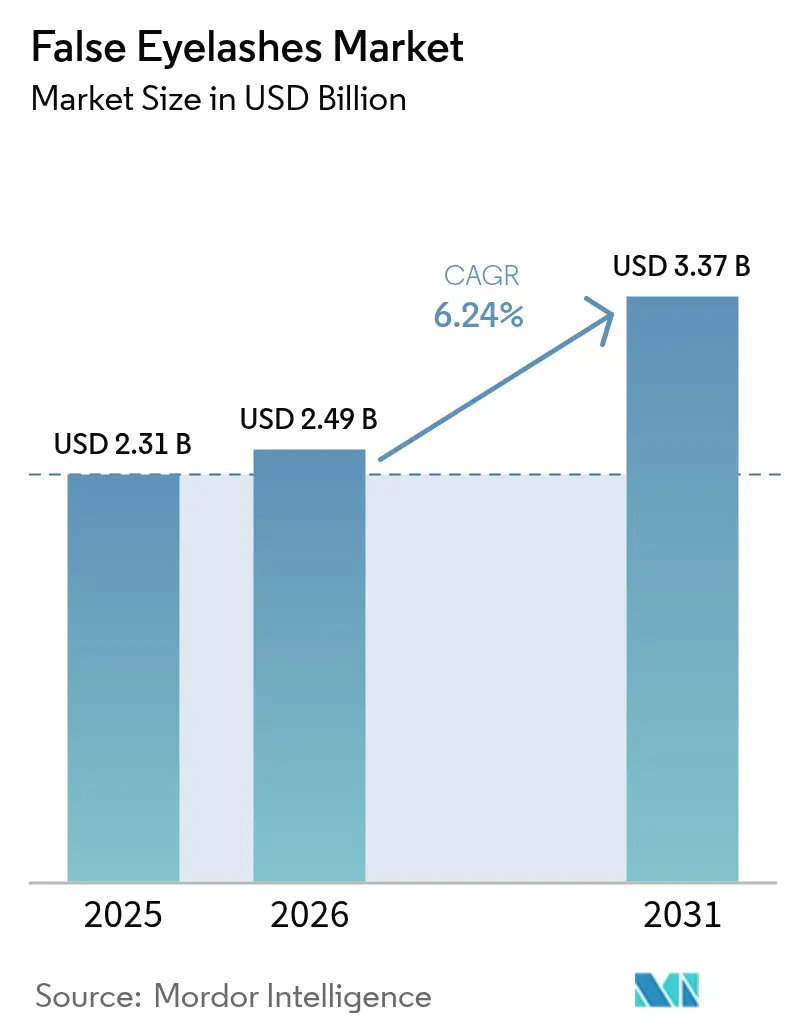
The False eyelashes market size is expected to increase from USD 2.31 billion in 2025 to USD 2.49 billion in 2026 and reach USD 3.37 billion by 2031, growing at a CAGR of 6.24% over 2026-2031. A steadily widening digital beauty ecosystem is steering consumers toward quick visual transformations that traditional retail has struggled to match. Rising penetration of virtual try-on tools, live-stream selling, and creator-led tutorials continues to shorten the discovery-to-purchase cycle for lash products. Strip formats still dominate sales volume, yet faster-growing magnetic and reusable options highlight how convenience and sustainability are reshaping preferences. Premiumization is another structural shift, as affluent shoppers treat high-quality synthetic or human-hair lashes as affordable luxuries that complement broader wellness spending. Heightened regulatory attention on lash adhesives and mounting scrutiny of single-use plastics serve as guardrails that push manufacturers toward safer formulations and greener packaging.
Key Report Takeaways
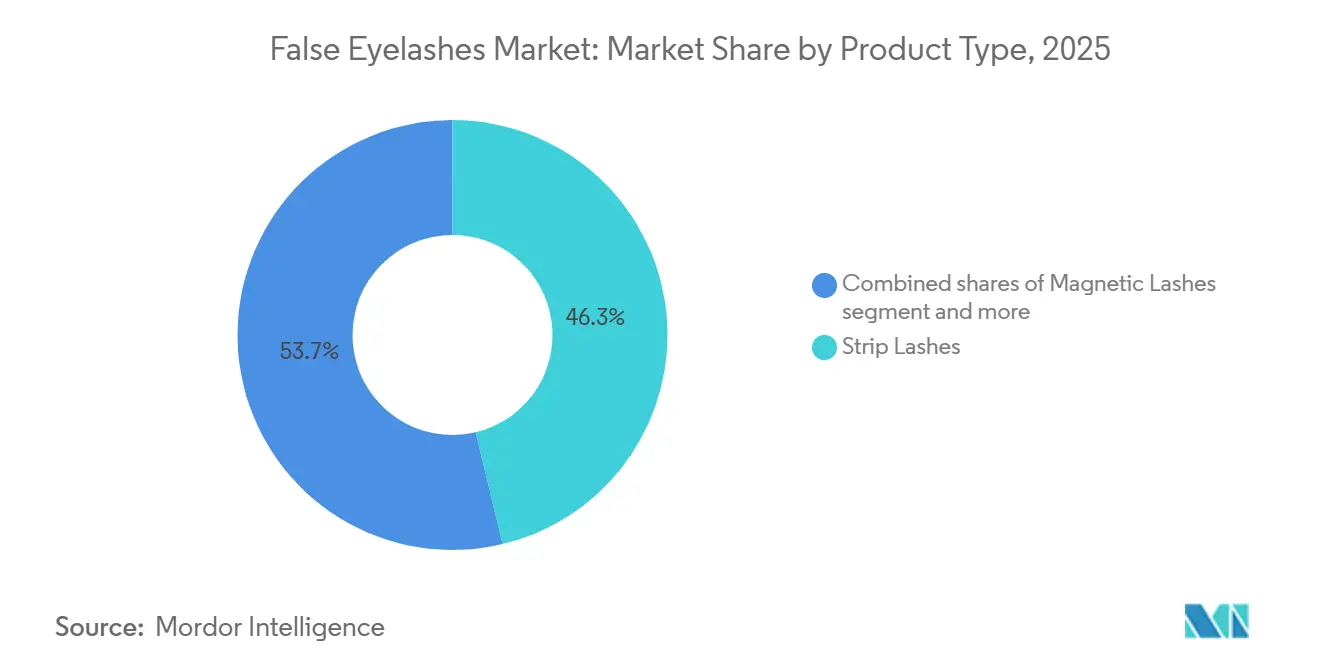
- By product type, strip lashes led with 46.27% of the False eyelashes market share in 2025; magnetic styles are advancing at an 8.27% CAGR through 2031.
- By raw material, synthetic fibers accounted for 54.59% share of the False eyelashes market size in 2025 and are projected to grow at a 7.58% CAGR to 2031.
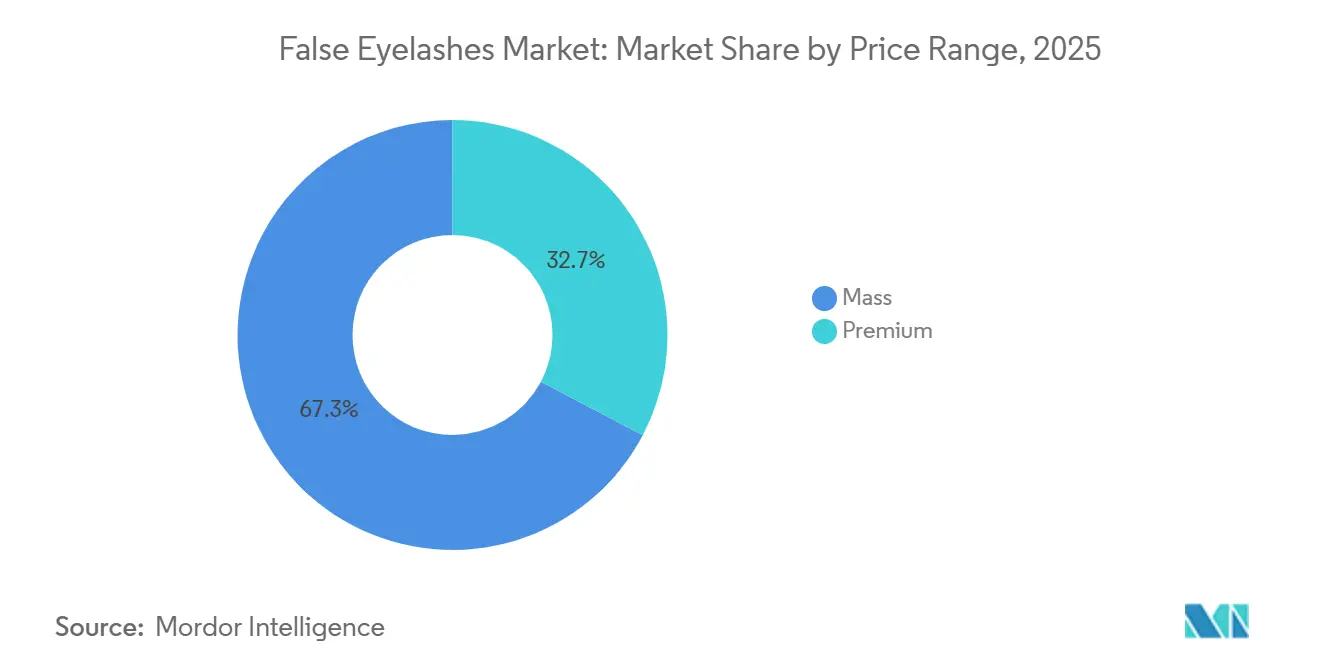
- By price range, mass-market items captured 67.28% revenue share in 2025, while premium lashes are forecast to expand at a 7.95% CAGR over 2026-2031.
- By usage, disposable options accounted for 70.25% of the 2025 volume; reusable variants are expected to grow at a 6.80% CAGR through 2031.
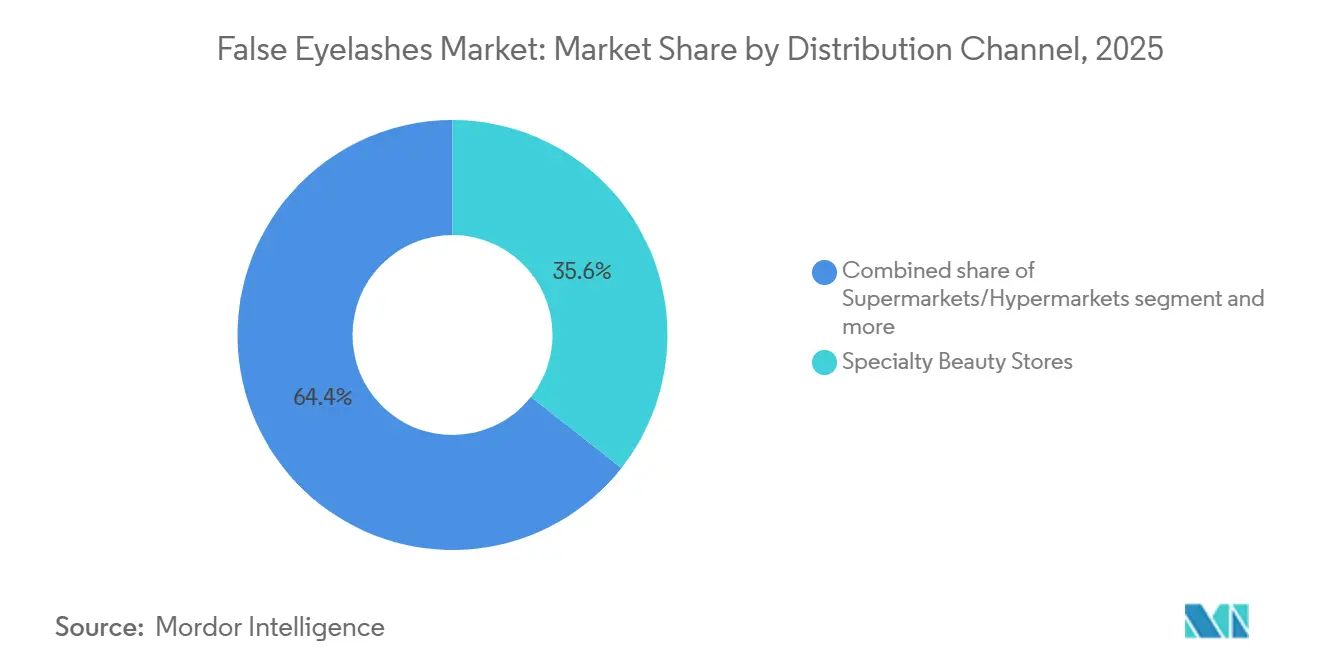
- By distribution channel, specialty beauty stores held a 35.62% share in 2025, while online retail is on track for a 7.11% CAGR through 2031.
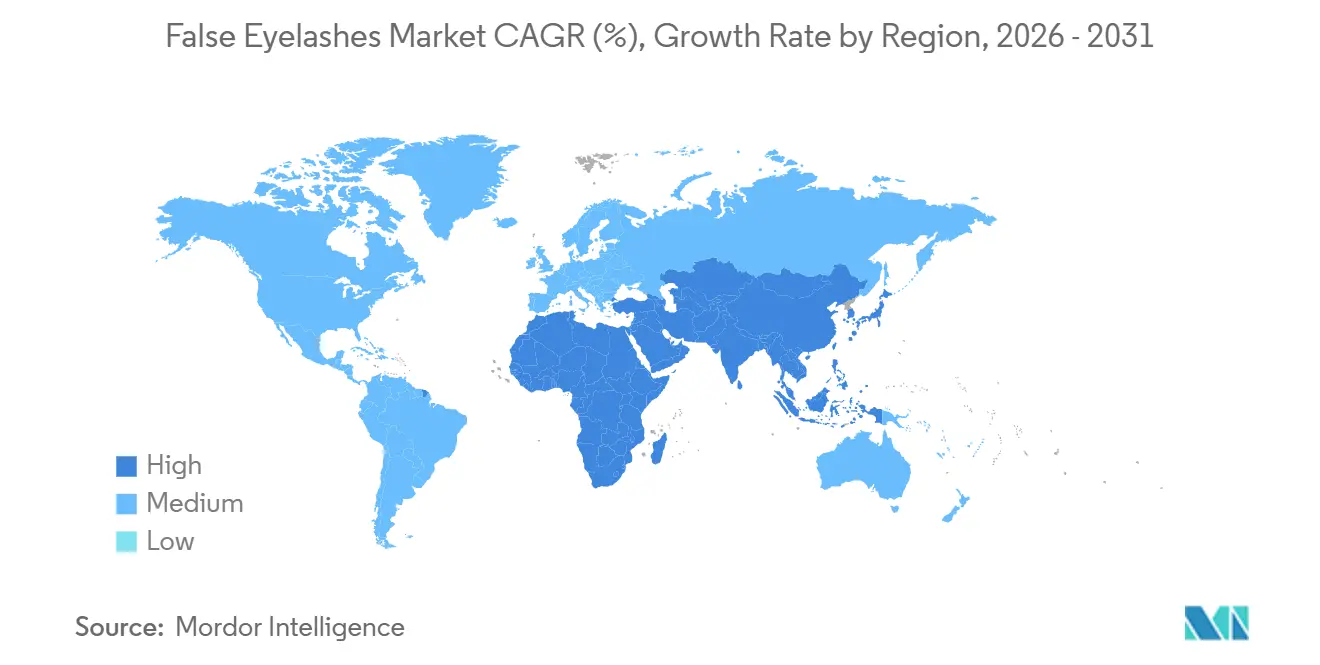
- By geography, Asia-Pacific contributed 37.54% of 2025 revenue; the Middle East and Africa represent the fastest route to incremental growth with an 8.84% CAGR to 2031.
Note: Market size and forecast figures in this report are generated using Mordor Intelligence’s proprietary estimation framework, updated with the latest available data and insights as of 2026.
Global False Eyelashes Market Trends and Insights
Drivers Impact Analysis*
| Driver | (~) % Impact on CAGR Forecast | Geographic Relevance | Impact Timeline |
|---|---|---|---|
| Growing consumer emphasis on eye makeup and facial aesthetic enhancement | +1.2% | Global, strongest in Asia-Pacific and Middle East | Medium term (2-4 years) |
| Rising influence of social media, beauty influencers, and digital tutorials | +1.4% | Global, led by North America, Europe, urban Asia | Short term (≤ 2 years) |
| Increasing demand for natural-looking and customizable lash styles | +0.9% | North America, Europe, affluent Asia-Pacific | Medium term (2-4 years) |
| Growing preference for DIY beauty solutions | +0.8% | Global, post-pandemic acceleration | Short term (≤ 2 years) |
| Rising popularity of reusable and premium lashes | +0.7% | North America, Europe, Middle East | Long term (≥ 4 years) |
| Expansion of affordable and mass-market product offerings | +0.6% | Asia-Pacific core, spillover to South America and Africa | Medium term (2-4 years) |
| Source: Mordor Intelligence | |||
Growing Consumer Emphasis on Eye Makeup and Facial Aesthetic Enhancement
Eye makeup has become the fastest-growing category within color cosmetics, as consumers allocate more of their beauty budgets to products that enhance facial symmetry and expressiveness. This shift is partly driven by the rise of video conferencing and selfie culture, which magnify the importance of eye appearance in digital interactions. The broader beauty industry is expected to grow at 5% CAGR through 2030, with prestige segments outpacing mass offerings. False eyelashes benefit from this trend because they deliver instant transformation without the skill required for intricate eyeshadow or liner techniques. The category is also capturing share from lash-extension services, which cost USD 200-300 per session and require maintenance every 2-3 weeks. Disposable strip lashes, priced at USD 5-15, offer a cost-effective alternative for budget-conscious consumers seeking occasional glamour rather than a daily commitment.
Rising Influence of Social Media, Beauty Influencers, and Digital Tutorials
Social media platforms have democratized beauty expertise, enabling influencers to reach millions of followers with product demonstrations and application tips. A 2024 study found that influencer credibility significantly impacts purchase intent among Gen Z consumers in emerging markets, with perceived authenticity driving higher conversion rates than celebrity endorsements, according to the MDPI[1]Source: Chiara Aprilia, “Influencer Credibility and Gen Z Purchase Intent,” MDPI Journals, mdpi.com . This dynamic is particularly potent for false eyelashes, where visual before-and-after content generates high engagement and shareability. Brands are responding by seeding products to micro-influencers with 10,000-50,000 followers, who command higher trust than macro-influencers despite smaller reach. The shift toward short-form video on TikTok and Instagram Reels has also compressed the purchase cycle, as viewers can click through to e-commerce sites within seconds of watching a tutorial. This immediacy favors brands with strong digital infrastructure and fast fulfillment capabilities, creating a barrier for legacy players that rely on wholesale distribution.
Increasing Demand for Natural-Looking and Customizable Lash Styles
Consumers are moving away from the dramatic, uniform lashes that dominated the 2010s toward styles that mimic natural lash patterns with varied lengths and densities. This trend reflects a broader shift in beauty ideals toward "no-makeup makeup" and individuality over conformity. Individual lashes and lash clusters are gaining traction because they allow users to customize placement and density, creating bespoke looks that suit their eye shape and personal aesthetic. Magnetic lashes are also benefiting from this trend, as they eliminate the mess and skill barrier of adhesive application, making it easier for novices to achieve professional-looking results. The customization trend is pushing brands to expand their SKU counts, offering multiple lengths, curls, and materials within the same product line. This proliferation of options increases inventory complexity but also raises barriers to entry for new competitors that lack the scale to manage diverse portfolios.
Growing Preference for DIY Beauty Solutions
The pandemic accelerated the shift toward at-home beauty routines, as salon closures forced consumers to replicate professional services themselves. This behavior has persisted even as salons reopened, because many consumers discovered that DIY solutions offer comparable results at a fraction of the cost. False eyelashes are well-positioned to meet this demand, as they require minimal equipment and can be applied in under 10 minutes with practice. The rise of hybrid work has also reduced the frequency of formal occasions, making daily lash extensions less practical and increasing the appeal of disposable lashes for specific events. Brands are responding by simplifying application processes through innovations like pre-glued strips and magnetic systems that eliminate the need for separate adhesive. These product improvements are expanding the addressable market by converting consumers who previously found traditional lashes too difficult or time-consuming to apply.
Restraints Impact Analysis*
| Restraint | (~) % Impact on CAGR Forecast | Geographic Relevance | Impact Timeline |
|---|---|---|---|
| Risk of eye irritation and allergic reactions from adhesives | -0.5% | Global, with higher incidence in markets with lax quality standards | Short term (≤ 2 years) |
| Proliferation of counterfeit and low-quality products | -0.4% | Asia-Pacific, Middle East, and Africa | Medium term (2-4 years) |
| High price of premium and high-quality lashes | -0.3% | Emerging markets with lower disposable incomes | Long term (≥ 4 years) |
| Environmental concerns related to synthetic lash materials | -0.2% | Europe and North America, with regulatory influence spreading | Long term (≥ 4 years) |
| Source: Mordor Intelligence | |||
Risk of Eye Irritation and Allergic Reactions from Adhesives
Lash adhesives contain cyanoacrylate compounds that can trigger allergic contact dermatitis, conjunctivitis, and corneal abrasions in sensitive individuals. The FDA regulates cosmetics under the Federal Food, Drug, and Cosmetic Act, but does not require pre-market approval, meaning that unsafe products can reach consumers before adverse events are reported[2]Source: U.S. Food and Drug Administration, “FDA Authority Over Cosmetics,” fda.gov. This regulatory gap creates risk for brands, as a single high-profile incident can generate negative publicity and erode consumer trust across the category. The rise of magnetic lashes partially mitigates this risk by eliminating adhesive, but magnetic systems introduce their own concerns about metal sensitivities and the strength of magnetic bonds. Brands that invest in hypoallergenic formulations and conduct dermatological testing can command price premiums and reduce liability exposure, but these measures increase production costs and may not be economically viable for mass-market players. Consumer education on proper application and removal techniques is also critical, as improper use accounts for a significant share of adverse events.
Proliferation of Counterfeit and Low-Quality Products
The false eyelashes category is plagued by counterfeit products that mimic premium brands' packaging and branding but use inferior materials and adhesives. These counterfeits are particularly prevalent in online marketplaces and informal retail channels in the Asia-Pacific, the Middle East, and Africa, where enforcement of intellectual property rights is inconsistent. Counterfeit lashes not only erode brand equity and pricing power but also pose safety risks, as they often contain untested adhesives or materials that can cause eye infections or allergic reactions. The FDA and customs agencies periodically seize counterfeit cosmetics, but the volume of illicit trade far exceeds enforcement capacity. Brands are responding by investing in anti-counterfeiting technologies such as holographic labels, QR codes that link to authentication databases, and blockchain-based supply chain tracking. However, these measures add cost and complexity, and their effectiveness depends on consumer willingness to verify authenticity before purchase. The proliferation of counterfeits also creates a "lemons problem," where consumers become skeptical of all products and default to the lowest-price options, further compressing margins.
*Our forecasts treat driver/restraint impacts as directional, not additive. The impact forecasts reflect baseline growth, mix effects, and variable interactions.
Segment Analysis
By Product Type: Magnetic Innovation Challenges Strip Dominance
Strip lashes held 46.27% of 2025 revenue, driven by their ease of application and wide availability across all price points and retail channels. Magnetic lashes, though smaller in absolute share, will expand at 8.27% CAGR through 2031 as manufacturers refine magnetic strength and develop thinner, more comfortable bands. Individual lashes appeal to advanced users seeking customizable looks, but their application complexity limits mass-market adoption. Other product types, including lash clusters and accent lashes, serve niche occasions like weddings or photo shoots. The shift toward magnetic systems reflects a broader trend in beauty toward products that reduce skill barriers and application time, catering to time-pressed consumers who want professional results without professional techniques.
The product-type segmentation is also being reshaped by the rise of hybrid formats that combine features of multiple categories. For example, some brands now offer magnetic strip lashes with individual lash clusters that can be added for extra volume, blurring the lines between segments. This innovation is driven by consumer demand for versatility and value, as hybrid products justify higher price points by serving multiple use cases. The strip-lash segment remains dominant because it offers the best balance of ease, affordability, and aesthetic impact, but its growth is constrained by the maturity of the format and limited scope for further innovation. Magnetic lashes, by contrast, are still in the early stages of adoption and benefit from novelty appeal and word-of-mouth buzz among early adopters.



By Raw Material: Synthetic Fibers Gain Ground on Texture Parity
Synthetic hair accounted for 54.59% of 2025 revenue and will grow at a 7.58% CAGR, outpacing human hair as materials science narrows the gap in softness and natural appearance. Human hair, prized for its authentic texture and ability to hold curl, remains the choice for premium and bridal segments but is constrained by supply limitations and ethical sourcing concerns. Other materials, including silk and mink, occupy ultra-premium niches but face backlash from animal-welfare advocates and regulatory restrictions in some markets. The dominance of synthetic materials reflects their cost advantage; synthetic lashes can be produced at one-tenth the cost of human hair, while natural hair varies in quality and requires more intensive processing.
The raw-material segmentation is also influenced by cultural preferences: Asian consumers show greater acceptance of synthetic lashes due to familiarity with synthetic wigs and hair extensions, while Western consumers retain a preference for natural materials. Brands are responding by developing hybrid materials that blend synthetic and natural fibers, offering a middle ground on price and performance. The synthetic segment is also benefiting from advances in fiber technology, including tapered tips and multi-tonal coloring that mimic natural lash growth patterns. These innovations are eroding the performance gap between synthetic and human hair, making it harder for consumers to justify the price premium for natural materials. However, the synthetic segment faces reputational risks if low-quality products flood the market and reinforce perceptions of inferiority.
By Price Range: Premium Segment Captures Aspirational Spend
Mass-market lashes accounted for 67.28% of 2025 revenue, reflecting their accessibility and wide distribution across drugstores, hypermarkets, and online marketplaces. Premium lashes, priced above USD 20, will grow at a 7.95% CAGR as affluent consumers seek differentiation through celebrity collaborations, luxury packaging, and superior materials. The premiumization trend is being fueled by social media, where influencers showcase high-end products and create aspirational demand among followers. Premium brands are also investing in experiential marketing, including pop-up shops and virtual try-on tools, to justify their price premiums and build emotional connections with consumers.
The price-range segmentation is creating a two-tier market, with mass and premium segments growing faster than mid-priced offerings. This bifurcation reflects broader income inequality trends, as affluent consumers have more disposable income to spend on luxury beauty products, while price-sensitive consumers prioritize affordability over brand prestige. Mid-priced brands are struggling to articulate a value proposition that justifies their premium over mass offerings without matching the cachet of luxury brands. Some are responding by repositioning as "masstige" brands that offer premium quality at accessible prices, but this strategy requires significant investment in product development and marketing to be credible. The premium segment is also vulnerable to economic downturns, as consumers quickly trade down when discretionary spending contracts, making it a higher-risk, higher-reward positioning.
By Usage: Reusables Gain Traction on Sustainability Messaging
Disposable lashes accounted for 70.25% of 2025 volume, favored for their hygiene, convenience, and low upfront cost. Reusable lashes will grow at 6.80% CAGR as sustainability-conscious consumers embrace products that reduce waste and offer better long-term value. The reusable segment is being driven by Gen Z buyers, who prioritize environmental impact in purchase decisions and are willing to invest time in proper cleaning and storage. Brands are supporting this shift by providing cleaning solutions, storage cases, and instructional content that reduce the friction of reusable adoption. However, the reusable segment faces challenges in overcoming hygiene concerns, as many consumers perceive used lashes as unsanitary even after cleaning.
The usage segmentation is also being influenced by the rise of subscription models, where consumers receive monthly deliveries of disposable lashes at a discount, reducing the per-unit cost and eliminating the need to reorder. Subscriptions appeal to frequent users who want convenience and predictability, and they provide brands with recurring revenue and customer data that can inform product development. The disposable segment remains dominant because it aligns with consumer preferences for simplicity and instant gratification, but its growth is constrained by environmental critiques and the potential for regulatory restrictions on single-use plastics. Reusable lashes, while growing faster, will remain a minority segment unless brands can overcome hygiene perceptions and reduce the effort required for maintenance.
By Distribution Channel: Online Retail Disrupts Specialty Store Model
Specialty beauty stores accounted for 35.62% of 2025 revenue, leveraging curated assortments, knowledgeable staff, and try-before-you-buy experiences. Online retail will grow at a 7.11% CAGR, driven by the convenience of home delivery, wider product selection, and competitive pricing enabled by lower overhead costs. Supermarkets and hypermarkets serve price-sensitive consumers seeking one-stop shopping, while other channels, including salons and direct sales, cater to niche segments. The shift toward online is being accelerated by the proliferation of virtual try-on tools that use augmented reality to simulate how different lash styles will look, reducing the need for in-store testing.
The distribution-channel segmentation is also being reshaped by the rise of direct-to-consumer brands that bypass traditional retail entirely, selling exclusively through their own websites and social media channels. These brands capture higher margins by eliminating wholesale markups and gain direct access to customer data that informs product development and marketing. However, DTC brands face challenges in customer acquisition costs, as they must invest heavily in digital advertising to build awareness and drive traffic. Specialty stores remain relevant for consumers who value expert advice and tactile product evaluation, but they are under pressure to enhance their experiential offerings and integrate online and offline channels to compete with pure-play e-commerce. The online segment is also benefiting from the growth of beauty subscription boxes, which introduce consumers to new brands and products at a discount, driving trial and repeat purchase.
Geography Analysis
Asia-Pacific accounted for 37.54% of 2025 revenue and is both the largest consumer market and the dominant manufacturing hub, with China and Indonesia supplying the majority of global lash production. The region's growth is being driven by rising disposable incomes, urbanization, and the influence of K-beauty and J-beauty trends that emphasize eye makeup. India is emerging as a high-growth market, with McKinsey identifying it as one of the key drivers of global beauty expansion through 2030[3]Source: The State of Beauty 2025, "Consumer Packaged Goods," www.mckinsey.com. The region also benefits from a large base of young, digitally savvy consumers who are early adopters of new beauty trends and are heavily influenced by social media. However, the Asia-Pacific region faces challenges from counterfeit products and fragmented distribution networks that make it difficult for brands to enforce pricing and quality standards.
The Middle East and Africa will grow at 8.84% CAGR through 2031, the fastest rate globally, driven by rising affluence in the GCC, North Africa, and Sub-Saharan Africa. Beauty standards in the region emphasize dramatic eye makeup, creating strong demand for voluminous lashes. The region is also benefiting from the expansion of modern retail formats and e-commerce infrastructure, which are improving product availability and reducing reliance on informal channels. However, the region faces challenges from economic volatility, political instability, and limited local manufacturing capacity, which increase supply chain risks and costs. North America and Europe, while mature, remain significant markets due to high per-capita beauty spending and strong demand for premium and reusable lashes. These regions are also at the forefront of sustainability trends, with consumers and regulators pushing for eco-friendly materials and packaging.
South America is emerging as a battleground for mass-market players seeking volume growth outside saturated regions. Brazil, Argentina, and Colombia are the largest markets, with consumers showing strong affinity for beauty products despite economic challenges. The region's growth is being constrained by currency volatility, inflation, and income inequality, which limit purchasing power and make it difficult for brands to maintain consistent pricing. However, the region offers opportunities for brands that can navigate local distribution networks and tailor products to regional preferences, such as bolder styles and darker colors that complement local skin tones and beauty ideals.

Regulatory Landscape
Regulation in false eyelashes is shaped by a split between the lash article itself and higher-risk adjacent products such as adhesives and magnetic eyeliners. In the United States, the FDA treats eye cosmetics and related products under the Federal Food, Drug, and Cosmetic Act and labeling requirements under the Fair Packaging and Labeling Act (FPLA), keeping product safety and claims discipline central for brands selling strips, clusters, and accessories.
In Europe, compliance complexity increases because the EU Cosmetics Regulation (EC) No 1223/2009 applies to cosmetic products, while lash adhesives may be treated as borderline products and assessed case-by-case under the European Commission Borderline Manual (version 5.5, June 2025). Adhesives and other chemical-mixture components can also trigger obligations under REACH and CLP, highlighted by the Danish Environmental Protection Agency publication on beauty product adhesives (June 2026). Beyond ingredient and labeling considerations, consumer-product rules add traceability pressure for non-cosmetic lash accessories through the EU General Product Safety Regulation, effective December 2024. In Canada, Health Canada enforcement under the Food and Drugs Act and Cosmetic Regulations has included compliance verification activity in 2023-2024 for cyanoacrylate-based cosmetics/adhesives, resulting in stop-sale and stop-distribution actions where conditions were not met.
Competitive Landscape
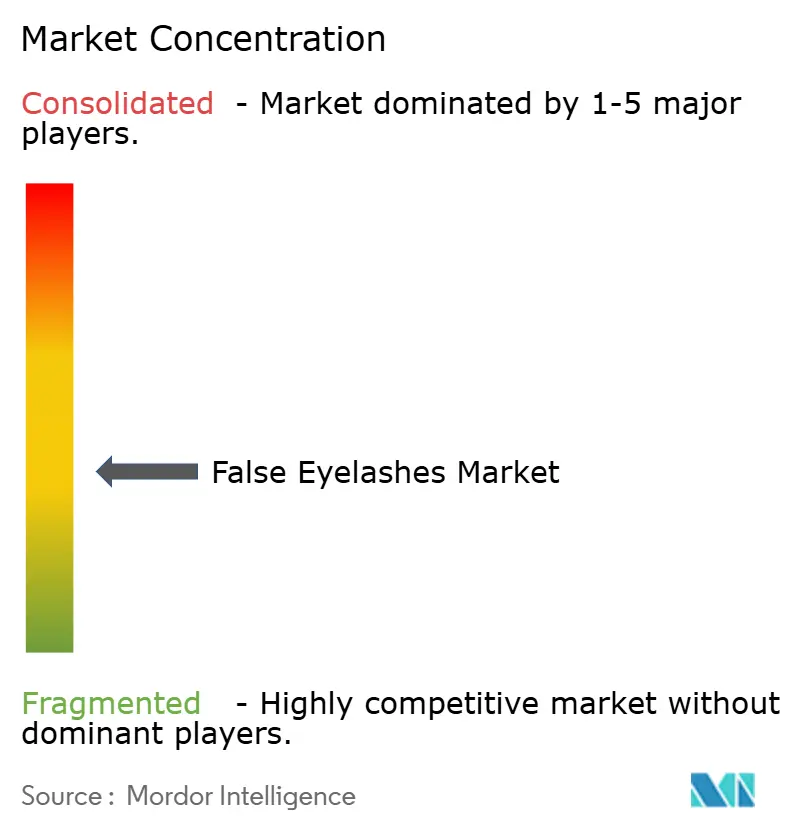
The false eyelashes industry exhibits moderate fragmentation, indicating that the top 5 players, Ardell, Huda Beauty, Kiss Products, Lilly Lashes, and Velour Beauty, hold meaningful but not dominant market share. This structure creates space for regional specialists and direct-to-consumer disruptors to capture niche segments through influencer partnerships, subscription models, and rapid product innovation. Established players are defending their positions by expanding SKU counts, investing in magnetic and reusable formats, and building owned e-commerce channels that reduce dependence on wholesale partners.
The competitive intensity is heightened by low barriers to entry, as contract manufacturers in Asia can produce private-label lashes at minimal cost, enabling new brands to launch with limited capital. White-space opportunities exist in underserved demographics, including older consumers who seek natural-looking lashes for everyday wear, and male consumers who are increasingly adopting grooming and beauty products. Technology is becoming a key differentiator, with brands investing in virtual try-on tools, AI-powered product recommendations, and subscription platforms that enhance convenience and personalization.
Emerging disruptors are leveraging social commerce, selling directly through Instagram and TikTok without standalone e-commerce sites, and using user-generated content to build authenticity and trust. The competitive landscape is also being shaped by consolidation, as larger players acquire niche brands to expand their portfolios and access new customer segments. However, the industry remains vulnerable to disruption from adjacent categories, such as lash-growth serums and semi-permanent lash extensions, which offer alternative solutions to the same consumer need for enhanced lashes.
False Eyelashes Industry Leaders
-
Ardell Professional
-
Huda Beauty
-
Kiss Products Inc.
-
Lilly Lashes
-
Velour Beauty
- *Disclaimer: Major Players sorted in no particular order

Market Opportunities and Future Outlook
Product and portfolio whitespace sits where safety-led adhesive innovation intersects with glue-free application formats. Magnetic lashes and other low-irritation systems target consumer sensitivity to cyanoacrylate-based adhesives, while also reducing regulatory exposure where adhesives fall under chemical-mixture controls (REACH/CLP) or face stricter enforcement actions such as Health Canada compliance verification. The EU fragrance-allergen labeling update with a compliance date of July 31, 2026 (and a transition period for products already placed on the market) reinforces a broader reformulation and label-management opportunity for brands that sell bundled lash kits with cosmetics-like components (for example, magnetic liners), alongside clearer product classification and documentation (PIF/safety assessment where applicable).
Manufacturing modernization is another near-term opportunity, as patent activity around integrally molded false eyelash processes and automated methods supports a shift away from labor-intensive assembly, improving throughput consistency and material utilization for high-SKU portfolios. Sustainability-led raw-material experimentation is also opening new premium and compliance-led positioning pathways: in May 2026, Universitas Negeri Padang disclosed work on biodegradable false eyelashes using kepok banana stem fibers, complementing market momentum for plant-fiber alternatives (alongside bamboo, hemp, and cotton developments seen in the category). In Europe, packaging compliance has become more operationally material, with PPWR-driven identification and recycling-code requirements increasing the payoff for packaging redesign and supplier qualification that reduces customs friction and relabeling risk for cross-border e-commerce shipments.
Recent Industry Developments
- June 2026: Lilly Lashes launched a limited-edition Bratz collection featuring four lash styles, using heat-activated self-adhesive technology. The release emphasizes faster, lower-mess application and supports premium pricing through a pop-culture collaboration that drives discovery across social and specialty channels.
- June 2026: True Beauty Lashes launched LashLovr, a virtual try-on tool developed with Perfect Corp to support its e-commerce experience. The capability shortens the discovery-to-purchase cycle for lash styles and strengthens online conversion by reducing uncertainty around fit and look.
- December 2024: OPT Industries partnered with TAD Beauty to introduce 3D-printed DIY eyelashes. The move signals continued experimentation with advanced manufacturing approaches in premium lashes, expanding the range of materials, designs, and repeatable quality outcomes compared with traditional manual production.


Research Methodology Framework and Report Scope
Market Definition and Coverage
This market covers revenue generated from false eyelashes sold for cosmetic use, across key retail and professional channels, counted at the point of sale to end users and measured in USD for the global total.
Scope exclusions: Eyelash adhesives and removers, lash serums, and salon lash-extension services are excluded from this market sizing.
Segmentation Overview
-
By Product Type
- Strip Lashes
- Magnetic Lashes
- Individual Lashes
- Other Product Types
-
By Raw Material
- Synthetic Hair
- Human Hair
- Others
-
By Price Range
- Mass
- Premium
-
By Usage
- Disposable
- Reusable
-
By Distribution Channel
- Supermarkets/Hypermarkets
- Specialty Beauty Stores
- Online Retail Stores
- Other Distribution Channels
-
By Geography
-
North America
- United States
- Canada
- Mexico
- Rest of North America
-
Europe
- Germany
- United Kingdom
- Italy
- France
- Spain
- Netherlands
- Poland
- Belgium
- Sweden
- Rest of Europe
-
Asia-Pacific
- China
- India
- Japan
- Australia
- Indonesia
- Thailand
- Singapore
- South Korea
- Rest of Asia-Pacific
-
South America
- Brazil
- Argentina
- Colombia
- Chile
- Peru
- Rest of South America
-
Middle East and Africa
- South Africa
- Saudi Arabia
- United Arab Emirates
- Nigeria
- Egypt
- Morocco
- Turkey
- Rest of Middle East and Africa
-
North America
Data Sources, Market Sizing, and Validation
Desk Research
Desk research starts by clarifying what is being sold, where it is sold, and what drives demand across regions, and then it moves into building a usable data spine for the model. We typically review public sources such as UN Comtrade for trade flows tied to relevant beauty accessory codes, World Bank and IMF macro series for consumer spend context, and USITC tariff and import statistics where they help confirm direction and magnitude.
To keep the assumptions grounded, we also look at sources such as SEC filings and annual reports for major beauty companies, investor presentations, and press releases that reference category performance and channel mix. For product and safety context, we refer to public material from regulators and standards bodies, as well as peer-reviewed cosmetic science and dermatology literature where usage and irritation topics are discussed. In a few places, we supplement with paid subscriptions for company financial intelligence, patents, and shipment-level import or export screening, mainly to cross-check coverage and timing. These desk sources are illustrative, and many other public and paid references were used to collect, validate, and clarify data points during the study.
Primary Interviews and Surveys
Primary work was used to pressure-test how demand actually moves by channel and region, and to confirm what buyers treat as a false eyelash purchase versus adjacent eye-beauty items. We spoke with a mix of brand-side leaders, distributors and importers, online sellers, and retail category contacts across the Americas, EMEA, and APAC so assumptions on pricing, product mix, and re-purchase behavior could be corrected where needed.
Distribution of primary research fieldwork respondents
| Company type | Respondent position | Region |
|---|---|---|
| Top tier: 30% | CXOs: 15% | APAC: 45% |
| Mid tier: 54% | Functional/Unit leaders: 32% | EMEA: 37% |
| Smaller Players: 16% | Managers: 53% | Americas: 18% |
Market-Sizing & Forecasting
Sizing starts from a top-down demand build that reconstructs the addressable pool using beauty and personal care spend signals, channel expansion, and regional adoption patterns for eye makeup. Once the overall shape is established, we corroborate it with selective bottom-up checks, such as sampled average selling price (ASP) by lash type, approximate unit movement ranges from channel checks, and distributor-level views to adjust totals where the first pass looks too high or too low.
A few inputs materially move the model, including mix shifts between strip, magnetic, and individual lashes, reusable versus disposable share, online retail penetration, and the spread between mass and premium price bands. We also track practical pricing markers such as pack sizes, promo intensity in online channels, and import-cost pressure that can show up in landed prices and then flow into ASP progression. When coverage gaps appear in bottom-up checks, they are handled through proxying from similar geographies and channel structures, then reconciled back to the top-level demand pool.
For forecasting, scenario analysis is used so the numbers stay explainable and consistent with what industry participants expect, especially around premiumization, social-driven demand cycles, and distribution changes. The scenario ranges are then narrowed using interview consensus on likely pricing, channel growth, and product mix over the forecast window.
Data Validation & Update Cycle
Validation is done through several passes so the final outputs do not rely on one data stream. We compare model results against independent signals such as import trend direction, brand revenue disclosures that mention category growth, and price markers observed across major online and offline channels.
When an unusual jump appears, the assumptions are reviewed, the math is re-checked, and interview follow-ups are triggered to confirm whether the change is real or a modeling artifact. Before sign-off, a second analyst review is completed to confirm that scope, conversions, and regional rollups are consistent. Reports are refreshed annually, and interim updates are made when material events shift pricing, supply availability, or channel structure, followed by a final pre-delivery check so clients receive the latest view.
Mordor Intelligence's Global False Eye Lashes Market Estimate Compared With Other Published Estimates
Published estimates for false eyelashes often vary because the underlying scope and pricing logic are not consistent across sources, even when the same regions are covered. Differences usually show up in what is counted as a product sale, what year is treated as the base, and how ASP changes are carried into the forecast.
Eyelash extension services sit outside Mordor Intelligence's scope, which can widen the spread versus figures that combine at-home false lashes with salon-applied extensions or related aftercare items. Gaps can also come from whether premium pricing is modeled from observed shelf prices and promotion cycles, or from a single blended ASP that can miss online-led discounting. Some publishers update assumptions less frequently, so currency timing and newer channel shifts are not fully reflected.
Benchmark comparison
| Source | Market Size | Gaps in Research Methodology |
|---|---|---|
| Mordor Intelligence | USD 2.49 B (2026) | |
| Trade Publication A | USD 1.26 B (2021) | Uses an earlier base year and often reflects manufacturer-side revenue and narrower channel capture, which can understate premium retail pricing and newer online contribution. |
| Industry Portal B | USD 3.84 B (2025) | May bundle adjacent categories such as extensions or broader eye-beauty enhancements, and can apply aggressive ASP uplift without clearly separating mass versus premium mix changes. |
The range across sources is mostly explained by what is included with false eyelashes and how price and channel mix are carried through time. By keeping the scope tied to product sales and then checking totals against channel and trade signals, the final number stays traceable to simple, repeatable inputs that can be re-tested during updates.


Key Questions Answered in the Report
How large is the False eyelashes market expected to be by 2031?
It is projected to reach USD 3.37 billion by 2031, advancing at a 6.24% CAGR from 2026 to 2031.
Which product type is growing fastest within global lash sales?
Magnetic formats are forecast to grow at an 8.27% CAGR through 2031 as users favor glue-free, time-saving application.
What raw material holds the highest share today?
Synthetic fibers lead with 54.59% of 2025 revenue due to cost efficiency and texture improvements.
Why are reusable lashes gaining attention?
They align with sustainability values and can be worn 10-20 times, lowering per-use cost while cutting plastic waste.
Which region offers the strongest growth outlook?
The Middle East and Africa region is on pace for an 8.84% CAGR through 2031, driven by rising incomes and eye-centric beauty norms.
Page last updated on:


 Your data is secure and never sold or shared.


