
GCC Hair Styling Products Market Size and Share
Market Overview
| Study Period | 2021 - 2031 |
|---|---|
| Forecast Data Period | 2026 - 2031 |
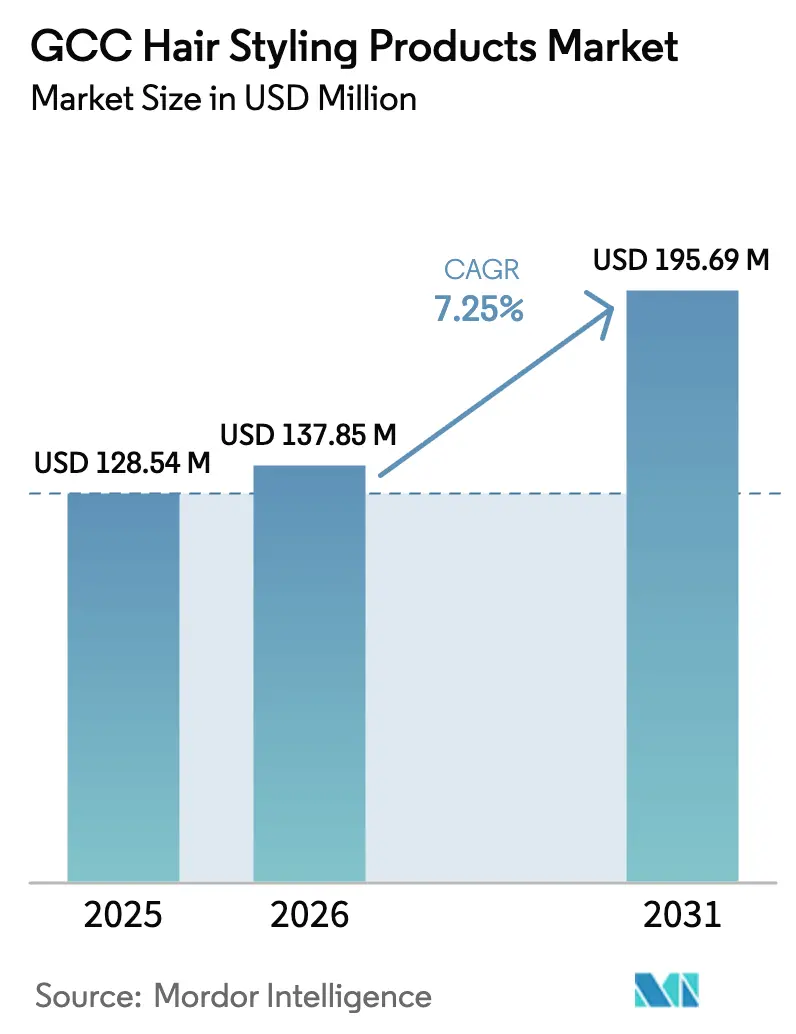
| Base Year Market Size (2025) | USD 128.54 Million |
| Market Size (2026) | USD 137.85 Million |
| Market Size (2031) | USD 195.69 Million |
| Growth Rate (2026 - 2031) | 7.25 % |
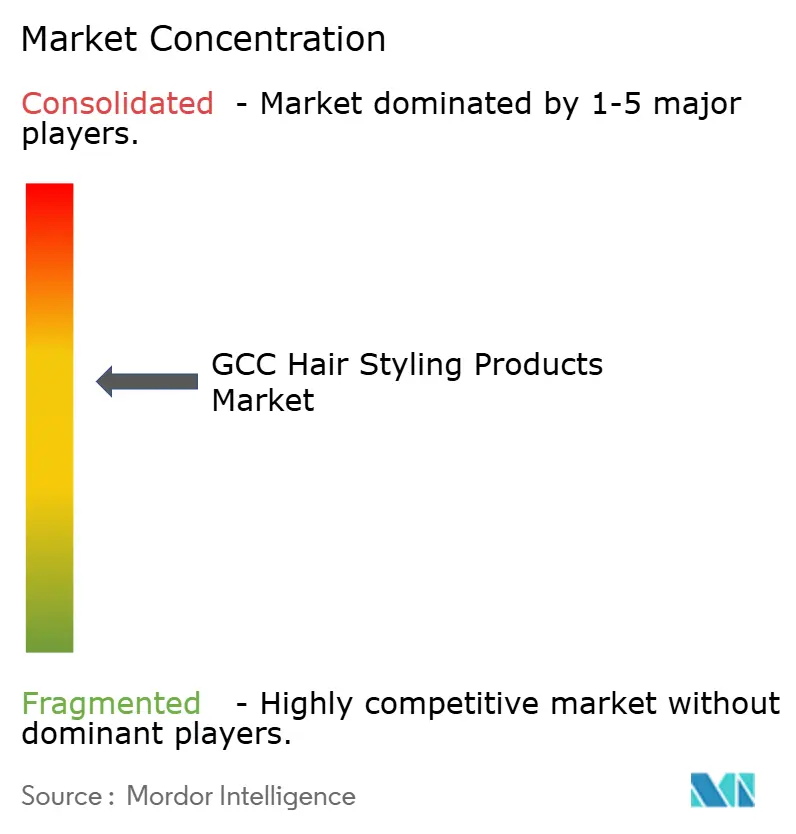
| Market Concentration | Medium |
Major Players *Disclaimer: Major Players sorted in no particular order Image © Mordor Intelligence. Reuse requires attribution under CC BY 4.0. | |
GCC Hair Styling Products Market Analysis by Mordor Intelligence
The GCC hair styling products market size was valued at USD 128.54 million in 2025 and estimated to grow from USD 137.85 million in 2026 to reach USD 195.69 million by 2031, at a CAGR of 7.25% during the forecast period (2026-2031). This represents a CAGR of 7.82% during the forecast period. Several factors, including the increasing focus on male grooming, the rapid shift toward online shopping, and a growing demand for clean-label and natural hair styling products, drive the market's growth. Consumers in the region, particularly attuned to the hot and humid climate, are placing a premium on personal appearance and hair health. They're gravitating towards products that not only style but also nourish and protect. In urban hubs like Riyadh, Jeddah, and Dubai, younger populations are increasingly swayed by social media, celebrity culture, and global fashion trends. These influences drive them to explore a variety of trendy hairstyles. Engaging closely with beauty influencers and global styling trends, this demographic is boosting the demand for innovative and versatile styling products to achieve contemporary looks. Furthermore, cultural and religious factors significantly influence consumer choices. A growing demand for halal-certified hair styling products, which adhere to Islamic standards by ensuring permissible ingredients and the absence of alcohol or other prohibited substances, has emerged. This trend compels manufacturers to create products that resonate with local values, all while upholding quality and efficacy.
Key Report Takeaways
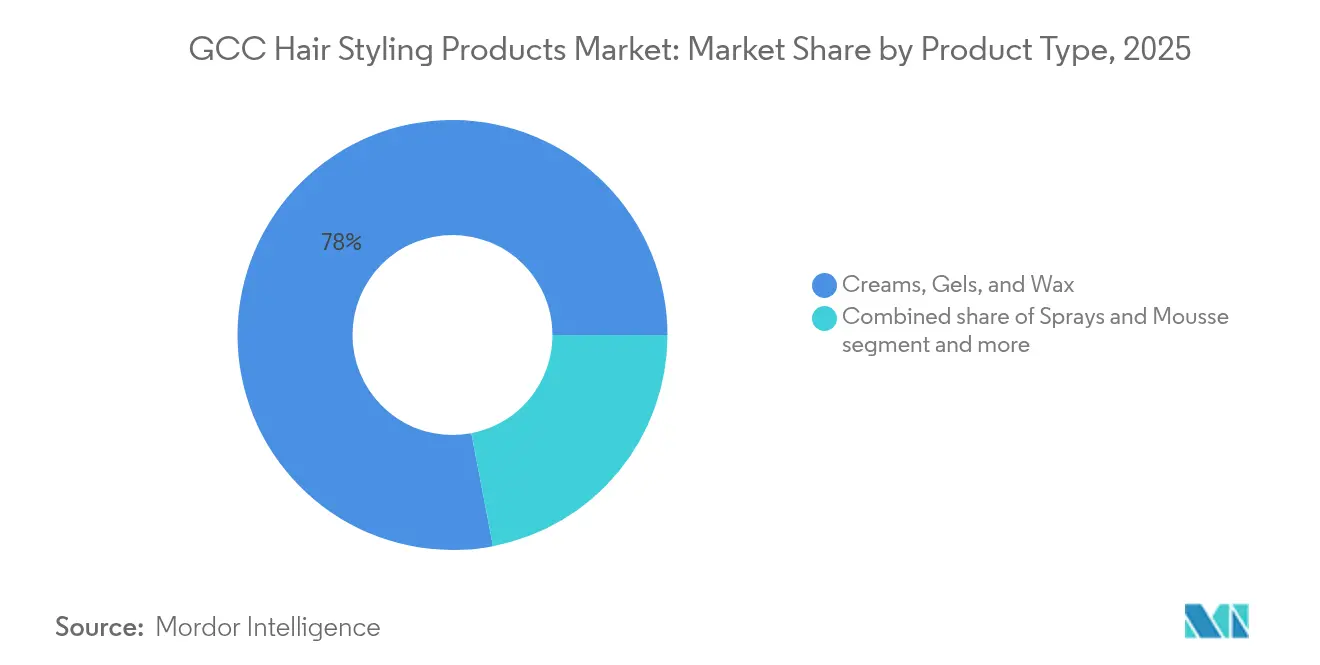
- By product type, creams, gels, and waxes held 78.02% of the GCC hair styling products market share in 2025, sprays and mousses are forecast to expand at an 7.92% CAGR through 2031.
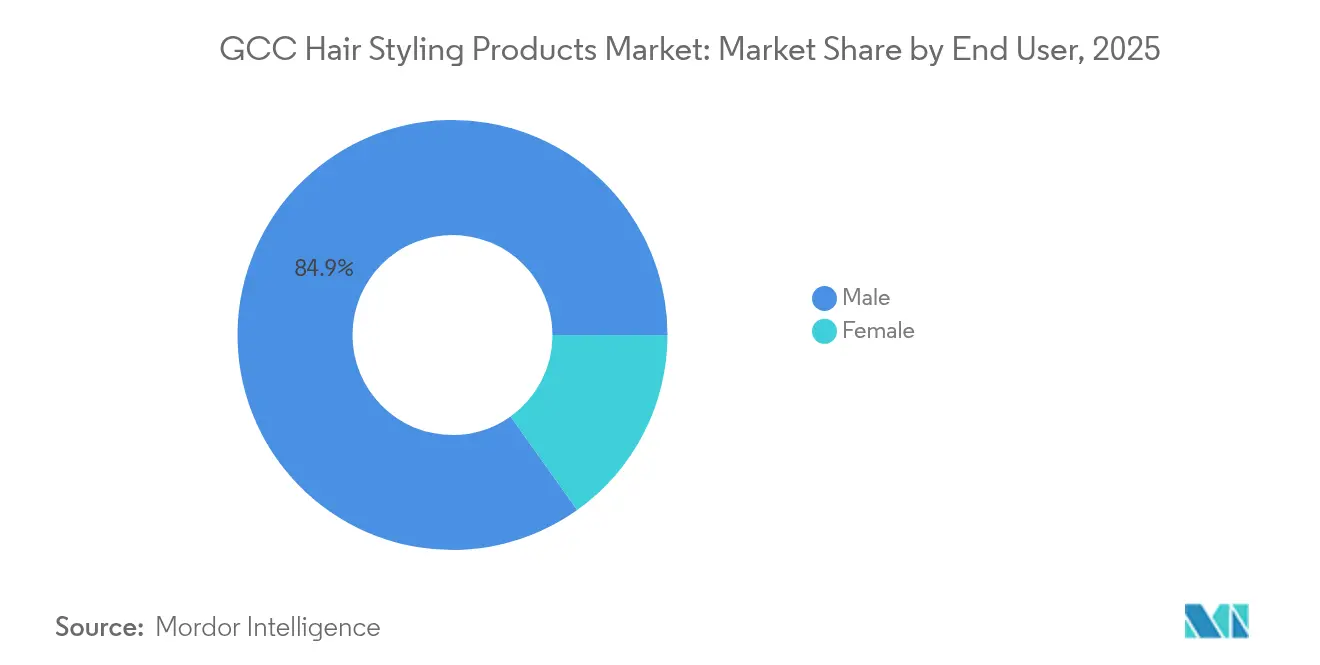
- By end user, the male segment dominated with 84.85% share of the GCC hair styling products market size in 2025, whereas the female segment is advancing at a 8.68% CAGR to 2031.
- By ingredient, natural and organic formulations are rising at an 8.12% CAGR, while conventional and synthetic still command 61.05% revenue share.
- By distribution channel, supermarkets and hypermarkets accounted for 65.02% of the GCC hair styling products market size in 2025, and online retail delivered the fastest 9.1% CAGR.
- By geography, Saudi Arabia led with 50.05% GCC hair styling products market share in 2025, while Kuwait is set to grow at a 9.31% CAGR through 2031.
Note: Market size and forecast figures in this report are generated using Mordor Intelligence’s proprietary estimation framework, updated with the latest available data and insights as of 2026.
Market Trends and Insights
Drivers Impact Table of GCC Hair Styling Products Market*
| DRIVER | (~) % IMPACT ON CAGR FORECAST | GEOGRAPHIC RELEVANCE | IMPACT TIMELINE |
|---|---|---|---|
| Influence of social media platform and celebrity endorsement | +1.8% | GCC-wide, strongest in United Arab Emirates and Kuwait | Short term (≤ 2 years) |
| Rising demand for natural and organic certified products | +1.5% | Premium adoption in United Arab Emirates and Qatar | Medium term (2-4 years) |
| Surging male-grooming culture and hair-styling trend across GCC | +2.1% | GCC-wide, led by Saudi Arabia and United Arab Emirates | Medium term (2-4 years) |
| Technological innovations in product formulations | +1.2% | Early adoption in United Arab Emirates and Saudi Arabia | Long term (≥ 4 years) |
| Growing popularity of quick commerce supported the market growth | +1.7% | GCC-wide, strongest in Qatar and United Arab Emirates | Short term (≤ 2 years) |
| Demand for curly and textured hair solutions | +0.9% | Growing adoption in diverse GCC demographics | Medium term (2-4 years) |
| Source: Mordor Intelligence | |||
Surging male-grooming culture and hair-styling trend across GCC
The growing focus on male grooming, supported by increasing spending power and improved lifestyles, is playing a major role in driving the GCC hair styling products market. As of 2025, the United Arab Emirates’ GDP, estimated at USD 905.23 billion (PPP, current prices), underscores the nation’s strong economic standing, contributing to a growing cultural emphasis on personal care and premium lifestyle choices [1]. This trend has led to an increased demand for products specifically designed for men. Additionally, brands in the GCC are strategically tailoring their offerings in response to the evolving sophistication and preferences of male consumers. For example, Henkel’s Pert Plus combines modern functionality with elements that resonate with the region’s heritage, helping to build strong brand loyalty. Many brands are introducing male-oriented styling products to cater to this demand. L'Oréal Professionnel’s Homme Clay Strong, for instance, offers a textured hold specifically for men. Similarly, the introduction of American Crew’s Fiber Cream and Beard Serum in the region reflects the rising popularity of multifunctional grooming solutions. These product innovations demonstrate the market’s move toward high-quality, culturally relevant offerings that appeal to male consumers in the GCC.
Rising demand for natural and organic certified products
The growing focus on clean beauty is driving higher demand for natural and organic-certified hair styling products in the GCC region. Consumers, especially younger ones, are increasingly prioritizing products that are safe, sustainable, and made with transparent ingredients. This trend has pushed major companies to reformulate their products by removing harmful chemicals like parabens and sulfates. Regulatory standards such as Halal certification, COSMOS-standard organic labeling, and stricter guidelines from the GCC Standardization Organization (GSO) are encouraging brands to create safer and ethically aligned products [2]. Companies that use local, natural ingredients like Ziziphus spina-christi and display proper certifications are gaining an advantage in the market. Consumers are now looking for products that not only meet their personal care needs but also align with their cultural and ethical values. As a result, companies are pouring more funds into sustainable packaging and eco-friendly production methods, underscoring their dedication to environmental responsibility.
Influence of social media platform and celebrity endorsement
Social media platforms and celebrity endorsements are playing a major role in influencing consumer preferences in the GCC hair styling products market. According to Population Pyramid data, nearly 29% of the United Arab Emirates' population is under the age of 25, making platforms like TikTok, Instagram, and Snapchat key spaces for discovering new trends. Younger consumers, especially Gen Z and millennials, actively follow influencers and celebrities to stay updated on popular hairstyles and products. In countries like Kuwait, male consumers are particularly influenced by content from social media personalities, which has led to a noticeable increase in demand for premium hair styling solutions. Brands like SHEGLAM have effectively tapped into this digital trend by running viral social media campaigns. Since late 2023, the brand has opened over 150 physical stores across the Gulf region, successfully converting online interest into offline sales.
Technological innovations in product formulations
Technological advancements are making hair styling products in the GCC market more effective and user-friendly. For example, Ashland’s FiberHance BM is a breakthrough in formulation science, designed to strengthen hair fibers by up to three times through internal bonding. This innovation addresses the growing demand for products that not only style hair but also improve its health. Similarly, L’Oréal’s AirLight Pro uses advanced infrared and ultra-targeted airflow technology to reduce energy consumption by 31% while preserving the hair's moisture balance. This aligns with consumer preferences for high-performance products that are also environmentally friendly. Keratin-infused coloring and styling systems are becoming increasingly popular. These systems, which have recently won Product of the Year awards, offer multi-functional benefits by combining styling with hair care. They provide salon-quality results conveniently and safely, reflecting the rising expectations of consumers in the region for innovative and efficient hair care solutions.
Restraints Impact Analysis of GCC Hair Styling Products Market*
| RESTRAINT | (~) % IMPACT ON CAGR FORECAST | GEOGRAPHIC RELEVANCE | IMPACT TIMELINE |
|---|---|---|---|
| Proliferation of counterfeit products | -1.4% | GCC-wide, highest impact in United Arab Emirates and Saudi Arabia | Short term (≤ 2 years) |
| Strong competition from hair styling tools and appliances | -0.8% | GCC-wide, premium segments most affected | Medium term (2-4 years) |
| Growing concerns over harmful ingredients | -1.1% | Regulatory focus in United Arab Emirates and Saudi Arabia | Long term (≥ 4 years) |
| Stringent regulatory requirements | -0.6% | Varies by country, strongest in traditional communities | Long term (≥ 4 years) |
| Source: Mordor Intelligence | |||
Proliferation of counterfeit products
Counterfeit hair styling products are undermining the growth of the GCC market, eroding consumer trust, and tarnishing brand reputations. In April 2025, Dubai Customs seized counterfeit goods in 68 separate incidents, with a total value of around AED 42.19 million [3]. These counterfeit items not only siphon sales from legitimate businesses but also introduce significant health risks due to their unregulated and potentially harmful ingredients. In response, regulatory authorities have tightened penalties under trademark and consumer protection laws to dissuade counterfeiters. Concurrently, authentic brands are adopting cutting-edge anti-counterfeiting measures, including blockchain-enabled tags, QR-code verification, and serialized packaging, to guarantee product authenticity and traceability. Yet, in spite of these efforts, counterfeit supply networks continue to thrive and adapt, leaving consumers in a state of uncertainty during their purchasing decisions.
Growing concerns over harmful ingredients
Growing awareness among consumers in the GCC about harmful ingredients is pushing brands in the region's hair styling products market to prioritize safety and reformulate their offerings. Ingredients such as para-phenylenediamine (PPD) and formaldehyde are increasingly scrutinized due to rising health concerns and regional awareness campaigns. To maintain consumer trust and align with evolving expectations, major brands are updating formulations to eliminate potentially harmful chemicals. Retailers in the GCC are also allocating shelf space to products labeled as toxin-free and certified safe, pressuring brands with outdated formulations to adapt quickly. This shift is driving up reformulation costs for slower-moving players, while brands that emphasize transparency and clean-label positioning are gaining a competitive edge in the market.
*Our forecasts treat driver/restraint impacts as directional, not additive. The impact forecasts reflect baseline growth, mix effects, and variable interactions.
GCC Hair Styling Products Market Segment Analysis
By Product Type:
Traditional Formats Dominate InnovationCreams, gels, and waxes accounted for 78.02% of the GCC hair styling products market in 2025, reflecting their popularity for providing strong hold and precise styling. These products are favored for their ability to offer control and long-lasting results, making them a staple for many consumers. However, sprays and mousses are gaining traction, with the fastest growth rate of 7.92% CAGR projected through 2031. This growth is driven by their lightweight formulations, which are ideal for use with heat styling tools. As more consumers in the GCC adopt hair appliances, the demand for sprays and mousses is expected to increase steadily, contributing to the expansion of this segment in the market.
Innovation in product development is now focusing on combining styling benefits with hair care properties. For instance, new formulations are incorporating ingredients like hyaluronic acid for hydration and peptides for repairing damaged strands. Hybrid products, such as balms that function as both leave-in treatments and styling aids, are also gaining popularity. This trend is reshaping the market by introducing multi-functional products that cater to evolving consumer preferences. Additionally, the growing "skinification" trend, which emphasizes premium ingredients and added value, is driving higher price points and improving profit margins for brands in the GCC hair styling products market.

By Ingredient:
Clean Beauty Accelerates Conventional DominanceConventional synthetic ingredients accounted for 61.05% of the revenue share in 2025, but natural alternatives are gaining popularity, growing at a CAGR of 8.12%. The demand for natural formulations is particularly strong in premium segments within the United Arab Emirates and Qatar. Consumers are increasingly drawn to products that align with sustainability and health-conscious trends, driving the shift toward natural options. This growing preference is supported by the development of certification systems that validate the authenticity of natural and eco-friendly products, making them more accessible and appealing to shoppers in the GCC region.
Manufacturers are diversifying their ingredient portfolios by incorporating biodegradable polymers and locally sourced botanicals, which resonate with environmentally conscious consumers. Certifications such as halal and vegan labels provide added assurance, helping smaller, agile brands compete with established players that still rely on synthetic petrochemical-based ingredients. This shift toward natural formulations also helps brands prepare for stricter regulations targeting harmful additives, ensuring compliance while meeting consumer expectations. As a result, the natural segment is becoming a key growth driver in the GCC hair styling products market.
By End User:
Female Growth Challenges Male DominanceIn 2025, men dominated the GCC hair styling products market, holding 84.85% of the market share. This reflects the strong grooming habits among male consumers in the region. However, the women’s segment is growing at a significant rate, with a projected CAGR of 8.68% through 2031. This growth is fueled by factors such as increasing participation of women in the workforce and the influence of social media, which encourages women to focus more on personal grooming. The rising demand from women presents a promising opportunity for brands to create products that cater specifically to their needs and preferences.
To attract both male and female consumers, brands are launching products that address common concerns like scalp health, protection from heat styling, and defense against UV damage, which are particularly important in the region’s hot climate. Companies are also adopting inclusive marketing strategies, such as offering diverse product ranges and using culturally appropriate imagery, to connect with a wider audience. By focusing on these approaches, brands can effectively meet the needs of both segments while maintaining their unique identity in the market.
By Distribution Channel:
Digital Transformation AcceleratesIn 2025, supermarkets and hypermarkets accounted for 65.02% of the GCC hair styling products market, showing that many consumers still prefer shopping in physical stores. These outlets are trusted for their wide product availability and the ability to see and feel products before purchasing. However, online stores are rapidly gaining traction, with a strong CAGR of 9.1%, driven by the increasing use of smartphones and the availability of secure payment options. This shift highlights the growing preference for convenience and accessibility among consumers in the region.
To meet changing consumer needs, many online platforms now offer click-and-collect services, combining the speed of online shopping with the option to physically inspect products. Beauty-focused e-commerce platforms are also enhancing their appeal by providing a wide range of products along with tutorials and educational content to guide buyers. In response, traditional retailers are expanding their presence online through partnerships with marketplaces and by launching their own digital platforms. This omnichannel approach is helping retailers stay competitive and cater to the evolving shopping habits of consumers in the GCC hair styling products market.
Geography Analysis
Saudi Arabia Hair Styling Products Market
Saudi Arabia was the largest contributor to the GCC hair styling products market in 2025, accounting for 50.05% of the market share. This leadership is driven by the country’s Vision 2030 reforms, which have diversified the economy and modernized the retail sector. The increasing focus on male grooming and the growing number of women in the workforce have significantly boosted the demand for hair styling products. Additionally, the market has seen strong investor confidence, highlighted by Nice One’s USD 0.32 billion IPO aimed at expanding omnichannel retail operations. These factors collectively position Saudi Arabia as a key market for hair styling products in the GCC region.
Kuwait Hair Styling Products Market
Kuwait, while smaller in market size, is the fastest-growing market in the GCC, with a projected CAGR of 9.31%. This growth is fueled by the country’s high purchasing power and the influence of social media, which drives demand for premium hair styling brands. Kuwait’s small geographic size simplifies logistics, ensuring quicker product availability in stores. The increasing adoption of online shopping platforms and the introduction of innovative products further support the market’s rapid growth. These dynamics make Kuwait an emerging hotspot for hair styling products in the GCC.
GCC Hair Styling Products Market
The United Arab Emirates remains a central hub for the beauty and personal care industry in the region, hosting over 1,700 exhibitors at Beautyworld Middle East 2024. This event underscores the United Arab Emirates' role in driving innovation and setting trends in the market. Other GCC countries also contribute to the market’s growth, with Qatar benefiting from its affluent consumer base, Bahrain leveraging its open trade policies, and Oman seeing increased sales through tourism-driven duty-free outlets. The harmonization of standards under the GCC Standardization Organization has made it easier for companies to launch products across multiple countries. With retail sales in the region rising, the GCC hair styling products market offers significant growth opportunities for businesses.
Competitive Landscape
The GCC hair styling products market is moderately consolidated. Large multinational companies like L’Oréal, Henkel, and Shiseido Co., Ltd., among others, dominate the market with their strong presence in both premium and mass-market segments. L’Oréal has shown impressive growth in the Gulf region, with its acquisition of Color Wow in 2025 emphasizing its focus on high-value styling products. Henkel has also expanded its market share by launching innovative products like keratin-root quick-color systems, which were awarded Product of the Year in 2025. These products address salon needs by offering a combination of speed and care, making them highly attractive to consumers. Such efforts by global players highlight their commitment to meeting the evolving demands of the GCC market.
Brands are also making significant progress by tailoring their products to local cultural preferences. For example, brands like SHEGLAM are growing quickly by using digital storytelling and offering affordable prices, which resonate with a broad audience. This shift toward creating engaging consumer experiences is changing how brands compete in the market. Additionally, there is a notable gap in the textured-hair segment, as 65% of global consumers have curls or coils, but the GCC market still lacks enough specialized products for this group. This unmet demand presents a valuable opportunity for brands to introduce new product lines and attract a wider customer base, especially in a market that values innovation and inclusivity.
Innovation and advanced research are becoming critical drivers of growth in the GCC hair styling products market. For instance, patent activities like Spelman College’s curl-phenotype quantification demonstrate the importance of scientific advancements in creating unique and effective products. As the market continues to grow, mergers and acquisitions are likely to increase, with leading brands looking to strengthen their expertise and establish local manufacturing facilities. These developments, combined with the efforts of both global and regional players, indicate that the GCC hair styling products market is on a strong growth trajectory, offering numerous opportunities for businesses to expand and succeed.
GCC Hair Styling Products Industry Leaders
-
L’Oréal S.A
-
Dabur Limited
-
Mandom Corporation
-
Henkel AG & Co. KGAA
-
Unilever PLC
- *Disclaimer: Major Players sorted in no particular order
GCC Hair Styling Products Market Companies Covered in this Report
- L'Oreal S.A
- Henkel AG & Co. KGAA
- Shiseido Co., Ltd.
- Amaira Herbals
- Godrej Consumer Products Ltd.
- Sada Group Holdings
- Mandom Corporation
- Energy Cosmetics
- Marico Ltd
- PDC Brands(Cantu)
- MAV Beauty Brands(Marc Anthony)
- Royal Beauty Industries
- Elida Beauty
- Wella Company
- Himalaya Wellness Company
- Dabur India Limited
- Nazih Group
- Colomer Beauty Brands USA, Inc(American Crew)
- The Procter & Gamble
- Giovanni Cosmetics
Recent Industry Developments in GCC Hair Styling Products Market
- February 2025: At LEAP 2025 in Riyadh, Saudi Arabia, L’Oréal Groupe unveiled its beauty tech innovations for the first time. Being the sole beauty tech representative at the event, L’Oréal showcased its groundbreaking innovations that are transforming the beauty landscape.
- August 2024: In Kuwait, Unilever Arabia and Al-Bahar established a joint venture called Al-Bahar United. This collaboration seeks to combine Al-Bahar's local market insights with Unilever's global expertise, aiming to strengthen their regional presence.
- August 2024: Unilever partnered with Maersk to enhance its supply chain and logistics capabilities in Saudi Arabia. This collaboration focuses on improving operational efficiency and sustainability in the distribution of Unilever products throughout the region.
- July 2024: Henkel, a global frontrunner in industrial and consumer products, inaugurated a state-of-the-art beauty care production facility in Riyadh. This facility, producing a diverse array of products under the renowned Pert brand, including shampoos, conditioners, and specialized hair styling items, caters to the surging demand for premium personal care products in the Middle East.
GCC Hair Styling Products Market Report Scope
The scope of the study involves types of hair styling products such as creams, gels, and wax and sprays and mousse that are sold through supermarkets/hypermarkets, convenience/grocery stores, online retail stores, and other distribution channels. Also, the report includes a geographical analysis of the market, primarily the United Arab Emirates, Saudi Arabia, and the Rest of the GCC. The market sizing has been done in value terms in USD for all the abovementioned segments.
Segmentation Overview
| Creams, Gels, and Wax |
| Sprays and Mousse |
| Other Product Types |
| Natural and Organic |
| Conventional and Synthetic |
| Male |
| Female |
| Supermarkets/Hypermarkets |
| Specialty Stores |
| Online Retail Stores |
| Other Distribution Channels |
| United Arab Emirates |
| Saudi Arabia |
| Oman |
| Qatar |
| Bahrain |
| Kuwait |
| By Product Type | Creams, Gels, and Wax |
| Sprays and Mousse | |
| Other Product Types | |
| By Ingredient | Natural and Organic |
| Conventional and Synthetic | |
| By End User | Male |
| Female | |
| By Distribution Channel | Supermarkets/Hypermarkets |
| Specialty Stores | |
| Online Retail Stores | |
| Other Distribution Channels | |
| By Geography | United Arab Emirates |
| Saudi Arabia | |
| Oman | |
| Qatar | |
| Bahrain | |
| Kuwait |
Key Questions Answered in the Report
What is the current value of the GCC hair styling products market?
The market is assessed at USD 137.85 million in 2026, on track to achieve USD 195.69 million by 2031.
Which product formats lead sales in the GCC hair styling products market?
Creams, gels, and waxes hold the largest 78.02% share, while sprays and mousses are expanding fastest at an 7.92% CAGR.
Which GCC country offers the quickest market growth?
Kuwait shows the highest projected CAGR at 9.31% through 2031 due to strong online engagement and premiumization trends.
What digital trends are affecting distribution?
Online sales are rising at a 9.1% CAGR as consumers blend mobile commerce with click-and-collect services, pressuring traditional retailers to digitize.