
Market Overview
| Study Period | 2021 - 2031 |
|---|---|
| Forecast Data Period | 2026 - 2031 |
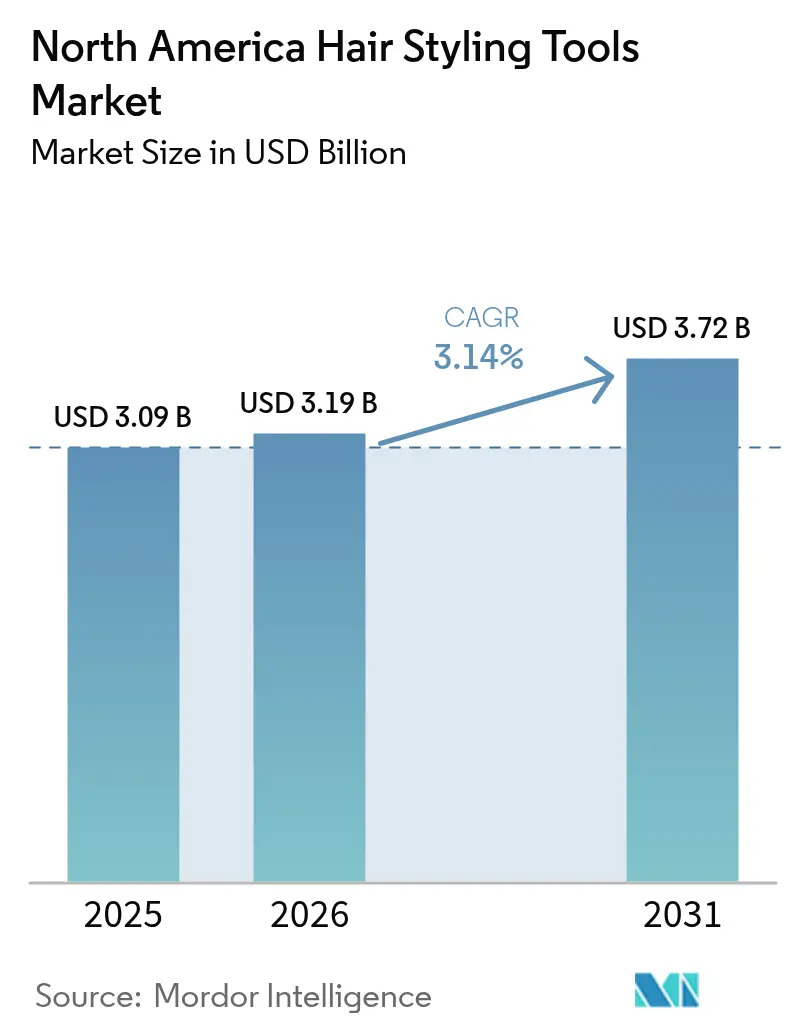
| Base Year Market Size (2025) | USD 3.09 Billion |
| Market Size (2026) | USD 3.19 Billion |
| Market Size (2031) | USD 3.72 Billion |
| Growth Rate (2026 - 2031) | 3.14 % |
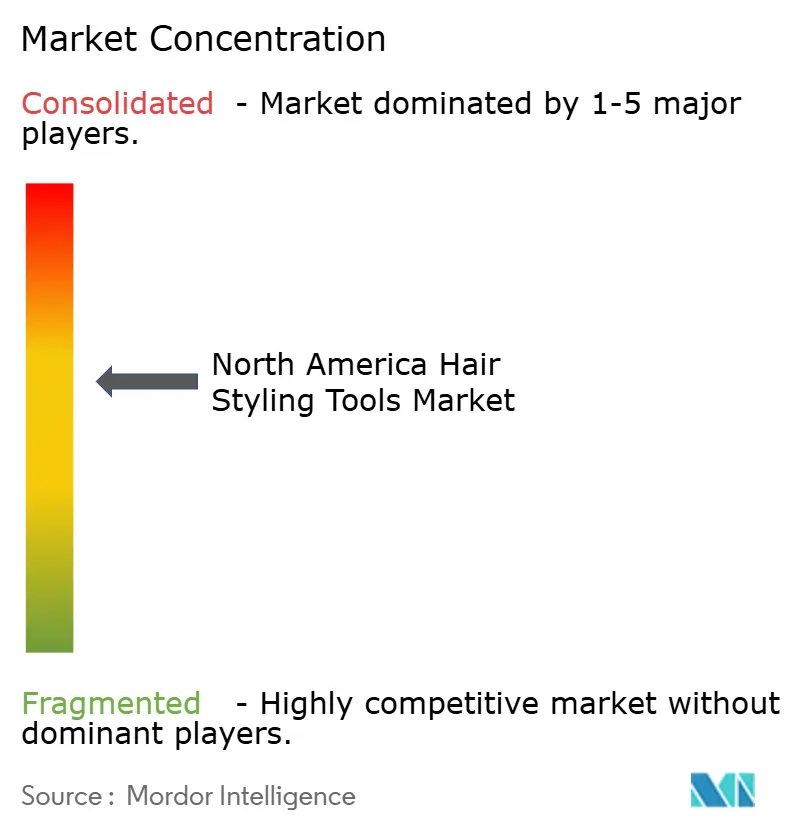
| Market Concentration | Medium |
Major Players *Disclaimer: Major Players sorted in no particular order Image © Mordor Intelligence. Reuse requires attribution under CC BY 4.0. | |
North America Hair Styling Tools Market Analysis by Mordor Intelligence
The North America hair styling tools market size in 2026 is estimated at USD 3.19 billion, growing from 2025 value of USD 3.09 billion with 2031 projections showing USD 3.72 billion, growing at 3.14% CAGR over 2026-2031. Steady value growth continues to be driven by technological upgrades, premium positioning, and the influence of social-media-driven beauty culture, even as unit volumes stabilize. Consumers actively demonstrate demand resilience by prioritizing professional-grade results at home, a behavior that became deeply ingrained during pandemic lockdowns. Companies are capitalizing on the rapid acceleration of online retail, the growing popularity of cordless innovations, and the increasing adoption of grooming products by male consumers to unlock incremental revenue streams. However, businesses face notable challenges, including heightened price sensitivity, the persistent threat of counterfeit products, and rising safety compliance costs. To maintain brand equity and protect profit margins, incumbents must proactively address these obstacles while adapting to evolving market dynamics.
Key Report Takeaways
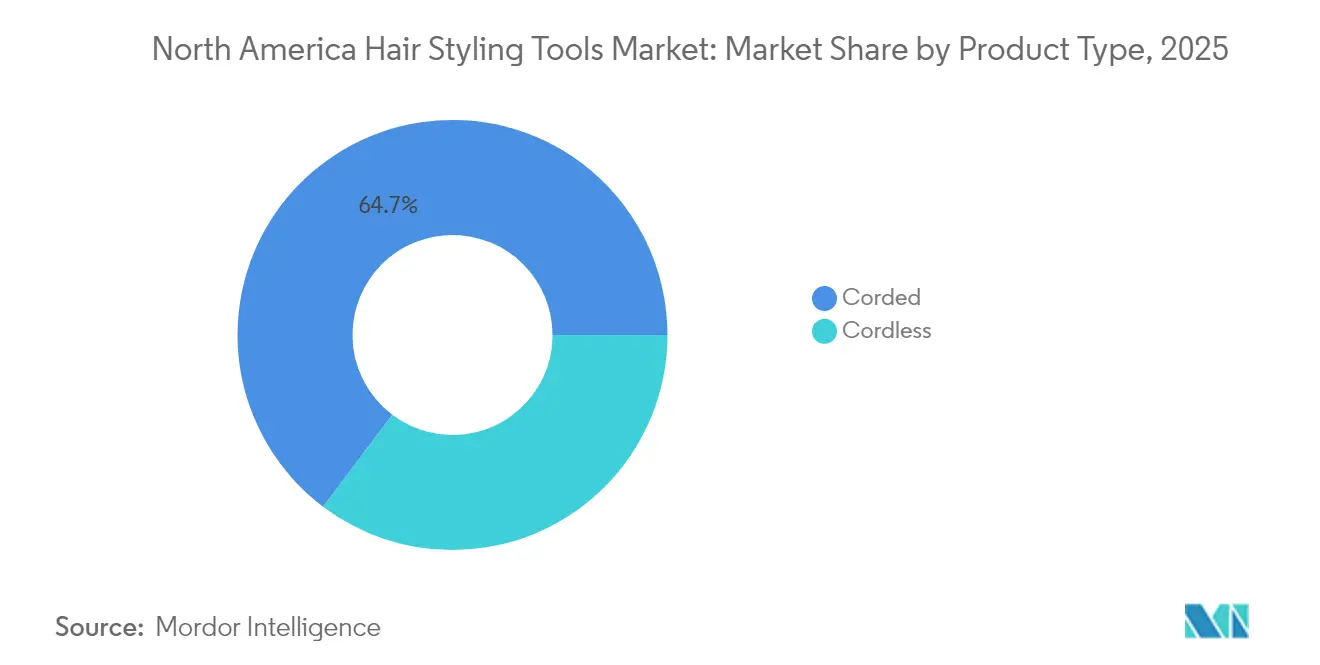
- By product type, corded devices led with 64.72% of the North America hair styling tools market share in 2025, yet cordless options are expanding at a 3.49% CAGR through 2031.
- By equipment type, hair straighteners accounted for 78.88% of the North America hair styling tools market size in 2025 while hair styling brushes and combs record the fastest 3.92% CAGR to 2031.
- By end users, women represented 66.98% of 2025 value, whereas the men’s segment is growing at a 4.03% CAGR through 2031.
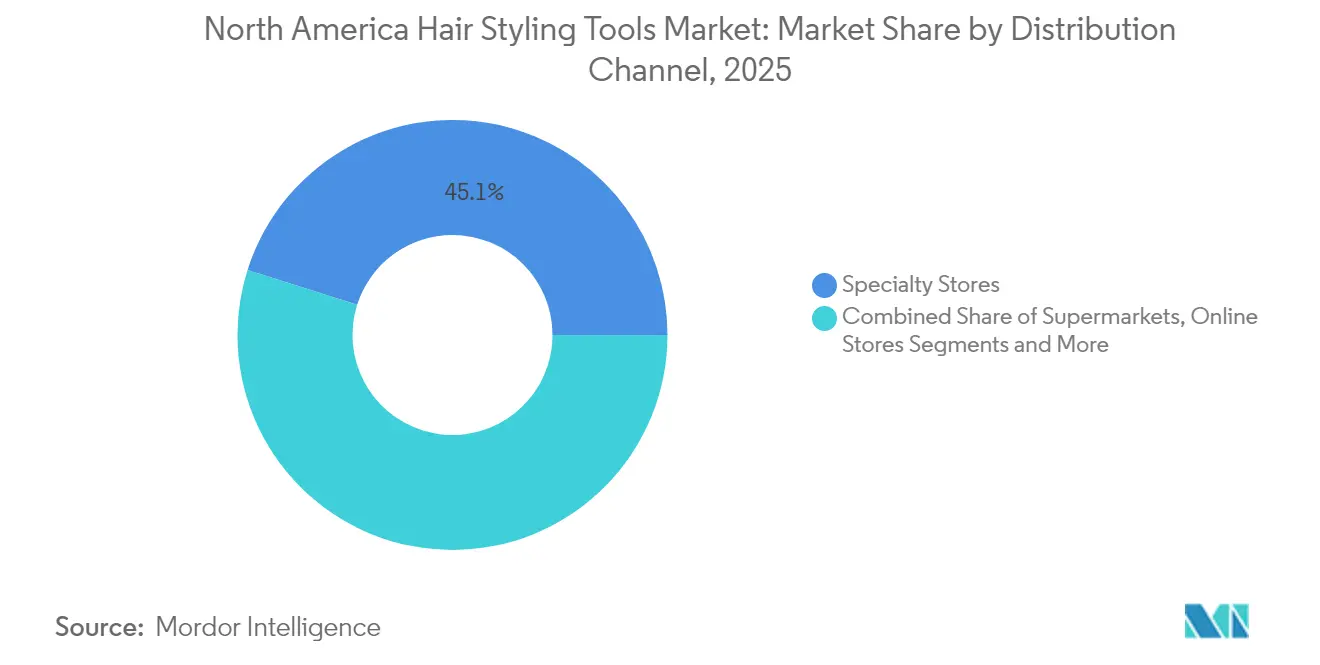
- By distribution channel, specialty stores held 45.12% revenue share in 2025, while online retail is advancing at a 4.58% CAGR to 2031.
- By geography, the United States controlled 80.95% of regional sales in 2025; Mexico posts the highest 4.01% CAGR through 2031.
Note: Market size and forecast figures in this report are generated using Mordor Intelligence’s proprietary estimation framework, updated with the latest available data and insights as of 2026.
Market Trends and Insights
Drivers Impact Analysis of North America Hair Styling Tools Market*
| Driver | (~) % Impact on CAGR Forecast | Geographic Relevance | Impact Timeline |
|---|---|---|---|
| Growing social media influence and increasing awareness about personal grooming | +0.8% | North America-wide, strongest in urban centers | Medium term (2-4 years) |
| Technological advancements in heating technology and smart features | +0.9% | United States and Canada primarily | Long term (≥ 4 years) |
| Rising beauty consciousness and professional hair styling demand | +0.7% | Regional, with premium adoption in United States | Medium term (2-4 years) |
| Rising male grooming segment driving demand for styling tools | +0.6% | United States and Canada, emerging in Mexico | Long term (≥ 4 years) |
| Increasing demand for multifunctional and portable styling tools | +0.5% | North America-wide, travel-focused demographics | Short term (≤ 2 years) |
| Growing interest in sustainable and eco-friendly hair styling solutions | +0.4% | United States and Canada, regulatory-driven | Long term (≥ 4 years) |
| Source: Mordor Intelligence | |||
Growing social media influence and increasing awareness about personal grooming
The North America hair styling tools market is witnessing strong growth, largely fueled by the rising influence of social media and increasing consumer focus on personal grooming. In 2024, consumers across the U.S. spent about USD 74 billion on personal care products, including grooming essentials, underlining a growing willingness to invest in appearance-enhancing products [1]. Social media platforms such as Instagram, TikTok, and YouTube play a pivotal role in shaping beauty trends, with influencers, hairstylists, and celebrities actively promoting new looks and demonstrating innovative styling techniques. This constant exposure is encouraging consumers, especially younger demographics, to experiment with diverse hairstyles and seek high-performing styling tools that replicate salon-quality results at home. Furthermore, the heightened emphasis on grooming as an integral part of daily lifestyle, coupled with expanding product awareness across both male and female consumers, is driving demand for technologically advanced, versatile, and easy-to-use hair styling tools across the North American market.
Technological advancements in heating technology and smart features
Technological advancements in heating technology and the integration of smart features are emerging as significant growth drivers in the North America hair styling tools market. Manufacturers are increasingly introducing tools equipped with advanced heating elements, such as titanium, ceramic, and tourmaline plates, along with infrared and ionic technologies that deliver faster heating, uniform heat distribution, and reduced hair damage. These innovations are particularly appealing to consumers seeking professional-quality results while maintaining hair health. At the same time, the incorporation of smart features—including intelligent temperature sensors, automatic shut-off systems, Bluetooth connectivity, and app-based controls—has enhanced safety, convenience, and personalization. Such features allow users to optimize styling based on hair type, prevent overheating, and enjoy a more tailored grooming experience. This combination of performance, safety, and customization is amplifying consumer adoption and driving the demand for premium, technologically advanced styling solutions across the region.
Rising beauty consciousness and professional hair styling demand
Consumers are increasingly investing in premium styling tools as remote work and social media continue to elevate personal presentation standards. This shift reflects a broader trend toward prioritizing self-care and enhancing personal grooming routines. The Professional Beauty Association reports that personal appearance occupations are expected to grow by 13% between 2021 and 2031 [2]. This growth rate significantly surpasses the 5% increase projected for all U.S. occupations, highlighting a sustained and growing demand for both professional beauty services and tools designed for at-home use. Additionally, the "skinification" trend in hair care has driven the need for styling tools that work seamlessly with advanced formulations. These formulations, which often include hyaluronic acid, collagen, and botanical actives, require tools capable of delivering precise temperature control and even heat distribution. Such features ensure the activation of beneficial ingredients while preventing damage to the hair. As a result, professional-grade performance expectations have risen, setting higher minimum standards for styling tools across all price segments.
Rising male grooming segment driving demand for styling tools
The rising male grooming segment is becoming a key driver of growth in the North America hair styling tools market, as men increasingly embrace grooming and hairstyling as part of their daily routines. Changing attitudes toward personal appearance, fueled by greater media influence, celebrity trends, and social media exposure, have led to a surge in demand for hair dryers, trimmers, straighteners, and multifunctional styling devices tailored for male consumers. Premium barbershops and men’s salons are also playing a crucial role in popularizing advanced tools, while the availability of male-focused grooming products in retail and e-commerce channels is broadening access. This shift toward male-specific grooming and styling, combined with rising disposable incomes and evolving beauty perceptions, is significantly contributing to the expanding adoption of hair styling tools across the region.
Restraints Impact Analysis of North America Hair Styling Tools Market*
| Restraint | (~) % Impact on CAGR Forecast | Geographic Relevance | Impact Timeline |
|---|---|---|---|
| High cost of premium styling tools limiting adoption among price-sensitive consumers | -0.4% | North America-wide, strongest in rural areas | Short term (≤ 2 years) |
| Presence of counterfeit and low-quality products affecting market reputation | -0.3% | United States and Canada, online channels | Medium term (2-4 years) |
| Risk of hair damage due to improper use of styling tools | -0.2% | Regional, education-dependent | Long term (≥ 4 years) |
| Regulatory challenges and safety standards compliance issues | -0.2% | United States and Canada, FDA/Health Canada oversight | Medium term (2-4 years) |
| Source: Mordor Intelligence | |||
High cost of premium styling tools limiting adoption among price-sensitive consumers
Premium styling tools priced above USD 300 encounter significant challenges in expanding their market reach. These high price points, coupled with the ongoing economic uncertainty, heavily influence consumer discretionary spending patterns. Many consumers, particularly those outside affluent demographics, find these products inaccessible. For instance, the Consumer Product Safety Commission recently recalled 56,300 Remington hair dryers, priced between USD 25-32, highlighting a critical trend. Budget-conscious consumers often choose lower-priced alternatives, even when these products compromise essential safety features like immersion protection devices [3]. This price sensitivity is especially pronounced in rural markets and among younger consumers, who consistently prioritize affordability and value over advanced features. Consequently, the market becomes bifurcated, with premium brands struggling to achieve mass adoption despite their claims of superior performance. Financing platforms such as Affirm and Afterpay attempt to address this issue by offering payment flexibility. However, the obligation of monthly payments often discourages impulse purchases, which traditionally drive sales of styling tools during promotional periods. As a result, premium brands face an uphill battle in capturing a broader consumer base.
Presence of counterfeit and low-quality products affecting market reputation
Counterfeit and low-quality products significantly hinder the North American hair styling tools market by damaging brand reputation and eroding consumer trust. These inferior alternatives, frequently distributed through unregulated online platforms and unauthorized retailers, fail to comply with essential safety and performance standards. As a result, consumers face risks such as overheating, inconsistent styling outcomes, and potential hair damage. The widespread availability of these products not only diverts revenue from established brands but also creates unsatisfactory consumer experiences, which discourage repeat purchases, particularly in the premium segment. Established manufacturers actively combat these challenges by implementing robust brand protection strategies, launching consumer awareness campaigns, and developing advanced authentication technologies. These efforts aim to safeguard their market credibility, maintain consumer confidence, and reinforce the perception of quality associated with their products.
*Our forecasts treat driver/restraint impacts as directional, not additive. The impact forecasts reflect baseline growth, mix effects, and variable interactions.
North America Hair Styling Tools Market Segment Analysis
By Product Type:
Cordless Innovation Drives Future GrowthCorded styling tools maintained their dominance with a 64.72% market share in 2025 in the North America Hair Styling Tools Market, reflecting consumer preference for the consistent power delivery and unlimited usage time they provide during extended styling sessions. The reliability of these tools appeals to both professional stylists and everyday users who prioritize uninterrupted performance. Corded tools also tend to offer higher power levels, making them effective for a variety of hair types and styles. Their widespread availability and established presence in salons and retail outlets further secure their market position. Additionally, advances in design and technology have improved cord management, enhancing user convenience while maintaining the performance benefits of corded operation. This segment continues to serve as the backbone of the styling tools market due to these sustained advantages.
Conversely, cordless styling tools represent the fastest-growing segment, with an accelerated adoption rate at a 3.49% CAGR projected through 2031. This growth is driven by technological breakthroughs in lithium-ion battery capacity and brushless motor efficiency, which now offer professional-grade performance without the limitations of power cords. The convenience and portability of cordless tools appeal to consumers seeking flexibility and on-the-go styling solutions. These devices enable usage in diverse locations without the need for constant access to power outlets, fitting the modern lifestyle and travel needs. Continuous innovation in battery charging speeds and run times further supports this segment’s expansion. As consumer preferences evolve towards mobility and ease of use, cordless styling tools are expected to gain increased market penetration, challenging the long-standing dominance of their corded counterparts.

By Equipment Type:
Straighteners Dominate While Brushes Gain MomentumHair straighteners commanded the largest equipment segment in the North America Hair Styling Tools Market, holding a dominant 78.88% market share in 2025. This dominance reflects their versatility, as they are highly effective for both straightening and curling applications across various hair types and textures. The widespread popularity of straighteners is largely driven by their ability to create dramatic styling transformations, which align closely with beauty trends propagated via social media that favor sleek, polished hair appearances. Additionally, advancements such as ceramic plates, ionic technology, and temperature control functionalities have enhanced the effectiveness and safety of these tools. The preference for at-home styling, bolstered by the growing culture of personal grooming and wellness, further strengthens the market for hair straighteners. As a result, leading brands such as Dyson and Conair continue to innovate and dominate this segment while e-commerce sales contribute significantly to accessibility and market expansion.
Conversely, hair styling brushes and combs represent the fastest-growing segment within the North American market, projected to grow at a CAGR of 3.92% through 2031. This growth is driven by increasing consumer awareness regarding the risks of heat damage caused by excessive use of high-temperature styling tools. Consequently, consumers are shifting toward gentler, non-heat styling alternatives, such as styling brushes and combs, which help preserve hair health and integrity. These products cater to a growing demand for natural styling methods that reduce hair breakage and dryness. Furthermore, innovations in brush and comb designs, including those integrated with conditioning or detangling capabilities, contribute to their rising popularity. The segment benefits from a broad consumer base seeking convenient daily styling while minimizing hair damage. This trend towards healthier hair care options positions the styling brushes and combs segment for rapid growth, complementing the established dominance of hair straighteners.
By End Users:
Male Segment Emerges as Growth EngineWomen dominate the North America Hair Styling Tools Market, constituting 66.98% of the end-user demand in 2025. This dominance is rooted in long-standing usage patterns and is further reinforced by the growing complexity and expansion of women's styling routines, which often involve multiple tools for different hair types and occasions. The female segment consistently invests in a diverse range of styling tools, from straighteners and dryers to brushes and curling irons, reflecting a high level of engagement with personal grooming. Social media and beauty influencers have heightened awareness and experimentation among women, fueling demand for innovative products. Retailers and brands focus significantly on catering to female consumers through broad product offerings, targeted marketing, and personalized styling solutions. This well-established consumer base continues to anchor the market, driving significant revenue for key players.
In contrast, the male grooming segment within the North America Hair Styling Tools Market is the fastest-growing end-user category, expanding at a CAGR of 4.03% through 2031. This rapid growth reflects the erosion of traditional gender barriers in personal care and an increasing acceptance of grooming practices among men. Men today are more invested in hairstyling products than ever before, incorporating tools such as straighteners, dryers, and styling brushes into their daily routines. Brand campaigns and influencer marketing targeted specifically at men help normalize and promote grooming across demographic groups. Additionally, the rise of multifunctional and easy-to-use styling tools appeals strongly to male consumers seeking convenience and efficiency. This segment growth not only diversifies the consumer base but also offers new opportunities for innovation and market expansion within the broader hair styling tools market.
By Distribution Channel:
Digital Transformation AcceleratesSpecialty stores held the largest distribution channel share in the North America Hair Styling Tools Market with 45.12% share in 2025. Their dominance is attributed to the expertise they offer in product demonstration, professional consultation, and after-sales service, which are crucial especially for high-consideration styling tool purchases. These stores provide opportunities for consumers to try out products hands-on and receive personalized recommendations tailored to their specific hair types and styling needs. This level of engagement creates greater consumer confidence and loyalty, encouraging purchases in both premium and mass-market segments. Specialty retailers also benefit from knowledgeable staff and an enhanced in-store shopping experience that cannot be fully replicated online. Their physical presence and expert service maintain their strong foothold despite growing digital competition.
On the other hand, online retail stores are the fastest-growing distribution channel, projected to expand at a CAGR of 4.58% through 2031. This accelerated growth is driven by the convenience of shopping from home, competitive pricing, and a wider product selection that online platforms can offer beyond the constraints of physical shelf space. Consumers increasingly rely on online reviews, ratings, and AI-powered recommendation engines that enhance shopping decisions and satisfaction. E-commerce platforms also facilitate easy access to emerging and niche brands, expanding consumer choice and personalization options. The growth of mobile commerce and improved logistics, with faster delivery options, further boost the appeal of online retailing. The ongoing technological advancements and digital marketing strategies by brands and retailers continue to fuel the rapid adoption of online channels in the hair styling tools market.
Geography Analysis
United States Hair Styling Tools Market
In 2025, the U.S. commands a dominant 80.95% market share, bolstered by a sophisticated retail landscape that includes specialty beauty stores, department stores, and e-commerce platforms. These outlets ensure that products are accessible to consumers in both urban and rural settings. American shoppers show a pronounced preference for premium styling tools. For instance, Ulta Beauty reported sales of haircare products and styling tools reaching approximately USD 2.13 billion in fiscal 2023, accounting for 19% of the retailer's total revenue. The market thrives on strong brand loyalty, regular product launches, and a cultural emphasis on personal grooming, all of which fuel replacement cycles and category growth. Innovations typically gain traction in major metropolitan areas before cascading to secondary markets, a predictable pattern that manufacturers strategically exploit for product rollouts.
Canada Hair Styling Tools Market
Canada, a mature secondary market, mirrors U.S. consumption patterns but operates under distinct regulatory mandates. While Canadian standards, overseen by Health Canada, may diverge from FDA norms—especially concerning electrical appliances and cosmetic claims—major international players like Dyson, L'Oréal, and Panasonic are undeterred. Trademark filings with the Canadian Intellectual Property Office underscore their commitment to brand protection and market development. However, Canada's bilingual labeling mandates and metric system pose compliance challenges, albeit manageable for seasoned players. Distribution leans heavily on national retail chains and e-commerce platforms, adept at catering to the nation's dispersed populace.
Mexico Hair Styling Tools Market
Mexico is poised to be the region's growth leader, projecting a 4.01% CAGR through 2031. This surge is fueled by urbanization, with city-dwelling populations increasingly embracing beauty culture, spurred by social media and retail expansion. While the natural personal care segment constitutes about 10% of Mexico's overall market, it signals a ripe opportunity for eco-friendly styling tools, resonating with the nation's sustainability ethos. Yet, distribution hurdles loom large. The absence of major national retailers for natural products means manufacturers must adeptly navigate a fragmented landscape, from high-end grocery stores in affluent urban locales to smaller, specialized retailers. Regulatory pathways align closely with those for conventional personal care items, but U.S. exporters eyeing this burgeoning market must tread carefully, especially with labeling mandates being a significant hurdle.
Regulatory Landscape
Hair styling tools sold across North America are primarily governed by electrical-product safety and certification requirements. In the United States, Consumer Product Safety Commission (CPSC) oversight focuses on hazards such as electric shock in hand-supported hair dryers, with rules and guidance historically emphasizing immersion protection. Market access commonly aligns with UL safety standards, including UL 859 for household appliances and UL 1727 for commercial products, supported by testing and certification.
In Canada, Health Canada and provincial Authorities Having Jurisdiction rely on national electrical safety standards and third-party certification marks for plug-in appliances. The CSA C22.2 No. 60335-2-23 standard is a key reference for hair care appliances, and its update effective September 1, 2025 introduced tighter requirements, including GFCI or ALCI protection for certain handheld hair dryers. The update also added safety and stability testing provisions for tools such as straighteners and curling irons. Parallel standards evolution continues internationally, with the 2026 edition of IEC 60335-2-23 providing updated technical requirements that manufacturers and certification bodies track for multi-country distribution.
Competitive Landscape
The North American hair styling tools market, with a moderate concentration score of 6 out of 10, reflects a competitive landscape where established players hold significant influence. These market leaders leverage their strong brand recognition, extensive distribution networks, and advanced Research and Development capabilities to maintain their positions. However, the market remains dynamic, as technological advancements and convergence open doors for new entrants. Traditional appliance manufacturers face growing competition from beauty-focused companies that have a deep understanding of consumer preferences and emerging technology startups introducing innovative solutions, such as AI-powered coaching and infrared light integration. Furthermore, the increasing adoption of e-commerce platforms has intensified competition, enabling smaller players to reach a broader audience and challenge established brands.
The competitive strategies within the market reveal a clear shift toward premiumization and feature differentiation rather than engaging in price-based competition. Leading players are heavily investing in smart connectivity features, sustainability initiatives, and professional-grade performance claims to cater to evolving consumer demands. This strategic focus allows companies to enhance their value propositions and stand out in a crowded market. The emphasis on innovation and quality is reshaping the competitive dynamics, encouraging players to prioritize long-term growth over short-term gains. Additionally, partnerships with salons and professional stylists are becoming a key strategy, as companies seek to build credibility and gain insights into professional-grade product requirements.
Additionally, market participants are increasingly expanding into adjacent categories to create comprehensive beauty ecosystems. For instance, Helen of Troy's acquisition of Curlsmith's prestige hair care products highlights this trend. By diversifying their product portfolios, styling tool manufacturers aim to offer holistic solutions that address a broader range of consumer needs. This approach not only strengthens their market presence but also fosters brand loyalty by providing an integrated beauty experience. Moreover, collaborations with technology firms to integrate advanced features, such as app-based controls and personalized styling recommendations, are further driving innovation and differentiation in the market.
North America Hair Styling Tools Industry Leaders
-
Spectrum Brands, Inc.
-
Koninklijke Philips N.V.
-
Dyson Ltd.
-
Conair LLC
-
Panasonic Holding Corporation
- *Disclaimer: Major Players sorted in no particular order
North America Hair Styling Tools Market Companies Covered in this Report
- Dyson Ltd.
- Koninklijke Philips N.V.
- Panasonic Holding Corporation
- Spectrum Brands, Inc.
- Conair LLC
- Groupe SEB
- Helen of Troy Ltd.
- Wahl Clipper Corporation
- The Procter & Gamble Company
- T3 Micro Inc.
- Cloud Nine Hair Ltd.
- Revlon Inc.
- L’Oréal S.A.
- Mermade Hair
- Shark Beauty
- Diva Pro Styling
- BaBylissPRO
- Olaplex
- Tescom Co. Ltd.
- Andis Company
Market Opportunities and Future Outlook
Product innovation is creating room for travel-ready performance, multi-styler consolidation, and improved motor efficiency, which supports the category shift toward premium, professional-grade results at home. In 2026, company activity points in this direction: Dyson introduced a dedicated travel format for its Supersonic line, and Helen of Troy (Revlon Hair Tools) launched a three-in-one VersaStyler built around a brushless (BLDC) motor concept designed to reduce attachment dependence. SharkNinja also expanded its FlexStyle platform in 2026 with the IonCurl launch, reinforcing demand for airflow engineering, frizz management, and differentiated styling outcomes that support higher price tiers and tighter positioning across adjacent product sets.
At the same time, safety and standards compliance is raising technical requirements and acting as a barrier to entry, creating an opening for suppliers that can industrialize certified designs for the United States and Canada without repeated redesign cycles. With CSA C22.2 No. 60335-2-23 updated effective September 1, 2025 and ongoing alignment with IEC 60335-2-23 revisions, manufacturers that embed non-resettable GFCI/ALCI approaches where applicable, strengthen thermal protection architectures, and standardize NRTL certification pathways (CSA, cUL, cETL) can reduce friction in retail onboarding and cross-border distribution. Sustainability-oriented materials and formulations are also moving beyond marketing into development programs, illustrated by Fraunhofer ISC’s ZIM-funded work on biodegradable styling polymers (announced May 2026), which supports partnership opportunities between tool brands and hair-care formulation developers seeking differentiated “tool plus regimen” positioning.
Recent Industry Developments in North America Hair Styling Tools Market
- April 2026: Dyson unveiled the Supersonic Travel hair dryer, featuring universal voltage compatibility and a compact build positioned as 32% smaller and 25% lighter than the standard Supersonic. The launch directly targets travel and portability use cases, reinforcing premium feature differentiation in a market where at-home professional results and convenience are key purchase drivers.
- August 2025: Spectrum Brands introduced the Remington Gloss Collection exclusively at Target and Target.com, spanning multiple styling-tool formats such as hair setters, curling wands, dryers, and straighteners. The retailer-exclusive strategy strengthens shelf visibility and promotional leverage in mass retail while expanding Remington’s assortment breadth in high-velocity categories.
- August 2024: Dyson launched the Airwrap i.d. multi-styler and dryer with Bluetooth connectivity and personalized styling settings, expanding the brand’s push into smart, app-linked hair tools. This release raised the bar for connected features and customization, prompting wider competitive focus on sensors, safety automation, and differentiated user experience.
North America Hair Styling Tools Market Report Scope and Research Methodology
Market Definition and Coverage
This market covers revenue generated from hair styling tools sold across North America for at-home and professional use, counted at the point of sale through offline and online retail channels, and expressed in USD.
Scope exclusions: accessories and consumables such as replacement attachments, brushes without a powered function, and salon services are not counted as market revenue.
Segments Covered in This Report
- By Product Type
- Corded
- Cordless
- By EquipmentType
- Hair Dryers
- Hair Curlers and Rollers
- Hair Straightners
- Hair Styling Brushes and Combs
- Others
- By End Users
- Men
- Women
- Unisex
- By Distribution Channel
- Specialty Stores
- Supermarkets / Hypermarkets
- Online Retail Stores
- Other Channels
- By Geography
- United States
- Canada
- Mexico
- Rest of North America
Data Sources, Market Sizing, and Validation
Desk Research
Desk work started by building a clean fact base on appliance demand and retail movement across the United States, Canada, and Mexico. Public sources such as US Census Bureau retail series, Statistics Canada tables, Mexico INEGI indicators, UN Comtrade trade statistics, and USITC trade data were used to anchor import trends and category direction. We also reviewed manufacturer investor presentations, annual filings, and reputable press coverage to understand pricing moves, product refresh cycles, and channel shifts.
Next, inputs were normalized so they can be used in one model, including currency handling, calendar timing, and category mapping for tools like dryers, straighteners, curlers and rollers, and powered styling brushes. Select paid subscriptions for company financials and news intelligence, and a shipment-level import and export database, were used to cross-check whether volumes and value trends look consistent with public trade and retail signals. These desk sources are not exhaustive, and many other public and paid references were used for data collection, validation, and clarification.
Primary Interviews and Surveys
Primary work focused on validating what drives demand by tool type and channel, and on pressure-testing assumptions around average selling price changes, promotion intensity, and the pace of cordless and heat-control upgrades. We spoke with a mix of brands, distributors, large retailers, and salon-facing stakeholders across the United States, Canada, and Mexico, so gaps in public data could be filled and then reconciled back to the model totals.
Distribution of primary research fieldwork respondents
| Company type | Respondent position |
|---|---|
| Top tier: 37% | CXOs: 20% |
| Mid tier: 41% | Functional/Unit leaders: 32% |
| Smaller Players: 22% | Managers: 48% |
Market-Sizing & Forecasting
Sizing was built using a top-down approach where demand is reconstructed from a North America consumer appliance pool and then filtered through category shares for hair tools, channel mix, and price bands by product type. The totals were then checked using selective bottom-up approximations, such as sampled price points across major retail formats, channel checks on promo depth, and supplier-side validation on mix shifts, before final adjustments were made.
Key inputs used in the model included unit and value movement signals from trade data, online versus offline share changes, typical replacement cycles for dryers and thermal tools, premiumization trends (heat protection features, coatings, smart temperature control), and seasonality tied to gifting and promotional events. Where gaps exist in public splits by tool type or country, ratios were derived from interview feedback and reconciled against observable retail and trade direction so the implied volumes stay realistic.
For forecasting, scenario analysis was used so growth can be flexed based on how fast online penetration expands, how quickly average selling prices move with technology upgrades, and how consumer spending sentiment changes by country. These forward assumptions were aligned with what market participants expect to see in near-term launches and retailer stocking behavior, and then rolled into annual revenue projections.
Data Validation & Update Cycle
Model outputs were validated through multiple checks so the final numbers match independent signals, not just one data stream. We compare implied volumes, pricing, and channel shares against trade movement, major retail dynamics, and what was heard in interviews, and then rework inputs when variances look too large to be explained by timing or currency effects. Before sign-off, the full model and assumptions go through an internal analyst review, and interview follow-ups are triggered when a new data point changes a key driver.
The report is refreshed annually, and interim updates are done when material events occur, such as a major pricing reset, a supply disruption, or a meaningful channel shift. Right before delivery, the latest pass is completed so clients receive an updated view based on the most recent available information.
Mordor Intelligence's North America Hair Styling Tools Market Growth Trends and Forecasts Market Size Versus Other Published Estimates
Published market sizes for hair styling tools in North America can look far apart, even when the topic sounds identical. The differences usually come from what is included as a tool versus a beauty device, which countries are counted inside North America, and whether values reflect retail selling prices or a different pricing point.
The spread also increases when one estimate leans on a single base year, applies aggressive price growth across all tool types, or does not reconcile online channel growth with import and retail signals. In this study, the number is held to a defined set of powered styling tools sold through offline and online retail, and the estimate stays tied to tool-level mix and country-level validation checks, a modeling choice applied by Mordor Intelligence.
Benchmark comparison
| Source | Market Size | Gaps in Research Methodology |
|---|---|---|
| Mordor Intelligence | USD 3.09 B (2025) | |
| Global Consultancy A | USD 7.82 B (2023) | Uses an earlier base year and a broader device set that appears to include more sub-categories and pricing points, which can lift reported revenue versus a tighter powered-tool definition. |
| Regional Consultancy B | USD 8.07 B (2024) | Relies on a different starting year and likely applies higher assumed price expansion and channel growth, which can raise the midpoint when not fully reconciled with trade and retail consistency checks. |
Looking across the table, the main reason for the gap is scope and pricing-point alignment rather than simple math differences. When the tool list, country coverage, and channel pricing logic are kept consistent year to year, the resulting market size becomes easier to trace back to observable indicators and to replicate in future updates.
Key Questions Answered in the Report
What is the current revenue value of the North America hair styling tools market?
The market is valued at USD 3.19 billion in 2026.
What is the current revenue value of the North America hair styling tools market? The market is valued at USD 3.09 billion in 2025. How fast is the male consumer segment expanding?
Purchases by men are increasing at a 4.03% CAGR through 2031, the quickest pace among all user groups.
Which equipment category is growing the fastest?
Heated styling brushes and combs post the highest 3.92% CAGR thanks to gentle, multifunctional designs.
Why are cordless tools gaining traction?
Battery density and brushless motors now deliver salon-grade performance for 30 minutes per charge, satisfying travelers and space-constrained users.
Which country drives regional growth beyond the United States?
Mexico records the fastest 4.01% CAGR, supported by urbanization and rising disposable incomes.