
Fungal Keratitis Treatment Market Size and Share
Market Overview
| Study Period | 2020 - 2031 |
|---|---|
| Market Size (2026) | USD 0.96 Billion |
| Market Size (2031) | USD 1.2 Billion |
| Growth Rate (2026 - 2031) | 4.55 % |
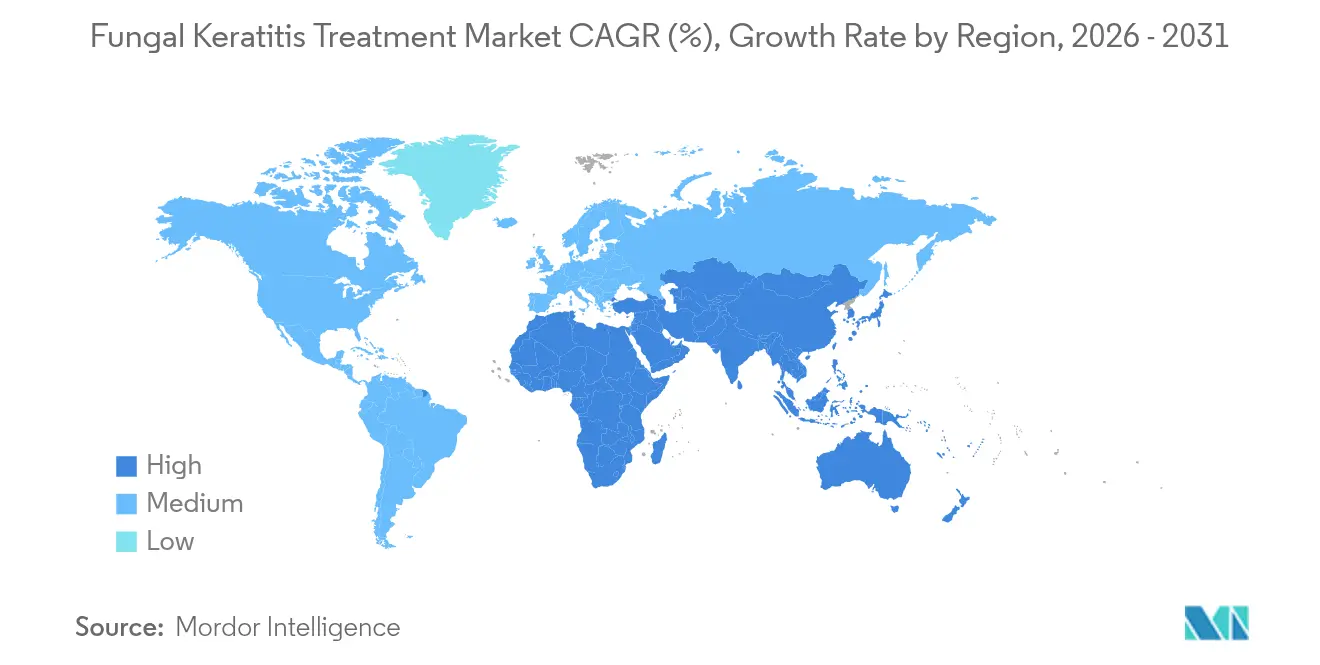
| Fastest Growing Market | Asia Pacific |
| Largest Market | North America |
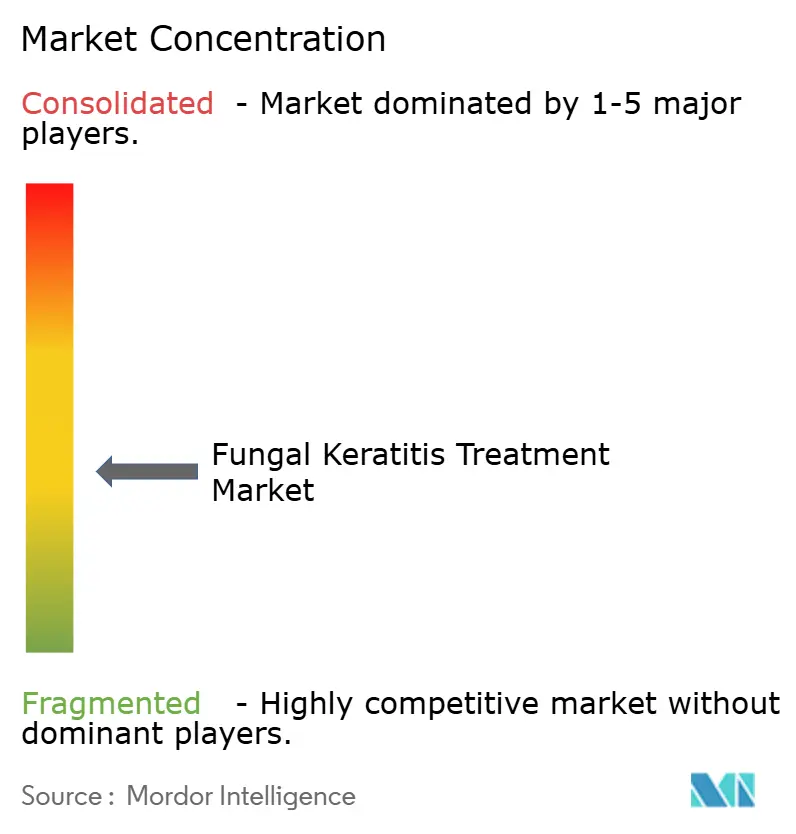
| Market Concentration | Medium |
Major Players *Disclaimer: Major Players sorted in no particular order Image © Mordor Intelligence. Reuse requires attribution under CC BY 4.0. | |
Fungal Keratitis Treatment Market Analysis by Mordor Intelligence
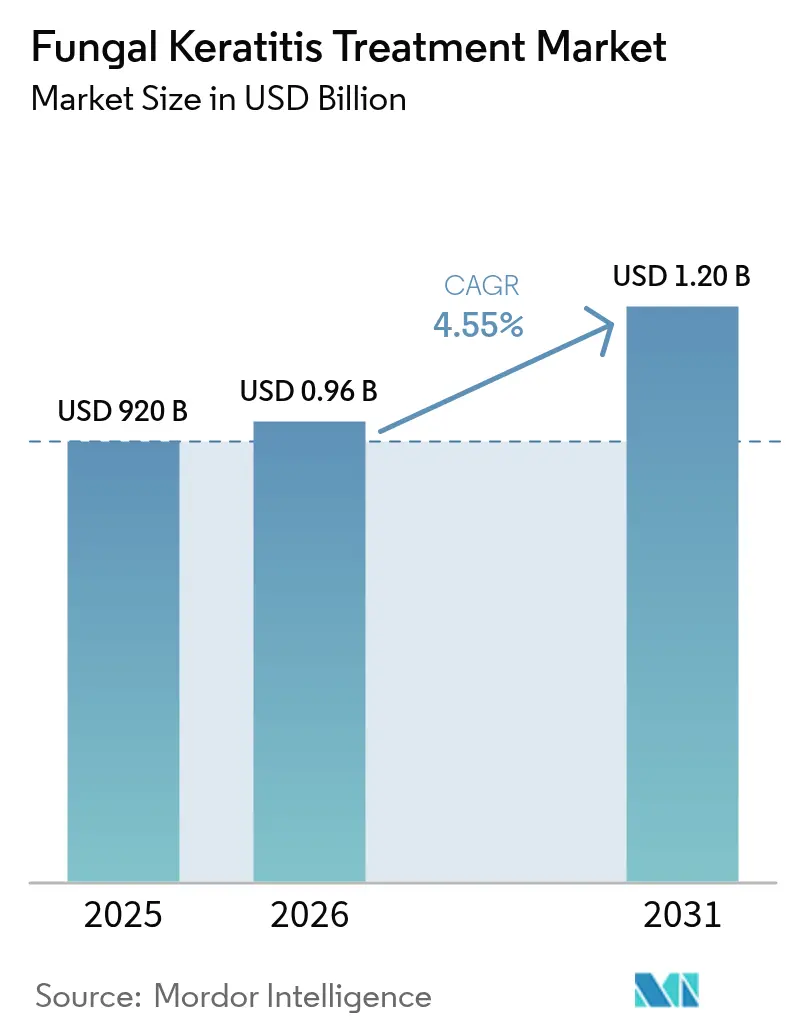
The Fungal Keratitis Treatment Market size is expected to grow from USD 920 million in 2025 to USD 961.86 million in 2026 and is forecast to reach USD 1.2 billion by 2031 at 4.55% CAGR over 2026-2031.
Steady topline growth masks structural change: resistance to legacy azoles is accelerating, climate change is expanding pathogen ranges, and deep-learning diagnostics have begun trimming the average time from first presentation to targeted therapy. AI classifiers now achieve 94.1% accuracy on slit-lamp images, compressing diagnostic windows that once stretched past five days and improving visual outcomes. Drug-delivery science is moving in parallel, with intrastromal injections and sustained-release implants improving corneal penetration for severe infections. E-commerce channels gain traction as teleophthalmology broadens reach in rural areas, while R&D pipelines pivot toward combination regimens that blunt resistance without amplifying toxicity.
Key Report Takeaways
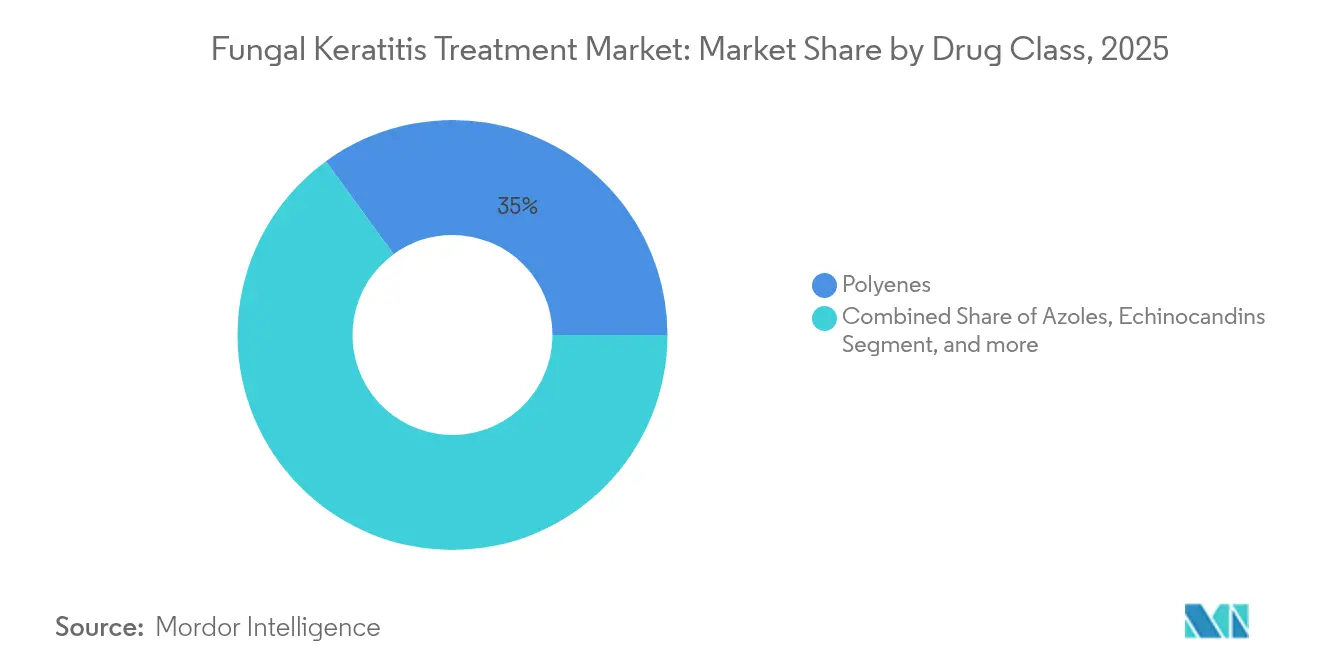
- By drug class, polyenes led with 35.02% of the fungal keratitis treatment market share in 2025; echinocandins are advancing at an 8.06% CAGR through 2031.
- By route of administration, topical therapy accounted for 60.65% of the fungal keratitis treatment market size in 2025; intrastromal injection is projected to rise at a 9.54% CAGR to 2031.
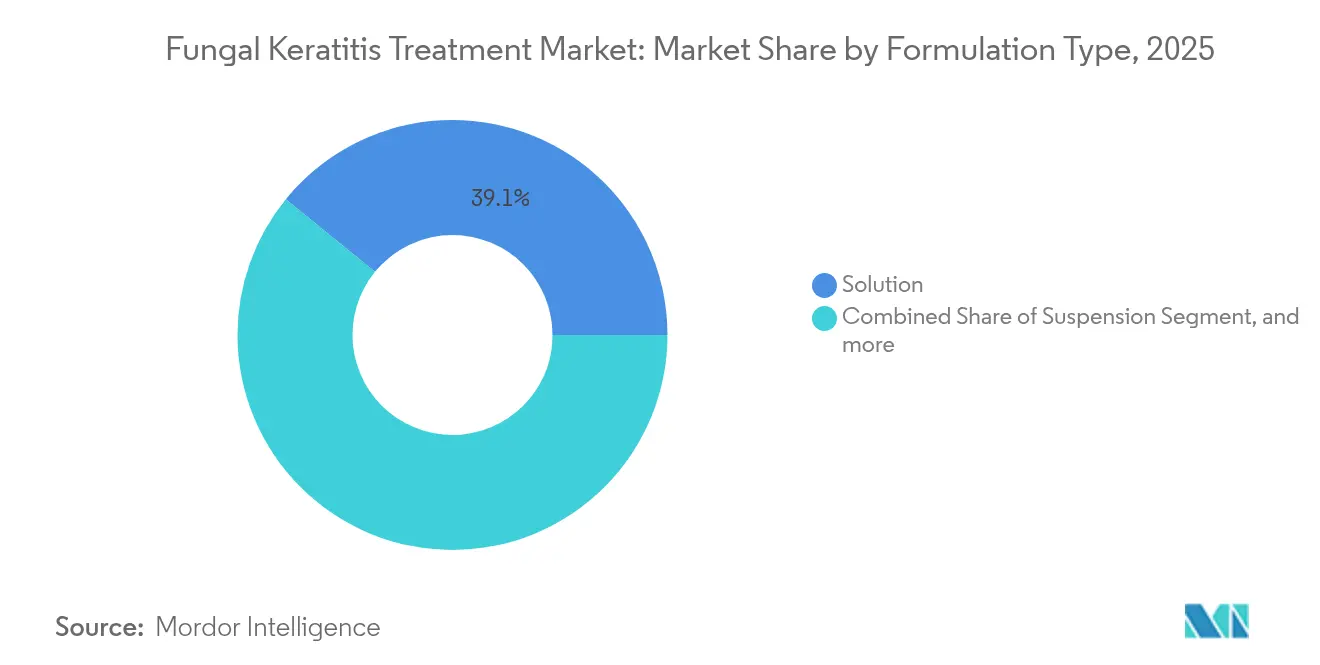
- By formulation type, solutions held 39.12% of revenue in 2025, while ointments and gels represent the fastest growing category at a 6.02% CAGR.
- By distribution channel, hospital pharmacies captured 43.72% of sales in 2025 and online pharmacies are expanding at a 10.05% CAGR.
- By geography, North America commanded 36.02% revenue in 2025, whereas Asia-Pacific is the fastest growing region at a 5.42% CAGR.
Note: Market size and forecast figures in this report are generated using Mordor Intelligence’s proprietary estimation framework, updated with the latest available data and insights as of 2026.
Market Trends and Insights
Drivers Impact Analysis of Fungal Keratitis Treatment Market*
| Driver | (~) % Impact on CAGR Forecast | Geographic Relevance | Impact Timeline |
|---|---|---|---|
| Growing Burden of Fungal Keratitis in Tropical & Subtropical Regions | +1.2% | Asia-Pacific, Latin America, Sub-Saharan Africa | Medium term (2-4 years) |
| Increasing R&D Investment in Broad-Spectrum & Targeted Antifungals | +0.8% | Global, concentrated in North America & Europe | Long term (≥ 4 years) |
| Rising Contact-Lens Use & Trauma-Related Ocular Infections | +0.7% | Global, highest in developed markets | Short term (≤ 2 years) |
| Surge In Lasik & Corneal Transplant Procedures Elevating Post-Op Risk | +0.5% | North America, Europe, select Asia-Pacific cities | Medium term (2-4 years) |
| Climate-Change-Driven Expansion of Fusarium & Aspergillus Habitat | +0.4% | Global, accelerated in temperate regions | Long term (≥ 4 years) |
| AI-Enabled Early-Diagnosis Tools Accelerating Treatment Rates | +0.3% | Developed markets initially, expanding globally | Medium term (2-4 years) |
| Source: Mordor Intelligence | |||
Growing Burden of Fungal Keratitis in Tropical & Subtropical Regions
Tropical and subtropical zones report a rising incidence as urban heat islands, higher humidity, and ongoing agricultural activity expose residents to spore-laden debris. Trauma accounts for up to 60% of rural cases, yet access to protective eyewear remains inconsistent. Hospital records across Myanmar, Ghana, and northeast Brazil confirm diagnostic delays of 5–7 days; early intervention within 48 hours notably reduces perforation risk.[1] Expansion into temperate belts now challenges health systems in southern Europe and parts of the United States as climate change raises fungal thermotolerance.
Increasing R&D Investment in Broad-Spectrum & Targeted Antifungals
Capital is migrating toward novel mechanisms such as dihydroorotate dehydrogenase inhibition; olorofim shows potency against azole-resistant Aspergillus isolates.[2] Partnerships between academia and industry accelerate translational timelines: a University of Oklahoma team has isolated persephacin, a plant-derived compound with broad-spectrum activity and reduced toxicity. Venture funds favor combination regimens that cap resistance while controlling dosing frequency through nanocarriers or ocular inserts.
Rising Contact-Lens Use & Trauma-Related Ocular Infections
Global contact-lens penetration has climbed into double-digits, particularly among working-age urban populations. The CDC continues to flag sub-optimal lens hygiene as a principal risk for Fusarium keratitis outbreaks.[3] Biofilm-forming fungi thrive on lens surfaces and within storage cases, complicating standard disinfection. In emerging markets, retail promotions often outpace public health messaging, widening the knowledge gap on lens care best practices.
Surge in LASIK & Corneal Transplant Procedures Elevating Post-Op Risk
Refractive surgery volumes rose 12% in 2024, led by price declines in India and Mexico. Corneal flap creation can act as an entry portal for opportunistic yeasts, while transplant recipients on topical steroids remain immunosuppressed for months. The American Academy of Ophthalmology has documented a growing series of post-pterygium excision yeast keratitis cases.[4] Medical tourism adds jurisdictional complexity as follow-up care often occurs in a different regulatory environment.
Restraints Impact Analysis of Fungal Keratitis Treatment Market*
| Restraint | (~) % Impact on CAGR Forecast | Geographic Relevance | Impact Timeline |
|---|---|---|---|
| Patent Expiries & Generic Erosion of Key Azoles | -0.9% | Global, most pronounced in developed markets | Short term (≤ 2 years) |
| Dose-Limiting Ocular Toxicity & Systemic Side-Effects | -0.6% | Global, regulatory scrutiny highest in US/EU | Medium term (2-4 years) |
| Escalating Antifungal Resistance in Candida Auris & Fusarium | -0.5% | Global, emerging hotspots in Asia-Pacific | Long term (≥ 4 years) |
| Limited Cold-Chain & Diagnostics in Low-Income Regions | -0.4% | Sub-Saharan Africa, rural Asia, Latin America | Long term (≥ 4 years) |
| Source: Mordor Intelligence | |||
Patent Expiries & Generic Erosion of Key Azoles
Fluconazole’s patent loss and an average USD 14.38 generic price in the United States intensify price compression. Voriconazole, posaconazole, and other second-generation compounds face similar trajectories, pushing innovators to justify premiums via novel carriers or fixed-dose combinations. Market entrants from India and China expand ophthalmic generic capacity, deepening competition and accelerating downward price pressure in Europe and North America.
Escalating Antifungal Resistance in Candida auris & Fusarium
Candida auris outbreaks now require decontamination regimes that include UVC LED technology to eliminate environmental persistence. Reports of pan-resistant isolates force clinicians toward higher-toxicity amphotericin B regimens. Fusarium’s intrinsic azole resistance narrows therapeutic windows further, underscoring the need for class-independent options such as echinocandins and novel agents like rezafungin.
*Our forecasts treat driver/restraint impacts as directional, not additive. The impact forecasts reflect baseline growth, mix effects, and variable interactions.
Fungal Keratitis Treatment Market Segment Analysis
By Drug Class:
Echinocandins Challenge Polyene DominanceEchinocandins post the strongest outlook at an 8.06% CAGR, even as polyenes retained 35.02% of the fungal keratitis treatment market share in 2025. FDA clearance of rezafungin for systemic candidiasis validates this class despite the absence of ocular-specific labeling. Polyene demand remains anchored by liposomal amphotericin B, which reduces nephrotoxicity and plays a central role in refractory keratitis protocols.
Pipeline activity aligns with resistance realities. Combination regimens linking echinocandins to azoles or allylamines aim to offset single-agent failure rates. The fungal keratitis treatment market size for echinocandins is reflecting their growing adoption for recalcitrant cases. Polyene innovation now focuses on better ocular retention gels to maintain high corneal concentrations without systemic exposure.

By Route of Administration:
Intrastromal Delivery Gains Clinical AcceptanceTopical drops accounted for 60.65% of the fungal keratitis treatment market size in 2025, driven by clinician familiarity and patient convenience. Intrastromal injection, however, is gaining traction and it is expected to grow with 9.54% between 2026 and 2031 because it delivers drug directly into the corneal stroma, bypassing epithelial barriers. Clinical studies show faster microbiological clearance when intrastromal voriconazole is used alongside lamellar keratoplasty.
Oral therapy remains a fallback for deep or systemic involvement, yet systemic toxicity curtails widespread use. Sustained-release implants, including micro-reservoir devices, are under investigation to extend dosing intervals to several weeks. Adoption hinges on surgical skill availability and reimbursement models that valorize procedure-based care.
By Formulation Type:
Ointments Gain Traction for Sustained ReleaseSolutions still lead at 39.12% revenue, but ointment and gel formats are expanding because longer corneal residence reduces dosing from hourly to four times daily, growing at a 6.02% CAGR. Butenafine nano-micelles have improved solubility, widening the topical antifungal toolbox. Suspensions wrestle with shelf-life constraints, while ocular inserts target steady 24-hour release.
R&D teams are pairing antifungals with mild steroids in single ointments, addressing infection and inflammation concurrently while avoiding preservative overload. Biodegradable polymers that respond to fungal enzymes are also advancing, promising tailored drug unload in high fungal-burden microenvironments.
By Distribution Channel:
Digital Transformation Accelerates Online GrowthHospital pharmacies captured 43.72% of sales in 2025 and remain the favored setting for acute care prescriptions that require cold-chain custody. Online pharmacies, however, are growing at a 10.05% CAGR as telemedicine closes geographic gaps. Regulatory bodies now allow e-prescriptions for most topical antifungals, and courier networks with integrated data-logger tracking mitigate temperature-excursion risks.
Platform integration is deepening: image-based AI tools route suspected keratitis cases directly into virtual consults, where ophthalmologists can prescribe and have medication shipped same-day in metro areas. Blockchain pilots for antifungal supply chains aim to combat counterfeits that previously infiltrated informal channels in Southeast Asia. Retail pharmacies face margin squeeze from generic erosion, spurring partnerships with hospital networks for specialty drug referrals.
Geography Analysis
North America Fungal Keratitis Treatment Market
North America contributed 36.02% of 2025 revenue, supported by higher treatment costs, insurance coverage for emerging modalities, and a well-established diagnostics infrastructure. Deep-learning algorithms have been commercialized and embedded in major academic eye centers, slashing time-to-therapy. The region also hosts most late-stage clinical trials, expediting local access to pipeline assets. Temperature anomalies along the U.S. Gulf Coast are already linked to rising Fusarium prevalence, increasing caseloads in states such as Texas and Louisiana.
APAC Fungal Keratitis Treatment Market
Asia-Pacific is the fastest growing segment at 5.42% CAGR. Contact-lens adoption is accelerating across China, India, and South Korea, while agricultural exposure remains widespread in rural belts. Studies from northern Thailand found diverse Fusarium strains distinct from Western isolates, underscoring regional pathogen heterogeneity. Government insurance expansions in India and Indonesia now reimburse topical natamycin, widening formal treatment uptake. Public-private diagnostic partnerships seek to strengthen microscopy and culture capacity in district hospitals, which currently lack the ability to speciate pathogens.
EMEA and South America Fungal Keratitis Treatment Market
Europe shows modest growth amid cost containment pressures. National health services favor generics where possible, trimming revenue per prescription. Yet the region maintains a leadership role in orphan designations and compassionate-use pathways, highlighted by SIFI’s polihexanide ODD in 2024 that promises ten-year market exclusivity upon approval. Southern Europe faces increased fungal keratitis incidence as heatwaves become more frequent, nudging budgets toward prophylactic education and early intervention schemes. Middle East & Africa and South America remain underpenetrated due to limited cold-chain capacity and uneven specialist density, although rising urban incomes are beginning to stimulate demand for premium formulations.
Regulatory Landscape
In the United States, natamycin remains the only FDA-approved drug explicitly indicated for fungal keratitis. This narrow on-label armamentarium makes clinicians rely on off-label topical, oral, or intrastromal use of broader antifungals for deep or refractory infections, underscoring a labeling gap that heightens pharmacovigilance and preservative limits for ophthalmic products and quality compliance for sterile manufacturing across branded and generic suppliers.
Competitive Landscape
Market structure is moderately fragmented. Large incumbents leverage regulatory expertise, global manufacturing footprints, and legacy azole portfolios. High capital requirements for aseptic ophthalmic lines deter new entrants. Yet mid-sized biotech firms with narrow but deep expertise attract venture funding by focusing on novel delivery or resistance-breaking mechanisms.
Multinationals are pruning portfolios to reshape ownership maps. In 2024, Pfizer divested fosmanogepix to Basilea Pharmaceutica as part of a 24% R&D cost rationalization. This move echoes a broader trend toward externalizing niche anti-infective assets to specialists agile enough to navigate limited-market returns. AI-enabled diagnostic firms are forging data-sharing alliances with drug developers seeking companion diagnostic status for premium pricing.
Strategic moves include licensing local production to circumvent cold-chain gaps in Africa and Latin America, technology transfer agreements for liposomal amphotericin, and equity stakes in start-ups exploring protease-responsive nanoparticles. Bausch + Lomb’s presentation of 39 scientific papers at ARVO 2025 underscores sustained ophthalmology commitment, though antifungal specifics remain thin. Overall, differentiation hinges on combining drug, device, and data into integrated care pathways.
Fungal Keratitis Treatment Industry Leaders
-
Merck & Co. Inc.
-
Bausch Health
-
Gilead Biosciences
-
Pfizer Inc.
-
Glenmark Pharmaceuticals
- *Disclaimer: Major Players sorted in no particular order
Fungal Keratitis Treatment Market Companies Covered in this Report
- Bausch Health
- Pfizer
- Merck
- Gilead Sciences
- Glenmark Pharmaceuticals
- Alvogen
- Leadiant Biosciences
- Aurolab
- Eyevance Pharmaceuticals
- Xellia Pharmaceuticals
- Santen Pharmaceutical Co.
- CorneaGen
- Aerie Pharmaceutical
- Basilea Pharmaceutica
- SCYNEXIS
- Matinas BioPharma
- EyePoint Pharmaceuticals
- Natrapharm Inc.
- Cipla
- Sun Pharma (Polaris)
Market Opportunities and Future Outlook
The whitespace sits at the intersection of rapid diagnosis and earlier targeted therapy. The market reflects momentum in AI-enabled workflows that compress time-to-therapy, and 2026 academic evidence points to next-step diagnostic modalities, including CRISPR-based assays aimed at improving accuracy in smear- and culture-negative fungal keratitis. This supports opportunities for drug developers and diagnostic providers to align around companion-like pathways where earlier pathogen confirmation reduces empiric therapy duration and creates room for differentiated regimens in severe cases.
Drug delivery and adjunctive strategies represent another near-term opportunity area, anchored by 2026 formulation and device research that addresses corneal penetration limits. Studies in 2026 reported approaches such as a voriconazole-cyclodextrin complex ocular microneedle patch and microfluidic-produced voriconazole nanoemulsions, both targeting higher local exposure with less dosing burden. On the therapeutic side, ClinicalTrials.gov lists an active UCSF trial (NCT06658002) evaluating adjunctive topical cyclosporine A with standard natamycin, highlighting a pathway for add-on products that manage inflammation alongside antifungal therapy while keeping natamycin as the backbone in settings constrained by on-label options.
Recent Industry Developments in Fungal Keratitis Treatment Market
- May 2026: Provectus Biopharmaceuticals, through its VisiRose subsidiary, highlighted clinical case experience for Rose Bengal photodynamic antimicrobial therapy (RB-PDAT) at ARVO 2026 via posters presented by Bascom Palmer Eye Institute authors. The updates included infectious keratitis cases spanning fungal strains, reinforcing non-pharmacologic, procedure-adjacent approaches that can complement drug regimens when resistance or poor corneal penetration limits outcomes. This visibility supports broader clinical evaluation of photodynamic options as escalation tools within tertiary eye-care pathways.
- June 2025: SIFI announced a merger into Faes Farma, positioning SIFI as Faes Farma's ophthalmic franchise and combining portfolios and pipeline assets under a larger international platform. The transaction strengthens commercial reach and development resources for specialty ophthalmology programs, including assets relevant to infectious corneal disease. For fungal keratitis, the consolidation can improve the ability to fund and operationalize late-stage work for differentiated or orphan-incentivized candidates.
- February 2024: Cipla entered a collaboration with CSIR-CDRI to co-develop a novel ophthalmic formulation for fungal keratitis based on CSIR-CDRI's prototype drug-delivery system. The agreement links an Indian pharmaceutical major with a national research institute to translate formulation science into scalable development and eventual commercialization. This type of partnership targets a key market gap: improving ocular bioavailability and usability for frontline therapy in high-incidence regions.
Fungal Keratitis Treatment Market Report Scope and Research Methodology
Market Definition and Coverage
This market covers revenues from prescription drug treatments used to manage fungal keratitis, including topical, oral, intrastromal, and intravenous antifungal therapies used to eradicate fungal pathogens in the cornea, and it is valued at ex-factory prices.
Scope exclusions: Procedure and surgical revenues (such as corneal cross-linking, keratoplasty, and in-office debridement) are excluded from this market size.
Segments Covered in This Report
- By Drug Class
- Polyenes
- Azoles
- Echinocandins
- Allylamines
- Novel & Combination Therapies
- By Route of Administration
- Topical
- Oral
- Intra-ocular / Intrastromal Injection
- By Formulation Type
- Solution
- Suspension
- Ointment / Gel
- Tablet / Capsule
- By Distribution Channel
- Hospital Pharmacies
- Retail Pharmacies & Drug Stores
- Online Pharmacies
- By Geography
- North America
- United States
- Canada
- Mexico
- Europe
- Germany
- United Kingdom
- France
- Italy
- Spain
- Rest of Europe
- Asia-Pacific
- China
- Japan
- India
- Australia
- South Korea
- Rest of Asia-Pacific
- Middle East & Africa
- GCC
- South Africa
- Rest of Middle East & Africa
- South America
- Brazil
- Argentina
- Rest of South America
- North America
Data Sources, Market Sizing, and Validation
Desk Research
Desk research starts with clarifying the clinical pathway and how antifungal treatment is actually delivered and billed, so the revenue pool stays limited to drug therapy. We referenced public sources such as CDC materials on fungal eye infections, WHO health system and medicine access indicators, National Library of Medicine (PubMed) clinical literature on fungal keratitis treatment patterns, and NIH-funded study outputs that report pathogens, outcomes, and therapy choices.
To anchor demand-side assumptions, we also used items such as government health statistics, hospital and ophthalmology center publications, clinical guideline summaries, and import-export trade statistics where drug supply signals were helpful. For company-level context, public filings and investor materials were used to understand therapy availability, positioning, and broad pricing direction, supported by paid subscriptions for company financials and intelligence, news and financials, patent lookups, and shipment-level import-export checks when needed. These desk sources are not exhaustive, and many other public references were used for data collection, validation, and clarification.
Primary Interviews and Surveys
Primary work focused on validating the treatment mix, real-world prescribing behavior, and the practical split between first-line topical therapy and escalation patterns in severe cases. We spoke with ophthalmologists, cornea specialists, hospital pharmacists, and distributors, and used their inputs to confirm usage intensity, price ranges, and how often patients move across settings of care.
Coverage was balanced across major healthcare markets so the model reflects both high-access and constrained-access settings, and uncertain inputs were revisited with follow-up questions until a consistent set of assumptions could be applied.
Distribution of primary research fieldwork respondents
| Company type | Respondent position | Region |
|---|---|---|
| Top tier: 31% | CXOs: 17% | APAC: 45% |
| Mid tier: 49% | Functional/Unit leaders: 40% | EMEA: 35% |
| Smaller Players: 20% | Managers: 43% | Americas: 20% |
Market-Sizing & Forecasting
Sizing starts with a top-down demand pool build using fungal keratitis case signals and the treated share by care setting, which are then translated into therapy volumes by typical regimens and duration. Those volumes are valued using ex-factory price ranges by drug class and formulation, and then adjusted for country mix and realistic access to prescription antifungals.
To keep the totals practical, we corroborated them with selective bottom-up checks, such as sampling major therapy SKUs to estimate average selling price bands, and then comparing implied revenues against supplier and channel feedback for the same geographies. Key inputs used in the model include the share of cases receiving topical antifungals, escalation rates to systemic or intrastromal therapy, average treatment duration, mix between branded and generic products, and regional diagnosis and referral patterns that affect treatment initiation.
Forecasts use scenario analysis supported by short time-series smoothing, because spikes can appear when outbreaks, access changes, or guideline shifts influence diagnosis and prescribing. Where direct bottom-up signals are thin, gaps are handled through conservative proxying from similar ophthalmic anti-infective therapy behaviors, followed by re-checking those proxies with clinicians and distributors.
Data Validation & Update Cycle
Outputs are checked against independent signals, including regional ophthalmology visit volumes, medicine availability cues, and the implied per-patient treatment cost, so any unrealistic jumps are caught early. When variances show up, assumptions are traced back to the driver level, corrected, and reviewed again before sign-off.
Reports are refreshed annually, and interim updates are triggered when material events occur, such as major labeling changes, supply disruptions, or meaningful shifts in prescribing guidance. Before delivery, an analyst performs a final pass to ensure the latest public indicators and confirmed interview learnings are reflected in the numbers.
Mordor Intelligence's Fungal Keratitis Treatment Market Size Compared With Other Published Estimates
Published numbers for fungal keratitis treatment do not always line up, and the gap is usually caused by scope choices, pricing points used, and the year and currency treatment behind the figure. Even when the same disease term is used, some estimates fold in adjacent eye infection therapies or procedure-related revenues, which lifts the total.
Some published estimates appear to use broader therapy baskets or current-dollar pricing that moves with inflation and exchange rates. In Mordor Intelligence's view, only prescription antifungal drug revenues for fungal keratitis are counted at ex-factory prices in constant 2025 USD, and procedure or surgical costs are kept out, which changes the total even before growth assumptions are applied.
Benchmark comparison
| Source | Market Size | Gaps in Research Methodology |
|---|---|---|
| Mordor Intelligence | USD 0.92 B (2025) | |
| Global Consultancy A | USD 0.93 B (2023) | Uses a different base year and may reflect current-dollar pricing, and the scope is often described as broader therapies for corneal fungal infections without clearly separating drug revenues from adjacent ophthalmic infection spending. |
| Industry Publisher B | USD 0.88 B (2023) | Appears to apply a narrower treated-patient pool or lower therapy intensity assumptions, and may rely on limited validation of escalation rates to systemic or intrastromal therapy across regions. |
The table shows that year selection, currency handling, and what is included in the revenue pool are the practical drivers of the spread. By tying demand to treated cases and then valuing therapy volumes with transparent price logic and repeated interview checks, the final estimate stays traceable to simple variables that can be re-tested over time.
Key Questions Answered in the Report
What is the current size of the fungal keratitis treatment market?
The fungal keratitis treatment market stands at USD 961.86 million in 2026 and is expected to reach USD 1.2 billion by 2031.
Which drug class holds the largest share?
Polyenes lead with 35.02% of the fungal keratitis treatment market share in 2025.
Why are echinocandins growing faster than other classes?
Echinocandins address azole-resistant infections and are projected to record an 8.06% CAGR through 2031.
How is climate change influencing demand?
Rising temperatures expand Fusarium and Aspergillus ranges into temperate regions, increasing caseloads and driving demand for advanced therapies.
Which distribution channel is expanding the quickest?
Online pharmacies are growing at a 10.05% CAGR, supported by telemedicine adoption and improved cold-chain logistics.
What recent regulatory milestone could reshape the market?
SIFI’s polihexanide received EMA Orphan Drug Designation in 2024, granting ten-year market exclusivity upon approval.