
Fruits and Vegetables Processing Market Size and Share
Market Overview
| Study Period | 2022 - 2031 |
|---|---|
| Market Size (2026) | USD 347.27 Billion |
| Market Size (2031) | USD 458.64 Billion |
| Growth Rate (2026 - 2031) | 5.72 % |
| Fastest Growing Market | Middle East and Africa |
| Largest Market | Asia Pacific |
| Market Concentration | Medium |
Major Players
*Disclaimer: Major Players sorted in no particular order Image © Mordor Intelligence. Reuse requires attribution under CC BY 4.0. |
|
Fruits and Vegetables Processing Market Analysis by Mordor Intelligence
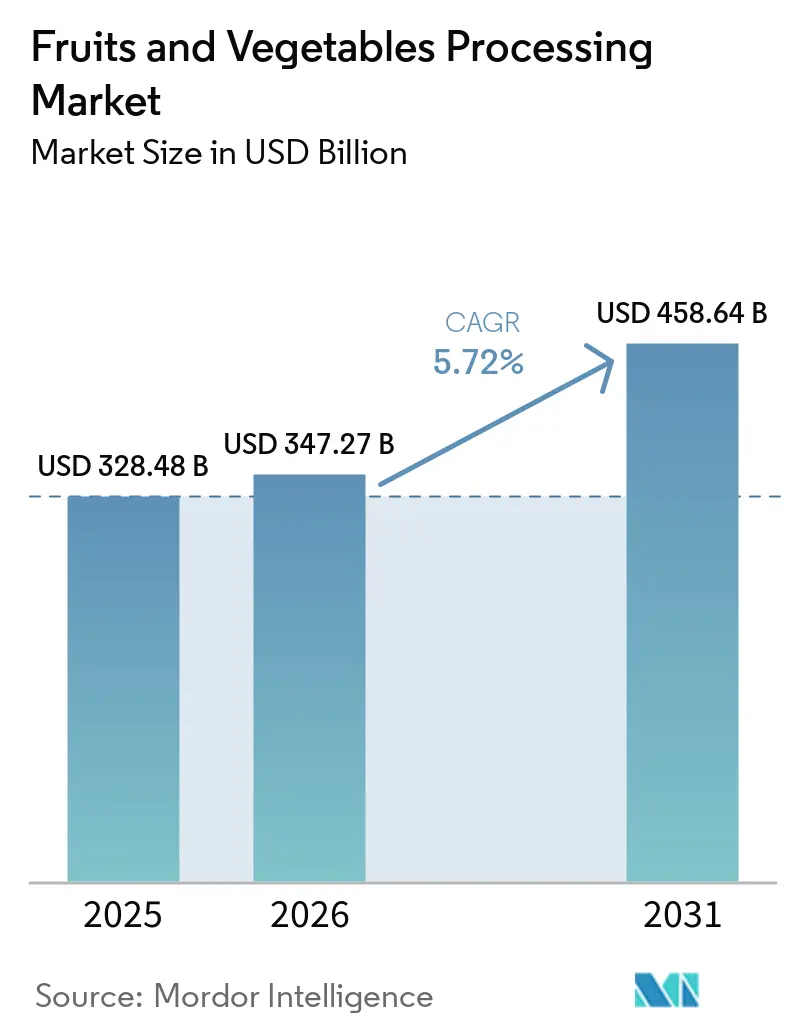
The fruits and vegetables processing market size is projected to be USD 328.48 billion in 2025, USD 347.27 billion in 2026, and reach USD 458.64 billion by 2031, growing at a CAGR of 5.72% from 2026 to 2031. The market is expanding due to factors such as increasing urbanization, rising single-person households, and a growing preference for convenient, time-saving meal options. Stricter regulations on farm-to-fork traceability are driving demand for processed fruits and vegetables that come with reliable safety certifications. The Asia-Pacific region is expected to dominate the market in terms of revenue in 2025, driven by its large population and growing demand for processed food. Meanwhile, the Middle East and Africa are anticipated to witness the fastest growth during the forecast period, as governments in these regions are heavily investing in cold-chain infrastructure to reduce post-harvest losses and improve food supply chains. The market remains moderately consolidated, with key players focusing on innovation and expanding their product offerings to meet evolving consumer needs.
Key Report Takeaways
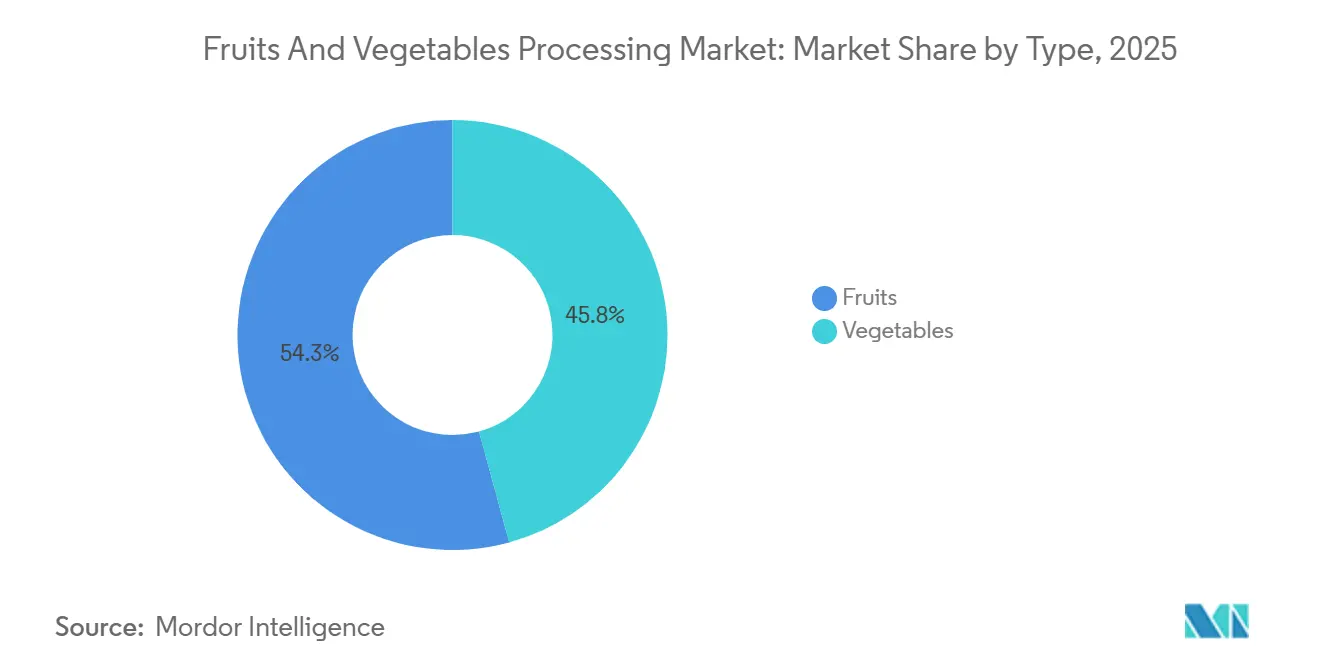
- By product type, fruits commanded 54.25% of the fruits and vegetables processing market share in 2025, while vegetables are projected to advance at a 6.39% CAGR through 2031.
- By form, canned products held a 31.05% slice of the fruits and vegetables processing market size in 2025; frozen offerings are on track for the highest CAGR at 7.12% between 2026 and 2031.
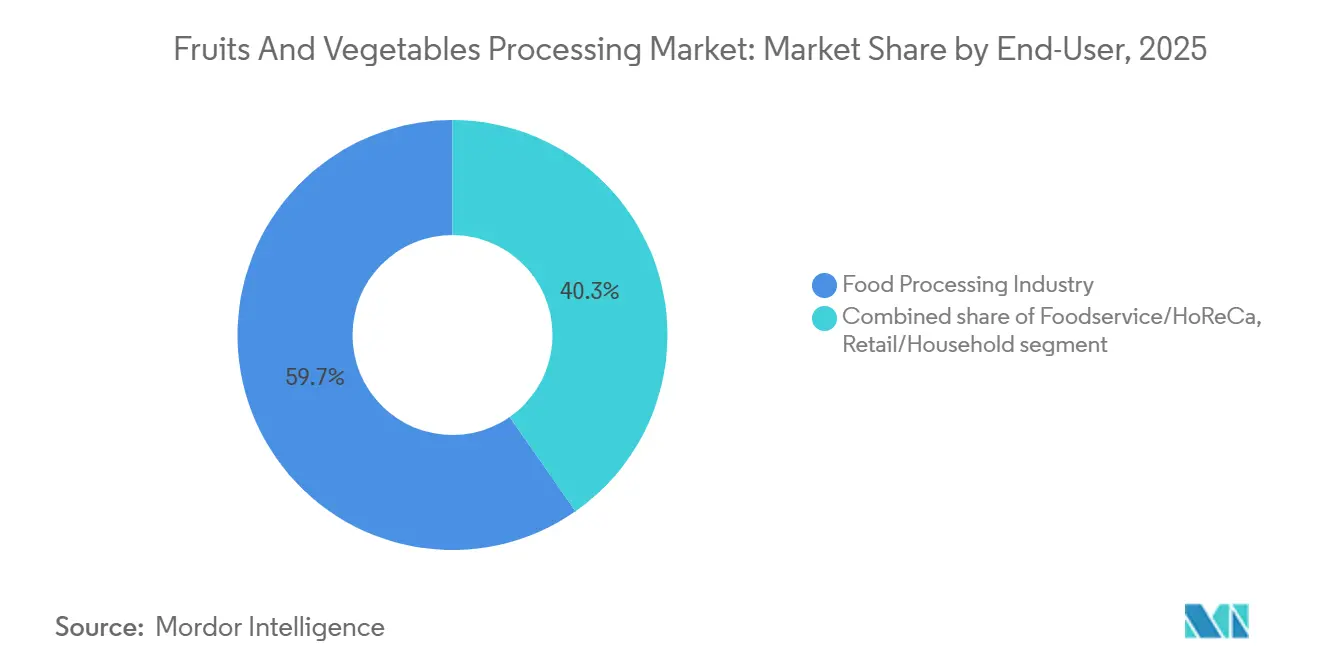
- By end user, the food processing industry accounted for 59.70% of 2025 output, whereas foodservice and HoReCa channels are forecast to post a 7.21% CAGR through 2031.
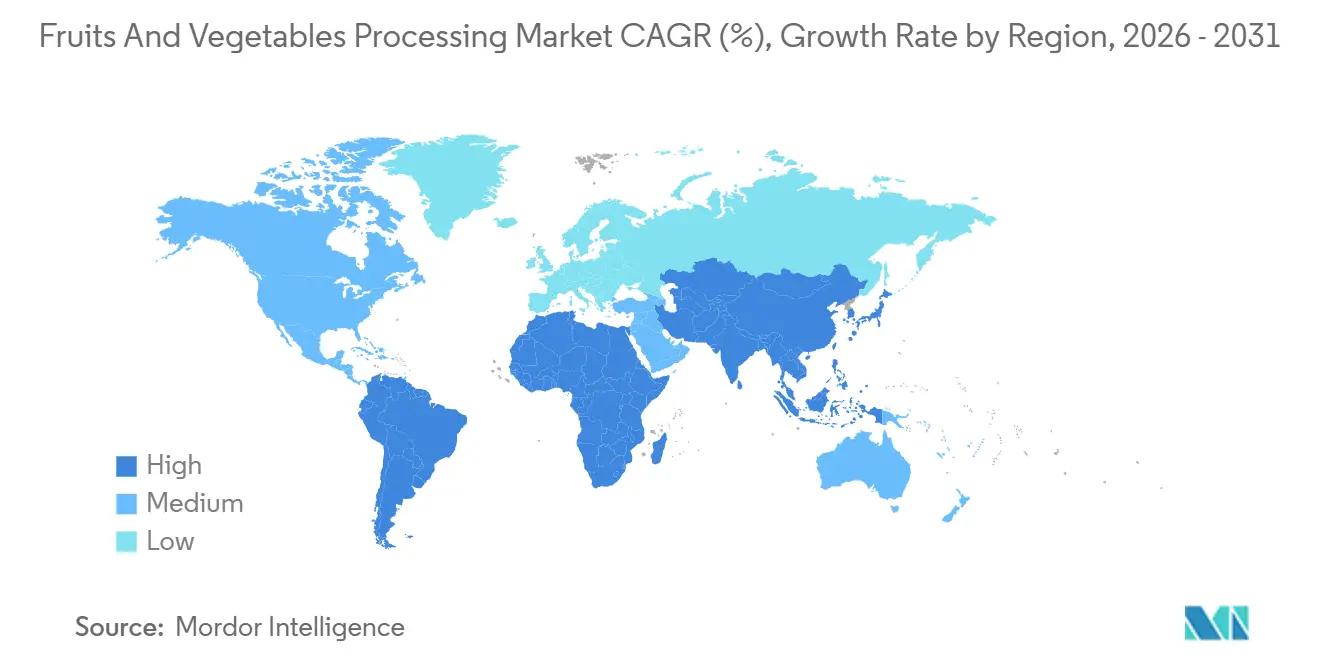
- By geography, Asia-Pacific led with 33.04% revenue in 2025, while the Middle East and Africa region is forecast to expand at an 8.04% CAGR through 2031.
Note: Market size and forecast figures in this report are generated using Mordor Intelligence’s proprietary estimation framework, updated with the latest available data and insights as of 2026.
Market Trends and Insights
Drivers Impact Analysis of Fruits and Vegetables Processing Market*
| Driver | (~) % Impact on CAGR Forecast | Geographic Relevance | Impact Timeline |
|---|---|---|---|
| Rising consumer demand for convenient and ready-to-eat fruit and vegetable products | +1.2% | Global, with peaks in North America, Europe, and urban Asia-Pacific | Medium term (2-4 years) |
| Growing health awareness and preference for nutritious processed products | +1.0% | Global, strongest in North America and Western Europe | Long term (≥ 4 years) |
| Innovation in value-added products such as juices, purees, and snacks | +0.9% | North America, Europe, Asia-Pacific core markets | Medium term (2-4 years) |
| Technological advancements in processing, packaging, and cold chain logistics | +1.1% | Global, early adoption in North America and Europe, spillover to Asia-Pacific and Middle East and Africa | Short term (≤ 2 years) |
| Growing popularity of plant-based diets is boosting demand | +0.8% | North America, Europe, urban Asia-Pacific | Long term (≥ 4 years) |
| Increasing focus on food safety and hygiene standards | +0.7% | Global, regulatory-driven in Europe and North America, emerging in Asia-Pacific and Middle East and Africa | Medium term (2-4 years) |
| Source: Mordor Intelligence | |||
Rising consumer demand for convenient and ready-to-eat fruit and vegetable products
The growing demand for convenient, ready-to-eat food products is driving the fruits and vegetables processing market. This trend is largely due to increasingly busy lifestyles and higher workforce participation. For instance, as of May 2024, the employment rate across member countries of the Organisation for Economic Co-operation and Development (OECD) reached 95.1%[1]Source: Organisation for Economic Co-operation and Development, "OECD Employment Outlook 2024", oecd.org. With more people working, there is less time to prepare fresh meals, leading to a greater reliance on pre-cut, frozen, and ready-to-eat fruits and vegetables. Urban households and individuals living alone are particularly drawn to these products because they are portion-controlled and easy to prepare. Furthermore, supermarkets are expanding their ready-meal sections, and online grocery platforms and meal-kit services are incorporating more processed fruits and vegetables into their offerings.
Growing health awareness and preference for nutritious processed products
Health awareness is rising globally, and more people are focusing on increasing their protein intake, driving growth in the fruits and vegetables processing market. Many consumers are looking for foods that are not only convenient but also packed with nutrients, including protein. According to the International Food Information Council (IFIC) Food and Health Survey 2024, 71% of Americans are actively trying to include more protein in their diets[2]Source: International Food Information Council (IFIC), "Food and Health Survey 2024", ific.org. This has led to a growing demand for products enriched with plant-based proteins, such as pea protein, vegetable concentrates, and legume blends. To meet this demand, manufacturers are creating processed fruit and vegetable products that are both nutritious and easy to consume. These products are designed to support balanced diets and offer additional health benefits. As more people prioritize health and convenience, processed fruits and vegetables are becoming key ingredients in a wide range of health-focused food products.
Innovation in value-added products such as juices, purees, and snacks
Growth in the fruits and vegetables processing market is driven by innovations in products such as juices, purees, and fruit- and vegetable-based snacks. New processing techniques, such as cold-pressing and high-pressure processing, are helping manufacturers retain the natural nutrients, flavors, and freshness of these products. This makes premium juices more attractive to health-conscious consumers who prioritize quality and nutrition. There is growing demand for vegetable-based snacks, such as beetroot, kale, and sweet potato chips, as consumers increasingly seek healthier alternatives to traditional snack foods. Furthermore, purees, which were once primarily marketed for infants, are now gaining popularity among adults. These purees are seen as convenient, portion-controlled options that appeal to busy lifestyles. This shift allows manufacturers to expand their product offerings and reach a broader range of consumers, thereby contributing to the market's overall growth.
Growing popularity of plant-based diets is boosting demand
The increasing adoption of plant-based diets is driving significant growth in the fruits and vegetables processing market. Consumers are turning to processed plant-based ingredients as they seek convenient and healthy meal options. According to the World Animal Foundation, as of June 2025, there are approximately 88 million vegans worldwide, underscoring the growing demand for plant-based foods[3]Source: World Animal Foundation, "How Many Vegans Are in the World in 2026? Latest Vegan Stats", worldanimalfoundation.org. Processed fruits and vegetables are essential components of various plant-based products, including ready-to-eat meals, snacks, smoothies, and meat substitutes. This trend is pushing manufacturers to expand their production of frozen, canned, and value-added fruit and vegetable products. By doing so, they aim to meet the increasing global demand for plant-based alternatives while catering to consumer preferences for healthier, more sustainable food choices.
Restraints Impact Analysis of Fruits and Vegetables Processing Market*
| Restraint | (~) % Impact on CAGR Forecast | Geographic Relevance | Impact Timeline |
|---|---|---|---|
| High capital investment requirements for processing equipment | -0.8% | Global, acute in emerging markets with limited financing | Short term (≤ 2 years) |
| Fluctuations in raw material availability and prices due to seasonality and climate conditions | -1.0% | Global, severe in drought-prone regions (California, Mediterranean, North China) | Medium term (2-4 years) |
| Limited shelf-life perception of certain processed products | -0.4% | North America and Europe, consumer-perception driven | Long term (≥ 4 years) |
| High energy and water consumption in processing operations | -0.6% | Global, most acute in water-scarce regions (Middle East, North Africa, Western United States) | Medium term (2-4 years) |
| Source: Mordor Intelligence | |||
Fluctuations in raw material availability and prices due to seasonality and climate conditions
Changes in the availability and prices of raw materials, driven by seasonal patterns and climate variability, pose a significant challenge to the fruits and vegetables processing market. Weather events such as droughts, frost, and irregular rainfall can severely impact crop yields, leading to shortages. As a result, processors often need to depend on more expensive imports or alternative sources to meet demand. This unpredictability makes it harder for companies to plan production efficiently, increases procurement costs, and reduces profit margins. Furthermore, many small and mid-sized processors lack effective risk management strategies, leaving them more vulnerable to these supply and price fluctuations. These challenges collectively hinder consistent market growth.
High capital investment requirements for processing equipment
The high cost of investing in processing equipment is a major challenge for the fruits and vegetables processing market. Setting up new processing facilities or upgrading existing ones requires significant spending on advanced machinery, automation systems, and infrastructure to meet food safety standards. These expenses are particularly difficult for small and medium-sized companies to manage, creating barriers to effective competition. This issue is even more pronounced in emerging economies, where access to financing is often limited. As a result, many businesses face delays in adopting modern processing technologies or expanding their production capacity, which slows down the overall growth of the market. The lack of affordable financing options and the complexity of integrating advanced systems further hinder smaller players' ability to scale their operations.
*Our forecasts treat driver/restraint impacts as directional, not additive. The impact forecasts reflect baseline growth, mix effects, and variable interactions.
Fruits and Vegetables Processing Market Segment Analysis
By Product Type:
Vegetables Gain Momentum as Protein Alternatives ExpandThe fruits segment led the fruits and vegetables processing market, accounting for 54.25% of the total market share in 2025. This dominance is due to the high demand for processed fruit products like juices, concentrates, canned fruits, frozen fruits, and purees. These products are widely used in industries such as beverages, dairy, bakery, and confectionery. Consumers increasingly prefer convenient, ready-to-consume options, and fruit-based ingredients are becoming more popular in functional and fortified foods. The growing export of tropical and exotic fruit products has further boosted the segment's growth.
The fresh vegetables segment is expected to grow at a CAGR of 6.39% from 2026 to 2031, driven by the rising demand for frozen, canned, and minimally processed vegetables. Consumers are focusing more on healthy eating and convenient meal options, which has increased the popularity of ready-to-cook and ready-to-eat vegetable products. Processed vegetables are also being used more in foodservice, packaged meals, and quick-service restaurants. Moreover, advancements in preservation technologies, such as freezing and drying, are helping to maintain nutritional value and extend shelf life, supporting the segment's long-term growth.



By Form:
Frozen Products Accelerate on Cold-Chain UpgradesCanned products accounted for 31.05% of the fruits and vegetables processing market share in 2025, primarily due to their long shelf life, affordability, and easy availability. These products are popular among households and foodservice providers because they are convenient and can be consumed year-round, regardless of seasonal changes. In addition, canned fruits and vegetables are in high demand in institutional settings and emerging markets where shelf-stable food options are essential. Advances in canning technology have further enhanced the quality of these products by effectively preserving their taste, texture, and nutritional value.
The frozen segment is expected to grow at a CAGR of 7.12% through 2031, driven by rising consumer demand for convenient, minimally processed foods that retain freshness and nutrients. Frozen fruits and vegetables are widely used in ready-to-eat meals, smoothies, and quick-service restaurants due to their longer shelf life and ease of preparation. The growth of urbanization, busy lifestyles, and the expansion of cold chain infrastructure are further boosting the demand for frozen products. Frozen formats are becoming more popular as they better preserve the natural flavor and nutritional content compared to some other processing methods, making them a preferred choice for health-conscious consumers.
By End User:
Foodservice and HoReCa Lead Post-Pandemic RecoveryThe food processing sector accounted for 59.70% of the fruits and vegetables processing market output in 2025, primarily driven by high demand from packaged food manufacturers. Processed fruits and vegetables are essential ingredients in products like ready meals, soups, sauces, snacks, bakery goods, and beverages. These products are preferred because they have a longer shelf life, maintain consistent quality, and are easy to use in large-scale production. The rising popularity of convenience foods and packaged products continues to strengthen this sector's dominance in the market.
The foodservice and HoReCa (Hotels, Restaurants, and Catering) segment is expected to grow at a CAGR of 7.21% through 2031, driven by the rapid expansion of restaurants, hotels, catering services, and quick-service chains. Urbanization, higher disposable incomes, and changing eating habits are increasing the demand for processed fruits and vegetables in commercial kitchens. These products help save preparation time, reduce food waste, and ensure consistent taste and quality in dishes. Additionally, the growth of global tourism and the rise of organized foodservice chains are further boosting the demand in this segment.
Geography Analysis
APAC Fruits and Vegetables Processing Market
Asia-Pacific accounted for 33.04% of the fruits and vegetables processing market revenue in 2025, driven by advancements in post-harvest infrastructure, high agricultural output, and expanding processing capabilities. Countries like India are improving cold storage and transportation systems to reduce food wastage and enhance supply efficiency. Japan’s aging population is increasing the demand for easy-to-consume, single-serve, and fortified processed products. Indonesia is capitalizing on its tropical fruit production to boost exports, while Australia’s strict organic certification standards are helping its exporters target premium global markets. These factors collectively make Asia-Pacific a dominant player in the global processing market.
MEA Fruits and Vegetables Processing Market
The Middle East and Africa are expected to experience the fastest growth in the fruits and vegetables processing market, with a CAGR of 8.04% through 2031. This growth is fueled by rising investments in local food processing infrastructure and initiatives to improve food security. Countries like Saudi Arabia and the United Arab Emirates are focusing on domestic processing to reduce dependency on imports. South Africa is strengthening its position in processed fruit exports, while Nigeria is enhancing its processing capacity by connecting farmers directly with processors. These efforts are improving regional self-reliance and creating a more integrated supply chain.
The Americas and Europe Fruits and Vegetables Processing Market
North America and Europe are mature markets but remain important for premium, organic, and value-added processed products. Consumer demand for clean-label, organic, and functional foods is pushing processors to adopt certified sourcing and advanced technologies. Europe is leading in organic product innovation, supported by regulatory goals and the expansion of private-label offerings by retailers. Meanwhile, South American countries like Chile and Brazil play a key role in global supply by exporting processed fruits and vegetables during the off-season in Northern Hemisphere markets. This ensures a steady supply of products worldwide, even during seasonal gaps.

Regulatory Landscape
Regulation is tightening around traceability, chemical residues, and labeling or marketing standards, which affects processed fruits and vegetables that rely on compliant raw material sourcing and packaging. In the United States, FDA actions under FSMA continue to raise documentation expectations for produce and processed foods, including additional traceability record requirements for certain foods and 2026 Human Foods Program priority deliverables focused on produce safety.
In Canada, the CanadaGAP Fruit and Vegetable Manual version 11.0 (2026) reinforces HACCP-aligned food safety systems used by growers and packers supplying processors. In Europe, 2026 changes span both inputs and packaging, with restrictions affecting certain pesticide residues and prohibitions on specific substances, including BPA in packaging (with phased timelines for select containers), pushing processors to re-qualify suppliers and packaging specifications. The EU also maintains marketing standards frameworks for the fruit and vegetables sector, and continues to adjust delegated rules for producer organizations and notifications (Commission Delegated Regulation (EU) 2025/2184), increasing the compliance burden for companies shipping across borders. India continues to regulate composition and safety through FSSAI standards for fruit and vegetable products and related FSMS guidance, shaping formulation, additive use, and hygiene controls for domestic processing and exports.
Value Chain Analysis
The value chain begins with input suppliers (seeds, crop protection, and fertilizers), then moves through growers and aggregators or traders. Primary handling includes washing, grading, and sorting, followed by cold storage, before industrial processing such as cutting, blanching, freezing, canning, drying or dehydration, and juice or puree concentration. Processors then route output through brand owners and food manufacturers, foodservice or HoReCa distributors, and retail or online channels, while packaging suppliers (cans, pouches, cartons) and logistics providers (refrigerated transport and warehousing) serve as key enablers. Quality systems and certification bodies span these stages to support farm-to-fork traceability and food safety requirements.
Friction points arise where perishability meets fragmentation, including smallholder supply bases, variable quality and seasonality, gaps in certified inputs, cold-chain shortfalls, transportation delays, and information asymmetry between farms, aggregators, and processors. Recent supply-chain research and industry resilience playbooks (2025-2026) emphasize diversification of sourcing and trade partners, tighter cold-chain integration, and more data-driven planning using IoT, automation, and predictive analytics. Optimization approaches tested in food supply chains also reflect a shift from inventory-only buffering to responsiveness-based buffering, where processors use improved visibility across sourcing, transport, and processing modes to reduce waste and stabilize throughput under climate and lead-time volatility.
Competitive Landscape
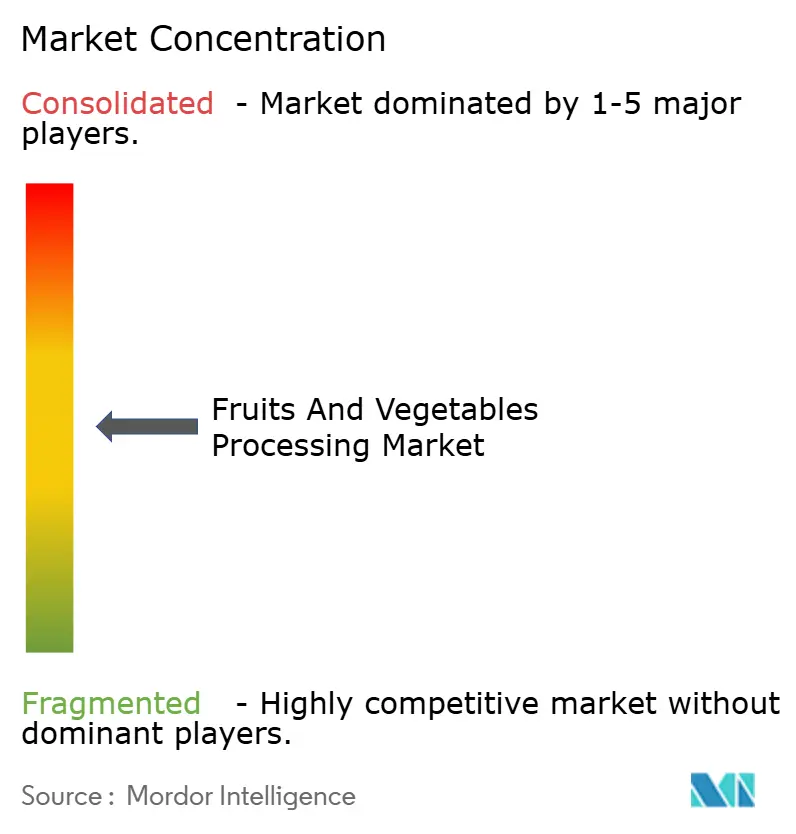
The fruits and vegetables processing market is dominated by a few large multinational companies, making it moderately consolidated. Key players like The Kraft Heinz Company, Conagra Brands Inc., Nestlé S.A., Dole plc, and Del Monte Foods hold strong positions due to their extensive global distribution networks and diverse product offerings. These companies also benefit from well-established brand recognition, which helps them maintain customer loyalty. By managing their supply chains efficiently, from sourcing raw materials to delivering finished products, they ensure consistent availability and remain competitive in both developed and emerging markets.
Alongside these global leaders, regional and local processors play a crucial role in the market. These smaller companies often focus on specialized products tailored to local tastes and preferences. They also emphasize using local crop varieties and maintaining a faster, more responsive supply chain to meet customer demands quickly. By tailoring their offerings to specific regions and keeping prices competitive, these companies effectively serve domestic and nearby markets. This combination of global dominance and regional specialization creates a balanced and moderately consolidated market structure.
Innovation and technology adoption are key factors driving competition in the fruits and vegetables processing market. Leading companies are investing in advanced processing technologies, automation, and improved packaging solutions to enhance product quality, extend shelf life, and boost operational efficiency. Additionally, there is a growing focus on value-added products, such as organic, clean-label, and ready-to-eat options, to meet changing consumer preferences. As more companies adopt these technologies and expand their product portfolios, competition is expected to increase, further shaping the market landscape in the coming years.
Fruits and Vegetables Processing Industry Leaders
-
The Kraft Heinz Company
-
Conagra Brands Inc.
-
Nestlé S.A.
-
Dole plc
-
Del Monte Foods
- *Disclaimer: Major Players sorted in no particular order
Fruits and Vegetables Processing Market Companies Covered in this Report
- The Kraft Heinz Company
- Conagra Brands Inc.
- Nestlé S.A.
- Archer Daniels Midland Company
- Dole plc
- Del Monte Foods
- Agrana Beteiligungs-AG
- B&G Foods
- Albertsons Companies
- SVZ International
- Olam Group
- JBT Corporation
- Bohler AG
- GEA Group AG
- Tetra Pak
- Bonduelle Group
- Seneca Foods
- SunOpta Inc.
- The J. M. Smucker Company
- Hain Celestial Group

Market Opportunities and Future Outlook
Tighter traceability and safety compliance are creating opportunities for processors that can deliver audit-ready, data-rich supply chains across geographies and channels, especially for foodservice or HoReCa and private label programs that require consistent specifications. FSMA-linked traceability expectations in the United States, CanadaGAP-aligned supplier programs, and EU marketing and packaging-related requirements together raise the value of standardized records, certified sourcing, and validated packaging choices for processed fruits and vegetables sold across borders.
Technology and capacity upgrades that improve shelf life and reduce waste offer another differentiation path as cold chain expands and buyers seek steadier supply. Evidence of continued capital deployment into advanced processing formats includes The Campbell's Company completing an 88,000 sq. ft. aseptic manufacturing expansion in Maxton, North Carolina (July 2026), showing how aseptic and high-efficiency lines are being used to extend product stability and broaden distribution. Ingredient innovation and circularity also support upside beyond traditional canned and frozen output, as processors and partners commercialize higher-value extracts and concentrates from fruit and vegetable streams, including upcycled fruit-derived extracts introduced through a Del Monte Corporation and Treatt partnership in 2026.
Recent Industry Developments in Fruits and Vegetables Processing Market
- July 2026: Del Monte Corporation partnered with Treatt to develop fruit-derived extracts (including pineapple, watermelon, mango, and cantaloupe) upcycled from materials generated in processing operations. The collaboration expands the value-added ingredient pathway for processed fruit streams and links mainstream processors more directly to beverage and flavor supply chains.
- June 2026: The Kraft Heinz Company announced a restructuring into three operating regions effective July 1, 2026, alongside a consolidated global procurement and supply chain structure. The organizational shift centralizes purchasing and supply chain execution, influencing how large-scale buyers contract for processed fruit and vegetable inputs and packaging across regions.
- August 2024: F&S Fresh Foods acquired Calavo Growers' fresh-cut division, Renaissance Food Group, adding five production facilities across North America. The deal increased capacity and footprint in fresh-cut fruits and vegetables, strengthening supply coverage for retail and foodservice customers that prioritize convenience and consistent specifications.


Fruits and Vegetables Processing Market Report Scope and Research Methodology
Market Definition and Coverage
For this study, the fruit and vegetable processing market is defined as the value generated from converting raw fruits and vegetables into processed forms that are sold to food manufacturers, foodservice, and retail buyers.
Scope exclusions: It does not include farm production value, fresh produce trading without processing, or stand alone processing equipment sales.
Segments Covered in This Report
-
By Product Type
- Fruits
- Vegetables
-
By Form
- Fresh
- Fresh-Cut
- Canned
- Frozen
- Dried/Dehydrated
- Juices/Purees
-
By End User
- Food Processing Industry
- Foodservice/HoReCa
-
Retail/Household
- Supermarkets/Hypermarkets
- Convenience/Grocery Stores
- Online Retailers
- Other Channels
-
By Geography
-
North America
- United States
- Canada
- Mexico
- Rest of North America
-
South America
- Brazil
- Argentina
- Colombia
- Chile
- Peru
- Rest of South America
-
Europe
- Germany
- United Kingdom
- Italy
- France
- Spain
- Poland
- Belgium
- Sweden
- Netherlands
- Rest of Europe
-
Asia-Pacific
- China
- Japan
- India
- Australia
- Indonesia
- South Korea
- Thailand
- Singapore
- Rest of Asia-Pacific
-
Middle East and Africa
- South Africa
- Saudi Arabia
- United Arab Emirates
- Nigeria
- Egypt
- Morocco
- Turkey
- Rest of Middle East and Africa
-
North America
Data Sources, Market Sizing, and Validation
Desk Research
Desk research was used to build the first structure of the market and to reduce the risk of missing major demand pools. We relied on public datasets such as FAOSTAT, USDA program data, Eurostat, UN Comtrade trade statistics, and Codex Alimentarius standards to map production volumes, trade flows, and common product definitions for processed fruits and vegetables.
On top of that, we reviewed annual reports, investor presentations, and press releases from large processors and branded food companies to understand processing mix shifts across canned, frozen, dried or dehydrated, juices or purees, and fresh cut formats. A paid subscription covering company financials and news was also used to cross-check revenue splits, regional exposure, and major capacity announcements that can affect near-term growth. These examples are not exhaustive, and many other public and paid references were used for data collection, validation, and clarification.
Primary Interviews and Surveys
Primary work was conducted through expert interviews and structured surveys with processor-side managers, procurement and category leaders in food manufacturing, and channel stakeholders across retail and foodservice. Respondent input was used to verify processing yield assumptions, confirm how pricing differs by format, and refine how demand changes with seasonality, trade constraints, and end user menu or formulation trends across key regions.
Distribution of primary research fieldwork respondents
| Company type | Respondent position | Region |
|---|---|---|
| Top tier: 30% | CXOs: 18% | APAC: 43% |
| Mid tier: 48% | Functional/Unit leaders: 30% | EMEA: 30% |
| Smaller Players: 22% | Managers: 52% | Americas: 27% |
Market-Sizing & Forecasting
Sizing started from a top-down demand pool build, where production and trade data were used to reconstruct the processed supply available for consumption, and then matched to end user off-take across retail, foodservice, and food manufacturing. After that backbone was set, it was checked using selective bottom-up approximations, including sampled processor revenues by geography, channel checks on processed volume movement, and average selling price bands by format, which were then used to correct outliers.
Key inputs in the model included processed output by category (canned, frozen, dried or dehydrated, juices or purees, and fresh cut), import and export intensity for major processed items, yield loss assumptions from raw to processed form, price spreads between formats, and penetration of processed products in organized retail and foodservice. When some countries had limited public splits, proxy shares were derived from trade composition and then confirmed through interviews before being applied consistently.
For forecasting, scenario analysis was used and anchored on expected changes in raw material availability, cold chain expansion, private label growth, and foodservice recovery patterns, with price expectations validated by interview feedback. The forecast was then smoothed so that sharp one-year spikes only remained when supported by clear signals such as policy shifts, trade disruptions, or capacity additions.
Data Validation & Update Cycle
Validation was done through triangulation across three layers, namely macro production and trade signals, company and channel indicators, and interview-based checks on pricing and mix. When the model produced unusual growth for a region or format, the inputs were rechecked, the math was rerun, and experts were re-contacted if the variance could not be explained by a documented driver.
Before sign-off, estimates go through multi-step analyst review, including unit consistency checks, currency conversion timing checks, and a reasonableness review against adjacent food categories. The report is refreshed annually, and interim updates are triggered when material events occur, followed by a final pre-delivery review so clients receive the most current view available.
Mordor Intelligence's Fruit and Vegetable Processing Market Size Compared Against Other Published Estimates
Published market numbers for fruit and vegetable processing often do not match, and the differences are usually caused by scope boundaries, year selection, and how prices and volumes are converted into value. In our checks, the biggest swings typically show up when one source blends in adjacent food categories or applies aggressive price growth without verifying it against observed trade and consumption signals.
Export and import statistics for processed items, along with processor revenue splits and format-level price bands gathered in interviews, are used as evidence to keep Mordor Intelligence's estimate tied to processed output and end user off-take rather than broad packaged food totals. When the market is framed differently, for example by counting farm gate value or adding equipment and services, the reported market size can shift upward even if underlying consumption is similar.
Benchmark comparison
| Source | Market Size | Gaps in Research Methodology |
|---|---|---|
| Mordor Intelligence | USD 347.27 B (2026) | |
| Global Industry Publisher A | USD 379.60 B (2025) | Uses an industry sizing lens that can bundle broader processing services and mixed product revenue in a single year view, and it does not clearly state processed-form boundaries by format or end user. |
| Global Consultancy B | USD 393.63 B (2024) | Builds from a different base year and tends to apply faster growth assumptions, with less transparency on how format mix, yield losses, and price spreads are validated against trade and processor-side checks. |
Taken together, the spread is mainly explained by what gets counted as processing value, which year anchors the estimate, and how price progression is handled across formats. By tying the model to observable processed output signals and then pressure-testing it with interview feedback, the final number stays traceable to inputs that can be reviewed and repeated.


Key Questions Answered in the Report
How large will global demand for processed fruits and vegetables become by 2031?
The fruit and vegetable processing market is projected to reach USD 458.64 billion by 2031, reflecting a 5.72% CAGR from 2026.
Which product form is set to grow the fastest over the next five years?
Frozen products are forecast to register the quickest gains with a 7.12% CAGR as cold-chain networks improve worldwide.
What region shows the highest growth potential?
The Middle East and Africa region is expected to post the strongest growth at an 8.04% CAGR through 2031, driven by food-security investments.
Which region offers the strongest future growth potential?
The Middle East and Africa region is forecast to rise at 8.03% CAGR to 2031.
Why are vegetables gaining share in processed categories?
Rising interest in plant-based protein pushes demand for vegetable purees and blends used in meat substitutes and convenience meals.
Page last updated on:


 Your data is secure and never sold or shared.


