
Market Overview
| Study Period | 2020 - 2031 |
|---|---|
| Forecast Data Period | 2026 - 2031 |
| Base Year Market Size (2025) | USD 6.90 Billion |
| Market Size (2026) | USD 7.52 Billion |
| Market Size (2031) | USD 11.51 Billion |
| Growth Rate (2026 - 2031) | 8.92 % |
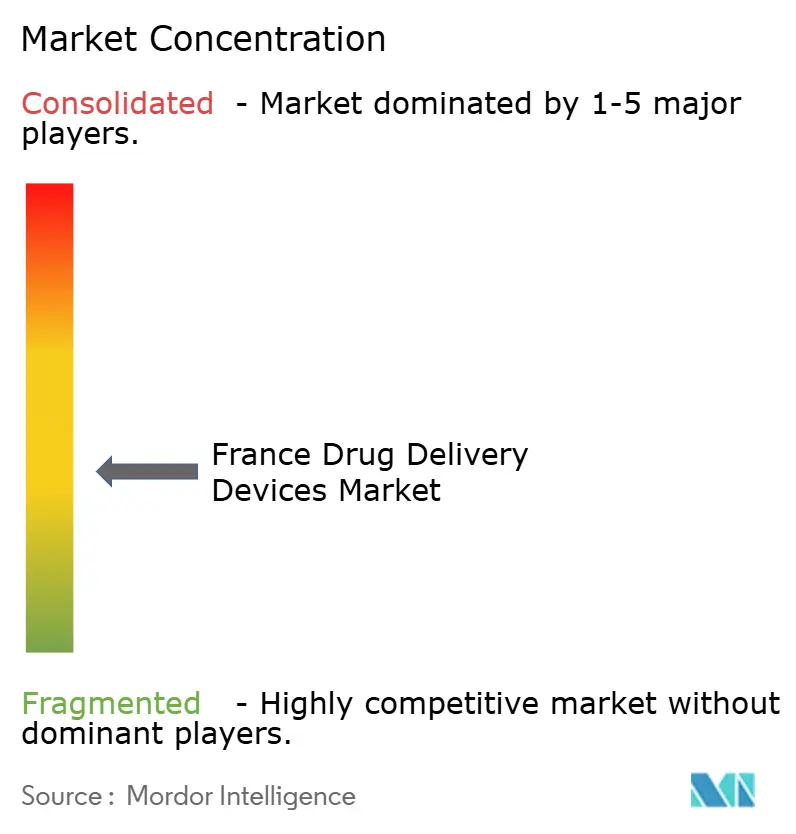
| Market Concentration | Medium |
Major Players *Disclaimer: Major Players sorted in no particular order Image © Mordor Intelligence. Reuse requires attribution under CC BY 4.0. | |
France Drug Delivery Devices Market Analysis by Mordor Intelligence
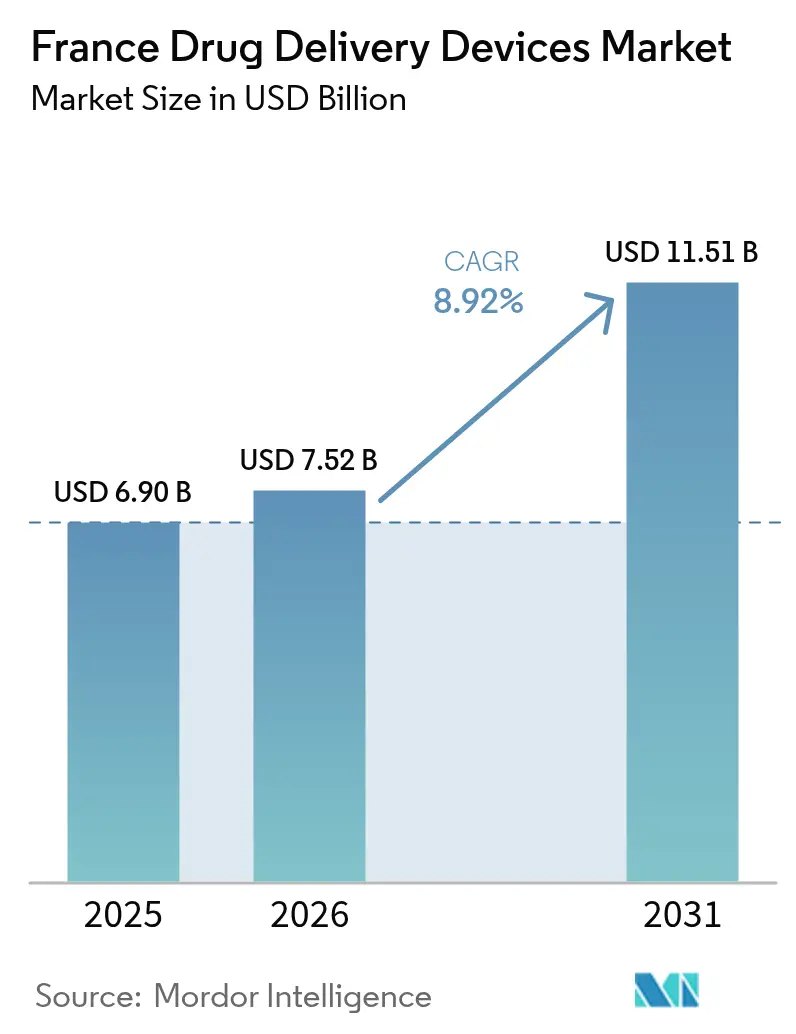
The France drug delivery devices market size was valued at USD 6.90 billion in 2025 and estimated to grow from USD 7.52 billion in 2026 to reach USD 11.51 billion by 2031, at a CAGR of 8.92% during the forecast period (2026-2031). Rapid expansion is fueled by connected-device innovation, growth in biologic and biosimilar therapies, and national e-health programs that encourage self-administration. Manufacturers gain momentum from France’s robust contract development and manufacturing organization (CDMO) ecosystem, while high chronic-disease prevalence sustains steady demand. Regulatory initiatives such as early reimbursement pathways for digital devices shorten time to market, although complex pricing caps and EU Medical Device Regulation (MDR) compliance remain notable obstacles. Together, these factors position the France drug delivery devices market as a key growth engine within Europe.
Key Report Takeaways
- By device type, injectable delivery devices led with 45.02% of France drug delivery devices market share in 2025, while implantable systems are forecast to expand at a 11.32% CAGR through 2031.
- By route of administration, injectables commanded 57.55% share of the France drug delivery devices market size in 2025; inhalation delivery is set to grow at a 9.24% CAGR to 2031.
- By application, diabetes represented 30.05% of France drug delivery devices market share in 2025, whereas oncology applications are advancing at a 10.85% CAGR between 2026-2031.
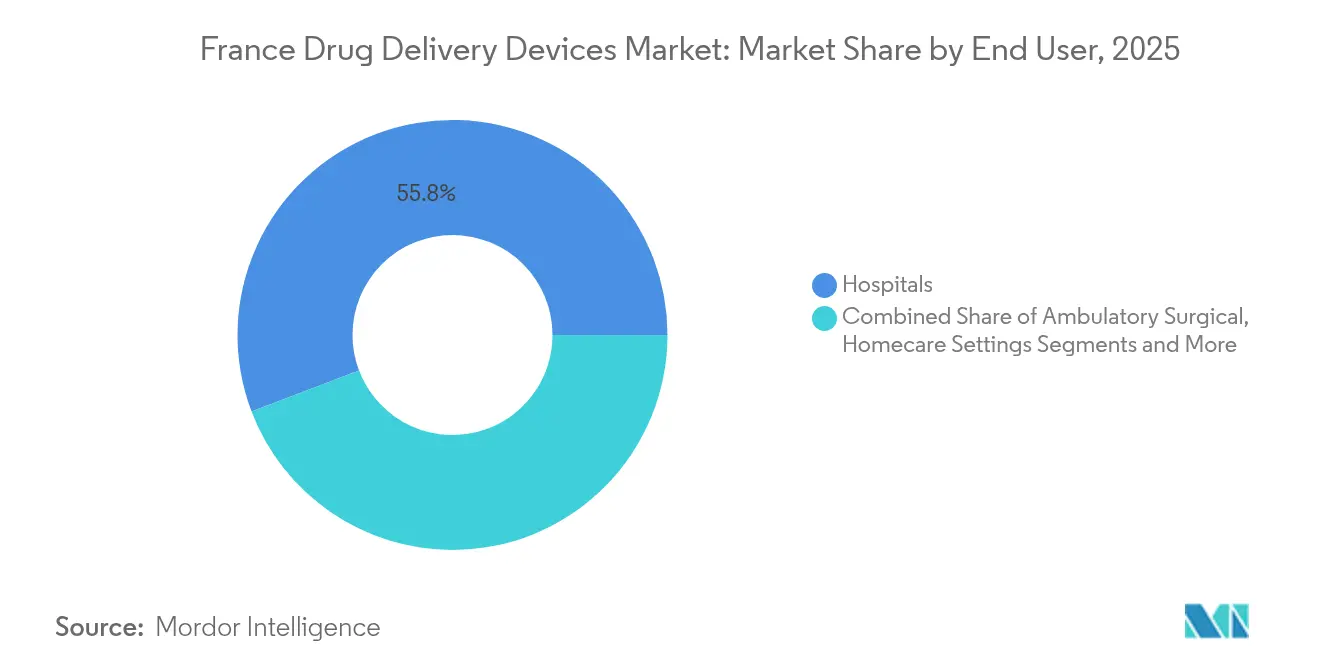
- By end user, hospitals accounted for 55.78% of the France drug delivery devices market size in 2025; homecare settings are progressing at a 12.37% CAGR during the forecast period.
Note: Market size and forecast figures in this report are generated using Mordor Intelligence’s proprietary estimation framework, updated with the latest available data and insights as of 2026.
France Drug Delivery Devices Market Trends and Insights
Drivers Impact Analysis*
| Driver | (~) % Impact on CAGR Forecast | Geographic Relevance | Impact Timeline |
|---|---|---|---|
| Shift to home-based care & self-administration | +2.1% | National, early adoption in urban centers | Medium term (2-4 years) |
| Expansion of biologic & biosimilar injectables | +1.8% | National | Long term (≥ 4 years) |
| Technological advancements & e-health strategy accelerating connected devices | +1.5% | National, concentration in innovation hubs | Medium term (2-4 years) |
| Robust CDMO & device manufacturing ecosystem | +1.2% | Paris, Lyon, Strasbourg clusters | Medium term (2-4 years) |
| High burden of chronic diseases | +0.9% | National, stronger impact in aging regions | Long term (≥ 4 years) |
| Supporting reforms and regulations fueling demand for drug-delivery devices | +0.7% | National, aligned with EU frameworks | Long term (≥ 4 years) |
| Source: Mordor Intelligence | |||
Shift to Home-Based Care & Self-Administration
France is prioritizing homecare, and the end-user segment already shows a 13.03% CAGR, the highest across settings. The National eHealth Roadmap (2023-2027) backs connected devices that transmit real-time dosing data and support remote consultations.[1]Sanofi’s Solosmart sensor, available in 21,000 pharmacies, captures insulin injection records and integrates seamlessly with patient apps. Such devices redefine competition by elevating usability and data connectivity to the same level as pharmacological performance, driving France drug delivery devices market adoption.
Expansion of Biologic & Biosimilar Injectables
High-viscosity biologics need specialized delivery formats. Novo Nordisk invested €2.1 billion in its Chartres site to double insulin capacity. BD’s Neopak XtraFlow syringe targets these formulations, highlighting collaborative innovation between pharma and device makers. Growing biologic pipelines ensure sustained demand in the France drug delivery devices market, particularly for self-injectors and wearable pumps.
Technological Advancements and e-Health Strategy
The ‘Mon espace santé’ digital record positions France as an early adopter of connected drug delivery. Integration with the European Health Data Space promises smoother secondary-data use for research. Manufacturers gain a platform to demonstrate adherence gains, strengthening value-based reimbursement arguments and lifting the France drug delivery devices market outlook.
Robust CDMO & Device Manufacturing Ecosystem
France’s network of specialized CDMOs accelerates scale-up for complex systems. Meribel Pharma Solutions’ April 2025 launch added ten manufacturing sites, widening capacity for advanced injectables and implants. Concentrated know-how in Île-de-France, Lyon, and Strasbourg cuts development timelines, giving the France drug delivery devices market a competitive edge in Europe.
Restraints Impact Analysis*
| Restraint | (~) % Impact on CAGR Forecast | Geographic Relevance | Impact Timeline |
|---|---|---|---|
| Complex reimbursement price caps | -1.3% | National | Medium term (2-4 years) |
| Stringent regulatory framework | -0.8% | National, EU-wide implications | Short term (≤ 2 years) |
| Issues related to fragmented hospital tendering & generics affecting price of drug-device combinations | -0.6% | National, regional variations | Medium term (2-4 years) |
| Limitations associated with different devices and risks | -0.5% | National | Medium term (2-4 years) |
| Source: Mordor Intelligence | |||
Complex Reimbursement Price Caps
France differentiates device and service payments and caps distributor margins, extending the average approval-to-reimbursement period to 12.9 months, compared with 6 months in Switzerland and 7.4 months in Germany. The SMR/ASMR scoring method can exclude low-benefit products from coverage, slowing revenue for combination devices and tempering growth within the France drug delivery devices market.
Stringent Regulatory Framework
Adapting to EU MDR raises compliance costs, particularly for combination and connected devices. Temporary measures by ANSM to prevent shortages of critical delivery cannulas illustrate transitional pressure.[2] Additional substance-use guidelines (e.g., phthalates) elevate documentation workloads, challenging smaller innovators and moderating the France drug delivery devices industry expansion pace.
*Our forecasts treat driver/restraint impacts as directional, not additive. The impact forecasts reflect baseline growth, mix effects, and variable interactions.
Segment Analysis
By Device Type: Implantables Gain Ground
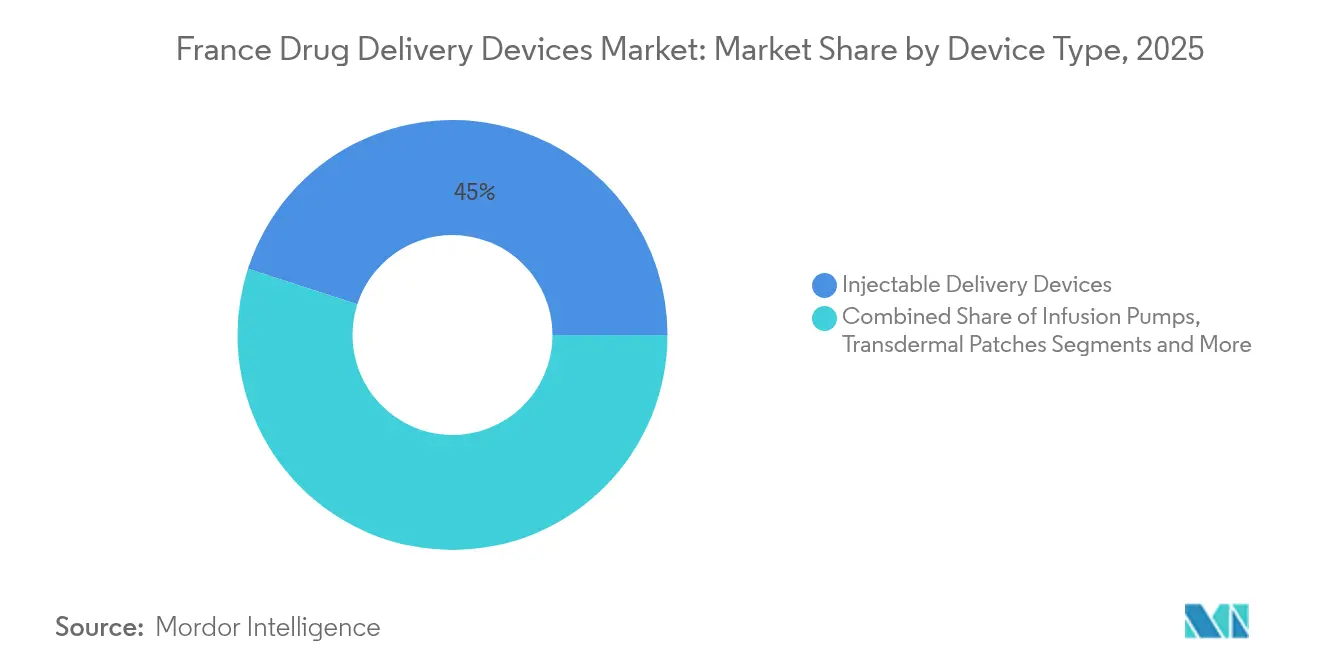
Injectables retained 45.02% share in 2025, supported by steady biologic usage and continuous upgrades in prefilled syringes and autoinjectors. BD’s RFID-enabled iDFill syringe shown at Pharmapack 2025 underscores a focus on traceability and patient safety. Despite this lead, implantables are forecast to rise at 11.32% CAGR to 2031, reflecting patient preference for longer dosing intervals and emerging hydrogel reservoirs that stretch semaglutide dosing to monthly schedules. This momentum positions implantables as a disruptive force inside the France drug delivery devices market.
Transdermal patches, ocular inserts, and intranasal systems broaden therapeutic choices. The nasal route, highlighted by Pfizer’s approved Zavzpret spray for migraine, demonstrates expanding utility beyond respiratory therapy. These additive modalities bolster device diversity and reinforce overall resilience of the France drug delivery devices market.

By Route of Administration: Inhalation Pathways Rise
Injectables accounted for 57.55% of France drug delivery devices market size in 2025, favored for precision dosing across chronic illnesses. Continuous needle-design refinements improve user comfort, strengthening retention in both hospital and home settings.
Inhalation is slated for 9.24% CAGR between 2026-2031. Partnerships such as Chiesi-Affibody on inhaled biologics widen respiratory portfolios. Nasal delivery gains traction for central nervous system targets; French start-up Lovaltech advances an intranasal vaccine platform under France 2030 funding. These advances expand treatment horizons and feed sustained growth within the France drug delivery devices market.
By Application: Oncology Accelerates
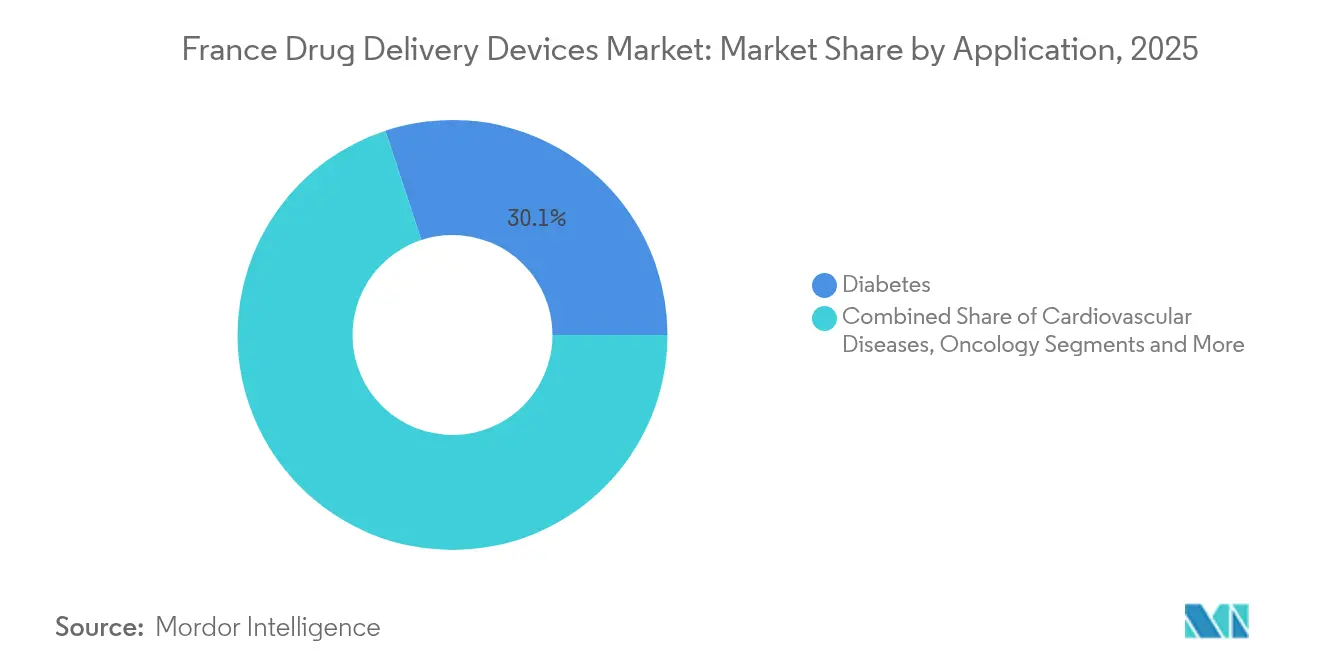
Diabetes held 30.05% of France drug delivery devices market share in 2025, underpinned by Novo Nordisk’s Chartres capacity expansion. Cardiovascular care remains sizable, aided by France’s ongoing push to lower morbidity.
Oncology is forecast to climb at a 10.85% CAGR through 2031 as precise, often implantable, delivery technologies support targeted therapeutics. Nanoparticle carriers that breach the blood-brain barrier exemplify device innovation aimed at difficult cancers. This surge solidifies oncology as a pivotal growth pillar in the France drug delivery devices market.
By End User: Homecare Surges
Hospitals dominated usage with 55.78% of France drug delivery devices market size in 2025, reflecting their central role in initiating complex therapies. Ambulatory clinics also show strength as day-surgery volumes rise.
Homecare/self-use is growing at 12.37% CAGR, buoyed by connected wearables such as the BD Libertas on-body injector that administers large-volume biologics outside clinical walls. National digital-health infrastructure ensures data integration, reinforcing adherence monitoring. Collectively, these shifts advance decentralization across the France drug delivery devices market.
Geography Analysis
France benefits from a dense life-sciences corridor. Paris ranks as Europe’s second-strongest site for drug manufacturing and packaging, concentrating design, testing, and logistics talent. The France drug delivery devices market thus enjoys proximity between research institutes, hospitals, and CDMOs that shorten innovation cycles. Pharmaceutical output reached €32,773 million (USD 35,722.6 million) in 2023, and R&D spend totaled €4,451 million (USD 4,851.6 million).
Regional disease burdens shape uptake. Higher heart-failure incidence in deprived areas mandates accessible self-administration tools. The National eHealth Roadmap aims to equalize access nationwide through digital prescriptions and remote monitoring gnius.esante.gouv.fr. Lyon’s new microbiome therapy facility signals geographic diversification and supports high-value manufacturing outside Île-de-France.
Integration with EU frameworks further influences trajectories. The European Health Data Space harmonizes governance, facilitating cross-border evidence from connected devices. Nevertheless, France’s longer reimbursement timelines versus neighboring states temper immediate returns. Sustained EU digital-health funding of EUR 13.6 billion for 2021-2027 provides ongoing support for technology adoption, reinforcing the long-term outlook for the France drug delivery devices market.
Regulatory Landscape
France regulates drug delivery devices under EU medical-device rules, with ANSM as the competent authority for market surveillance and national implementation, and MDR (Regulation (EU) 2017/745) as the core framework for CE-marked devices used in the country. For integral drug-device combinations, the applicable pathway hinges on principal mode of action. When the medicinal substance is ancillary to the device, the product falls under MDR, while products driven by pharmacological, immunological, or metabolic action follow medicinal product rules with parallel device obligations.
Value Chain Analysis
The value chain spans drug-delivery and combination-product R&D, component sourcing (for example, polymers, elastomers, glass, needles, and electronics/sensors), industrialization and sterile manufacturing, and quality and regulatory release, followed by commercial distribution through hospital tenders and retail and homecare channels. France benefits from a mature ecosystem of device specialists and CDMOs supporting drug-delivery formats, including Nemera and Symatese Device (device engineering and manufacturing) and combination-focused manufacturers such as Unither and Skyepharma, as well as multi-site integrators such as Meribel Pharma Solutions.
Regulatory and reimbursement steps act as control points that affect lead times and working capital. Under MDR-aligned obligations, economic operators (manufacturer, authorized representative, importer, distributor) must register and maintain traceability in EUDAMED, including UDI and operator information, and retain records for at least 10 years (15 years for implantables). Post-market activities are also built into the chain via ANSM-managed vigilance, which requires incident reporting through a structured system involving manufacturers and local correspondents in healthcare institutions, while HAS assessment and CEPS pricing negotiations determine reimbursement access for many device categories.
Competitive Landscape
Competition is moderate. Global leaders such as Sanofi, BD, and Novo Nordisk secure share through continual device upgrades and sizable capital commitments. Sanofi’s Solosmart sensor exemplifies convergence of drug and data. Novo Nordisk’s expansion cements domestic insulin leadership.
Specialists like Nemera and Aptar focus on niche technologies. Aptar’s metal-free multidose nasal pump, showcased at Pharmapack, addresses sustainability goals. Emerging firms leverage France’s CDMO base; Meribel Pharma Solutions supplies end-to-end services for complex formulations, enhancing agility for mid-sized projects.
Strategy shifts from hardware alone to integrated platforms pairing devices with analytics dashboards and adherence support. This evolution differentiates suppliers and fuels service-based revenue streams, maintaining competitive dynamism in the France drug delivery devices industry.
France Drug Delivery Devices Industry Leaders
-
Becton, Dickinson and Company
-
Sanofi
-
F. Hoffmann-La Roche AG
-
Novo Nordisk A/S
-
Johnson & Johnson
- *Disclaimer: Major Players sorted in no particular order
Market Opportunities and Future Outlook
Digitized compliance and traceability create whitespace for suppliers that can combine regulatory-readiness with product performance, particularly for connected and combination devices sold into both hospitals and homecare settings. The April 2026 French decrees completing alignment of the Public Health Code with EU MDR/IVDR, and the November 28, 2026 start of mandatory EUDAMED module usage, increase the value of service layers such as UDI master-data management, French-language labeling and IFU change control, and vigilance-ready post-market workflows, areas where established manufacturers and local partners can differentiate beyond hardware.
Therapy-driven needs also create pockets of demand in high-viscosity and large-volume biologics, where device-platform compatibility and manufacturing scale-up remain constraints. Recent France-linked investments and collaborations, including BD scaling high-volume prefillable syringe manufacturing at Le Pont-de-Claix and BD-Ypsomed integration work on Neopak XtraFlow with YpsoMate autoinjector platforms, highlight ongoing industrial focus on biologics-ready delivery. On the demand side, the National eHealth Roadmap (2023-2027) and platforms such as Mon espace sante keep adherence tracking and remote follow-up central to care delivery, supporting devices that can demonstrate dosing capture and data integration for self-administration pathways.
Recent Industry Developments
- January 2026: BD and Ypsomed expanded their collaboration to develop a 5.5 mL version of the BD Neopak XtraFlow glass prefillable syringe compatible with the YpsoMate 5.5 autoinjector platform. The collaboration targets scalable deployment for high-volume, high-viscosity biologics and ties component scale, device ergonomics, and delivery performance into a single development track in France.
- July 2025: BD announced the first pharma-sponsored clinical trial using BD Libertas wearable injector technology for subcutaneous delivery of complex biologics. Clinical validation supports broader adoption of on-body delivery for homecare and outpatient settings, where large-volume dosing reduces reliance on infusion centers.
- September 2024: BD integrated a high-volume manufacturing line for the BD Neopak glass prefillable syringe platform at its Le Pont-de-Claix site in France, lifting single-line production capacity sevenfold. The investment reinforces France as a manufacturing base for advanced syringe technology serving both domestic and export demand.
Research Methodology Framework and Report Scope
Market Definition and Coverage
This market covers the annual revenue earned in France from finished drug delivery devices that meter or support administration of medicines across common routes such as injectable, inhalation, transdermal, and other clinical delivery formats.
Scope exclusions: We exclude drug substances, passive packaging parts, contract manufacturing services, and devices used only for diagnosis.
Segmentation Overview
- By Device Type
- Injectable Delivery Devices
- Inhalation Delivery Devices
- Infusion Pumps
- Transdermal Patches
- Implantable Drug Delivery Systems
- Ocular Inserts & Delivery Implants
- Nasal & Buccal Delivery Devices
- By Route of Administration
- Injectable
- Inhalation
- Transdermal
- Oral Mucosal (Buccal & Sublingual)
- Ocular
- Nasal
- By Application
- Diabetes
- Oncology
- Cardiovascular Diseases
- Respiratory Diseases
- Infectious Diseases
- Auto-Immune & Inflammatory Disorders
- CNS Disorders
- By End User
- Hospitals
- Ambulatory Surgical & Specialty Clinics
- Homecare Settings / Self-Use
- Retail & Online Pharmacies
Data Sources, Market Sizing, and Validation
Desk Research
Desk research set the base facts needed to size France demand in a practical way, especially around disease burden, care pathways, and how devices are used in hospitals and at home. We mainly relied on public sources such as OECD health statistics, the French Ministry of Health and related public health portals, ANSM publications on medical devices and safety signals, and Eurostat for population and health spending context.
To ground the device side, we also reviewed sources such as peer reviewed clinical journals on adherence and device utilization, reimbursement and coding notes published by official bodies, and trade association websites that describe standards and usage practices. In parallel, company annual reports, investor decks, press releases, and a paid subscription for company financials and news helped us identify active product categories and major revenue drivers. These desk sources are not exhaustive, and many other public references were also used to collect data, validate assumptions, and clarify open questions during the analysis.
Primary Interviews and Surveys
Primary work was used to stress test the desk assumptions and to fill in gaps that rarely show up in public sources, like France specific channel mix and how average selling prices move by setting of care. We spoke with a mix of device manufacturers, distributors, procurement stakeholders, and clinical users, and then we cross checked responses to keep the final model aligned with real purchasing and utilization patterns across France.
Distribution of primary research fieldwork respondents
| Company type | Respondent position |
|---|---|
| Top tier: 25% | CXOs: 14% |
| Mid tier: 56% | Functional/Unit leaders: 37% |
| Smaller Players: 19% | Managers: 49% |
Market-Sizing & Forecasting
Sizing started with a top down build where the treated patient pool and care setting mix in France were translated into device demand by route of administration, and then converted into value using typical price bands. Once that structure was in place, selective bottom up checks were run using sampled supplier revenue cues, distributor channel checks, and volume times ASP sanity tests to adjust totals where the first pass looked stretched.
Key inputs that shaped the model included chronic disease prevalence trends that drive repeat administration, the shift toward self administration for certain therapies, hospital versus retail and homecare purchasing splits, average replacement or consumption cycles for disposable components, and pricing direction influenced by reimbursement and tender behavior. For forecasting, scenario analysis was applied so the base case could reflect likely adoption of newer delivery formats while also accounting for slower procurement cycles in public settings, which is then aligned with what experts flagged as realistic over the forecast window. Where bottom up signals were incomplete for smaller product niches, gaps were handled using conservative penetration ranges anchored to comparable device categories and then reviewed again in interviews.
Data Validation & Update Cycle
Outputs were validated through several rounds of checks, starting with internal consistency tests across volumes, prices, and implied per patient utilization, followed by comparisons against independent signals like procedure intensity and procurement behavior discussed in interviews. When a segment showed an unusual jump or a price trend that did not match market feedback, the assumptions were reopened and respondents were re contacted selectively to confirm what changed.
Before sign off, the model and the written logic are reviewed by another analyst to catch scope slips and math errors, and to ensure the assumptions can be repeated with the same inputs. The report is refreshed on an annual cycle, and interim updates are made when material events occur, such as major regulatory shifts or large pricing moves. Right before delivery, a final pass is completed so clients receive the most current view available at the time.
Mordor Intelligence's France Drug Delivery Devices Market Sizing Compared With Other Published Estimates
Published market sizes for France drug delivery devices often vary because different studies count different device baskets, use different currency timing, and apply different demand signals when patient usage data is limited. Another common reason is that some estimates lean on a single route or setting, while others combine hospital, retail, and homecare demand in one number.
The main gap comes from what gets counted as a drug delivery device in the first place, where Mordor Intelligence only includes finished devices that actively meter or facilitate drug administration in France and leaves out drug substances, passive packaging, and contract manufacturing services, which can inflate totals if blended in. Differences can also come from how prices are handled, since some publishers apply aggressive ASP increases across the forecast, while others keep prices flat or use spot exchange rates that shift the base year value.
Benchmark comparison
| Source | Market Size | Gaps in Research Methodology |
|---|---|---|
| Mordor Intelligence | USD 6.90 B (2025) | |
| Global Consultancy A | USD 8.40 B (2026) | Uses a different time window and appears to apply a broader demand build that blends hospital procurement and outpatient use with less clarity on what is excluded, which can lift the starting value versus a finished-device-only count. |
| Regional Publisher B | USD 96.73 B (2025) | Looks overstated for a device market and is likely driven by scope expansion, such as folding in drug value, wider healthcare spend proxies, or adjacent services, which breaks comparability with a device revenue model. |
The comparison shows that most of the spread is explained by scope definition and how the value base is constructed, rather than a real disagreement on demand direction. When the device basket is kept consistent and the pricing and usage logic is traceable to clear inputs, the market size becomes easier to reproduce and to use in planning.
Key Questions Answered in the Report
What is the current value of the France drug delivery devices market?
The France drug delivery devices market size is USD 7.52 billion in 2026.
Which device type is growing fastest in France?
Implantable drug delivery systems show the highest growth, with a 11.32% CAGR forecast to 2031.
Why are homecare settings important for drug delivery in France?
Homecare is expanding at 12.37% CAGR as connected devices enable self-administration and align with national e-health goals
How do reimbursement timelines in France compare with other European countries?
France averages 12.9 months from approval to reimbursement, longer than Switzerland’s 6 months and Germany’s 7.4 months.
What role do CDMOs play in the French market?
An extensive CDMO network, exemplified by Meribel Pharma Solutions, accelerates development and manufacturing of complex delivery systems.
Which therapeutic area is expected to drive future growth?
Oncology applications are projected to advance at a 10.85% CAGR due to demand for targeted drug delivery.