
Market Overview
| Study Period | 2021 - 2031 |
|---|---|
| Forecast Data Period | 2026 - 2031 |
| Base Year Market Size (2025) | USD 8.46 Billion |
| Market Size (2026) | USD 8.76 Billion |
| Market Size (2031) | USD 10.46 Billion |
| Growth Rate (2026 - 2031) | 3.60 % |
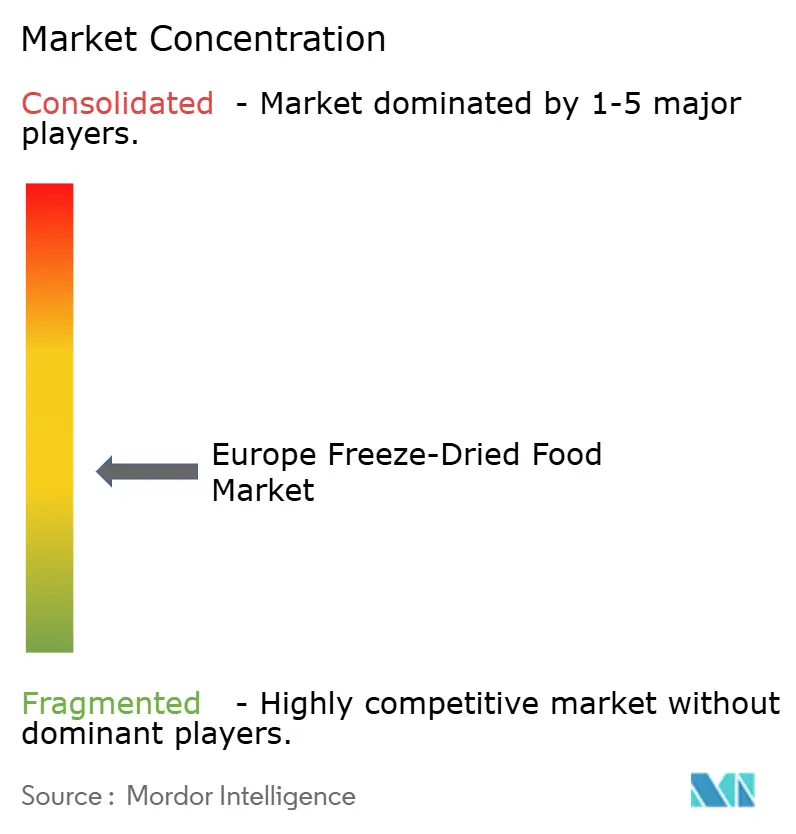
| Market Concentration | Medium |
Major Players
*Disclaimer: Major Players sorted in no particular order Image © Mordor Intelligence. Reuse requires attribution under CC BY 4.0. |
|
Europe Freeze-Dried Food Market Analysis by Mordor Intelligence
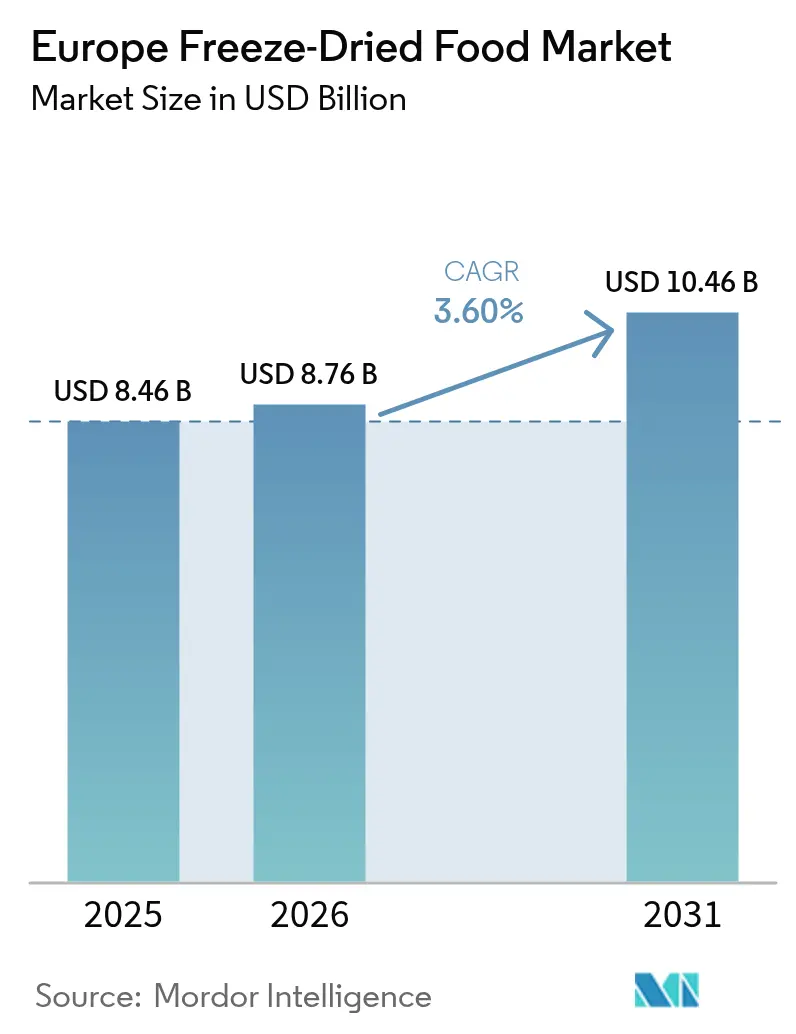
The Europe freeze-dried food market size is expected to grow from USD 8.46 billion in 2025 to USD 8.76 billion in 2026 and is forecast to reach USD 10.46 billion by 2031 at 3.6% CAGR over 2026-2031. The market is expanding because more people want food that stays fresh longer, companies are using new microwave-based freeze-drying methods, and consumers have become more comfortable buying groceries online since the pandemic. Companies can now make these foods more cheaply by producing in larger quantities and using automated systems, which helps them compete better with regular dried foods. While fruits remain the most popular freeze-dried product, ready meals are growing quickly in popularity. Traditional non-organic products still dominate sales, but organic options are gaining ground. Most products come in granulated form, though sliced varieties are becoming more popular. While most people buy these foods in regular stores, online sales are growing fast. The market is particularly strong in areas like camping supplies, baby food, and pet food, where lightweight, long-lasting foods are important. However, the industry faces challenges from high energy costs, and some people still think of these products as space food. The market has several competing companies, with opportunities for both large and regional businesses to succeed.
Key Report Takeaways
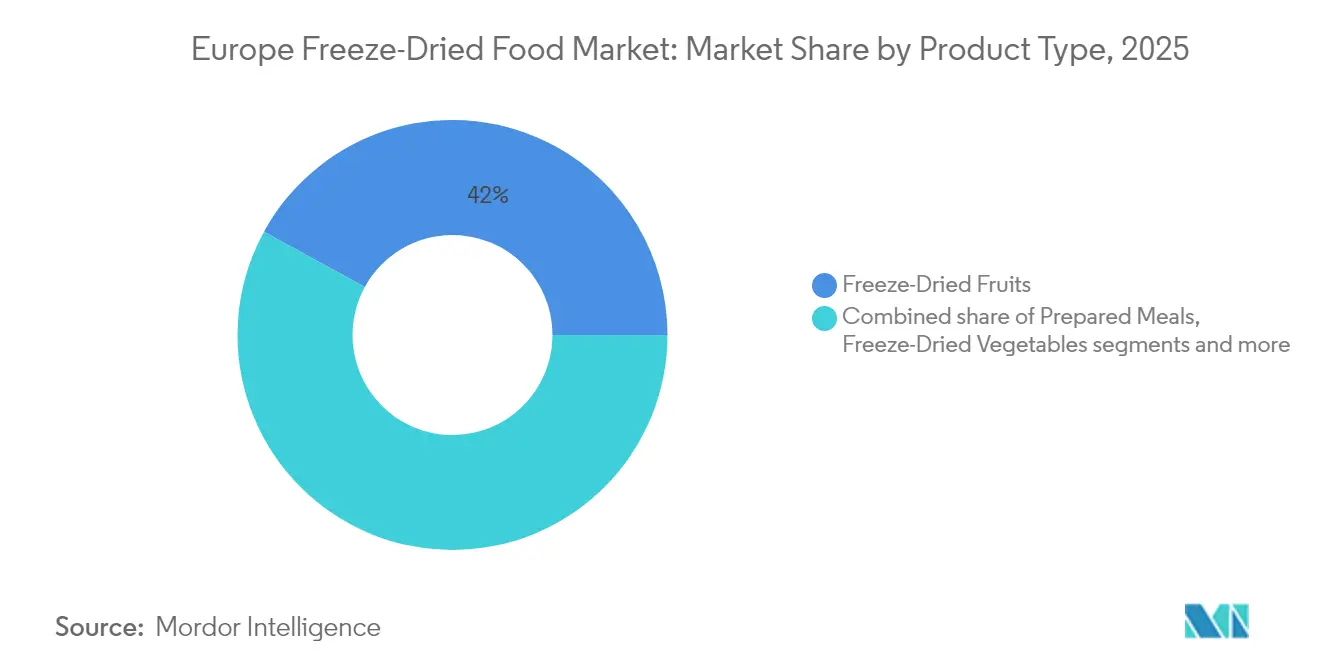
- By product type, freeze-dried fruits led with 42.02% revenue share in 2025, while prepared meals are forecast to expand at a 4.42% CAGR through 2031.
- By nature, the conventional segment held 85.05% of the European freeze-dried food market share in 2025; organic alternatives are projected to rise at a 5.49% CAGR to 2031.
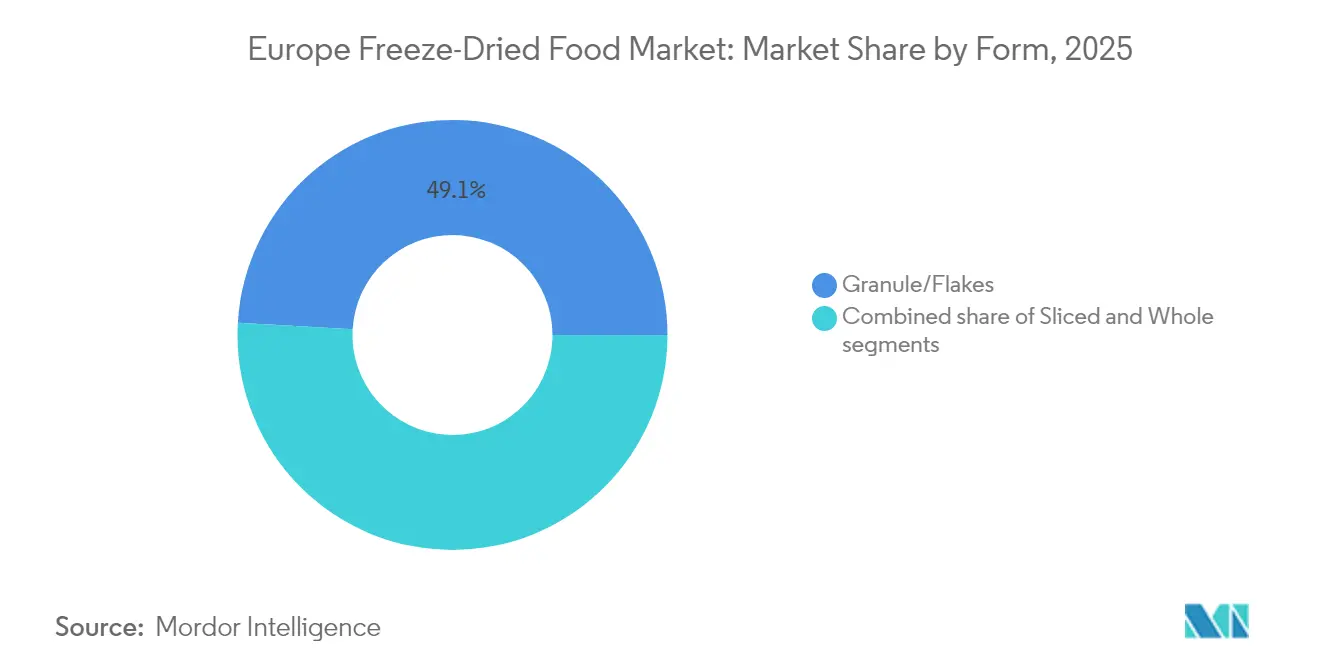
- By form, granules/flakes accounted for 49.10% of the European freeze-dried food market size in 2025, whereas sliced formats are advancing at a 6.05% CAGR to 2031.
- By distribution channel, supermarkets/hypermarkets captured 46.10% share of the European freeze-dried food market size in 2025; online retail is the fastest channel with 5.43% CAGR expected through 2031.
- By country, Germany held 25.30% of the European freeze-dried food market share in 2025, while France is projected to record the highest growth at 6.44% CAGR between 2026-2031.
Note: Market size and forecast figures in this report are generated using Mordor Intelligence’s proprietary estimation framework, updated with the latest available data and insights as of 2026.
Europe Freeze-Dried Food Market Trends and Insights
Drivers Impact Analysis*
| DRIVER | (~) % IMPACT ON CAGR FORECAST | GEOGRAPHIC RELEVANCE | IMPACT TIMELINE |
|---|---|---|---|
| Rise in infant and toddler freeze-dried snacks | +0.8% | Germany, France, Netherlands | Medium term (2-4 years) |
| Demand for lightweight convenience food | +0.7% | Concentration in Germany, United Kingdom | Short term (≤ 2 years) |
| Preference for nutrient-rich options | +0.6% | Germany, France, Switzerland | Long term (≥ 4 years) |
| Growth of on-the-go snacking | +0.5% | Urban centers across Europe | Short term (≤ 2 years) |
| Shift toward clean-label products | +0.4% | Germany, France, Netherlands, Sweden | Medium term (2-4 years) |
| Innovation in product formats | +0.3% | Germany, France, Spain | Long term (≥ 4 years) |
| Source: Mordor Intelligence | |||
Growth of on-the-go snacking
As more Europeans adopt hybrid work arrangements, with employment reaching 75.8% in 2024 according to the European Commission, their eating habits are changing significantly[1]Source: European Commission, "Employment - Annual Statistics," ec.europa.eu. People are moving away from traditional 3 meals a day to more frequent, smaller portions throughout their workday. This shift has created a growing market for freeze-dried snacks, which offer convenient, portion-controlled options without added oils. Recent technological advances have improved these products' taste and texture, helping them shed their reputation as space food - when rehydrated, they now closely match the crispness of fresh produce. The trend toward healthier snacking is gaining momentum, as shown in Glanbia's 2024 Nutritional Snacking Trends report, where 22% of consumers specifically choose snacks that provide lasting energy for their workday[2]Source: Glanbia PLC, "Healthy Snacking Trends in Europe," glanbianutritionals.com. These freeze-dried options are becoming increasingly accessible through expanded presence in convenience stores, making them an integral part of Europe's modern snacking culture.
Demand for lightweight convenience food
More people living in cities are choosing freeze-dried meals as their preferred food option. These meals are popular because they are light to carry, packed with nutrients, and contain more calories in smaller servings compared to regular food. The preparation includes adding water and waiting for a few minutes, which is much easier than dealing with canned foods or meals that need to be kept cold. Freeze-dried foods are significantly more efficient, containing 4-6 times more calories per 100 grams than regular meals. This convenience makes freeze-dried meals particularly attractive to health-conscious consumers. According to a January 2025 survey by Frontiers Org, 62.3% of German consumers consider nutritional value a key factor in their food choices[3]Source: Frontiers Org, "Attitudes Toward Healthy Nutrition in Germany — Results From An Online-Representative Cross-Sectional Survey," frontiersin.org. In response to this growing demand, European manufacturers of freeze-dried foods are introducing new products with flavors from around the world. A recent example is Paradise Fruits, which presented new freeze-dried products at the ISM & ProSweets trade shows in Cologne, Germany, in February 2024.
Preference for nutrient-rich options
Freeze-drying is a food preservation method that maintains food's natural structure and nutritional value better than heating or spray-drying. Unlike these traditional methods, freeze-drying removes water from food at very low temperatures, which helps keep vitamins, minerals, and other beneficial compounds intact. This preservation method has gained popularity among health-conscious consumers who want nutritious, convenient food options. Food companies are adding extra health benefits to their freeze-dried products by incorporating vitamins and nutrient-dense ingredients like quinoa, chia seeds, and berries. According to Glanbia's 2024 Healthy Snack Report for Europe, different age groups have distinct preferences - 25% of younger consumers aged 16-24 years prefer low-calorie snacks, while 18% of consumers aged 25-34 years look for high-protein options. Since freeze-dried foods maintain their nutritional value, manufacturers market them as high-end products. This focus on quality and nutrition continues to fuel new product development and market expansion across Europe.
Shift toward clean-label products
The growing consumer focus on food ingredients has led to increased demand for products with simple, natural components. Freeze-dried foods naturally require fewer preservatives due to their very low moisture content, making them attractive to consumers who want to avoid artificial additives. This aligns with the broader trend of consumers reading labels more carefully and choosing products with ingredients they can recognize. Environmental consciousness is shaping buying habits in the European food market. A 2024 World Wide Fund for Nature (WWF) survey found that 58% of consumers in European Union countries express a strong intention to purchase sustainable food products, demonstrating the importance of both health and environmental considerations in food choices. The freeze-dried food products typically contain simple ingredients like whole fruits, vegetables, and meats. This simplicity and transparency in ingredients have helped position freeze-dried foods as premium products in European retail stores.
Restraints Impact Analysis*
| RESTRAINT | (~) % IMPACT ON CAGR FORECAST | GEOGRAPHIC RELEVANCE | IMPACT TIMELINE |
|---|---|---|---|
| High production costs and capital investment | -0.9% | Germany, France, Netherlands | Long term (≥ 4 years) |
| Energy consumption and sustainability concerns | -0.7% | Germany, Netherlands, Sweden | Medium term (2-4 years) |
| Consumer perception as "artificial" or "space food" | -0.5% | Germany, Italy, Spain | Short term (≤ 2 years) |
| Competition from alternatives | -0.4% | Netherlands | Medium term (2-4 years) |
| Source: Mordor Intelligence | |||
Consumer perception as “artificial” or “space food”
The European market for freeze-dried foods faces challenges due to common misconceptions about the products. Many consumers still think of these foods as military supplies or space food, which makes it difficult for them to become widely accepted. Recent studies from February 2024, as per EIT Food Org, show that 65% of European consumers worry about highly processed foods and their long-term health effects. In particular, 67% of consumers believe these products could lead to health problems like obesity and diabetes[4]Source: EIT Food Org, "Ultra-Processed Foods," eitfood.eu. This concern is especially strong among older consumers, who prefer traditional preservation methods like fresh or canned foods and often view freeze-dried options as artificial. While companies are making efforts to educate consumers about how freeze-drying preserves nutrients and uses simple ingredients, there is still work to be done to build trust and change these negative perceptions in the market.
Competition from alternatives
The European market for preserved food products offers many options that consumers know well and find more budget-friendly than freeze-dried alternatives. Traditional preservation methods like canning and refrigerated ready-to-eat meals remain popular choices. Products packaged using modified atmosphere technology (MAP) also provide extended shelf life at lower prices, creating challenges for basic freeze-dried products. The growth of meal-kit delivery services appeals to consumers seeking fresh ingredients with minimal processing. Supermarket brands are also expanding their selection of affordable preserved foods. To remain competitive, freeze-dried food manufacturers in Europe are setting themselves apart by developing unique flavors, increasing nutritional value through protein and vitamin enrichment. These efforts help justify higher prices and prevent freeze-dried products from being overlooked in favor of conventional alternatives.
*Our forecasts treat driver/restraint impacts as directional, not additive. The impact forecasts reflect baseline growth, mix effects, and variable interactions.
Segment Analysis
By Product Type: Fruits Lead, Prepared Meals Accelerate
Freeze-dried fruits held the largest share of the European market in 2025, contributing 42.02% of the total revenue. Their popularity is driven by consumer trust in fruit-based products, which are seen as natural and minimally processed. These fruits are versatile and commonly used in breakfast cereals, bakery items, smoothies, and as convenient snack options. The demand for healthier snacking has further boosted their appeal, as they offer portability, a long shelf life, and concentrated nutrition without added preservatives. This combination of factors has made freeze-dried fruits a preferred choice for health-conscious consumers across Europe.
Prepared freeze-dried meals are expected to grow the fastest, with a projected CAGR of 4.42% through 2031. This growth is fueled by the increasing need for convenient meal solutions that save time while providing balanced nutrition. Products like ready-to-eat bowls and instant meals are particularly popular among busy professionals, students, and outdoor enthusiasts. The segment is also benefiting from innovations in flavors and added protein options, making these meals a practical alternative to traditional ready-to-eat products. As a result, freeze-dried meals are gaining traction in the European market, catering to the evolving preferences of modern consumers.



By Nature: Conventional Dominates, Organic Gains Momentum
The European freeze-dried food market shows strong dominance in conventional products, which made up 85.05% of total sales in 2025. These products maintain their market leadership through established supply chains and manufacturing processes that keep costs manageable for average consumers. Major retailers consistently stock conventional freeze-dried items due to their reliable sales performance and broad consumer acceptance. The success of this segment stems from consumers' familiarity with well-known brands that focus on making convenient, affordable products. Conventional freeze-dried foods serve both household consumers and food service businesses effectively, contributing to their market dominance.
Organic freeze-dried products represent a smaller but rapidly expanding segment, projected to grow at a 5.49% CAGR through 2031, which is twice the rate of conventional products. This growth comes from increasing consumer preference for foods produced without synthetic chemicals and pesticides. European consumers, particularly younger generations and those with higher disposable incomes, show a willingness to pay more for products they perceive as environmentally responsible and healthier. Retailers are responding to this trend by allocating more shelf space to organic freeze-dried options, positioning them as premium alternatives. The segment's growth also reflects broader European market shifts toward sustainable and clean-label food products.
By Form: Granules Prevail, Sliced Products Surge
Granules/flakes dominated the European freeze-dried food market in 2025, making up nearly half of all sales at 49.10%. These formats gained widespread acceptance due to their easy-to-use nature in various food applications. Food manufacturers particularly value granules and flakes because they can be incorporated into multiple products without compromising taste or texture. The versatility of these formats extends from everyday breakfast cereals to premium chocolate products and specialty baked goods. Their consistent performance and reliable quality have made them the preferred choice for food companies looking to maintain product standards while improving operational efficiency.
The market for sliced freeze-dried products is showing promising growth, with expectations to grow at 6.05% annually until 2031. These products, which include fruit rings, vegetable strips, and various wedge shapes, appeal to consumers because they closely resemble fresh ingredients. The visual similarity to fresh produce helps customers connect with the product and trust its natural origins. Food retailers have recognized this trend and now position sliced freeze-dried products as premium offerings in their stores. This shift in consumer preference has encouraged manufacturers to develop more visually appealing products that combine convenience with authentic appearance.
By Distribution Channel: Traditional Retail Leads, E-commerce Accelerates
Supermarkets/hypermarkets continued to dominate as the leading distribution channel in 2025, holding 46.10% of the market share. These large retail outlets attract consumers with their wide product visibility, offering freeze-dried snacks and meal components through prominent displays and promotional deals. Their presence in both urban and suburban areas ensures easy access for shoppers, making them a convenient choice for regular grocery purchases. Supermarkets and hypermarkets provide a broad range of options, including both branded and private-label products, which cater to diverse consumer preferences and budgets. This combination of accessibility, variety, and affordability has solidified their position as the preferred shopping destination for freeze-dried products.
On the other hand, online retail is rapidly emerging as the fastest-growing distribution channel, with an expected CAGR of 5.43% from 2026 to 2031. The shift toward e-commerce is driven by changing consumer habits, especially after the pandemic, as more people rely on digital platforms for grocery shopping. Online channels offer several advantages, such as a wider selection of products, the convenience of home delivery, and targeted promotions that emphasize health and convenience. These platforms also provide opportunities for niche brands to reach a broader audience. As trust in online shopping grows across Europe, the demand for freeze-dried products through e-commerce is expected to rise significantly, transforming how consumers discover and purchase these items.
Geography Analysis
Germany dominates the European freeze-dried food market through its well-established network of equipment manufacturers, ingredient suppliers, and retail channels. The country's manufacturing facilities are actively investing in modern equipment, with plants focusing on energy-efficient upgrades to maintain a competitive advantage. German companies have successfully integrated freeze-dried products into mainstream retail stores, making these items easily accessible to consumers. Strong trade relationships enable significant exports to neighboring countries like Austria, Switzerland, and the Benelux region, further expanding market reach and volume.
The French market shows remarkable growth potential, primarily driven by the country's active outdoor lifestyle and sophisticated culinary preferences. Local manufacturers are developing innovative products that combine high-quality ingredients with sustainable packaging solutions, catering to environmentally conscious consumers. The government actively supports this growth through regional innovation initiatives, particularly in Nouvelle-Aquitaine, where small and medium enterprises receive incentives to develop freeze-dried food products. This supportive ecosystem has led to increased product development and market expansion across various food categories.
Nordic countries demonstrate unique market characteristics shaped by their geographical and cultural factors. Long winter seasons create sustained demand for shelf-stable food products, while strong environmental awareness drives preference for preservation methods that minimize waste. The Netherlands contributes significantly through its advanced agricultural sector, specializing in freeze-dried berries and vegetables. Poland's expanding middle class represents a growing consumer base for freeze-dried snacks, while Swiss consumers' high purchasing power enables premium pricing strategies. These diverse market dynamics collectively strengthen the European freeze-dried food industry, creating opportunities for continued growth and innovation.
Regulatory Landscape
Freeze-dried foods sold in Europe fall under the EU's horizontal food-safety framework, with product composition and claims governed by EU rules applied across member states. For formulations using additives, Regulation (EC) No 1333/2008 (Food Additives) is a key anchor: for dried and concentrated foods intended for reconstitution, maximum permitted additive levels apply to the food as reconstituted according to label directions, making accurate preparation instructions and compliant use levels central to label and recipe design.
For innovation-led products that may meet the definition of novel foods, Regulation (EU) 2015/2283 (Novel Foods) requires a safety assessment by the European Food Safety Authority (EFSA), followed by European Commission authorization via implementing acts before market placement. Alongside this, duty treatment for certain imported inputs can be affected by EU-level tariff suspension measures, including Council Regulation (EU) 2021/2278 (as updated), which companies monitor when sourcing fruits and other agricultural materials used in freeze-dried formats.
Competitive Landscape
The European freeze-dried food market shows moderate fragmentation, with multiple companies operating across different regions. Large companies like Nestlé SA and Katadyn Group control significant market share through their extensive supply chains and distribution networks. These companies manage everything from sourcing raw materials to delivering products to stores. Nestlé, for example, is investing heavily in digital supply chain improvements, aiming to reduce costs by USD 2.8 billion by 2027. This investment allows them to upgrade their manufacturing facilities and expand their product range.
Several medium-sized companies like Freeze-Dry Foods GmbH and LyoWave specialize in making products for other brands and developing new freeze-drying technologies. LyoWave has created an innovative microwave-based system that makes the freeze-drying process faster and can be added to existing equipment. This technology helps them earn money through licensing while also producing specialized products for specific customers. Newer companies, particularly those selling mainly online, like Adventure Menu, use social media and subscription services to reach customers directly, especially targeting outdoor enthusiasts and travelers.
Companies in the market are now focusing on using artificial intelligence to improve their production processes, developing recyclable packaging materials, and creating new plant-based protein products for different meal times. Many companies are also filing patents for new ways to keep probiotics stable and preserve food colors, showing their efforts to protect their innovations and maintain higher profit margins in the European freeze-dried food market. These technological advancements and innovations are helping companies stand out in an increasingly competitive market.
Europe Freeze-Dried Food Industry Leaders
-
LYO FOOD Sp. z o.o
-
European Freeze Dry Ltd
-
Katadyn Group
-
Harmony House Foods Inc.
-
Nestlé SA
- *Disclaimer: Major Players sorted in no particular order

Market Opportunities and Future Outlook
Opportunities in Europe concentrate on reducing energy intensity while scaling premium, compliant production for ingredients and finished products. Equipment and process upgrades that align with tighter refrigeration and sustainability requirements are a clear focus area for food-focused freeze-drying lines, particularly since high energy costs and sustainability concerns are cited as restraints in the market. Technical work in the region is also moving toward hybrid drying concepts and AI-enabled process control for energy optimization, which can support competitiveness for higher-volume granules and flakes as well as higher-appearance sliced formats.
On the demand side, clean-label positioning and nutrient retention continue to create room for premiumization across snacks and prepared meals, including plant-based options and private-label ingredients supplied to mainstream retail. Evidence of adjacent-scale investment and standards-driven capacity adds includes Biocatalysts Ltd installing industrial-scale freeze-drying capability at its Cardiff (UK) site to support enzyme formulation under ISO 9001:2015 and FSSC 22000-aligned systems (March 2024), indicating cross-sector pull for large-scale, high-assurance freeze-drying that can spill over into food ingredient supply. Channel expansion also remains a lever, with online retail offering a path for niche and outdoor-focused brands to broaden reach beyond specialty stores.
Recent Industry Developments
- April 2026: LYOFOOD Sp. z o.o. announced a partnership and branding collaboration with outdoor equipment brand Primus. The tie-up strengthens co-marketing in the outdoor channel where freeze-dried meals are a core use case, and it helps LYOFOOD expand brand visibility alongside a complementary gear platform.
- December 2025: Societe des Produits Nestle S.A. received publication of the European Patent Office grant for EP 3958685 B1, which describes a cocoa pulp treatment process that includes freeze-drying (lyophilization) as an optional drying method. The patent adds to Nestle's protectable processing toolkit and reinforces interest in freeze-drying for higher-value ingredient applications within broader food portfolios.
- April 2024: Thrive Freeze Dry entered into a definitive agreement to acquire Paradiesfrucht GmbH, a producer specializing in freeze-dried fruits and fruit-based formats such as drops, powders, and granulates. The transaction consolidates capacity and know-how in freeze-dried fruit ingredients, with potential to reshape competitive positioning in B2B supply as well as branded end-products across Europe.


Research Methodology Framework and Report Scope
Market Definition and Coverage
For this study, the Europe freeze-dried food market is defined as the value of packaged food and beverage products sold in Europe that use freeze-drying as the preservation method, across retail and foodservice routes.
Scope exclusions: It does not include air-dried, spray-dried, drum-dried, or frozen products that are not freeze-dried.
Segmentation Overview
-
By Product Type
-
Freeze-Dried Fruits
- Freeze-Dried Fruits
- Strawberry
- Raspberry
- Pineapple
- Apple
- Mango
- Other Fruits
-
Freeze-Dried Vegetables
- Pea
- Corn
- Carrot
- Potato
- Mushroom
- Other Vegetables
- Freeze-Dried Meat and Seafood
- Freeze-Dried Dairy Products
- Freeze-Dried Beverages (Instant Coffee, Tea)
- Prepared Meals
-
Freeze-Dried Fruits
-
By Nature
- Conventional
- Organic
-
By Form
- Whole
- Sliced
- Granule/Flakes
-
By Distribution Channel
- Supermarkets/Hypermarkets
- Convenience Stores
- Online Retail Stores
- Other Distribution Channels
-
By Country
- United Kingdom
- Germany
- France
- Italy
- Spain
- Netherlands
- Sweden
- Poland
- Switzerland
- Rest of Europe
Data Sources, Market Sizing, and Validation
Desk Research
Desk research was used to set the market boundary, build the country demand pool, and pressure-test growth drivers that are visible in public data for Europe. We relied on official statistics and reference publications such as Eurostat for food manufacturing and trade indicators, UN Comtrade for customs trends, national statistical offices for food consumption patterns, and food safety or labeling guidance from bodies such as the European Commission.
To avoid overfitting the model, desk inputs were treated as directional signals and then converted into market variables only when they could be mapped to freeze-dried food usage. Supporting context was taken from company annual reports and investor presentations, industry association releases, reputed press coverage, and patents literature to understand process improvements and product launches. A paid subscription for company financials and another for shipment-level trade checks were used selectively where public disclosures were limited. The sources listed here are illustrative and not exhaustive, and many other public materials were also reviewed for data collection, validation, and clarification.
Primary Interviews and Surveys
Primary work focused on validating what portion of broader dehydrated and specialty food sales is truly freeze-dried, and how pricing changes are being passed through in Europe. We spoke with manufacturers, ingredient and private label suppliers, distributors, and retail and foodservice buyers across major European markets, and then used their inputs to confirm assumptions on mix, channel splits, and realistic adoption rates.
Where secondary information was inconsistent, follow-up outreach was done to cross-check unit economics and demand signals such as typical pack sizes, SKU rationalization, and private label expansion before finalizing the market model.
Distribution of primary research fieldwork respondents
| Company type | Respondent position |
|---|---|
| Top tier: 29% | CXOs: 16% |
| Mid tier: 52% | Functional/Unit leaders: 30% |
| Smaller Players: 19% | Managers: 54% |
Market-Sizing & Forecasting
Sizing started from a top-down reconstruction of the European demand pool, where food category consumption, import and export movement, and channel activity were used to approximate the addressable value that can reasonably be freeze-dried. Those totals were then corroborated using selective bottom-up checks, mainly a sampled price times volume build for key product groups and a supplier and distributor roll-up for countries with better disclosures, which helped adjust outliers.
Key model inputs included the share of freeze-dried items within dehydrated and shelf-stable categories, country-level mix shifts across fruits and vegetables, beverages, dairy, meat and seafood, and prepared foods, online retail penetration for specialty foods, and observed price progression by form (whole, sliced, and granulated). For forecasting, we used scenario analysis supported by a simple multivariate regression layer, where volume growth was linked to shelf-stable convenience demand and channel expansion, and then refined using primary feedback on capacity additions and near-term promotional intensity. When bottom-up visibility was weak, gaps were handled by applying conservative peer-country ratios, followed by a final check against trade and category signals so the trajectory stayed realistic.
Data Validation & Update Cycle
Validation was done in several passes so the final numbers were not dependent on one dataset or one assumption. We compared model outputs against independent signals such as trade direction, category growth indicators, and respondent-verified pricing ranges, and then flagged country and channel results that moved outside reasonable bands.
Before sign-off, the build is reviewed by another analyst who challenges scope mapping, growth logic, and year-on-year jumps, and we re-contact sources when a key assumption changes or a new variance is found. Reports are refreshed annually, and interim updates are made when material events occur, for example large capacity changes or major regulatory shifts. Before delivery, a final freshness pass is completed so the client receives the most up-to-date view.
Mordor Intelligence's Europe Freeze Dried Food Market Sizing Compared With Other Published Estimates
Published market sizes for Europe freeze-dried food can look far apart, even when the titles sound similar, because each publisher draws the boundary differently and not all of them validate pricing and channel mix with the same discipline. Differences also come from the base year used, the currency timing chosen, and whether the number is built from food consumption logic or from a broad processing-technology view.
Trade-direction checks for specialty food ingredients and country-level category signals, when paired with interview-confirmed freeze-dried shares and realistic price ranges, are the evidence that ties Mordor Intelligence to a narrower, food-only definition instead of counting adjacent dried technologies or non-food applications.
Benchmark comparison
| Source | Market Size | Gaps in Research Methodology |
|---|---|---|
| Mordor Intelligence | USD 8.46 B (2025) | |
| Industry Publisher A | USD 11.41 B (2025) | Often uses a broader inclusion set and can roll up freeze-dried as a wider dehydrated category proxy, which can pull in items that are not strictly freeze-dried foods within Europe. |
| Global Publisher B | USD 28.51 B (2024) | Uses a different base year and tends to apply aggressive scope expansion and pricing assumptions across many product types and channels, which can inflate the Europe total if definitions are not tightly separated. |
Looking at the spread, the biggest swing is explained by scope discipline and how price and channel mix are validated by country. By keeping the definition tight to freeze-dried foods and then checking the totals against independent signals, the final number stays traceable to clear inputs and can be updated in a repeatable way year after year.


Key Questions Answered in the Report
What is the current value of the Europe freeze-dried food market?
The Europe freeze-dried food market size is USD 8.76 billion in 2026.
How fast is the category expected to grow to 2031?
Forecasts point to a 3.6% CAGR, taking value to USD 10.46 billion by 2031.
Which product segment is expanding the quickest?
Prepared freeze-dried meals lead growth at a projected 4.42% CAGR through 2031.
Which country offers the strongest growth outlook?
France is expected to advance at 6.44% CAGR thanks to premium food culture and outdoor recreation demand.
Page last updated on:





