
Market Overview
| Study Period | 2020 - 2031 |
|---|---|
| Forecast Data Period | 2026 - 2031 |
| Base Year Market Size (2025) | USD 17.09 Billion |
| Market Size (2026) | USD 18.12 Billion |
| Market Size (2031) | USD 24.31 Billion |
| Growth Rate (2026 - 2031) | 6.05 % |
| Market Concentration | Medium |
Major Players *Disclaimer: Major Players sorted in no particular order Image © Mordor Intelligence. Reuse requires attribution under CC BY 4.0. | |
Europe Coffee Pods and Capsules Market Analysis by Mordor Intelligence
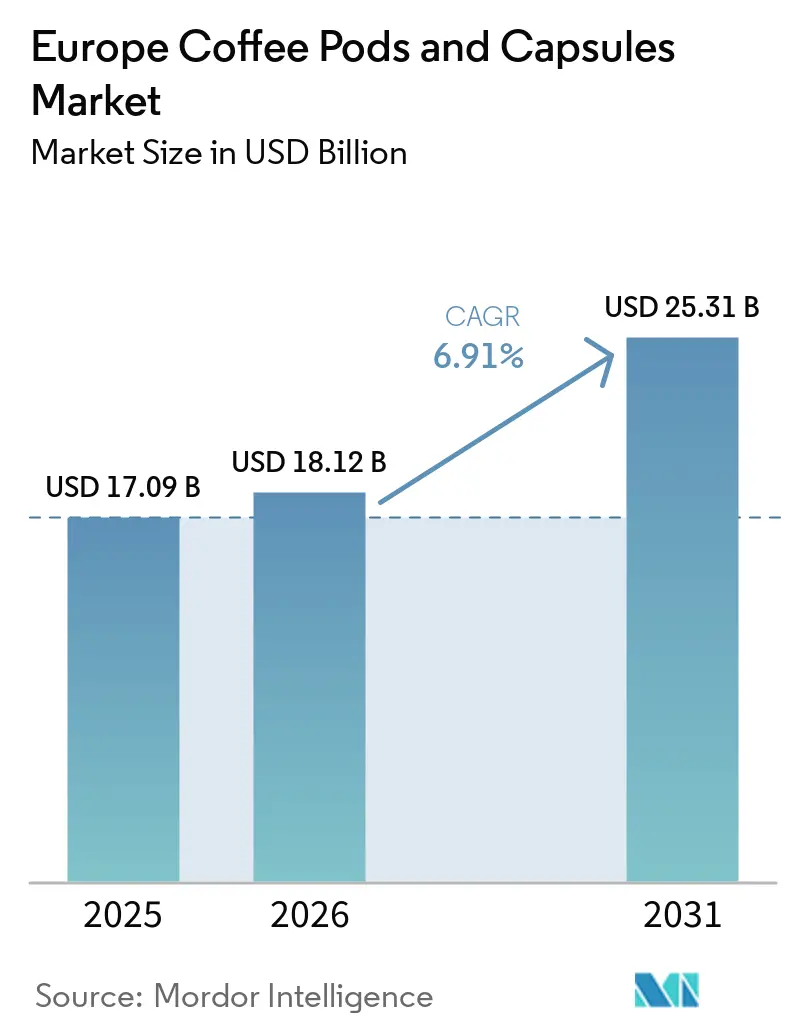
The Europe coffee pods and capsules market size was valued at USD 17.09 billion in 2025, increased to USD 18.12 billion in 2026, and is projected to reach USD 24.31 billion by 2031, registering a CAGR of 6.05% during the forecast period. The market's growth is primarily driven by the integration of coffee into daily routines, with frequent consumption supporting consistent demand for convenient brewing formats. Additionally, the premiumization of coffee consumption is a significant factor, as consumers increasingly seek café-quality beverages. The availability of diverse roast profiles, origins, and specialty blends encourages experimentation and boosts purchase frequency. Subscription delivery services and e-commerce platforms further support repeat purchases by simplifying the restocking process.
Key Report Takeaways
- By product type, capsules led with 62.32% of Europe coffee pods and capsules market share in 2025, while pods are projected to post the highest 7.77% CAGR through 2031.
- By flavor, plain coffee captured 73.23% share in 2025; flavored varieties are on track for an 8.65% CAGR to 2031.
- By packaging material, plastic accounted for a 56.54% share in 2025, and compostable/biodegradable solutions are forecast to grow at an 8.05% CAGR to 2031.
- By coffee roast, medium roast held a 53.71% share in 2025, whereas light roast is expected to expand at a 7.81% CAGR during 2026-2031.
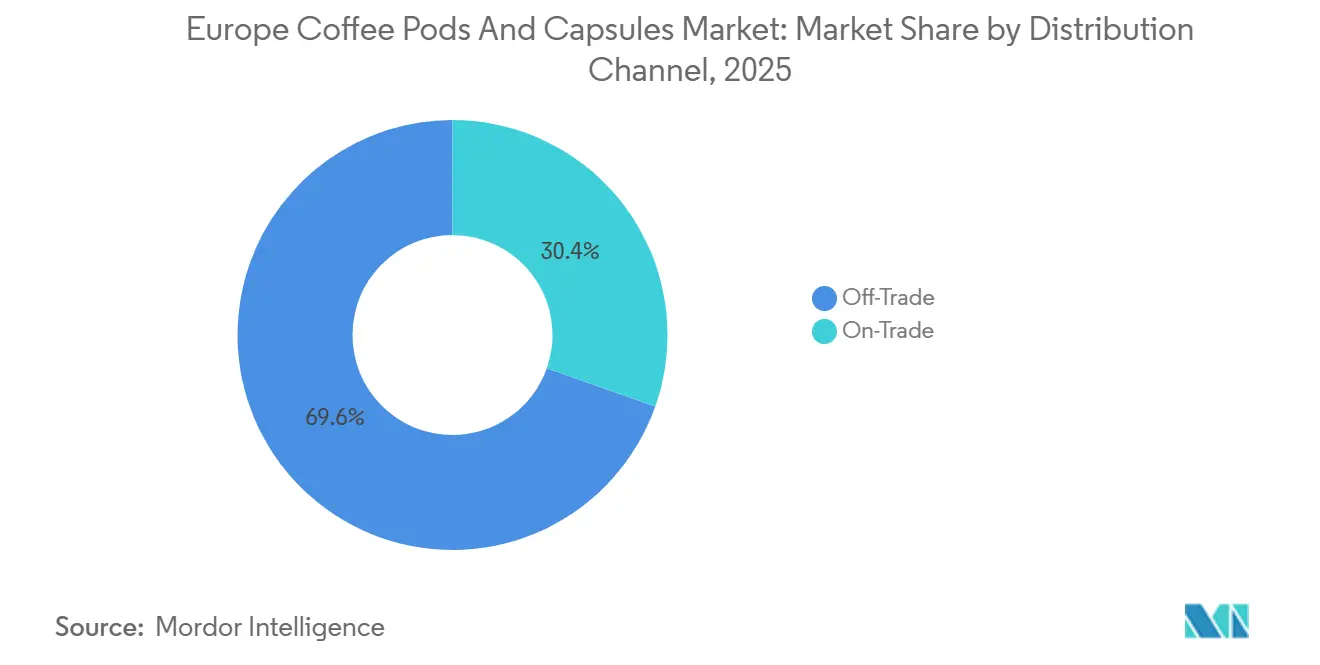
- By distribution channel, off-trade dominated with a 69.61% share in 2025, and on-trade is recovering with a 7.55% CAGR outlook to 2031.
- By geography, Germany was the largest country with a 17.95% share in 2025; France shows the quickest trajectory at an 8.81% CAGR through 2031.
Note: Market size and forecast figures in this report are generated using Mordor Intelligence’s proprietary estimation framework, updated with the latest available data and insights as of 2026.
Market Trends and Insights
Drivers Impact Analysis of Europe Coffee Pods and Capsules Market*
| Driver | (~) % Impact on CAGR Forecast | Geographic Relevance | Impact Timeline |
|---|---|---|---|
| Strong established coffee culture across Europe | +1.2% | Germany, Italy, France, Netherlands, Belgium | Long term (≥ 4 years) |
| Growing consumer preference for premium coffee experiences | +1.5% | France, United Kingdom, Germany, Spain | Medium term (2-4 years) |
| Increasing demand for single-serve coffee solutions | +1.8% | Europe, with concentration in Germany, France, Netherlands | Medium term (2-4 years) |
| Sustainability innovations in capsule materials | +0.9% | EU27 core markets, led by Germany, France, Netherlands | Long term (≥ 4 years) |
| Interest in flavored and specialty coffee varieties | +0.4% | France, United Kingdom, Spain, Sweden | Short term (≤ 2 years) |
| Technological advancements in brewing systems | +0.3% | Germany, United Kingdom, France, Italy | Medium term (2-4 years) |
| Source: Mordor Intelligence | |||
Strong established coffee culture across Europe
One of the key drivers of the Europe coffee pods and capsules market is the region's strong coffee culture, where coffee consumption is a daily habit rather than an occasional indulgence. Coffee is an integral part of various daily activities, including morning routines, workplace breaks, social gatherings, and after-meal traditions, creating consistent demand for convenient brewing solutions. Single-serve pods and capsules align well with this behavior, enabling consumers to prepare espresso-style beverages quickly while ensuring consistent taste and aroma. This makes them a practical alternative to visiting cafés. The format is particularly appealing to households seeking café-quality beverages without requiring specialized brewing skills or equipment. According to the Centre for the Promotion of Imports, Europe accounted for 30.7% of global coffee consumption in 2023/2024, amounting to approximately 3.26 million tons [1]. This high and stable consumption level drives frequent use of single-serve machines, leading to recurring purchases of pods and capsules.
Growing consumer preference for premium coffee experiences
Consumers are increasingly inclined toward premium coffee experiences both at home and in workplaces. In Europe, there is a growing demand for café-style beverages such as espresso, cappuccino, and latte, offering consistent flavor, aroma, and crema quality without the need for barista skills or complex equipment. Single-serve pods and capsules cater to this demand by providing pre-measured, hermetically sealed coffee grounds and pressure-controlled extraction, allowing users to prepare specialty beverages quickly while ensuring standardized taste. Consequently, capsule machines are increasingly perceived not just as convenient appliances but as accessible solutions for premium coffee preparation. This trend toward premiumization is further driven by a rising appreciation for coffee origin, roast profiles, and quality differentiation. Consumers are showing heightened interest in single-origin beans, limited-edition blends, organic and ethically sourced coffee, as well as decaffeinated specialty options.
Increasing demand for single-serve coffee solutions
The increasing demand for convenient, portion-controlled beverage preparation is a significant driver of the Europe coffee pods and capsules market. Consumers are showing a growing preference for brewing methods that reduce preparation time, eliminate the need for measuring and grinding, and ensure consistent taste with every cup. Single-serve systems address these needs by providing pre-dosed coffee portions and automated extraction, enabling quick and easy beverage preparation at home, in offices, and in shared living spaces. This format also minimizes wastage, as each serving is individually sealed, making it suitable for households with varying consumption patterns and occasional coffee drinkers. For example, according to IfD Allensbach, approximately 13.2 million people in Germany preferred coffee makers using pads or capsules in 2024 [2]. This widespread adoption highlights strong consumer acceptance of single-serve preparation as part of a daily routine rather than a niche alternative to traditional brewing methods. As more households adopt compatible machines for everyday use, the repeat purchase of pods and capsules continues to grow.
Sustainability innovations in capsule materials
Advancements in environmentally responsible packaging are driving the growth of the Europe coffee pods and capsules market. Previously, concerns about single-use waste deterred some consumers from adopting capsule systems. However, manufacturers and retailers are now offering recyclable aluminum, paper-filter pods, and compostable bio-based materials that reduce environmental impact while maintaining coffee freshness. Enhanced material engineering ensures that capsules retain oxygen barriers and extraction performance while being compatible with recycling or composting processes, aligning with Europe’s strong focus on sustainability. For instance, in November 2025, Co-op initiated a trial in collaboration with Podback, becoming the first convenience retailer in the United Kingdom to provide in-store coffee pod recycling collection points. These efforts simplify disposal for consumers and encourage greater participation in recycling programs, addressing a significant barrier to single-serve usage.
Restraints Impact Analysis of Europe Coffee Pods and Capsules Market*
| Restraint | (~) % Impact on CAGR Forecast | Geographic Relevance | Impact Timeline |
|---|---|---|---|
| Environmental concerns over packaging waste | -0.8% | EU27, particularly Germany, Netherlands, France | Medium term (2-4 years) |
| Intense competition from traditional brewing methods | -0.5% | Italy, Spain, Eastern Europe | Long term (≥ 4 years) |
| Supply chain disruptions from geopolitical tensions | -0.3% | Europe, with acute impact on Robusta-dependent markets | Short term (≤ 2 years) |
| Stringent EU regulations on packaging sustainability | -0.6% | EU27 core markets | Medium term (2-4 years) |
| Source: Mordor Intelligence | |||
Environmental concerns over packaging waste
A significant challenge for the Europe coffee pods and capsules market is the ongoing concern about packaging waste associated with single-serve formats. Traditional capsules are often composed of multi-layer plastics or mixed materials that are difficult to separate and recycle through standard household systems. This has led many consumers to associate these products with increased landfill waste. As environmental awareness and zero-waste lifestyles continue to grow across Europe, some consumers are reluctant to adopt or maintain the use of capsule machines. Instead, they are opting for alternatives such as whole-bean coffee, ground coffee, or reusable brewing methods that generate less packaging waste. Even in regions with recycling programs, participation remains inconsistent, as consumers are required to collect used capsules, clean them, and return them to designated collection points rather than disposing of them through regular waste systems.
Intense competition from traditional brewing methods
The Europe coffee pods and capsules market encounters significant restraint due to the enduring popularity of traditional coffee preparation methods, such as filter coffee makers, moka pots, French presses, and manual espresso machines. Many European coffee enthusiasts favor freshly ground beans, as these methods provide greater control over grind size, brew strength, extraction time, and flavor intensity. Traditional brewing is often regarded as more authentic and aromatic, particularly in countries with deep-rooted coffee traditions, which can hinder the adoption of standardized single-serve formats. Additionally, conventional brewing systems do not depend on proprietary or disposable portions, allowing consumers to purchase beans from any roaster and explore various origins and roast profiles. Reusable equipment further reduces packaging waste, appealing to environmentally conscious consumers.
*Our forecasts treat driver/restraint impacts as directional, not additive. The impact forecasts reflect baseline growth, mix effects, and variable interactions.
Europe Coffee Pods and Capsules Market Segment Analysis
By Product Type:
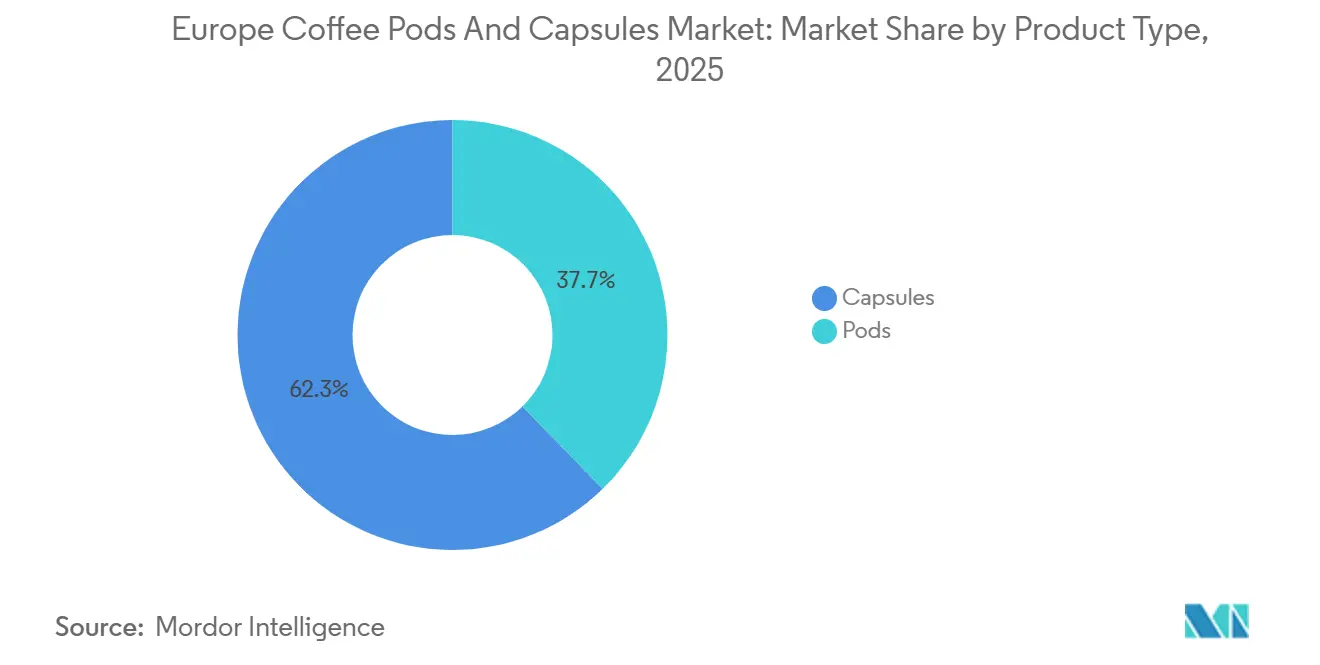
Compatibles Erode Proprietary MoatsCapsules accounted for 62.32% of the total market share in 2025, primarily due to their alignment with the region’s preference for premium yet convenient coffee consumption. Designed for high-pressure extraction systems, capsules closely replicate traditional espresso preparation, enabling households and offices to produce café-style beverages such as espresso, lungo, cappuccino, and latte with minimal skill or preparation time. Their ability to consistently deliver crema, aroma, and flavor has positioned capsules as a direct substitute for coffee shop purchases, especially as consumers increasingly recreate specialty coffee experiences at home. Furthermore, capsule systems offer a wide product variety, including single-origin coffees, roast intensities, flavored variants, decaffeinated options, and even non-coffee beverages, broadening their appeal beyond traditional coffee drinkers.
Coffee pods are projected to expand at a CAGR of 7.77% through 2031, driven by changing consumer attitudes toward sustainability and system flexibility. Pods, typically soft, paper-based, or biodegradable single-serve formats used in open brewing machines, are increasingly favored by environmentally conscious consumers due to their significantly lower packaging waste and ease of disposal or composting compared to multi-material capsules. Many European households are adopting pods as a transitional option between traditional filter coffee and fully automated machines, as pod brewers provide portion control and convenience while maintaining a more traditional coffee taste profile.
By Flavor:
Specialty Varieties Outpace Commodity BlendsPlain coffee accounted for 73.23% of total sales in 2025, reflecting Europe’s strong coffee-drinking traditions and daily consumption habits. In major coffee-consuming countries, consumers generally prefer the natural taste and aroma of roasted beans over sweetened or dessert-style beverages. Single-serve systems are commonly used as part of a daily routine, such as morning or workday consumption, rather than for occasional indulgence. Plain coffee variants allow consumers to experience roast intensity, body, and origin characteristics, aligning with the region’s increasing appreciation for specialty and premium coffee. Capsules and pods, designed with airtight sealing to preserve freshness, help maintain authentic flavor notes and crema formation, reinforcing consumer trust in unflavored options.
Flavored coffee varieties are projected to grow at a CAGR of 8.65% during the forecast period, driven by evolving consumption occasions and the rising popularity of café-style beverages at home. Younger consumers and occasional coffee drinkers are increasingly drawn to indulgent and seasonal flavors such as caramel, vanilla, hazelnut, chocolate, and dessert-inspired blends. Single-serve pods and capsules facilitate flavor innovation by enabling manufacturers to precisely dose aroma compounds without the need for syrups or barista preparation, allowing users to create specialty beverages instantly. For example, in November 2024, Little’s Coffee launched Toffee Nut-flavored Nespresso-compatible pods, which are distributed through major supermarkets and online platforms, including Tesco, Sainsbury’s, Ocado, Amazon, and the company’s website.
By Packaging Material:
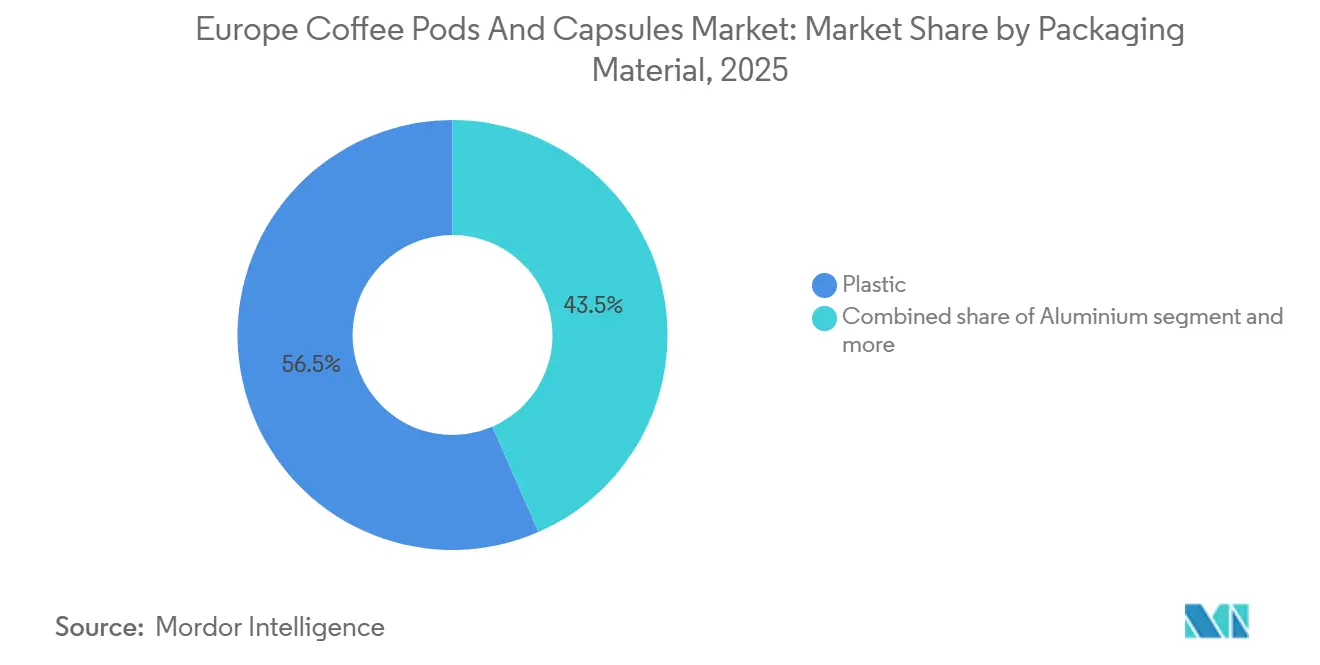
Compostables Gain Regulatory MomentumPlastic packaging accounted for 56.54% of total sales in 2025, maintaining its dominant position due to its practicality, performance, and manufacturing efficiency in single-serve coffee formats. Plastic capsules and pods offer strong oxygen and moisture barriers, protecting ground coffee from oxidation and preserving aroma, crema formation, and flavor stability throughout their shelf life. This is critical for ensuring consistent beverage quality. Additionally, the material's lightweight and shatter-resistant properties facilitate easier transportation and storage across extensive retail networks and e-commerce channels without risk of damage. Furthermore, plastic enables precise molding and sealing, allowing manufacturers to produce large volumes of compatible capsules at high speed and with uniform shapes, ensuring proper pressure extraction in brewing machines.
Compostable and biodegradable packaging materials are projected to grow at a CAGR of 8.05%, driven by the strong sustainability focus of European consumers and stricter packaging-waste regulations in the region. Growing awareness of single-use plastic disposal has prompted households to seek coffee solutions that combine convenience with environmental responsibility. This has increased the appeal of fiber-based and plant-derived pod materials as alternatives to conventional plastic or multi-layer capsules. For example, in October 2025, Ahlstrom launched GreenPod Home, a TÜV-certified home-compostable coffee pod portfolio made from biodegradable fiber-based materials specifically designed for coffee brewing applications.

By Coffee Roast:
Light Profiles Capture Specialty PremiumsMedium roast accounted for 53.71% of the 2025 market share, leading the coffee pods and capsules market due to its balanced flavor profile that appeals to a wide range of consumer preferences. This roast level offers moderate acidity, a noticeable aroma, and a smooth body, avoiding the bitterness of dark roasts and the sharp acidity of light roasts. Its versatility makes it suitable for everyday consumption. In single-serve systems, medium roast performs consistently well, as it extracts reliably under standardized pressure conditions, delivering consistent crema and flavor whether prepared as espresso, lungo, or Americano. European households and offices, which frequently use capsule machines throughout the day, favor medium roast as a neutral option that caters to diverse tastes in shared environments such as workplaces, hotels, and serviced apartments.
The light roast segment is expected to grow at a CAGR of 7.81% through 2031, driven by the rising specialty coffee culture and increasing consumer interest in origin-specific flavor profiles across Europe. Light roasts retain more of the bean’s natural characteristics, offering floral, fruity, and acidic tasting notes. As coffee knowledge expands through social media, specialty cafés, and at-home brewing education, consumers are becoming more aware of factors such as roast level, processing methods, and traceability. This growing awareness is encouraging consumers to explore lighter roasts in single-serve formats. In response, capsule and pod manufacturers are developing optimized grind sizes and extraction pressures to ensure light roast coffees brew effectively in automatic machines, addressing earlier concerns about weak taste or under-extraction.
By Distribution Channel:
E-Commerce Scales Amid HORECA RecoveryOff-trade channels accounted for 69.61% of the 2025 market share, dominating the European coffee pods and capsules market. This dominance is primarily driven by at-home consumption and routine replenishment purchases. Supermarkets, hypermarkets, convenience stores, and online retail platforms serve as the main purchasing points where consumers regularly restock pods alongside everyday grocery items. Single-serve coffee is a high-frequency household product, and buyers typically prefer easily accessible retail outlets that allow quick comparison of brands, roast types, and compatible formats. Retail shelves also offer a wide assortment, including private-label compatible capsules, specialty blends, decaffeinated options, and multipack bundles, encouraging bulk purchases and repeat buying behavior.
The on-trade channel is projected to grow at a CAGR of 7.55% through 2031, supported by the recovery of out-of-home coffee consumption and the increasing adoption of single-serve machines in hospitality settings. Hotels, serviced apartments, offices, co-working spaces, and travel accommodations are increasingly installing capsule coffee systems due to their ability to deliver consistent beverage quality without requiring trained baristas or complex equipment maintenance. For instance, data from the United Kingdom Office for National Statistics indicates that consumer spending on restaurants and cafés reached GBP 138.39 billion in 2024, up from GBP 132.35 billion in 2023, reflecting a revival in dining-out and café visitation [3]. This renewed footfall encourages cafés, quick-service outlets, and smaller foodservice operators, particularly those without full espresso bars, to rely on capsule-based systems for fast service and consistent preparation.
Geography Analysis
Germany Coffee Pods and Capsules Market
Germany is projected to account for 17.95% of the coffee pods and capsules market in 2025, driven by its strong coffee-drinking culture and high frequency of at-home consumption. According to the German Coffee Association, per-capita coffee consumption reached approximately 163 liters in 2024, highlighting coffee as a daily staple rather than an occasional beverage. The popularity of breakfast coffee, afternoon coffee breaks, and home entertaining fosters repeated daily use of single-serve machines, which drives recurring pod purchases. Additionally, Germany imports over 1 million tons of raw coffee annually, ranking among the world’s largest importers and solidifying its role as a major roasting and packaging hub in Europe. The presence of numerous domestic roasters, strong private-label penetration, and consumer preference for convenient yet high-quality coffee preparation further sustain Germany’s leading position in the regional market.
France Coffee Pods and Capsules Market
France is expected to grow at a CAGR of 7.84% through 2031, fueled by premiumization and the integration of coffee consumption into lifestyle and culinary culture. While French consumers have traditionally favored café and espresso beverages in coffee shops, the adoption of capsule machines has shifted these experiences into households. Premium single-serve systems, flavored varieties, and specialty blends are particularly popular among urban consumers seeking café-style drinks at home. Additionally, there is a strong interest in aesthetically designed machines and branded capsule ecosystems, which promote brand loyalty and repeat purchases. Sustainability trends are also influencing growth, with increasing adoption of recyclable aluminum and compostable capsules, as well as organic and ethically sourced coffees.
Broader European Markets
The United Kingdom, Italy, Spain, Poland, Belgium, and Sweden collectively contribute significantly to regional demand, each with distinct consumption patterns. The United Kingdom demonstrates strong household adoption, supported by online retail subscriptions and experimentation with flavored coffee. In Italy, despite its traditional espresso heritage, in-home capsule usage is growing as consumers seek quick espresso preparation without professional equipment. Spain’s rising home coffee consumption and hospitality sector usage, particularly in hotels and serviced apartments, sustain steady demand. Poland is emerging as a high-potential market, driven by younger consumers adopting modern brewing systems and premium coffee formats. Meanwhile, Belgium and Sweden benefit from established coffee cultures and high per-capita consumption, where consumers value consistent quality and convenience for daily use.
Regulatory Landscape
The regulatory environment for coffee pods and capsules in Europe is increasingly shaped by EU-wide packaging rules. Regulation (EU) 2025/40, the Packaging and Packaging Waste Regulation (PPWR), entered into force on 11 February 2025 and applies from 12 August 2026. It explicitly treats single-serve coffee capsules as packaging and tightens requirements on recyclability and labeling across Member States.
The PPWR framework raises compliance expectations across materials and end-of-life pathways. Soft pods intended to be disposed of with coffee residues must meet industrial compostability requirements, commonly aligned with EN 13432 certification. Packaging recyclability and recycled-content obligations also increase pressure on plastic capsule designs. As implementation approaches, industry bodies such as the European Coffee Federation have issued sector guidance, while brand owners and recyclers expand collection and sorting capability to demonstrate effective recycling performance, not only design-for-recycling claims.
Value Chain Analysis
The value chain begins with green coffee sourcing and roasting, followed by grinding, dosing, and conversion into single-serve formats. Packaging material and barrier performance (plastic, aluminum, paper-fiber, compostable substrates) directly affect shelf life and machine compatibility. Capsule and pod production involves specialist converters, lidding and sealing suppliers, and quality assurance for extraction performance, after which products flow through off-trade retail (including private label and compatible formats) and e-commerce subscriptions, alongside on-trade channels such as offices and hospitality.
End-of-life management is becoming a core value-chain step rather than an externality, with the PPWR applying from 12 August 2026 and introducing deadlines that pull collection, sorting, and recycling or composting partners into product design decisions. National and pre-competitive initiatives are also emerging under competition oversight. In December 2025, the Belgian Competition Authority authorized a joint commitment by Comeos and KOFFIECAFE to commercialize only industrially compostable coffee pods in Belgium effective 12 August 2026, aligning downstream waste handling with upstream material choices and certification requirements.
Competitive Landscape
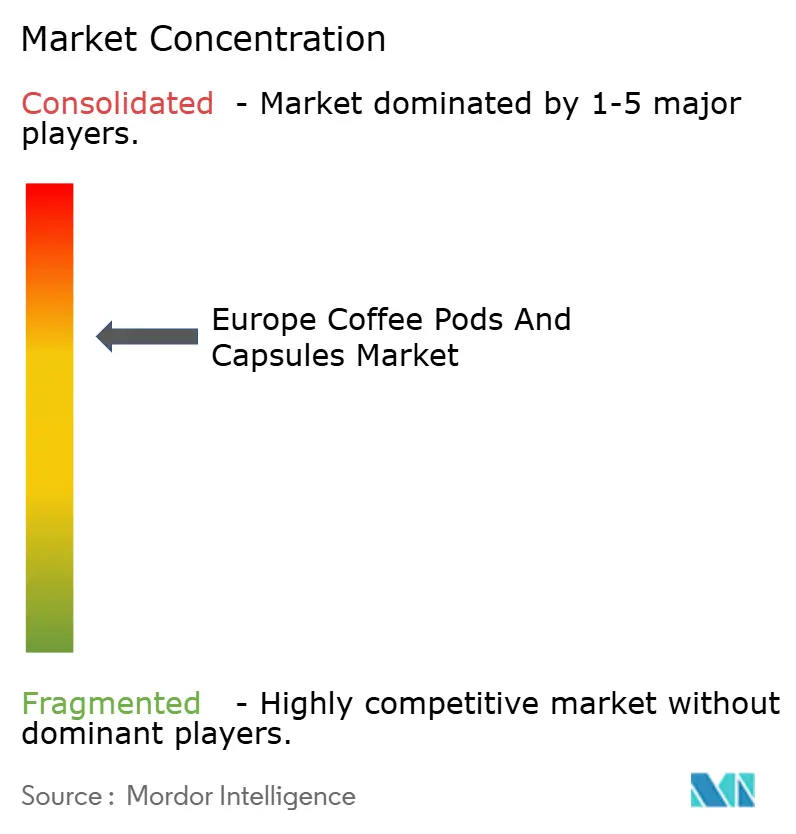
The Europe coffee pods and capsules market is moderately concentrated, with a few multinational coffee companies enjoying strong brand loyalty. At the same time, numerous compatible-capsule manufacturers and private labels contribute to competitive pressure. Key players such as Nestlé S.A., Luigi Lavazza S.p.A., Illycaffè S.p.A., The Kraft Heinz Company, and JDE Peet’s N.V. leverage their established roasting expertise, recognizable brands, and extensive retail networks to drive repeat purchases across supermarkets, e-commerce platforms, and hospitality channels. Competition centers on proprietary machine ecosystems and compatible formats, with companies focusing on customer retention through product variety, subscription services, and bundled machine-and-capsule offerings. As single-serve coffee is a replenishment category, brand familiarity and system compatibility significantly influence consumer loyalty.
Technology plays a key role in differentiating brands within the competitive landscape. Leading companies are incorporating advanced brewing features such as pressure-optimized extraction, barcode or smart-capsule recognition, and automated beverage calibration that adjusts water volume and temperature based on capsule type. Continuous innovations in grind precision, nitrogen sealing, and capsule design aim to preserve aroma and crema quality while ensuring consistent preparation across machines. Additionally, manufacturers are collaborating with appliance producers to develop compact, energy-efficient machines with integrated milk frothing and multiple beverage settings, enabling households and offices to replicate café-style drinks. These technological advancements strengthen closed-loop ecosystems and promote long-term usage of proprietary capsule platforms.
Sustainability has become a critical factor in the market. Companies are making significant investments in recyclable aluminum capsules, compostable fiber-based pods, and coffee sourcing programs that emphasize traceability and responsible farming practices. Initiatives such as take-back collection schemes, recycling partnerships, and reduced-packaging formats address environmental concerns associated with single-serve coffee. Many brands now emphasize carbon footprint reduction, ethical sourcing certifications, and biodegradable materials in their product launches to attract environmentally conscious consumers and retailers. As regulatory requirements and consumer awareness increase across Europe, the ability to combine convenience with environmentally responsible packaging is becoming a key factor in shaping competitive positioning and ensuring long-term differentiation in the market.
Europe Coffee Pods and Capsules Industry Leaders
-
Nestlé S.A.
-
Luigi Lavazza S.p.A.
-
Illycaffè S.p.A.
-
The Kraft Heinz Company
-
Starbucks Corporation
- *Disclaimer: Major Players sorted in no particular order
Europe Coffee Pods and Capsules Market Companies Covered in this Report
- Nestle S.A.
- Luigi Lavazza S.p.A.
- Illycaffe S.p.A.
- The Kraft Heinz Company
- JDE Peet's N.V.
- Starbucks Corporation
- Caffe Borbone S.r.l.
- Tchibo GmbH
- Melitta Group
- Kruger GmbH & Co. KG
- Keurig Dr Pepper Inc.
- Strauss Group Ltd.
- Bewley's Ltd.
- Kimbo S.p.A.
- Dualit Ltd.
- Colonna Coffee
- Caffitaly System S.p.A.
- Bestpresso Inc.
- Halo Coffee
- Cafes Novell S.A.
Market Opportunities and Future Outlook
PPWR-driven redesign creates room for materials and conversion solutions that maintain barrier performance while simplifying end-of-life processing, including monomaterial capsule structures, certified compostable pods where appropriate, and higher recycled-content plastics. Packaging materials already show momentum toward compostable and biodegradable solutions, and suppliers are expanding portfolios. For example, in October 2025, Ahlstrom launched GreenPod Home, a TUV-certified home-compostable coffee pod range, supporting brand owners and private labels looking to broaden compliant options across off-trade shelves.
Collection and sorting infrastructure is a second opportunity area because regulatory compliance increasingly depends on demonstrable recycling in practice. Retail-backed take-back models and partnerships offer practical proof points for scaling. In March 2026, Asda and Podback reported 20 million coffee pods recycled in the first year of their partnership, while UK grocers such as Morrisons have also worked with Podback to improve household capture of used pods. These steps support opportunities for brands to differentiate through easier disposal pathways, for converters to standardize designs that sort cleanly, and for waste-management players to deploy equipment that can recover small-format aluminum and plastic components at scale.
Recent Industry Developments in Europe Coffee Pods and Capsules Market
- June 2026: Luigi Lavazza S.p.A. introduced the Tabli coffee system in the United States after its earlier debut in Italy. The system extends Lavazza's single-serve platform that uses compressed coffee tabs rather than traditional capsules. It also broadens the company's addressable consumer base while reshaping its sustainability and waste-reduction positioning in portioned coffee.
- October 2025: OxBarrier introduced a technology licensing program for its patented compostable single-serve capsule technology with an integrated oxygen barrier. Licensing lowers the barrier for multiple capsule producers to adopt a compostable format while preserving freshness performance, which is central to consumer acceptance in premium single-serve coffee.
- February 2024: JDE Peets finalized a strategic agreement to manufacture, distribute, and sell Costa Coffee-branded aluminum capsules in the United Kingdom. The deal strengthened Costa-branded presence in the UK capsule aisle and increased competitive pressure on other branded and compatible capsule suppliers across mainstream retail.
Europe Coffee Pods and Capsules Market Report Scope and Research Methodology
Market Definition and Coverage
This market covers the value of single-serve coffee pods and capsules sold across Europe for use in compatible home and out-of-home coffee machines, counted as finished consumer packs sold through on-trade and off-trade routes.
Scope exclusions: We exclude coffee machines, bulk roasted or ground coffee sold without a pod or capsule format, and related accessories such as filters and descaling products.
Segments Covered in This Report
- By Product Type
- Pods
- Capsules
- By Flavor
- Plain
- Flavored
- By Packaging Material
- Aluminium
- Plastic
- Compostable/Biodegradable
- By Coffee Roast
- Light Roast
- Medium Roast
- Dark Roast
- By Distribution Channel
- On-trade
- Off-trade
- Supermarkets/Hypermarkets
- Specialty Stores
- Online Retail Stores
- Other Distribution Channels
- By Geography
- Germany
- United Kingdom
- Italy
- France
- Spain
- Netherlands
- Poland
- Belgium
- Sweden
- Rest of Europe
Data Sources, Market Sizing, and Validation
Desk Research
Desk research was used to set the guardrails for the model, mainly around consumption patterns, pricing direction, and trade movement across Europe. We reviewed public statistics and documents such as Eurostat datasets, UN Comtrade trade tables, national statistics offices in large European markets, and customs or tariff references that help classify coffee preparations. We also used peer-reviewed food and packaging journals, and patent databases, to understand packaging shifts like compostable formats that can influence mix and pricing.
To turn those signals into a practical market build, we checked company annual reports, investor presentations, and reputed business press for channel expansion, capacity moves, and pricing commentary. Where helpful, we used paid subscriptions for company financials and a news and financials database to standardize reported revenue and event timelines across countries. The desk sources listed above are illustrative, and we also relied on other public references during data collection, validation, and research clarification.
Primary Interviews and Surveys
Primary work focused on clarifying what gets counted as a pod or capsule sale in each channel, and on stress-testing price and mix assumptions by country. We spoke with a mix of brand, manufacturing, packaging, retail, and foodservice stakeholders, then used these inputs to reconcile gaps seen in public data and to confirm the final demand and price logic across Europe.
Distribution of primary research fieldwork respondents
| Company type | Respondent position |
|---|---|
| Top tier: 30% | CXOs: 13% |
| Mid tier: 56% | Functional/Unit leaders: 27% |
| Smaller Players: 14% | Managers: 60% |
Market-Sizing & Forecasting
Sizing starts with a top-down demand pool build where retail and foodservice indicators are used to reconstruct pods and capsules consumption by country, then value is derived using observed price bands. The model is checked with selective bottom-up approximations, such as shelf-price tracking across major retailers, channel checks on typical pack sizes, and supplier-side sanity checks on volume movement. Totals are then adjusted when the two views disagree.
Key inputs (illustrative) include household penetration of single-serve systems, per-capita coffee consumption direction, the split of off-trade versus on-trade sales, average pack sizes and price per serving, and the material mix trend (aluminum, plastic, compostable) that can change the average selling price. Forecasting uses scenario analysis supported by simple time-series smoothing for country-level demand, with assumed drivers like premiumization, private label entry, and online share shifts reviewed with experts. Where data is thin for smaller countries, the gap is handled by applying peer-country ratios, then re-checking the outcome against observed retail presence and trade movement.
Data Validation & Update Cycle
Validation is done through multiple passes, where outputs are compared against independent signals like coffee consumption trends, retail price movement, and channel inventory commentary, and any sharp variances are investigated before sign-off. We also run currency and unit checks so that country totals roll up cleanly into the Europe figure, and unusually large year-on-year swings trigger follow-up calls to confirm whether the change is real or model-driven. Reports are refreshed annually, with interim updates when a material event occurs such as a major pricing reset, packaging regulation change, or a significant channel disruption. Before delivery, an analyst performs a final review pass so the client receives the most current view available at that time.
Mordor Intelligence's Europe Coffee Pods and Capsules Market Estimate Compared With Other Published Estimates
Published market sizes for Europe coffee pods and capsules can look different even when they describe the same category, because timing, pricing logic, and channel boundaries are not treated the same way across studies. Some published estimates rely more on an older base-year price level, or group formats together that buyers do not always treat as comparable at checkout.
A refresh-led difference is often seen in how average selling price is updated, including how promotions are treated and which currency timing is used when converting country values into a regional total. When these updates do not align to the latest year, the estimate can drift. That is why the model refresh cadence and variance checks are emphasized for Mordor Intelligence for this market.
Benchmark comparison
| Source | Market Size | Gaps in Research Methodology |
|---|---|---|
| Mordor Intelligence | USD 17.09 B (2025) | |
| Industry Publisher A | USD 16.07 B (2024) | Uses an earlier base year, and the price level can differ if promotions and pack-size shifts are not refreshed consistently across countries before rolling up to Europe. |
| Market Publisher B | USD 7.48 B (2024) | The scope appears narrower or differently classified, which can happen when parts of the single-serve format set, channels, or value definition are treated inconsistently across countries. |
The spread across the three figures is mainly explained by year selection and how pricing and scope are kept consistent across countries. By tying the totals to clear country demand indicators and then re-checking the implied prices against observed ranges, the final value stays easier to trace and repeat when the market is updated.
Key Questions Answered in the Report
How large will European demand for single-serve coffee get by 2031?
The Europe coffee pods and capsules market is forecast to reach USD 24.31 billion by 2031, expanding at a 6.05% CAGR from 2026.
Which product format is growing the fastest?
Paper and compostable pods are projected to grow at 8.05% CAGR, outpacing aluminum capsules as sustainability rules tighten.
What drives the shift toward flavored capsules?
Younger consumers seek low-commitment variety, pushing flavored units to an 8.65% CAGR, double the pace of plain espresso blends.
Which country offers the strongest growth outlook?
France leads with a projected 8.81% CAGR through 2031 thanks to 60% household machine penetration and rising premium café culture.