
Cardiac Safety Service Market Size and Share
Market Overview
| Study Period | 2020 - 2031 |
|---|---|
| Market Size (2026) | USD 1.04 Billion |
| Market Size (2031) | USD 1.75 Billion |
| Growth Rate (2026 - 2031) | 11.09 % |
| Fastest Growing Market | Asia-Pacific |
| Largest Market | North America |
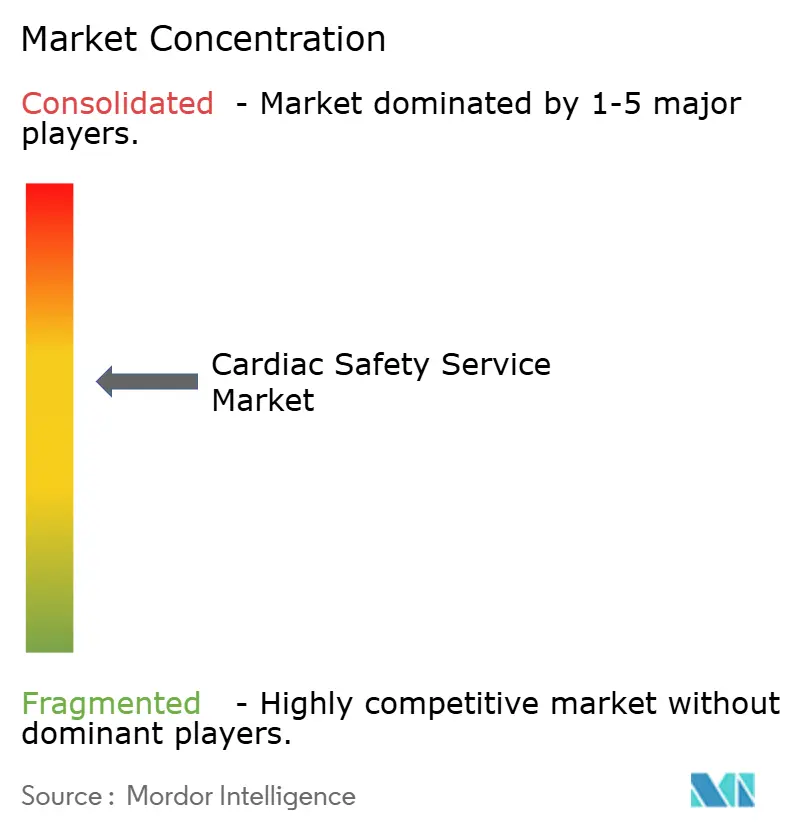
| Market Concentration | Medium |
Major Players *Disclaimer: Major Players sorted in no particular order Image © Mordor Intelligence. Reuse requires attribution under CC BY 4.0. | |
Cardiac Safety Service Market Analysis by Mordor Intelligence
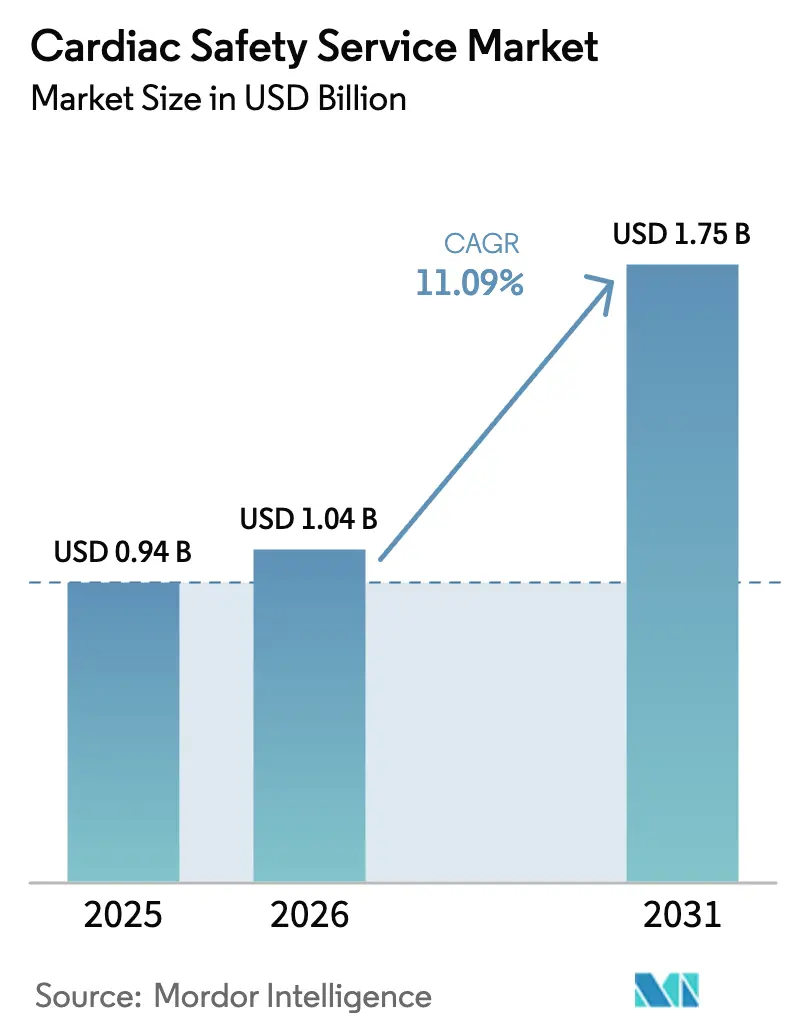
The Cardiac Safety Service Market size is projected to expand from USD 0.94 billion in 2025 and USD 1.04 billion in 2026 to USD 1.75 billion by 2031, registering a CAGR of 11.09% between 2026 to 2031.
Stricter ICH E14/S7B mandates now compel real-time proarrhythmia screening in every first-in-human dose group, while decentralized and hybrid trial designs accelerate adoption of cloud ECG telemetry across oncology, rare-disease, and gene-therapy pipelines.[1] Investment in AI-enabled analytics shortens the interval from ECG capture to dose-escalation decisions, cutting early-phase timelines by up to 15%. Sponsors also face a rising burden of cardiovascular adverse events linked to tyrosine-kinase inhibitors and immune checkpoint therapies, expanding service demand beyond small-molecule programs.[2] Outsourced cardiac safety providers continue to dominate multicountry pivotal studies, yet large pharmaceutical companies are internalizing analytics platforms to protect proprietary ECG datasets and mitigate GDPR, PIPL, and DPDP compliance risk.
Key Report Takeaways
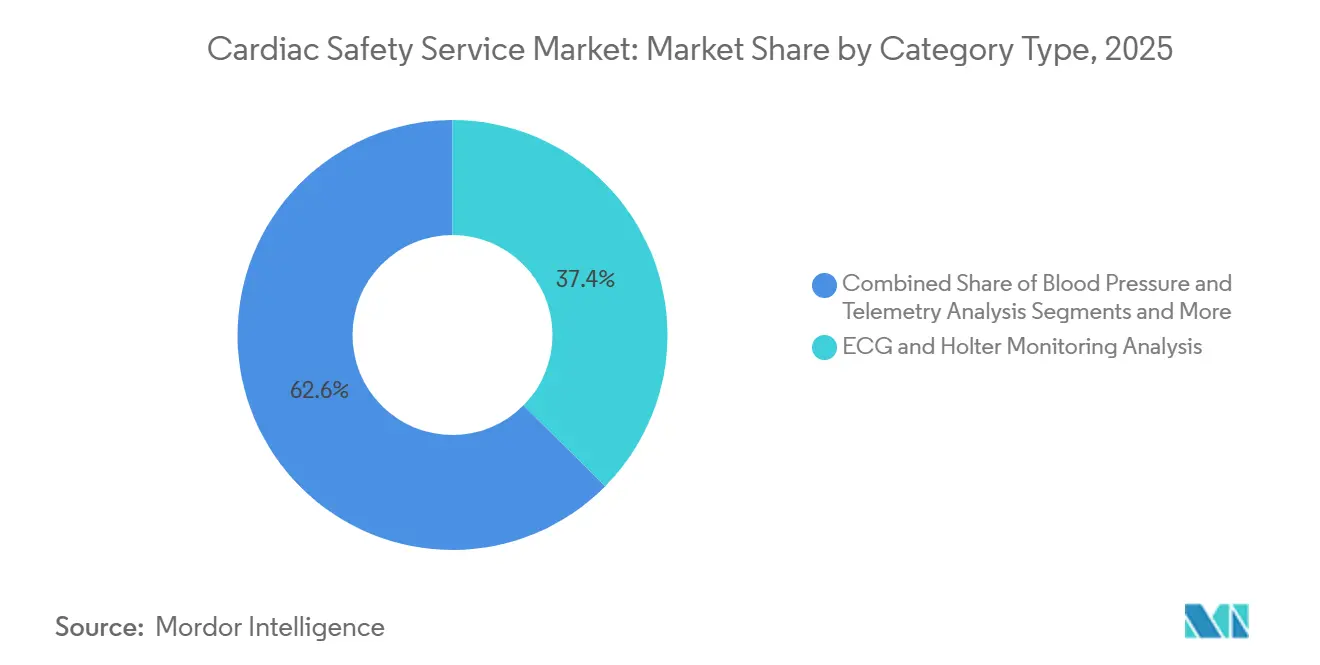
- By service type, ECG & Holter monitoring analysis led with 37.42% of the cardiac safety service market share in 2025, whereas real-time data analytics & reporting is advancing at a 14.24% CAGR through 2031.
- By service delivery model, outsourced vendors captured 72.53% revenue share in 2025, while in-house operations are projected to grow at 12.52% over 2026-2031.
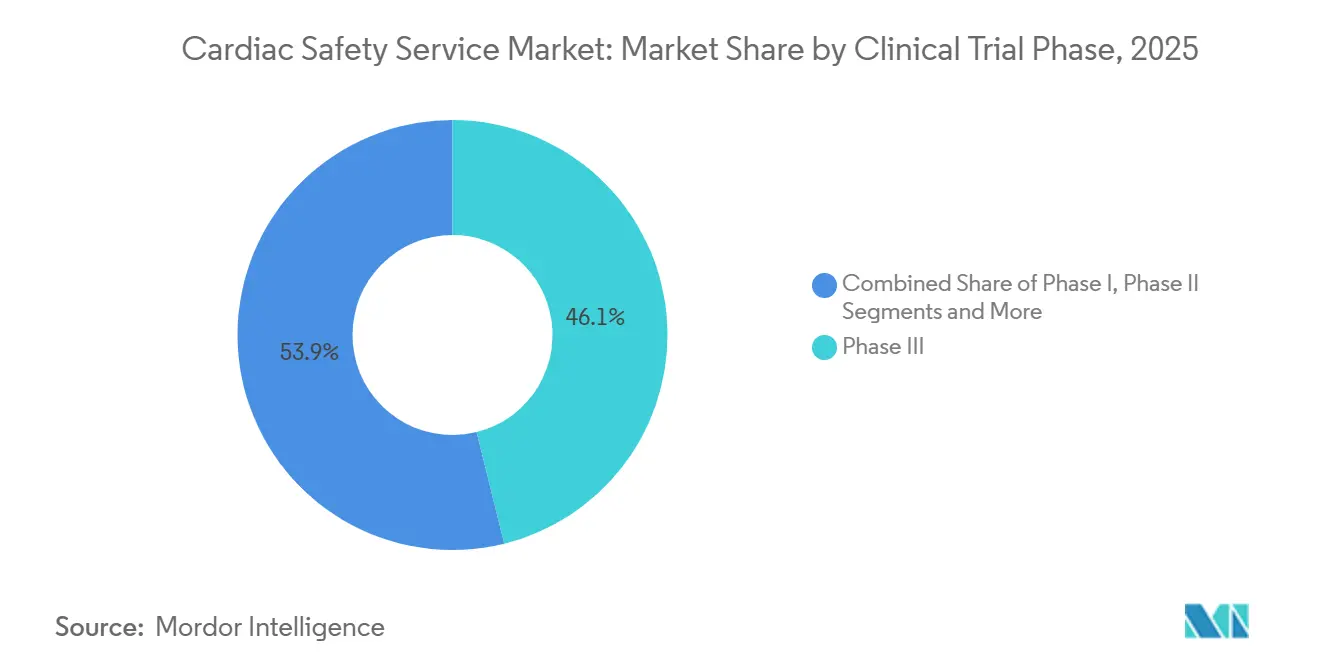
- By clinical trial phase, Phase III trials accounted for 46.13% of the cardiac safety service market size in 2025, yet Phase I services are expanding at a 12.84% CAGR to 2031.
- By end user, pharmaceutical companies held 56.22% share of the cardiac safety service market size in 2025, whereas biotechnology firms post the fastest 13.04% CAGR through 2031.
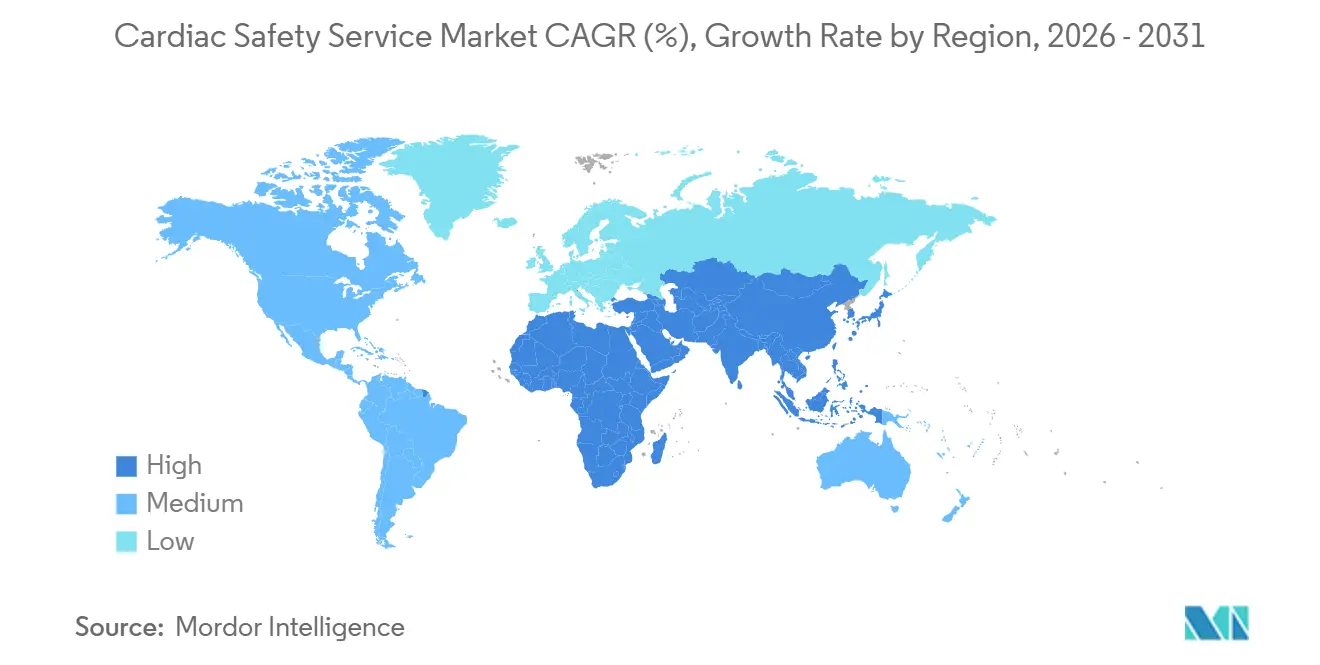
- By geography, North America dominated with 39.14% revenue share in 2025; Asia-Pacific is forecast to post a 13.63% CAGR over 2026-2031.
Note: Market size and forecast figures in this report are generated using Mordor Intelligence’s proprietary estimation framework, updated with the latest available data and insights as of January 2026.
Global Cardiac Safety Service Market Trends and Insights
Drivers Impact Analysis*
| Driver | (~) % Impact on CAGR Forecast | Geographic Relevance | Impact Timeline |
|---|---|---|---|
| Expanding Adoption of Decentralized & Hybrid Trials | +2.1% | North America, Western Europe, emerging uptake global | Medium term (2-4 years) |
| Rising Incidence of Cardiovascular Adverse Events in Oncology Trials | +1.8% | North America and Europe core | Short term (≤ 2 years) |
| Stricter ICH E14/S7B 2022 Addendum Implementation | +1.5% | Global, led by FDA and EMA | Short term (≤ 2 years) |
| Growth of Real-Time Cloud-ECG Analytics Platforms | +1.9% | North America, Europe, spill-over to APAC | Medium term (2-4 years) |
| AI-Enabled Arrhythmia Prediction Reducing Late-Stage Failures | +1.6% | Global early adopters | Medium term (2-4 years) |
| Integration of In-Silico Proarrhythmia Models into Safety Workflows | +1.3% | North America, Europe | Long term (≥ 4 years) |
| Source: Mordor Intelligence | |||
Expanding Adoption of Decentralized & Hybrid Trials
Decentralized cardiac safety workflows grew from 12% of cardiovascular studies in 2023 to 28% in 2025.[3] Remote Holter patches transmit encrypted ECG streams to cloud servers that flag QTc drift within hours, satisfying the FDA’s 2024 digital-health guidance. Hybrid approaches blend at-home telemetry with site-based echocardiography, lowering patient travel costs by 40% while preserving imaging rigor. Vendors such as Clario fielded 15,000 wearable devices across oncology protocols in 2025, using machine-learning algorithms to escalate arrhythmia alerts automatically. Centralized over-reads mitigate regional cardiologist shortages, enabling multicountry enrollment without sacrificing data quality.
Rising Incidence of Cardiovascular Adverse Events in Oncology Trials
Cardiovascular toxicities ranked second among serious adverse events in cancer trials during 2024. Tyrosine-kinase inhibitors and immune checkpoint agents prolong QT or provoke myocarditis, prompting FDA safety communications that now require intensified ECG surveillance in early-phase oncology protocols. Updated 2025 European Society of Cardiology guidelines recommend pairing ECG monitoring with biomarkers and imaging, raising per-patient costs by 35% but cutting late-stage attrition. Real-time telemetry detects silent arrhythmias during dose escalation cohorts, a differentiator cited by Charles River in recent oncology contract wins. The resulting demand surge broadens the cardiac safety service market beyond traditional small-molecule programs.
Stricter ICH E14/S7B 2022 Addendum Implementation
The addendum allows sponsors to replace stand-alone thorough-QT studies with exposure-response modeling, provided assay sensitivity is demonstrated. FDA and EMA guidance in 2023 made this pathway mainstream, yet only 38% of 2024 Phase I trials leveraged it, reflecting lingering uncertainty. Certara reported a 42% jump in cardiac-modeling consulting revenue during 2025 as sponsors sought expertise in concentration-QTc statistics. Clinical holds for inadequate cardiac monitoring rose to 17 in 2024, underscoring regulatory pressure to pre-specify QTc plans. CiPA-aligned in-silico assays now complement early modeling, trimming animal studies and expediting IND submissions.
Growth of Real-Time Cloud-ECG Analytics Platforms
Cloud ECG hubs supported more than 400 trials in 2025, up from 120 in 2023. Automated QTc algorithms cut over-read time from 48 hours to under 6 hours, enabling same-day dose decisions and shrinking Phase I cycle times by 15%. Platforms trained on two million annotated waveforms detect subtle T-wave changes, boosting early arrhythmia detection rates. IEEE 11073 standards updated in 2024 improved data interoperability, though legacy Holter systems still require middleware bridges. EMA’s 2025 qualification opinion on algorithmic QTc tools signaled growing regulator confidence in AI-assisted endpoints.
Restraints Impact Analysis*
| Restraint | (~) % Impact on CAGR Forecast | Geographic Relevance | Impact Timeline |
|---|---|---|---|
| Limited Global Harmonization of QT/QTc Assessment Standards | -0.8% | APAC and Latin America most affected | Medium term (2-4 years) |
| High Capital Cost for 12-Lead Telemetry Infrastructure | -0.6% | Global, acute for small CROs and emerging-market sites | Short term (≤2 years) |
| Data-Privacy Restrictions on Cross-Border ECG Transfer | -0.7% | Europe, China, India with spill-over to multinationals | Medium term (2-4 years) |
| Scarcity of Certified Cardiac Safety Cardiologists in Emerging Markets | -0.9% | APAC (ex-Japan), Latin America, Middle East & Africa | Long term (≥4 years) |
| Source: Mordor Intelligence | |||
Limited Global Harmonization of QT/QTc Assessment Standards
Regional regulators apply different QTc correction formulas and risk thresholds, forcing sponsors to run duplicate analyses that can delay approvals by up to three months. China still favors Bazett correction while the FDA and EMA prefer Fridericia, and Japan demands ethnic-sensitivity studies in Japanese volunteers, adding USD 1.5-2 million per program. Divergent cut-off values—480 ms in some jurisdictions versus 500 ms elsewhere—create uncertainty for data-safety boards and complicate dose-escalation decisions. The ICH working group began drafting unified correction guidance in 2025, yet final text is unlikely before 2028. Until then the cardiac safety service market will continue to bear redundant statistical costs that erode trial budgets and elongate timelines.
Restraints Impact Analysis*
| Restraint | (~) % Impact on CAGR Forecast | Geographic Relevance | Impact Timeline |
|---|---|---|---|
| High cost and complexity of comprehensive cardiac safety studies | −1.4% | Global, most pronounced in emerging markets | Medium term (2-4 years) |
| Shortage of skilled electrophysiologists for data interpretation | −1.1% | Global, acute in Asia-Pacific and Middle East & Africa | Long term (≥ 4 years) |
| Limited validation of wearables for regulatory-grade cardiac endpoints | −0.9% | Global, regulatory lag in emerging markets | Short term (≤ 2 years) |
| Data-privacy hurdles in cloud ECG telemetry across borders | −0.7% | EU and Asia-Pacific cross-border studies | Medium term (2-4 years) |
| Source: Mordor Intelligence | |||
High Cost & Complexity of Comprehensive Cardiac Safety Studies
Building a real-time core laboratory requires FDA-cleared hardware, compliant cloud storage, and redundant connectivity, with start-up spend ranging from USD 500,000 to USD 3 million depending on trial scale. Smaller contract research organizations cannot amortize these investments across many studies, so they cede share to large vendors and drive consolidation within the cardiac safety service market. Emerging-market sites face unreliable internet, making batch uploads the default and extending Phase II timelines by up to six weeks. Wearable Holter patches lower site hardware spend, yet device, training, and support still cost USD 800-1,200 per patient. Without reimbursement pathways, biotechnology sponsors shoulder the cost, limiting uptake despite proven efficiency gains.
*Our forecasts treat driver/restraint impacts as directional, not additive. The impact forecasts reflect baseline growth, mix effects, and variable interactions.
Segment Analysis
By Service Type: Real-Time Analytics Outpace Traditional Monitoring
The real-time data analytics and reporting segment grew to 14.24% CAGR, the fastest within the cardiac safety service market, as sponsors now expect same-day arrhythmia alerts for dose-escalation decisions. ECG and Holter monitoring maintained a 37.42% revenue lead in 2025 because 12-lead Holters remain mandatory in pivotal protocols. Thorough-QT study services contributed about 22% but lag due to the E14/S7B addendum that lets exposure-response modeling replace dedicated crossover trials. Blood-pressure telemetry posted 10.8% growth as oncology programs pair hemodynamic data with ECG to profile VEGF inhibitor risk. Cardiovascular imaging accounted for roughly 15% and climbs steadily because cardio-oncology guidelines call for serial left-ventricular ejection fraction checks.
Sponsors view real-time analytics as central to adaptive trial designs that modify dosing on the fly, something retrospective batches cannot support. Clario reports its machine-learning triage trims cardiologist review time 35%, underscoring why the cardiac safety service market favors algorithm-enabled workflows. Crossover thorough-QT remains vital for compounds with unknown ion-channel profiles, yet its USD 1.2 million price tag pushes many biotechnology firms toward integrated Phase I monitoring instead. Hybrid devices now combine blood-pressure cuffs and ECG patches in one transmitter, cutting procurement spend 20% and easing subject compliance. Imaging growth is tempered by the site-visit requirement, but the FDA’s cardio-oncology draft in 2024 guarantees baseline and on-treatment scans for high-risk drugs, sustaining volume within the cardiac safety service market

By Service Delivery Model: In-House Capabilities Gain Ground
Outsourced providers controlled 72.53% revenue in 2025, yet in-house units are set to expand 12.52% over 2026-2031 as large pharmaceutical companies install subscription software behind their firewalls. Internalization protects raw ECG files, eases GDPR and PIPL compliance, and lowers unit costs across long portfolios, fueling a shift within the cardiac safety service market. Eli Lilly’s internal core lab now processes data from 20 concurrent studies and saves USD 8 million annually, a model other multinationals will likely mirror.
Outsourcing remains dominant for small biotechnology firms that lack cardiology staff or capital to buy hardware. Multicountry Phase III trials depend on vendors with 24-hour multilingual support, a scale only the largest contract research organizations provide. Smaller CROs form alliances to stay relevant; PSI and Richmond Pharmacology teamed up in 2025 to share cardiologist networks and broaden reach. Regulators scrutinize sponsor-run labs closely: twelve FDA inspection findings in 2024 cited inadequate QC, reminding smaller companies why outsourced oversight still matters. Hybrid models blending sponsor data capture with independent over-reads may become the norm as the cardiac safety service market balances cost, speed, and compliance.
By Clinical Trial Phase: Early-Phase Spend Accelerates
Phase I services are forecast to rise at 12.84% CAGR as regulators insist on comprehensive QT screens at first-in-human dosing, redirecting spend upstream in the cardiac safety service market. Phase III held 46.13% of 2025 revenue but grows a slower 10.2% because exposure-response models satisfy many QT requirements before pivotal enrollment. Phase II captures adaptive protocol demand where sponsors refine dose and explore exposure-safety curves, while Phase IV sees double-digit growth from wearable post-marketing surveillance.
Biotechnology firms integrate intensive ECG telemetry into Phase I dose-escalation cohorts, bypassing standalone crossover studies and trimming four to six months off timelines. The shift requires 24-hour cardiologist access and feeds demand for AI triage that filters normal tracings automatically. Phase III still commands the largest budgets because enrollment numbers drive monitoring volume, although its share of the cardiac safety service market is set to decline as earlier phases shoulder more safety analytics. Real-world wearables in Phase IV flag unanticipated QT prolongations, demonstrated when IQVIA monitoring identified alerts in 3.2% of patients on a new oncology agent, leading to a labeling update in 2025.
By End User: Biotechnology Drives Outsourced Demand
Pharmaceutical companies generated 56.22% of 2025 revenue, yet biotechnology firms will post 13.04% CAGR through 2031 and thus reshape the cardiac safety service market. Venture-backed oncology and gene-therapy developers lack cardiology infrastructure and outsource 95% of assessments to specialist providers. Medical device manufacturers contribute an 8% slice, driven by ISO 14155 demands on implantable stimulators, and contract research organizations procure the remaining share while negotiating bulk discounts.
Large pharmas internalize AI platforms; Pfizer expanded its cardiology staff 30% in 2025 to retain proprietary datasets and shorten decision cycles. Smaller biotech firms prefer turnkey packages that bundle wearable device logistics, cloud analytics, and independent cardiologist reads. Their funding surged to USD 42 billion in 2025, guaranteeing a healthy project pipeline for service vendors. CROs respond with integrated cardiac offerings; Parexel now markets combined ECG, imaging, and blood-pressure telemetry suites, mirroring sponsor appetite for single-vendor simplicity. As capital remains plentiful, biotechnology clients will keep shaping pricing power and innovation cycles within the cardiac safety service market.
Geography Analysis
North America commanded 39.14% of 2025 revenue because FDA enforcement of the E14/S7B addendum anchors first-in-human activity, yet its growth moderates to 10.45% as sponsors diversify early-phase work into cost-efficient regions. Europe after adoption of Regulation (EU) 536/2014 streamlined cross-border ECG exchange, though GDPR amendments extend start-up paperwork and temper its expansion.EU. Asia-Pacific is the fastest mover, projected at 13.63% CAGR, propelled by China’s 2024 cardiac safety guidance that aligns with Fridericia correction and India’s investment in ISO 13485 core labs.
Middle East and Africa will grow as Gulf Cooperation Council nations invest USD 500 million in compliant research centers, aiming to diversify beyond oil. South America held 8% and expands 11.7% after Brazil’s regulator aligned QT rules with ICH standards, while Argentina’s economic stabilization revives Buenos Aires as a trial hub. Data-sovereignty laws in Europe, China, and India fragment telemetry workflows, forcing redundant infrastructure that raises per-patient costs and redistributes spend within the cardiac safety service market.
Asia-Pacific’s large treatment-naive population lets Phase II and III trials finish six to nine months faster than in Western regions, a benefit WuXi Clinical highlights to multinational sponsors. North America remains the regulatory bellwether; FDA draft guidance on AI biomarkers issued in 2024 has shaped global adoption curves, keeping many pilot studies domestic despite cost concerns. European share is influenced by Brexit fragmentation that forces dual submissions to EMA and the UK regulator, adding administrative load and tilting some Phase I volumes toward the Netherlands and Belgium. Sub-Saharan Africa’s potential is constrained by bandwidth and cardiologist shortages, yet tele-reading partnerships with European labs gradually open new recruitment corridors.
Regulatory Landscape
Global cardiac safety expectations for non-antiarrhythmic drugs remain anchored in ICH E14 (clinical QT/QTc evaluation) and ICH S7B (nonclinical delayed ventricular repolarization), as implemented by major agencies such as the US FDA and the European Medicines Agency (EMA). In practice, sponsors use either a Thorough QT/QTc study design or an integrated strategy combining concentration-response (exposure-response) modeling with nonclinical assays aligned to CiPA. Regulatory concern is commonly triggered when the upper bound of the 95% confidence interval for mean QTc effect exceeds 10 ms.
On execution and submission, the FDA maintains an Interdisciplinary Review Team for Cardiac Safety Studies (formerly QT-IRT) to support review of trial design, ECG interpretation, and proarrhythmia risk assessment. Review is increasingly operationalized through structured data expectations, including FDA technical specifications that build on CDISC SDTM and ADaM conventions for QT-focused datasets. This raises the compliance bar for cloud ECG telemetry, centralized over-reads, and audit-ready analytics workflows across multinational trials.
Competitive Landscape
The cardiac safety service market shows moderate concentration. Leaders chase vertical integration, acquiring wearable device makers and cloud analytics firms to offer devices, data collection, AI triage, and cardiologist over-reads in one contract. Certara’s CiPA in-silico models won 18 new contracts in 2025 by letting sponsors predict torsades risk preclinically, cutting IND timelines by months.
Technology patents accelerate competition; the USPTO granted 47 AI-ECG patents during 2024-2025, signaling rapid innovation cycles. Vendors active in IEEE and CDISC standards bodies gain early insight into regulatory requirements and tailor product roadmaps accordingly. Niche firms differentiate through therapeutic focus; Ncardia specializes in cardio-oncology, combining stem-cell assays with imaging protocols that large generalists have yet to match.
Strategic moves include Labcorp’s 2025 purchase of a telemetry middleware company to solve legacy device interoperability, and ICON’s partnership with a cloud cybersecurity vendor to harden ECG data pipelines against GDPR fines. Heartstream’s 2026 spin-out of Philips Emergency Care expands AED and monitor manufacturing, giving the group standing inventory it can bundle with trial services. Emerging alliances such as Frontage-Banook pair telemedicine platforms with core labs to address hybrid decentralized protocols. Competitive intensity will rise as AI tools commoditize baseline ECG reads, shifting value to predictive analytics, regulatory consulting, and integrated device logistics within the cardiac safety service market.
Cardiac Safety Service Industry Leaders
-
Clario
-
IQVIA
-
Labcorp Drug Development
-
ICON plc
-
Medpace
- *Disclaimer: Major Players sorted in no particular order
Market Opportunities and Future Outlook
The shift from periodic, site-based ECG capture toward continuous physiologic monitoring in clinical trials is creating whitespace for vendors that can bundle wearable ECG logistics, cloud ingestion, and clinically validated signal quality controls into a single operational package. Regulators are also reinforcing demand-side pull through cardiac safety infrastructure, including the FDA cardiac safety review function (IRT), alongside ongoing implementation of ICH E14/S7B pathways that reward robust exposure-response modeling and standardized, submission-ready datasets.
Workflow consolidation is also expanding opportunities in cross-modality endpoints and site productivity. FDA 510(k)-cleared solutions that combine respiratory testing and wireless ECG in one visit are one example, and sponsor demand for faster dose-escalation decisions continues to support near-real-time analytics. At the same time, open clinical infrastructures for data aggregation and prospective validation of AI in remote cardiac monitoring (reported in 2026 academic work) point to unmet needs around generalizable model validation, governance, and interoperability. Cardiac safety service providers can differentiate with compliant data pipelines, independent over-read networks, and standardized evidence generation across geographies where data-transfer constraints remain a factor.
Recent Industry Developments
- March 2026: Thermo Fisher Scientific completed its acquisition of Clario Holdings, Inc., bringing a major endpoint and cardiac safety data specialist into Thermo Fisher's Laboratory Products and Biopharma Services portfolio. The acquisition tightens integration between clinical trial services and endpoint data workflows and supports bundled offerings across ECG capture, centralized reads, and analytics.
- February 2026: IQVIA signed an agreement to acquire drug discovery services assets from Charles River Laboratories, expanding its end-to-end drug discovery capabilities. The transaction strengthens a continuum from early research services through later clinical development execution, supporting more integrated operating models where cardiac safety monitoring is embedded into broader development programs.
- June 2024: Clario received FDA 510(k) clearance for its SpiroSphere platform with integrated wireless COR-12 ECG functionality to enable consecutive collection of spirometry and ECG in a single site visit. This clearance supports more streamlined site workflows and multi-parameter data capture, which is relevant for trials where respiratory and cardiac safety assessments coexist and operational burden is a limiting factor.
Research Methodology Framework and Report Scope
Market Definition and Coverage
This market covers outsourced cardiac safety services that sponsors use to evaluate and monitor drug-related heart risk during clinical development and in regulated follow ups. Coverage includes specialist testing, data handling, interpretation, and reporting support provided to sponsors and research partners.
Scope exclusions: We exclude sales of standalone monitoring hardware and general cardiology care that is not tied to formal cardiac safety services used for research and regulated evidence generation.
Segmentation Overview
- By Service Type
- Thorough QT/QTc Study Services
- ECG & Holter Monitoring Analysis
- Blood Pressure & Telemetry Analysis
- Cardiovascular Imaging (Echocardiography, MUGA)
- Real-Time Data Analytics & Reporting
- By Service Delivery Model
- In-house (Sponsor-run)
- Outsourced (CRO & Specialist Vendors)
- By Clinical Trial Phase
- Phase I
- Phase II
- Phase III
- Phase IV / Post-marketing
- By End User
- Pharmaceutical Companies
- Biotechnology Firms
- Medical Device Manufacturers
- Contract Research Organisations (CROs)
- By Geography
- North America
- United States
- Canada
- Mexico
- Europe
- Germany
- France
- United Kingdom
- Italy
- Spain
- Rest of Europe
- Asia-Pacific
- China
- Japan
- India
- South Korea
- Australia
- Rest of Asia-Pacific
- Middle East & Africa
- GCC
- South Africa
- Rest of Middle East & Africa
- South America
- Brazil
- Argentina
- Rest of South America
- North America
Data Sources, Market Sizing, and Validation
Desk Research
Desk research started by mapping where cardiac safety services show up in regulated trial workflows, and what triggers demand, then aligning that view with public information that can be checked repeatedly. We used records and guidance from regulators including the US FDA and the European Medicines Agency, and we pulled trial activity signals from clinical trial registries such as ClinicalTrials.gov and the WHO ICTRP.
We also referenced public health statistics and burden indicators from the US CDC and the WHO, along with peer-reviewed articles that cover QT assessment, ECG endpoint practice, and safety monitoring standards. Company filings, investor presentations, reputable press releases, and association websites were used to understand service mix shifts and pricing direction. For financial and capability cross-checks, we used paid subscriptions for company financials and intelligence, news and financials, and patent databases. These desk sources are illustrative rather than exhaustive, and we consulted additional references to collect data, validate assumptions, and close open questions.
Primary Interviews and Surveys
Primary work focused on interviews and short surveys with clinical operations leaders, cardiac safety and biometrics specialists, pharmacovigilance teams, and service providers supporting ECG, TQT, and related study needs. Because this is a global service market, we spoke across the Americas, EMEA, and APAC to pressure test utilization patterns, outsourcing share, typical pricing logic, and where timelines and protocols shift by region.
Distribution of primary research fieldwork respondents
| Company type | Respondent position | Region |
|---|---|---|
| Top tier: 33% | CXOs: 12% | APAC: 48% |
| Mid tier: 45% | Functional/Unit leaders: 42% | EMEA: 32% |
| Smaller Players: 22% | Managers: 46% | Americas: 20% |
Market-Sizing & Forecasting
For sizing, we used a top-down build where clinical trial activity and cardiac safety testing intensity are translated into an addressable demand pool, then converted into service revenue using typical outsourcing share and price benchmarks tied to study needs. To keep the model practical, we anchored it on repeatable inputs such as counts of interventional trials, the share of programs using ECG intensive protocols, the frequency of central reads, the mix of standalone versus integrated services, and common service bundles across trial phases.
Bottom-up approximations were then used as checks, where we sanity tested revenue ranges using supplier disclosures, hiring and capacity signals, and sampled price points discussed in interviews. These included per-study set up fees, per-patient monitoring, and read volume-driven components. When public signals were thin in a country or sub-region, we filled gaps with proxy indicators like sponsor presence, trial density, and regional outsourcing norms, and then rechecked outputs with at least two independent expert views.
Forecasts were built using scenario analysis that links future demand to expected clinical trial growth, protocol complexity, and budget allocation for safety monitoring. We then adjusted the trajectory using primary feedback on pricing changes and adoption of more continuous monitoring approaches. The final path was stress tested against the implied service spend per active study, so the growth pattern remained realistic and explainable in a client discussion.
Data Validation & Update Cycle
Validation is done in layers so the market totals can be traced back to specific inputs and checked against outside signals. We compare the modeled totals with independent indicators such as trial starts, service utilization patterns described by experts, and directional financial signals from relevant service providers, then review anomalies before sign off.
If a large variance shows up, we revisit the assumptions that usually drive it, such as outsourcing share, protocol intensity, or regional price levels, and we re-contact the relevant respondents to confirm what changed. Reports are refreshed annually, with interim updates when material events affect trial volume, regulatory expectations, or service delivery economics. Before delivery, an analyst runs a final pass to reflect the latest public information and interview learnings so clients receive an updated view.
Mordor Intelligence's Cardiac Safety Service Market Size Compared Against Other Published Estimates
Published numbers for cardiac safety services often look different because the service boundary can shift between firms, and because the years used for quoting (base year versus forecast year) are not always aligned. Differences also come from how pricing is treated, since some estimates use a single average rate and others reflect protocol complexity and the mix of service bundles.
Standalone ECG device sales and general remote patient monitoring revenue sit outside the Mordor Intelligence scope for this market, which keeps the total focused on regulated service work tied to clinical development and safety evidence generation. Gaps also show up when one publisher models faster outsourcing expansion, or when currency conversion timing and refresh cadence do not align with new trial starts and protocol trends.
Benchmark comparison
| Source | Market Size | Gaps in Research Methodology |
|---|---|---|
| Mordor Intelligence | USD 0.94 B (2025) | |
| Industry Research Group A | USD 0.87 B (2024) | Uses a prior base year and a narrower capture of integrated service bundles, and it appears to apply a flatter pricing curve without fully adjusting for protocol complexity across phases. |
| Trade Journal B | USD 0.74 B (2023) | Anchors the total to selective published revenue signals and near term contracts, which can undercount smaller service programs and cross border delivery that does not get disclosed clearly. |
Across the table, most of the spread is explained by year alignment and what each source counts as service work versus an adjacent product or care activity. By keeping the model tied to trial activity, outsourcing share, and service bundle pricing inputs that can be checked and rechecked, we get a number that is easier to reproduce and update when new demand signals emerge.
Key Questions Answered in the Report
How large will cardiac safety service spending be by 2031?
It is projected to reach USD 1.75 billion, rising at an 11.09% CAGR from 2026 to 2031.
Which service line is expanding the fastest?
Real-time data analytics and reporting is advancing at a 14.24% compound rate as sponsors prioritize same-day arrhythmia alerts.
Why are decentralized and hybrid trials important for cardiac monitoring?
They let volunteers transmit Holter data from home, cut site visits by 40%, and still comply with FDA digital‐health guidance.
What is driving early-phase demand for cardiac telemetry?
Regulators now expect full QT assessments in first-in-human studies, pushing Phase I outlays up 12.84% a year.
Which region shows the strongest growth outlook?
Asia-Pacific leads with a forecast 13.63% CAGR, helped by China’s harmonized QT guidance and India’s investment in ISO 13485 labs.