
Bread Mixes Market Size and Share
Market Overview
| Study Period | 2021 - 2031 |
|---|---|
| Market Size (2026) | USD 20.92 Billion |
| Market Size (2031) | USD 27.24 Billion |
| Growth Rate (2026 - 2031) | 5.41 % |
| Fastest Growing Market | Asia Pacific |
| Largest Market | Europe |
| Market Concentration | Low |
Major Players *Disclaimer: Major Players sorted in no particular order Image © Mordor Intelligence. Reuse requires attribution under CC BY 4.0. | |
Bread Mixes Market Analysis by Mordor Intelligence
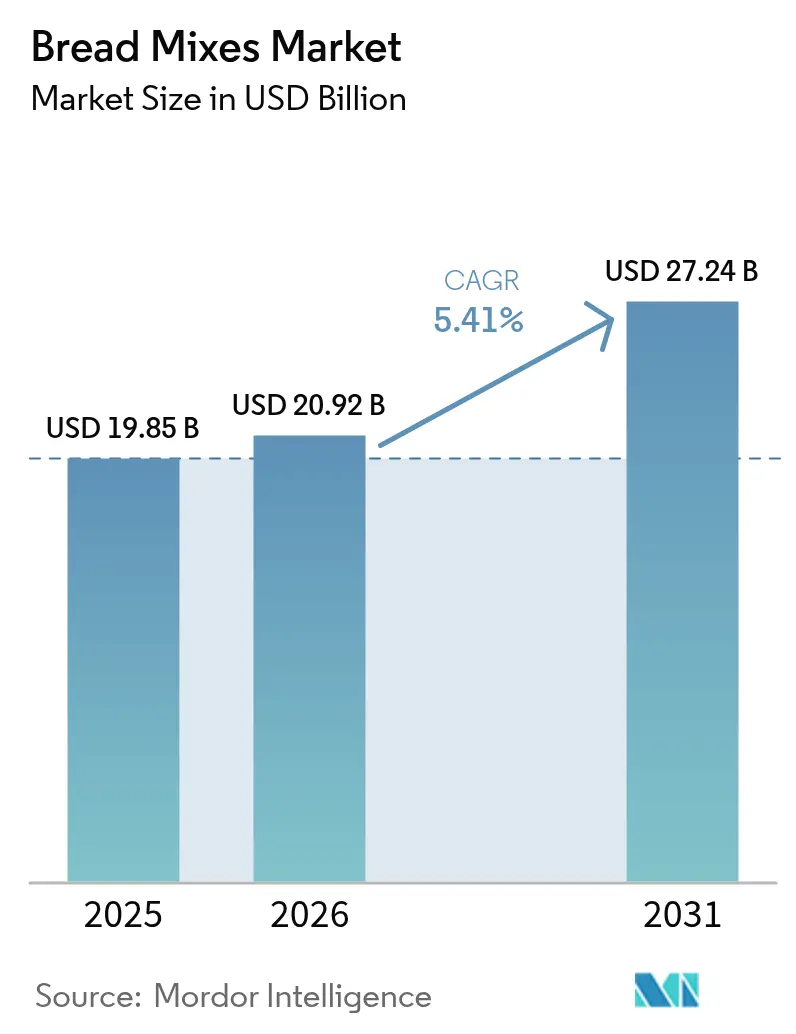
Bread mixes market size in 2026 is estimated at USD 20.92 billion, growing from 2025 value of USD 19.85 billion with 2031 projections showing USD 27.24 billion, growing at 5.41% CAGR over 2026-2031. This growth is largely driven by consumers' heightened emphasis on health, clean-label ingredients, and convenient meal solutions. In response, product developers are rolling out gluten-free, organic, and protein-enriched variants. These not only mimic artisanal textures but also reduce preparation times. With clearer regulations on gluten-free labeling and organic certifications, there's a surge in investments towards specialized production lines. Meanwhile, social media's influence has bolstered the home-baking trend, expanding the market's consumer base. Digitalization in supply chains, coupled with cutting-edge mixing technologies, has enhanced consistency. This advancement aids producers in maintaining their margins, even amidst fluctuations in raw material prices. The market's competitive landscape is bustling, with regional specialists, direct-to-consumer newcomers, and established food giants all vying for a slice of the bread mixes pie.
Key Report Takeaways
- By nature, conventional products led with 69.82% of the bread mixes market share in 2025, whereas organic variants are projected to expand at a 6.98% CAGR through 2031.
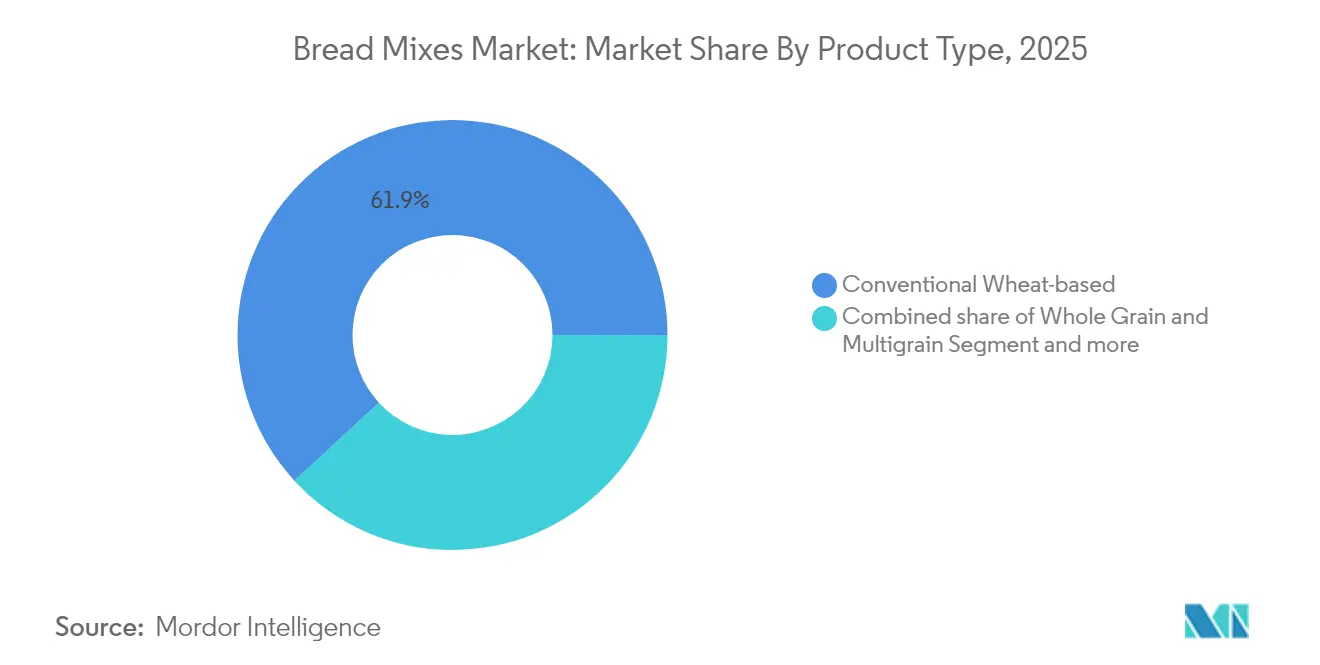
- By product type, conventional wheat-based mixes captured 61.85% share of the bread mixes market size in 2025; gluten-free alternatives are forecast to climb at a 7.29% CAGR to 2031.
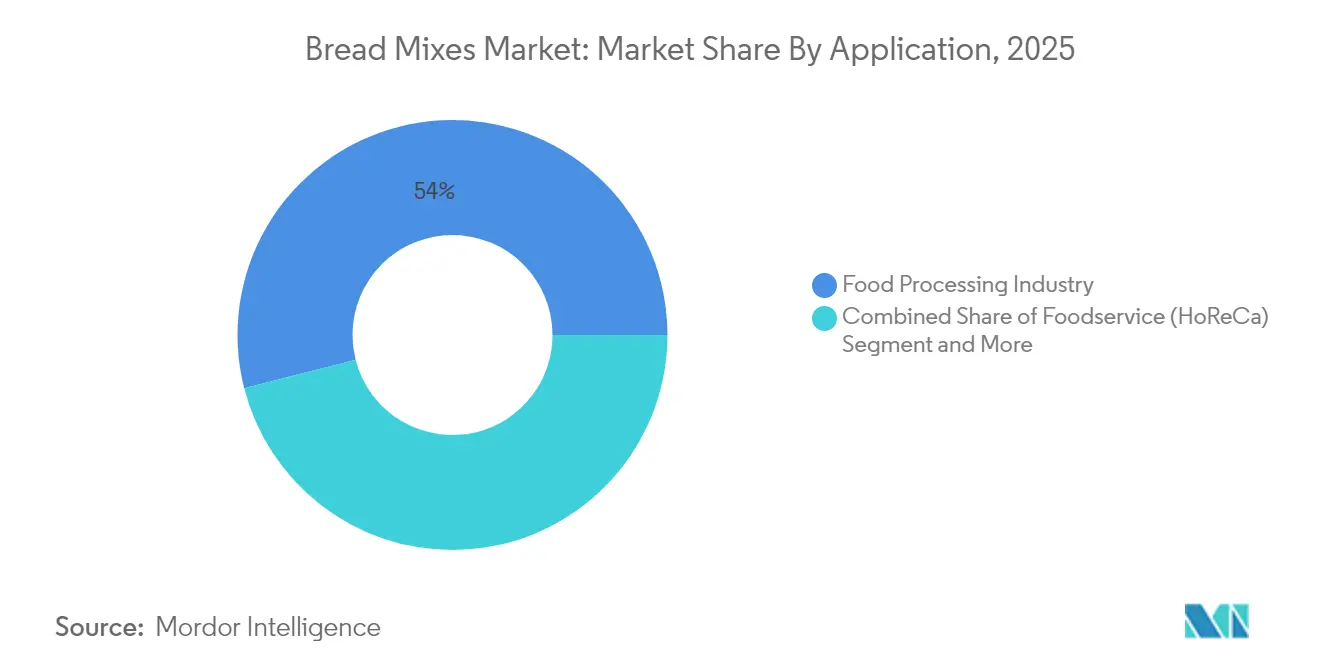
- By application, the food processing industry held 53.98% revenue share in 2025, while the retail/household segment is set to grow at a 6.32% CAGR through 2031.
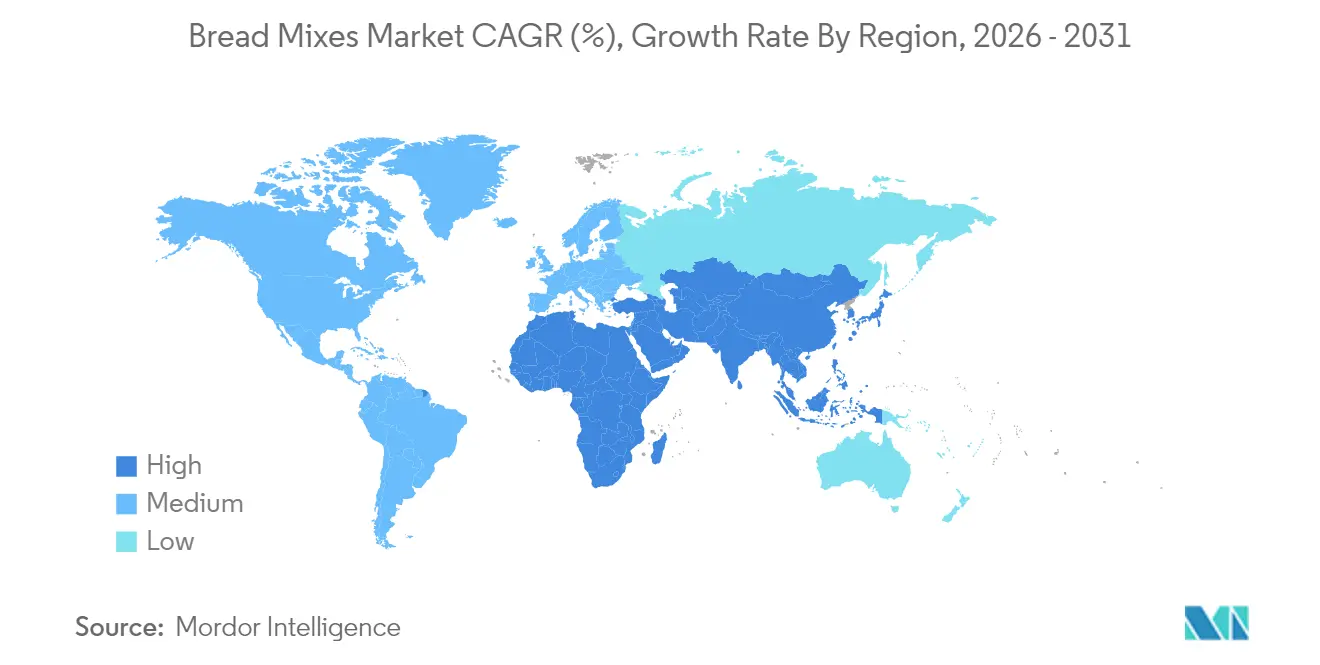
- By geography, Europe accounted for 31.20% of total revenue in 2025; Asia-Pacific represents the fastest regional CAGR at 6.14% through 2031.
Note: Market size and forecast figures in this report are generated using Mordor Intelligence’s proprietary estimation framework, updated with the latest available data and insights as of 2026.
Market Trends and Insights
Drivers Impact Analysis of Bread Mixes Market*
| Drivers | (~) % Impact on CAGR Forecast | Geographic Relevance | Impact Timeline |
|---|---|---|---|
| Growing popularity of home baking | +1.2% | Global, with peak intensity in North America & Europe | Medium term (2-4 years) |
| Increasing demand for convenient baking solutions | +0.9% | Global, strongest in urban centers across all regions | Short term (≤ 2 years) |
| Rising demand for gluten-free and clean-label bread mixes | +1.1% | North America & Europe core, expanding to APAC | Long term (≥ 4 years) |
| Growth of foodservice and artisan bakery sectors | +0.8% | Global, with APAC showing accelerated adoption | Medium term (2-4 years) |
| Technological advancements in bread mix formulations | +0.6% | Developed markets initially, scaling to emerging economies | Long term (≥ 4 years) |
| Widening adoption of plant-based and vegan bread mixes | +0.7% | North America & Europe, selective APAC markets | Long term (≥ 4 years) |
| Source: Mordor Intelligence | |||
Growing popularity of home baking
Home baking's resurgence has reshaped consumer buying habits, elevating bread mixes from mere conveniences to essential pantry staples. This shift, which took off during the pandemic, now resonates with evolving lifestyle choices that prioritize experiential cooking and family bonding. Data from the National Agricultural Statistics Service underscores this trend, showing a notable uptick in wheat flour consumption at retail outlets, a testament to the home baking boom in American homes. The U.S. Department of Agriculture reports that per capita wheat flour consumption in the U.S. hit over 130.5 pounds in 2023, a rise from 129.4 pounds in 2020, signaling a growing appetite[1]. Today's consumers, moving beyond mere convenience, are on the lookout for products that not only hone their baking skills but also guarantee top-notch results. Social media has played a pivotal role in this baking renaissance, cultivating lively communities that celebrate home baking milestones. These platforms have heightened the demand for visually appealing, Instagram-ready bread types, a demand that traditional bread mixes are adeptly meeting with their innovative formulations.
Increasing demand for convenient baking solutions
Time-pressed consumers are increasingly seeking products that deliver artisanal-quality results without requiring extensive expertise or lengthy preparation. This trend has prompted manufacturers to focus on innovations in packaging formats, simplified mixing instructions, and ingredient pre-treatment methods. Dual-income households and urban professionals, in particular, find these solutions appealing as they aspire to enjoy the experience of homemade bread but often lack the time or traditional baking skills. According to Statistics South Korea, in 2023, approximately 48.2% of households in South Korea were dual-earner families, reflecting a slight increase from 46.1% in 2022[2]. To meet these evolving consumer needs, manufacturers are adopting advanced processing technologies. For instance, high-pressure hydration systems enhance the hydration process by increasing the surface area of dry ingredients, enabling faster and more uniform mixing. By integrating such innovations, the industry is successfully bridging the gap between convenience and quality, addressing the shifting preferences of modern consumers and reinforcing its commitment to delivering value through technological advancements.
Rising demand for gluten-free and clean-label bread mixes
Regulatory clarity on gluten-free labeling has significantly contributed to market expansion while strengthening consumer trust in product claims. The FDA's enforcement of a 20 parts per million gluten threshold has provided manufacturers with well-defined compliance standards. This regulatory certainty has encouraged investments in specialized production facilities and the procurement of high-quality, gluten-free ingredients. Additionally, the growing consumer preference for clean-label products extends beyond gluten-free offerings, emphasizing the importance of ingredient transparency. The current regulatory framework benefits companies capable of navigating complex ingredient labeling requirements while meeting stringent safety standards and consumer expectations for naturalness. In 2024, the FDA introduced updated guidance that further clarified labeling requirements for specialty dietary products. These updates have simplified compliance processes, creating clearer pathways for product innovation, development, and market entry, thereby fostering growth opportunities for businesses in this segment.
Growth of foodservice and artisan bakery sectors
The recovery trajectory of the foodservice industry is driving sustained demand for bread mixes, which play a crucial role in ensuring consistent quality across multiple preparation sites while simultaneously reducing labor requirements. In 2024, U.S. baked goods exports amounted to an impressive USD 4.35 billion, with Canada, Mexico, and Japan emerging as key markets. This highlights the robust international demand for American baking products and ingredients[3]. Artisan bakeries are increasingly leveraging premium bread mixes as foundational formulations. These mixes allow operators to incorporate signature ingredients, enabling smaller players to differentiate their offerings and compete on uniqueness rather than relying solely on traditional baking expertise. This shift reflects a broader trend in the foodservice sector, where operational efficiency is prioritized without sacrificing product differentiation. Bread mixes, in this context, serve as versatile platforms for culinary innovation, empowering bakers to balance creativity with efficiency.
Restraints Impact Analysis of Bread Mixes Market*
| Restraints | (~) % Impact on CAGR Forecast | Geographic Relevance | Impact Timeline |
|---|---|---|---|
| Competition from alternative carbohydrate foods | -0.8% | Global, particularly in health-conscious developed markets | Medium term (2-4 years) |
| Price competition and low profit margins | -0.6% | Global, intensified in price-sensitive emerging markets | Short term (≤ 2 years) |
| Competition from local bakeries and ready-to-eat bread products | -0.5% | Regional variations, strongest in Europe and established markets | Medium term (2-4 years) |
| Fluctuating raw material costs | -0.7% | Global, with regional variations based on agricultural conditions | Short term (≤ 2 years) |
| Source: Mordor Intelligence | |||
Competition from alternative carbohydrate foods
The growing popularity of low-carbohydrate and ketogenic diets has significantly impacted traditional bread consumption patterns. Consumers are increasingly opting for alternatives such as cauliflower-based products, almond flour, and other low-carbohydrate options. This trend reflects a broader shift toward health-conscious eating, where traditional wheat-based products are perceived as less desirable, even when they offer convenience. USDA dietary intake data highlights a persistent gap between actual consumption and federal dietary recommendations, particularly in whole grain intake. This suggests that even bread mixes marketed as health-focused face challenges due to these fundamental changes in dietary habits. Furthermore, the shift goes beyond direct substitution; it reflects evolving meal composition preferences. Consumers are increasingly favoring protein-rich or vegetable-forward meals, leading to a noticeable decline in overall bread consumption.
Fluctuating raw material costs
Fluctuations in raw material costs continue to pressure profit margins, intensifying price competition across all market segments. Data from the U.S. Bureau of Labor Statistics indicates that wheat prices for December 2024 dropped to USD 5.49 per bushel, a 19.15% year-over-year decline. Despite this decrease in commodity prices, consumer prices remain insulated due to rising costs in processing, packaging, and distribution. For example, the Producer Price Index for wheat flour rose from 246.432 in April 2024 to 258.178 in May 2024, underscoring persistent inflation in processing costs. On the supply side, U.S. wheat production for the 2024/25 marketing year reached 1.971 billion bushels, marking a 9% increase from the previous year and the highest production level since the 2016/17 season. This production growth is expected to improve raw material availability, potentially alleviating supply-side pressures and supporting market stability.
*Our forecasts treat driver/restraint impacts as directional, not additive. The impact forecasts reflect baseline growth, mix effects, and variable interactions.
Bread Mixes Market Segment Analysis
By Product Type:
Specialty Formulations Challenge Wheat-Based LeadershipIn 2025, conventional wheat-based formulations command a dominant 61.85% market share, capitalizing on established taste preferences, cost efficiency, and reliable baking performance across various applications. This segment's stronghold is a testament to decades of product development and a deep-rooted consumer familiarity with wheat-based bread. According to USDA wheat outlook data, U.S. wheat production is poised to hit an 8-year high, bolstering the availability and cost competitiveness of raw materials for these conventional formulations. Moreover, ongoing technological advancements in wheat processing and milling are not only elevating product quality but also ensuring cost efficiency, allowing conventional wheat products to stand their ground against specialty alternatives.
Meanwhile, gluten-free alternatives are on a rapid ascent, boasting a 7.29% CAGR growth rate projected through 2031. This surge is buoyed by clearer regulatory guidelines on gluten-free labeling and a growing public awareness of celiac disease and gluten sensitivities. The swift rise of the gluten-free segment underscores its dual appeal: a medical imperative for those with celiac disease and a lifestyle choice for many others. The FDA's enforcement of a 20 parts per million gluten threshold offers manufacturers a clear compliance benchmark, simultaneously bolstering consumer trust in product claims. Furthermore, innovations in processing—like advanced ingredient treatments and specialized mixing techniques—are enabling gluten-free products to closely mimic the taste and texture of their traditional wheat counterparts.

By Nature:
Organic Growth Accelerates Despite Conventional DominanceIn 2025, conventional bread mixes command a dominant 69.82% market share, underscoring entrenched consumer preferences and a keen price sensitivity across various economic strata. This enduring supremacy of the conventional segment underscores a fundamental market truth: for many, price sensitivity is the primary driver of purchase decisions. Projections from the USDA's agricultural baseline suggest a stable wheat supply, bolstering conventional product manufacturing. Furthermore, heightened price competitiveness of U.S. wheat exports paints a promising picture for domestic producers. The conventional segment enjoys the advantages of well-established supply chains, tried-and-true manufacturing processes, and a broad retail distribution network, ensuring accessibility for all economic demographics and regions.
Organic bread variants are on a robust growth trajectory, expanding at a 6.98% CAGR through 2031. This surge is fueled by consumers increasingly willing to pay a premium for certified organic ingredients and production methods. The organic segment's ascent is further bolstered by clearer regulatory standards for organic certification and a widening retail distribution network, making these products more accessible to the average consumer. Moreover, as clean-label preferences increasingly align with organic demands, manufacturers that can seamlessly integrate both attributes stand to gain significantly. Additionally, FDA's guidance on labeling for plant-based alternatives lends indirect support to the organic sector, clarifying regulatory frameworks and enhancing consumer education for premium positioning.
By Application:
Retail Segment Gains Momentum Against Industrial LeadershipIn 2025, the food processing industry captures a commanding 53.98% market share, underscoring its scale advantages and steady demand from commercial baking. This leading position is largely due to the industry's reliance on dependable, standardized ingredients, essential for achieving uniform results in large-scale production. Highlighting the industry's significance, the Bureau of Labor Statistics notes that food manufacturing employs over 1.7 million workers, contributing significantly to the economy. Furthermore, the food processing sector leverages economies of scale in purchasing, nurtures established supplier relationships, and boasts technical expertise, allowing for tailored bread mix formulations that meet specific production and product standards.
Retail and household usage is on an upswing, projected to grow at a 6.32% CAGR through 2031. This surge is fueled by a persistent interest in home baking and enhanced product formulations that yield professional-quality results at home. Such growth signals a deeper shift in consumer behavior, moving past pandemic-induced baking trends to a broader embrace of experiential cooking and family-centric activities. Data from the American Time Use Survey by the Bureau of Labor Statistics highlights the significance of home cooking across diverse American demographics. Moreover, advancements in packaging technologies and clearer instructions empower retail products to achieve consistent results, irrespective of the user's expertise, thus making artisanal baking accessible to all.
Geography Analysis
Europe Bread Mixes Market
In 2025, Europe commands a 31.20% share of the market, underscoring its rich baking traditions and a discerning consumer base that prioritizes quality and authenticity over mere price. By 2030, Europe's growth is bolstered by regulatory frameworks championing premium positioning, especially in organic certification and clean-label mandates, resonating with consumers' demand for ingredient transparency. European consumers are willing to pay a premium for specialized formulations, paving the way for innovations in gluten-free, organic, and artisanal products. Furthermore, Europe's well-established retail infrastructure and distribution channels offer a competitive edge to both domestic and international manufacturers targeting affluent consumers.
APAC Bread Mixes Market
Asia-Pacific is on track to be the fastest-growing region, boasting a 6.14% CAGR through 2031, driven by economic and cultural shifts leaning towards convenience foods and Western dietary habits. With rapid urbanization, there's a burgeoning demand for products that simplify home baking, especially among younger consumers who cherish experiential cooking and social media moments. Rising disposable incomes in markets like China, India, and Southeast Asia are fueling the adoption of premium products, further supported by an expanding retail infrastructure. Given the region's currently low penetration rates, there's a vast potential for growth as consumer awareness and distribution networks evolve.
North America Bread Mixes Market
North America stands as a mature market, characterized by established consumption patterns and a competitive landscape that prioritizes innovation and brand differentiation. The foodservice sector remains robust, highlighted by General Mills' 8% growth in foodservice net sales in Q2 of fiscal 2025, underscoring a steady demand for dependable baking solutions. As consumers increasingly gravitate towards clean-label and organic products, regulatory clarity on labeling and broader retail distribution channels bolster this trend. Moreover, North America's prowess in food processing innovation not only benefits domestic manufacturers but also opens doors for exports, especially with USDA data showcasing enhanced wheat price competitiveness.
Regulatory Landscape
Regulation for bread mixes is tightening around additive permissions, labeling integrity, and food safety system compliance across major markets. In the European Union, Commission Regulation (EU) 2026/196 (adopted 28 January 2026) amended rules under Regulation (EC) No 1333/2008 for several commonly used texturizers and stabilizers in bakery formulations, including guar gum (E 412), xanthan gum (E 415), and pectins (E 440). For mixes sold cross-border in Europe, this increases the need for formulation and specification checks.
In the United States, FDA activity in 2026 pointed to higher scrutiny on ingredient authorization pathways. Under the Human Foods Program 2026 Priority Deliverables, FDA outlined a plan to propose a rule requiring submission of GRAS notices for all new substances claimed as GRAS, while FDA actions on color additives, including spirulina extract, continued to shape compliance expectations for naturally colored variants. Internationally, the Codex Alimentarius Commission adopted new guidance on precautionary allergen labeling (PAL) at its 49th session (6-10 July 2026), introducing a risk-based framework for "may contain" statements that can affect multinational labeling for mixes exposed to allergen cross-contact. The United Kingdom also introduced a concrete composition change for flour-based products, with statutory requirements for mandatory folic acid fortification of non-wholemeal wheat flour taking effect on 13 December 2026, requiring suppliers and downstream users to align specifications and labeling for UK-bound products.
Competitive Landscape
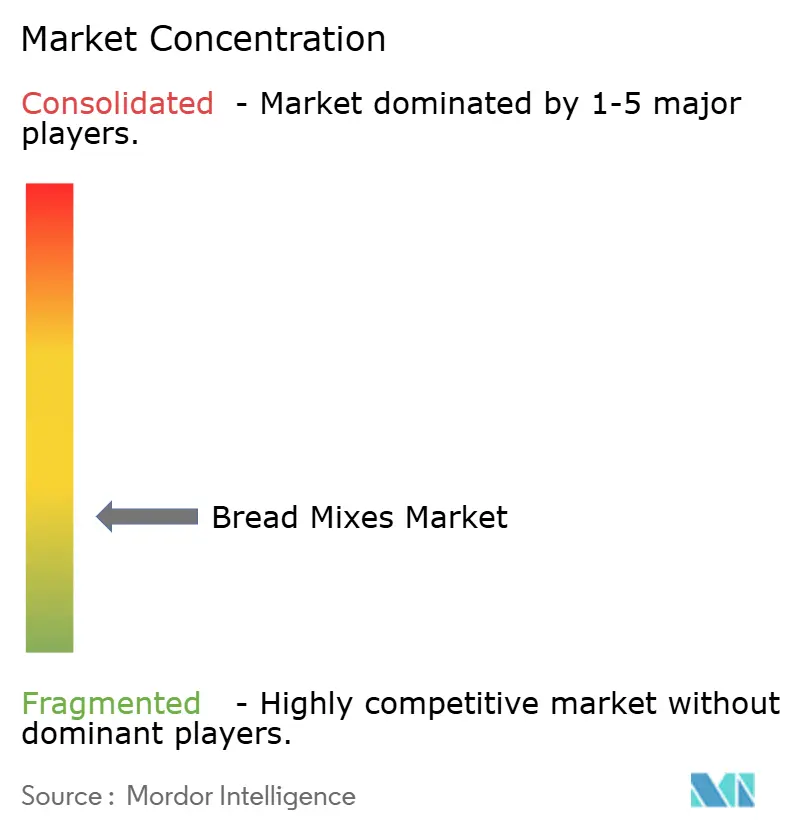
The global bread mixes market is highly fragmented, with numerous regional and international players competing on factors such as product variety, pricing strategies, and distribution networks. Prominent players in the market include General Mills, Inc., Archer Daniels Midland Company, Cargill, Incorporated, Puratos Group, and Associated British Foods Plc. Smaller brands are focusing on niche segments, such as gluten-free and high-protein blends, while larger companies leverage their economies of scale to supply conventional mixes across extensive retail and foodservice channels. This competitive environment fosters continuous innovation, particularly in clean-label and fortified formulations, to meet evolving consumer demands.
Vertical integration has emerged as a key strategic approach, with companies like General Mills and ADM utilizing their positions across the agricultural supply chain to mitigate raw material cost volatility and maintain consistent product quality. Patent activity in the market underscores significant investments in processing innovations, including high-protein formulations and advanced baking techniques, which align with changing consumer preferences for healthier and more nutritious options.
Technology adoption remains a critical differentiator in the bread mixes market. Companies are investing in advanced mixing systems, ingredient pre-treatment technologies, and innovative packaging solutions to enhance product performance and extend shelf life. For instance, the Rapidojet high-pressure hydration system exemplifies how technological advancements can improve ingredient integration while simplifying preparation processes for end users. Additionally, emerging disruptors are reshaping the market by focusing on direct-to-consumer channels and subscription-based models. These approaches bypass traditional retail distribution, enabling brands to build loyalty through personalized product offerings and educational content that enhances consumer baking experiences and success rates.
Bread Mixes Industry Leaders
-
General Mills, Inc
-
Archer Daniels Midland Company
-
Cargill, Incorporated
-
Puratos Group
-
Associated British Foods Plc
- *Disclaimer: Major Players sorted in no particular order
Bread Mixes Market Companies Covered in this Report
- General Mills, Inc
- Archer Daniels Midland Company
- Cargill, Incorporated
- Puratos Group
- Associated British Foods Plc
- The Krusteaz Company
- Corbion N.V
- Lesaffre
- Bakels Group
- Dawn Food Products, Inc.
- King Arthur Baking Company, Inc.
- Bob's Red Mill Natural Foods, Inc.
- Simple Mills, Inc.
- Koninklijke Zeelandia Groep B.V.
- Angel Yeast Co., Ltd.
- Oy Karl Fazer Ab
- Laucke Flour Mills Pty Ltd
- International Flavors & Fragrances Inc. (Frutarom)
- TCHO Ventures, Inc.
- Grupo Bimbo, S.A.B. de C.V.
Market Opportunities and Future Outlook
Product renovation toward clean-label and simplified ingredient lists is creating room for bread-mix systems that can replace traditional emulsifiers, conditioners, and colors while maintaining dough handling, shelf life, and the consistency demanded by industrial and foodservice users. Ingredient suppliers are working on these toolkits. In 2026, Cargill, Fiberstar, and Ingredion highlighted development work around clean-label emulsifier systems and multifunctional fibers designed to deliver functionality without relying on conventional synthetic additives, which supports reformulation programs across both conventional wheat-based mixes and specialty segments.
Brand-level commitments also reinforce reformulation and label-simplification opportunities that can flow into mix formulations and inclusions. In July 2026, Nestle announced it will remove artificial food colorings from its global portfolio by the end of 2026, a signal that large-scale manufacturers are pushing for natural alternatives and more transparent labels across categories that use dry blends and bakery components. In parallel, regulatory movement on allergen communication, including Codex guidance adopted in July 2026 for precautionary allergen labeling, supports opportunities for manufacturers that can validate allergen controls and substantiate PAL statements across multi-site production, particularly for retail/household mixes and for foodservice operators seeking consistent, compliant labeling across channels.
Recent Industry Developments in Bread Mixes Market
- June 2026: General Mills expanded its Pillsbury Grands! lineup with new bread products, including flavor-forward biscuit varieties and fruit rolls. The additions broaden branded bread solutions and connect refrigerated bread formats with at-home baking occasions.
- May 2025: Arabian Mills launched the premium Master Mills brand, covering specialty flours, bread mixes, and baking solutions for both commercial and consumer use. The launch supports broader participation in convenience-led bakery demand by packaging professional performance and consistency into a dedicated brand platform.
- June 2024: Angel Yeast and BakeMark introduced more than 40 products under the BakeMark By Angel brand at Bakery China 2024, with a strong focus on bakery mixes and icings that include bread mixes such as bagel and sourdough formulations. The rollout expands mix choice for professional and home bakers seeking clean-label, nutritious, and convenient solutions, and signals deeper collaboration in product development and channel reach.
Bread Mixes Market Report Scope and Research Methodology
Market Definition and Coverage
For this study, the bread mixes market covers ready-to-use dry or liquid mix formulations used to bake bread, where the mix already combines key ingredients and functional additives for consistent results in home, food-service, and bakery settings.
Scope exclusions: We exclude pure flour commodities, sweet cake mixes, and ready-to-bake frozen dough products.
Segments Covered in This Report
- By Product Type
- Conventional Wheat-based
- Whole Grain and Multigrain
- Gluten Free
- Functional and High Protein
- By Nature
- Organic
- Conventional
- By Application
- Food Processing Industry
- Foodservice (HoReCa)
- Retail/Household Use
- By Geography
- North America
- United States
- Canada
- Mexico
- Rest of North America
- South America
- Brazil
- Argentina
- Colombia
- Chile
- Peru
- Rest of South America
- Europe
- Germany
- United Kingdom
- Italy
- France
- Netherlands
- Poland
- Belgium
- Sweden
- Rest of Europe
- Asia-Pacific
- China
- India
- Japan
- Australia
- Indonesia
- South Korea
- Thailand
- Singapore
- Rest of Asia-Pacific
- Middle East and Africa
- South Africa
- Saudi Arabia
- United Arab Emirates
- Nigeria
- Egypt
- Morocco
- Turkey
- Rest of Middle East and Africa
- North America
Data Sources, Market Sizing, and Validation
Desk Research
Desk work started with building a basic demand map for bread mixes, using public statistics and documentation that can be traced back. Sources used for context and cross-checks include USDA and other national agriculture and food statistics portals, FAO food balance style datasets, UN Comtrade trade statistics for relevant ingredient and prepared-food trade flows, and Codex Alimentarius or national food labeling and safety rules that can influence mix formulations and claims.
We then reviewed company annual reports, investor presentations, and reputable press to understand mix portfolio focus, channel presence, and pricing cues, which helped shape realistic ranges for average selling prices. A paid subscription for company financials and business intelligence was used selectively to confirm corporate reporting structure and to reduce double counting when mixes sit inside broader baking ingredients lines, and a patent database was checked at a high level to understand formulation activity and ingredient direction. This list is not exhaustive, and many other public sources were also referenced for data collection, validation, and clarification during the work.
Primary Interviews and Surveys
Primary work focused on interviews and structured surveys with mix manufacturers, ingredient formulators, distributors, and bakery or food-service buyers, followed by checks with retail category contacts where mixes are sold as packaged goods. Since this is a global market, inputs were balanced across major consuming regions, and responses were used to confirm channel mix, typical pack sizes, pricing movement, and the separation between bread mixes and adjacent dough or flour products.
Distribution of primary research fieldwork respondents
| Company type | Respondent position | Region |
|---|---|---|
| Top tier: 39% | CXOs: 13% | APAC: 52% |
| Mid tier: 46% | Functional/Unit leaders: 39% | EMEA: 30% |
| Smaller Players: 15% | Managers: 48% | Americas: 18% |
Market-Sizing & Forecasting
Sizing was built using a top-down and bottom-up blend, where the starting point was a demand pool reconstructed from baking activity and packaged-food consumption signals, and then converted into mix value through penetration and pricing assumptions. In practice, we used indicators such as bread consumption trends, mix adoption in households versus professional baking, average pack sizes, average selling price movement by channel, and the share of specialty mixes (such as gluten-free and multigrain) that typically price higher.
Once the top-down totals were formed, selective bottom-up approximations were used to keep the model realistic, including supplier and distributor roll-ups, sampled price checks across retail and bulk packs, and volume logic based on typical usage rates in bakery operations. Where company disclosures were not clean enough to isolate bread mixes, gaps were handled by using product-mix splits validated through interviews and then stress-tested against trade and category signals.
Forecasts were developed using scenario analysis supported by trend inputs, since the market can shift when ingredient costs, labeling preferences, and at-home baking cycles change direction. The final forecast path was adjusted only after primary respondents aligned on the likely range for mix penetration, premiumization speed, and channel expansion, which helped keep assumptions consistent for repeat tracking.
Data Validation & Update Cycle
Model outputs were validated through triangulation across independent signals, followed by structured variance checks at region and channel level to catch any unrealistic jumps in volumes or pricing. When an outlier appeared, inputs were re-checked back to the source notes, and targeted follow-ups were triggered with the right expert type, for example, a distributor for channel mix, or a bakery buyer for bulk pack usage.
Before sign-off, results go through multi-step analyst review so assumptions, unit conversions, and currency handling stay consistent across the model. The report is refreshed annually, and interim updates are made when material events occur, followed by a final pre-delivery pass so clients receive the latest updated view.
Mordor Intelligence's Bread Mixes Market Sizing Compared With Other Published Estimates
Published market sizes for bread mixes can look far apart because the market boundary is not always treated the same, and because pricing and channel splits are often assumed differently. Differences also show up when one study centers on retail packs only, while another includes bulk premixes used in industrial baking and food-service.
By checking channel-level pack formats and refreshing inclusion filters, Mordor Intelligence keeps the number tied to bread mix formulations and excludes ready-to-bake frozen dough and plain flour commodities, which can otherwise get blended into totals. Another driver is how average selling prices are progressed over time, since some approaches apply a single global price even though pricing shifts by region, pack size, and the share of specialty mixes.
Benchmark comparison
| Source | Market Size | Gaps in Research Methodology |
|---|---|---|
| Mordor Intelligence | USD 20.92 B (2026) | |
| Global Consultancy A | USD 7.78 B (2026) | Uses a narrower product interpretation closer to packaged dry consumer mixes, and it tends to undercount bulk premixes supplied to industrial bakeries and food-service. |
| Regional Consultancy B | USD 5.26 B (2025) | Anchors the model on a smaller retail-led demand pool and applies broad average pricing, which can miss premiumization and the higher value captured in professional and bulk formats. |
The spread in values mainly comes from what is included, which channels are counted, and how pricing is carried forward year to year. When the scope is kept consistent and then cross-checked against pack-format mix and channel demand signals, the result is a more repeatable value range for planning and tracking.
Key Questions Answered in the Report
What is the current value of the bread mixes market?
The bread mixes market is valued at USD 20.92 billion in 2026 and is expected to reach USD 27.24 billion by 2031.
Which product type generates the largest sales?
Conventional wheat-based mixes account for 61.85% of sales, maintaining the lead due to familiarity and cost efficiency.
Which segment is growing the fastest?
Gluten-free bread mixes post the highest forecast CAGR at 7.29% through 2031, supported by regulatory clarity and health-driven demand.
Which region shows the strongest growth momentum?
Asia-Pacific records the fastest regional CAGR at 6.14% as urbanization and Western culinary influence expand the consumer base.