
Market Overview
| Study Period | 2021 - 2031 |
|---|---|
| Forecast Data Period | 2026 - 2031 |
| Base Year Market Size (2025) | USD 6.71 Billion |
| Market Size (2026) | USD 7.04 Billion |
| Market Size (2031) | USD 8.97 Billion |
| Growth Rate (2026 - 2031) | 4.97 % |
| Market Concentration | Medium |
Major Players.webp) *Disclaimer: Major Players sorted in no particular order Image © Mordor Intelligence. Reuse requires attribution under CC BY 4.0. | |
Brazil Hair Care Market Analysis by Mordor Intelligence
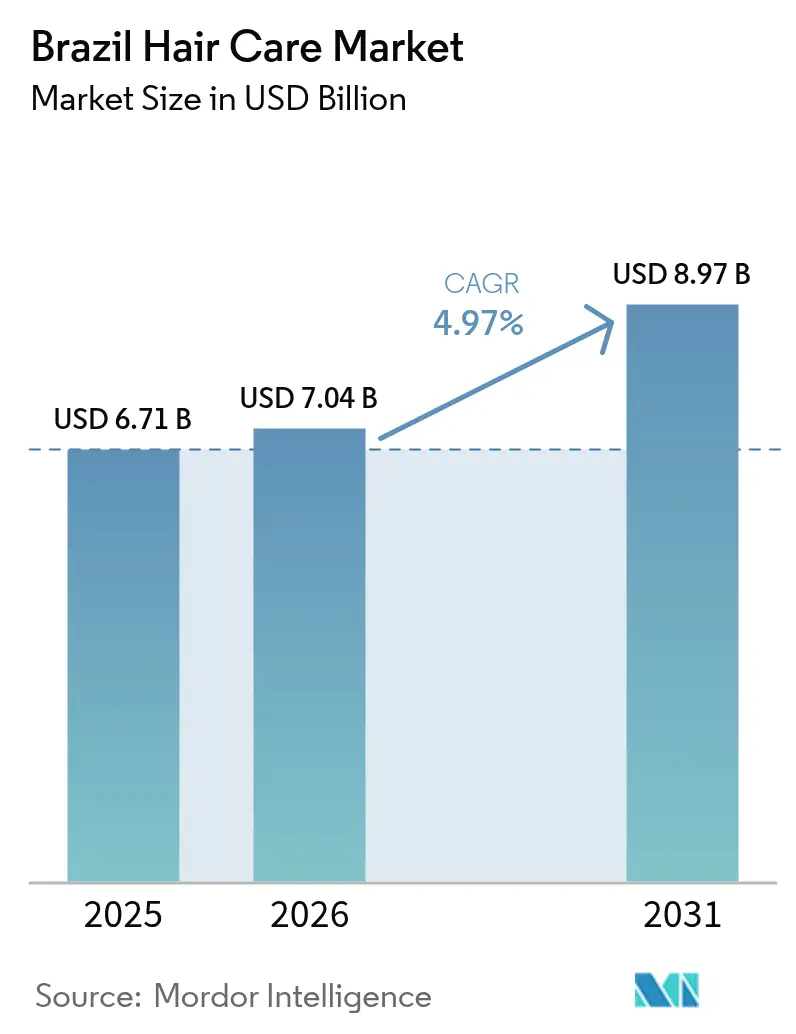
The Brazilian hair care market size was valued at USD 6.71 billion in 2025 and estimated to grow from USD 7.04 billion in 2026 to reach USD 8.97 billion by 2031, at a CAGR of 4.97% during the forecast period (2026-2031). Rising digital commerce, premiumization, inclusivity for textured hair, and urban demand for scalp-health solutions drive the momentum. This shift is prompting brands to rethink their strategies and prioritize digital-first approaches to meet evolving consumer preferences. In response, brands innovate purposefully, introducing everything from peptide-based “skinified” treatments to vegan formulas inspired by Amazonian biodiversity. These innovations cater to growing consumer demand for sustainable and effective solutions. Opportunities are blooming in textured-hair care, clean beauty, and mini-size salon formats, which make professional technology accessible to a broader audience. While competitive intensity remains moderate, multinationals harness large-scale research to maintain their market position, and nimble domestic labels cultivate loyalty through cultural authenticity, personalized offerings, and a strong omnichannel presence.
Key Report Takeaways
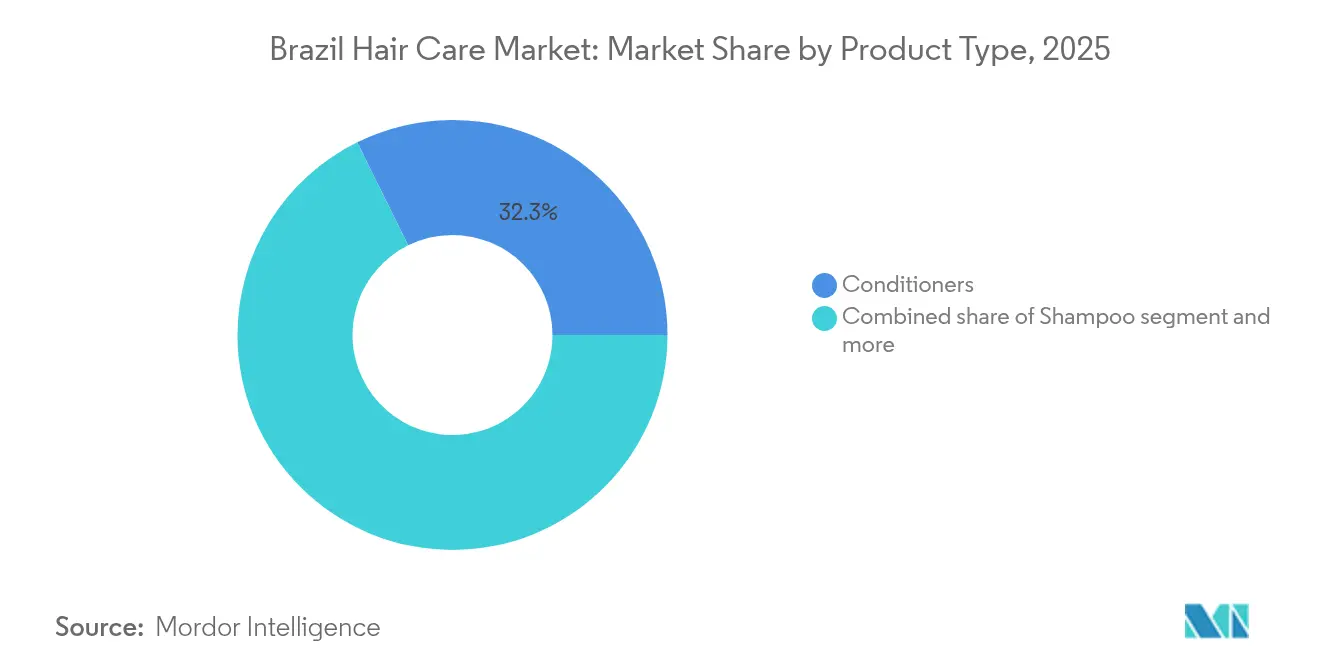
- By product type, conditioners led with 32.31% revenue share in 2025, while hair colorants are projected to expand at a 5.93% CAGR through 2031.
- By category, conventional products commanded 78.75% of 2025 sales whereas natural or organic lines are poised for a 5.52% CAGR between 2026-2031.
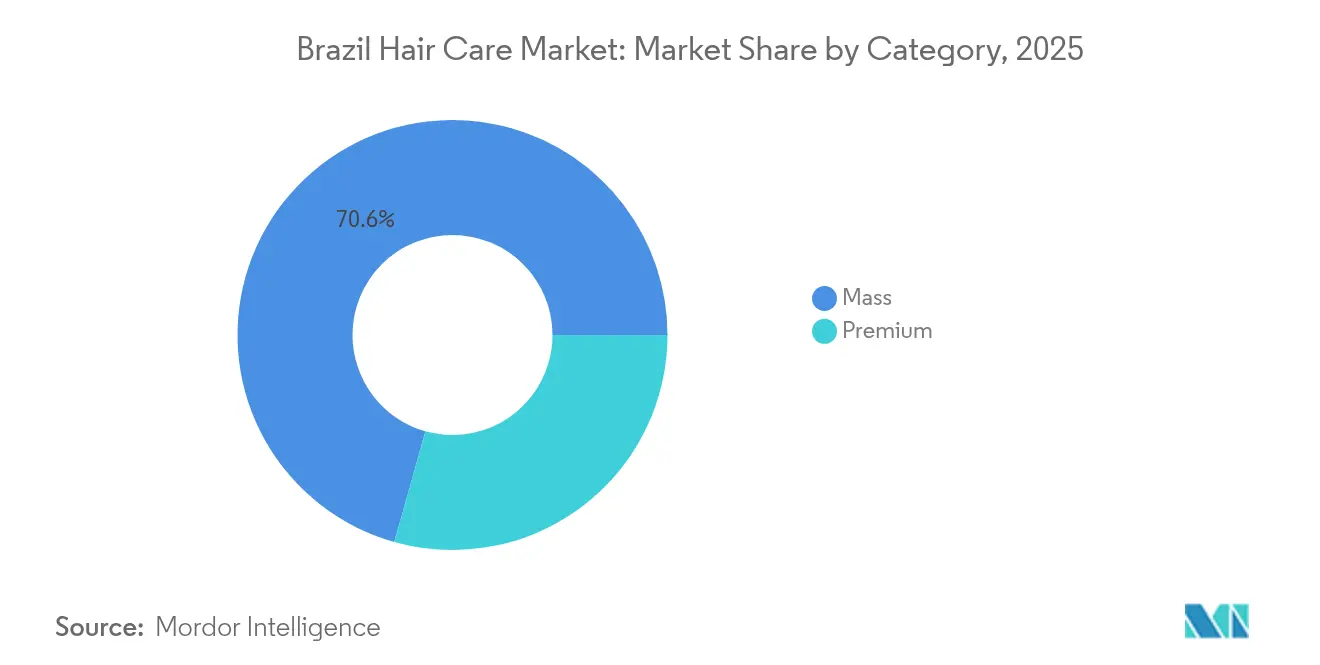
- By price range, mass-market offerings captured 70.64% of the 2025 value; the premium tier is on track for a 5.98% CAGR to 2031.
- By distribution channel, health and beauty stores held a 35.86% share in 2025, while online retail is forecast to rise at a 5.32% CAGR during 2026-2031.
Note: Market size and forecast figures in this report are generated using Mordor Intelligence’s proprietary estimation framework, updated with the latest available data and insights as of 2026.
Brazil Hair Care Market Trends and Insights
Drivers Impact Analysis*
| Driver | (~) % Impact on CAGR Forecast | Geographic Relevance | Impact Timeline |
|---|---|---|---|
| Digital-first beauty retail boom | +1.2% | National; strongest in Southeast and South | Medium term (2-4 years) |
| Premiumization and “skinification” | +0.8% | Urban hubs (São Paulo, Rio de Janeiro, Brasília) | Long term (≥ 4 years) |
| Demand for textured-hair formulations | +1.1% | Nationwide; early gains in Northeast and Southeast | Medium term (2-4 years) |
| Expansion of dermo-cosmetics and scalp care | +0.6% | Metros first, then secondary cities | Long term (≥ 4 years) |
| Salon-professional mini-size entry | +0.4% | National via specialty chains and pharmacies | Short term (≤ 2 years) |
| Vegan and Amazon-sourced actives | +0.3% | Production in North; global export appeal | Long term (≥ 4 years) |
| Source: Mordor Intelligence | |||
Digital-first beauty retail boom
In 2024, Brazil's e-commerce channel witnessed significant growth, increasing its share to represent a notable portion of the nation's total retail sales. Specialized hair-care brands are reaping significant benefits from marketplace integrations and social commerce, particularly on WhatsApp, a platform utilized by 95% of local businesses. These integrations enable brands to reach a wider audience, streamline customer interactions, and drive sales through personalized engagement. L’Oréal's Brazilian division proudly reports that 20% of its revenue now stems from digital avenues, underscoring the success of its influencer-driven campaigns and partnerships for same-day deliveries. These campaigns leverage the popularity of local influencers to build trust and drive consumer interest, while same-day delivery partnerships enhance convenience and customer satisfaction. This digital channel has alleviated previous shelf-space limitations, broadening the assortment for textured-hair products and clean beauty lines, and fostering a quicker adoption of these inclusive offerings. Additionally, reduced go-to-market expenses are luring indie brands, creating a positive feedback loop of expanding product assortments and heightened consumer exploration. This cycle not only benefits emerging brands but also enriches the overall shopping experience for consumers by offering greater variety and innovation.
Premiumization and “skinification” of hair products
Brazilian shoppers are increasingly treating their scalp and hair with the same care as their facial skin, seeking out clinically validated ingredients like peptides, ceramides, and microbiome balancers. This shift reflects a growing awareness of the importance of scalp health in achieving overall hair wellness. Products like Kérastase Première and L’Oréal Professionnel Absolut Repair Molecular showcase how science-backed claims can lead to increased consumer trust and higher sales, driving double-digit growth for L’Oréal’s professional division in the first half of 2024. Urban consumers are adopting K-beauty-inspired multi-step routines, incorporating pre-shampoos, bond-repair concentrates, and overnight masks. These routines emphasize a holistic approach to hair care, mirroring trends seen in skincare. This growing sophistication allows for a pricing spectrum, from affordable luxuries to ultra-premium salon treatments, enabling sustained premium growth rates despite currency fluctuations.
Demand for textured-hair and ethnic-specific formulations
Despite 54% of Brazilians identifying as Black or mixed-race, historical marketing has predominantly favored Eurocentric aesthetics, leaving a significant portion of the population underserved[1]. Brands like Lola Cosmetics, with its line “Meu Cacho Minha Vida”, are bridging this gap by catering to the unique needs of curly and coily textures, addressing issues like porosity, shrinkage, and dryness that are often overlooked in traditional product lines[2]. The success of these brands is rooted in authentic community storytelling, which resonates deeply with consumers, and a commitment to ingredient transparency, fostering trust and loyalty. This approach has not only driven volume growth surpassing market averages but has also led to an international demand, especially for Brazilian keratin treatments celebrated for their versatility across hair types and their ability to meet diverse consumer needs. Furthermore, a cultural pride movement, championing the normalization of natural hair in both media and workplaces, bolsters this sustained demand by encouraging individuals to embrace their natural textures and reject outdated beauty standards.
Expansion of dermo-cosmetics and scalp-health categories
Consumers associate hair vitality with a balanced scalp microbiome and effective inflammatory control. Unilever's Beauty and Wellbeing segment saw a 7.1% year-over-year growth in the first half of 2024, bolstered by high-single-digit growth from Dove's scalp-care range, which focuses on addressing scalp health concerns. ANVISA's updated category definitions now validate quasi-therapeutic claims, paving the way for dermatology brands to venture into the OTC hair care space. These changes encourage innovation, allowing brands to develop products that merge dermatological expertise with consumer-friendly formulations. Brands are increasingly blending salicylic acid, niacinamide, and probiotic ferments to address issues like dandruff, sensitivity, and hair density loss. This education-driven trust not only boosts average selling prices but also enhances customer loyalty to their regimens, as consumers become more informed about the benefits of targeted scalp care solutions.
Restraints Impact Analysis*
| Restraint | (~) % Impact on CAGR Forecast | Geographic Relevance | Impact Timeline |
|---|---|---|---|
| High import taxes on specialty inputs | -0.8% | Nationwide | Short term (≤ 2 years) |
| Currency volatility on raw-material costs | -0.6% | Nationwide, hardest on multinationals | Medium term (2-4 years) |
| Counterfeit and grey-market goods online | -0.4% | Digital channels nationwide | Medium term (2-4 years) |
| Water-scarcity rules restricting rinse-off launches | -0.2% | Southeast and Northeast | Long term (≥ 4 years) |
| Source: Mordor Intelligence | |||
High import taxes constrain innovation and accessibility
High duties of up to 60% on cosmetic imports, combined with state-level ICMS levies ranging from 17% to 20%, significantly raise landed costs[3]. This financial burden discourages the early adoption of niche active ingredients, as it makes these products less competitive in the market. Furthermore, small-batch creators grapple with challenges like RADAR licensing and SISCOMEX registration, which involve complex bureaucratic processes and additional costs. These hurdles extend their launch timelines, especially when compared to counterparts in Mexico or Chile, where regulatory frameworks are more streamlined. While the upcoming tariff review in April 2025 (Resolution 714) holds the promise of streamlining certain codes and potentially reducing costs, the prevailing uncertainty surrounding its implementation casts a shadow on research and development investments for innovative ingredients, as companies remain cautious about committing resources to untested regulatory outcomes.
Environmental regulations create formulation constraints
While CONAMA 430/2011 mandates an 85% BOD removal for industrial effluents, cosmetic facilities currently achieve only an average of 45.48% efficacy. This significant gap in compliance has driven manufacturers to adopt alternative product formulations, such as low-rinse shampoos and leave-in conditioners, which require less water during use. However, this shift not only increases formulation complexity but also leads to higher capital expenditures due to the need for advanced technologies and processes. Furthermore, the newly introduced chemical-registration law No. 15.022, often referred to as “Brazil REACH,” imposes additional data-dossier costs for substances exceeding 1 ton. This regulation also tightens the timelines for introducing new products into the pipeline, creating further challenges for manufacturers aiming to innovate while adhering to regulatory requirements.
*Our forecasts treat driver/restraint impacts as directional, not additive. The impact forecasts reflect baseline growth, mix effects, and variable interactions.
Segment Analysis
By Product Type: Conditioners Anchor Share while Colorants Drive Growth
In Brazil's hair care market, conditioners dominate, capturing 32.31% of the 2025 revenue. Their significance is underscored in humid climates, where they play a pivotal role in grooming routines, especially for maintaining cuticle health. While there's a robust demand for conditioners, consumers with curly hair are leaning more towards leave-in masks and co-washing creams. These preferences not only sustain usage frequency but also consistently boost unit volumes. Furthermore, the launch of eco-friendly refill pouches has bolstered brand loyalty, driving repeat purchases. This blend of practicality and sustainable packaging cements the conditioner segment's stronghold in the market.
Hair colorants are emerging as the fastest-growing segment, boasting a projected CAGR of 5.93%. Their rise is largely attributed to the viral popularity of trends like balayage, fantasy colors, and gray blending on social media. As hybrid work models gain traction, there's been a notable uptick in the use of at-home coloring kits, making DIY hair coloring a norm. This shift not only amplifies the demand for color-care products, such as tonal preserving shampoos, but also broadens the hair care market. In response, manufacturers are rolling out bond-repair boosters to mitigate coloring-induced damage, paving the way for premium product offerings. Together, these innovations and evolving lifestyle trends are propelling the hair color segment's rapid ascent.

By Category: Conventional Dominance Persists despite Natural Surge
In 2025, conventional formulations dominated Brazil's hair care market, seizing a commanding 78.75% share. This robust preference underscores consumer trust in established actives, such as silicones and quaternary ammonium compounds. These ingredients are prized for imparting a soft, touchable feel, a quality especially cherished in tropical climates. Price competitiveness plays a pivotal role, with budget-conscious consumers, including minimum-wage earners, keenly focusing on maximizing yield per milliliter. The widespread availability and reliable performance of these conventional products fortify their leading stance. Furthermore, their affordability and accessibility render them appealing to a diverse consumer base. In essence, conventional formulations underscore the market's valuation of proven efficacy paired with cost efficiency.
Natural and organic hair care products are carving out a significant niche, with projections pointing to a robust 5.52% CAGR. These products harness unique emollients sourced from the rainforest and emphasize sulfate-free surfactants, targeting health- and eco-conscious consumers. Certifications like vegan and cruelty-free amplify their appeal, especially among younger Gen-Z buyers who prioritize ethical considerations. The rise of “cleanical” hybrid products, merging botanical oils with cutting-edge peptide science, is set to eclipse pure natural formulations shortly. This innovative blend promises consumers the advantages of both natural ingredients and scientifically validated efficacy. As a result, the natural and organic segments are primed for rapid expansion, fueled by shifting consumer values and preferences.
By Price Range: Mass Market Volume coexists with Premium Momentum
In 2025, mass-tier SKUs dominated Brazil's hair care market, accounting for 70.64% of the turnover. Widely available in supermarkets and local pharmacies, these products leverage strategic promotional bundling like pairing shampoo and conditioner sets under BRL 20 to foster shopper loyalty and boost basket sizes. Their affordability and convenience cater to a broad consumer base, ensuring steady sales. Retailers strategically price these offerings to draw in budget-conscious shoppers, broadening their market reach. The segment's dominance underscores the significance of accessibility and value-driven marketing in sustaining consumer interest. Thus, mass-tier SKUs solidify their role as the backbone of Brazil's hair care landscape.
Conversely, the premium segment is set to expand at a robust CAGR of 5.98%, fueled by urban professionals prioritizing efficacy in their beauty regimens. This demographic is willing to allocate a larger portion of their budget to high-performance, scientifically-backed products. Premium leave-on serums are a testament to this trend, witnessing heightened demand as innovative augmented reality apps provide user-friendly diagnostics for strand damage. Such technological strides offer consumers tangible justifications for the premium price per use. Luxury brands are seizing this opportunity, merging personalized care with state-of-the-art tools, thereby amplifying the perceived value of their premium offerings. Consequently, the premium segment's growth is propelled by discerning consumer preferences and enriched product experiences.
By Distribution Channel: Specialized Retail Leads, Digital Accelerates
In 2025, health and beauty stores captured a notable 35.86% of Brazil's hair care market, utilizing expert insights and on-shelf diagnostics to streamline intricate hair care routines for their clientele. These specialized chains have ramped up investments in staff training, endowing employees with trichology certifications that bolster the credibility of their consultations. Such specialized expertise not only fosters consumer trust but also paves the way for premium sales, allowing for adept upselling of related supplements and treatments. With their personalized service and educational initiatives, these stores have emerged as the go-to hub for consumers in search of customized hair care. By clarifying product usage, they cultivate customer loyalty and engagement, solidifying their robust market presence.
Online retail is on an upward trajectory, boasting a projected CAGR of 5.32%. This growth is reshaping how shoppers, especially in rural and Tier-2 cities, approach hair care purchases. The digital platform accelerates the journey from product discovery to purchase, granting consumers effortless access to a vast array of products and tailored recommendations. Direct-to-consumer (DTC) brands are carving out a larger slice of the market, leveraging AI chatbots to curate personalized hair care bundles, thereby elevating consumer satisfaction. Furthermore, recent tweaks in import-tax thresholds have nudged numerous brands towards local fulfillment strategies, enabling them to better manage final prices and enhance product competitiveness. Together, these dynamics are propelling the rise of online retail, cementing its status as a pivotal distribution channel in Brazil's hair care arena.
Geography Analysis
Southeast Brazil, led by São Paulo's manufacturing hub and Rio de Janeiro's trendsetting salons, dominates value sales. These salons quickly embrace global launches, setting trends that influence consumer preferences across the country. While higher per-capita incomes fuel a shift towards premium products, growth is slowing as the region approaches channel saturation, with limited room for further expansion in traditional retail channels.
The Northeast is witnessing above-average growth. The Afro-Brazilian identity spurs demand for curl-defining jellies, oils, and low-foam cleansers, especially for high-porosity hair. Retailers are expanding into Salvador and Recife, broadening product assortments to cater to diverse consumer needs. Meanwhile, influencer-driven pop-ups are boosting brand visibility and creating opportunities for emerging brands to connect with local audiences, further driving market growth.
Southern states, with their European roots and strong farming economies, are nurturing supply chains for functional ingredients. For instance, keratin hydrolysates from poultry by-products offer them a localized cost edge, reducing dependency on imports. Even with smaller populations, a strong preference for "made in region" products ensures consistent value growth, as consumers prioritize locally sourced and manufactured goods that align with regional identity.
The Amazon basin in the North provides a wealth of biodiversity activities. However, it grapples with distribution challenges and limited internet access, which hinder market penetration. To address this, public-private logistics initiatives are working to reduce freight costs and improve infrastructure. This allows community cooperatives to experiment with direct-to-consumer sales in Southeast urban areas, potentially unlocking new revenue streams. In the Central-West, wealth from agribusiness is boosting spending on grooming, with consumers increasingly seeking premium and specialized products. Yet, the fragmented nature of regional pharmacies highlights a pressing need for unified omnichannel strategies to streamline access and enhance customer experience.
Regulatory Landscape
Brazil hair care products fall under ANVISA oversight for cosmetics, with recent updates tightening safety, claim substantiation, and post-market monitoring requirements. ANVISA RDC 894/2024 introduced Good Practices for Cosmetovigilance, formalizing adverse-event monitoring and reporting expectations for cosmetic products, while ANVISA has also maintained product-specific scrutiny for higher-risk formats such as hair pomades (RDC 814/2023) and products intended to straighten or wave hair (RDC 906/2024), increasing the compliance burden for brands active in styling and hair-altering categories.
Chemical compliance and trade measures also shape formulation and sourcing decisions. In 2026, ANVISA issued RDC 1.030/2026 updating lists of prohibited substances for personal hygiene and cosmetic products, reinforcing the need for ingredient screening and faster reformulation cycles. On the trade side, CAMEX actions cited in the evidence pack (including antidumping measures on inputs such as ethanolamines used in hair dyes/straightening agents and on finished hair brushes) can shift landed costs and supplier choices, while legislative debate in 2026 on tax treatment for specific beauty and hair preparations adds uncertainty for cross-border and imported assortments.
Competitive Landscape
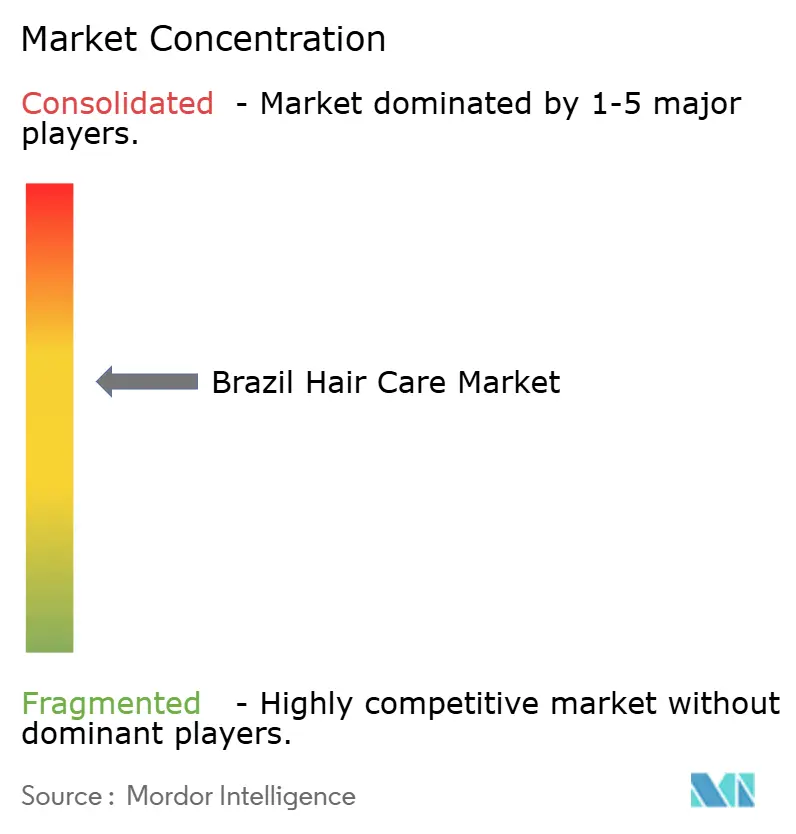
The Brazilian hair care market exhibits moderate concentration with established multinational corporations competing alongside dynamic local brands that leverage cultural authenticity and specialized product knowledge. In Brazil's beauty landscape, L’Oréal, Unilever, and Procter & Gamble dominate, harnessing robust research and development to drive innovation and secure prominent shelf space. L’Oréal treats Brazil as its "open-air laboratory," swiftly rolling out prototypes like bond-repair acid treatments and AI-driven virtual try-ons. Unilever, through collaborations with dermatologists, bolsters Dove’s science-centric image, underscoring its commitment to scalp health.
Skala Cosméticos, a local upstart now backed by Advent International, is making waves in Brazil. With its wallet-friendly vegan products, the brand has successfully penetrated 45% of Brazilian households, largely due to its strategic placements on supermarket end-caps. Lola Cosmetics, with its vibrant branding and inclusive messaging, has fostered a loyal community, leading to a surge in sales on Instagram Shops. Meanwhile, Grupo Boticário, a multi-regional distributor, leverages its vertically integrated logistics to promote both its own brands and the natural specialist, Vult, which it acquired.
Omnichannel strategies are the name of the game. Major players attribute about 20% of their domestic revenue to e-commerce, with many setting up micro-fulfillment hubs for rapid two-hour deliveries. Collaborations in AI and green chemistry, like the one between IBM and L’Oréal, not only push the envelope on sustainable formulations but also fortify intellectual property defenses. However, navigating regulatory waters such as ANVISA registration and Brazil REACH filings presents challenges for smaller brands, inadvertently bolstering the advantages of established players.
Brazil Hair Care Industry Leaders
-
Proctor and Gamble
-
L’Oréal S.A.
-
Johnson & Johnson
-
Natura & Co
-
Unilever PLC
- *Disclaimer: Major Players sorted in no particular order
Market Opportunities and Future Outlook
Premium and science-led scalp care, textured-hair solutions, and personalization are key whitespace areas in Brazil, supported by active industry innovation and a large addressable beauty sector. ABIHPEC reported the Brazilian beauty and personal care sector reached R$175 billion in retail sales in 2025 (6.8% expansion), and industry communication highlights rising demand for personalized hair solutions, aligning with the report scope trends around skinification, dermo-cosmetics, and regimen-based care. This environment supports portfolio expansion in bond-repair, microbiome-aligned scalp care, and texture-specific leave-ins that fit humid-climate routines and higher-frequency usage.
Export-oriented growth is a concrete opportunity for Brazil-based brands and manufacturers with differentiated actives and formats, especially those leveraging native botanical positioning and salon-to-mass translation. Beautycare Brazil (ABIHPEC and ApexBrasil) provides an institutional route for internationalization, and Brazilian exports of cosmetics, toiletries, and fragrances reached US$1 billion in 2025, with haircare representing 25% of exports. For brands building compliant documentation and consistent quality systems, this export channel complements domestic omnichannel expansion and encourages investment in formulation capabilities that meet both ANVISA requirements and overseas market expectations.
Recent Industry Developments
- July 2026: Farnese (Sinter) entered hair care with a new 19-product line built around a Biocare complex (biotin, panthenol, and prebiotics) positioned for different hair types and scalp microbiota balance. The move expands competitive intensity in mass and masstige shelves by adding a broad, type-specific assortment designed to capture regimen-building consumers.
- September 2025: Unilever launched a new Dove haircare line in Brazil after nearly a decade, reinforcing its push into higher-efficacy hair solutions under a mainstream mega-brand. The launch supports premiumization within mass channels and increases pressure on incumbents to refresh claims, formats, and salon-adjacent propositions.
- June 2024: Baldoni acquired Hebora, entering cosmetics through apicultural-based products and widening the pool of local players leveraging natural positioning. The deal highlights continued brand diversification into beauty, strengthening the pipeline of nature-linked narratives that compete for consumers trading up within conventional price points.
Research Methodology Framework and Report Scope
Market Definition and Coverage
For this methodology, the Brazil hair care market is defined as the retail value of hair cleansing, conditioning, coloring, and styling products sold in Brazil across offline and online channels, captured at the end-user selling price in USD.
Scope exclusions: We exclude salon service revenues, professional service fees, and hair tools or appliances that are not sold as packaged hair care products.
Segmentation Overview
- Product Type
- Shampoo
- Conditioner
- Hair Color
- Hair Styling Products
- Perms and Relaxants
- Others
- By Category
- Natural/Organic
- Conventional/Synthetic
- By Price Range
- Mass
- Premium
- By Distribution Channel
- Supermarkets/Hypermarkets
- Health and Beauty Stores
- Online Retail Stores
- Other Channels
Data Sources, Market Sizing, and Validation
Desk Research
Desk work started with a clean fact base on Brazil beauty and personal care demand, pricing context, and channel shift, because these patterns drive hair care spending. Public sources used included IBGE household and retail indicators, Banco Central do Brasil macro series, Receita Federal and customs trade statistics, ANVISA regulatory publications, and peer-reviewed dermatology and cosmetic science journals that discuss hair and scalp needs.
Alongside this, we reviewed company annual reports, investor decks, earnings call notes, and reputable press for signals on brand portfolio focus and price tier movement. Where needed, a paid company financials and intelligence subscription was used to normalize reported Brazil revenues, and a patent database was checked to validate innovation themes in color and treatment claims. These sources are not exhaustive, and many other public and paid references were also used to collect data, validate assumptions, and clarify open questions.
Primary Interviews and Surveys
Primary work was done through expert interviews and structured surveys with manufacturers, distributors, retail channel participants, and industry specialists who track pricing, promotions, and consumer switching. Since this is a Brazil-only market, we ensured different state-level demand realities and channel mixes were reflected, and then used these inputs to test desk assumptions on category mix, import reliance, and realistic price movement.
Distribution of primary research fieldwork respondents
| Company type | Respondent position |
|---|---|
| Top tier: 35% | CXOs: 19% |
| Mid tier: 46% | Functional/Unit leaders: 27% |
| Smaller Players: 19% | Managers: 54% |
Market-Sizing & Forecasting
Sizing was built using a mixed approach where a top-down demand pool was reconstructed from Brazil personal care spending signals, category mix, and channel level expansion, and then checked with selective bottom-up math. Those bottom-up checks used sampled price bands by product type, retailer and distributor feedback on volume direction, and supplier roll ups from reported Brazil exposure to see if the total stayed realistic.
Inputs that mattered most included average retail prices by pack size, promotion intensity in modern trade, online share movement, penetration of hair color and treatments, and import versus local supply patterns that affect availability and pricing. When data gaps showed up, for example around smaller regional brands, assumptions were filled using interview based ranges and then re-tested against category growth and shelf price scans.
For forecasting, we leaned on scenario analysis supported by simple time series smoothing on key drivers like inflation adjusted price growth and channel shift, followed by expert validation on whether the implied consumption and price path felt achievable. The final forecast was accepted only after the driver story matched what practitioners said they were seeing in orders, listings, and consumer trade-down or trade-up behavior.
Data Validation & Update Cycle
Model outputs were cross-checked against independent signals, such as macro consumption trends, import and export movements for relevant product groups, and the direction of reported category performance in public company disclosures. If a number looked off, the build was revisited at the assumption level, and we re-contacted sources when the variance could not be explained by seasonality, one-time promotions, or currency timing.
Before sign-off, the work goes through multiple analyst reviews, where input logic, calculations, and year over year movements are checked for consistency. Reports are refreshed annually, and interim updates are made when material events occur, such as sharp FX shifts, regulatory changes affecting formulations, or major channel disruptions. Right before delivery, a final review pass is completed so clients receive the latest view based on newly available public data.
Mordor Intelligence's Brazil Hair Care Market Sizing Compared With Other Published Estimates
Published market sizes for Brazil hair care often do not match because firms draw the market line differently and they also treat pricing and channel splits in their own ways. We typically see the spread coming from whether the number is built from retail sell-out value or from manufacturer sales, plus differences in how online discounts and currency conversion timing are handled.
In this study, the biggest gap driver is scope, because some estimates appear to count only a narrower set of consumer packaged items or apply conservative price points that understate premium and color categories. That difference becomes clear when distribution channel mix and price band checks are layered in, before the total is finalized by Mordor Intelligence.
Benchmark comparison
| Source | Market Size | Gaps in Research Methodology |
|---|---|---|
| Mordor Intelligence | USD 6.71 B (2025) | |
| Global Consultancy A | USD 1.60 B (2025) | Likely uses a tighter product scope and may rely on manufacturer-level revenues or a limited retail panel, which can miss premiumization and understates value when online and modern trade pricing is not fully captured. |
| Trade Publisher B | USD 0.91 B (2022) | Uses an older reference year and may blend hair care with a narrower industry definition, so the figure is not directly comparable to a current retail-value view and can lag recent price inflation and channel mix shifts. |
Looking across the three values, the spread is mainly explained by what gets counted, which year is being referenced, and how prices are translated into USD. By keeping the scope aligned to consumer packaged hair care sold through Brazil retail channels and by testing assumptions against observed pricing and channel signals, the resulting market value stays traceable to clear inputs and repeatable steps.
Key Questions Answered in the Report
How large is the Brazil hair care market in 2026?
The sector is valued at USD 7.04 billion in 2026 and is on track for a 4.97% CAGR through 2031.
Which product type currently generates the most revenue?
Conditioners lead with a 32.31% share of 2025 sales, driven by high usage frequency in humid climates.
What is the fastest-growing price tier?
Premium offerings are forecast to grow at 5.98% CAGR between 2026 and 2031 thanks to “skinified” innovations and rising urban incomes.
How is e-commerce reshaping distribution?
Online channels already account for 11% of national retail and are expanding rapidly via marketplaces and WhatsApp-based social commerce.