
Body Care Products Market Size and Share
Market Overview
| Study Period | 2021 - 2031 |
|---|---|
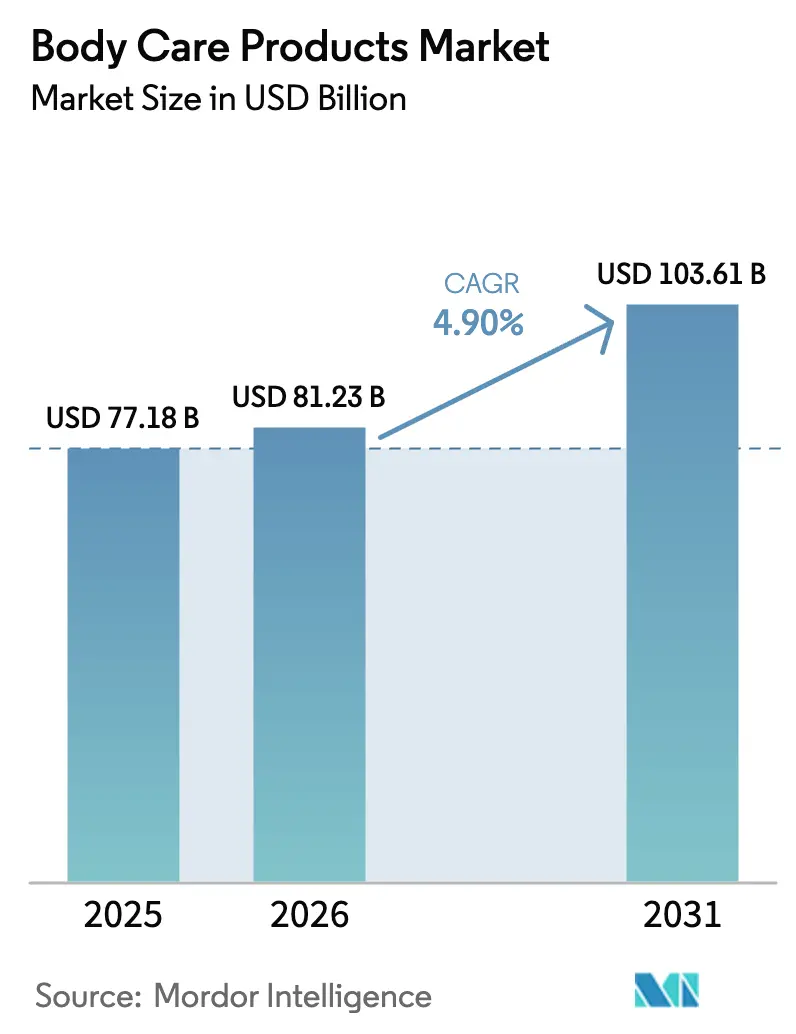
| Market Size (2026) | USD 81.23 Billion |
| Market Size (2031) | USD 103.61 Billion |
| Growth Rate (2026 - 2031) | 4.90 % |
| Fastest Growing Market | Asia-Pacific |
| Largest Market | Asia Pacific |
| Market Concentration | Low |
Major Players *Disclaimer: Major Players sorted in no particular order Image © Mordor Intelligence. Reuse requires attribution under CC BY 4.0. | |
Body Care Products Market Analysis by Mordor Intelligence
The body care products market size is expected to grow from USD 77.18 billion in 2025 to USD 81.23 billion in 2026 and is forecast to reach USD 103.61 billion by 2031 at a 4.99% CAGR over 2026-2031. This growth underscores a heightened global focus on personal hygiene, skin health, and overall wellness, resonating in both developed and emerging economies. Today's consumers are shifting from basic hygiene products to advanced, multifunctional body care solutions. These modern formulations cater to diverse needs, from moisturization and exfoliation to anti-aging, skin brightening, and antimicrobial protection. Factors driving this market growth include heightened grooming awareness, rising disposable incomes, urbanization, and the surge of beauty and wellness trends on social media. With ongoing investments in R&D, innovative ingredients, and targeted marketing, the body care products market is not only diversifying its offerings but also leaning towards premium products, signaling a robust global expansion.
Key Report Takeaways
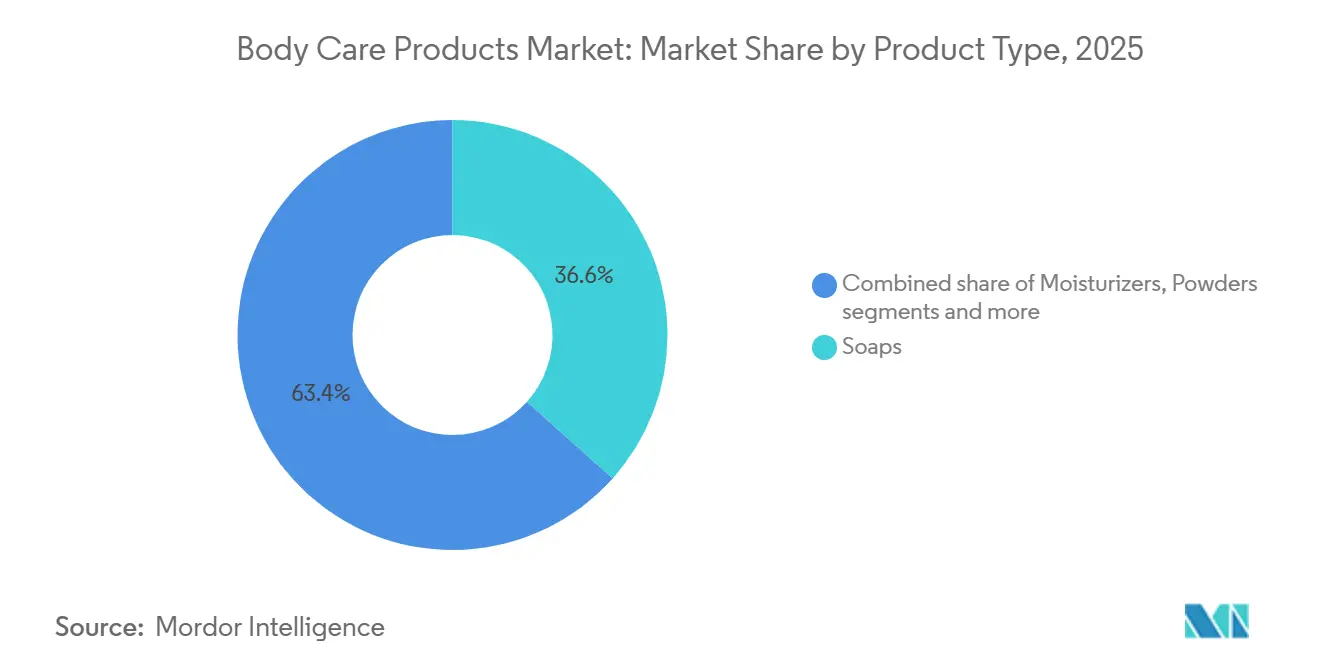
- By product type, soaps led with 36.62% of the body care products market share in 2025, while body wash and shower gels are projected to expand at a 5.80% CAGR through 2031.
- By category, conventional items accounted for 72.74% in 2025, whereas the organic segment is advancing at a 6.11% CAGR through 2031.
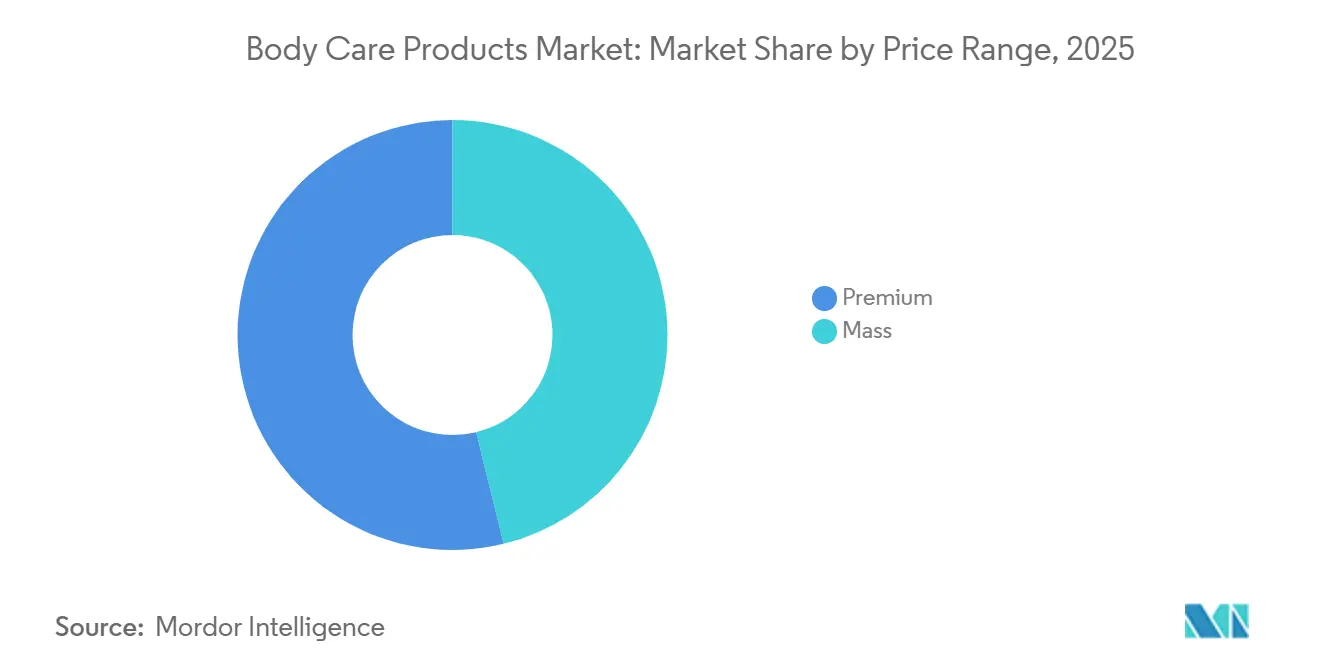
- By price range, the mass tier accounted for 62.82% in 2025, while premium body care posted the highest growth outlook at a 6.78% CAGR.
- By distribution, supermarkets and hypermarkets captured 37.62% of revenue in 2025, but online channels are forecast to grow at a 7.12% CAGR through 2031.
- Regionally, Asia-Pacific commanded 35.43% of 2025 revenue and is on track for a 6.52% CAGR to 2031.
Note: Market size and forecast figures in this report are generated using Mordor Intelligence’s proprietary estimation framework, updated with the latest available data and insights as of 2026.
Market Trends and Insights
Drivers Impact Analysis of Body Care Products Market*
| Driver | (~) % Impact on CAGR Forecast | Geographic Relevance | Impact Timeline |
|---|---|---|---|
| Rising awareness of personal hygiene and grooming practices | +0.9% | Global, with pronounced gains in the Asia-Pacific and the Middle East, and Africa | Short term (≤ 2 years) |
| Increasing consumer preference for natural and organic products | +1.2% | North America, Europe, and the Asia-Pacific urban centers | Medium term (2-4 years) |
| Advancements in product formulations and ingredients | +0.8% | Global, led by innovation hubs in North America, Europe, Japan | Medium term (2-4 years) |
| Expanding female workforce participation | +0.7% | Asia-Pacific core, spill-over to the Middle East, Africa, and Latin America | Long term (≥ 4 years) |
| Impact of social media on beauty trends and consumer choices | +1.0% | Global, with peak influence in North America, Europe, and the Asia-Pacific | Short term (≤ 2 years) |
| Growth in digital retail and e-commerce adoption | +1.1% | Global, accelerated in the Asia-Pacific, North America, and Europe | Medium term (2-4 years) |
| Source: Mordor Intelligence | |||
Rising awareness of personal hygiene and grooming practices
Post-pandemic hygiene consciousness has transitioned from episodic concern to embedded daily ritual, with consumers now scrutinizing ingredient lists and antimicrobial efficacy claims. The World Health Organization's 2025 hand hygiene guidelines extended recommendations to full-body cleansing protocols, prompting manufacturers to reformulate soaps and body washes with skin-barrier-preserving surfactants[1]Source: World Health Organization, “Guidelines on Hand Hygiene 2025,” who.int. This shift is particularly pronounced in emerging markets, where urbanization and improved water infrastructure are enabling more frequent bathing routines. In India, the government's Swachh Bharat Mission Phase II allocated USD 1.2 billion (INR 100 billion) in 2025 to sanitation and hygiene education, directly boosting demand for affordable body care products in tier-2 and tier-3 cities. The trend is also reshaping male grooming, with body care product usage among men aged 25-40 rising 14% year-over-year in 2025, as social norms around self-care evolve beyond traditional gender boundaries.
Increasing consumer preference for natural and organic products
The clean beauty movement has matured from marketing rhetoric to verifiable supply-chain transparency, with third-party certifications such as USDA Organic, COSMOS, and Ecocert becoming table stakes for premium positioning. The European Commission's 2024 amendments to the EU Cosmetics Regulation (EC 1223/2009) tightened definitions of "natural" and "organic" claims, requiring brands to substantiate ingredient sourcing and processing methods through independent audits[2]Source: European Commission, “Regulation (EC) 1223/2009 Amendments 2024,” ec.europa.eu. This regulatory clarity is reducing greenwashing and channeling consumer trust toward certified products, which commanded a 12% price premium over conventional alternatives in 2025. Botanical extracts such as bakuchiol, centella asiatica, and blue tansy oil are displacing synthetic actives, driven by clinical studies demonstrating comparable efficacy with lower irritation profiles. Unilever's 2025 annual report noted that its natural deodorant and body wash lines grew 19% year-over-year, outpacing the company's overall personal care portfolio by 11%. The trend is also spurring vertical integration, with brands acquiring organic farms to secure supply and control quality. For instance, L'Occitane's 2024 purchase of a 500-hectare shea cooperative in Burkina Faso exemplifies this strategic pivot.
Advancement in product formulations and ingredients
Formulation science is shifting from surface-level cleansing to microbiome modulation, with probiotic and prebiotic ingredients designed to support the skin's natural defense mechanisms. Beiersdorf's 2025 patent filing for a lactobacillus-fermented body lotion demonstrated a 23% improvement in skin hydration retention over 48 hours compared to glycerin-based controls, signaling a new frontier in efficacy claims. Waterless concentrates are gaining traction as sustainability-conscious consumers seek to reduce packaging waste and carbon footprints. For instance, Kao Corporation launched a powder-to-gel body wash in Japan in early 2025 that uses 85% less water and 60% less plastic than traditional formats. The FDA's 2024 guidance on cosmetic ingredient safety expanded the list of approved preservatives and emulsifiers, enabling formulators to extend shelf life without resorting to parabens or formaldehyde-releasing agents[3]Source: U.S. Food & Drug Administration, “Cosmetic Ingredient Safety Guidance 2024,” fda.gov. This regulatory flexibility is particularly valuable for small-batch artisanal brands that previously struggled with microbial stability.
Expanding female workforce participation
Rising female labor force participation, which reached 52.3% globally in 2025 according to the International Labour Organization, is correlating with higher per-capita spending on premium body care products, as working women allocate discretionary income toward time-saving, efficacy-driven solutions. In China, women's workforce participation climbed to 61.8% in 2025, and urban professional women aged 25-45 spent an average of USD 187 annually on body care, up 22% from 2023. This demographic prioritizes multifunctional products such as body lotions with SPF and anti-aging peptides, which compress routines without sacrificing results. The trend is also driving demand for travel-sized and on-the-go formats, with single-use body wipes and solid body bars growing 16% in 2025 as airport and gym retail channels expanded. Employers' wellness programs are amplifying this effect. For instance, Procter & Gamble's 2025 corporate wellness initiative distributed premium body care kits to 180,000 employees across 12 countries, normalizing daily self-care as a productivity enhancer.
Restraints Impact Analysis of Body Care Products Market*
| Restraint | (~) % Impact on CAGR Forecast | Geographic Relevance | Impact Timeline |
|---|---|---|---|
| Regulatory compliance requirements impact market growth | -0.6% | Global, with stringent enforcement in Europe and North America | Medium term (2-4 years) |
| Rising concerns over counterfeit products | -0.5% | The Asia-Pacific, the Middle East and Africa, and Latin America | Short term (≤ 2 years) |
| Volatile pricing and availability of botanical raw materials | -0.7% | Global, acute in regions dependent on single-source imports | Medium term (2-4 years) |
| Influence of cultural and religious factors | -0.3% | The Middle East and Africa, South Asia, Southeast Asia | Long term (≥ 4 years) |
| Source: Mordor Intelligence | |||
Regulatory compliance requirements impact market growth
Escalating regulatory scrutiny, exemplified by the FDA's 2024 Modernization of Cosmetics Regulation Act (MoCRA) and the EU's 2024 amendments to Regulation (EC) 1223/2009, is imposing substantial compliance costs on manufacturers, particularly mid-tier brands lacking in-house regulatory expertise. MoCRA mandates adverse-event reporting, facility registration, and safety substantiation for all cosmetic products sold in the United States, with penalties up to USD 250,000 per violation. These requirements are compressing profit margins for smaller players and accelerating consolidation, as brands seek scale to absorb legal and testing expenses. The EU's expanded restrictions on microplastics and per- and polyfluoroalkyl substances (PFAS) in cosmetics, effective January 2025, forced reformulation of an estimated 18% of body care SKUs, incurring average costs of USD 85,000 per product line according to a 2025 European Cosmetics Association survey. While these frameworks enhance consumer safety and trust, they also create entry barriers that disproportionately affect innovative startups and regional specialists.
Rising concerns over counterfeit products
Counterfeit body care products, ranging from mislabeled ingredients to outright hazardous formulations, are proliferating in high-growth markets, eroding brand equity and exposing consumers to health risks. Interpol's 2025 Operation Pangea XIV seized USD 48 million worth of counterfeit cosmetics across 23 countries, with body lotions and shower gels representing 34% of confiscated items. The proliferation of third-party sellers on e-commerce platforms complicates enforcement, as counterfeiters exploit lax verification protocols to list fake products alongside genuine offerings. In India, the Central Drugs Standard Control Organisation reported a 27% increase in counterfeit personal care product seizures in 2025, prompting brands to invest in blockchain-based authentication and tamper-evident packaging. The issue is particularly acute for premium brands, where counterfeiters target high-margin SKUs and undercut pricing by 40-60%, diverting sales and damaging consumer trust.
*Our forecasts treat driver/restraint impacts as directional, not additive. The impact forecasts reflect baseline growth, mix effects, and variable interactions.
Body Care Products Market Segment Analysis
By Product Type:
Body Wash Gains on SoapsSoaps accounted for 36.62% of 2025 revenue, reflecting entrenched consumer habits in price-sensitive markets and rural areas where bar formats offer superior cost-per-use economics and require no dispensing infrastructure. However, body wash and shower gels are expanding at a 5.80% CAGR through 2031, driven by urban consumers' preference for pH-balanced, sulfate-free formulations that preserve skin's natural lipid barrier. Dermatologists' growing advocacy for syndets (synthetic detergents) over traditional saponified fats is accelerating this shift, particularly among consumers with eczema and sensitive skin. Moisturizers are experiencing steady demand as consumers layer targeted treatments, such as niacinamide-infused lotions for hyperpigmentation and ceramide-rich creams for barrier repair, into multi-step routines.
Powders, though a smaller segment, are gaining traction in humid climates such as Southeast Asia and the Gulf Cooperation Council, where talc-free, absorbent formulations address sweat and chafing. The "Others" category, encompassing body scrubs, oils, and masks, is benefiting from the premiumization trend, as consumers seek spa-like experiences at home. Furthermore, Unilever's 2025 launch of a refillable body wash system in Europe, featuring concentrated pods that consumers dilute at home, exemplifies the industry's pivot toward sustainability and convenience. The format reduces plastic usage by 70% and appeals to environmentally conscious buyers willing to pay a 15% premium for reduced environmental impact. Regulatory frameworks such as ISO 22716 (Good Manufacturing Practices for Cosmetics) are standardizing quality across product types, reducing variability and enhancing consumer confidence in emerging brands.



By Category:
Organic Segment Outpaces ConventionalConventional products held 72.74% of 2025 revenue, underpinned by established distribution networks, aggressive promotional pricing, and broad SKU availability across mass retail channels. Yet the organic segment is surging at 6.11% CAGR through 2031, as consumers increasingly prioritize ingredient provenance and environmental stewardship. Third-party certifications such as USDA Organic, COSMOS, and Ecocert are reducing information asymmetry and enabling buyers to distinguish genuine clean formulations from greenwashed alternatives. The price gap between organic and conventional body care narrowed to 12% in 2025, down from 18% in 2023, as economies of scale in organic ingredient sourcing and manufacturing efficiency gains compress cost differentials.
The organic segment's growth is also fueled by regulatory tailwinds. For instance, the EU's 2024 amendments to the Cosmetics Regulation tightened definitions of "natural" and "organic," requiring brands to substantiate claims through independent audits and transparent supply-chain documentation. This clarity is channeling consumer trust toward certified products and penalizing brands that rely on vague "eco-friendly" messaging. In North America, the FDA's 2025 guidance on natural cosmetic claims introduced voluntary labeling standards that align with USDA Organic protocols, further legitimizing the segment. L'Occitane's 2025 annual report noted that its certified organic body care lines grew 21% year-over-year, outpacing the company's conventional portfolio by 14%. The trend is also spurring innovation in preservation systems, as brands develop microbiome-friendly alternatives to synthetic preservatives that meet both efficacy and clean-label criteria.
By Price Range:
Premiumization AcceleratesThe mass segment captured 62.82% of 2025 revenue, reflecting its dominance in supermarkets, hypermarkets, and discount chains where price-conscious consumers prioritize value and accessibility. However, the premium segment is expanding at 6.78% CAGR through 2031, driven by ingredient transparency, personalized formulations, and direct-to-consumer subscription models that bypass traditional retail markups. Premium buyers, disproportionately urban professionals aged 25-45, are willing to pay 30-50% more for products featuring clinically validated actives, sustainable packaging, and ethical sourcing narratives.
The premiumization trend is also reshaping competitive dynamics. Direct-to-consumer brands such as Nécessaire and Osea are leveraging digital channels to educate consumers on ingredient science and build loyalty through personalized recommendations and subscription convenience. These disruptors are capturing share from legacy premium brands by offering comparable quality at 20-30% lower price points, enabled by lean supply chains and performance-based digital marketing. Established players are responding by acquiring or partnering with DTC upstarts. For instance, Estée Lauder's 2024 acquisition of Dr. Jart+ and Shiseido's 2025 investment in a South Korean body care startup signal that incumbents recognize premiumization is migrating online. The mass segment, meanwhile, is defending share by introducing "masstige" lines, affordable products with premium cues such as minimalist packaging and hero ingredients, that blur category boundaries and capture trade-up consumers.
By Distribution Channel:
Online Retail SurgesSupermarkets and hypermarkets accounted for 37.62% of 2025 distribution, leveraging high foot traffic, impulse-purchase opportunities, and promotional pricing to drive volume. These channels remain critical for mass-segment brands and price-sensitive consumers who prioritize immediate availability and the ability to physically inspect products before purchase. Health and beauty stores, though smaller in share, offer curated assortments and knowledgeable staff that appeal to consumers seeking expert guidance on ingredient compatibility and skin concerns.
Online retail stores are expanding at a 7.12% CAGR through 2031, reflecting omnichannel strategies that blend augmented-reality skin diagnostics, same-day fulfillment, and subscription convenience. Amazon's 2025 launch of a virtual try-on tool for body care products, using smartphone cameras to assess skin texture and recommend formulations, reduced return rates by 19% and increased average order values by 14%. Additionally, subscription services such as Unilever's "Refill & Repeat" program, which delivered concentrated body wash refills to 2.3 million households in Europe in 2025, are locking in customer lifetime value and reducing churn. The shift is also enabling hyper-personalization, with brands leveraging AI-driven quizzes to tailor product recommendations based on skin type, climate, and lifestyle factors. In South Korea, Amorepacific's 2025 digital sales surged 27%, driven by its integration of KakaoTalk shopping bots that facilitate one-click reordering and real-time customer service. Other distribution channels, including pharmacies, salons, and direct selling, are experiencing modest growth, as brands experiment with hybrid models that combine physical touchpoints with digital engagement.
Geography Analysis
APAC Body Care Products Market
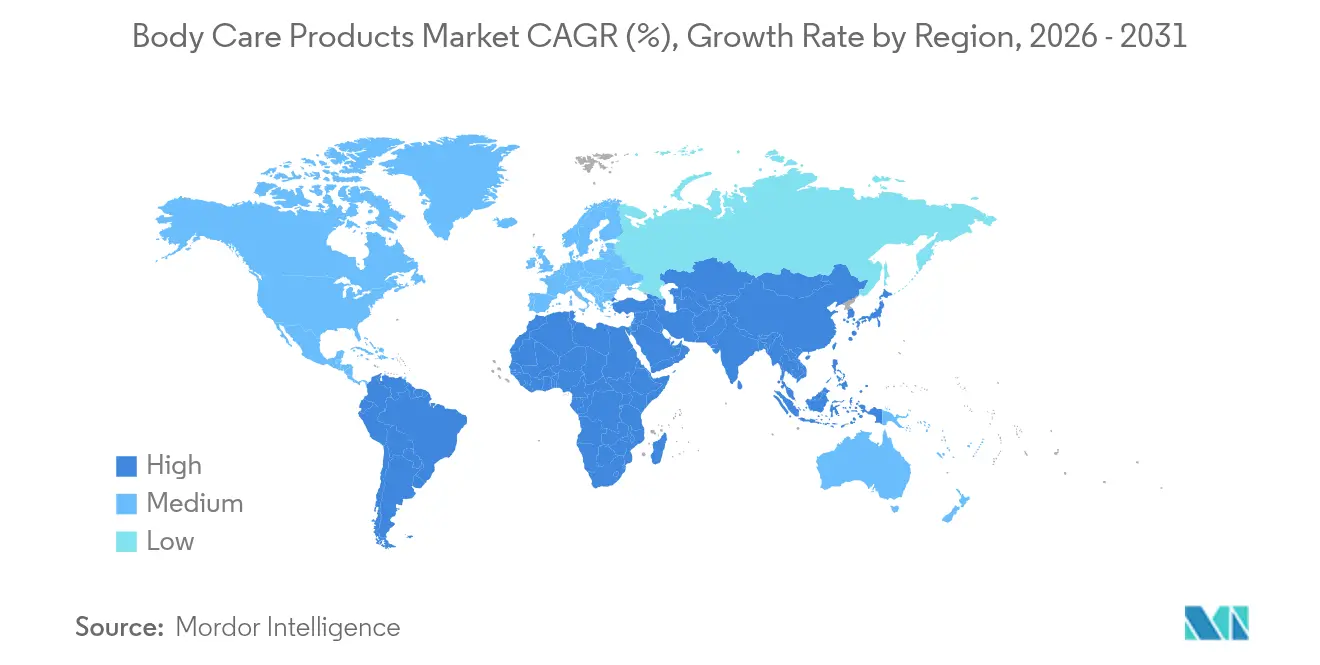
Asia-Pacific holds 35.43% of the global body care products market share in 2025 and exhibits the highest regional growth rate at 6.52% CAGR through 2031. The region's market leadership stems from its large population base, increasing disposable incomes, and strong cultural focus on personal care routines. China and India serve as key growth markets, driven by their expanding middle classes and increased adoption of premium products. Japan and South Korea remain innovation centers, particularly in skincare formulations and packaging technologies. While regulatory alignment across regional markets supports expansion, companies must adapt to local cultural preferences and price sensitivities.
North America and Europe Body Care Products Market
North America maintains a strong market position through high per-capita consumption and consumer preference for premium products. The region's market strength builds on robust retail infrastructure, e-commerce penetration, and established regulatory frameworks. Growth rates remain moderate due to market maturity and changing demographics. Europe shows similar market characteristics, with increasing demand for organic and natural products driven by sustainability concerns. The European Union's strict ingredient and environmental regulations shape global product development, often setting international manufacturing standards.
MEA and South America Body Care Products Market
South America, the Middle East, and Africa offer significant growth potential with varying levels of market development. Brazil dominates the Latin American market through its established beauty culture and expanding middle-class consumption. The Middle East shows strong growth due to its young population, rising female workforce participation, and cultural emphasis on personal care. African markets remain underserved, presenting long-term expansion opportunities for companies investing in distribution networks and locally adapted products. Regional climate variations influence product formulation and packaging requirements across all markets.

Regulatory Landscape
Regulation for body care products continues to tighten around ingredient safety substantiation, claims, and traceability across major markets. In the United States, the FDA is implementing the Modernization of Cosmetics Regulation Act (MoCRA) requirements covering facility registration, adverse-event reporting, and safety substantiation, which is raising compliance expectations for both mass and premium brands. In the European Union, the Cosmetics Regulation (EC) 1223/2009 has seen amendments that further restrict certain substances and sharpen rules for claim substantiation, while ISO 22716 (cosmetics GMP) remains a key quality benchmark used by manufacturers and retailers globally.
Environmental and labeling-driven compliance is also shaping formulation and packaging decisions. The EU expanded restrictions affecting materials and ingredients, including microplastics and PFAS-related controls taking effect from January 2025, pushing reformulation and documentation upgrades across body wash, lotions, and other categories. Several markets updated restricted or prohibited ingredient lists in 2026, including Brazil (ANVISA RDC No. 1029/2026 and RDC No. 1030/2026, June 2026) and Thailand (Thai FDA amendment effective June 13, 2026). Across Europe and the United Kingdom, proposals and programs emphasizing raw-material traceability for deforestation-linked commodities, alongside corporate sourcing policies such as L'Oreal's Responsible and Sustainable Sourcing Policy (June 2026), are increasing supplier due diligence requirements for natural oils and botanical inputs used in body care.
Competitive Landscape
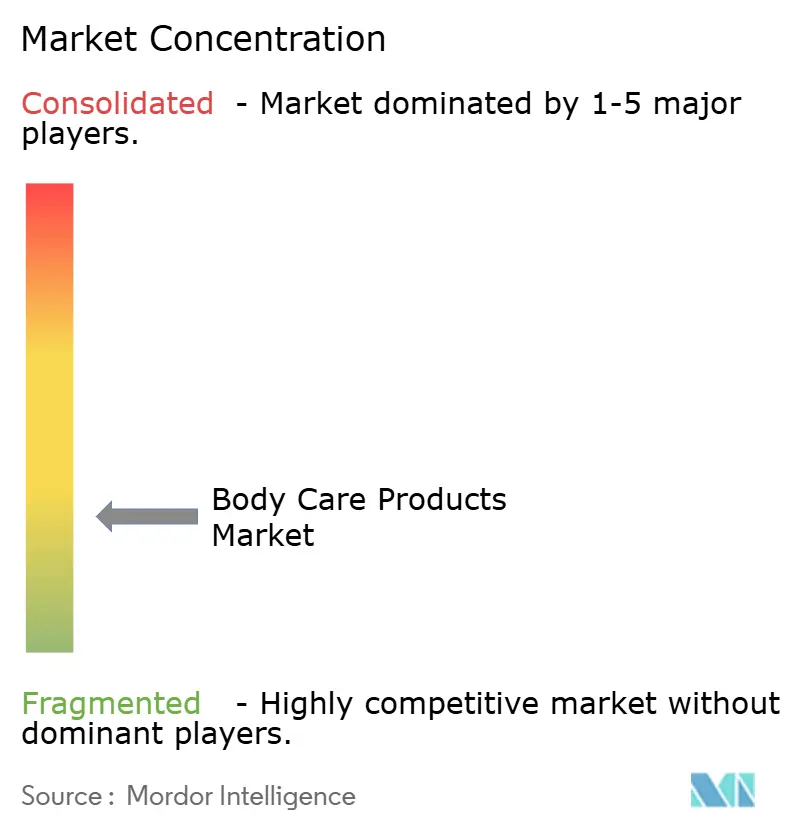
The body care products market demonstrates moderate concentration, wherein established multinational corporations compete against innovative market entrants. While large-scale enterprises benefit from operational economies, new market participants are establishing market presence through direct-to-consumer distribution channels and specialized product formulations. Primary market participants, including Beiersdorf AG, The Procter & Gamble Company, Unilever PLC, Colgate-Palmolive Company, and Kao Corporation, maintain their market positions through comprehensive product portfolios, established global distribution networks, and substantial marketing expenditures.
Companies are intensifying their emphasis on expedited innovation processes, implementing accelerated product launch schedules and increased Research and Development investments to maintain competitive differentiation. The integration of digital technologies has become fundamental to operational success, particularly in product development processes, personalized marketing initiatives, and supply chain optimization protocols.
Market opportunities persist in specialized segments, encompassing men's grooming products, senior-oriented formulations, and culturally specific products that address diverse demographic requirements. Contemporary market entrants emphasize environmental sustainability and operational transparency while establishing direct consumer relationships. This market evolution necessitates established enterprises to modify their business models while maintaining operational efficiency and global market presence.
Body Care Products Industry Leaders
Beiersdorf AG
The Procter & Gamble Company
Unilever PLC
Colgate-Palmolive Company
Kao Corporation
- *Disclaimer: Major Players sorted in no particular order
Body Care Products Market Companies Covered in this Report
- Beiersdorf AG
- The Procter & Gamble Company
- Unilever PLC
- Colgate-Palmolive Company
- Kao Corporation
- L'Oreal S.A.
- Natura & Co
- Oriflame Cosmetics Global SA
- The Estee Lauder Companies Inc.
- Shiseido Co. Ltd.
- Johnson & Johnson Services Inc.
- Coty Inc.
- Henkel AG & Co. KGaA
- Bath & Body Works Inc.
- L'Occitane International SA
- The Body Shop International Ltd.
- Kose Corp.
- Clarins Group
- Mary Kay Inc.
- Amorepacific Corp.

Market Opportunities and Future Outlook
Traceability, low-carbon inputs, and circular packaging are creating space for differentiated body care portfolios, as well as for suppliers that can verify provenance and footprint. Corporate sourcing policies and emerging deforestation-related compliance expectations in Europe and the United Kingdom are pushing brands to improve upstream visibility for botanicals and natural oils, supporting demand for auditable supply chains and third-party verification. In parallel, ingredient and packaging providers are rolling out targeted programs, including traceability systems for cosmetics and low-carbon ingredient distribution initiatives, which reduce adoption barriers for brands looking to upgrade product credentials without rebuilding supply chains.
Premiumization is also moving deeper into body care through face-care-grade actives and efficacy-led claims, extending dark-spot and barrier-support positioning beyond facial skincare. Beiersdorf's Eucerin extended Thiamidol-based dark spot innovation into a dedicated body collection in 2026, while P&G's Native broadened its body care range with scrub formats and upgraded deodorant and body wash performance claims during June 2026. In markets with fast-growing digital retail, virtual recommendation tools and subscription-led replenishment programs already used for body washes and refills provide a route to scale personalized routines and reduce churn, especially for sensitive-skin, clean-label, and premium body care lines.
Recent Industry Developments in Body Care Products Market
- June 2026: P&G (Native) launched Detoxifying Body Scrub collection to expand body care portfolio and focus on skin barrier health. The launch strengthens position in premium body care with barrier-supporting claims.
- June 2026: Beiersdorf (Eucerin) launched Radiant Tone Body Collection, utilizing Thiamidol technology to address dark spots on the body. The capacity addition strengthens portfolio differentiation in body care using facial-skincare tech capabilities.
- June 2026: Kao Corporation expanded Curél sensitive skincare brand into the Netherlands, launching exclusively at Etos Derma drugstores. The expansion strengthens Kao’s footprint in EU sensitive-skin body care channels and elevates brand visibility.


Body Care Products Market Report Scope and Research Methodology
Market Definition and Coverage
This market covers finished body care products used for day to day cleansing, moisturizing, exfoliating, deodorizing, and general skin comfort, sold through retail and professional channels and measured in manufacturer level revenue in USD.
Scope exclusions: We exclude devices and salon equipment, prescription dermatology treatments, and beauty services where product revenue cannot be separated cleanly.
Segments Covered in This Report
- Product Type
- Moisturizers
- Powders
- Body Wash and Shower Gels
- Soaps
- Others
- Category
- Conventional
- Organic
- Price Range
- Mass
- Premium
- Distribution Channel
- Supermarkets/Hypermarkets
- Health and Beauty Stores
- Online Retail Stores
- Other Distribution Channels
- Geography
- North America
- United States
- Canada
- Mexico
- Rest of North America
- Europe
- United Kingdom
- Germany
- France
- Italy
- Spain
- Sweden
- Belgium
- Poland
- Netherlands
- Rest of Europe
- Asia-Pacific
- China
- Japan
- India
- Thailand
- Singapore
- South Korea
- Australia
- New Zealand
- Rest of Asia Pacific
- South America
- Brazil
- Argentina
- Colombia
- Chile
- Peru
- Rest of South America
- Middle East and Africa
- United Arab Emirates
- Saudi Arabia
- Qatar
- Turkey
- South Africa
- Nigeria
- Egypt
- Morocco
- Rest of Middle East and Africa
- North America
Data Sources, Market Sizing, and Validation
Desk Research
Desk research starts with building the demand and supply context for body care, and then aligning it to what is counted as a finished product sale. We rely on public sources such as U.S. FDA cosmetics guidance, the European Commission information on cosmetics rules, UN Comtrade trade statistics for relevant HS codes, World Bank and IMF macro indicators, and OECD household consumption snapshots where available.
After that, we cross-check category momentum and pricing direction using company annual reports, investor presentations, association websites, and reputable business press coverage. Where needed, we also use paid subscriptions for company financials and news, import and export shipment level checks, and patent databases to understand formulation and claim activity that can influence product mix. The sources listed above are illustrative, and many other public and paid references were also used for data collection, validation, and clarification.
Primary Interviews and Surveys
Primary work focuses on validating what is actually being sold as body care, and how pricing, promotions, and channel mix are changing across regions. We speak with manufacturers, contract producers, distributors, retailers, and industry experts, and coverage is balanced across key consuming and producing regions so gaps from desk inputs can be closed. These discussions help us test assumptions like premiumization pace, online share shift, and the split between everyday hygiene and treatment style body care claims.
Distribution of primary research fieldwork respondents
| Company type | Respondent position | Region |
|---|---|---|
| Top tier: 33% | CXOs: 12% | APAC: 41% |
| Mid tier: 53% | Functional/Unit leaders: 29% | EMEA: 32% |
| Smaller Players: 14% | Managers: 59% | Americas: 27% |
Market-Sizing & Forecasting
Sizing begins with a top-down build where personal care consumption is reconstructed by region using macro demand signals, and then filtered into body care through category shares informed by public category definitions and primary inputs. The totals are then corroborated with selective bottom-up approximations, such as a sampled roll-up of supplier revenues, channel checks on retailer assortment intensity, and ASP times volume sanity checks for key product forms.
To keep the model practical, we use a small set of repeatable inputs, including population and urbanization, per capita spend trends in beauty and personal care, observed pricing movement in mass versus premium body care, online retail penetration in personal care, and trade flows for relevant finished goods where they help explain supply availability. When a bottom-up check has gaps (for example, private label disclosure limits in some markets), we bridge it using conservative share ranges agreed with interviewees and then re-test the impact on the regional total.
Forecasts are developed using scenario analysis supported by multivariate regression, where the main drivers are income growth, inflation adjusted pricing, channel mix shifts, and premium share changes. Final growth paths are reviewed with experts so the implied volumes and price progression stay consistent with what is being seen in launches and retailer behavior.
Data Validation & Update Cycle
Outputs are checked in several steps so totals and growth rates remain explainable and consistent with real market signals. We compare model results with independent indicators like trade direction, company category commentary, and regional shifts in channel mix, and then investigate outliers before internal review sign-off.
If a variance cannot be explained by clear drivers like pricing spikes, one-off inventory effects, or regulatory changes, respondents are re-contacted and assumptions are tightened. Reports are refreshed annually, with interim updates when material events change demand or pricing, and a final pre-delivery review is done so clients receive the latest updated view.
Mordor Intelligence's Body Care Product Market Size Compared With Other Published Estimates
Published market sizes for body care products can differ widely because groups do not always count the same set of finished products, and they often apply different rules for what sits inside retail value versus manufacturer revenue. Differences also show up when one estimate leans heavily on broad beauty totals, while another rebuilds demand using category specific checks and regional channel splits.
Key gaps usually come from how body moisturizers are counted versus adjacent face care, whether deodorants and bath items are included, and how online growth is translated into revenue when promotions are frequent. The spread is also affected by the base year chosen, the currency conversion timing used for multi-country totals, and how often assumptions are refreshed using interviews and recent public filings.
Benchmark comparison
| Source | Market Size | Gaps in Research Methodology |
|---|---|---|
| Mordor Intelligence | USD 81.23 B (2026) | |
| Industry Publisher A | USD 32.90 B (2025) | Uses a narrower product basket that appears closer to lotions and creams only, and it reports a longer horizon that can compress near term category mix changes. |
| Global Insights Group B | USD 261.00 B (2025) | Looks closer to a broader body care umbrella that can fold in wider personal care items, and it anchors the series on a few endpoint values with limited adjustment for regional channel and price shifts. |
The table suggests most of the variance comes from what products are counted and whether the number reflects manufacturer revenue or retail sales, especially when deodorants, bath, and wider personal care are bundled together. Here, finished body care is counted only when it is sold as a distinct body category item and then stress-tested against channel mix and price tier movement, which keeps the total anchored to a repeatable demand pool for Mordor Intelligence.


Key Questions Answered in the Report
What is the forecast value of global body care sales by 2031?
The body care products market is projected to reach USD 103.61 billion by 2031.
Which region will post the fastest growth through 2031?
Asia-Pacific is set to expand at a 6.52% CAGR, outpacing all other regions.
How quickly is the organic segment expanding?
Certified organic offerings are on track for a 6.11% CAGR between 2026 and 2031.
Which distribution channel shows the strongest momentum?
Online retail is forecast to grow at 7.12% CAGR, driven by virtual diagnostics and subscription services.
Page last updated on:




