
Blood and Organ Bank Market Size and Share
Market Overview
| Study Period | 2020 - 2031 |
|---|---|
| Market Size (2026) | USD 38.57 Billion |
| Market Size (2031) | USD 52.75 Billion |
| Growth Rate (2026 - 2031) | 6.46 % |
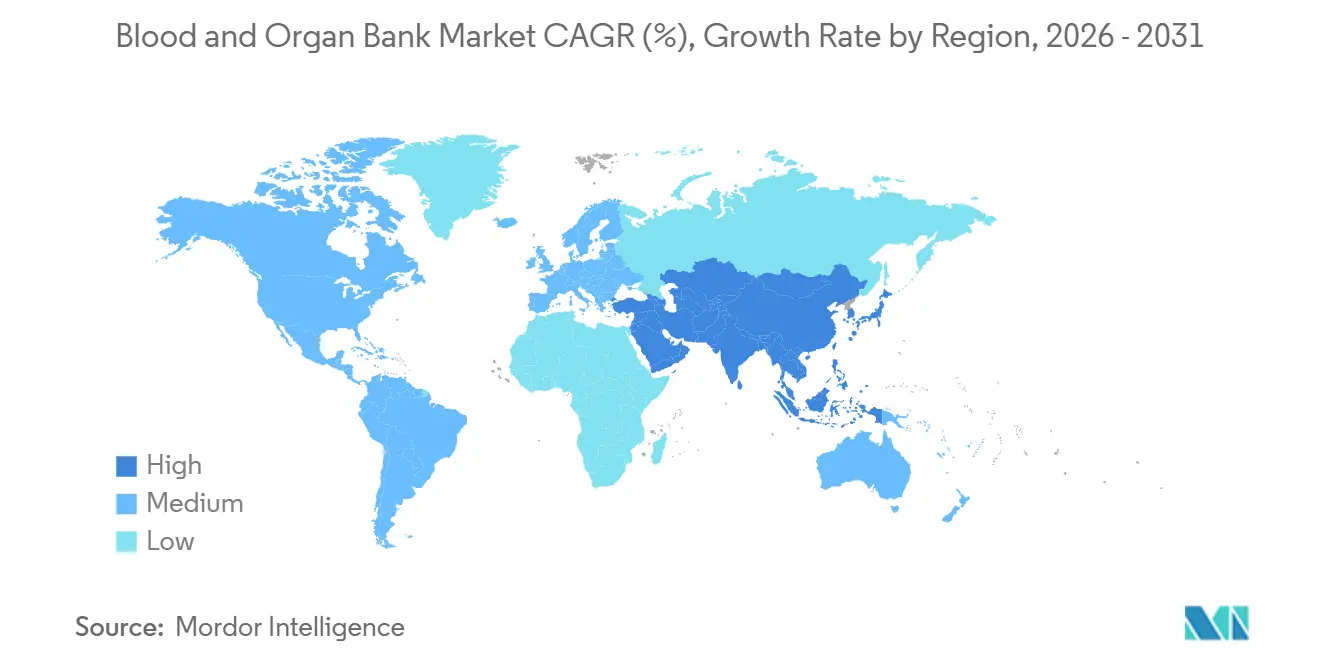
| Fastest Growing Market | Asia-Pacific |
| Largest Market | North America |
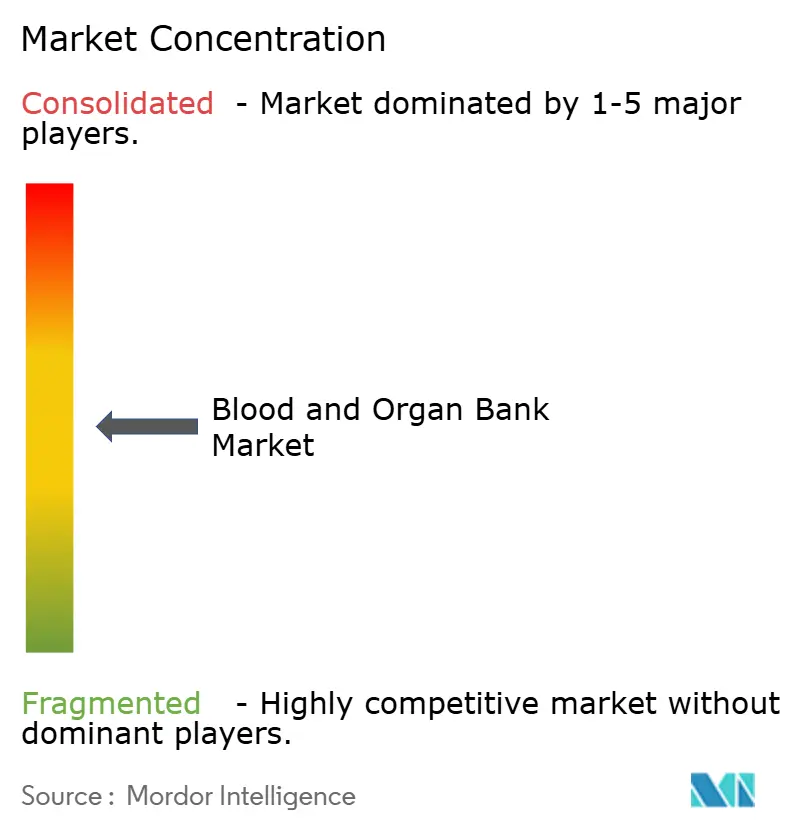
| Market Concentration | Medium |
Major Players *Disclaimer: Major Players sorted in no particular order Image © Mordor Intelligence. Reuse requires attribution under CC BY 4.0. | |
Blood and Organ Bank Market Analysis by Mordor Intelligence
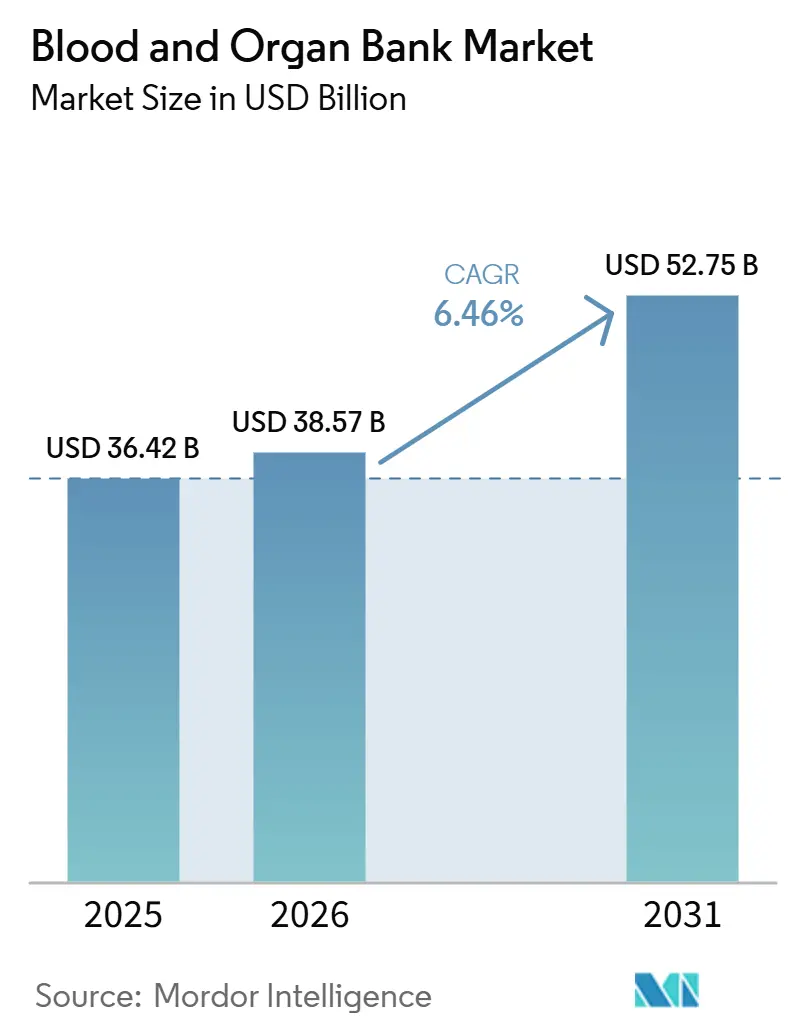
The Blood And Organ Bank Market size was valued at USD 36.42 billion in 2025 and is estimated to grow from USD 38.57 billion in 2026 to reach USD 52.75 billion by 2031, at a CAGR of 6.46% during the forecast period (2026-2031).
The blood and organ bank market is moving forward on the back of steady surgical demand, a higher chronic disease burden, and wider use of advanced preservation systems in both transfusion and transplant settings. Blood services and organ transplantation continue to rely on the same donor ecosystems, regulatory oversight, and cold-chain networks, which keep the blood and organ bank market tightly linked across collection, storage, and delivery functions. This shared operating base is pushing hospitals and network operators to align procurement, compliance, and logistics planning more closely than before. The blood and organ bank market is also showing a split competitive pattern, with technology platforms consolidating while donor collection and distribution still remain dispersed across regional and mission-led operators. North America remains the largest revenue base, while Asia-Pacific is the fastest-growing region, which keeps the blood and organ bank market balanced between mature compliance-led demand and newer capacity expansion across hospital systems.
Key Report Takeaways
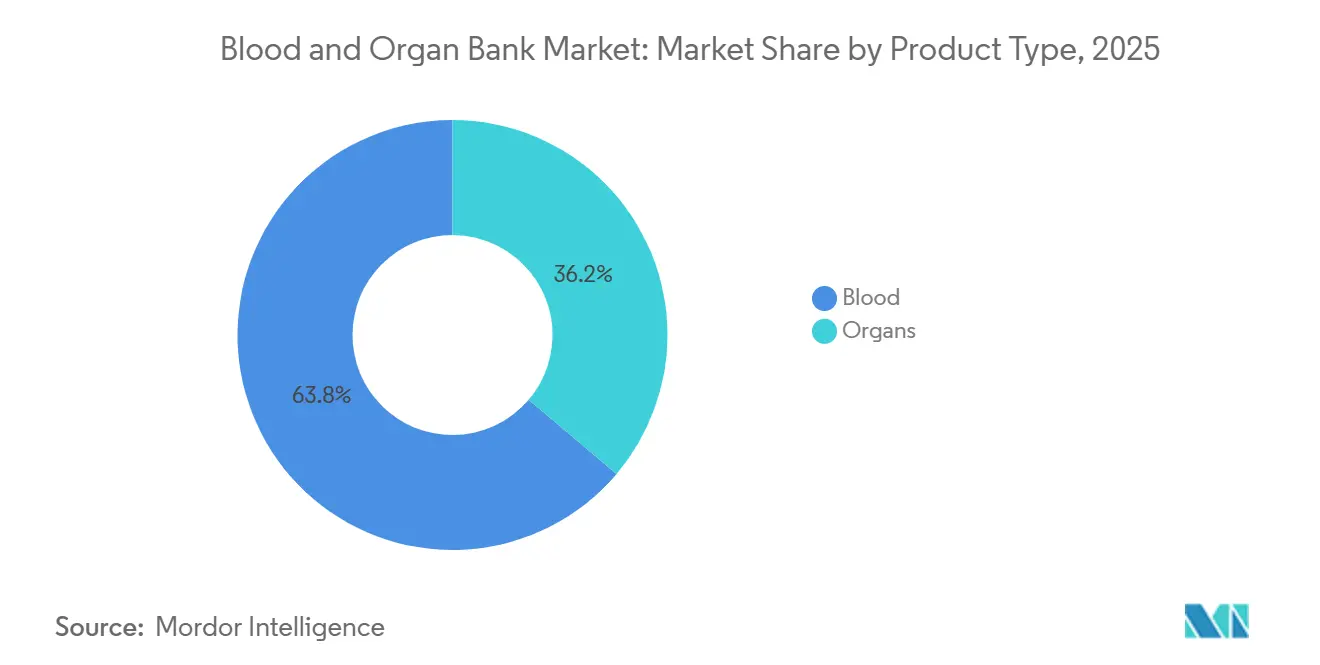
- By product type, blood led with 63.83% revenue share in 2025, and is expected to expand at a CAGR of 7.89% through 2031.
- By function, the collection held 37.38% share in 2025, while transportation is projected to record the highest CAGR of 9.36% through 2031.
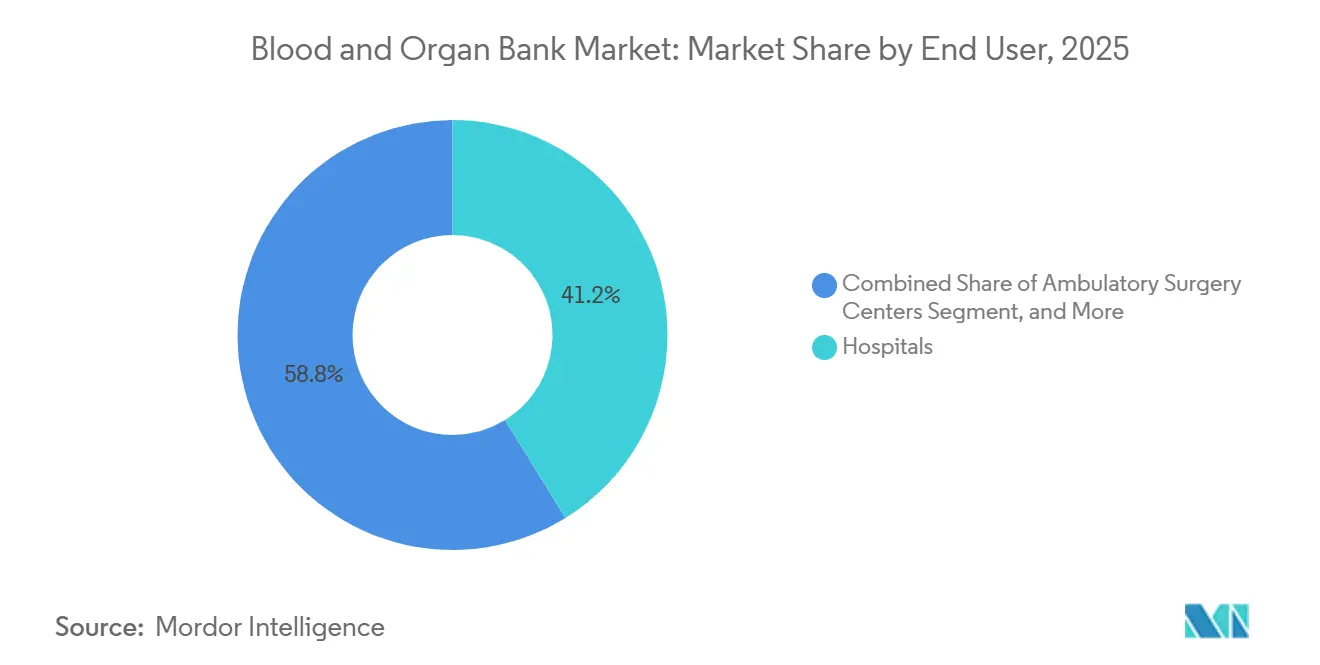
- By end user, hospitals accounted for 41.16% of revenue in 2025, while transportation is projected to record the highest CAGR of 9.36% through 2031.
- By geography, North America held 38.63% revenue share in 2025, while Asia-Pacific is forecast to expand at a CAGR of 8.15% through 2031.
Note: Market size and forecast figures in this report are generated using Mordor Intelligence’s proprietary estimation framework, updated with the latest available data and insights as of January 2026.
Market Trends and Insights
Drivers Impact Analysis of Blood and Organ Bank Market*
| Driver | (~) % Impact on CAGR Forecast | Geographic Relevance | Impact Timeline |
|---|---|---|---|
| Rising Transplant Volume And Blood Demand | +2.2% | Global | Short term (≤ 2 years) |
| Expansion Of Patient Blood Management Programs | +1.1% | North America and Europe, with spillover to Asia-Pacific | Medium term (2-4 years) |
| Rising Use Of Advanced Component Separation And Storage Systems | +1.5% | Global | Medium term (2-4 years) |
| Donor Pool Strain From Deferral And Eligibility Screening | +0.5% | Global, most acute in North America and Middle East and Africa | Short term (≤ 2 years) |
| Remote-Location Organ Logistics Requiring Extended Preservation Windows | +0.8% | North America, Europe, and expanding in Asia-Pacific | Medium term (2-4 years) |
| Digital Traceability Pressure Across Blood And Organ Chains | +0.7% | Global, with early gains in North America and Europe | Long term (≥ 4 years) |
| Source: Mordor Intelligence | |||
Rising Transplant Volume and Blood Demand: Oncology and Cell Therapy Redefine Consumption Patterns
Global transplant activity continues to rise across kidney, liver, heart, and lung procedures, and that keeps blood component demand elevated alongside organ procurement activity in the blood and organ bank market. Each transplant procedure requires red blood cells, platelets, and plasma during surgery and perioperative care, which means transplant growth adds pressure to already tight blood inventories. America’s Blood Centers reported in February 2026 that more than 25% of the U.S. blood supply is used in cancer care, which shows how oncology has become one of the largest endpoints for transfusion demand.[1] The same release stated that U.S. hospitals transfuse red blood cells to 3.65 million patients each year, while daily use exceeds 6,000 units of platelets and 5,200 units of plasma. Cell therapy protocols are adding another layer of platelet and component use, which extends demand beyond traditional surgery and trauma settings. As transplant programs expand in more hospital systems, the blood and organ bank market is seeing stronger demand from multiple clinical pathways at the same time, and supply networks have not fully caught up with that pace.
Rising Use of Advanced Component Separation and Storage Systems: Automation Extends the Addressable Pool
Automation in blood component separation is reducing manual variability, improving yield consistency, and helping blood centers process whole blood faster in the blood and organ bank market. Terumo Blood and Cell Technologies stated in 2025 that Carter BloodCare became the first U.S. blood center to complete a full transition to automated whole blood processing with the Reveos system and Lumia software platform.[2] That transition matters because one centrifugation cycle can separate platelets, plasma, and red blood cell concentrates, which supports higher throughput with tighter process control. On the organ side, machine perfusion continues to gain ground as a practical alternative to static cold storage for selected transplant pathways. The FDA granted a PMA supplement for TransMedics’ Organ Care System Liver on March 9, 2026, which reinforces the regulatory standing of active organ preservation systems in the United States. Taken together, automation in blood banking and active perfusion in organ preservation are widening the usable supply base, which supports the medium-term expansion of the blood and organ bank market.
Expansion of Patient Blood Management Programs: Analytics Platforms Convert Savings into Systemic Adoption
Patient blood management programs are reshaping utilization patterns in the blood and organ bank market by reducing avoidable transfusions and directing available supply toward higher-acuity cases. The Society for the Advancement of Blood Management published the 3rd edition of its Executive Guide in March 2026, and the update extended PBM frameworks into outpatient oncology, obstetrics, trauma, and chronic disease management.[3] A 2026 multidisciplinary consensus update in Hong Kong aligned local protocols with WHO-backed PBM principles on perioperative anemia correction and single-unit transfusion thresholds, which shows that adoption is spreading beyond North America and Europe. University Hospitals in Cleveland stated in April 2026 that its HemaLogiX real-time blood ordering alerts reduced transfusions by 40% and generated more than USD 55 million in cumulative savings. Those results make PBM easier for hospital systems to justify because the case now rests on both clinical and operating performance. The blood and organ bank market is therefore gaining from a parallel software and analytics layer, even while collection centers face a tougher task in preserving donor volumes under lower unnecessary transfusion rates.
Remote-Location Organ Logistics Requiring Extended Preservation Windows: Procurement Geography Expands
Extended preservation windows are changing the logistics model in the blood and organ bank market because they let transplant teams retrieve organs from farther locations with less time pressure. The practical effect is that procurement geography becomes wider, and more donor opportunities can remain viable across complex transport routes. The FAA Organ Transport Working Group reported in 2025 that no statutory barriers exist to above-wing organ transport on commercial airlines, although airline-specific rules still shape execution. NHS Lothian announced in May 2026 that the first use of XVIVO’s Kidney Assist Transport machine in Scotland can double the time an organ can typically be preserved, which directly supports longer-distance retrieval. These shifts are increasing the value of monitored transportation, route coordination, and contingency planning across transplant corridors. As that pattern becomes more established, the blood and organ bank market is likely to see a larger share of investment move toward transport systems that preserve condition, traceability, and timing integrity from donor site to recipient center.
Restraints Impact Analysis of Blood and Organ Bank Market*
| Restraint | (~) % Impact on CAGR Forecast | Geographic Relevance | Impact Timeline |
|---|---|---|---|
| Chronic Donor Shortages And High Deferral Rates | -1.2% | Global, most acute in North America and Middle East and Africa | Short term (≤ 2 years) |
| Cold-Chain Compliance Cost Burden | -0.8% | Global, with the highest burden in North America and Europe | Medium term (2-4 years) |
| Limited Reimbursement Visibility For Organ Preservation Upgrades | -0.5% | Europe and North America | Medium term (2-4 years) |
| Fragmented Regulatory Requirements Across Countries | -0.6% | Global | Long term (≥ 4 years) |
| Source: Mordor Intelligence | |||
Chronic Donor Shortages and High Deferral Rates: The Supply Ceiling That Technology Cannot Easily Lift
The most persistent limit on the blood and organ bank market is still the gap between eligible donors and actual donation volumes. The American Red Cross stated in January 2026 that the blood supply in the United States fell 35% in one month after flu activity and severe winter weather disrupted nearly 400 blood drives. The same release noted that while 62% of the U.S. population is eligible to give blood, only 3% donate each year. A 2025 study in Transfusion found that the shift to individual donor assessment is still in the early stages of national adoption, which means eligibility broadening has not yet offset the wider shortage pattern. A 2025 study in the Journal of Healthcare and Disease Control also showed that stricter infectious disease testing can improve safety while raising deferral pressure in endemic settings, which creates a difficult balance between safety and availability. This leaves the blood and organ bank market with a structural supply ceiling that technology can soften, but not remove, when donor participation remains weak.
Cold-Chain Compliance Cost Burden: Infrastructure Investment Penalizes Smaller Operators Disproportionately
Cold-chain compliance is another major restraint in the blood and organ bank market because it requires validated packaging, continuous temperature control, monitoring hardware, and trained transport staff. WHO guidance specifies a narrow temperature range of 1-6°C for red blood cell storage and 1-10°C during transport, which leaves little room for process failure across collection and delivery points. Those requirements add capital and operating costs across equipment, packaging validation, alarm management, and documentation. The burden is heavier for smaller and rural blood centers because their lower throughput makes it harder to spread fixed compliance costs across unit volumes. Larger network operators are in a better position to absorb software upgrades, real-time monitoring tools, and service contracts, which gradually strengthens their relative operating position. This cost asymmetry is pushing more regional operators toward outsourcing, partnership arrangements, or tighter alignment with larger networks inside the blood and organ bank market.
*Our forecasts treat driver/restraint impacts as directional, not additive. The impact forecasts reflect baseline growth, mix effects, and variable interactions.
Blood and Organ Bank Market Segment Analysis
By Product Type:
Blood Component Dominance Anchored in Clinical BreadthBlood held 63.83% of the blood and organ bank market share in 2025 and is projected to expand at 7.89% CAGR through 2031, which gives it both the largest and the fastest-growing position within product type. That combination reflects a demand base that is still broadening rather than leveling off, especially in oncology, trauma, perioperative care, and cell therapy support. America’s Blood Centers stated in February 2026 that cancer care alone uses more than 25% of the U.S. blood supply, which confirms how strongly oncology shapes blood utilization. The same dataset also recorded prehospital transfusion as a visible and growing part of blood use, which points to wider deployment outside traditional inpatient settings. AABB’s 35th edition of standards took effect in April 2026 with updated requirements for critical technology monitoring and pathogen-reduced cryoprecipitated fibrinogen complex preparation, which supports another cycle of equipment review across accredited blood centers.
Organs represented the smaller product base in 2025, but this segment remains strategically important because device, preservation, and logistics intensity are much higher per transplant event in the blood and organ bank industry. The key commercial opportunity lies in improving the use of marginal-donor organs that were historically discarded because static preservation outcomes were too uncertain. The FDA supplement for TransMedics’ Organ Care System Liver and Terumo’s October 2025 acquisition of OrganOx both show that larger medtech companies are committing capital and regulatory effort to active organ preservation. As that clinical and commercial base deepens, organ banking is likely to move further away from cold-storage defaults and closer to active perfusion across more transplant pathways in the blood and organ bank market.
By Function:
Collection Anchors Value Chain While Transportation Redefines Growth DynamicsCollection accounted for 37.38% of the blood and organ bank market size in 2025, reflecting the central role of donor centers, phlebotomy systems, and first-line testing infrastructure across the full value chain. Collection stays large because it carries the fixed costs of donor engagement, site operations, staffing, and early quality control before any downstream processing takes place. That structure gives established nonprofit blood operators and national networks a durable advantage, since new entrants must build both physical infrastructure and trust with repeat donors. Processing, testing, and storage each depend on collection throughput, which means upstream volume still determines the practical scale of the rest of the blood and organ bank market. AABB’s 2026 standards update adds monitoring expectations for critical technology infrastructure, which reinforces the need for reliable systems at the collection and storage interface.
Transportation is projected to grow at 9.36% CAGR through 2031, making it the fastest-moving function in the blood and organ bank market. This growth reflects the shift toward longer procurement radii, stricter condition monitoring, and more time-sensitive handoffs across donor and recipient locations. The FAA report and the May 2026 NHS Lothian deployment both point to a transport layer that is becoming more specialized as preservation times improve. As a result, transportation is moving from a support role toward a core value function for both blood and organ flows inside the blood and organ bank market.
By End User:
Hospitals Lead on Volume, but Research Institutes Signal Where Value Is HeadingHospitals represented 41.16% of 2025 revenue and are projected to expand at 8.84% CAGR through 2031, which keeps them at the center of demand across the blood and organ bank market. This position reflects the fact that most transfusions and organ transplant procedures are still carried out in acute-care settings with dedicated transfusion medicine capabilities. Hospital growth is also tied to the concentration of blood-intensive procedures such as cardiac surgery, trauma care, and hematologic oncology in large care settings. PBM adoption is strengthening that role because decision-support platforms are usually purchased and deployed at the hospital or health system level. The University Hospitals example shows that hospitals are not only the largest users of components, they are also becoming the main test beds for analytics-led utilization control in the blood and organ bank market.
Pharmaceutical companies are emerging as a relevant end-user group because human-derived materials support plasma-related development pathways and cell therapy manufacturing activity in the blood and organ bank industry. Research and academic institutes are also gaining strategic relevance as cord blood and apheresis-derived materials become more important for regenerative medicine and translational work. Ambulatory surgery centers continue to generate stable demand for elective procedural support, while clinics and nursing homes remain focused on lower-acuity chronic anemia management. This mix keeps hospitals in clear lead, but it also shows that value creation in the blood and organ bank market is gradually extending into research, manufacturing, and outpatient settings.

Geography Analysis
North America Blood and Organ Bank Market
North America held 38.63% of the blood and organ bank market share in 2025, which kept it in the leading regional position on the strength of accredited blood-bank networks, established organ procurement systems, and deeper device adoption. The United States remains the largest contributor within the region because it combines a large transfusion base with active investment in automation and perfusion technology. The American Red Cross shortage alert in January 2026 showed that even mature networks remain vulnerable when weather and illness disrupt donor turnout and blood-drive activity. AABB’s April 2026 standards cycle is also reinforcing a compliance-led equipment refresh across accredited operators, which supports continued spending on monitoring and process control. Canada and Mexico are expanding digital donor management and cold-chain capability, but the regional revenue base still rests mainly on U.S. system scale and procurement intensity.
Europe Blood and Organ Bank Market
Europe remains the second-largest regional market, and the region is being reshaped by Regulation (EU) 2024/1938, which replaces older directives with a more unified framework for substances of human origin. Germany, the United Kingdom, and France continue to lead on procedure volume and infrastructure depth in the blood and organ bank market. NHS Lothian’s first use of Kidney Assist Transport in May 2026 shows that machine-supported preservation is moving into routine hospital practice in parts of the region. Italy’s BILGAI partnership also shows that Europe is investing in AI-led blood supply chain management, not only in devices, which broadens the region’s role in digital infrastructure development.
APAC, MEA and South America Blood and Organ Bank Market
The blood and organ bank market size for Asia-Pacific is projected to grow at 8.15% CAGR through 2031, making it the fastest-growing region in the global outlook. Growth is being supported by hospital capacity expansion in China, demographic pressure in Japan, and a more formal blood logistics environment in India. Middle East and Africa and South America remain smaller regional bases, but national blood strategies in the GCC and PBM-linked savings in Brazil show that operational improvement is widening beyond the largest established markets.
Competitive Landscape
The blood and organ bank market has 2 distinct competitive layers: a technology layer with a smaller group of medtech companies, and a service layer made up of many nonprofit blood operators and procurement organizations. This split is important because the technology side is consolidating faster than the donor collection and distribution side. Terumo completed its USD 1.5 billion acquisition of OrganOx in October 2025, which gave it stronger reach across blood automation and organ preservation at the same time. That transaction stands out as one of the clearest signals that scale players see long-term value in joining blood processing and transplant preservation capabilities under one platform. At the same time, the service layer of the blood and organ bank market remains fragmented because many blood centers operate under regional mandates and mission-led structures rather than pure commercial incentives.
Competition is also taking shape through product development, regulatory positioning, and workflow integration. TransMedics strengthened its U.S. position in March 2026 when the FDA granted the PMA supplement for OCS Liver, which supports its standing in organ preservation systems. Terumo BCT’s 2025 Carter BloodCare deployment showed that large vendors can win by improving throughput and process consistency for routine blood operations, not only through transplant innovation. Fresenius Kabi Deutschland GmbH also received a U.S. patent for a blood cell separation system in April 2026, which shows that apheresis and exchange technologies remain an active development area.
A clear white-space area in the blood and organ bank market is interoperable software that connects donor management, inventory visibility, cold-chain monitoring, and clinical decision support in one workflow. Italy’s BILGAI project shows that technology integrators can become influential infrastructure owners when networks need traceability and AI-led planning at scale. Taken together, these patterns support a moderate concentration profile for the blood and organ bank market, with stronger concentration in technology and much lower concentration in donor-facing services.
Blood and Organ Bank Industry Leaders
-
OrganOx Limited
-
Paragonix Technologies, Inc.
-
Terumo Corporation
-
Waters Medical Systems, LLC
-
XVIVO Perfusion AB
- *Disclaimer: Major Players sorted in no particular order
Blood and Organ Bank Market Companies Covered in this Report
- America’s Blood Centers
- Artivion, Inc.
- Blood Centers of America
- BMI OrganBank
- Bridge to Life Ltd.
- Canadian Blood Services
- CSL Plasma
- Donate Life America
- LifeCenter Northwest
- New England Donor Services
- New York Blood Center
- NHS Blood and Transplant
- Organox
- Paragonix Technologies
- Preservation Solution
- Sanquin
- Terumo
- The American National Red Cross
- The Living Bank
- Vitalant
- Waters Medical Systems, LLC
- Xvivo Perfusion
Recent Industry Developments in Blood and Organ Bank Market
- May 2026: NHS Lothian announced the first kidney transplant in Scotland using XVIVO’s Kidney Assist Transport device with hypothermic oxygenated perfusion, doubling standard kidney preservation time and expanding viable procurement radii for Scottish transplant programs.
- April 2026: University Hospitals in Cleveland deployed HemaLogiX real-time blood ordering alerts embedded in the Epic EHR, the culmination of a PBM program that reduced transfusions by 40% and generated more than USD 55 million in cumulative cost savings.
- October 2025: Terumo Corporation completed the USD 1.5 billion acquisition of OrganOx, making OrganOx a wholly owned subsidiary and linking organ perfusion more closely with Terumo’s global blood processing platform.
- April 2025: Lytus Technologies completed the acquisition of Blod.in, India’s first AI-powered on-demand blood component management and logistics platform, through its Lytus HealthTech subsidiary.
Global Blood and Organ Bank Market Report Scope
The blood and organ bank market encompasses specialized medical facilities and services that handle the collection, testing, preservation, and distribution of donated human blood, plasma, organs, and tissues. These institutions guarantee donations meet strict medical and ethical standards to supply vital resources for patient transfusions and transplants.
The Blood and Organ Bank Market is segmented by product type, function, end user, and geography. Based on product type, the market is segmented into blood and organs. By function, the market is categorized into collection, processing, testing, storage, and transportation. Based on end user, the market is segmented into hospitals, ambulatory surgery centers, pharmaceutical companies, clinics and nursing homes, and research and academic institutes. Geographically, the market is analyzed across North America (United States, Canada, and Mexico), Europe (Germany, the United Kingdom, France, Italy, Spain, and the Rest of Europe), Asia-Pacific (China, Japan, India, Australia, South Korea, and the Rest of Asia-Pacific), Middle East & Africa (GCC, South Africa, and the Rest of Middle East & Africa), and South America (Brazil, Argentina, and the Rest of South America). The report provides market size and forecasts in terms of value (USD) for all the above segments.
Segmentation Overview
| Blood |
| Organs |
| Collection |
| Processing |
| Testing |
| Storage |
| Transportation |
| Hospitals |
| Ambulatory Surgery Centers |
| Pharmaceutical Companies |
| Clinics and Nursing Homes |
| Research and Academic Institutes |
| North America | United States |
| Canada | |
| Mexico | |
| Europe | Germany |
| United Kingdom | |
| France | |
| Italy | |
| Spain | |
| Rest of Europe | |
| Asia-Pacific | China |
| Japan | |
| India | |
| Australia | |
| South Korea | |
| Rest of Asia-Pacific | |
| Middle East & Africa | GCC |
| South Africa | |
| Rest of Middle East & Africa | |
| South America | Brazil |
| Argentina | |
| Rest of South America |
| By Product Type | Blood | |
| Organs | ||
| By Function | Collection | |
| Processing | ||
| Testing | ||
| Storage | ||
| Transportation | ||
| By End User | Hospitals | |
| Ambulatory Surgery Centers | ||
| Pharmaceutical Companies | ||
| Clinics and Nursing Homes | ||
| Research and Academic Institutes | ||
| By Geography | North America | United States |
| Canada | ||
| Mexico | ||
| Europe | Germany | |
| United Kingdom | ||
| France | ||
| Italy | ||
| Spain | ||
| Rest of Europe | ||
| Asia-Pacific | China | |
| Japan | ||
| India | ||
| Australia | ||
| South Korea | ||
| Rest of Asia-Pacific | ||
| Middle East & Africa | GCC | |
| South Africa | ||
| Rest of Middle East & Africa | ||
| South America | Brazil | |
| Argentina | ||
| Rest of South America | ||
Key Questions Answered in the Report
What is the 2031 revenue outlook for blood and organ banks?
The blood and organ bank market is forecast to reach USD 52.75 billion by 2031, rising from USD 38.57 billion in 2026 at a 6.46% CAGR.
Which product category leads revenue in this space?
Blood is the leading product category, with 63.83% share in 2025, and it is also the fastest-growing product type at 7.89% CAGR through 2031.
Why are hospitals the most important end users for blood and organ bank services?
Hospitals held 41.16% of revenue in 2025 and are projected to grow at 8.84% CAGR because most transfusions and transplant procedures are concentrated in acute-care settings.
What is driving the fastest growth in transportation for organ and blood logistics?
Transportation is forecast to grow at 9.36% CAGR as preservation windows improve, procurement radii widen, and compliance demands increase for monitored delivery.
Which region is expanding the fastest in blood and organ banking?
Asia-Pacific is the fastest-growing region with an 8.15% CAGR through 2031, supported by hospital expansion, demographic pressure, and improving logistics capability.