
Market Overview
| Study Period | 2021 - 2031 |
|---|---|
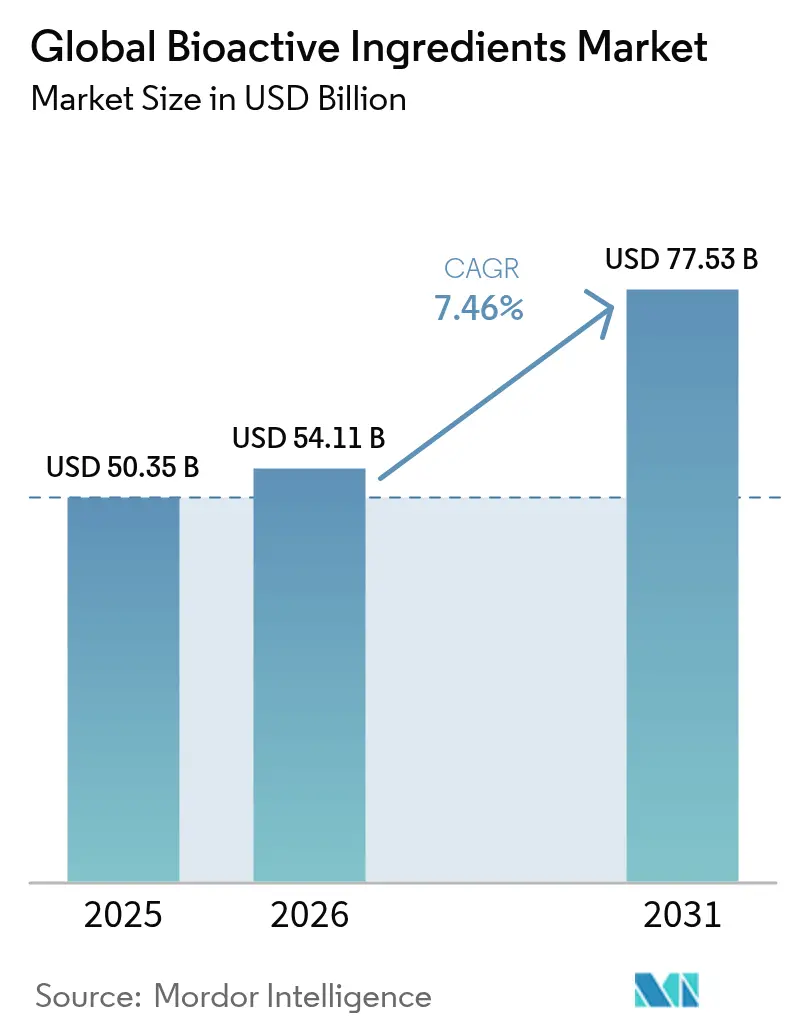
| Market Size (2026) | USD 54.11 Billion |
| Market Size (2031) | USD 77.53 Billion |
| Growth Rate (2026 - 2031) | 7.46 % |
| Fastest Growing Market | Asia Pacific |
| Largest Market | Europe |
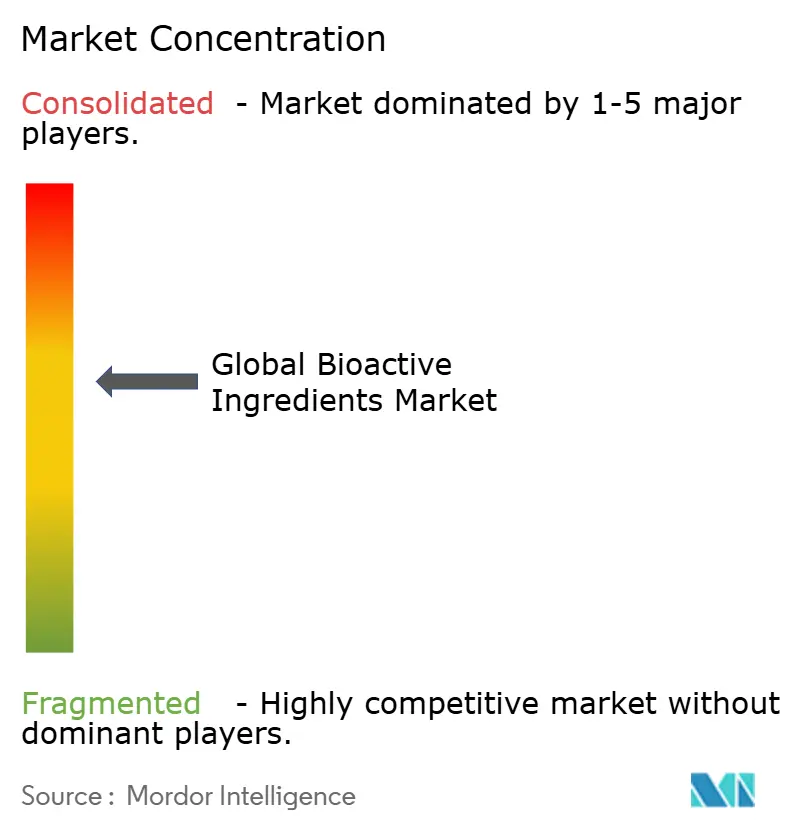
| Market Concentration | Medium |
Major Players
*Disclaimer: Major Players sorted in no particular order Image © Mordor Intelligence. Reuse requires attribution under CC BY 4.0. |
|
Global Bioactive Ingredients Market Analysis by Mordor Intelligence
The bioactive ingredients market size is expected to grow from USD 50.35 billion in 2025 to USD 54.11 billion in 2026 and is forecast to reach USD 77.53 billion by 2031 at 7.46% CAGR over 2026-2031. This growth corresponds with increasing consumer demand for functional foods and supplements that support disease prevention and wellness. Several factors drive market development, including enhanced food safety regulations and ingredient approval processes that improve product quality and market access. Technological progress in ingredient delivery systems has enhanced bioavailability and efficacy. Consumer awareness of preventive healthcare and self-care practices has led to higher consumption of functional foods and supplements. The expanding aging population and their nutritional requirements have increased demand for targeted bioactive solutions. Furthermore, advances in nutrigenomics and personalized nutrition research have created new opportunities for specialized bioactive ingredients.
Key Report Takeaways
- By type, vitamins led with 22.78% of bioactive ingredients market share in 2025, whereas probiotics are projected to grow at a 9.04% CAGR from 2026-2031.
- By source, plant-based ingredients captured 62.48% share of the bioactive ingredients market in 2025, while microbial sources are set to expand at a 10.31% CAGR through 2031.
- By form, solid formats held 75.56% revenue share in 2025; liquid formats are forecast to climb at an 11.08% CAGR to 2031.
- By application, dietary supplements accounted for 35.68% of the bioactive ingredients market size in 2025, but food and beverages will advance at a 10.76% CAGR between 2026-2031.
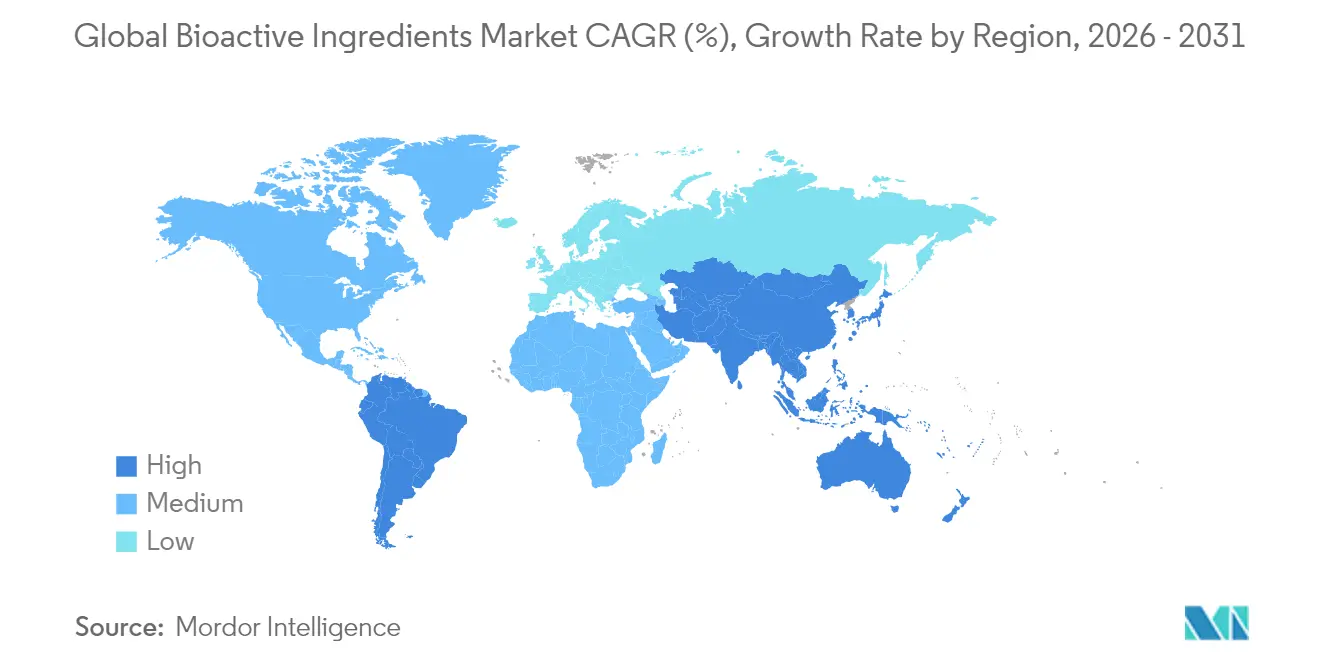
- By geography, Europe commanded 34.12% of the bioactive ingredients market in 2025, whereas Asia-Pacific is poised for the fastest 10.61% CAGR over the same outlook period.
Note: Market size and forecast figures in this report are generated using Mordor Intelligence’s proprietary estimation framework, updated with the latest available data and insights as of 2026.
Market Trends and Insights
Drivers Impact Analysis of Global Bioactive Ingredients Market*
| Driver | (~) % Impact on CAGR Forecast | Geographic Relevance | Impact Timeline |
|---|---|---|---|
| Rising consumer demand for health and wellness products | +1.8% | Global, with the strongest impact in North America and Europe | Medium term (2-4 years) |
| Growing prevalence of chronic and age-related conditions | +1.5% | Global, particularly developed markets | Long term (≥ 4 years) |
| Surging demand for plant-based and sustainable ingredients | +1.2% | Europe and North America are leading, expanding to Asia-Pacific | Medium term (2-4 years) |
| Expanding pharmaceutical applications | +1.0% | North America and Europe, emerging in Asia-Pacific | Long term (≥ 4 years) |
| Rising popularity of personalized nutrition | +0.8% | North America and Europe, pilot programs in Asia-Pacific | Medium term (2-4 years) |
| Technological advancements in ingredient delivery | +0.7% | Global, with innovation centers in North America and Europe | Short term (≤ 2 years) |
| Source: Mordor Intelligence | |||
Rising consumer demand for health and wellness products
The increasing consumer emphasis on preventive healthcare drives the adoption of bioactive ingredients in functional foods, dietary supplements, and personalized nutrition products. Health consciousness and understanding of nutrition's role in disease prevention serve as primary market drivers, while the global aging population seeks natural health solutions. Consumer preference for clean-label products and sustainable sourcing has increased demand for plant-based ingredients. Increased disposable income in developing economies has expanded consumer access to premium nutritional products, exemplified by Nestlé's NAN Sinergity infant formula with six human milk oligosaccharides and Bifidobacterium infantis. Improved ingredient extraction and processing technologies have enhanced the efficiency and quality of bioactive ingredients, while major companies' increased research and development investments strengthen scientific validation. The growth of distribution channels, especially e-commerce, has improved product accessibility and market reach, supporting industry expansion.
Growing prevalence of chronic and age-related conditions
The increasing aging population and prevalence of chronic diseases drive the demand for bioactive ingredients that offer therapeutic benefits, particularly for cardiovascular health, cognitive function, and metabolic disorders. Nestlé Health Science's COGNIKET-MCI trial, which studies BrainXpert ketogenic products for mild cognitive impairment, demonstrates the pharmaceutical applications of these ingredients. The condition affects approximately 20% of individuals over 65 years [1]Nestle Health Science, "Seven-country mild cognitive impairment trial underway", nestlehealthscience.com. The trial encompasses 380 participants across seven countries and evaluates cognitive decline prevention, quality of life improvement, and sleep quality enhancement through medium chain triglycerides and B-vitamins. Plant-derived bioactive compounds demonstrate effectiveness in neuroprotective, metabolic, and hepatoprotective applications. Compounds such as ellagic acid and gallic acid provide antioxidant and anti-inflammatory benefits essential for addressing non-communicable diseases. The market impact is significant, as AI-driven precision nutrition interventions reduce healthcare costs through improved health outcomes, contributing to market sustainability as healthcare systems emphasize prevention over treatment.
Surging demand for plant-based and sustainable ingredients
Sustainability requirements are transforming ingredient sourcing practices, as companies aim to reduce their environmental impact compared to conventional methods. According to the BMEL Food Report 2024, more than 77% of German consumers prefer regional food sources, creating opportunities for organic brands to strengthen their sustainability positioning [2]BMEL, "The BMEL Food Report 2024", bmel.de. The increasing focus on health and wellness, aging population, and rising healthcare costs drive the demand for bioactive ingredients in functional foods and dietary supplements. Consumer awareness about preventive healthcare and the benefits of natural ingredients further accelerates market growth. The plant-based market continues to expand with increased purchases of vegetarian and vegan alternatives, while technological advancements in extraction and processing methods enhance the efficacy of bioactive compounds. Additionally, seaweed has emerged as a sustainable resource for pharmaceutical manufacturing, offering a renewable and abundant supply without the need for freshwater or arable land. The growing research and development activities in identifying new bioactive compounds and their applications across the food, pharmaceutical, and cosmetic industries contribute to market expansion.
Expanding pharmaceutical applications
Bioactive ingredients are used in both nutraceutical and pharmaceutical applications, with regulatory frameworks supporting the development of therapeutic compounds for specific health conditions. The market is expanding due to increased consumer focus on preventive healthcare, higher demand for functional foods, and expanded research into natural therapeutic compounds. Plant-derived compounds are effective against multidrug-resistant microorganisms, with phenolics, terpenoids, alkaloids, and glycosides showing efficacy against resistant bacterial strains through various mechanisms. The combination of an aging population and increasing healthcare costs drives the demand for natural bioactive compounds in dietary supplements and functional foods. Advances in extraction and processing technologies have improved the commercial viability of bioactive ingredients. Modern delivery systems using nanotechnology, such as liposomes and nanoparticles, enhance the bioavailability and targeted delivery of bioactive compounds like curcumin and resveratrol. The development of plant-based platforms for monoclonal antibody production and plant viral nanoparticles provides cost-effective alternatives to conventional drug delivery methods, particularly in regions with limited healthcare access.
Restraints Impact Analysis of Global Bioactive Ingredients Market*
| Restraint | (~) % Impact on CAGR Forecast | Geographic Relevance | Impact Timeline |
|---|---|---|---|
| Price volatility and sustainability challenges in raw material sourcing | -1.4% | Global, particularly affecting China-dependent supply chains | Short term (≤ 2 years) |
| Limited bioavailability of certain ingredients | -0.9% | Global, with higher impact in developing markets | Medium term (2-4 years) |
| Complex and stringent regulatory framework | -0.7% | North America and Europe primarily, expanding to Asia-Pacific | Long term (≥ 4 years) |
| Competition from cost-effective synthetic alternatives | -0.6% | Global, with varying regional preferences | Medium term (2-4 years) |
| Source: Mordor Intelligence | |||
Price volatility and sustainability challenges in raw material sourcing
The concentration of supply chains creates vulnerabilities in the vitamin market, demonstrating risks in raw material sourcing for bioactive ingredients. Market disruptions in 2024 included a European producer explosion affecting Vitamin E and A supplies, highlighting the risks of concentrated production facilities. Vitamin D3 prices remained high due to supply limitations, while Vitamin C prices decreased due to excess capacity [3]All About Feed, "Vitamin markets: High prices for vitamin D due to material shortages", allaboutfeed.net . New tariffs, including 25% on Canadian and Mexican goods and 10% on Chinese imports, created additional cost pressures [4]The White House, "Fact Sheet: President Donald J. Trump Imposes Tariffs on Imports from Canada, Mexico and China", whitehouse.gov. These tariffs significantly impacted herbal ingredients where alternative sourcing was limited. The increased costs affected manufacturers' profit margins and pricing ability. Supply chain vulnerabilities and trade barriers present challenges for market participants, potentially restricting market expansion and new product development. The geographical concentration of raw materials creates risks for supply and quality control. Environmental, political, or economic challenges in primary production regions cause disruptions across the supply chain. These factors limit market growth and require more resilient supply chain strategies.
Complex and stringent regulatory framework
Regulatory complexity across jurisdictions creates significant market entry barriers and compliance costs that particularly affect smaller manufacturers and innovative ingredient developers in the bioactive ingredients market. The European Food Safety Authority's updated novel food guidance, effective February 2025, requires enhanced documentation including detailed production processes, composition analysis, stability data, and nutritional assessments, increasing application complexity and review timelines. The FDA's elimination of self-affirmed GRAS pathways requires companies to submit comprehensive safety data for regulatory review, providing public disclosure and regulatory assurance while increasing compliance costs for manufacturers previously relying on internal safety determinations. These regulatory requirements often lead to extended product development cycles and increased research and development costs. Additionally, manufacturers face challenges in standardizing bioactive ingredients due to natural variations in source materials, which can affect product consistency and quality control measures. The complex extraction and purification processes, combined with the need for specialized equipment and expertise, further increase production costs and limit market participation, especially for emerging companies.
*Our forecasts treat driver/restraint impacts as directional, not additive. The impact forecasts reflect baseline growth, mix effects, and variable interactions.
Global Bioactive Ingredients Market Segment Analysis
Type:
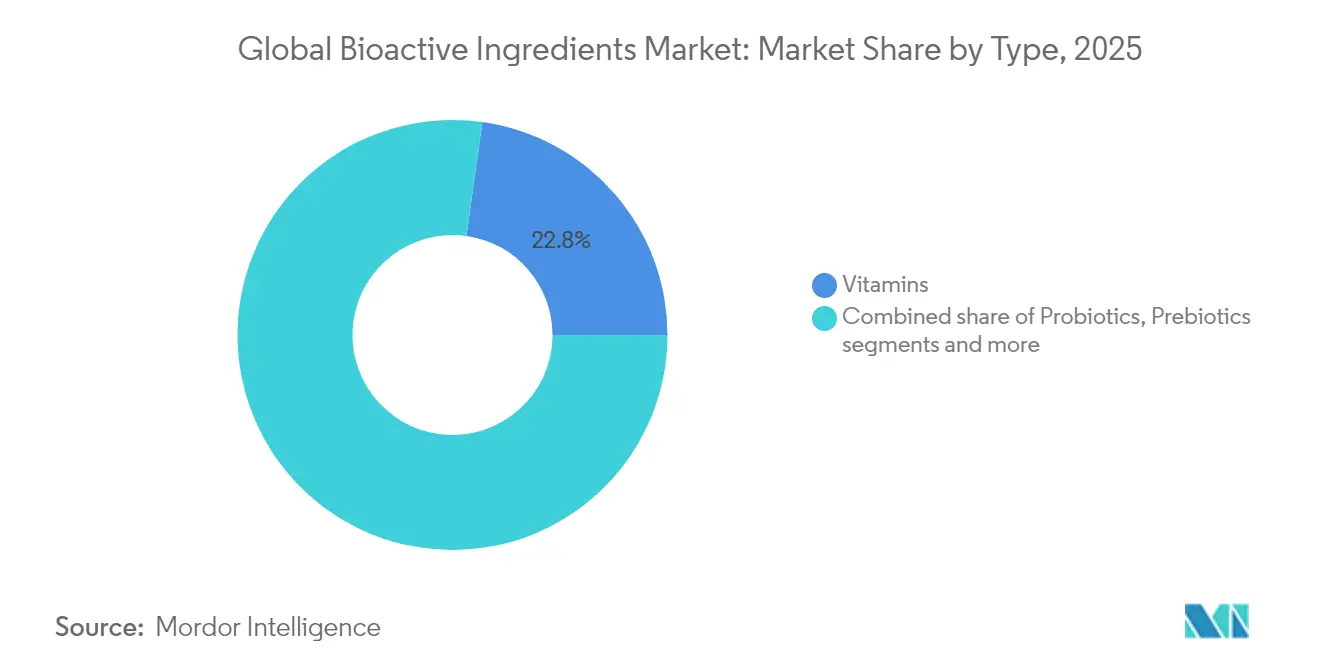
Probiotics Lead Innovation WaveVitamins hold the largest market share at 22.78% in 2025, due to their established consumer acceptance and broad use in dietary supplements and food fortification. The vitamin segment's dominance stems from increased consumer focus on preventive healthcare, growing fortification mandates across countries, and rising demand in developing markets. The omega-3 fatty acids segment faces supply chain difficulties, as increased contamination cases require stricter testing procedures and quality assurance measures. These challenges primarily affect fish oil-based omega-3 sources, leading manufacturers to explore alternative sources like algae and krill oil while implementing advanced purification technologies.
The probiotics segment is projected to grow at a CAGR of 9.04% through 2031, driven by expanding knowledge of gut health and microbiome research developments. The growth trajectory is particularly evident in functional foods, where manufacturers are incorporating diverse probiotic strains to meet consumer demand. In the beverage sector, probiotic-enriched drinks continue to gain market share, especially in dairy-based and plant-based alternatives. The dietary supplements category shows robust growth, with consumers increasingly seeking specialized probiotic formulations for specific health benefits. The prebiotics segment demonstrates steady growth, primarily through ingredients like inulin and fructooligosaccharides that complement probiotic products.



Source:
Microbial Innovation Disrupts Plant DominancePlant-based sources hold a 62.48% market share in 2025, driven by consumer demand for sustainable options and regulatory approval of botanical ingredients. These sources benefit from well-established supply chains, extensive scientific validation, and cost-effective production methods. Recent agricultural innovations and enhanced extraction processes have improved both yield and quality of botanical ingredients, strengthening their market position. The widespread acceptance of plant-based colors is further supported by their proven safety record and compatibility with various food applications. The market dominance is reinforced by continuous research and development efforts focused on improving color stability and expanding the range of natural shades available.
Microbial-based alternatives are growing at a 10.31% CAGR, primarily due to innovations in precision fermentation that enable the production of complex color molecules. This growth is driven by new fermentation facility investments, improved production strains, and advanced bioprocessing methods. The technology enables consistent year-round production while reducing environmental impact and maintaining product quality standards. Microbial sources offer advantages in scalability and resource efficiency compared to traditional extraction methods. The segment's growth is further accelerated by increasing industry adoption and ongoing technological advancements in fermentation processes.
Form:
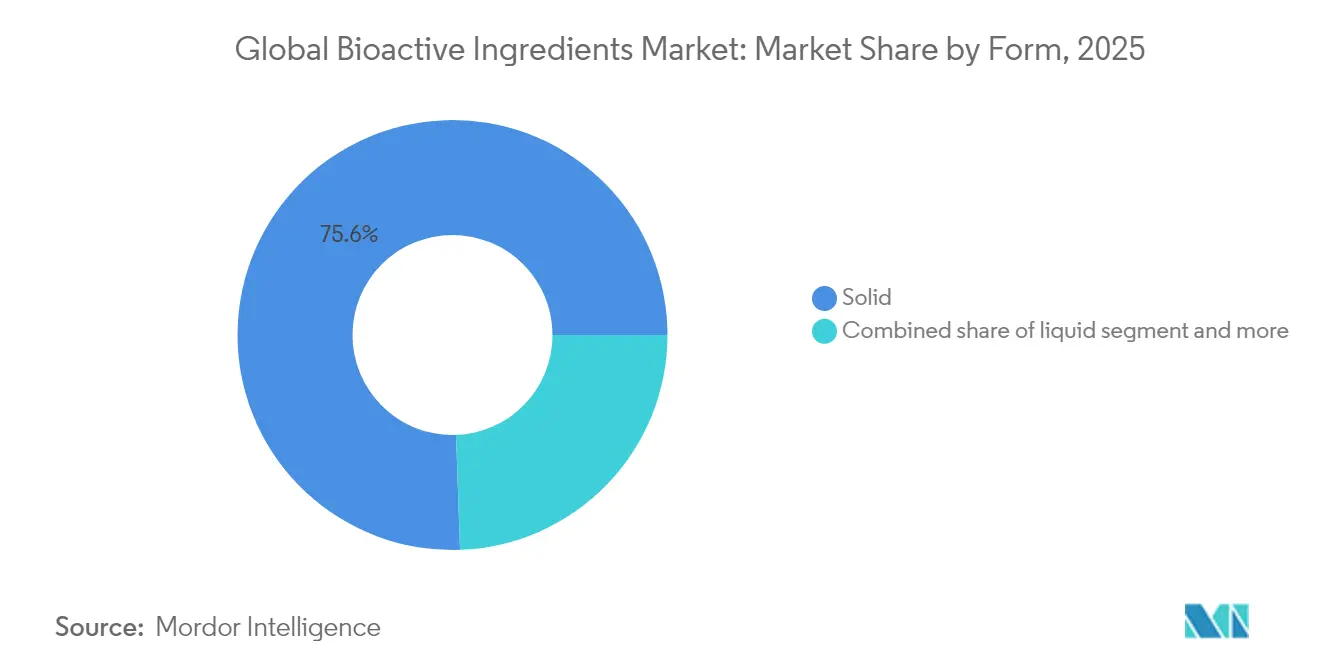
Liquid Applications Drive Technology InnovationSolid forms maintain a dominant 75.56% market share in 2025, driven by established manufacturing processes and widespread consumer acceptance. The prevalence of tablets, capsules, and powder formulations reflects their proven track record in delivering consistent dosage and stability. These forms benefit from well-established quality control measures and standardized production methods, making them cost-effective for manufacturers. Consumer familiarity with solid forms, coupled with their convenience in storage and transportation, contributes to their market leadership. Additionally, solid forms offer extended shelf life and precise dosage control, making them particularly suitable for a wide range of nutritional and pharmaceutical applications.
Liquid forms are experiencing the highest growth rate with an 11.08% CAGR, due to their superior bioavailability, rapid absorption, and ease of consumption. Liposome technology enables liquid formulations to encapsulate both hydrophilic and hydrophobic bioactive compounds, enhancing stability and therapeutic efficacy while reducing side effects. Nanoencapsulation technology improves liquid applications by increasing the solubility and bioavailability of hydrophobic molecules. The use of Facilitated Self-Assembling Technology (FAST) eliminates the need for additional surfactants or stabilizers. The market share of liquid forms is expected to increase as developments in stability and formulation technology continue to advance.
Application:
Food and Beverages Accelerate Functional IntegrationDietary supplements dominate the market with a 35.68% share in 2025, driven by established consumer behavior and regulatory frameworks for nutraceutical applications. This market leadership results from increased health awareness, aging populations seeking preventive healthcare, and extensive distribution networks through pharmacies and health stores. Manufacturers are expanding beyond traditional supplements to develop integrated lifestyle products that offer health benefits through multiple consumption formats. The product range now includes specialized formulations for sports nutrition, weight management, immune support, and cognitive health, addressing specific consumer segments and health needs.
The food and beverages segment demonstrates a 10.76% CAGR, propelled by functional food development and consumer interest in integrated nutrition through daily diets. This expansion reflects consumer preferences for fortified products and clean-label solutions. Manufacturers incorporate bioactive ingredients across bakery products, dairy alternatives, beverages, and confectionery items. Current market offerings include omega-3 fortified plant-based beverages, probiotic-enriched snacks, and antioxidant-enhanced breakfast cereals, meeting both nutritional requirements and consumer preferences.
Geography Analysis
Europe Bioactive Ingredients Market
Europe holds 34.12% market share in 2025, driven by robust regulations and high consumer health awareness. The European Food Safety Authority's updated novel food guidance, effective February 2025, improves application processes through standardized documentation and digital platforms. Germany leads consumption through strong retail distribution networks, while the United Kingdom focuses on plant-based innovations. France emphasizes natural ingredient applications, and the Netherlands has emerged as a center for precision fermentation and sustainable ingredient innovation.
APAC Bioactive Ingredients Market
Asia-Pacific exhibits the highest growth rate at 10.61% CAGR through 2031, supported by increasing disposable incomes and health awareness. China leads regional consumption despite supply chain challenges, with significant expansion in domestic ingredient manufacturing. India presents substantial growth opportunities with new regulatory approvals and government support for traditional medicine ingredients. Australia maintains high regulatory standards through strict quality control measures, while ASEAN countries develop harmonized guidelines. Indonesia, Thailand, and Vietnam improve testing infrastructure to meet rising health demand.
North America Bioactive Ingredients Market
North America displays established market characteristics with comprehensive regulatory structures and consistent supplement consumption. The FDA's GRAS rule modifications enhance ingredient transparency through mandatory electronic notifications and safety documentation. Manufacturers face new compliance requirements, including additional safety studies and expert panel evaluations. Canada and Mexico experience increased tariff impacts on specialty ingredients and botanical extracts. The United States advances precision nutrition through artificial intelligence applications and extensive clinical research programs.
Note: Segment shares of all Individual regions will be available upon report purchase

Regulatory Landscape
Bioactive ingredients used in food and supplements are governed by pre-market safety and permitted-use frameworks that vary by jurisdiction, affecting time-to-market and the type of evidence required. In the European Union, food additive approvals follow the positive list and specifications model under Regulation (EC) No 1333/2008, while EFSA updated its administrative guidance for applications on new nutrient sources for submissions to the European Commission from February 1, 2025. The update requires more detailed documentation and increases expectations around transparency. In the United Kingdom, authorized lists also continue to evolve, including the June 2024 Food Additives and Novel Foods (Authorisations and Miscellaneous Amendments) Regulations that removed 22 flavouring substances from the authorized list in England.
In the United States, FDA actions in colors and related ingredient categories illustrate continuing regulatory throughput for nature-derived and biotech-derived inputs, alongside tighter scrutiny of some legacy synthetic ingredients. FDA communications around color additive decisions, including gardenia genipin blue, and Federal Register amendments for color additive regulations underscore the need for compliant manufacturing practices and well-prepared dossiers. In India, FSSAI moved prior approval and authorization applications exclusively to the ePAAS portal effective June 1, 2026, signaling a broader shift toward digital, trackable submissions that changes how global suppliers structure, standardize, and manage regulatory filings across markets.
Value Chain Analysis
The bioactive ingredients value chain begins with upstream feedstocks and strain inputs, including botanical crops, algae, microbial cultures, and animal-derived materials, before moving into extraction, fermentation or other bioprocessing, purification, and drying or stabilization. Standardization follows to meet potency and purity specifications. Contract manufacturers and technology providers then support intermediate steps, such as encapsulation and delivery systems like liposomes and nanoencapsulation, which target improved stability and bioavailability. Formulators incorporate bioactives into dietary supplements and functional food and beverage products, with compliance requirements overlaying each stage. In the EU, the additive positive list system under Regulation (EC) No 1333/2008 and, in the US, FDA safety standards for food additives and GRAS shape testing, documentation, and quality systems.
Downstream channels include brand owners, private label manufacturers, and distributors supplying pharmacies, health stores, and modern retail, with e-commerce playing an increasingly visible role for supplements. Bottlenecks tend to center on raw material price volatility and concentrated supply chains, particularly in vitamins, as well as variability in natural inputs that makes consistent specifications and scale-up more difficult. Market participants are also adapting by pursuing more resilient sourcing, including non-fish-based options such as microalgae and krill oil for omega-3, and by strengthening traceability through tighter supplier qualification, inventory buffering, and earlier supply-chain feasibility checks during R&D to reduce the risk of reformulation delays when demand accelerates.
Competitive Landscape
The bioactive ingredients market exhibits moderate concentration, with consolidation accelerating through strategic acquisitions targeting specialized capabilities and geographic expansion. Market leaders in the market include Archer-Daniels-Midland Company, International Flavors & Fragrances Inc., Kerry Group plc, BASF SE, and Cargill, Incorporated.
Market concentration remains distributed among established players, though recent mergers and acquisition activity indicate industry maturation toward integrated platforms combining ingredient production, delivery technology, and application expertise.
Technology differentiation emerges as a key competitive factor, with companies leveraging precision fermentation, nanotechnology delivery systems, and AI-driven personalization to capture market share. Emerging disruptors include precision fermentation companies like Better Dairy, developing complex proteins through yeast strains, while established players face pressure from cost-effective synthetic alternatives and supply chain vulnerabilities requiring strategic diversification beyond traditional sourcing regions.
Global Bioactive Ingredients Industry Leaders
-
Archer-Daniels-Midland Company
-
International Flavors & Fragrances Inc.
-
Kerry Group plc
-
BASF SE
-
Cargill, Incorporated
- *Disclaimer: Major Players sorted in no particular order
Global Bioactive Ingredients Market Companies Covered in this Report
- Archer-Daniels-Midland Company
- International Flavors & Fragrances Inc.
- Kerry Group plc
- BASF SE
- Cargill, Incorporated
- DSM-Firmenich AG
- Ingredion Incorporated
- Royal FrieslandCampina N.V.
- Chr. Hansen A/S
- Croda International Plc
- Evonik Industries AG
- Glanbia plc
- Symrise AG
- GNC Holdings, LLC
- Sabinsa Corporation
- Stryka Bioactive
- Advanced Enzyme Technologies
- BJP Laboratories
- AB-BIOTICS, SA
- Suedzucker AG

Market Opportunities and Future Outlook
Opportunities are emerging around microbe-derived and precision-fermented bioactives that address supply constraints and support more consistent specifications for higher-value molecules. In June 2026, the EU authorized The Protein Brewerys mycelium-based ingredient Fermotein under the Novel Food framework, reinforcing a commercial path for fermentation-derived functional ingredients in mainstream applications. In the United States, self-affirmed GRAS remains an entry route for novel bioactives, with Morinaga Milk Industrys LAC-Living (self-affirmed GRAS in July 2026) and Vivicis precision-fermented lactoferrin ingredient Vivitein LF (introduced in February 2026 after self-affirmed GRAS status) supporting product development in functional foods and dietary supplements where stability and scientifically positioned benefits drive differentiation.
Portfolio building and supply-chain circularity also create room in functional fibers and prebiotic systems, particularly when linked to clean-label and upcycled sourcing claims. Ingredion Incorporateds June 2026 acquisition of Benicaros, a prebiotic fiber derived from upcycled carrot pomace, points to continued interest from large ingredient platforms in scalable, application-ready fibers for use across supplements and food and beverage formats. In APAC, investment in health science and R&D is becoming more explicit, including Kirin Holdings establishment of Kirin Health Science International in Australia in February 2026 to unify APAC activities and expand longer-term R&D commitment, supporting a broader pipeline of bioactive concepts tied to immune, gut, and healthy aging positioning.
Recent Industry Developments in Global Bioactive Ingredients Market
- April 2026: IFF launched PureStrong, a probiotic strain (Limosilactobacillus reuteri) developed specifically for canine digestive health under its HOWARU Pet portfolio. The launch extends bioactive ingredient innovation into companion animal nutrition, where formulation stability and targeted functionality support premium positioning across finished products.
- June 2025: Better Dairy announced development of human osteopontin through precision fermentation using yeast strains, targeting infant formula applications. This advances the commercialization pathway for rare, high-value bioactives by decoupling supply from traditional animal-derived sources and improving scalability for regulated nutrition categories.
- April 2024: The European Commission authorized five new novel foods, including the monosodium salt of L-5-methyltetrahydrofolate and beta-glucan from Euglena gracilis, expanding permitted bioactive options with defined use conditions. The decision broadened the set of authorized ingredients available for formulation in food categories where compliance hinges on specified maximum levels and labeling requirements.


Global Bioactive Ingredients Market Report Scope and Research Methodology
Market Definition and Coverage
For this methodology, the bioactive ingredients market covers revenue earned from bioactive compounds and ingredient systems sold for use in functional foods and beverages, dietary supplements, animal nutrition, personal and beauty care, and pharmaceutical formulations across major regions.
Scope exclusions: We exclude finished consumer products and retail margins, and we count only the ingredient-level value captured at manufacturer or supplier selling prices.
Segments Covered in This Report
-
By Type
- Vitamins
- Probiotics
- Prebiotics
- Omega-3 Fatty Acids
- Carotenoids
- Plant Extracts
- Minerals
- Others
-
By Source
- Plant-based
- Microbial-based
- Animal-based
- Others
-
By Form
- Solid
- Liquid
- Others
-
By Application
- Dietary Supplements
- Food and Beverages
- Animal Nutrition
- Others
-
Geography
-
North America
- United States
- Canada
- Mexico
- Rest of North America
-
Europe
- Germany
- United Kingdom
- Italy
- France
- Spain
- Netherlands
- Rest of Europe
-
Asia-Pacific
- China
- India
- Japan
- Australia
- South Korea
- Rest of Asia-Pacific
-
South America
- Brazil
- Argentina
- Rest of South America
-
Middle East and Africa
- South Africa
- Saudi Arabia
- United Arab Emirates
- Rest of Middle East and Africa
-
North America
Data Sources, Market Sizing, and Validation
Desk Research
Desk research was used to map market structure, validate demand signals, and set realistic ranges for volumes and pricing, before assumptions were tested through interviews. Public sources that helped anchor this work included materials such as FDA food and supplement guidance, USDA food availability and trade statistics, Eurostat production and external trade data, UN Comtrade HS-code trade flows, and peer-reviewed nutrition and functional-ingredient journals.
We also reviewed company annual reports, investor presentations, and reputable press coverage to understand capacity additions, formulation trends, and regional demand shifts. Where needed, paid subscription data for company financials and a patent database were used to confirm product pipelines and commercialization timing. The desk sources listed here are illustrative only, and we used many other public references for data collection, cross-checking, and clarification.
Primary Interviews and Surveys
Primary work focused on validating what is actually purchased and priced as a bioactive ingredient across food, supplement, personal care, and pharma use cases, then stress-testing key assumptions behind volumes and ASP movement. We spoke with ingredient suppliers, formulators, distributors, and downstream buyers across APAC, EMEA, and the Americas to close gaps left by public data and reconcile the final totals.
We specifically used respondent input to confirm how buyers treat formulation intensity (dosage levels) and ingredient delivery form when moving from ingredient procurement to application-level demand, so the model would not overstate value for categories where ingredient-level sales are not consistently reported.
Distribution of primary research fieldwork respondents
| Company type | Respondent position | Region |
|---|---|---|
| Top tier: 28% | CXOs: 12% | APAC: 48% |
| Mid tier: 57% | Functional/Unit leaders: 28% | EMEA: 34% |
| Smaller Players: 15% | Managers: 60% | Americas: 18% |
Market-Sizing & Forecasting
Sizing starts with a top-down build that reconstructs ingredient demand from application-level consumption indicators, and then converts that demand into value using region-specific pricing. The result is corroborated with selective bottom-up approximations, such as sampled supplier revenue roll-ups, channel checks in key countries, and volume times ASP sanity checks for high-share ingredient groups.
Inputs used in the model include the mix shift between food and beverages, supplements, animal nutrition, personal care, and pharma, adoption of fortification and functional claims, regional trade flows for relevant ingredient categories, observed formulation intensity (dosage levels) by use case, and realistic ASP progression based on purity, delivery form, and supply tightness. Where bottom-up visibility is limited for smaller suppliers or fragmented botanicals, gaps are handled by applying conservative penetration and pricing bands that were reviewed with interviewees.
For forecasting, we used scenario analysis supported by short time-series smoothing on the most stable drivers, since demand changes can be uneven by region and by application. Assumptions on growth and pricing were aligned to expert expectations on regulatory shifts, product innovation cadence, and substitution between ingredient types when costs move.
Data Validation & Update Cycle
Outputs were checked against independent signals such as trade totals, disclosed ingredient revenue lines, and regional consumption trends to ensure implied volumes and prices stayed reasonable. When a country or application showed an unusual jump, the driver was traced back to a specific input and either corrected or re-justified through a second pass.
Before sign-off, a separate analyst review verifies calculations, unit consistency, and currency conversions, and then targeted re-contacts are triggered if a key assumption remains uncertain. Reports are refreshed annually, and interim updates are made when material events occur, such as regulation changes, major capacity shifts, or sharp raw material price moves. Right before delivery, we run a final check to ensure clients receive the most current view available.
Mordor Intelligence's Bioactive Ingredients Market Size Versus Other Published Estimates
Published market values for bioactive ingredients often do not match because the included value chain and the counted product forms can vary, even when report titles look the same. Differences also show up when one publisher uses a single global price curve, or when currency timing and refresh dates are not aligned.
The main gap comes from whether finished nutraceutical and functional-food product revenue is blended into totals, where Mordor Intelligence counts only ingredient-level sales and keeps the model tied to application demand and realistic dosage and ASP ranges.
Benchmark comparison
| Source | Market Size | Gaps in Research Methodology |
|---|---|---|
| Mordor Intelligence | USD 54.11 B (2026) | |
| Industry Publisher A | USD 65.16 B (2024) | Uses an earlier base year and applies a faster price and adoption ramp, which can lift totals when ASP increases are not constrained by observed formulation intensity. |
| Research Portal B | USD 54.41 B (2025) | Starts from a single stated base value and extends growth over a longer horizon, with limited visibility into application-level demand checks that keep ingredient-only totals consistent by region. |
The spread in the table is mostly explained by what gets counted as market value, and how pricing and adoption are carried forward year to year. By grounding totals in application demand indicators and then checking implied volumes and ASPs against external signals, the estimate stays traceable to clear inputs and repeatable steps.


Key Questions Answered in the Report
What is the current bioactive ingredients market size and how fast is it growing?
The bioactive ingredients market size reached USD 54.11 billion in 2026 and is expected to climb to USD 77.53 billion by 2031 at a 7.46% CAGR.
Which segment is expanding fastest within the bioactive ingredients market?
Probiotics stand out, advancing at a 9.04% CAGR through 2031 on the back of microbiome science and strong demand in Asia-Pacific.
Why are microbial sources gaining traction over traditional plant inputs?
Precision fermentation allows cost-effective, animal-free production of complex molecules like HMOs and collagen analogues, driving a 10.31% CAGR for microbial ingredients.
What are the main risks facing the bioactive ingredients industry?
Supply-chain concentration in China, raw-material price volatility, and varying international regulations present near-term headwinds challenging the market growth.
Page last updated on:


 Your data is secure and never sold or shared.


