
Asia Pacific Negative Pressure Wound Therapy Market Size and Share
Market Overview
| Study Period | 2020 - 2031 |
|---|---|
| Forecast Data Period | 2026 - 2031 |
| Base Year Market Size (2025) | USD 618.60 Million |
| Market Size (2026) | USD 662.83 Million |
| Market Size (2031) | USD 936.2 Million |
| Growth Rate (2026 - 2031) | 7.15 % |
| Market Concentration | Medium |
Major Players *Disclaimer: Major Players sorted in no particular order Image © Mordor Intelligence. Reuse requires attribution under CC BY 4.0. | |
Asia Pacific Negative Pressure Wound Therapy Market Analysis by Mordor Intelligence
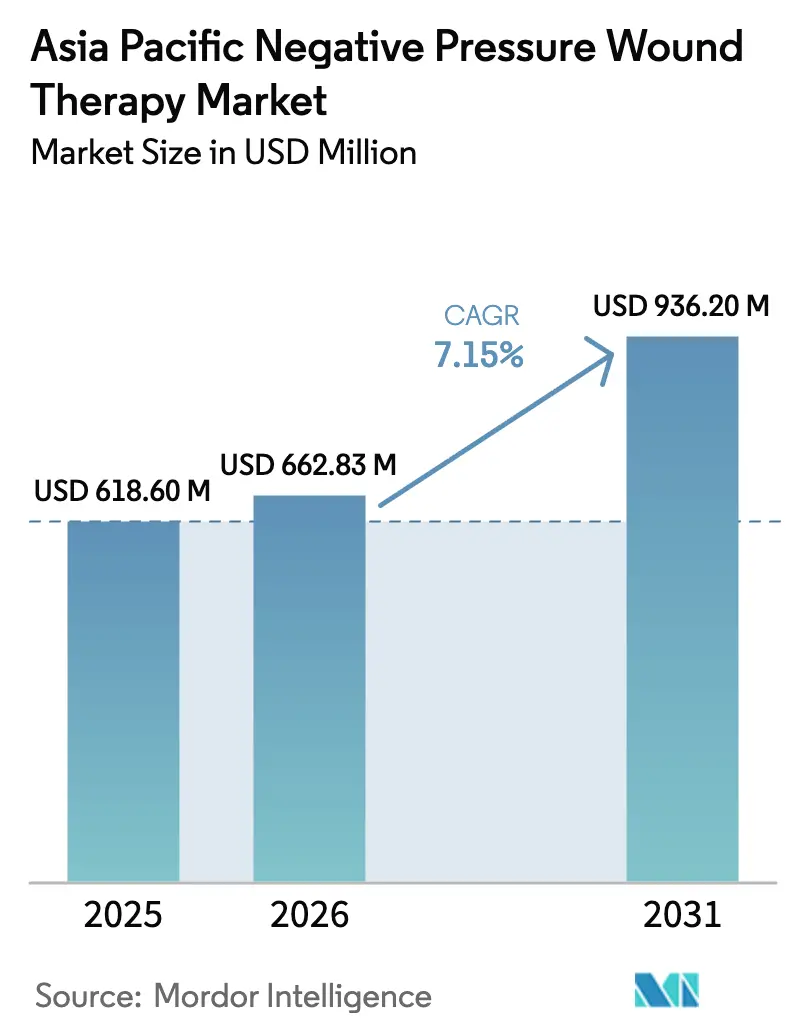
The Asia Pacific Negative Pressure Wound Therapy Market size was valued at USD 618.60 million in 2025 and estimated to grow from USD 662.83 million in 2026 to reach USD 936.2 million by 2031, at a CAGR of 7.15% during the forecast period (2026-2031).
The major factors driving the market growth include the increasing number of accidents and traumatic events, the rising incidence of chronic wounds such as diabetic foot in Asia Pacific (APAC) region.
The high number of accidents and injuries in APAC is likely to increase the demand for advanced wound care solutions like NPWT during the forecast period. For instance, according to the data released by the Australian Institute of Health and Welfare (AIHW) in July 2023, approximately 5,600 persons were hospitalized in Australia due to open wound injuries caused by road accidents. Similarly, as per the article published by the Japan Times in January 2023, approximately 301,193 accidents and 356,419 injuries were recorded in Japan in 2022. Therefore, due to the significant number of injuries due to road accidents, the demand for NPWT devices in APAC is projected to increase during the forecast period.
In addition, the rising incidence of chronic wounds and an increase in the number of burns are also major factors driving market growth. For instance, according to a report published by the BMC Public Health in July 2024, chronic burn wounds, particularly those affecting multiple anatomic sites, present significant challenges for healing due to their complexity and high risk of infection. In China, the number of burns inpatients was 333,995, including 222,480 males and 111,515 females in the country. In developing countries, the mortality rate from burns remains high, with region and gender differences contributing to varying susceptibility and burn locations, further complicating treatment outcomes. These factors drive increased demand for advanced wound care solutions, propelling the growth of the negative pressure wound therapy market.
Moreover, the increasing advancements in the negative pressure wound therapy is also expected to propel the market growth. For instance, according to a report published in the International Journal of Lower Extremity Wounds Journal in February 2024, the continuous advancements in Negative Pressure Wound Therapy (NPWT), including improved device technology and evidence-based clinical recommendations, are driving increased adoption in healthcare settings. The expanding range of treatable wounds, such as diabetic foot ulcers, pressure ulcers, and traumatic injuries, further strengthens the demand for NPWT solutions. Additionally, the proven benefits of NPWT, including enhanced wound healing, reduced infection rates, and improved patient comfort, make it a preferred choice for clinicians. As a result, these factors are expected to propel the growth of the NPWT market by increasing its integration into routine wound care management and expanding its global adoption.
In conclusion, the increasing prevalence of injuries, chronic wounds, and burns, coupled with advancements in negative pressure wound therapy, is expected to drive significant growth in the global NPWT market during the forecast period.
However, factors like the high cost of the device and treatment and complications associated with the NPWT device may impede market growth.
Note: Market size and forecast figures in this report are generated using Mordor Intelligence’s proprietary estimation framework, updated with the latest available data and insights as of 2026.
Market Trends and Insights
The Diabetic Foot Ulcer Segment is Expected to Hold a Significant Market Share Over the Forecast Period
A diabetic foot ulcer is a chronic wound that commonly develops on the feet of individuals with diabetes. These ulcers are typically slow to heal and can occur due to various factors related to diabetes, such as nerve damage, poor circulation, and reduced immune function.
The factors driving the growth of the diabetic foot ulcer segment in the Asia Pacific include the rising prevalence of diabetes and the increasing geriatric population in the country during the forecast period. For instance, according to a study published in the Journal of Foot and Ankle Research in December 2023, the increasing prevalence of diabetic foot ulcers (DFUs) in Australia, affecting approximately 1.2% to 1.5% of the diabetic population, is driving demand for advanced wound care solutions, particularly negative pressure wound therapy (NPWT). With DFUs recurring in 40% of cases within one year and 65% within three years, there is a pressing need for cost-effective interventions to improve healing outcomes and reduce hospital admissions, which range from 5.2 to 36.6 per 1000 person-years.
Moreover, the increasing demand for novel medications for diabetic foot ulcers are also expected to propel the growth of the segment. For instance, according to a study published in the Cell Press Journal in September 2024, the increasing prevalence of diabetes, coupled with the rising incidence of diabetic foot ulcers (DFUs), underscores the urgent need for advanced wound healing solutions. The therapeutic potential of mesenchymal stem cells (MSCs) in promoting angiogenesis, immunomodulation, and epithelialization, along with their ability to secrete antimicrobial peptides (AMPs) for infection control, is driving innovation in DFU treatment. Negative pressure wound therapy (NPWT) has demonstrated efficacy in reducing pro-inflammatory cytokines while enhancing growth factor expression, further complementing MSC-based interventions. As a result, the integration of MSCs with NPWT is expected to accelerate the growth of the DFU segment within the NPWT market by enhancing healing outcomes and addressing the limitations of conventional therapies.
Growing applications of negative pressure wound therapy in the region are also expected to boost the market growth. For instance, according to a study published in the Indian Journal of Orthpedics in November 2023, the increasing adoption of NPWT with instillation and dwell time (NPWTi-d-), which has demonstrated superior wound closure rates, reduced hospital stays, and lower complication rates compared to conventional methods. Advances in NPWTi-d-, including the integration of smart dressings, nanomaterials, and 3D-printed custom solutions, are further driving innovation and expanding its clinical applications. Additionally, the rising prevalence of chronic wounds, such as diabetic foot ulcers and post-surgical infections, along with a growing geriatric population, is creating a strong demand for more effective wound management solutions.
Therefore, the increasing prevalence of injuries, chronic wounds, and burns, coupled with advancements in negative pressure wound therapy, is expected to drive significant growth in the diabetes foot ulcers market during the forecast period.
India is Expected to Register a Significant Share of the Market Over the Forecast Period
Major factors driving the growth of the negative pressure wound therapy market in India include the rising number of chronic injuries in the country due to road accidents and the high prevalence of diabetes.
The rising number of road accidents in India is projected to drive the demand for NPWT devices for the treatment of various chronic injuries. For instance, according to a report published by the Data for India in January 2025, over 450,000 reported accidents in the country, resulting in over 443.4 thousand injuries. This marks an increase of 11.9% in accidents and 15.3% in injuries compared to the previous year.
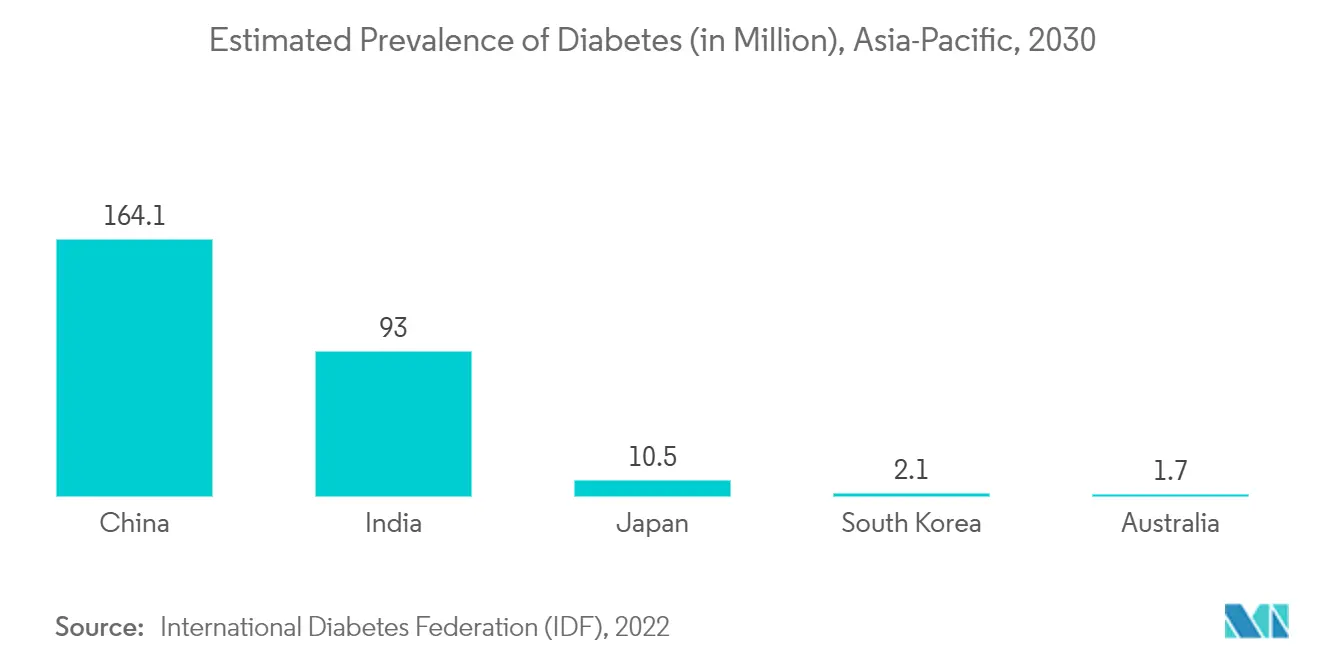
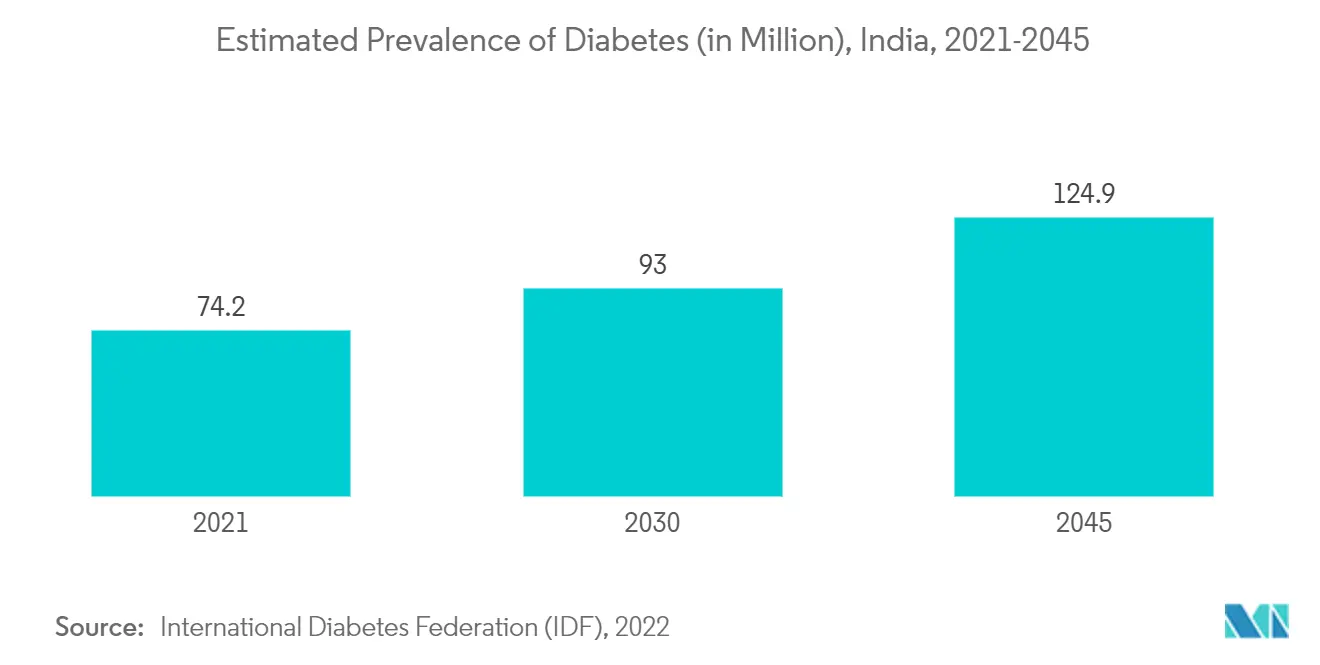
In addition, the major factor contributing to the growth of the Indian NPWT market is the growing prevalence of diabetes, pressure ulcers, and burns. For instance, according to a report published by the Indian Council of Medical Research – India Diabetes in August 2023, the prevalence of diabetes is 10.1 crores in 2023. Thus, the increasing prevalence of diabetes is driving demand. Also, the prevalence of diabetes among the APAC countries is the second largest in India, followed by China. Thus, the high prevalence of diabetes in the country is driving the market growth.
Furthermore, the high burden of DFU in India is also driving the market growth. For instance, as per the data from Healthium Medtech published in October 2022, it was found that a diabetic's lifetime risk of developing a foot ulcer has been found to be as high as 25% in India. As of 2022, about 100,000 people in India have had their feet amputated as a result of complications from untreated diabetic foot ulcers.
Therefore, the growing prevalence of diabetic foot ulcers, coupled with advancements in negative pressure wound therapy and novel treatment innovations, is driving significant expansion in India Negative pressure wound therapy market.
Competitive Landscape
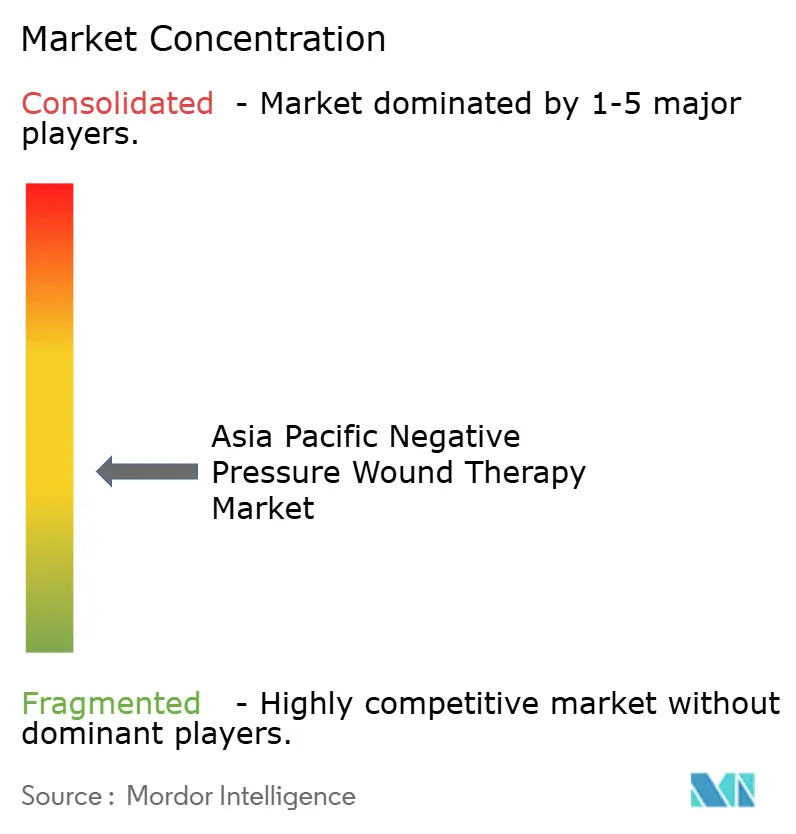
The competitive landscape of the Asia Pacific Negative Pressure Wound Therapy market is characterized by a mix of established companies and emerging players. The market is moderately consolidated due to a few large companies dominating the majority of market share. Additionally, many companies offer specialized solutions, contributing to a vibrant and evolving ecosystem. Some of the major players in the market include Solventum Corporation, Cardinal Health Inc., Smith & Nephew Plc, Direct Healthcare Group, and DeRoyal Industries, Inc., among others.
Asia Pacific Negative Pressure Wound Therapy Industry Leaders
-
Smith & Nephew Plc
-
DeRoyal Industries, Inc.
-
Solventum Corporation
-
Direct Healthcare Group
-
Cardinal Health, Inc.
- *Disclaimer: Major Players sorted in no particular order
Asia Pacific Negative Pressure Wound Therapy Market Companies Covered in this Report
- Solventum Corporation
- Direct Healthcare Group
- Smiths Group
- Otivio
- Molnlycke Health Care
- Medela
- DeRoyal Industries
- Convatec Group plc
- Cardinal Health
- Hartmann Group
Recent Industry Developments in Asia Pacific Negative Pressure Wound Therapy Market
- September 2024: In September 2024, Solventum launched the V.A.C. Peel and Place Dressing globally, a combined dressing and drape designed for quick application within two minutes and suitable for continuous use by patients for up to seven days. This innovation represents the latest advancement in V.A.C. Therapy.
- April 2024: Smith+Nephew launched the RENASYS EDGE Negative Pressure Wound Therapy (NPWT) System, designed with a patient-focused approach for managing chronic wounds. The system’s lightweight and compact design ensures portability, while its discreet canister and quiet operation minimize disruption to patients’ everyday routines.
Asia Pacific Negative Pressure Wound Therapy Market Report Scope
As per the scope of the report, negative pressure wound therapy (NPWT) is a technique that uses a suction dressing to remove excess exudate and promote healing in acute or chronic wounds and second—and third-degree burns.
The Asia Pacific Negative Pressure Wound Therapy Market is Segmented by Product, Wound Type, end user, and by country. The product segment is further bifurcated into reusable devices and single-use devices. The wound type is further segmented into diabetic foot ulcer, pressure ulcer, venous leg ulcer, burn wounds, and others. The End-User segment is further divided into hospitals, homes, and other end-users. The country segment is further segmented into China, Japan, India, Australia, South Korea, and the rest of Asia Pacific. The report offers the value (in USD) for the above segments.
Segmentation Overview
| Reusable Device |
| Single-use Device |
| Diabetic Foot Ulcer |
| Pressure Ulcer |
| Venous Leg Ulcer |
| Burn Wounds |
| Other Wound Types |
| Hospitals |
| Homecare |
| Other End Users |
| China |
| Japan |
| India |
| Australia |
| South Korea |
| Rest of Asia-Pacific |
| By Product | Reusable Device |
| Single-use Device | |
| By Wound Type | Diabetic Foot Ulcer |
| Pressure Ulcer | |
| Venous Leg Ulcer | |
| Burn Wounds | |
| Other Wound Types | |
| By End User | Hospitals |
| Homecare | |
| Other End Users | |
| By Country | China |
| Japan | |
| India | |
| Australia | |
| South Korea | |
| Rest of Asia-Pacific |
Key Questions Answered in the Report
How big is the Asia Pacific Negative Pressure Wound Therapy Market?
The Asia Pacific Negative Pressure Wound Therapy Market size is expected to reach USD 662.83 million in 2026 and grow at a CAGR of 7.15% to reach USD 936.2 million by 2031.
What is the current Asia Pacific Negative Pressure Wound Therapy Market size?
In 2026, the Asia Pacific Negative Pressure Wound Therapy Market size is expected to reach USD 662.83 million.
Who are the key players in Asia Pacific Negative Pressure Wound Therapy Market?
Smith & Nephew Plc, DeRoyal Industries, Inc., Solventum Corporation, Direct Healthcare Group and Cardinal Health, Inc. are the major companies operating in the Asia Pacific Negative Pressure Wound Therapy Market.
What years does this Asia Pacific Negative Pressure Wound Therapy Market cover, and what was the market size in 2025?
In 2025, the Asia Pacific Negative Pressure Wound Therapy Market size was estimated at USD 618.60 million. The report covers the Asia Pacific Negative Pressure Wound Therapy Market historical market size for years: 2019, 2020, 2021, 2022, 2023, 2024 and 2025. The report also forecasts the Asia Pacific Negative Pressure Wound Therapy Market size for years: 2026, 2027, 2028, 2029, 2030 and 2031.