
Wound Debridement Market Size and Share
Market Overview
| Study Period | 2020 - 2031 |
|---|---|
| Market Size (2026) | USD 5.54 Billion |
| Market Size (2031) | USD 7.29 Billion |
| Growth Rate (2026 - 2031) | 5.62 % |
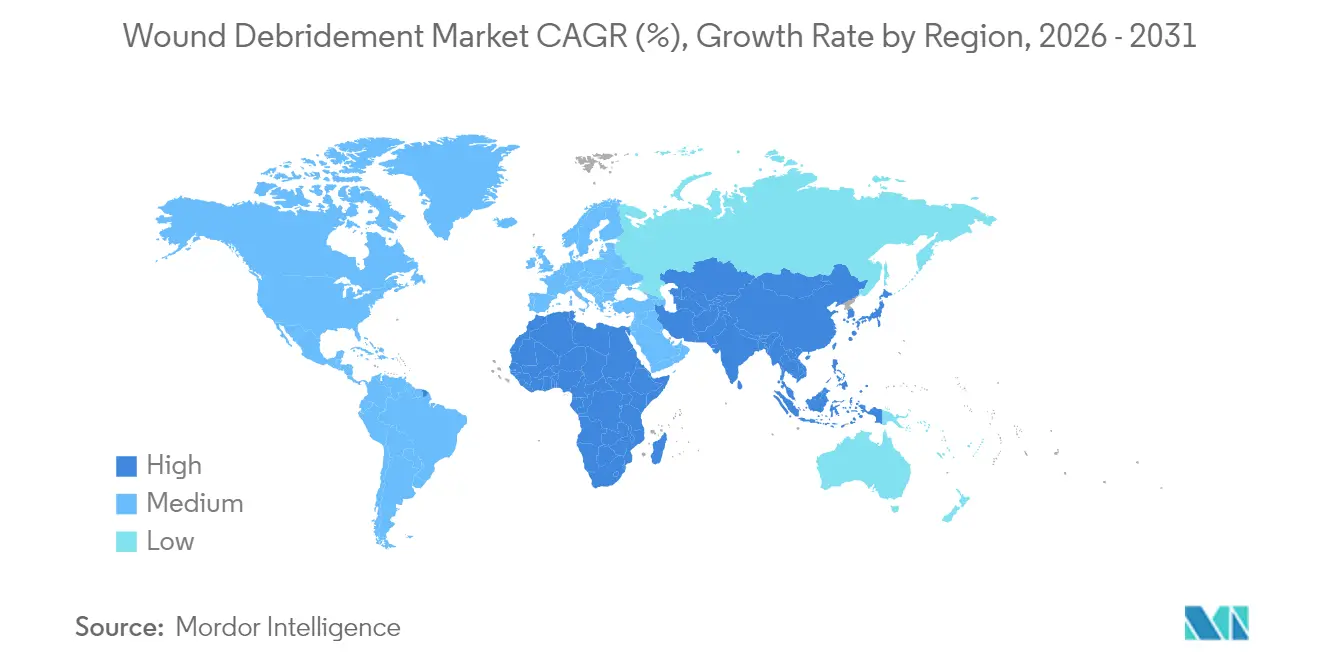
| Fastest Growing Market | Asia Pacific |
| Largest Market | North America |
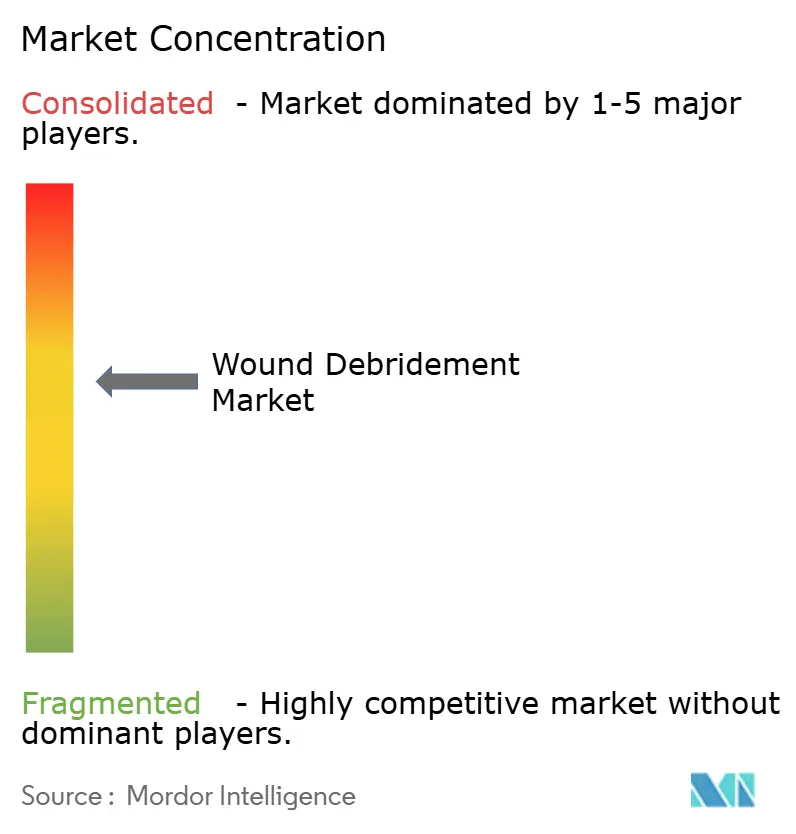
| Market Concentration | Medium |
Major Players *Disclaimer: Major Players sorted in no particular order Image © Mordor Intelligence. Reuse requires attribution under CC BY 4.0. | |
Wound Debridement Market Analysis by Mordor Intelligence
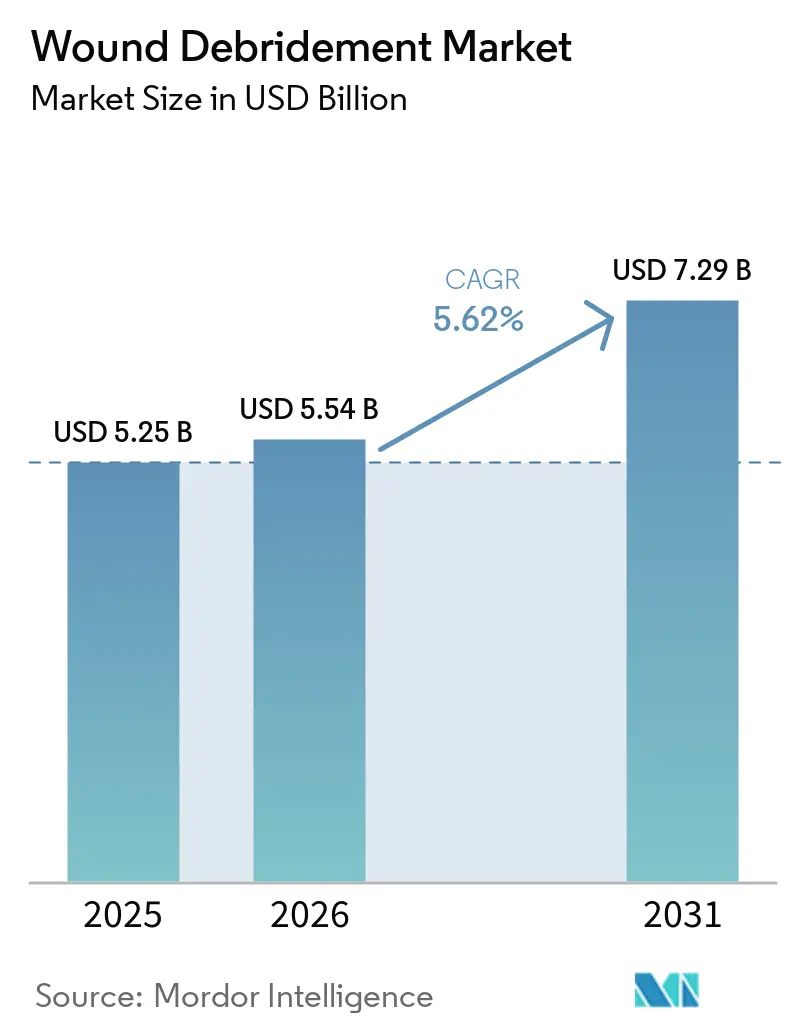
wound debridement market size in 2026 is estimated at USD 5.54 billion, growing from 2025 value of USD 5.25 billion with 2031 projections showing USD 7.29 billion, growing at 5.62% CAGR over 2026-2031. Demand is propelled by population ageing, the rising burden of diabetes, and the fast uptake of AI-guided diagnostic tools that shorten time to treatment. Health systems also show growing preference for ultrasonic and hydrosurgical technologies that remove necrotic tissue without harming viable structures. Better clinical outcomes, shorter hospital stays, and mounting pressure to curb long-term care costs further support adoption. Meanwhile, sustainability concerns about single-use disposables and tighter regulatory oversight steer innovators toward greener materials and higher-quality evidence.
Key Report Takeaways
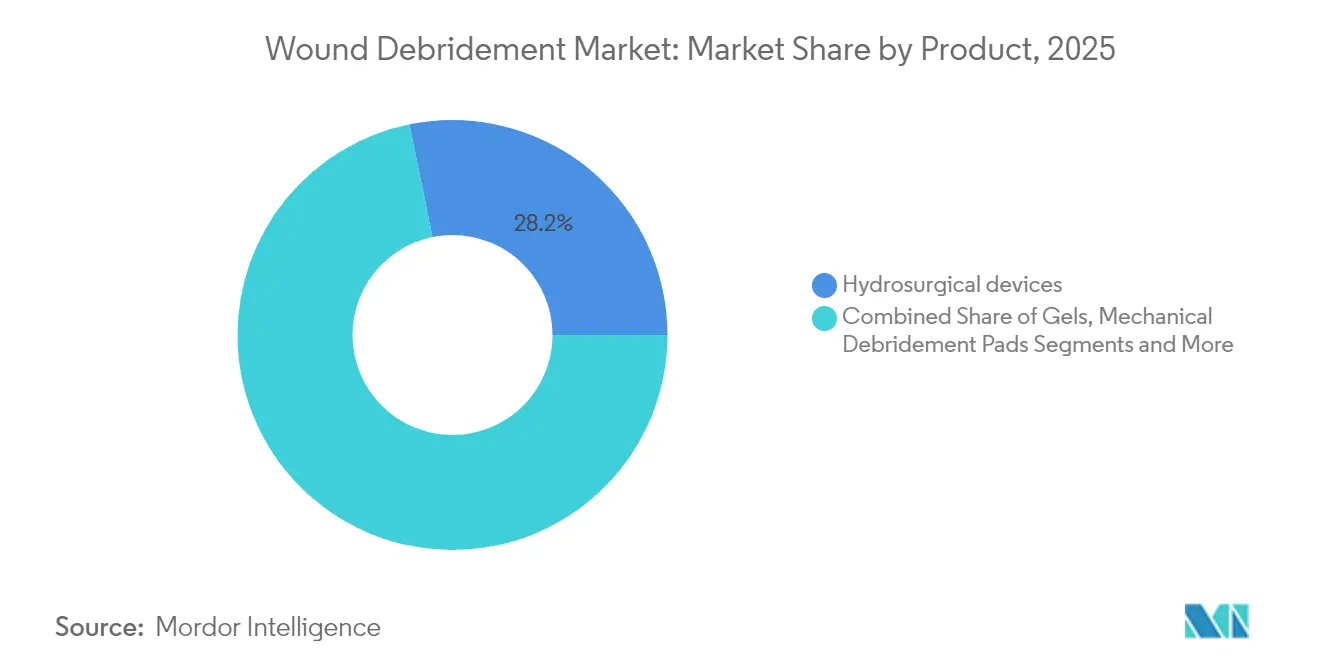
- By product type, hydrosurgical devices led with 28.21% of wound debridement market share in 2025, while ultrasonic devices post the fastest 9.28% CAGR to 2031.
- By method, surgical debridement held 39.05% of the wound debridement market size in 2025; ultrasonic methods are advancing at an 8.44% CAGR through 2031.
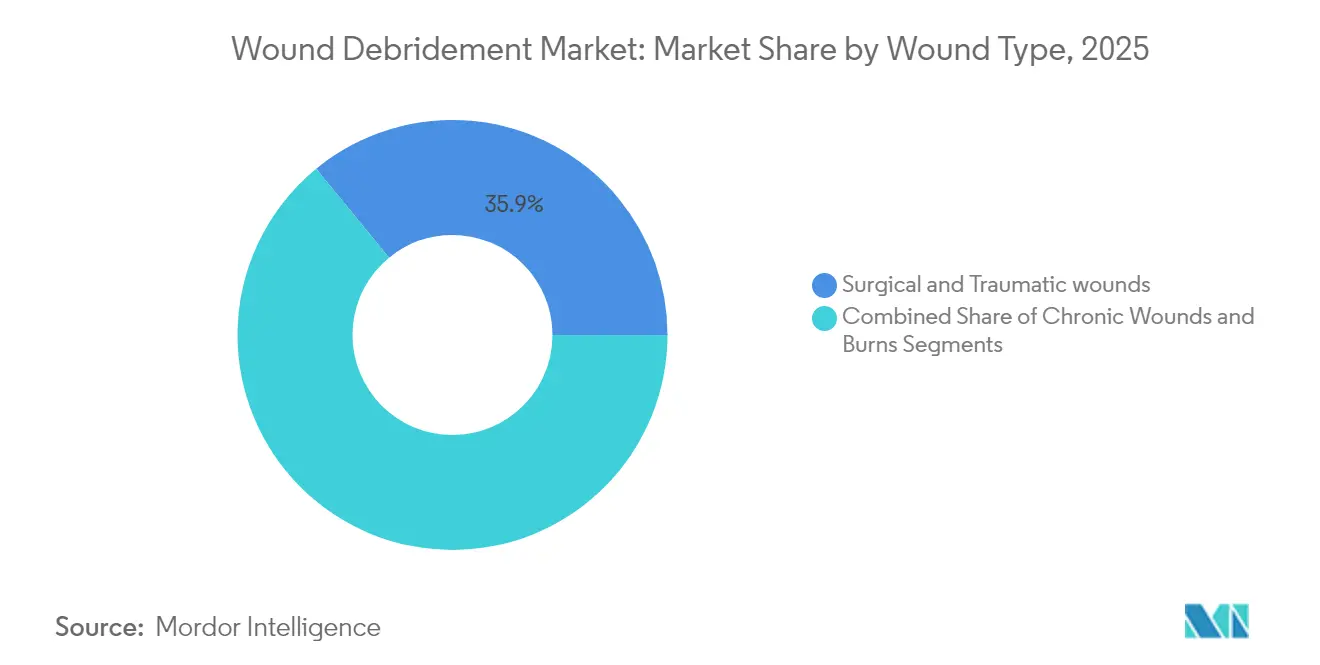
- By wound type, surgical and traumatic wounds accounted for 35.93% of the overall market in 2025, yet burns will rise at a 9.31% CAGR.
- By end user, hospitals dominated with 52.34% share in 2025, whereas home-care settings are growing 8.05% each year.
- By geography, North America commanded 37.02% revenue in 2025; Asia-Pacific is forecast to expand at a 6.86% CAGR.
Note: Market size and forecast figures in this report are generated using Mordor Intelligence’s proprietary estimation framework, updated with the latest available data and insights as of 2026.
Market Trends and Insights
Drivers Impact Analysis of Wound Debridement Market*
| Driver | (~) % Impact on CAGR Forecast | Geographic Relevance | Impact Timeline |
|---|---|---|---|
| Rising Incidence Of Diabetic Foot & Venous Leg Ulcers | +1.2% | Global, concentrated in North America & Europe | Long term (≥ 4 years) |
| Growing Volume Of Complex Surgical Procedures | +0.8% | North America & EU, expanding to APAC | Medium term (2-4 years) |
| Rapid Adoption Of Advanced Hydrosurgical & Ultrasonic Systems | +1.5% | North America & Europe, early APAC adoption | Short term (≤ 2 years) |
| Ageing Population With Impaired Wound Healing | +0.9% | Global, acute in developed economies | Long term (≥ 4 years) |
| AI-Enabled Wound-Assessment Platforms Accelerating Debridement Decisions | +0.7% | North America & Europe, pilot programs in APAC | Medium term (2-4 years) |
| Biofilm-Targeting Topical Enzymes Improving Debridement Efficiency | +0.6% | Global, regulatory approval dependent | Medium term (2-4 years) |
| Source: Mordor Intelligence | |||
Rising incidence of diabetic foot and venous leg ulcers
Diabetic foot ulcers affect 15–25% of people living with diabetes, and 85% of diabetes-related amputations are preceded by such ulcers. Evidence now shows that early, aggressive debridement reaching beyond wound edges removes biofilm and hyperproliferative tissue and markedly lowers amputation risk. This clinical shift increases demand for enzymatic and ultrasonic platforms that deliver tissue-selective removal without collateral damage, while preventive tools such as pressure-altering insoles further elevate upstream intervention needs.[1]
Rapid adoption of advanced hydrosurgical and ultrasonic systems
Saline-jet hydrosurgery, exemplified by the VERSAJET platform, streamlines procedures and preserves healthy tissue. Ultrasonic devices such as SonicOne remove devitalized tissue through low-frequency vibration, are painless, and foster granulation. Hospitals and outpatient centres quickly adopt these modalities as studies report faster closure rates and shorter admissions, accelerating the wound debridement market transition toward non-contact, precision-guided care.
Growing volume of complex surgical procedures
Higher surgical complexity, including necrotizing soft tissue infections that require debridement within 72 hours, fuels demand for precise devices that minimise blood loss and reduce operating time. Integrating debridement with negative-pressure wound therapy leads providers to favour multi-modal platforms. Case series using biodegradable temporising matrices in Asian patients achieved 94.6% healing, highlighting the importance of region-specific solutions.[2]
Ageing population with impaired wound healing
Chronic wounds now affect close to 2% of the global population, heavily weighted toward older adults with diabetes, vascular disease, or malnutrition. Smart bandages delivering electric stimulation and real-time data accelerate closure, while gentler hydrosurgical and enzymatic methods respect fragile skin. These demographic dynamics secure long-run growth for the wound debridement market.[3]
Restraints Impact Analysis of Wound Debridement Market*
| Restraint | (~) % Impact on CAGR Forecast | Geographic Relevance | Impact Timeline |
|---|---|---|---|
| High Overall Treatment & Device Costs | -0.8% | Global, acute in emerging economies | Short term (≤ 2 years) |
| Shortage Of Certified Wound-Care Specialists In Emerging Economies | -0.6% | APAC, MEA, Latin America | Long term (≥ 4 years) |
| Tightening FDA/EMA Scrutiny On Collagenase & Enzymatic Agents | -0.4% | North America & Europe | Medium term (2-4 years) |
| Sustainability Push Against Single-Use NPWT Canisters & Disposables | -0.3% | Europe & North America, expanding globally | Medium term (2-4 years) |
| Source: Mordor Intelligence | |||
High overall treatment and device costs
Average diabetic foot ulcer episodes cost EUR 4,888 per patient, with most spending tied to lengthier inpatient stays rather than devices. Payers therefore insist on robust evidence showing that premium platforms shorten time to closure or reduce complications before reimbursing higher prices. Providers respond by focusing on total cost-of-care analyses instead of front-end device costs.
Shortage of certified wound-care specialists
Specialist nurses and physicians remain concentrated in high-income markets, while chronic wounds rise fastest in emerging regions. Staffing gaps constrain adoption of advanced protocols and prompt interest in AI-enabled decision support and tele-mentoring that extend expertise across distance.
*Our forecasts treat driver/restraint impacts as directional, not additive. The impact forecasts reflect baseline growth, mix effects, and variable interactions.
Wound Debridement Market Segment Analysis
By Product:
Hydrosurgical devices maintain lead yet ultrasonic units gain groundHydrosurgical systems secured 28.21% of wound debridement market share in 2025 through their ability to excise devitalised tissue with minimal collateral trauma. Their popularity in operating rooms stems from faster set-up, better visibility, and lower infection risk. Despite this lead, ultrasonic devices are expanding at a 9.28% CAGR, aided by non-contact operation that eases patient discomfort and lowers cross-contamination. Enzymatic gels retain a place in chronic ulcer care, whereas mechanical pads find limited use when only superficial slough must be removed.
Ultrasonic technology builds momentum because adjustable amplitude lets clinicians fine-tune depth of action, which is invaluable for irregular burn beds and fragile diabetic ulcers. These advantages, together with shrinking capital costs, underpin ultrasonic disruption of the wound debridement market. By contrast, biologic methods such as maggot therapy remain a niche within the maggot debridement market because of cultural resistance. Regulatory scrutiny of antimicrobial dressings also pushes innovators toward mechanical options that sidestep resistance issues.

By Method:
Surgical dominance meets ultrasonic innovationSurgical debridement represented 39.05% of the wound debridement market size in 2025 on account of its role in emergency departments and trauma theatres. Its capacity to remove necrosis and biofilm in one session cements its status among vascular and orthopaedic surgeons. Enzymatic debridement follows, offering a chemical route for patients who cannot tolerate surgery.
Ultrasonic approaches, growing 8.44% yearly, combine precision with patient comfort and can be repeated in outpatient clinics, therefore lowering bed occupancy. Mechanical and autolytic routes continue to serve frail patients, while biologic strategies await clearer regulatory pathways after the FDA transferred oversight of medicinal maggots to CBER in late 2024.
By Wound Type:
Burns emerge as fastest climberSurgical and traumatic wounds contributed 35.93% of revenue in 2025, driven by high procedure volumes and reimbursement frameworks that reward rapid tissue clearance. Chronic ulcers, including diabetic, pressure, and venous leg ulcers, consume considerable resources because they demand weekly debridement plus infection control.
Burns create the sharpest growth at a 9.31% CAGR as early debridement within 72 hours improves graft take rates. Advanced antimicrobial dressings using silver, zinc, and bioactive compounds and the pipeline of cell-based therapies increase procedural complexity, calling for devices that adapt to evolving burn protocols.
By End User:
Home care sparks treatment decentralisationHospitals owned 52.34% of revenue in 2025 owing to operating-room infrastructure and multidisciplinary teams. Ambulatory centres occupy a middle ground, handling less complex wounds while delivering cost savings.
The shift to community settings is clear: home-care volumes are rising 8.05% each year. Remote monitoring bandages now transmit pH, temperature, and exudate data, allowing clinicians to direct care plans virtually. Compact ultrasonic handpieces and pre-filled enzymatic kits are under development to serve domiciliary markets, thereby growing the wound debridement market in non-hospital channels.
Geography Analysis
North America Wound Debridement Market
North America generated 37.02% of 2025 sales, anchored by high diabetes prevalence, generous reimbursement, and early uptake of AI-enabled assessment software. Smith+Nephew reported 3.8% underlying growth in its Advanced Wound Management franchise for Q1 2025, underscoring sustained regional demand. Regulations remain supportive, yet recent FDA warning letters emphasise manufacturing quality and favour well-capitalised firms.
Europe Wound Debridement Market
Europe remains an innovation hub, with start-ups progressing enzymatic and photonic devices and regulators tightening evidence requirements for antimicrobial agents. Environmental legislation that discourages single-use plastic canisters prompts suppliers to redesign negative-pressure wound therapy consumables.
APAC Wound Debridement Market
Asia-Pacific is the growth engine, forecast to deliver a 6.86% CAGR through 2031. Ageing populations, rising surgical volumes, and government investment in tertiary hospitals underpin expansion. ConvaTec has noted regulatory delays in China, yet local trials of biodegradable temporising matrices yielding 94.6% healing rates spotlight domestic appetite for advanced therapy. South-East Asian and South Asian nations invest in tele-mentoring networks to compensate for limited specialist density, a move that stimulates demand for AI-guided tools.
LATAM and MEA Wound Debridement Market
Latin America and the Middle East & Africa show slower uptake because of budget limits and workforce shortages, though incidence of chronic wounds is climbing. Multilateral aid programmes that sponsor diabetic foot clinics are expected to open new pockets of demand beyond 2027.
Regulatory Landscape
Regulation in wound debridement is tightening around clinical evidence, sterility and quality systems, and device classification, particularly for antimicrobial adjuncts and substance-based products used alongside debridement. In the United States, the FDA has been progressing a reclassification effort for certain pre-amendment wound dressings and liquid wound washes containing antimicrobials, with a May 2026 target for publication of the final rule. The update raises the compliance bar for labeling, clinical performance evidence, and manufacturing controls for affected SKUs.
In Europe, the Medical Device Regulation (EU) 2017/745 continues to drive higher documentation requirements through Article 61 clinical evaluation expectations, even when device categories receive procedural relief. In March 2026, the European Commission adopted delegated regulations including C(2026) 1798 to expand regulatory relief for devices categorized as Well-Established Technologies (WET), helping some manufacturers streamline certain obligations while keeping clinical evaluation and post-market requirements central to CE marking strategies. Across major markets, updated sterilization and quality system expectations, including ISO 11137-1:2025 for sterilization of healthcare products, reinforce supplier qualification and process validation requirements for both reusable instruments and single-use debridement consumables.
Value Chain Analysis
The wound debridement value chain spans specialized inputs, regulated manufacturing, channel partners, and clinical delivery settings. Upstream, key inputs include medical-grade polymers and foams for mechanical pads and dressing-adjacent kits, alongside biologic and biochemical feedstocks for enzymatic agents. Production can depend on a limited set of fermentation capabilities and tightly controlled purification processes, which increases the importance of supplier qualification under ISO 13485-aligned quality management and validated sterilization routes for finished goods. These factors influence lead times and cost of goods for both capital equipment (hydrosurgical and ultrasonic systems) and recurring single-use disposables.
Midstream, OEMs integrate components, software, and sterile packaging into regulated systems and kits, then route products through distributors and group purchasing organizations (GPOs) into hospitals, ambulatory surgical centers, and clinically supervised home-care channels. Downstream, procurement decisions increasingly incorporate evidence packages (clinical performance, safety, usability) and operational factors such as staff training, service contracts for consoles, and waste handling for disposables. Regulatory review cycles, including FDA clearances and EU MDR CE marking maintenance, act as gating items for new product introductions and line extensions. This shapes portfolio cadence and the mix between surgical, enzymatic, hydrosurgical, ultrasonic, mechanical, and biologic offerings.
Competitive Landscape
The wound debridement market remains moderately fragmented. Smith+Nephew integrates hydrosurgery, robotics, and negative-pressure systems, delivering 12.2% underlying Advanced Wound Management growth in Q4 2024. ConvaTec recorded 6.7% organic expansion in the same period, buoyed by Aquacel Ag+ and InnovaMatrix. Mölnlycke and 3M leverage broad wound portfolios to retain hospital contracts, while Zimmer Biomet explores intra-operative debridement add-ons to orthopaedic toolkits.
Disruptors target niche gaps. SolasCure gained FDA Fast Track status for Aurase Wound Gel in June 2025, positioning enzymatic therapy for calciphylaxis ulcers. SANUWAVE promotes MIST Therapy®, a portable ultrasonic system suited to outpatient and home settings. Biologic-based players anticipate faster approvals after the FDA shifted oversight of medicinal maggots to CBER, potentially lowering regulatory barriers.
Competition increasingly centres on biofilm eradication and sustainability. Firms test biodegradable dressings and recyclable canisters to satisfy Europe’s single-use plastics rules. AI-powered image analysis that quantifies slough and granulation in seconds also differentiates offerings, allowing clinical teams to document progress objectively.
Wound Debridement Industry Leaders
-
B. Braun SE
-
Smith+Nephew
-
PAUL HARTMANN AG
-
ConvaTec Group PLC
-
Mölnlycke Health Care AB
- *Disclaimer: Major Players sorted in no particular order
Wound Debridement Market Companies Covered in this Report
- Smiths Group
- Convatec
- Molnlycke Health Care
- B. Braun
- Hartmann Group
- Bioventus (Misonix)
- Lohmann & Rauscher
- Solventum
- Coloplast
- DeRoyal Industries
- Arobella Medical
- Histologics LLC
- Medaxis AG
- Söring GmbH
- Zimmer Biomet (Pulsavac)
- RLS Global AB
- PulseCare Medical
- Integra LifeSciences
- Medtronic
- Stryker
Market Opportunities and Future Outlook
Whitespace is opening around biologic and biofilm-targeted debridement options that can fit outpatient and home-care pathways where specialist capacity is constrained. A concrete signal is the June 2026 FDA 510(k) clearance for Cuprina Holdings (Cayman) Ltd.'s MEDIFLY Maggots (Lucilia cuprina), which formalizes an additional regulated option within larval debridement and supports broader supplier investment in standardized, scalable biologic kits. This builds on the late 2024 shift of medicinal maggot oversight to FDA CBER, which clarified oversight and reduced ambiguity for developers pursuing biologic debridement pathways.
Another opportunity is faster, measurable wound bed preparation with stronger clinical proof, aligning with payer and provider focus on total cost of care. In February 2026, SolasCure announced completion of its CLEANVLU2 Phase II trial, reporting materially faster slough removal versus standard care in venous leg ulcers, reinforcing interest in next-generation enzymatic gels that pair speed with tissue selectivity. Separately, fluorescence imaging guided workflows have also shown outcome advantages in chronic wounds, for example, MolecuLight reported an RCT in August 2025 showing shorter healing time versus standard surgical debridement. This supports adoption of AI-enabled assessment and point-of-care diagnostics that standardize debridement timing, improve documentation, and reduce variability across care sites.
Recent Industry Developments in Wound Debridement Market
- June 2026: Cuprina Holdings (Cayman) Ltd. received U.S. FDA 510(k) clearance for MEDIFLY Maggots, a Lucilia cuprina larval debridement therapy product. The clearance broadens regulated biologic debridement options and supports standardized sourcing and clinical adoption of larval therapy within wound hygiene protocols.
- September 2025: Smith+Nephew launched the CENTRIO Platelet-Rich Plasma (PRP) System in the United States for point-of-care management of exuding wounds such as diabetic foot ulcers. The move strengthens procedural adjunct offerings around chronic wound pathways, where debridement decisions are increasingly paired with advanced therapies to accelerate closure.
- June 2024: In June 2024, B. Braun divested its global orthobiologics business, including TETEC AG (Germany) and Aesculap Biologics, LLC (US), to Octane Medical Group. The portfolio reshaping sharpens focus on core surgical and hospital product lines and influences how capital and commercial attention are allocated across procedure-oriented device categories.
Wound Debridement Market Report Scope and Research Methodology
Market Definition and Coverage
This market counts the revenue generated from products and tools used to remove devitalized tissue from wounds in a clinical care setting, across hospitals, ambulatory centers, and supervised home care, with values modeled and reported in USD.
Scope exclusions: We exclude wound closure focused items such as moisture dressings and negative-pressure pumps when they are used mainly for healing and closure rather than debridement.
Segments Covered in This Report
- By Product
- Gels
- Ointments & Creams
- Surgical Debridement Devices
- Hydrosurgical Devices
- Ultrasound-Assisted Debridement Devices
- Mechanical Debridement Pads
- Biologic Debridement (Maggot Therapy)
- Other Products
- By Method
- Surgical
- Enzymatic
- Mechanical
- Autolytic
- Biologic
- Ultrasonic
- By Wound Type
- Chronic Ulcers
- Diabetic Foot Ulcers
- Pressure Ulcers
- Venous Leg Ulcers
- Surgical & Traumatic Wounds
- Burns
- Chronic Ulcers
- By End User
- Hospitals
- Ambulatory Surgical Centers
- Home-Care Settings
- By Geography
- North America
- United States
- Canada
- Mexico
- Europe
- Germany
- United Kingdom
- France
- Italy
- Spain
- Rest of Europe
- Asia-Pacific
- China
- Japan
- India
- Australia
- South Korea
- Rest of Asia-Pacific
- Middle East and Africa
- GCC
- South Africa
- Rest of Middle East and Africa
- South America
- Brazil
- Argentina
- Rest of South America
- North America
Data Sources, Market Sizing, and Validation
Desk Research
Desk research was used to build the starting demand picture and to set realistic bounds before modeling assumptions were locked in. We used public health statistics and clinical references that explain why debridement is used and how often wounds progress, such as CDC chronic disease indicators, CMS coverage and utilization context, and WHO health system statistics.
To keep scope and product logic consistent, we also reviewed non-paywalled clinical guidance and evidence sources such as PubMed indexed journals and FDA device databases, followed by customs or trade data where relevant to check import patterns for related devices. Company annual reports, investor presentations, and reputable press were used to understand product mix shifts and geographic focus. We then used a paid subscription for company financials and a patent database selectively to cross-check revenue direction and innovation activity. These sources are illustrative, and many other public references were used for data collection, validation, and clarification during analysis.
Primary Interviews and Surveys
Primary work was used to pressure-test the sizing model where public data is thin, especially on method mix, pricing bands, and how quickly sites switch between enzymatic, surgical, mechanical, and ultrasonic approaches. We spoke with clinicians, procurement and supply chain stakeholders, distributors, and product specialists across the Americas, EMEA, and APAC, so regional practice patterns and reimbursement realities could be reflected in the final assumptions.
Distribution of primary research fieldwork respondents
| Company type | Respondent position | Region |
|---|---|---|
| Top tier: 25% | CXOs: 16% | APAC: 44% |
| Mid tier: 58% | Functional/Unit leaders: 34% | EMEA: 32% |
| Smaller Players: 17% | Managers: 50% | Americas: 24% |
Market-Sizing & Forecasting
Sizing was built using a top-down structure where wound prevalence, treated patient pools, and site of care activity were translated into a debridement demand pool, and then converted into value using method mix and price logic. Because practice varies by wound type and setting, we applied different usage rates for chronic ulcers versus acute surgical or traumatic wounds, and we adjusted for how often repeat debridement happens during a course of care.
The model uses a small set of practical inputs that can be checked and explained, such as diabetic population and ulcer incidence signals, pressure ulcer and surgical wound burden, hospital and outpatient procedure volumes, adoption of ultrasonic or hydrosurgical methods, and average selling price ranges for consumables and capital equipment with a realistic utilization assumption. Results were corroborated with selective bottom-up approximations, including sampled ASP times volume builds for high-usage categories and channel checks on how device placements translate into consumable pull-through. This helped us handle gaps where revenue is not cleanly reported.
For forecasting, scenario analysis was used with a central case anchored on expert consensus around wound burden trends, reimbursement stability, and mix shift toward faster methods in high-acuity settings. Where pricing was a key driver, we modeled ASP progression in USD using inflation and mix effects rather than applying a single blanket uplift, and we re-checked that implied spend per treated wound stays within realistic care pathway bounds.
Data Validation & Update Cycle
Validation was done by comparing modeled totals against independent signals such as procedure intensity by care setting, device placement momentum, and whether implied per-patient spending looks reasonable for typical wound pathways. When a region or method showed an unusual jump, the assumptions were reworked, and follow-up questions were routed back to selected experts before sign-off.
Every report is refreshed annually, and interim updates are made when material events change demand or pricing, such as major reimbursement revisions, notable regulatory actions, or step changes in utilization patterns. Before delivery, the model is re-run with the latest currency timing and recent price checkpoints, and then a final analyst review is completed so clients receive an updated view rather than an older snapshot.
Mordor Intelligence's Wound Debridement Market Sizing Compared With Other Published Estimates
Published market sizes for wound debridement often do not match because the counted product boundary, the year used as the base, and the way prices are carried forward can differ. Some studies also mix procedure or service value with product revenue, which can widen the spread even when growth direction looks similar.
In our checks, the biggest gap drivers were refresh cadence and currency timing, followed by how ASP movement is handled for consumables versus capital equipment. Different assumptions on repeat debridement frequency in chronic wounds can further amplify the spread. A practical factor is whether closure-focused products are kept out of the market scope, and whether capital equipment is annualized using realistic utilization, since these choices can move totals even if the same underlying wound burden is assumed.
Benchmark comparison
| Source | Market Size | Gaps in Research Methodology |
|---|---|---|
| Mordor Intelligence | USD 5.54 B (2026) | |
| Global Consultancy A | USD 5.01 B (2024) | Uses a different base year and may include adjacent purchase modes and broader product groupings, which can shift value when method mix and utilization are not re-validated at the same cadence. |
| Industry Publisher B | USD 5.30 B (2025) | Tends to blend products with a wider set of technologies and services across more end-use contexts, and the longer forecast window increases sensitivity to how ASP inflation and currency conversion points are chosen. |
The table shows that timing and scope choices explain most of the spread. By re-checking FX timing and price bands close to publication, and then validating implied spend per treated wound during reviews, Mordor Intelligence keeps the estimate tied to a repeatable demand pool rather than a loosely defined spending bucket.
Key Questions Answered in the Report
What is the current size of the wound debridement market?
The market is valued at USD 5.54 billion in 2026 and is projected to reach USD 7.29 billion by 2031.
Which segment is growing fastest within the wound debridement market?
Ultrasonic devices are expanding at a 9.28% CAGR through 2031 owing to non-contact, tissue-selective action.
Why is Asia-Pacific seen as the key growth region?
Healthcare infrastructure upgrades, ageing demographics, and increasing surgery volumes push Asia-Pacific to a 6.86% CAGR, ahead of all other regions.
What are the main restraints to market expansion?
High treatment costs and a shortage of certified wound-care specialists, especially in emerging economies, slow wider adoption of advanced solutions.
How are sustainability concerns shaping product development?
Manufacturers are shifting toward biodegradable dressings and recyclable NPWT components to meet stricter environmental regulations in Europe and North America.