
| Study Period | 2019 - 2030 |
| Forecast Data Period | 2025 - 2030 |
| Historical Data Period | 2019 - 2023 |
| Market Size (2025) | USD 1.33 Billion |
| Market Size (2030) | USD 2.34 Billion |
| CAGR (2025 - 2030) | 12.00% |
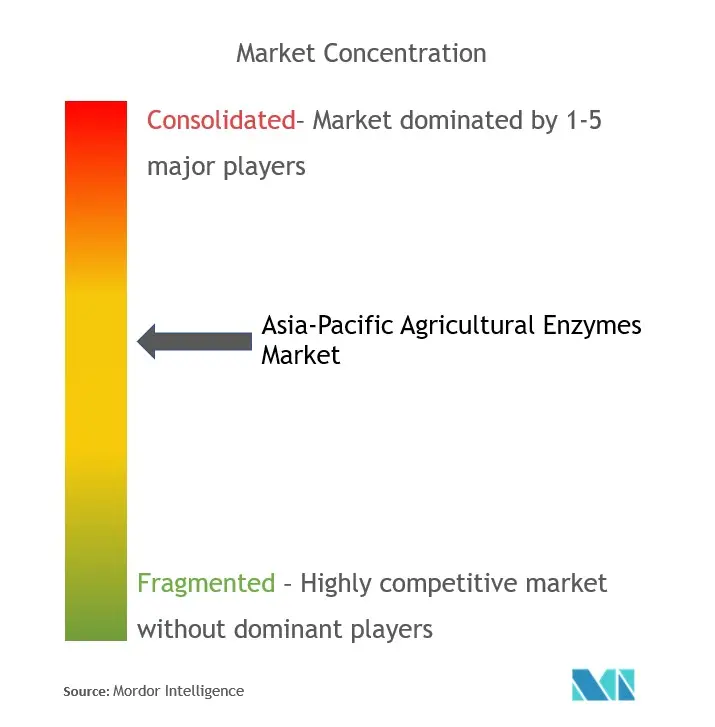
| Market Concentration | Medium |
Major Players *Disclaimer: Major Players sorted in no particular order |
Asia-Pacific Agricultural Enzymes Market Analysis by Mordor Intelligence
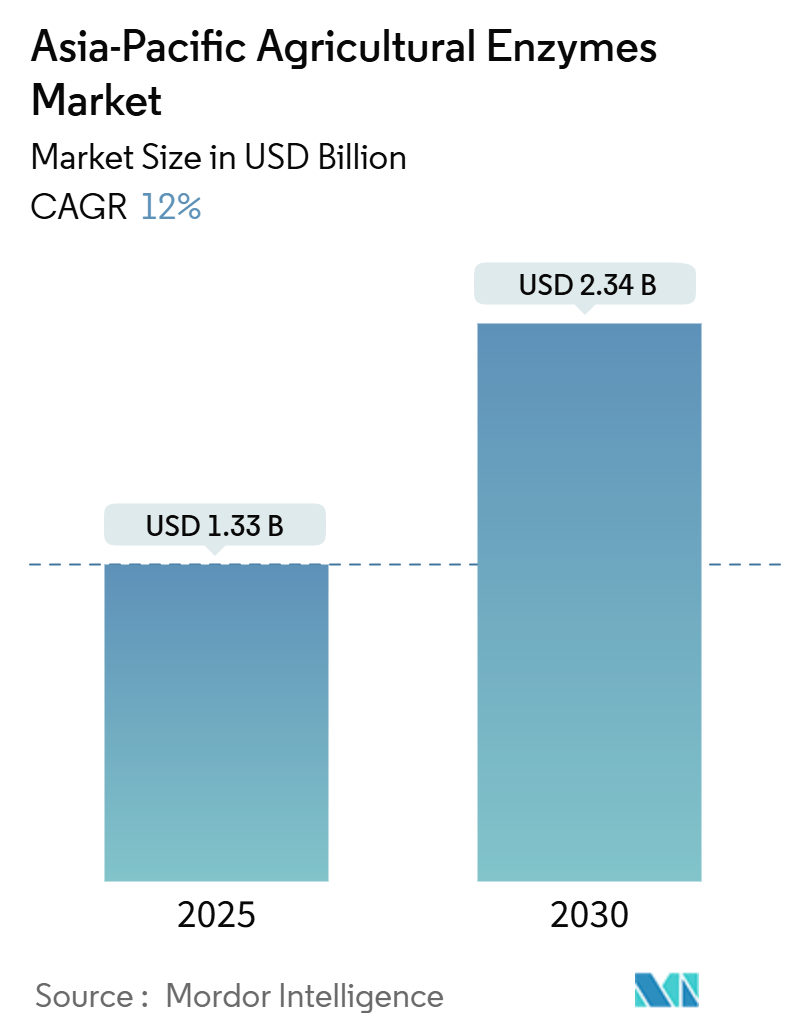
The Asia-Pacific Agricultural Enzymes Market size is estimated at USD 1.33 billion in 2025, and is expected to reach USD 2.34 billion by 2030, at a CAGR of 12% during the forecast period (2025-2030).
The Asia Pacific agriculture enzymes market is a growing segment driven by increasing agricultural productivity demands, sustainability trends, and a shift towards organic farming. With a growing emphasis on sustainability, agricultural enzymes are used to reduce dependency on chemical fertilizers and pesticides. They help improve soil health, increase crop yields, and enhance nutrient availability, leading to more eco-friendly farming practices. Enzymes such as phosphatases, cellulases, and xylanases break down organic matter in the soil, releasing nutrients more efficiently and improving soil fertility, which is essential for enhancing crop productivity.
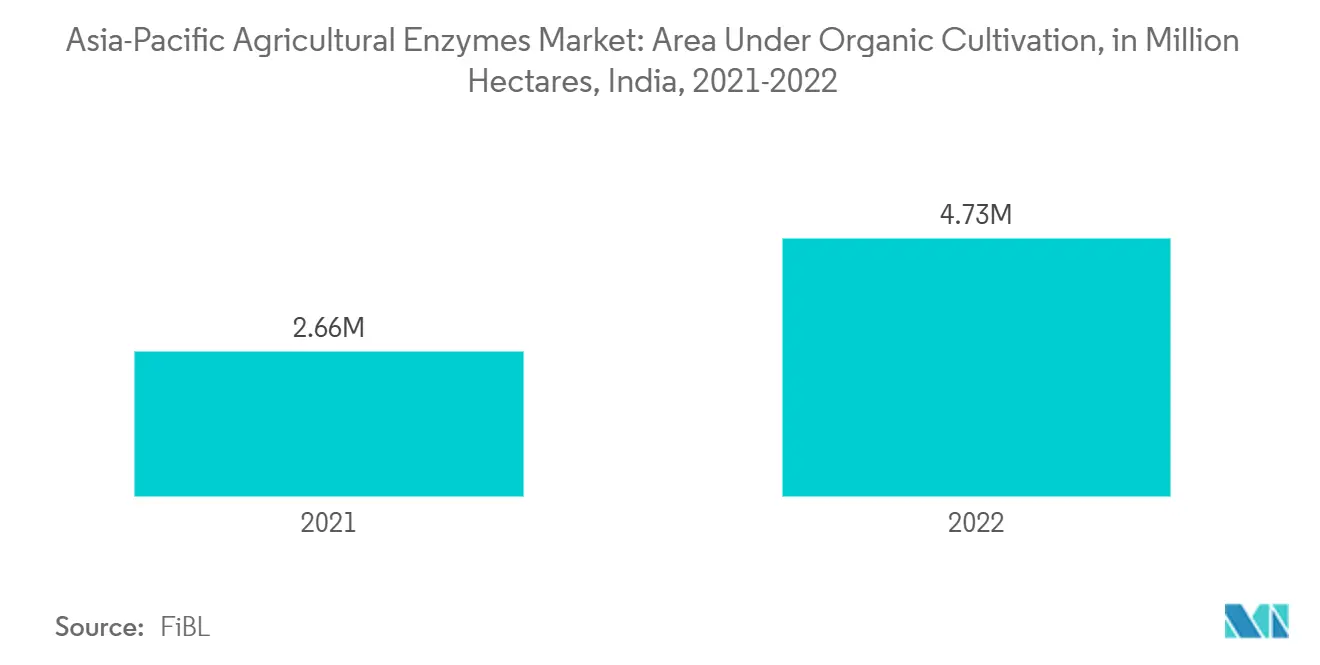
Besides, the agricultural sector is shifting towards bio-based solutions, driven by rising consumer demand for organic and eco-conscious farming. Further, The region's market is buoyed by the rising adoption of organic farming and heightened consumer concerns over chemicals. For instance, according to FiBL, Organic areas in India were 2,657.8 thousand ha in 2021, which increased by 4,726.7 thouand ha in 2022. Enzyme-based products are seen as alternatives to synthetic chemicals, aligning with the global trend toward greener farming.
Policies promoting eco-friendly agricultural practices and awareness about enzyme-based solutions contribute to the market’s expansion, particularly in countries like India and China. For instance, in 2023, the Indian government publicized the “PM Programme for Restoration, Awareness, Nourishment, and Amelioration of Mother Earth” (PM-PRANAM) scheme in Budget 2023-24 to incentivize the States and UTs to promote the usage of alternative fertilizers and balanced use of chemical fertilizers.
Asia-Pacific Agricultural Enzymes Market Trends and Insights
Rising Trend of Organic Farming Practices
The Asia Pacific agriculture enzymes market is experiencing robust growth, largely fueled by the rising adoption of organic farming practices across the region. For instance, according to FiBL, Organic areas in India were 2.66 million ha in 2021, which increased by 4.73 million ha in 2022. As the demand for organic produce grows alongside increasing environmental concerns and consumer preference for healthier, eco-friendly products, agricultural enzymes are becoming a crucial part of the agricultural ecosystem.
Organic farming emphasizes natural inputs, reduces reliance on synthetic chemicals, and champions sustainable practices. Countries like India, China, and Japan are witnessing a surge in demand for organic foods, prompting a shift away from traditional chemical fertilizers and pesticides. Agricultural enzymes, known for their natural ability to boost soil fertility and plant growth, are becoming indispensable in organic farming. With a growing health consciousness, consumers in the Asia Pacific are increasingly seeking out organic produce. As awareness of the benefits of chemical-free foods spreads, organic farming is gaining traction.
A primary challenge in organic farming is ensuring soil health without chemical fertilizers. Agricultural enzymes address this by enhancing soil quality, breaking down organic matter, and releasing essential nutrients for plant growth. Enzymes such as phosphatases, cellulases, and proteases boost nutrient cycling, making nutrients like phosphorus, nitrogen, and organic carbon more accessible. By decomposing organic material in the soil, these enzymes facilitate improved nutrient uptake by plants. Transitioning to organic farming necessitates a reduction in synthetic fertilizers. Here, agricultural enzymes are pivotal, optimizing nutrient release from organic materials and ensuring sustainable soil fertility. This optimization is vital for the long-term health of soils in organic farming systems.
China Dominates the Market
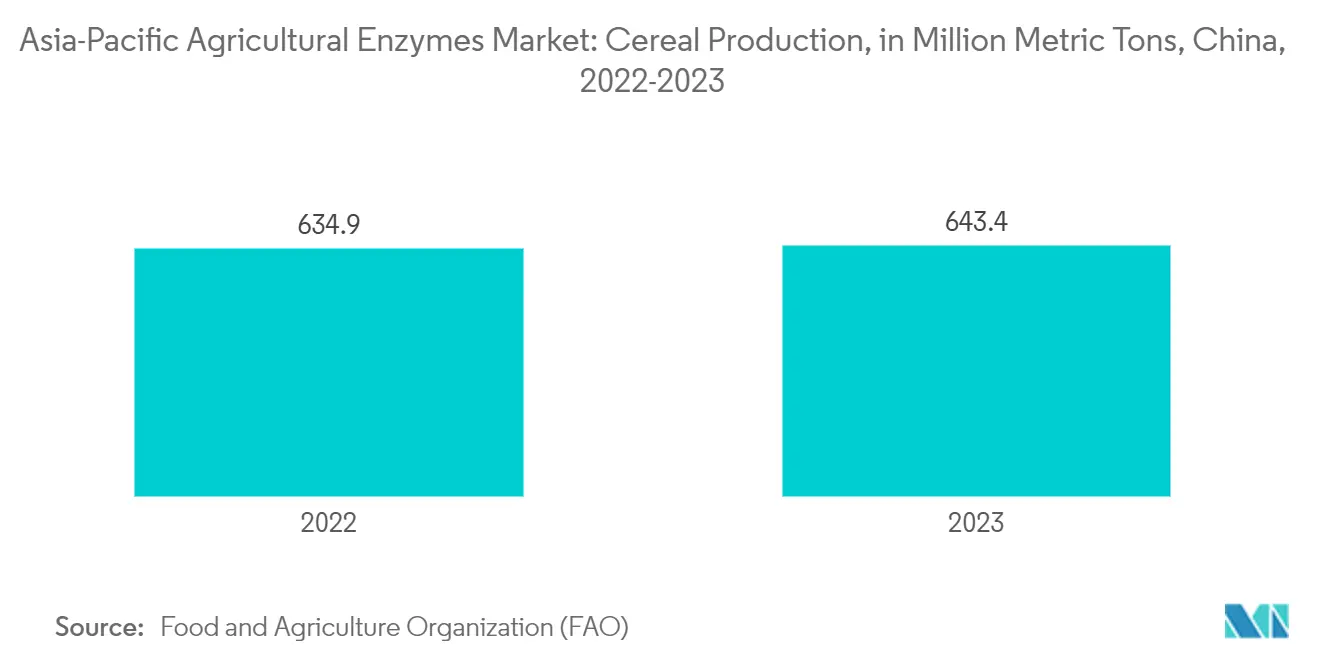
China leads the Asia-Pacific agricultural enzymes market, driven by its position as the region's primary producer and consumer of crops. The country's extensive farmlands, dedicated to staples such as rice, wheat, and corn, establish its significant influence on agricultural enzyme demand. According to FAOSTAT, China's cereal production increased from 634.9 million metric tons in 2022 to 643.4 million metric tons in 2023. This production growth demonstrates the country's focus on enhancing agricultural productivity, increasing the demand for enzyme-based solutions that improve soil health and crop yields.
The country's emphasis on sustainable farming practices significantly influences enzyme adoption. The government's "Agriculture Green Development (2021-2025)" initiative promotes eco-friendly agricultural practices, including bio-based solutions such as agricultural enzymes. These measures aim to decrease dependence on chemical fertilizers and pesticides, addressing soil degradation, pollution, and water scarcity. Agricultural enzymes have become integral to China's sustainable farming approach due to their role in enhancing soil fertility and nutrient release.
China's implementation of strict pesticide regulations aims to reduce chemical usage, enhance crop quality, and minimize environmental impact. The World Bank's Board of Executive Directors approved a USD 320 million loan to support green agriculture and rural development in China's Southwest Region, aligning with the National Rural Revitalization Program (2018-2035). These regulatory measures have accelerated the adoption of alternative solutions, with agricultural enzymes becoming a preferred option for environmental crop management.
China's agricultural enzyme market continues to expand as the country prioritizes efficiency and sustainability in farming. The combination of policy support, extensive agricultural operations, and commitment to environmentally conscious farming practices reinforces China's position as a market leader in the Asia-Pacific agricultural enzymes sector.
Competitive Landscape
The Asia-Pacific Agricultural Enzymes Market is moderately consolidated. Major companies operating in the region include BioWorks Inc., Novozymes, BASF SE, Syngenta AG, and AB Enzymes. These companies are adopting various strategies, such as product launches, partnerships, and acquisitions, to gain a larger share of the market.
Asia-Pacific Agricultural Enzymes Industry Leaders
-
BioWorks Inc.
-
Novozymes A/S
-
BASF SE
-
Syngenta AG
-
AB Enzymes
- *Disclaimer: Major Players sorted in no particular order
Recent Industry Developments
- December 2023: Novozymes and Chr. Hansen unveiled their new name, 'Novonesis'. This name symbolizes the dawn of a new era in biosolutions, with Novonesis poised to harness the full power of biological solutions, delivering substantial value to stakeholders and society as a whole. This naming announcement signifies a pivotal step in the consolidation of the two companies.
- October 2023: BASF strengthens its enzyme technology for detergents and cleaners with the launched of a new enzymes generation from its Lavergy portfolio.
Asia-Pacific Agricultural Enzymes Market Report Scope
Agricultural enzymes act as biological catalysts and find extensive use in agriculture-based biological procedures like processing of crop and crop residues, silage fermentation, and bioprocessing of fibers. The Asia Pacific Agricultural Enzymes Market is Segmented by Type (Carbohydrases, Proteases, Lipases, and Polymerases & Nucleases), Application (Crop Protection, Fertility, and Plant Growth Regulation), Crop Type (Grains & Cereals, Oil Seeds and Pulses, Fruits and Vegetables and Other Crop Types), and Geography (China, India, Japan, Australia and Rest of Asia Pacific). The report offers market size and forecast in terms of Value in (USD) for all the segments mentioned above.
Type
| Carbohydrases |
| Prtoteases |
| Lipases |
| Polymerases & Nucleases |
Application
| Crop Protection |
| Fertility |
| Plant Growth Regulation |
Crop Type
| Grains & Cereals |
| Oil Seeds and Pulses |
| Fruits & Vegetables |
| Other Crop Types |
Geography
| China |
| India |
| Japan |
| Australia |
| Rest of Asia-Pacific |
| Type | Carbohydrases |
| Prtoteases | |
| Lipases | |
| Polymerases & Nucleases | |
| Application | Crop Protection |
| Fertility | |
| Plant Growth Regulation | |
| Crop Type | Grains & Cereals |
| Oil Seeds and Pulses | |
| Fruits & Vegetables | |
| Other Crop Types | |
| Geography | China |
| India | |
| Japan | |
| Australia | |
| Rest of Asia-Pacific |
Key Questions Answered in the Report
How big is the Asia-Pacific Agricultural Enzymes Market?
The Asia-Pacific Agricultural Enzymes Market size is expected to reach USD 1.33 billion in 2025 and grow at a CAGR of 12% to reach USD 2.34 billion by 2030.
What is the current Asia-Pacific Agricultural Enzymes Market size?
In 2025, the Asia-Pacific Agricultural Enzymes Market size is expected to reach USD 1.33 billion.
Who are the key players in Asia-Pacific Agricultural Enzymes Market?
BioWorks Inc., Novozymes A/S, BASF SE, Syngenta AG and AB Enzymes are the major companies operating in the Asia-Pacific Agricultural Enzymes Market.
What years does this Asia-Pacific Agricultural Enzymes Market cover, and what was the market size in 2024?
In 2024, the Asia-Pacific Agricultural Enzymes Market size was estimated at USD 1.17 billion. The report covers the Asia-Pacific Agricultural Enzymes Market historical market size for years: 2019, 2020, 2021, 2022, 2023 and 2024. The report also forecasts the Asia-Pacific Agricultural Enzymes Market size for years: 2025, 2026, 2027, 2028, 2029 and 2030.
Asia-Pacific Agricultural Enzymes Market Report
Statistics for the 2025 Asia-Pacific Agricultural Enzymes market share, size and revenue growth rate, created by Mordor Intelligence™ Industry Reports. Asia-Pacific Agricultural Enzymes analysis includes a market forecast outlook for 2025 to 2030 and historical overview. Get a sample of this industry analysis as a free report PDF download.