
Argentina HVAC Market Size and Share
| Study Period | 2019 - 2030 |
| Forecast Data Period | 2025 - 2030 |
| Historical Data Period | 2019 - 2023 |
| Market Size (2025) | USD 1.25 Billion |
| Market Size (2030) | USD 1.62 Billion |
| CAGR (2025 - 2030) | 5.27% |
| Market Concentration | Low |
Major Players *Disclaimer: Major Players sorted in no particular order |
Argentina HVAC Market Analysis by Mordor Intelligence
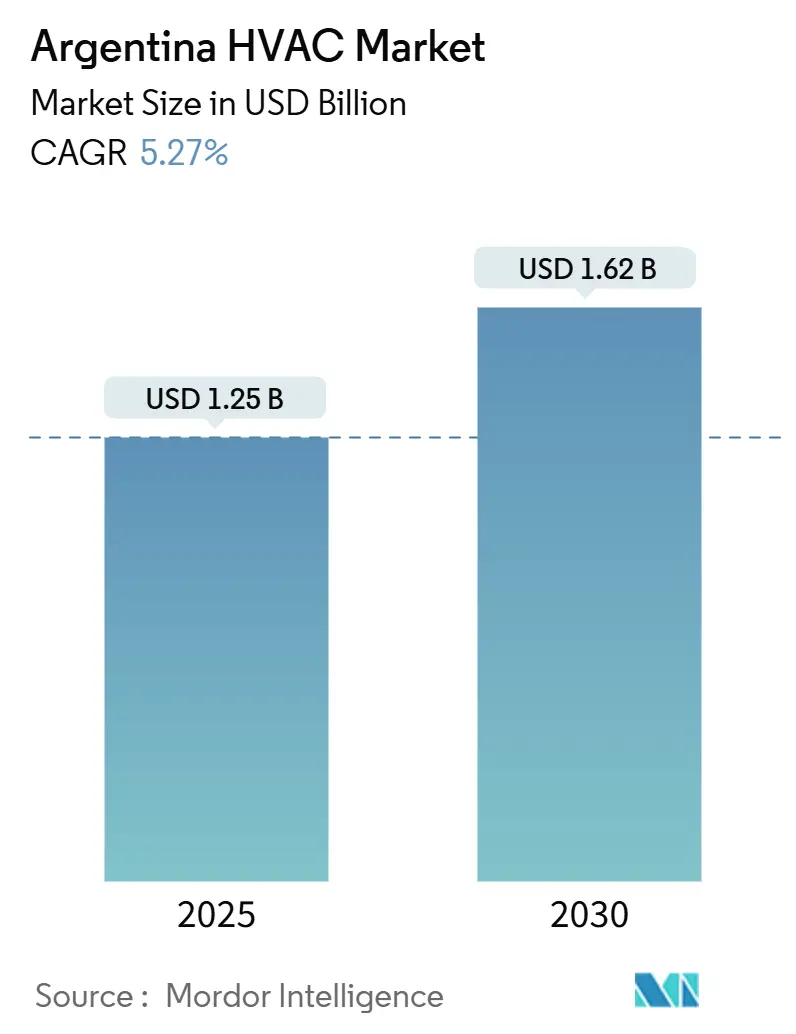
The Argentina HVAC Market size is estimated at USD 1.25 billion in 2025, and is expected to reach USD 1.62 billion by 2030, at a CAGR of 5.27% during the forecast period (2025-2030).
- Argentina's HVAC market is experiencing steady growth, supported by efforts to stabilize the economy. The IMF has approved a 48-month Extended Fund Facility (EFF) worth USD 20 billion, aimed at implementing structural reforms and improving productivity. The market growth is largely driven by factors such as increasing urbanization, the development of commercial infrastructure, and a stronger focus on energy efficiency.
- Argentina's urban development is transforming the HVAC market. Around 72% of new real estate projects now include sustainable construction elements, driven by rising energy costs and growing environmental concerns. By late 2024, the construction sector showed recovery, with increased activity in residential and commercial segments following economic stabilization. Smart building trends are also advancing, with automated climate control systems becoming standard in new commercial developments across urban centers and provinces, boosting demand for high-efficiency HVAC systems.
- Argentina is rapidly transitioning to energy-efficient HVAC solutions, driven by regulatory measures and economic incentives. The National Housing Labelling Program and PROUREE (Program for the Rational and Efficient Use of Energy in Public Buildings) are boosting demand for these systems. Additionally, Energy Saving Certificates (CAES) are encouraging energy-efficient installations and driving market growth, particularly in commercial sectors.
- The high cost of energy-efficient HVAC systems is a major obstacle to market growth in Argentina, particularly for price-sensitive consumers. Although these systems offer long-term savings, their upfront costs are 30-40% higher than traditional options, discouraging adoption among residential users and small businesses. Additionally, Argentina's economic instability and inflation have made consumers prioritize immediate affordability over long-term benefits.
- Macroeconomic factors, such as economic growth, are driving higher residential and SME spending on HVAC upgrades. Argentina, with a GDP of approximately USD 640 billion, ranks among the largest economies in Latin America. The country is a major food producer, supported by its extensive agricultural and livestock industries. Economic growth in Argentina is leading to higher disposable incomes, encouraging increased household spending on home upgrades, including HVAC systems. Additionally, residential sectors and small-to-medium enterprises (SMEs) are driving demand for HVAC enhancements.
Argentina HVAC Market Trends and Insights
Growth in Construction Sector to Fuel the Market Growth
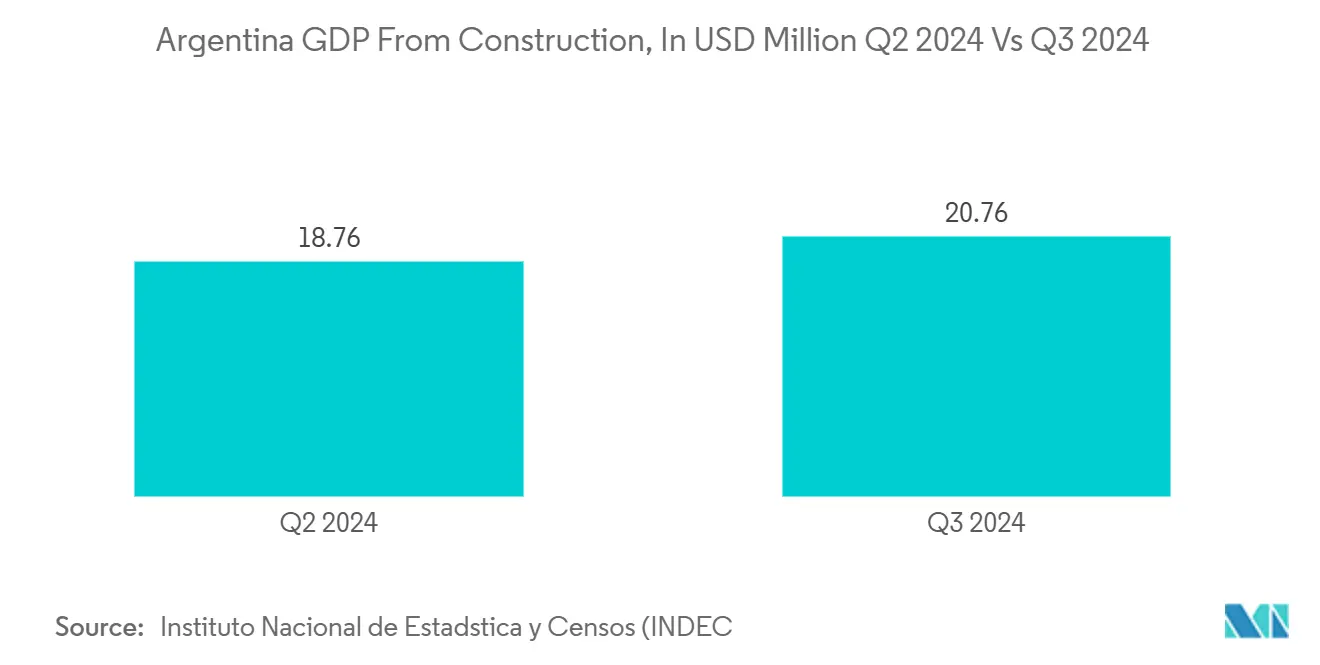
- Argentina's construction sector is expected to grow as inflation decreases, interest rates decline, and access to international credit improves. According to the Instituto Nacional de Estadística y Censos (INDEC), GDP from Construction in Argentina increased to ARS 20,200 million ( around USD 20.76 million) in Q3 2024 compared to ARS 17,100 million (USD 18.76 million) in Q2 2024. As Argentina continues to prioritize urban development, both public and private stakeholders have increased their investments across various construction segments, contributing to the sector's overall progress.
- The Argentine government plays a significant role in the infrastructure sector. The current administration is prioritizing smaller infrastructure projects, typically valued at approximately USD 20 million, which provide opportunities for local HVAC companies.
- In 2024, the economy contracted by 1.7% due to a recession that began in late 2023. This recession was driven by a severe drought and growing economic imbalances, along with the initial effects of a macroeconomic stabilization program introduced at the start of 2024. However, economic activity started to recover in the second half of the year. By January 2025, GDP had nearly returned to March 2023 levels, surpassing the decline experienced since late 2023.
- The construction sector in Argentina is experiencing steady growth across commercial, residential, and industrial projects, which is driving a proportional increase in demand for HVAC systems. Moreover, the rise in renovation and retrofitting activities is fueling the replacement of outdated HVAC systems with modern, digitally controlled retrofits.


Air Conditioning Equipment is Expected to Witness a Significant Growth
- In Northern Argentina, including Buenos Aires province and CABA, extreme heat events have become more intense and frequent. These events often occur alongside or follow other extremes, such as heavy rainfall or hot-dry spells. Climate models confirm that climate change is significantly increasing the frequency and intensity of high temperatures in Argentina. Consequently, the rising heat waves are driving higher demand for air conditioning systems in both commercial and residential sectors.
- Argentina is one of the most urbanized countries in the world, with 92% of its population living in cities. This high level of urbanization highlights the country's reliance on major metropolitan areas, where a significant portion of the population resides. As a result, the demand for air conditioning is notably high in these densely populated urban regions.
- Economic growth and rising disposable incomes in the country have made air conditioning units more accessible, transforming them from a luxury item into a common investment. This growing demand is evident not only in residential areas but also in commercial spaces, including offices, restaurants, and shopping centers, where providing a comfortable environment for customers and employees has become a priority.
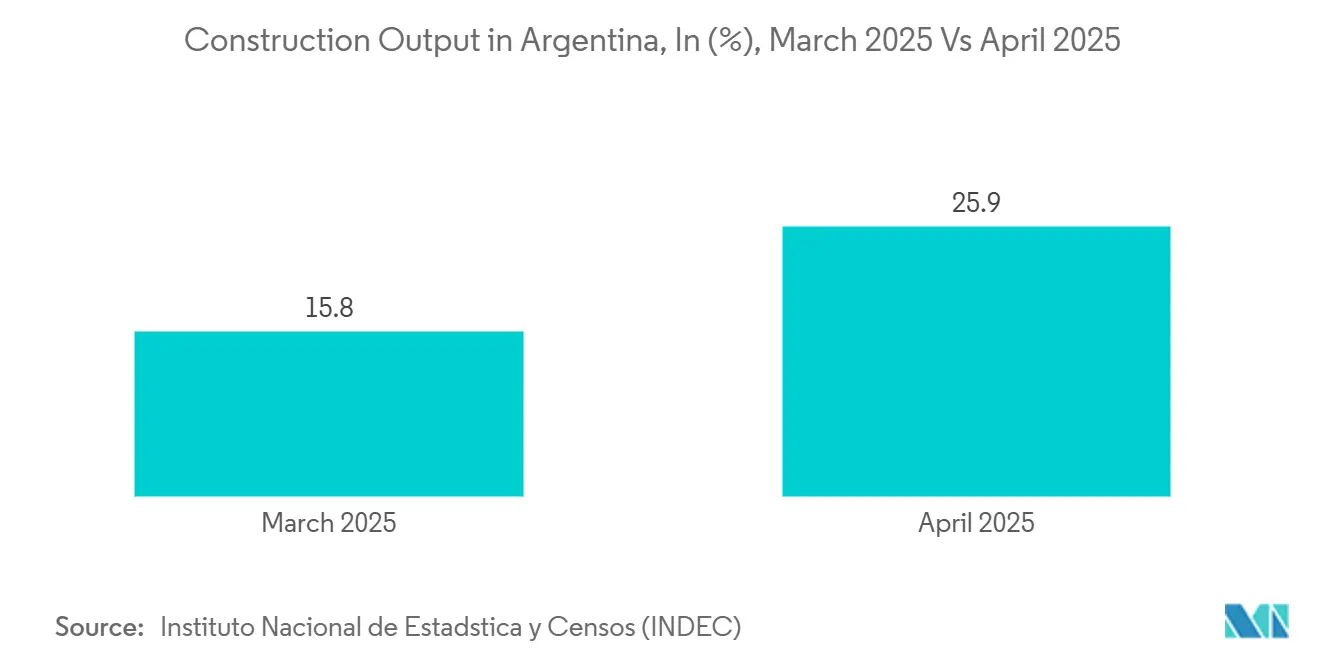
- Argentina's urbanization and the rise of residential and commercial buildings are driving a growing demand for HVAC systems, especially air conditioners. This trend is further supported by the launch of various infrastructure projects. According to Instituto Nacional de Estadística y Censos (INDEC), the country's construction output increased significantly, reaching 25.9% in April 2025 compared to 15.8% in March 2025.

Competitive Landscape
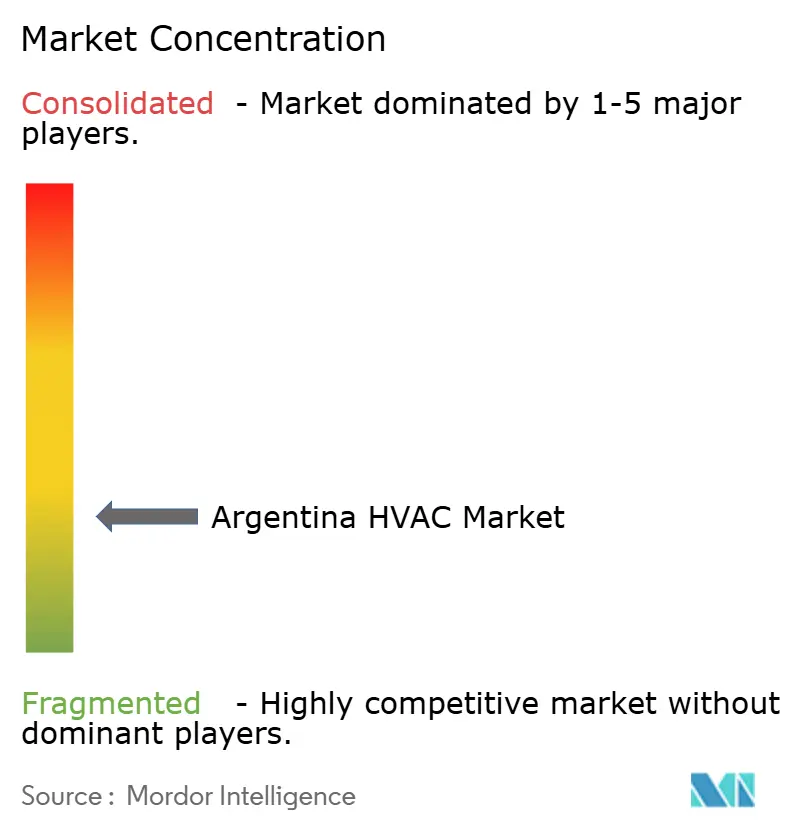
The Argentina HVAC market is fragmented, with regional conglomerates and specialized players operating across various segments. While several large multinational companies dominate certain high-value segments, numerous regional and niche players contribute to the overall competition, making the market highly diverse. This fragmentation is driven by the wide range of applications of HVAC systems, allowing both large and small companies to coexist and thrive in the market.
Leading companies in the Argentina HVAC market include Daikin Industries, Ltd., Carrier Corporation, Midea Group, Mitsubishi Electric Corporation, and Johnson Controls International plc. These companies have established strong brand recognition and extensive global operations, enabling them to command significant market share. Their strengths lie in innovation, broad solutions portfolios, and strong distribution networks. These leaders often engage in strategic acquisitions and partnerships to maintain their competitive edge and expand their market reach.
In the Argentina HVAC market, companies that prioritize innovation stand a better chance of success. With industries pushing for advanced solutions, energy-efficient HVAC systems are emerging as a key differentiator. Furthermore, broadening service offerings and bolstering customer support are vital for nurturing long-term relationships and ensuring repeat business. Firms that tap into emerging markets and tailor their products to meet regional demands position themselves advantageously in this fragmented landscape.
Argentina HVAC Industry Leaders
Daikin Industries, Ltd.
Carrier Corporation
Midea Group
Mitsubishi Electric Corporation
Johnson Controls International plc
- *Disclaimer: Major Players sorted in no particular order

Recent Industry Developments
- April 2025: PEISA has launched the Prima Tec + Zentraly boiler, which offers advanced energy efficiency and smart connectivity features. This launch strengthens PEISA's position in the premium heating segment of Argentina's HVAC market.
- December 2024: PEISA has expanded its product portfolio by introducing advanced and sustainable water heating systems for residential and light commercial applications. The company is also emphasizing its design and advisory services, focusing on delivering efficient and cost-effective solutions to meet the growing demand for energy-efficient technologies.


Argentina HVAC Market Report Scope
HVAC is a comprehensive system designed to create and maintain comfortable indoor environmental conditions in residential, commercial, and industrial spaces. Heating is the first component, which involves warming interior spaces during cold weather through various methods such as furnaces, heat pumps, and radiant heating systems. These technologies convert energy into heat, distributing warmth evenly throughout a building to ensure occupant comfort and prevent temperature-related issues.
Ventilation represents the critical process of exchanging indoor and outdoor air, ensuring proper air circulation, removing pollutants, controlling humidity, and maintaining air quality. This aspect of HVAC involves mechanical and natural ventilation techniques that introduce fresh air, filter contaminants, and regulate oxygen levels. Proper ventilation is essential for preventing the buildup of harmful gases, reducing moisture-related problems, and creating a healthy indoor environment.
Air Conditioning focuses on cooling and dehumidifying interior spaces during warm weather. Modern air conditioning systems use refrigeration cycles to remove heat and moisture from the air, creating a comfortable and controlled climate. These systems range from central air conditioning units to ductless mini-splits, providing precise temperature management and improving overall indoor comfort. The integration of these three components- heating, ventilation, and air conditioning- creates a sophisticated environmental control system that adapts to changing weather conditions and occupant needs.
The study tracks the revenue accrued through the sale of HVAC product types by various players in Argentina. The study also tracks the key market parameters, underlying growth influencers, and major vendors operating in the industry, which supports the market estimations and growth rates over the forecast period. The study further analyses the overall impact of macroeconomic factors on the market. The report's scope encompasses market sizing and forecasts for the various market segments.
The Argentina HVAC Market is Segmented by product type (heating equipment [heat pumps (air source, ground source), furnaces (gas, electric, oil), boilers (condensing, non-condensing), unit heaters, and others (radiators & baseboard heaters, solar water heating systems)], ventilation equipment [air handling units (AHUs), energy recovery ventilators (ERVs)/heat recovery, ventilators (HRVs), exhaust and supply fans, dehumidifiers/humidifiers], air conditioning equipment [unitary air conditioners, variable refrigerant flow (VRF) systems, chillers (air-cooled, water-cooled), fan coil units (FCUs), and others (window and portable air conditioners)]) and end-user industry (residential, commercial, and industrial). The market sizes and forecasts are provided in terms of value (USD) for all the above segments.
| Heating Equipment | Heat Pumps (Air Source, Ground Source) | |
| Furnaces (Gas, Electric, Oil) | ||
| Boilers (Condensing, Non-condensing) | ||
| Unit Heaters | ||
| Others (Radiators & Baseboard Heaters, Solar Water Heating Systems) | ||
| Ventilation Equipment | Air Handling Units (AHUs) | |
| Energy Recovery Ventilators (ERVs) / Heat Recovery Ventilators (HRVs) | ||
| Exhaust and Supply Fans | ||
| Dehumidifiers / Humidifiers | ||
| Air Conditioning Equipment | Unitary Air Conditioners | Split Air Conditioners |
| Packaged Terminal ACs (PTACs) | ||
| Rooftop Packaged Units (RTUs) | ||
| Variable Refrigerant Flow (VRF) Systems | ||
| Chillers (Air-Cooled, Water-Cooled) | ||
| Fan Coil Units (FCUs) | ||
| Others (Window and Portable Air Conditioners) | ||
| Residential |
| Commercial |
| Industrial |
| By Product Type | Heating Equipment | Heat Pumps (Air Source, Ground Source) | |
| Furnaces (Gas, Electric, Oil) | |||
| Boilers (Condensing, Non-condensing) | |||
| Unit Heaters | |||
| Others (Radiators & Baseboard Heaters, Solar Water Heating Systems) | |||
| Ventilation Equipment | Air Handling Units (AHUs) | ||
| Energy Recovery Ventilators (ERVs) / Heat Recovery Ventilators (HRVs) | |||
| Exhaust and Supply Fans | |||
| Dehumidifiers / Humidifiers | |||
| Air Conditioning Equipment | Unitary Air Conditioners | Split Air Conditioners | |
| Packaged Terminal ACs (PTACs) | |||
| Rooftop Packaged Units (RTUs) | |||
| Variable Refrigerant Flow (VRF) Systems | |||
| Chillers (Air-Cooled, Water-Cooled) | |||
| Fan Coil Units (FCUs) | |||
| Others (Window and Portable Air Conditioners) | |||
| By End-user Industry | Residential | ||
| Commercial | |||
| Industrial | |||


Key Questions Answered in the Report
How big is the Argentina HVAC Market?
The Argentina HVAC Market size is expected to reach USD 1.25 billion in 2025 and grow at a CAGR of 5.27% to reach USD 1.62 billion by 2030.
What is the current Argentina HVAC Market size?
In 2025, the Argentina HVAC Market size is expected to reach USD 1.25 billion.
Who are the key players in Argentina HVAC Market?
Daikin Industries, Ltd., Carrier Corporation, Midea Group, Mitsubishi Electric Corporation and Johnson Controls International plc are the major companies operating in the Argentina HVAC Market.
What years does this Argentina HVAC Market cover, and what was the market size in 2024?
In 2024, the Argentina HVAC Market size was estimated at USD 1.18 billion. The report covers the Argentina HVAC Market historical market size for years: 2019, 2020, 2021, 2022, 2023 and 2024. The report also forecasts the Argentina HVAC Market size for years: 2025, 2026, 2027, 2028, 2029 and 2030.
Page last updated on:
Argentina HVAC Market Report
Statistics for the 2025 Argentina HVAC market share, size and revenue growth rate, created by Mordor Intelligence™ Industry Reports. Argentina HVAC analysis includes a market forecast outlook for 2025 to 2030 and historical overview. Get a sample of this industry analysis as a free report PDF download.


 Your data is secure and never sold or shared.


