
Oman HVAC Market Size and Share
| Study Period | 2019 - 2030 |
| Forecast Data Period | 2025 - 2030 |
| Historical Data Period | 2019 - 2023 |
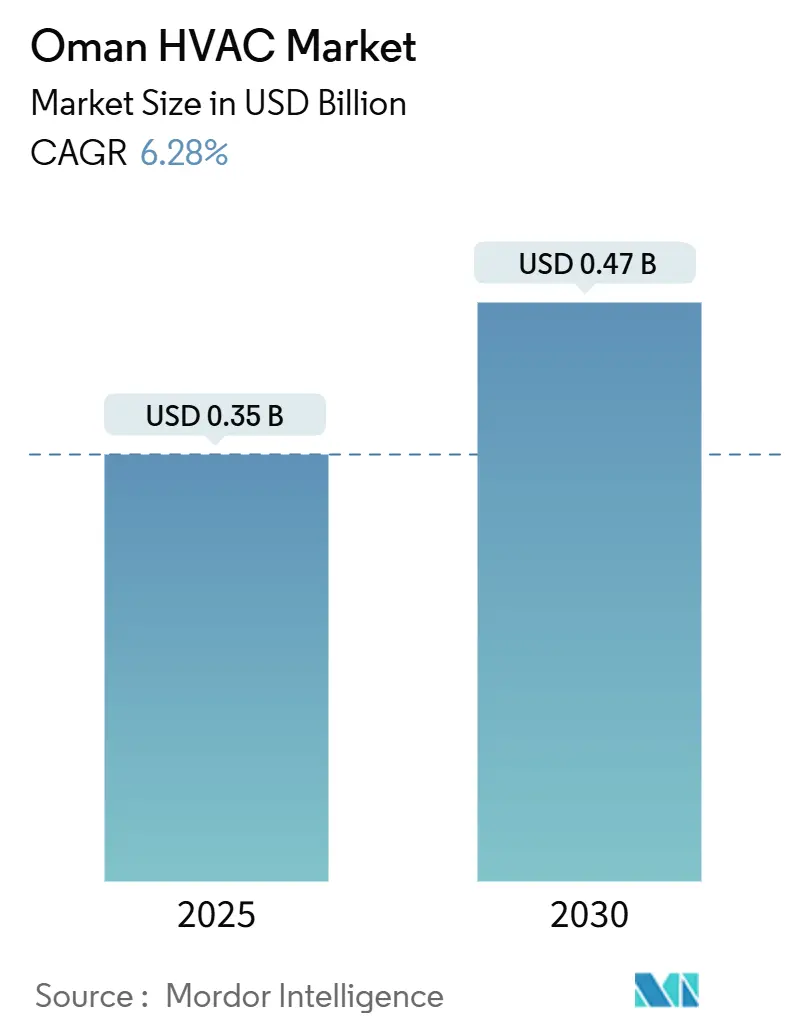
| Market Size (2025) | USD 0.35 Billion |
| Market Size (2030) | USD 0.47 Billion |
| CAGR (2025 - 2030) | 6.28% |
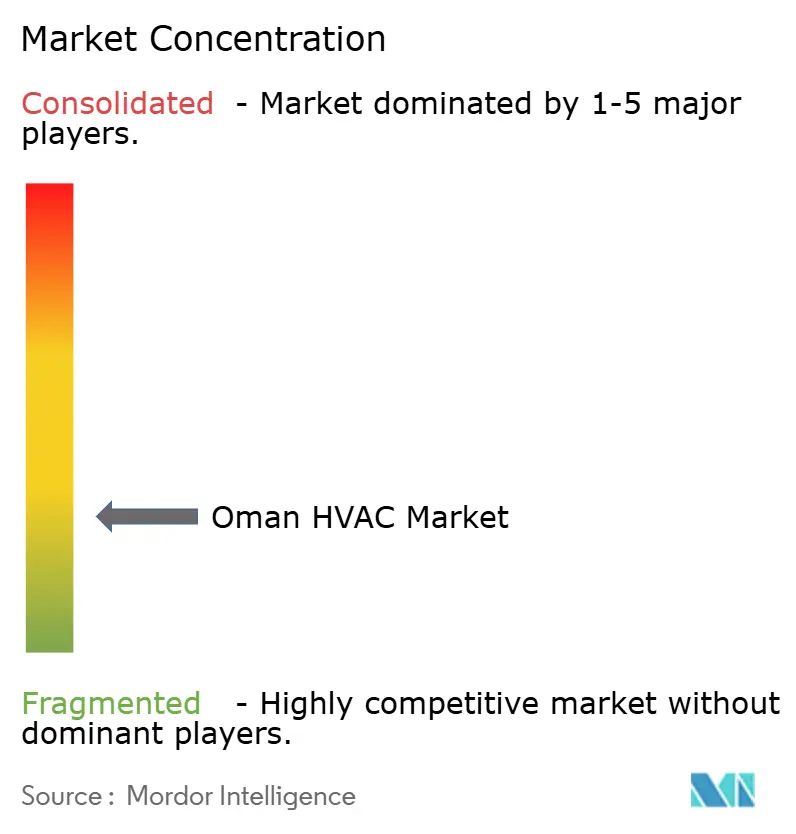
| Market Concentration | Low |
Major Players *Disclaimer: Major Players sorted in no particular order |
Oman HVAC Market Analysis by Mordor Intelligence
The Oman HVAC Market size is estimated at USD 0.35 billion in 2025, and is expected to reach USD 0.47 billion by 2030, at a CAGR of 6.28% during the forecast period (2025-2030).
- HVAC is a comprehensive system designed to create and maintain comfortable indoor environmental conditions in residential, commercial, and industrial spaces. Heating is the first component, which involves warming interior spaces during cold weather through various methods such as furnaces, heat pumps, and radiant heating systems. These technologies convert energy into heat, distributing warmth evenly throughout a building to ensure occupant comfort and prevent temperature-related issues.
- Oman’s climatic conditions significantly influence the demand for HVAC systems. The country experiences an arid desert climate characterized by extreme temperatures, especially during the summer months. Average temperatures can soar above 40°C (104°F), particularly in the interior regions. Such relentless heat necessitates effective cooling solutions, propelling the HVAC market's growth as both residential and commercial sectors seek to maintain comfortable indoor environments.
- Moreover, Oman’s humidity levels, especially along the coastal areas, further exacerbate the need for efficient HVAC systems. High humidity can lead to discomfort and health issues, prompting consumers to invest in advanced air conditioning solutions that not only cool but also dehumidify the air. This dual requirement for temperature control and humidity management creates a robust demand for HVAC technologies.
- The rising energy costs in Oman can be attributed to several interrelated factors that are significantly influencing the demand for the HVAC market. The depletion of natural resources has led to increased costs in energy production. As Oman’s oil reserves face depletion, the country is compelled to explore more expensive methods of energy extraction, thus driving prices higher. Additionally, the global fluctuations in oil prices impact domestic energy costs, making consumers more sensitive to changes and pushing them to seek energy-efficient solutions.
- Additionally, several macroeconomic factors like stringent government regulations, policies, and initiatives drive the growth of the studied market. The Omani government has launched the National Energy Efficiency Program, which aims to reduce energy consumption across various sectors. This initiative sets ambitious targets for energy savings and promotes the adoption of energy-efficient HVAC systems. By providing incentives for businesses and homeowners to upgrade to more efficient technologies, the program is creating a conducive environment for HVAC market expansion.
- Oman's Vision 2040 is a strategic framework that emphasizes sustainable economic diversification and infrastructure development. This vision includes significant investments in urban development and housing projects, which inherently require advanced HVAC solutions. The emphasis on building smart cities and eco-friendly structures is driving demand for innovative HVAC systems that optimize energy use and improve indoor air quality.
- The government's focus on renewable energy sources, particularly solar energy, is another critical factor influencing the HVAC market. Oman has set targets for increasing the share of renewable energy in its energy mix, which encourages the integration of HVAC systems that utilize renewable sources. This shift not only promotes sustainability but also provides opportunities for HVAC companies to develop and market solutions that align with the country's renewable energy goals.
- The HVAC market in Oman faces several challenges that can hinder its growth. The HVAC systems require substantial upfront capital for installation and setup, which can be a significant barrier for both residential and commercial consumers. The cost of high-efficiency equipment, coupled with installation expenses, makes it difficult for many potential buyers to invest. This restraint is particularly acute in Oman, where economic fluctuations can affect consumer spending. As a result, many consumers opt for cheaper, less efficient systems, which can hinder the overall market growth and adoption of advanced HVAC technologies.
- The HVAC industry requires a specialized workforce to handle installation, maintenance, and repair services. In Oman, there is a noticeable deficiency in trained professionals who possess the necessary technical skills and knowledge in HVAC technologies. This shortage not only affects the quality of service but also leads to increased operational costs for companies that may need to invest in training programs or bring in foreign labor. The lack of skilled technicians can result in longer project timelines and higher costs, ultimately impacting customer satisfaction and market expansion.
Oman HVAC Market Trends and Insights
The Economic Development and Construction Activities are Anticipated to Drive the Demand for the Studied Market
- Oman has been experiencing a significant surge in construction activities over the past few years, driven by various market dynamics and government initiatives. This growth is particularly evident in the HVAC market, which is intricately linked to the broader construction sector.
- One of the foremost drivers of increased construction activities in Oman is the government's commitment to economic diversification. Traditionally reliant on oil revenues, Oman has launched several strategic initiatives aimed at reducing its dependence on hydrocarbons. The Oman Vision 2040 framework outlines a roadmap for economic diversification that emphasizes areas such as tourism, manufacturing, and logistics. This shift has led to substantial investments in infrastructure projects, including hotels, commercial spaces, and industrial facilities. As new constructions arise, the demand for HVAC systems naturally escalates, creating a promising market for HVAC suppliers and contractors.
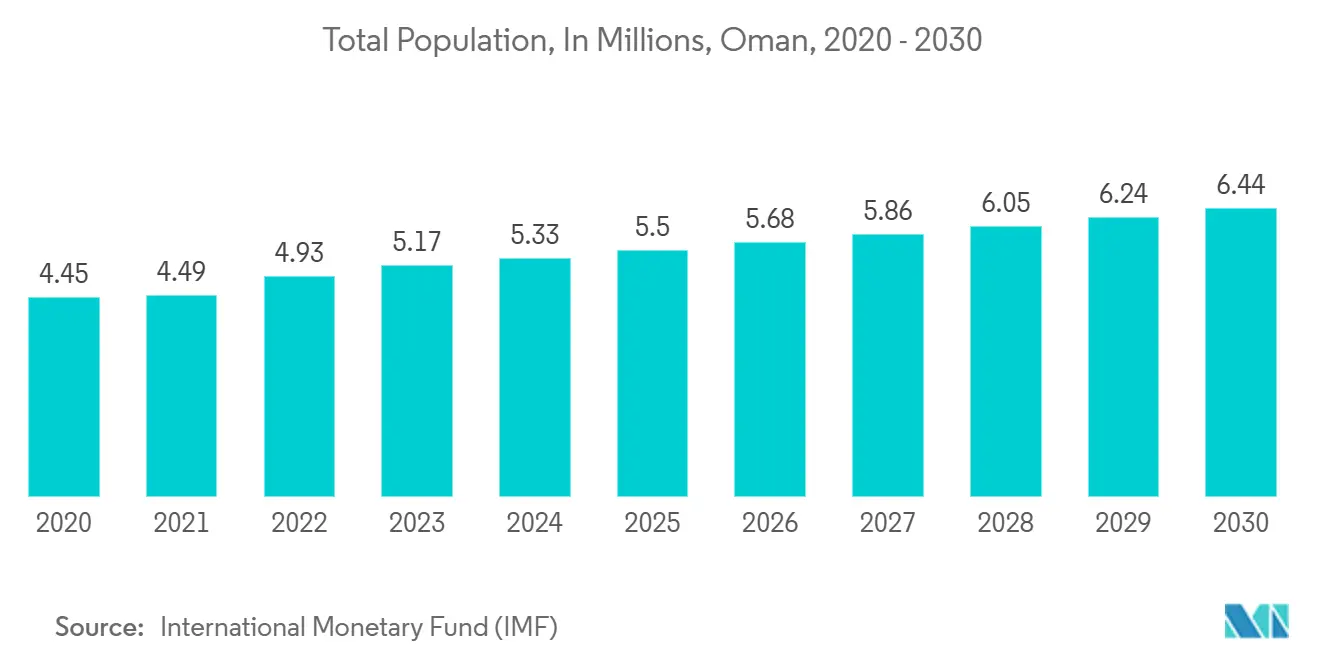
- The increasing population in Oman is anticipated to aid the development of the studied market. For instance, according to the International Monetary Fund (IMF), the total population of Oman was estimated at about 5.50 million in 2025, an increase from 5.33 million people in 2024.
- The Omani government has embarked on a series of ambitious infrastructure development projects aimed at enhancing connectivity and boosting the economy. Major initiatives include the expansion of roads, ports, and airports as well as the development of free trade zones. These projects not only create direct opportunities for construction firms but also stimulate associated industries, including HVAC. As infrastructure projects expand, the demand for efficient HVAC systems becomes critical to ensure optimal climate control in large commercial and public facilities, driving growth in the HVAC market.
- The Omani government has implemented various national development plans that prioritize infrastructure investment and urban development. The Ninth Five-Year Plan (2016-2020) and the Tenth Five-Year Plan (2021-2025) outline extensive projects aimed at enhancing the nation’s infrastructure, which inherently fuels the growth of the construction sector. These plans allocate substantial budgets for projects that include residential buildings, hospitals, schools, and transportation networks. As a result, the HVAC market benefits from these initiatives as new buildings require modern climate control systems to maintain comfort and compliance with environmental standards.
- In line with global sustainability trends, Oman has begun to emphasize green building standards through various regulations and initiatives aimed at promoting energy efficiency. The government has introduced guidelines that encourage the use of energy-efficient HVAC systems and the incorporation of sustainable materials in construction projects. By mandating compliance with international standards such as LEED (Leadership in Energy and Environmental Design), Oman incentivizes contractors and developers to invest in high-quality HVAC systems that meet these standards. This approach not only enhances the market for HVAC but also aligns with Oman’s broader environmental goals, thereby fostering a sustainable construction industry.


The Air Conditioning Equipment Sector is Anticipate to Hold a Major Market Share
- Oman’s climate is predominantly arid, with scorching summer temperatures. The increasing frequency and intensity of heatwaves have heightened the demand for efficient air conditioning systems. As temperatures continue to rise due to global warming, more households and businesses are investing in AC units to maintain comfortable indoor environments. This demand is further propelled by Oman’s humid coastal areas, where the discomfort from humidity makes air conditioning essential for both residential and commercial spaces.
- Oman is witnessing rapid urbanization, with an increasing population migrating to urban centers in search of better employment and lifestyle opportunities. This urban migration has led to a surge in the construction of residential and commercial buildings, all of which require effective HVAC systems. As more people settle in cities, the demand for air conditioning systems rises, driving growth in the HVAC segment. The burgeoning middle class, with higher disposable incomes, is also more likely to invest in comfort-enhancing technologies like air conditioning.
- Additionally, the Omani government is actively pursuing economic diversification away from oil dependency, investing in various sectors, including tourism, manufacturing, and logistics. These development projects require modern infrastructure, which includes HVAC systems. Investments in hotels, shopping malls, and office spaces have led to increased demand for advanced air conditioning solutions. As the economy diversifies, the construction of new facilities necessitates the installation of efficient air conditioning systems, further fueling market growth.
- Further, Oman is undergoing significant infrastructure development, with numerous real estate projects underway, including residential complexes, commercial buildings, and public facilities. The government’s focus on enhancing infrastructure, such as roads, airports, and schools, is stimulating the demand for HVAC systems. As new buildings are constructed, they require robust air conditioning systems to ensure comfort for occupants. This real estate boom is a critical driver of growth in the air conditioning equipment market.
- Moreover, the Omani government has launched various programs aimed at promoting energy efficiency, including the National Energy Efficiency Program. This initiative encourages the adoption of energy-efficient technologies and practices among consumers and businesses. By providing incentives and guidelines for energy-efficient air conditioning systems, the government is fostering a culture of sustainability that aligns with global environmental goals. This policy not only supports the HVAC market by encouraging the installation of energy-efficient units but also aims to reduce overall energy consumption in the country.

Competitive Landscape
The Oman HVAC market is fragmented, with specialized players and regional conglomerates operating across various segments. While multiple large multinational companies dominate certain high-value segments, numerous regional and niche players contribute to the overall competition, making the market highly diverse. This competition is driven by the wide range of applications for HVAC equipment, allowing both small and large companies to coexist and thrive in the market.
Several leading companies in the Oman HVAC market include Mitsubishi Electric Corporation, Carrier Corporation, LG Electronics Inc., Daikin Industries, Ltd., Panasonic Corporation, and many others. With strong brand recognition and extensive regional operations, these companies command a significant market share. Their strengths include innovation, a broad solutions portfolio, and robust distribution networks. To maintain their competitive edge and broaden their market reach, these leaders frequently pursue strategic acquisitions and partnerships.
In the Oman HVAC market, companies that prioritize innovation in heating, ventilation, and air conditioning equipment are more likely to succeed. As industries increasingly seek advanced solutions, HVAC equipment is set to become a key differentiator. Additionally, expanding service offerings and enhancing customer support will be essential for building long-term relationships and securing repeat business. Firms that invest in emerging markets and tailor their products to regional needs can gain a competitive advantage in this fragmented landscape.
Oman HVAC Industry Leaders
Daikin Industries Ltd.
Carrier Global Corporation
LG Electronics Inc.
Panasonic Corporation
Mitsubishi Electric Corporation
- *Disclaimer: Major Players sorted in no particular order

Recent Industry Developments
- May 2025: In a bid to enhance air conditioning efficiency and trim electricity bills nationwide, Nama Group's subsidiaries, Nama Electricity Supply Company (NESC) and Nama Dhofar Services, launched the Air Conditioner Maintenance Initiative. This initiative is complemented by a digital system that enables real-time tracking of electricity consumption. Given that air conditioning systems are responsible for nearly 50% of Oman's electricity usage, the initiative seeks to tackle this significant energy consumption challenge head-on.
- March 2024: Mitsubishi Electric Trane HVAC LLC announced the introduction of Premier Wall-mounted Indoor Units (MSZ-GS/MSY-GS), an update to the former models (MSZ-GS/MSY-GL), while Premier MSZ-GS Indoor Units are compatible with single-zone and multi-zone heat pump outdoor units, including both single- and multi-zone Hyper-Heating INVERTER (H2i) units. The Premier MSY-GS is a single-zone, cooling-only air conditioner for climates where heating is unnecessary.
- March 2024: Riello a Carrier brand Launched a high-end residential range with the new RIELLO ELIXATM series of single-split inverter air conditioners. The RIELLO ELIXA wall-mounted air conditioners achieve energy class A+++ in cooling and heating, offering optimum user comfort and an environmentally friendly home environment.


Oman HVAC Market Report Scope
HVAC is a comprehensive system designed to create and maintain comfortable indoor environmental conditions in residential, commercial, and industrial spaces. Heating is the first component, which involves warming interior spaces during cold weather through various methods such as furnaces, heat pumps, and radiant heating systems. These technologies convert energy into heat, distributing warmth evenly throughout a building to ensure occupant comfort and prevent temperature-related issues.
Ventilation represents the critical process of exchanging indoor and outdoor air, ensuring proper air circulation, removing pollutants, controlling humidity, and maintaining air quality. This aspect of HVAC involves mechanical and natural ventilation techniques that introduce fresh air, filter contaminants, and regulate oxygen levels. Proper ventilation is essential for preventing the buildup of harmful gases, reducing moisture-related problems, and creating a healthy indoor environment.
Air Conditioning focuses on cooling and dehumidifying interior spaces during warm weather. Modern air conditioning systems use refrigeration cycles to remove heat and moisture from the air, creating a comfortable and controlled climate. These systems range from central air conditioning units to ductless mini-splits, providing precise temperature management and improving overall indoor comfort. The integration of these three components- heating, ventilation, and air conditioning- creates a sophisticated environmental control system that adapts to changing weather conditions and occupant needs.
The study tracks the revenue accrued through the sale of HVAC product types by various players in the Oman. The study also tracks the key market parameters, underlying growth influencers, and major vendors operating in the industry, which supports the market estimations and growth rates over the forecast period. The study further analyses the overall impact of macroeconomic factors on the market. The report's scope encompasses market sizing and forecasts for the various market segments.
Oman HVAC Market is Segmented by product type (heating equipment [heat pumps (air source, ground source), furnaces (gas, electric, oil), boilers (condensing, non-condensing), unit heaters, and others (radiators & baseboard heaters, solar water heating systems)], ventilation equipment [air handling units (AHUs), energy recovery ventilators (ERVs)/heat recovery, ventilators (HRVs), exhaust and supply fans, dehumidifiers/humidifiers], air conditioning equipment [unitary air conditioners, variable refrigerant flow (VRF) systems, chillers (air-cooled, water-cooled), fan coil units (FCUs), and others (window and portable air conditioners)]) and end-user industry (residential, commercial, and industrial). The market sizes and forecasts are provided in terms of value (USD) for all the above segments.
| Heating Equipment | Heat Pumps (Air Source, Ground Source) | |
| Furnaces (Gas, Electric, Oil) | ||
| Boilers (Condensing, Non-condensing) | ||
| Unit Heaters | ||
| Others (Radiators & Baseboard Heaters, Solar Water Heating Systems) | ||
| Ventilation Equipment | Air Handling Units (AHUs) | |
| Energy Recovery Ventilators (ERVs) / Heat Recovery Ventilators (HRVs) | ||
| Exhaust and Supply Fans | ||
| Dehumidifiers / Humidifiers | ||
| Air Conditioning Equipment | Unitary Air Conditioners | Split Air Conditioners |
| Packaged Terminal ACs (PTACs) | ||
| Rooftop Packaged Units (RTUs) | ||
| Variable Refrigerant Flow (VRF) Systems | ||
| Chillers (Air-Cooled, Water-Cooled) | ||
| Fan Coil Units (FCUs) | ||
| Others (Window and Portable Air Conditioners) | ||
| Residential |
| Commercial |
| Industrial |
| By Product Type | Heating Equipment | Heat Pumps (Air Source, Ground Source) | |
| Furnaces (Gas, Electric, Oil) | |||
| Boilers (Condensing, Non-condensing) | |||
| Unit Heaters | |||
| Others (Radiators & Baseboard Heaters, Solar Water Heating Systems) | |||
| Ventilation Equipment | Air Handling Units (AHUs) | ||
| Energy Recovery Ventilators (ERVs) / Heat Recovery Ventilators (HRVs) | |||
| Exhaust and Supply Fans | |||
| Dehumidifiers / Humidifiers | |||
| Air Conditioning Equipment | Unitary Air Conditioners | Split Air Conditioners | |
| Packaged Terminal ACs (PTACs) | |||
| Rooftop Packaged Units (RTUs) | |||
| Variable Refrigerant Flow (VRF) Systems | |||
| Chillers (Air-Cooled, Water-Cooled) | |||
| Fan Coil Units (FCUs) | |||
| Others (Window and Portable Air Conditioners) | |||
| By End-User | Residential | ||
| Commercial | |||
| Industrial | |||


Key Questions Answered in the Report
How big is the Oman HVAC Market?
The Oman HVAC Market size is expected to reach USD 0.35 billion in 2025 and grow at a CAGR of 6.28% to reach USD 0.47 billion by 2030.
What is the current Oman HVAC Market size?
In 2025, the Oman HVAC Market size is expected to reach USD 0.35 billion.
Who are the key players in Oman HVAC Market?
Daikin Industries Ltd., Carrier Global Corporation, LG Electronics Inc., Panasonic Corporation and Mitsubishi Electric Corporation are the major companies operating in the Oman HVAC Market.
What years does this Oman HVAC Market cover, and what was the market size in 2024?
In 2024, the Oman HVAC Market size was estimated at USD 0.33 billion. The report covers the Oman HVAC Market historical market size for years: 2019, 2020, 2021, 2022, 2023 and 2024. The report also forecasts the Oman HVAC Market size for years: 2025, 2026, 2027, 2028, 2029 and 2030.
Page last updated on:
Oman HVAC Market Report
Statistics for the 2025 Oman HVAC market share, size and revenue growth rate, created by Mordor Intelligence™ Industry Reports. Oman HVAC analysis includes a market forecast outlook for 2025 to 2030 and historical overview. Get a sample of this industry analysis as a free report PDF download.





