
Anorexiants Market Size and Share
Market Overview
| Study Period | 2020 - 2031 |
|---|---|
| Market Size (2026) | USD 1.1 Billion |
| Market Size (2031) | USD 1.43 Billion |
| Growth Rate (2026 - 2031) | 5.43 % |
| Fastest Growing Market | Asia Pacific |
| Largest Market | North America |
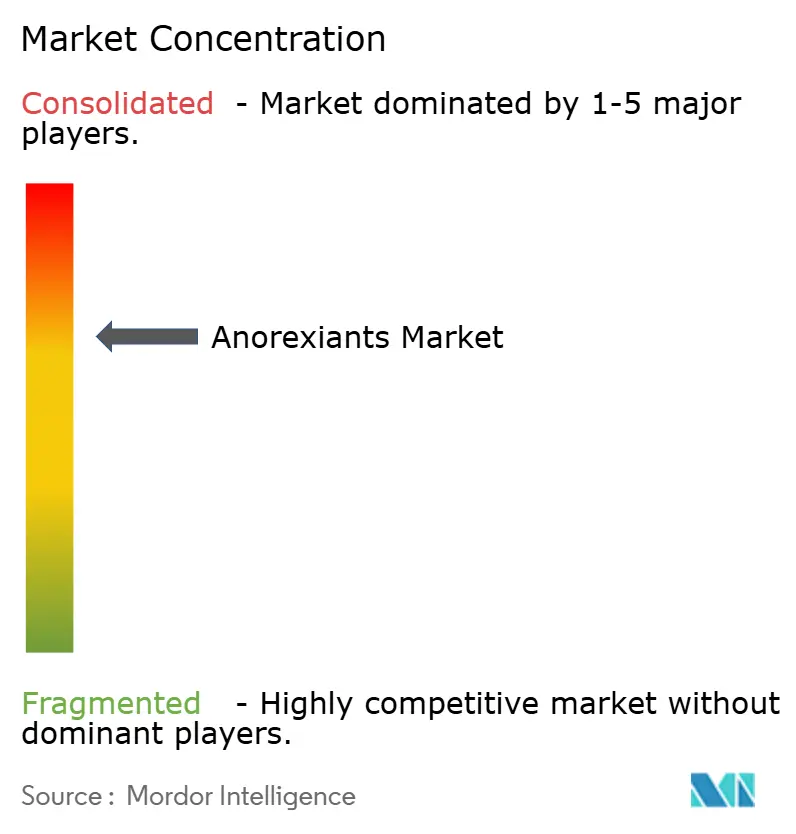
| Market Concentration | Medium |
Major Players *Disclaimer: Major Players sorted in no particular order Image © Mordor Intelligence. Reuse requires attribution under CC BY 4.0. | |
Anorexiants Market Analysis by Mordor Intelligence
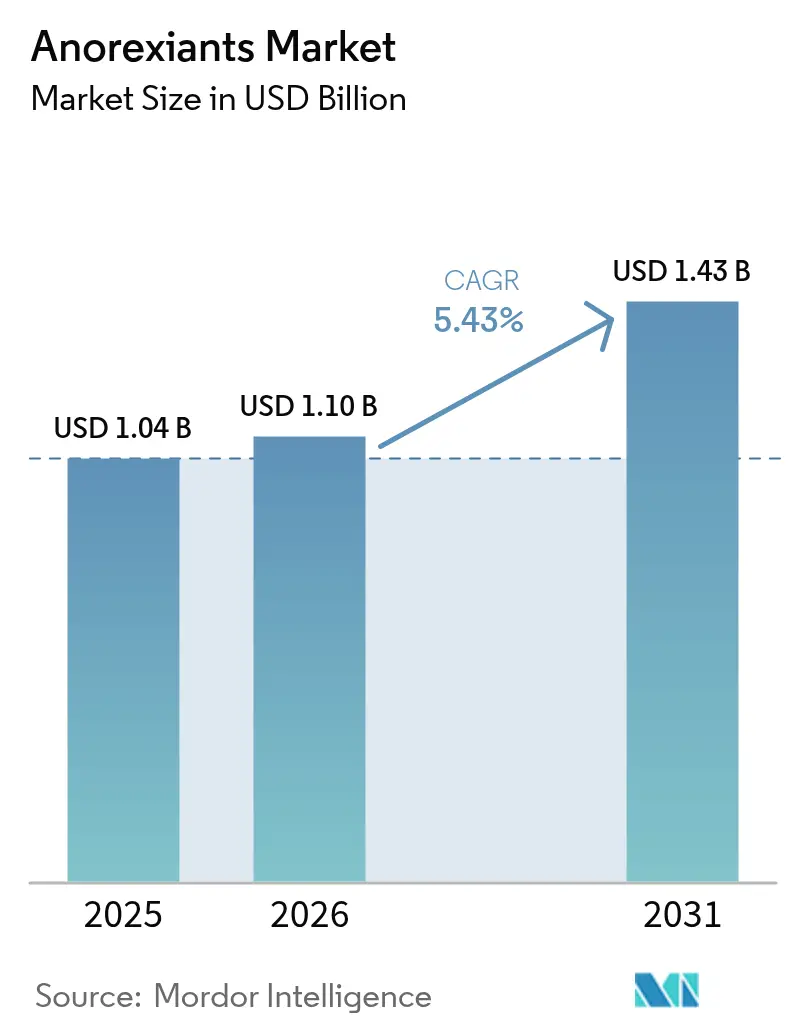
Anorexiants market size in 2026 is estimated at USD 1.1 billion, growing from 2025 value of USD 1.04 billion with 2031 projections showing USD 1.43 billion, growing at 5.43% CAGR over 2026-2031.
Persistent clinical proof of metabolic risk reduction, an expanded payer focus on chronic-disease management, and rapid supply-chain investments by leading manufacturers are jointly sustaining this growth. GLP-1 receptor agonists anchor the competitive landscape, capturing over three-fifths of global prescriptions and drawing follow-on innovation in multi-agonist combinations. Subcutaneous injectables still dominate the delivery mix, yet breakthrough oral formulations are enlarging the addressable patient pool by removing needle-related barriers. Digitally enabled tele-obesity services are lowering access hurdles, particularly in rural regions, and driving new direct-to-consumer demand streams. Regionally, North America leverages favorable reimbursement reforms, while Asia-Pacific is accelerating on the back of fresh approvals and scalable local manufacturing capacity.
Key Report Takeaways
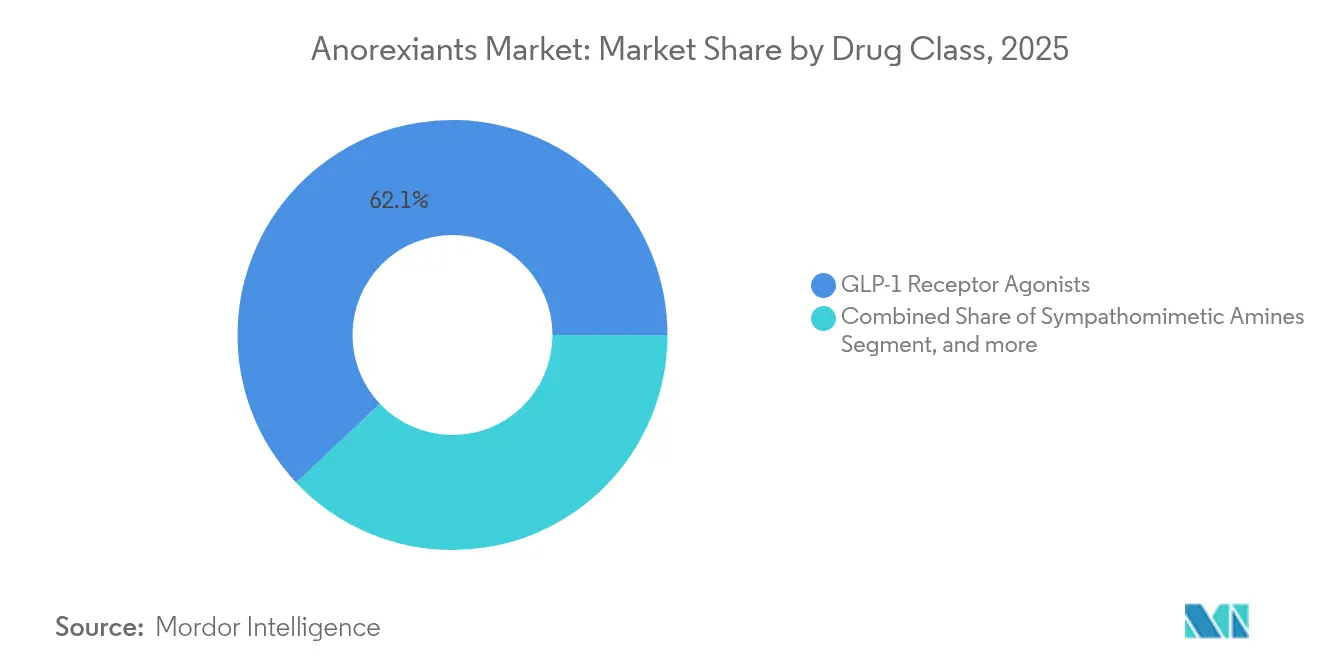
- By drug class, GLP-1 receptor agonists controlled 62.05% of anorexiants market share in 2025 and are on track for an 7.95% CAGR through 2031.
- By route of administration, oral formulations are projected to post the quickest expansion at 7.15% CAGR, although subcutaneous products still command 75.40% of 2025 revenue.
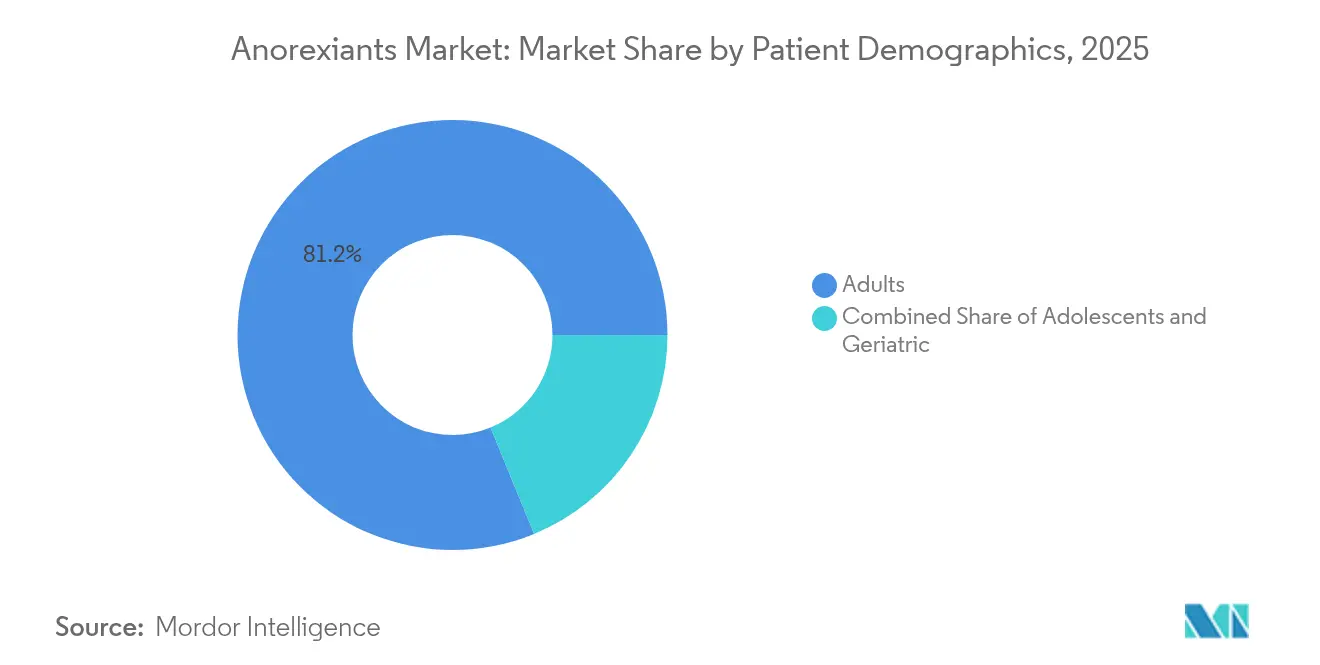
- By patient demographics, adults accounted for 81.20% of 2025 prescriptions, whereas adolescent therapies are advancing at a 6.75% CAGR on the back of new pediatric approvals.
- By distribution channel, online pharmacies are recording a 8.60% CAGR through 2031, while hospital pharmacies retained 51.10% revenue share in 2025.
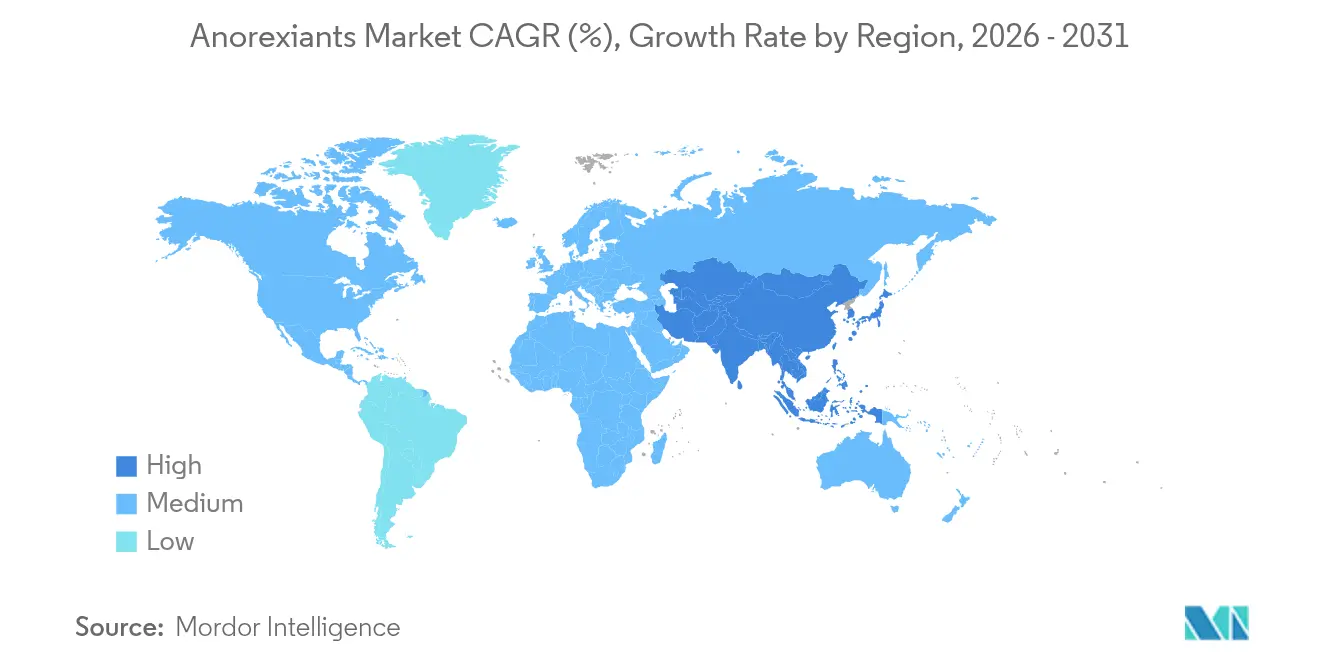
- By geography, Asia-Pacific is expected to lead growth at 7.70% CAGR, yet North America held 43.90% revenue share in 2025.
Note: Market size and forecast figures in this report are generated using Mordor Intelligence’s proprietary estimation framework, updated with the latest available data and insights as of 2026.
Market Trends and Insights
Drivers Impact Analysis of Anorexiants Market*
| Driver | (~) % Impact on CAGR Forecast | Geographic Relevance | Impact Timeline |
|---|---|---|---|
| Surging prevalence of obesity and metabolic syndrome | +1.2% | Global (North America, Europe highest) | Long term (≥ 4 years) |
| GLP-1 reimbursement expansions in employer-sponsored plans | +0.8% | North America, expanding to Europe | Medium term (2-4 years) |
| Pivot from aesthetics to metabolic risk reduction among payers | +0.6% | North America, EU, Australia | Medium term (2-4 years) |
| Consumer-led tele-obesity platforms expanding prescription access | +0.4% | Global, North America lead | Short term (≤ 2 years) |
| Pill-based multi-agonist pipeline promising bariatric-level efficacy | +0.3% | Global | Long term (≥ 4 years) |
| AI-driven dose-titration apps boosting long-term adherence | +0.2% | North America, EU, APAC | Medium term (2-4 years) |
| Source: Mordor Intelligence | |||
Surging Prevalence of Obesity and Metabolic Syndrome
WHO projects that nearly 2 billion individuals will be classified as obese by 2035, pushing annual global medical costs above USD 4 trillion.[1] This unprecedented disease burden is compelling payers to reposition obesity therapies as frontline metabolic interventions rather than lifestyle aids. With non-alcoholic fatty liver disease and cardiovascular comorbidities rising, prescribers are fast-tracking pharmacological solutions, thereby lifting baseline prescription volumes. The trend is visible in both developed and rapidly urbanizing economies where sedentary habits are ingrained. Consequently, long-term demand visibility is strengthening capital allocation toward enlarged peptide production and real-world outcome analytics.
GLP-1 Reimbursement Expansions in Employer-Sponsored Plans
Large US employers such as Amazon and Walmart now include GLP-1 coverage in comprehensive wellness packages.[2] Actuarial reviews indicate lower downstream spend on diabetes and cardiovascular events, prompting additional companies to follow suit. The employer segment circumvents slower Medicare and Medicaid rulemaking, providing an immediate commercial lift across working-age demographics. As utilization grows, richer real-world datasets further validate cost-effectiveness claims, reinforcing payer confidence. Parallel pilots are underway in Europe, signaling a spillover that could normalize corporate reimbursement frameworks globally within the medium term.
Pivot From Aesthetics to Metabolic Risk Reduction Among Payers
Results from a 17,604-patient trial showed 20% fewer major adverse cardiac events among Wegovy users versus placebo, leading FDA to approve the drug for cardiovascular risk reduction in March 2024.[3] The ruling allowed payers to classify therapy under essential cardiovascular care, unlocking broader coverage. NICE quickly recommended tirzepatide for similar use in the United Kingdom, setting a precedent for other European agencies. By framing treatment as chronic disease management, reimbursement committees have side-stepped prior objections anchored in cosmetic positioning, accelerating uptake across high-risk patient pools.
Consumer-Led Tele-Obesity Platforms Expanding Prescription Access
Telehealth operators such as Teladoc deploy licensed physicians for virtual consultations, e-prescribing GLP-1 drugs and arranging doorstep delivery. The digital model shortens wait times and reaches rural patients who lack specialist clinics. Proprietary algorithms support eligibility screening, while continuous remote monitoring sustains adherence, reducing weight-regain relapse. Out-of-pocket acceptance is strong: 80% of global GLP-1 sales outside the United States involve self-payment, illustrating demand elasticity despite premium price points. Elevated convenience, privacy, and integrated coaching are widening the market beyond traditional hospital settings.
Restraints Impact Analysis of Anorexiants Market*
| Restraint | (~) % Impact on CAGR Forecast | Geographic Relevance | Impact Timeline |
|---|---|---|---|
| Global semaglutide / tirzepatide API supply bottlenecks | -0.7% | Global (emerging markets most acute) | Short term (≤ 2 years) |
| Sticker shock & co-pay fatigue in self-pay segments | -0.5% | Global, price-sensitive markets | Medium term (2-4 years) |
| Safety concerns over muscle-mass loss in chronic use | -0.4% | North America, Europe | Medium term (2-4 years) |
| Momentum of non-pharmacologic GLP-1 “compound clinics” | -0.3% | North America, expanding to Europe | Short term (≤ 2 years) |
| Source: Mordor Intelligence | |||
Global Semaglutide/Tirzepatide API Supply Bottlenecks
Peptide synthesis demands specialized reactors and lengthy purification cycles, limiting rapid scale-up. Both molecules remained on the US FDA shortage list until early 2025. Novo Nordisk earmarked USD 4 billion for new US facilities and Eli Lilly allotted USD 27 billion for global capacity, yet full ramp-up spans multiple years. Meanwhile, branded inventory is preferentially shipped to high-margin markets, delaying penetration in lower-income regions. Compounding pharmacies filled the gap, but the FDA delisted the drugs from shortage status, curbing compounders’ legal latitude and temporarily tightening supply.
Sticker Shock & Co-Pay Fatigue in Self-Pay Segments
Monthly therapy costs often top USD 1,400, outstripping many household healthcare budgets. While patient-assistance programs exist, eligibility caps leave sizable populations exposed to high co-pays, prompting discontinuation after initial weight loss. Mature markets observe adherence drop-offs after six fills, undermining long-term outcome metrics that justify payer coverage. Tiered global pricing is under evaluation, yet harmonizing affordability with margin preservation remains complex, especially where generic competition is on the horizon.
*Our forecasts treat driver/restraint impacts as directional, not additive. The impact forecasts reflect baseline growth, mix effects, and variable interactions.
Anorexiants Market Segment Analysis
By Drug Class:
GLP-1 Dominance Reshapes Competitive DynamicsGLP-1 receptor agonists represented 62.05% of 2025 revenue, anchoring the anorexiants market size leadership and expanding at 7.95% CAGR through 2031. The dual action on glucose and satiety underpins first-line guideline status across multiple geographies. As clinical endpoints broaden to cardiovascular risk reduction, formularies prioritize GLP-1 over legacy sympathomimetics, accelerating class consolidation. Combination pipelines—such as Eli Lilly’s tirzepatide join GIP and glucagon targets for amplified efficacy, raising competitive thresholds for future entrants. Sympathomimetic amines persist mainly in cost-constrained settings, while serotonin-2C agonists serve contraindicated subgroups. AbbVie’s USD 350 million upfront for a long-acting amylin analog underscores the shift toward multi-hormone modulation beyond appetite suppression.
Despite intense focus on GLP-1, alternative mechanisms are widening the innovation funnel. Melanocortin-4 receptor agonists and leptin-mimetics seek to replicate hypothalamic signaling pathways, offering differentiated efficacy-safety profiles. Clinical readouts over the next five years will clarify whether these entrants can carve meaningful share from the entrenched GLP-1 class or coexist as adjunct options. As competition diversifies, manufacturers must balance indication breadth against payer willingness to reimburse premium list prices, a calculus that will shape portfolio strategies throughout the forecast window.

By Route of Administration:
Oral Innovation Challenges Injectable SupremacySubcutaneous injectables contributed 75.40% of 2025 sales, underlining their entrenched role in rapid weight-loss induction regimens. Weekly dosing convenience and abundant real-world evidence sustain prescriber confidence. Nonetheless, the oral segment is tracking a 7.15% CAGR on the strength of late-stage candidates demonstrating efficacy equivalence. Eli Lilly’s orforglipron reported mean weight reductions approaching 12% at 36 weeks, matching injectable benchmarks. Success would reset patient preference dynamics, particularly for chronic maintenance therapy where pill regimens outrank injections in adherence surveys.
Development focus has shifted toward permeability enhancers and enteric coatings that safeguard peptide integrity against gastrointestinal degradation. OPKO Health and Entera Bio are co-engineering a dual-agonist tablet leveraging proprietary absorption technology. Beyond tablets, intranasal and transdermal patches populate early pipelines, targeting cohorts with gastroparesis or needle phobia. Should these alternative routes reach commercialization, the anorexiants market share hierarchy could undergo marked realignment by 2030.
By Patient Demographics:
Adult Dominance with Adolescent AccelerationAdults encompassed 81.20% of prescriptions in 2025, commanding the largest anorexiants market share thanks to entrenched treatment paradigms and employer health-plan coverage. Cardiometabolic comorbidities within this group continue to drive high clinical urgency and reimbursement support. Simultaneously, the adolescent segment is posting a 6.75% CAGR through 2031 after FDA clearance of semaglutide for teens aged 12-17, signaling endorsement of early pharmacologic intervention. Clinicians recognize that timely therapy can avert lifelong metabolic complications, encouraging guideline revisions that advocate earlier screening and treatment thresholds.
Geriatric patients present under-served potential, yet dose-adjustment complexities tied to renal and hepatic function slow uptake. Device makers are exploring auto-injectors with lower force requirements to aid seniors with dexterity limitations. Pediatric formulations, including fruit-flavored oral suspensions under investigation, may further expand penetration into younger age brackets over the long run, reshaping lifecycle management strategies for incumbent brands.
By Distribution Channel:
Digital Disruption Transforms Traditional DispensingHospital-affiliated specialty pharmacies retained 51.10% of 2025 revenue, owing to streamlined prior-authorization workflows and embedded clinical monitoring infrastructure. However, online pharmacies, interlinked with telehealth ecosystems, are rising at 8.60% CAGR, broadening the anorexiants market size through convenience-led demand. Platforms integrate e-consultation, payment, and discreet shipping, outperforming brick-and-mortar outlets on turnaround speed. Retail chains contend by rolling out pharmacist-led GLP-1 counseling programs and adherence apps, yet margin pressure persists as payers channel volume to lower-cost digital pathways.
Partnership models are evolving: Amwell collaborates with Vida Health to unify virtual coaching and pharmacy fulfillment, creating end-to-end obesity care pathways. Regional wholesalers are piloting drop-shipment agreements to cut distribution overhead. Regulatory bodies are drafting e-pharmacy accreditation norms aimed at safeguarding drug authenticity, a prerequisite for long-term channel stability.
Geography Analysis
North America Anorexiants Market
North America generated 43.90% of 2025 revenue, underscoring its primacy in global adoption and pricing power. Medicare’s 2024 decision to reimburse GLP-1 therapies for cardiovascular risk reduction immediately catalyzed formulary inclusion across private insurers. Canada is converging, as province-level reviews favor coverage extensions; meanwhile, Mexico authorized semaglutide 2.4 mg under updated obesity guidelines, expanding regional footprint. Robust telehealth infrastructure and employer benefit designs are expected to sustain growth, even as price negotiations gradually temper unit revenues.
APAC Anorexiants Market
Asia-Pacific is tracking the fastest expansion at 7.70% CAGR, propelled by soaring urban obesity rates and recently secured approvals. China’s NMPA cleared Innovent Biologics’ mazdutide, the nation’s first domestic GLP-1/GIP dual agonist, intensifying competition and localizing supply. Japan green-lit Zepbound for sleep-apnea-related weight loss, illustrating indication diversification. India is slated to review tirzepatide in 2025, with domestic firms preparing value-tier formulations to address price sensitivity. Regional manufacturing hubs reduce logistics overhead and shield against global peptide shortages, reinforcing structural growth.
Europe Anorexiants Market
Europe maintains moderate yet steady uptake. EMA approval of Wegovy’s cardiovascular label extension and NICE’s positive appraisal of tirzepatide improve reimbursement certainty across major markets. Country-specific budget caps, however, stagger rollout timing, leading to heterogeneous access. Switzerland and Norway quickly aligned with pan-European guidance, while some Southern European states defer adoption pending cost-effectiveness negotiations. Regulatory discourse now centers on integrating digital adherence tools and outcome-based pricing, initiatives that could accelerate uniform adoption beyond 2027.
Competitive Landscape
Novo Nordisk and Eli Lilly form a two-player axis dominating GLP-1 supply, leveraging patent portfolios, manufacturing muscle, and comprehensive real-world evidence libraries. Both companies are investing in vertical integration: Novo Nordisk’s USD 4 billion US expansion and Eli Lilly’s USD 27 billion global build-out aim to neutralize supply shocks and lock in economies of scale. Horizontal diversification unfolds through acquisitions and licensing Novo Nordisk’s USD 200 million pact for UBT251 and Eli Lilly’s multi-agonist pipeline highlight aggressive portfolio widening.
Challengers are advancing on multiple fronts. Biosimilar developers in South Korea and India are scaling peptide platforms for post-2027 launches. AbbVie’s alliance with Gubra to co-develop an amylin analog positions the company for entry into the high-growth combination-therapy niche. Meanwhile, digital-first operators collaborate with compound pharmacies, creating alternative fulfillment networks during branded stockouts, though recent FDA enforcement is curtailing that window.
Technology integration is an emerging differentiator. Players pair drugs with AI titration apps, remote monitoring, and gamified adherence features, forging ecosystem moats. Intellectual-property litigation intensifies as expiration dates near; top manufacturers file secondary patents around delivery devices and digital companions to prolong exclusivity. Success will hinge on harmonizing production scale-up with payer willingness to underwrite broad access, a balance that will shape competitive contours through the decade.
Anorexiants Industry Leaders
-
F. Hoffmann-La Roche AG
-
Pfizer Inc.
-
Novo Nordisk A/S
-
Lannett Company Inc.
-
Currax Pharmaceuticals LLC
- *Disclaimer: Major Players sorted in no particular order
Anorexiants Market Companies Covered in this Report
- Novo Nordisk
- Eli Lilly and Company
- Pfizer
- Roche
- Currax Pharmaceuticals
- Vivus
- Lannett Company Inc.
- KVK Tech
- Hi-Tech Pharmaceuticals
- Elite Pharmaceuticals
- Amgen
- AstraZeneca
- Boehringer Ingelheim Intl. GmbH
- Johnson & Johnson
- GlaxoSmithKline
- Sanofi
- Rhythm Pharmaceuticals Inc.
- Arena Pharmaceuticals (BMS)
- Medix S.A. de C.V.
- Yuhan Corporation
Market Opportunities and Future Outlook
Oral GLP-1 commercialization is widening white space beyond injection-led obesity care, particularly for chronic maintenance and digitally enabled fulfillment. In March 2026, Novo Nordisk announced a more than EUR 400 million expansion of its Athlone, Ireland manufacturing site to support oral GLP-1 production, and in March 2026 Eli Lilly announced a 10-year USD 3 billion investment in China to expand capacity for orforglipron across oral solid-dose manufacturing in Beijing and injection output in Suzhou. These moves fit the same shift already visible in channel dynamics, where online pharmacies are scaling alongside tele-obesity services and reducing access friction outside hospital settings.
Regulatory tightening around compounded GLP-1 supply is also reshaping the opportunity set toward authenticated, branded (and later regulated generic) supply chains. In April 2026, the US FDA issued a proposed rule to exclude semaglutide, tirzepatide, and liraglutide from the 503B bulks list once shortages are resolved, which narrows the latitude for large outsourcing facilities to compound these agents and increases the importance of manufacturer-backed distribution, patient support, and payer contracting. At the same time, early generic pathways are forming: in June 2026, Sandoz submitted ANDAs to the FDA for generic versions of tirzepatide, signaling emerging competitive pressure that raises the value of lifecycle strategies such as higher-dose devices (for example, Wegovy 7.2 mg pen authorized in the EU alongside the Wegovy pill in July 2026) and combination-therapy pipelines (such as long-acting amylin analog programs) to defend outcomes and formulary position.
Recent Industry Developments in Anorexiants Market
- July 2026: Novo Nordisk received European Commission marketing authorization for the Wegovy pill (oral semaglutide 25 mg) for weight management and approval for a new Wegovy 7.2 mg single-dose pen. The authorizations expand the route-of-administration mix in Europe and add a higher-dose device option for lifecycle management. Expanded oral access also supports the role of non-hospital channels that combine prescribing with home delivery.
- November 2025: Novo Nordisk signed a USD 200 million deal with United Laboratories to advance UBT251, a triple-agonist targeting GLP-1, GIP, and glucagon receptors, with manufacturing scale-up planned in Beijing and China operations. The collaboration increases Novo Nordisk's footprint in China while reinforcing its multi-agonist approach in obesity. It also adds another track to its next-generation pipeline development.
- March 2025: AbbVie and Gubra entered a license agreement worth up to USD 1.8 billion to develop GUB014295, a long-acting amylin analog for obesity. The agreement shows continued differentiation through mechanism exploration and partnership-driven expansion of obesity pharmacotherapy. It also broadens the competitive set moving beyond GLP-1-focused development.
Anorexiants Market Report Scope and Research Methodology
Market Definition and Coverage
For this study, the anorexiants market means the value of prescription medicines used to suppress appetite and support weight reduction in people with obesity, counted at manufacturer level across major regions and sales channels.
Scope exclusions: We exclude non-prescription weight loss supplements, bariatric procedures, lifestyle programs, and diagnostic or monitoring services that can sit around obesity care.
Segments Covered in This Report
- By Drug Class
- GLP-1 Receptor Agonists
- Sympathomimetic Amines
- Combination Therapies
- Serotonin-2C Agonists
- Others
- By Route of Administration
- Oral
- Subcutaneous
- Other Route of Administration
- By Patient Demographics
- Adults
- Adolescents
- Geriatric
- By Distribution Channel
- Retail Pharmacies
- Hospital Pharmacies
- Online Pharmacies
- By Geography
- North America
- United States
- Canada
- Mexico
- Europe
- Germany
- United Kingdom
- France
- Italy
- Spain
- Rest of Europe
- Asia-Pacific
- China
- Japan
- India
- Australia
- South Korea
- Rest of Asia-Pacific
- Middle East & Africa
- GCC
- South Africa
- Rest of Middle East & Africa
- South America
- Brazil
- Argentina
- Rest of South America
- North America
Data Sources, Market Sizing, and Validation
Desk Research
Desk research was used to set the market structure and build the starting demand pool for anti-obesity prescriptions that overlap with anorexiants. We reviewed public health statistics and clinical references to understand obesity prevalence, treated share, and typical treatment pathways, then mapped where anorexiant therapy is actually used in practice.
Key public inputs came from sources such as the World Health Organization, Centers for Disease Control and Prevention, OECD health statistics, national health ministries, and peer reviewed clinical journals that discuss appetite suppressants and safety guidance. We also used company annual reports and investor presentations to track product focus and geographic exposure, then checked reputable press and regulator announcements for label and safety changes. Where useful, paid subscriptions were applied for company financials and intelligence, news and financials, and patent databases to confirm timelines and product activity. This source list is illustrative only, and many other public references were used to collect, validate, and clarify the model assumptions.
Primary Interviews and Surveys
Primary work focused on confirming what is counted as an anorexiant in routine practice and how volumes move through hospital, retail, and online channels. We spoke with a mix of clinicians, hospital and pharmacy decision makers, and industry participants across APAC, EMEA, and the Americas. This clarified country-level uptake, access rules, and the range of prices observed in interviews, which we then reflected in the model.
Distribution of primary research fieldwork respondents
| Company type | Respondent position | Region |
|---|---|---|
| Top tier: 35% | CXOs: 12% | APAC: 42% |
| Mid tier: 51% | Functional/Unit leaders: 29% | EMEA: 31% |
| Smaller Players: 14% | Managers: 59% | Americas: 27% |
Market-Sizing & Forecasting
Sizing starts from a top-down build where obesity prevalence and treatment rates are converted into an addressable prescription pool by region, which is then adjusted for anorexiant eligibility and access patterns. The result is split by channel and geography using publicly visible distribution patterns and country level reimbursement and availability signals.
To keep the totals realistic, we corroborated the output with selective bottom-up approximations, such as sampled country volumes multiplied by typical annual therapy costs, and a roll up of visible supplier exposure where disclosure was available. When gaps showed up, assumptions were tightened using primary checks on how often therapy is prescribed, how long it is continued, and what share flows through retail versus hospital versus online.
Inputs used in the model included obesity prevalence and growth, diagnosed and treated patient share, prescribing intensity, average therapy duration, and average selling price progression by market as price controls and mix shift change over time. Forecasts were built using scenario analysis, where base case demand is linked to treated population growth and access expansion, and then stress tested with conservative and accelerated uptake paths aligned with expert feedback.
Data Validation & Update Cycle
Before finalizing, outputs were cross checked against independent signals like country level prescription trends discussed in interviews, major regulatory events, and visible changes in channel mix. Large variances were flagged, reworked, and then reviewed again so the final curve stays consistent with what stakeholders see in day to day ordering and prescribing.
Each report is refreshed at least annually, and interim updates are triggered when there is a material label change, safety warning, access shift, or a meaningful pricing event. Right before delivery, we run a fresh verification pass so the latest public statistics and event impacts are reflected in the numbers clients receive.
Mordor Intelligence's Anorexiants Market Estimate Compared With Other Published Estimates
Published market sizes for anorexiants can look different because firms do not always count the same drug set, the same years, or the same revenue point in the value chain. Differences also come from how treated population is estimated, how pricing is converted into USD, and how quickly assumptions get refreshed after a safety or access event.
In practice, the biggest gaps usually come from whether adjacent obesity therapies are pulled into the total, and whether online and institutional channels are treated consistently across countries. Some estimates also lean on aggressive uptake curves without checking prescribing duration and discontinuation in routine care, which can inflate the addressable pool. The spread below is mainly explained by keeping the scope to prescription appetite suppressants and updating country access and channel mix assumptions each cycle, a choice applied by Mordor Intelligence.
Benchmark comparison
| Source | Market Size | Gaps in Research Methodology |
|---|---|---|
| Mordor Intelligence | USD 1.10 B (2026) | |
| Global Consultancy A | USD 1.26 B (2025) | Uses a 2025 base year and may include a broader anti-obesity therapy definition across channels, which can lift totals versus a prescription anorexiant-only view. |
| Industry Publisher B | USD 1.14 B (2025) | Applies a 2025 point estimate with limited clarity on channel weighting and pricing normalization by country, which can shift the USD total depending on mix assumptions. |
Looking across the three numbers, most of the difference is timing (2025 versus 2026) and how tightly the product scope is kept to prescription appetite suppressants. By anchoring volumes to treated patient logic and then pressure testing with practical price and duration checks, the final value stays traceable to inputs that can be reviewed and repeated by another analyst team later on.
Key Questions Answered in the Report
How large is the anorexiants market in 2026?
The anorexiants market size reached USD 1.1 billion in 2026.
What is the projected growth rate for anorexiant drugs through 2031?
Global revenue is expected to advance at a 5.43% CAGR between 2026 and 2031.
Which drug class leads current prescriptions?
GLP-1 receptor agonists captured 62.05% of 2025 revenue and remain the fastest-growing class.
Why are oral formulations gaining attention?
Late-stage oral GLP-1 candidates have shown weight-loss efficacy comparable to injectables, removing needle-related barriers and broadening adherence.
Which region is poised for the fastest expansion?
Asia-Pacific is set to register an 7.70% CAGR through 2031 due to fresh approvals and localized manufacturing.
What factors could restrain near-term growth?
Peptide API shortages and high out-of-pocket costs may limit immediate uptake despite strong clinical demand.