
Parenteral Nutrition Market Size and Share
Market Overview
| Study Period | 2020 - 2031 |
|---|---|
| Market Size (2026) | USD 8.99 Billion |
| Market Size (2031) | USD 11.94 Billion |
| Growth Rate (2026 - 2031) | 5.82 % |
| Fastest Growing Market | Asia-Pacific |
| Largest Market | North America |
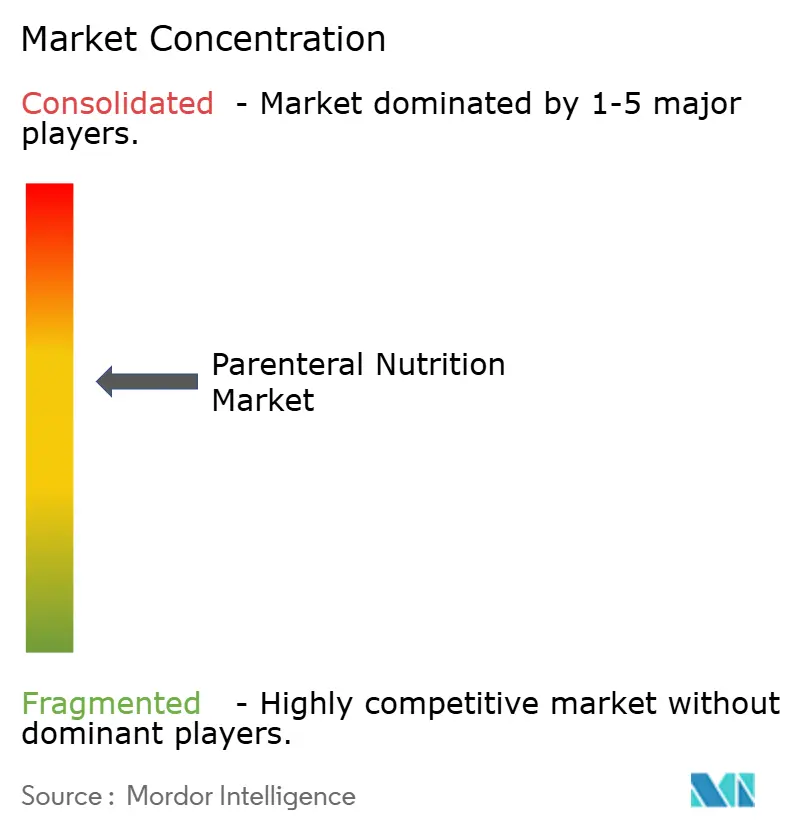
| Market Concentration | Medium |
Major Players *Disclaimer: Major Players sorted in no particular order Image © Mordor Intelligence. Reuse requires attribution under CC BY 4.0. | |
Parenteral Nutrition Market Analysis by Mordor Intelligence
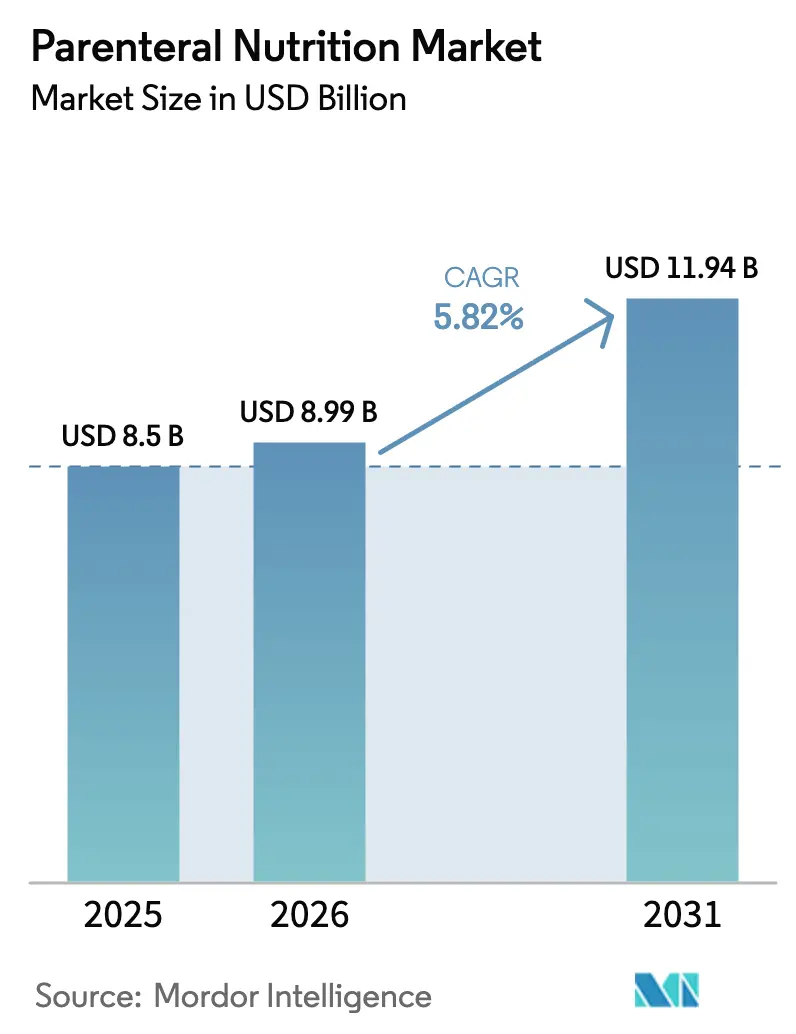
The parenteral nutrition market size was valued at USD 8.50 billion in 2025 and estimated to grow from USD 8.99 billion in 2026 to reach USD 11.94 billion by 2031, at a CAGR of 5.82% during the forecast period (2026-2031). An ageing global population primarily supports expansion, the clinical focus on early-life nutrition for pre-term infants, and rising chronic disease prevalence that extends the duration of nutritional support. Hospitals are integrating multi-chamber bag systems that shorten preparation time by 62% and cut medication errors by 54%, allowing pharmacists to redeploy labor to higher-value tasks. Regional sourcing of amino acids, backed by a USD 17.5 million federal award to Resilience, is strengthening supply security after recent ingredient shortages. Simultaneously, broader reimbursement for home-based care, coupled with portable infusion pumps, is accelerating adoption beyond inpatient settings. These intertwined factors keep the parenteral nutrition market on a steady upward trajectory.
Key Report Takeaways
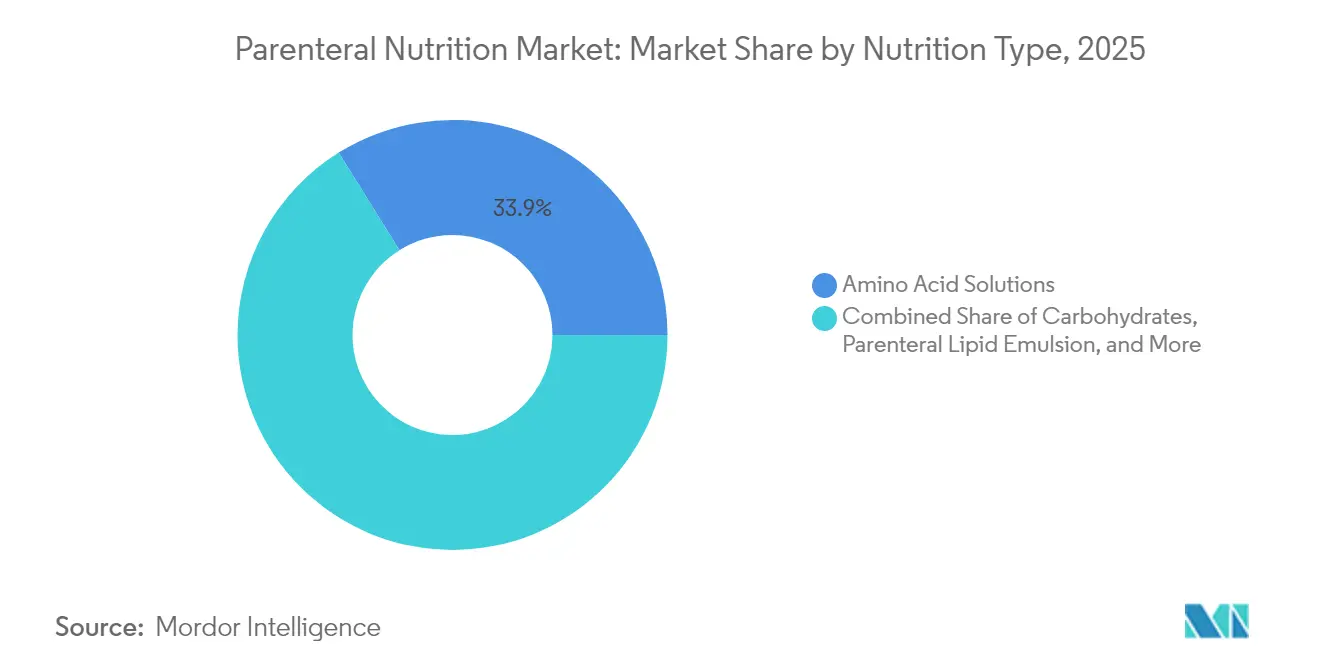
- By nutrition type, amino acid solutions led with 33.88% of the parenteral nutrition market share in 2025, and the segment is forecast to advance at a 5.52% CAGR to 2031.
- By patient type, adults held 64.25% of revenue in 2025, while the neonatal cohort is projected to expand at a 6.54% CAGR through 2031.
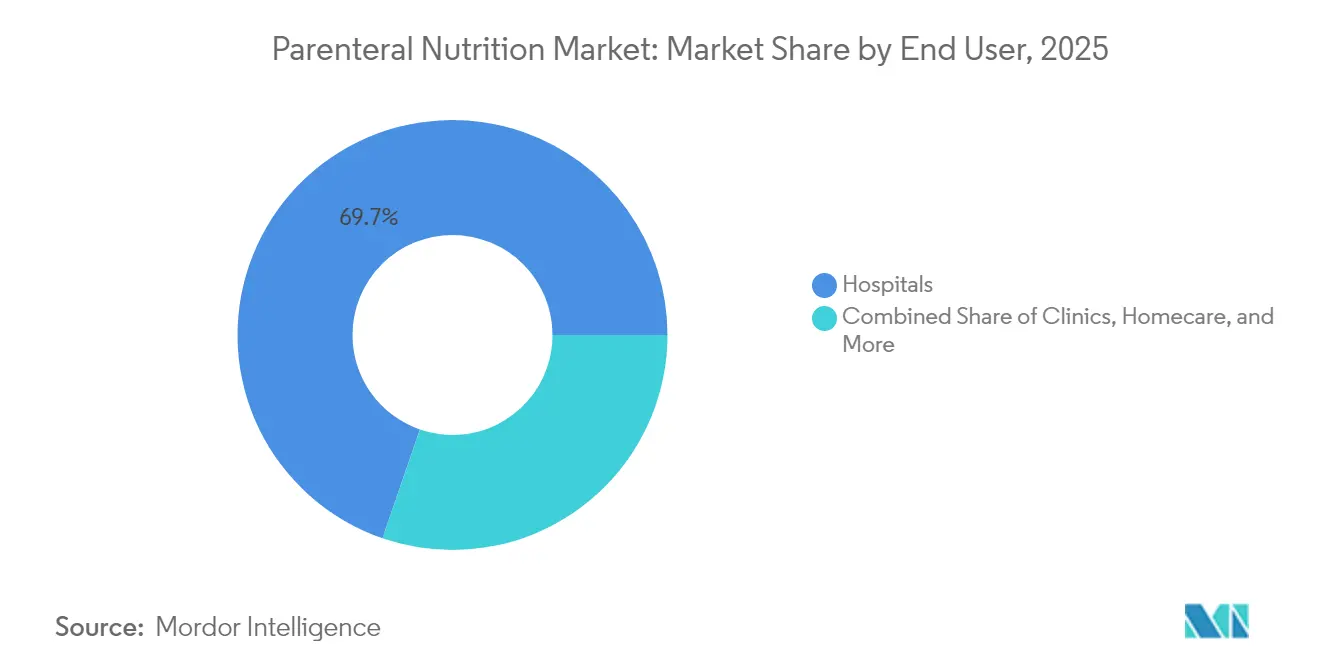
- By end-user, hospitals commanded 69.72% of sales in 2025, whereas homecare is expected to grow at an 7.98% CAGR over the forecast period.
- By geography, North America led with roughly 43.85% of revenue in 2025, while Asia-Pacific is anticipated to post the fastest growth at about 6.84% CAGR between 2026 and 2031.
Note: Market size and forecast figures in this report are generated using Mordor Intelligence’s proprietary estimation framework, updated with the latest available data and insights as of 2026.
Market Trends and Insights
Drivers Impact Analysis of Parenteral Nutrition Market*
| Driver | (~) % Impact on CAGR Forecast | Geographic Relevance | Impact Timeline |
|---|---|---|---|
| Growing Rate of Pre-Mature Births | +0.80% | Global, with highest impact in North America & Europe | Medium term (2-4 years) |
| Increasing Burden of Chronic Conditions | +1.20% | Global, particularly APAC and North America | Long term (≥ 4 years) |
| Rising Prevalence of Malnutrition | +1.00% | Global, with acute needs in developing regions | Medium term (2-4 years) |
| Rapid Uptake of Multi-Chamber Bag Technology | +0.90% | North America & Europe, expanding to APAC | Short term (≤ 2 years) |
| Supply-Chain Localization of Amino-Acid Components | +0.60% | North America & Europe primarily | Long term (≥ 4 years) |
| Expansion Of Reimbursement for Home Parenteral Nutrition | +0.70% | North America & Europe, selective APAC markets | Medium term (2-4 years) |
| Source: Mordor Intelligence | |||
Growing Rate of Pre-Mature Births
Higher survival rates of low-birth-weight infants sustain a strong need for intravenous nutrition. Early amino acid delivery within 24 hours supports superior weight gain and neurodevelopment compared with delayed feeding.[1] Triple-chamber neonatal bags now supply 2.8 g kg¹ of amino acids and 80 kcal kg¹ daily, aligning bedside practice with updated guidelines. Hospitals also record fewer compounding errors because pharmacy staff activate pre-filled chambers instead of mixing individual components. Broader use of these dedicated bags ensures consistent nutrient profiles that reduce metabolic stress in fragile neonates. Altogether, neonatal demand anchors a reliable growth pillar within the parenteral nutrition market.
Increasing Burden of Chronic Conditions
Chronic illnesses such as inflammatory bowel disease, short bowel syndrome, and malignancy-related cachexia expand the long-term user base. Poland’s reimbursement for home intravenous nutrition exceeded EUR 146 million (USD 167 million) in 2024, illustrating the fiscal weight of sustained therapy. Combined enteral and parenteral regimens let physicians meet higher energy targets, improving survival in complex adult patients. Medicare’s policy change that removed restrictive coverage determinations further opened access to home programs in the United States.[2]Given long disease duration, the parenteral nutrition market gains a dependable stream of recurring demand across public and private payers.
Rising Prevalence of Malnutrition
Systematic screening shows that 53% of hospitalized adults meet diagnostic malnutrition criteria and face double the one-year mortality risk compared with well-nourished peers. Where oral intake fails, intravenous nutrition provides a definitive route to close nutrient gaps. Audits in Japan revealed 82.9% of patients on total parenteral nutrition receive amino acids below 1.0 g kg¹, underscoring practice gaps and prospective volume upside. Hospitals that implement mandatory nutrition support teams report shorter stays and fewer readmissions, outcomes that translate into quantifiable savings for payers. These findings fuel administrative support for broader adoption, reinforcing the parenteral nutrition market outlook.
Rapid Uptake of Multi-Chamber Bag Technology
Multi-chamber systems shorten pharmacy workflow from 14.3 minutes to 5.5 minutes per bag and drop bloodstream infection rates from 6.8% to 2.1%, saving USD 11,552 per admission. Unit-dose format also curtails wastage of high-cost micronutrients, a pressing concern amid periodic trace-element shortages. Lower handling steps mean fewer opportunities for compounding errors, enhancing patient safety in busy wards. As guidelines pivot toward standardized formulations, multi-chamber adoption continues to ramp in North America and Western Europe. Technology, therefore, acts as both an efficiency lever and a growth catalyst inside the parenteral nutrition market.
Restraints Impact Analysis of Parenteral Nutrition Market*
| Restraint | (~) % Impact on CAGR Forecast | Geographic Relevance | Impact Timeline |
|---|---|---|---|
| Lack Of Awareness in Developing Countries | -0.40% | APAC, Latin America, Africa primarily | Long term (≥ 4 years) |
| High Risk of Catheter-Related Infections & Sepsis | -0.60% | Global, with acute impact in resource-limited settings | Medium term (2-4 years) |
| Volatile Pricing & Shortages of Critical Parenteral Nutrition Ingredients | -0.50% | Global, particularly affecting emerging markets | Short term (≤ 2 years) |
| Antimicrobial-Stewardship Limits on Soybean Lipid Use | -0.30% | North America & Europe primarily | Medium term (2-4 years) |
| Source: Mordor Intelligence | |||
High Risk of Catheter-Related Infections & Sepsis
Catheter-associated bloodstream infections range from 0.97 to 10.97 per 1,000 catheter days and nearly double inpatient mortality. Antimicrobial lock therapy can cut events below 1.1 per 1,000 catheter days, but widespread rollout requires specialised staff and higher consumable budgets. Some facilities still lack dedicated nutrition support teams, prolonging device dwell time and raising infection odds. As payers tighten sepsis penalties, hospitals may hesitate to start parenteral nutrition when enteral options exist. These safety concerns partly temper growth, yet advances in antimicrobial dressings and education programs are gradually mitigating risk.
Volatile Pricing & Shortages of Critical Ingredients
Global shortages of IV fluids and amino acids periodically disrupt therapy schedules. Hurricane Maria demonstrated how a single manufacturing outage can ripple worldwide and lead to rationing. Australia’s recent saline deficit triggered conservation protocols that delayed the start of non-urgent parenteral nutrition.[3] Although multi-sourcing and domestic plants lower vulnerability, raw material prices remain sensitive to energy costs and geopolitical instability. Temporary ingredient spikes inflate hospital budgets and can prompt formulary restrictions. Consequently, supply volatility introduces planning uncertainty across the parenteral nutrition market.
*Our forecasts treat driver/restraint impacts as directional, not additive. The impact forecasts reflect baseline growth, mix effects, and variable interactions.
Parenteral Nutrition Market Segment Analysis
By Nutrition Type:
Amino Acids Drive Clinical OutcomesAmino acid solutions secured 33.88% of the 2025 revenue base, the most significant slice within the parenteral nutrition market share. The component advances at 5.52% CAGR to 2031 as clinicians prioritize early protein delivery for wound healing, immune defense, and growth. Carbohydrate dextrose solutions follow in volume but face intensified glucose-control protocols that moderate their expansion. Lipid emulsions are pivoting to mixed-oil blends that curb omega-6 overload and reduce cholestasis risk, satisfying pediatric guideline shifts away from pure soybean oil. Vitamins, trace elements, and electrolytes, though smaller in unit sales, remain indispensable for preventing deficiency-related complications during long-term therapy. Stability improvements, such as light-protective multilayer bags, now extend shelf life to seven days in automated pumps, cutting changeovers and nursing time. Collectively, these advances enlarge the parenteral nutrition market by enabling safer, more tailored prescriptions amid rising patient acuity.

By Patient Type:
Neonatal Segment Accelerates GrowthAdults represented 64.25% of 2025 revenue, driven by oncology, gastrointestinal, and post-surgical requirements. The neonatal fraction, however, clocks the fastest 6.54% CAGR through 2031, buoyed by higher pre-term survival and proactive early-life nutrition standards. Triple-chamber neonatal bags meet 100% of the recommended amino acid intake while lowering pharmacist workload by 37%. Paediatric patients beyond infancy hold steady as congenital disorders stabilise, yet require ongoing nutritional oversight. Geriatric uptake is climbing in parallel with longer life expectancy and multimorbidity. By 2031, the parenteral nutrition market size for neonates is projected to approach USD 2.04 billion, underscoring their growing weight in overall demand.
By End-User:
Homecare Transforms Delivery ModelsHospitals maintained 69.72% of 2025 billings because initiation, monitoring, and acute interventions still occur in inpatient settings. Nonetheless, homecare recorded the highest 7.98% CAGR forecast, reflecting payers’ push for lower-cost sites. Smart pumps with dose-error-reduction software allow safe bedside use and transmit logs for remote clinical review. Clinics serve stable oncology and inflammatory bowel cohorts that require periodic central line checks and micronutrient dosing adjustments. Ambulatory surgical centers increasingly deploy short-term parenteral nutrition protocols to optimize perioperative recovery, trimming length of stay. With Medicare’s 2022 reimbursement liberalization, the parenteral nutrition market size associated with home settings is expected to reach USD 2.46 billion by 2031, reshaping care delivery economics.
Geography Analysis
North America Parenteral Nutrition Market
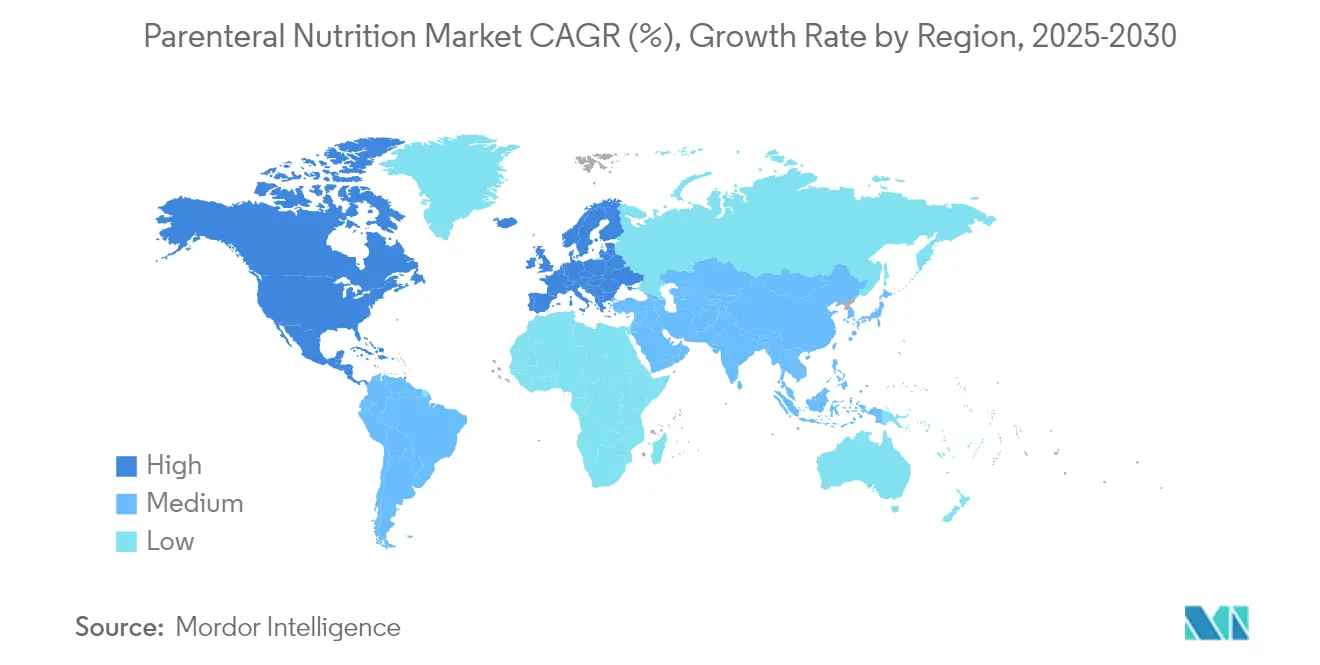
North America remains the leading contributor to the parenteral nutrition market, accounting for approximately 43.85% of global revenue in 2025. CMS’s decision to drop restrictive National Coverage Determinations expanded home therapy eligibility, leading to increased utilization in smaller community hospitals. Domestic amino acid plants funded by the HHS-Resilience partnership reduce reliance on overseas inputs and bolster supply security. Technology adoption is also rapid; Baxter’s Novum IQ platform downloads drug libraries over the air, aligning dose limits across multiple facilities in real time.
Europe Parenteral Nutrition Market
Europe is a mature yet innovative arena. ESPEN and ESPGHAN guidelines standardize practices for both pediatric and adult patients, promoting consistent nutrient delivery across member states. Six nations now codify home parenteral nutrition in legislation, with Denmark covering the majority of patient costs. Wage expenses account for 54% of total neonatal compounding costs, prompting hospitals to shift toward fixed multi-chamber bags to enhance efficiency. Increased scrutiny of soybean-only lipids drives demand for composite emulsions, advancing formulation science throughout the region.
APAC Parenteral Nutrition Market
Asia-Pacific stands out as the fastest-growing geography, anticipating a 6.84% CAGR between 2026 and 2031. Japan’s audit highlighted underdosing trends, indicating a need for guideline alignment and potential volume growth. Meanwhile, an ICU Medical-Otsuka joint venture will add 1.4 billion IV units annually, extending regional manufacturing and providing a buffer against future shortages. Reimbursement remains uneven: only 40% of surveyed countries subsidize home intravenous nutrition; however, the rising prevalence of chronic diseases is pressuring policymakers toward coverage expansion. These forces combine to elevate the parenteral nutrition market across urban and emerging provincial centers.
Regulatory Landscape
Regulation of parenteral nutrition (PN) covers sterile injectable manufacturing controls and shortage governance for critical components including amino acids, dextrose, lipid injectable emulsions, sterile water, and multivitamins. In the United States, the U.S. Food and Drug Administration (FDA) maintains the Drug Shortages database and requires manufacturers to notify anticipated supply disruptions, while clinical bodies such as ASPEN and ASHP publish component-specific shortage recommendations that affect hospital formulary decisions and substitution practices during constraints.
Shortage status continues to shape operational compliance and sourcing behavior. As of June 25, 2026, amino acid injection products from Baxter, B. Braun, and ICU Medical were still reported on allocation, reinforcing the need for standardized shortage-response protocols, controlled substitutions, and tighter inventory stewardship by hospital nutrition support teams. Europe also continues to align practice through society guidance (for example, ESPEN/ESPGHAN referenced in clinical standardization), and product launches for pediatric PN in the region underscore how indication, labeling, and quality-system expectations apply to ready-to-use multi-chamber solutions.
Competitive Landscape
The parenteral nutrition industry features moderate concentration. Fresenius Kabi, Baxter International, and B. Braun together own close to half of global sales, leveraging large portfolios, vertically integrated supply, and hospital contracts. Fresenius Kabi won a 2024 supply-chain excellence award for predictive analytics that lowered stockouts. Baxter distinguishes itself through connected infusion ecosystems - Novum IQ’s integrated syringe and large-volume pumps display identical user interfaces, reducing training time and error rates. B. Braun’s DUPLEX system combines antibiotic powder and diluent in separate chambers, cutting dose prep by four minutes and halving mishandling incidents.
Strategic consolidation is reshaping competitive dynamics. The USD 200 million ICU Medical–Otsuka alliance forms a global IV network with 1.4-billion-unit capacity, ensuring resilience against regional shocks. Mid-tier companies are investing in lipid innovation; mixed-oil emulsions integrate fish and olive oils to balance omega-6:omega-3 ratios. Digital health newcomers supply pumps with cellular modules that relay infusion parameters to cloud dashboards, enabling real-time adherence monitoring. Meanwhile, contract development and manufacturing organizations position themselves as on-demand partners capable of sterile fill-finish for hospitals and branded suppliers alike. These varied strategies intensify competition and foster steady product innovation, ensuring that the parenteral nutrition market remains dynamic through 2030.
________________________________________
Parenteral Nutrition Industry Leaders
-
Fresenius Kabi AG
-
B. Braun Melsungen AG
-
Baxter
-
ICU Medical
-
Option Care Health Inc.
- *Disclaimer: Major Players sorted in no particular order
Parenteral Nutrition Market Companies Covered in this Report
- Fresenius
- Baxter
- B. Braun
- ICU Medical
- Option Care Health
- Abbott Laboratories
- Sichuan Kelun Pharma
- Otsuka Pharmaceutical Co.
- Amanta Healthcare
- Aculife Healthcare
- Grifols
- Ajinomoto Co. Inc.
- Pfizer
- Vifor Pharma
- Nestle
- Becton Dickinson & Co.
- Teva Pharmaceutical Industries
- Sosuco Pharma (Numedica)
- Terumo Corp.
- Braun SE (Clinimix)
- Fresenius SE (Vyved)
Market Opportunities and Future Outlook
Ongoing PN component disruptions create near-term whitespace for manufacturers and providers that can reduce dependence on customized compounding and improve continuity of care. Hospitals increasingly operationalize ASPEN shortage-mitigation playbooks across amino acids, lipid injectable emulsions, dextrose, sterile water, and multivitamins, which raises demand for standardized, ready-to-use formats and service capabilities that help convert frequent formula changes into safe bedside execution.
Digitization and workflow integration are a second opportunity area, especially where supply constraints force rapid substitutions. Modern PN programs need tighter alignment between automated compounding devices (ACDs) and electronic health records to manage formulation changes, dosing limits, and traceability during disruptions, which creates a clear implementation lane for connected infusion and compounding ecosystems. Product innovation in pediatrics also expands addressable use cases: in June 2026, Fresenius launched the Pedismof pediatric PN range in Europe, highlighting active investment in age-specific, ready-to-use three-chamber bags for neonates through adolescents and supporting broader standardization beyond adult ICU and surgical settings.
Recent Industry Developments in Parenteral Nutrition Market
- June 2026: Fresenius Kabi launched Pedismof ready-to-use three-chamber bag parenteral nutrition solutions in Europe for neonates to adolescents. The market entry expands the companys pediatric PN portfolio and standardizes preparation in Europe, potentially reducing dosing errors and prep time in clinical settings.
- June 2026: Fresenius Kabi opened a clinical nutrition Innovation Center in Bad Homburg, Germany. The new facility focuses on PN and automated pumping systems, strengthening the companys R&D, digital capabilities, and sterile admixture automation in Europe.
- May 2025: Baxter launched Novum IQ infusion platform in the United States with dose error reduction features. The platform supports a connected PN infusion network and enhances digital adherence monitoring in hospital settings.
Parenteral Nutrition Market Report Scope and Research Methodology
Market Definition and Coverage
For this methodology, the parenteral nutrition market covers the sales value of intravenous nutrition solutions that are used when oral or enteral feeding is not adequate, across inpatient and outpatient care settings.
Scope exclusions: This sizing excludes general IV fluids that are not used for nutritional support and it also excludes oral and enteral nutrition products.
Segments Covered in This Report
- By Nutrition Type
- Carbohydrates
- Lipid Emulsions
- Amino Acid Solutions
- Vitamins
- Trace Elements
- Electrolytes
- Others
- By Patient Type
- Neonates (Pre-term & Term)
- Pediatrics (1-17 yrs)
- Adults (18-64 yrs)
- Geriatric (Above 65 yrs)
- By End-user
- Hospitals
- Clinics
- Homecare
- Ambulatory Surgical Centres
- By Geography
- North America
- United States
- Canada
- Mexico
- Europe
- Germany
- United Kingdom
- France
- Italy
- Spain
- Rest of Europe
- Asia-Pacific
- China
- Japan
- India
- South Korea
- Australia
- Rest of Asia-Pacific
- Middle East and Africa
- GCC
- South Africa
- Rest of Middle East and Africa
- South America
- Brazil
- Argentina
- Rest of South America
- North America
Data Sources, Market Sizing, and Validation
Desk Research
Desk research was used to set the market boundaries and to build the starting demand logic by geography and care setting. We leaned on public healthcare statistics and nutrition guidance that help explain where parenteral nutrition is clinically used, along with the care pathways that drive usage in hospitals and homecare.
For the desk layer, sources included items such as CDC and NIH publications, FDA safety communications and labeling resources for sterile injectable products, WHO health statistics, OECD health data, and peer reviewed clinical nutrition literature. We also reviewed company annual reports, investor decks, and credible press coverage to understand capacity changes, shortages, and portfolio mix. Where needed, paid subscriptions for company financials and intelligence, patent databases, and shipment-level import-export views were used to sanity check supply signals. The sources listed here are illustrative, and many other references were used to collect data, cross-check assumptions, and clarify open questions.
Primary Interviews and Surveys
Primary work was done to pressure test demand drivers and pricing assumptions that are not cleanly visible in public data, especially the split between standardized bag use and patient-specific compounding (which impacts average selling prices). We spoke with a mix of manufacturers, distributors, hospital pharmacy staff, clinicians, and home infusion stakeholders across major regions, and then used their inputs to confirm utilization patterns, shortage effects, and realistic adoption timing by end-user.
Distribution of primary research fieldwork respondents
| Company type | Respondent position | Region |
|---|---|---|
| Top tier: 25% | CXOs: 16% | APAC: 50% |
| Mid tier: 57% | Functional/Unit leaders: 25% | EMEA: 30% |
| Smaller Players: 18% | Managers: 59% | Americas: 20% |
Market-Sizing & Forecasting
The core model is anchored in a top-down build where treated patient pools and care setting activity are reconstructed into likely parenteral nutrition usage, and then translated into annual value using region-level pricing. When the logic is built from the demand side first, the main clause becomes clearer at the end, which is that the total market value is tied to who needs therapy, for how long, and in what setting.
To corroborate the totals, we also run selective bottom-up checks using supplier roll-ups in key countries and sampled ASP times volume estimates from channel discussions, and then adjust where gaps are repeatedly explained by interviews. Inputs used in the model include indicators such as preterm birth levels and NICU utilization, chronic disease and malnutrition burden that extends therapy duration, homecare adoption for long-term patients, the share of multi-chamber bags versus compounded formulations, and sterile injectable supply availability that can temporarily suppress volumes or shift mix.
For forecasting, scenario analysis is used to reflect different adoption speeds for home parenteral nutrition and standardization (multi-chamber bags), which then gets aligned to expert views on reimbursement and clinical protocols by region. Where bottom-up data is incomplete, missing pieces are handled through conservative proxy assumptions that are documented and rechecked with follow-up calls before finalizing the year totals.
Data Validation & Update Cycle
Outputs are validated through multiple checks so the model does not drift away from real-world therapy use. We compare the estimated value and growth against independent signals such as healthcare utilization direction, reported shortages or restocking cycles, and mix shifts between hospital and homecare that affect pricing.
Any large variance by country or segment is reviewed again, and if the reason is not clear, we re-contact selected interviewees to confirm whether the change is structural or temporary. A separate analyst review is done before sign-off, followed by a final consistency pass right before delivery. The report is refreshed annually, and interim updates are made when material events occur that can change supply, pricing, or demand assumptions.
Mordor Intelligence's Parenteral Nutrition Market Estimate Compared With Other Published Estimates
Published market values for parenteral nutrition can look different because the underlying choices are not the same, even when the titles sound similar. The most common reasons are what is counted as parenteral nutrition, which year is treated as the starting point, and how prices are normalized across countries.
The main gap comes from whether adjacent sterile IV categories and preparation services are rolled into the total, and from how mixed settings like home infusion are valued when product and service lines are bundled. Some publishers also apply faster price inflation or assume a quicker shift to standardized multi-chamber formats, which can lift value even if patient volume is similar.
Benchmark comparison
| Source | Market Size | Gaps in Research Methodology |
|---|---|---|
| Mordor Intelligence | USD 8.99 B (2026) | |
| Trade Journal A | USD 8.94 B (2025) | Uses an earlier base year and appears to emphasize hospital use, which can undercount the growing homecare share and the related mix shift that changes ASPs. |
| Industry Dataset B | USD 8.07 B (2024) | Builds from older demand and pricing assumptions, and the scope likely stays closer to core PN solutions without fully reflecting mix changes across patient types and end-users. |
The table shows that the spread is mostly explained by base-year choice and how care settings and product mix are treated, rather than by a totally different view on patient need. The gap driver is scope around what gets counted as parenteral nutrition and what stays out, where Mordor Intelligence keeps the estimate focused on PN products across end-users and then normalizes ASPs by region before forecasting. Because the steps and inputs are traceable, the final value stays practical to reproduce and easier to reconcile with real utilization signals.
Key Questions Answered in the Report
What is the projected parenteral nutrition market size by 2031?
The parenteral nutrition market size is forecast to reach USD 11.94 billion by 2031.
Which product segment currently dominates revenue?
Amino acid solutions lead the market, holding 33.88% of 2025 revenue.
Why is Asia-Pacific the fastest-growing region?
Rising chronic disease burden, expanded critical-care capacity, and new regional manufacturing are propelling a 6.84% CAGR in Asia-Pacific.
How fast is the homecare channel expanding?
Homecare is expected to log an 7.98% CAGR to 2031 due to reimbursement reforms and portable smart pumps.
What clinical risk most constrains growth?
Catheter-associated bloodstream infection remains the primary safety concern, though antimicrobial lock therapy can markedly lower event rates.