
Market Overview
| Study Period | 2020 - 2031 |
|---|---|
| Forecast Data Period | 2026 - 2031 |
| Base Year Market Size (2025) | USD 22.65 Billion |
| Market Size (2026) | USD 24.16 Billion |
| Market Size (2031) | USD 33.33 Billion |
| Growth Rate (2026 - 2031) | 6.65 % |
| Market Concentration | Medium |
Major Players *Disclaimer: Major Players sorted in no particular order Image © Mordor Intelligence. Reuse requires attribution under CC BY 4.0. | |
Europe Medical Clinical Nutrition Market Analysis by Mordor Intelligence
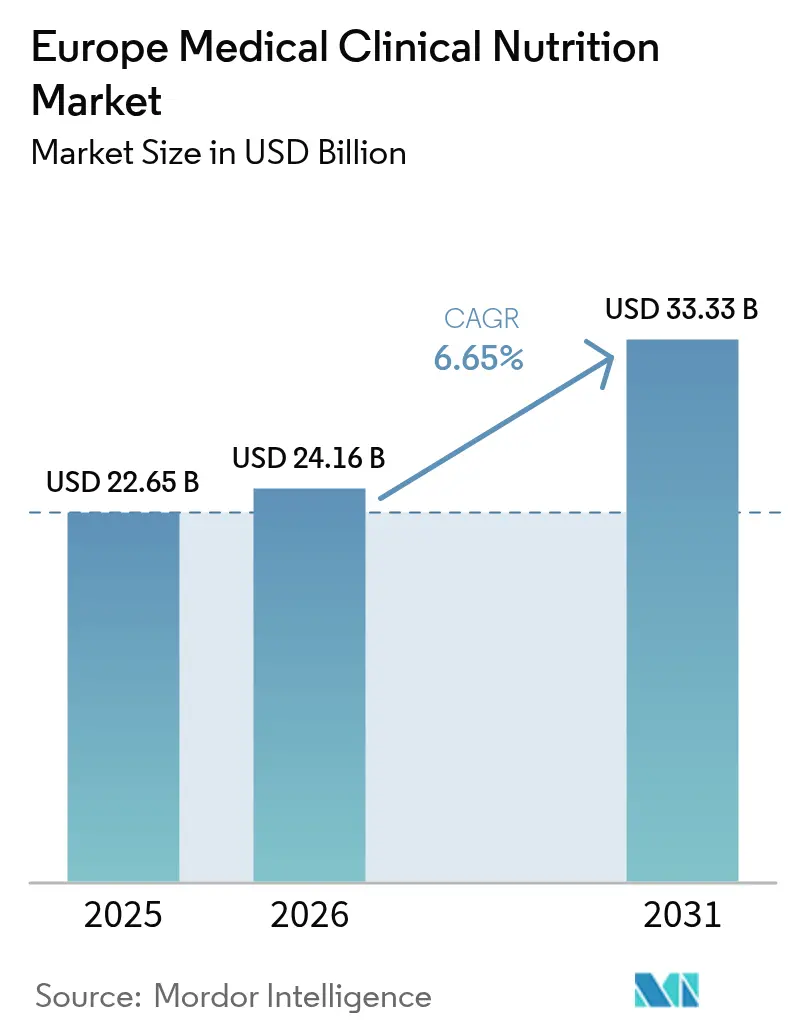
The Europe medical clinical nutrition market size is projected to be USD 22.65 billion in 2025, USD 24.16 billion in 2026, and reach USD 33.33 billion by 2031, growing at a CAGR of 6.65% from 2026 to 2031. Demand no longer rises in small, linear steps. Instead, reimbursement reforms, mandatory peri-operative feeding protocols, and home-care expansion are entrenching clinical nutrition as a foundational therapy across hospitals, long-term-care facilities, and domiciliary settings. Enhanced Recovery After Surgery (ERAS) pathways now cover 85% of European surgical centers and typically trim two to three inpatient days per case. ESPEN’s 2024 guidelines re-classified sarcopenia as a stand-alone diagnosis, immediately opening reimbursement in Germany, France, and the Netherlands for high-protein oral nutrition supplements. Parallel growth in home parenteral nutrition (HPN) programs is accelerating product uptake in Scandinavia and the Benelux region, while the EU’s 2024 e-pharmacy directive is pushing double-digit online sales. The Europe medical clinical nutrition market is therefore shifting from discretionary supplementation toward protocolized, reimbursed therapy that improves outcomes and frees acute-care capacity.
Key Report Takeaways
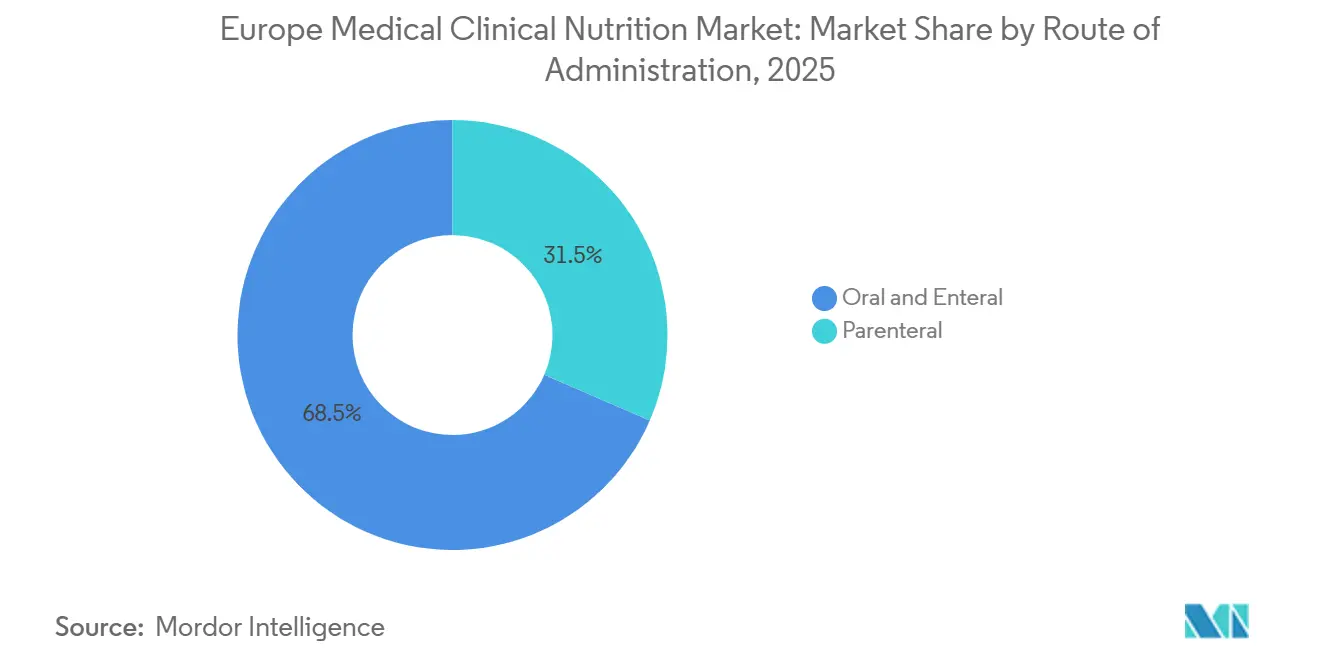
- By route of administration, oral and enteral nutrition held 68.55% of Europe medical clinical nutrition market share in 2025, whereas parenteral nutrition is advancing at an 8.25% CAGR through 2031.
- By product type, standardized enteral formulas captured 45.53% of the Europe medical clinical nutrition market size in 2025, while parenteral macronutrient solutions are projected to expand at a 7.75% CAGR to 2031.
- By application, oncology led with 31.15% revenue share in 2025; gastrointestinal disease formulas are the fastest-growing at a 9.82% CAGR through 2031.
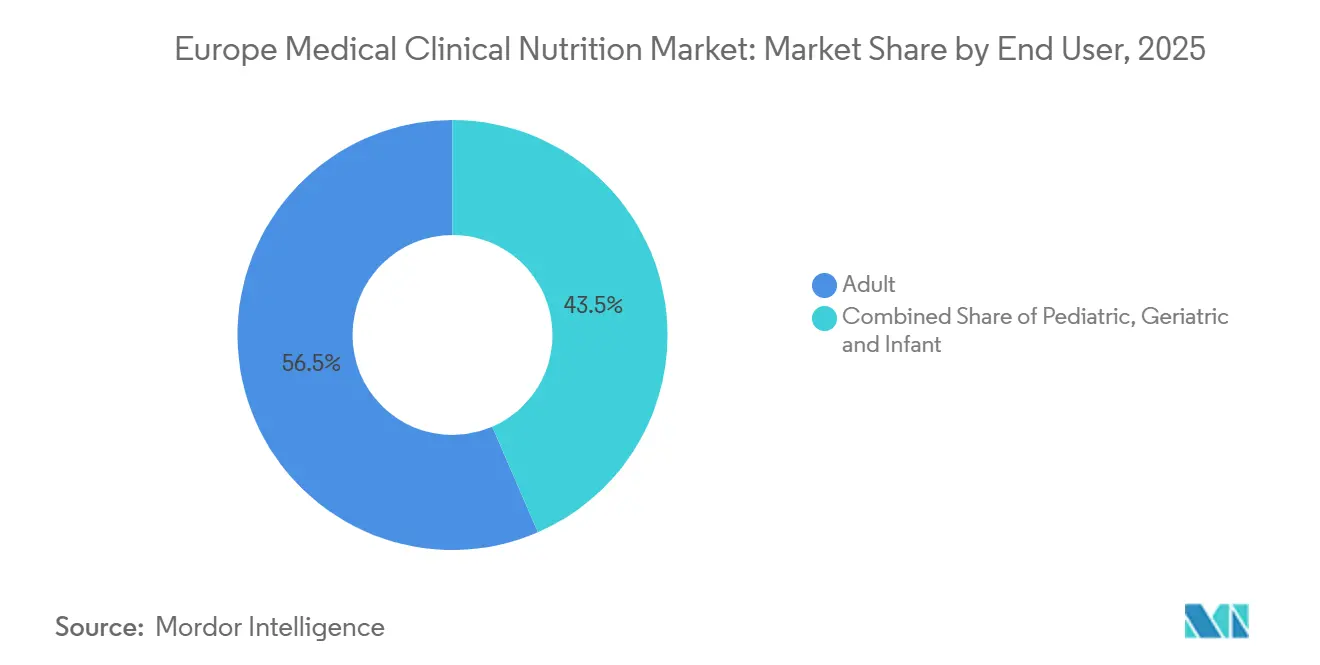
- By end user, adults commanded 56.65% of the Europe medical clinical nutrition market share in 2025, yet the geriatric segment shows the highest projected growth at 7.32% CAGR.
- By distribution channel, hospital pharmacies contributed 42.23% of 2025 revenue, whereas online pharmacies are set to rise at a 10.42% CAGR to 2031.
- By geography, Germany generated 32.23% of 2025 revenue, while the United Kingdom is forecast to post the quickest national growth at a 7.42% CAGR through 2031.
Note: Market size and forecast figures in this report are generated using Mordor Intelligence’s proprietary estimation framework, updated with the latest available data and insights as of 2026.
Market Trends and Insights
Drivers Impact Analysis of Europe Medical Clinical Nutrition Market*
| Driver | (~) % Impact on CAGR Forecast | Geographic Relevance | Impact Timeline |
|---|---|---|---|
| Rising prevalence of chronic & metabolic disorders | +1.2% | Germany, United Kingdom, France | Medium term (2-4 years) |
| Aging population & escalating healthcare spend | +1.5% | Germany, Italy, Spain, Nordics | Long term (≥ 4 years) |
| Home-based enteral nutrition adoption surge | +0.9% | Netherlands, Belgium, Scandinavia, UK | Short term (≤ 2 years) |
| ERAS-driven clinical-nutrition stewardship | +1.1% | Germany, France, UK, Switzerland | Medium term (2-4 years) |
| AI-enabled personalized nutrient profiling | +0.7% | Germany, Netherlands, Nordics | Long term (≥ 4 years) |
| EU e-pharmacy liberalization broadening D2C reach | +1.0% | Spain, Italy, Poland, rural EU | Short term (≤ 2 years) |
| Source: Mordor Intelligence | |||
Rising Prevalence of Chronic & Metabolic Disorders
Cancer cases climbed to 4.2 million in 2024 and cachexia now affects up to 80% of late-stage patients, prompting ESMO’s 2025 protocol that pairs high-protein oral supplements with resistance exercise within 48 hours of diagnosis, improving six-month survival by 18%[1]. Type 2 diabetes counts 62 million European adults, and EASD backs low-glycemic enteral formulas that hold post-prandial glucose 35% lower than polymeric alternatives. IBD prevalence exceeded 3.2 million in 2024; ECCO guidelines upgraded exclusive enteral nutrition to first-line pediatric Crohn’s therapy, lifting remission to 65% and reshaping hospital formularies in Germany, France, and the Netherlands. Nephrologists now rely on renal-specific formulas to defer dialysis 12-18 months for 15% of adults with chronic kidney disease.
Aging Population & Escalating Healthcare Spend
Europe will host 150 million residents aged 65-plus by 2030; one-third of hospitalized seniors already present with protein-energy malnutrition, lengthening stays 4-6 days. ESPEN designated sarcopenia as a reimbursable condition in 2024, enabling high-protein oral nutrition supplement coverage across Germany, France, and the Netherlands. EU healthcare outlays reached EUR 1.8 trillion (USD 1.95 trillion) in 2024, but systematic nutrition screening cut total costs 12% through fewer complications[2]. The NHS England framework mandated 24-hour malnutrition screening from April 2025 and standard prescription criteria for oral supplements, abolishing postcode disparities that had excluded 30% of qualifying patients.
Home-Based Enteral Nutrition Adoption Surge
Home enteral nutrition volumes jumped 22% in the Netherlands during 2025 as hospitals sought to release capacity and patients favored safer domiciliary care. Belgium and Denmark require five-day caregiver competency training, lowering catheter complications 35%. The UK introduced a national HEN tariff of GBP 120 (USD 155) per patient per week that freed 1,200 acute beds in 2025. Portable pumps with wireless telemetry now transmit adherence data, diminishing unplanned visits 28%.
ERAS-Driven Clinical-Nutrition Stewardship
ERAS bundles now mandate carbohydrate loading two to three hours pre-anesthesia and oral or enteral feeding inside 24 hours post-surgery in 85% of centers, cutting surgical-site infections 20%. Immunonutrition enriched with arginine and omega-3 fatty acids lowers postoperative complications 30% in major gastrointestinal cases. Germany reports 92% ERAS compliance in colorectal resections, while France’s national registry links ≥80% adherence to 15% fewer 30-day readmissions.
Restraints Impact Analysis of Europe Medical Clinical Nutrition Market*
| Restraint | (~) % Impact on CAGR Forecast | Geographic Relevance | Impact Timeline |
|---|---|---|---|
| Limited patient / HCP awareness of clinical nutrition | -0.6% | Italy, Spain, Portugal, Poland, Romania, Bulgaria | Medium term (2-4 years) |
| Complex EU regulatory & reimbursement landscape | -0.8% | Pan-European; acute in Italy, Spain, Poland, Hungary | Long term (≥ 4 years) |
| Volatile polymer & packaging input costs | -0.5% | All EU manufacturers, spillover to Benelux & UK | Short term (≤ 2 years) |
| Stricter macronutrient caps in specialised formulas | -0.3% | Germany, France, Netherlands | Medium term (2-4 years) |
| Source: Mordor Intelligence | |||
Limited Patient / HCP Awareness of Clinical Nutrition
Malnutrition screening still reaches under 50% of admissions in Italy and Spain, leaving 40% of at-risk patients untreated. Only 35% of European general practitioners routinely prescribe oral nutrition supplements, citing limited product knowledge. Rural Portuguese uptake of validated tools such as MUST stands below 30% despite a national campaign that trained 5,000 physicians in 2025. Patient misconceptions persist; 70% of cancer patients in Italy and Spain do not know nutritional therapy can mitigate chemotherapy-related weight loss. Eastern Europe is further constrained by dietitian-to-patient ratios of 1:10,000 versus 1:2,500 in Western Europe.
Complex EU Regulatory & Reimbursement Landscape
Foods for special medical purposes (FSMPs) skirt centralized EMA review and instead navigate 27 national reimbursement schemes. Germany reimburses instantly, yet Italy’s regional approvals delay initiation 10-14 days. Spain’s devolution generates postcode disparities: Catalonia covers 85% of costs while Andalusia reimburses only 40%. Technical roll-out for cross-border e-scripts lags in 19 member states, muting near-term harmonization benefits.
*Our forecasts treat driver/restraint impacts as directional, not additive. The impact forecasts reflect baseline growth, mix effects, and variable interactions.
Europe Medical Clinical Nutrition Market Segment Analysis
By Route of Administration:
Parenteral Gains Ground In Home-Care ShiftOral and enteral modalities retained 68.55% Europe medical clinical nutrition market share in 2025, anchored by ESPEN’s “gut-first” doctrine that favors tube feeding whenever the intestine is functional. Early enteral delivery within 48 hours of ICU admission now covers 45% of patients and trims ventilator-associated pneumonia by 25%. Standard oral supplements dominate geriatric and oncology cohorts, supplying 60% of high-protein prescriptions.
Parenteral therapy is nevertheless accelerating at an 8.25% CAGR through 2031 as national insurers expand HPN coverage. Scandinavia’s registries logged 12% annual growth and extended median catheter life to 26 months thanks to omega-3 lipid emulsions that curb occlusion. Fresenius Kabi’s ready-to-infuse Numeta bags reduced preparation time from 45 to under five minutes and lowered compounding errors 70%, illustrating how innovation can reposition parenteral solutions for home environments.
By Product Type:
Disease-Specific Formulas Gain Clinical TractionGeneric polymeric formulas held 45.53% of 2025 revenue, remaining the workhorse in mixed medical-surgical wards. Fiber-enriched versions now cut diarrhea 30% and improve glycemic profiles.
High-acuity care is tilting toward disease-specific blends. The Europe medical clinical nutrition market size for parenteral macronutrient solutions is on pace to advance 7.75% annually, powered by fourth-generation lipid emulsions licensed by the EMA in 2024-2025 that lower bloodstream infections 30%. Germany’s insurer now reimburses 90% of these lipids, freeing ICUs from prior-authorization bottlenecks.
By Application:
Gastrointestinal Diseases Drive Formula InnovationOncology captured 31.15% of 2025 revenue as cachexia management moved into guidelines and payer formularies. Immunonutrition now benefits 35% of major gastrointestinal surgery cases and lowers postoperative complications 30%.
Gastrointestinal indications represent the fastest expansion at a 9.82% CAGR. ECCO’s 2024 directive placing exclusive enteral nutrition ahead of corticosteroids for pediatric Crohn’s raised EEN adoption to 55% in Dutch clinics by 2025. Polymeric blends are preferred for cost, while partial-enteral CDED regimens are improving adherence and remission rates.
By End User:
Geriatric Segment Accelerates On Sarcopenia RecognitionAdults still generated 56.65% of 2025 revenue, reflecting large surgical and chronic-disease caseloads. ERAS mandates carbohydrate drinks and early feeding that shorten stays two to three days.
Geriatrics, however, is the growth engine, expected to outpace all other groups at 7.32% CAGR. Reimbursed high-protein formulas now target sarcopenia for the first time; a German community study showed 15% better grip strength after 12 weeks of supplementation. Europe medical clinical nutrition market size gains here will compound as the over-65 cohort adds 10 million residents by 2030.

By Distribution Channel:
Online Pharmacies Surge On Cross-Border E-PrescriptionsHospital pharmacies remained dominant at 42.23% in 2025, bundling tender contracts across Western Europe. France’s purchasing consortium reduced unit prices 15% through a three-year award to two suppliers.
Still, digital fulfillment is the clear growth story. Online outlets are slated to climb 10.42% per year as eight countries already exchange e-prescriptions, and Germany reimburses delivery fees. Europe medical clinical nutrition market share captured by e-pharmacies will widen as Italy, Spain, and Poland finalize technical integration over 2026-2027.
Geography Analysis
Germany Medical Clinical Nutrition Market
Germany generated 32.23% of 2025 revenue on the back of broad statutory insurance coverage and 1,200 hospital nutrition teams. Reimbursement expansion for home enteral nutrition in January 2025 added 8,000 new users inside six months[3]. ERAS compliance in colorectal surgery tops 90% and cuts 30-day readmissions 15%.
United Kingdom Medical Clinical Nutrition Market
The United Kingdom is the region’s fastest climber at a 7.42% CAGR through 2031. The April 2025 NHS framework standardized screening and prescription criteria, eliminating postcode inequity and freeing 1,200 beds annually. A national HEN tariff now reimburses GBP 120 weekly for dietitian monitoring, fueling growth in home care.
Broader European Markets
France, Italy, and Spain together form a large but uneven terrain. France added 12 formulas to its reimbursement list in 2024 yet still requires 18 months per update. Italy’s regional approvals delay therapy 10-14 days, and Spain’s devolution generates 45-point reimbursement gaps among communities. Nordics and Benelux lead HPN adoption, while Eastern Europe is closing gaps by reimbursing dietitian consults and slashing VAT on formulas.
Regulatory Landscape
Medical clinical nutrition in Europe is primarily governed as Foods for Special Medical Purposes (FSMP) under Regulation (EU) No 609/2013, with detailed compositional and labeling and information requirements set out in Commission Delegated Regulation (EU) 2016/128. Unlike centrally authorized medicines, FSMP classification largely sits with food business operators (self-assessment), with scientific opinions and guidance from EFSA and oversight roles for the European Commission. The compliance model therefore emphasizes substantiation, product information, and appropriate use under medical supervision.
A practical constraint for suppliers remains the interaction between EU-level FSMP rules and country-by-country reimbursement and prescribing pathways, which can slow standardization even as cross-border health digitization efforts expand. In parallel, adjacent EU rule updates affecting nutrition products, such as Regulation (EU) 2026/743 amending certain protein requirements for infant and follow-on formula, add pressure for manufacturers to monitor evolving compositional expectations and documentation across regulated nutrition categories.
Competitive Landscape
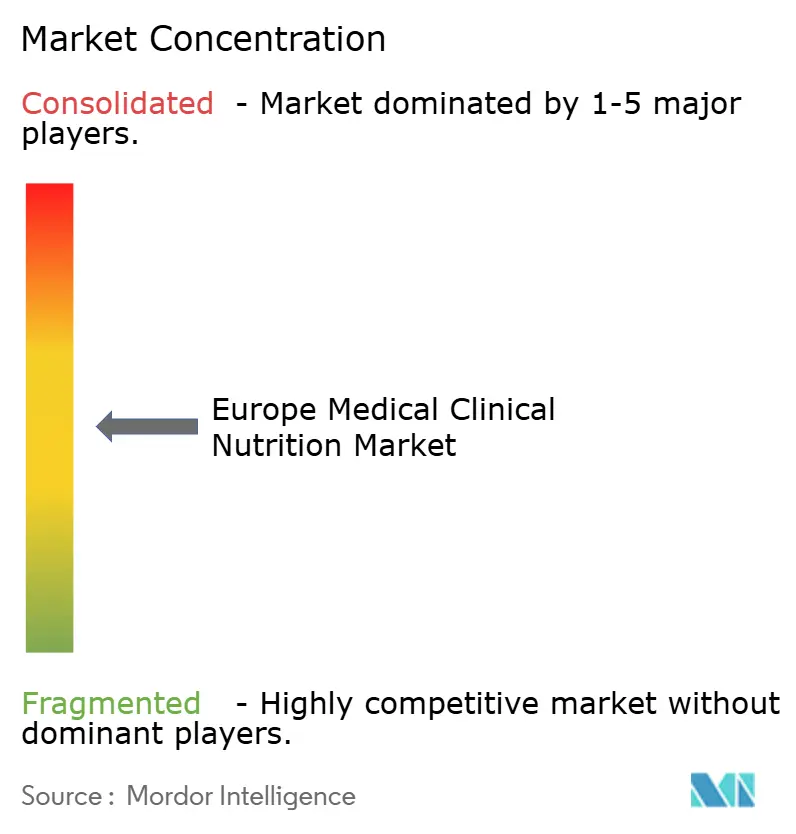
The Europe medical clinical nutrition market remains moderately consolidated. Abbott, Fresenius Kabi, Nestlé Health Science, and Danone (Nutricia) own the strongest brands and hospital contracts. Fresenius Kabi’s Numeta pediatric bags, launched in 15 markets, underpinned 70% fewer compounding errors and captured 120 neonatal ICU contracts. Abbott gained 12% within six months of launching Ensure Plus Advance targeting reimbursed sarcopenia patients. Nestlé’s Peptamen and its digital home-monitoring platform cut unplanned visits 28%, reinforcing retention.
B. Braun and Baxter are scaling parenteral offerings; B. Braun’s Nutriflex omega-3 emulsions, cleared by the EMA in 2024, lower infection risk 30%. Challenger brands AYMES Nutrition and Nualtra are penetrating UK formularies with value-priced oral supplements. AI-driven nutrient-profiling startups are emerging in Germany, hinting at future premium product tiers.
Europe Medical Clinical Nutrition Industry Leaders
-
Abbott
-
Fresenius Kabi
-
Nestlé Health Science
-
Danone (Nutricia)
-
Baxter International
- *Disclaimer: Major Players sorted in no particular order
Europe Medical Clinical Nutrition Market Companies Covered in this Report
- Abbott Laboratories
- Ajinomoto
- AYMES Nutrition
- B. Braun
- BASF
- Baxter
- Conmed
- Cook Group
- Danone
- Fresenius
- Haleon
- Medtrition
- Nestle
- Nualtra
- Otsuka
- Perrigo
- Vifor Pharma
Read Analysis of Europe Medical Clinical Nutrition Companies
Market Opportunities and Future Outlook
Hospital-to-home shifts and protocolized nutrition care are creating whitespace around ready-to-use formats, pediatric parenteral nutrition standardization, and digital-enabled adherence support. Recent company actions point in this direction: Fresenius Kabi expanded capability in June 2026 with the European launch of Pedismof three-chamber pediatric parenteral nutrition bags and by opening a dedicated medical nutrition Innovation Center in Bad Homburg. In April 2026, Nestle Health Science started rolling out pouch-based Compleat Paediatric Oral Blends across multiple European countries. Together, these moves support opportunities in simplified administration (including reduced compounding burden), caregiver-friendly home use, and differentiated pediatric and high-acuity portfolios.
Manufacturing and portfolio investments also indicate room for specialized liquid medical nutrition and higher-protein oral supplementation tied to reimbursable indications. Danone announced plans for an Advanced Medical Nutrition facility at Macroom, Ireland (May 2026) to produce specialized liquid nutrition and protein drinks, and Nutricia expanded patient-centric ONS choice with Fortimel PlantBased across more than 10 European markets (October 2025). Alongside guideline momentum (ESPEN surgical updates in 2025 and broader practical guidance in 2024) and the ongoing expansion of online pharmacy fulfillment linked to e-prescriptions in parts of Europe, suppliers can scale disease-specific formulas (oncology, GI, renal) and home enteral and parenteral programs where reimbursement and training frameworks are already active.
Recent Industry Developments in Europe Medical Clinical Nutrition Market
- June 2026: Fresenius Kabi opened a medical nutrition Innovation Center in Bad Homburg, Germany, following a multi-year investment program of more than EUR 50 million on the campus. The added R&D capacity supports faster iteration of enteral and parenteral offerings and strengthens localized development for European clinical pathways.
- September 2025: Fresenius signed a EUR 400 million loan agreement with the European Investment Bank to support R&D, innovation, and manufacturing capacity expansion across the EU, including clinical nutrition. The financing provides long-horizon capital to scale production and accelerate pipeline work across regulated healthcare nutrition categories.
- September 2024: Nutricia (Danone) launched the reformulated Nutrison core range of tube feeds at the 46th ESPEN Congress in Milan, with a transition plan targeted for completion by end-2025. The update reinforces competitive positioning in enteral feeding by aligning a high-volume portfolio with evolving clinical and sustainability requirements across fragmented European tenders.
Europe Medical Clinical Nutrition Market Report Scope and Research Methodology
Market Definition and Coverage
This market covers medical and clinical nutrition products sold in Europe for patients with medical nutrition needs, including oral, enteral, and parenteral nutrition used in hospitals, institutions, pharmacies, and home settings under clinical guidance.
Scope exclusions: This sizing excludes general wellness supplements and sports nutrition that are not positioned for medical nutrition management.
Segments Covered in This Report
- By Route of Administration
- Oral & Enteral
- Parenteral
- By Product Type
- Standardised Enteral Formulas
- Disease-specific Enteral Formulas
- Parenteral Macronutrient Solutions
- By Application
- Oncology
- Metabolic Disorders
- Gastro-intestinal Diseases
- Neurological Disorders
- Other Diseases
- By End User
- Infant
- Pediatric
- Adult
- Geriatric
- By Distribution Channel
- Hospital Pharmacies
- Retail Pharmacies
- Online Pharmacies
- Institutional / Tender Sales
- Country
- Germany
- United Kingdom
- France
- Italy
- Spain
- Rest of Europe
Data Sources, Market Sizing, and Validation
Desk Research
Desk research was used to map the demand pool and the supply context for Europe, and then to set realistic guardrails on how volumes and pricing move by care setting. We used public health and population indicators such as Eurostat tables, WHO and OECD health statistics, and country level guidance from bodies such as the European Commission and national health ministries to understand aging, hospital activity, and disease burden patterns.
To ground the commercial side, we reviewed sources such as annual reports and investor presentations, press releases, product documentation on company websites, and public procurement and tender notices where available. For cross checks on trade and product movement, we also used customs and trade statistics and, where needed, an import and export shipment level database plus a company financials and intelligence subscription to normalize reported revenue exposure by geography. The desk research sources listed here are illustrative, and many other public sources were also used to collect data, validate assumptions, and clarify open questions.
Primary Interviews and Surveys
Primary work focused on validating what is counted as medical nutrition in practice, and how route of administration and setting of care change the revenue mix across Europe. We spoke with a mix of manufacturers, distributors, procurement and tender focused stakeholders, and clinical and dietetic professionals across major European countries, and then used their feedback to fill gaps, confirm price bands, and pressure test utilization and channel shares.
Distribution of primary research fieldwork respondents
| Company type | Respondent position |
|---|---|
| Top tier: 29% | CXOs: 15% |
| Mid tier: 55% | Functional/Unit leaders: 31% |
| Smaller Players: 16% | Managers: 54% |
Market-Sizing & Forecasting
The core build used a top-down reconstruction of Europe demand, where patient cohorts and care activity were translated into nutrition usage by route of administration and then converted to value using observed price bands. To keep the totals realistic, the outputs were corroborated with selective bottom-up approximations, such as sampled supplier revenue exposure to Europe, channel checks with distributors, and a few volume times average selling price calculations for high use product groups.
Inputs used in the model included indicators such as the aging share of population, hospital admissions and length of stay signals, prevalence and treatment intensity for oncology and gastrointestinal conditions, home care adoption for enteral feeding, and the split between institutional and pharmacy channels. Forecasts were developed using scenario analysis, where baseline assumptions on patient volumes and mix shifts were adjusted using what interviewees expect for reimbursement posture, tender intensity, and pricing progression by country. Where bottom-up evidence was incomplete, gaps were handled by applying conservative penetration and utilization factors aligned to comparable countries and then reviewed in follow-up calls.
Data Validation & Update Cycle
Model outputs were checked against independent signals such as public health spending direction, hospital activity patterns, and publicly visible company disclosures on regional performance. Any sharp year-to-year movements were reworked by reviewing the underlying mix, pricing, and channel assumptions, and then the estimates were rechecked by a second analyst before sign-off.
The study is refreshed annually, and interim updates are made when material events occur, such as reimbursement shifts, major tender changes, or notable portfolio moves that affect route of administration mix. Before delivery, we run a final update pass so clients receive the most current view available at that time.
Mordor Intelligence's Europe Medical Clinical Nutrition Market Sizing Compared With Other Published Estimates
Published market sizes for Europe medical and clinical nutrition can look far apart because authors do not always count the same products, patient settings, or sales channels, and the year basis can also vary. Differences also come from how prices are treated, since tender led institutional sales and pharmacy sales do not follow the same progression.
Hospital pharmacy and tender sales signals, along with route of administration mix checks across major European countries, are the evidence used to keep Mordor Intelligence tied to a medically indicated demand pool that excludes general consumer supplement spending. Some published figures appear to report a narrower definition that leans on specific settings, or they carry forward older price and channel mix assumptions for longer, which changes the total even when growth rates look similar.
Benchmark comparison
| Source | Market Size | Gaps in Research Methodology |
|---|---|---|
| Mordor Intelligence | USD 22.65 B (2025) | |
| Industry Research Publisher A | USD 21.01 B (2024) | Uses an earlier base year and a segment structure that can treat some vitamins and supplements under clinical nutrition more broadly, which can shift the boundary and the year-to-year bridge used in the model. |
| Market Databook B | USD 9.12 B (2025) | Reports a much narrower revenue pool for Europe, which likely concentrates on select clinical nutrition categories and does not fully capture institutional and tender driven sales across the broader medical nutrition basket. |
The spread in published values is mainly explained by what gets counted as medical nutrition, and how institutional sales and price bands are treated across countries. By anchoring the model to route of administration demand signals and then validating totals with practical supplier and channel checks, the result stays traceable to repeatable inputs instead of relying on a single reporting lens.
Key Questions Answered in the Report
What is the projected value of the Europe medical clinical nutrition market by 2031?
Forecasts place the market at USD 33.33 billion by 2031.
How fast will home parenteral nutrition grow in Europe?
HPN volumes are rising at an 8.25% CAGR thanks to expanded reimbursement and caregiver training programs.
Which application segment is growing fastest?
Gastrointestinal disease formulas, lifted by first-line use of exclusive enteral nutrition in pediatric Crohns, are advancing at a 9.82% CAGR.
Why is the geriatric user segment gaining momentum?
Sarcopenia became a reimbursable diagnosis in 2024, driving 7.32% CAGR for high-protein oral supplements among seniors.
How has the EU's e-pharmacy directive affected distribution?
It enabled cross-border e-prescriptions, helping online pharmacies grow at a 10.42% CAGR as rural patients gain easier access.
Which country leads the market and which is growing fastest?
Germany leads with 32.23% of 2025 revenue, while the United Kingdom shows the quickest growth at a 7.42% CAGR.