
Amniotic Membrane Market Size and Share
Market Overview
| Study Period | 2020 - 2031 |
|---|---|
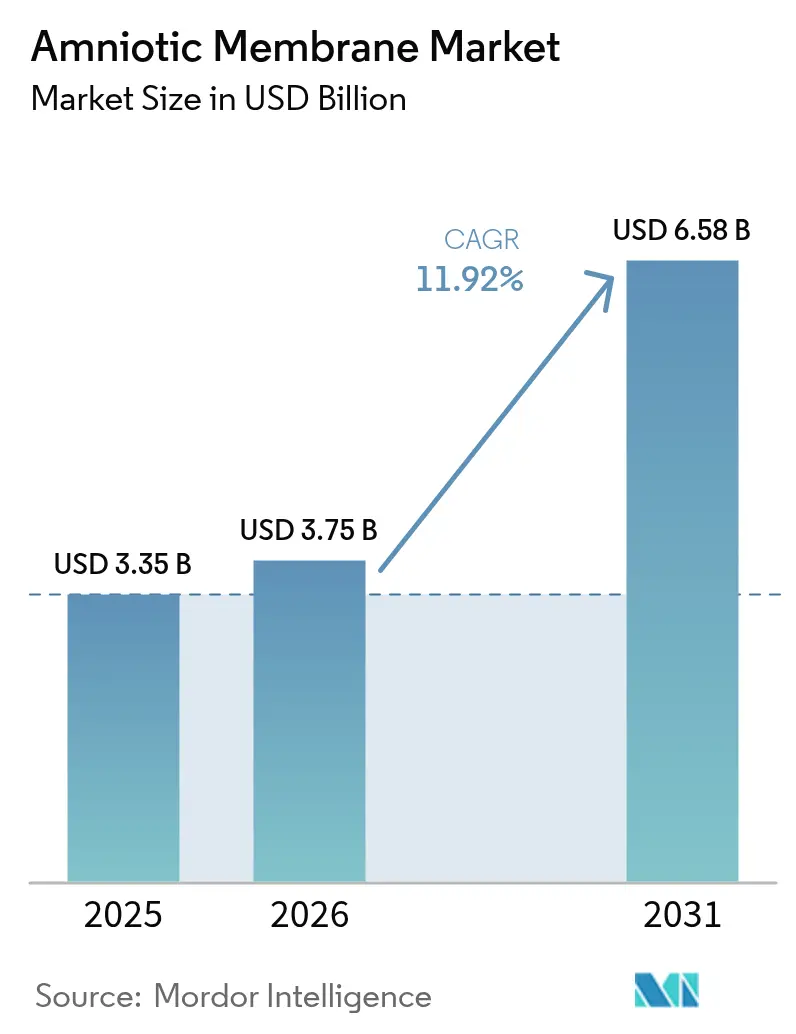
| Market Size (2026) | USD 3.75 Billion |
| Market Size (2031) | USD 6.58 Billion |
| Growth Rate (2026 - 2031) | 11.92 % |
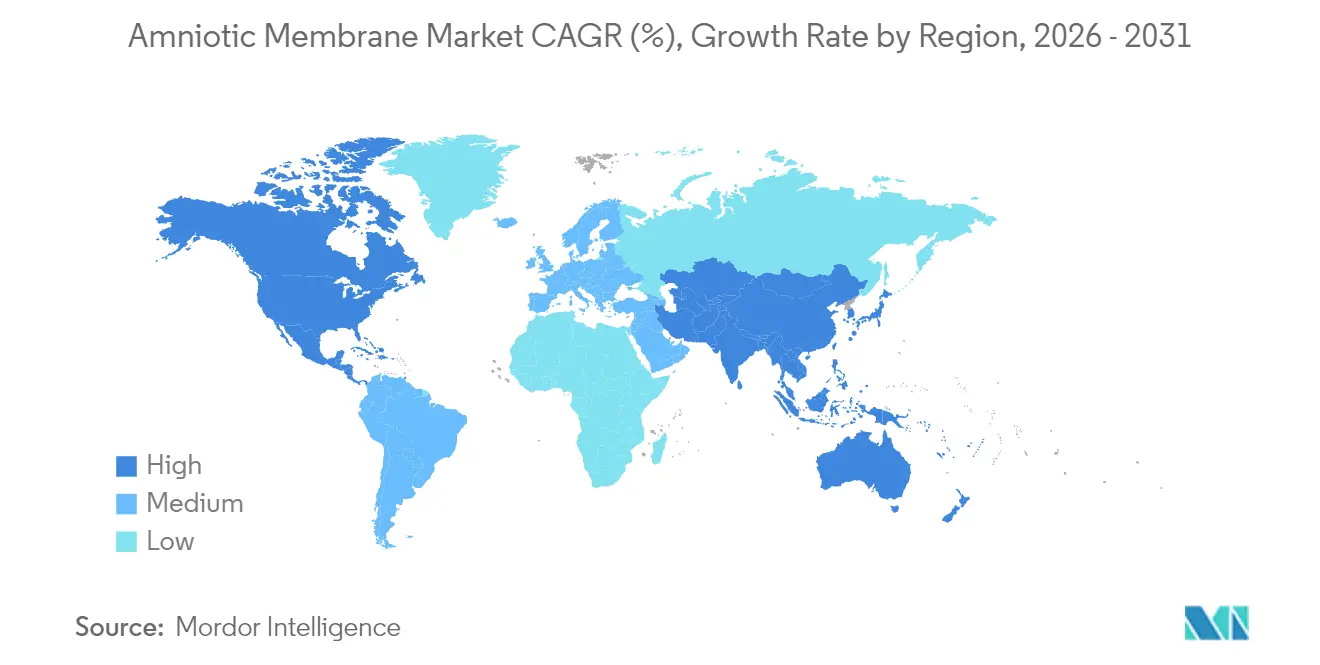
| Fastest Growing Market | Asia Pacific |
| Largest Market | North America |
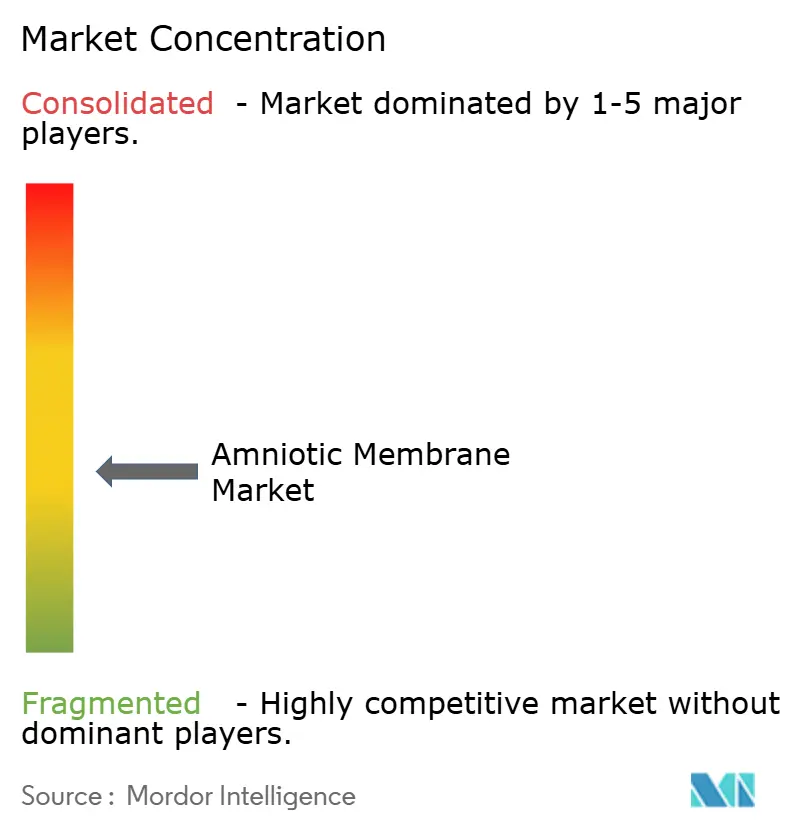
| Market Concentration | Medium |
Major Players *Disclaimer: Major Players sorted in no particular order Image © Mordor Intelligence. Reuse requires attribution under CC BY 4.0. | |
Amniotic Membrane Market Analysis by Mordor Intelligence
amniotic membrane market size in 2026 is estimated at USD 3.75 billion, growing from 2025 value of USD 3.35 billion with 2031 projections showing USD 6.58 billion, growing at 11.92% CAGR over 2026-2031. Intensifying clinical validation across ophthalmology, trauma and chronic wound management keeps demand high, while reimbursement clarity in key markets accelerates routine use of these biologic dressings. Dehydrated grafts still dominate day-to-day practice because they store at room temperature, yet hospitals increasingly adopt cryopreserved alternatives to capture the higher growth-factor load that speeds tissue regeneration. Aging populations undergoing more ocular surgeries, together with the global rise in road-traffic injuries, continue to expand clinical indications and procedure volumes [1]. Regionally, North America remains the revenue leader owing to Medicare support for advanced wound care, whereas Asia-Pacific is delivering the fastest unit growth on the back of large-scale healthcare investments in China and improved regulatory pathways in Japan and South Korea. Competitive intensity stays moderate; no single vendor exceeds a fifth of global sales, keeping innovation pressure high and pricing comparatively stable.
Key Report Takeaways
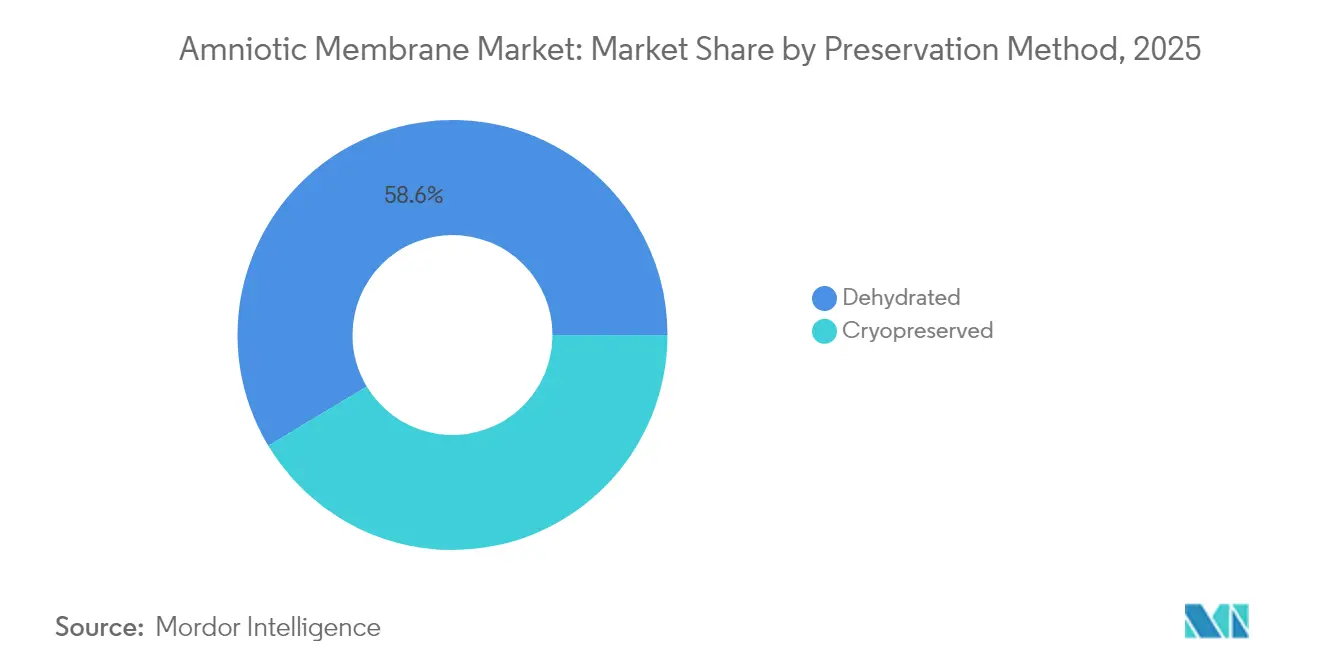
- By preservation method, dehydrated formats held 58.62% of amniotic membrane market share in 2025; cryopreserved grafts are projected to post a 12.41% CAGR to 2031.
- By thickness, single-layer products captured 68.10% revenue share in 2025, while multi-layer configurations are advancing at a 12.55% CAGR through 2031.
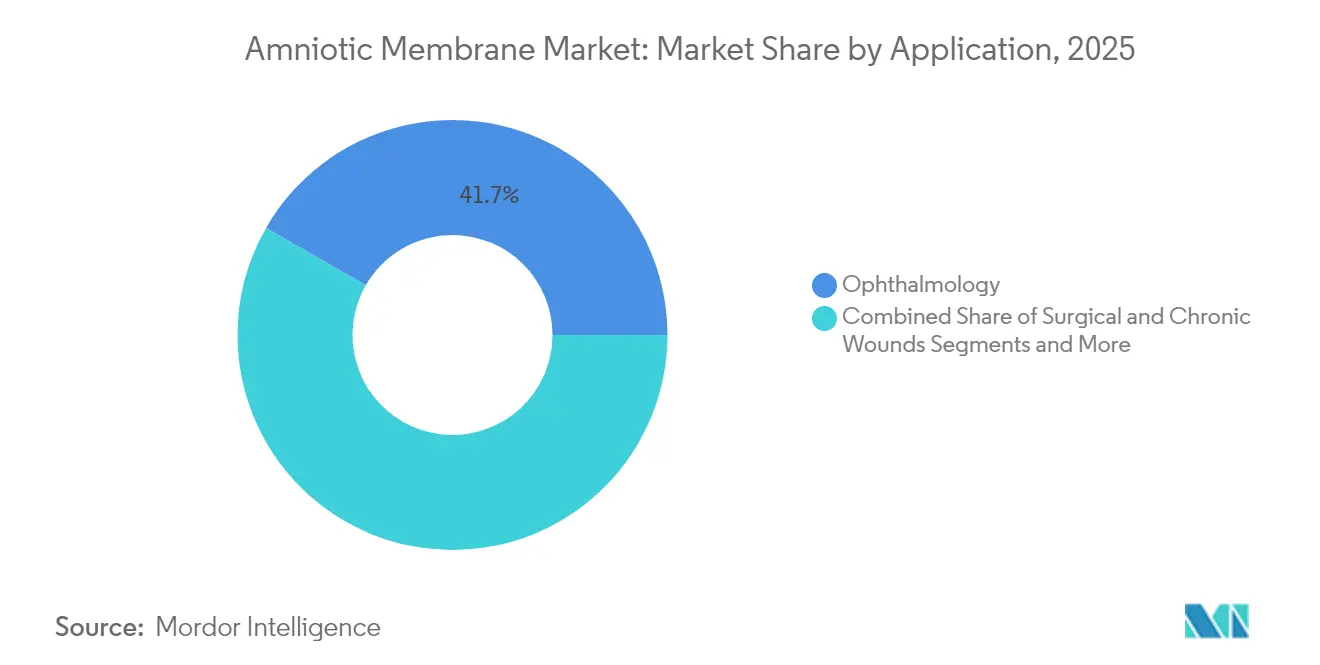
- By application, ophthalmology led with 41.70% of the amniotic membrane market size in 2025; surgical and chronic wounds are expanding the fastest at a 12.48% CAGR.
- By end-user, hospitals accounted for 62.55% share of the amniotic membrane market in 2025; specialty clinics are the quickest growing channel at 12.36% CAGR.
- By region, North America contributed 41.85% revenue in 2025, whereas Asia-Pacific is slated to deliver the highest 12.67% CAGR to 2031.
Note: Market size and forecast figures in this report are generated using Mordor Intelligence’s proprietary estimation framework, updated with the latest available data and insights as of 2026.
Market Trends and Insights
Drivers Impact Analysis of Amniotic Membrane Market*
| Driver | (~) % Impact on CAGR Forecast | Geographic Relevance | Impact Timeline |
|---|---|---|---|
| Rise In Road-Traffic Accident & Trauma Burden | +2.1% | Global, with highest impact in APAC and MEA | Medium term (2-4 years) |
| Escalating Ophthalmic Surgery Volumes in Ageing Populations | +2.8% | North America & EU, expanding to APAC | Long term (≥ 4 years) |
| Growing Clinical Evidence & Awareness of Amniotic-Derived Biologics | +2.3% | Global, led by North America and EU | Short term (≤ 2 years) |
| Government Incentives for Advanced Wound-Care Adoption | +1.9% | North America, EU, select APAC markets | Medium term (2-4 years) |
| Rapid Uptake of Composite Amnion-ECM Combination Grafts | +1.7% | North America, EU | Short term (≤ 2 years) |
| Emerging Veterinary Ophthalmology Use-Cases | +0.8% | North America, EU | Long term (≥ 4 years) |
| Source: Mordor Intelligence | |||
Rise in road-traffic accident & trauma burden
Emergency departments worldwide treat a growing number of complex wounds that benefit from biological dressings able to shorten healing time. Cryopreserved amniotic membranes have shown a 95.5% median wound-size reduction after 12 weeks in burn patients [2]. National trauma guidelines increasingly reference these grafts for rapid epithelialization, and the World Health Organization prioritizes affordable trauma care protocols in developing regions. The resulting pull from both high-income and low-income markets underpins steady unit expansion during the medium term.
Escalating ophthalmic surgery volumes in ageing populations
Longer life expectancy drives higher rates of corneal repair, pterygium excision and severe dry-eye interventions. A sutureless dehydrated amniotic application reduced Ocular Surface Disease Index scores by 65% at six months in a recent randomized study. Medicare’s HCPCS code V2790 now allows separate billing for human amniotic membrane when used with select ocular CPT codes, cementing routine use in U.S. ambulatory surgery centers [3]. Comparable reimbursement pathways are emerging in Western Europe and Japan, making ophthalmology the anchor segment of the amniotic membrane market.
Growing clinical evidence & awareness of amniotic-derived biologics
Large-scale meta-analyses confirm that amniotic membrane therapy closes chronic wounds faster than standard dressings, largely owing to the HC-HA/PTX3 matrix that modulates inflammation. Publication momentum has moved the graft from “experimental” to guideline-backed in both wound care and ophthalmology societies, quickening adoption even among late-majority clinicians.
Government incentives for advanced wound-care adoption
The U.S. Physician Fee Schedule for 2025 set a national payment rate of USD 1,149 for amniotic allografts used on non-healing ulcers. Furthermore, Local Coverage Determinations now deem the product “reasonable and necessary” after four weeks of unsuccessful standard care, guaranteeing reimbursement when clinical criteria are met. Parallel reforms in China tie hospital bonuses to adoption of evidence-based regenerative products under the country’s RMB 205 trillion health-spending blueprint.
Restraints Impact Analysis of Amniotic Membrane Market*
| Restraint | (~) % Impact on CAGR Forecast | Geographic Relevance | Impact Timeline |
|---|---|---|---|
| Shortage Of Standardized Processing Guidelines & Skilled Tissue-Bank Staff | -1.8% | Global, most acute in emerging markets | Medium term (2-4 years) |
| High Cost of Cryopreservation Logistics | -1.4% | Global, particularly affecting rural and remote areas | Short term (≤ 2 years) |
| Ethical / Procurement Controversies Around Placental Tissue | -0.9% | Select regions with cultural/religious restrictions | Long term (≥ 4 years) |
| Donor-Dependent Supply‐Chain Fragility | -1.6% | Global, with regional variations in donor availability | Medium term (2-4 years) |
| Source: Mordor Intelligence | |||
Shortage of standardized processing guidelines & skilled tissue-bank staff
Amniotic membrane processing demands rigorous donor screening and aseptic technique, yet regulatory guidance still varies widely. The American Association of Tissue Banks reports that many facilities struggle to align with evolving FDA expectations, slowing scale-up in resource-constrained settings. Training bottlenecks hinder capacity growth even when raw tissue supply is available.
High cost of cryopreservation logistics
Continuous ultra-low-temperature storage inflates total delivered cost in regions with limited cold-chain infrastructure. Lyopreserved grafts now retain parity with cryopreserved tissue while tolerating ambient shipment, according to comparative data on viable lyopreserved amnion. Adoption of such formats should ease cost pressure, yet capital outlays for new drying equipment slow near-term uptake.
*Our forecasts treat driver/restraint impacts as directional, not additive. The impact forecasts reflect baseline growth, mix effects, and variable interactions.
Amniotic Membrane Market Segment Analysis
By Preservation Method:
Cryopreservation captures momentum despite dehydrated leadershipDehydrated grafts commanded 58.62% amniotic membrane market share in 2025 thanks to shelf-stable logistics that fit lean hospital inventories. Nonetheless, cryopreserved products are growing at a 12.41% CAGR because they keep cellular components intact, boosting growth-factor delivery for recalcitrant wounds. One multicenter burn study showed cryopreserved allografts outperformed dehydrated peers in time-to-closure, underpinning the segment’s expansion.
Developers are closing the logistics gap via next-gen lyophilization that retains cell viability while allowing ambient storage—a hybrid model projected to widen total amniotic membrane market size for advanced preservation platforms by 2031. Suppliers able to scale both dehydration and cryopreservation lines stay best positioned to capture mixed provider preferences.

By Thickness:
Multi-layer construction fuels premium sub-segmentSingle-layer sheets still own 68.10% of revenue; yet multi-layer formats are accelerating at 12.55% CAGR because they withstand mechanical stress and release bioactive signals over longer intervals. Ultra-thick constructs enabled orbit socket reconstructions impossible with earlier patches, expanding the overall amniotic membrane market. However, extra lamination steps raise quality-control complexity, providing a moat for firms with automated stacking technologies.
As freeze-dried multi-layer lines reach parity in handling time with single-layer sheets, clinicians increasingly deploy them for orthopedic or large-area burns. That premium adoption trajectory lifts total amniotic membrane market size even in mature regions.
By Application:
Surgical wounds outpace legacy ophthalmology baseOphthalmology retained 41.70% revenue in 2025, yet the surgical and chronic wound segment is clocking the highest 12.48% CAGR. Surgeons now integrate amniotic grafts into total-joint revisions and abdominal closures to curb adhesions and speed re-epithelialization. Burn units cite reductions in analgesic use and better cosmetic outcomes versus conventional mesh dressings. The amniotic membrane market thus broadens beyond ocular care into core surgical pathways.
Veterinary orthopedics and sports-medicine clinics also trial injectable amnion hydrogels, demonstrating expansion into adjacent health verticals that could elevate the amniotic membrane market size over the next decade.
By End-User:
Specialty clinics reshape distributionHospitals delivered 62.55% of 2025 sales, yet ambulatory and specialty clinics are gaining at 12.36% CAGR as reimbursement parity allows outpatient treatment. A cost study showed ProKera in-office application at CAD 699 versus CAD 1,561 for traditional transplantation in hospital theaters. Manufacturers now package pre-cut, ready-to-use disks targeting chairside use, broadening the amniotic membrane market footprint among community ophthalmologists and wound-care podiatrists.
Hospital demand remains solid for trauma and complex reconstructions, maintaining balanced channel dynamics and lowering single-buyer risk for suppliers.
Geography Analysis
North America Amniotic Membrane Market
North America held 41.85% of global revenue in 2025, driven by Medicare’s national payment rate and a clear regulatory path for tissue allografts. The amniotic membrane market size in the United States grows steadily as clinics shift chronic-ulcer care toward regenerative protocols. Canada’s provincial payers are adding coverage, and Mexico gears policy pilots around diabetic-foot management, securing region-wide momentum.
APAC Amniotic Membrane Market
Asia-Pacific is the growth engine, slated for a 12.67% CAGR through 2031. China’s RMB 205 trillion health-spending plan subsidizes hospitals that adopt innovative biologics, propelling volume uptake. Japan and South Korea fast-track approvals under regenerative-medicine frameworks, while India’s expanding private hospital network pursues cost-effective wound solutions, enlarging the amniotic membrane market across diverse payer models.
Europe Amniotic Membrane Market
Europe shows mid-single-digit revenue expansion backed by mature reimbursement but tempered by stringent tissue directives that slow new-product launches. Germany and the United Kingdom drive procedure counts, whereas Southern Europe advances gradually amid fiscal constraints.
MEA and South America Amniotic Membrane Market
Middle East & Africa and South America grow from a smaller base. Gulf states fund premium grafts in burn centers, yet donor-tissue logistics remain hurdles elsewhere. Brazil’s SUS system pilots outpatient amniotic therapy for diabetic ulcers, signaling longer-term lift for regional amniotic membrane market adoption.
Regulatory Landscape
In the United States, amniotic membrane products are regulated by the FDA under 21 CFR Part 1271 for Human Cells, Tissues, and Cellular and Tissue-Based Products (HCT/Ps). Products that meet the criteria for minimal manipulation and homologous use can be marketed as Section 361 HCT/Ps, while products that do not meet these criteria may fall under Section 351 pathways as biologics, drugs, or devices. This distinction can increase premarket and compliance burdens for certain processing methods and indications.
In the European Union, market access depends on classification under Regulation (EU) 2017/745 (MDR) when products are placed as medical devices, including cases where a device incorporates an ancillary medicinal substance that triggers consultation between the notified body and a competent medicinal-products authority (EMA or a national authority). Enforcement attention on proper HCT/P positioning has remained visible, including a March 2024 FDA untitled letter to Amnion Florida, LLC that underscored the need to adhere to Part 1271 definitions and eligibility criteria. That emphasis reinforces the operational importance of validated donor screening, processing controls, and intended-use alignment.
Competitive Landscape
The field is moderately fragmented; the top five suppliers collectively control roughly 45% of global turnover. MiMedx leverages an extensive patent estate around dehydrated hydroburst processing, while Integra LifeSciences scales cryopreserved throughput through its NeoGenesis platform. Organogenesis emphasizes data generation, running multicenter trials that support payer negotiations. Smaller entrants develop amnion-collagen hybrids and injectable hydrogels to occupy white space not yet defended by established vendors.
Recent FDA guidance that reclassifies some grafts as 351 biologics complicates compliance and could prompt consolidation as smaller firms lack resources for full‐license submissions.
Meanwhile, lyopreservation innovators such as BioTissue position shelf-stable cryografts that undercut cold-chain costs and open new export lanes. Strategic alliances with tissue banks—and long-term supply contracts with hospital groups—remain the chief levers to expand the amniotic membrane market share without heavy price discounting.
Amniotic Membrane Industry Leaders
-
Human Regenerative Technologies, LLC
-
Katena Products. Inc.
-
MIMEDX
-
Amnio Technology, LLC
-
TissueTech, Inc. (BioTissue)
- *Disclaimer: Major Players sorted in no particular order
Amniotic Membrane Market Companies Covered in this Report
- MiMedx Group
- Integra LifeSciences
- Organogenesis Holdings
- TissueTech (BioTissue)
- Katena / Corza Ophthalmology
- Amnio Technology
- Surgenex
- VIVEX Biologics
- Human Regenerative Technologies
- Merakris Therapeutics
- Integra OrthoBiologics (AmnioExcel)
- NuVision Biotherapies
- Celularity
- Smith & Nephew (Apligraf)
- Skye Biologics
- Amniox Medical
- Laboratoire CCD
- Sentrex Bio
- Alliqua BioMedical
- Applied Biologics
Market Opportunities and Future Outlook
Opportunity is concentrated in formats that reduce handling constraints and support conformal coverage beyond sheet-based grafts, especially for irregular chronic wounds and procedure settings that favor simplified application. In 2026, research output highlighted injectable and engineered approaches, including a super-absorbent, decellularized human amniotic membrane microgel reported in January 2026. The push toward microgels, sponges, and other adaptable matrices points to expanded use cases in chronic wound management and adjacent indications such as peripheral nerve regeneration and orthopedic conditions.
Standardization and compliance programs also create room for scale players and quality-led tissue banks. The American Association of Tissue Banks (AATB) Standards for Tissue Banking, 15th edition, became effective January 31, 2025, tightening expectations around labeling, disinfection or sterilization disclosures, preservation methods, and facility accountability for donor eligibility and release criteria. Companies that align product configurations and packaging to these requirements, while matching preservation methods to site-of-care logistics (ambient-stable versus cold-chain dependent), have a clearer route to broaden adoption across hospitals and outpatient channels where reimbursement and operational workflows influence utilization.
Recent Industry Developments in Amniotic Membrane Market
- March 2026: MiMedx expanded its surgical portfolio with the commercial launch of AMNIOFIX Thyroid Shields for endocrine surgery, positioned to protect the recurrent laryngeal nerve and parathyroid glands. The launch extends amniotic-derived barriers into a more specialized operating-room use case, supporting broader procedural penetration beyond wound care and ophthalmology.
- October 2025: MiMedx announced the commercial launch of EPIXPRESS, a lyophilized tri-layer placental allograft intended for acute and chronic wound applications. By emphasizing a shelf-stable format, the product supports distribution and site-of-care flexibility where cold-chain logistics can limit adoption.
- March 2024: MiMedx reported FDA designation of AXIOFILL as a 351 biologic and initiated legal action challenging the determination. The action highlighted how classification and intended-use interpretations can materially change development, evidence, and compliance requirements for placental-derived products.
Amniotic Membrane Market Report Scope and Research Methodology
Market Definition and Coverage
For this study, the market covers the value of processed human amniotic membrane products used as grafts or coverings in medical care, where these tissues support healing and protection across surgical and wound settings.
Scope exclusions: We exclude umbilical cord tissue, chorion-only products, and broad placenta-derived biologics that are not sold as amniotic membrane graft formats.
Segments Covered in This Report
- By Preservation Method
- Cryopreserved
- Dehydrated
- By Thickness
- Single-layer
- Multi-layer
- By Application
- Ophthalmology
- Surgical and Chronic Wounds
- Orthopedics & Sports Medicine
- Burn Management
- Others
- By End-User
- Hospitals
- Ambulatory Surgical Centers
- Specialty Clinics
- Others
- By Geography
- North America
- United States
- Canada
- Mexico
- Europe
- Germany
- United Kingdom
- France
- Italy
- Spain
- Rest of Europe
- Asia-Pacific
- China
- Japan
- India
- Australia
- South Korea
- Rest of Asia-Pacific
- Middle East and Africa
- GCC
- South Africa
- Rest of Middle East and Africa
- South America
- Brazil
- Argentina
- Rest of South America
- North America
Data Sources, Market Sizing, and Validation
Desk Research
Desk work starts by locking the clinical and regulatory boundary of what counts as an amniotic membrane product, and then we map where it is used and who buys it. We relied on public sources such as the FDA tissue and HCT-P information pages, CDC health statistics, Medicare and other public payer fee schedules and policy notes, and peer-reviewed journals that report procedure trends and outcomes in ophthalmology and wound care.
Next, we used annual reports, investor materials, reputable medical association websites, and press coverage to build a view on adoption patterns and channel structure. For quick checks on company financials, patent activity, and import-export flows of relevant medical supplies, we also used a small set of paid databases that are commonly used for financials and shipment intelligence. The examples listed here are not exhaustive, and many other sources were used to collect data, validate numbers, and clarify assumptions.
Primary Interviews and Surveys
To validate usage and pricing, we spoke with a mix of surgeons, wound care clinicians, tissue bank and processing experts, distributors, and hospital procurement staff across major regions. We used these interviews to confirm which indications drive repeat demand. In areas where published data is thin, respondent input helped test reimbursement assumptions, typical graft utilization per procedure, and shifts between dehydrated and cryopreserved formats.
Distribution of primary research fieldwork respondents
| Company type | Respondent position | Region |
|---|---|---|
| Top tier: 26% | CXOs: 21% | APAC: 46% |
| Mid tier: 53% | Functional/Unit leaders: 30% | EMEA: 33% |
| Smaller Players: 21% | Managers: 49% | Americas: 21% |
Market-Sizing & Forecasting
The core model uses a top-down approach where procedure volumes and treated patient pools are reconstructed by indication, and then converted into demand using average graft usage and observed pricing bands. To keep the totals realistic, we corroborate outputs with selective bottom-up approximations, such as sampled selling price times estimated unit volumes in key countries, plus channel checks on utilization in high-use settings.
Key inputs that shape the math include outpatient and inpatient procedure counts in ophthalmology and wound closure, chronic wound prevalence and treatment rates, the mix shift between dehydrated and cryopreserved products (since pricing and replacement frequency differ), reimbursement coverage stability, and hospital purchasing behaviors that affect conversion from trial to routine use. Where data is missing for smaller countries, proxy ratios are applied using population, surgical intensity, and healthcare spend, and then adjusted after expert review.
For forecasting, we use scenario analysis driven by a short set of variables that were also discussed with practitioners, especially reimbursement clarity, aging demographics, and growth in ocular and wound procedures. The final forecast is set only after scenario outputs are checked against realistic capacity and adoption limits for tissue-based products.
Data Validation & Update Cycle
Model outputs are cross-checked against independent signals, including procedure trends, reimbursement policy changes, and the expected mix of settings where grafts are used. When a country-level result looks out of line, we re-test assumptions and, if needed, re-contact experts to confirm whether the variance comes from pricing, utilization, or a scope mismatch.
Before sign-off, the work goes through multi-step reviews where another analyst checks calculations, unit logic, and currency conversions, and then a lead reviewer checks consistency across regions and time. Reports are refreshed annually, and interim updates are made when a material event changes demand assumptions. Right before delivery, we run a final pass so the view reflects the latest available public data and interview learnings.
Mordor Intelligence's Amniotic Membrane Market Size Versus Other Published Estimates
Published market sizes for amniotic membrane often do not match because each source draws the boundary in a different place, and they also vary in how they treat price, utilization, and timing. Some estimates lean more on high-level tissue graft demand, while others lean more on clinical usage patterns, which can change the total quickly.
Procedure volumes in ophthalmology and chronic wound care, together with reimbursement-linked utilization checks, are the evidence points that keep Mordor Intelligence's estimate tied to the treated demand pool rather than broader placenta-derived product revenue. Differences also come from whether single-layer and multi-layer products are priced using the same average, how dehydrated versus cryopreserved mix is updated year to year, and whether currency conversion is done using an annual average or a point-in-time rate.
Benchmark comparison
| Source | Market Size | Gaps in Research Methodology |
|---|---|---|
| Mordor Intelligence | USD 3.75 B (2026) | |
| Industry Publisher A | USD 3.71 B (2025) | Uses a 2025 base and a broader end-user listing, but the public summary does not clearly show how procedure-based utilization and reimbursement filters were applied, which can inflate adoption assumptions in early years. |
| Research Publisher B | USD 1.71 B (2025) | Reports a smaller 2025 value that likely reflects narrower counting of applications and a more conservative pricing and uptake curve, with limited visibility on whether multi-layer products and higher-acuity wound settings were fully captured. |
Looking across the table, most of the spread can be explained by year alignment and how tightly usage is anchored to real procedures and covered indications. By keeping scope rules explicit and rechecking pricing and utilization with field inputs, the estimate stays traceable to a few drivers that can be revisited as the market shifts.
Key Questions Answered in the Report
What is the current size of the amniotic membrane market?
The amniotic membrane market size stands at USD 3.75 billion in 2026 and is forecast to reach USD 6.58 billion by 2031.
Which preservation method is growing the fastest?
Cryopreserved grafts are expanding at a 12.41% CAGR because they maintain viable cells that accelerate healing.
Why is Asia-Pacific the fastest-growing region?
Large-scale healthcare spending in China and regulatory fast-tracking in Japan and South Korea are pushing Asia-Pacific toward a 12.67% CAGR.
What application represents the largest revenue share?
Ophthalmology leads with 41.70% of revenue thanks to routine use in corneal reconstruction and severe dry-eye procedures.
How do reimbursement policies affect adoption in the United States?
Medicare’s national payment rate of USD 1,149 per graft and clear coverage criteria for non-healing ulcers have accelerated provider uptake.
Are multi-layer grafts replacing single-layer sheets?
Multi-layer formats are gaining ground at 12.55% CAGR for complex wounds, but single-layer products remain dominant for routine cases due to lower cost and easier handling.