
Adalimumab Drugs Market Size and Share
Market Overview
| Study Period | 2020 - 2031 |
|---|---|
| Forecast Data Period | 2026 - 2031 |
| Market Size (2026) | USD 15.72 Billion |
| Market Size (2031) | USD 20.09 Billion |
| Growth Rate (2026 - 2031) | 5.05 % |
| Fastest Growing Market | Asia Pacific |
| Largest Market | North America |
Major Players *Disclaimer: Major Players sorted in no particular order Image © Mordor Intelligence. Reuse requires attribution under CC BY 4.0. | |
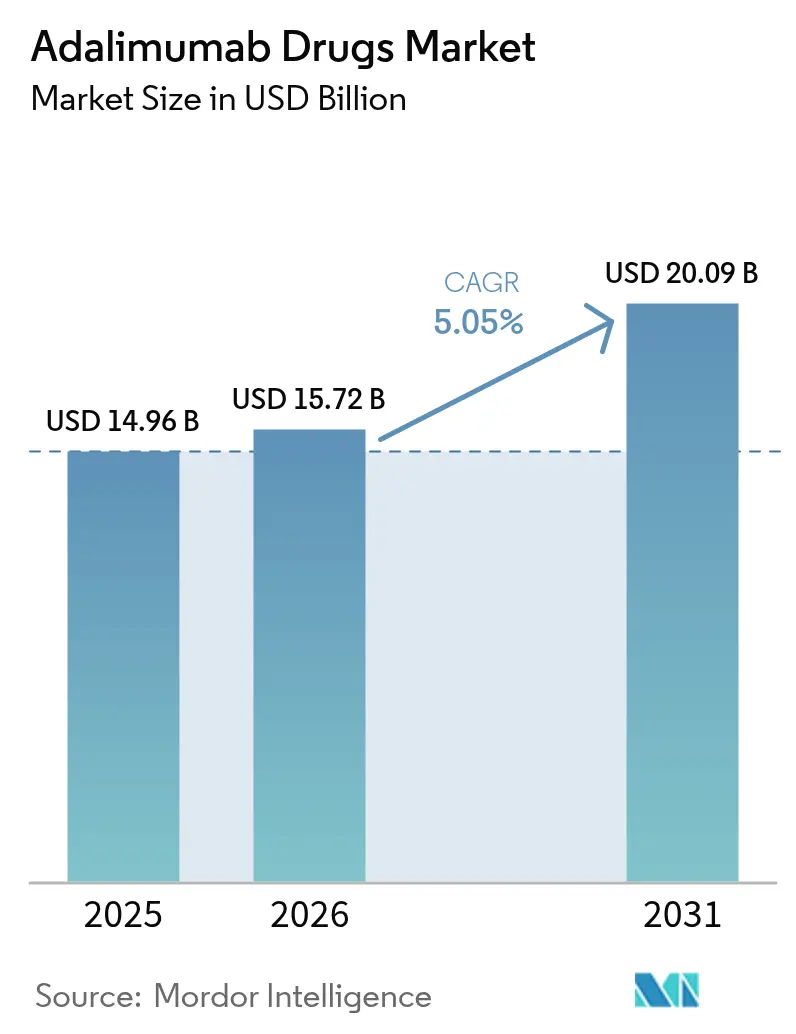
Adalimumab Drugs Market Analysis by Mordor Intelligence
The adalimumab market size was valued at USD 14.96 billion in 2025 and estimated to grow from USD 15.72 billion in 2026 to reach USD 20.09 billion by 2031, at a CAGR of 5.05% during the forecast period (2026-2031). Strong clinical demand across autoimmune disorders, rapid biosimilar penetration after Humira’s loss of exclusivity, and continuous device innovation jointly sustain revenue momentum. North America commands cost-intensive specialty-pharmacy networks that protect premium pricing even as payers accelerate formulary switches, while Asia-Pacific registers the quickest uptake on the back of government tender reforms that widen biologic access. Intensifying competition among 10-plus FDA-approved biosimilars is compressing list prices by as much as 80%, yet high-concentration, citrate-free formulations preserve value differentiation. Pipeline diversification into IL-23 inhibitors such as Skyrizi and Janus kinase inhibitors like Rinvoq reveals originator defensive strategy rather than market withdrawal, ensuring the adalimumab market retains commercial vibrancy. Specialty-pharmacy integration with digital adherence platforms, coupled with emerging outcomes-based contracts, further raises switching incentives and reshapes stakeholder economics.
Key Report Takeaways
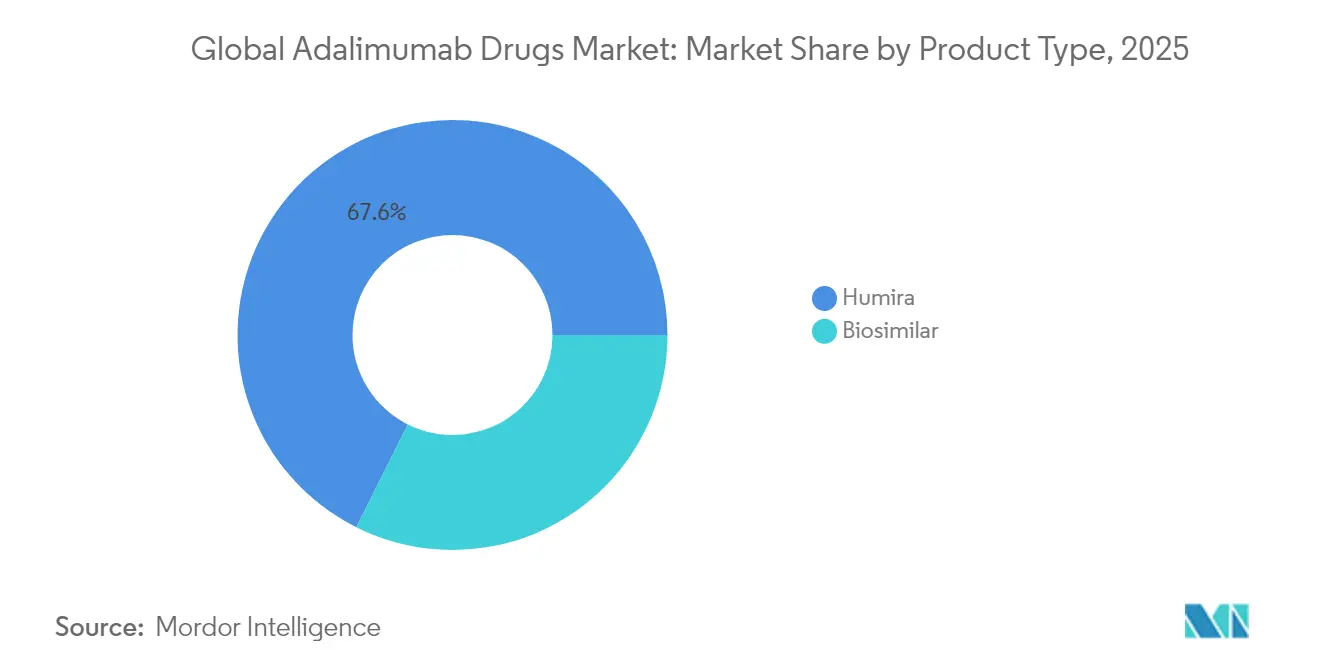
- By product type, Humira sustained 67.62% of adalimumab market share in 2025, whereas biosimilars are expanding at a 5.62% CAGR through 2031.
- By indication, rheumatoid arthritis led with 37.88% revenue share in 2025, while hidradenitis suppurativa is projected to advance at a 5.86% CAGR to 2031.
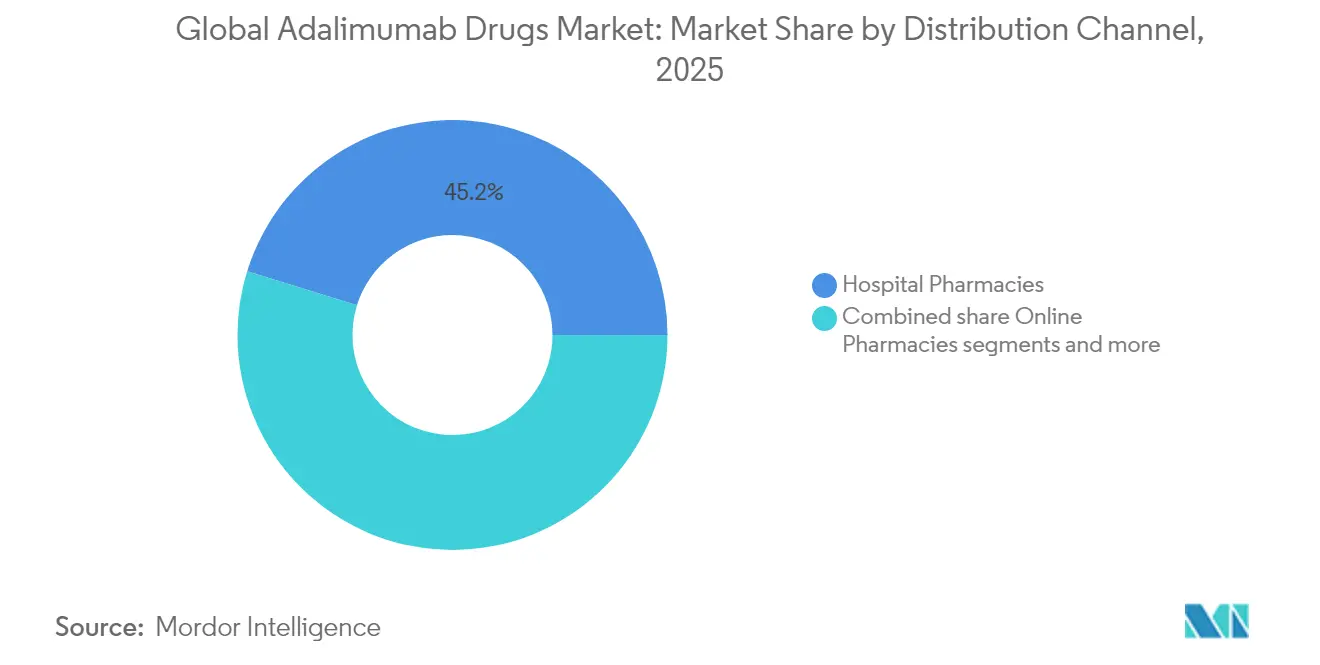
- By distribution channel, hospital pharmacies controlled 45.21% of the adalimumab market size in 2025, whereas online pharmacies display the fastest trajectory at a 6.05% CAGR over the forecast horizon.
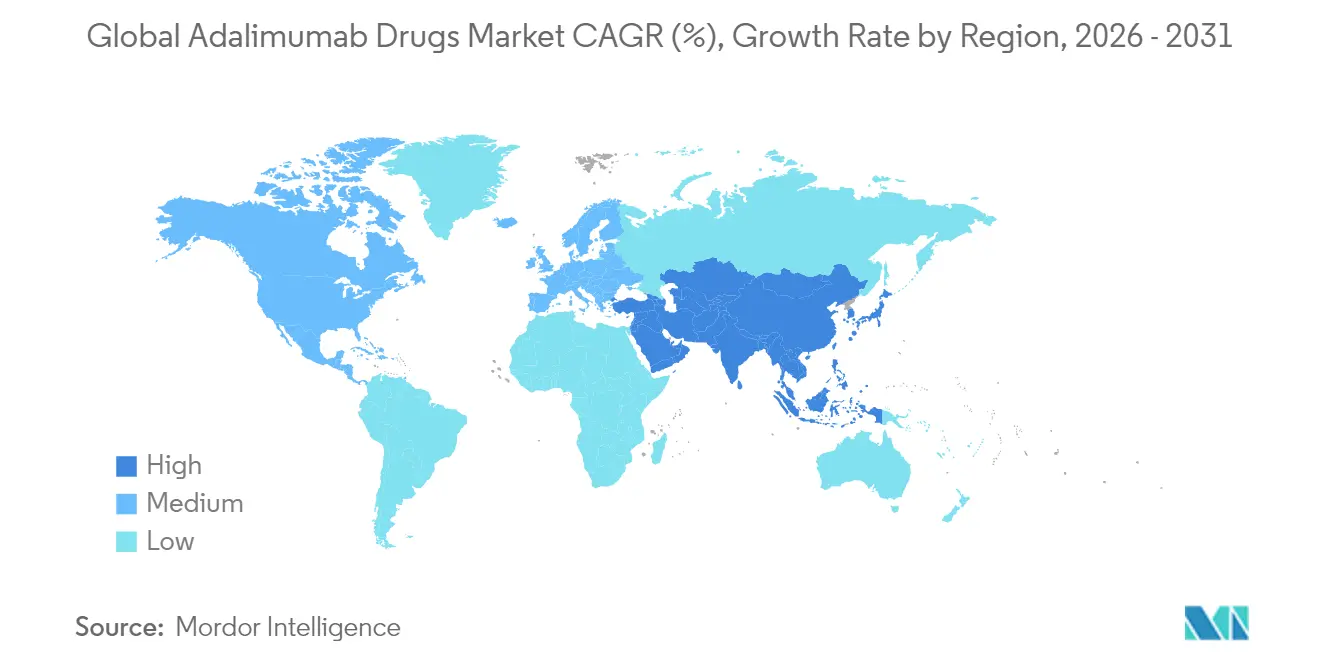
- By geography, North America captured 55.64% revenue share in 2025, while Asia-Pacific is expected to post the quickest expansion at a 5.71% CAGR through 2031.
Note: Market size and forecast figures in this report are generated using Mordor Intelligence’s proprietary estimation framework, updated with the latest available data and insights as of 2026.
Market Trends and Insights
Drivers Impact Analysis of Adalimumab Drugs Market*
| Driver | (~) % Impact on CAGR Forecast | Geographic Relevance | Impact Timeline |
|---|---|---|---|
| Loss of Humira exclusivity spurring biosimilar launches | +1.8% | Global, with North America and Europe leading | Short term (≤ 2 years) |
| Escalating global autoimmune disease prevalence | +1.2% | Global, with higher impact in aging populations | Long term (≥ 4 years) |
| Increasing specialty-pharmacy penetration in the U.S. | +0.9% | North America, spill-over to developed markets | Medium term (2-4 years) |
| Patient-friendly autoinjector upgrades enhancing adherence | +0.7% | Global, with premium markets leading adoption | Medium term (2-4 years) |
| Value-based contracting gaining traction in Europe | +0.5% | Europe, with expansion to other developed markets | Medium term (2-4 years) |
| Government tender reforms in Asia-Pacific boosting biosimilar uptake | +0.3% | Asia-Pacific core, with regulatory spillover effects | Long term (≥ 4 years) |
| Source: Mordor Intelligence | |||
Loss of Humira Exclusivity Spurring Biosimilar Launches
A synchronized wave of FDA approvals has placed 10+ biosimilars on U.S. shelves within eighteen months of Humira’s patent cliff, cutting pre-rebate prices by up to 80% and tripling prescription volume for preferred biosimilars under major PBMs. Updated interchangeability guidance issued in June 2024 shaved 18-24 months off development cycles, reducing capital requirements and lowering entry barriers. Simlandi secured first-to-market interchangeability for the high-concentration 40 mg/0.4 mL strength that covers 88% of U.S. dispenses, briefly restoring pricing leverage for its sponsors. Nevertheless, subsequent designations for Yuflyma and Hyrimoz eliminated this exclusivity buffer inside twelve months, intensifying price erosion. Parallel direct-purchase models—exemplified by Blue Shield of California’s USD 525 monthly dose agreement—demonstrate purchaser appetite for bypassing PBM spreads.
Escalating Global Autoimmune Disease Prevalence
The global rheumatoid arthritis population is adding 2-3% annually, psoriasis cases have climbed 15% since 2020, and inflammatory bowel disease diagnoses in developing economies are rising by 5-7% per year. Increased disease surveillance, improved diagnostic imaging, and longer life expectancy collectively expand biologic-eligible cohorts. Long-term registries reveal 40-50% mortality reduction when TNF-α inhibitors are initiated early, reinforcing first-line biologic placement in treatment guidelines. Asia-Pacific’s underdiagnosed patient pool is transitioning into treated prevalence as reimbursement reforms fund specialty care, unlocking substantive volume growth. Emerging indications such as non-infectious uveitis and juvenile idiopathic arthritis further widen usage scenarios, sustaining addressable demand despite competitive biologic classes.
Increasing Specialty-Pharmacy Penetration in the U.S.
Specialty channels processed roughly 70% of adalimumab prescriptions in 2025, up from 50% in 2023, reflecting payer drive toward tighter clinical oversight and better cost capture. Enhanced patient support services—encompassing injection training, adherence analytics, and adverse-event triage—push 12-month persistence rates to 85-90%, significantly above retail baseline. Home-delivery volumes have surged 40% since 2024, aligning with telehealth expansion and supporting home-based disease management. Outcomes-based contracts, in which pharmacy bonuses hinge on validated lab markers or hospitalization frequency, are now piloted by two of the top three PBMs. Such models incentivize timely switching to interchangeable biosimilars once high adherence is demonstrated, multiplying pressure on incumbent pricing.
Patient-Friendly Autoinjector Upgrades Enhancing Adherence
Device designers have introduced large-volume autoinjectors capable of delivering 5.5 mL high-viscosity solutions without patient discomfort. Citrate-free formulations cut injection-site pain scores by 30-40%, a meaningful determinant of real-world persistence. Bluetooth-enabled or cellular-connected devices integrate seamlessly with disease-management apps, giving clinicians real-time adherence dashboards. Electromechanical reusable platforms reach 90%+ fulfillment over twelve months versus 75% for disposable syringes, according to cross-indication surveys. These enhancements not only buttress patient satisfaction but also strengthen payer confidence in switching stable patients to lower-cost biosimilars fitted with premium delivery systems.
Restraints Impact Analysis of Adalimumab Drugs Market*
| Restraint | (~) % Impact on CAGR Forecast | Geographic Relevance | Impact Timeline |
|---|---|---|---|
| Premium pricing of biologics in low-income markets | -0.8% | Emerging markets, particularly Sub-Saharan Africa and Southeast Asia | Long term (≥ 4 years) |
| Interchangeability hurdles for biosimilars in the U.S. | -0.6% | North America, with regulatory spillover to other markets | Short term (≤ 2 years) |
| Cold-chain bottlenecks in emerging markets | -0.4% | Asia-Pacific, Middle East, and Africa | Medium term (2-4 years) |
| Physician reluctance to switch stable patients in Asia-Pacific | -0.3% | Asia-Pacific core, with cultural factors influencing adoption | Medium term (2-4 years) |
| Source: Mordor Intelligence | |||
Premium Pricing in Low-Income Markets
In many developing economies a single monthly adalimumab dose exceeds the average household income, leading to treatment discontinuation or complete non-initiation. Government drug budgets allocate under 5% to specialty pharmaceuticals, restricting coverage to a fraction of clinically eligible patients. Biosimilar manufacturing locally has yet to unlock meaningful discounts, with compliance overheads keeping unit costs at 60-70% of originator levels. Parallel import risks deter tiered-pricing schemes that could otherwise broaden affordability. Without structured health technology assessment pathways, reimbursement committees struggle to justify budget diversion toward biologics, elongating access latency and flattening uptake curves.
Cold-Chain Bottlenecks in Emerging Markets
Temperature excursions above 8 °C affect 25-40% of biologic shipments in tropical climates, resulting in product wastage that inflates effective therapy costs. Intermittent electricity grids and limited refrigerated trucking capacity hamper consistent supply, especially in remote provinces. Cold-chain logistics add USD 200-500 per shipment in emerging Asia compared with USD 50-100 in developed nations, squeezing distributor margins. Less than 30% of peripheral health facilities possess validated temperature monitoring, breaching WHO storage mandates. These inefficiencies discourage wholesalers from stocking biologics, curtailing availability outside major urban centers and dampening regional demand trajectories.
*Our forecasts treat driver/restraint impacts as directional, not additive. The impact forecasts reflect baseline growth, mix effects, and variable interactions.
Adalimumab Drugs Market Segment Analysis
By Product Type:
Biosimilars Accelerate Market RealignmentBiosimilars captured escalating volume yet Humira still held 67.62% adalimumab market share in 2025 thanks to entrenched physician preference programs and copay assistance. The vigorous 5.62% CAGR projected for biosimilars illustrates payer leverage following interchangeable approvals that authorize pharmacy-level substitution without prescriber intervention. Competitive focus centers on high-concentration, citrate-free formulations, the presentation that accounts for nearly nine in every ten U.S. injections. Simlandi’s initial exclusivity window temporarily raised its net realized price, but follow-on entrants such as Yuflyma quickly nullified this premium, reinstating downward pricing momentum. Quallent Pharmaceuticals’ private-label platform aggregates multisource supply, enabling employers to procure unbranded adalimumab at less than one-quarter of Humira’s 2023 net price. On a global scale, unbranded biosimilars already account for 15-20% of adalimumab market size in large-payer tenders, signaling an irreversible commoditization trend.
Manufacturers pursue differentiation via device ecosystems and wrap-around patient services rather than molecular variance. Electromechanical reusable autoinjectors bundled with digital adherence monitoring offer tangible clinical benefits that justify modest price premiums over discount biosimilars lacking such integrations. AbbVie’s strategic pivot toward novel mechanisms—most visibly IL-23 blockade with Skyrizi and JAK1 selectivity with Rinvoq—aims to protect franchise earnings as adalimumab revenue slides. Despite pipeline promise, cross-indication uptake of next-generation assets partially cannibalizes Humira demand, amplifying biosimilar growth headroom. Regulatory shifts that shorten approval timelines by nearly two years further embolden new entrants, ensuring sustained competitive churn through 2031.



By Indication:
Rheumatoid Arthritis Leads; Hidradenitis Suppurativa SurgesRheumatoid arthritis absorbed 37.88% of 2025 revenue, a share grounded in well-validated clinical algorithms that schedule TNF-α inhibition early in the treatment cascade. Nevertheless, selective JAK inhibitors and IL-6 modulators are gradually displacing adalimumab in newly diagnosed patients, tempering the segment’s forward trajectory. Hidradenitis suppurativa emerges as the quickest climber, propelled by 5.86% CAGR through 2031 on heightened clinician awareness and the absence of biologic alternatives with comparable efficacy. Psoriatic arthritis and ankylosing spondylitis maintain steady mid-single-digit expansion, leveraging improved imaging modalities that accelerate accurate diagnosis. Inflammatory bowel disease segments experience mixed fortunes: Crohn’s disease persists given surgical deferral advantages, whereas ulcerative colitis sees margin pressure from tighter guideline positioning that promotes vedolizumab and ustekinumab.
Plaque psoriasis, once a core growth engine, now contends with superior skin-clearance benchmarks from IL-17 and IL-23 targeted biologics that erode adalimumab prescription share. Juvenile idiopathic arthritis and uveitis remain niche yet stable, constrained by pediatric safety considerations that slow biosimilar penetration. The progressive shift toward rarer dermatologic and ophthalmologic indications heightens pricing flexibility due to limited therapeutic competition. Consequently, pharmaceutical marketers prioritize label-expansion programs into under-served diseases to offset mainstream erosion and defend overall adalimumab market size against next-generation classes.
By Distribution Channel:
Digital Dispensing Redefines Access ModelsHospital pharmacies retained 45.21% adalimumab market size in 2025 courtesy of embedded infusion services and integrated disease-management teams. Yet online and mail-order channels are scaling fastest, with 6.05% CAGR forecast as patients gravitate toward home delivery and virtual consultation packages. Retail outlets increasingly partner with specialty-pharmacy banners to safeguard relevance, outsourcing high-touch clinical services they cannot economically replicate. Digital therapeutics now plug directly into dispensing workflows, streaming adherence and symptom data back to prescribers, which in turn enables dynamic therapy adjustments without physical appointments.
Manufacturers have embraced omnichannel engagement by bundling nurse coaching, mobile injection reminders, and refill coordination into single-click platforms. These value-added services, financed partly through outcomes-based contracts, elevate patient satisfaction metrics to 90% versus 75% in conventional brick-and-mortar pickup. Regulators encourage such innovation under combination-product guidance that clarifies quality requirements for drug-device-software ensembles. The distribution landscape therefore migrates toward a hybrid model where hospital settings manage initiation and complex cases, while chronic maintenance doses flow through digitally optimized direct-to-patient logistics.
Geography Analysis
North America Adalimumab Drugs Market
North America generated 55.64% of 2025 revenue and remains the axis of competitive disruption owing to payer-driven biosimilar substitution rules. Four biosimilars now hold interchangeability status, introducing automatic pharmacy-level substitution and compressing brand loyalty cycles. Specialty-pharmacy proliferation ensures robust cold-chain stewardship and real-time clinical monitoring, supporting continued high biologic utilization despite intensified price negotiations. Yet transparency mandates and state-level reference-pricing bills apply incremental pressure on net-price realization, prompting manufacturers to refine contracting tactics around documented outcome guarantees.
Europe Adalimumab Drugs Market
Europe adopts sophisticated value-based arrangements, with health technology assessment agencies tying reimbursement to dermatology severity scale improvements or rheumatology composite scores. Tender-driven procurement has pushed biosimilar penetration above 25% in Germany, the Netherlands, and France, while Italy and Spain lag due to slower formulary updates. Physician reluctance to switch stable patients persists, though national switching mandates in Scandinavian states display adherence rates exceeding 85% within twelve months of policy enactment. Centralized regulatory reviews under the EMA’s streamlined biosimilar pathway now permit dossier acceptance in as little as 150 days, shaving roughly one year off historic timelines.
APAC Adalimumab Drugs Market
Asia-Pacific records the highest regional growth at a 5.71% CAGR, fueled by rising middle-class insurance coverage and public tender reforms that favor domestically produced biosimilars. China’s volume-based procurement rounds have slashed adalimumab prices by upward of 75%, igniting demand elasticity that offsets unit margin contraction. Japan’s super-aged demographic underpins consistent baseline use, while Australia’s Pharmaceutical Benefits Scheme guarantees predictable reimbursement cycles attractive to multinational suppliers. India exemplifies a dual-track market: urban tertiary centers exhibit adoption rates approaching OECD averages, whereas rural districts remain supply constrained by inadequate cold-chain infrastructure. Across Southeast Asia, coordinated ASEAN regulatory convergence aims to fast-track biosimilar approvals, potentially aligning national reviews within a two-year window and magnifying regional demand uplift.

Regulatory Landscape
The regulatory environment for adalimumab is being reshaped by biosimilar-specific policies that lower evidentiary burdens and speed competitive entry. In the United States, the FDA continues to expand the biosimilar and interchangeable pathway under the Biologics Price Competition and Innovation Act (BPCIA), and published a revised draft guidance, New and Revised Draft Q&As on Biosimilar Development and the BPCI Act (Revision 4), in the Federal Register on March 10, 2026, reinforcing an analytics-driven development paradigm.
In Europe, the EMA advanced a similar direction when the CHMP adopted the Reflection paper on a tailored clinical approach in biosimilar development on March 16, 2026. Together, these actions support approval strategies that rely more on state-of-the-art analytical characterization and pharmacokinetic comparability (and less on large comparative efficacy or switching studies), which directly affects the cadence of adalimumab biosimilar launches, labeling updates, and market access negotiations across major regions.
Value Chain Analysis
The adalimumab value chain begins with biologics-grade raw materials and CHO-cell based upstream production, followed by downstream purification steps such as chromatography, viral inactivation, and nanofiltration, before formulation and fill-finish into prefilled syringes or autoinjectors. Cost and capacity sensitivities often concentrate around specialized inputs (notably chromatography resins) and the requirements for aseptic fill-finish and validated cold-chain distribution, which are critical for maintaining product integrity across hospital and specialty-pharmacy channels.
Downstream, the chain is increasingly influenced by payer and channel intermediaries that shape demand through formulary position, substitution rules, and contracting mechanics. Specialty pharmacies and PBM-aligned entities have expanded their role in channel economics through private-label and unbranded biosimilar arrangements, while Medicaid and other public payers use preferred-drug and prior-authorization policies to accelerate conversion to lower net-cost options. The growth of home-delivery dispensing and digital adherence services further pulls value toward distribution and patient-support layers, making commercialization execution and contracting strategy as important as manufacturing scale for winning share.
Competitive Landscape
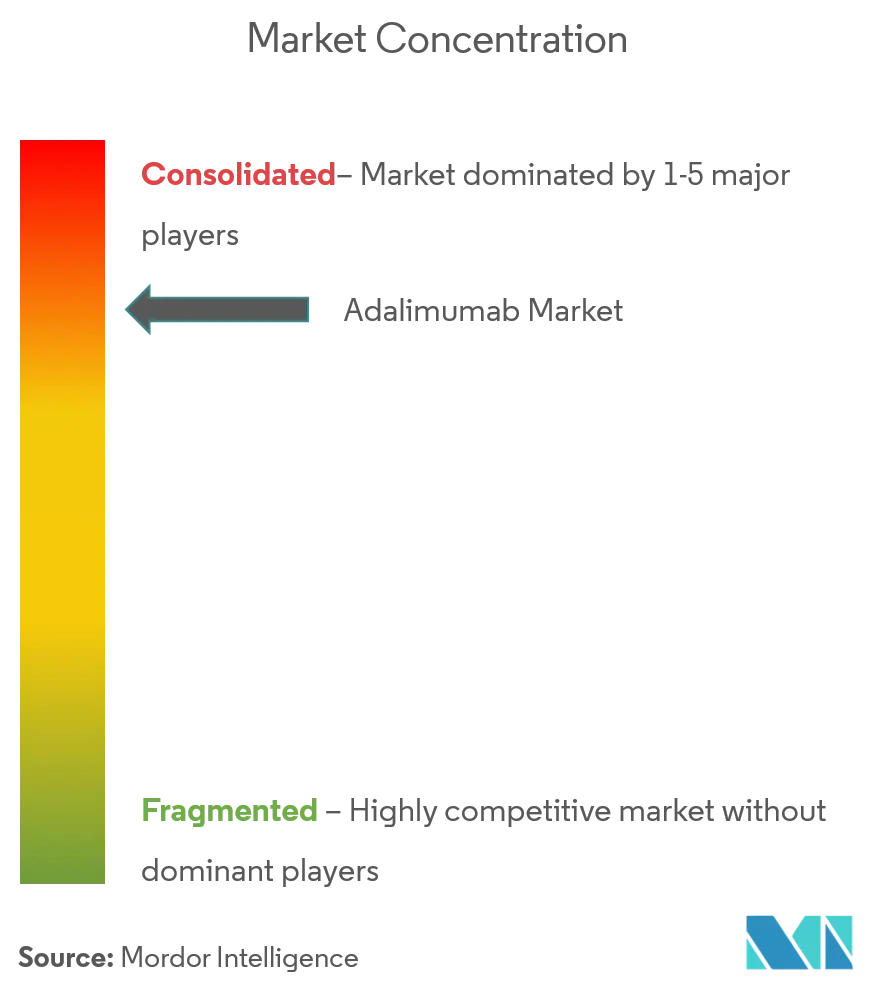
The adalimumab market operates at moderate concentration: AbbVie retains the largest individual stake but the top five suppliers collectively hold significant share, reflecting a dispersed yet structured oligopoly. AbbVie’s strategy pivots on rapid revenue migration to Skyrizi and Rinvoq, shielding corporate earnings from Humira attrition. Biosimilar contenders—Teva/Alvotech, Celltrion, Boehringer Ingelheim, Sandoz, Viatris, Fresenius Kabi—deploy tiered pricing, private-label alliances, and device differentiation to carve niches. Pharmacy benefit managers exercise unprecedented leverage, structuring formularies that prioritize lowest-net-cost offerings and sometimes delist originator Humira altogether.
Technological arms races now complement pricing skirmishes. Connected autoinjectors, reusable electromechanical devices, and on-body delivery systems such as enFuse are central to next-phase messaging that transcends molecular sameness. Manufacturers back these tools with real-time dashboards, generating de-identified adherence datasets that bolster cost-effectiveness dossiers. Regional manufacturing partnerships—exemplified by Fresenius Kabi’s tie-ups with Korean CDMOs—shorten supply chains and insulate logistics risk. Meanwhile, venture-backed entrants explore high-concentration ultra-low-volume formulations aimed at five-second injections, a potential disruptor of established device hierarchies. The competitive field is thus defined less by patent status and more by executional agility across manufacturing, digital health integration, and payer contracting sophistication.
Adalimumab Drugs Industry Leaders
AbbVie Inc
Amgen Inc
Cadila Healthcare Ltd
Hetero Healthcare Limited
Pfizer Inc
- *Disclaimer: Major Players sorted in no particular order
Adalimumab Drugs Market Companies Covered in this Report
- Abbvie
- Alvotech
- Amgen
- Bio-Thera Solutions Ltd.
- Biogen
- Boehringer Ingelheim Intl. GmbH
- Celltrion
- Coherus Biosciences
- Dr. Reddy’s Laboratories Ltd.
- Fresenius
- Lupin
- Organon
- Pfizer
- Reliance Life Sciences Pvt. Ltd.
- Samsung Bioepis Co., Ltd.
- Sandoz Group AG
- Shanghai Henlius Biotech Inc.
- Stada Arzneimittel
- Viatris
- Zydus Lifesciences Ltd.

Market Opportunities and Future Outlook
A key opportunity is emerging in U.S. contracting models that bypass traditional rebate mechanics and broaden access to low-list-price adalimumab. In February 2026, MedImpact announced an unbranded adalimumab biosimilar (adalimumab-ryvk) priced at 95% below the cost of Humira for hospitals and pharmacies, highlighting active demand for transparent, non-rebate purchasing options that can be deployed across health systems and retail networks.
Another whitespace lies in accelerating biosimilar penetration through interchangeability expansion and improved tracking of private-label volume. As of May 2026, ten Humira-referencing biosimilars have FDA approval and a large share holds interchangeable status, while major U.S. Medicare Part D carriers cover at least one adalimumab biosimilar in 2026, creating infrastructure for broad switching programs. Outside the U.S., additional opportunity is visible where regulators and payers are formalizing biosimilar access pathways, such as Indonesia granting marketing authorization in January 2025 for Mabwell and Junshi Biosciences adalimumab biosimilar 9MW0113, supporting incremental volume growth through tendering and reimbursement expansion in Asia-Pacific markets.
Recent Industry Developments in Adalimumab Drugs Market
- February 2026: MedImpact announced the launch of an unbranded adalimumab biosimilar (adalimumab-ryvk) priced at 95% below the cost of Humira for hospitals and pharmacies, with manufacturing via Anda (a Teva Pharmaceuticals USA affiliate). The move underscores accelerating adoption of low-list-price, non-rebate supply models that pressure traditional PBM rebate economics and widen access for institutional buyers. This development signals a shift in hospital and health-system procurement toward transparent pricing options.
- December 2025: Biocon Biologics secured full and exclusive global rights for Hulio (adalimumab biosimilar) from Fujifilm Kyowa Kirin Biologics, taking on manufacturing and commercialization responsibilities. Consolidating rights and supply accountability strengthens Biocon Biologics control over end-to-end execution and improves flexibility in regional launch sequencing and partner strategy. The arrangement also supports downstream supply continuity across key markets through shared distribution arrangements.
- June 2024: Meitheal Pharmaceuticals announced an exclusive U.S. commercial licensing agreement for YUSIMRY (adalimumab-aqvh) with Hong Kong King-Friend Industry Co., Ltd. The agreement expanded the number of commercial pathways for adalimumab biosimilars in the U.S., intensifying price competition and increasing payer leverage through additional sourcing options. The deal also established a route for coordinated regulatory filings and shared manufacturing responsibilities to align market entry timelines. The arrangement strengthens Meitheal's U.S. commercialization footprint and demonstrates a broader strategy of partner-led distribution for biosimilars in dense markets.


Adalimumab Drugs Market Report Scope and Research Methodology
Market Definition and Coverage
This market covers revenues generated from adalimumab therapies used across approved immune-mediated inflammatory diseases, including originator biologics and biosimilars, across all major regions.
Scope exclusions: Non-adalimumab biologics, small-molecule alternatives, diagnostics, and standalone injection devices are excluded unless bundled into the drug selling price.
Segments Covered in This Report
- By Product Type
- Biologics (Humira)
- Biosimilars
- By Indication
- Rheumatoid Arthritis
- Psoriatic Arthritis
- Ankylosing Spondylitis
- Crohn’s Disease
- Ulcerative Colitis
- Plaque Psoriasis
- Hidradenitis Suppurativa
- Juvenile Idiopathic Arthritis
- Uveitis
- Others
- By Distribution Channel
- Hospital Pharmacies
- Retail Pharmacies
- Online Pharmacies
- By Geography
- North America
- United States
- Canada
- Mexico
- Europe
- Germany
- United Kingdom
- France
- Italy
- Spain
- Rest of Europe
- Asia-Pacific
- China
- India
- Japan
- South Korea
- Australia
- Rest of Asia-Pacific
- South America
- Brazil
- Argentina
- Rest of South America
- Middle East and Africa
- GCC
- South Africa
- Rest of Middle East and Africa
- North America
Data Sources, Market Sizing, and Validation
Desk Research
Desk work starts with mapping the demand and supply context for adalimumab, then narrowing to what is actually sold and reimbursed in each geography. We reviewed public sources such as the US FDA labels and approvals database, EMA public assessment reports, WHO ATC and DDD references, and OECD health statistics to anchor disease use patterns and treatment access signals.
To translate that context into a usable model, we also used sources such as national health agencies and tender portals where available, customs and trade statistics for cold-chain biologics as a directional check, and peer-reviewed literature on biosimilar switching and persistence. Company filings, investor presentations, and reputable press coverage were used to track launch timing, price pressure, and channel mix, and a paid subscription for company financials and news helped verify timeline and revenue statements. The sources listed here are illustrative and not exhaustive, and additional public references were used to cross-check data points and clarify assumptions.
Primary Interviews and Surveys
Primary work was used to pressure-test how quickly patients move from the originator to biosimilars, and how net pricing changes by channel and country after exclusivity-related shifts. We spoke with a mix of manufacturers, distributors, hospital pharmacy stakeholders, and clinicians, and we collected input across Americas, EMEA, and APAC so regional reimbursement rules and switching behavior were not generalized too quickly.
Distribution of primary research fieldwork respondents
| Company type | Respondent position | Region |
|---|---|---|
| Top tier: 26% | CXOs: 14% | APAC: 46% |
| Mid tier: 59% | Functional/Unit leaders: 28% | EMEA: 35% |
| Smaller Players: 15% | Managers: 58% | Americas: 19% |
Market-Sizing & Forecasting
Market size is built using a top-down and bottom-up approach where treated patient pools and therapy uptake by indication are reconstructed by region, and then converted into revenue using dosage patterns and net price ranges by channel. Once the demand pool is set, we corroborate results with selective bottom-up approximations, such as sampling volume through major channels, checking supplier commentary, and validating implied revenue per patient against what payers and providers report.
Key inputs used in the model include, for example, the share of patients on biologics within each indication, expected biosimilar penetration curves, average dosing frequency and persistence, channel splits across hospital, retail, and online pharmacies, and net price erosion after biosimilar entry. Where a country-level input is missing, a proxy is used from a comparable reimbursement setting, and it is adjusted using population scale, access indicators, and expert feedback before totals are finalized. For forecasting, scenario analysis is used around switching speed and pricing pressure, and the central case is aligned to what interviewees consider realistic for uptake timing and tender-driven discounts.
Data Validation & Update Cycle
Outputs are checked against independent signals, including region-level sales direction, policy and tender changes, and the timing of new biosimilar launches, which helps catch step changes that a smooth forecast might miss. Large variances are reviewed, assumptions are rechecked, and experts are re-contacted when a mismatch persists between model outputs and observed market behavior.
Before sign-off, the work goes through multi-step analyst reviews that look for unit consistency, currency conversion timing, and unusual growth jumps by region and channel. Reports are refreshed annually, interim updates are done when material events occur, and a final pre-delivery review is completed so clients receive the latest updated view.
Mordor Intelligence's Adalimumab Drugs Market Size Compared With Other Published Estimates
Published market sizes for adalimumab often do not match because teams start from different years, count different revenue types, and apply different views on how quickly biosimilars change the net price base. Geography coverage can look similar on paper, but the handling of channel mix and tender-driven discounts usually makes the totals move.
The main gap comes from how net pricing and biosimilar erosion are treated after major exclusivity events, where Mordor Intelligence uses indication-level uptake and switching assumptions and then converts to revenue using net price ranges by channel, instead of relying on list prices or a single global erosion rate. Another common difference is the base year chosen, since some sources anchor on 2024 or 2025, while others start forecasts later, and currency timing can also shift totals when exchange rates are taken from different months.
Benchmark comparison
| Source | Market Size | Gaps in Research Methodology |
|---|---|---|
| Mordor Intelligence | USD 15.72 B (2026) | |
| Industry Research Firm A | USD 18.20 B (2024) | Uses an earlier base year and presents a higher value before later-stage biosimilar discounting is fully reflected, which can overstate revenue when channel-level net price differences are not carried through consistently. |
| Industry Research Firm B | USD 26.57 B (2025) | Starts from a higher 2025 revenue base and likely applies broader revenue capture assumptions across regions, which can happen when list-to-net adjustments and tender discounts are not tightened consistently by channel. |
Across the three figures, the spread is mainly explained by base-year choice and how quickly pricing is reduced as biosimilars scale, especially in tender-heavy markets. By tying assumptions back to treated cohorts, switching pace, and channel-level net prices, the model stays traceable to clear drivers that can be reviewed and updated when market conditions change.


Key Questions Answered in the Report
What is the current Global Adalimumab Drugs Market size?
The Global Adalimumab Drugs Market is projected to register a CAGR of 5.05% during the forecast period (2026-2031)
Who are the key players in Global Adalimumab Drugs Market?
AbbVie Inc, Amgen Inc, Cadila Healthcare Ltd, Hetero Healthcare Limited and Pfizer Inc are the major companies operating in the Global Adalimumab Drugs Market.
Which is the fastest growing region in Global Adalimumab Drugs Market?
Asia Pacific is estimated to grow at the highest CAGR over the forecast period (2026-2031).
Which region has the biggest share in Global Adalimumab Drugs Market?
In 2025, the North America accounts for the largest market share in Global Adalimumab Drugs Market.
What years does this Global Adalimumab Drugs Market cover?
The report covers the Global Adalimumab Drugs Market historical market size for years: 2019, 2020, 2021, 2022, 2023, 2024 and 2025. The report also forecasts the Global Adalimumab Drugs Market size for years: 2026, 2027, 2028, 2029, 2030 and 2031.
Page last updated on:





