
Zika Virus Testing Market Size and Share
Market Overview
| Study Period | 2020 - 2031 |
|---|---|
| Market Size (2026) | USD 256.03 Million |
| Market Size (2031) | USD 359.44 Million |
| Growth Rate (2026 - 2031) | 7.03 % |
| Fastest Growing Market | North America |
| Largest Market | Asia-Pacific |
| Market Concentration | Low |
Major Players *Disclaimer: Major Players sorted in no particular order Image © Mordor Intelligence. Reuse requires attribution under CC BY 4.0. | |
Zika Virus Testing Market Analysis by Mordor Intelligence
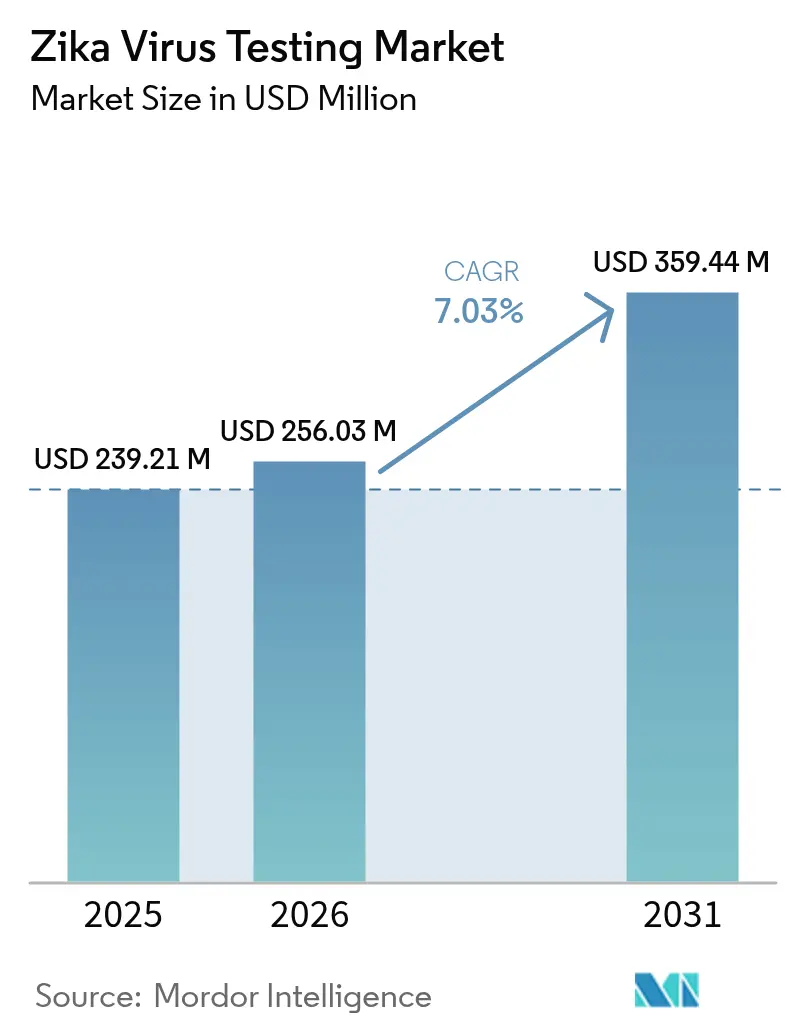
Zika virus testing market size in 2026 is estimated at USD 256.03 million, growing from 2025 value of USD 239.21 million with 2031 projections showing USD 359.44 million, growing at 7.03% CAGR over 2026-2031. Robust arboviral surveillance mandates, climate-driven vector expansion, and rising international travel sustain the growth momentum. Technology convergence is accelerating as laboratories adopt multiplex molecular platforms that detect Zika, dengue, and chikungunya in a single run, trimming diagnostic uncertainty in co-endemic regions. Artificial-intelligence-assisted assay design is mitigating historical cross-reactivity and shortening development cycles, while domestic manufacturing strategies are strengthening supply-chain resilience in response to pandemic-era disruptions[1]Source: World Health Organization, “Zika Epidemiology Update – May 2024,” who.int .
Key Report Takeaways
- North America retained 41.88% of Zika virus testing market share in 2025 as its surveillance infrastructure guarantees steady procurement during inter-epidemic phases.
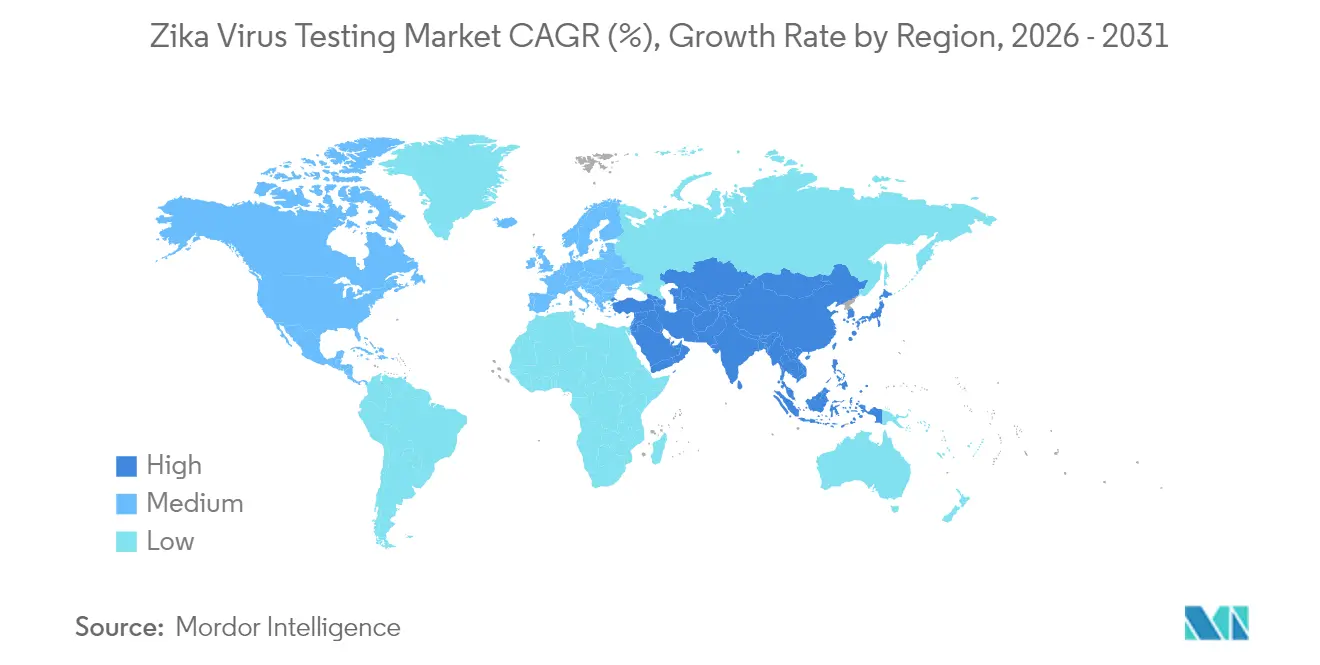
- Asia-Pacific is projected to post the fastest regional expansion, climbing at a 7.08% CAGR through 2031 on the back of upgraded vector-borne disease laboratories and heightened outbreak vulnerability.
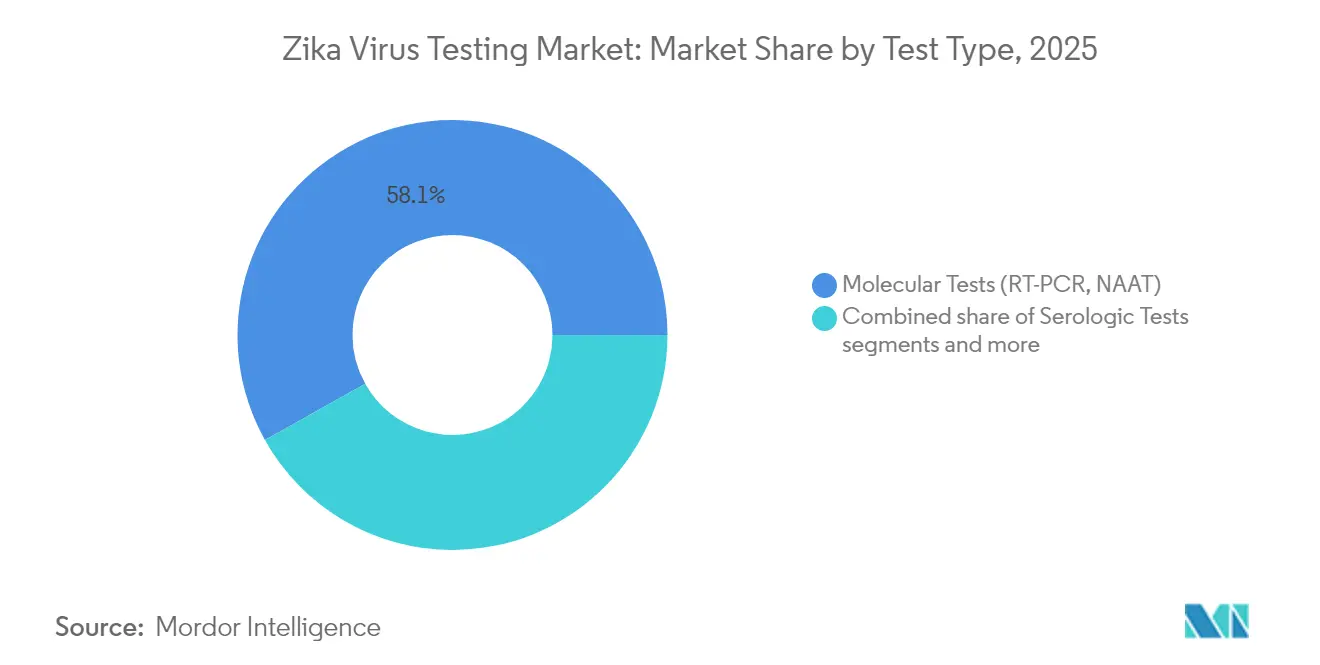
- Molecular tests accounted for 58.12% of 2025 revenue, while point-of-care molecular assays are poised for an 8.55% CAGR to 2031 as outbreak response demands shift toward decentralized testing.
- Blood/serum specimens commanded 70.84% share in 2025, yet saliva-based protocols are the fastest climbers at an 7.96% CAGR thanks to non-invasive self-collection convenience.
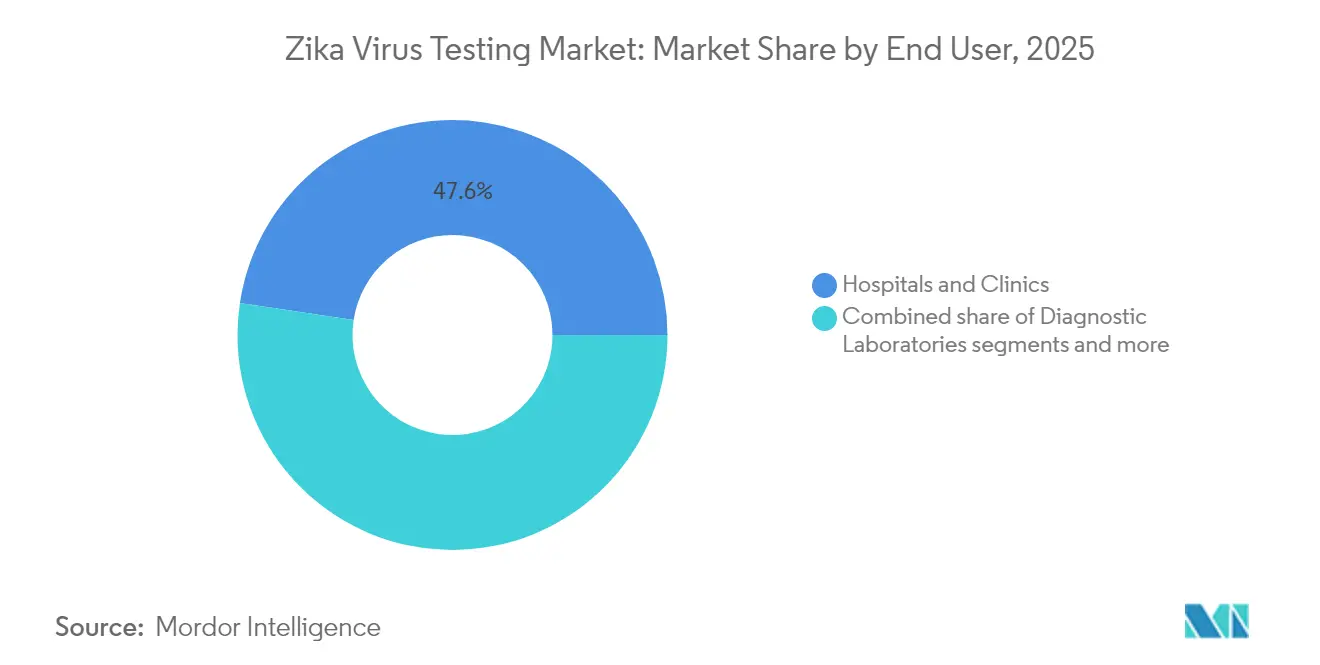
- Hospitals and clinics led with 47.62% revenue in 2025; point-of-care settings will expand at 7.44% CAGR as emergency departments embed rapid diagnostics into triage workflows.
Note: Market size and forecast figures in this report are generated using Mordor Intelligence’s proprietary estimation framework, updated with the latest available data and insights as of 2026.
Global Zika Virus Testing Market Trends and Insights
Drivers Impact Analysis*
| Driver | (~) % Impact on CAGR Forecast | Geographic Relevance | Impact Timeline |
|---|---|---|---|
| Rising incidence of Zika outbreaks | +1.8% | Americas, APAC | Medium term (2-4 years) |
| Government surveillance & funding | +1.5% | Global (endemic focus) | Long term (≥ 4 years) |
| Advances in RT-PCR & multiplex NAAT | +1.2% | North America, Europe | Short term (≤ 2 years) |
| POC test integration into ID panels | +1.0% | Global | Medium term (2-4 years) |
| Pre-conception screening demand | +0.8% | North America, Europe, urban APAC | Long term (≥ 4 years) |
| Vector/clinical-lab networks | +0.7% | Americas, APAC, Africa | Long term (≥ 4 years) |
| Source: Mordor Intelligence | |||
Rising Incidence of Zika Outbreaks
Pan American Health Organization recorded 40,891 confirmed cases in 2024, a 14% jump from 2023, confirming the virus’s endemic status in tropical belts. Predictable seasonal surges spur hospitals to procure rapid molecular cartridges that distinguish Zika from dengue and chikungunya during triage. Brazil remains the epicenter at 84% of regional cases, while emergent clusters in Argentina and Colombia widen geographic test uptake. WHO guidance urges laboratories to maintain baseline capacity between epidemics, stabilizing annual reagent demand[2]Source: Pan American Health Organization, “Epidemiological Update: Zika Virus Infection – 2024,” paho.org .
Government Surveillance & Funding
Sustained public investment is anchoring the Zika virus testing market. The CDC’s Epidemiology and Laboratory Capacity program ring-fenced vector-borne allocations for FY 2025, guaranteeing reagent purchases for state labs. The World Bank’s Pandemic Fund channeled USD 16 million to Caribbean nations to bolster integrated arboviral surveillance networks. NIAID’s 2025 budget narrative earmarks diagnostics R&D, signalling multiyear funding visibility that reassures manufacturers of volume commitments.
Advances in RT-PCR & Multiplex NAAT
Loop-mediated isothermal amplification enables sub-30-minute detection without thermal cyclers, suiting field clinics. Roche’s cobas Mass Spec automation pipeline lifts daily throughput while AI-assisted primer design cuts cross-reactivity. Next-generation sequencing platforms integrated with BARDA-funded BugSeq analytics yield pathogen-agnostic readouts, future-proofing laboratories against variant emergence.
POC Test Integration into ID Panels
SpinChip Diagnostics’ microfluidic cartridge, now under bioMérieux, delivers whole-blood arboviral panels in 10 minutes, aligning with emergency-department turnaround targets. FDA Emergency Use frameworks that sped COVID-era authorizations provide a template for swift Zika panel clearances, encouraging firms to bundle flaviviruses on a single device. Cloud-linked readers transmit geotagged positives to epidemiological dashboards within minutes, tightening outbreak containment loops.
Restraints Impact Analysis*
| Restraint | (~) % Impact on CAGR Forecast | Geographic Relevance | Impact Timeline |
|---|---|---|---|
| Declining epidemic momentum | -1.2% | Global (post-outbreak) | Short term (≤ 2 years) |
| Cross-reactivity with dengue antibodies | -0.8% | Americas, APAC | Medium term (2-4 years) |
| Short viraemic detection window | -0.6% | Global | Long term (≥ 4 years) |
| Antigen supply-chain bottlenecks | -0.4% | Manufacturing hubs | Short term (≤ 2 years) |
| Source: Mordor Intelligence | |||
Declining Epidemic Momentum
Inter-epidemic lulls curb routine testing volumes as clinical suspicion wanes and budgets shift elsewhere. WHO’s May 2024 update flagged subdued case counts outside hotspots, prompting some laboratories to run down reagent stocks. Manufacturers bridge the demand trough with multiplex panels that preserve cartridge turnover even when Zika incidence dips, yet revenue variability remains a headwind.
Cross-reactivity with Dengue Antibodies
Shared flaviviral epitopes yield false-positive ELISAs, pushing clinicians toward costlier neutralization assays. Nanobody-based blocking ELISAs under peer review promise higher specificity, but widespread adoption awaits regulatory clearance. In the interim, laboratories rely on molecular confirmation, narrowing serology’s revenue pool in high-dengue-burden regions.
*Our forecasts treat driver/restraint impacts as directional, not additive. The impact forecasts reflect baseline growth, mix effects, and variable interactions.
Segment Analysis
By Test Type: Molecular Tests Propel Market Leadership
Molecular assays delivered 58.12% revenue in 2025, underscoring their primacy in acute-phase diagnosis. The Zika virus testing market size for point-of-care molecular platforms is forecast to expand at 8.55% CAGR through 2031, supported by CLIA-waived systems that slot into emergency rooms and obstetric clinics. The Zika virus testing market share for serology trails due to dengue cross-reactivity, though population-level IgM surveys sustain baseline demand. Isothermal amplification and AI-curated primers are shrinking run times and manual steps, enhancing scalability in resource-constrained laboratories.
Second-generation LAMP cartridges leverage lyophilized reagents for ambient shipping, lowering cold-chain costs. Digital PCR is emerging for low-prevalence surveillance, offering femtogram-level sensitivity suited to blood-bank screening. PRNT remains reference-grade yet limited to a handful of BSL-3 centers, constraining its commercial footprint. Serology firms are pivoting toward epitope-engineered antigens to claw back specificity, but molecular dominance is unlikely to be challenged within the forecast window.



By Sample Type: Blood Prevails, Saliva Climbs
Blood and serum retained 70.84% revenue in 2025 due to entrenched clinical protocols and established throughput. The Zika virus testing market size for saliva and other non-invasive matrices is projected to grow 7.96% CAGR, propelled by self-collection kits that decouple sampling from clinical sites. Whole-saliva ATR-FTIR spectroscopy paired with machine learning achieved 100% sensitivity and 87.5% specificity in pilot studies, previewing mass-screening potential in antenatal clinics.
Urine extends RNA detectability beyond the seven-day serum window, underpinning repeat-testing algorithms for travelers who present late. Paper-microfluidic serum cards validated at 98.5% accuracy facilitate postal transport from rural communities. Cerebrospinal fluid testing remains niche, limited to neuro-complication work-ups, yet underlines assay versatility across specimen types. Regulatory approvals for home sampling boxes are broadening direct-to-consumer channels, further diversifying specimen logistics.
By End-User: Point-of-Care Settings Accelerate
Hospitals and clinics generated 47.62% revenue in 2025, benefitting from in-house laboratories and insurance reimbursements. Point-of-care environments are the fastest climbers at 7.44% CAGR, as disaster response teams and maternity wards embed cartridge-based devices on site. The Zika virus testing market share uplift in public-health labs stems from federal surveillance contracts that guarantee steady volume, although batch testing favors high-throughput platforms.
Research institutes act as crucibles for next-generation diagnostics, yet commercial revenues remain modest. Telemedicine portals now bundle at-home collection with virtual consultations, eroding traditional outpatient volumes. Mobile container labs equipped with solar-powered PCR units are extending diagnostic reach into rainforest settlements, illustrating use-case diversity that vendors must serve.
Geography Analysis
North America’s 41.88% revenue in 2025 reflects CDC grant flows and rapid Emergency Use Authorizations that de-risk vendor investment. The Zika virus testing market size in the region will advance steadily as travel-linked importations sustain screening in blood banks and fertility clinics. Federal stockpiles guarantee reagent turnover even during low-incidence years.
Asia-Pacific leads in growth at 7.08% CAGR as governments mainstream arboviral surveillance within universal healthcare expansions. Climate-driven Aedes range shifts toward temperate latitudes spur Japan, South Korea, and northern China to adopt early-warning molecular platforms. Urban megacities in India and Indonesia are piloting saliva kiosks that transmit real-time positives to municipal dashboards.
South America, anchored by Brazil, remains the epidemiological hotspot that drives bulk cartridge demand. PAHO-coordinated reagent tenders create price stability for regional labs while cross-training programs standardize assay performance. Europe focuses on traveler testing and antenatal screening in Mediterranean mosquito zones. Harmonization under IVDR is accelerating adoption of multiplex CE-marked panels.
The Middle East and Africa exhibit nascent but fast-rising demand as vector surveillance gains donor support. Nigeria’s National Arbovirus Laboratory Network installed its first high-throughput NAAT line in 2024, signaling emerging opportunities. Gulf nations procure diagnostics to screen migrant labor inflows, adding a travel-linked revenue stream.

Regulatory Landscape
Regulation for Zika virus diagnostics is anchored in established medical-device and public-health frameworks led by the US FDA, CDC, and WHO. In May 2024, the FDA determined Zika virus is no longer a Relevant Communicable Disease Agent or Disease (RCDAD) for HCT/P tissue establishments, which reduced mandatory donor-screening obligations in that pathway while keeping surveillance-driven testing in place. In December 2024, the FDA issued an approval letter for Grifols Diagnostic Solutions, Inc. (Procleix Zika Virus Assay), reinforcing continued oversight for blood screening and transfusion safety.
Policy and classification work in 2025 also shaped compliance requirements and product pathways. In May 2025, the FDA published a notice on classification of Zika virus serological reagents under Immunology and Microbiology Devices, and the CDC updated clinical guidance in November 2025 indicating Zika testing is no longer routinely recommended for asymptomatic pregnant individuals, narrowing routine clinical use-cases toward risk-based testing. Internationally, WHO maintained its IVD listing mechanisms with an updated Emergency Use Listing (EUL) for Zika-detecting IVDs in March 2025, supporting procurement and standardized evaluation in geographies that reference WHO prequalification and EUL decisions.
Value Chain Analysis
The value chain starts with specialized biological and chemical inputs (primers/probes, reverse-transcriptase enzymes, polymerases, controls, and extraction consumables such as magnetic beads), followed by assay design, verification against reference materials, and manufacturing of kits or cartridges for centralized RT-PCR/NAAT systems and emerging decentralized formats. Performance benchmarking and regulatory readiness remain built-in steps: the FDA maintains a Zika virus reference panel for molecular-based diagnostic devices to support standardized evaluation for submissions, while WHO EUL updates (most recently March 2025) continue to influence tender eligibility and public procurement for products such as altona Diagnostics RT-PCR kits.
Downstream, distribution typically runs through national public-health procurement, hospital and reference-lab networks, and blood-bank screening programs where applicable, with utilization shaped by surveillance triggers and differential diagnosis needs in co-endemic settings (Zika, dengue, chikungunya). Key bottlenecks include cross-reactivity challenges that drive confirmatory workflows, dependence on installed PCR instruments (for example, Roche cobas-class platforms), and reagent availability swings during inter-epidemic lulls when laboratories run down stocks. Technology shifts toward multiplex molecular panels and decentralized microfluidic or paper-based approaches aim to reduce reliance on centralized instrumentation and cold-chain sensitive reagents, improving reach in resource-limited and outbreak-response settings.
Competitive Landscape
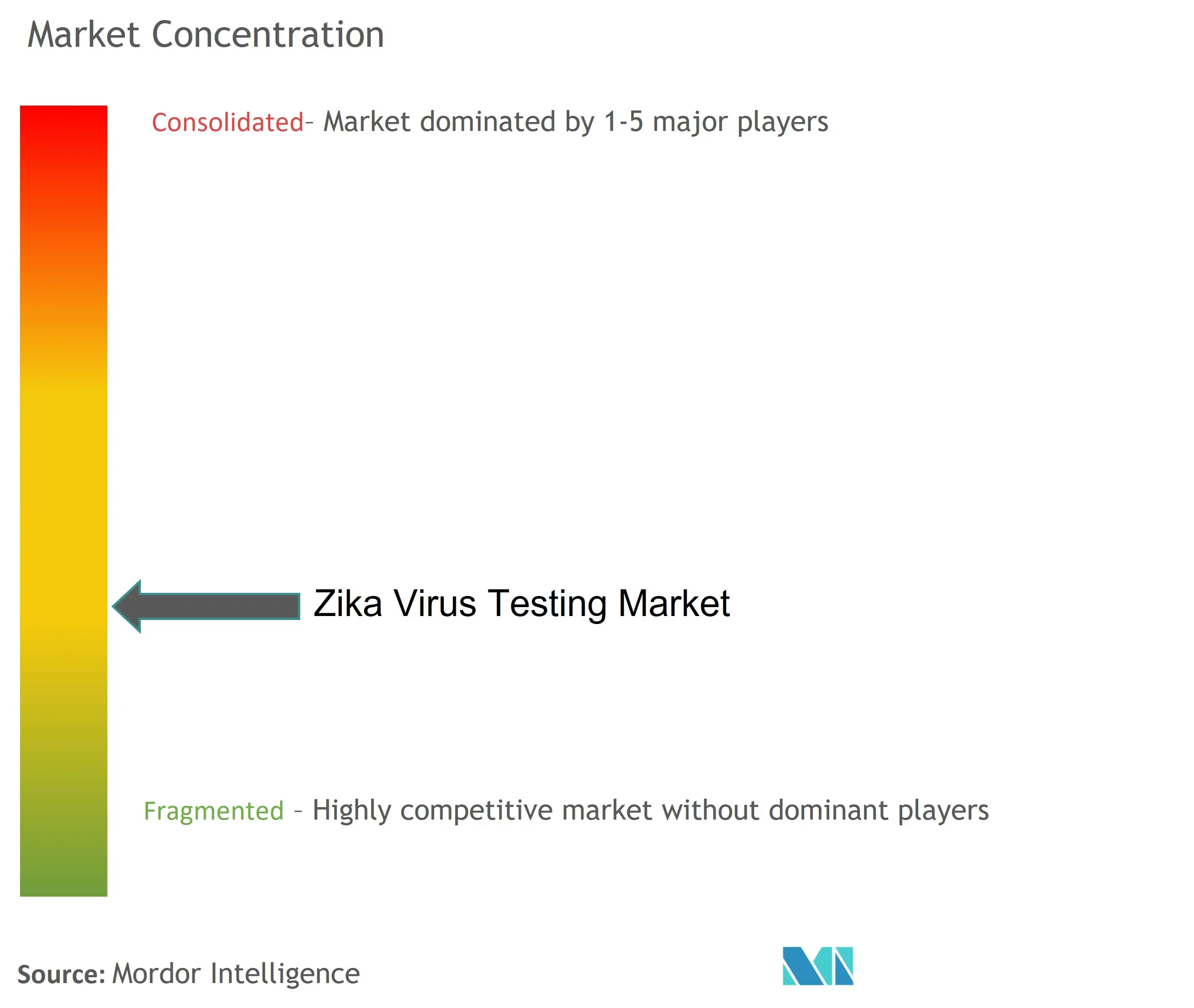
Market structure is moderately fragmented. Roche, Abbott, and Thermo Fisher collectively control a sizable multiplex PCR footprint, leveraging global logistics to secure formulary positioning. bioMérieux’s EUR 111 million SpinChip purchase underscores rising valuations for microfluidic POC assets.
AI differentiation is sharpening: BugSeq’s BARDA-backed analytics convert raw sequencing reads into variant-level reports in minutes, reducing bioinformatics barriers for clinical labs. Thermo Fisher’s USD 1.5 billion U.S. capacity build revamps cartridge supply resilience, courting federal procurement.
White-space lies in low-resource geographies demanding solar-powered, tablet-operated devices. Start-ups exploiting DNA-nanotechnology biosensors promise lower per-test costs and field ruggedness. Vendors able to refresh assay software rapidly to chase emerging flaviviruses will outpace hardware-locked rivals.
Zika Virus Testing Industry Leaders
Abbott
DiaSorin (Luminex Corporation)
F. Hoffmann-La Roche Ltd
Quest Diagnostics
Siemens Healthcare GmbH
- *Disclaimer: Major Players sorted in no particular order

Market Opportunities and Future Outlook
A primary whitespace is scalable, high-specificity multiplex testing that resolves clinical overlap among Zika, dengue, chikungunya, and related arboviruses within a single workflow, supporting both triage and surveillance procurement. Capacity-building programs and networks provide tangible pull-through, with PAHO-led genomic surveillance initiatives (including PAHOGen) connecting national laboratories using harmonized protocols and data pipelines, which links diagnostic demand to broader sample-to-sequence infrastructure. At the country level, reference-lab adoption of multiplex workflows creates near-term commercialization surfaces beyond episodic outbreak spikes, supported by a national arbovirus reference laboratory implementing a ZYDC-PCR multiplex system in February 2026 for differential diagnosis across Zika, yellow fever, dengue, and chikungunya.
Product and go-to-market opportunities also sit in operational simplification. Assays that tolerate non-invasive or delayed-presentation specimens (for example, urine alongside blood/serum), and ruggedized, decentralized formats that reduce dependence on full laboratory infrastructure, can better match field and program settings. With CDC guidance (November 2025) narrowing routine testing for asymptomatic pregnant individuals, vendors can align portfolios to risk-based testing algorithms, public-health lab workflows, and integrated arboviral panels that keep cartridge or kit utilization stable even when Zika-specific clinical suspicion is low. International procurement pathways anchored by WHO listing mechanisms (EUL update in March 2025) also remain a practical route for suppliers targeting public-sector tenders in endemic and travel-linked screening geographies.
Recent Industry Developments
- February 2026: The Institute of Tropical Medicine (IPK) National Reference Laboratory for Arbovirus implemented a ZYDC-PCR multiplex system for differential diagnosis of Zika, yellow fever, dengue, and chikungunya. The implementation operationalized a single-workflow approach in a reference-lab setting and reinforced the shift toward multiplex molecular platforms that preserve utilization across co-circulating arboviruses.
- November 2025: The US CDC updated clinical guidance indicating Zika testing is no longer routinely recommended for asymptomatic pregnant individuals. This narrows routine clinical screening volumes and increases the importance of targeted testing pathways, public-health surveillance orders, and multiplex differential-diagnosis panels for suppliers.
- May 2024: The US FDA determined Zika virus is no longer a Relevant Communicable Disease Agent or Disease (RCDAD) for HCT/P tissue establishments. This reduced donor-screening obligations in that regulatory channel while maintaining the need for surveillance-oriented diagnostic readiness, reshaping demand toward outbreak-triggered and programmatic testing.


Research Methodology Framework and Report Scope
Market Definition and Coverage
The zika virus testing market, for this study, covers revenue from diagnostic tests used to detect Zika infection in human samples, across molecular and serology based approaches, as supplied to clinical and public health testing settings.
Scope exclusions: This sizing excludes mosquito control programs, vaccines and therapeutics, and broad fever panels where Zika testing is not separately reported or billed.
Segmentation Overview
- By Test Type (Value)
- Molecular Tests (RT-PCR, NAAT)
- Serologic Tests (IgM/IgG ELISA)
- Plaque-Reduction Neutralisation Test (PRNT)
- By Sample Type (Value)
- Blood / Serum
- Urine
- Saliva & Others
- By End-User (Value)
- Hospitals & Clinics
- Diagnostic Laboratories
- Home care Settings
- Research Institutes
- By Geography (Value)
- North America
- United States
- Canada
- Mexico
- Europe
- Germany
- United Kingdom
- France
- Italy
- Spain
- Rest of Europe
- Asia-Pacific
- China
- India
- Japan
- South Korea
- Australia
- Rest of Asia-Pacific
- South America
- Brazil
- Argentina
- Rest of South America
- Middle East and Africa
- GCC
- South Africa
- Rest of Middle East and Africa
- North America
Data Sources, Market Sizing, and Validation
Desk Research
Desk research was used to set the factual base and the boundaries of what gets counted. We rely on public health surveillance updates and diagnostic guidance to track when testing volume rises, and how testing algorithms shift between molecular confirmation and serology screening.
Common inputs came from sources such as US CDC updates, WHO situation reports, PAHO regional epidemiology briefs, and health ministry bulletins in affected geographies. We also referred to peer reviewed papers on test performance and cross reactivity, customs or trade statistics where relevant for diagnostic reagents, and company filings and investor presentations for product focus and geographic exposure. In addition, a paid subscription for company financials and intelligence and a patent database were used selectively to verify portfolio activity and timing signals. The sources listed here are illustrative, and other public documents were reviewed to validate and clarify data points.
Primary Interviews and Surveys
Primary work was used to pressure test the model assumptions that are not consistently visible in public data. We spoke with testing labs, hospital lab managers, public health program stakeholders, and distributors to confirm test type mix, typical ordering patterns, and how quickly demand changes during travel or outbreak alerts across APAC, EMEA, and the Americas.
Distribution of primary research fieldwork respondents
| Company type | Respondent position | Region |
|---|---|---|
| Top tier: 36% | CXOs: 17% | APAC: 43% |
| Mid tier: 45% | Functional/Unit leaders: 31% | EMEA: 32% |
| Smaller Players: 19% | Managers: 52% | Americas: 25% |
Market-Sizing & Forecasting
The core sizing logic uses a top-down build that starts from the addressable testing demand pool, then reconstructs value using public health testing pathways and observed utilization. For example, outbreak and travel advisory periods were translated into expected testing intensity, and then adjusted for the share of suspected cases routed to molecular confirmation versus serology screening.
To keep the outputs realistic, totals were corroborated with selective bottom-up approximations. This included using sampled average selling prices for key assay formats multiplied by estimated test volumes from lab feedback, then checking kit availability and replenishment cycles through channel information. Inputs that mattered most included suspected case counts and surveillance intensity, test positivity patterns, the molecular to serology split (including confirmatory PRNT where used), turnaround time expectations that influence platform choice, and reagent price ranges observed by end users. When some smaller geographies had limited visibility, we used proxy indicators like regional surveillance activity and relative lab capacity, then normalized results during expert reviews.
For forecasting, scenario analysis was applied because demand can swing based on outbreak alerts and public health screening rules. Assumptions for alert frequency, testing protocols, and pricing progression were aligned to what practitioners expect, then stress tested so the final range stays practical.
Data Validation & Update Cycle
Model outputs were checked against independent signals, including surveillance direction, lab utilization feedback, and whether implied pricing matched typical procurement behavior. If a regional result looked unusual, we traced the drivers back to the input series and rechecked the assumptions before sign-off.
A multi-step review is followed so calculation logic, units, and year alignment remain consistent across regions and test types. Reports are refreshed annually, and interim updates are triggered when there are material changes such as new outbreaks, major guideline updates, or notable regulatory actions. Before delivery, a final pass is done so clients receive the most current view supported by the latest available data.
Mordor Intelligence's Zika Virus Testing Market Estimate Compared With Other Published Estimates
Published market sizes for Zika virus testing can look far apart because the underlying demand is event driven, and each publisher draws the market boundary in a slightly different way. Differences are also created by the choice of base year, whether revenues are counted at manufacturer level or closer to end user pricing, and how mixed arbovirus panels are treated.
Outbreak surveillance signals, lab testing algorithm guidance, and expert feedback on molecular versus serology usage are the checks that keep Mordor Intelligence's estimate tied to a defined pool of Zika specific testing revenue, instead of loosely bundling it into broader infectious disease diagnostics. The spread in other figures is usually explained by wider scopes that include adjacent arbovirus testing, more aggressive outbreak scenarios, or pricing paths that do not match how public programs procure reagents.
Benchmark comparison
| Source | Market Size | Gaps in Research Methodology |
|---|---|---|
| Mordor Intelligence | USD 256.03 M (2026) | |
| Global Consultancy A | USD 209.50 M (2023) | Uses a different base year and frames the market with a 2024 to 2030 horizon, which can understate the later period where surveillance and multiplex adoption lift testing value. The scope also places more emphasis on broad regional and country coverage, which may not isolate Zika only revenues in mixed testing workflows. |
| Industry Publisher B | USD 215.90 M (2024) | Takes 2024 as the anchor year and extends to 2033, which can shift the implied current run rate versus a 2026 starting point. The methodology appears to allow wider inclusion around testing settings and related diagnostics, which can move totals upward if confirmatory or adjacent flavivirus testing is blended in. |
Taken together, the comparison shows that year selection and the exact counting rules for Zika specific tests are the two biggest drivers of the gap. By keeping assumptions traceable to surveillance intensity, test type mix, and procurement realistic ranges, our number stays easier to reconcile with real lab behavior and repeat in future updates.


Key Questions Answered in the Report
How big is the Zika Virus Testing Market?
The Zika Virus Testing Market size is expected to reach USD 256.03 million in 2026 and grow at a CAGR of 7.03% to reach USD 359.44 million by 2031.
What is the current Zika Virus Testing Market size?
In 2026, the Zika Virus Testing Market size is expected to reach USD 256.03 million.
Who are the key players in Zika Virus Testing Market?
Abbott, DiaSorin (Luminex Corporation), F. Hoffmann-La Roche Ltd, Quest Diagnostics and Siemens Healthcare GmbH are the major companies operating in the Zika Virus Testing Market.
Which is the fastest growing region in Zika Virus Testing Market?
Asia-Pacific is estimated to grow at the highest CAGR over the forecast period (2026-2031).
Which region has the biggest share in Zika Virus Testing Market?
In 2026, North America accounts for the largest market share in Zika Virus Testing Market.
What years does this Zika Virus Testing Market cover, and what was the market size in 2025?
In 2025, the Zika Virus Testing Market size was estimated at USD 256.03 million. The report covers the Zika Virus Testing Market historical market size for years: 2019, 2020, 2021, 2022, 2023 and 2024. The report also forecasts the Zika Virus Testing Market size for years: 2026, 2027, 2028, 2029, 2030 and 2031.
Page last updated on:





