
Wafer Biscuits Market Size and Share
Market Overview
| Study Period | 2021 - 2031 |
|---|---|
| Market Size (2026) | USD 103.45 Billion |
| Market Size (2031) | USD 133.98 Billion |
| Growth Rate (2026 - 2031) | 5.31 % |
| Fastest Growing Market | Asia-Pacific |
| Largest Market | Europe |
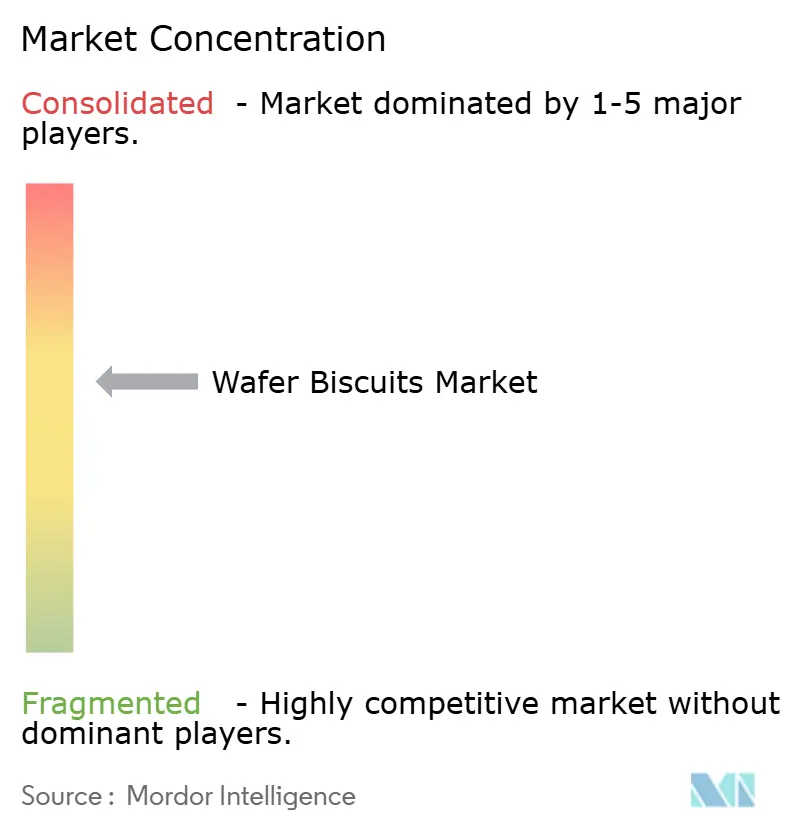
| Market Concentration | Medium |
Major Players
*Disclaimer: Major Players sorted in no particular order Image © Mordor Intelligence. Reuse requires attribution under CC BY 4.0. |
|
Wafer Biscuits Market Analysis by Mordor Intelligence
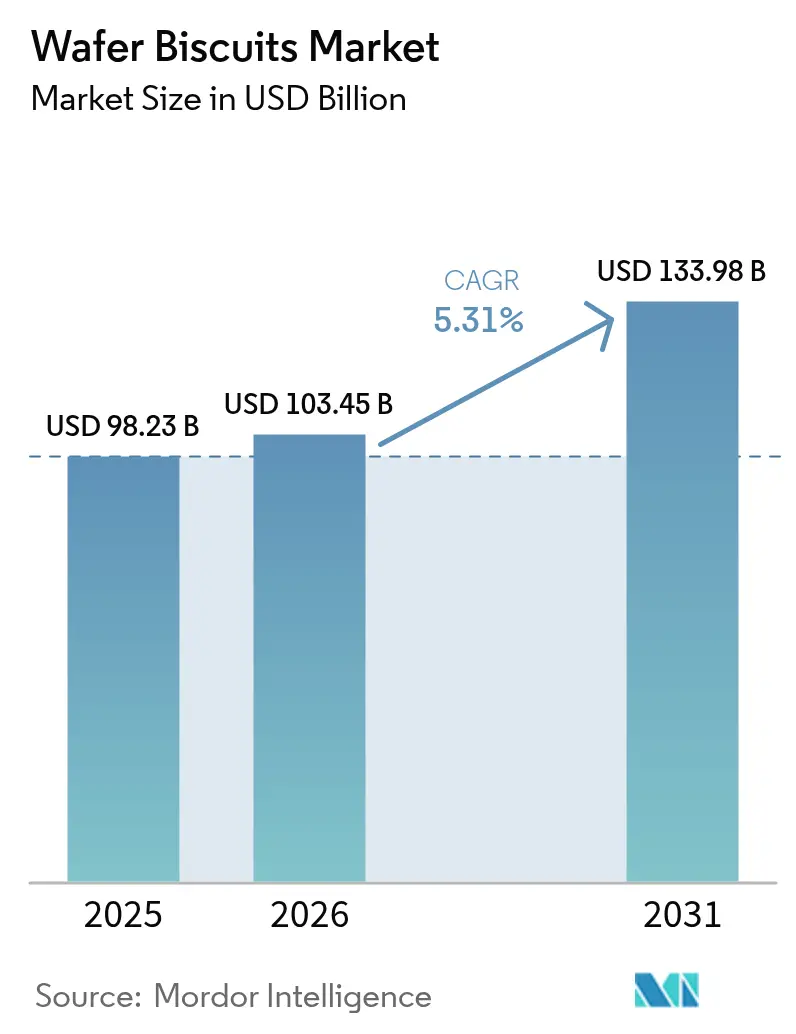
Wafer Biscuits Market size in 2026 is estimated at USD 103.45 billion, growing from 2025 value of USD 98.23 billion with 2031 projections showing USD 133.98 billion, growing at 5.31% CAGR over 2026-2031. This growth trajectory reflects the sector's resilience amid evolving consumer preferences and supply chain pressures that have reshaped the confectionery landscape. The market's expansion is underpinned by fundamental shifts in snacking behavior, with 48.8% of consumers now snacking more than 3 times daily, driving sustained demand for convenient, portable formats [1]Source: The National Association of Convenience Stores (NACS), "Sweets & Snacks Expo 2025: The State of Snacking", convenience.org. The market benefits from continuous product innovation, with companies introducing new flavors, multi-layered wafer formats, and health-oriented options such as low-sugar, gluten-free, and high-protein wafers that attract a broad consumer base including health-conscious buyers. Moreover, the popularity of cream-filled and chocolate-coated wafers, which account for a significant share of sales, reflects consumers’ growing preference for rich, flavorful snacks. Regional growth is particularly strong in Asia-Pacific due to population density and increasing disposable income, alongside mature markets in Europe with demand for artisanal and organic products. Simultaneously, regulatory compliance burdens intensify as food safety standards evolve globally, requiring manufacturers to navigate complex labeling requirements across multiple jurisdictions. However, these challenges are offset by robust demand drivers including packaging innovations that extend shelf life, expanding e-commerce penetration, and the proliferation of health-oriented formulations targeting protein-conscious and reduced-sugar consumer segments.
Key Report Takeaways
- By product type, cream/chocolate/fruit-filled lines led with 60.22% wafer biscuits market share in 2025, coated formats are projected to grow at a 5.58% CAGR to 2031.
- By category, conventional products accounted for 95.41% of sales in 2025; organic variants post the fastest 6.54% CAGR through 2031.
- By form, brick shapes held 92.10% of the wafer biscuits market size in 2025, whereas stick shapes expand at a 7.02% CAGR to 2031.
- By packaging, boxes captured 39.81% of 2025 revenue; stand-up pouches show a 7.05% CAGR through 2031.
- By distribution, supermarkets/hypermarkets generated 57.25% of value in 2025, while online retail rises at a 6.18% CAGR to 2031.
- By geography, Europe occupies 32.74% of value in 2025, while Asia-Pacific has the fastest growing share at a 6.41% CAGR to 2031.
Note: Market size and forecast figures in this report are generated using Mordor Intelligence’s proprietary estimation framework, updated with the latest available data and insights as of 2026.
Market Trends and Insights
Drivers Impact Analysis of Wafer Biscuits Market*
| Driver | (~) % Impact on CAGR Forecast | Geographic Relevance | Impact Timeline |
|---|---|---|---|
| Convenient, On-the-Go Snacking Demand | +1.2% | Global | Medium term (2-4 years) |
| Advances in Packaging for Freshness and Appeal | +0.8% | North America and Europe | Short term (≤ 2 years) |
| Product Innovation and Expanding Flavor Varieties | +0.9% | Global | Medium term (2-4 years) |
| Health-Oriented Options | +1.1% | North America and Europe, APAC (Asia-Pacific) emerging | Long term (≥ 4 years) |
| Brand Differentiation and Marketing Initiatives | +0.7% | Global | Short term (≤ 2 years) |
| Expansion of Modern Retail and E-commerce | +1.0% | Asia-Pacific core, spill-over to Middle-East and Africa | Medium term (2-4 years) |
| Source: Mordor Intelligence | |||
Convenient, On-the-Go Snacking Demand
Consumer snacking patterns have fundamentally shifted toward frequent, portable consumption occasions, with nearly half of consumers now snacking more than 3 times daily according to industry data. This behavioral transformation extends beyond traditional meal replacement, encompassing energy management throughout extended work days and social consumption moments. Wafer biscuits' inherent portability and extended shelf stability position them advantageously within this trend, particularly as urbanization accelerates across emerging markets. The "snackification" of meals has become especially pronounced among Gen Z and Millennial demographics, who prioritize convenience without compromising taste satisfaction. Premium positioning within this segment has proven sustainable, with 68.8% of consumers expressing willingness to pay elevated prices for perceived quality improvements. This willingness to trade up creates margin expansion opportunities for manufacturers who successfully communicate value propositions through packaging design and flavor innovation.
Advances in Packaging for Freshness and Appeal
Packaging technology evolution has emerged as a critical competitive differentiator, with active packaging systems incorporating antioxidant and antimicrobial agents extending product shelf life while maintaining sensory attributes. Smart packaging integration enables real-time quality monitoring, addressing consumer concerns about freshness while reducing waste throughout distribution channels. Edible coating technologies represent an emerging frontier, offering sustainable alternatives to traditional barrier materials while potentially enhancing nutritional profiles. Plant-based packaging materials are gaining traction as environmental consciousness influences purchasing decisions, though technical challenges around moisture barrier properties require continued innovation investment. The convergence of sustainability demands, and functional performance creates opportunities for manufacturers who successfully balance environmental credentials with product protection requirements. Stand-up pouches demonstrate the fastest growth at 7.32% CAGR, reflecting consumer preference for resealable formats that maintain product integrity across multiple consumption occasions.
Product Innovation and Expanding Flavor Varieties
Flavor experimentation has intensified as manufacturers seek new occasions and demographics. The National Confectioners Association’s 2025 State of Treating survey shows 63% of U.S. shoppers enjoy trying confectionery items with novel flavors, and 48% purchase at least one limited-edition seasonal SKU each year[2]Source: National Confectioners Association, "STATE OF TREATING 2025", candyusa.com. Rising demand for regional authenticity pushes brands to localize: a recent USDA Foreign Agricultural Service report notes that Chinese biscuit launches featuring matcha, red-bean, and lychee grew 22% year on year in 2024 [3]Source: USDA Foreign Agricultural Service, "Chinese biscuit launches", fas.usda.gov. Texture layering also drives premium perception; the International Cocoa Organization links coated formats to a 3% lift in average unit price because enrobing adds perceived indulgence. Rapid prototyping supported by modular filling equipment lets plants shift to new fillings in under 30 minutes, cutting the development cycle from weeks to days, according to the European Snacks Association 2025 processing benchmark. Social-media campaigns amplify these launches, with the NCA reporting that confectionery posts tagged #newflavor generated 1.4 billion views on TikTok in 2024, boosting trial among Gen Z and Millennials.
Health-Oriented Options
Global policy pressure to trim added sugars accelerates better-for-you wafer reformulation. The World Health Organization advises limiting free sugar to less than 10% of daily energy, guidance now adopted into national dietary policies in 54 countries as of 2025. In the United States, the Food and Drug Administration’s Nutrition Facts update mandating “Added Sugars” labeling led 38% of confectionery makers to cut sugar or launch reduced-sugar lines between 2020 and 2024 [4]Source: U.S Food & Drug Administration, "Changes to the Nutrition Facts Label", fda.gov. USDA’s 2025 Organic Survey shows organic snack sales climbed 8% in 2024 to USD 1.8 billion, with biscuits the fastest-growing subcategory at 11%. Functional fortification is likewise scaling: the Institute of Food Technologists reports that 27% of new global wafer SKUs launched in 2024 contained protein isolates, prebiotics, or added vitamins, up from 15% in 2021. Clean-label priorities remain strong; the International Food Information Council’s 2025 survey found 67% of U.S. adults scrutinize ingredient lists for artificial colors—prompting widespread shifts toward natural extracts such as beet and spirulina for tinting.
Restraints Impact Analysis of Wafer Biscuits Market*
| Restraint | (~) % Impact on CAGR Forecast | Geographic Relevance | Impact Timeline |
|---|---|---|---|
| Supply Chain Disruptions | -0.9% | Global | Short term (≤ 2 years) |
| Regulatory Compliance Burdens | -0.6% | Global, particularly European Union & North America | Medium term (2-4 years) |
| Growth of Healthier Snack Alternatives | -0.8% | North America & Europe | Long term (≥ 4 years) |
| High Technology Investment for Modern Processing | -0.5% | Global | Medium term (2-4 years) |
| Source: Mordor Intelligence | |||
Supply Chain Disruptions
Raw material price volatility has reached critical levels, with sugar costs achieving their highest point since 2011 due to climate-induced production shortfalls across major producing regions including Brazil and the European Union. Wheat supply chains face similar pressures, with global production forecasts indicating tightening supplies and reduced ending stocks for the 2024-25 season. Transportation cost inflation compounds these challenges, with energy price spikes following geopolitical tensions creating persistent margin pressure throughout the value chain. Labor shortages across agricultural and manufacturing sectors exacerbate supply constraints, particularly in developed markets where demographic shifts reduce available workforce participation. Manufacturers respond through vertical integration strategies and long-term supply agreements, though these approaches require significant capital commitment and reduce operational flexibility. The UK Food Security Report highlights interconnected vulnerabilities, with food inflation reaching 45-year highs despite global price moderation, indicating structural supply chain fragilities that extend beyond temporary disruptions.
Regulatory Compliance Burdens
Labeling and composition rules continue to tighten across major markets. In the European Union, Regulation (UE) 2024/1442 amends the Food Information to Consumers framework to mandate front-of-pack nutrient scoring beginning January 2026, requiring new artwork for every SKU sold in the bloc. The United Kingdom’s High Fat, Salt and Sugar (HFSS) placement restrictions, fully enforced from October 2025, prohibit impulse-zone display of qualifying wafers, compelling retailers to re-planogram checkout areas [5]Source: GOV.UK, "(HFSS) placement restrictions", gov.uk. In the United States, FDA’s Traceability Rule under the Food Safety Modernization Act now obliges lot-level record-keeping for key ingredients such as wheat and cocoa, expanding audit documentation by an estimated 400 hours per plant annually. Allergen regulations also rise; Australia and New Zealand’s 2024 Plain English Allergen Labelling standard requires wafer makers to spell out “Wheat” and “Soy” in bold font within ingredients panels, prompting packaging reprints for exports to Oceania. Finally, the proposed EU Packaging and Packaging Waste Regulation targets a 20% cut in single-use plastic by 2030, pushing wafer brands toward recyclable mono-materials or paper-based laminates that often carry higher material costs.
*Our forecasts treat driver/restraint impacts as directional, not additive. The impact forecasts reflect baseline growth, mix effects, and variable interactions.
Wafer Biscuits Market Segment Analysis
By Product Type:
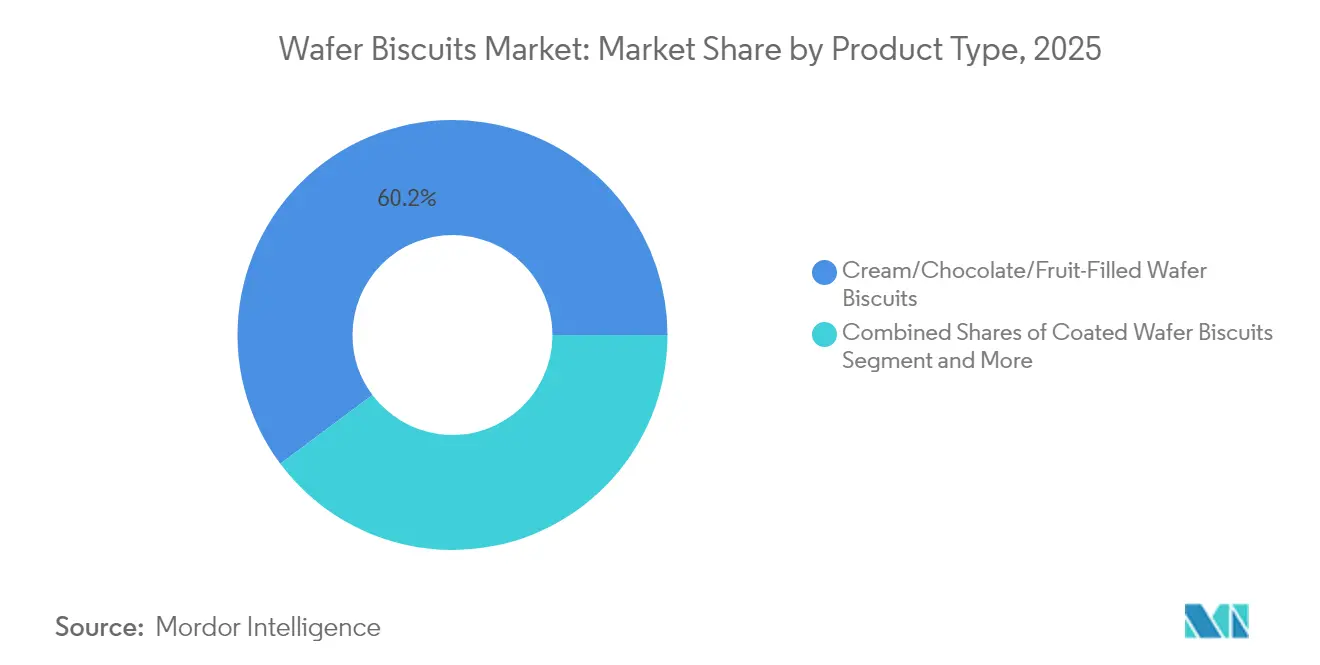
Filled Variants Drive Premium GrowthCream/chocolate/fruit-filled wafer biscuits command 60.22% market share in 2025, reflecting consumer preference for indulgent flavor experiences and textural complexity. These products benefit from higher margin structures due to premium positioning and ingredient costs, enabling sustained investment in flavor innovation and packaging sophistication. Coated wafer biscuits, while holding smaller market share, demonstrate superior growth momentum at 5.58% CAGR through 2031, driven by successful premiumization strategies and expanding distribution through modern retail channels.
The filled segment's dominance reflects manufacturers' ability to differentiate through flavor variety and seasonal offerings, creating purchase occasions beyond basic snacking needs. Chocolate-filled variants particularly benefit from cocoa's established premium positioning, though rising cocoa costs present margin challenges that require careful pricing strategies. Fruit-filled options capture health-conscious consumers seeking perceived nutritional benefits while maintaining indulgence satisfaction. Coated variants' accelerated growth stems from successful texture innovation and visual appeal that commands premium pricing, particularly in gift and celebration segments where presentation drives purchase decisions.



By Category:
Organic Acceleration Amid Conventional DominanceConventional wafer biscuits maintain overwhelming 95.41% market share in 2025, reflecting established consumer preferences and price sensitivity across mass market segments. However, organic variants are expanding rapidly at 6.54% CAGR through 2031, indicating sustained premium pricing power and growing consumer willingness to pay elevated prices for perceived health and environmental benefits. This growth trajectory suggests successful market education and distribution expansion beyond specialty channels into mainstream retail environments.
The organic segment's acceleration reflects broader consumer trends toward clean label products and sustainable consumption practices, particularly among higher-income demographics. Certification requirements create barriers to entry that protect established organic producers while limiting competitive intensity. Supply chain complexity for organic ingredients requires specialized sourcing relationships and inventory management, creating operational challenges that smaller manufacturers struggle to address effectively. Conventional products benefit from established supply chains and cost optimization, though manufacturers increasingly introduce organic line extensions to capture premium opportunities without cannibalizing existing volumes.
By Form/Shape:
Stick Innovation Challenges Brick TraditionBrick-shaped wafer biscuits dominate with 92.10% market share in 2025, leveraging established consumer familiarity and manufacturing efficiency advantages that enable competitive pricing strategies. Stick-shaped variants, despite smaller current share, demonstrate exceptional growth at 7.02% CAGR through 2031, driven by portion control benefits and enhanced portability that aligns with on-the-go consumption trends. This format innovation reflects successful product development that addresses evolving consumer needs without requiring significant manufacturing infrastructure changes.
Stick formats' growth acceleration stems from successful positioning as portion-controlled indulgence options that address health-conscious consumers' desire for moderation without complete category avoidance. The format enables individual wrapping that maintains freshness while creating sharing opportunities in social consumption occasions. Manufacturing advantages include reduced breakage during transportation and improved shelf presentation that enhances retail appeal. Brick formats maintain advantages in cost efficiency and consumer familiarity, though manufacturers increasingly offer both formats to capture diverse consumption preferences and usage occasions.
By Packaging:
Pouches Gain Traction Through ConvenienceBoxes maintain the largest packaging share at 39.81% in 2025, benefiting from established retail merchandising advantages and consumer perception of value through quantity. Stand-up pouches/bags demonstrate the fastest growth at 7.05% CAGR through 2031, reflecting successful positioning as convenient, resealable formats that maintain product freshness across multiple consumption occasions. This packaging evolution aligns with changing household sizes and snacking patterns that prioritize flexibility over bulk purchasing.
Pouch formats' acceleration reflects successful innovation in barrier properties and closure mechanisms that address consumer concerns about freshness and portability. The format enables premium graphics and shelf presentation while reducing packaging material usage compared to rigid alternatives. Packets/sachets serve portion control and sampling functions, particularly in emerging markets where affordability drives purchase decisions. Other packaging formats, including cans and plastic containers, address specific usage occasions and gift markets where presentation drives premium positioning. Regulatory compliance becomes increasingly complex as packaging materials face scrutiny for environmental impact and food safety considerations.

By Distribution Channel:
Digital Commerce Transforms RetailSupermarkets/hypermarkets command 57.25% distribution share in 2025, leveraging established consumer shopping patterns and category management expertise that optimizes shelf positioning and promotional effectiveness. Online retail stores demonstrate the strongest growth at 6.18% CAGR through 2031, reflecting successful adaptation to digital commerce trends and direct-to-consumer opportunities that bypass traditional retail margins. This channel evolution creates new competitive dynamics as manufacturers develop e-commerce specific packaging and marketing strategies.
Digital commerce growth enables direct consumer relationships and data collection that inform product development and marketing strategies, though fulfillment costs and delivery logistics present operational challenges. Convenience/grocery stores maintain significant share through impulse purchasing and proximity advantages, particularly for single-serve formats and immediate consumption occasions. The channel's success depends on strategic product placement and promotional support that drives trial and repeat purchase. Other distribution channels, including vending machines and institutional sales, address specific consumption occasions though represent smaller overall market shares. Modern retail expansion across emerging markets creates growth opportunities as infrastructure development improves product availability and consumer access.
Geography Analysis
Europe Wafer Biscuits Market
Europe leads global wafer biscuits consumption with 32.74% market share in 2025, benefiting from established confectionery traditions and sophisticated distribution networks that enable premium product positioning. The region's mature market characteristics drive innovation toward health-conscious formulations and sustainable packaging solutions that address evolving consumer preferences. Germany, United Kingdom, Italy, and France represent core consumption markets where brand loyalty and quality perceptions support premium pricing strategies. However, growth rates remain modest as market saturation limits expansion opportunities beyond product innovation and market share competition.
APAC, the Americas and MEA Wafer Biscuits Market
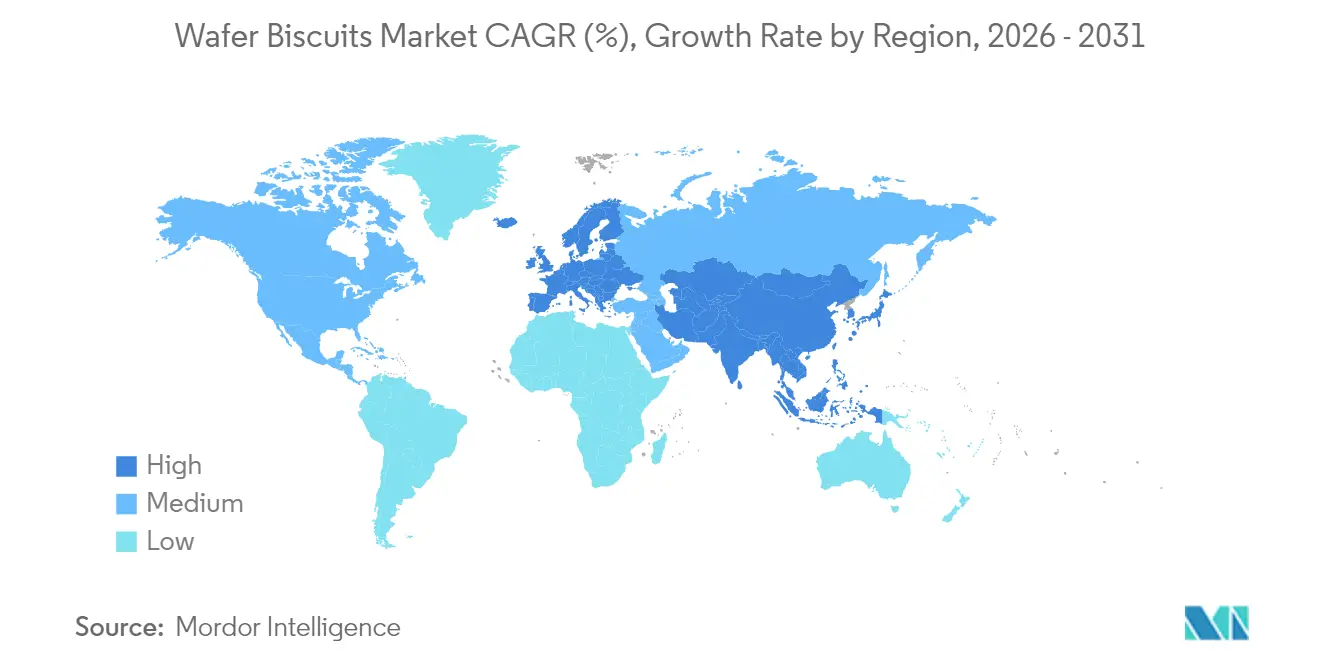
Asia-Pacific emerges as the fastest-growing region at 6.41% CAGR through 2031, driven by rapid urbanization, rising disposable incomes, and expanding modern retail infrastructure across key markets including China, India, and Southeast Asia. Chinese consumers increasingly embrace discount snack retail formats, with store counts tripling to 25,000 since 2022, reflecting price-conscious purchasing behavior amid economic uncertainties. The Philippines snack market, valued at USD 2.6 billion in 2023, demonstrates 8% projected CAGR through 2028, with baked snacks including biscuits reaching USD 265 million according to the U.S. Department of Agriculture. North America maintains significant market presence through established brand portfolios and innovation capabilities, though growth rates moderate as health-conscious trends challenge traditional confectionery consumption patterns. The region's regulatory environment, including FDA labeling requirements and state-level nutritional disclosure mandates, drives product reformulation toward cleaner ingredient profiles. South America and Middle East and Africa represent emerging opportunities where economic development and urbanization create expanding consumer bases, though infrastructure limitations and import dependencies constrain near-term growth potential. Brazil's economic volatility affects consumer spending patterns, while Middle Eastern markets demonstrate growing appetite for Western confectionery formats adapted to local taste preferences.

Regulatory Landscape
Global wafer biscuit manufacturers operate under tightening food labeling, additive, and food-safety management requirements that vary by destination market. In the European Union, wafer biscuits fall under the "fine bakery wares" category under Regulation (EC) No 1333/2008, and Commission Regulation (EU) 2026/196 (effective from 28 January 2026) updated conditions linked to selected hydrocolloids used as thickeners and stabilizers. For EU-sold or EU-export SKUs, this increases formulation and specification checks. In the United Kingdom, HFSS placement restrictions, fully enforced from October 2025, also add retail execution constraints for qualifying wafer products by limiting checkout and prominent in-store placement.
Internationally, trade-facing labeling alignment continues to reference Codex standards such as CODEX STAN 1-1985 for prepackaged foods, particularly for allergen declarations of cereals containing gluten, which is relevant for wheat-based wafers. In July 2026, the FAO/WHO Codex Alimentarius Commission (49th session, Geneva) adopted updated standards covering food additives and precautionary allergen labeling guidance, strengthening the basis for national updates. On systems and audits, FSSC 22000 moved to Version 7 in May 2026, with upgrade audits required by April 2028, and FDA’s Human Foods Program 2026 priority deliverables reinforce the direction toward more structured preventive controls and documentation for ingredient traceability in the United States.
Value Chain Analysis
The wafer biscuits value chain begins with agricultural and processed inputs (wheat flour, sugar, vegetable oils, cocoa, dairy-based or plant-based creams, and permitted emulsifiers/additives), then moves into industrial baking, wafer-sheet formation, cream deposition, layering/cutting, optional enrobing/coating, cooling, and high-throughput packaging. Cost and continuity risks are concentrated upstream and at utilities. Wheat flour is a major operating cost line for wafer plants, while sugar and cocoa volatility affects both filled and coated variants. Utilities and fuel availability can also be binding constraints in some markets. For example, localized LPG supply shortages reported in India in March 2026 forced certain bakeries and biscuit makers to significantly curtail output, indicating exposure to energy inputs beyond ingredients.
Downstream, wafer biscuits require protective packaging and careful handling because products are brittle and prone to breakage, which elevates the role of secondary packaging, palletization, and route-to-market practices for waste reduction and shelf presentation. Large manufacturers balance indirect retail distribution (supermarkets/hypermarkets and convenience) with growing e-commerce needs that require transit-resistant packs and optimized case configurations. In the wider biscuit ecosystem, supply-chain strategies include greater automation and network reconfiguration, along with regional sourcing and buffer inventories to reduce the impact of destocking cycles and logistics disruption. Multinational operators such as Mondelēz have pursued multi-year bakery and distribution network initiatives in the United States.
Competitive Landscape
The wafer biscuits market exhibits moderate concentration with balanced competition between multinational corporations and regional specialists, creating dynamic competitive intensity that drives continuous innovation and strategic positioning. Market leaders leverage global distribution networks and brand portfolios to maintain competitive advantages, while smaller players focus on niche segments and local market expertise to capture specialized opportunities. Technology adoption increasingly determines competitive success, with automation investments enabling cost optimization and quality consistency that supports premium positioning strategies.
Strategic consolidation continues reshaping industry dynamics, exemplified by Mars' USD 35.9 billion acquisition of Kellanova, which significantly expands snacking portfolios and creates synergies across distribution channels according to the U.S. Securities and Exchange Commission. Mondelez International's acquisition of majority stake in Evirth, a Chinese cakes and pastries manufacturer, demonstrates geographic expansion strategies targeting high-growth emerging markets. Opportunities emerge in health-conscious formulations and sustainable packaging solutions, where regulatory compliance and consumer education create barriers to entry that protect early movers.
Capital spending constraints, with industry budgets declining 1.1% in 2025, force strategic prioritization toward automation and digitization rather than capacity expansion. Cost leadership increasingly depends on technology. Plants deploy vision systems and robotics to trim breakage and hit strict weight tolerances demanded by mass retailers. Pipelines focus on reduced-sugar and protein-fortified wafers ahead of EU front-of-pack nutrient scoring rules that start in 2026. Packaging sustainability now differentiates brands as Europe targets a 20% cut in single-use plastic, nudging the switch to recyclable mono-material pouches.
Wafer Biscuits Industry Leaders
-
Mars, Incorporated
-
Hostess Brands, LLC
-
Nestlé S.A.
-
Mondelēz International
-
LOTTE
- *Disclaimer: Major Players sorted in no particular order
Wafer Biscuits Market Companies Covered in this Report
- Mars, Incorporated
- Hostess Brands, LLC
- Nestlé S.A.
- Mondelēz International
- LOTTE
- Kellogg Company (Keebler)
- Ulker Biskuvi Sanayi A.S.
- Bahlsen GmbH & Co. KG
- Orion Corporation
- Britannia Industries Limited
- Parle Products Pvt. Ltd.
- Arcor S.A.I.C.
- Lotus Bakeries NV
- Campbell Soup Co. (Pepperidge Farm)
- Ravi Foods Pvt. Ltd. (Dukes)
- Loacker S.p.A.
- Manner AG
- Universal Robina Corporation
- Grupo Bimbo S.A.B. de C.V.
- Mayora Indah Tbk

Market Opportunities and Future Outlook
Capacity additions and footprint decisions are creating room for locally made wafer biscuits and faster replenishment models, especially where import lead times and fragile-product logistics raise service costs. In June 2026, Bauducco opened a 160,000-square-foot manufacturing facility in Zephyrhills, Florida, which expanded U.S. production capacity and supported broader use of a "Made in USA" designation across its wafer portfolio. This reduces reliance on long supply chains and improves retail responsiveness. In Europe, Lotus Bakeries held a May 2026 groundbreaking for a new production hall in Lembeke, Belgium, signaling continued investment in scale manufacturing. Italy-based Lago also disclosed an industrial plan that includes a dedicated wafer production line and related cream-handling infrastructure, pointing to interest in specialization and product-line flexibility.
Product and channel opportunities are also tied to the regulatory and shopper environment. Front-of-pack nutrition scoring timelines in the EU and HFSS placement restrictions in the United Kingdom raise the value of reformulation capabilities, including reduced sugar and portion-managed packs, alongside packaging formats that support compliant merchandising. Stand-up pouches, among the fastest-growing packaging formats in the category, offer a practical platform for resealability, e-commerce durability, and reduced material weight. Organic and functional positioning, including protein-fortified or "free-from" options, can help brands secure premium shelves when ingredient sourcing and certification supply chains are in place. In Asia-Pacific industrial zones, expansion programs provide another lever for manufacturers targeting modern retail growth. For instance, Monde M.Y. San’s June 2026 PEZA registration agreement for a Pampanga facility in the Philippines for crackers and sandwich products shows continued investment in scaled snack manufacturing close to high-growth consumption centers.
Recent Industry Developments in Wafer Biscuits Market
- June 2026: Bauducco opened a 160,000-square-foot manufacturing facility in Zephyrhills, Florida, expanding domestic capacity for its baked goods portfolio including wafers. The site supports shorter lead times and wider U.S. availability for wafer-based products while enabling broader use of a Made in USA designation across the company’s wafer portfolio.
- April 2026: Mars introduced TWIX Bits, a poppable format built around crunchy wafer cookie and caramel. The launch extends wafer-based confectionery into bite-sized snacking occasions and raises competitive pressure around multi-texture innovation and convenience-driven formats.
- September 2024: Hostess’s Voortman brand launched snack-size versions of its creme wafer cookies in vanilla and chocolate in the United States. The smaller, on-the-go pack format strengthens the brand’s presence in convenience-led usage occasions and broadens access through major grocery retailers.


Wafer Biscuits Market Report Scope and Research Methodology
Market Definition and Coverage
This market covers packaged wafer biscuits sold for consumer eating, including filled wafers and coated wafers across mainstream retail and online channels, counted at retail sales value in USD across the covered geographies.
Scope exclusions: We exclude non-wafer cookies, plain crackers, and industrial wafer sheets sold only as ingredients when they do not enter retail wafer biscuit packs.
Segments Covered in This Report
-
By Product Type
- Cream/Chocolate/Fruit-Filled Wafer Biscuits
- Coated Wafer Biscuits
-
By Category
- Conventional
- Organic
-
By Form/Shape
- Brick-Shaped
- Stick-Shaped
-
By Packaging
- Boxes
- Stand-Up Pouches/Bags
- Packets/ Sachets
- Others
-
By Distribution Channel
- Supermarkets/Hypermarkets
- Convenience/Grocery Stores
- Online Retail Stores
- Other Distribution Channels
-
By Geography
-
North America
- United States
- Canada
- Mexico
- Rest of North America
-
Europe
- Germany
- United Kingdom
- Italy
- France
- Spain
- Netherlands
- Poland
- Belgium
- Sweden
- Rest of Europe
-
Asia-Pacific
- China
- India
- Japan
- Australia
- Indonesia
- South Korea
- Thailand
- Singapore
- Rest of Asia-Pacific
-
South America
- Brazil
- Argentina
- Colombia
- Chile
- Peru
- Rest of South America
-
Middle East and Africa
- South Africa
- Saudi Arabia
- United Arab Emirates
- Nigeria
- Egypt
- Morocco
- Turkey
- Rest of Middle East and Africa
-
North America
Data Sources, Market Sizing, and Validation
Desk Research
Desk research was used to set the fact base for the demand environment and to keep our assumptions grounded in observable snack and confectionery signals. We leaned on public sources such as USDA and other national agriculture agencies for sugar, cocoa, and wheat indicators, UN Comtrade for trade flows of relevant confectionery categories, and national statistics offices for consumer price inflation and retail sales context.
To translate those signals into a workable market model, we reviewed company annual reports, investor presentations, earnings call notes, and major retailer and association websites for packaging formats, channel shifts, and product positioning (for example, organic or reduced sugar claims). For cross-checking company presence and financial context, we used paid subscriptions for company financials and intelligence, plus news and financials. We also referred to a patent database to spot the cadence of wafer processing and coating activity where it clarified innovation trends. These desk sources are illustrative, and many other public and paid references were also used for data collection, validation, and research clarification.
Primary Interviews and Surveys
Primary work focused on validating what desk research cannot reliably show, mainly price ladders by pack type, channel mix by region, and how much of demand comes from everyday snacking versus gifting or seasonal buying. We spoke with a mix of manufacturers, ingredient and packaging participants, distributors, and retail category managers across key consuming regions, then ran follow-up checks to confirm assumptions when responses showed wide variance.
Distribution of primary research fieldwork respondents
| Company type | Respondent position | Region |
|---|---|---|
| Top tier: 38% | CXOs: 20% | APAC: 45% |
| Mid tier: 40% | Functional/Unit leaders: 23% | EMEA: 30% |
| Smaller Players: 22% | Managers: 57% | Americas: 25% |
Market-Sizing & Forecasting
Our sizing started with a top-down build that reconstructs the retail demand pool from snack and confectionery spend signals, then adjusted by wafer-biscuit penetration using price and pack architecture learned from primary checks. Once that structure was set, we corroborated the totals with selective bottom-up approximations, mainly sampled brand and channel revenue mapping, observed shelf price bands, and volume proxies for high-rotation SKUs, which were then used to refine the final market value.
Key inputs used in the model included average selling price progression by pack type (single serve versus multipacks), channel mix shifts toward supermarkets and online, commodity-linked cost pressure that influences price resets, premiumization signals (coated and filled variants), and regional seasonality patterns that affect quarterly sell-through. Where direct volume indicators were not consistently available, we handled gaps through conservative proxy ranges agreed with interviewees, and applied them consistently across regions.
For forecasting, we ran scenario analysis so demand could be projected under different combinations of inflation pass-through, household spending pressure, and premium mix change. The final outlook was anchored to the consensus direction from primary respondents, and it was kept internally consistent with the same price and mix logic used in the base year.
Data Validation & Update Cycle
Validation was done through repeated triangulation across independent checkpoints, and we reviewed any outliers before the numbers were finalized. Market totals were compared against broad snack and confectionery growth signals, price inflation series, and trade and supply indicators, and then differences were traced back to either scope interpretation, channel mapping, or an unrealistic price assumption.
Before sign-off, the model and assumptions go through multi-step analyst reviews, and re-contacts are triggered when a critical input like pricing resets or channel shifts changes materially. Reports are refreshed annually, and interim updates are made when major events occur, such as sharp commodity price moves or material changes in retail pricing behavior. Right before delivery, an analyst performs a fresh pass so clients receive the latest updated view.
Mordor Intelligence's Wafer Biscuits Market Size Measured Against Other Published Estimates
Published values for wafer biscuits often do not match because the underlying definition and counting logic can shift from one study to another. In practice, differences show up when some estimates use a wider snack set, apply different price points across pack formats, or assume a faster premium mix change without matching it to observed retail realities.
Key gap drivers in this market usually come from what gets included around chocolate-coated wafer bars, how organic or better-for-you wafers are treated, and whether the sizing is tied to a retail sales value view or a more production-linked view. Pricing also creates spread when one model uses a single blended ASP across regions, instead of reflecting the visible price ladder across single-serve, multipacks, and gift-oriented packs, which tends to move differently during inflation cycles.
Benchmark comparison
| Source | Market Size | Gaps in Research Methodology |
|---|---|---|
| Mordor Intelligence | USD 103.45 B (2026) | |
| Global Consultancy A | USD 45.20 B (2025) | Uses a narrower counted universe that leans toward core wafer biscuit packs and applies a more limited treatment of coated wafer items and application-linked demand, which compresses the retail value total. |
| Industry Publisher B | USD 113.00 B (2024) | Anchors the starting year earlier and appears to use broader application coverage and different ASP normalization across countries, which can lift the starting value when price bands are not fully separated by pack type. |
Retail price ladders by pack type and region, plus channel-mix checks from interviews, are the evidence that keeps Mordor Intelligence tied to a retail-consumption demand pool rather than a loose snack proxy. With the same scope applied consistently and the price architecture refreshed with current-year signals, the resulting estimate stays repeatable and easier to reconcile against what buyers and retailers actually see in the market.


Key Questions Answered in the Report
What is the projected value of the wafer biscuits market by 2031?
The sector is forecast to reach USD 133.98 billion by 2031, reflecting a 5.31% CAGR from 2026.
Which region is expanding fastest for wafer sales?
Asia-Pacific leads with a 6.41% CAGR, benefiting from urbanization and rising disposable incomes.
How are supply chain pressures affecting manufacturers?
Sugar and wheat price spikes and freight inflation erode margins, prompting vertical integration and long-term sourcing contracts.
What packaging format is gaining share most quickly?
Stand-up pouches grow at 7.05% CAGR thanks to resealability and reduced material weight.
Page last updated on:


 Your data is secure and never sold or shared.


