
Global Veterinary X-Ray Market Size and Share
Market Overview
| Study Period | 2020 - 2031 |
|---|---|
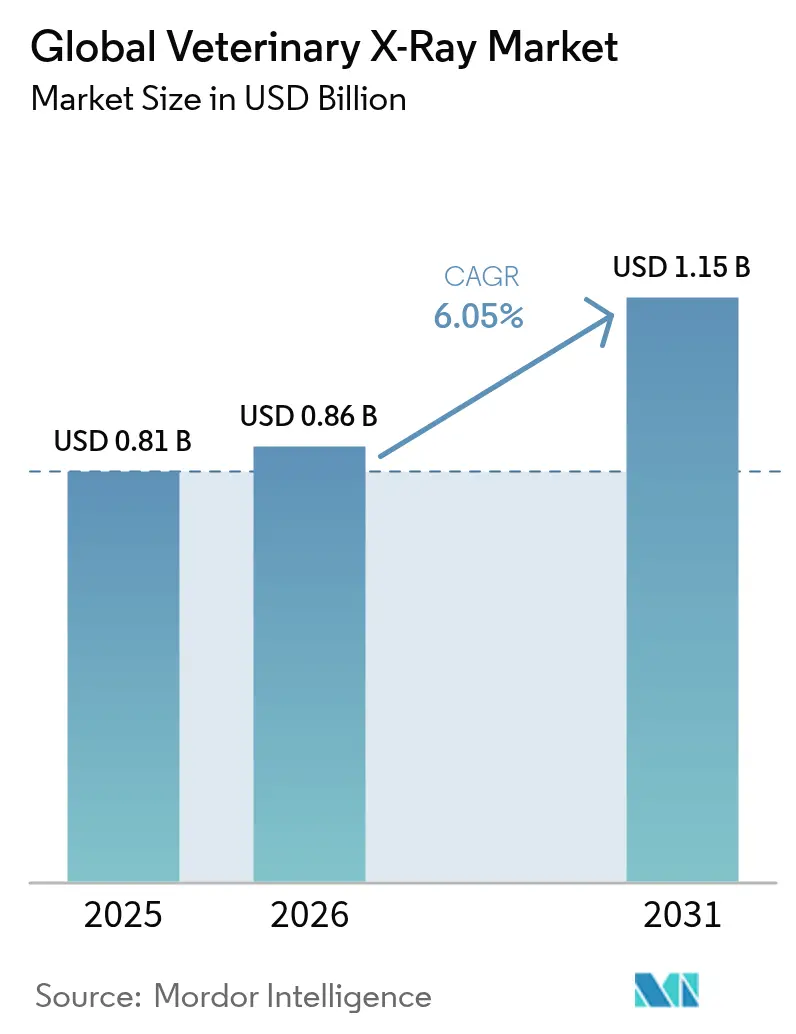
| Market Size (2026) | USD 0.86 Billion |
| Market Size (2031) | USD 1.15 Billion |
| Growth Rate (2026 - 2031) | 6.05 % |
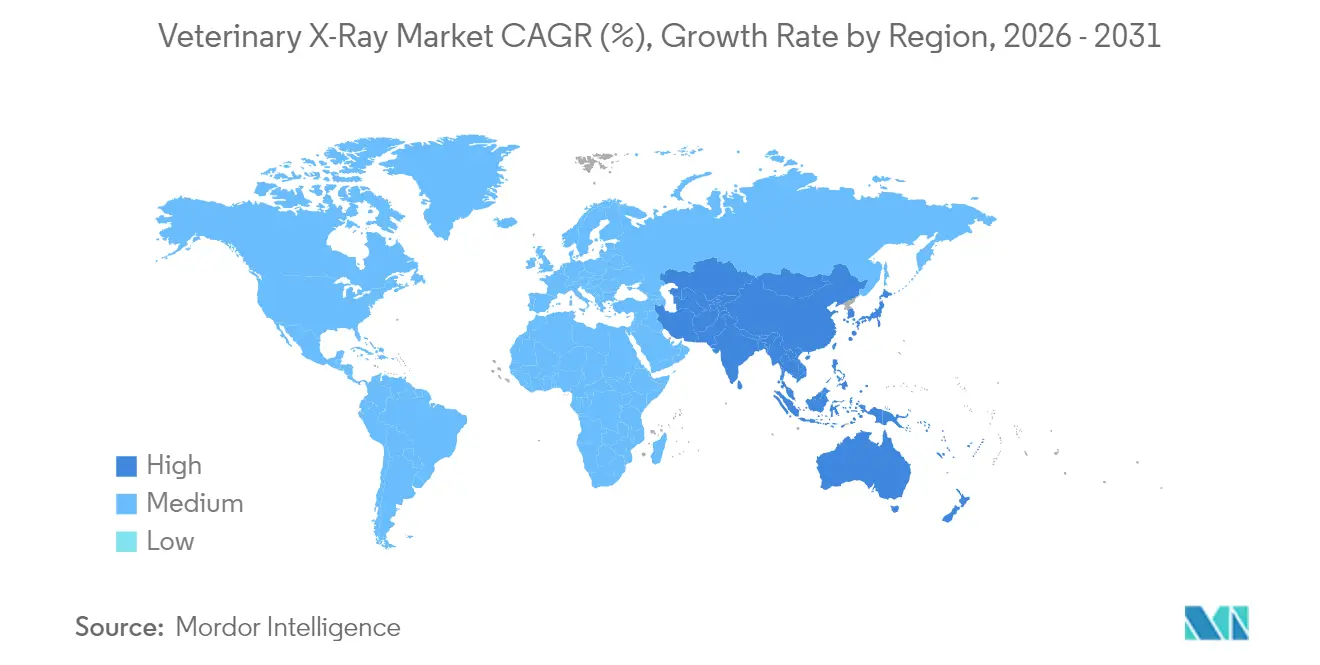
| Fastest Growing Market | Asia Pacific |
| Largest Market | North America |
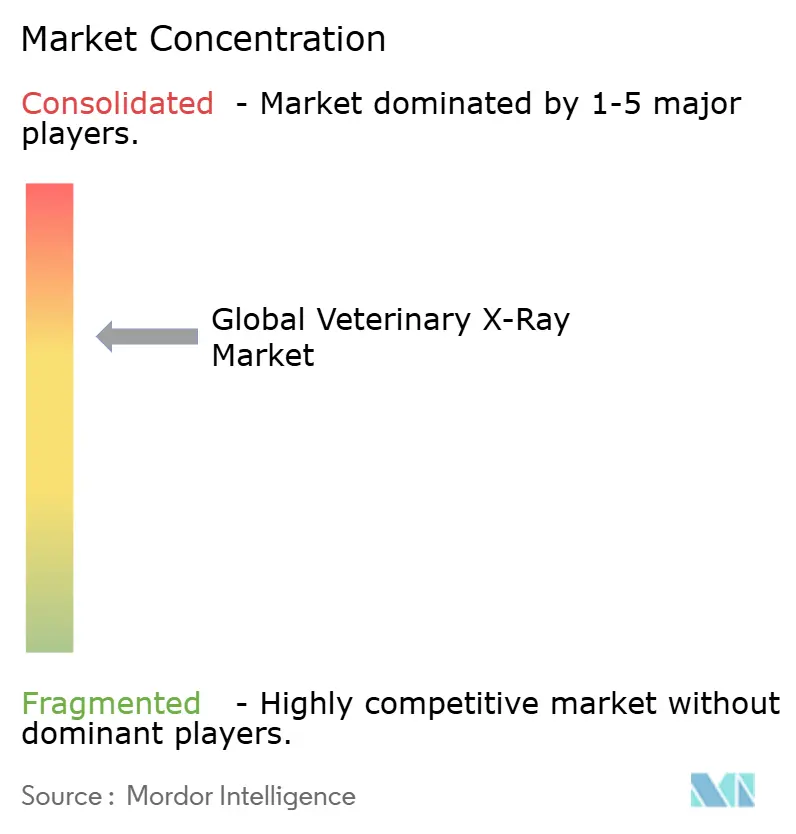
| Market Concentration | Medium |
Major Players *Disclaimer: Major Players sorted in no particular order Image © Mordor Intelligence. Reuse requires attribution under CC BY 4.0. | |
Global Veterinary X-Ray Market Analysis by Mordor Intelligence
The veterinary X-ray market size in 2026 is estimated at USD 0.86 billion, growing from 2025 value of USD 0.81 billion with 2031 projections showing USD 1.15 billion, growing at 6.05% CAGR over 2026-2031. Growth is propelled by record pet ownership, fast-advancing digital imaging technology, and the spread of well-equipped veterinary facilities in mature and emerging economies alike. North America leads in equipment uptake thanks to a deep installed base and high medicalization, yet Asia-Pacific is expanding fastest as disposable incomes climb and veterinary training capacity widens. Digital radiography’s sharper images and streamlined workflows underpin rapid replacement of legacy film systems, while AI software that flags subtle lesions boosts diagnostic confidence and practitioner productivity. Supply-chain risk tied to Chinese export controls on rare-earth detector materials is the key cost pressure and may favor vendors with diversified sourcing. Workforce shortages—estimated at more than 70,000 veterinarians by 2032—reinforce demand for imaging tools that shave interpretation time and reduce retakes.
Key Report Takeaways
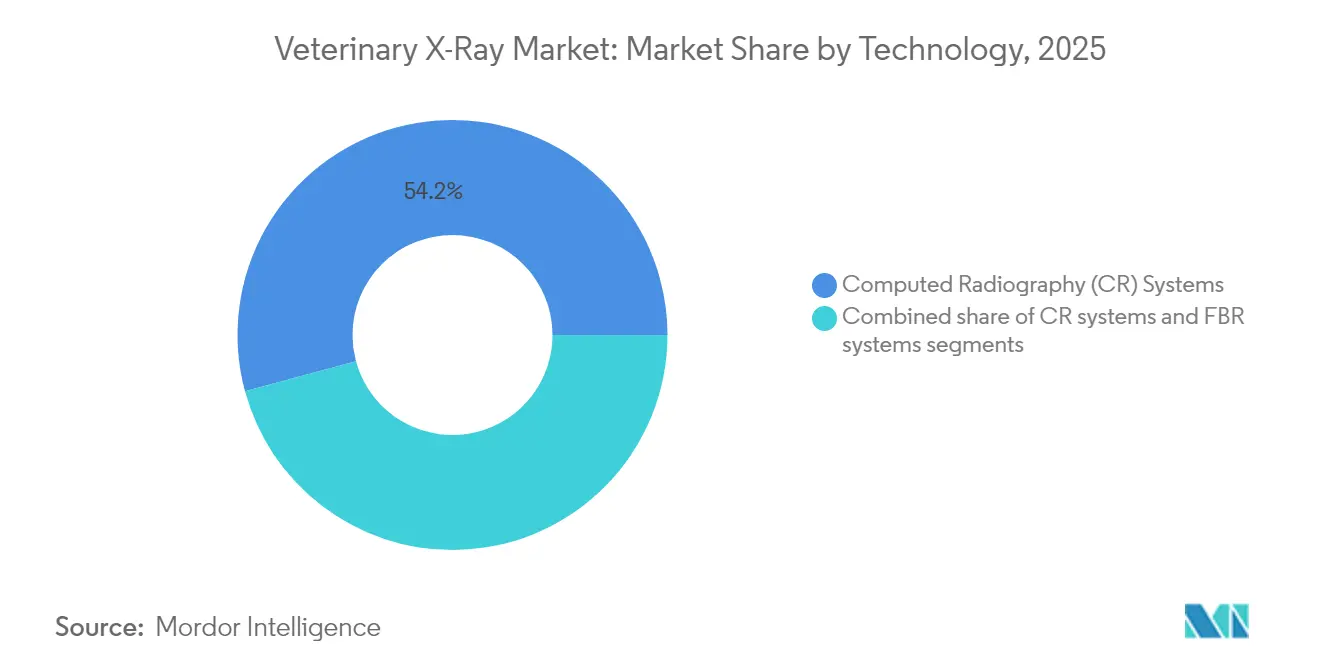
- By technology, Computed Radiography (CR) led with 54.22% of veterinary X-ray market share in 2025, while Direct Radiography (DR) is on track for the quickest 6.78% CAGR to 2031.
- By system type, digital X-ray accounted for 72.35% of revenue in 2025; portable units are forecast to expand at 6.48% CAGR through 2031.
- By animal, small companion species captured 64.58% of 2025 demand; large-animal imaging is growing but at a slower clip.
- By application, orthopedics held 32.10% share of the veterinary X-ray market size in 2025, whereas oncology imaging is advancing at a 6.89% CAGR.
- By end-user, veterinary hospitals comprised 44.15% of purchases in 2025; mobile/field practices record the fastest 6.59% CAGR to 2031.
- By geography, North America generated 39.35% of 2025 revenue; Asia-Pacific is pacing a 6.86% CAGR through 2031.
Note: Market size and forecast figures in this report are generated using Mordor Intelligence’s proprietary estimation framework, updated with the latest available data and insights as of 2026.
Global Veterinary X-Ray Market Trends and Insights
Drivers Impact Analysis*
| Driver | (~) % Impact on CAGR Forecast | Geographic Relevance | Impact Timeline |
|---|---|---|---|
| Increasing pet adoption & animal-health spend | +1.8% | Global, with North America & Europe leading | Medium term (2-4 years) |
| Shift from analog to digital radiography | +1.5% | Global, accelerated in Asia-Pacific | Short term (≤ 2 years) |
| Growing number of veterinary hospitals & clinics | +1.2% | Asia-Pacific core, spill-over to MEA | Long term (≥ 4 years) |
| Rising orthopedic injury incidence in companion animals | +0.9% | North America & EU primarily | Medium term (2-4 years) |
| AI-enabled image-analysis workflows | +0.6% | North America & EU early adoption | Long term (≥ 4 years) |
| Expansion of mobile/field veterinary X-ray services | +0.4% | Global, rural, and underserved areas | Medium term (2-4 years) |
| Source: Mordor Intelligence | |||
Increasing pet adoption and animal-health spend
U.S. households owning pets climbed to 94 million in 2025, with Generation Z over-indexing on multispecies ownership, capturing veterinary mindshare for high-value services. Average visit fees reached USD 190 during 2024[1]American Veterinary Medical Association, “Pet population continues increase while pet spending declines,” avma.org, yet a 4% dip in per-household spend revealed price-sensitivity that favors efficient diagnostics able to trim ancillary costs. Animal lifespans are lengthening through better vaccination and nutrition, prolonging exposure to chronic conditions that often require repeat imaging. Canine orthopedic injuries and feline chronic kidney disease, for instance, mandate serial radiographs for monitoring. Employment in the veterinary profession is growing 19% and adds pressure for equipment that speeds case throughput while maintaining quality. Together these forces enlarge the addressable veterinary X-ray market and reinforce investment in flexible, future-proof platforms.
Shift from analog to digital radiography
Film processing chemicals, dark-room real estate, and lengthy exposure-to-image times make analog systems costly and cumbersome. Direct Radiography delivers images in less than 5 seconds, trimming workflow steps by 50% in many clinics and lowering per-study radiation dose. Retrofit kits let practices convert existing buckys[2]ScienceDirect, “Digital radiography in veterinary practice,” sciencedirect.com to DR at a smaller outlay than full system replacement, softening the cap-ex hurdle. Instant image sharing through cloud PACS boosts teleconsultation and satisfies owners expecting immediate findings. As a result, the veterinary X-ray market is witnessing a CR-to-DR migration curve comparable to human radiology’s transition a decade earlier.
Growing number of veterinary hospitals and clinics
Asia-Pacific governments are funding new veterinary colleges and subsidizing rural clinics to enhance animal-health coverage, creating an equipment replacement wave. India added more than 150 accredited veterinary campuses between 2022 and 2025, each requiring teaching labs equipped with multi-modal imaging suites. Corporate consolidation among U.S. and European clinic chains further lifts demand, because chain operators standardize equipment fleets to simplify training and maintenance. The ripple extends to the portable segment as satellite locations and home-visit divisions need compact flat-panel detectors. This clinic boom underpins a durable mid-term lift in the veterinary X-ray market even as mature economies move toward upgrade cycles.
AI-enabled image-analysis workflows
Roughly 30% of small-animal veterinarians now deploy AI tools for chest and abdominal studies, citing reduced retakes and faster reports[3]Journal of the American Veterinary Medical Association, “Position statement on AI in veterinary imaging,” avmajournals.avma.org . Algorithms detect subtle pulmonary nodules and early hip dysplasia, which can be overlooked in busy practices. IDEXX’s CancerDx platform launched in 2025 for lymphoma screening exemplifies commercial AI potential. Regulatory bodies still urge rigorous validation, yet early adopters report 10-minute shorter interpretation times per study. As workforce shortages deepen, AI’s incremental gains translate into tangible clinic revenue and entrench its role as a growth catalyst for the veterinary X-ray market.
Restraints Impact Analysis*
| Restraint | (~) % Impact on CAGR Forecast | Geographic Relevance | Impact Timeline |
|---|---|---|---|
| High upfront cost of digital X-ray equipment | -1.4% | Global, acute in emerging markets | Short term (≤ 2 years) |
| Absence of reimbursement for imaging procedures | -1.1% | Global, severe in developing countries | Medium term (2-4 years) |
| Shortage of trained veterinary radiologists | -0.8% | Global, severe in North America | Long term (≥ 4 years) |
| Dependency on rare-earth flat-panel components | -0.5% | Global, concentrated in Asia-Pacific supply chains | Medium term (2-4 years) |
| Source: Mordor Intelligence | |||
High upfront cost of digital X-ray equipment
Premium DR suites approach USD 100,000 when detectors, acquisition software, and radiation-safety features are bundled, deterring single-doctor practices from upgrading. Only 28.2% of pet owners regard current veterinary prices as satisfactory, limiting clinics’ ability to pass equipment costs through service fees. Financing programs and manufacturer lease-to-own models soften sticker shock, but slower equipment turnover in developing economies drags adoption. As a result, the veterinary X-ray market occasionally sees extended use of legacy CR units beyond their optimal life, constraining the broader digital transition.
Shortage of trained veterinary radiologists
Residency capacity has not kept pace with imaging complexity, leaving many practices to rely on generalists who may lack advanced interpretation skills. Survey data show 43% of U.S. veterinary technician programs face declining enrollment[4]LR Kogan, “Trends in enrollment, retention, and graduation of United States veterinary technicians/nurses schools,” Frontiers in Veterinary Science, frontiersin.org because wages lag training costs. Tele-radiology networks offer stop-gap coverage, yet turnaround time can stretch when global caseload spikes. The bottleneck slows full utilization of sophisticated detectors and AI modules, modestly capping the attainable CAGR for the veterinary X-ray market.
*Our forecasts treat driver/restraint impacts as directional, not additive. The impact forecasts reflect baseline growth, mix effects, and variable interactions.
Segment Analysis
By Technology: CR systems face DR disruption
In 2025, CR platforms commanded 54.22% of the veterinary X-ray market share in 2025, reflecting their entrenched presence and relatively low capital outlay. The segment nevertheless inches toward saturation as DR systems gain 6.78% CAGR on image clarity and sub-5-second exposure-to-review cycles. Many clinics extend CR service life by buying retrofit cassettes, but decreasing component costs are expected to swing preference fully toward DR by 2028. The veterinary X-ray market size for DR is projected to exceed USD 0.69 billion by 2031, underscoring the ascendant trajectory of direct capture technology.
Advances in wireless flat-panel sensitivity now allow dose reductions without granularity loss, satisfying tightened radiation-safety guidelines. Combined with rugged detector housings suitable for barn environments, these innovations progressively eliminate the performance gap between stationary clinic DR and field imaging, accelerating CR displacement worldwide.



By System Type: Digital dominance accelerates
Digital units held 72.35% of the veterinary X-ray market size in 2025 and are tracking a 6.25% CAGR through 2031. That dominance stems from cloud PACS integration, enabling instant referrals and AI overlay compatibility. Analog systems linger mainly in price-sensitive geographies; however, spare-part scarcity and chemical disposal rules compound their operating costs. In 2025, digital solutions make up roughly 85% of new installations across corporate clinic chains in the United States, solidifying their status as the default choice for most facility upgrades. Capital inflows into tele-consult platforms that hinge on high-resolution datasets further enlarge digital’s slice of the veterinary X-ray market.
Looking forward, image-enhancement firmware updates—downloadable over-the-air—extend equipment life and future-proof investments, a selling point unmatched by legacy analog hardware. Vendors bundling AI triage subscriptions with detector sales deepen customer lock-in and generate recurring revenue streams that stabilize total veterinary X-ray market size visibility for shareholders.
By Mobility: Portable systems gain traction
Stationary suites still represented 54.10% of the veterinary X-ray market share in 2025, yet portable configurations are expanding at 6.48% CAGR. Equine and bovine practitioners spearhead adoption; field radiographs prevent costly animal transport and reduce stress for high-value sport horses. Lithium-ion battery packs now power five-hour continuous imaging sessions, while 5G modules upload studies directly to cloud PACS even in rural zip codes. Mobile practices also appeal to urban pet owners who value convenience, translating into sustained order books for portable suppliers. Consequently, the veterinary X-ray market size attributable to portable systems is forecast to surpass USD 0.41 billion by 2031.
Portable DR’s upward curve is reinforced by disaster-response mandates following severe weather events; emergency teams increasingly stock foldable detectors to triage injured companion animals on site. The model diverges from hospital-centric care and embeds radiography deeper into primary field workflows, altering the competitive playbook for manufacturers rooted in fixed-room solutions.
By Animal Type: Small companions drive growth
Small-animal imaging formed 64.58% of the veterinary X-ray market size in 2025 and enjoys a 6.2% CAGR as dogs and cats live longer and owners demand human-grade diagnostics. Breed-specific orthopedic screening and oncologic staging protocols require serial radiographs, nudging clinics toward multipanel DR. Large-animal radiography remains vital for lameness assessment in equine athletes, yet its replacement cycles extend further due to lower annual study volumes. Exotics and zoo species, while niche by count, stimulate specialized product design such as micro-focus tubes suited for tiny mammals.
Canine oncology tools like CancerDx highlight a growing pipeline of species-targeted AI models that offer earlier tumor detection, fortifying small-animal imaging’s role in overall veterinary X-ray market expansion. As telemedicine platforms integrate remote second opinions, clinic directors report higher client acceptance of imaging-based treatment plans, securing repeat revenue.

By Application: Orthopedics leads, oncology accelerates
Orthopedic studies represented 32.10% of the veterinary X-ray market share in 2025, primed by frequent cruciate ligament tears and hip dysplasia monitoring in dogs. High-resolution DR supports pre-operative templating and post-surgical implant evaluation, making radiography indispensable to orthopedic case management. Yet oncology is the fastest riser at 6.89% CAGR, fed by earlier cancer screening protocols and adjuvant radiotherapy planning needs. Dental and cardiothoracic imaging follow, buoyed by preventive-care packages that bundle annual radiographs with wellness visits.
Oncology’s surge has strategic implications: clinics investing in low-contrast-detecting detectors capture referrals that previously went to specialty centers, redistributing revenue within the veterinary X-ray market. AI-assisted tumor-margin delineation tools now in beta testing aim to cut interpretation variability, smoothing reimbursement discussions with pet insurance providers.
By End-User: Hospitals lead, mobile practices surge
Veterinary hospitals retained 44.15% of the veterinary X-ray market size in 2025, leveraging multi-room suites to service high patient throughput. Independent clinics adopt lighter configurations but remain pivotal at the neighborhood scale. Mobile/field practices, however, are increasing at 6.59% CAGR, embodying the fastest structural shift in service delivery. Equipment makers are responding with ruggedized casings and auto-calibrating collimators to expedite deployment during house calls.
Growth in mobile/field usage also sparks demand for integrated scheduling and billing software, letting practitioners generate invoices on-site and embed radiographs in the patient portal before leaving the driveway. This seamless experience translates into higher utilization rates and deepens the revenue moat for portable system vendors within the veterinary X-ray market.
Geography Analysis
North America captured 39.35% of the veterinary X-ray market size in 2025, backed by widespread pet health insurance and a dense network of 32,000 companion-animal clinics. The United States supports grant programs such as Virginia’s USD 110,000 incentive to lure veterinarians to underserved rural counties, indirectly boosting portable detector sales. Canada mirrors these patterns, while Mexico shows rising adoption as multinational chains standardize equipment across NAFTA markets. The region is expected to log a steady 5.55% CAGR to 2031, with replacement purchases outweighing first-time installs.
Europe advances at a 5.9% CAGR, led by Germany, the United Kingdom, and France. Strict animal-welfare directives and uniform CE marking rules shorten regulatory lead-times, promoting quick uptake of next-gen DR. Funding from EU Horizon research projects further spurs AI algorithm development for multi-species radiography, adding incremental lift to the veterinary X-ray market. Southern and Eastern member states present white-space opportunities as GDP per capita climbs and companion-animal populations increase.
Asia-Pacific stands out for velocity: a 6.86% CAGR is projected through 2031, propelled by urban pet ownership booms in China, India, and Southeast Asia. China’s regulatory modernization has trimmed device approval cycles by 20%, though rare-earth export restrictions remain a strategic variable. India’s mix of large-animal and rising small-animal segments warrants dual-purpose equipment, boosting unit volumes. Japan and South Korea, already saturated, are pivoting toward AI upgrades and dose-tracking software, illustrating the region’s technological heterogeneity. The veterinary X-ray market size in Asia-Pacific is therefore expected to surpass North America by early 2031 if current momentum persists.

Regulatory Landscape
Veterinary X-ray systems are regulated mainly through radiation protection and facility-level compliance, rather than a single, harmonized device-approval pathway. In the United States, the FDA Center for Veterinary Medicine (CVM) says it does not formally approve or classify veterinary-only medical devices, focusing instead on general FD&C Act requirements around misbranding and adulteration. Radiation-emitting aspects of X-ray products are addressed under the FDA Center for Devices and Radiological Health (CDRH) electronic product radiation control framework (21 CFR 1000-1050).
Across major markets, oversight is implemented via licensing of X-ray installations, shielding requirements, operator training, and periodic compliance testing by accredited experts, often aligned to ICRP and IAEA principles. Jurisdictional anchors include Ireland EPA veterinary codes of practice, Australian state and territory radiation protection regimes aligned with ARPANSA guidance, Texas Department of State Health Services rules for radiation machines used in veterinary medicine, and New Zealand Ministry of Health Office of Radiation Safety (ORS) compliance guides for veterinary radiation use. This patchwork means multi-country commercialization depends more on local radiation management plans and inspection readiness than on device-specific premarket clearance.
Value Chain Analysis
The value chain begins with component and subsystem suppliers, including X-ray tubes, generators, collimators, detectors, and acquisition computers. OEMs then assemble complete veterinary radiography systems, bundling acquisition software, optional cloud PACS connectivity, and service plans. OEM participation spans diversified imaging groups and veterinary-focused specialists, with veterinary imaging portfolios marketed by entities such as Esaote (Esaote VET) and BMV Animal Technologies. For digital systems, detector availability and rare-earth dependent inputs remain key upstream constraints.
Go-to-market execution is distribution and service led: regional distributors and integrators handle consultative selling, room planning, shielding coordination, installation, calibration, and preventive maintenance. Examples include MXR Imaging and Diagnostic Imaging Systems in the United States and Radincon in Australia. After installation, uptime is supported through field service coverage, parts logistics (detectors, batteries, X-ray tube replacements), software updates, and compliance support for local radiation inspections. Regulatory and quality requirements also shape manufacturing operations, particularly for suppliers serving both human and veterinary markets, as the FDA Quality Management System Regulation (QMSR) incorporating ISO 13485:2016 took effect on February 2, 2026, reinforcing documentation, supplier controls, and post-market processes across veterinary imaging supply chains.
Competitive Landscape
Market structure is moderately concentrated. IDEXX, Heska-Antech, Fujifilm, Canon, GE HealthCare, and Carestream collectively hold a large share of the global veterinary diagnostics revenue. Competition now centers on ecosystem breadth—hardware, cloud PACS, AI—orchestration, and on-demand service contracts—rather than detector pixels alone.
AI partnerships illustrate this convergence. GE HealthCare joined forces with NVIDIA in March 2025 to embed autonomous workflow engines into new X-ray consoles, promising significant labor-savings for understaffed clinics. Canon committed USD 34 million to an Ohio-based imaging center to hasten prototype-to-clinic cycle time, signaling deep R&D spend to maintain edge. Agile entrants such as SignalPET differentiate via subscription AI interpretation, serving 2,300 clinics that lack in-house radiologists. China’s material export rules may reorder supply hierarchies, advantaging firms with diversified detector chemistry portfolios or domestic fabs outside restricted mineral lists.
Customer-service models are likewise changing. Vendor-managed inventory for detector batteries and collimator bulbs cuts downtime, while SaaS updates unlock new AI modules without hardware swaps. Collectively, these strategies aim to anchor clients in multi-decade platform relationships, cementing recurring revenue and supporting the long-term growth of the veterinary X-ray market.
Global Veterinary X-Ray Industry Leaders
Antech Diagnostics, Inc.
Canon Inc.
Fujifilm Holdings Corp.
GE HealthCare
IDEXX Laboratories Inc.
- *Disclaimer: Major Players sorted in no particular order

Market Opportunities and Future Outlook
Opportunities cluster around dose reduction, portable workflows, and tighter integration of imaging hardware with cloud-based interpretation. In January 2026, IDEXX Laboratories launched the ImageVue DR50 Plus, positioning it around lower radiation dose (reported as 25% lower than the prior ImageVue DR model). That upgrade supports clinics responding to radiation-safety expectations while also moving toward faster digital workflows.
Demand-side whitespace is also present in cost-sensitive practices that still operate older CR and analog systems, where retrofit pathways and bundled service plans can reduce switching friction without requiring full room rebuilds. A second opportunity area is the shift from standalone equipment sales toward end-to-end diagnostic ecosystems that combine acquisition, storage, and expert overreads. In July 2026, Zoetis announced an agreement to acquire VitalRADS, a cloud teleradiology services platform, with plans to integrate services into the ZoetisDx portal, reinforcing platformization of imaging workflows and creating pull-through for compatible digital X-ray datasets. In parallel, published evidence on variable balanced accuracy across commercial veterinary AI radiology tools, including sensitivity challenges in certain abdominal conditions, supports a near-term opening for validated, radiologist-in-the-loop offerings and standardized performance reporting, aligned with guidance from specialist bodies such as the American College of Veterinary Radiology (ACVR) and the European College of Veterinary Diagnostic Imaging (ECVDI).
Recent Industry Developments
- July 2026: Zoetis announced an agreement to acquire VitalRADS, bringing a cloud-based teleradiology platform under direct ownership. The move internalizes an imaging services capability intended for integration into the ZoetisDx portal, supporting a broader shift toward closed-loop diagnostic ecosystems that link image acquisition to expert interpretation.
- March 2025: GE HealthCare and NVIDIA unveiled a roadmap to develop autonomous imaging workflows for X-ray and ultrasound using NVIDIA healthcare platforms. The collaboration highlights efforts to automate repeatable steps in imaging operations, aligning with veterinary clinics adopting AI-enabled tools to manage workforce and throughput constraints.
- June 2024: SK Telecom launched X Caliber, an AI-based veterinary X-ray analysis service, in Australia. The launch expanded access to AI-assisted reads for practices without in-house radiology capacity and helped normalize subscription-style imaging software layered on top of digital radiography workflows.


Research Methodology Framework and Report Scope
Market Definition and Coverage
We define the veterinary X-ray market as revenue earned from veterinary radiography systems used to produce diagnostic 2D X-ray images for animals across clinics, hospitals, and field settings, including bundled system-linked software, accessories, and service contracts.
Scope exclusions: We exclude CT and MRI systems, imaging consumables, and refurbished or used equipment sales from this market sizing.
Segmentation Overview
- By Technology
- Direct Radiography (DR) Systems
- Computed Radiography (CR) Systems
- Film-based Radiography Systems
- By System Type
- Digital X-ray
- Analog X-ray
- By Mobility
- Stationary Systems
- Portable Systems
- By Animal Type
- Small Companion Animals
- Large Animals
- Exotic & Zoo Animals
- By Application
- Orthopedics
- Neurology
- Oncology
- Cardiology
- Dental
- Other Applications
- By End-User
- Veterinary Hospitals
- Veterinary Clinics
- Mobile/Field Practices
- By Geography
- North America
- United States
- Canada
- Mexico
- Europe
- Germany
- United Kingdom
- France
- Italy
- Spain
- Rest of Europe
- Asia-Pacific
- China
- India
- Japan
- Australia
- South Korea
- Rest of Asia-Pacific
- Middle East and Africa
- GCC
- South Africa
- Rest of Middle East and Africa
- South America
- Brazil
- Argentina
- Rest of South America
- North America
Data Sources, Market Sizing, and Validation
Desk Research
Desk research was used to set the market perimeter and to build the base demand story that sits behind equipment revenues. We reviewed public and official sources such as the AVMA, World Organisation for Animal Health (WOAH), USDA animal health statistics, Eurostat, and peer-reviewed veterinary radiology journals to understand care patterns and how imaging is used across common case types.
To convert that context into a workable model, we leaned on company annual reports and investor presentations, product brochures, and reputable press coverage to track technology shifts like analog to digital radiography, average replacement cycles, and typical system configuration differences between clinics and hospitals. Where needed, we also referenced a paid subscription for company financials and a paid patent database to cross-check product intensity and technology launches. These desk sources are not exhaustive, and we reviewed many other public documents to collect, validate, and clarify inputs.
Primary Interviews and Surveys
Primary discussions were used to confirm what is actually purchased and installed, and then to pressure-test assumptions that desk research cannot settle cleanly, such as upgrade timing and bundled service attachment. We spoke with a mix of equipment suppliers, distributors, veterinary hospital administrators, and practicing veterinary clinicians across APAC, EMEA, and the Americas, so regional pricing and adoption differences were not averaged away.
Distribution of primary research fieldwork respondents
| Company type | Respondent position | Region |
|---|---|---|
| Top tier: 37% | CXOs: 22% | APAC: 52% |
| Mid tier: 41% | Functional/Unit leaders: 30% | EMEA: 30% |
| Smaller Players: 22% | Managers: 48% | Americas: 18% |
Market-Sizing & Forecasting
Sizing starts with a top-down build where the installed base of veterinary sites is translated into likely radiography system demand using adoption rates and replacement cycles, and then those volumes are valued using region-aware average selling prices. To keep it practical, we focused on signals that can be checked repeatedly, such as number of veterinary clinics and hospitals, imaging utilization intensity by case load, digital radiography penetration, replacement timing for older analog units, and the share of portable systems used in field and large-animal practice.
Once that demand pool was constructed, we corroborated totals with selective bottom-up approximations, including roll-ups of supplier revenues where disclosures exist, channel checks on typical price bands, and sampled ASP x unit shipments where interview feedback was consistent. If a data point was missing for a smaller country or niche setting, we handled the gap through proxying from a comparable market using veterinary infrastructure and income-adjusted pet care spending, and then rechecked through expert feedback. Forecasting was done using scenario analysis tied to adoption and replacement timing, with the variable ranges aligned to what interviewees expect for digital upgrades, clinic expansion, and service attachment behavior over the next five years.
Data Validation & Update Cycle
Outputs are validated through triangulation across demand signals, supplier-side checks, and price consistency tests, which helps us catch over-counting and under-counting early. Variance checks are run at the region and global levels, and any sharp step changes are reviewed against real-world triggers like product launches, regulatory shifts, or sudden currency moves that can distort USD-reported revenues.
Before sign-off, the model goes through a multi-step analyst review where assumptions are rechecked, interview notes are revisited, and any unresolved outliers trigger a targeted re-contact with industry participants. Reports are refreshed annually, and interim updates are made when a material event can change volumes or pricing. Right before delivery, we do a fresh pass so clients receive the latest updated view rather than an older snapshot.
Mordor Intelligence's Veterinary X Ray Market Sizing Compared With Other Published Estimates
Published market values for veterinary X-ray often differ because groups do not count the same product basket, and they also do not use the same time base, pricing logic, or update timing. Differences look small at first, but once scope and pricing are applied together, the gap can expand quickly.
The main gap comes from whether refurbished units and adjacent imaging modalities are mixed into the same total, and in Mordor Intelligence calculations only new, factory-built veterinary radiography systems plus bundled software, accessories, and service contracts are counted, with CT and MRI and consumables kept out. A second driver is the way average selling prices are carried through the forecast window, since some estimates apply one flat global ASP or a single currency rate, even when regional mix shifts toward digital systems at different speeds.
Benchmark comparison
| Source | Market Size | Gaps in Research Methodology |
|---|---|---|
| Mordor Intelligence | USD 0.86 B (2026) | |
| Global Consultancy A | USD 0.74 B (2024) | Uses an earlier base year and reports a narrower equipment-only view, with limited adjustment for the faster shift to digital radiography in higher-spend clinic networks. |
| Industry Publisher B | USD 1.03 B (2026) | Broadens scope by grouping veterinary X-ray with wider diagnostic imaging equipment, and the total is pushed up by including adjacent modalities and optimistic adoption assumptions. |
The comparison shows that the spread is mostly explained by what gets included and how pricing and adoption are carried forward. By keeping the scope tied to radiography systems and checking volumes against veterinary site capacity and replacement timing, the final number stays traceable to clear inputs and repeatable steps.


Key Questions Answered in the Report
Why are veterinary clinics rapidly replacing computed radiography with direct radiography?
Direct radiography produces higher-resolution images in seconds and removes film processing steps, which shortens appointment times and improves diagnostic confidence.
How is artificial intelligence changing day-to-day veterinary imaging workflows?
AI software now highlights potential lesions automatically, reducing interpretation errors and letting veterinarians spend more time discussing findings with pet owners.
What is driving demand for portable veterinary X-ray equipment?
Mobile services that bring diagnostics to farms, barns, and client homes rely on lightweight, battery-powered detectors that maintain image quality outside traditional exam rooms.
In what way do rare-earth export restrictions affect X-ray system pricing?
Limits on key minerals used in flat-panel detectors tighten global supply, creating cost pressures that can raise equipment prices or delay deliveries.
How does the veterinary workforce shortage influence imaging technology adoption?
Clinics adopt automated positioning aids, cloud PACS, and AI triage tools to handle growing caseloads with fewer trained radiologists on staff.
Why are oncology applications gaining momentum in veterinary radiography?
Earlier cancer screening protocols and breed-specific risk assessments push clinics to integrate advanced imaging for tumor detection and treatment monitoring.
Page last updated on:


 Your data is secure and never sold or shared.


