
Market Overview
| Study Period | 2021 - 2031 |
|---|---|
| Forecast Data Period | 2026 - 2031 |
| Base Year Market Size (2025) | USD 3.87 Billion |
| Market Size (2026) | USD 4.05 Billion |
| Market Size (2031) | USD 5.07 Billion |
| Growth Rate (2026 - 2031) | 4.61 % |
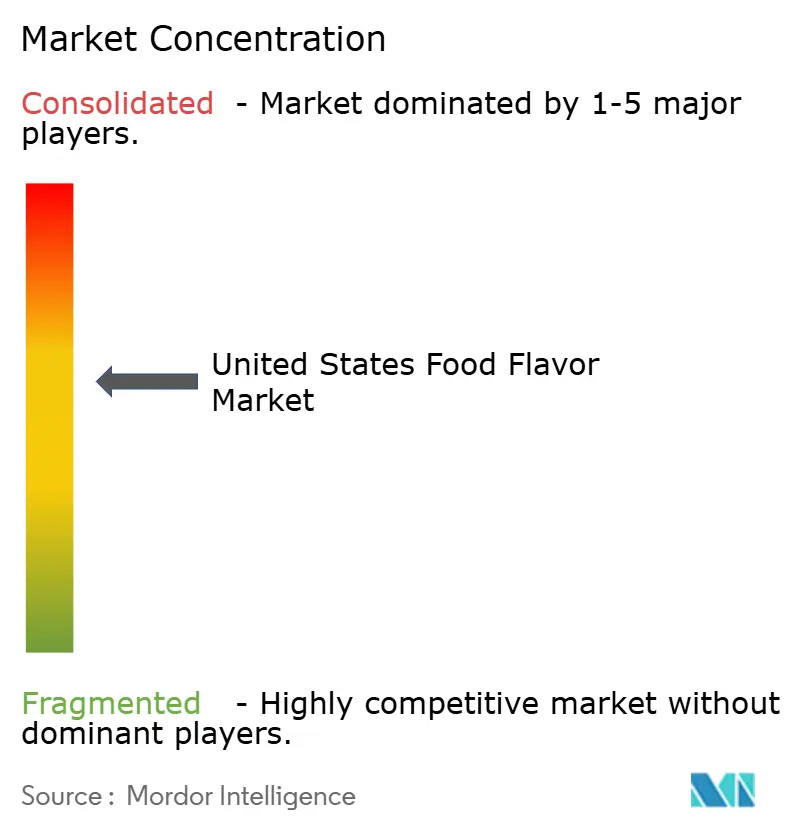
| Market Concentration | Medium |
Major Players *Disclaimer: Major Players sorted in no particular order Image © Mordor Intelligence. Reuse requires attribution under CC BY 4.0. | |
United States Food Flavor Market Analysis by Mordor Intelligence
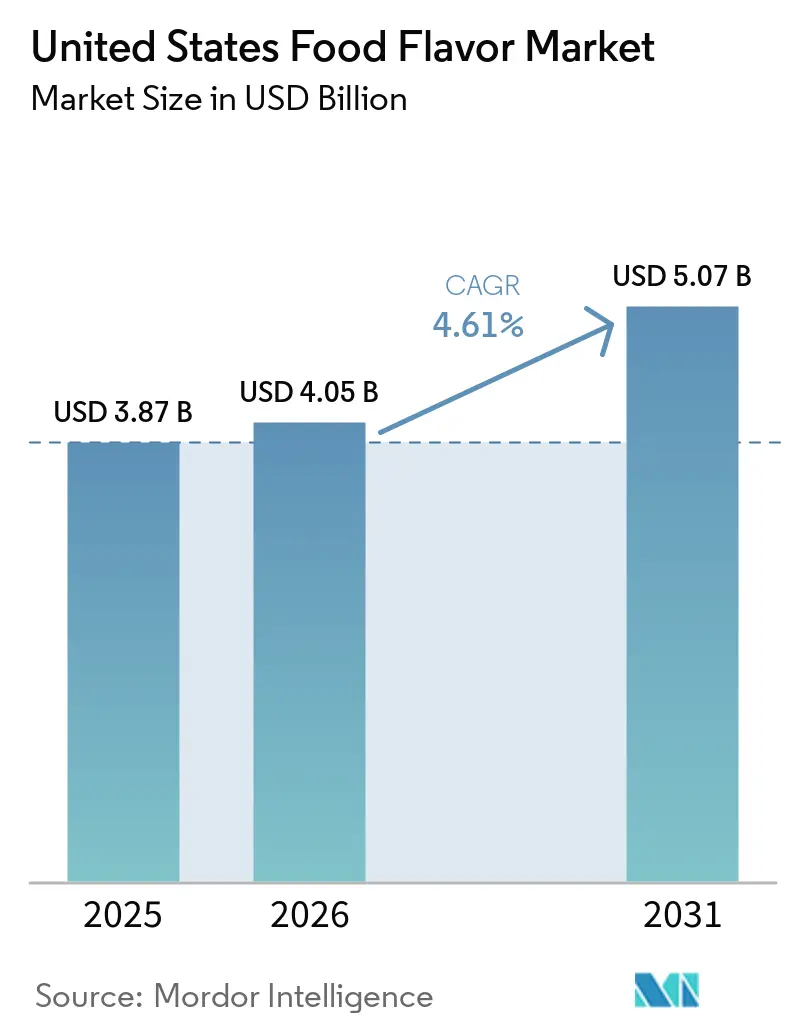
The United States Food Flavor Market was valued at USD 3.87 billion in 2025 and is estimated to grow from USD 4.05 billion in 2026 to reach USD 5.07 billion by 2031, registering a CAGR of 4.61% during 2026–2031. Market growth is supported by increasing demand for differentiated taste experiences, continuous innovation in food formulation, and the growing importance of flavor in maintaining product appeal across changing consumer preferences. The expansion of clean-label product development is driving interest in naturally derived flavor ingredients, botanical extracts, and customized flavor systems that align with consumer preferences while delivering the required sensory characteristics.
Key Report Takeaways
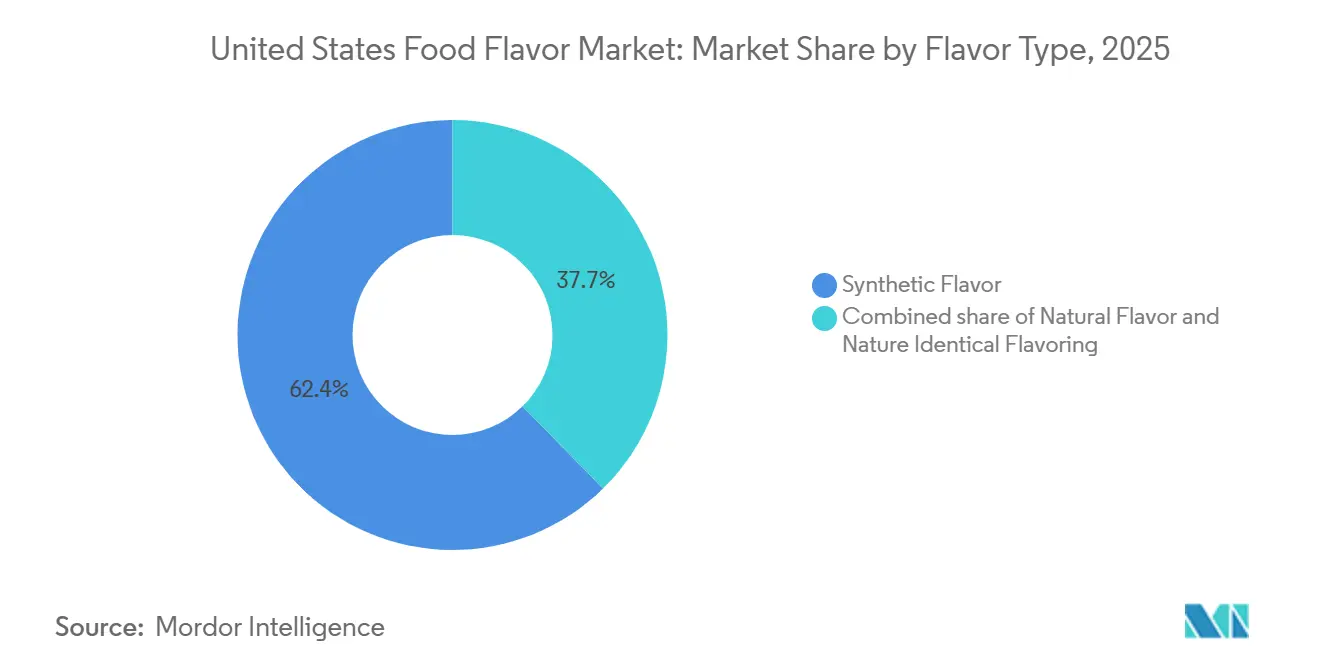
- By flavor type, synthetic flavors held 62.35% of the United States food flavor market in 2025, while natural flavors are projected to grow at a 5.81% CAGR through 2031.
- By form, liquid flavors accounted for 59.87% of the United States food flavor market in 2025, while powder flavors are forecast to advance at a 5.66% CAGR through 2031.
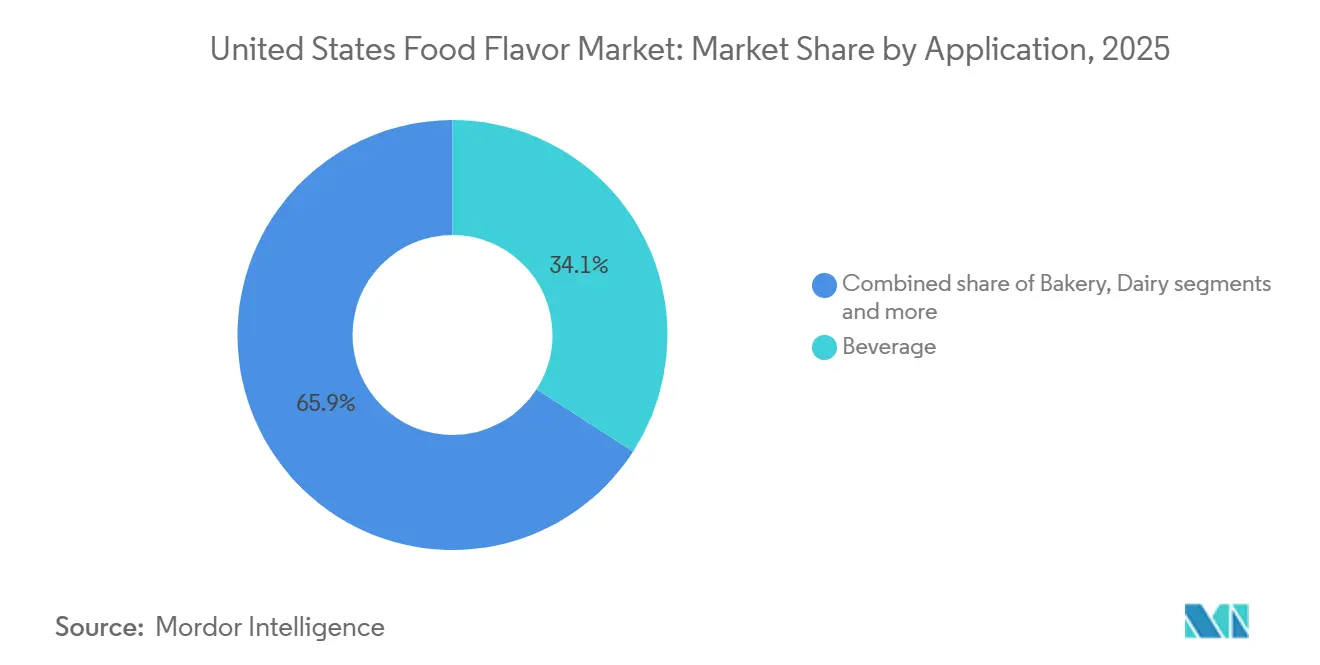
- By application, beverages represented 34.12% of the United States food flavor market in 2025 and are expected to register the fastest growth at a 6.34% CAGR through 2031.
Note: Market size and forecast figures in this report are generated using Mordor Intelligence’s proprietary estimation framework, updated with the latest available data and insights as of January 2026.
United States Food Flavor Market Trends and Insights
Drivers Impact Analysis*
| Driver | (~) % Impact on CAGR Forecast | Geographic Relevance | Impact Timeline |
|---|---|---|---|
| Growing demand for clean-label food products | +1.2% | National, with early concentration in West and Northeast | Short-term (≤ 2 years) |
| Increasing popularity of plant-based food products | +0.9% | National; West and South lead in purchasing scale | Medium-term (2-4 years) |
| Innovation in reduced-sugar and sugar-free products | +0.7% | National, with innovation clusters in Northeast and Midwest | Medium-term (2-4 years) |
| Demand for premium and novel flavor experiences | +0.5% | West and Northeast primarily; expanding to urban South | Short-term (≤ 2 years) |
| Precision fermentation and biotechnology-enabled flavor development | +0.6% | National, with Research and Development hubs in California, Illinois, and Northeast | Long-term (≥ 4 years) |
| Expansion of ready-to-eat and convenience foods | +0.4% | National, with volume concentration in South and Midwest | Short-term (≤ 2 years) |
| Source: Mordor Intelligence | |||
Growing Demand for Clean-Label Food Products
Growing demand for clean-label food products is encouraging manufacturers to prioritize ingredient transparency, recognizable ingredients, and formulations that align with consumer expectations around food quality and processing. According to the National Sanitation Foundation (NSF) 2025 survey, 79% of United States consumers checked ingredient lists when reading food labels before making a purchase[1]. This interest in ingredient information is prompting food manufacturers to reassess flavor formulations and consider natural flavoring ingredients, simpler ingredient declarations, and alternatives to certain artificial additives. These trends are supporting demand for clean-label flavor solutions that help manufacturers maintain taste, aroma, and product consistency while meeting evolving consumer expectations.
Increasing Popularity of Plant-Based Food Products
The growing popularity of plant-based food products is driving demand for specialized flavor solutions that improve taste, aroma, and overall sensory appeal. As manufacturers expand their portfolios of plant-based meat alternatives, dairy-free beverages, cheese alternatives, and vegan prepared foods, they require flavors that replicate familiar animal-based products while masking undesirable earthy, bitter, or beany notes associated with plant proteins. For instance, according to the Plant Based Foods Association (PBFA), 60% of United States households purchased plant-based foods in 2025, highlighting the broad reach of the category[2]. This growing consumer adoption is encouraging manufacturers to develop more authentic savory, meaty, creamy, and dairy-like flavor profiles, supporting demand for flavor formulations tailored to plant-based products.
Innovation in Reduced-Sugar and Sugar-Free Products
Innovation in reduced-sugar and sugar-free products is driving demand for advanced flavor solutions that maintain sweetness, taste balance, and overall sensory appeal despite lower sugar content. As manufacturers reformulate food and beverage products using alternative sweeteners, they increasingly rely on flavor modulators and complementary flavor compounds to minimize bitter, metallic, or lingering aftertastes associated with sugar substitutes. These solutions help preserve desirable flavor intensity and mouthfeel while supporting product reformulation across beverages, confectionery, dairy products, and packaged snacks. Ongoing innovation in sweetness enhancement and flavor masking is further encouraging the development of customized flavor systems that enable manufacturers to reduce sugar content without significantly compromising consumer acceptance.
Demand for Premium and Novel Flavor Experiences
Growing demand for premium and novel flavor experiences is encouraging food and beverage manufacturers to introduce distinctive taste combinations that differentiate their products and attract consumers seeking new sensory experiences. Interest in exotic fruits, botanical ingredients, spicy-sweet combinations, global cuisine-inspired profiles, and limited-edition flavors is expanding opportunities for flavor development across packaged foods, beverages, confectionery, and snacks. Manufacturers are increasingly experimenting with layered flavor profiles that combine contrasting tastes, aromas, and sensations to create more sophisticated product experiences. The popularity of seasonal launches, artisanal-inspired products, and premium formulations further supports demand for customized flavor solutions that deliver distinctive sensory characteristics, strengthen product differentiation, and encourage repeat purchases.
Restraints Impact Analysis*
| Restraint | (~) % Impact on CAGR Forecast | Geographic Relevance | Impact Timeline |
|---|---|---|---|
| Stringent regulatory requirements for flavor ingredients | -0.5% | National | Medium-term (2-4 years) |
| Volatility in natural flavor ingredient availability | -0.4% | National (supply-side global inputs) | Short-term (≤ 2 years) |
| Flavor instability during food processing and storage | -0.3% | National | Short-term (≤ 2 years) |
| Supply chain disruptions for specialty flavor ingredients | -0.3% | National, with import dependencies from Asia and Europe | Short-term (≤ 2 years) |
| Source: Mordor Intelligence | |||
Stringent Regulatory Requirements for Flavor Ingredients
Stringent regulatory requirements for flavor ingredients restrain the United States Food Flavor Market by increasing compliance costs, extending product development timelines, and limiting the use of certain ingredients in food formulations. The Food and Drug Administration (FDA) oversees food additive authorizations, safety requirements, and ingredient labeling, requiring manufacturers to ensure that flavoring substances meet relevant regulatory standards. Restrictions on specific flavoring substances can necessitate reformulation, additional safety assessments, supplier verification, and product label revisions. These requirements create technical and operational challenges for flavor manufacturers, particularly when replacing established ingredients with suitable alternatives while maintaining the desired taste, aroma, stability, and consistency.
Volatility in Natural Flavor Ingredient Availability
Volatility in natural flavor ingredient availability restrains the United States food flavor market by exposing manufacturers to fluctuations in the supply, quality, and pricing of agricultural raw materials used to produce natural flavoring substances. Ingredients derived from fruits, herbs, spices, flowers, and other botanical sources are susceptible to seasonal variations, adverse weather conditions, crop diseases, and changing harvest yields, which can disrupt procurement and production schedules. Variations in the chemical composition and sensory characteristics of natural raw materials can also make it difficult to maintain consistent flavor profiles across batches. Manufacturers may need to qualify alternative suppliers, adjust formulations, or invest in additional quality testing to manage these uncertainties. Such challenges increase sourcing complexity, complicate inventory planning, and can make natural flavor production less predictable than formulations based on more standardized ingredients.
*Our forecasts treat driver/restraint impacts as directional, not additive. The impact forecasts reflect baseline growth, mix effects, and variable interactions.
Segment Analysis
By Flavor Type: Synthetic Dominance Masks a Structural Shift
Synthetic flavors held a 62.35% share of the United States food flavor market in 2025, supported by their ability to deliver consistent taste profiles, predictable flavor intensity, and reliable performance across repeated production batches. Their chemically defined compositions allow manufacturers to reproduce specific flavor characteristics with greater precision, reducing variations associated with differences in raw material quality and seasonal sourcing. Synthetic flavor compounds also offer formulation flexibility, enabling flavor developers to adjust aroma strength, taste balance, and sensory characteristics according to product specifications. Their compatibility with industrial processing conditions and suitability for standardized manufacturing processes further support their continued use, particularly when maintaining uniform product quality throughout production cycles is essential.
Natural flavors are the fastest-growing flavor type in the United States food flavor market, projected to register a CAGR of 5.81% during 2026–2031. Growth is supported by increasing consumer interest in natural ingredients and greater attention to food production and ingredient transparency. For instance, according to the International Food Information Council (IFIC), 41% of Americans looked for natural label claims when shopping for food and beverages in 2025, making it the most frequently sought food production claim[3]. This preference encourages food manufacturers to explore naturally derived flavoring ingredients to align product formulations with consumer expectations.
By Form: Liquid Entrenched as Powder Accelerates
Liquid flavors accounted for 59.87% of the United States Food Flavor Market in 2025, driven by their versatility, ease of blending, and efficient incorporation into food and beverage formulations. Their ability to disperse uniformly in liquid systems supports consistent flavor distribution and precise dosage control during manufacturing. Liquid formats also offer flexibility in adjusting flavor intensity and developing customized formulations, enabling manufacturers to maintain consistent sensory characteristics across production batches. Their compatibility with automated dosing and mixing systems helps streamline processing operations, while the availability of water-soluble and oil-soluble variants allows flavor developers to address different formulation requirements. These functional advantages support the widespread use of liquid flavors in industrial food production, sustaining their dominant market share.
Powder flavors are the fastest-growing form, projected to register a CAGR of 5.66% during 2026–2031. Growth is driven by their longer shelf life, ease of storage, and suitability for dry-blend formulations. Their low moisture content improves handling and reduces the risk of deterioration associated with moisture-sensitive ingredients, while their concentrated format enables convenient transportation, accurate dosing, and consistent blending during manufacturing. Powder flavors also offer formulation flexibility for products requiring uniform flavor distribution without introducing additional liquid, making them suitable for dry mixes, seasoning blends, and powdered preparations. Advances in spray-drying and encapsulation technologies are further supporting flavor retention, oxidation protection, and controlled release, strengthening demand for powder formats among food manufacturers seeking stable, convenient, and process-compatible flavor solutions.
By Application: Beverages Lead Across Share and Growth
Beverages accounted for 34.12% of the United States Food Flavor Market in 2025 and are projected to be the fastest-growing application, registering a CAGR of 6.34% during 2026–2031. Growth is driven by continued beverage innovation and demand for differentiated taste profiles, including fruit-inspired, botanical, citrus, and exotic flavor combinations. The development of functional drinks, energy beverages, flavored water, ready-to-drink teas, and reduced-sugar beverages is increasing demand for flavor solutions that enhance palatability, balance sweetness, and mask undesirable notes from functional ingredients. Manufacturers are also introducing novel flavor combinations and reformulating existing beverages to meet evolving taste preferences and deliver consistent sensory experiences.
Bakery and confectionery products also support demand in the United States Food Flavor Market through continuous product innovation and the introduction of new taste experiences. Manufacturers are incorporating vanilla, chocolate, caramel, fruit, nut, and spice flavors into cakes, cookies, pastries, candies, chocolates, and chewing gum to enhance sensory appeal and differentiate product offerings. Demand for seasonal varieties, limited-edition products, and premium flavor combinations encourages the development of distinctive flavor profiles, while reformulation initiatives involving reduced sugar and alternative ingredients increase the need for flavors that preserve taste balance and aroma. The need for flavor stability during baking, processing, and storage further supports the use of specialized flavoring solutions that maintain product consistency and consumer acceptance.

Geography Analysis
The West region supports premium and innovation-oriented demand in the United States Food Flavor Market, driven by consumer interest in health-conscious food choices, organic products, and ingredient transparency. California, Oregon, and Colorado provide conditions favorable to natural ingredient development, food innovation, and the adoption of clean-label formulations. The region's culturally diverse consumer base drives demand for authentic international flavors, botanical notes, fruit-based profiles, and distinctive taste combinations. Growing interest in plant-based foods, functional beverages, and products with recognizable ingredients further supports the development of specialized flavor solutions, while food formulation innovation creates opportunities for natural and customized flavor systems.
The South region represents a major demand center for food flavors, supported by extensive food processing activities and established manufacturing infrastructure. Texas, Florida, Georgia, and North Carolina contribute to demand through food and beverage production, including packaged foods, beverages, sauces, snacks, and confectionery. The region's varied culinary traditions and strong interest in barbecue, spicy, smoky, citrus, and other distinctive taste profiles drive the use of diverse flavor ingredients. Manufacturers also require consistent, scalable flavor formulations that can withstand industrial processing and maintain sensory quality across large production volumes. Continued development of packaged food products, convenience meals, and ready-to-drink beverages supports demand for versatile flavor solutions across the region.
The Northeast region is characterized by sophisticated urban consumer preferences and demand for differentiated, premium, and internationally inspired food products. Markets such as New York, Boston, and Philadelphia support interest in global cuisines, specialty foods, premium confectionery, innovative beverages, and plant-based alternatives. Consumer attention to ingredient transparency, reduced-sugar formulations, and natural product positioning encourages manufacturers to explore botanical extracts, fruit-derived flavors, and customized flavor combinations. The region's established food innovation ecosystem and diverse culinary influences also promote experimentation with emerging taste profiles and reformulated products. These trends sustain demand for flavor solutions that deliver distinctive sensory experiences while meeting evolving expectations for product quality and ingredient composition.
Competitive Landscape
The United States food flavor market is moderately consolidated, with major players such as Givaudan S.A., International Flavors & Fragrances Inc. (IFF), Symrise AG, Archer Daniels Midland Company (ADM), and Sensient Technologies Corporation competing through broad flavor portfolios, research and development capabilities, customer relationships, and established supply networks. These companies serve food and beverage manufacturers across multiple applications, including dairy, bakery, confectionery, savory snacks, meat products, and beverages. Their competitive positioning depends on their ability to deliver consistent flavor profiles, meet customer-specific formulation requirements, maintain product quality, and respond to changing consumer preferences.
Competition is increasingly shaped by product innovation, natural flavor development, and customized flavor solutions. Manufacturers are investing in natural and nature-identical flavor systems, ingredient combinations, and application-specific formulations to help food and beverage companies achieve targeted taste profiles while addressing clean-label expectations and ingredient preferences. The ability to balance flavor performance, stability, regulatory compliance, and cost is an important differentiator, particularly as customers seek solutions that can be integrated into existing production processes without compromising product consistency.
Technology is emerging as another competitive differentiator, particularly through AI-accelerated flavor design and biotechnology-enabled natural flavor production. AI-assisted platforms can help companies analyze consumer preferences, predict sensory characteristics, and accelerate formulation development, while precision fermentation and related biotechnologies offer opportunities to produce selected flavor compounds more efficiently and support alternative sourcing strategies. Symrise expanded its Symvision AI platform in November 2025 to include AI-assisted formulation prediction. These capabilities may strengthen product differentiation, shorten development cycles, and improve the ability of established manufacturers to meet evolving customer requirements.
United States Food Flavor Industry Leaders
-
Givaudan S.A.
-
International Flavors & Fragrances Inc.
-
Symrise AG
-
Archer Daniels Midland Company
-
Sensient Technologies Corporation
- *Disclaimer: Major Players sorted in no particular order
Recent Industry Developments
- September 2026: C.H. Guenther & Son LLC acquired House-Autry Mills, Inc., a manufacturer of branded and custom dry mix flavor solutions for foodservice, retail, and private label customers.
- July 2026: Solina acquired Epicurean Butter, a Denver, Colorado-based developer of flavored compound butters and customized flavor solutions. Epicurean Butter serves food manufacturers, foodservice operators, and retailers across the United States. The acquisition expanded Solina's dairy flavor capabilities and its presence across retail and foodservice channels.
- July 2025: Warburg Pincus agreed to acquire FlavorSum, a North American flavor solutions provider with nearly 100,000 sq. ft. of manufacturing space and a dedicated innovation center, from The Riverside Company.
United States Food Flavor Market Report Scope
Flavor is the sensory impression of a food or other substance and is determined mainly by the chemical senses of taste and smell. The United States Food Flavor Market is segmented by flavor type, form, and application. Based on flavor type, the market is segmented into natural flavor, synthetic flavor, and nature-identical flavoring. Based on form, the market is segmented into powder, liquid, and others. Based on application, the market is segmented into dairy, bakery, confectionery, savory snack, meat, beverage, and other applications. For each segment, the market sizing and forecast have been done based on value (in USD).
By Flavor Type
| Natural Flavor |
| Synthetic Flavor |
| Nature Identical Flavoring |
By Form
| Powder |
| Liquid |
| Others |
By Application
| Dairy |
| Bakery |
| Confectionery |
| Savory Snack |
| Meat |
| Beverage |
| Other Applications |
| By Flavor Type | Natural Flavor |
| Synthetic Flavor | |
| Nature Identical Flavoring | |
| By Form | Powder |
| Liquid | |
| Others | |
| By Application | Dairy |
| Bakery | |
| Confectionery | |
| Savory Snack | |
| Meat | |
| Beverage | |
| Other Applications |
Key Questions Answered in the Report
What is the size of the United States food flavor market?
The United States food flavor market is valued at USD 4.05 billion in 2026 and is projected to reach USD 5.07 billion by 2031, growing at a CAGR of 4.61%.
Which flavor type holds the largest share in the United States food flavor market?
Synthetic flavors lead the market with a 62.35% share in 2025. Their position reflects cost predictability, formulation consistency, and thermal stability in large-scale food processing.
Which flavor type is growing the fastest in the United States?
Natural flavors are the fastest-growing flavor type, with a projected CAGR of 5.81% through 2031. Clean-label purchasing requirements and clearer ingredient labeling support this demand.
Which flavor form is most widely used in food manufacturing?
Liquid flavors account for 59.87% of the market in 2025. They remain widely used in beverage, dairy, confectionery, and other liquid-phase manufacturing applications.