
United States Melanoma Diagnostics and Therapeutics Market Size and Share
Market Overview
| Study Period | 2020 - 2031 |
|---|---|
| Forecast Data Period | 2026 - 2031 |
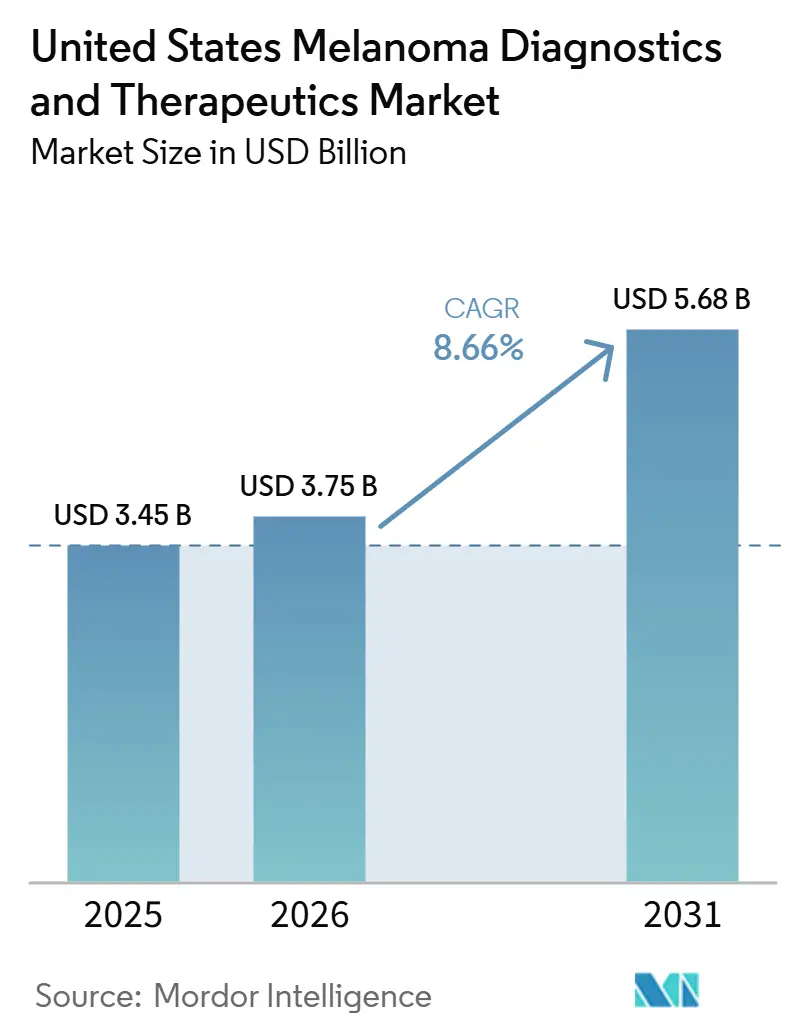
| Base Year Market Size (2025) | USD 3.45 Billion |
| Market Size (2026) | USD 3.75 Billion |
| Market Size (2031) | USD 5.68 Billion |
| Growth Rate (2026 - 2031) | 8.66 % |
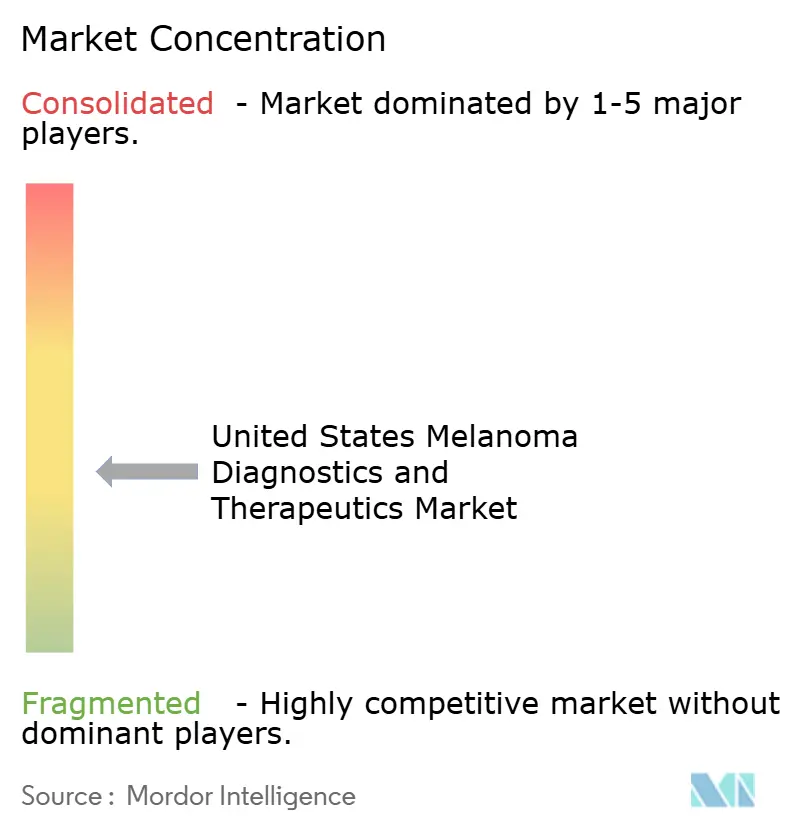
| Market Concentration | Medium |
Major Players *Disclaimer: Major Players sorted in no particular order Image © Mordor Intelligence. Reuse requires attribution under CC BY 4.0. | |
United States Melanoma Diagnostics and Therapeutics Market Analysis by Mordor Intelligence
The United States Melanoma Diagnostics and Therapeutics Market size was valued at USD 3.45 billion in 2025 and is estimated to grow from USD 3.75 billion in 2026 to reach USD 5.68 billion by 2031, at a CAGR of 8.66% during the forecast period (2026-2031). The market is moving higher because national case volumes remain elevated, with the American Cancer Society estimating 212,200 new melanoma cases in 2025 and the National Cancer Institute noting that new cases remain substantial in 2026. Mortality has been improving, yet the treated population continues to expand because incidence remains high and earlier diagnosis brings more patients into biopsy, staging, and follow-up pathways. The care pathway is also shifting because checkpoint inhibitors, targeted therapy combinations, and the first approved cellular therapy for metastatic melanoma are extending treatment duration and widening the clinical role of specialist centers. Diagnostic activity is strengthening as explainable AI tools and multimodal dermatology models improve lesion assessment and support earlier confirmation of suspicious cases in routine practice. Cost pressure and payer authorization rules still slow uptake for advanced regimens, but the Medicare Part D out-of-pocket cap and newer subcutaneous oncology formulations support broader use across outpatient settings.
Key Report Takeaways
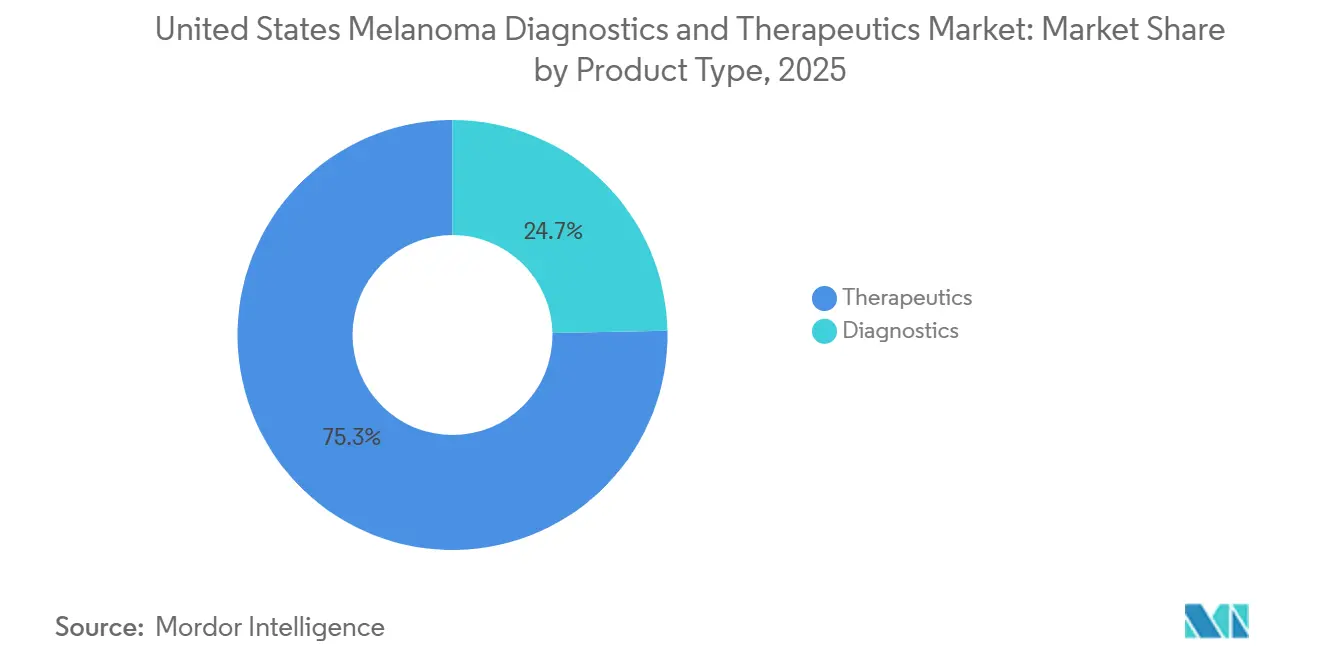
- By product type, therapeutics held 75.31% of revenue in 2025 and therapeutics are also projected to grow at the fastest 9.38% CAGR through 2031.
- By stage of disease, localized melanoma accounted for 48.24% of revenue in 2025, while distant-stage disease is forecast to expand at a 10.52% CAGR through 2031.
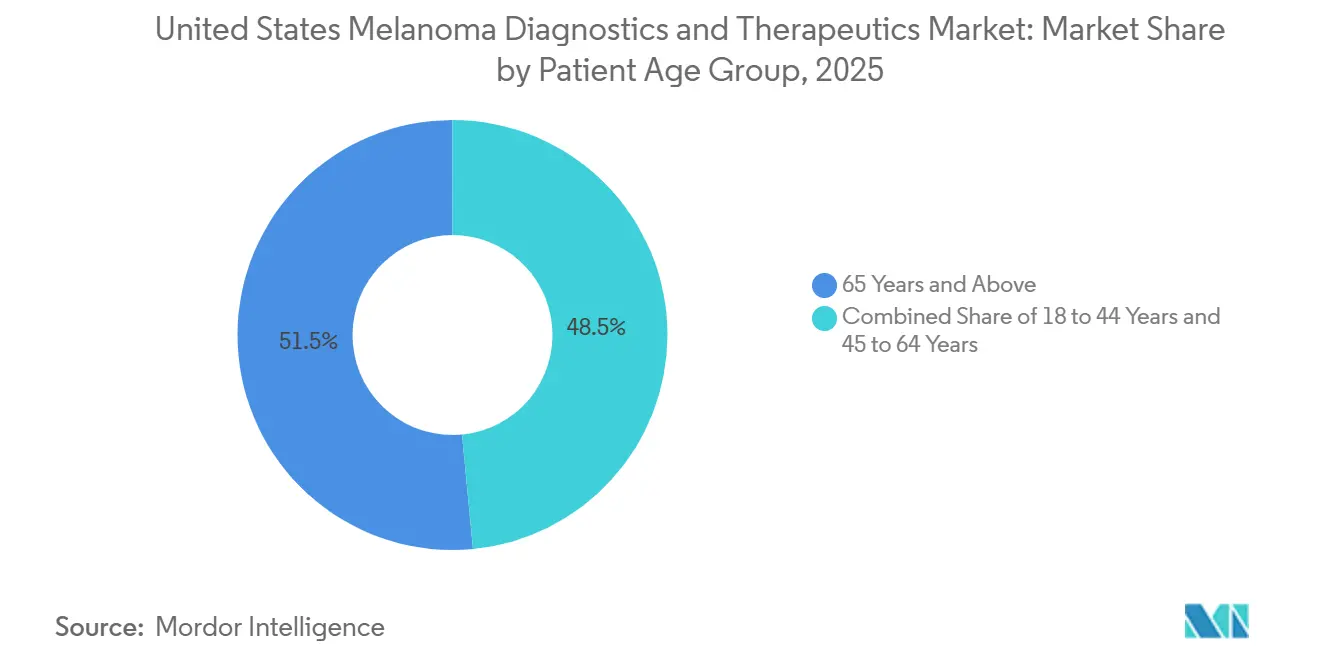
- By patient age group, patients aged 65 years and above held 51.52% of revenue in 2025, while the 18-44 age group is projected to advance at a 9.25% CAGR through 2031.
- By end user, hospitals and clinics commanded 44.42% of revenue in 2025, while cancer specialty centers are projected to rise at a 9.55% CAGR through 2031.
Note: Market size and forecast figures in this report are generated using Mordor Intelligence’s proprietary estimation framework, updated with the latest available data and insights as of January 2026.
United States Melanoma Diagnostics and Therapeutics Market Trends and Insights
Drivers Impact Analysis*
| Driver | (~) % Impact on CAGR Forecast | Geographic Relevance | Impact Timeline |
|---|---|---|---|
| Rising Melanoma Incidence and Earlier Case Identification | +2.5% | National, with concentrated burden in Mountain West states and rising rates across Sun Belt states | Short term (≤ 2 years) |
| Adoption of Immunotherapy and Targeted Therapy | +2.8% | National, concentrated in NCI-designated comprehensive cancer centers and academic medical centers | Medium term (2-4 years) |
| Expansion of Molecular and AI-Assisted Diagnostic Workflows | +1.5% | National, with early adoption in the West Coast, Northeast, and major urban hospital networks | Medium term (2-4 years) |
| Regulatory Momentum for Novel Oncology Modalities | +1.2% | National | Medium term (2-4 years) |
| Decentralized Biopsy and Laboratory Testing Pathways | +0.8% | National, with material gains in underserved Midwest and rural Southern states | Long term (≥ 4 years) |
| Source: Mordor Intelligence | |||
Adoption of Immunotherapy and Targeted Therapy
The United States Melanoma Diagnostics and Therapeutics Market is being shaped by deeper use of checkpoint inhibitors and targeted therapy combinations across advanced and adjuvant care settings. The FDA approval of nivolumab and hyaluronidase-nvhy in December 2024 added a subcutaneous option that reduces infusion dependence and supports more outpatient administration. BRAF and MEK inhibitor combinations remain important for mutation-positive patients and continue to support targeted use alongside broader PD-1-based therapy pathways. As survival lengthens, a larger chronic-treatment cohort remains in care longer, which increases repeat prescribing, monitoring, and specialist center activity.
Expansion of Molecular and AI-Assisted Diagnostic Workflows
The United States Melanoma Diagnostics and Therapeutics Market is also advancing because diagnostic workflows are becoming more accurate and more scalable. A 2025 study in Nature Communications found that explainable AI improved dermatologist balanced diagnostic accuracy to 82.7% from 79.9% with standard AI, with performance gains seen across experience levels. A separate 2025 Nature Medicine study reported that the PanDerm model outperformed 12 clinicians in early-stage melanoma detection by 10.2% and identified 77.5% of melanomas at first imaging compared with 32.6% for clinicians without AI support. Molecular monitoring is also improving because tumour-informed ctDNA approaches are showing reliable value in predicting immune checkpoint inhibitor response and spotting relapse earlier in advanced disease. These workflow gains raise confirmed biopsy and staging volumes because more clinically uncertain lesions move into formal diagnostic review before treatment decisions are made.
Regulatory Momentum for Novel Oncology Modalities
The United States Melanoma Diagnostics and Therapeutics Market is seeing faster product movement because regulators have been more active in novel melanoma modalities. The FDA accelerated approval of lifileucel in February 2024 introduced the first cellular therapy approved for any solid tumor and added a new treatment class for unresectable or metastatic melanoma. The FDA also approved a subcutaneous nivolumab formulation in December 2024, which shows continued support for changes that improve delivery and site-of-care flexibility. These actions shorten the path from clinical development to commercial use and support faster adoption inside large hospital-based oncology systems. The same regulatory momentum also raises the value of sites that can manage cellular therapy logistics, toxicity monitoring, and companion diagnostic requirements in a compliant setting.
Rising Melanoma Incidence and Earlier Case Identification
The United States Melanoma Diagnostics and Therapeutics Market continues to benefit from a rising disease burden that supports durable demand across diagnosis and treatment. The American Cancer Society reported 104,960 new invasive melanoma cases in 2025, and the broader 2025 total reached 212,200 when in situ cases were included[1]. The median age at diagnosis remained 67 years, which means demographic aging continues to widen the treated patient pool in the United States. Earlier diagnosis is also supporting demand because 77% of diagnosed cases are localized, and that creates consistent volumes for dermoscopy, biopsy confirmation, and follow-up staging work. Surveillance programs and state-level tracking of risk factors are directing screening resources toward high-burden areas, which supports faster case finding in the near term.
Restraints Impact Analysis*
| Restraint | (~) % Impact on CAGR Forecast | Geographic Relevance | Impact Timeline |
|---|---|---|---|
| High Total Cost of Advanced Therapy Courses | -0.8% | National, disproportionate in states with lower Medicaid expansion and higher uninsured rates | Medium term (2-4 years) |
| Prior Authorization and Reimbursement Friction | -0.6% | National, elevated friction in non-NCI-designated regional centers and rural Midwest and Southern markets | Medium term (2-4 years) |
| Toxicity Monitoring and Treatment Discontinuation Risk | -0.5% | National, with greater exposure in community oncology settings lacking dedicated irAE infrastructure | Long term (≥ 4 years) |
| Source: Mordor Intelligence | |||
High Total Cost of Advanced Therapy Courses
The United States Melanoma Diagnostics and Therapeutics Market still faces a clear growth limit from the cost of advanced oncology care. A 2024 JMCP study reported that total direct melanoma care expenditure in the United States reached USD 13.55 billion annually, which shows how large the spending base already is before wider use of newer modalities. The same study found that prescription medicines represented 18.27% of per-patient costs, and that share is likely to rise as biologics and cellular therapies move further into care pathways[2]. Broader U.S. anticancer therapy spending was USD 99 billion in 2023 and is projected to reach USD 180 billion by 2028, which keeps payer pressure high across oncology formularies. The Medicare Part D out-of-pocket cap of USD 2,000 helps patient affordability from 2025 onward, but it does not remove the budget pressure hospitals and payers face when high-cost biologics and cellular therapies scale further.
Prior Authorization and Reimbursement Friction
The United States Melanoma Diagnostics and Therapeutics Market is also restrained by administrative barriers that delay treatment starts and complicate care continuity. Major commercial plans such as Cigna and UnitedHealthcare require prior authorization for melanoma targeted therapies and immunotherapies, with approval windows that often run for 6 to 12 months and require reauthorization when treatment continues. Cigna also applies a 6-month authorization window for lifileucel, which reflects the added complexity of manufacturing, hospital coordination, and administration for cellular therapy. A 2025 systematic review and meta-analysis in Frontiers in Immunology found 1-year progression-free survival of 79% for patients who discontinued immune checkpoint inhibitors for reasons other than elective discontinuation, versus 91% for those who stopped electively, which shows how disruption can matter clinically. The operational burden is highest outside major cancer centers because smaller sites have less dedicated support for payer documentation, toxicity management, and repeated reauthorization steps.
*Our forecasts treat driver/restraint impacts as directional, not additive. The impact forecasts reflect baseline growth, mix effects, and variable interactions.
Segment Analysis
By Product Type: Therapeutics Anchor Revenue as Diagnostics Diversify
Therapeutics accounted for 75.31% of the United States Melanoma Diagnostics and Therapeutics market size in 2025, which kept this category well ahead of diagnostics in revenue terms. That lead reflects the higher pricing of checkpoint inhibitors and BRAF and MEK combination regimens compared with diagnostic procedures and devices. Immunotherapy remained the largest therapeutic contributor because PD-1 based regimens continue to define standard care across multiple melanoma settings. Targeted therapy also holds an important role because BRAF V600 mutations are present in a large share of advanced cutaneous melanoma cases, which sustains demand for mutation-linked treatment pathways. The therapeutics side of the United States Melanoma Diagnostics and Therapeutics industry is projected to advance at a 9.38% CAGR through 2031 as the treated pool broadens and cell therapy adds another option for advanced disease.
Diagnostics represented the remaining revenue base and are rising with the spread of AI-supported lesion evaluation and more frequent molecular follow-up. Dermoscopy remains the primary front-end tool because it fits routine dermatology workflows and supports early lesion triage before biopsy confirmation. AI-enhanced systems now have stronger clinical backing, with PanDerm and explainable AI studies showing measurable gains in early-stage melanoma detection and balanced diagnostic accuracy. Biopsy devices and liquid biopsy tools are also gaining importance because more suspicious lesions and more advanced-stage patients are moving into formal confirmation, molecular staging, and treatment-response monitoring pathways.
By Stage of Disease: Localized Detection Supports Volume While Distant-Stage Care Expands Faster
Localized melanoma accounted for 48.24% of revenue in 2025, and that made it the largest stage segment in the United States Melanoma Diagnostics and Therapeutics Market. This position aligns with SEER data showing that 77% of diagnosed melanoma cases are localized and that the 5-year survival rate for localized disease is 100%. High localized case volumes support steady demand for skin examination, dermoscopy, excision, pathology review, and selected adjuvant management after surgery. Regional-stage disease also contributes meaningful treatment value because adjuvant PD-1 therapy and combination regimens are active in resected higher-risk disease. Published RELATIVITY-098 results further support ongoing use of nivolumab plus relatlimab in the adjuvant setting for resected Stage III and IV melanoma.
Distant-stage disease is projected to grow at a 10.52% CAGR through 2031, which makes it the fastest-rising stage segment in the United States Melanoma Diagnostics and Therapeutics Market. Growth at this stage is being supported by a steady flow of higher-intensity regimens, longer follow-up windows, and the addition of cellular therapy after prior lines of care. The FDA approval of lifileucel in 2024 expanded treatment options for unresectable or metastatic melanoma and added a new revenue stream tied to complex specialist delivery.
By Patient Age Group: Older Patients Hold the Largest Share While Younger Adults Rise Faster
Patients aged 65 years and above held 51.52% of the United States Melanoma Diagnostics and Therapeutics market share in 2025, which made this the largest age cohort by revenue. The segment reflects the age profile of the disease because the median diagnosis age is 67 years in current SEER reporting. Older patients also account for heavier spending because melanoma care in this group often involves more complex staging, multiple treatment lines, and stronger dependence on hospital-based oncology support. Medicare plays a central role here, accounting for 42.61% of payer-paid melanoma care costs nationally, which gives federal reimbursement policy strong influence over future segment economics. The 45-64 age group remains the main secondary pool because it represents a sizable share of incident cases and typically has broader commercial insurance access than younger adults.
The 18-44 age group is projected to grow at a 9.25% CAGR through 2031, which makes it the fastest-expanding age segment in the United States Melanoma Diagnostics and Therapeutics Market. Data published in 2026 showed melanoma mortality in U.S. adults aged 20-44 fell from 0.99 to 0.47 deaths per 100,000 between 1999 and 2023, which points to better detection and treatment in younger populations. At the same time, melanoma remains a meaningful concern in younger adults, and among women under 50 it ranks as the third most common cancer in those aged 20-39. This younger cohort carries longer expected survival after diagnosis, which raises lifetime follow-up, surveillance, and adjuvant treatment value across the care pathway.

By End User: Hospitals Keep the Broadest Base While Specialty Centers Capture the Fastest Growth
Hospitals and clinics accounted for 44.42% of revenue in 2025, which made them the largest end-user group in the United States Melanoma Diagnostics and Therapeutics Market. Their lead comes from stronger capacity for multidisciplinary oncology care, infusion services, pathology processing, surgery, and inpatient support when immune-related toxicity appears. Hospitals also remain the main delivery setting for complex regimens that involve several specialists, repeated monitoring, or high-acuity adverse event management. Cellular therapy has reinforced this advantage because lymphodepletion, administration, and post-treatment observation demand a higher level of coordination and clinical oversight. Hospital-affiliated laboratories also stay central to tissue diagnosis and molecular workflow integration after biopsy confirmation.
Cancer specialty centers are projected to grow at a 9.55% CAGR through 2031, which makes them the fastest-rising end-user setting in the United States Melanoma Diagnostics and Therapeutics Market. Their appeal comes from disease-focused outpatient models that can combine medical oncology, surgical oncology, advanced diagnostics, and long-term surveillance under one operating structure. New subcutaneous therapy options also support this shift because they reduce infusion burden and make some treatment delivery more flexible across outpatient environments. Ambulatory surgical centers, dermatology group practices, and telehealth triage platforms are also gaining relevance because they help absorb procedure volume and extend first-contact access outside large hospitals.
Geography Analysis
Western Mountain states carry some of the highest melanoma incidence levels in the country, and that gives the United States Melanoma Diagnostics and Therapeutics Market a clear regional demand center in the West. Arizona recorded 32.3 cases per 100,000 population in state-level incidence reporting, and Utah also ranks among the higher-burden states in national tracking. These markets generate strong per-capita diagnostic demand because a larger at-risk population moves through skin checks, biopsy confirmation, and oncology referral pathways. A 2026 BMC Public Health study found persistent incidence increases in 24 states, with the Mountain West and Sun Belt maintaining upward movement beyond isolated hotspot behavior. That pattern supports continued expansion of specialist dermatology and oncology services in the western United States.
Southern and Midwestern states present a different profile because rising incidence is paired with thinner specialist coverage in many local markets. A geotemporal analysis published in 2025 showed that 94% of Southern states and 83% of Midwestern states experienced rising melanoma incidence rates over the study period. The same work pointed to rural Southern clusters with higher rates of late-stage diagnosis, which raises therapeutic intensity once patients enter treatment. For the United States Melanoma Diagnostics and Therapeutics Market, this makes underserved Southern and Midwestern areas important for decentralized screening, teledermatology, and easier-to-deploy biopsy or monitoring tools. It also means companies with broader community access models can capture growth outside the traditional academic-center footprint.
The Northeast contributes outsized treatment revenue because it has a dense concentration of NCI-designated comprehensive cancer centers and referral hospitals. These sites manage advanced-stage, recurrent, and trial-eligible patients drawn from broad catchment areas, which lifts higher-value therapy activity relative to raw case counts. Regional performance is also shaped by access disparities, with reported 5-year survival of 70% for Black Americans versus 95% for White Americans in the United States. Those gaps remain most visible in urban Southern and Midwestern settings, and they create a continuing service and compliance challenge for health systems working under value-based payment models.
Competitive Landscape
The United States Melanoma Diagnostics and Therapeutics Market operates with a mixed competitive structure, with therapeutics concentrated among a few large oncology companies and diagnostics spread across several narrower technology categories. Bristol-Myers Squibb and Merck & Co. remain central to first-line immunotherapy competition through nivolumab-based and pembrolizumab-based regimens, while Novartis keeps a place in mutation-directed therapy through BRAF and MEK combinations. The therapeutic side remains competitive because survival gains in advanced melanoma have made product sequencing, formulation, and later-line positioning more important than broad market access alone. Updated RELATIVITY-047 data strengthened Bristol-Myers Squibb's position by showing 30.6% 4-year progression-free survival with nivolumab plus relatlimab versus 23.6% with nivolumab alone. This keeps combination immunotherapy a strong differentiator in advanced disease where durable control remains the main competitive measure.
A major competitive shift came from Iovance Biotherapeutics, because the FDA approval of lifileucel brought the first cellular therapy for a solid tumor into melanoma care. That move created a new class of competition centered on post-ICI-failure patients and favored providers with strong manufacturing coordination and inpatient support. Bristol-Myers Squibb also improved its delivery profile when the FDA approved subcutaneous nivolumab and hyaluronidase-nvhy in 2024, which can reduce infusion center dependence and support more flexible administration[3]. These actions show that the United States Melanoma Diagnostics and Therapeutics Market is no longer competing only on efficacy, because site of care, convenience, and operational readiness now matter more. Payer rules reinforce this dynamic because products that fit existing authorization and toxicity-management systems have a practical advantage in community deployment.
Diagnostics remain more fragmented, with competition split among dermoscopy tools, tissue biopsy workflows, gene-expression platforms, and emerging liquid biopsy providers. Workflow integration is becoming the main lever because labs and device makers that fit dermatologist and oncology routines can scale faster than point solutions with limited interoperability. Guardant Health strengthened its positioning in 2025 when its Shield multi-cancer detection test received FDA Breakthrough Device Designation and was selected by the National Cancer Institute for the Vanguard Study. As targeted care becomes more dependent on confirmed mutation status and structured monitoring, diagnostics companies that align closely with therapeutic decision points should gain a stronger commercial position across melanoma care pathways.
United States Melanoma Diagnostics and Therapeutics Industry Leaders
-
Amgen, Inc.
-
Bristol-Myers Squibb Company
-
F. Hoffman-La Roche Ltd.
-
Merck & Co., Inc.
-
GSK plc
- *Disclaimer: Major Players sorted in no particular order
Recent Industry Developments
- May 2026: Replimune Group Inc. worked with the U.S. Food and Drug Administration (FDA) and agreed on the next steps for resubmitting and reconsidering the Biologics License Application (BLA) for RP1 (vusolimogene oderparepvec), used in combination with nivolumab to treat advanced melanoma.
- April 2026: The FDA granted Fast Track designation to iSCIB1+, an investigational DNA plasmid cancer vaccine, for patients with advanced melanoma.
United States Melanoma Diagnostics and Therapeutics Market Report Scope
As per the scope of the report, Melanoma diagnostics involve detecting and confirming skin cancer through examinations, biopsies, and imaging. Therapeutics include treatments like immunotherapy, targeted drugs, and radiation to remove or control the cancer and improve patient outcomes.
The United States melanoma diagnostics and therapeutics market is segmented by product type, including diagnostics and therapeutics; diagnostics include dermatoscopy devices, biopsy devices, and other diagnostics; therapeutics include chemotherapy, targeted therapy, immunotherapy, and other therapeutics. The market is also segmented by stage of disease, including localized, regional, and distant; patient age group, including 18 to 44 years, 45 to 64 years, and 65 years and above; and end user, including hospitals and clinics, cancer specialty centers, ambulatory surgical centers, and other end users. For each segment, the market size and forecast are provided in terms of value (USD).
| Diagnostics | Dermatoscopy Devices |
| Biopsy Devices | |
| Other Diagnostics | |
| Therapeutics | Chemotherapy |
| Targeted Therapy | |
| Immunotherapy | |
| Other Therapeutics |
| Localized |
| Regional |
| Distant |
| 18 to 44 Years |
| 45 to 64 Years |
| 65 Years and Above |
| Hospitals and Clinics |
| Cancer Specialty Centers |
| Ambulatory Surgical Centers |
| Other End Users |
| By Product Type | Diagnostics | Dermatoscopy Devices |
| Biopsy Devices | ||
| Other Diagnostics | ||
| Therapeutics | Chemotherapy | |
| Targeted Therapy | ||
| Immunotherapy | ||
| Other Therapeutics | ||
| By Stage of Disease | Localized | |
| Regional | ||
| Distant | ||
| By Patient Age Group | 18 to 44 Years | |
| 45 to 64 Years | ||
| 65 Years and Above | ||
| By End User | Hospitals and Clinics | |
| Cancer Specialty Centers | ||
| Ambulatory Surgical Centers | ||
| Other End Users | ||
Key Questions Answered in the Report
What is the 2026 value of the United States melanoma diagnostics and therapeutics space?
The United States Melanoma Diagnostics and Therapeutics Market is valued at USD 3.75 billion in 2026 and is projected to reach USD 5.68 billion by 2031 at an 8.66% CAGR.
Which product area contributes the most revenue?
Therapeutics leads with 75.31% of revenue in 2025, supported by checkpoint inhibitors and targeted regimens used across advanced and adjuvant care.
Which disease stage is expanding the fastest through 2031?
Distant-stage melanoma is the fastest-growing stage with a 10.52% CAGR through 2031, helped by longer survival and new options such as cellular therapy.
Why are specialty cancer centers gaining ground?
Cancer specialty centers are projected to grow at a 9.55% CAGR through 2031 because they can coordinate diagnostics, treatment, monitoring, and outpatient oncology care in one setting.
What is the main barrier to faster uptake of advanced melanoma treatment?
Cost and reimbursement friction remain the main barriers, with high total oncology spending, prior authorization rules, and repeated reauthorization slowing access.
Which patient age group is rising the fastest?
The 18-44 age group is projected to grow at a 9.25% CAGR through 2031, reflecting sustained case concern in younger adults and longer follow-up value after diagnosis.