
United States Adhesion Barrier Market Size and Share
Market Overview
| Study Period | 2020 - 2031 |
|---|---|
| Forecast Data Period | 2026 - 2031 |
| Base Year Market Size (2025) | USD 292.69 Million |
| Market Size (2026) | USD 311.21 Million |
| Market Size (2031) | USD 435.43 Million |
| Growth Rate (2026 - 2031) | 6.95 % |
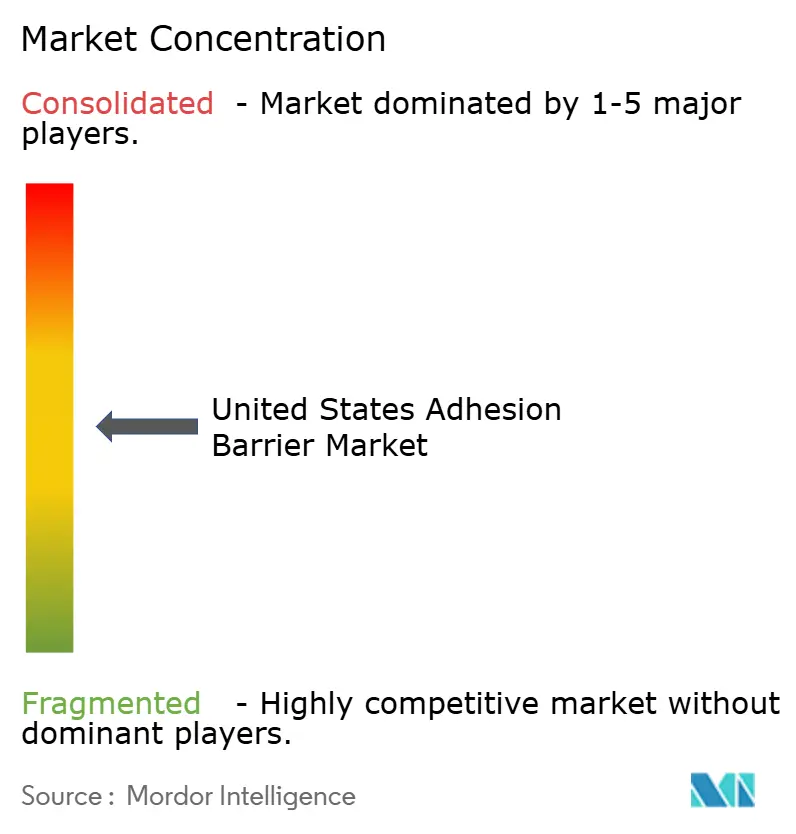
| Market Concentration | Medium |
Major Players *Disclaimer: Major Players sorted in no particular order Image © Mordor Intelligence. Reuse requires attribution under CC BY 4.0. | |
United States Adhesion Barrier Market Analysis by Mordor Intelligence
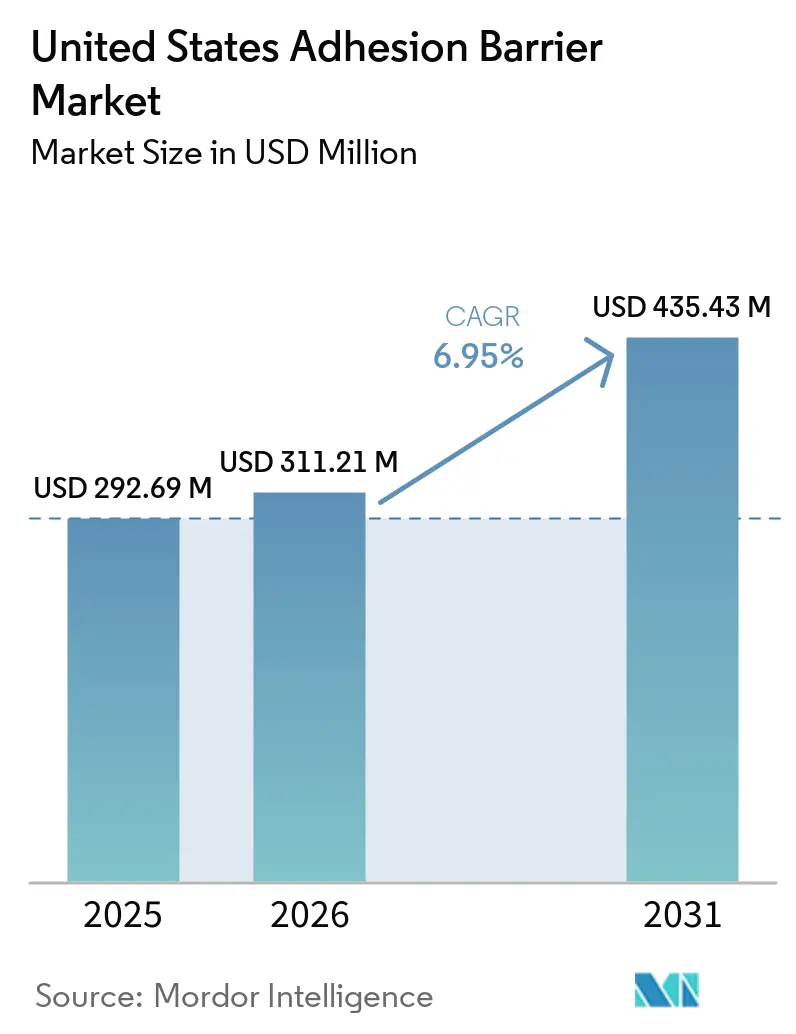
The United States Adhesion Barrier Market size is expected to grow from USD 292.69 million in 2025 to USD 311.21 million in 2026 and is forecast to reach USD 435.43 million by 2031 at 6.95% CAGR over 2026-2031.
Demand in the United States adhesion barrier market is supported by the rising volume of minimally invasive and robotic procedures, which is increasing the need for formats that fit laparoscopic and robotic workflows better than conventional films. The United States adhesion barrier market is also benefiting from stronger hospital awareness of adhesion-related readmissions and repeat care costs, especially as CMS payment models place more financial accountability on surgical outcomes. Product development is moving the United States adhesion barrier market toward bioresorbable, gel, and sprayable platforms, which are better aligned with spine, gynecological, and other procedures performed through smaller access points. The main limits on the United States adhesion barrier market remain uneven reimbursement across care settings, product cost sensitivity, and a continued preference among many surgeons for technique-only prevention. Even so, low recent surgeon usage shows that the United States adhesion barrier market still has a large adoption gap, which leaves meaningful room for revenue expansion if workflow friction and coverage barriers improve.
Key Report Takeaways
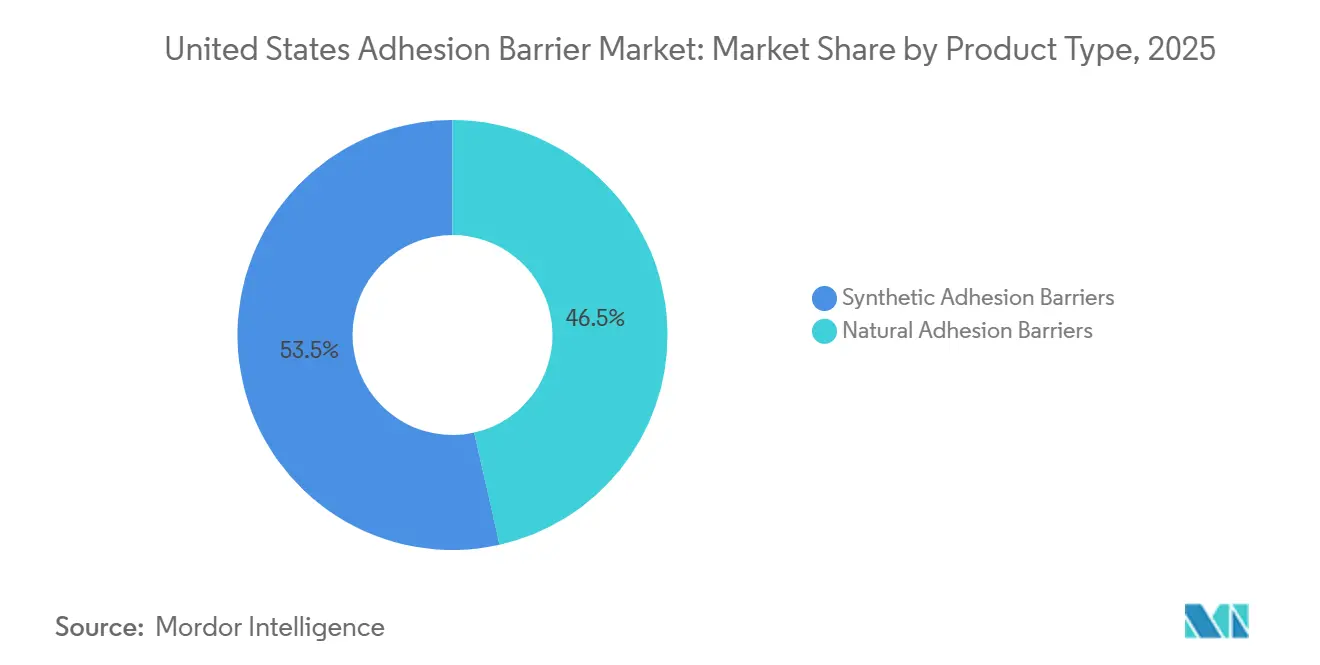
- By product type, synthetic barriers led with 53.48% share in 2025, while natural barriers are forecast to expand at a 7.36% CAGR through 2031.
- By formulation, film and mesh led with 44.17% share in 2025, while gel formats are forecast to grow at an 8.87% CAGR through 2031.
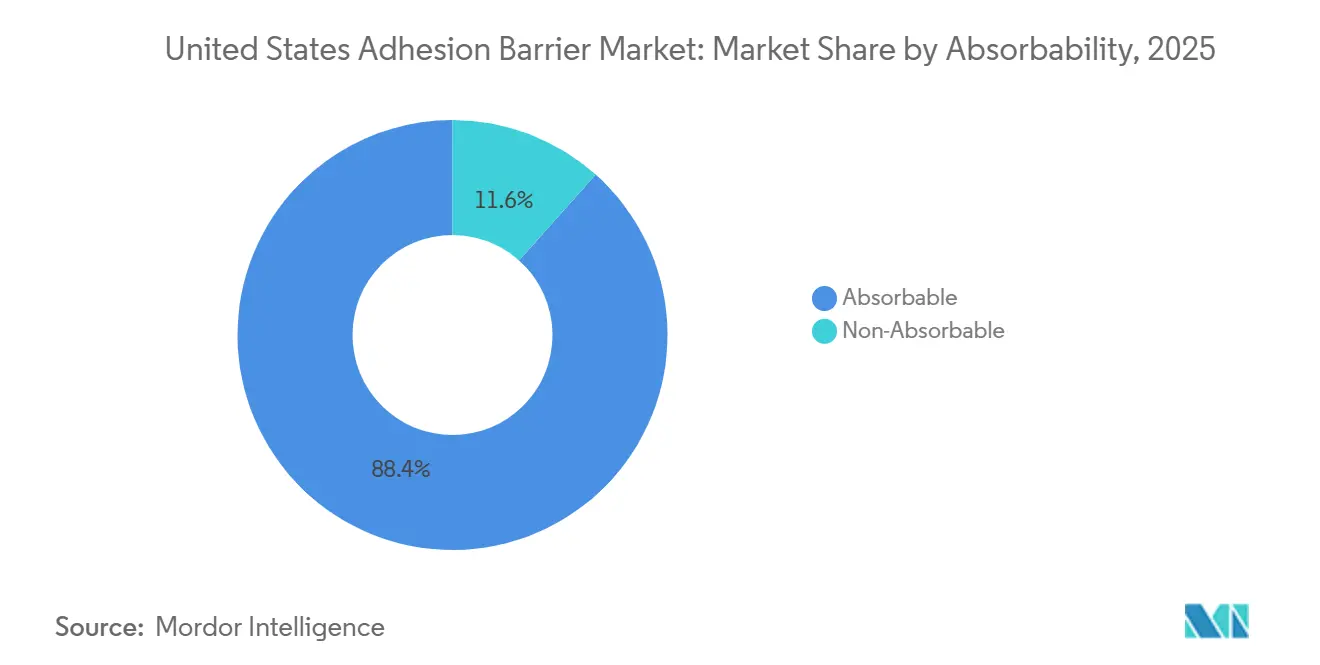
- By absorbability, absorbable barriers held 88.42% share in 2025, while non-absorbable barriers are projected to grow at a 7.97% CAGR through 2031.
- By application, general and abdominal surgeries accounted for 35.62% share in 2025, while gynecological surgeries are projected to advance at an 8.23% CAGR through 2031.
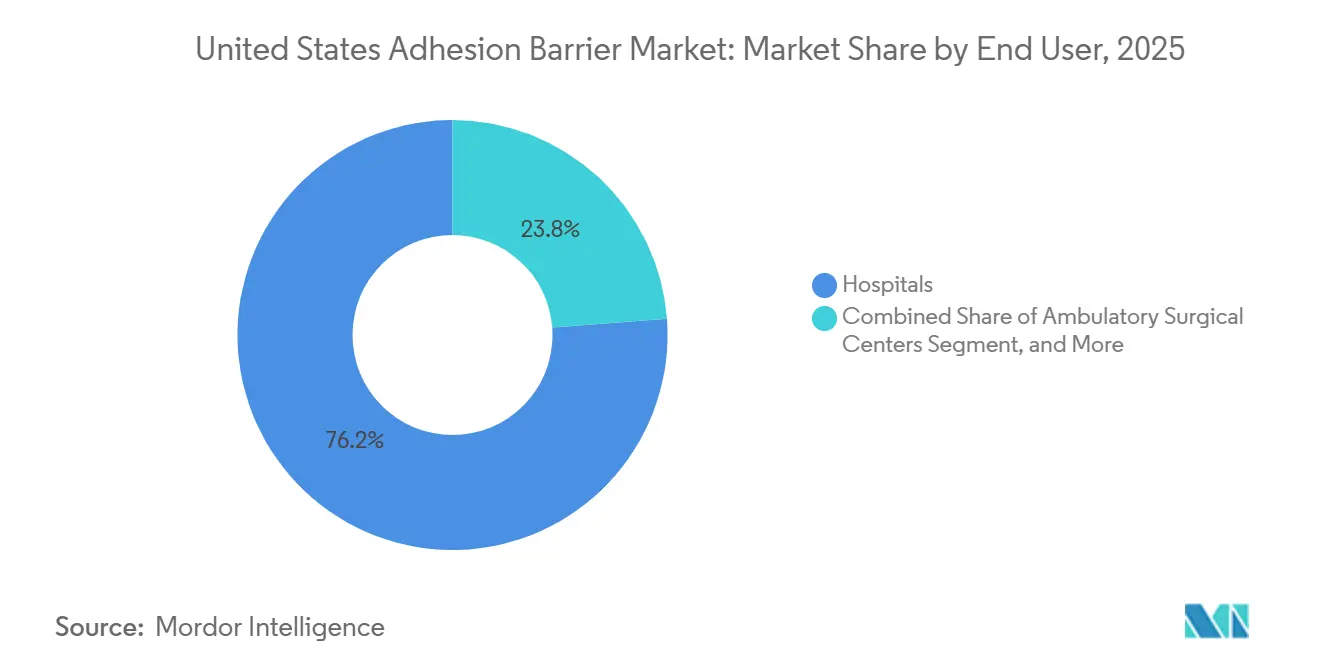
- By end user, hospitals held 76.23% share in 2025, while ambulatory surgical centers recorded the highest projected CAGR at 7.35% through 2031.
Note: Market size and forecast figures in this report are generated using Mordor Intelligence’s proprietary estimation framework, updated with the latest available data and insights as of January 2026.
United States Adhesion Barrier Market Trends and Insights
Drivers Impact Analysis*
| Driver | (~) % Impact on CAGR Forecast | Geographic Relevance | Impact Timeline |
|---|---|---|---|
| Rising Robotic and Minimally Invasive Surgery Volumes | +2.0% | National, concentrated in high-volume urban surgical centers and academic medical centers | Medium term (2-4 years) |
| Bundled Payment Pressure to Reduce Adhesion-Related Readmissions | +1.2% | National, with early and most material gains in the 188 TEAM metropolitan statistical areas | Short term (≤ 2 years) |
| Product Innovation in Bioresorbable and Sprayable Barriers | +1.5% | National, with early penetration in spine and gynecological surgery centers | Medium term (2-4 years) |
| Expansion of Ambulatory Surgical Centers in the United States | +0.8% | National, with leading state gains in California, Florida, and Texas | Short term (≤ 2 years) and Medium term (2-4 years) |
| Surgeon Awareness of Postoperative Adhesion Burden | +0.5% | National, with influence expanding through clinical society-led education | Long term (≥ 4 years) |
| Institutional Zero-Adhesion Protocols and Value Committees | +0.4% | National, concentrated in large integrated delivery networks and academic hospital systems | Medium term (2-4 years) |
| Source: Mordor Intelligence | |||
Rising Robotic and Minimally Invasive Surgery Volumes
Robotic surgery is expanding the procedural base that can support faster adoption in the United States adhesion barrier market. Robotic-assisted procedures now account for 22% of all surgeries performed in the United States, and adoption remains strongest in major hospital systems that continue to deploy newer platforms. This shift matters because much of the installed product base in the United States adhesion barrier market still centers on rigid film formats that fit open surgery better than trocar-based access. As a result, the growth of robotic and minimally invasive surgery is pushing the United States adhesion barrier market toward gels, sprays, and other conformable products that can be delivered through smaller ports and over uneven tissue surfaces. The stronger the shift toward these procedures, the more the United States adhesion barrier market rewards developers that can reduce handling friction in laparoscopic and robotic settings.[1]FzioMed, “FzioMed Gains FDA De Novo Classification Grant and Marketing Authorization for Oxiplex Gel in Spine Surgery,” FzioMed, fziomed.com That format transition is already visible in the faster expected growth rate of gels compared with the overall category.
Bundled Payment Pressure to Reduce Adhesion-Related Readmissions
Bundled payment reform is making complication avoidance more financially relevant in the United States adhesion barrier market. CMS finalized the TEAM model with mandatory implementation starting January 1, 2026, across 741 hospitals in 188 metropolitan statistical areas, and the covered episodes include major bowel procedures and spinal fusion. These episodes matter because adhesions affect up to 93% of patients after abdominal or pelvic surgery, while open surgery and colorectal surgery are associated with much higher readmission risk from adhesion-related complications.[2]American College of Surgeons, “Surgical Adhesions Improvement Project Advances Disease Science,” ACS Bulletin, facs.org Readmissions also feed directly into the quality and repayment logic of TEAM, which gives hospital administrators a clearer basis for evaluating prevention tools in the United States adhesion barrier market. CMS has also shortened the HRRP measurement window from 3 years to 2 years for FY2026, which makes recent performance more visible and raises the cost of preventable readmission events. Together, these payment changes are moving the United States adhesion barrier market closer to a risk-management purchase decision instead of a purely discretionary clinical add-on.
Product Innovation in Bioresorbable and Sprayable Barriers
Product innovation is changing where growth will come from in the United States adhesion barrier market. In July 2025, the FDA granted De Novo classification and marketing authorization for Oxiplex gel, which became the first FDA-authorized intraoperative gel designed for lumbar spine procedures with a specific postoperative clinical purpose. Research teams are also advancing sprayable hydrogel systems that form a protective coating within seconds through endoscopic delivery, which directly addresses the access problem that limited older open-surgery products. Peer-reviewed work continues to show that currently approved products do not perform equally well across all tissue types and surgical fields, so the clinical need is not limited to a new format alone. This creates room in the United States adhesion barrier market for products that combine easier delivery with more predictable tissue performance and degradation behavior. The companies that can bring those qualities into routine operating room use are positioned to capture the most attractive adoption pool in the United States adhesion barrier market.
Expansion of Ambulatory Surgical Centers in the United States
ASC expansion is opening a new volume channel for the United States adhesion barrier market. As of Q2 2025, the United States had 12,294 ASCs, including 6,504 Medicare-certified facilities, and CMS certified 168 new facilities in 2024 alone.[3]ASC Data, “ASC Data Industry Overview,” ASC Data, ascdata.com Procedure volume per Medicare fee-for-service beneficiary at ASCs rose 3.5% in 2024, and total fee-for-service Medicare spending on ASC services reached USD 7.5 billion in the same year. That migration favors product formats that are easy to deliver, easy to store, and easier to justify on a per-case basis than film-heavy solutions. The same shift supports the faster role of gel and sprayable systems in the United States adhesion barrier market because outpatient centers are seeing more laparoscopic gynecological, orthopedic, and general surgery cases. The more procedures move into ASCs, the more the United States adhesion barrier market depends on products that fit outpatient economics and shorter workflow cycles. This is why channel growth and format innovation are now moving together rather than as separate trends.
Restraints Impact Analysis*
| Restraint | (~) % Impact on CAGR Forecast | Geographic Relevance | Impact Timeline |
|---|---|---|---|
| High Upfront Cost Versus Standard Sutures and Drains | -1.3% | National, most acute in community, critical access, and rural hospitals | Medium term (2-4 years) |
| Uneven Reimbursement Recognition Across Procedure Settings | -1.1% | ASC and hospital outpatient settings nationwide | Short term (≤ 2 years) and Medium term (2-4 years) |
| Surgeons' Preference for Technique-Only Adhesion Prevention | -0.8% | National | Long term (≥ 4 years) |
| Product Performance Variability in Complex Surgical Fields | -0.7% | National | Medium term (2-4 years) |
| Source: Mordor Intelligence | |||
Uneven Reimbursement Recognition Across Procedure Settings
Reimbursement remains one of the clearest limits on adoption in the United States adhesion barrier market. CMS recognizes adhesion barriers under HCPCS Level II code C1765, but payment treatment still varies by payer, procedure, and site of care, and many ASC and outpatient settings must absorb the cost within existing facility fees. That gap is especially relevant for gynecological and minimally invasive procedures because those cases are moving into settings where margins are tighter and product-specific payment support is less consistent. The pressure is stronger in 2026 because HRRP changes broaden the readmission measurement base while not creating a uniform reimbursement pathway for adhesion prevention products. Clinical guidance supports use in selected settings, but endorsement alone has not converted into consistent coding and payment treatment across the United States adhesion barrier market. Until that changes, many facilities will continue to weigh barrier use against immediate case economics instead of total complication costs over the full episode of care.
Surgeons' Preference for Technique-Only Adhesion Prevention
Surgeon behavior still slows broader penetration in the United States adhesion barrier market. Recent reporting showed that fewer than 15% of surgeons used an adhesion barrier product within the last year, which indicates that procedural habit remains a major barrier even when clinical need is well recognized. Part of this reluctance reflects confidence in meticulous technique alone, and part of it reflects product handling limits in minimally invasive procedures where conventional films are difficult to use. The preference is also reinforced when surgeons see variability in performance across tissue types or surgical fields, because inconsistent outcomes make routine use harder to justify. This means growth in the United States adhesion barrier market depends not only on product approval, but also on better workflow fit, clearer procedure-specific evidence, and more surgeon training in delivery technique. Products that simplify application are more likely to reduce this behavioral barrier over time.
*Our forecasts treat driver/restraint impacts as directional, not additive. The impact forecasts reflect baseline growth, mix effects, and variable interactions.
Segment Analysis
By Product Type: Synthetic Platforms Anchor Share as Natural Barrier Biocompatibility Gains Traction
Synthetic products held 53.48% of United States adhesion barrier market share in 2025, which made them the largest product type in the category. Their lead reflects long-standing use in hospital operating rooms, broad familiarity among surgical teams, and the presence of established FDA-cleared platforms. Hyaluronic acid and regenerated cellulose variants remain central within this segment, while polyethylene glycol systems are gaining relevance in neurological and cardiovascular use where conformable coverage is important. Natural barriers are projected to grow at a 7.36% CAGR through 2031, which makes them the fastest-growing product type in the United States adhesion barrier market.
That faster growth reflects interest in collagen and fibrin materials that align with a tissue-mimicking profile and lower local inflammatory response. Peer-reviewed research on postoperative adhesions continues to support the value of bioresorbable chemistries derived from endogenous or biologically familiar molecules such as chondroitin sulfate, hyaluronic acid, and fibrin. The FDA pathway used for Oxiplex also shows that novel formulations can still enter the US adhesion barrier industry when they are supported by procedure-specific evidence and clear device controls. As hospital sourcing shifts toward biocompatibility and differentiated outcomes, companies with both synthetic depth and natural material exposure should be better placed in the United States adhesion barrier market.


By Formulation: Film and Mesh Lead Volume While Gel Formats Target Minimally Invasive Access
Film and mesh formulations accounted for 44.17% of the United States adhesion barrier market size in 2025, which kept them in the leading position by formulation. Their strength remains tied to open abdominal, pelvic, and gynecological procedures where placement over exposed tissue is straightforward and familiar. Baxter’s Seprafilm continues to represent the best-known commercial architecture in this part of the United States adhesion barrier market and is supported by broad clinical familiarity. Even so, this format is structurally less suited to laparoscopic and robotic delivery than newer gel and spray approaches.
Gel formulations are forecast to grow at an 8.87% CAGR through 2031, which is the fastest pace among all formulation types. That growth comes from better compatibility with minimally invasive access and from the ability to conform to irregular tissue surfaces that rigid films may not cover well. Research on sprayable hydrogels also shows that liquid and near-liquid delivery systems could widen the format mix further if they move from laboratory work into clinical use. The gap between film leadership and gel growth shows that the United States adhesion barrier industry is shifting from familiarity-led selection toward access-compatible selection.
By Absorbability: Absorbable Variants Retain Dominance as Non-Absorbable Platforms Address Durable-Barrier Demand
Absorbable barriers captured 88.42% share in 2025, which was the most concentrated split across the major segmentation types. This dominance reflects a clear clinical preference for products that resolve without requiring retrieval and that fit the single-intervention logic preferred by hospital teams. The segment also aligns with patient outcome priorities because it reduces long-term foreign-body concerns and limits the need for follow-up intervention. For the present revenue base of the United States adhesion barrier market, absorbable formats therefore remain the default choice across most established procedures.
Non-absorbable barriers are projected to grow at a 7.97% CAGR through 2031, even though they remain much smaller in absolute terms. Their growth points to durable demand in select cardiovascular and neurological procedures where longer physical separation is preferred to short-term degradation. The pattern suggests that the United States adhesion barrier market is not moving away from absorbability as a core principle, but is opening more room for procedure-led exceptions. Peer-reviewed literature also notes that performance can vary across tissue environments, which supports ongoing work on better degradation profiles and more targeted material behavior. That balance between broad absorbable use and niche durable use is likely to remain a stable feature of the United States adhesion barrier market.
By Application: Abdominal Surgery Leads Demand While Gynecological Procedures Drive the Next Growth Wave
General and abdominal surgeries held 35.62% of the United States adhesion barrier market size in 2025, which made them the largest application area. Their leadership comes from high adhesion incidence in abdominal and pelvic surgery and from the heavier complication burden tied to open colorectal procedures. Adhesions can affect up to 93% of patients after abdominal or pelvic surgery, and colorectal surgery carries a sharply elevated readmission hazard for adhesion-related complications. This keeps abdominal use central to the current revenue structure of the United States adhesion barrier market.
Gynecological surgeries are forecast to expand at an 8.23% CAGR through 2031, which makes them the fastest-growing application in the United States adhesion barrier market. Growth is being supported by rising laparoscopic gynecological case volume and by stronger protocol use in fertility-preserving surgery. Expert consensus published in 2024 also supported adhesion barrier use in gynecologic surgeries and cesarean section settings, which strengthens the clinical basis for broader uptake. Spine surgery adds another focused opportunity, as FzioMed’s Oxiplex gel entered the market with a specific neurological use profile rather than a broad, undifferentiated claim. The application mix therefore favors companies that can prove value procedure by procedure instead of relying on a single general positioning story.
By End User: Hospitals Anchor the Market While Ambulatory Surgical Centers Define the Growth Vector
Hospitals held 76.23% share of end-user demand in 2025, which kept them at the center of current purchasing in the United States adhesion barrier market. Their lead reflects concentration in open surgery, more complex abdominal cases, and higher-acuity cardiovascular and neurological procedures where evidence is stronger, and procurement systems are formalized. This structure also favors incumbent suppliers because formulary decisions in hospitals tend to reward clinical familiarity, documentation quality, and established vendor relationships. For these reasons, hospitals continue to define the present revenue base and pricing environment of the United States adhesion barrier market.
ASCs are projected to grow at a 7.35% CAGR through 2031, which makes them the fastest-growing end-user segment. The United States had 12,294 ASCs as of Q2 2025, including 6,504 Medicare-certified facilities, and that expanding base is shifting more laparoscopic and outpatient cases into settings that need simpler delivery formats. ASC purchasing also differs from hospital purchasing because physician-owner groups tend to focus more directly on per-case economics and workflow efficiency. That means companies serving the United States adhesion barrier industry need a different commercial approach for ASCs than for large hospital systems.

Geography Analysis
California, Florida, and Texas together accounted for nearly one-third of the Medicare-certified ASC base in 2025, which gives them outsized influence over procedure flow linked to the United States adhesion barrier market. California led with 917 Medicare-certified ASCs, followed by Florida with 531 and Texas with 505. These states combine large outpatient footprints with dense concentrations of hospital systems and specialist surgery groups. California also benefits from strong robotic surgery adoption in metropolitan and academic centers, which supports the shift toward products suited for minimally invasive workflows. This makes the Pacific and Sun Belt states especially relevant to the next phase of the United States adhesion barrier market.
Florida represents a distinct demand pattern because its older patient base and high procedure intensity increase exposure to abdominal, colorectal, orthopedic, and spinal episodes that fall within hospital readmission and bundled payment scrutiny. TEAM now covers 741 hospitals across 188 metropolitan statistical areas, and that concentration of financial accountability is most material in dense, high-utilization metro areas. Texas adds a large commercially insured population, a growing outpatient surgical footprint, and major academic medical centers that continue to shape robotic and complex surgery volumes. Fee-for-service Medicare spending on ASC services reached USD 7.5 billion in 2024, which shows how large the outpatient surgical base has become in regions where these states play a major role.
Rural and smaller metro areas remain the harder part of the geographic picture for the United States adhesion barrier market. As of Q4 2025, 94% of ASCs were located in urban areas, which leaves many lower-density regions more dependent on community hospital operating rooms. Those hospitals often face tighter budget limits and lower case concentration, which makes premium adoption slower even when the clinical need exists. The ACS has also highlighted that education and transition support will matter across a broad range of hospital settings as adhesion prevention moves into a more financially accountable care environment.
Competitive Landscape
The United States adhesion barrier market remains moderately consolidated, with Baxter International and Ethicon holding the strongest positions in the film-based category through long-established products that have deep hospital familiarity and broad clinical recognition. Baxter’s Seprafilm continues to anchor this part of the market and remains one of the most visible branded platforms in open abdominal and pelvic surgery. Integra LifeSciences, Anika Therapeutics, and FzioMed form the main group of challengers with differentiated approaches in hydrogel delivery, hyaluronic acid positioning, and procedure-specific innovation. The competitive center of gravity is still tied to hospitals, but the format mix is beginning to shift away from rigid films and toward solutions that fit minimally invasive access better. That change is reshaping how leadership in the United States adhesion barrier market will be defended through 2031.
FzioMed made one of the clearest strategic moves when it secured FDA De Novo classification and later started U.S. commercialization of Oxiplex gel for lumbar spine surgery. Integra strengthened its position with a published 2024 economic evaluation that showed cost savings for DuraSeal PEG hydrogel sealant compared with fibrin glue in posterior fossa surgery across five European countries. Baxter has continued to defend its franchise by emphasizing the value proposition and long clinical standing of Seprafilm in surgical practice. These moves show that competition in the United States adhesion barrier market is no longer only about brand presence, but also about format relevance, health-economic support, and procedure-specific evidence.
An important opening for challengers is that newer evidence has not always confirmed equally strong downstream benefits across all established products and endpoints, which leaves room for replacement in selected uses. White space remains strongest in cardiovascular reoperation, neurological adhesion management, and minimally invasive gynecological delivery formats. Companies that can combine clinical evidence, payer engagement, and surgeon training should be better positioned to gain share in the United States adhesion barrier market. The next competitive order is therefore likely to depend less on broad claims and more on proving fit in the specific procedures where adoption is still low.
United States Adhesion Barrier Industry Leaders
B. Braun Melsungen AG
Baxter International Inc.
Stryker Corporation
Teleflex Incorporated
W. L. Gore and Associates, Inc.
- *Disclaimer: Major Players sorted in no particular order

Recent Industry Developments
- March 2026: KARL STORZ entered into a strategic distribution partnership with Womed SAS, a France-based company specializing in uterine health solutions. Under this agreement, KARL STORZ will act as the exclusive U.S. distributor of Womed Leaf, a treatment approved by the U.S. Food and Drug Administration for women with intrauterine adhesions, commonly referred to as Asherman syndrome. This collaboration combines KARL STORZ’s established distribution network with Womed’s innovative therapeutic product to expand access to advanced intrauterine care in the United States.
- March 2026: FzioMed, Inc., a global leader in postsurgical adhesion prevention with its advanced synthetic, absorbable gel technology, has announced positive findings from a prospective, randomized, double blinded, multi center clinical trial. The study demonstrated that the company’s Oxiplex intraoperative gel significantly improves both pain relief and neurological outcomes in patients suffering from severe leg and back pain when used as an adjunct during lumbar spine surgery. This reinforces Oxiplex’s role as an innovative solution in enhancing recovery and patient quality of life in spinal procedures.
- November 2025: FzioMed, Inc. initiated commercialization of Oxiplex gel in the United States following its FDA De Novo classification. Oxiplex is positioned as the first and only FDA-authorized intraoperative gel for lumbar spine surgery to reduce postoperative leg pain and neurological symptoms, and has been used in more than 750,000 spine procedures internationally, providing a substantial real-world evidence base for US adoption.
- January 2025: FDA granted De Novo classification and marketing authorization for FzioMed's Oxiplex gel, establishing a new Class II device type for intraoperative adhesion prevention gels in spine surgery with special controls. This regulatory milestone creates a new predicate device category that future gel-format adhesion barrier developers may reference, potentially accelerating regulatory timelines for next-generation PEG-based and hydrogel platforms.


United States Adhesion Barrier Market Report Scope
The United States Adhesion Barrier Market represents the sector of the healthcare and medical device industry focused on products used during surgery to prevent the formation of internal scars and abnormal tissue bonds, known as adhesions.
The United States Adhesion Barrier Market is segmented by product type, formulation, absorbability, application, and end user. By product type, it includes synthetic adhesion barriers such as hyaluronic acid, regenerated cellulose, polyethylene glycol, and other synthetic options, alongside natural adhesion barriers like collagen and fibrin. By formulation, products are available in film and mesh, gel, and liquid forms. By absorbability, they are classified as absorbable or non‑absorbable. By application, adhesion barriers are widely used in general and abdominal surgeries, gynecological surgeries, orthopedic surgeries, cardiovascular surgeries, neurological surgeries, urological surgeries, and reconstructive surgeries. By end user, adoption is driven by hospitals, ambulatory surgical centers, and specialty clinics.
| Synthetic Adhesion Barriers | Hyaluronic Acid |
| Regenerated Cellulose | |
| Polyethylene Glycol | |
| Other Synthetic Adhesion Barriers | |
| Natural Adhesion Barriers | Collagen |
| Fibrin |
| Film and Mesh |
| Gel |
| Liquid |
| Absorbable |
| Non-Absorbable |
| General and Abdominal Surgeries |
| Gynecological Surgeries |
| Orthopedic Surgeries |
| Cardiovascular Surgeries |
| Neurological Surgeries |
| Urological Surgeries |
| Reconstructive Surgeries |
| Hospitals |
| Ambulatory Surgical Centers |
| Specialty Clinics |
| By Product Type | Synthetic Adhesion Barriers | Hyaluronic Acid |
| Regenerated Cellulose | ||
| Polyethylene Glycol | ||
| Other Synthetic Adhesion Barriers | ||
| Natural Adhesion Barriers | Collagen | |
| Fibrin | ||
| By Formulation | Film and Mesh | |
| Gel | ||
| Liquid | ||
| By Absorbability | Absorbable | |
| Non-Absorbable | ||
| By Application | General and Abdominal Surgeries | |
| Gynecological Surgeries | ||
| Orthopedic Surgeries | ||
| Cardiovascular Surgeries | ||
| Neurological Surgeries | ||
| Urological Surgeries | ||
| Reconstructive Surgeries | ||
| By End User | Hospitals | |
| Ambulatory Surgical Centers | ||
| Specialty Clinics | ||


Key Questions Answered in the Report
What is the 2026 value and 2031 outlook for the United States adhesion barrier space?
The United States adhesion barrier market stands at USD 311.21 million in 2026 and is forecast to reach USD 435.43 million by 2031 at a 6.95% CAGR.
Which product type currently leads in the United States?
Synthetic barriers led in 2025 with a 53.48% share, supported by established FDA-cleared platforms and strong hospital familiarity.
Which formulation is growing the fastest through 2031?
Gel formulations are growing the fastest at an 8.87% CAGR because they better fit laparoscopic and robotic delivery needs.
Why are hospitals still the largest end users?
Hospitals held 76.23% of demand in 2025 because they perform more complex open abdominal, cardiovascular, and neurological procedures where evidence and procurement systems are stronger.
Which application is expanding the fastest?
Gynecological surgeries are projected to grow the fastest at an 8.23% CAGR, supported by laparoscopic volume growth and adhesion prevention use in fertility-preserving procedures.
What is holding adoption back despite clinical need?
The biggest constraints are uneven reimbursement, product cost sensitivity, workflow friction in minimally invasive surgery, and continued surgeon reliance on technique-only prevention.
Page last updated on:





