
Market Overview
| Study Period | 2020 - 2031 |
|---|---|
| Forecast Data Period | 2026 - 2031 |
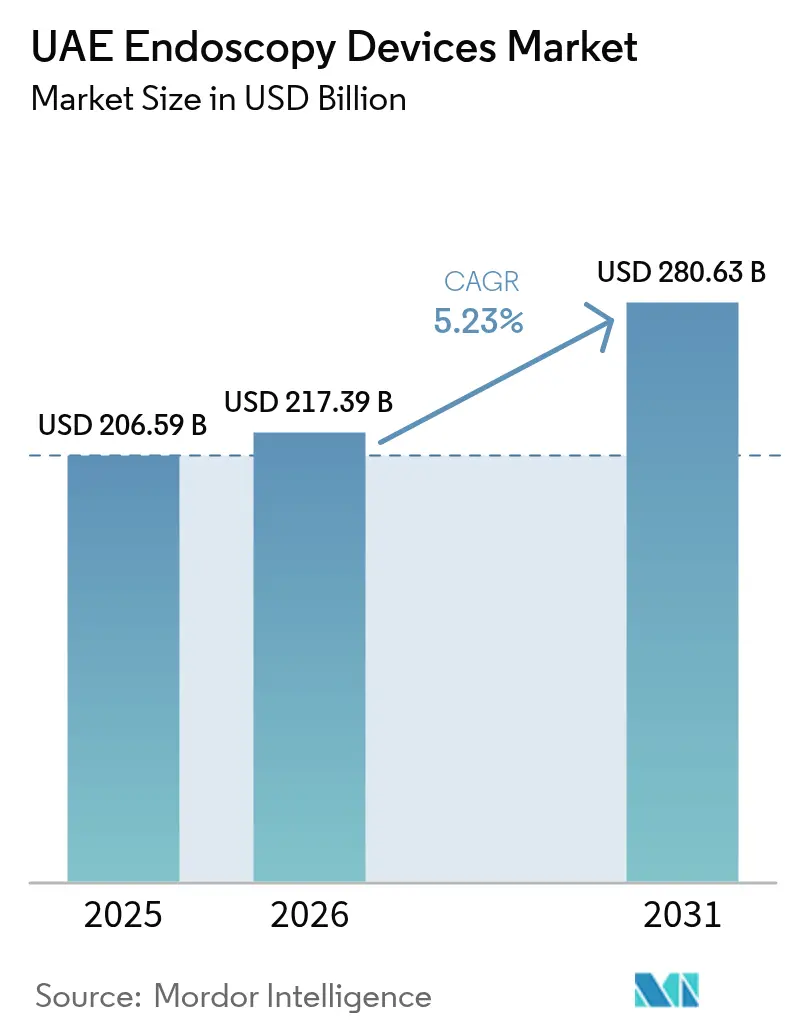
| Base Year Market Size (2025) | USD 206.59 Billion |
| Market Size (2026) | USD 217.39 Billion |
| Market Size (2031) | USD 280.63 Billion |
| Growth Rate (2026 - 2031) | 5.23 % |
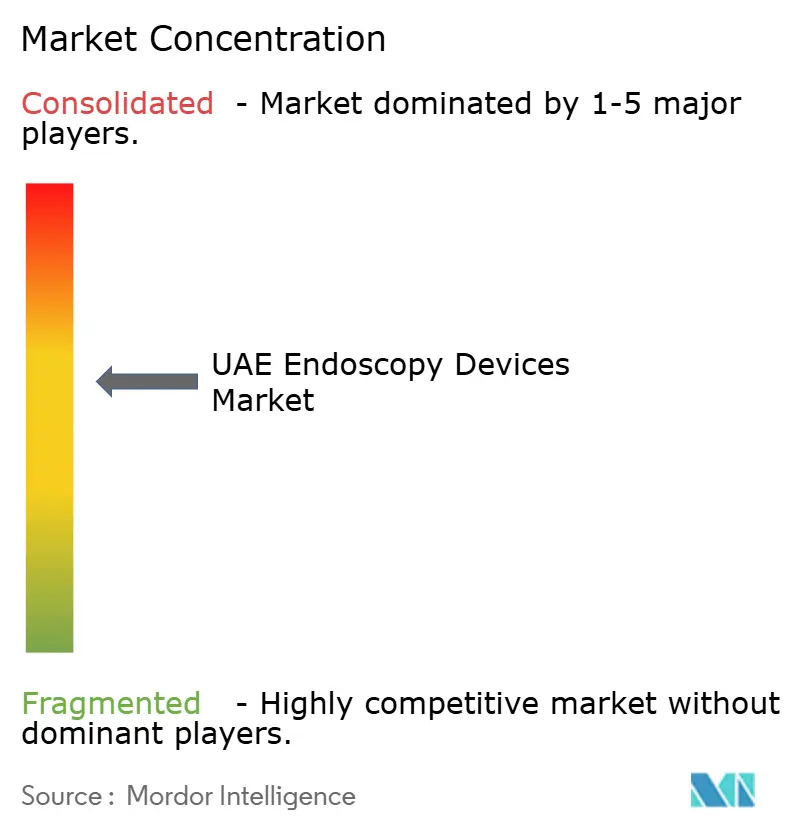
| Market Concentration | Medium |
Major Players *Disclaimer: Major Players sorted in no particular order Image © Mordor Intelligence. Reuse requires attribution under CC BY 4.0. | |
UAE Endoscopy Devices Market Analysis by Mordor Intelligence
The UAE endoscopy devices market size is expected to grow from USD 206.59 million in 2025 to USD 217.39 million in 2026 and is forecast to reach USD 280.63 million by 2031 at 5.23% CAGR over 2026-2031. Accelerating public- and private-sector health investment, rising medical tourism volumes, and a high burden of lifestyle diseases collectively sustain a steady pipeline of diagnostic and therapeutic endoscopic procedures. Obesity prevalence is forecast to reach 95% by 2050, while diabetes already affects more than 2.2 million residents, sharply lifting screening demand across gastroenterology and pulmonology. Government strategy places minimally invasive technology, UHD imaging, and AI-assisted platforms at the core of future care models, reinforcing the UAE endoscopy devices market as a regional innovation test-bed. Intensifying competition among premium hospitals, joint-venture clinics, and ambulatory centers further drives replacement cycles for sophisticated visualization systems and single-use scopes. Despite optimistic fundamentals, the market must navigate skilled-workforce shortages and complex device reprocessing protocols that can slow adoption of newer platforms.
Key Report Takeaways
- By product type, endoscopes led with 55.02% UAE endoscopy devices market share in 2025, while visualization equipment is forecast to expand at a 7.88% CAGR to 2031.
- By application, gastroenterology commanded 45.12% of the UAE endoscopy devices market size in 2025; pulmonology/bronchoscopy is advancing at a 7.02% CAGR through 2031.
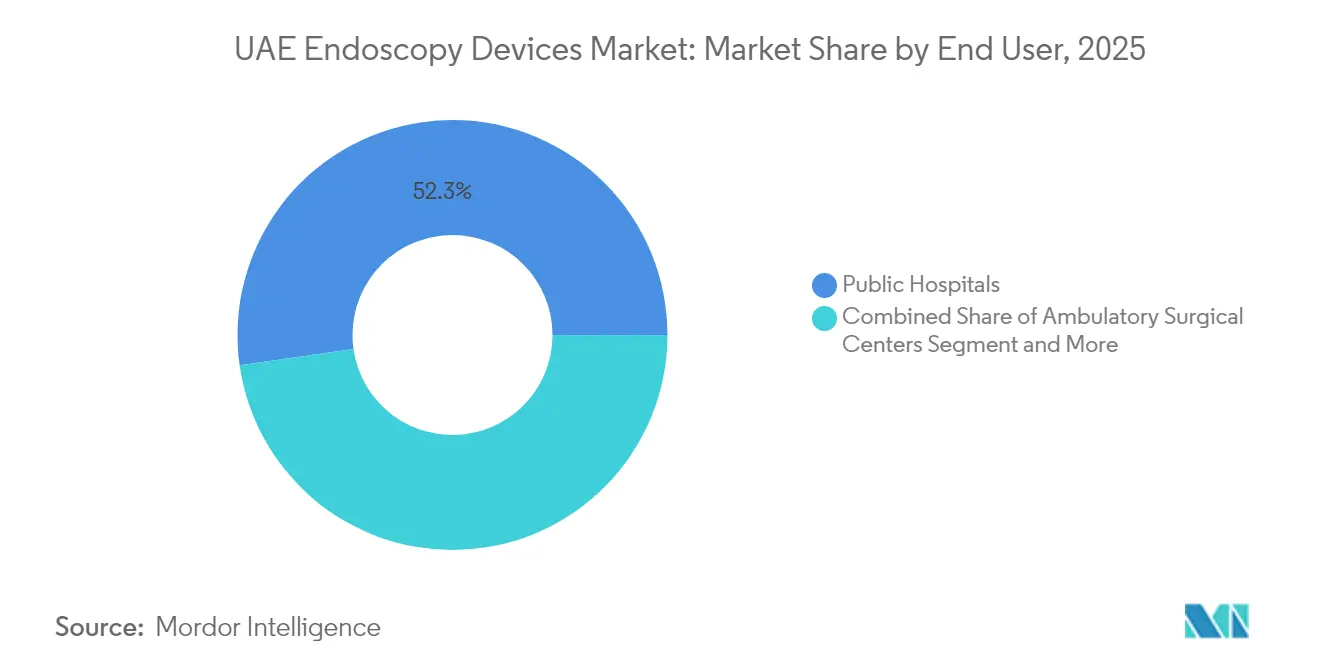
- By end user, public hospitals held 52.25% of 2025 revenue, whereas ambulatory surgical centers record the highest projected CAGR at 6.93% to 2031.
Note: Market size and forecast figures in this report are generated using Mordor Intelligence’s proprietary estimation framework, updated with the latest available data and insights as of 2026.
UAE Endoscopy Devices Market Trends and Insights
Drivers Impact Analysis*
| Driver | (~) % Impact on CAGR Forecast | Geographic Relevance | Impact Timeline |
|---|---|---|---|
| Rising burden of gastrointestinal disorders | +1.8% | National, urban centers | Long term (≥ 4 years) |
| Growing preference for minimally invasive surgeries | +1.2% | Dubai, Abu Dhabi | Medium term (2-4 years) |
| Rapid technological upgrades in UHD & AI imaging | +1.1% | Nationwide | Medium term (2-4 years) |
| Government investments in endoscopy capacity | +0.9% | Abu Dhabi & Dubai | Short term (≤ 2 years) |
| Surge in medical-tourism-driven bariatric demand | +0.7% | Key free-zone hospitals | Medium term (2-4 years) |
| Source: Mordor Intelligence | |||
Growing Preference for Minimally Invasive Surgeries
Patient demand for faster recovery and better cosmetic outcomes accelerates nationwide uptake of minimal-access procedures. Mediclinic City Hospital surpassed 1,500 robotic cases by late 2024, illustrating the pace of technology integration into routine practice[1]Gulf News, “Mediclinic City Hospital carries out 1,500th robotic surgery,” gulfnews.com. Gastroenterology units now default to endoscopic therapy for many lesions, reducing open surgical volumes. Tourism portals actively promote “scar-less” packages, reinforcing the UAE endoscopy devices market as a destination for specialty care. Regulatory bodies back the shift: the Department of Health Abu Dhabi has fast-tracked approvals for disposable scopes and AI-enabled colonoscopy platforms. Facility operators respond by expanding robotic-assisted endoscopy suites, bolstering procedural throughput and differentiating service portfolios.
Rising Burden of Gastrointestinal Disorders in UAE
Sedentary lifestyles and calorie-dense diets have raised overweight prevalence to 68% and obesity to 28%, with a future trajectory among the highest worldwide. Associated reflux disease, Barrett’s esophagus, and colorectal cancers demand ongoing endoscopic surveillance. Healthcare economists place current obesity-related spending near USD 12 billion annually, equal to 5% of GDP, giving hospitals strong incentive to detect and treat early. A multicenter pediatric study shows only 65% first-line eradication for Helicobacter pylori, underscoring the need for repeat diagnostic endoscopy. National health surveys now embed GI screening metrics, informing capacity planning for new centers. These dynamics underpin sustained procedure growth and additional equipment procurement across the UAE endoscopy devices market.
Government Investments in Endoscopy Capacity (SEHA, DHA)
SEHA, MOHAP, and Pure Health collectively channel multibillion-dirham budgets into localized sourcing of advanced towers, processors, and training programs. Pure Health alone earmarked AED 10 billion for domestic procurement over ten years, accelerating fleet renewal in public hospitals. Tele-endoscopy capabilities have expanded through RoboDoc installations, linking peripheral clinics with tertiary experts for real-time consultations. Foreign-ownership allowances of up to 100% under Federal Law 16 attract OEMs to assemble and service devices locally, shortening lead times[2]Department of Health Abu Dhabi, “Technology Registry,” doh.gov.ae. Virtual-nurse and AI triage pilots further integrate imaging with e-health ecosystems. Together, these policies enlarge the addressable base for the UAE endoscopy devices market.
Rapid Technological Upgrades in UHD & AI Imaging
Manufacturers race to embed artificial intelligence that flags polyps, grades inflammation, and guides biopsies in real time. Fujifilm’s CAD EYE and Olympus’s Extended Depth-of-Field scopes represent early commercial rollouts adopted by UAE flag-ship centers. National 6G roadmaps promise millisecond-latency imaging streams, enabling remote mentoring and cross-border referrals. Joint platforms from Oracle, Cleveland Clinic, and G42 bring nation-scale analytics that benchmark endoscopy outcomes and optimize device utilization. Early cancer-detection algorithms under the HCFL alliance complement UHD optics to elevate diagnostic precision[3]Ministry of Health and Prevention, “Innovation Health Strategy,” mohap.gov.ae. Cumulatively, technology upgrades reinforce premium positioning of the UAE endoscopy devices market.
Restraints Impact Analysis*
| Restraint | (~) % Impact on CAGR Forecast | Geographic Relevance | Impact Timeline |
|---|---|---|---|
| Infection risk from complex device reprocessing | -1.2% | Nationwide | Medium term (2-4 years) |
| Shortage of skilled endoscopy technicians | -0.8% | Northern Emirates | Short term (≤ 2 years) |
| High import tariffs on single-use scopes | -0.6% | Private facilities | Medium term (2-4 years) |
| Source: Mordor Intelligence | |||
Shortage of Skilled Endoscopy Technicians
Rapid procedure expansion has outpaced personnel supply, especially in outer emirates. In response, Dubai Health Authority now issues three-month temporary permits to attract visiting technologists. However, strict Professional Qualification Requirements across federal regulators slow permanent recruitment. A 2025 workforce study found 35% of healthcare staff themselves suffer non-communicable diseases, raising absenteeism and turnover. Advanced procedures such as endoscopic submucosal dissection need specialized skill sets rarely available in smaller cities. Wage inflation therefore increases operating costs and may defer capital expenditure, tempering near-term gains in the UAE endoscopy devices market.
Infection Risk from Complex Device Reprocessing
High-level disinfection of flexible scopes involves dozens of precise steps, and any deviation carries significant liability under the Federal Decree-Law on Medical Liability. Duodenoscopes and bronchoscopes present particular challenges due to elevator mechanisms and narrow lumens. The Department of Health Abu Dhabi regularly audits hospitals for compliance with its sterilization policy, citing penalty provisions for failure to meet standards. Some facilities pivot to single-use devices, but import tariffs and the absence of local manufacturing create cost pressure. Balancing safety, cost, and environmental waste remains a strategic hurdle across the UAE endoscopy devices market.
*Our forecasts treat driver/restraint impacts as directional, not additive. The impact forecasts reflect baseline growth, mix effects, and variable interactions.
Segment Analysis
By Type of Device: Visualization Equipment Drives Innovation
Endoscopes represented the largest revenue block in 2025, accounting for 55.02% of the UAE endoscopy devices market size, underscoring their irreplaceable diagnostic role. Flexible models dominate given their cross-specialty utility, while capsule and robot-assisted formats capture niche demand in small-bowel and complex resections. Disposable scopes gain ground as infection-control policies tighten. Visualization equipment posted the fastest revenue trajectory at an 7.88% CAGR and is central to procurement plans of both public and private chains. UHD camera heads, AI-ready processors, and 3-chip sensors elevate mucosal pattern recognition during colonoscopy. Cloud connectivity enables instant second opinions, a key differentiator for facilities courting inbound medical travelers. As AI algorithms mature, visualization systems transition from passive imaging to active diagnostic partners, anchoring future growth in the UAE endoscopy devices market.
Momentum for endoscopic operative devices remains linked to procedure complexity. Irrigation pumps with programmable flow, articulating retrieval baskets, and hemostatic clips integrate seamlessly with modern towers. National investment programs favor suppliers that localize service centers, cutting downtime for critical tools. Meanwhile, next-generation robotic platforms such as EndoMaster and EndoQuest move through evaluation phases, promising higher precision in submucosal dissections. These developments broaden the value proposition of the UAE endoscopy devices market beyond basic diagnosis toward full therapeutic intervention suites.




By Application: Pulmonology Procedures Accelerate Growth
Gastroenterology retained a 45.12% revenue share in 2025, reflecting high lesion prevalence and established reimbursement pathways. Routine screening colonoscopies, therapeutic ERCP, and bariatric revision studies underpin stable device utilization. Surgeons increasingly integrate endoluminal suturing and balloon therapies to manage obesity, reinforcing the UAE endoscopy devices market where volumes are forecast to rise in line with rising BMI profiles. Cross-functional care pathways between endocrinology and GI units further expand patient throughput.
Pulmonology and bronchoscopy lead incremental growth with a 7.02% CAGR as lung-cancer screening programs gain traction. AI-enabled navigation bronchoscopy systems improve reach to peripheral nodules, reducing the need for surgical wedge biopsies. Cardiovascular, orthopedic, and urologic applications also diversify device usage. In cardiology, transesophageal echo probes and endoscopic mitral-valve repair tools enter routine practice at tertiary centers. Such procedural diversification supports resilient revenue streams for vendors active in the UAE endoscopy devices industry, tempering risk tied to individual specialty cycles.
By End User: Ambulatory Centers Lead Growth Trajectory
Public hospitals remained the primary procurement channel in 2025, commanding 52.25% of the UAE endoscopy devices market size, buoyed by federally funded capacity expansion and population coverage mandates. SEHA’s capital expenditure program refreshes aging towers with UHD systems, ensuring uniform diagnostic quality across its network. AI-driven scheduling platforms optimize room allocation to reduce waiting lists, thereby raising device turn-over rates.
Ambulatory surgical centers, however, deliver the fastest expansion at a 6.93% CAGR as payers reward same-day discharge models. Purpose-built units inside Dubai Healthcare City and Abu Dhabi’s free zones target self-pay and insurance patients seeking convenience. Portable towers and single-use scopes lower initial CapEx and sidestep complex reprocessing rooms, aligning with lean operating models. Specialty clinics offering combined gastro-pulmonary screenings capture cross-referral synergies, supporting continued proliferation of facilities equipped for advanced procedures. The evolving end-user mix diversifies revenue channels within the UAE endoscopy devices market.
Geography Analysis
Dubai and Abu Dhabi anchor premium care delivery, together accounting for the majority of high-definition towers, robotic platforms, and AI-aided processors installed to date. Competitive clustering around Dubai Healthcare City, Cleveland Clinic Abu Dhabi, and Sheikh Shakhbout Medical City reinforces global referral networks. These hubs benefit from direct flight connectivity and streamlined patient-entry visas, sustaining elevated case volumes that justify continual upgrades. The UAE endoscopy devices market therefore registers its highest average selling prices in these two emirates.
Northern emirates such as Sharjah, Ajman, and Ras Al Khaimah present emerging opportunity pockets. Population growth and industrial diversification raise healthcare demand, prompting private investors to build mid-tier hospitals capable of advanced scoping. Government co-funding for equipment, often tied to local-content rules, accelerates procurement cycles. The UAE endoscopy devices market consequently broadens beyond historical metropolitan confines, although reimbursement and staffing remain tighter outside flagship cities.
The nation’s transcontinental logistics advantage positions it as a re-export hub for Gulf and African markets. Medtronic and Olympus maintain regional distribution centers in Jebel Ali Free Zone, reducing lead times for neighboring countries. Upcoming 6G networks will enable real-time tele-operation, extending premium procedural expertise to remote GCC clinics. Multilateral initiatives, including the GCC unified procurement framework, may further inflate shipment volume through UAE ports, cementing the country’s role in the wider Middle East endoscopy supply chain. Consequently, geography continues to shape vendor strategies within the UAE endoscopy devices market.
Regulatory Landscape
Medical devices in the UAE, including endoscopes, visualization systems, and endoscopic operative devices, are governed at the federal level through a centralized life-sciences framework, with oversight transitioning to the Emirates Drug Establishment (EDE) under Federal Decree-Law No. 38 of 2024. Under this regime, manufacturers and marketing authorization holders must complete product registration and maintain approvals for renewals and variations through the regulator portal, while import permits and post-market controls sit within the same federal workflow.
Market access also depends on import and facility-side compliance. Endoscopy devices enter under the GCC Integrated Customs Tariff (HS-based declarations), with a standard 5% customs duty commonly applied to imported goods, and supplies of registered medical equipment treated as zero-rated for VAT under Cabinet Decision No. 56 of 2017. On the clinical side, local health authorities such as the Dubai Health Authority (DHA) enforce facility standards for endoscopy service delivery, including validated disinfection protocols, equipment maintenance, and procedural safety requirements, which in turn affects procurement choices around reprocessing burden and single-use alternatives.
Competitive Landscape
Global majors remain the cornerstone of the competitive arena. Olympus leads flexible endoscopes, Medtronic commands hemostatic and energy devices, and Boston Scientific excels in therapeutic accessories. Each leverages local training academies to embed workflows and drive brand loyalty among clinicians. Recent FDA clearance of Olympus’s EZ1500 series prompted immediate tender activity in key UAE public hospitals, illustrating rapid technology diffusion cycles. Parallel alliances with cloud providers, exemplified by the Microsoft-G42 tie-up, underscore a pivot toward data-centric differentiation.
Regional conglomerates amplify competitive intensity. The 2024 merger of G42 Healthcare and Mubadala Health created a vertically integrated giant that influences procurement standards and accelerates local manufacturing pilots. Pure Health’s long-term supply contracts and domestic-value targets increasingly direct tender awards to vendors willing to invest in assembly lines on UAE soil. Smaller entrants differentiate via single-use innovations and robotics; EndoQuest Robotics’ partnership talks with Dubai-based investors typify this niche race. Overall, moderate consolidation persists as the UAE endoscopy devices market balances incumbent dominance with agile newcomers.
Strategic imperatives now revolve around AI validation datasets, post-market surveillance, and service uptime. Vendors pair warranty packages with remote diagnostics to satisfy stringent Ministry of Health uptime requirements. Training initiatives extend beyond physicians to include reprocessing technicians, addressing infection-control concerns that could otherwise impede sales. Suppliers that integrate hardware, software, and education offerings are poised to capture disproportionate share as hospitals upgrade toward fully digital, minimally invasive operating ecosystems within the UAE endoscopy devices industry.
UAE Endoscopy Devices Industry Leaders
Boston Scientific Corporation
Stryker Corporation
Richard Wolf GmbH
Medtronic PLC
Johnson & Johnson
- *Disclaimer: Major Players sorted in no particular order

Market Opportunities and Future Outlook
Large, visible procurement programs and new specialty capacity are expanding addressable demand for complete endoscopy stacks (scopes, visualization towers, and operative accessories). Dubai Academic Health Corporation activity in 2026, including a tender for endoscopy towers with accessories and a separate multi-year tender for endoscopy-related items, reinforces the role of centralized buying in setting technical specifications (UHD, AI-ready processors, connectivity) and service expectations for suppliers. Greenfield and expansion projects also create additional whitespace for equipment standardization across multi-site networks, such as the July 2024 Asan-UAE Gastroenterology Hospital groundbreaking with dedicated endoscopy suites and the announced expansion of Kings College Hospital London-Dubai, which adds operating theaters alongside integrated digital-health capabilities.
Opportunity also sits in pathways that reduce reprocessing friction while expanding diagnostic reach beyond conventional flexible endoscopy. Sheikh Shakhbout Medical Citys introduction of a swallowable diagnostic capsule for real-time GI bleed detection highlights demand for minimally invasive, digitally enabled diagnostics that can complement urgent and inpatient workflows, creating adjacent pull-through for data management, visualization, and accessory ecosystems. With federal device registration routed through EDE and facility standards set by local authorities such as DHA, vendors that pair compliant product dossiers with local service infrastructure, training, and integration support (analytics, connectivity, maintenance) have more direct routes into public tenders, free-zone hospital clusters, and fast-growing ambulatory settings.
Recent Industry Developments
- June 2026: Medtronic announced a strategic collaboration with KARL STORZ to integrate Medtronic ENT surgical systems with KARL STORZ endoscopy visualization platforms. The collaboration reinforces a direction toward integrated, workflow-level solutions where visualization, instruments, and procedural systems are positioned as a single offering, which can influence hospital upgrade preferences across endoscopy-led ENT pathways.
- February 2025: Burjeel Holdings and Colombias Keralty formed AL KALMA to roll out value-based gastroenterology programs across MENA with embedded advanced endoscopy services. Expanding organized GI care models can increase standardized utilization of endoscopic diagnosis and therapy, supporting multi-site procurement of endoscopes, towers, and therapeutic accessories.
- July 2024: Dubai Media Office reported the groundbreaking of the Asan-UAE Gastroenterology Hospital, a specialty facility planned with four operating theatres and dedicated endoscopy suites. New-build specialty capacity adds incremental installation opportunities for visualization towers and flexible scopes, and it also creates demand for service contracts, training, and standardized reprocessing-aligned workflows across the facility.


Research Methodology Framework and Report Scope
Market Definition and Coverage
For this study, the market covers the value of endoscopy devices sold and used in the UAE for diagnostic and therapeutic endoscopic procedures in licensed care settings, including endoscopes, endoscopic operative tools, and dedicated visualization systems tied to endoscopy.
Scope exclusions: We exclude devices meant only for open surgery, standalone robotic surgery platforms, reprocessing equipment, general surgical consumables, and imaging towers sold only for laparoscopy use.
Segmentation Overview
- By Type of Device
- Endoscopes
- Rigid Endoscopes
- Flexible Endoscopes
- Capsule Endoscopes
- Robot-assisted Endoscopes
- Disposable/Single-use Endoscopes
- Endoscopic Operative Devices
- Irrigation / Suction Systems
- Access Devices & Trocars
- Wound Protectors & Specimen Retrieval
- Other Operative Devices
- Visualization Equipment
- Camera Heads & Processors
- Monitors & Display Systems
- Light Sources
- Recording / Data Management
- Endoscopes
- By Application
- Gastroenterology
- Pulmonology / Bronchoscopy
- Urology
- Gynecology
- Cardiology
- Bariatric & Metabolic Endoscopy
- ENT & Laryngology
- Orthopedics / Arthroscopy
- Other Applications
- By End User
- Public Hospitals (MOHAP & SEHA)
- Private Multi-specialty Hospitals
- Ambulatory Surgical Centers
- Specialty & Diagnostic Clinics
Data Sources, Market Sizing, and Validation
Desk Research
Desk research was used to build the starting demand and supply structure and to keep assumptions grounded in the UAE context. We used public and official sources such as UAE health authority publications (including MOHAP updates), Dubai Health and Abu Dhabi health regulator releases, UAE Federal Competitiveness and Statistics Centre data, and international health datasets such as WHO indicators where they help indicate procedure and disease direction.
We also reviewed medical society guidance and peer reviewed clinical literature to understand how endoscopy volumes shift by specialty, then mapped that back to device replacement needs and add-on demand. Import and trade releases, customs style statistics where available, and reputed press coverage were used as sense checks for device inflow and pricing direction. Company filings and investor presentations were used to validate portfolio mix, while a paid subscription for company financials and a separate paid patent database were referenced selectively to validate innovation cycles and product focus. These desk sources are not exhaustive, and many other public documents were used for data collection, cross checks, and clarification.
Primary Interviews and Surveys
Primary work focused on validating the UAE specific drivers behind endoscopy device demand, especially procedure mix, purchasing cycles, and typical bundling of scopes with visualization and operative tools. We spoke with a mix of hospital procurement staff, clinicians, distributors, and service partners across the main emirates so the desk assumptions could be stress tested and refined before finalizing the model.
Distribution of primary research fieldwork respondents
| Company type | Respondent position |
|---|---|
| Top tier: 28% | CXOs: 12% |
| Mid tier: 55% | Functional/Unit leaders: 32% |
| Smaller Players: 17% | Managers: 56% |
Market-Sizing & Forecasting
Sizing started with a top-down build where procedure activity and clinical adoption signals were translated into device demand, then mapped to UAE purchasing patterns. In practice, endoscopy procedure volumes by specialty, installed base refresh cycles, average device life, shift toward minimally invasive care, and the mix between diagnostic and therapeutic use were the key inputs that shaped yearly demand.
Those totals were then corroborated with selective bottom-up approximations, including sampled price ranges for scopes, operative devices, and visualization equipment, plus channel checks on tendering and typical order composition. Where bottom-up visibility was thinner, for example smaller facility purchases or irregular replacement timing, gaps were handled using conservative penetration bands that were stress tested with interview feedback.
For forecasting, scenario analysis was used so that growth could be tied to a few visible drivers, including expected hospital capacity additions, screening and chronic disease load signals, and the pace of technology upgrades that change average selling prices. Assumptions were kept simple and repeatable, and each major lever was checked with experts before being locked into the forecast curve.
Data Validation & Update Cycle
Outputs were validated through multiple checks, starting with internal consistency tests across procedure demand, installed base, and implied replacement rates. If a number looked too high or too low relative to known purchasing behavior, it was reviewed again, and respondents were re-contacted when the variance could not be explained by a clear market event.
Analysts also compared the model direction against independent signals like import trends, public procurement activity, and major facility expansions, then reviewed the full sheet before sign-off. Reports are refreshed annually, with interim updates when material policy changes, major tenders, or sharp pricing shifts occur. Before delivery, a final pass is done to ensure the most recent developments are reflected in the final market view.
Mordor Intelligence's UAE Endoscopy Devices Market Sizing Compared With Other Published Estimates
Published market sizes for UAE endoscopy devices can differ because each publisher draws the line on what counts as an endoscopy device, which year is treated as the anchor, and how procedure demand is translated into device revenue. Differences also come from how pricing is handled, since tender-led buying and bundled system sales can change the average price in ways that are easy to miss.
In some external estimates, the scope is widened to include reprocessing equipment, broader surgical consumables, or technology buckets like robotic endoscopy modules, which pushes the total upward even if procedure volumes are similar. Another common gap is base year selection and growth posture, where aggressive CAGR assumptions are applied without being cross checked against replacement cycles and the UAE procurement rhythm. The narrower device scope applied here explains part of the spread, a modeling choice used in this Mordor Intelligence exercise.
Benchmark comparison
| Source | Market Size | Gaps in Research Methodology |
|---|---|---|
| Mordor Intelligence | USD 206.59 M (2025) | |
| Market Analytics Publisher A | USD 134.00 M (2023) | Uses an earlier base year and a broader segmentation lens, and the published growth rate appears to assume faster expansion without clearly tying demand to UAE replacement cycles and bundled system pricing. |
| Industry Publisher B | USD 187.40 M (2026) | Starts from a later year and appears to include wider technology groupings, which can pull in adjacent equipment beyond core endoscopy device revenue depending on how systems and accessories are counted. |
Across the three figures, the biggest swing is explained by scope and timing, not by a completely different view of clinical need. By keeping inclusions tied to endoscopes, operative tools, and dedicated visualization equipment, and by checking pricing and replacement logic with UAE based buyers and clinicians, the final number stays traceable to clear inputs and can be re-run when assumptions change.


Key Questions Answered in the Report
What is the current value of the UAE endoscopy devices market?
The market is valued at USD 217.39 million in 2026 and is expected to reach USD 280.63 million by 2031.
Which device category holds the largest market share?
Endoscopes hold the leading 55.02% revenue share, driven by widespread use across multiple medical specialties.
Why are ambulatory surgical centers growing so quickly?
Outpatient centers offer shorter stays and lower costs; they therefore post the highest 6.93% CAGR as patients and insurers favor efficient care settings.
How does obesity influence endoscopy demand in the UAE?
With projections showing obesity affecting 95% of residents by 2050, demand for diagnostic and therapeutic GI procedures is rising sharply, sustaining equipment purchases.
What technological trends are shaping future market growth?
Ultra-high-definition imaging, AI-based real-time polyp detection, and emerging robotic platforms are redefining procedure accuracy and driving replacement demand.
Are single-use endoscopes becoming common in the UAE?
Yes, infection-control and workflow efficiency concerns push many private and ambulatory centers toward disposable scopes, though tariffs and cost remain adoption hurdles.
Page last updated on:


 Your data is secure and never sold or shared.


