
Thailand Diabetes Care Drugs And Devices Market Size and Share
Market Overview
| Study Period | 2020 - 2031 |
|---|---|
| Forecast Data Period | 2026 - 2031 |
| Historical Data Period | 2020 - 2024 |
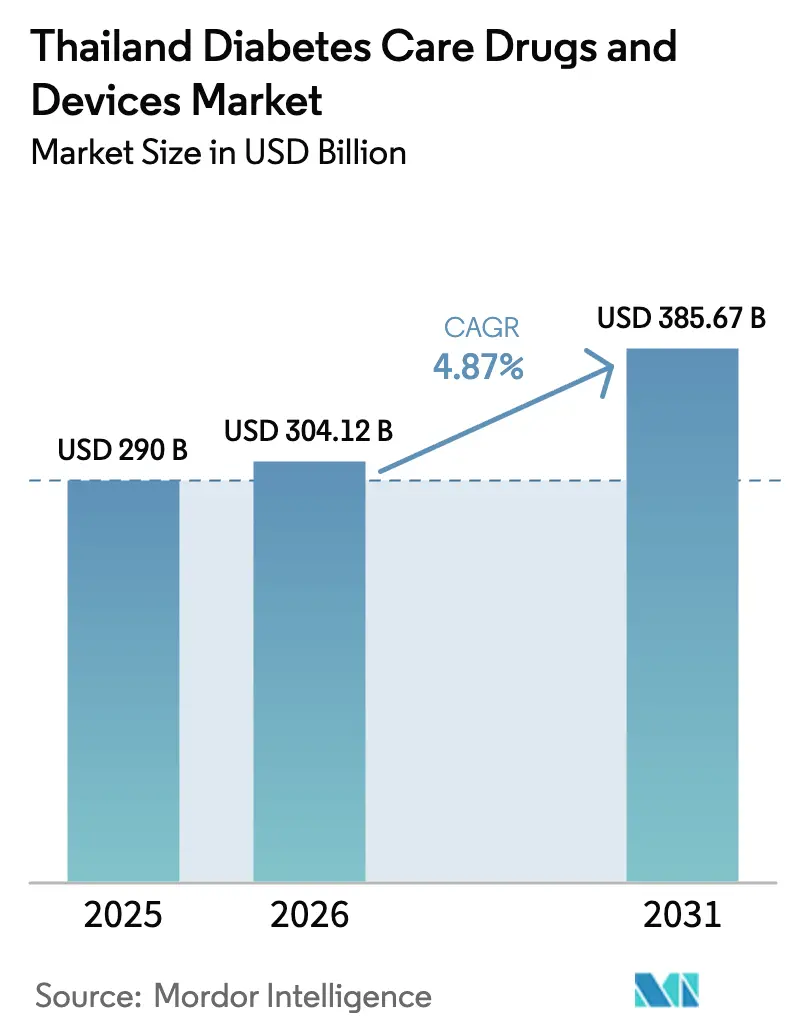
| Base Year Market Size (2025) | USD 290 Billion |
| Market Size (2026) | USD 304.12 Billion |
| Market Size (2031) | USD 385.67 Billion |
| Growth Rate (2026 - 2031) | 4.87 % |
Major Players *Disclaimer: Major Players sorted in no particular order Image © Mordor Intelligence. Reuse requires attribution under CC BY 4.0. | |
Thailand Diabetes Care Drugs And Devices Market Analysis by Mordor Intelligence
The Thailand Diabetes Care Drugs And Devices Market size was valued at USD 290 million in 2025 and estimated to grow from USD 304.12 million in 2026 to reach USD 385.67 million by 2031, at a CAGR of 4.87% during the forecast period (2026-2031).
Healthcare systems have been significantly disrupted and strained at every stage of the rapid spread of COVID-19. Several countries, notably the Thai government, have implemented home quarantine or home isolation programs to prevent medical collapse and improve inadequate medical resources. The number of people infected with COVID-19 in hospitals has increased. Previous studies have shown that telemedicine-based COVID-19 home monitoring programs are feasible in several countries to fill treatment gaps during health worker shortages. These programs monitored symptom intensity and informed patients to seek additional treatment if needed. During the COVID-19 epidemic, hospital capacity was insufficient, and a home isolation system was introduced.
The Thai government has launched education and support on Diabetes Self-Management (DSMES) and telemedicine glycemic control, along with outcomes for COVID-19 patients who have been quarantined at home. In August 2022, the National Research Council of Thailand (NRCT) unveiled a prototype of a Breathalyzer detector that can detect people infected with the new coronavirus with 97% accuracy.
The Thai government has provided medical supplies such as blood glucose meters, blood glucose test strips, lancets and urine test strips donated or purchased with donations during the COVID-19 crisis. Supplies were stored in a central location and distributed by volunteers using same-day commercial delivery services. Pre-filled disposable insulin pens, both long-acting and short-acting analogues, have been chosen instead of insulin vials to reduce dosing errors, especially in insulin patients. Insulin pens were stored at the clinic and distributed by same-day delivery service in temperature-controlled containers.
Thus, the above factors are expected to drive market growth over the forecast period.
Note: Market size and forecast figures in this report are generated using Mordor Intelligence’s proprietary estimation framework, updated with the latest available data and insights as of 2026.
Thailand Diabetes Care Drugs And Devices Market Trends and Insights
The continuous Glucose Monitoring Segment is Expected to Witness the Highest Growth Rate Over the Forecast Period
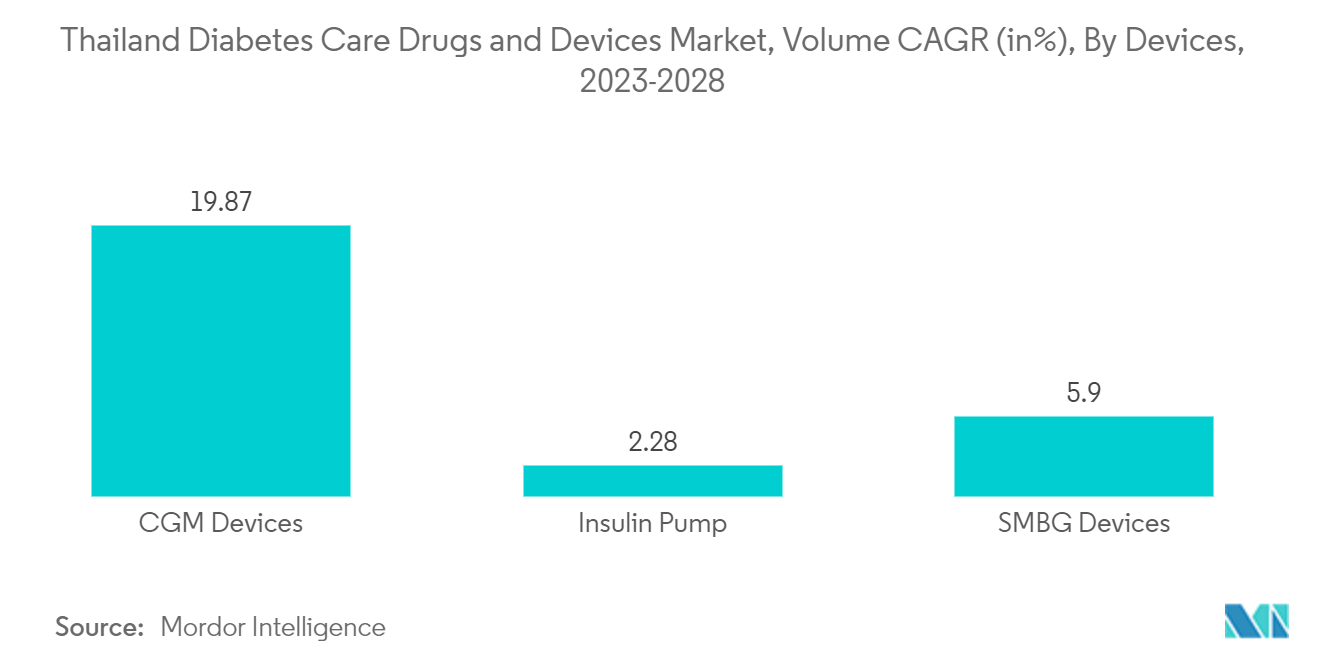
The continuous glucose monitoring segment is expected to register a CAGR of more than 11% over the forecast period.
A continuous blood glucose monitor is a new technology blood glucose monitor that monitors blood glucose levels day and night. Sensors: Sensors are disposable devices placed under the skin to measure blood sugar levels. The sensor can be used for several days before needing replacement. A ruggedized device consists of a transmitter and a receiver. The transmitter is connected to the sensor, and the reader (receiver) receives and displays the readings. This device provides real-time measurements. This sensor device is a small electrode that measures the blood sugar level of people with diabetes.
The sensor continuously measures glucose levels in the body through tiny threads inserted under the skin and records glucose levels. Within 5 seconds, the user can download the data stored in the sensor. The Indian continuous blood glucose monitoring device market considers the FreeStyle Libre Pro sensor (14-day run), Dexcom's G4 sensor (10-day run), Medtronic's Guardian sensor (7-day run), and fluorescence sensors.
The introduction of low-cost CGM in the next few years and government support through subsidies for diabetes monitoring devices may allow CGM device makers to enter the promising Thailand market.
Rising diabetes prevalence in Thailand driving the market in the forecast year
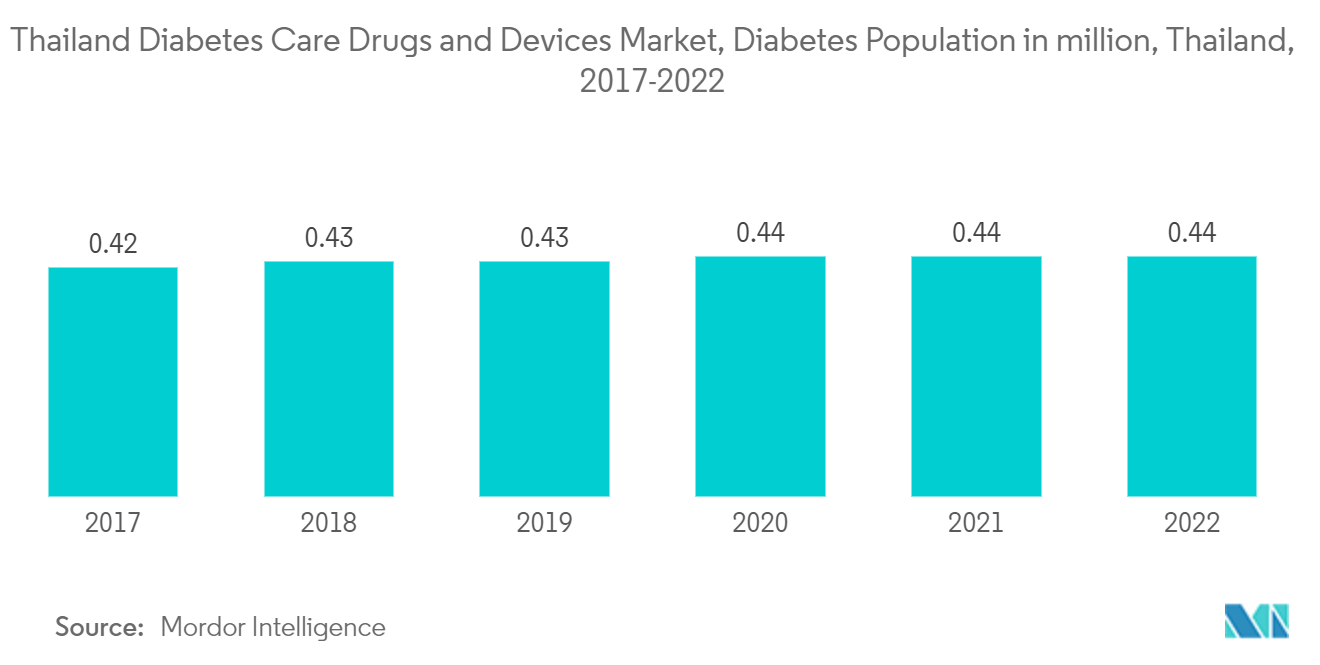
The World Health Organization (WHO) stated that diabetes care accounted for about 11% of Thailand's total healthcare expenditure in 2022, a figure on par with other countries in the region. By 2030, that number is projected to grow by 41%, effectively doubling the social burden of diabetes. There are only 272 endocrinologists (specialists) in Thailand. In Thailand, 3 out of 5 of her diabetics on treatment do not meet recommended treatment goals. According to the WHO report, the five countries most likely to suffer from diabetes include Indonesia, China, India, Brazil, and the United States.
Thailand is facing an increase in diabetes due to lifestyle changes, leading to a rise in obesity. Lack of exercise and unhealthy diets are more common in Thailand's urban areas. The Thai government is trying to combat the threat of diabetes through programs such as the Thailand Healthy Lifestyle Strategic Plan 2011-2020. Such programs help people with diabetes understand the benefits of the various diabetes devices.
Diabetes is one of the world's major health problems today, and its prevalence is steadily increasing. According to the World Diabetes Federation, 450 million people worldwide already have diabetes, which is expected to reach 642 million by 2041. Asian countries account for more than 60% of diabetics worldwide2. In addition, compared to other races, Asians may be more prone to type 2 diabetes and at higher risk of diabetic complications.
Blood pressure control is an important part of diabetes management. In addition, people with diabetes are often recommended certain antihypertensive drugs to protect against kidney and heart complications, even if they do not have high blood pressure. No scientific evidence links these antihypertensive drugs to the likelihood or effects of COVID-19 infection. Hyperglycemia (hyperglycemia) is a symptom of diabetes caused by a lack of insulin hormones, problems with insulin secretion, or both.
High blood sugar can cause vital organs to malfunction, deteriorate, and be destroyed. Changing and non-changing variables can contribute to uncontrolled blood sugar levels. Gender, age, duration of diabetes, micro- and macrovascular complications, and comorbidities are immutable factors. Examples of reversible factors include behavioral and psychosocial problems such as poor eating habits, lack of exercise, obesity, not taking prescribed medications as prescribed by a doctor, stress, sadness, anxiety, and especially diabetes-Related concerns, etc.
The increasing diabetes prevalence and the above factors will likely drive segment growth over the forecast period.
Competitive Landscape
Novo Nordisk partnered with Abbott Diabetes Care, which may also assist to enable insulin statistics to be shared between Novo Nordisk-connected insulin pens and digital fitness equipment well suited to the FreeStyle Libre portfolio of products.
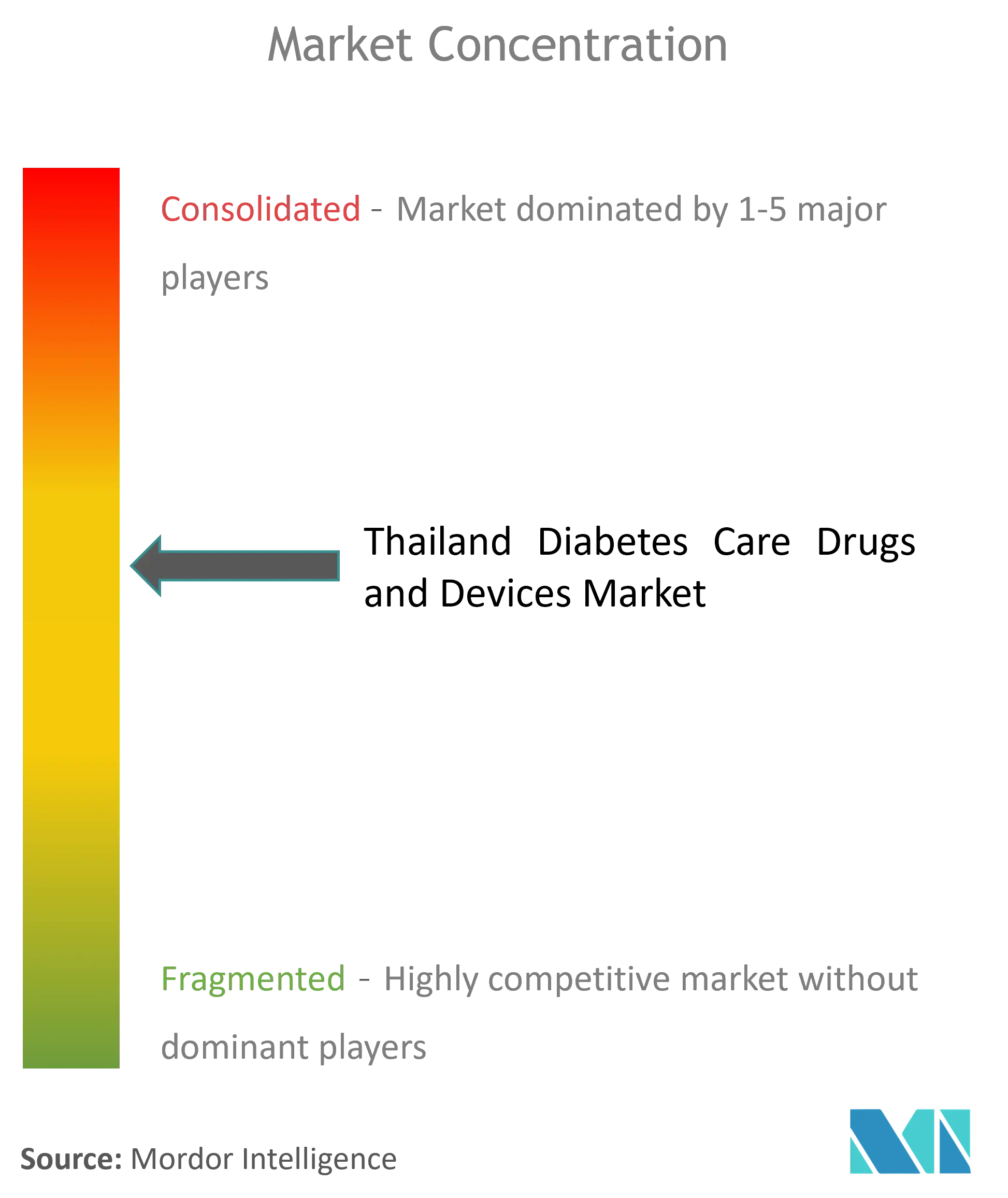
Thailand Diabetes Care Drugs And Devices Industry Leaders
-
Medtronics
-
Roche
-
NovoNordisk
-
Sanofi
-
Omnipod
- *Disclaimer: Major Players sorted in no particular order
Market Opportunities and Future Outlook
Thailand is expanding structured, system-level interventions for type 2 diabetes alongside broader digital health adoption, which creates room for therapies, monitoring solutions, and supporting services to be built into routine care. The Ministry of Public Health has implemented the National Diabetes Remission Programme as a national policy. As of 2026, 215 NCD clinics are participating, with targets tied to HbA1c improvement and medication reduction. The program emphasis on lifestyle modification, follow-up, and measurable outcomes supports treatment pathways that combine pharmacotherapy with monitoring, adherence tools, and clinic workflow integration.
Digital care enablement is another near-term opportunity, supported by Ministry of Public Health Digital Health Sandbox initiatives and early-2026 clinical evidence on context-specific guidelines that use digital monitoring to improve HbA1c and body weight in Thai urban populations. For manufacturers and channel partners, this strengthens the value proposition for connected offerings that link devices and drugs, including data-sharing between connected insulin pens and CGM platforms (as referenced in the competitive landscape in the Novo Nordisk and Abbott Diabetes Care collaboration). Products that simplify titration and reduce dosing errors, such as disposable insulin pens and remote monitoring workflows used during home isolation periods, also align with care models that increasingly support patients outside of clinical settings.
Recent Industry Developments
- June 2026: Mitsubishi Tanabe Pharma (Thailand) Co., Ltd. received marketing authorization in Thailand for CANALIA Tablets, a fixed-dose combination of TENELIA and CANAGLU for type 2 diabetes. The approval adds another oral combination option that can support regimen simplification and heighten competition across DPP-4 and SGLT2-based therapies.
- January 2026: Novo Nordisk Pharma (Thailand) Ltd. launched the eZTracker blockchain-based traceability system for Wegovy in Thailand, extending its authentication approach following earlier implementation for Ozempic in 2025. The system strengthens supply chain integrity for high-demand injectable metabolic medicines and supports confidence among providers and patients in product authenticity.
- April 2025: Novo Nordisk launched Wegovy in Thailand, expanding access to a GLP-1-based therapy used for weight management that is closely linked to cardiometabolic risk reduction. The introduction broadened the addressable market around obesity and type 2 diabetes management and increased focus on injectable innovation and distribution readiness in Thailand.
Research Methodology Framework and Report Scope
Market Definition and Coverage
This market covers the value of medicines and medical devices used in Thailand to treat diabetes and monitor blood glucose, as sold through hospital and retail channels and used in clinical and home settings.
Scope exclusions: We exclude diet programs, general weight-loss drugs not prescribed for diabetes care, and broader lab testing services that are not part of glucose monitoring devices.
Segmentation Overview
- Devices
- Monitoring Devices
- Self-monitoring Blood Glucose Devices
- Continuous Blood Glucose Monitoring
- Management Devices
- Insulin Pump
- Insulin Syringes
- Insulin Cartridges
- Disposable Pens
- Monitoring Devices
- Drugs
- Oral Anti-Diabetes Drugs
- Insulin Drugs
- Combination Drugs
- Non-Insulin Injectable Drugs
Data Sources, Market Sizing, and Validation
Desk Research
Desk research starts with establishing the demand pool and care delivery context in Thailand, then mapping how that translates into medicines and device usage. We used public health statistics and treatment guidance to understand the diagnosed population, therapy patterns, and monitoring frequency, before building price and mix assumptions.
Common public sources include Thailand Ministry of Public Health releases, National Health Security Office benefit and reimbursement updates, WHO and IDF diabetes indicators, World Bank macro series for inflation and exchange rates, and UN Comtrade import data for relevant device categories. We also reviewed company annual reports, investor presentations, and reputable local healthcare press. Where public data was thin, we selectively used paid subscriptions for company financial intelligence, patent lookups, and shipment-level import or export checks. This list is illustrative, and other sources were also reviewed for data collection, validation, and clarification.
Primary Interviews and Surveys
Primary work was used to pressure test what desk sources could not confirm cleanly, especially therapy mix shifts, channel markups, and how often patients replace or refill products. We spoke with a spread of stakeholders, including clinicians, pharmacists, distributors, and device-focused sales leaders, across major care centers and secondary cities so the assumptions could be adjusted to actual purchasing behavior.
Distribution of primary research fieldwork respondents
| Company type | Respondent position |
|---|---|
| Top tier: 37% | CXOs: 14% |
| Mid tier: 46% | Functional/Unit leaders: 27% |
| Smaller Players: 17% | Managers: 59% |
Market-Sizing & Forecasting
Sizing is built using a blended approach that reconstructs the top-down demand pool from diabetes prevalence and the treated population, then translates that into annual therapy and device consumption. In practice, we estimate how many people are treated, what share uses insulin versus oral therapy, how often prescriptions are refilled, and how frequently testing supplies and sensors are replaced, and then form the value using average selling prices in local channels.
To keep the totals realistic, we corroborate outputs using selective bottom-up checks, including sampled price points from hospital and retail settings, distributor channel checks on volume direction, and supplier-side revenue splits where they are disclosed. Inputs with the most impact on the model include reimbursement coverage changes under public schemes, insulin analog versus human insulin mix, adoption of continuous glucose monitoring versus self-monitoring strips, injection device preferences (pens versus syringes), and local currency movement that affects imported device pricing.
Forecasts use scenario analysis supported by trend lines for treated population growth and mix changes, then get validated with interview consensus on likely price progression and adoption timing. Where direct volume indicators were not available for smaller subcategories, we used proxy relationships (for example, refill cycles and typical monthly usage) and held assumptions conservative until they were confirmed through follow-up calls.
Data Validation & Update Cycle
Validation is done in several passes so the final numbers remain consistent with real-world signals. We cross-check the model output against independent indicators such as diabetes burden trends, reimbursement-driven utilization changes, and observable price movement for imported devices, then investigate any large variances before sign-off.
During review, assumptions are re-tested when a segment shows unexpected jumps, when currency moves sharply, or when interview feedback indicates a change in prescribing or monitoring behavior. Reports are refreshed annually, with interim updates when material events occur, and a final pre-delivery check is completed so clients receive the latest updated view.
Mordor Intelligence's Thailand Diabetes Care Drugs and Devices Market Size Measured Against Other Published Estimates
Published market sizes for diabetes drugs and devices in Thailand can differ substantially because each publisher draws the boundary differently, uses different price timing, and updates assumptions on different schedules. In a market where imported device pricing can move quickly with exchange rates and procurement tenders, the refresh rhythm and conversion timing matter as much as the volume logic.
Key gap drivers include whether estimates include adjacent metabolic drugs, how insulin and non-insulin injectables are counted across hospital and retail channels, and how monitoring is valued when users shift from strips to CGM sensors. Another driver is ASP building, where some studies apply a single blended price and others separate public reimbursement pricing from private-pay pricing, which can change the final total. By re-checking currency conversion windows and refreshing price and mix inputs close to publication, Mordor Intelligence reduces drift that can build up when older exchange rates or outdated CGM adoption assumptions are carried forward.
Benchmark comparison
| Source | Market Size | Gaps in Research Methodology |
|---|---|---|
| Mordor Intelligence | USD 290 M (2025) | |
| Regional Consultancy A | USD 340 M (2025) | Uses a broader therapy boundary that appears to fold in adjacent metabolic medicines and applies a higher blended ASP, which can overstate value when public reimbursement pricing dominates volumes. |
| Industry Publisher B | USD 250 M (2024) | Relies on an earlier base year and older currency conversion timing, and it likely under-weights the shift toward CGM sensors and pen-based delivery, which lifts device value even when unit volumes grow slowly. |
Taken together, the spread mainly comes from boundary choices, base-year timing, and how prices are translated from local channels into a single USD series. Our approach stays traceable because the totals can be walked back to treated population, usage cycles, and channel-appropriate ASPs that can be re-checked as conditions change.
Key Questions Answered in the Report
How big is the Thailand diabetes care drugs and devices market?
The Thailand diabetes care drugs and devices market size is expected to reach USD 304.12 million in 2026 and grow at a CAGR of 4.87% to reach USD 385.67 million by 2031.
What is the current Thailand diabetes care drugs and devices market size?
In 2026, the Thailand diabetes care drugs and devices market size is expected to reach USD 304.12 million.
Who are the key players in Thailand diabetes care drugs and devices market?
Medtronics, Roche, NovoNordisk, Sanofi and Omnipod are the major companies operating in the Thailand Diabetes Drugs And Devices Market.
What years does this Thailand diabetes care drugs and devices market cover, and what was the market size in 2025?
In 2025, the Thailand diabetes care drugs and devices market size was estimated at USD 304.12 million. The report covers the Thailand diabetes care drugs and devices market historical market size for years: 2019, 2020, 2021, 2022, 2023 and 2024. The report also forecasts the Thailand diabetes care drugs and devices market size for years: 2026, 2027, 2028, 2029, 2030 and 2031.