
Market Overview
| Study Period | 2021 - 2032 |
|---|---|
| Forecast Data Period | 2027 - 2032 |
| Historical Data Period | 2021 - 2025 |
| Base Year Market Size (2026) | USD 353.53 Million |
| Market Size (2027) | USD 367.60 Million |
| Market Size (2032) | USD 446.81 Million |
| Growth Rate (2027 - 2032) | 3.98 % |
Major Players *Disclaimer: Major Players sorted in no particular order Image © Mordor Intelligence. Reuse requires attribution under CC BY 4.0. | |
Sweden Cardiovascular Devices Market Analysis by Mordor Intelligence
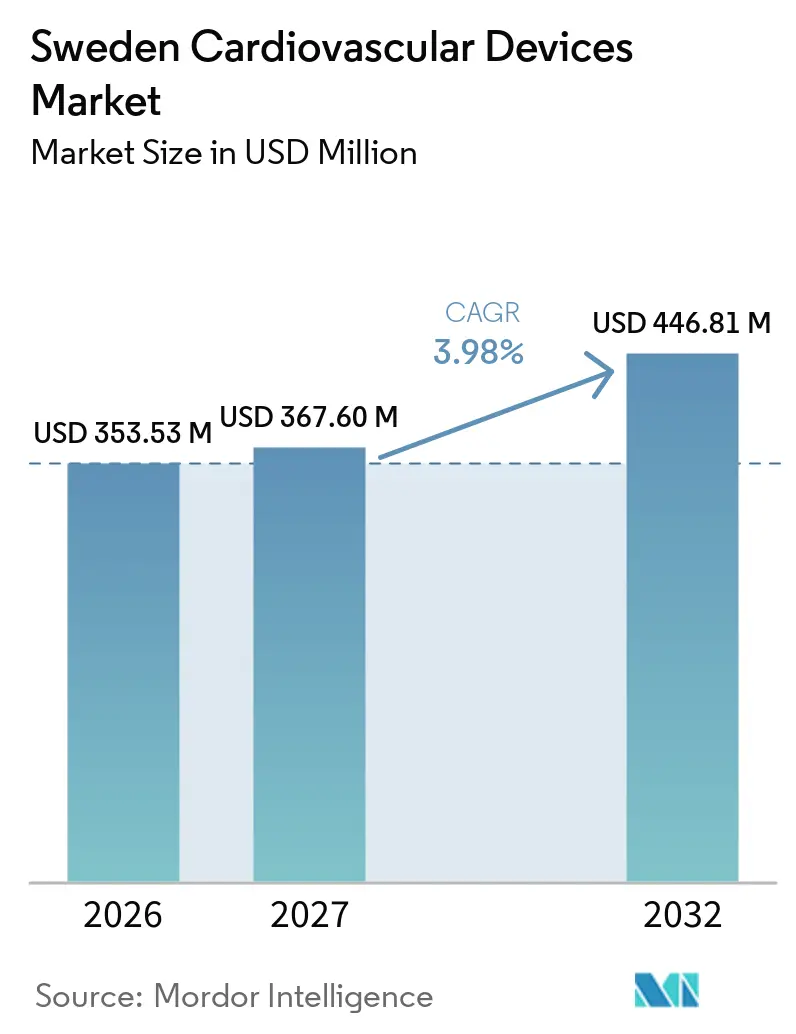
The Sweden Cardiovascular Devices Market size is projected to expand from USD 353.53 million in 2026 and USD 367.60 million in 2027 to USD 446.81 million by 2032, registering a CAGR of 3.98% between 2027 and 2032.
Robust digital health infrastructure, high life expectancy, and rigorous value-based reimbursement continue to shape the Swedish cardiovascular devices market. These factors steer manufacturers toward clinically proven, cost-effective solutions that align with Sweden’s evidence-based medicine objectives. Growth is further supported by an aging population and rising procedure volumes for minimally invasive therapies. Diagnostic and monitoring technologies, supported by artificial intelligence and remote connectivity, are expanding faster than legacy interventional categories as healthcare providers advance digital healthcare delivery. In parallel, Sweden’s early preparedness for the EU Medical Device Regulation (MDR) has limited supply disruptions relative to peer markets while encouraging the introduction of next-generation products that meet higher clinical evidence standards.
Key Report Takeaways
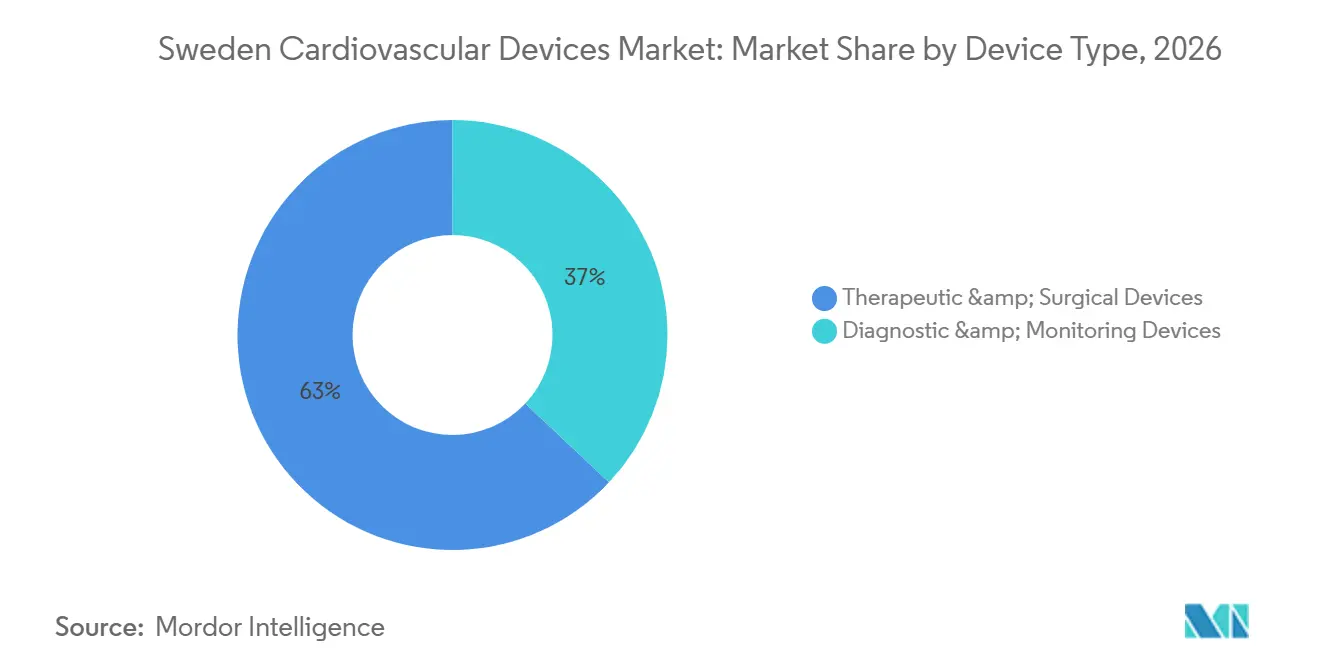
- By device type: Therapeutic and surgical systems commanded 62.98% of the cardiovascular devices market share in 2026, whereas diagnostic and monitoring platforms are advancing at a 5.55% CAGR through 2032.
- By application: Coronary artery disease retained 41.10% share of the cardiovascular devices market size in 2026, while structural heart disease posts the fastest 6.15% CAGR through 2032.
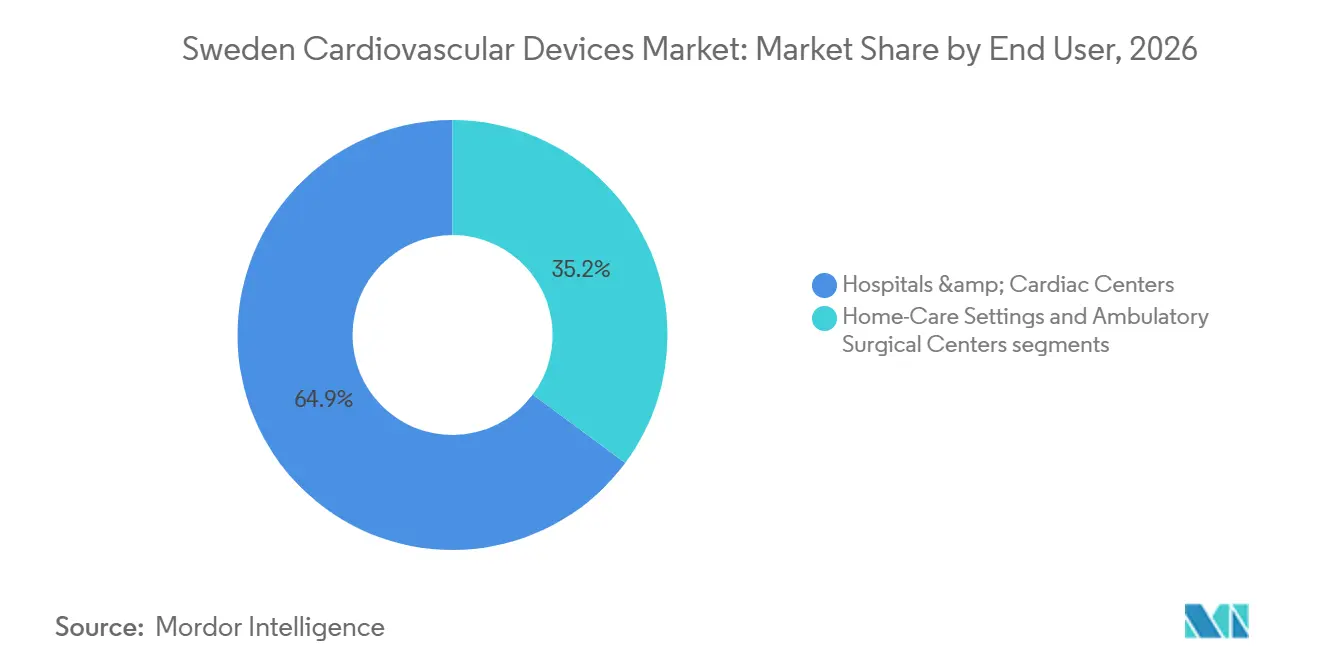
- By end user: Hospitals and cardiac centers held 64.85% of total 2026 revenue, whereas ambulatory surgical centers record the highest projected growth at 7.6% CAGR to 2032.
Note: Market numbers in this report are based on Mordor Intelligence's proprietary estimation framework, which combines nine months of actuals with Q4 projections for base year 2026.
Sweden Cardiovascular Devices Market Trends and Insights
Drivers Impact Analysis*
| Driver | % Impact on CAGR Forecast | Geographic Relevance | Impact Timeline |
|---|---|---|---|
| Rising prevalence of cardiovascular disease & ageing population | 1.30% | Sweden national, with regional variations | Long term (≥ 4 years) |
| National registries enabling real-world evidence adoption | 0.90% | Sweden national, aligned with Nordic cooperation | Medium term (2-4 years) |
| Rapid hospital shift to minimally-invasive & transcatheter procedures | 1.00% | Sweden national, led by university hospitals | Medium term (2-4 years) |
| Government incentives for digital health & remote cardiac monitoring | 0.80% | Sweden national, piloted in Region Stockholm | Short term (≤ 2 years) |
| Green procurement mandates driving OEM sustainability innovation | 0.60% | Sweden national, EU-wide implications | Medium term (2-4 years) |
| Source: Mordor Intelligence | |||
Rising prevalence of cardiovascular disease & ageing population
Cardiovascular disease accounts for one-quarter of Swedish mortality, with ischemic heart disease and stroke topping the list among seniors 65 + . The population segment aged 80 + is forecast to rise from 5.2% to 7.1% by 2030, prompting the National Board of Health and Welfare to estimate a 40% jump in cardiovascular interventions over the same horizon. Higher-than-European-average atrial fibrillation prevalence underpins demand for alternatives to oral anticoagulants, such as left atrial appendage (LAA) closure implants that gained selective reimbursement in late 2024. Sweden’s exhaustive registries—Patient Register, Cause of Death Register and SWEDEHEART—supply longitudinal real-world evidence that validates device effectiveness and informs procurement criteria. Taken together, a growing elderly cohort, strong epidemiologic tracking and universal access mandate continued expansion of the cardiovascular devices market.
National registries enabling real-world evidence adoption
The SWEDEHEART platform captures data from every catheterization laboratory and surgical center, tracking more than 200,000 procedures yearly and offering unmatched transparency for device outcomes. Registry-based randomized trials such as TASTE have validated the feasibility of large-scale pragmatic evidence generation without exorbitant costs, shortening the path to reimbursement in Sweden and abroad. Alignment with EuroHeart widens cross-border data harmonization, enhancing the export potential of Sweden-generated evidence for CE-marked products lakemedelsverket.se. TLV routinely references registry findings for value assessments, giving manufacturers that conduct Swedish trials a competitive edge in the cardiovascular devices market. As real-world data continues to inform clinical guidelines, registry infrastructure strengthens Sweden’s appeal as a development hub.
Rapid hospital shift to minimally-invasive & transcatheter procedures
Transcatheter aortic valve replacement volumes jumped 25% in 2024, and all seven university hospitals now use TAVR as first-line therapy in appropriate cases. Region Stockholm’s same-day discharge model for cardiac catheterizations has cut episode-of-care costs by 30% while maintaining comparable safety results, bolstering political and payer support for minimally invasive workflows . National guidelines drafted by the National Board of Health and Welfare favor percutaneous techniques following pharmacoeconomic evaluations that demonstrate reduced ICU stays and rehospitalization rates socialstyrelsen.se. Concentrated surgical expertise at Karolinska, Sahlgrenska and Skåne facilitates structured training, helping regional hospitals replicate best practice and fueling decentralized growth across the cardiovascular devices market. Ongoing participation in European transcatheter registries cements Sweden’s leadership in procedural innovation.
Government incentives for digital health & remote cardiac monitoring
The central government has allocated SEK 2 billion to digital health infrastructure, specifically encouraging cardiovascular solutions that curb hospitalizations government.se. Region Stockholm’s pilot for remote heart failure monitoring decreased admissions by 20% and has since been rolled out nationally under a unified reimbursement code, widening market access for qualified platforms regionstockholm.se. The Medical Products Agency’s fast-track route for software as a medical device trimmed average approval timelines by six months, positioning Sweden as an early-adopter environment for AI-enabled diagnostics lakemedelsverket.se. Harmonized electronic health record standards through the National Patient Summary make data integration straightforward, speeding provider uptake of connected devices. Government backing, streamlined approvals and interoperable IT architecture together reinforce the strategic importance of digital cardiovascular monitoring within the cardiovascular devices market.
Restraints Impact Analysis*
| Restraint | % Impact on CAGR Forecast | Geographic Relevance | Impact Timeline |
|---|---|---|---|
| EU MDR transition increasing time-to-market & costs | -0.70% | Sweden as EU member state | Medium term (2-4 years) |
| Centralised regional tenders squeezing device prices | -0.40% | Sweden national, SKR coordination | Short term (≤ 2 years) |
| Limited reimbursement for novel LAA & wearable devices | -0.50% | Sweden national, TLV evaluation framework | Short term (≤ 2 years) |
| Source: Mordor Intelligence | |||
EU MDR Transition Increasing Time-to-market & Costs
Swedish manufacturers report 15-20% higher compliance expenditure for Class III cardiovascular products under EU MDR, eroding margins for niche devices. Although the Medical Products Agency engaged early with notified bodies, capacity bottlenecks have added 4-6 months to average approval cycles, delaying commercial launches and risking product withdrawals in low-volume categories. Smaller importers struggle to meet extensive clinical data requirements, constricting portfolio diversity in the cardiovascular devices market. Healthcare regions voice concern that certain specialized implants may disappear from procurement lists, potentially disrupting continuity of care. While Sweden participates in EU-wide coordination to clarify grey areas, lingering compliance uncertainty tempers investment in high-risk device R&D.
Limited reimbursement for novel LAA & wearable devices
TLV applies rigorous cost-effectiveness thresholds before granting broad coverage, and evidence demands for novel LAA systems exceed those for pharmaceuticals due to the expectation of demonstrable superiority over anticoagulation therapy. Interim regional funding pathways create patchy access and frustrate uniform adoption, limiting near-term revenue potential even after CE marking. Wearables face assessment via legacy device frameworks that may not capture preventive value, slowing listing decisions despite favorable clinical readouts. Manufacturers must therefore generate Sweden-specific budget-impact models, lengthening market entry timelines and bifurcating launch strategies between professional and consumer channels. Conservative reimbursement patterns, although designed for fiscal prudence, create headwinds for products focused on lifestyle modification rather than acute intervention.
*Our forecasts treat driver/restraint impacts as directional, not additive. The impact forecasts reflect baseline growth, mix effects, and variable interactions.
Segment Analysis
By Device Type: Therapeutic Leadership Amid Digital Transformation
Therapeutic and surgical systems accounted for 62.98% of the cardiovascular devices market in 2026, underpinned by Sweden’s advanced cardiac surgery programs and mature reimbursement infrastructure that rewards long-term outcome data. The cardiovascular devices market size for therapeutic systems is projected to expand in line with a strong 3.92% CAGR as Karolinska’s 400 + annual TAVR caseload sets a Nordic benchmark and attracts regional referrals, supporting higher-value sales of delivery catheters, replacement valves and perfusion equipment. Hospitals prioritize drug-eluting stents, cardiac resynchronization devices and extracorporeal systems with proven cost-utility, a stance that favors established vendors such as Getinge AB, Medtronic and Abbott. Central procurement via SKR strengthens price discipline yet assures predictable demand for technologies that clear TLV’s health-economic hurdle.
Diagnostic and monitoring equipment represent the fastest-growing product class at 5.55% CAGR to 2032, aided by government incentives for remote monitoring, AI-enhanced electrocardiography and wearable sensors. The cardiovascular devices market is witnessing an influx of software-centric entrants leveraging Sweden’s electronic health record interoperability to embed analytics into routine care. Remote heart-failure monitoring platforms, reimbursed since 2024, have spurred regional tenders focusing on data security and integration features rather than hardware price alone. The Medical Products Agency’s six-month rapid-review track for breakthrough software further accelerates rollout, keeping diagnostic vendors firmly on investors’ radar.
By Application: Structural Heart Disease Innovation
Structural heart disease therapies are advancing at a 6.15% CAGR, the fastest among clinical applications, even though coronary interventions still dominate revenue with 41.10% share of the cardiovascular devices market size in 2026. Participation in NOTION and other pan-Nordic aortic and mitral trials provides Swedish centers with first access to next-generation valves and repair systems, bolstering procedure counts at Sahlgrenska and generating early real-world evidence for payers. Increased indications for low-risk patients and streamlined reimbursement approvals for early-adoption programs create a positive feedback loop that sustains growth. Device makers respond by establishing local training centers, highlighted by Karolinska’s SEK 50 million government-funded Nordic hub inaugurated in 2025, which anchors ongoing skill diffusion.
Coronary artery disease maintains market leadership because of Sweden’s dense network of catheterization labs and registry-driven quality benchmarking. SWEDEHEART’s records covering 50,000 annual percutaneous coronary interventions yield granular insights that improve stent selection and procedural protocols ucr.uu.se. Drug-eluting stents permeate 95% of eligible cases, ensuring stable baseline demand despite slowing growth relative to structural heart therapies. The cardiovascular devices market also sees steady momentum in arrhythmia management, where remote monitoring has become standard of care, and in heart-failure implants benefiting from new national guidelines endorsing device-based interventions. Hypertension remains an emerging arena for digital therapeutics as primary care shifts toward proactive management supported by connected blood-pressure monitors.
By End-User: University Hospital Concentration
Hospitals and cardiac centers absorbed 64.85% of cardiovascular device purchases in 2026, reflecting Sweden’s strategy of concentrating complex care at university institutions that act as national referral hubs. The cardiovascular devices market derives two-thirds of its turnover from Karolinska, Sahlgrenska and Skåne, where high case complexity sustains demand for premium heart-lung machines, TAVR kits and mapping systems. Centralized expertise supports uniform protocols and predictable procurement volumes, enabling manufacturers to align service packages and training commitments with long-term framework agreements negotiated at regional level.
Ambulatory surgical centers are projected to post a 7.6% CAGR through 2032 as same-day discharge models migrate from Region Stockholm pilots to nationwide rollout. The cardiovascular devices market therefore leans toward compact, single-use or rapidly reprocessable equipment optimized for outpatient settings. Device vendors catering to this segment highlight shorter setup times and integrated digital documentation features that dovetail with Sweden’s paperless workflow mandates. Home monitoring forms a nascent yet promising end-user domain, especially for chronic heart-failure and hypertension management supported by reimbursed telehealth programs.

Geography Analysis
Sweden serves as the Nordic launchpad for cardiovascular devices, pairing early-stage EU MDR compliance with world-class registries that give manufacturers real-world evidence for global filings. Nordic joint-procurement agreements further lower entry barriers by pooling demand with Norway, Denmark and Finland.
Region Stockholm represents roughly 25% of the population yet an outsized share of device revenue thanks to Karolinska University Hospital, abundant digital-health start-ups and proactive remote-monitoring budgets. Västra Götaland, anchored by Sahlgrenska, dominates structural-heart volumes and draws cross-border patients from western Norway. Skåne capitalizes on its Øresund corridor ties to Denmark, while sparsely populated northern counties lean on tele-cardiology, helicopter EMS and rugged devices built for harsh climates.
Internationally, Getinge AB exports nine in ten locally made systems, and multinationals exploit Sweden’s data-rich environment for FDA and PMDA post-market studies getinge.com. Initiatives like the Nordic Trial Alliance expand registry cohorts and amplify Sweden’s influence in value-based procurement across Europe.
Regulatory Landscape
Cardiovascular devices placed on the Swedish market are governed by EU Regulation (EU) 2017/745 (MDR) and require CE marking for market access. Läkemedelsverket (the Swedish Medical Products Agency, MPA) serves as the competent authority for market surveillance, vigilance, and oversight of economic operators, rather than issuing national pre-market device approvals. Economic operators such as manufacturers, importers, and distributors must meet MDR role obligations and register with the Swedish MPA when applicable, with post-market surveillance and vigilance expectations particularly relevant for high-risk cardiovascular implants used in university hospitals and across regional care pathways.
For drug-device combinations, the regulatory pathway depends on the product's primary mode of action. Products regulated as medicinal products follow the medicinal framework, while MDR-related evidence is still required for the device constituent part when integral combinations apply. Under MDR Article 117, integral drug-device combinations submitted as part of a marketing authorization dossier require a Notified Body opinion on the device constituent's conformity with the General Safety and Performance Requirements (GSPR), reinforcing the need for aligned clinical evidence, technical documentation, and coordinated regulatory planning for cardiovascular device-drug combination offerings in Sweden.
Value Chain Analysis
The Sweden cardiovascular devices value chain starts with R&D and clinical evidence generation, supported by national registries and hospital-based procedural datasets. Design controls, quality management, and conformity assessment follow to achieve CE marking under the EU MDR. Manufacturers and authorized representatives then build and maintain technical documentation, clinical evaluation, and post-market surveillance systems, while Läkemedelsverket oversees registration obligations for relevant economic operators and carries out market surveillance and vigilance activities, especially for high-risk implants and connected monitoring solutions.
Commercialization involves Swedish and multinational manufacturers (supported by local service organizations), importers and distributors, and regional procurement bodies that contract devices through framework agreements. Products then reach university hospitals, cardiac centers, ambulatory surgical centers, and reimbursed remote monitoring pathways. Centralized regional tenders and value-based assessments shape channel strategy and pricing, which pushes suppliers to bundle training, servicing, cybersecurity, and integration support for National Patient Summary-compatible workflows. The chain also depends on resilient sterile supply and traceability across logistics, inventory management, and post-market feedback loops.
Competitive Landscape
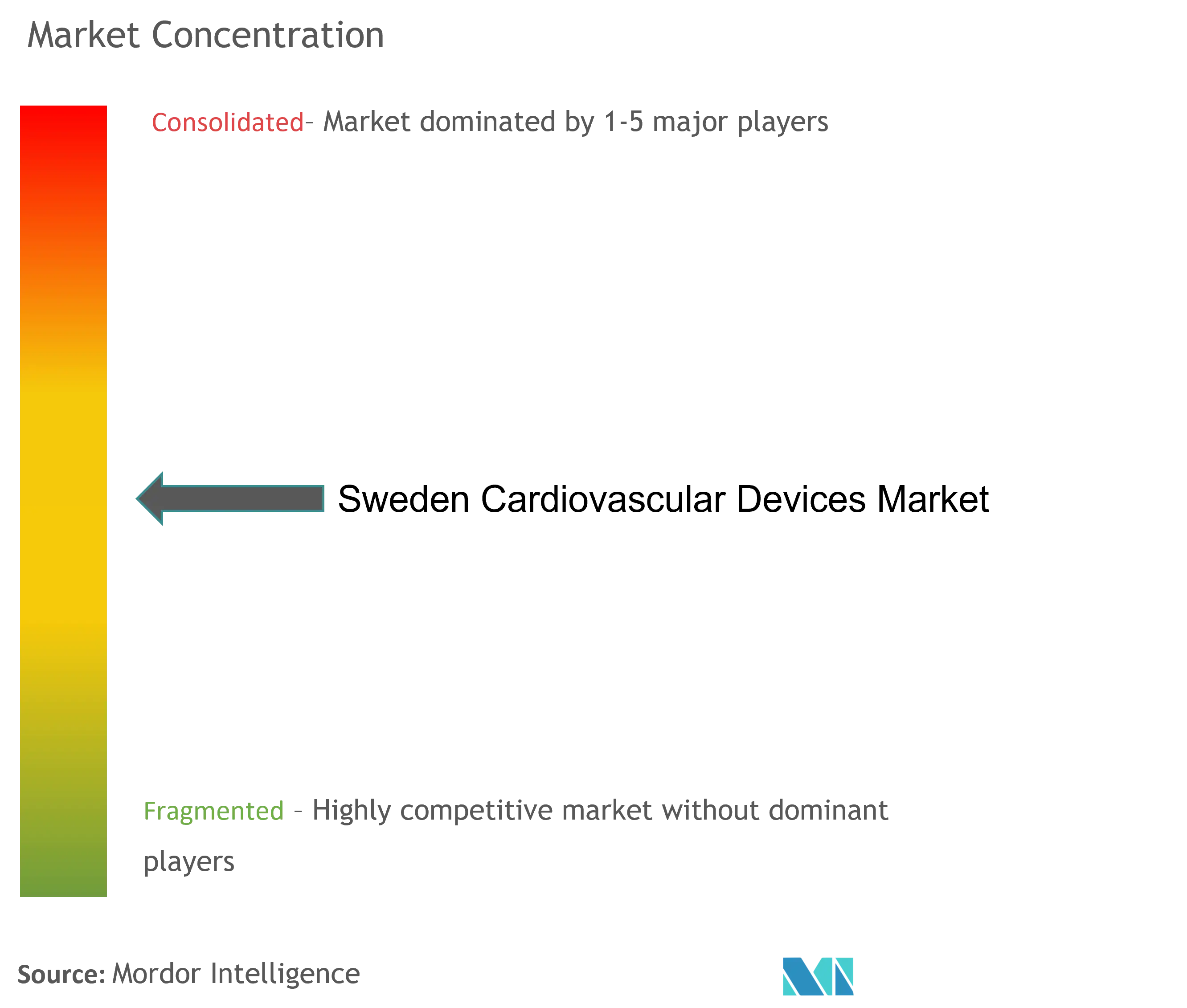
The cardiovascular devices market in Sweden exhibits moderate concentration: multinational leaders dominate high-revenue therapy classes yet domestic suppliers hold significant share in niche surgical technologies and services. Getinge AB anchors the national ecosystem with heart-lung machines and perfusion disposables widely specified by university hospitals, bolstered by a SEK 1.2 billion acquisition in March 2025 that broadened its cardiac-surgery suite getinge.com. Medtronic, Abbott and Boston Scientific vie for coronary and structural heart franchises, differentiating less on unit price and more on registry-documented outcomes and device longevity to satisfy TLV’s stringent cost-utility thresholds. Framework agreements negotiated through SKR prevent price outliers yet assure volume security for selected suppliers, encouraging multiyear service and training commitments aligned with national guidelines. Competitive positioning is increasingly shaped by digital competencies. Swedish start-ups and established imaging vendors capitalize on the Medical Products Agency’s expedited avenue for breakthrough software, enabling first-to-market AI ECG algorithms or cloud-based hemodynamic analytics. Interoperability with the National Patient Summary is a procurement prerequisite, screening out solutions reliant on proprietary data silos. Vendors that package hardware, analytics and telehealth support under a single service contract enjoy advantages as regions seek turnkey solutions that minimize IT integration burden. Sustainability considerations also influence tender scoring: Swedish Medtech guidelines encourage carbon-light manufacturing, reusable instrument loops and transparent lifecycle reporting, tilting awards toward brands capable of documenting environmental impact reductions.
Strategic moves during 2024-2025 highlight the dynamic landscape. Medtronic expanded its Uppsala engineering center to co-develop cryoablation catheters with local clinicians, whereas Abbott partnered with Region Stockholm to pilot sensor-based heart-failure monitoring in primary care clinics. Boston Scientific entered a memorandum with Sahlgrenska University Hospital to train Scandinavian physicians on WATCHMAN Flex implantation following TLV reimbursement acceptance. These collaborative models reinforce Sweden’s profile as a launchpad and knowledge hub within the wider cardiovascular devices market.
Sweden Cardiovascular Devices Industry Leaders
-
Cardinal Health
-
Medtronic
-
Boston Scientific Corporation
-
Biotronik
-
Abbott Laboratories
- *Disclaimer: Major Players sorted in no particular order
Market Opportunities and Future Outlook
Registry-driven precision cardiology and data-centric validation create whitespace for companies that can connect device performance to Swedish real-world evidence pathways, supported by infrastructure such as SCAPIS and established cardiovascular registries. Sweden continues to fund and structure innovation programs around cardiovascular data use, including the conclusion of the Precision Cardiology Sweden project at the University of Gothenburg (Sahlgrenska Academy) in March 2026, which strengthened coordinated use of cardiovascular health data for development and evaluation. This supports pathways for AI-enabled diagnostics, decision support, and connected monitoring solutions that align with Sweden's evidence-based procurement environment.
Regulatory and operational readiness is another opportunity area as MDR processes become more standardized for economic operators and device registration workflows continue to develop; May 2026 milestones tied to EUDAMED readiness increase the importance of strong UDI, registration, and post-market data capabilities for suppliers selling into Swedish regions. Sweden's innovation pipeline for non-invasive monitoring for chronic cardiac conditions is also advancing through government-linked programs. The April 2026 completion of the Eurostars E!5757 project (ASFiTET) with Acorai supports third-generation hardware for non-invasive intracardiac pressure monitoring, creating room for vendors combining clinically validated sensors, interoperable data flows, and region-level service delivery models that align with reimbursed remote monitoring and hospital capacity relief initiatives.
Recent Industry Developments
- June 2026: Medtronic reported its fiscal 2026 results and highlighted organic growth within its Cardiovascular portfolio, including contributions from Cardiac Rhythm Management and Micra pacing technologies. The update reinforced continued investment and commercialization focus on implantable rhythm management systems and supporting service ecosystems relevant to Sweden's high-volume cardiac centers.
- May 2025: Abbott published REFLECT study findings using data from the Swedish National Diabetes Register (NDR), linking FreeStyle Libre continuous glucose monitoring use with reduced hospitalizations for cardiovascular complications in people with diabetes. The results strengthened the role of Swedish registry-based real-world evidence in supporting adoption and reimbursement discussions for connected monitoring platforms that sit at the intersection of metabolic and cardiovascular risk management.
- September 2024: SWEDEHEART surpassed 2 million patient records, expanding the depth of longitudinal outcomes data available for cardiovascular procedures and devices. This scale supports device selection and procurement decisions anchored in real-world performance and provides a platform for manufacturers to generate Sweden-based evidence for both local tenders and broader European submissions.
Research Methodology Framework and Report Scope
Market Definition and Coverage
For this study, the Sweden cardiovascular devices market is defined as the revenue generated within Sweden from devices used to diagnose, monitor, and treat heart and vascular conditions across clinical care settings.
Scope exclusions: Over-the-counter consumer wearables and general imaging scanners that are not labeled for cardiovascular use are excluded from this market sizing.
Segmentation Overview
- By Device Type
- Diagnostic & Monitoring Devices
- ECG Systems
- Remote Cardiac Monitors
- Cardiac MRI
- Cardiac CT
- Echocardiography / Ultrasound
- Fractional Flow Reserve (FFR) Systems
- Therapeutic & Surgical Devices
- Coronary Stents
- Drug-Eluting Stents
- Bare-Metal Stents
- Bioresorbable Stents
- Catheters
- PTCA Balloon Catheters
- IVUS / OCT Catheters
- Cardiac Rhythm Management Devices
- Pacemakers
- Implantable Cardioverter Defibrillators
- Cardiac Resynchronization Therapy Devices
- Heart Valves
- TAVR / TAVI
- Mechanical Valves
- Tissue / Bioprosthetic Valves
- Ventricular Assist Devices
- Artificial Hearts
- Grafts & Patches
- Other Cardiovascular Surgical Devices
- Coronary Stents
- Diagnostic & Monitoring Devices
- By Application
- Coronary Artery Disease
- Arrhythmia
- Heart Failure
- Structural Heart Disease
- Hypertension
- Others
- By End-User
- Hospitals & Cardiac Centers
- Home-Care Settings
- Ambulatory Surgical Centers
Data Sources, Market Sizing, and Validation
Desk Research
Desk research was used to set the fact base for Sweden, so the model inputs start from trusted public statistics and clinical activity signals. We reviewed sources such as the Swedish National Board of Health and Welfare health statistics, Statistics Sweden demographic and health spending series, OECD Health Statistics, and European Commission and EU regulatory publications that help interpret device approvals and policy changes.
To connect demand to market value, reported procedure volumes, hospital activity indicators, and reimbursement context were cross-checked with hospital and regional healthcare websites, peer reviewed clinical publications, and public company filings and investor presentations that disclose category performance and pricing direction. In a few places, paid subscriptions for company financials, patents, and news were used to speed up screening and to confirm timelines for product launches and recalls. The sources listed here are illustrative and not exhaustive, and many other public references were also used to collect data, validate assumptions, and clarify open questions during the study.
Primary Interviews and Surveys
Primary work focused on validating the Sweden demand pool and pricing logic through interviews and surveys with hospital buyers, cardiology clinicians, distributors, and service partners who see real ordering patterns. These discussions were used to stress test secondary assumptions, especially where procedure mix, adoption of newer therapies, or tender timing could shift market value in a given year.
Distribution of primary research fieldwork respondents
| Company type | Respondent position |
|---|---|
| Top tier: 39% | CXOs: 17% |
| Mid tier: 41% | Functional/Unit leaders: 26% |
| Smaller Players: 20% | Managers: 57% |
Market-Sizing & Forecasting
Sizing starts from a top-down build where procedure activity and treated patient pools in Sweden are translated into device demand, then converted into value using typical units per procedure and realistic average selling prices. To keep totals grounded, we also used selective bottom-up checks such as sampled ASP times implied volumes for key categories, distributor channel checks, and supplier revenue splits that are visible in public disclosures.
Key inputs used in the model include interventional cardiology procedure volumes, implant rates for rhythm management devices, adoption trends for minimally invasive valve therapies, hospital procurement and tender cycles, and inflation and currency timing that affects imported device pricing. Where direct category data is thin, we use proxy utilization measures first, then narrow the range using what interviewees report as plausible share movements and replacement cycles.
For forecasting, scenario analysis is used because policy changes, adoption curves, and procedure backlogs can shift demand faster than a straight-line trend would suggest. The base case is anchored to expected procedure growth and therapy uptake, and then adjusted using expert views on budget cycles, capacity constraints such as cath lab throughput, and pricing progression over the forecast window.
Data Validation & Update Cycle
Outputs are cross-checked against independent signals such as procedure growth rates, public healthcare spending direction, and category-level commentary from manufacturers to confirm the direction and magnitude are consistent. We run variance checks across years and categories, and when something does not align with known market behavior, we review the assumption set by re-reading sources and making follow-up calls.
Before sign-off, the model and assumptions are reviewed in multiple steps, including internal analyst checks that trace every major number back to an input series and confirm the unit logic. The report is refreshed on an annual cycle, and interim updates are made when material events occur, including regulatory shifts, major tender outcomes, or abrupt pricing changes. Right before delivery, a final pass is completed so the view reflects the latest available public and interview-validated information.
Mordor Intelligence's Sweden Cardiovascular Devices Market Estimate Compared With Other Published Estimates
It is common to see different market values for Sweden cardiovascular devices because publishers do not always count the same product boundary, and the year and pricing basis can also differ. In practice, the spread usually comes from what is treated as a cardiovascular device versus an adjacent monitoring or imaging product, and then how procedure volumes are converted into dollars.
Over-the-counter consumer wearables sit outside Mordor Intelligence's scope, which reduces the total versus estimates that blend clinical device revenue with retail watch and band sales, and the timing of currency conversion can widen the gap further when imported device pricing is moved between years.
Benchmark comparison
| Source | Market Size | Gaps in Research Methodology |
|---|---|---|
| Mordor Intelligence | USD 340.00 M (2025) | |
| Global Consultancy A | USD 710.00 M (2023) | Uses an earlier base year and appears to aggregate a wider set of device categories, with limited clarity on whether consumer monitoring products and broader cardiac care equipment are included alongside core cardiovascular devices. |
| Regional Consultancy B | USD 1.80 B (2026) | Reports a forward year as the reference point and applies a higher growth ramp, which can happen when adoption assumptions and price progression are pushed aggressively for premium implants and newer interventional therapies. |
Taken together, the table suggests that scope breadth and the chosen reference year are doing most of the work behind the differences. By keeping inclusions tied to clinical cardiovascular device revenue, and then validating procedure and pricing assumptions through repeatable checks, the estimate stays easier to reconcile with real demand signals in Sweden year by year.
Key Questions Answered in the Report
What is the current size of Sweden’s cardiovascular devices market?
The market stands at USD 353.53 million in 2026 and is projected to reach USD 446.81 million by 2032, reflecting a 3.98% CAGR.
Which device category generates the most revenue in Sweden?
Therapeutic and surgical systems lead with 62.98% of 2026 revenue, driven by transcatheter aortic valve replacements, drug-eluting stents and cardiac rhythm management devices.
Which clinical application is growing the fastest?
Structural heart disease treatments are advancing at a 6.15% CAGR through 2032, outpacing all other application areas.
Why do manufacturers choose Sweden for early-stage European trials?
Sweden’s early EU MDR compliance, extensive registries such as SWEDEHEART and efficient reimbursement reviews create a low-risk environment for first-in-human studies.
How is digital health influencing market growth?
Government investment of SEK 2 billion and nationwide reimbursement for remote cardiac monitoring are propelling a 5.55% CAGR in diagnostic and monitoring devices.