
Surgical Blades Market Size and Share
Market Overview
| Study Period | 2020 - 2031 |
|---|---|
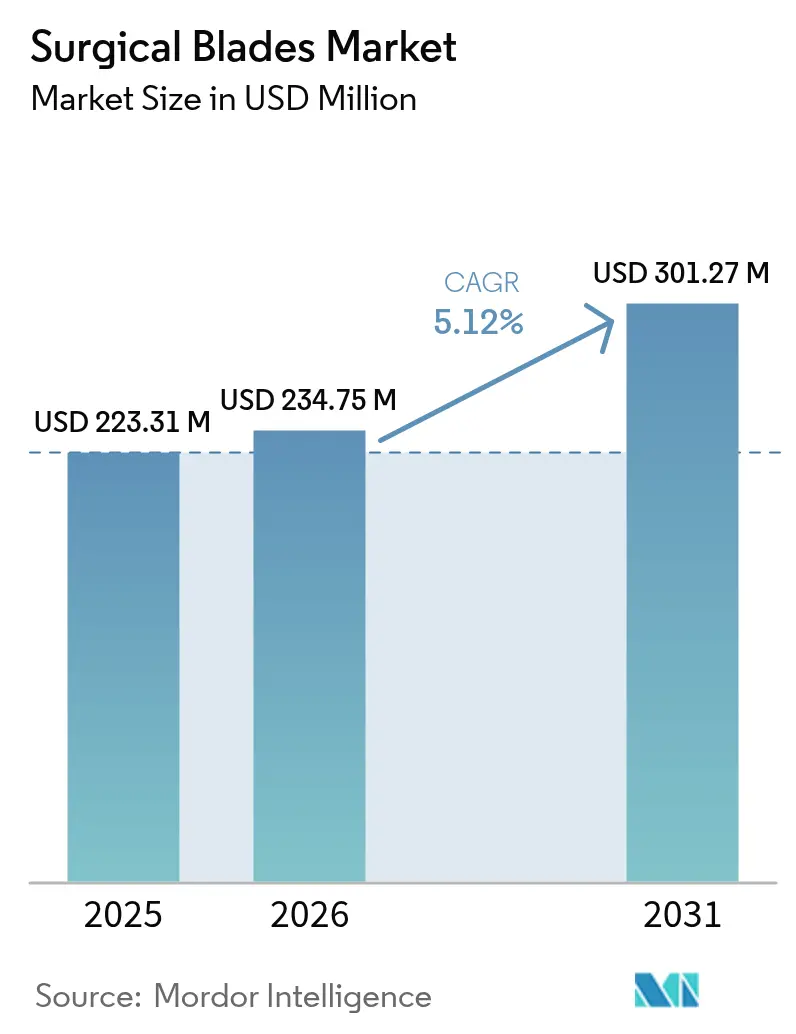
| Market Size (2026) | USD 234.75 Million |
| Market Size (2031) | USD 301.27 Million |
| Growth Rate (2026 - 2031) | 5.12 % |
| Fastest Growing Market | Asia-Pacific |
| Largest Market | North America |
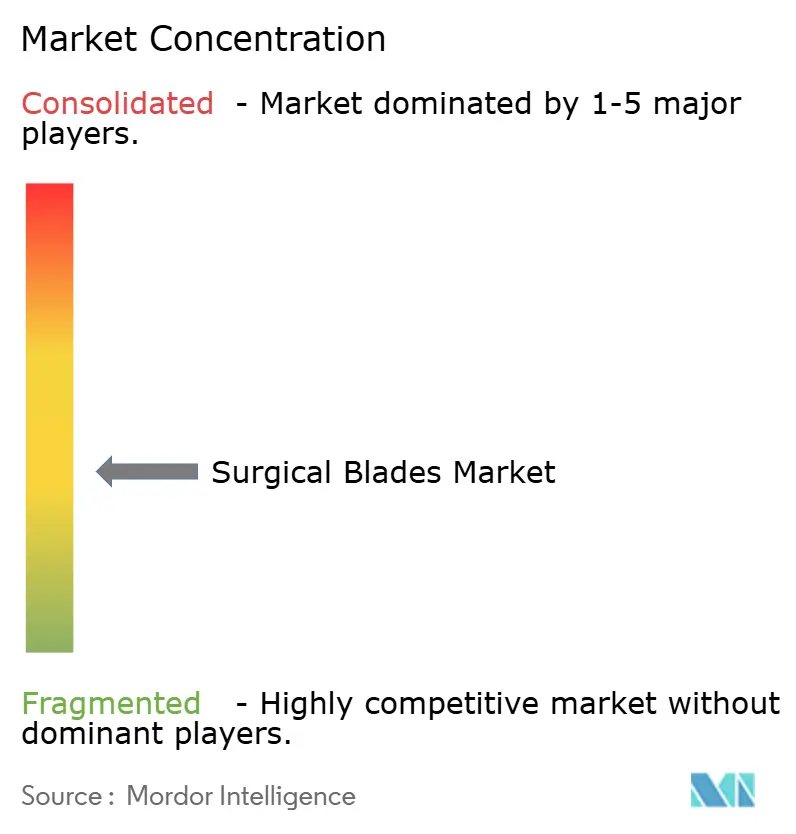
| Market Concentration | Medium |
Major Players *Disclaimer: Major Players sorted in no particular order Image © Mordor Intelligence. Reuse requires attribution under CC BY 4.0. | |
Surgical Blades Market Analysis by Mordor Intelligence
The Surgical Blades Market size was valued at USD 223.31 million in 2025 and estimated to grow from USD 234.75 million in 2026 to reach USD 301.27 million by 2031, at a CAGR of 5.12% during the forecast period (2026-2031).
Adoption of minimally invasive procedures, the rising volume of outpatient surgeries, and sustained innovation in blade materials have kept demand steady even as hospitals tighten procurement budgets. Higher-precision cutting requirements in robotic and image-guided surgeries favor premium ceramic and diamond-coated products, while infection-control rules continue to steer clinicians toward sterile, single-use formats. Growth in ambulatory surgery centers is translating into predictable, high-volume contracts for disposable blades, and value-based care models are rewarding suppliers that can prove measurable improvements in outcomes through advanced blade designs.
Key Report Takeaways
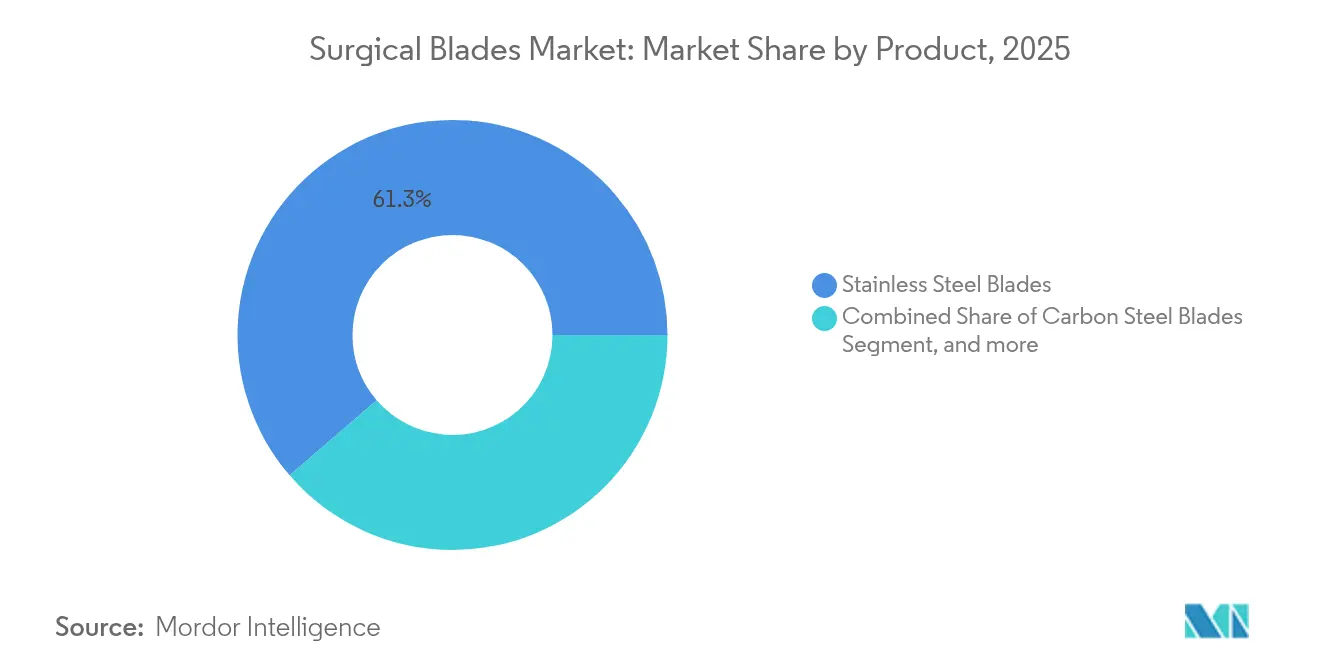
- By product category, stainless steel led with 61.32% revenue share in 2025, while ceramic and diamond-coated blades are projected to register the fastest 5.72% CAGR to 2031.
- By type, sterile blades commanded 71.96% share of the surgical blades market in 2025; non-sterile blades are forecast to expand at a 7.35% CAGR.
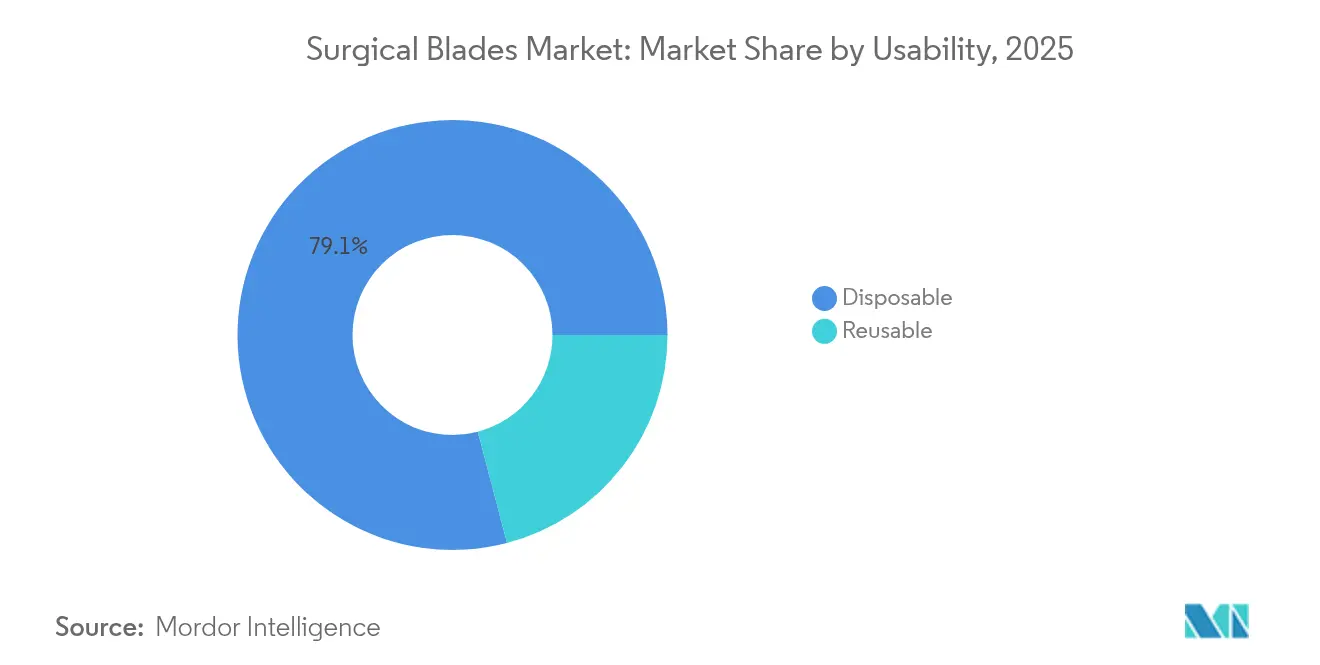
- By usability, disposable formats captured 79.08% of the surgical blades market size in 2025, whereas reusable blades will grow at an 8.18% CAGR through 2031.
- By surgical specialty, orthopedic surgery held 27.55% of surgical blades market share in 2025; cardiovascular surgery is set to rise at a 5.56% CAGR.
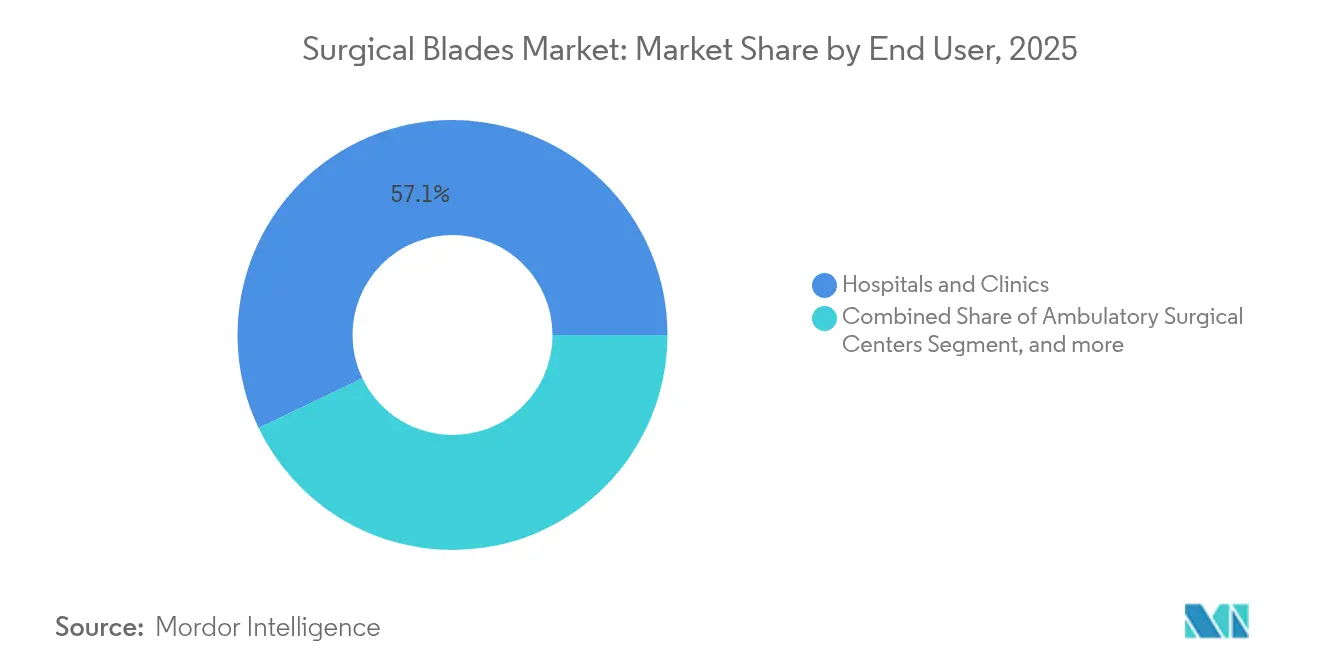
- By end-user, hospitals and clinics accounted for 57.12% share in 2025, yet ambulatory surgery centers show the strongest 6.52% CAGR outlook.
- By geography, North America retained 36.74% regional share in 2025; Asia-Pacific exhibits the highest 7.58% CAGR through 2031.
Note: Market size and forecast figures in this report are generated using Mordor Intelligence’s proprietary estimation framework, updated with the latest available data and insights as of 2026.
Market Trends and Insights
Drivers Impact Analysis of Surgical Blades Market*
| Driver | (~) % Impact on CAGR Forecast | Geographic Relevance | Impact Timeline |
|---|---|---|---|
| Rising number of complex & minimally-invasive surgeries | +1.2% | Global, concentrated in North America & Europe | Medium term (2-4 years) |
| Rapid expansion of day-care/ambulatory surgery centers | +0.9% | North America & Asia-Pacific core, spill-over to Europe | Short term (≤ 2 years) |
| Heightened infection-control norms favouring single-use blades | +0.8% | Global | Short term (≤ 2 years) |
| Shift to value-based care boosting instrument-tracking adoption | +0.6% | North America & Europe | Medium term (2-4 years) |
| Additive-manufactured (3-D printed) micro-blades for robotic surgery | +0.4% | North America, Europe, Japan | Long term (≥ 4 years) |
| ESG-linked sourcing of “green-steel” blades by hospitals | +0.3% | Europe & North America | Long term (≥ 4 years) |
| Source: Mordor Intelligence | |||
Rising Number of Complex & Minimally Invasive Surgeries
Demand for ultra-sharp, nanometric-polished blades has climbed as surgeons seek to limit thermal injury and reduce postoperative scarring by up to 40% compared with conventional steel instruments.[1] Robot-assisted systems now rely on micro-profile blades that can navigate confined anatomical spaces without causing collateral tissue damage. Growth in endoscopic spine, bariatric, and single-port gynecologic procedures has therefore widened the addressable base for premium materials such as ceramic and diamond coatings. Hospitals also favor single-use options for these delicate interventions to guarantee sterility and consistent edge integrity. As imaging platforms improve resolution, the surgical blades market is expected to see continued migration toward smaller, precision-ground geometries that complement minimally invasive workflows.
Rapid Expansion of Day-Care/Ambulatory Surgery Centers
Ambulatory centers prioritize fast turnover, lean staffing, and simplified supply chains. Disposable blade systems align with these goals because they eliminate reprocessing delays and reduce capital spending on sterilization equipment. In the United States and several Asia-Pacific countries, favorable reimbursement schedules and relaxed certificate-of-need rules have accelerated construction of new facilities, each sourcing standard packs of single-use blades for predictable case volumes. Manufacturers benefit from longer-term purchasing agreements that smooth production planning and inventory management. Competitive differentiation now centers on packaging efficiency, sharpness retention until point of use, and integration with digital inventory platforms to monitor open-but-unused stock.
Heightened Infection-Control Norms Favouring Single-Use Blades
Updated guidelines from the Centers for Disease Control and Prevention classify surgical blades as regulated medical waste after a single patient contact.[2] Hospitals have accordingly tightened audit trails and require documented proof of sterility for all cutting instruments. Pre-sterilized blades offer traceable lot numbers and validated shelf lives, easing compliance and lowering the administrative load associated with multi-step reprocessing protocols. The trend has intensified purchasing of individually pouched blades, especially in high-acuity specialties that treat immunocompromised patients. Suppliers that demonstrate robust sterility assurance levels and transparent quality records gain preferred-vendor status in competitive tenders.
Shift to Value-Based Care Boosting Instrument-Tracking Adoption
Outcome-driven reimbursement frameworks reward tools that minimize complications, shorten operating times, and lower readmission rates. Single-use blades embedded with data-matrix identifiers allow automatic linkage of instrument details to electronic health records, supporting post-procedure analytics. Providers are therefore more willing to pay premium prices when clinical evidence shows faster wound healing or reduced transfusion needs. Blade makers able to supply peer-reviewed performance data and compatible tracking software interfaces secure an edge in this evolving purchasing environment.
Restraints Impact Analysis of Surgical Blades Market*
| Restraint | (~) % Impact on CAGR Forecast | Geographic Relevance | Impact Timeline |
|---|---|---|---|
| Price volatility of high-grade specialty steel | -0.7% | Global, particularly Europe & North America | Short term (≤ 2 years) |
| Growing adoption of energy-based cutting devices | -0.9% | North America & Europe | Medium term (2-4 years) |
| Waste-management regulations restricting single-use devices | -0.5% | Europe & select North American jurisdictions | Long term (≥ 4 years) |
| Shortage of sterile-processing technicians in low-income regions | -0.4% | Asia-Pacific emerging markets, MEA, Latin America | Medium term (2-4 years) |
| Source: Mordor Intelligence | |||
Price Volatility of High-Grade Specialty Steel
Tariffs and supply disruptions have forced manufacturers to pay wide premiums for European and Japanese alloys that meet medical-grade purity thresholds. Smaller firms without hedging programs face margin compression whenever spot prices spike, occasionally delaying product launches or prompting material substitutions that require fresh validation testing. Quality-driven buyers remain cautious about lower-cost imports that may exhibit variable hardness or trace contaminant levels. Over the next two years, larger suppliers with multi-year contracts or vertically integrated mills are expected to strengthen share by offering stable pricing and uninterrupted supply.
Growing Adoption of Energy-Based Cutting Devices
Electrosurgical, ultrasonic, and laser platforms provide simultaneous cutting and hemostasis, reducing the need for separate scalpels in select laparoscopic and robotic cases. Medtronic’s PlasmaBlade operates at temperatures 64% cooler than standard electrocautery while matching scalpel precision, lowering smoke generation and collateral thermal injury. Comparative trials in BMC Surgery confirmed functional equivalence in 97% of evaluated procedures. Although acquisition costs remain high, hospitals performing large volumes of soft-tissue cases see workflow advantages that justify investment, potentially dampening demand for traditional blades in those departments.
*Our forecasts treat driver/restraint impacts as directional, not additive. The impact forecasts reflect baseline growth, mix effects, and variable interactions.
Surgical Blades Market Segment Analysis
By Product:
Advanced Materials Extend Performance HorizonsStainless steel retained leadership with 61.32% share in 2025 because its machinability and favorable cost profile suit broad surgical indications. The surgical blades market size for stainless steel products is projected to rise steadily alongside procedure volumes, even as premium materials outpace average growth. Ceramic and diamond-coated variants, expanding at a 5.72% CAGR, address surgeon preference for edges that stay sharper longer and generate less friction. TaMoNbTiZr high-entropy alloys reach hardness values up to 984 HV0.5 after heat treatment, offering potential durability breakthroughs. Titanium alloys such as Ti-33Mo-0.2C form dense titanium-carbide networks that improve corrosion resistance under aggressive cleaning cycles. Surface coating advances, including titanium nitride layers, reduce particulate shedding and virtually eliminate detectable metal ion release, enhancing biocompatibility and extending blade life.
R&D teams increasingly combine additive manufacturing with nano-scale polishing to fabricate micro-profile blades calibrated for robotic wrists. Carbon steel remains a niche option where budget constraints outweigh longevity needs, particularly in emerging markets ordering high volumes of basic disposable scalpels. Yet rapid technology transfer from aerospace metallurgy is accelerating introduction of hybrid composites that align hardness, flexibility, and antimicrobial properties within one substrate. Continued cost reductions should broaden access to these materials, further diversifying the surgical blades market over the forecast window.

By Type:
Sterile Packaging Retains the Upper HandSterile blades accounted for 71.96% of revenue in 2025, reflecting hospital mandates for ready-to-use instruments in critical care settings. The FDA updated reprocessing guidance has nonetheless encouraged interest in non-sterile versions where facilities possess validated sterilizers and rigorous documentation workflows.As a result, the non-sterile category will post the fastest 7.35% CAGR. Large integrated delivery networks are aggregating demand to negotiate volume pricing on bulk-packaged, non-sterile blades that they can process centrally, trimming per-case costs. Supply-chain software now flags component expiry in real time, ensuring internal reprocessing cycles do not exceed recommended turnover windows.
Advances in low-temperature hydrogen peroxide plasma units and vaporized peracetic acid systems have raised confidence in in-house sterilization outcomes. Manufacturers selling non-sterile products now supply detailed cycle parameters and material compatibility sheets to support hospital validation. At the same time, emergency departments and small clinics lacking sophisticated reprocessing gear continue to favor single-wrapped sterile blades that arrive ready for immediate use. Competitive positioning therefore hinges on offering flexible packaging configurations, from bulk cartons for sterile processing departments to peel-pouch packs for point-of-care environments.
By Usability:
Sustainability Goals Propel Reusable AlternativesDisposable blades still dominate with 79.08% share in 2025, underpinned by infection-control standards and the operational convenience of single-use kits. Yet reusable blades will experience an 8.18% CAGR as health systems measure waste streams and carbon footprints. The European Union’s circular-economy directives push hospitals to evaluate life-cycle impacts, prompting trials of hardened titanium blades capable of enduring multiple autoclave cycles without edge degradation. The surgical blades market share of reusable products is expected to inch upward as total-cost-of-ownership models reveal breakeven points within 18-24 months for high-utilization theaters.
Emerging surface treatments such as diamond-like-carbon coatings enhance resistance to micro-pitting, allowing dozens of sterilization cycles before resharpening. Centralized sharpening programs, bundled into vendor-managed services, further simplify reuse by guaranteeing edge quality on return. Still, high-throughput ambulatory centers prioritize disposables that avoid reprocessing backlogs and staffing requirements. Suppliers therefore maintain dual portfolios, offering environmentally certified reusable lines alongside low-cost disposables to match diverse institutional priorities.
By Surgical Specialty:
Cardiovascular Procedures Accelerate Micro-Blade DemandOrthopedic surgery consumed 27.55% of blades in 2025, driven by frequent joint replacements and trauma interventions that require robust edges for bone resection. However, cardiovascular procedures will advance fastest at a 5.56% CAGR as minimally invasive valve repairs and coronary artery bypass techniques adopt blades engineered for narrow operative fields. Robotic cardiac platforms integrate wristed instruments holding sub-millimeter blades optimized for root-side bone cutting. General surgery continues to absorb large quantities of standard steel scalpels, yet energy-based alternatives are displacing blades in select hepatobiliary and colorectal cases.
Neurosurgery and ophthalmology maintain stringent requirements for ultra-fine tip geometries to avoid neural or retinal micro-trauma. Plastic and reconstructive surgeons increasingly specify nanometric-polished ceramic blades that leave barely perceptible incision lines, supporting aesthetic outcomes demanded by patients. Collectively, the breadth of specialty needs is widening the surgical blades market, ensuring that material scientists and design engineers target very different performance envelopes within the same overarching product category.
By End-User:
Ambulatory Surgery Centers Reshape Procurement PatternsHospitals and clinics controlled 57.12% of 2025 volume because they handle complex, multidisciplinary caseloads. Nonetheless, ambulatory centers will outpace all other settings at a 6.52% CAGR as payers incentivize procedures in lower-cost sites. These centers prefer preconfigured blade kits that streamline setup and facilitate rapid room turnover. The surgical blades market size tied to ambulatory facilities is projected to expand significantly in North America and parts of Asia, where liberal licensing rules encourage private investment in stand-alone units.
Academic research institutes influence upstream innovation by partnering with manufacturers on clinical validation studies. Specialty surgical hospitals, such as orthopedic centers of excellence, often standardize on premium blades that maintain sharpness throughout lengthy revision cases, highlighting the continued importance of performance over unit cost in high-acuity environments. Vendors able to dovetail product features with each setting’s workflow stand to secure multi-year, system-wide contracts.
Geography Analysis
North America Surgical Blades Market
North America held 36.74% share in 2025, supported by high procedure volumes, widespread insurance coverage, and early adoption of premium materials. Federal guidance on single-use device reprocessing has provided clear compliance pathways that reassure procurement teams about sterility assurance. Rapid growth in ambulatory centers and continued migration toward value-based payment models sustain demand for single-use, trackable blades. Domestic manufacturers also benefit from logistical proximity, which allows quick replenishment of hospital inventories during peak periods.
APAC Surgical Blades Market
Asia-Pacific represents the fastest advancing region at an 7.58% CAGR through 2031. Rising incomes and large-scale investments in surgical infrastructure across China, India, and Southeast Asia are expanding access to elective procedures. Local companies are entering the surgical blades market with competitively priced stainless steel options, while multinational suppliers introduce premium ceramic and titanium lines for tertiary hospitals. Regulatory heterogeneity requires tailored registration strategies, but pipeline reforms in Japan and Australia are shortening time-to-market for innovative devices.
EMEA and South America Surgical Blades Market
Europe maintains steady growth as sustainability policies influence purchasing. Hospitals weigh lifecycle costs and environmental impacts, leading some to pilot reusable titanium blades despite higher front-end pricing. Germany, France, and the United Kingdom remain major importers of cutting-edge materials, whereas Southern European markets lean toward cost-effective stainless steel disposables. Emerging healthcare systems in the Middle East, Africa, and South America are adding operating rooms and surgeon training programs, but currency volatility and constrained budgets limit uptake of premium blades. Even so, incremental upgrades to infection-control protocols across these regions should gradually lift unit demand.
Regulatory Landscape
In the United States, basic scalpel blades (FDA Product Code GES, 21 CFR 878.4800) are regulated as Class I medical devices and are generally exempt from 510(k) premarket notification, but they remain subject to general controls such as establishment registration, labeling, and applicable Quality System requirements. A major compliance update for manufacturers supplying the US market is the FDA Quality Management System Regulation (QMSR), which became effective in February 2026 and amends 21 CFR Part 820 to align quality management expectations with ISO 13485:2016.
Across global supply chains, dimensional interoperability continues to be anchored by ISO 7740:1985 (scalpels with detachable blades, fitting dimensions), supporting cross-compatibility between detachable blades and handles used in hospitals and ambulatory settings. In Europe, device classification and conformity assessment under the EU MDR (Regulation (EU) 2017/745) can become more stringent for sterile and reusable variants that require Notified Body involvement, which increases the burden on documentation, traceability, and post-market obligations versus basic non-sterile blades.
Competitive Landscape
The surgical blades market features moderate fragmentation, with global brands competing alongside regional specialists. Large players leverage vertically integrated steel processing, automated grinding lines, and advanced coating chambers to sustain scale advantages. Mid-sized manufacturers differentiate through niche geometries or patented surface treatments. Ceramic and diamond-coated innovations have become focal points for premium segment rivalry, as documented hardness and edge-retention metrics provide clear selling points during value-analysis committee reviews.
Competition also revolves around supply-chain reliability. Hospitals impose strict delivery timelines and often dual-source to hedge against shortages of high-grade steel. Companies offering redundant manufacturing footprints and transparent ESG credentials are preferred partners. Marketing narratives increasingly emphasize evidence-based outcomes vendors publish peer-reviewed data linking blade design to reduced incision inflammation, faster closure, or lower suture counts. Firms unable to supply such data risk exclusion from value-based formularies.
Digital enablement is another battleground. Suppliers embed unique device identifiers and radio-frequency tags in packaging, enabling real-time inventory monitoring and automated charge capture. Vendors that integrate dashboards into hospital enterprise resource planning gain stickiness, as switching costs rise once instrument data flows are embedded. Concurrently, private-label brands produced for large distributors compete on price, pressuring margins in the commoditized stainless steel segment. Against this backdrop, strategic acquisitions continue: multinationals absorb material-science start-ups to accelerate pipeline diversification, while regional leaders purchase smaller peers to secure capacity and local regulatory approvals.
Surgical Blades Industry Leaders
-
Swann-Morton Limited
-
Aspen Surgical
-
Hu-Friedy Mfg. Co., LLC
-
B. Braun SE
-
KAI Industries Co., Ltd.
- *Disclaimer: Major Players sorted in no particular order
Surgical Blades Market Companies Covered in this Report
- Aspen Surgical
- B. Braun
- Swann-Morton
- KAI Industries Co., Ltd.
- Hu-Friedy Mfg
- PL Medical Co., LLC
- VOGT Medical
- Entrepix Medical
- Feather Safety Razor Co.
- Hill-Rom
- Surgical Specialties Corp.
- Medline Industries
- Mani Inc.
- BD (Bard-Parker)
- Beaver-Visitec International
- SteriLance Medical
- Cincinnati Surgical
- Southmedic Inc.
- Shanghai Surgical
- VWR (Avantor)
Market Opportunities and Future Outlook
Manufacturing modernization is creating near-term whitespace for suppliers that can deliver tighter edge tolerances and more consistent finishes for minimally invasive and high-precision procedures. In May 2026, Aesculap highlighted the automation of deburring for surgical saw blades using ultraTEC ultrasonic technology, showing how contact-free finishing methods can replace manual steps and reduce micro-burrs that affect cutting behavior. Process upgrades like these can support differentiated premium blade offerings, including ceramic and coated products, where procurement teams assess measurable edge retention and consistency.
Capacity expansion and North American supply-chain localization are also active themes for new contracting opportunities with integrated delivery networks and ambulatory surgery centers. In July 2026, HuFriedyGroup opened a new manufacturing campus in Northbrook, Illinois to increase production capacity for dental and surgical instruments, signaling continued investment in domestic output and operational resilience. At the product level, instrument tracking and higher procedural standardization support demand for sterile, single-use blades with stronger traceability (lot control, packaging efficiency, and compatibility with inventory systems), while sustainability-driven pilots in some health systems keep reusable and longer-life blade designs in tender discussions.
Recent Industry Developments in Surgical Blades Market
- January 2026: Aspen Surgical acquired Ruhof Healthcare to broaden its infection prevention and reprocessing solutions portfolio. The acquisition strengthens Aspen Surgical's positioning with hospitals and surgery centers that are tightening sterilization, reprocessing, and waste-handling workflows, complementing its perioperative product lines that include scalpel systems.
- October 2025: The ACTIVE plant in Melsungen was commissioned by B. Braun for infusion therapy single-use products, using robotics and automated guided vehicles. While not blade-specific, the investment points to a broader shift toward automated, high-throughput manufacturing for single-use medical products, reinforcing competitive emphasis on scalable capacity and consistent quality.
- February 2025: Aspen Surgical transitioned Canadian distribution of surgical products, including Bard-Parker blades and scalpels, to Andau Medical under an exclusive agreement. The channel change consolidates regional go-to-market execution and can improve service levels and availability for facilities standardizing blade SKUs across multi-site procurement.
Surgical Blades Market Report Scope and Research Methodology
Market Definition and Coverage
For this study, the surgical blades market covers disposable or reusable cutting blades that are used with a scalpel handle to make incisions and cut tissue during surgical and procedural care across healthcare settings.
Scope exclusions: This sizing does not count powered cutting tools, electrosurgical tips, lasers, or full instrument kits where the blade value cannot be separated cleanly.
Segments Covered in This Report
- By Product
- Stainless Steel Blades
- Carbon Steel Blades
- Titanium Alloy Blades
- Ceramic / Diamond-coated Blades
- By Type
- Sterile
- Non-Sterile
- By Usability
- Disposable
- Reusable
- By Surgical Specialty
- General Surgery
- Orthopedic Surgery
- Cardiovascular Surgery
- Neurosurgery
- Ophthalmic Surgery
- Plastic & Reconstructive Surgery
- By End-User
- Hospitals & Clinics
- Ambulatory Surgical Centers
- Specialty Surgical Centers
- Academic & Research Institutes
- By Geography
- North America
- United States
- Canada
- Mexico
- Europe
- Germany
- United Kingdom
- France
- Italy
- Spain
- Rest of Europe
- Asia-Pacific
- China
- Japan
- India
- Australia
- South Korea
- Rest of Asia-Pacific
- Middle East & Africa
- GCC
- South Africa
- Rest of Middle East & Africa
- South America
- Brazil
- Argentina
- Rest of South America
- North America
Data Sources, Market Sizing, and Validation
Desk Research
Desk research was used to build the starting market structure and to set realistic guardrails for procedure demand and healthcare spending by geography. We leaned on public sources such as the US FDA device databases, the US Centers for Disease Control and Prevention (CDC) for procedure and infection signals, and the OECD and World Bank for health expenditure and macro indicators.
To keep assumptions grounded, we also reviewed sources such as the World Health Organization (WHO) for health system indicators, UN Comtrade for trade flows that proxy supply movement, and peer reviewed clinical and materials journals that discuss blade materials and usage patterns. Company annual reports, investor decks, and reputable medical association publications were used to sanity check adoption patterns for sterile versus non-sterile blades and purchasing practices in hospitals and ambulatory centers. Where helpful, a paid subscription for company financials and a patent database were used to support revenue context and innovation direction. These desk sources are illustrative only, and many other public references were also used for data collection, validation, and clarification.
Primary Interviews and Surveys
Primary work was used to confirm what gets counted as a surgical blade sale and how ordering happens across sterile and non-sterile formats. We spoke with a mix of manufacturers, distributors, hospital procurement staff, ambulatory surgery center administrators, and clinicians who use blades often, with coverage across APAC, EMEA, and the Americas so regional practice differences could be reflected. Inputs from these discussions were then used to tighten volume assumptions, average selling price ranges, and the split by end user before finalizing the model.
Distribution of primary research fieldwork respondents
| Company type | Respondent position | Region |
|---|---|---|
| Top tier: 34% | CXOs: 21% | APAC: 46% |
| Mid tier: 44% | Functional/Unit leaders: 24% | EMEA: 32% |
| Smaller Players: 22% | Managers: 55% | Americas: 22% |
Market-Sizing & Forecasting
Sizing was built using a top-down, procedure-linked demand pool, where surgical volumes by care setting were translated into blade consumption using typical blades-per-procedure and restocking behavior. To keep the estimate realistic by region, the model was adjusted using indicators such as surgical procedure growth, ambulatory surgery center expansion, sterile single-use preference, tender and group purchasing intensity, and pricing movement for stainless steel versus high-grade carbon blades.
After that, selective bottom-up approximations were used to corroborate totals. This mainly involved checking sampled supplier revenues, distributor channel feedback, and simple ASP multiplied by estimated unit volumes for major countries where data quality was stronger. Where supplier disclosures were incomplete, gaps were handled through ratio-based allocation using procedure mix and facility counts, then pressure tested with interview inputs.
Forecasts were produced using scenario analysis anchored on expected procedure growth and purchasing shifts, with assumptions refined through expert consensus from primary discussions. Faster adoption of sterile blades and a higher ambulatory share were treated as upside cases, while procurement price pressure and slower elective procedure recovery were treated as downside cases.
Data Validation & Update Cycle
Outputs were cross-checked against independent signals such as procedure statistics, healthcare utilization trends, and trade flow direction to confirm that growth rates and regional splits stayed plausible. When any country showed unusual jumps in implied consumption or pricing, the drivers were rechecked, and the relevant assumptions were revised before sign-off.
A multi-step review is followed, where the model logic, inputs, and arithmetic are reviewed by another analyst and then finalized after resolving variances. Reports are refreshed annually, and interim updates are made when material events occur, such as policy changes that affect sterile use, supply disruptions, or large pricing resets. Before delivery, a final pass is completed to ensure the numbers reflect the latest available information.
Mordor Intelligence's Surgical Blades Market Estimate Compared With Other Published Estimates
Published values for surgical blades are often not identical because the market boundary can shift in small ways, and the pricing and volume assumptions are not always tested the same way across regions. Differences also come from the stated year, whether figures are reported in current dollars, and how fast procedure growth is assumed to normalize.
The benchmark table shows a tighter spread around the USD 200 million scale, which suggests scope and unit-consumption assumptions are the main drivers. In Mordor Intelligence's model, the count is limited to standalone scalpel blades used for cutting during procedures, with sterile versus non-sterile volumes validated through hospital and ambulatory purchasing checks rather than inferred from broad surgical supplies groupings.
Benchmark comparison
| Source | Market Size | Gaps in Research Methodology |
|---|---|---|
| Mordor Intelligence | USD 234.75 M (2026) | |
| Industry Publisher A | USD 222.82 M (2025) | Uses an earlier base year and may apply a smoother price path across materials, which can understate the step changes seen in tender resets and distributor discounts. |
| Consulting Publisher B | USD 218.57 M (2025) | Likely ties demand more directly to broad surgical activity without fully adjusting blades-per-procedure by setting, which can pull totals down in markets with higher outpatient intensity. |
Overall, the gap is explained more by what gets counted and how quickly pricing and usage are updated than by any single growth rate. By keeping assumptions traceable to procedure volumes, setting mix, and realistic ASP ranges, the estimate stays repeatable and easy to reconcile during planning discussions.
Key Questions Answered in the Report
What is the current size of the surgical blades market?
The surgical blades market is valued at USD 234.75 million in 2026.
How fast is the surgical blades market expected to grow?
The market is projected to rise at a 5.12% CAGR and reach USD 301.27 million by 2031.
Which product segment holds the largest share?
Stainless steel blades lead with 61.32% revenue share in 2025.
Which geographic region is growing the fastest?
Asia-Pacific is forecast to expand at an 7.58% CAGR through 2031.
Why are disposable blades so widely adopted?
Infection-control guidelines and the operational efficiencies of single-use instruments drive 79.08% market share for disposable blades.
What is the top growth opportunity for manufacturers?
Supplying precision ceramic and diamond-coated blades for minimally invasive and robotic surgeries, the fastest-growing product category at a 5.72% CAGR, offers the strongest upside.