
Stone And Tile Adhesives And Sealants Market Size and Share
Market Overview
| Study Period | 2020 - 2031 |
|---|---|
| Forecast Data Period | 2026 - 2031 |
| Historical Data Period | 2020 - 2024 |
| Growth Rate | 8.86 % |
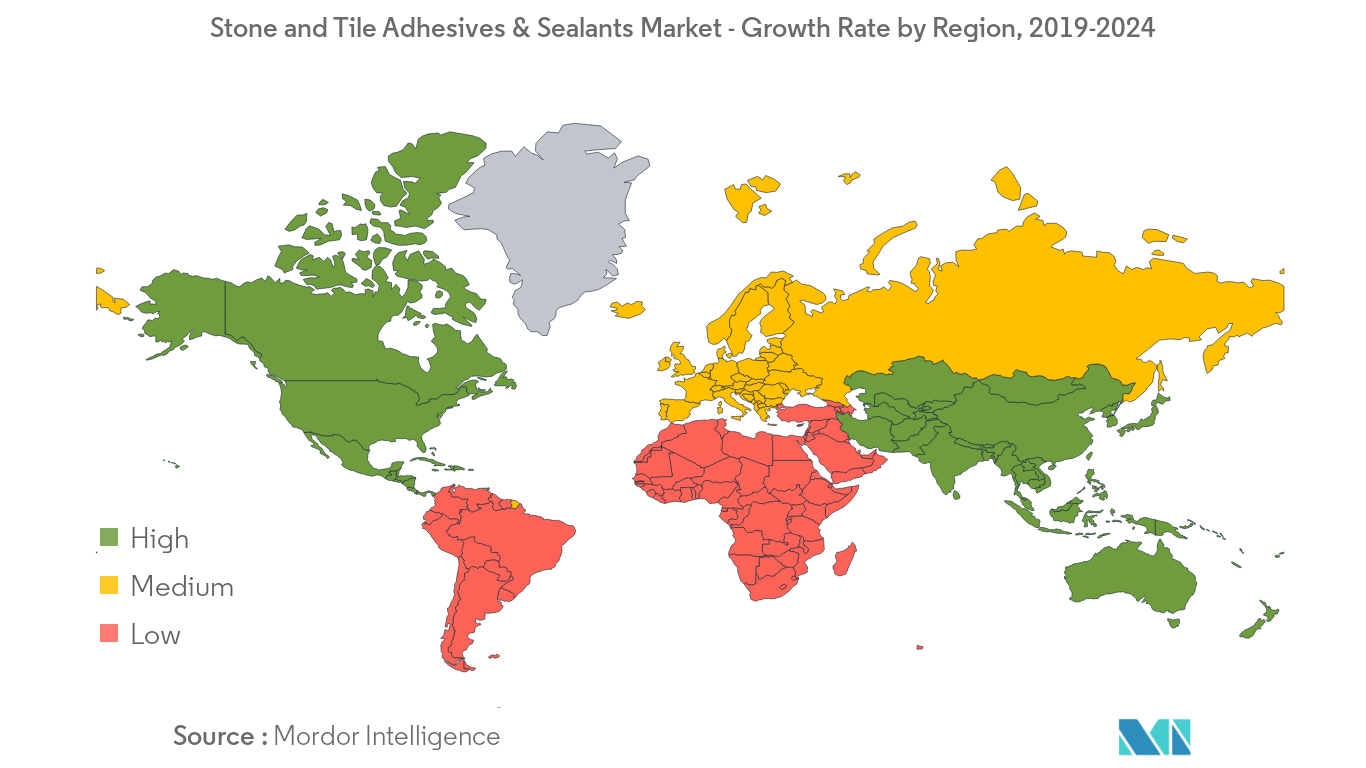
| Fastest Growing Market | Asia Pacific |
| Largest Market | North America |
| Market Concentration | Low |
Major Players *Disclaimer: Major Players sorted in no particular order Image © Mordor Intelligence. Reuse requires attribution under CC BY 4.0. | |
Stone And Tile Adhesives And Sealants Market Analysis by Mordor Intelligence
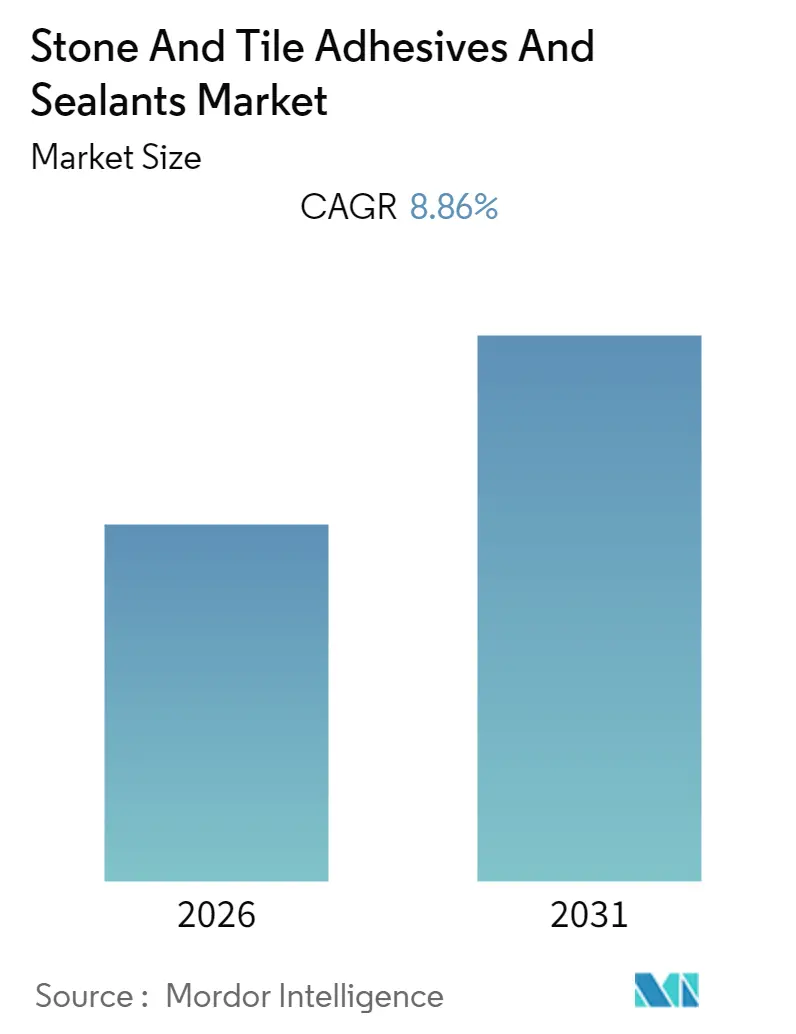
The Stone and Tile Adhesives and Sealants Market size is expected to register a CAGR of 8.86% during the forecast period (2026-2031).
- The low-profit margin for manufacturers and low awareness regarding tile and stone adhesives in developing economies are expected to hinder the growth of the stone and tile adhesives and sealants market studied.
- Development of adhesives for various innovative substrates, and increasing R&D activities in the development of innovative low VOC stone and tile adhesives are expected to act as an opportunity in the future.
Note: Market size and forecast figures in this report are generated using Mordor Intelligence’s proprietary estimation framework, updated with the latest available data and insights as of 2026.
Global Stone And Tile Adhesives And Sealants Market Trends and Insights
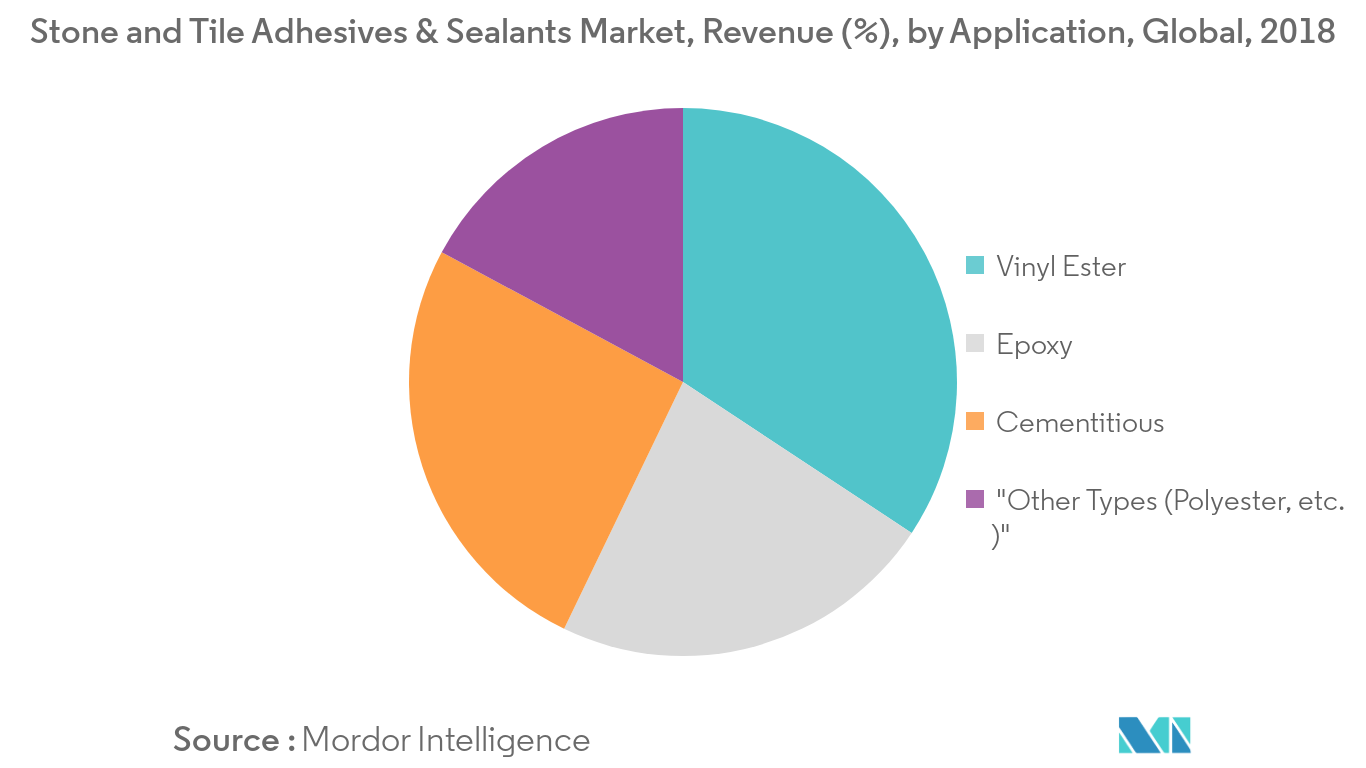
Vinyl Ester Segment to Contribute Significant Demand to the Market
- The vinyl ester family is one of the prominent polymers in the adhesive industry. The number of vinyl derivatives is very large, and they are produced either as an emulsion or as a solvent soluble type.
- Polyvinyl acetate (PVA) is the most preferred vinyl ester in the manufacturing of stone and tile adhesives.
- These adhesives are often mixed with other substrates to enhance the bond and strength, along with different temperature ranges. For instance, PVA adhesives are used in combination with melamine-based adhesives, in order to improve the working of adhesives with water and high-temperature conditions.
- Other processes, such as copolymerizing vinyl acetate with more hydrophobic monomers or functional monomers, and blending PVA with additives and hardeners, are done to achieve more efficient adhesion characteristics.
- Primers play a significant role in preparing surfaces, prior to the application of tile adhesive. PVA primers help to reduce the porosity of high absorbent substrates, which prevents the rapid suction of water out of the tile adhesive when applied.
- The market is flooded with PVA-based products thatcontain varying levels of PVA polymer. In choosing a general-purpose PVA for priming, the varying polymer levels will also introduce variations into the film thickness, which remains on the surface when theprimer has dried up.


North America to Dominate the Market
- North America represents the largest regional stone and tile adhesives and sealants market for the stone and tile adhesives and sealants market. This immense demand for stone and tile adhesives and sealants is a consequence of the growing residential projects and an increase in the adoption of various decorative and ceramic tiles in the region.
- In North America, the United States provides the major market for stone and tile adhesives and sealants, with more than 60% of the regional market share.
- The growing government spending and increasing FDI into the construction segment, in countries, like Canada and Mexico, are further augmenting the demand for stone and tile adhesives and sealants.
- There is a rising demand for the construction of single-family houses in North America. Despite the slight reduction in residential construction spending in the United States, over the past one year, rapid growth in the residential construction sector is expected over the forecast period.

Value Chain Analysis
The value chain starts with upstream raw materials and additives such as Portland cement, silica sand, limestone (calcium carbonate), redispersible polymer powders, and specialty chemical additives used across cementitious, vinyl ester (including PVA-based), and reactive resin systems. Cementitious tile adhesive formulations are heavy and relatively low value per unit, so many producers run regional dry-mix and blending plants close to demand centers to reduce freight costs and improve service levels. Epoxy and other reactive systems are more commonly produced in centralized facilities because of higher value density and more complex processing.
Midstream activities include formulation, dry blending or reactive compounding, packaging (bags, pails, cartridges), and technical documentation and support for correct substrate preparation and installation practices. Downstream distribution increasingly combines traditional construction-material channels with distributor showrooms and direct-to-contractor networks, with applicator training and jobsite technical service aimed at reducing installation defects and improving brand pull-through. Automation in dry-mix batching is also used to reduce quality variance and limit worker exposure to respirable silica during production handling.
Competitive Landscape
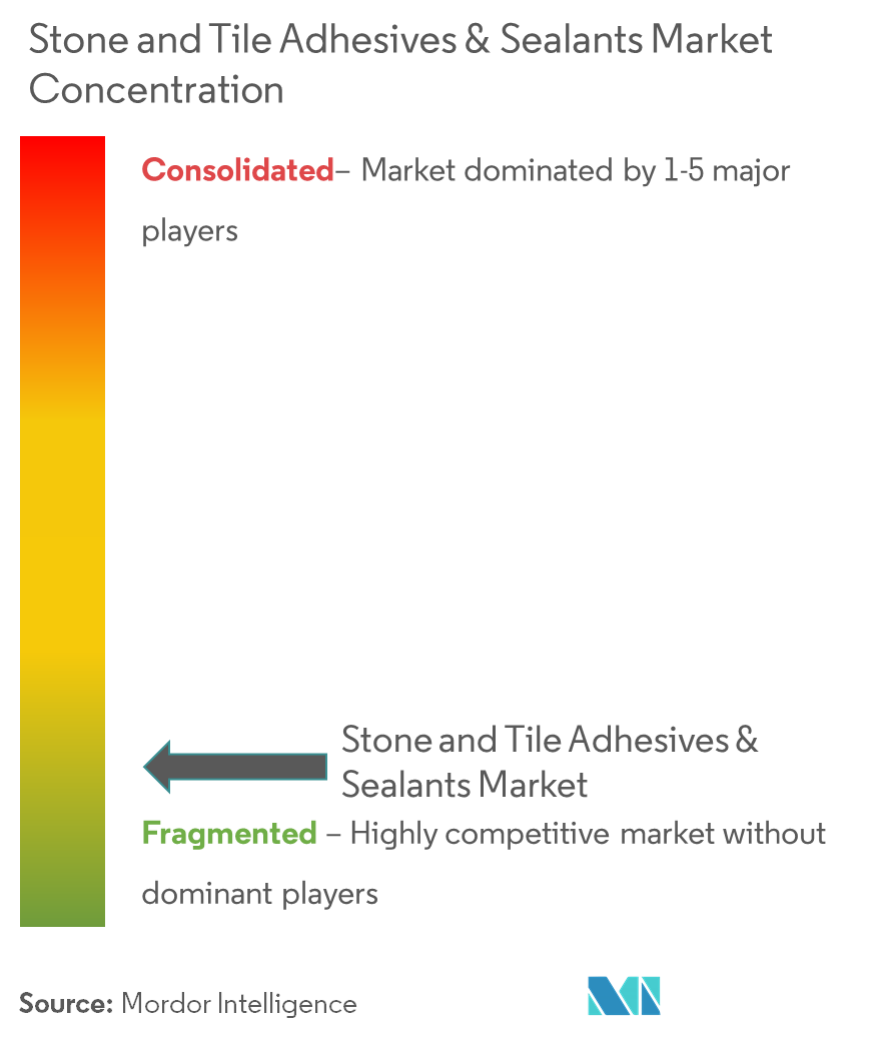
Thestone and tile adhesives and sealants market isfragmented in nature. The major companies includeHenkel AG & Co. KGaA,HB Fuller Company,Arkema Group (Bostik SA),BASF SE, and3M, among others.
Stone And Tile Adhesives And Sealants Industry Leaders
Henkel AG & Co. KGaA
HB Fuller Company
Arkema Group (Bostik SA)
BASF SE
3M
- *Disclaimer: Major Players sorted in no particular order

Market Opportunities and Future Outlook
Product innovation and reformulation remain key areas of opportunity as tile and stone installation systems broaden to new substrates and thinner, larger-format materials, which raises requirements for deformation, slip resistance, and moisture management. The market is also moving toward lower-VOC and sustainability-aligned offerings, supported by performance-based classification and specification practices, such as ISO 13007 cementitious tile adhesive categories like C2S1/C2S2, along with project-level green building requirements that favor low-emission materials.
Manufacturing footprint expansion and localization add further opportunity through faster supply, tighter quality control, and tailored formulations for local aggregates, climates, and application practices. Recent capacity announcements illustrate the direction of travel, including Sika's May 2026 opening of a large-scale, automated mortar production plant in Bridgeton, New Jersey to supply major northeastern US metropolitan areas, and additional plants inaugurated in February 2026 across growth markets including Cali, Colombia for tile adhesives and mortars. In India, Kajaria Adhesive Private Limited began commercial production in May 2026 at a 108,000 MT per annum tile adhesive facility in Erode, Tamil Nadu, reinforcing the role of domestic supply and contractor-focused product lines in adoption.
Recent Industry Developments
- May 2026: Sika opened a large-scale, highly automated mortar production plant in Bridgeton, New Jersey, to supply technical mortars and tile-adhesive demand across major northeastern US metropolitan areas. The investment strengthens local availability for heavy, logistics-sensitive cementitious products and supports tighter service levels for contractors and distributors.
- November 2025: Bostik (Arkema) introduced its OB1 Multi-Surface Construction Sealant and Adhesive in the United States, positioned for bonding ceramics alongside other common construction materials under varied conditions. Expanding multifunctional sealant-adhesive platforms helps simplify contractor inventory and enables cross-selling into tile and stone installation workflows.
- June 2024: Bostik launched Fast Glue Ultra+ in France, a cyanoacrylate adhesive featuring 60% bio-based materials derived from castor oil. The release highlighted portfolio movement toward lower-impact chemistries, supporting broader sustainability-led procurement across building finishing and repair applications.


Research Methodology Framework and Report Scope
Market Definition and Coverage
This market covers adhesives and sealants used to install, grout, and seal stone and tile surfaces in buildings and similar construction settings, where the value is captured at the point of sale of these materials in USD.
Scope exclusions: It excludes the value of tiles or stone slabs, tools and accessories, and contractor labor charges for installation and maintenance.
Segmentation Overview
- Chemistry
- Epoxy
- Cementitious
- Vinyl Ester
- Others (Polyester, etc.)
- Application
- Ceramic Tiles
- Marble Tiles
- Mosaic and Glass
- Other Applications (Natural and Agglomerated Stones, etc.)
- End-use Sector
- Residential
- Commercial
- Institutional
- Geography
- Asia-Pacific
- China
- India
- Japan
- South Korea
- Rest of Asia-Pacific
- North America
- United States
- Canada
- Mexico
- Europe
- Germany
- United Kingdom
- Italy
- France
- Rest of Europe
- South America
- Brazil
- Argentina
- Rest of South America
- Middle East & Africa
- Saudi Arabia
- South Africa
- Rest of Middle East & Africa
- Asia-Pacific
Data Sources, Market Sizing, and Validation
Desk Research
Desk work was used to build the fact base for demand drivers and the basic industry context before the model was finalized. We referenced public construction indicators and housing activity from the US Census Bureau and Eurostat, and macro and inflation series from the World Bank and the IMF.
To keep the product context practical, we also reviewed building and materials guidance and statistics from ASTM International and ISO publications, and direction on VOC from the US EPA. In parallel, we checked trade association and standards body websites that track tile, stone, and construction materials usage. Imports and exports for relevant chemical and building material categories were checked using customs and trade statistics, and we used company filings and investor presentations to confirm product mixes and regional exposure. In a few places, paid subscriptions for company financials and for import and export shipment level views helped with cross-checks. These desk sources are illustrative only, and we reviewed many other public references to support data collection, validation, and clarification.
Primary Interviews and Surveys
Primary work focused on validating what is actually sold into tile and stone installation jobs, and how pricing moves across regions and channels. We spoke with manufacturers, distributors, installers, and procurement roles across APAC, EMEA, and the Americas, so assumptions on consumption patterns, renovation share, and product substitution could be tested and corrected.
Distribution of primary research fieldwork respondents
| Company type | Respondent position | Region |
|---|---|---|
| Top tier: 36% | CXOs: 19% | APAC: 39% |
| Mid tier: 42% | Functional/Unit leaders: 37% | EMEA: 36% |
| Smaller Players: 22% | Managers: 44% | Americas: 25% |
Market-Sizing & Forecasting
Sizing was built using a top-down approach where construction output and building activity are translated into a workable demand pool for tile and stone installation materials, and then converted into value using adoption and pricing assumptions that reflect the product level sold into contractors. This was corroborated with selective bottom-up checks, such as sample supplier and channel roll ups, and simple volume times average selling price calculations for key application pockets to keep totals in range.
Inputs that mattered most included residential versus non-residential flooring and wall finishing activity, new-build versus renovation mix, tile and stone consumption intensity per square foot, product mix shifts between cementitious and epoxy systems, and the spread of larger-format tiles that typically increase adhesive usage per job. Pricing was handled through an ASP ladder that reflects pack sizes, specification level, and local inflation and currency effects, and then aligned with what distributors and installers report as current purchase behavior. For forecasting, scenario analysis was used around construction cycle sensitivity, with scenario weights tuned using expert feedback on pipeline visibility and replacement demand, and the year-by-year curve was smoothed to avoid unrealistic jumps. Where coverage gaps exist in country data, regional proxies were applied based on construction intensity and product availability, then normalized through interview-led validation.
Data Validation & Update Cycle
Outputs were checked against independent signals, including construction spending trends, trade flows for relevant materials, and reported pricing movements, so any outliers could be flagged early. When a variance was large, assumptions were re-tested through follow-up calls and a second pass of desk checks, then reviewed internally before sign-off.
The model is refreshed annually, and interim updates are made when material events shift demand or pricing, such as sharp currency moves, major regulatory changes, or construction slowdowns. Before delivery, a final review pass is completed so clients receive an updated view aligned with the latest available public data and recent field feedback.
Mordor Intelligence's Stone and Tile Adhesives and Sealants Market Size Compared Against Other Published Estimates
Published market values for this space can look far apart, even when the topic name sounds identical, because the scope boundary and pricing treatment are not consistent across sources. Differences usually come from what gets counted as tile setting materials, how regions are converted into USD, and whether the estimate is refreshed after recent construction and inflation swings.
In this study, the spread is mainly explained by how frequently pricing assumptions are refreshed, which exchange-rate timing is used for USD conversion, and whether ASPs are kept aligned to recent distributor price lists and job-site consumption checks. This refresh and validation cadence is used by Mordor Intelligence.
Benchmark comparison
| Source | Market Size | Gaps in Research Methodology |
|---|---|---|
| Mordor Intelligence | USD 4.70 B (2024) | |
| Industry Research Publisher A | USD 13.23 B (2025) | Uses a later base year and appears to apply a wider definition that can pull in adjacent construction adhesives and sealants beyond stone and tile setting, which can also lift ASPs through broader product mixes. |
| Global Consultancy B | USD 4.70 B (2024) | Shows the same stated value, but the CAGR and narrative focus indicate a different demand curve assumption that may not fully reflect renovation share changes and localized pricing moves across channels. |
Overall, the comparison shows that scope control and how ASPs and currency are treated drive most of the variance, rather than a single demand indicator. By tying the model to construction activity, install intensity, and interview-tested pricing behavior, the final number stays traceable to clear inputs and can be repeated when new data becomes available.


Key Questions Answered in the Report
What is the current Stone and Tile Adhesives and Sealants Market size?
The Stone and Tile Adhesives and Sealants Market is projected to register a CAGR of 8.86% during the forecast period (2026-2031)
Who are the key players in Stone and Tile Adhesives and Sealants Market?
Henkel AG & Co. KGaA, HB Fuller Company, Arkema Group (Bostik SA), BASF SE and 3M are the major companies operating in the Stone and Tile Adhesives and Sealants Market.
Which is the fastest growing region in Stone and Tile Adhesives and Sealants Market?
Asia Pacific is estimated to grow at the highest CAGR over the forecast period (2026-2031).
Which region has the biggest share in Stone and Tile Adhesives and Sealants Market?
In 2025, the North America accounts for the largest market share in Stone and Tile Adhesives and Sealants Market.
What years does this Stone and Tile Adhesives and Sealants Market cover?
The report covers the Stone and Tile Adhesives and Sealants Market historical market size for years: 2019, 2020, 2021, 2022, 2023 and 2024. The report also forecasts the Stone and Tile Adhesives and Sealants Market size for years: 2026, 2027, 2028, 2029, 2030 and 2031.
Page last updated on:





