
South Korea Optoelectronics Market Size and Share
| Study Period | 2019 - 2030 |
| Forecast Data Period | 2025 - 2030 |
| Historical Data Period | 2019 - 2023 |
| Market Size (2025) | USD 2.29 Billion |
| Market Size (2030) | USD 2.96 Billion |
| CAGR (2025 - 2030) | 5.30% |
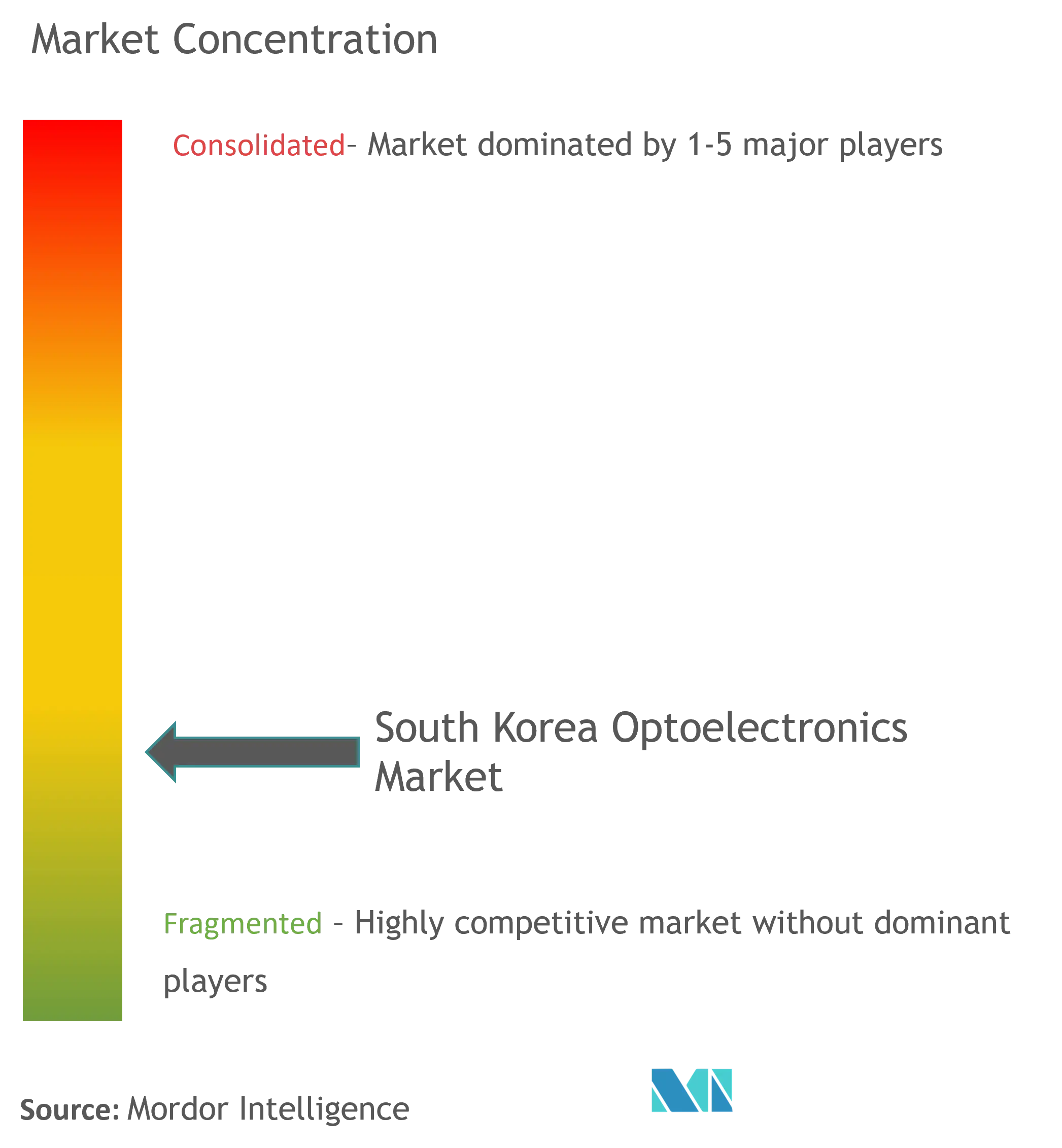
| Market Concentration | Low |
Major Players *Disclaimer: Major Players sorted in no particular order |
South Korea Optoelectronics Market Analysis by Mordor Intelligence
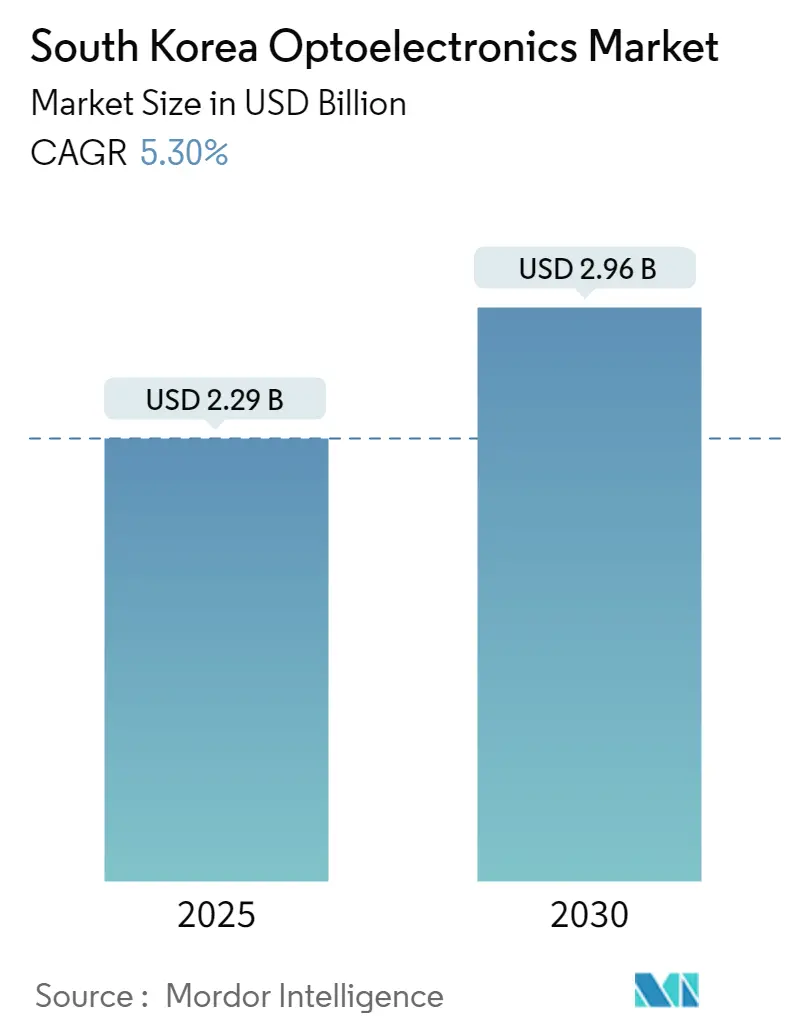
The South Korea Optoelectronics Market size is estimated at USD 2.29 billion in 2025, and is expected to reach USD 2.96 billion by 2030, at a CAGR of 5.3% during the forecast period (2025-2030).
- Optoelectronics (or optronics) is a branch of electronics that focuses on studying and applying devices and systems that detect, control, and emit light. This field encompasses a variety of light forms, including visible light, infrared, ultraviolet, and even gamma rays and X-rays. Optoelectronic devices function as transducers, converting electrical signals into optical signals and vice versa. They are primarily based on the quantum mechanical effects of light interacting with electronic materials, particularly semiconductors.
- Optoelectronics provide electrical isolation, allowing two systems that operate at different voltages to interface. This helps in limiting data transmission issues caused by induced noise, crosstalk, and signal degradation due to worn runs. Optoelectronics provide a high bandwidth for communications, which is advantageous in various applications like telecommunications and data transmission. Optoelectronic devices consume less power, making them energy-efficient and suitable for applications where power consumption is a concern.
- The rising demand for consumer electronics is another crucial driver of the optoelectronics market. South Korea is one of the largest consumers of electronics, with a high penetration of smartphones, tablets, and smart home devices. The integration of optoelectronics components, such as sensors and displays, in these devices is driving market growth.
- Moreover, the increasing trend toward smart appliances and the Internet of Things (IoT) is further propelling the demand for optoelectronic components. As consumers seek more interconnected and intelligent devices, manufacturers are compelled to incorporate optoelectronic technologies to meet these expectations.
- LEDs are utilized in optical sensors for various automation applications, including object detection, position sensing, and motion control within factory environments. Also, LED lighting systems are extensively used in factory automation to provide efficient and durable illumination. They contribute to energy savings and improved visibility in industrial settings.
- Moreover, LEDs play a crucial role in machine vision systems used for quality control, inspection, and monitoring processes in factory automation. They provide consistent and reliable lighting for imaging applications. LED optoelectronics are utilized in control panels and indicators to display status, alerts, and operational information within automated systems. The increase in factory automation in South Korea is likely to drive the demand for the market studied .
- Furthermore, favorable government ambitions in the region have helped to strengthen the awareness and training of skilled workers in the smart factory environment. The government of South Korea announced that it would provide support to train 40,000 skilled workers to operate fully automated manufacturing sites through several educational programs while diversifying support.
- To keep up with the rapid digitalization and automation in the Fourth Industrial Revolution, the government revised its target of smart factories. Originally set at 10,000 by 2020, the new aim is to achieve 30,000 smart factories by 2025. Such initiatives are likely to increase the adoption of factory automation, thereby driving the growth of the market studied.
- However, high manufacturing and fabrication costs and challenges with energy loss and heating of optoelectronic devices are likely to act as restraining factors in the growth of the market studied. Also, high inflation can significantly impact the optoelectronics market by raising production costs. Higher prices for raw materials, components, and labor can lead to increased manufacturing expenses, which may most likely be passed on to consumers through higher product prices. This can dampen demand, particularly in price-sensitive segments.
- Additionally, inflation can strain consumer purchasing power, leading to reduced investment in advanced technologies. Per the International Monetary Fund (IMF), the average inflation rate in 2023 in South Korea amounted to about 3.59% compared to the previous year.
South Korea Optoelectronics Market Trends and Insights
The Image Sensors Segment is Anticipated to Drive the Demand for the Studied Market
- Image sensors are a crucial component in optoelectronics that allows cameras and imaging devices to convert photons into electrical signals that can be interpreted and processed. The first digital cameras used charge-coupled devices (CCDs) to facilitate the movement of electrical charge through the device for modulation. However, modern cameras predominantly use complementary metal-oxide-semiconductor (CMOS) sensors due to their low power consumption, high integration, and compatibility with standard CMOS fabrication processes.
- The emergence of 3D imaging technologies has opened new avenues for image sensors. Applications in augmented and virtual reality are growing, especially in gaming and entertainment, where South Korea has a significant market presence. The integration of depth-sensing capabilities in mobile devices is also driving demand.
- Incorporating artificial intelligence in image processing has enhanced the functionality of image sensors. AI algorithms improve image quality, enable facial recognition, and facilitate various applications in security and surveillance, further expanding the market.
- Further, the consumer electronics sector is a major contributor to the growth of the image sensor market in South Korea. As consumers increasingly prioritize advanced camera technology in their devices, manufacturers are compelled to innovate and enhance their offerings. South Korea is home to major smartphone manufacturers, such as Samsung and LG, who are continuously pushing the envelope regarding camera technology. The demand for multi-camera setups and features like optical zoom and night mode has propelled the need for advanced image sensors.
- Modern manufacturing and logistics distribution centers must increase productivity by increasing conveyor speeds and widening fields of view and working ranges. New CMOS image sensors are emerging onto the market studied and designed especially for scanning applications, representing a significant step forward in industrial applications, thus boosting the growth of the CMOS sensor image market. Robots equipped with CMOS image sensors can inspect and identify components, exactly measure dimensions, or monitor machines or other robots during pick-and-place and assembly operations.
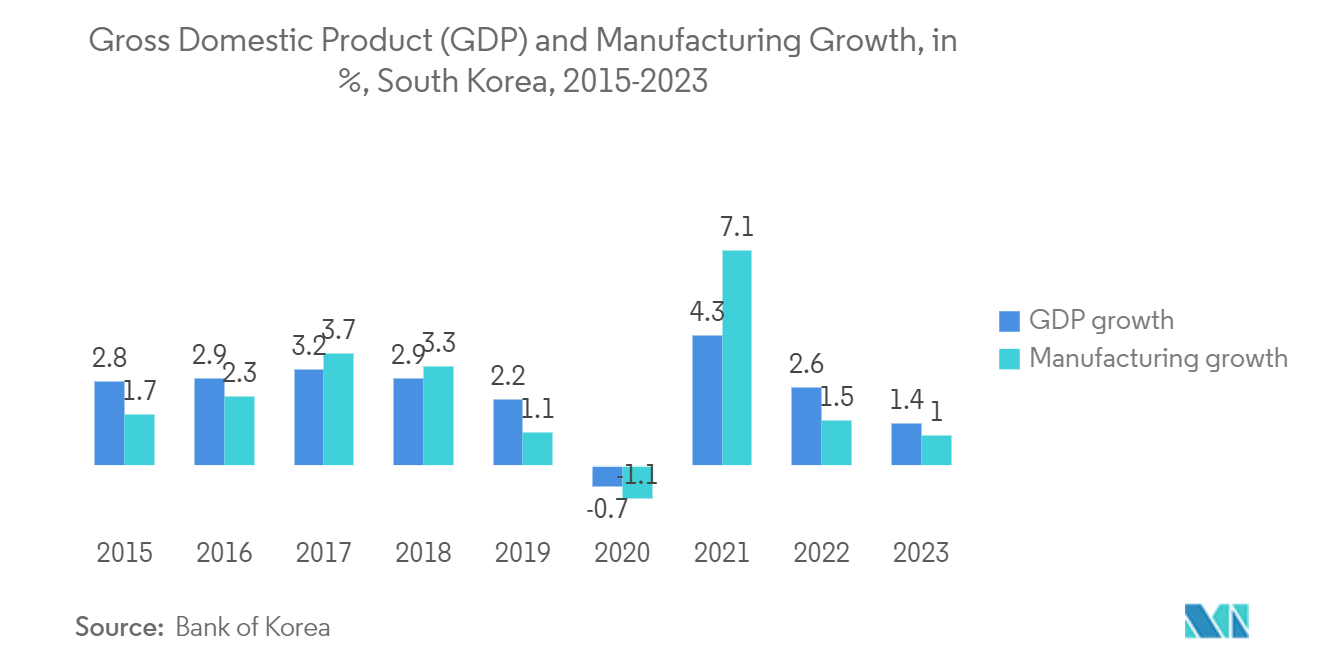
- According to the Bank of Korea, in 2023, South Korea's gross domestic product (GDP) increased by 1.4% year-on-year, while the manufacturing sector grew by roughly 1%. The manufacturing sector makes up a large part of the South Korean economy and has helped South Korea achieve rapid economic growth over the past decades. The robust manufacturing sector in South Korea is highly anticipated to aid the growth of the market studied.


The Automotive Sector is Anticipated to Hold a Major Market Share
- One of the most prominent applications of optoelectronics in the automotive sector is lighting systems. Traditional incandescent lights are being replaced by LED (Light Emitting Diode) technology, which offers better energy efficiency, longer lifespan, and improved brightness. South Korean automotive manufacturers like Hyundai and Kia are increasingly adopting LED technology for headlights, taillights, and interior lighting. Additionally, advanced lighting systems such as Adaptive Front Lighting Systems (AFS) and matrix LED headlights enhance driving safety by automatically adjusting the light distribution based on driving conditions.
- Vehicle displays, including instrument clusters, infotainment systems, and heads-up displays (HUDs), utilize optoelectronic technologies such as LCD (Liquid Crystal Display) and OLED (Organic Light Emitting Diode) screens. These displays help drivers with real-time information, navigation, and entertainment. South Korea's automotive companies are integrating more sophisticated displays into their vehicles to enhance user experience and connectivity.
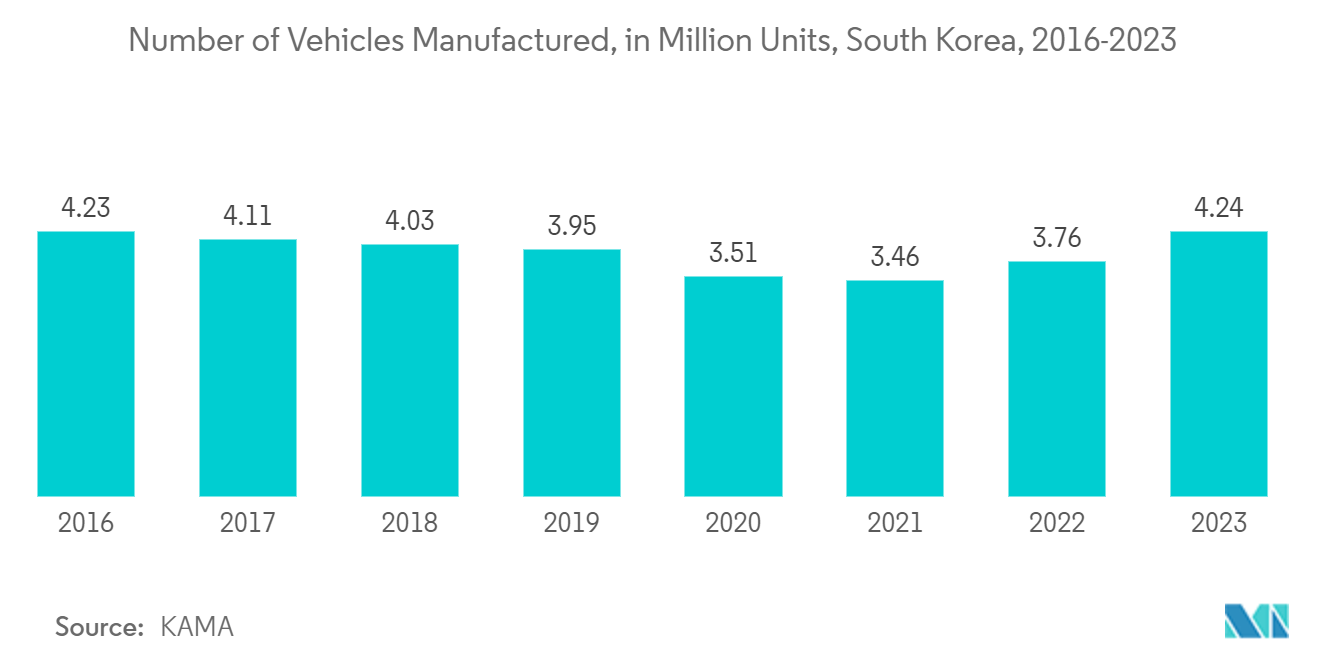
- The increasing automotive manufacturing is likely to aid the growth of the market studied . For instance, according to the Korea Automobile Manufacturers Association (KAMA), in 2023, approximately 4.24 million units of vehicles were manufactured in South Korea. This increased from nearly 3.76 million units in the previous year, the highest figure recorded since 2015.
- With the upsurge in demand for electric vehicles worldwide and government support to improve domestic manufacturing, South Korean Automakers such as Hyundai, Kia, and Genesis are focusing on increasing production volume and investing heavily in development and manufacturing.
- In March 2024, Hyundai Motor Group announced that it would invest USD 51 billion over three years in South Korea to ramp up electric vehicle production and new mobility business and separately hire 80,000 new employees, doubling down at a time when other established automakers are slowing efforts.
- The push toward autonomous vehicles is a major driver of optoelectronic applications in the automotive industry. Technologies such as LIDAR and camera systems are essential for enabling vehicle autonomy. South Korean companies, including established automakers and startups, are heavily investing in research and development to advance these technologies, thus fueling market growth.

Competitive Landscape
The South Korean optoelectronics market is a fragmented market with the presence of various players like Panasonic Corporation, Samsung Electronics, Omnivision Technologies Inc., Sony Corporation, Osram Licht AG, Koninklijke Philips NV, Vishay Intertechnology Inc., Texas Instruments Inc., LITE-ON Technology Corporation, Rohm Co. Ltd (ROHM SEMICONDUCTOR), Mitsubishi Electric Corporation, Broadcom Inc., Sharp Corporation, SK Hynix Inc., etc. The companies in the market are innovating advanced products that cater to consumers' complex and evolving requirements.
In September 2023, Sony Semiconductor Solutions Corporation announced the release of the IMX735, a new CMOS image sensor for automotive cameras with a high pixel count of 17.42 effective megapixels. The new sensor product would aid the development of automotive camera systems capable of sophisticated sensing and recognition performance, thereby contributing to safe, secure, automated driving.
In September 2023, Getac announced that it had successfully implanted LiFitechnology into its rugged devices as part of a recent innovation project with Signify, the global player in lighting. Signify and Getac is part of the Light Communication Alliance (LCA), a community of industry players, researchers, and innovators who feel in Optical Wireless Communication's power to transform how organizations connect and communicate.
South Korea Optoelectronics Industry Leaders
SK Hynix Inc.
Samsung Electronics
Sony Corporation
LITE-ON Technology Corporation
Broadcom Inc.
- *Disclaimer: Major Players sorted in no particular order

Recent Industry Developments
- February 2025: South Korea -Seoul Semiconductor, unveiled its vision of natural light (sunlight) as the future of lighting. The company, on the 27th, declared its participation in JAPAN SHOP 2025, the premier exhibition for commercial space design and display in Japan, slated for March 4 to 7 at Tokyo Big Sight. At the event, Seoul Semiconductor will spotlight its groundbreaking SunLike LED technology, championing the theme "Lighting's Paradigm Shift." SunLike stands out as the world's pioneering next-generation lighting solution, flawlessly mimicking the natural light spectrum and offering benefits beyond mere illumination.
- April 2024: Ken D. Lee, an optoelectronic technology expert from South Korea and a representative of the World Skills Organization, visited VCOM Education. The exchange meeting was attended by Wang Yanfeng, CEO of VCOM Education, along with other notable figures. During the discussions, Lee commended VCOM’s accomplishments in the optoelectronic technology segment of the World Skills Competition. He also expressed interest in exploring further collaborations between China and South Korea, emphasizing areas like information sharing, technical communication, and product insights. This collaboration aims to enhance the "Optoelectronic technology projects" in both nations, benefiting their educational sectors.


South Korea Optoelectronics Market Report Scope
Optoelectronics involves studying and applying electronic systems that manipulate (find, detect, and control) light, often seen as a subset of photonics. In this context, light encompasses visible light and other forms of radiation, including gamma rays, X-rays, ultraviolet, and infrared. Optoelectronic devices serve as transducers, converting electrical signals to optical and vice versa.
To evaluate the market revenue for the South Korean optoelectronics market, we have tracked the sales of optoelectronic chips sold in South Korea for various applications. The study also tracks the key market parameters, underlying growth influencers, and major vendors operating in the industry, which supports the market estimations and growth rates over the forecast period. The study further analyses the overall impact of COVID-19 aftereffects and other macroeconomic factors on the market. The report’s scope encompasses market sizing and forecasts for the various market segments.
The South Korea Optoelectronics Market is Segmented by Device Type (LED, Laser Diode, Image Sensors, Optocouplers, Photovoltaic Cells, and Others), End User (Automotive, Aerospace and Defense, Consumer Electronics, Information Technology, Healthcare, Residential and Commercial, Industrial, and Other End Users). The Market Size and Forecasts provided are in Terms of Value (USD) for all the Above Segments.
| LED |
| Laser Diode |
| Image Sensors |
| Optocouplers |
| Photovoltaic cells |
| Other Device Types |
| Automotive |
| Aerospace and Defense |
| Consumer Electronics |
| Information Technology |
| Healthcare |
| Residential and Commercial |
| Industrial |
| Other End Users |
| By Device Type | LED |
| Laser Diode | |
| Image Sensors | |
| Optocouplers | |
| Photovoltaic cells | |
| Other Device Types | |
| By End User | Automotive |
| Aerospace and Defense | |
| Consumer Electronics | |
| Information Technology | |
| Healthcare | |
| Residential and Commercial | |
| Industrial | |
| Other End Users |


Key Questions Answered in the Report
How big is the South Korea Optoelectronics Market?
The South Korea Optoelectronics Market size is expected to reach USD 2.29 billion in 2025 and grow at a CAGR of 5.30% to reach USD 2.96 billion by 2030.
What is the current South Korea Optoelectronics Market size?
In 2025, the South Korea Optoelectronics Market size is expected to reach USD 2.29 billion.
Who are the key players in South Korea Optoelectronics Market?
SK Hynix Inc., Samsung Electronics, Sony Corporation, LITE-ON Technology Corporation and Broadcom Inc. are the major companies operating in the South Korea Optoelectronics Market.
What years does this South Korea Optoelectronics Market cover, and what was the market size in 2024?
In 2024, the South Korea Optoelectronics Market size was estimated at USD 2.17 billion. The report covers the South Korea Optoelectronics Market historical market size for years: 2019, 2020, 2021, 2022, 2023 and 2024. The report also forecasts the South Korea Optoelectronics Market size for years: 2025, 2026, 2027, 2028, 2029 and 2030.
Page last updated on:
South Korea Optoelectronics Market Report
Statistics for the 2025 South Korea Optoelectronics market share, size and revenue growth rate, created by Mordor Intelligence™ Industry Reports. South Korea Optoelectronics analysis includes a market forecast outlook for 2025 to 2030 and historical overview. Get a sample of this industry analysis as a free report PDF download.


 Your data is secure and never sold or shared.


