
South America Sugar Substitute Market Size and Share
Market Overview
| Study Period | 2021 - 2031 |
|---|---|
| Base Year For Estimation | 2025 |
| Forecast Data Period | 2026 - 2031 |
| Market Size (2026) | USD 699.13 Million |
| Market Size (2031) | USD 835.18 Million |
| Growth Rate (2026 - 2031) | 3.62 % CAGR |
| Market Concentration | Medium |
Major Players *Disclaimer: Major Players sorted in no particular order. Image © Mordor Intelligence. Reuse requires attribution under CC BY 4.0. |

South America Sugar Substitute Market Analysis by Mordor Intelligence
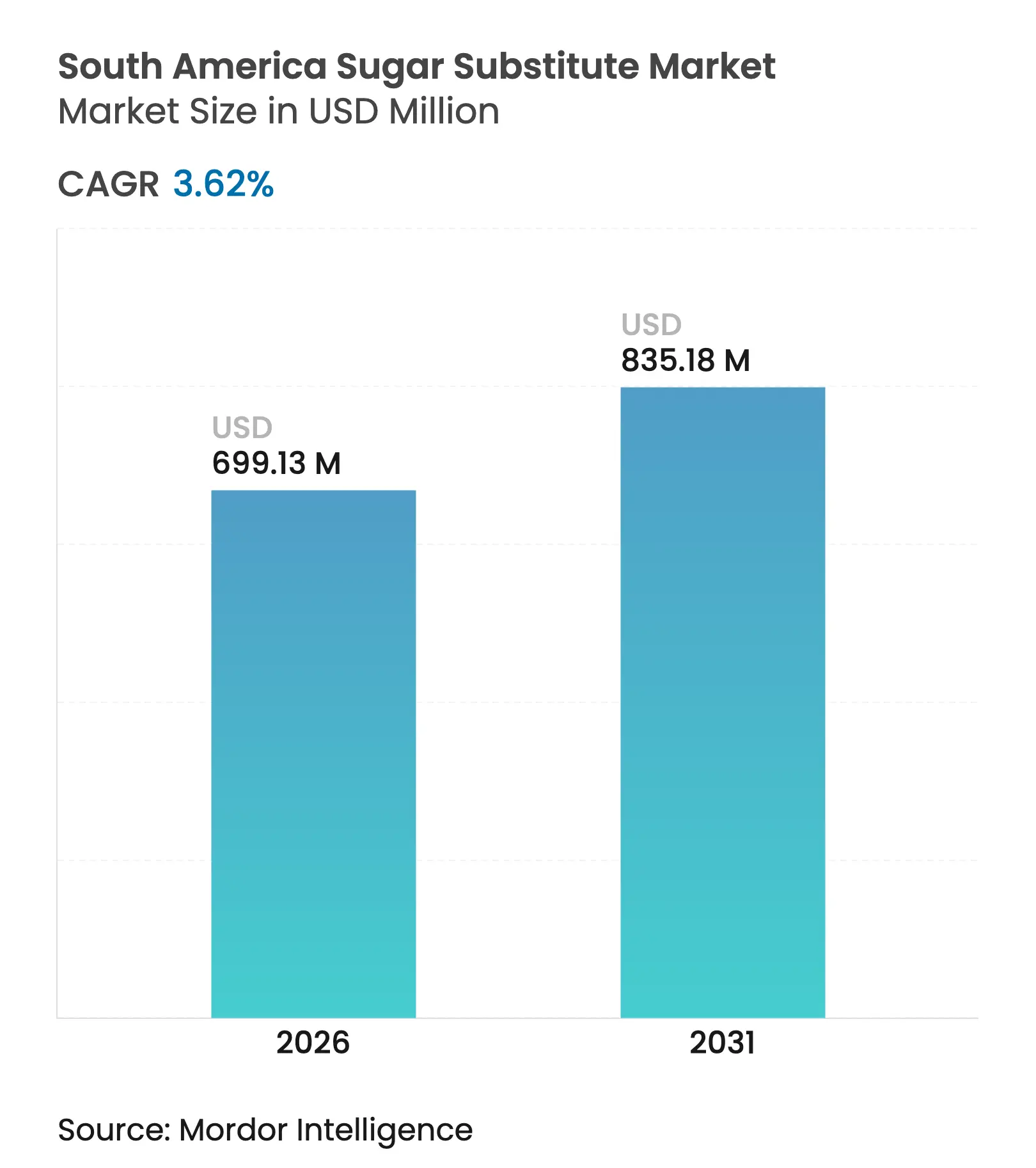
The South America sugar substitute market size is expected to grow from USD 674.7 million in 2025 to USD 699.13 million in 2026 and is forecast to reach USD 835.18 million by 2031 at 3.62% CAGR over 2026-2031. Healthy-eating trends, rapid urbanization, and steady investments in product reformulation continue to underpin market expansion. Momentum is especially strong for naturally sourced molecules, as food and beverage formulators respond to clean-label purchasing criteria, while multinational soft-drink and dairy brands reformulate legacy recipes to comply with voluntary sugar-reduction pledges. In parallel, pharmaceutical manufacturers are adopting polyols to improve palatability in pediatric and geriatric dosage forms and to protect moisture-sensitive actives. Strategic sourcing programs that favor cane-based feedstocks, combined with South America’s maturing biotech fermentation capacity, are lowering production costs, narrowing price gaps with refined sugar, and further boosting adoption. At the same time, trade liberalization within Mercosur is expanding cross-border supply networks for stevia leaf, erythritol, and monk-fruit extracts, amplifying competitive intensity within the region.
Key Report Takeaways
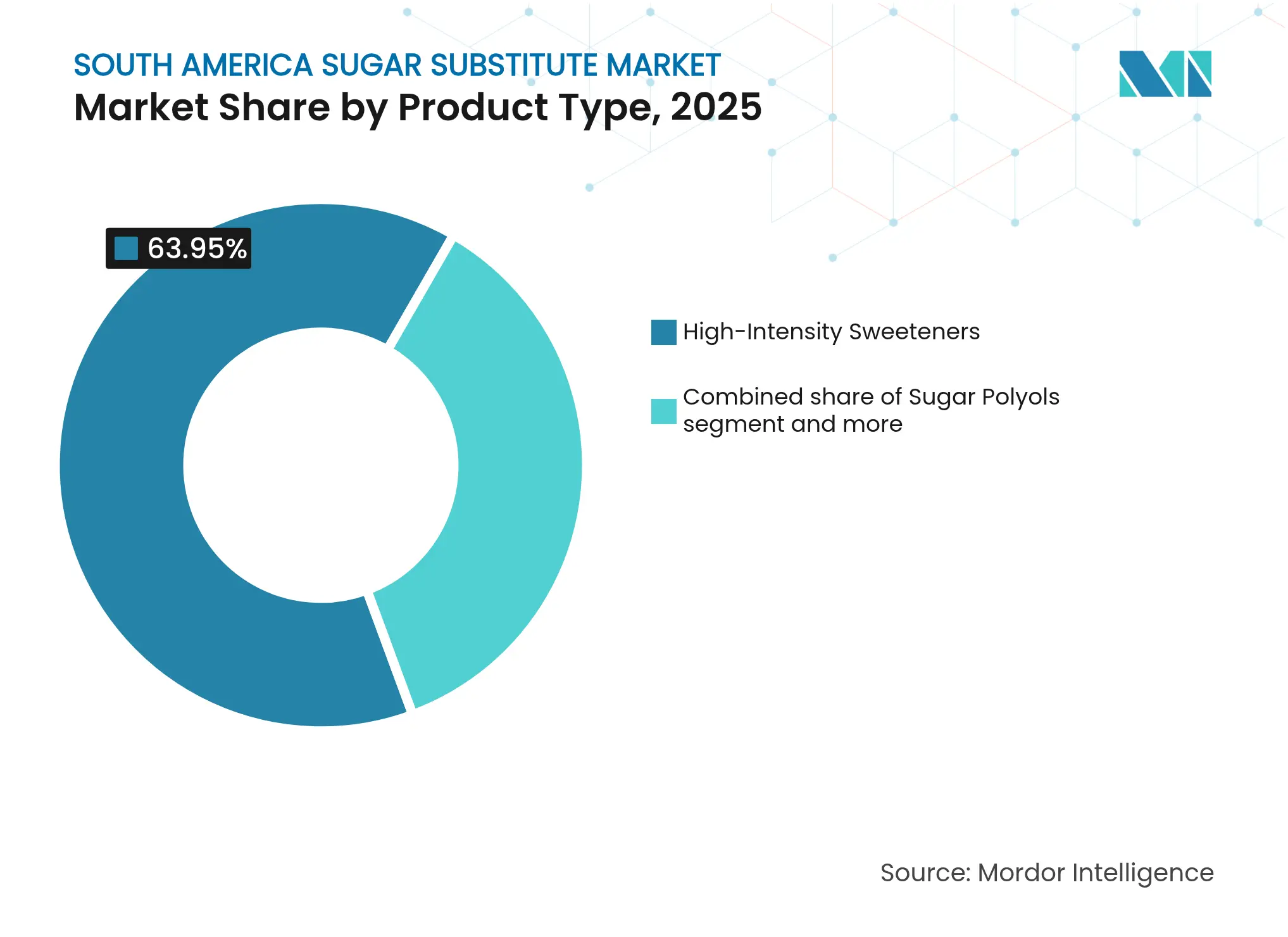
- By product type, high-intensity sweeteners led with 63.95% revenue share in 2025, while sugar polyols are forecast to expand at an 7.96% CAGR through 2031.
- By origin, synthetic ingredients held 48.40% of the South America sweetener market share in 2025; biotechnologically fermented ingredients represent the fastest-growing origin segment at an 8.62% CAGR for 2026-2031.
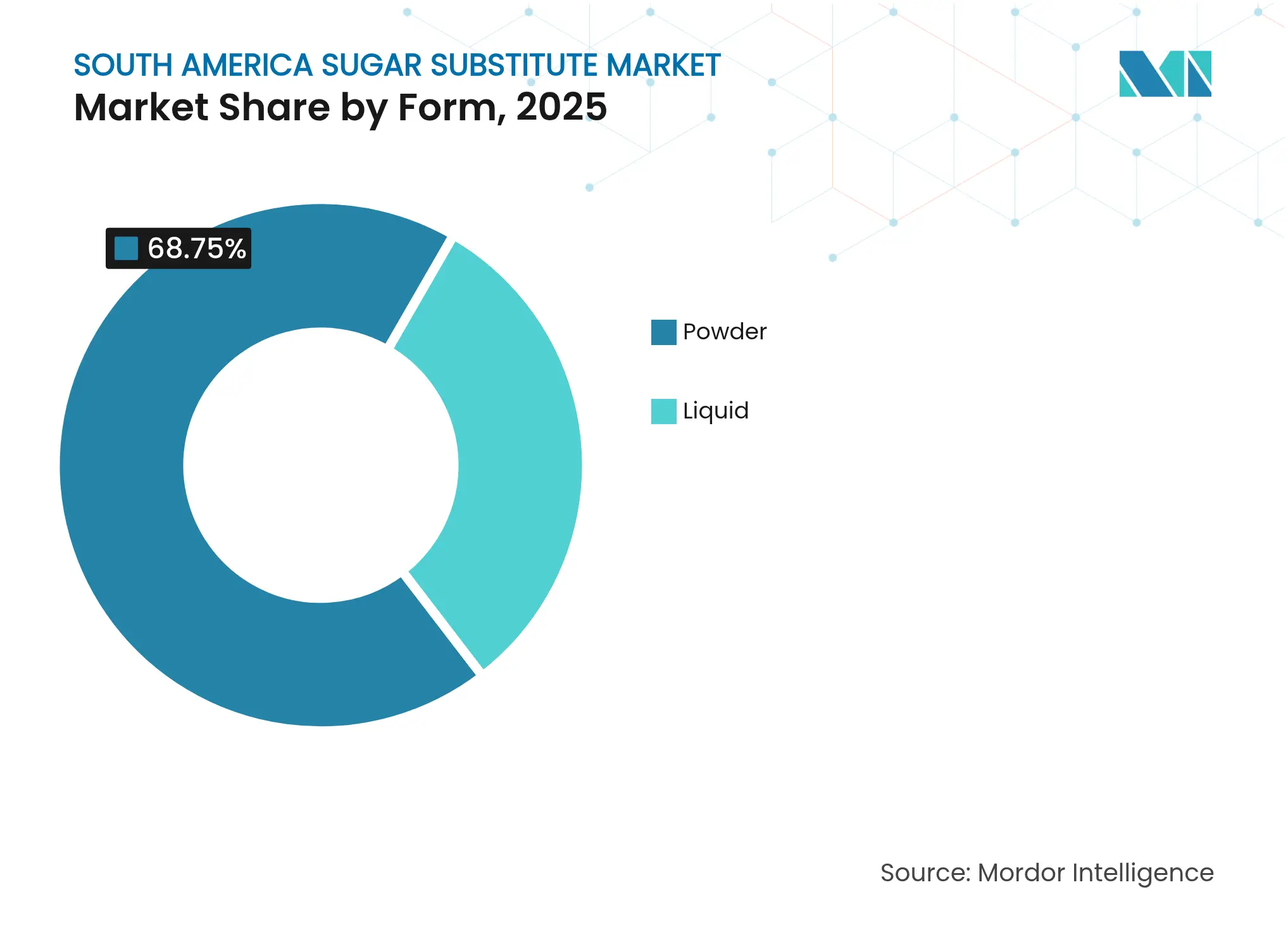
- By form, powder products accounted for 68.75% of the South America sweetener market size in 2025; liquid formulations are set to grow the fastest at 7.76% CAGR to 2031.
- By application, beverages commanded 40.85% of 2025 revenue, whereas pharmaceutical applications are poised to grow at an 8.16% CAGR over the forecast period.
- By geography, Brazil contributed 53.15% of 2025 revenue, and Argentina is projected to record the highest growth at 7.76% CAGR between 2026 and 2031.
Note: Market size and forecast figures in this report are generated using Mordor Intelligence's proprietary estimation framework, updated with the latest available data and insights as of 2026.
South America Sugar Substitute Market Trends and Insights
Drivers Impact Analysis
| Driver | (~) % Impact on CAGR Forecast | Geographic Relevance | Impact Timeline |
|---|---|---|---|
Adoption of natural sweeteners due to clean label demand | +0.8% | Brazil and Argentina core, expanding to Colombia, Peru | Medium term (2-4 years) |
Growing health consciousness and shift toward low-calorie diets | +0.9% | Global across South America, strongest in urban centers | Long term (≥ 4 years) |
Rising prevalence of diabetes and obesity across the region | +0.7% | Brazil, Argentina, with spillover to Rest of South America | Long term (≥ 4 years) |
Rising use of sugar substitutes in processed foods | +0.6% | Brazil manufacturing hubs, Argentina food processing centers | Medium term (2-4 years) |
Rising shift to lower-carbon footprint ingredients | +0.4% | Brazil stevia regions, Paraguay cultivation areas | Long term (≥ 4 years) |
Government initiatives promoting healthier lifestyles and sugar reduction | +0.5% | Brazil, Argentina, Venezuela, with MERCOSUR harmonization | Short term (≤ 2 years) |
| Source: Mordor Intelligence | |||
Adoption of natural sweeteners due to clean-label demand
Food processors are adding stevia glycosides, monk-fruit mogrosides, and fermented erythritol to shorten ingredient lists and replace chemical-sounding additives. National supermarket chains in the region now dedicate prominent shelf space to products labeled "100% natural sweetened," reinforcing mainstream visibility. Ingredient manufacturers have responded by scaling leaf-extraction and precision-fermentation plants near sugarcane hubs in São Paulo state, cutting freight distances and greenhouse-gas emissions. Continuous investment in purity-enhancement technologies has reduced off-notes that historically limited usage levels. As a result, the South America sweetener market is witnessing higher inclusion rates across dairy, cereal, and ready-to-drink categories. The growing consumer demand for clean-label products has accelerated research and development in natural sweetener extraction methods. Manufacturing facilities are implementing advanced filtration systems and enzymatic processes to improve the taste profile of these alternatives while maintaining their natural appeal.
Growing health consciousness and shift toward low-calorie diets
Post-pandemic consumer surveys indicate that calorie count ranks among the top three front-of-pack attributes influencing purchase decisions in Brazil and Colombia. Beverage multinationals have consequently lowered average sugar concentration per serving, substituting a blend of sucralose and steviol glycosides to preserve taste while delivering zero-calorie benefits. Meal-replacement brands are similarly replacing maltodextrin fillers with functional polyols that provide sweetness alongside fewer digestible carbohydrates. Mass-media health campaigns from regional ministries are accelerating these preferences, positioning low-calorie sweeteners as an accessible tool for weight management. The increasing prevalence of diabetes and obesity in South American countries has further intensified consumer demand for sugar alternatives. Additionally, government initiatives promoting sugar reduction in processed foods have compelled manufacturers to reformulate their products using sugar substitutes [1].
Rising prevalence of diabetes and obesity across the region
World Health Organization tracking shows adult obesity rates in Argentina climbing above 30% in 2024, while diagnosed diabetes cases in Brazil now exceed 17 million [2]. Physicians and dietitians are recommending non-nutritive sweeteners to help patients lower glycemic load without sacrificing palatability. Pharmaceutical brands have rapidly reformulated oral rehydration salts, cough syrups, and effervescent tablets with xylitol and sorbitol to avoid post-dose hyperglycemia. Consequently, hospital demand for sachet-format high-intensity sweeteners is also climbing, further bolstering volumes in the institutional channel. The growing awareness of metabolic disorders and their link to sugar consumption has prompted consumers to actively seek sugar alternatives in their daily diet. Additionally, government initiatives promoting healthier food choices and implementing sugar taxes have accelerated the shift toward sugar substitutes across the region.
Government initiatives promoting healthier lifestyles and sugar reduction
Front-of-pack warning-label regulations in Chile and new Nutri-Score-style guidelines in Brazil require high-sugar foods to display prominent black octagons, nudging manufacturers toward non-nutritive sweeteners. Moreover, Argentina's recently enacted excise tax on sugar-sweetened beverages sets a higher levy on drinks exceeding 4 g sugar per 100 mL, incentivizing reformulation according to Brazil Ministry of Health. Industry associations report that major carbonated soft-drink producers have already cut sugar content by 22% since the tax announcement, replacing it with sucralose-stevia blends [3]. These regulatory measures across South America have created a ripple effect, prompting food and beverage manufacturers to accelerate their sugar reduction initiatives. The implementation of similar policies in other regions is expected to further boost the demand for sugar substitutes as companies aim to comply with health-focused regulations while maintaining product taste profiles.
Restraints Impact Analysis
| Restraint | (~) % Impact on CAGR Forecast | Geographic Relevance | Impact Timeline |
|---|---|---|---|
Regulatory restrictions on usage limits and labeling of
artificial sweeteners
|
-0.3%
|
Brazil ANVISA jurisdiction, Argentina ANMAT oversight,
MERCOSUR harmonization
|
Short term (≤ 2 years)
|
Cultural preference for traditional sugar-based foods and
beverages
| -0.5% | Rural Brazil, traditional Argentine markets, Paraguay, Rest of South America | Long term (≥ 4 years) |
Higher cost of natural and low-calorie sweeteners compared
to conventional sugar
| -0.4% | Price-sensitive segments across South America, emerging markets | Medium term (2-4 years) |
Taste and aftertaste concerns affecting consumer
acceptance
| -0.2% | Consumer segments across Brazil, Argentina, Colombia, Venezuela | Medium term (2-4 years) |
| Source: Mordor Intelligence | |||
Regulatory restrictions on usage limits and labeling of artificial sweeteners
Chile caps acesulfame-K usage in carbonated drinks at 350 mg/L, lower than Codex Alimentarius benchmarks, forcing localized reformulation that can raise formulation complexity and cost according to the Chile Ministry of Health. Uruguay mandates front-label identifications such as "contains non-nutritive sweeteners," which may deter older consumers skeptical of synthetic additives. Labeling stipulations that require a quantitative declaration of each high-intensity sweetener further complicate space-constrained packaging design. Some nutraceutical exporters also face additional analytical testing at customs to verify compliance, lengthening lead times and adding to working-capital requirements, according to the Chile Ministry of Health. These regulatory frameworks vary significantly across regions, creating operational challenges for manufacturers seeking global market expansion. The inconsistent regulations between countries often necessitate multiple product formulations, increasing production costs and reducing operational efficiency.
Cultural preference for traditional sugar-based foods and beverages
In Argentina, producers of dulce de leche are facing challenges with consumer acceptance of stevia-sweetened variants, even with aggressive marketing efforts. Consumers cite taste and aftertaste as primary concerns, often associating sweetness intensity with product quality. Beverage brands with a "traditional recipe" branding still prominently feature cane sugar, highlighting its importance. While there's a gradual shift towards hybrid formulas blending minimal sugar with polyol bulking agents, certain legacy categories remain resistant to fully replacing sucrose. Surveys reveal a deep cultural attachment to traditional sugar-based recipes, posing hurdles to reformulation in age-old food products. Furthermore, the elevated cost of sugar substitutes, in comparison to regular sugar, is hindering their adoption by manufacturers, especially in markets sensitive to pricing. Manufacturers are also exploring consumer education campaigns to address misconceptions about sugar substitutes. These efforts aim to improve acceptance by highlighting the health benefits and safety of alternative sweeteners.
Segment Analysis
By Product Type: High-intensity leads, polyols catching up
Sales of high-intensity molecules such as aspartame, sucralose, and steviol glycosides reached 63.95% of revenue in 2025, making them the largest contributor to the South America sweetener market. Over the forecast window, stable cost profiles, high sweetness potency, and extensive safety dossiers will keep these molecules in mainstream beverage, confectionery, and pharmaceutical formulations. Brands also favor sucralose for its heat stability during UHT processing, while new stevia Reb M solutions are demonstrating improved sensory performance. Nevertheless, sugar polyols are projected to post an 7.96% CAGR, outpacing overall category growth, on the back of rising application in chewing gum, chocolate coatings, and diabetic bakery goods.
Formulators closely monitor evolving regulatory attitudes. While aspartame gained renewed attention after global toxicology reviews, regional authorities retained existing acceptable daily intake levels, providing short-term stability for beverage and tabletop-sweetener volumes. Sucralose continues to gain share in blended systems, often paired with acesulfame-K to mask temporal bitterness. Meanwhile, entrepreneurial brands are leveraging erythritol’s favorable glycemic impact to capture health-conscious consumers.
Note: Segment shares of all individual segments available upon report purchase
By Origin: Synthetic base, biotechnology−driven growth
Synthetic molecules such as sucralose and aspartame captured 48.40% of the South America sweetener market share in 2025, owing to their predictable quality parameters and mature sourcing networks. They remain preferred in mainstream CSD lines, large-scale ice-cream production, and powder soft-drink mixes where consistent flavor, supply reliability, and competitive cost outweigh natural positioning. However, biotechnologically fermented ingredients are forecast for the fastest growth at an 8.62% CAGR between 2026 and 2031. Advances in precision fermentation of Reb M stevia and novel rare sugar synthesis have increased yields, lowered solvent usage, and reduced unit costs.
Plant-derived ingredients such as monk fruit extracts continue to enjoy a “natural halo,” but supply constraints stemming from limited agricultural acreage in Asia and complex extraction processes temper their scalability. As fermentation technologies mature, however, the line between natural and synthetic blurs, shifting narratives toward “nature-identical” positioning. Top beverage brands increasingly communicate carbon-footprint metrics on-pack, with biotech-fermented Reb M demonstrating lower land use compared with traditional stevia leaf farming.
By Form: Powder dominates yet liquid surges
Powder formats accounted for 68.75% of the South America sweetener market size in 2025 due to their handling ease, extended shelf life, and compatibility with dry-blend beverage premixes, table-top sachets, and dry bakery ingredients. Multinational beverage concentrate plants in Brazil rely heavily on powdered high-intensity sweeteners for efficient large-batch blending. However, liquid formulations currently under-penetrated are forecast to grow at 7.76% CAGR, spurred by aseptic processing investments that allow sucralose-stevia blends to be shipped as sterile concentrates, reducing manufacturing complexity for downstream bottlers. Their adoption is also increasing in ready-to-drink tea, cold-fill dairy, and UHT flavored-milk segments.
Foodservice chains are accelerating the switch to bag-in-box liquid sweetener systems for beverage fountains, citing sanitation, cost control, and precise dosing advantages. Table-top dropper bottles featuring stevia blends registered strong e-commerce sales across Argentina and Chile in 2025, signaling further household penetration. Powder products will remain pervasive in recessed logistical corridors where climatic variability threatens liquid-product stability.
Note: Segment shares of all individual segments available upon report purchase
By Application: Beverages remain anchor, pharmaceuticals accelerate
Beverages generated 40.85% of revenue in 2025 and stand as the anchor category for the South America sweetener market. Carbonated soft drinks, juices, and dairy-based beverages are undergoing formulation shifts to comply with front-of-pack sugar thresholds. Companies leverage synergistic blends of stevia and acesulfame-K to balance sweetness curves and cost. Ready-to-drink coffee manufacturers have also migrated to erythritol-monk fruit systems, which maintain flavor while mitigating caloric load. Conversely, the pharmaceutical segment is set to post the strongest growth at 8.16% CAGR over 2026-2031, as tablet-coating firms employ polyols to improve compressibility and as cough-syrup formulators turn to sucralose to ensure consistent sweetness across temperature ranges.
Food categories such as sauces and dressings are witnessing incremental incorporation of allulose for browning and humectancy, while bakery manufacturers trial tagatose to replicate the functional performance of sucrose in Maillard reactions without contributing to net carbohydrates. Sports-nutrition brands are championing zero-sugar hydration powders containing glucono-delta-lactone and erythritol, boosting mouthfeel and electrolyte uptake. These product-specific functionality gains underscore why processors dissect applications on a matrix of sweetness potency, bulking needs, and label positioning to select the ideal ingredient.
Geography Analysis
Brazil retained 53.15% of revenue in 2025, underpinned by its extensive beverage concentrate infrastructure, robust domestic demand, and proximity to sugarcane feedstock. Investment inflows toward fermentation plants in São Paulo state are lowering reliance on imported intermediates, while health-impact labeling regulations encourage continuous reformulation pipelines. Argentine manufacturers face currency volatility that tilts purchasing decisions toward locally produced polyols, and government subsidies for biotech projects are nurturing start-ups focused on rare sugars. Argentina is expected to grow the fastest at 7.76% CAGR through 2031, benefiting from these policy supports and rising domestic awareness of metabolic disorders.
Chile and Peru, representing significant shares of Rest of South America, continue to punch above their GDP weight in low-calorie beverage consumption due to stringent sugar-tax regimes and higher disposable incomes in urban areas. Chilean supermarkets allocate dedicated shelf space for sugar-free confectionery, intensifying competitive pressures. Peru’s confectionery sector integrates maltitol in chocolate-coated quinoa bars that cater to export markets. Meanwhile, Colombia’s soft-drink producers are experimenting with locally sourced stevia to manage input costs amid peso fluctuations.
Trade alignment via Mercosur is harmonizing additive codes, simplifying customs documentation, and lowering tariffs on intra-bloc sweetener flows. Improved road connectivity, notably the Bioceanic Corridor, trims lead times between production sites in Campo Grande and consumer hubs in northern Chile. This streamlined logistics network reduces freight costs for bulk powder shipments and encourages small and medium enterprises to test novel sweetener systems. Local ingredient houses capitalizing on agro-industrial waste-to-xylitol technologies strengthen circular-economy narratives, allowing country-level marketing teams to highlight sustainability credentials on pack.

Reports are available across multiple geographies.
Gain in-depth market insights across regions to support informed decisions.
Competitive Landscape
Market Concentration
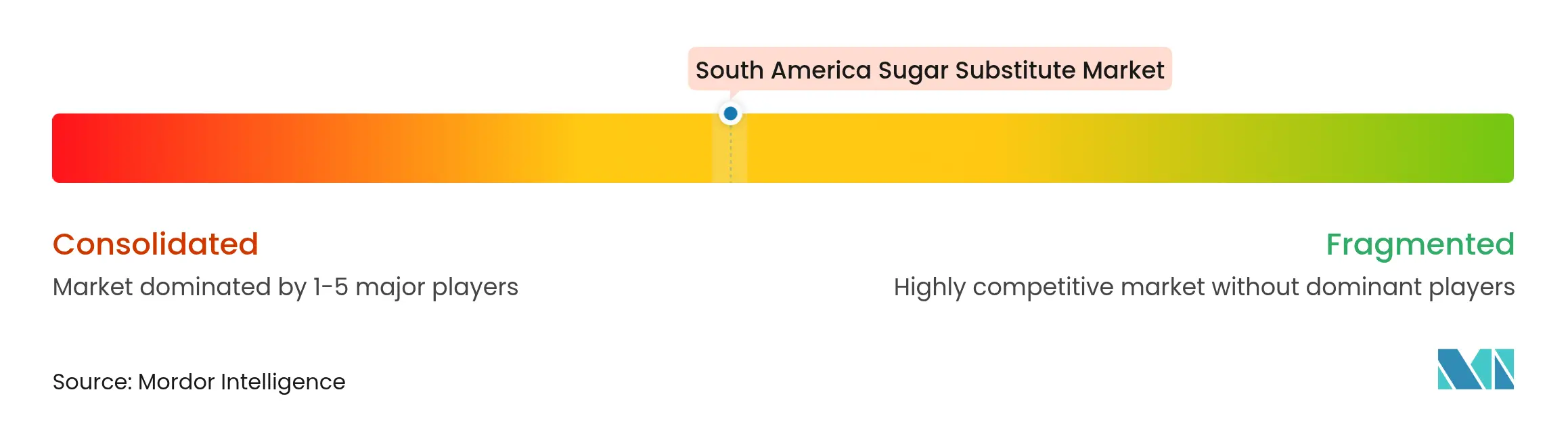
The market is moderately consolidated and comprises a blend of global ingredient majors, regional agro-industrial groups, and specialized biotech firms. Cargill, Incorporated, and Tate & Lyle plc deploy multi-ingredient portfolios and local warehousing to ensure next-day delivery to beverage plants, maintaining favored-supplier status. Ingredion integrates vertically from crude extract processing to high-purity Reb M crystals, giving it a cost-control advantage. Meanwhile, Raízen leverages sugar-cane byproduct streams to produce renewable carbon feedstocks for fermentation, aligning with the lower-carbon-footprint commitments of key clients.
Niche innovators such as SweeGen and Evolva employ proprietary biocatalysis platforms to manufacture rare-sweetness molecules at scale, securing long-term supply agreements with premium beverage brands targeting millennial consumers. GLG Life Tech and Stevia One Peru emphasize traceable leaf sourcing, a feature prized by clean-label coalition members. Ajinomoto do Brasil leverages deep amino-acid fermentation know-how to retain a foothold in aspartame while pivoting to allulose synthesis.
Strategic moves over the past illustrate intensified jockeying for market share. Ingredion acquired a majority stake in a Curitiba-based precision-fermentation start-up, immediately doubling its regional capacity for Reb M. Cargill commissioned a USD 200 million polyol plant in Minas Gerais, trimming import reliance from North America. Tate & Lyle inked a distribution pact with Santiago-based logistics specialist Agunsa, expanding two-day coverage across the southern cone.
South America Sugar Substitute Industry Leaders

*Disclaimer: Major Players sorted in no particular order
Recent Industry Developments
- May 2025: BlueTree Technologies expanded its sugar reduction technology into South America, targeting juice and dairy products with systems that achieve 33% sugar reduction in orange juice while maintaining taste profiles and advancing regulatory approvals across the region.
- December 2024: Argentina's National Food Safety Commission approved monk fruit extract as a sweetener with a maximum usage limit of 8 grams per kilogram, expanding natural sweetener options and aligning with global regulatory trends toward novel food ingredient acceptance.
- December 2024: Tate & Lyle and Manus formed The Natural Sweetener Alliance to introduce stevia Reb M, the first large-scale, all-Americas sourced and manufactured bioconverted stevia ingredient, leveraging Manus' BioFacility in Georgia for production and supply chain security.
- August 2024: Venezuela announced mandatory warning labels for foods high in sugar, salt, saturated fat, and trans fats effective December 2024, following South American regulatory harmonization trends that influence reformulation strategies across the region.
Table of Contents for South America Sugar Substitute Industry Report
1. INTRODUCTION
- 1.1 Study Assumptions and Market Definition
- 1.2 Scope of the Study
2. RESEARCH METHODOLOGY
3. EXECUTIVE SUMMARY
4. MARKET LANDSCAPE
- 4.1 Market Overview
- 4.2 Market Drivers
- 4.2.1 Adoption of Natural Sweeteners Due To Clean Label Demand
- 4.2.2 Growing Health Consciousness and Shift Toward Low-Calorie Diets
- 4.2.3 Rising Prevalence of Diabetes and Obesity Across The Region
- 4.2.4 Rising Use of Sugar Substitutes in Processed Foods
- 4.2.5 Rising Shift to Lower-Carbon Footprint Ingredients
- 4.2.6 GGovernment Initiatives Promoting Healthier Lifestyles and Sugar Reduction
- 4.3 Market Restraints
- 4.3.1 Regulatory Restrictions on Usage Limits and Labeling of Artificial Sweeteners
- 4.3.2 Cultural Preference for Traditional Sugar-Based Foods and Beverages
- 4.3.3 Higher Cost of Natural and Low-Calorie Sweeteners Compared to Conventional Sugar
- 4.3.4 Taste and Aftertaste Concerns Affecting Consumer Acceptance
- 4.4 Supply Chain Analysis
- 4.5 Regulatory Outlook
- 4.6 Porter’s Five Forces
- 4.6.1 Threat of New Entrants
- 4.6.2 Bargaining Power of Buyers/Consumers
- 4.6.3 Bargaining Power of Suppliers
- 4.6.4 Threat of Substitute Products
- 4.6.5 Intensity of Competitive Rivalry
5. MARKET SIZE AND GROWTH FORECASTS (VALUE)
- 5.1 By Product Type
- 5.1.1 High-Intensity Sweeteners
- 5.1.1.1 Acesulfame Potassium
- 5.1.1.2 Advantame
- 5.1.1.3 Aspartame
- 5.1.1.4 Neotame
- 5.1.1.5 Saccharin
- 5.1.1.6 Sucralose
- 5.1.1.7 Stevia
- 5.1.1.8 Monk Fruit
- 5.1.1.9 Other High-Intensity Sweeteners
- 5.1.2 Sugar Polyols
- 5.1.2.1 Sorbitol
- 5.1.2.2 Xylitol
- 5.1.2.3 Maltitol
- 5.1.2.4 Erythritol
- 5.1.2.5 Other Sugar Polyols
- 5.2 By Origin
- 5.2.1 Plant-Derived
- 5.2.2 Synthetic
- 5.2.3 Biotechnologically Fermented
- 5.3 By Form
- 5.3.1 Powder
- 5.3.2 Liquid
- 5.4 By Application
- 5.4.1 Food
- 5.4.1.1 Bakery and Cereals
- 5.4.1.2 Confectionery
- 5.4.1.3 Dairy and Dairy Alternatives
- 5.4.1.4 Sauces, Condiments and Dressings
- 5.4.1.5 Other Food Applications
- 5.4.2 Beverage
- 5.4.2.1 Carbonated Soft Drinks
- 5.4.2.2 RTD Tea and Coffee
- 5.4.2.3 Sports and Energy Drinks
- 5.4.2.4 Other Beverages
- 5.4.3 Pharmaceuticals
- 5.4.4 Other Applications
- 5.5 By Geography
- 5.5.1 Brazil
- 5.5.2 Argentina
- 5.5.3 Rest of South America
6. COMPETITIVE LANDSCAPE
- 6.1 Market Concentration
- 6.2 Strategic Moves
- 6.3 Market Share Analysis
- 6.4 Company Profiles (Includes Global-level Overview, Market-level Overview, Core Segments, Financials, Strategic Info, Market Rank/Share, Products and Services, Recent Developments)
- 6.4.1 Cargill, Incorporated
- 6.4.2 Tate & Lyle PLC
- 6.4.3 Ingredion Incorporated
- 6.4.4 Archer Daniels Midland Company
- 6.4.5 GLG Life Tech Corporation
- 6.4.6 Roquette Freres S.A.
- 6.4.7 Ajinomoto Co., Inc.
- 6.4.8 Celanese Corporation
- 6.4.9 Merisant Company
- 6.4.10 Tereos S.A.
- 6.4.11 Kerry Group plc
- 6.4.12 Sudzucker AG
- 6.4.13 DSM-Firmenich AG
- 6.4.14 International Flavors & Fragrances, Inc.
- 6.4.15 Evolva Holding SA
- 6.4.16 Givaudan SA
- 6.4.17 Corbion N.V.
- 6.4.18 Apura Ingredients, Inc.
- 6.4.19 Sensient Technologies Corporation
- 6.4.20 Axiom Foods, Inc.
7. MARKET OPPORTUNITIES AND FUTURE OUTLOOK
South America Sugar Substitute Market Report Scope
South America sugar substitute market is segmented by type into Sucralose, Ace-K, Aspartame, Stevia, Saccharine, and Others. By Application, the market is segmented into Dairy and Frozen Products, Bakery, Beverages, Confectionery, Other. Regional analysis of the market is also included in the report.
| By Product Type | High-Intensity Sweeteners | Acesulfame Potassium |
| Advantame | ||
| Aspartame | ||
| Neotame | ||
| Saccharin | ||
| Sucralose | ||
| Stevia | ||
| Monk Fruit | ||
| Other High-Intensity Sweeteners | ||
| Sugar Polyols | Sorbitol | |
| Xylitol | ||
| Maltitol | ||
| Erythritol | ||
| Other Sugar Polyols | ||
| By Origin | Plant-Derived | |
| Synthetic | ||
| Biotechnologically Fermented | ||
| By Form | Powder | |
| Liquid | ||
| By Application | Food | Bakery and Cereals |
| Confectionery | ||
| Dairy and Dairy Alternatives | ||
| Sauces, Condiments and Dressings | ||
| Other Food Applications | ||
| Beverage | Carbonated Soft Drinks | |
| RTD Tea and Coffee | ||
| Sports and Energy Drinks | ||
| Other Beverages | ||
| Pharmaceuticals | ||
| Other Applications | ||
| By Geography | Brazil | |
| Argentina | ||
| Rest of South America | ||
