
Market Overview
| Study Period | 2021 - 2031 |
|---|---|
| Forecast Data Period | 2026 - 2031 |
| Base Year Market Size (2025) | USD 2.43 Billion |
| Market Size (2026) | USD 2.5 Billion |
| Market Size (2031) | USD 2.89 Billion |
| Growth Rate (2026 - 2031) | 2.93 % |
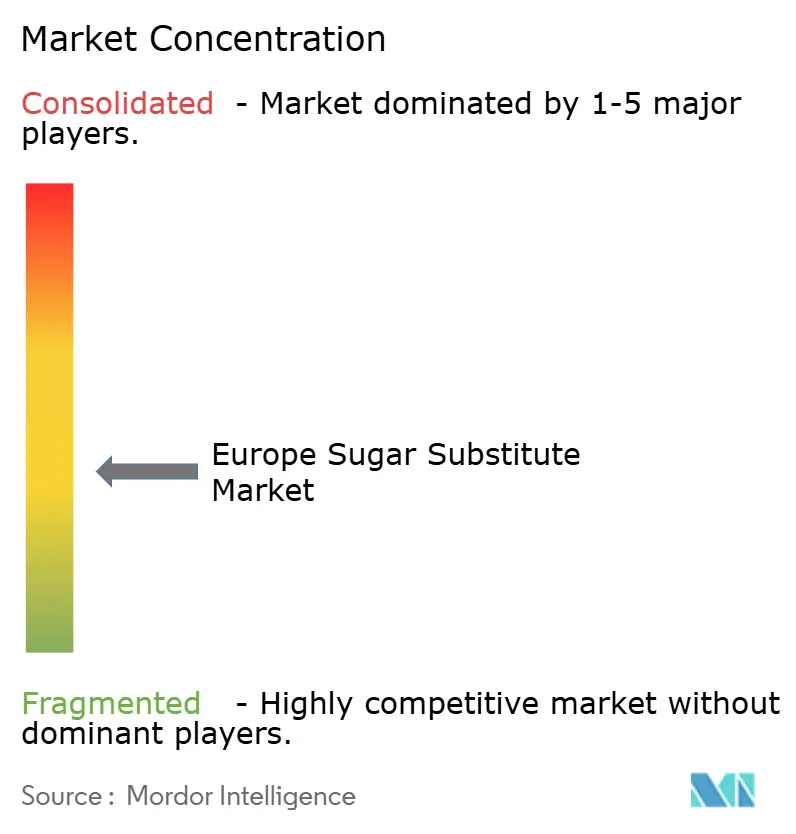
| Market Concentration | Medium |
Major Players *Disclaimer: Major Players sorted in no particular order Image © Mordor Intelligence. Reuse requires attribution under CC BY 4.0. | |
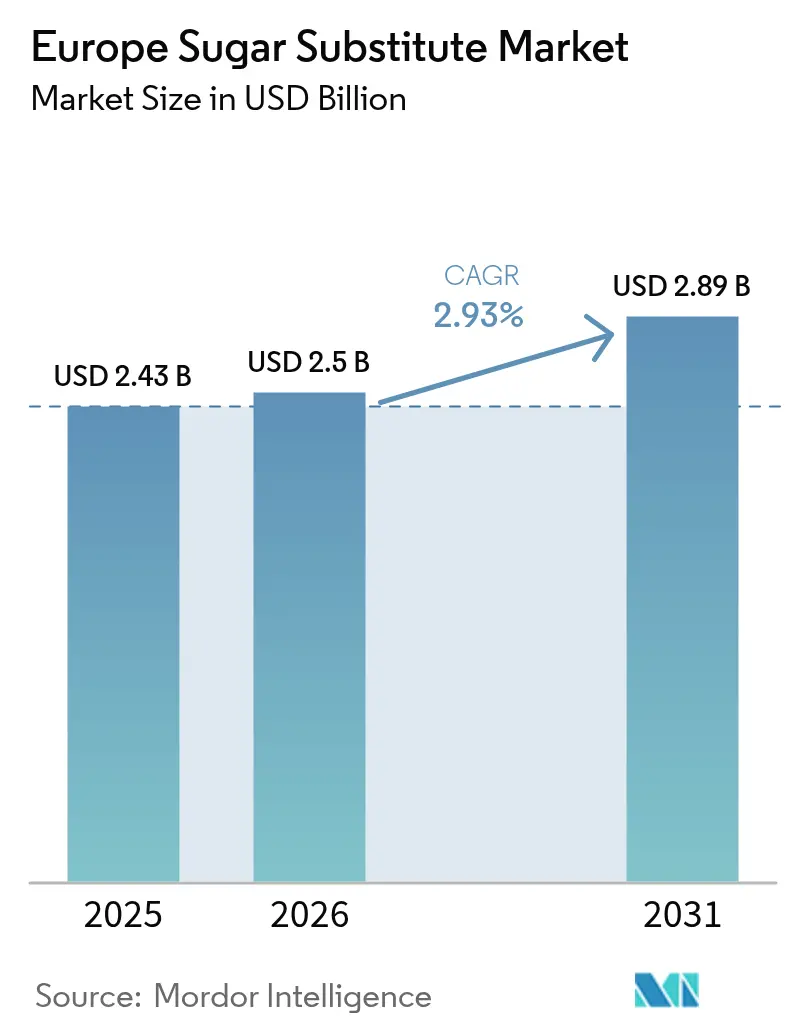
Europe Sugar Substitute Market Analysis by Mordor Intelligence
The Europe sugar substitutes market size was valued at USD 2.43 billion in 2025 and estimated to grow from USD 2.5 billion in 2026 to reach USD 2.89 billion by 2031, at a CAGR of 2.93% during the forecast period (2026-2031). This growth is driven by a well-established regulatory framework, continuous product reformulations within the food and beverage industries, and a gradual consumer preference for healthier alternatives. Germany's regulatory leadership, along with anti-dumping measures on erythritol, has ensured stable domestic production, mitigated price volatility, and strengthened manufacturers' confidence in supply reliability. The adoption of fermentation-derived stevia and monk fruit has increased significantly, with clean-label claims commanding retail price premiums. Although high-intensity sweeteners continue to dominate in terms of volume, polyols, and plant-derived alternatives are capturing higher consumer spending, particularly as their applications in pharmaceuticals and sports nutrition expand. To reduce the carbon footprint of sweetening solutions, companies are leveraging strategies such as precision fermentation, vertical integration, and enhanced life-cycle transparency, which have become critical competitive differentiators.
Key Report Takeaways
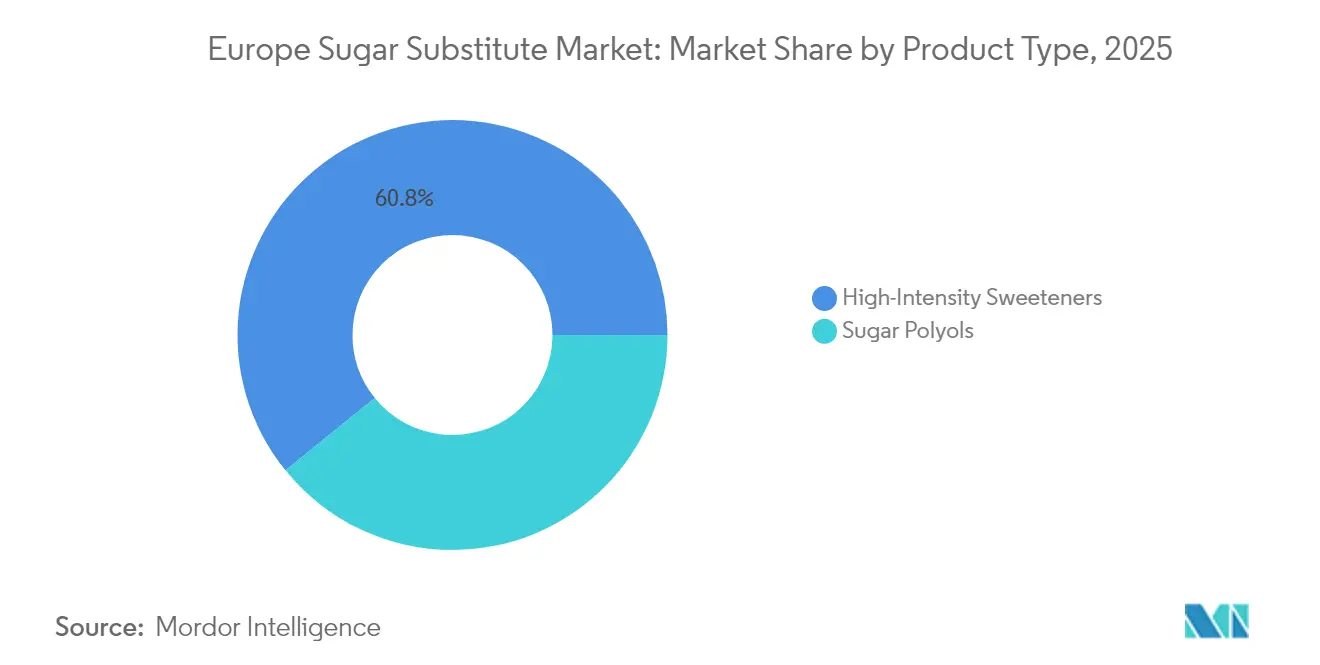
- By sweetener type, high-intensity sweeteners led with 60.84% revenue share in 2025, whereas sugar polyols are projected to expand at an 7.92% CAGR through 2031.
- By origin, synthetic variants held 56.40% of the European sugar substitutes market share in 2025, while plant-derived alternatives are forecast to grow at a 8.78% CAGR to 2031.
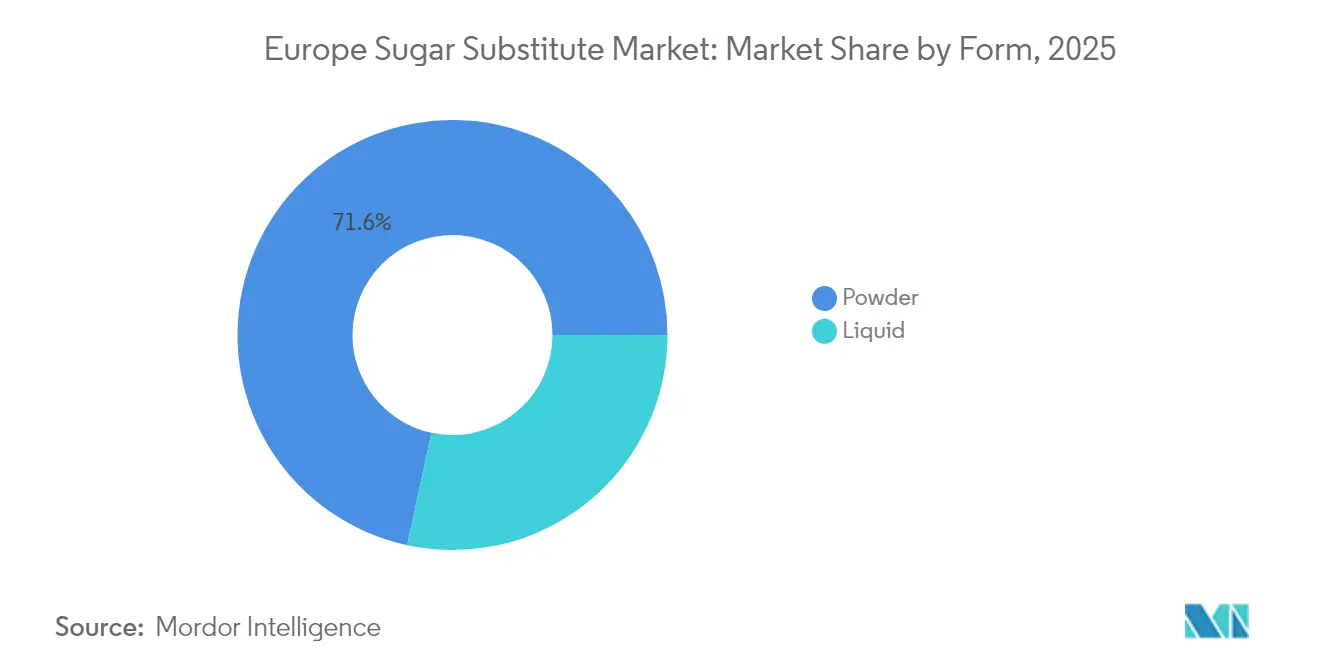
- By form, powder products commanded 71.62% of the European sugar substitutes market size in 2025; liquid formats are advancing at a 7.45% CAGR to 2031.
- By application, beverages accounted for 44.20% of the European sugar substitutes market size in 2025; pharmaceuticals exhibit the fastest expansion at an 8.63% CAGR to 2031.
- By country, Germany captured 19.00% of 2025 revenue and also posts the highest national CAGR at 4.12% to 2031.
Note: Market size and forecast figures in this report are generated using Mordor Intelligence’s proprietary estimation framework, updated with the latest available data and insights as of 2026.
Europe Sugar Substitute Market Trends and Insights
Drivers Impact Analysis*
| Driver | (~) % Impact on CAGR Forecast | Geographic Relevance | Impact Timeline |
|---|---|---|---|
| Surge in clean-label preference for natural sweeteners | +0.8% | Germany, France, United Kingdom | Medium term (2-4 years) |
| Expansion of low/no-sugar products fueling market growth | +0.7% | Europe | Long term (≥ 4 years) |
| Soaring diabetes and obesity rates fueling demand for low-calorie sweetenres | +0.6% | Germany, United Kingdom, Italy | Long term (≥ 4 years) |
| EU sugar-reduction legislation accelerating reformulationa | +0.5% | Europe | Short term (≤ 2 years) |
| Rising shift to lower-carbon footprint ingredients | +0.3% | Germany, France, United Kingdom | Medium term (2-4 years) |
| Increasing consumer awareness of health and wellness drives market expansion | +0.4% | Europe | Long term (≥ 4 years) |
| Source: Mordor Intelligence | |||
Surge in clean-label preference for natural sweeteners
European consumers are placing greater emphasis on scrutinizing ingredient lists, driving a significant increase in demand for plant-derived sweeteners that align with transparency and clean-label expectations. This evolving consumer preference is compelling food manufacturers to reevaluate their procurement strategies, prioritizing natural alternatives such as stevia, monk fruit, and other botanical sweeteners over synthetic compounds to meet these requirements. Regulatory advancements, including the approval of fermentation-derived stevia variants like DSM-Firmenich and Cargill's EverSweet by EFSA and FSA, are expanding the range of formulation possibilities while ensuring compliance with clean-label standards. Additionally, the willingness of consumers to pay a premium for natural alternatives creates lucrative margin opportunities, as they increasingly favor products featuring botanical sweeteners over those containing artificial ingredients.
Expansion of low/no-sugar products fueling market growth
The European beverage sector is undergoing a significant transformation, with an increasing focus on low and no-calorie options. This shift is not only redefining the beverage market but also creating substantial growth opportunities for sugar substitute suppliers. Furthermore, this trend extends beyond beverages, influencing the confectionery, dairy, and bakery markets, where manufacturers are actively reformulating their flagship products to align with evolving consumer preferences while maintaining the original taste profiles. Addressing this demand, Kerry's Tastesense Advanced range offers a solution capable of achieving up to a 100% reduction in sugar content without compromising the sensory qualities that consumers expect. The energy drink category, in particular, is driving innovation within the sector. Brands are introducing products fortified with BCAAs and vitamins, alongside sugar-free formulations, to cater to the growing health-conscious demographic. Supporting this industry-wide shift, regulatory initiatives such as the Union of European Beverage Associations' target of a 10% sugar reduction by 2025 are providing a strong framework that sustains and accelerates long-term growth trajectories across the sector.
Soaring diabetes and obesity rates fueling demand for low-calorie sweeteners
Europe grapples with a mounting public health crisis, as obesity and type 2 diabetes rates climb, particularly in the UK, Germany, and Italy. In response, health-conscious consumers are actively seeking to cut sugar intake without compromising on flavor. Those managing diabetes or weight are turning to products featuring both natural and artificial sugar substitutes. The rise of the clean label trendsfavoring natural, non-GMO, and plant-based ingredients, has bolstered the popularity of natural sweeteners like stevia and monk fruit. Concurrently, the growing adoption of GLP-1 therapies is steering formulators towards crafting sugar-free meal replacements that resonate with weight-management protocols. According to WHO's European Health Report, 2024 sees nearly 1 in 3 school-aged children in Europe classified as overweight, with 1 in 8 grappling with obesity[1]Source: World Health Organization, “European Health Report 2025,” who.int. These alarming figures are largely linked to poor dietary choices, heavily swayed by aggressive marketing of high-sugar products. Beyond the food and beverage realm, sugar substitutes are making their mark in diabetic medications, oral supplements, and nutraceuticals, all aimed at weight loss and blood sugar control, underscoring a robust industrial demand.
EU sugar-reduction legislation accelerating reformulation
Starting November 2024, the European Union's Regulation (EU) No 1308/2013 mandates uniform marketing and labeling standards, pushing manufacturers to reformulate products to stay competitive in the evolving market. This regulation aims to ensure transparency and consistency in product information, benefiting both consumers and businesses. Italy's sugar tax, introduced amidst the EU's regulatory landscape, underscores the intensifying push for compliance among food and beverage producers, encouraging them to innovate and adapt to changing consumer preferences and regulatory demands. Furthermore, the European Food Safety Authority (EFSA) has revisited its stance on key sweeteners, notably upping saccharin's acceptable daily intake from 5 mg/kg to 9 mg/kg body weight, thus broadening formulation avenues for producers and enabling them to explore new product offerings. The UK's sugar tax, which has notably curtailed sugar levels in soft drinks, not only serves as a blueprint for similar initiatives across Europe but also sets the stage for wider adoption, demonstrating the potential for regulatory measures to drive significant changes in public health and industry practices.
Restraints Impact Analysis*
| Restraint | (~) % Impact on CAGR Forecast | Geographic Relevance | Impact Timeline |
|---|---|---|---|
| Stringent EU novel-food approval delays for new sweeteners | -0.4% | Europe | Medium term (2-4 years) |
| Consumer safety perception issues around artificial sweeteners | -0.3% | Germany, France, United Kingdom | Long term (≥ 4 years) |
| Limited domestic stevia cultivation causing supply-chain volatility | -0.2% | Europe | Short term (≤ 2 years) |
| High production costs of sugar substitutes impact market growth | -0.3% | Europe | Medium term (2-4 years) |
| Source: Mordor Intelligence | |||
Stringent EU novel-food approval delays for new sweeteners
EFSA's stringent assessment process for novel foods ensures consumer safety but also imposes significant barriers to market entry. This approach restricts innovation and alters the competitive dynamics within the European sugar substitutes market. For instance, D-allulose remains unapproved in Europe, despite receiving authorizations in other regions, due to incomplete evaluations resulting from insufficient hazard characterization data. Similarly, monk fruit extract faces regulatory inconsistencies, with aqueous extracts approved while concentrated extracts remain prohibited due to gaps in safety data. These inconsistencies limit manufacturers' ability to develop optimal sweetening solutions. The updated EFSA guidance, effective February 2025, seeks to enhance clarity but continues to mandate comprehensive dossiers. These include detailed production processes, composition data, and extensive toxicological information, often extending approval timelines beyond 18 months for complex applications. Such delays particularly impact biotechnology companies developing precision fermentation sweeteners, where regulatory uncertainty constrains investment decisions and market entry strategies.
High production costs of sugar substitutes impact market growth
Production costs for advanced sweeteners remain considerably higher than those of traditional sugar, creating significant adoption barriers, particularly in price-sensitive market segments where achieving cost parity remains challenging despite technological advancements. For instance, even with a 51% yield improvement in fermentation, erythritol's unit costs are still substantially higher than refined sugar. Anti-dumping duties of up to 233.3% on Chinese erythritol further exacerbate this cost disparity. Stevia agronomy projects necessitate investments in drip irrigation, greenhouse nurseries, and farmer training, which significantly increase capital expenditures (CAPEX). Although bioconversion offers scalability benefits, the requirement for stainless-steel fermenters and downstream purification processes demands substantial capital, posing challenges for smaller market players.
*Our forecasts treat driver/restraint impacts as directional, not additive. The impact forecasts reflect baseline growth, mix effects, and variable interactions.
Segment Analysis
By Product Type: A resilient Core With Polyol Tailwinds
In 2025, acesulfame K, aspartame, and sucralose, high-intensity molecules, dominate the European sugar substitutes market, making up 60.84% of total revenue. Their widespread use in key applications like soft drinks, tabletop sachets, and chewing gum solidifies their market leadership. These molecules benefit from economies of scale, ensuring cost efficiency and consistent supply, which further strengthens their position in the market. Meanwhile, polyols are carving out a significant growth segment, with projections showing a robust CAGR of 7.92% through 2031. This surge is largely attributed to sorbitol's essential role in pediatric syrups, where it acts as a sweetener and stabilizer, xylitol's recognized dental care advantages, including its ability to reduce cavity-causing bacteria, and erythritol's distinctive cooling mouthfeel, which enhances its use in confectionery and beverages. Collectively, these factors are driving the increasing adoption of polyols across diverse industries.
Stevia Rebaudioside M, crafted through precision fermentation, is overcoming traditional taste hurdles, such as bitterness and aftertaste, prompting reformulations in baked goods and broadening its food industry adoption. This innovation is particularly significant as it allows manufacturers to create products with improved taste profiles while maintaining natural and clean-label claims. Moreover, the raised Acceptable Daily Intake (ADI) of acesulfame K to 15 mg/kg has expanded its application range, paving the way for zero-sugar Cola launches and other low-calorie beverages. The European sugar substitutes sector is also aligning more closely with pharmaceutical industry regulations, spurring the dual-use adoption of polyols in both food and pharmaceutical formulations. This regulatory alignment is fostering innovation, enabling manufacturers to develop multifunctional products, and driving overall market growth.



By Origin: Plant-based Surge Reshapes Portfolios
In 2025, synthetic variants accounted for 56.40% of the market revenue but grappled with challenges tied to consumer perception, particularly concerns about artificial ingredients and potential health risks. In contrast, plant-derived alternatives surged ahead, boasting a robust CAGR of 8.78%, driven by increasing consumer demand for natural and clean-label products. Initiatives in Greece and Spain, such as tobacco-to-stevia conversion projects, are bolstering carbon sustainability by reducing reliance on traditional agricultural practices and promoting eco-friendly production methods. Synthetic variants, known for their high sweetness intensity, with sucralose being 600 times sweeter than sugar, find extensive use in processed foods, diet soft drinks, and pharmaceuticals due to their cost-effectiveness and stability in various formulations. Dominating the beverages and dessert segments are sucralose and Acesulfame-K, which continue to be preferred for their ability to maintain taste profiles without adding calories.
Consumers, especially those diabetic or weight-conscious, increasingly view plant-derived sweeteners as healthier and safer options, aligning with the growing trend toward health-conscious eating habits. Stevia, at the forefront of this segment, sees its applications spanning yogurts, beverages, and baked goods, supported by its natural origin and minimal impact on blood sugar levels. Biotechnological fermentation is carving a niche, merging natural claims with industrial efficiency by enabling the production of high-purity sweeteners at scale. After receiving EFSA clearance, Cargill’s EverSweet steviol glycosides and DSM-Firmenich’s Rebaudioside M have made their way to European soda fountains, offering manufacturers a reliable supply of high-quality sweeteners. Moreover, there's a rising consumer acceptance of precision-fermented products, with many viewing them as nature-identical, alleviating previous skepticism and paving the way for broader adoption in the food and beverage industry.
By Form: Liquids Gain When Speed Matters
From 2026 to 2031, liquid sweeteners are projected to witness a CAGR of 7.45%. This growth is largely attributed to the beverage industry's push for enhanced processing efficiency. The industry's preference for liquid sweeteners stems from their superior solubility, which streamlines manufacturing processes by enabling faster and more uniform mixing. Additionally, liquid sweeteners reduce the need for extensive mechanical processing, thereby lowering energy consumption and operational costs. Meanwhile, in 2025, powdered sweeteners are set to dominate the market, holding a substantial 71.62% share. Their prominence is especially evident in the bakery, confectionery, and pharmaceutical sectors, where their bulk properties and stability provide distinct advantages, such as ease of storage, extended shelf life, and consistent performance in various formulations.
The beverage industry's shift towards liquid sweeteners is not merely a trend but a calculated move. The operational benefits are clear: liquid sweeteners offer reduced mixing times, quicker dissolution, and better flavor integration, which are critical for maintaining product consistency and meeting consumer expectations. Such advantages not only elevate product quality but also justify a premium pricing strategy for these solutions, making them an attractive option for manufacturers aiming to differentiate their offerings. On the other hand, the pharmaceutical industry is leaning towards powdered forms, especially in tablet production, where their compressibility and stability ensure precise dosage and efficacy in medicinal applications.
By Application: Pharma Eclipses Beverages On Growth
Pharmaceuticals demonstrate the fastest-growing application with an 8.63% CAGR during 2026-2031. This growth stems from the pharmaceutical industry's increasing utilization of sugar alcohols as excipients in drug formulations and the expanding demand for sugar-free medications. Sugar alcohols serve as crucial ingredients in pharmaceutical products, offering both sweetening properties and functional benefits such as improved tablet binding and extended shelf life. The beverages segment maintains a dominant 44.20% market share in 2025, bolstered by the Union of European Beverage Associations' commitment to reduce sugar content by 10% by 2025. This initiative responds to consumer health concerns and regulatory pressures. In 2023, soft drink consumption in the European Union (EU) reached 51,905.7 million liters, according to UNESDA - the Union of European Soft Drinks Associations.
Food applications, encompassing bakery, confectionery, and dairy categories, are witnessing a substantial transformation toward sugar substitutes. This shift is driven by stringent regulatory requirements for nutritional labeling and increasing consumer awareness of the health implications associated with excessive sugar consumption. The pharmaceutical sector's robust growth highlights the expanding role of sugar alcohols in both excipient applications and sugar-free medication development. These formulations enhance patient compliance, particularly benefiting diabetic individuals who manage multiple daily prescriptions while monitoring their sugar intake.
Geography Analysis
In 2025, Germany represented 19.00% of the turnover in Europe's sugar substitutes market, with a projected CAGR of 4.12% through 2031. According to Statistisches Bundesamt, there were 226 active milk processing businesses in Germany as of 2023, with the increasing incorporation of sugar substitutes in dairy products driving market growth. Collaborative efforts among food manufacturers, academic institutions, and the government have effectively normalized the use of stevia and erythritol through well-funded consumer education initiatives. A notable reduction in sugar consumption among children underscores successful behavioral changes, ensuring consistent demand. Additionally, Germany hosts several fermentation campuses where major players like Cargill and ADM, along with numerous biotech startups, are advancing the production of novel glycosides.
France, Spain, Italy, and the United Kingdom collectively contribute to nearly half of the region's revenue. In France, reformulations in pastry and dairy products are driving demand for high-purity stevia imports. Italy's soft drink excise tax has heightened the urgency for reformulation, despite stringent oversight by EFSA. Meanwhile, the United Kingdom, operating its own novel food approval framework post-Brexit, occasionally approves certain molecules ahead of the European Union, providing a competitive advantage to early registrants.
Central and Eastern Europe have been slower to adopt sweetener alternatives due to income sensitivity. However, rising obesity rates and EU-wide labeling regulations are expected to accelerate adoption. In Scandinavia, the high penetration of organic products aligns with a preference for plant-derived sweeteners, encouraging retailers to stock sugar-free seasonal confections. Furthermore, the Rest of Europe segment is benefiting from increased local production investments, particularly in Benelux and the Balkans, driven by freight cost reductions and the impact of anti-dumping levies.
Regulatory Landscape
Sugar substitutes marketed in foods across Europe operate under the EU food additives framework, with authorization decisions taken by the European Commission following safety evaluations by the European Food Safety Authority (EFSA) under Regulation (EC) No 1333/2008. A major compliance dynamic is the ongoing EFSA re-evaluation program for additives approved before 20 January 2009, which keeps legacy high-intensity sweeteners and polyols under periodic scientific scrutiny and can lead to revised conditions of use or intake assessments for manufacturers.
Recent EFSA opinions continue to shape formulation guardrails for sweeteners used in reformulation programs. In February 2026, EFSA concluded sucralose (E 955) is safe for currently authorized uses with an ADI of 15 mg/kg body weight per day, but it did not confirm safety for proposed extensions involving high-temperature industrial processing, which reinforces the need for dossier-backed evidence on degradation behavior and exposure. Separately, EFSA updated guidance in 2026 on scientific data requirements for food additive applications, including exposure assessment expectations, such as the mandatory use of the consumers-only scenario for sweetener applications, increasing the importance of regulatory-ready data packages for new uses and novel production routes.
Value Chain Analysis
The Europe sugar substitutes value chain spans agricultural and carbohydrate inputs (sugar, corn, wheat, chicory, and specialty botanicals), upstream processing (extraction and purification for plant-derived sweeteners, and fermentation or bioconversion routes for high-purity glycosides), formulation and blending (often alongside flavor modulation and bulking systems), and downstream distribution to food, beverage, and pharmaceutical manufacturers. Regionally anchored ingredient ecosystems support parts of this chain, including French and Belgian players linked to chicory-based supply (for example, Chicoree Leroux in Hauts-de-France and Cosucra in Belgium) and stevia-extract activities (for example, Cristalco and Stevia Natura), while global suppliers increasingly complement these networks with precision-fermentation and bioconversion-derived sweeteners for consistent quality and traceability.
Key constraints concentrate on cost, logistics, and regulatory readiness. Energy- and capex-intensive fermentation and downstream purification can disadvantage EU production economics versus third-country supply, which makes scale, vertical integration, and long-term offtake agreements important for cost control. On the physical supply side, Europe-facing ingredient flows have had to manage shipping disruptions and rerouting that add roughly 10 to 12 days of transit time on affected maritime lanes, pushing more buyers toward contingency planning such as strategic stockpiling for critical inputs. Regulatory gating remains embedded throughout the chain because market access for sweeteners depends on EFSA-evaluated authorization under Regulation (EC) No 1333/2008, and the February 2026 EFSA conclusion on sucralose (E 955) underscored how expanded-use claims, particularly those tied to high-temperature processing, can become a bottleneck without robust supporting data.
Competitive Landscape
The European sugar substitutes market is moderately fragmented, with numerous global food ingredient companies competing for market share. Prominent players include Cargill, Incorporated, The Archer-Daniels-Midland Company, Tate & Lyle PLC, Ingredion Inc., and Kerry Group plc leverage integrated portfolios of starches, sweeteners, and texturants to provide comprehensive reformulation solutions. The Avansya joint venture between Cargill and DSM-Firmenich has launched a 10,000 metric-ton Rebaudioside M production line, serving European beverage clients.
Emerging players are making strides in the market by scaling up the production of enzymatic tagatose and upcycled fructose, respectively. These innovations emphasize metabolic health benefits and align with the principles of a circular economy, addressing both consumer preferences and sustainability goals. Additionally, Ingredion’s life-cycle assessment highlights that farm-sourced stevia achieves a 56% reduction in greenhouse gas emissions compared to traditional cane sugar, providing buyers with a compelling Scope-3 sustainability proposition.
Market participants are increasingly adopting advanced competitive strategies, including the development of proprietary taste modulation technologies, the implementation of carbon labeling initiatives, and fostering strong relationships with grower communities to ensure sustainable sourcing. Efforts to mitigate supply-side risks are evident through initiatives such as the establishment of Greek stevia cooperatives and Spanish monk fruit pilot projects, which aim to minimize transportation distances and enhance supply chain efficiency. Furthermore, leading companies are expediting regulatory filings with the European Food Safety Authority (EFSA) and the United Kingdom Food Standards Agency to secure exclusivity periods, thereby strengthening their competitive positioning in the market.
Europe Sugar Substitute Industry Leaders
Cargill, Incorporated
The Archer-Daniels-Midland Company
Tate & Lyle PLC
Ingredion Inc.
Kerry Group plc
- *Disclaimer: Major Players sorted in no particular order

Market Opportunities and Future Outlook
Regulatory and fiscal pressure points are creating practical whitespace for reformulation toolkits that combine sweetness, taste modulation, and mouthfeel restoration. In the United Kingdom, the government confirmed changes to the Soft Drinks Industry Levy in November 2025, including lowering the first threshold from 5g to 4.5g total sugar per 100 ml, which raises the number of beverage SKUs that need incremental sugar reduction. At the EU level, a draft European Commission cardiovascular health plan discussed in March 2026 included proposals around an EU-wide tax on sugary drinks and a digital food information system to classify products by sugar content, keeping attention on sugar density and making supplier-led reformulation programs more actionable for beverage, dairy, and confectionery manufacturers operating across multiple European markets.
Technology and portfolio expansion are also opening additional opportunity pockets, within clear compliance boundaries. EFSA activity in 2026 reinforced both continuity and constraints: sucralose (E 955) remained supported for currently authorized uses while proposed high-temperature industrial extensions were not confirmed, which is increasing demand for alternative sweetener systems that perform in heat-processed applications without triggering new safety questions. At the same time, EFSA issued a favorable opinion in January 2026 on a modified manufacturing process for enzymatically produced steviol glycosides (E 960c), supporting broader industrial adoption of bioconversion/fermentation-enabled stevia variants where supply consistency and clean-label positioning matter. On the demand-creation side, retailer and channel participation is becoming more visible, shown by Rewe Group joining a multi-million-euro investment round (March 2026) in Austrian food-tech firm Neoh to support its B2B Zero+ sugar substitute segment. New capacity announcements such as Pentasweet starting construction (April 2026) of a 65 million Euro brazzein production facility in Lithuania also indicate emerging sweet-protein supply options for European formulators.
Recent Industry Developments
- June 2026: ADM announced the expansion of its Customer Creation and Innovation Center in Hungary to enhance beverage development capabilities. The upgrade strengthens localized technical support for low-sugar and functional drink reformulation work across Eastern Europe and shortens iteration cycles between ingredient systems and finished-product benchmarks.
- February 2026: Tate & Lyle launched Yume M Stevia, positioning it as the first ingredient under its new Yume brand and producing it via bioconversion. The launch broadens premium, high-purity stevia options for European customers focused on clean-label sugar reduction and more consistent taste performance than conventional stevia extracts.
- November 2024: Tate & Lyle completed its USD 1.8 billion acquisition of CP Kelco. The deal expanded its specialty solutions portfolio, improving its ability to pair sweetening approaches with texturizing and mouthfeel technologies that are commonly required when sugar is removed from beverages, dairy, and confectionery formulations.


Research Methodology Framework and Report Scope
Market Definition and Coverage
For this study, the Europe sugar substitute market covers the value of sweetening ingredients sold as alternatives to sugar, which are used to deliver sweetness with reduced or no added sugar across packaged foods, beverages, and selected non-food uses.
Scope exclusions: We exclude table sugar and bulk nutritive sweeteners sold purely as sugar, and we do not count retail margins or foodservice preparation value beyond the ingredient itself.
Segmentation Overview
- By Product Type
- High-Intensity Sweeteners
- Acesulfame Potassium
- Advantame
- Aspartame
- Neotame
- Saccharin
- Sucralose
- Stevia
- Monk Fruit
- Other High-Intensity Sweeteners
- Sugar Polyols
- Sorbitol
- Xylitol
- Maltitol
- Erythritol
- Other Sugar Polyols
- High-Intensity Sweeteners
- By Origin
- Plant-Derived
- Synthetic
- Biotechnologically Fermented
- By Form
- Powder
- Liquid
- By Application
- Food
- Bakery and Cereals
- Confectionery
- Dairy and Dairy Alternatives
- Sauces, Condiments and Dressings
- Other Food Applications
- Beverage
- Carbonated Soft Drinks
- RTD Tea and Coffee
- Sports and Energy Drinks
- Other Beverages
- Pharmaceuticals
- Other Applications
- Food
- By Country
- United Kingdom
- Germany
- Spain
- France
- Italy
- Russia
- Rest of Europe
Data Sources, Market Sizing, and Validation
Desk Research
Desk research was used to set a clear boundary around what is counted as a sugar substitute in Europe, and to build the first set of demand indicators by country and by end-use. We typically rely on public sources such as Eurostat for production and trade series, the European Commission and EFSA for ingredient approvals and usage conditions, and FAOSTAT for sugar balance and broader consumption context.
To keep assumptions realistic, we also scan open trade association and standards bodies material (such as ingredient and beverage associations), along with company annual reports, investor presentations, and mainstream business press for pricing signals and reformulation activity. Where needed, paid subscriptions for company financials and news coverage, import and export shipment-level data, and patent databases were used to cross-check supplier footprints and the direction of innovation. These examples are not exhaustive, and other public and paid sources were referred to for data collection, validation, and clarification.
Primary Interviews and Surveys
Primary work focused on validating what is actually used in formulations, how buyers switch between high-intensity sweeteners and polyols, and how pricing moves through ingredient contracts over the year. We spoke with a mix of ingredient suppliers, distributors, and food and beverage formulation teams across key European markets, and then used follow-up checks to confirm any large variances seen in the model outputs.
Distribution of primary research fieldwork respondents
| Company type | Respondent position |
|---|---|
| Top tier: 30% | CXOs: 15% |
| Mid tier: 53% | Functional/Unit leaders: 39% |
| Smaller Players: 17% | Managers: 46% |
Market-Sizing & Forecasting
Sizing starts from a top-down demand pool build that links sugar-reduction adoption to the parts of the food and beverage base where substitutes are commonly used, and then spreads that demand across Europe using country-level consumption and category activity. The model is then corroborated with selective bottom-up approximations, including sampled supplier revenue cues, channel checks with distributors, and an ASP times volume logic for priority applications to adjust totals.
Key inputs that shaped the totals include the mix shift between high-intensity sweeteners and sugar polyols, the share of reformulated beverage and food launches, average use rates in typical recipes (kept as ranges, not single points), import and export movements for relevant ingredient codes, and inflation-linked price progression for major substitute families. For forecasting, we used scenario analysis supported by expert views on reformulation pace, regulatory and labeling impacts, and expected pricing normalization, which helped us avoid overweighting one-time shocks. When bottom-up signals were incomplete for smaller countries or niche applications, gaps were handled through proxy ratios from comparable markets, then rechecked with interview feedback before locking the final splits.
Data Validation & Update Cycle
Results are triangulated through multiple checks so that one data series does not drive the outcome on its own. We compare the final market value against independent indicators like ingredient trade direction, country-level application growth signals, and price movement patterns, and then investigate any outliers that fall outside expected ranges.
Before sign-off, the model goes through step-by-step peer review where assumptions, conversion factors, and country allocations are challenged and corrected if needed. If a major variance is spotted, respondents are re-contacted to confirm whether it is a real market shift or a data timing issue. Reports are refreshed annually, with interim updates when material events occur, followed by a final pre-delivery pass so clients receive the most current view.
Mordor Intelligence's Europe Sugar Substitute Market Sizing Compared With Other Published Estimates
Published market sizes for Europe sugar substitutes can look far apart, even when the topic sounds the same at first glance. The gaps usually come from different product boundaries, different treatment of polyols versus syrups, and differences in the base year used for price and currency conversion.
Trade movements for sweetening ingredients, country-level application demand signals, and the observed shift in beverage reformulation are the evidence checks that keep Mordor Intelligence's estimate aligned to ingredient-level consumption in Europe (instead of counting broader sweetener classes that sit outside sugar substitutes).
Benchmark comparison
| Source | Market Size | Gaps in Research Methodology |
|---|---|---|
| Mordor Intelligence | USD 2.50 B (2026) | |
| Global Consultancy A | USD 4.80 B (2024) | Uses an earlier base year and a wider grouping that can pull in adjacent sweetener types and broader application buckets, which lifts the total beyond ingredient use tied to sugar-reduction substitution. |
| Industry Publisher B | USD 2.15 B (2025) | Applies a different country list and composition coverage, and relies on an alternate price progression and forecast window that changes the conversion from volume signals into value. |
Across the three figures, the spread is mainly explained by what gets included as a substitute, how applications are grouped, and the year used to translate volumes into USD values. By keeping the model tied to clear demand indicators and repeating the same checks across countries, the final number stays traceable and practical for planning.


Key Questions Answered in the Report
What is the current value of the Europe sugar substitutes market?
The market is valued at USD 2.5 billion in 2026 and is expected to reach USD 2.89 billion by 2031.
Which country leads the market in both size and growth?
Germany holds 19.00% of revenue in 2025 and records the fastest national CAGR at 4.12% through 2031.
Which sweetener type is growing the quickest?
Sugar polyols are forecast to expand at an 7.92% CAGR from 2026 to 2031, driven by pharmaceutical and clean-label uses.
How does EU regulation influence market demand?
Sugar-reduction directives and higher excise taxes incentivise reformulation, directly boosting uptake of approved alternative sweeteners.
Page last updated on:


 Your data is secure and never sold or shared.


