
Market Overview
| Study Period | 2020 - 2031 |
|---|---|
| Forecast Data Period | 2026 - 2031 |
| Base Year Market Size (2025) | USD 3.69 Billion |
| Market Size (2026) | USD 3.92 Billion |
| Market Size (2031) | USD 5.37 Billion |
| Growth Rate (2026 - 2031) | 6.52 % |
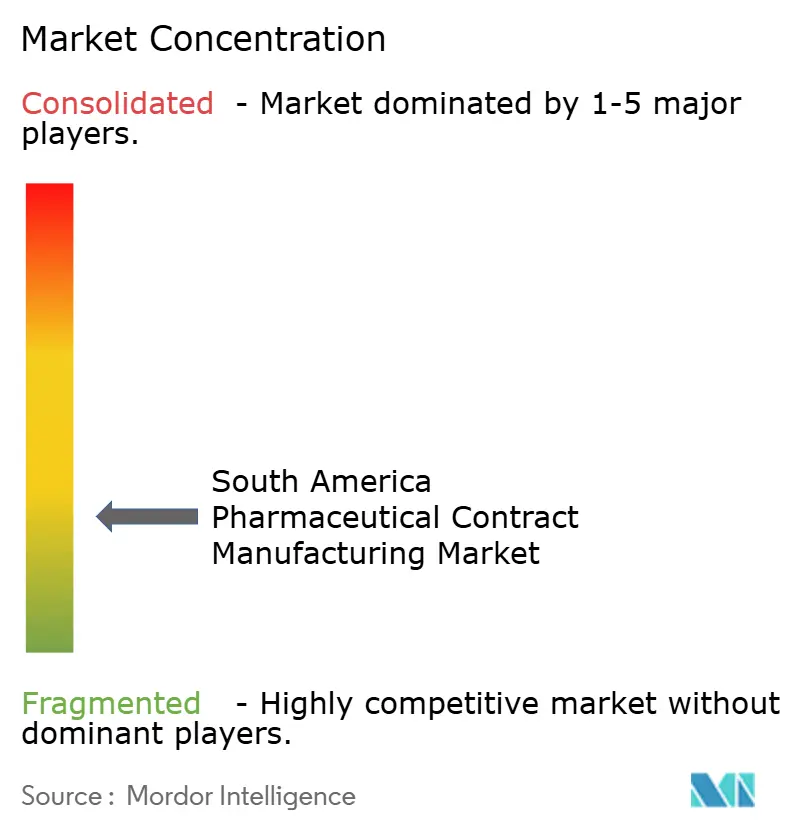
| Market Concentration | Low |
Major Players *Disclaimer: Major Players sorted in no particular order Image © Mordor Intelligence. Reuse requires attribution under CC BY 4.0. | |
South America Pharmaceutical Contract Manufacturing Market Analysis by Mordor Intelligence
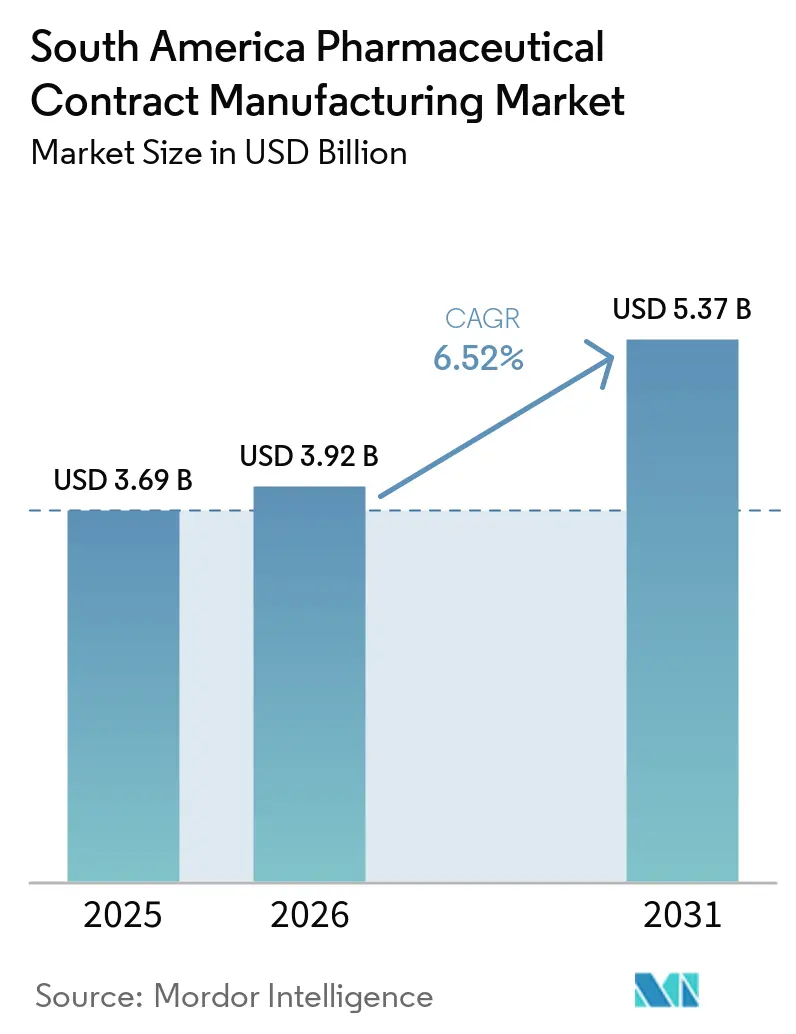
The South America Pharmaceutical Contract Manufacturing Market size is projected to expand from USD 3.69 billion in 2025 and USD 3.92 billion in 2026 to USD 5.37 billion by 2031, registering a CAGR of 6.52% between 2026 and 2031. Aging populations, chronic diseases, and greater use of external manufacturing capacity support demand for regional production services. Domestic laboratories and multinational drug companies are seeking partners that can manage specialized production, local registration requirements, and shorter supply routes. The South America pharmaceutical contract manufacturing market also benefits from demand for oncology medicines, injectable products, and biosimilars that require qualified local capacity. Companies with sterile production, high-containment chemistry, and reliable quality systems are positioned to compete for higher-value projects. Imported active pharmaceutical ingredients (APIs) and fluctuating local currencies remain material constraints on cost control and supply continuity.
Key Report Takeaways
- By service type, API manufacturing held 42.73% of the South America pharmaceutical contract manufacturing market size in 2025, while secondary packaging is projected to expand at a 7.98% CAGR through 2031.
- By drug molecule type, small molecules accounted for 56.83% of the South America pharmaceutical contract manufacturing market size in 2025, while advanced therapies are projected to expand at a 7.78% CAGR through 2031.
- By scale of operation, commercial-scale manufacturing held 61.62% of the South America pharmaceutical contract manufacturing market size in 2025, while clinical-phase manufacturing is projected to expand at a 7.73% CAGR through 2031.
- By end user, Big Pharma accounted for 45.82% of the South America pharmaceutical contract manufacturing market size in 2025, while emerging and virtual biotech is projected to expand at a 7.83% CAGR through 2031.
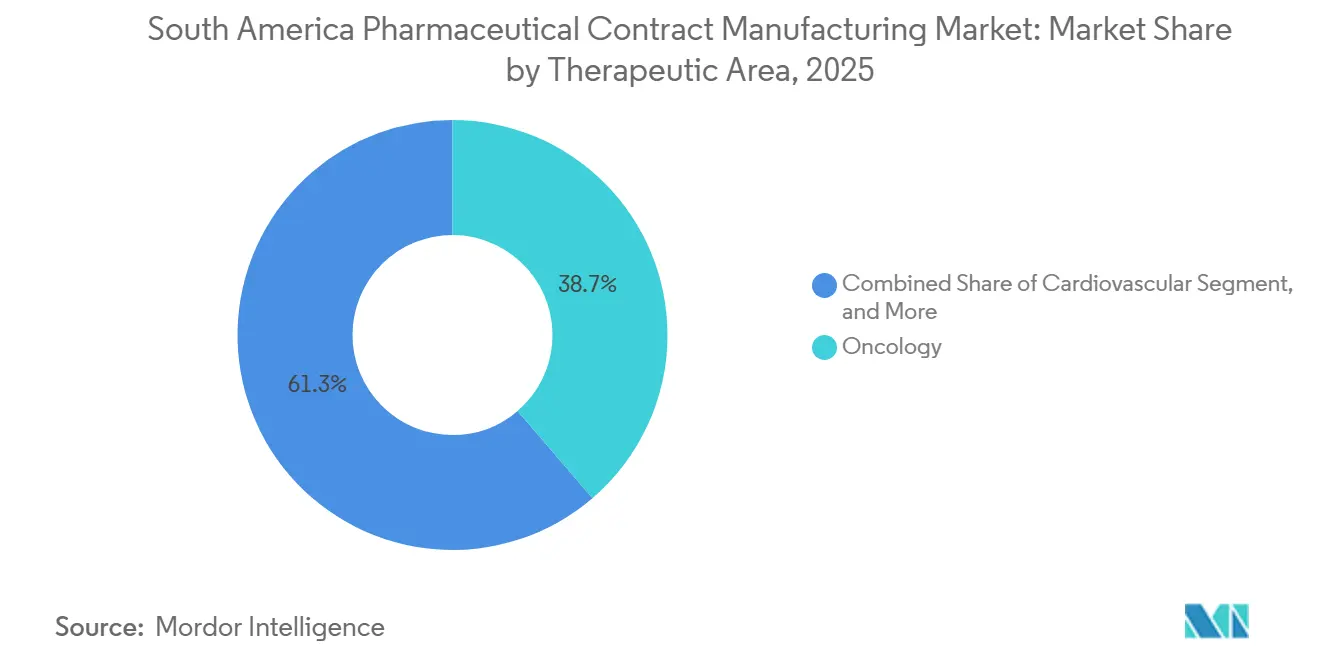
- By therapeutic area, oncology held 38.72% of the South America pharmaceutical contract manufacturing market size in 2025, while CNS therapies are projected to expand at a 7.22% CAGR through 2031.
- By geography, Brazil held 48.73% of the South America pharmaceutical contract manufacturing market size in 2025, while Chile is projected to expand at a 7.22% CAGR through 2031.
Note: Market size and forecast figures in this report are generated using Mordor Intelligence’s proprietary estimation framework, updated with the latest available data and insights as of January 2026.
Market Trends and Insights
Drivers Impact Analysis of South America Pharmaceutical Contract Manufacturing Market*
| Driver | (~) % Impact on CAGR Forecast | Geographic Relevance | Impact Timeline |
|---|---|---|---|
| Outsourcing by Domestic and Multinational Pharmaceutical Companies | +2.1% | Global, concentrated in Brazil and Argentina, with spillover to Colombia and Chile | Short term (≤ 2 years) |
| Demand for Generics, Biosimilars, and Chronic-Disease Therapies | +1.6% | Brazil, Argentina, and Chile, with emerging demand in Colombia and Peru | Medium term (2-4 years) |
| Rising Biologics and Injectable Localization | +1.2% | Brazil and Argentina, with spillover to Chile and Colombia | Medium term (2-4 years) |
| Regional Supply-Chain Resilience and Import Substitution | +0.7% | Brazil, with early gains in Minas Gerais and Pernambuco | Long term (≥ 4 years) |
| Cross-Border Regulatory and Export-Platform Specialization | +0.3% | Chile and Argentina, including Pacific Alliance corridors | Long term (≥ 4 years) |
| Modular and Continuous-Flow Manufacturing Under Capital Constraints | +0.2% | Brazil and Argentina, with emerging uptake in Colombia | Long term (≥ 4 years) |
| Source: Mordor Intelligence | |||
Outsourcing by Domestic and Multinational Pharmaceutical Companies
Outsourcing became a strategic requirement for domestic laboratories and multinational sponsors operating in the region. Large Brazilian drug makers faced capacity constraints as production volumes increased, which spurred demand for external manufacturing partners. Blau Farmacêutica completed 2 new lines at its São Paulo complex in late 2025, and the lines entered ANVISA validation before commercial operations began in 2026. Multinational companies launching biosimilars and specialized injectable medicines also have stronger reasons to select regional partners rather than import finished products by air. Local-content preferences in public tenders and ANVISA's evolving reliance framework make qualified regional capacity more useful for market entry. The South America pharmaceutical contract manufacturing market, therefore, draws demand from domestic companies seeking sterile biologics, lyophilization, and high-potency API capabilities, as well as from multinational sponsors.
Demand for Generics, Biosimilars, and Chronic-Disease Therapies
Demand for generic drugs and biosimilars is broadening the work available to contract manufacturers. Brazil resumed domestic insulin production in July 2025 after a 20-year hiatus, through a Productive Development Partnership among Biomm, Wockhardt, and Fundação Ezequiel Dias.[1] This program demonstrated how technology transfer can support domestic production of a critical medicine for chronic diseases. PAHO urged countries in February 2025 to improve access to essential cancer medicines and encouraged regional approaches that can support biosimilar adoption. Contract manufacturers can therefore receive both finished-product fill-finish work for biosimilars and API batch work for lower-cost generic medicines. This combination favors providers that can offer multiple services instead of a single production step.
Rising Biologics and Injectable Localization
Biologics and sterile injectable production require substantial investment, but domestic localization has clear policy support. Brazil's Ministry of Health signed 3 Productive Development Partnerships with South Korean partners in February 2026 for technology transfer and domestic production of bevacizumab, eculizumab, and aflibercept. The first-year procurement commitment reached BRL 1.104 billion, equivalent to USD 201 million at the stated 2026 conversion rate. mAbxience operates a 24,000-liter cell culture facility in Garín, Argentina, with FDA and EMA GMP approvals, giving sponsors a South American site that can support regional and export supply. These capabilities move parts of the South America pharmaceutical contract manufacturing market beyond domestic supply and toward export-oriented biologics production. ANVISA's 2026 inspection-reliance changes can also reduce repeated inspection work for qualifying manufacturers.
Regional Supply-Chain Resilience and Import Substitution
Import dependence remains a strategic concern because Brazil sourced 90% of APIs used in pharmaceutical production from imports in 2025. The country’s pharmaceutical trade deficit reached new heights, driven by imports of immunological products, biologics, oncology medicines, and specialized biotechnology products. Brazil's health and industrial policies use Productive Development Partnerships and financing initiatives to strengthen domestic API and biologics capacity. API costs can account for up to 80% of total drug production costs, which makes local sourcing important for manufacturers serving price-sensitive generic programs. The South America pharmaceutical contract manufacturing market can benefit when suppliers build select domestic synthesis capabilities and reduce exposure to imported inputs. Quality investment remains necessary because ANVISA's risk-based certification process links renewal requirements to health-risk profiles.
Restraints Impact Analysis of South America Pharmaceutical Contract Manufacturing Market*
| Restraints | (~) % Impact on CAGR Forecast | Geographic Relevance | Impact Timeline |
|---|---|---|---|
| GMP Compliance, Inspection, and Remediation Costs | -1.3% | Brazil and Argentina, with exposure in Colombia and Peru | Medium term (2-4 years) |
| Currency Volatility and Imported API Dependence | -1.0% | Brazil and Argentina, with spillover to Colombia and Peru | Short term (≤ 2 years) |
| Regulatory Fragmentation Across National Markets | -0.5% | All South American markets, especially cross-border CMOs | Medium term (2-4 years) |
| Utility Reliability, Cold-Chain Gaps, and Specialized Talent Shortages | -0.2% | Northeast Brazil, inland Argentina, Peru, and Colombia | Long term (≥ 4 years) |
| Source: Mordor Intelligence | |||
GMP Compliance, Inspection, and Remediation Costs
GMP compliance is a major cost barrier for contract manufacturers in South America. ANVISA's RDC 982/2025 introduced a health risk-based model for GMP and good distribution practice certification renewal in July 2025. The framework may modernize the process, but it requires manufacturers to maintain stronger documentation and quality systems. An FDA inspection at mAbxience's Garín facility in April 2025 identified issues involving bioburden control, environmental monitoring, and validation activities. Findings at a regional site can delay technology-transfer work and lead sponsors to maintain secondary suppliers. Clean-room upgrades, equipment requalification, and repeat inspections can restrict a mid-sized facility's ability to invest in capacity expansion. Colombia's GMP requirements under Decree 335 also require rigorous process-validation records, which can challenge smaller facilities.
Currency Volatility and Imported API Dependence
Currency movements create direct uncertainty for manufacturers that buy APIs in USD or EUR while selling in local currencies. The Brazilian real showed stronger trade-weighted performance through mid-2026, but its earlier depreciation against the USD continued to affect long-term contract decisions. Argentina faced a sharper challenge because inflation and periodic currency devaluation can reduce local-currency margins. These conditions can make a contract that is competitive at signing more difficult to manage after a major exchange-rate movement. Partial domestic API sourcing can reduce the portion of costs tied to imported inputs. Brazil's drug import bill reached heightsn in the first half of 2026, and immunological products, biologics, and oncology medicines were among the fastest-rising categories.
*Our forecasts treat driver/restraint impacts as directional, not additive. The impact forecasts reflect baseline growth, mix effects, and variable interactions.
South America Pharmaceutical Contract Manufacturing Market Segment Analysis
By Service Type:
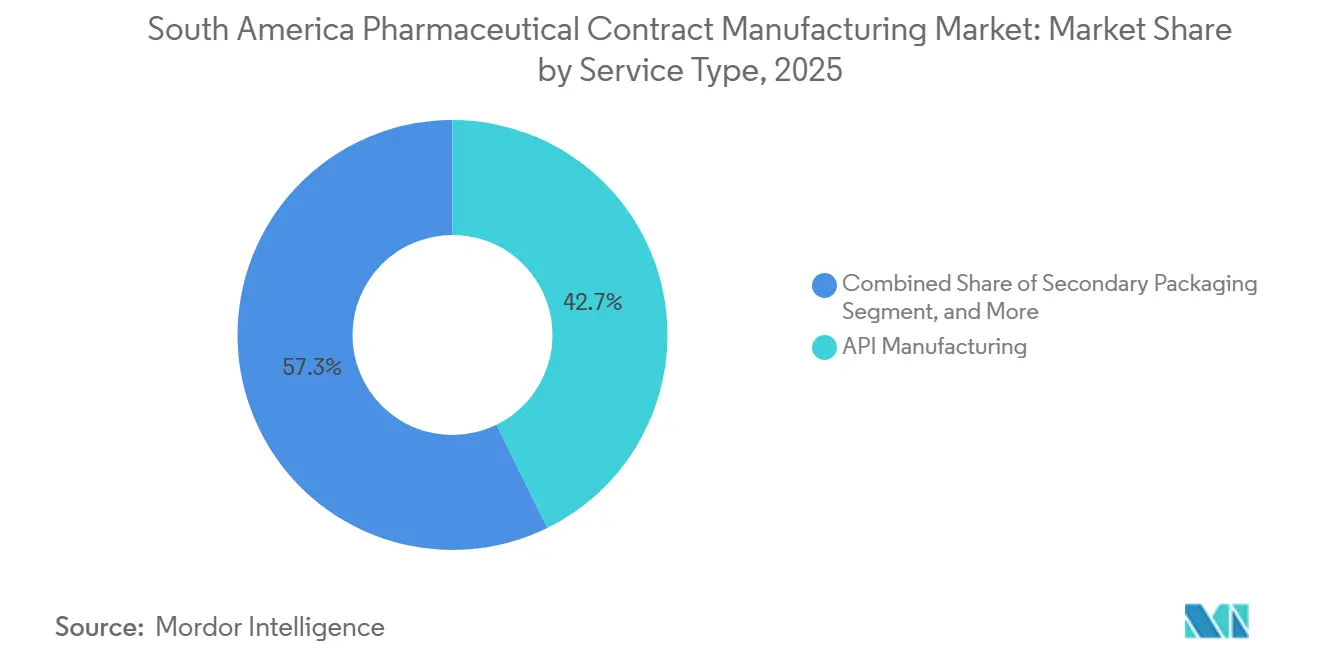
API Chemistry Anchors Revenue While Packaging AdvancesAPI manufacturing held 42.73% of the South America pharmaceutical contract manufacturing market share in 2025. The segment was supported by Brazil's large base of generic-drug production sites and Argentina's expanding biosimilar API capacity. Long batch runs for established molecules create predictable production schedules and cash flow for manufacturers. This helps explain why established domestic laboratories retain API capabilities while outsourcing selected dosage-form activities. Finished dosage form development and manufacturing serve companies that need formulation support, registration batches, and finished products for regional clinical programs. It also serves virtual biotechnology companies that need a supply without building their own plants.
Secondary packaging is projected to expand at a 7.98% CAGR through 2031, the highest rate within this segmentation. Serialization, tamper evidence, and country-specific labeling requirements make local packaging capacity more important to sponsors. These requirements can make centralized packaging in Europe or North America less suitable for products intended for several South American countries. Unither Pharmaceuticals operates 2 GMP-certified facilities in Brazil and holds authorizations from ANVISA, INVIMA, and DIGEMID.[2] Its footprint illustrates why multi-country packaging and regulatory capabilities can create an advantage. The South America pharmaceutical contract manufacturing market gives packaging providers a larger role when sponsors need market-ready, locally compliant units.

By Drug Molecule Type:
Small Molecules Lead While Advanced Therapies Gain GroundSmall molecules accounted for 56.83% of the South America pharmaceutical contract manufacturing market size in 2025. Their position reflected the established generics base and chemistry infrastructure across São Paulo's pharmaceutical corridor. Public procurement through Brazil's Unified Health System supports high-volume demand for off-patent medicines. The manufacturing chain serving this demand remains largely focused on small-molecule products. Providers with validated chemistry processes and efficient batch operations can continue to serve this broad volume base. The segment also gives manufacturers a foundation for investments in more complex product classes.
Advanced therapies are projected to expand at a 7.78% CAGR through 2031, making them the fastest-growing molecule category. Cell and gene therapies started from a narrower base than conventional molecules, so individual capacity decisions can materially shape development in the category. Biologics also have a growing role, as regional production of biosimilar monoclonal antibodies and recombinant proteins can support both local and export supply. ITC-CDMO offers GMP-compliant services for cell-based therapies and has supported clinical-phase projects.[3] This activity shows that the South America pharmaceutical contract manufacturing market has early-stage capacity for advanced modalities. Sponsors can consider regional providers for clinical manufacturing when their quality and technical requirements are met.
By Scale of Operation:
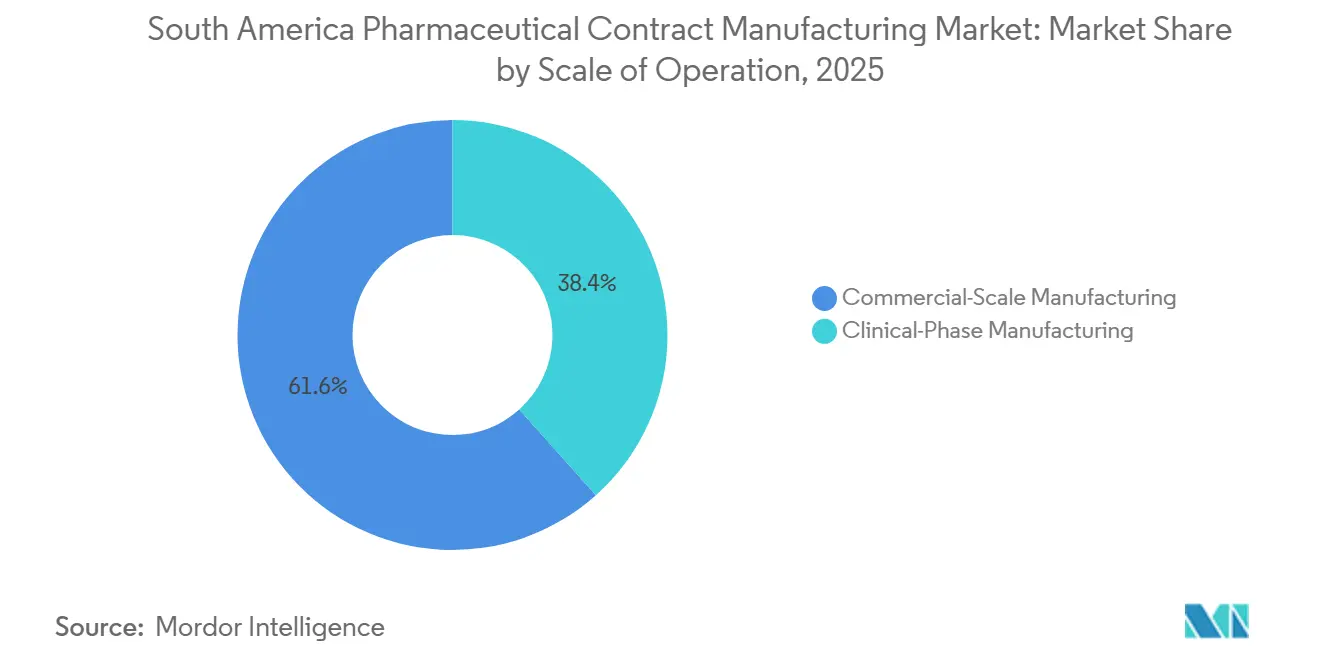
Commercial Manufacturing Leads While Clinical Capacity ExpandsCommercial-scale manufacturing commanded 61.62% of 2025 revenue in the scale-of-operation segment. Routine production of established generics and biosimilars for domestic use and regional exports supported this share. High equipment use and existing validation packages provide cost advantages in commercial production. Long-established producers such as Eurofarma Laboratórios and Blau Farmacêutica have built these capabilities over many years. Eurofarma began operations at its Montes Claros complex in October 2025, covering 515,000 m² and including 250,000 m² of built infrastructure. The modular design gives the company room to add capacity as demand changes.
Clinical-phase manufacturing is projected to expand at a 7.73% CAGR through 2031. Virtual biotechnology companies and regional trial sponsors increasingly need local GMP lot production instead of importing investigational materials from North America or Europe. São Paulo State University opened a pilot-scale biopharmaceutical factory in 2025 with BRL 20 million (USD 3.4 million at the stated 2025 rate) from the Ministry of Health, and BRL 60 million (USD 10.2 million) planned for equipment. The facility was designed to support academic and clinical research in biotechnology. Public investment treats clinical manufacturing as scientific infrastructure as well as a commercial service. That approach can support private partnerships and cost-sharing arrangements for smaller sponsors.
By End User:
Big Pharma Holds Spending While Virtual Biotech ExpandsBig Pharma accounted for 45.82% of end-user spending in 2025. Long-duration contracts for established products and regional portfolio launches supported this position. These contracts often cover multiple countries and require demanding quality standards. Preferred-supplier arrangements also give established contract manufacturers an advantage in retaining accounts. Generic pharmaceutical companies remain important users, as they require high volumes of oral solid dosage forms and injectables. Brazilian laboratories produced 8 of every 10 medicines sold at retail in Brazil during 2025, reinforcing the domestic demand base for manufacturing services.
Emerging and virtual biotech is projected to expand at a 7.83% CAGR through 2031, the fastest rate among end-user groups. These sponsors commonly have 1 or 2 clinical programs and no internal production facilities. They need integrated support from process development through GMP lot manufacturing. The segment is linked to biotechnology incubators and venture-backed companies in São Paulo and Buenos Aires. In 2025, FIFARMA reported that South American countries were becoming more attractive for biomedical investment, while market access and regulatory predictability remained challenges. The South America pharmaceutical contract manufacturing market can gain work from this group when providers offer flexible, integrated programs.
By Therapeutic Area:
Oncology Maintains Scale While CNS Therapies AccelerateOncology held 38.72% of 2025 revenue in the therapeutic area segment. Cancer remains a major cause of illness and death across the region, and PAHO and WHO reported nearly 1.5 million new cancer cases and more than 750,000 cancer deaths in the region during 2024.[4] High-potency API containment for cytotoxic products and aseptic fill-finish for monoclonal antibodies require specialized expertise from qualified providers. Brazil's February 2026 technology-transfer partnerships included bevacizumab and aflibercept, which added domestic production support for cancer biologics. These requirements support demand for facilities with strong containment and sterile manufacturing capability.
CNS therapies are projected to expand at a 7.22% CAGR through 2031. Psychiatric drug purchases in Brazil increased 25% during the 3 years ending in August 2025. Antipsychotic and attention-deficit/hyperactivity disorder categories increased over the same period. This demand can increase the need for controlled-substance formulation and primary packaging capabilities. Cardiovascular and infectious-disease medicines also remain part of the therapeutic mix. Public health needs in Peru, Colombia, and Bolivia sustain demand for antiparasitic and antimicrobial APIs. The South America pharmaceutical contract manufacturing market must also track Brazil's CONITEC technology assessment process because formulary decisions can shape public procurement batch volumes.
Geography Analysis
Brazil Pharmaceutical Contract Manufacturing Market
Brazil held 48.73% of the South America pharmaceutical contract manufacturing market share in 2025. Its leading position rests on an established pharmaceutical infrastructure, a broad base of GMP-certified facilities, and ANVISA's alignment with international inspection practices. Eurofarma's October 2025 opening of the Montes Claros complex reflected continuing confidence in Brazil as a regional production hub. Brazil's retail pharmaceutical revenue reached BRL 146.8 billion, equivalent to USD 25 billion at the stated 2025 rate, and domestic producers generated BRL 5.80 of every BRL 10 in revenue. This domestic demand supports contract services, although imported APIs can weaken cost competitiveness when the real depreciates.
Argentina and Chile Pharmaceutical Contract Manufacturing Market
Argentina and Chile represent the next strategic hubs for the South America pharmaceutical contract manufacturing market. Argentina has biologics-capable facilities, including MABXIENCE'S Garín site with 24,000 liters of cell culture capacity and FDA and EMA GMP approvals. Sinergium Biotech also supported regional COVID-19 vaccine supply through its manufacturing capabilities. Argentina's regulatory expertise supports pharmaceutical production, although macroeconomic instability and currency controls can affect investment schedules and contract pricing.
Broader South America Pharmaceutical Contract Manufacturing Market
Colombia, Peru, and the rest of South America offer longer-term expansion opportunities. Colombia's INVIMA has expanded its GMP certification scope under Decree 335, and Unither holds authorization to supply the Colombian market from Brazil. Peru's DIGEMID increasingly accepts inspections from recognized authorities, which can help sponsors use existing GMP documentation. Bolivia, Ecuador, and other countries still rely heavily on imported finished products, while public procurement rules are beginning to encourage regional sourcing.
Competitive Landscape
The South America pharmaceutical contract manufacturing market has a tiered competitive structure. Global contract development and manufacturing organizations provide sterile biologics production, aseptic fill-finish, and integrated development capabilities. Their multi-site networks help sponsors diversify supply while using consistent quality systems. Certifications from FDA, EMA, and ANVISA can reduce the validation burden when sponsors transfer products to regional plants. Catalent and Thermo Fisher Scientific's Patheon network compete through international operating models and broad technical service offerings, while local registration requirements give regional companies an important role.
Brazilian companies such as Eurofarma, Blau Farmacêutica, EMS, and Cristália compete alongside Laboratorios Bagó and Insud Pharma in Argentina. These companies have established strengths in oral solid dosage forms and standard injectable medicines. They are also investing in biologics, controlled substances, and more complex manufacturing programs. Blau Farmacêutica planned to increase production capacity by at least 70% by 2028, with ampoule, antibiotic, lyophilized-product, and monoclonal-antibody lines moving through validation and commercial ramp-up in 2026 R. Eurofarma's modular Montes Claros complex created space for phased capacity additions, while high-potency API containment, cell and gene therapies, and complex parenteral products remain relatively constrained.
Novasynth applies continuous-flow technology to GMP-grade API production and integrates manufacturing services with a capital-efficient operating model. Larger facilities are also using digital batch optimization, process analytical technology, and data-supported quality systems to manage compliance and efficiency. Sponsors are likely to favor providers that combine multi-country regulatory coverage with biologics-ready infrastructure, as Unither's authorizations across Brazil, Colombia, and Peru demonstrate. The South America pharmaceutical contract manufacturing market has moderate competition in established commercial production and more limited competition for specialized biologics and high-complexity services.
South America Pharmaceutical Contract Manufacturing Industry Leaders
-
Catalent Inc.
-
Thermo Fisher Scientific Inc.
-
Lonza Group Ltd.
-
Recipharm AB
-
Unither Pharmaceuticals
- *Disclaimer: Major Players sorted in no particular order
South America Pharmaceutical Contract Manufacturing Market Companies Covered in this Report
- Catalent Inc.
- Thermo Fisher Scientific Inc.
- Lonza Group Ltd.
- Recipharm AB
- Unither Pharmaceuticals
- mAbxience S.L.
- Insud Pharma S.L.
- Eurofarma Laboratorios S.A.
- Laboratorio Cristalia S.A.
- Grupo Centroflora
- TRIQUIM S.A.
- Laboratorios LASCA S.A.
- Sinergium Biotech S.A.
- Altea Farmaceutica S.A.
- Zambon Laboratorios Farmaceuticos Ltda.
- Myralis Industria Farmaceutica Ltda.
- Biosidus S.A.
- Laboratorio Pablo Cassara S.R.L.
- Laboratorios Richmond S.A.C.I.F.
Recent Industry Developments in South America Pharmaceutical Contract Manufacturing Market
- August 2026: Laboratório Cristália assumed operations of Takeda's Jaguariuna, São Paulo, solid-dosage manufacturing plant following CADE approval. The acquired facility held an active ANVISA GMP certificate and increased Cristália's total to 11 production plants in Brazil. Management indicated a 50% to 70% capacity uplift depending on product form. The acquisition strengthened Cristália's position as a contract manufacturer for solid oral dosage forms for domestic and regional sponsors.
- July 2026: WuXi Biologics received ANVISA GMP certification for 2 drug substance facilities and a drug product facility in Wuxi, China. The certification positioned the global CRDMO to supply commercial-scale biologic manufacturing, including an anti-PD-L1 monoclonal antibody for cancer immunotherapy, to Brazil. It also enabled end-to-end services under Brazil's foreign GMP equivalency framework.
- June 2026: ANVISA published Normative Instruction 451/2026, amending IN 292/2024 and formalizing reliance on inspections by an expanded list of Equivalent Foreign Regulatory Authorities, including the Jordan Food and Drug Administration. The change was expected to reduce duplicated inspections, optimize ANVISA inspection resources, and accelerate GMP certification timelines for drug and biological product registrations in Brazil. It directly benefited multinational sponsors seeking faster market access.
- April 2026: Chile's Ministry of Health and ISP updated Annex 2 of Technical Standard 127 through Decree 26/2026. The revision updated GMP requirements for sterile pharmaceutical products and required existing authorized laboratories to comply within 12-month effectiveness, plus up to 5 years for existing authorized labs. The change aligned Chilean sterile manufacturing standards more closely with WHO and PIC/S guidance.
South America Pharmaceutical Contract Manufacturing Market Report Scope
The South America Pharmaceutical Contract Manufacturing Market Report is Segmented by Service Type (API Manufacturing, FDF Development and Manufacturing, and Secondary Packaging), Drug Molecule Type (Small Molecule, Biologics, Advanced Therapies - Cell and Gene), Scale of Operation (Clinical-Phase Manufacturing, and Commercial-Scale Manufacturing), End User (Big Pharma, Generic Pharma, Emerging and Virtual Biotech, and Specialty Pharma), Therapeutic Area (Oncology, Cardiovascular, CNS, Infectious Disease, and Other Therapeutic Areas), and Country (Brazil, Argentina, Chile, Colombia, Peru, Rest of South America). The Market Forecasts are Provided in Terms of Value (USD).
Segmentation Overview
By Service Type
| API Manufacturing |
| FDF Development and Manufacturing |
| Secondary Packaging |
By Drug Molecule Type
| Small Molecule |
| Biologics |
| Advanced Therapies, Cell and Gene |
By Scale of Operation
| Clinical-Phase Manufacturing |
| Commercial-Scale Manufacturing |
By End User
| Big Pharma |
| Generic Pharma |
| Emerging and Virtual Biotech |
| Specialty Pharma |
By Therapeutic Area
| Oncology |
| Cardiovascular |
| Central Nervous System (CNS) |
| Infectious Disease |
| Other Therapeutic Areas |
By Country
| Brazil |
| Argentina |
| Chile |
| Colombia |
| Peru |
| Rest of South America |
| By Service Type | API Manufacturing |
| FDF Development and Manufacturing | |
| Secondary Packaging | |
| By Drug Molecule Type | Small Molecule |
| Biologics | |
| Advanced Therapies, Cell and Gene | |
| By Scale of Operation | Clinical-Phase Manufacturing |
| Commercial-Scale Manufacturing | |
| By End User | Big Pharma |
| Generic Pharma | |
| Emerging and Virtual Biotech | |
| Specialty Pharma | |
| By Therapeutic Area | Oncology |
| Cardiovascular | |
| Central Nervous System (CNS) | |
| Infectious Disease | |
| Other Therapeutic Areas | |
| By Country | Brazil |
| Argentina | |
| Chile | |
| Colombia | |
| Peru | |
| Rest of South America |
Key Questions Answered in the Report
What is the South America pharmaceutical contract manufacturing market size?
The market was valued at USD 3.69 billion in 2025 and is estimated to reach USD 5.37 billion by 2031 at a 6.52% CAGR.
Which service has the largest role in pharmaceutical contract manufacturing in South America?
API manufacturing held the largest share at 42.73% in 2025, supported by generics production and biosimilar API capacity.
Which service is projected to expand fastest through 2031?
Secondary packaging is projected to expand at a 7.98% CAGR, supported by serialization and country-specific labeling requirements.
Why is Brazil important for regional pharmaceutical outsourcing?
Brazil held 48.73% of regional revenue in 2025 and has an established manufacturing base, domestic demand, and a broad regulatory network.
Which customer group is projected to expand fastest?
Emerging and virtual biotech is projected to expand at a 7.83% CAGR through 2031 because these companies need integrated external development and manufacturing support.