
Smart Home HVAC Control Market Size and Share
| Study Period | 2019 - 2030 |
| Market Size (2025) | USD 4.14 Billion |
| Market Size (2030) | USD 6.67 Billion |
| CAGR (2025 - 2030) | 10.03% |
| Fastest Growing Market | Asia Pacific |
| Largest Market | North America |
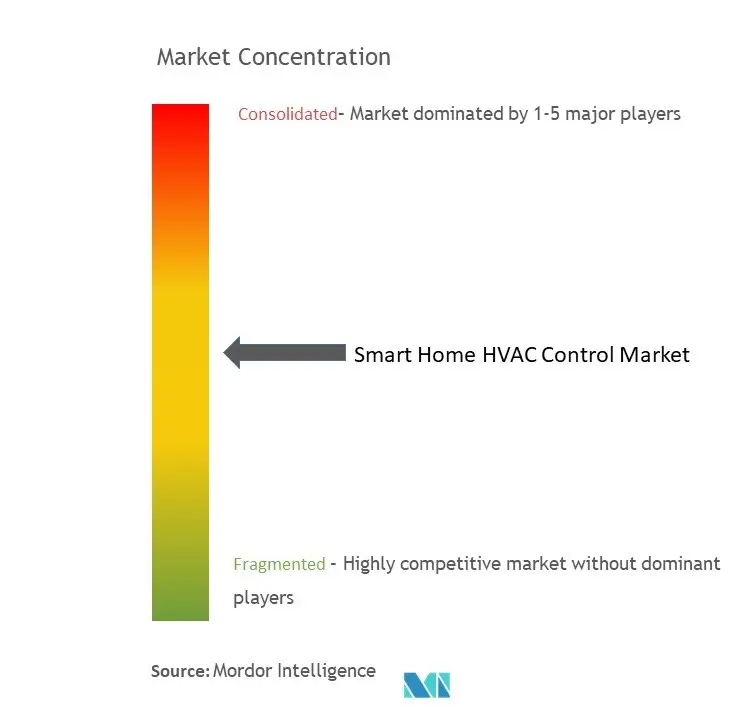
| Market Concentration | Medium |
Major Players *Disclaimer: Major Players sorted in no particular order |
Smart Home HVAC Control Market Analysis by Mordor Intelligence
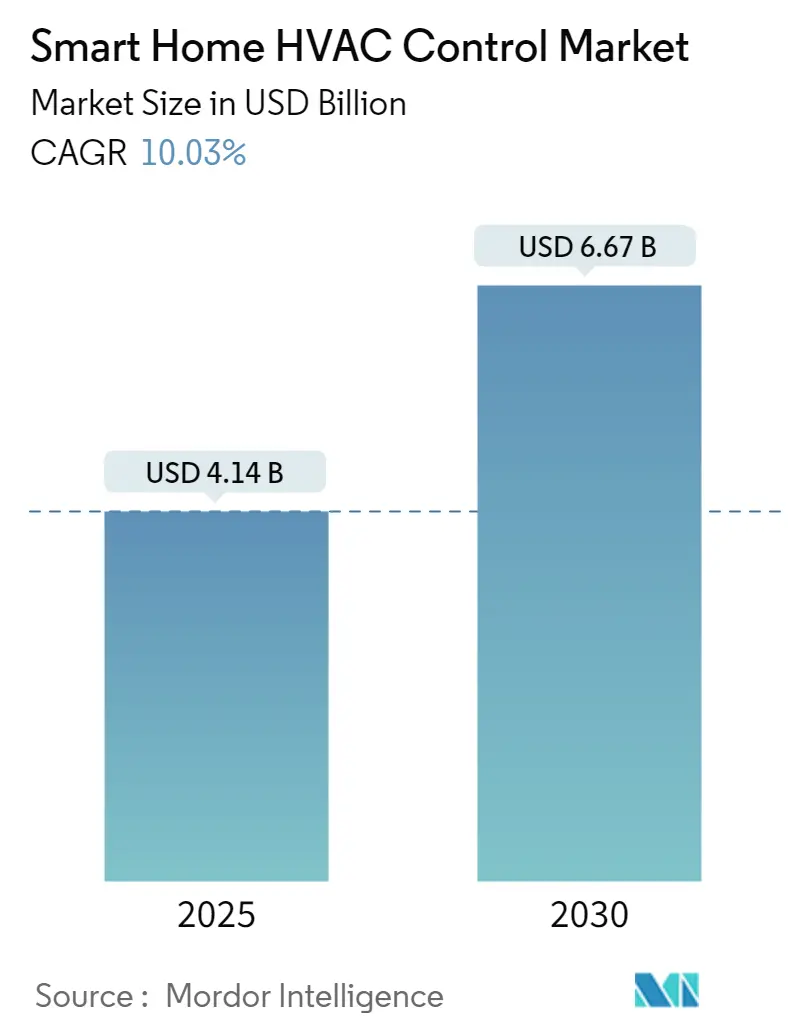
The Smart Home HVAC Control Market size is estimated at USD 4.14 billion in 2025, and is expected to reach USD 6.67 billion by 2030, at a CAGR of 10.03% during the forecast period (2025-2030).
Smart home technology transforms residential interactions, enhancing convenience, efficiency, and security. This evolution has significantly increased the demand for smart HVAC control devices, which utilize advanced technology and interconnected systems. The smart thermostat, the core component of this integration, functions as the central control unit of the HVAC system. Equipped with sensors and Wi-Fi capabilities, smart thermostats facilitate communication between other smart devices and the HVAC unit itself.
- The increasing trend of smart home consolidations drives the market's growth. A recent industry survey by HiddenWires, comparing data from 2021 to 2023, highlights the consistent growth and evolving preferences in the smart home sector. Notably, the survey indicates a significant surge in smart home interest, with nearly half of respondents reporting a doubling interest over the past five years.
- Moreover, the surge in residential construction projects and the escalating demand for sustainable HVAC systems are key factors propelling the global demand for HVAC control devices. For instance, integrating HVAC systems with other smart devices, such as window sensors or occupancy detectors, creates a responsive ecosystem. This ecosystem can automatically pause the air conditioning if a window is left open, resuming only when the window is closed. Smart thermostats, another component, learn user preferences and adjust temperatures to save energy when occupants are away or asleep. They also offer insights into energy usage, aiding in making informed decisions to reduce utility bills.
- Aside from the benefits of convenience and energy efficiency for homeowners, smart home technology presents advantages for service providers. Remote monitoring allows for proactive maintenance, identifying potential issues early to prevent major breakdowns. This reduces downtime and costly repairs and enhances overall customer satisfaction.
- The rapid advancement of smart home technology is poised to drive further improvements in HVAC controls. By integrating with AI algorithms, these controls will offer predictive energy consumption analysis, enhancing efficiency and driving up demand. Moreover, smart home HVAC systems can evolve as technology progresses to support zoned heating and cooling. This feature empowers users to segment their homes into distinct zones, each with its temperature control. This ensures personalized comfort and prevents energy wastage in unoccupied areas.
- Yet, the rising costs and complexities associated with installing smart home HVAC systems are poised to persist as significant challenges impeding the market's growth. Furthermore, retrofitting smart home HVAC control systems is an intricate and expensive endeavor, demanding a substantial number of work hours, thus elevating the overall cost.
Global Smart Home HVAC Control Market Trends and Insights
Rising Popularity of Smart Thermostats
- In recent years, the adoption of smart thermostats has surged among homeowners aiming to optimize their heating and cooling systems. Generous subsidy programs and dynamic tariffs are moving the smart thermostat market beyond early adopters. These advanced devices offer superior control and convenience compared to traditional thermostats, transforming indoor temperature management.
- Smart thermostats with Wi-Fi connectivity and intelligent sensors significantly advance over traditional models. Unlike conventional thermostats that require manual adjustments, smart thermostats are programmed and controlled remotely via smartphone apps or web interfaces. This capability allows users to monitor and adjust indoor temperatures from any location, providing unparalleled flexibility and convenience.
- Smart thermostats feature a comprehensive range of functionalities that enhance comfort, efficiency, and convenience. Key features include programmable scheduling, which enables users to create customized temperature schedules based on their daily routines. Additionally, energy usage tracking provides insights into HVAC system energy consumption, facilitating identifying optimization opportunities.
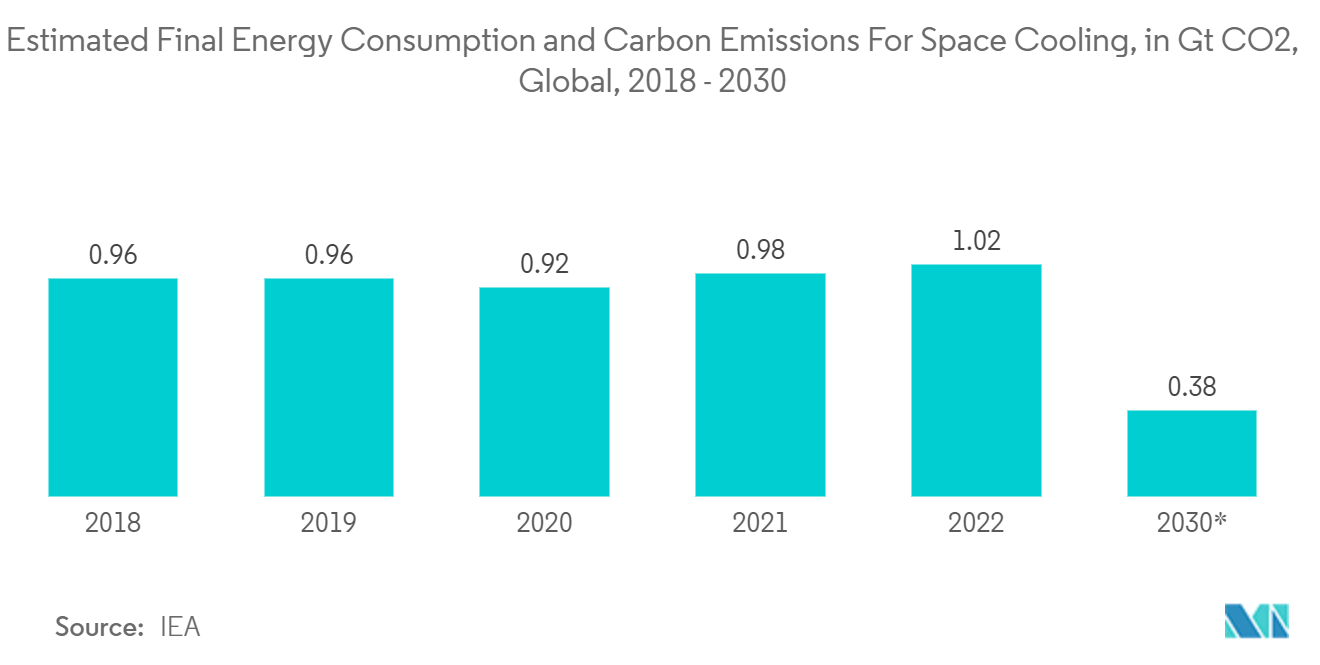
- The rise in focus on energy efficiency is a major factor driving the adoption of smart thermostats, aligning with the sustainable development goals pursued by various countries. According to the International Energy Agency, the final energy consumption and carbon emission for space cooling are anticipated to decline to 0.38 gigaton of CO2 by 2030. Smart HVAC systems such as smart thermostats are anticipated to play a crucial role due to their extensive range of features to improve comfort, efficiency, and convenience.
Asia Pacific Expected to Rise at a Significant Rate
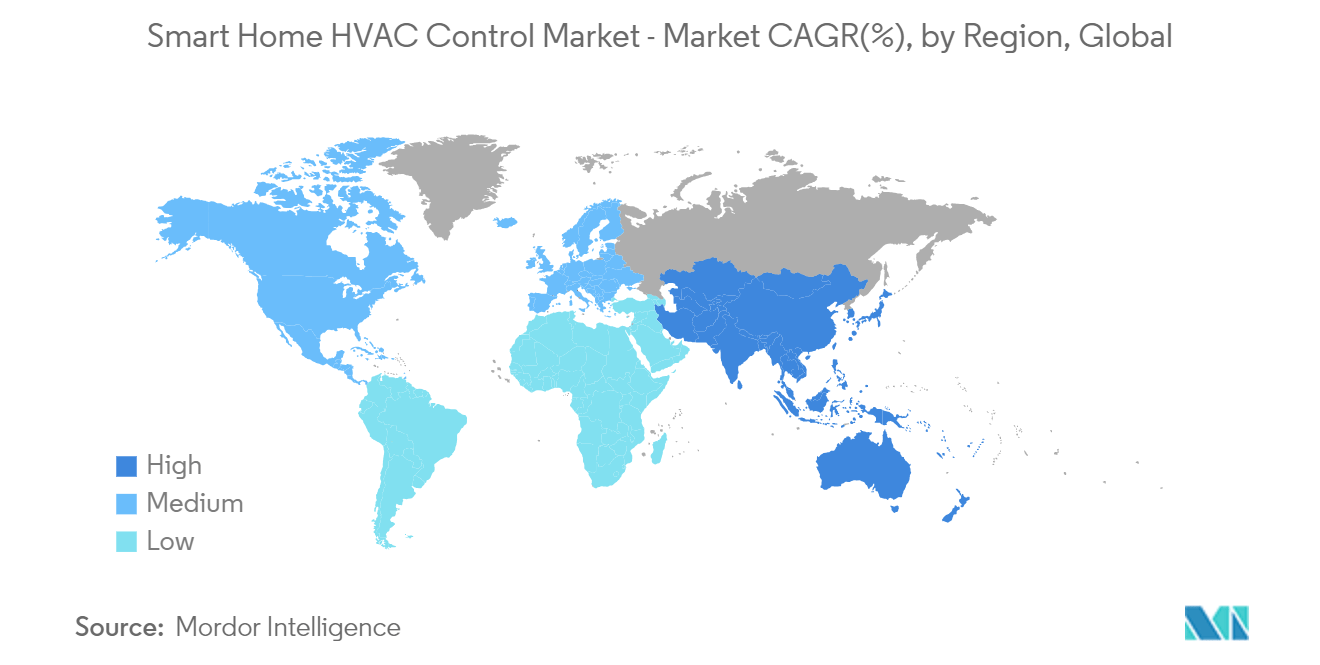
- The region is anticipated to capture a significant market share, driven by a surge in residential construction, increased government focus on smart city initiatives, and the expanding remote work trend. For instance, China's construction sector has experienced substantial growth due to sustainable policies and a shift towards a service-oriented economy. The Chinese Government's emphasis on large-scale infrastructure investments underscores its strategy to stimulate economic growth.
- Additionally, according to IBEF, 2023 saw a significant increase in demand for residential properties across India's top 8 cities, reaching unprecedented levels. This growth, led by heightened activity in mid-income, premium, and luxury segments, persisted despite rising property prices and mortgage rates. The positive momentum across different segments of the housing markets is expected to continue in 2024, with potential interest rate cuts likely to enhance the performance of the rate-sensitive affordable housing sector, which has previously experienced subdued growth.
- In April 2023, the Japanese Government launched a smart city investment program for fiscal 2023 to promote smart city projects nationwide, with funding from the central Government. By actively engaging industries for smart city collaborations, Japan is advancing its agenda for comprehensive regional and urban revitalization.
- A similar trend has been observed across other major countries of the region, wherein the Government has launched several smart city projects, creating a favorable ecosystem for the studied market's growth. Hence, these factors collectively present a positive growth outlook for the smart home HVAC control market. As smart cities proliferate, residential areas are modernizing and becoming increasingly interconnected.
Competitive Landscape
The Smart Home HVAC Control Market is moderately competitive, owing to prominent vendors like Danfoss, Honeywell International Inc., Seimens AG, and Johnson Controls worldwide. However, the growing adoption is anticipated to drive more players into the market, driving the competitive index. The market features increasing adoption of Smart Home HVAC Control devices in various residential areas. Also, the vendors are making significant product developments to expand their market presence. The market also views strategic partnerships and acquisitions as a lucrative path for expansion.
- May 2024 - Carrier has unveiled its latest innovation: a smart thermostat. Positioned as an affordable option, the company emphasizes that this addition enhances connectivity for homeowners. With a focus on user needs, the Carrier Smart Thermostat boasts a sleek, modern design. It accommodates accessories and seamlessly syncs with existing smart home setups. Additionally, buyers can choose a 5-year warranty upon activation or a 2-year warranty at purchase.
- April 2024 - Shearer Supply has recently finalized the acquisition of Climatic Comfort Products, the HVAC distribution arm of Climatic Corporation. This strategic move unites two prominent HVAC distributors, bolstering Shearer's presence in the southern U.S. The acquisition includes CCP's eight locations in Florida, Georgia, and Alabama, significantly broadening Shearer's footprint across the Southeast. This aligns seamlessly with CCP's overarching strategy of targeting businesses in prime geographies, especially those representing top-tier equipment manufacturers.
Smart Home HVAC Control Industry Leaders
-
Danfoss Group
-
Johnson Controls Inc.
-
Schneider Electric
-
Siemens AG
-
Honeywell International Inc.
- *Disclaimer: Major Players sorted in no particular order
Recent Industry Developments
- May 2024: Quilt, a leading smart home climate company, unveiled its latest innovation: a cutting-edge home heat pump. This next-gen system outshines its competitors with its enhanced intelligence, refined design, and superior efficiency. Tailored for personalized room climate control, each unit is accompanied by an intuitive app and a Dial reminiscent of a traditional thermostat, empowering users to manage their home temperatures effortlessly. The option for users to customize the appearance of the indoor units sets the product apart.
- March 2024: Komatsubara announced a strategic partnership with tado° GmbH, enabling Panasonic to integrate its A2W system with tado°'s smart thermostat. This integration allows for remote temperature control of the A2W's main outdoor unit and indoor units, such as radiators. By connecting tado°'s smart thermostats to indoor units, users can remotely adjust temperatures, monitor usage, and optimize operations based on weather conditions and usage patterns. This collaboration represents Panasonic's innovative approach, introducing room-by-room control to the heat pump market and facilitating comprehensive temperature management.
Global Smart Home HVAC Control Market Report Scope
The smart home HVAC control devices are equipped with sensors and actuators, allowing them to communicate with each other and perform actions that are based on settings or predefined user inputs. From thermostats and lighting systems to security cameras and door locks, smart home technology encompasses a comprehensive range of products that can be integrated into an HVAC system. The market is defined by the revenue accrued from the sales of different types of smart HVAC control in the residential sector across North America, Latin America, Europe, Asia-Pacific, and Middle East and Africa regions.
The smart home HVAC control market is segmented into product type (controllers, thermostats, sensors, valves, and actuators) and geography (North America, Europe, Asia-Pacific, Latin America, and Middle East & Africa). The market sizes and forecasts are provided in terms of value (USD) for all the above segments.
| Controllers |
| Thermostats |
| Sensors |
| Valves and Actuators |
| North America |
| Europe |
| Asia |
| Australia and New Zealand |
| Latin America |
| Middle East and Africa |
| By Product Type | Controllers |
| Thermostats | |
| Sensors | |
| Valves and Actuators | |
| By Geography*** | North America |
| Europe | |
| Asia | |
| Australia and New Zealand | |
| Latin America | |
| Middle East and Africa |
Key Questions Answered in the Report
How big is the Smart Home HVAC Control Market?
The Smart Home HVAC Control Market size is expected to reach USD 4.14 billion in 2025 and grow at a CAGR of 10.03% to reach USD 6.67 billion by 2030.
What is the current Smart Home HVAC Control Market size?
In 2025, the Smart Home HVAC Control Market size is expected to reach USD 4.14 billion.
Who are the key players in Smart Home HVAC Control Market?
Danfoss Group, Johnson Controls Inc., Schneider Electric, Siemens AG and Honeywell International Inc. are the major companies operating in the Smart Home HVAC Control Market.
Which is the fastest growing region in Smart Home HVAC Control Market?
Asia Pacific is estimated to grow at the highest CAGR over the forecast period (2025-2030).
Which region has the biggest share in Smart Home HVAC Control Market?
In 2025, the North America accounts for the largest market share in Smart Home HVAC Control Market.
What years does this Smart Home HVAC Control Market cover, and what was the market size in 2024?
In 2024, the Smart Home HVAC Control Market size was estimated at USD 3.72 billion. The report covers the Smart Home HVAC Control Market historical market size for years: 2019, 2020, 2021, 2022, 2023 and 2024. The report also forecasts the Smart Home HVAC Control Market size for years: 2025, 2026, 2027, 2028, 2029 and 2030.
Smart Home HVAC Control Market Report
Statistics for the 2025 Smart Home HVAC Control market share, size and revenue growth rate, created by Mordor Intelligence™ Industry Reports. Smart Home HVAC Control analysis includes a market forecast outlook for 2025 to 2030 and historical overview. Get a sample of this industry analysis as a free report PDF download.