
Sleep Disorders Treatment Market Size and Share
Market Overview
| Study Period | 2022 - 2031 |
|---|---|
| Forecast Data Period | 2026 - 2031 |
| Market Size (2026) | USD 24.98 Billion |
| Market Size (2031) | USD 35.1 Billion |
| Growth Rate (2026 - 2031) | 7.03 % |
| Fastest Growing Market | Asia Pacific |
| Largest Market | North America |
Major Players *Disclaimer: Major Players sorted in no particular order Image © Mordor Intelligence. Reuse requires attribution under CC BY 4.0. | |
Sleep Disorders Treatment Market Analysis by Mordor Intelligence
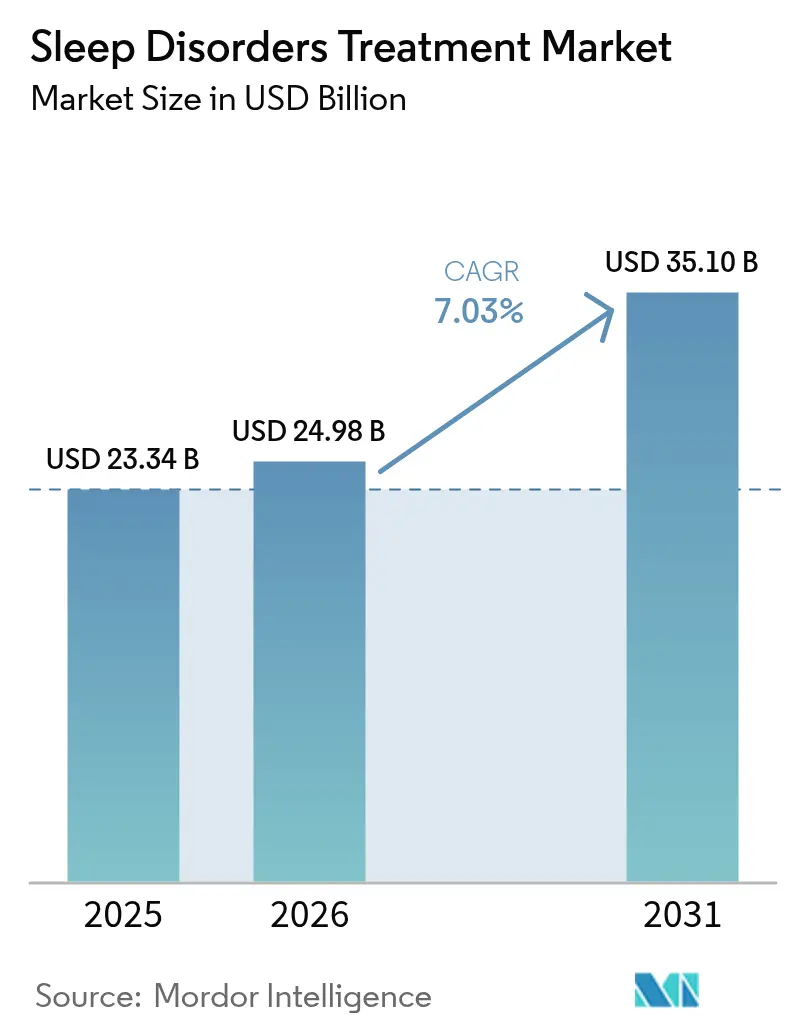
The sleep disorder treatment market size was valued at USD 23.34 billion in 2025 and estimated to grow from USD 24.98 billion in 2026 to reach USD 35.10 billion by 2031, at a CAGR of 7.03% during the forecast period (2026-2031). Rising prevalence of insomnia, obstructive sleep apnea (OSA) and narcolepsy in both advanced and emerging economies, coupled with breakthrough pharmacology such as dual-orexin receptor antagonists (DORAs) and the December 2024 approval of tirzepatide for OSA, underpin sustained revenue growth. Digital health integration is widening patient reach through AI-enabled diagnostics and adherence monitoring while reimbursement reforms are pulling digital therapeutics such as SleepioRx into mainstream care pathways. Competitive intensity is rising as device leaders like ResMed face pharmaceutical challengers that now offer first-in-class metabolic agents and next-generation hypnotics. At the same time, consumer demand for convenient purchasing options is shifting prescription volumes toward online pharmacies, reinforcing omnichannel strategies across the entire sleep disorder treatment market.
Key Report Takeaways
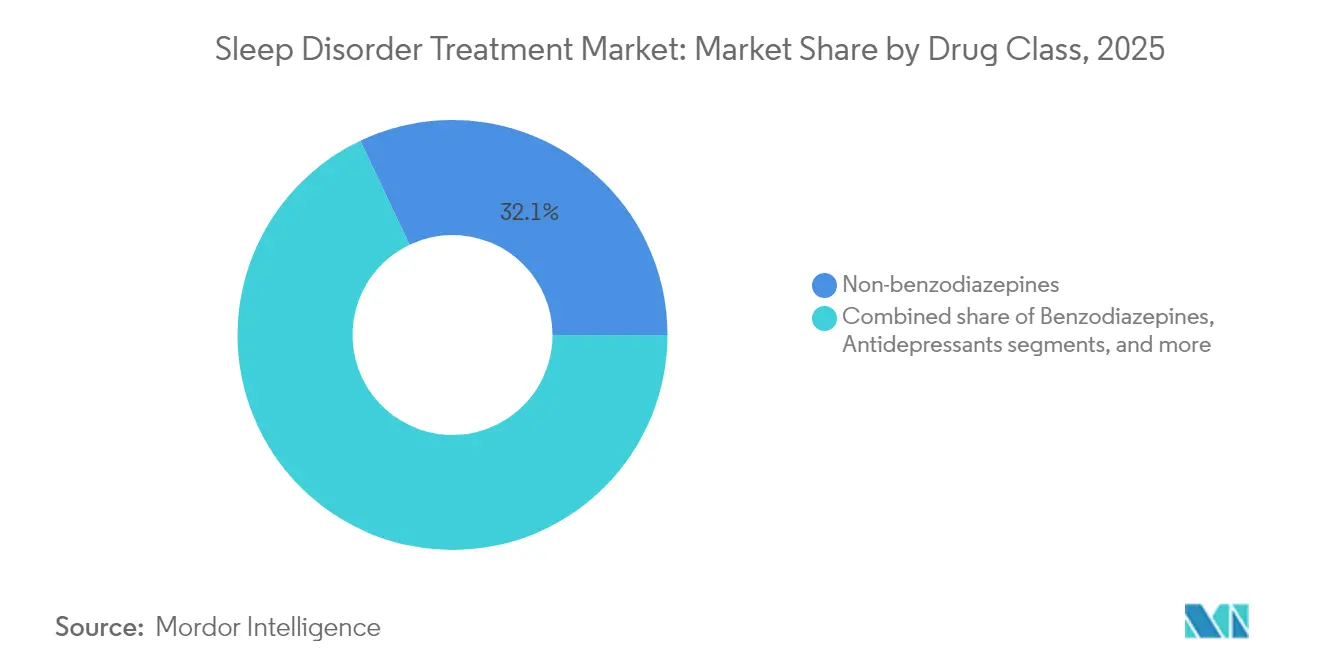
- By drug class, non-benzodiazepines led with 32.06% revenue share in 2025, while DORAs are projected to expand at a 9.52% CAGR through 2031.
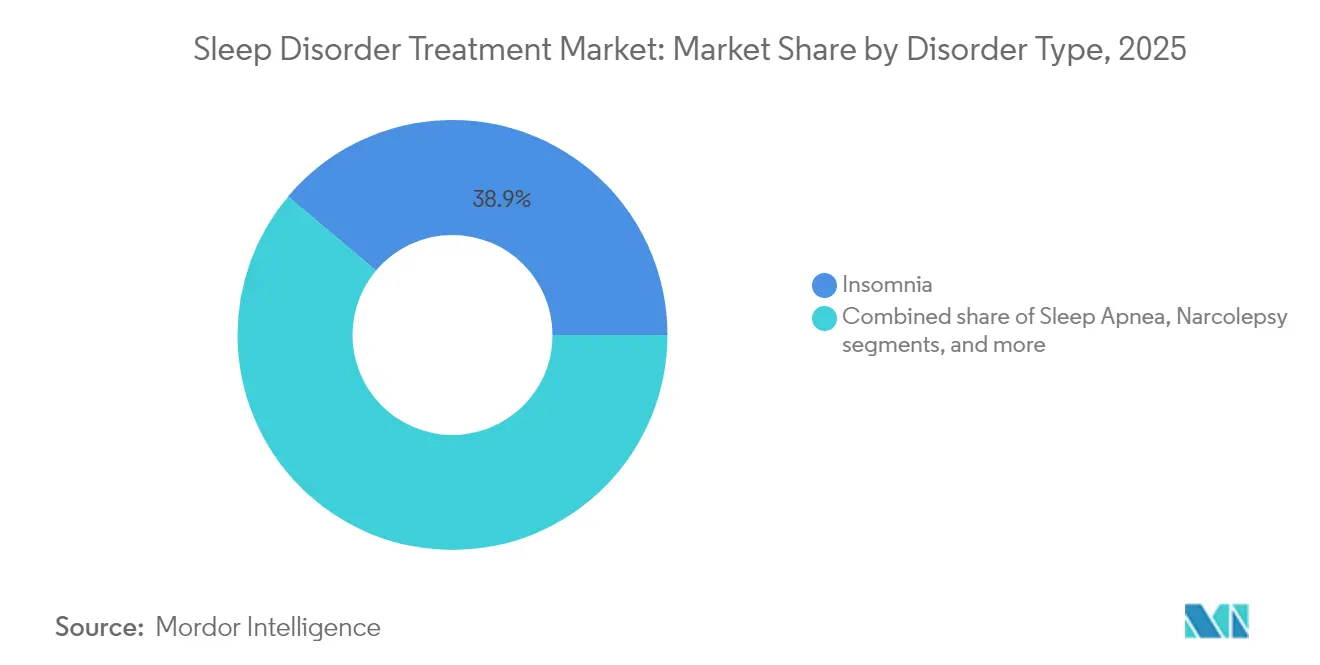
- By disorder type, insomnia dominated with 38.86% of the sleep disorder treatment market share in 2025; narcolepsy therapies hold the fastest trajectory at a 9.78% CAGR to 2031.
- By distribution channel, retail pharmacies retained 41.98% share of the sleep disorder treatment market size in 2025, whereas online pharmacies are advancing at a 10.18% CAGR through 2031.
- By geography, North America captured 42.35% of the sleep disorder treatment market in 2025; Asia-Pacific is forecast to grow at an 8.22% CAGR to 2031.
Note: Market size and forecast figures in this report are generated using Mordor Intelligence’s proprietary estimation framework, updated with the latest available data and insights as of 2026.
Market Trends and Insights
Drivers Impact Analysis of Sleep Disorders Treatment Market*
| Driver | (≈) % Impact on CAGR Forecast | Geographic Relevance | Impact Timeline |
|---|---|---|---|
| Rising global burden of insomnia & OSA driven by ageing, obesity and mental-health stressors | 1.80% | Global; highest in North America & Europe | Long term (≥ 4 years) |
| Enhanced screening and public-awareness programs accelerating diagnosis rates | 1.20% | APAC core; spill-over to MEA | Medium term (2-4 years) |
| Launch of novel pharmacological classes expanding therapeutic options | 2.10% | North America & EU; expanding to APAC | Short term (≤ 2 years) |
| Continuous innovation in device-based & digital therapeutics improving outcomes | 1.50% | Global; early adoption in developed markets | Medium term (2-4 years) |
| AI-powered sleep-data analytics enabling earlier personalised interventions | 0.90% | North America & EU | Long term (≥ 4 years) |
| Employer and insurer-led sleep-wellness initiatives widening reimbursement | 0.70% | North America; expanding to EU | Medium term (2-4 years) |
| Source: Mordor Intelligence | |||
Rising Global Burden of Insomnia & Sleep Apnea Driven by Ageing, Obesity and Mental-Health Stressors
An estimated 30 million to 90 million Americans live with OSA, yet only 6 million have been formally diagnosed, illustrating a deep pool of untreated need that sustains the sleep disorder treatment market. The obesity epidemic intensifies OSA incidence, and December 2024 FDA clearance of tirzepatide created the first pharmacologic pathway for obese OSA patients, linking metabolic control to respiratory improvement[1]. Pandemic-era anxiety and depression elevated chronic insomnia across every major region, with DORAs showing 87.5% response rates in psychiatric populations and reinforcing clinician confidence in newer mechanisms. ResMed now monitors 28 million cloud-connected devices and captures 20 billion nights of sleep data that feed proprietary AI engines, scaling personalised therapy adjustments in real time. Among older adults, preference is shifting to non-invasive, digitally delivered programs such as SleepioRx—cleared by FDA in August 2024—which reduce pill burden while maintaining durable efficacy.
Enhanced Screening and Public-Awareness Programs Accelerating Diagnosis Rates
System-wide screening protocols are raising detection in primary care and consumer settings. Samsung’s collaboration with Stanford Medicine embeds algorithmic sleep-apnea screening in smartphones, signalling a move from laboratory polysomnography to home-based triage. In February 2024 the FDA cleared EnsoData’s pulse-oximetry AI platform, enabling lower-cost identification of OSA risk in resource-limited environments. Japan’s first insomnia drug approval in a decade—QUVIVIQ in September 2024—followed national media campaigns that highlighted untreated sleep disorders affecting 20% of adults and spurred physician education. Start-ups such as Sleep Cycle launched clinical studies in June 2025 to validate smartphone-based apnea screening, potentially reaching rural communities lacking specialty clinics. FDA clearance of ResMed’s NightOwl home test adds medical-grade support to direct-to-consumer pathways, shortening time-to-therapy and expanding the sleep disorder treatment market.
Launch of Novel Pharmacological Classes Expanding Therapeutic Options
DORAs represent the most consequential advance in sleep pharmacotherapy since benzodiazepines. Daridorexant, lemborexant and suvorexant consistently demonstrate fewer complex sleep behaviours and less next-day impairment than Z-drugs, as shown in FDA Adverse Event Reporting System analyses. China’s May 2025 approval of DAYVIGO (lemborexant) opens an addressable base of 172.5 million adult insomnia patients, illustrating the scale of opportunity when safety concerns are mitigated. Next-generation agonists are moving swiftly: Takeda’s oveporexton produced significant Phase 2b gains in narcolepsy type 1, while Alkermes’ alixorexton targets idiopathic hypersomnia in Phase II/III trials[2]. The pipeline further includes seltorexant, an orexin-2 antagonist positioned for major depressive disorder with co-morbid insomnia, blurring traditional indication boundaries and enlarging the sleep disorder treatment market footprint. High compliance rates—87% in long-term cohorts—underscore the clinical goodwill earned by these agents, driving formulary inclusion and insurer acceptance.
Continuous Innovation in Device-Based and Digital Therapeutics Improving Outcomes & Adherence
Device developers are redefining adherence, historically the Achilles heel of CPAP therapy. In February 2024 the FDA cleared Neurovalens’ Modius Sleep, a head-worn neuromodulator that influences circadian centres without pharmaceuticals and delivers measurable gains in sleep efficiency within six weeks. Researchers at University of Cincinnati introduced VortexPAP, which stabilises airway pressure without a tight facial interface, promising relief for users who abandon conventional masks. Digital therapeutics command growing mindshare: SleepioRx’s cognitive-behavioural algorithm achieves healthy-sleep benchmarks in 76% of users, validating non-drug pathways that reduce adverse-event liabilities. Implantables are broadening choices for CPAP-intolerant cohorts, with Nyxoah’s Genio tongue stimulator gaining its first UK use case in December 2024 and leveraging Bluetooth control for patient-tailored therapy. Real-time data streaming from ResMed’s AirSense line reached 87% compliance when automated coaching was layered onto nightly data dashboards, showcasing how AI can convert raw signals into behaviour change that sustains the sleep disorder treatment market.
Restraints Impact Analysis of Sleep Disorders Treatment Market*
| Restraint | (≈) % Impact on CAGR Forecast | Geographic Relevance | Impact Timeline |
|---|---|---|---|
| Safety concerns & dependency risks tied to long-term hypnotics | -0.80% | Global; highest scrutiny in EU & North America | Long term (≥ 4 years) |
| High cost of branded drugs & advanced devices limiting access in LMICs | -1.10% | APAC emerging markets, MEA, Latin America | Medium term (2-4 years) |
| Poor patient adherence to CPAP therapy and behavioural regimens undermining efficacy | -0.90% | Global; pronounced in North America & Europe | Medium term (2-4 years) |
| Boom in unregulated OTC/nutraceutical sleep aids diverting patients from evidence-based care | -0.60% | Global; rising in North America & APAC | Short term (≤ 2 years) |
| Source: Mordor Intelligence | |||
Safety Concerns and Dependency Risks Associated with Long-Term Hypnotic Pharmacotherapy
Regulators are tightening oversight of traditional hypnotics, curbing label expansions and encouraging safer alternatives. In March 2024 the FDA issued a complete-response letter to Vanda’s HETLIOZ jet-lag supplement, signalling unwillingness to tolerate vague benefit-risk profiles in sleep medicine[3]. Benzodiazepines and Z-drugs continue showing higher incidences of complex behaviours such as sleep-driving, prompting guideline revisions that prioritise non-pharmacologic or DORA-based approaches. American Academy of Sleep Medicine 2024 guidance on restless-legs syndrome substitutes calcium-channel ligands for dopamine agonists to cut impulse-control disorders and augmentation risks. Real-world data confirm daridorexant’s lower serious adverse-event frequency; regulators across North America, Europe and APAC cite these findings when green-lighting wider indications. In parallel, auricular vagus-nerve stimulation has produced clinically meaningful sleep-quality gains without pharmacology, offering a drug-free refuge for risk-averse patients and reinforcing diversification within the sleep disorder treatment market.
High Cost of Branded Drugs and Advanced Devices Limiting Access in Low- and Middle-Income Regions
Pricing remains a formidable barrier beyond high-income markets. DORAs maintain premium positioning and have limited generic competition, making them aspirational therapies in South Asia and Sub-Saharan Africa despite strong clinical performance. Cloud-connected CPAP systems from ResMed demand capital outlays plus subscription fees that exceed average monthly income in many LMICs, curbing volume penetration although technical superiority is recognised. Insurance gaps aggravate disparity; Medicare debates on covering tirzepatide for OSA highlight how reimbursement policy drives real-world uptake, yet analogous coverage does not exist in most emerging economies. Online pharmacies soften price friction by boosting generic visibility; the global e-pharmacy sector touched USD 98.8 billion in 2022, though controlled-substance rules complicate cross-border fulfilment. Public systems can offset cost hurdles, illustrated by the UK National Health Service offering Sleepio without charge, a precedent that could be replicated in other tax-funded health models if robust cost-effectiveness evidence becomes available.
*Our forecasts treat driver/restraint impacts as directional, not additive. The impact forecasts reflect baseline growth, mix effects, and variable interactions.
Sleep Disorders Treatment Market Segment Analysis
By Drug Class:
DORAs Challenge Traditional Hypnotic DominanceNon-benzodiazepines held 32.06% of the sleep disorder treatment market in 2025 as clinicians balanced familiarity with improved safety over benzodiazepines. Despite that anchor, DORAs are growing at 9.52% CAGR and are forecast to erode historical share as guidelines elevate orexin-based therapy to first-line status for chronic insomnia. Real-world pharmacovigilance confirms fewer residual cognitive effects and lower dependency signals, a combination that encourages payers to include DORAs on preferred tiers, thereby reinforcing volume growth within the sleep disorder treatment market.
Second-line classes remain relevant. Benzodiazepines are preserved for acute, severe insomnia when rapid onset is critical, though physicians now cap prescription lengths to mitigate dependence. Off-label antidepressants satisfy complex insomnia with comorbid mood disturbance, while melatonin receptor agonists dominate paediatric niches where neurodevelopmental safety outweighs speed. Pipeline momentum stays concentrated in orexin biology: Takeda’s oveporexton and Alkermes’ alixorexton promise once-daily oral dosing that could simplify current multi-dose oxybate regimens. These forces together keep the sleep disorder treatment market size for pharmacologic segments on a durable expansion path through 2031.

By Disorder Type:
Narcolepsy Treatments Drive Innovation PipelineInsomnia disorders represented 38.86% of the sleep disorder treatment market size in 2025 owing to ubiquitous lifestyle, psychiatric and circadian contributors. Penetration of digital interventions such as SleepioRx and increasing employer wellness programmes signal that insomnia will remain the anchor indication; however, growth moderates as non-drug approaches divert some volume from legacy hypnotics. The December 2024 tirzepatide approval reshaped OSA management, creating the first drug-based alternative to CPAP and unlocking cardiometabolic-oriented care pathways that accelerate integrated management of obesity and sleep breathing disorders.
Narcolepsy accounts for a smaller base but rises fastest at 9.78% CAGR. Advancements in orexin-2 agonism address the fundamental neurochemistry deficit rather than symptom suppression, enticing venture and strategic capital even amid broader biotech volatility. FDA’s October 2024 nod for paediatric sodium oxybate broadened the treated population, while Avadel’s once-nightly LUMRYZ, granted seven years of orphan exclusivity, signals regulatory encouragement of differentiated formulations. These factors collectively ensure narcolepsy’s outsized contribution to incremental revenue inside the sleep disorder treatment market.
By Distribution Channel:
Digital Transformation Accelerates Online GrowthRetail pharmacies maintained 41.98% share in 2025, leveraging in-person counselling, immediate fulfilment and broad insurer networks. High foot-traffic locations ensure consistent prescription volume, especially for chronic therapy refills. Hospital and sleep-clinic pharmacies anchor complex cases requiring titration of high-risk agents or synchronous device setups, yet they face capacity limits that incentivise remote models.
Online pharmacies are scaling at a 10.18% CAGR, benefitting from privacy, home delivery and transparent pricing that appeal to working-age adults managing chronic insomnia or OSA. Telehealth-based verification bridges regulatory compliance, and insurers increasingly reimburse virtual visits, shrinking friction further. Sunrise’s December 2024 acquisition of Dreem Health illustrates vertical integration of diagnostic wearables and digital care platforms, enabling entire diagnosis-to-dispense journeys to stay in-app and boosting lifetime engagement metrics. As a result, channel shifts will redistribute margins but expand overall access, fortifying the sleep disorder treatment market over the forecast horizon.
Geography Analysis
North America Sleep Disorders Treatment Market
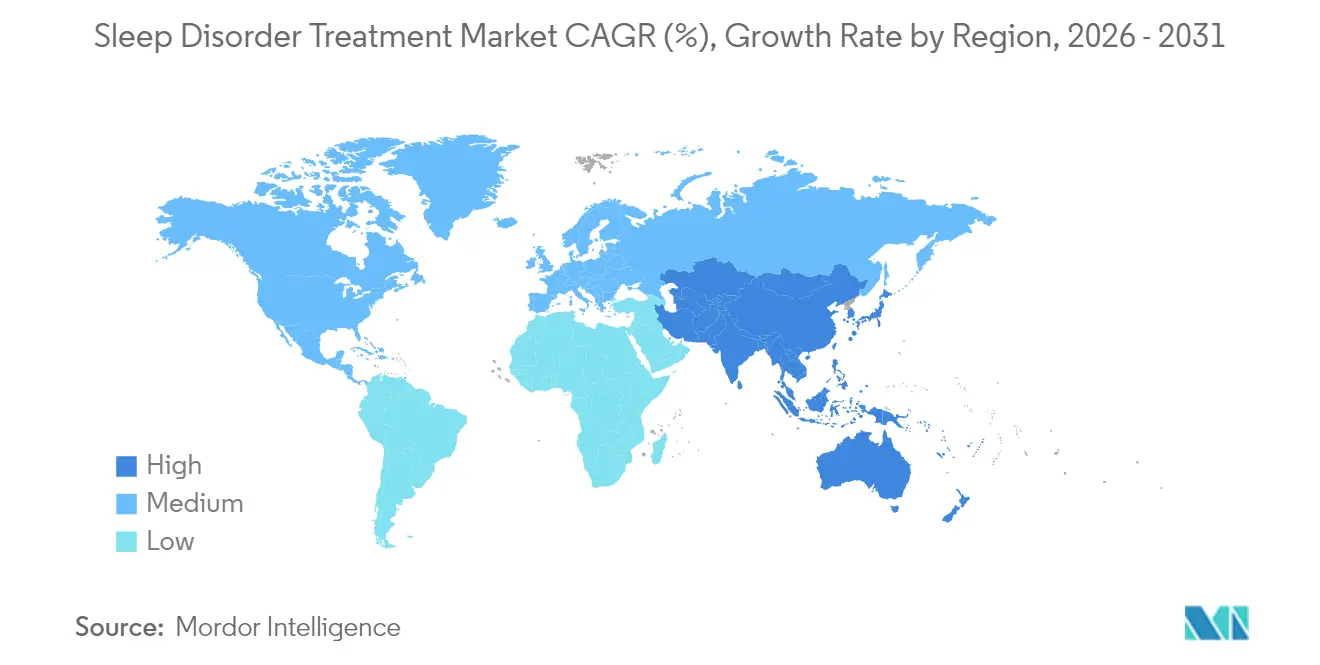
North America commanded 42.35% of the sleep disorder treatment market in 2025, supported by sophisticated payer systems that fast-track breakthrough therapies and by high public awareness of sleep’s impact on cardiometabolic health. FDA approvals for tirzepatide and multiple DORAs exemplify the regulator’s openness to novel mechanisms. Employer-driven wellness benefits, including subsidised Sleepio licences and CPAP subscription models, are normalising proactive sleep management. ResMed’s Q3 FY2025 revenue climbed 8% to USD 1.3 billion, reflecting robust demand for cloud-connected devices that integrate with electronic health-record workflows, thereby reinforcing adherence and reducing downstream hospitalisations.
APAC Sleep Disorders Treatment Market
Asia-Pacific is the fastest rising territory at 8.22% CAGR through 2031. China alone hosts 172.5 million insomnia sufferers, catalysing product localisation and broad-based formulary negotiations following DAYVIGO’s approval in May 2025. Japan’s September 2024 endorsement of QUVIVIQ broke a decade-long drought in novel insomnia therapies, sparking renewed clinician education campaigns and boosting prescription volume. South Korea’s Phase 3 daridorexant trial underscores regional regulatory momentum, while universities accelerate fundamental research, such as light-sensitive somnogen molecules under development at University of Tsukuba. Rising middle-class income and government initiatives to modernise sleep labs underpin sustained premium adoption, making Asia-Pacific the engine for volume and revenue expansion of the sleep disorder treatment market.
Europe Sleep Disorders Treatment Market
Europe maintains steady growth on the back of universal coverage and coordinated regulatory processes through the European Medicines Agency. Idorsia’s first-mover role with QUVIVIQ exploited EU-wide mutual recognition to build share before Merck’s Belsomra and Eisai’s Dayvigo entered, and public procurement emphasises price-volume agreements that favour drugs with proven safety and health-economic benefits. The UK National Health Service’s system-wide rollout of Sleepio free of charge exemplifies how digital therapeutics can penetrate large public systems and drive cost offsets, potentially unlocking similar models continent-wide. Multidisciplinary clinics such as Switzerland’s Sleep House Bern pilot fast triage pathways that could set new standards for European sleep-care delivery. Collectively, these trends keep Europe’s contribution to the sleep disorder treatment market resilient despite mature baseline adoption.
Regulatory Landscape
Regulation in sleep disorders treatment spans drug approvals, medical-device pathways, and oversight of clinically validated digital therapeutics. In the United States, the FDA has expanded labeled treatment options for obstructive sleep apnea (OSA) beyond devices, highlighted by the December 2024 approval of Zepbound (tirzepatide) as a pharmacologic therapy for moderate-to-severe OSA in adults with obesity. At the same time, the FDA continues to use the PMA pathway for implantable therapies in CPAP-intolerant populations, including the March 2026 premarket approval of LivaNova’s aura 6000 System (hypoglossal nerve stimulation) for moderate-to-severe OSA.
In Europe, the European Medicines Agency (EMA) and the European Commission maintain strict evidentiary standards for label expansions and pediatric indications, illustrated by the EMA-confirmed refusal (March 2026) to extend Hetlioz (tasimelteon) to certain pediatric sleep disturbances. EU regulation also supports cross-country commercialization once authorization is in place, reflected by Quviviq (daridorexant) maintaining an active EU marketing authorization per the EPAR updates. Policy workstreams to modernize EU medicinal-product procedures further point to continued emphasis on harmonized requirements for authorization, safety monitoring, and lifecycle changes across member states.
Competitive Landscape
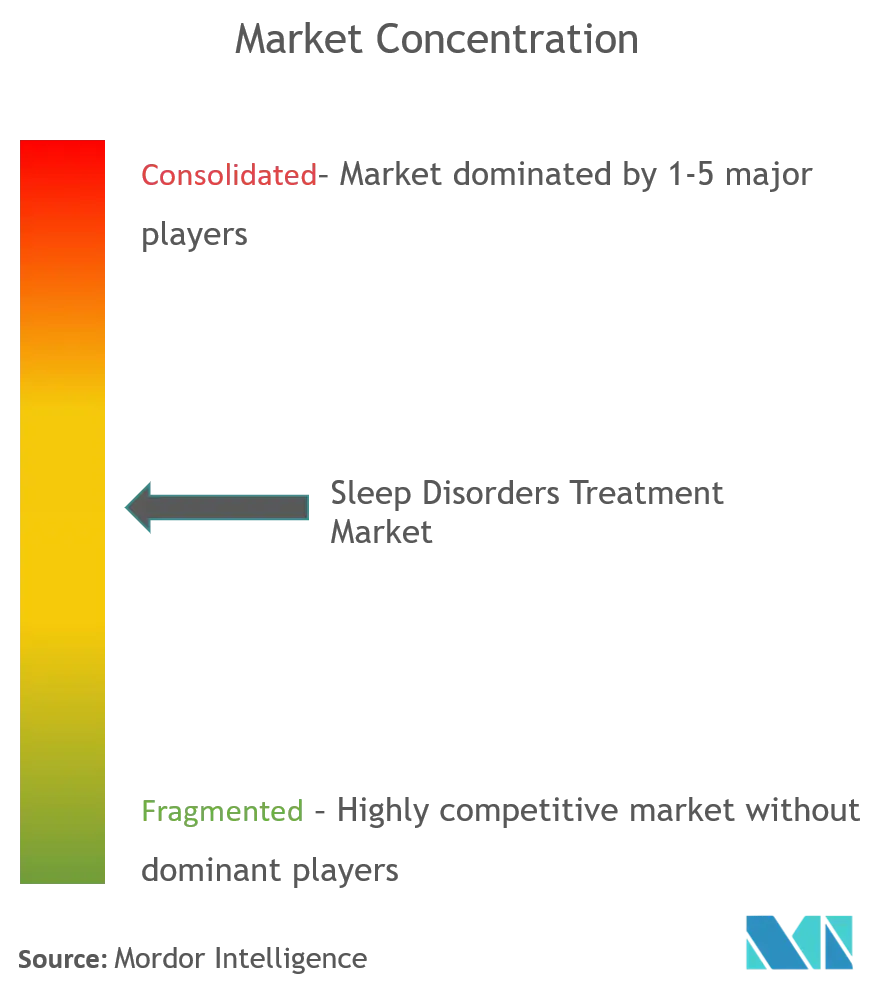
The competitive landscape is moderately consolidated. ResMed anchors device leadership with 10.24% revenue share and an 11.27% year-on-year growth rate, propelled by a proprietary data lake encompassing billions of nightly usage records. This data fuels algorithm-guided pressure adjustments and patient-facing coaching, increasing device compliance to 87% relative to sub-60% industry norms. Such outcomes confer durable competitive advantage through payer contracts that link reimbursement to adherence performance.
Pharmaceutical innovators are challenging device incumbents by leveraging mechanistic advances. Idorsia, Takeda and Jazz Pharmaceuticals each allocated double-digit R&D budgets to orexin modulation technologies that can rival CPAP in certain phenotypes. Jazz’s USD 1.59 billion acquisition of Sumitomo’s late-stage narcolepsy asset in June 2025 signals escalating deal sizes as large-cap firms race to secure differentiated pipelines. Digital-first entrants such as Big Health forge alternative payor pathways; their SleepioRx product bypasses dispensing fees, eroding pharmacy channel margins while creating new data exhaust that payors value for population analytics.
Strategic alliances between consumer-electronics giants and academic centres, notably Samsung–Stanford for AI sleep-apnea detection, foreshadow cross-industry convergence that may redraw competitive boundaries. New players in metabolic medicine—Eli Lilly with tirzepatide, Novo Nordisk with semaglutide Phase 3 OSA studies—extend competition beyond traditional sleep firms. Pediatric indications represent open white space; Harmony Biosciences’ 24% planned revenue bump to USD 820–860 million in 2025 reflects momentum in niche populations and underscores opportunities for companies that can navigate orphan-drug pathways.
Sleep Disorders Treatment Industry Leaders
-
Eisai Co., Ltd.
-
Merck & Co.
-
Jazz Pharmaceuticals
-
Pfizer Inc.
-
ResMed Inc.
- *Disclaimer: Major Players sorted in no particular order
Sleep Disorders Treatment Market Companies Covered in this Report
- Dr Reddy's Laboratories
- Merck
- Viatris (Mylan)
- Pfizer
- Sanofi
- Takeda Pharmaceutical Co.
- Teva Pharmaceutical Industries
- Transcept Pharmaceuticals
- Vanda Pharmaceuticals
- Zydus Lifesciences
- Eisai
- Jazz Pharmaceuticals
- Resmed
- Koninklijke Philips
- Fisher & Paykel Healthcare
- Sommetrics Inc.
- Minerva Neurosciences
- Neurocrine Biosciences
- Avadel Pharmaceuticals
- Currax Pharmaceuticals
- Arena Pharmaceuticals
- SomnoMed Limited
Market Opportunities and Future Outlook
A primary whitespace is the expansion of non-PAP pathways for OSA, where multiple modalities are progressing through late-stage regulation and clinical validation. The FDA’s March 2026 PMA approval of LivaNova’s aura 6000 hypoglossal nerve stimulation system broadens implantable options for adults with moderate-to-severe OSA who fail or are ineligible for PAP, reinforcing a growing segment between CPAP and more invasive surgical approaches. In oral OSA therapeutics, Apnimed’s July 2026 FDA acceptance of the AD109 NDA, with a PDUFA date of February 28, 2027, creates a near-term regulatory milestone that can support payer and provider engagement with pharmacologic alternatives for patients who do not persist with nightly device use.
Narcolepsy remains a concentrated innovation corridor where orexin biology is moving toward regulatory decision points, creating room for differentiated, mechanism-led entrants and for lifecycle management by incumbents. Takeda’s oveporexton (TAK-861) received FDA Priority Review acceptance (February 2026) for narcolepsy type 1, and Axsome’s AXS-12 NDA for cataplexy in narcolepsy was accepted for filing in July 2026. On the care-delivery side, combination therapy models are emerging for complex OSA phenotypes, supported by registered clinical research such as a June 2026 Brigham and Women’s Hospital trial evaluating pharmacological stimulation alongside hypoglossal nerve stimulation. This points to device-drug interoperability, shared data infrastructure, and new clinical pathways anchored in sleep-clinic and home-diagnostics ecosystems.
Recent Industry Developments in Sleep Disorders Treatment Market
- July 2026: Eisai reported that the UK MHRA accepted for evaluation a marketing authorization application for lemborexant (Dayvigo) in adult insomnia, extending its regulatory push beyond earlier APAC approvals. The step supports geographic expansion in a market where prescribing and reimbursement pathways are closely tied to regulator-reviewed evidence packages.
- June 2026: Jazz Pharmaceuticals disclosed extensive late-breaking real-world evidence at SLEEP 2026 for Xywav across narcolepsy and idiopathic hypersomnia. The dataset supports differentiation on outcomes and tolerability considerations, and it helps reinforce payer and clinician confidence in long-term therapy choices within rare sleep-disorder segments.
- December 2024: The US FDA approved Zepbound (tirzepatide) as the first medication indicated for moderate-to-severe obstructive sleep apnea in adults with obesity. This regulatory decision links metabolic therapy with sleep-breathing outcomes and broadened competitive dynamics for OSA beyond traditional device-led management.
Sleep Disorders Treatment Market Report Scope and Research Methodology
Market Definition and Coverage
This market covers revenues earned from medical treatments used to manage sleep disorders, including prescription medicines, approved devices, and clinically validated digital therapeutics used in care pathways.
Scope exclusions: Follow-up care services and consumer wellness sleep apps that are not cleared as medical devices are excluded.
Segments Covered in This Report
- By Drug Class
- Benzodiazepines
- Non-benzodiazepines
- Dual Orexin Receptor Antagonists
- Antidepressants
- Melatonin Receptor Agonists
- Other Drug Class
- By Disorder Type
- Insomnia
- Sleep Apnea
- Narcolepsy
- Circadian Rhythm Disorders
- Other Disorder Types
- By Distribution Channel
- Hospital Pharmacies
- Retail Pharmacies
- Online Pharmacies
- Sleep Clinics
- Geography
- North America
- United States
- Canada
- Mexico
- Europe
- Germany
- United Kingdom
- France
- Italy
- Spain
- Rest of Europe
- Asia-Pacific
- China
- Japan
- India
- Australia
- South Korea
- Rest of Asia-Pacific
- Middle East & Africa
- GCC
- South Africa
- Rest of Middle East & Africa
- South America
- Brazil
- Argentina
- Rest of South America
- North America
Data Sources, Market Sizing, and Validation
Desk Research
Desk research helped set the boundary between what counts as treatment revenue and what sits outside the market. We used public health sources such as the CDC, the NIH, the WHO, and the OECD to ground prevalence, diagnosis trends, and treatment awareness signals. For product and regulatory grounding, we reviewed FDA drug and device databases, published clinical guidelines, and peer-reviewed journals that describe efficacy and standard-of-care shifts.
To connect demand to supply, we also relied on public company filings and investor presentations for revenue direction and product mix commentary, alongside association websites and reputed press items for policy and reimbursement updates. In a few places, paid subscriptions were used for company financials and for patent checks so pipeline direction could be understood without leaning on standalone claims. The sources listed here are illustrative only, and we also used other public references for data collection, validation, and clarification.
Primary Interviews and Surveys
Primary work focused on clinicians, sleep lab administrators, home care channel participants, and device and therapy specialists who see prescribing and adoption patterns in practice. We also spoke with regional stakeholders across APAC, EMEA, and the Americas so coverage, access, and reimbursement differences could be reflected in the final assumptions, and then used those inputs to confirm desk research signals and close remaining data gaps.
Distribution of primary research fieldwork respondents
| Company type | Respondent position | Region |
|---|---|---|
| Top tier: 31% | CXOs: 15% | APAC: 49% |
| Mid tier: 53% | Functional/Unit leaders: 34% | EMEA: 32% |
| Smaller Players: 16% | Managers: 51% | Americas: 19% |
Market-Sizing & Forecasting
Sizing starts with a top-down build where the treated patient pool is reconstructed from prevalence and diagnosis rates, and then filtered through access and therapy adoption by disorder type. That demand pool is converted into value using price ladders that reflect typical therapy duration and refill patterns for drugs, and manufacturer selling prices for devices used in treatment. To keep totals realistic, we ran selective bottom-up checks, such as sampled ASP times unit volume for core device categories and supplier level roll-ups where public financial splits made that possible.
Key inputs used in the model include insomnia and sleep apnea diagnosis trends, CPAP and connected therapy adoption, prescription mix shifts toward newer drug classes, payer coverage direction for sleep care, and replacement cycles for major device types. Forecasting uses scenario analysis supported by trend smoothing, where key variables are moved based on expert consensus and observed policy or clinical practice changes. Where bottom-up signals were incomplete, gaps were handled by applying conservative penetration and price assumptions, which were then rechecked using interview feedback.
Data Validation & Update Cycle
Validation is done by comparing model outputs with independent signals that should move in the same direction, such as diagnosis volumes, treatment uptake indicators, and major category revenue trends. When a country or therapy line shows an unusual jump, assumptions are reopened and a follow-up check is done with additional experts before sign-off. The work is also reviewed in steps, first at the module level and then at the full market level, so arithmetic, scope, and logic issues are caught early.
The report is refreshed annually, and interim updates are made when major approvals, policy shifts, or pricing events change the outlook. Before delivery, the latest available data is pulled into the model so clients receive an updated view that matches the most current market reality.
Mordor Intelligence's Sleep Disorders Treatment Market Size Measured Against Other Published Estimates
Published market sizes for sleep disorders treatment can vary a lot, even when they appear to cover the same topic. The differences usually come from what is counted as treatment revenue, which year is used for pricing and currency conversion, and how quickly the numbers are refreshed after major approvals or reimbursement changes.
A common gap driver is whether diagnostics and sleep lab services are included, since that expands the market beyond treatment products and validated therapeutics. Another driver is the price build, where some studies apply a single blended ASP, while others separate drug refill dynamics from device replacement cycles, which changes the total in a meaningful way. Quarterly pricing shifts and FX timing also matter, and the refresh cadence that updates these inputs is one reason the 2026 value in Mordor Intelligence is kept aligned with manufacturer selling prices for devices and current therapy mix assumptions.
Benchmark comparison
| Source | Market Size | Gaps in Research Methodology |
|---|---|---|
| Mordor Intelligence | USD 24.98 B (2026) | |
| Industry Publisher A | USD 35.61 B (2026) | This estimate appears to use a broader boundary that can fold diagnostics and sleep lab related revenue into the same total, which lifts the 2026 number beyond treatment products alone. It also does not clearly state device pricing level (manufacturer price versus end user spending), which can widen the result. |
| Market Bulletin B | USD 16.17 B (2025) | This figure is anchored to 2025 and may lean toward a narrower therapeutics focus, which can undercount device led treatment value in obstructive sleep apnea. Differences in currency timing and the way ASP progression is handled across the forecast window can also pull the base year lower. |
Across the three sources, the spread is explained mostly by scope choices and by how pricing and currency are timed. By keeping device revenues at manufacturer selling price and separating drug duration logic from device replacement behavior, the model stays traceable to inputs that can be repeated and rechecked over time.
Key Questions Answered in the Report
What is the current size of the sleep disorder treatment market?
The market is valued at USD 24.98 billion in 2026 and is projected to reach USD 35.10 billion by 2031.
Which therapeutic class is growing the fastest?
Dual-orexin receptor antagonists are expanding at a 9.52% CAGR due to superior safety and efficacy.
How large is North America’s share of the sleep disorder treatment market?
North America accounts for 42.35% of global revenue, reflecting mature reimbursement systems and early adoption of innovative therapies.
Why are online pharmacies important to future growth?
Online channels are scaling at a 10.18% CAGR because they offer privacy, convenience and price transparency that resonate with working-age patients.
What makes tirzepatide significant for obstructive sleep apnea?
Approved in December 2024, tirzepatide is the first drug to treat moderate-to-severe OSA in obese adults, offering an alternative to device-based therapy.
Which region is expected to grow the fastest through 2031?
Asia-Pacific leads with an 8.22% CAGR, driven by large untreated populations and recent approvals of novel pharmacotherapies.