
Shock Wave Therapy Market Size and Share
Market Overview
| Study Period | 2020 - 2031 |
|---|---|
| Market Size (2026) | USD 1.87 Billion |
| Market Size (2031) | USD 2.89 Billion |
| Growth Rate (2026 - 2031) | 9.13 % |
| Fastest Growing Market | Asia-Pacific |
| Largest Market | North America |
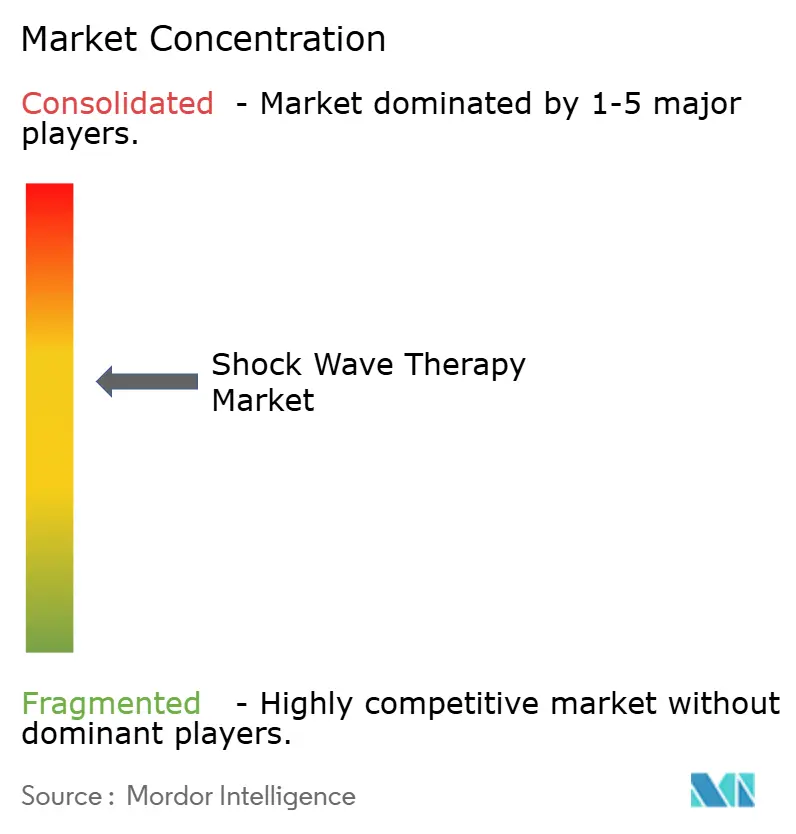
| Market Concentration | Medium |
Major Players *Disclaimer: Major Players sorted in no particular order Image © Mordor Intelligence. Reuse requires attribution under CC BY 4.0. | |
Shock Wave Therapy Market Analysis by Mordor Intelligence
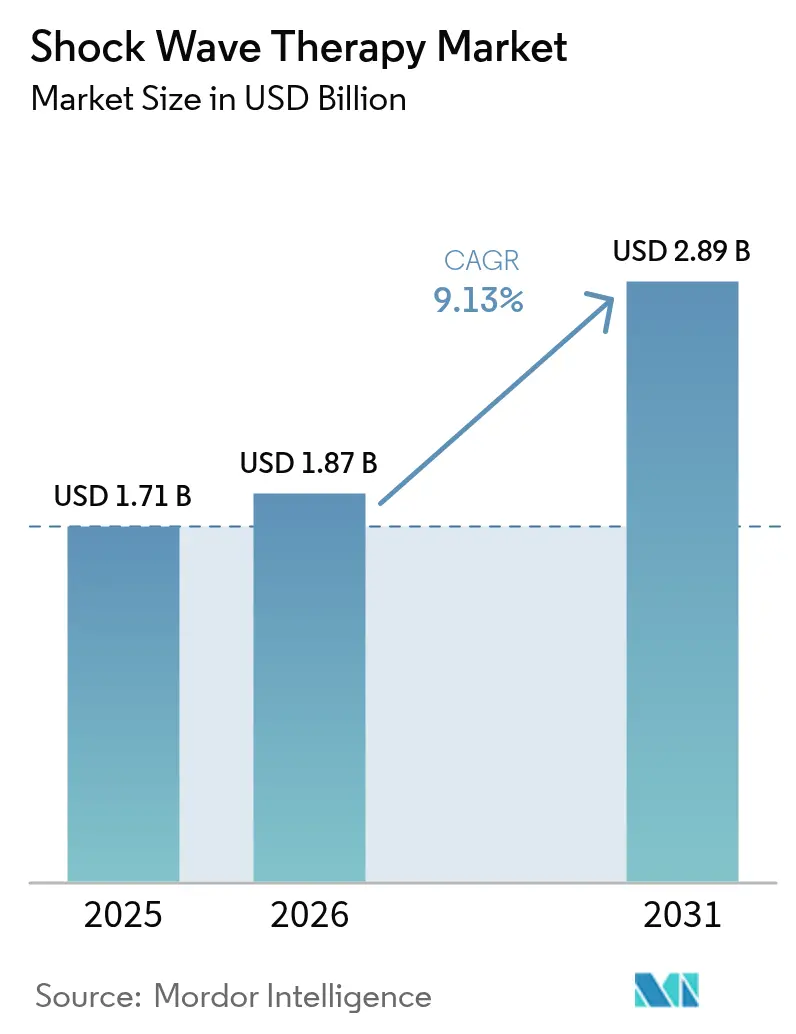
The Shock Wave Therapy market size is expected to grow from USD 1.71 billion in 2025 to USD 1.87 billion in 2026 and is forecast to reach USD 2.89 billion by 2031 at 9.13% CAGR over 2026-2031.
Demand accelerates as hospitals, sports clinics and home-care providers embrace non-invasive pain solutions that shorten recovery time and reduce opioid reliance. Expanding clinical evidence across orthopedics, cardiology and wound care underpins physician confidence, while the FDA’s class II clearance for chronic wounds signals regulatory tailwinds. Johnson & Johnson’s USD 13.1 billion purchase of Shockwave Medical confirms large-cap interest in intravascular lithotripsy and reinforces investor optimism about the future scale of the shock wave therapy market. Growing geriatric populations, especially in Asia–Pacific, further support long-term procedure volume as age-related musculoskeletal and vascular disorders rise.
Key Report Takeaways
- By technique, radial shock waves led with 40.45% revenue share in 2025; piezoelectric shock waves are poised to expand at a 9.88% CAGR through 2031.
- By application, orthopedics & sports injuries held 46.80% of the shock wave therapy market share in 2025, while cardiology is set to grow 12.95% annually to 2031.
- By end user, hospitals accounted for 42.10% of the shock wave therapy market size in 2025; home-care settings exhibit the highest forecast CAGR of 14.35%.
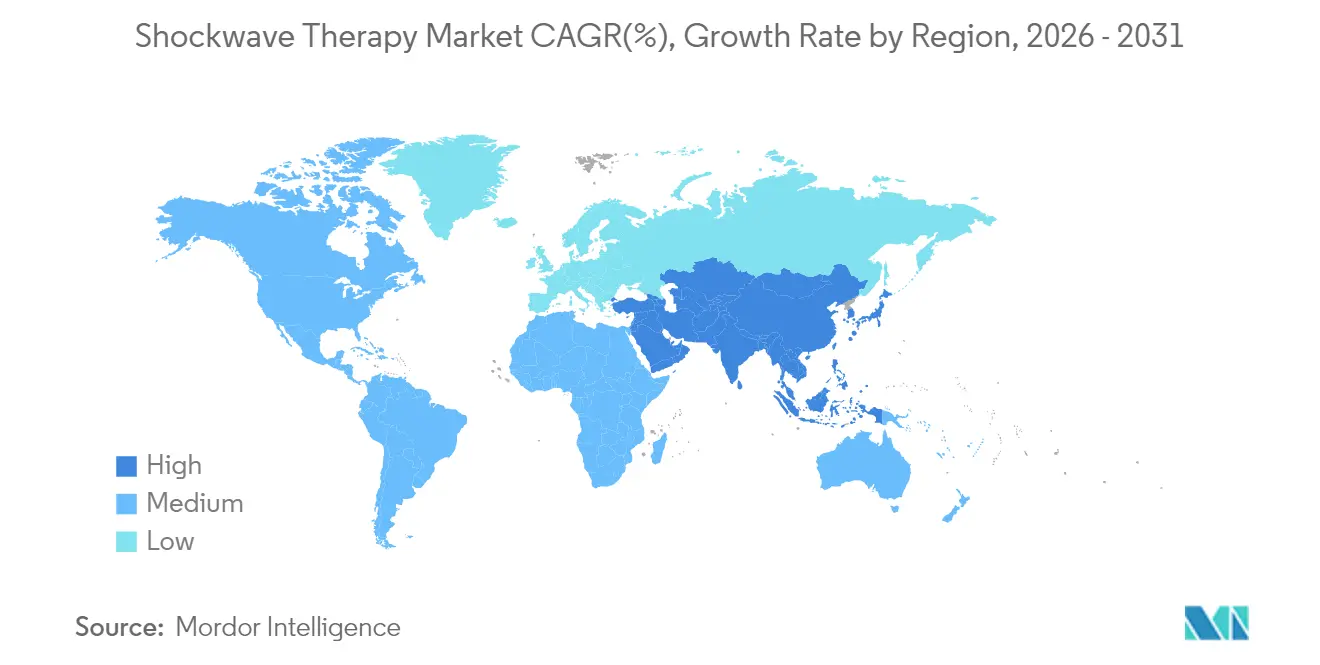
- By geography, North America captured 35.30% revenue in 2025, whereas Asia–Pacific is projected to register an 11.22% CAGR through 2031.
Note: Market size and forecast figures in this report are generated using Mordor Intelligence’s proprietary estimation framework, updated with the latest available data and insights as of 2026.
Market Trends and Insights
Drivers Impact Analysis of Shock Wave Therapy Market*
| Driver | (~) % Impact on CAGR Forecast | Geographic Relevance | Impact Timeline |
|---|---|---|---|
| Escalating prevalence of musculoskeletal & chronic pain disorders | +2.1% | Global, focused in North America and Europe | Long term (≥ 4 years) |
| Rapid growth in geriatric population | +1.8% | Global, particularly Asia–Pacific and Europe | Long term (≥ 4 years) |
| Rising demand for non-invasive pain-management alternatives | +1.6% | North America & EU, expanding to Asia–Pacific | Medium term (2-4 years) |
| Increasing adoption in sports medicine & rehabilitation clinics | +1.4% | Global, early gains in North America & Europe | Medium term (2-4 years) |
| Synergistic use of ESWT with biologics | +0.9% | Advanced markets in North America & EU | Long term (≥ 4 years) |
| Commercialisation of portable low-cost radial devices for home physio | +1.2% | Global, fastest uptake in Asia–Pacific | Short term (≤ 2 years) |
| Source: Mordor Intelligence | |||
Escalating Prevalence of Musculoskeletal & Chronic Pain Disorders
Growing caseloads of plantar fasciitis, rotator cuff disease and tendinopathies place sustained pressure on orthopedic services. Meta-analyses confirm that extracorporeal shock wave therapy reduces pain and improves function more effectively than standard physiotherapy across these conditions.[1]Mechanistic studies reveal that acoustic pulses trigger growth-factor release such as BMP, TGF-β and VEGF, positioning the modality as regenerative rather than palliative.[2] Health systems seeking opioid-sparing strategies increasingly include ESWT within multimodal pain pathways. Early-stage trials in spinal cord injury rehabilitation and aesthetic hair regrowth broaden the addressable pool of patients and strengthen the long-run outlook for the shock wave therapy market.
Rapid Growth in Geriatric Population
Population aging boosts procedure demand because many elderly patients are poor surgical candidates yet remain physically active. Randomized studies in knee osteoarthritis report significant WOMAC score improvement after focused shock wave therapy with negligible adverse events. In cardiology, intravascular lithotripsy softens calcified plaques common among seniors, improving vessel compliance without high-pressure balloons. Protocols tailored to lower-energy pulses and longer treatment intervals enhance safety for frail cohorts. Integration into geriatric care pathways aligns with value-based models that emphasize mobility and independence.
Rising Demand for Non-Invasive Pain-Management Alternatives
Payers and providers favor non-pharmacological interventions that reduce drug dependence. Mechanotransduction-induced neo-vascularisation delivers durable tissue repair, differentiating ESWT from analgesic masking. Major insurers such as Aetna reimburse calcific tendinitis therapy, reflecting growing evidence and lobbying success aetna.com. Patient satisfaction surveys cite 85% perceived functional improvement, supporting word-of-mouth referrals and strengthening the near-term revenue pipeline for the shock wave therapy market. Safety profiles limited mainly to transient soreness contrast sharply with surgical complications, driving clinician adoption.
Increasing Adoption in Sports Medicine & Rehabilitation Clinics
Systematic reviews show effectiveness across plantar fasciitis, lateral epicondylitis and hamstring tendinopathy, enabling faster return-to-play for athletes.[3] On-site portability permits treatment during training, minimising downtime. Professional teams integrate radial systems into injury-prevention routines, while equine studies demonstrate 70-85% success in managing tendon injuries, signalling cross-species validation. Pairing ESWT with stem-cell injections further differentiates elite rehabilitation programs and sustains premium pricing.
Restraints Impact Analysis of Shock Wave Therapy Market*
| Restraint | (~) % Impact on CAGR Forecast | Geographic Relevance | Impact Timeline |
|---|---|---|---|
| High upfront cost of shock wave systems & procedures | -1.3% | Global, stronger in emerging markets | Medium term (2-4 years) |
| Limited or patchy reimbursement coverage | -1.1% | North America & EU, expanding globally | Short term (≤ 2 years) |
| Regulatory scrutiny on direct-to-consumer ED devices | -0.8% | Advanced markets in North America & EU | Medium term (2-4 years) |
| Operator-dependent dosing leads to inconsistent outcomes | -0.7% | Global, higher impact in developing markets | Long term (≥ 4 years) |
| Source: Mordor Intelligence | |||
High Upfront Cost of Shock Wave Systems & Procedures
Clinic owners often face capital expenses exceeding mid-five-figure USD amounts for professional systems. Maintenance, hand-piece replacements and training further elevate total cost of ownership. Vendors counteract with lease plans and pay-per-treatment models, yet cash-flow constraints persist in smaller practices. Portable consumer devices such as PulseWave MiniWave, rated for 1 million pulses, signal a shift toward affordability. Cost-effectiveness studies showing surgery avoidance up to 30 months post-therapy support broader procurement, tempering the restraint over time.
Limited or Patchy Reimbursement Coverage
Despite mounting evidence, Medicare reimburses only chronic plantar fasciitis under narrow criteria. Private payer policies vary widely, often covering consultation but denying procedure charges, leaving patients exposed to out-of-pocket fees. Class III device categorization in certain use-cases demands extensive evidence dossiers before coverage widens. Standardized outcome registries and society guidelines are helping practitioners advocate for uniform payment policies, which should gradually ease this headwind and unlock latent demand within the shock wave therapy market.
*Our forecasts treat driver/restraint impacts as directional, not additive. The impact forecasts reflect baseline growth, mix effects, and variable interactions.
Shock Wave Therapy Market Segment Analysis
By Technique:
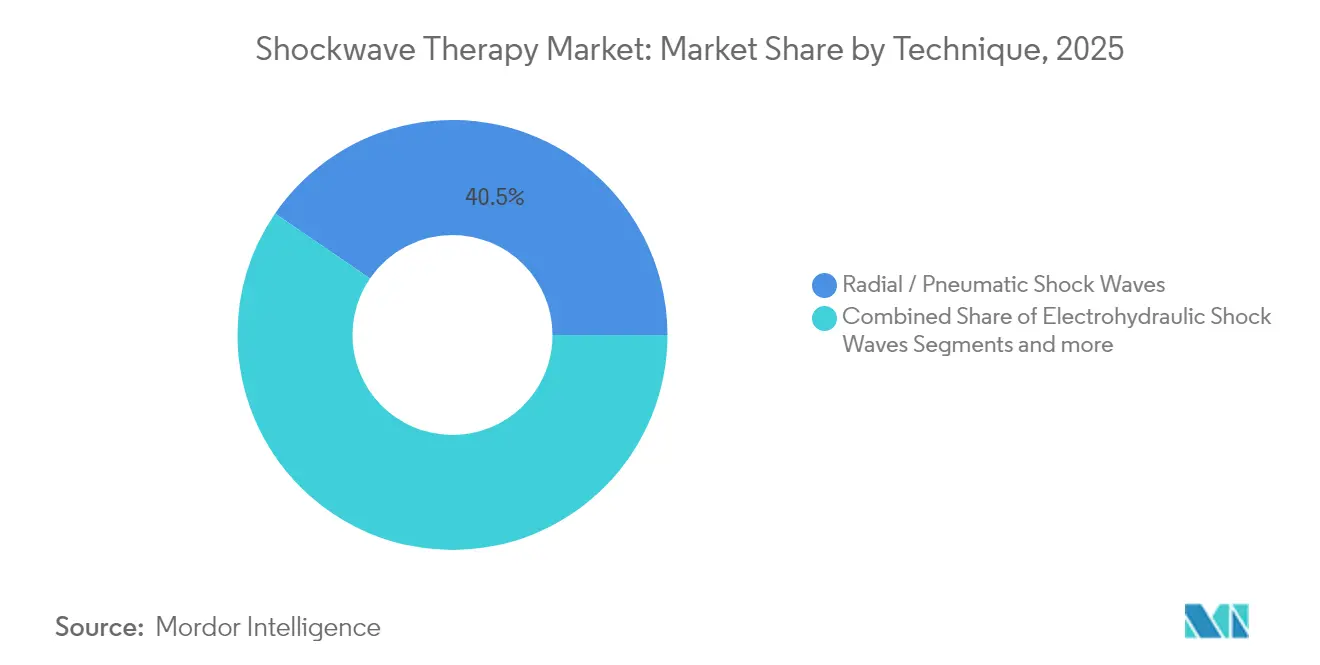
Radial Dominance Drives AccessibilityRadial pressure wave devices captured 40.45% of the shock wave therapy market share in 2025, reflecting their affordability and simple workflow. The shock wave therapy market size for radial systems is set to expand steadily as portable hand-held designs enable use in outpatient and home environments. Piezoelectric platforms exhibit the fastest 9.88% CAGR because precise focus and deeper penetration benefit complex orthopedic and vascular cases. Electromagnetic emitters maintain a loyal base among high-volume spine and sports centers, whereas electrohydraulic units, though clinically proven, are gradually relegated to specialty lithotripsy suites.
Device evolution emphasizes weight reduction, digital touchscreens and AI-guided dose algorithms. Radial manufacturers integrate app-based protocols that adjust frequency and bar-pressure in real time, enhancing consistency across operators. Focused piezoelectric systems add high-resolution imaging to target deep lesions, reducing repeat sessions. Competitive pricing, subscription hand-pieces and bundled service contracts support wider adoption across physiotherapy chains, thereby reinforcing the multi-segment expansion of the shock wave therapy market.

By Application:
Orthopedics Leadership Faces Cardiology ChallengeOrthopedics & sports injuries commanded 46.80% revenue in 2025, anchored by decades of randomized trials and clinician familiarity. The shock wave therapy market size for musculoskeletal care will keep expanding, yet relative share will dilute as invasive-lithotripsy gains momentum. Cardiology’s 12.95% CAGR is catalyzed by intravascular systems that fracture calcified plaques at low balloon pressure, reducing dissection risk. Urology remains stable as kidney-stone fragmentation transitions from inpatient to ambulatory centers, while erectile dysfunction guidelines in Asia–Pacific endorse low-intensity protocols that lift regional procedure volumes.
Dermatology and aesthetics register rising demand for cellulite smoothing and hair restoration, though absolute revenue remains modest. Veterinary medicine contributes incremental diversification, with equine sports barns adopting radial units for soft-tissue lesions. Emerging neurology trials exploring post-stroke spasticity relief could unlock fresh revenue pools beyond 2028, cementing long-term breadth within the shock wave therapy market.
By End User:
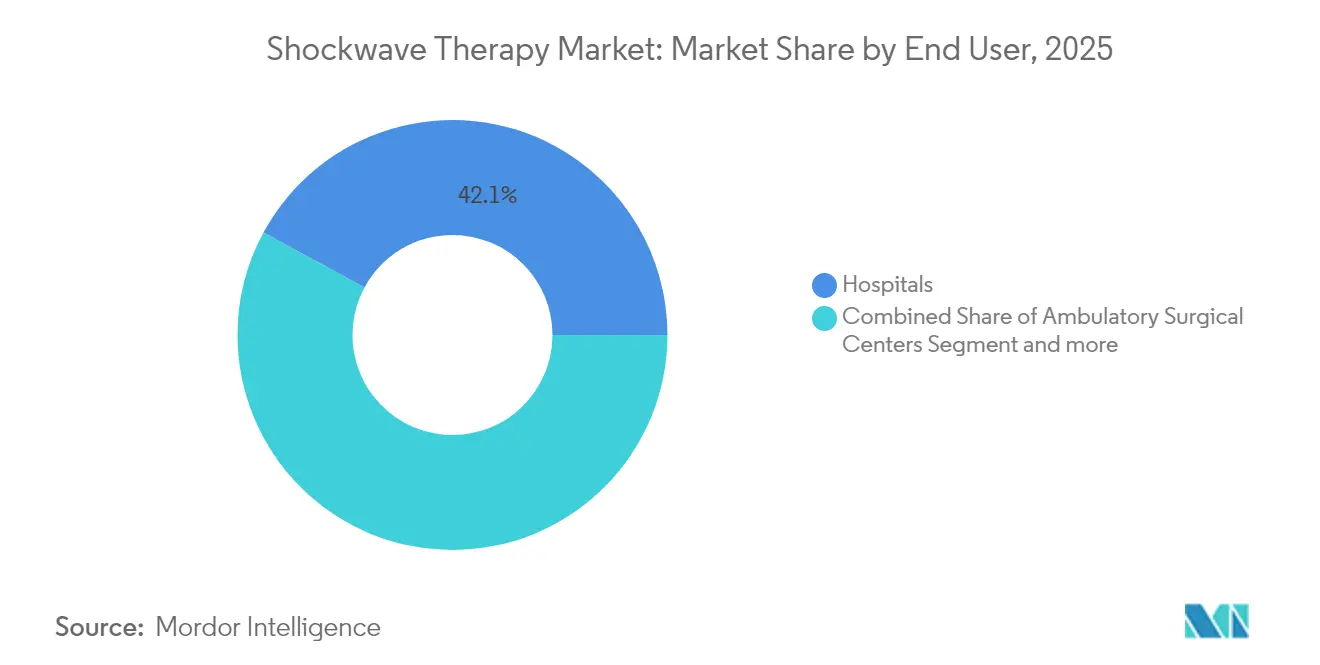
Hospital Dominance Challenged by Home-Care InnovationHospitals held 42.10% of 2025 revenue owing to integrated imaging, anesthetic support and reimbursement familiarity. Specialty sports clinics and ambulatory surgical centers provide high-throughput alternatives, bundling ESWT with regenerative injections for premium packages. Physiotherapy chains integrate radial devices into multimodal rehab, scaling through franchised sites in Europe and North America.
Home-care settings, buoyed by FDA-cleared consumer devices, are forecast to post a 14.35% CAGR. Telehealth platforms supervise patient-administered sessions via cloud-linked dose counters and symptom diaries. Insurer pilots that reimburse rental fees under durable-equipment codes are underway, potentially normalizing at-home protocols by 2027. This democratization broadens the user base, sustains consumables sales and deepens penetration of the shock wave therapy market.
Geography Analysis
North America Shock Wave Therapy Market
North America generated 35.30% of global revenue in 2025 as orthopedic surgeons, sports physicians and wound-care nurses embrace evidence-based protocols. Breakthrough-device designations from the FDA, such as EDAP TMS’s Focal One for endometriosis, accelerate portfolio diversification. Cardiovascular deployments benefit from strong catheter-lab infrastructure, and Boston Scientific cited double-digit growth in IVL catheters during Q1 2025 earnings. Reimbursement gaps persist yet pioneer clinics leverage outcome data to negotiate local coverage, sustaining steady expansion in the shock wave therapy market.
APAC Shock Wave Therapy Market
Asia–Pacific records the fastest 11.22% CAGR, propelled by aging populations, rising disposable income and rapid technology transfer from Western markets. Chinese research output rivals the United States in ESWT publications, fostering domestic device innovation. Health ministries in Japan and South Korea fund pilot programs for diabetic-foot wound management, while private hospitals in India adopt radial devices for cash-pay sports medicine services. Manufacturer joint ventures in Shenzhen and Seoul cut price points, enabling broader hospital and clinic uptake.
EMEA and LATAM Shock Wave Therapy Market
Europe maintains robust demand through well-regulated medical device pathways and rigorous evidence standards. Switzerland’s public insurers cover prostate HIFU, setting a precedent that could spill into focused ESWT reimbursement. German sickness funds reimburse up to three plantar fasciitis sessions, supporting outpatient clinics. Middle East and Africa, though representing a small base, show growing interest as Gulf states expand sports and wellness infrastructure. Latin America gains traction via Brazilian orthopedic societies’ continuing-education modules, yet currency volatility and import tariffs temper immediate shock wave therapy market penetration.
Regulatory Landscape
In the United States, shock wave therapy devices span multiple FDA classifications depending on intended use. Extracorporeal shock wave devices for chronic wound treatment are regulated as Class II medical devices under 21 CFR 878.4685 (Product Code PZL), supporting a 510(k)-based pathway for cleared wound-care systems and associated accessories.
In Europe, shock wave therapy systems marketed as medical devices must comply with Regulation (EU) 2017/745 (MDR), including conformity assessment aligned to Annex I General Safety and Performance Requirements (GSPR). Classification and evidence depth hinge on the claims made, invasiveness, and duration of contact. For device-drug or device-biologic offerings that pair shock wave delivery with biologics in regenerative protocols, FDA combination product oversight routes through the Office of Combination Products, where Primary Mode of Action (PMOA) determines the lead center (CDRH, CDER, or CBER) and shapes integrated quality system expectations across constituents.
Competitive Landscape
The competitive landscape mixes legacy multinationals with nimble challengers. EMS, Dornier MedTech and Storz Medical leverage broad catalogs, established KOL networks and global service teams to retain hospital share. Johnson & Johnson’s USD 13.1 billion purchase of Shockwave Medical underscores strategic intent to dominate cardiovascular niches jnj.com. Rivals such as Boston Scientific and Medtronic boost R&D budgets to safeguard share in the high-growth cardiology segment.
Start-ups exploit portability trends. Firms behind the PulseWave MiniWave secure FDA clearance for consumer use, tapping the wellness channel and prompting incumbents to fast-track home models. Patent filings concentrate on smart-sensor hand-pieces, energy-feedback loops and machine-learning-driven dosing, promising tighter outcome variability control. White-space exists in neurology, veterinary and aesthetics, where limited regulatory oversight allows smaller players to build early traction. Midsize orthopedic-focused vendors pursue regional distributor alliances to penetrate emerging markets, further fragmenting parts of the shock wave therapy market.
Regulatory compliance, service reach and clinical-evidence pipelines determine long-term positioning. Companies that bundle AI analytics, telemonitoring and reimbursement support are likely to command premium pricing and cultivate sticky customer bases, reinforcing moderate consolidation but leaving room for specialised innovators.
Shock Wave Therapy Industry Leaders
-
EMS Electro Medical Systems SA
-
Olympus Corporation
-
Karl Storz SE & Co KG
-
Dornier MedTech GmbH
-
Siemens Healthineers AG
- *Disclaimer: Major Players sorted in no particular order
Shock Wave Therapy Market Companies Covered in this Report
- EMS Electro Medical Systems
- Dornier MedTech
- Karl Storz SE & Co. KG (Storz Medical)
- Siemens Healthineers
- BTL
- Zimmer MedizinSysteme
- EDAP TMS SA
- Boston Scientific
- Olympus Corp.
- Inceler Medikal
- Chattanooga (Enovis)
- Richard Wolf
- PulseVet (Zoetis)
- MTS Medical Ug
- WIKKON Medical
- Elettronica Pagani Srl
- Shenzhen Huikang Medical
- ELvation Medical
- Guidoni Medical Devices
- Quatron Medical
Market Opportunities and Future Outlook
Protocol standardization and metrology remain a clear whitespace across musculoskeletal, wound, and emerging indications, with direct implications for reimbursement discussions and multi-site comparability. In April 2026, a proposed unifying framework (OLTHEShockw) was published to reconcile how focused extracorporeal shock wave therapy dose is described and measured, addressing the persistent MPa versus mJ/mm2 fragmentation that contributes to operator-dependent outcomes and inconsistent study design.
Device development is also concentrated on improving precision, durability, and deliverability in intravascular lithotripsy, where catheter crossing profile and emitter longevity are core performance constraints for calcified lesion treatment. Patent disclosures in January 2026 described catheter approaches targeting higher sonic output and longer life through optimized spark-gap configurations, and an April 2026 filing described methods to position shock wave emitters closer to target lesions using expandable catheter concepts. Alongside large-cap consolidation in IVL (Johnson & Johnson integrating Shockwave Medical), this mix of standardization work and device engineering points to a near-term commercial emphasis on scalable protocols, more repeatable dosing, and next-generation catheter designs for cardiology workflows, while sensitive segments such as erectile dysfunction remain constrained where formal indication and guideline support are limited.
Recent Industry Developments in Shock Wave Therapy Market
- April 2026: A leading IVL developer published a proposed unifying framework OLTHEShockw to reconcile how dose is described and measured in focused extracorporeal shock wave therapy. The framework anchors standardization across indications and sets a common reference for dose reporting.
- April 2026: A leading IVL developer filed methods to position shock wave emitters closer to target lesions using expandable catheter concepts. The filing highlights ongoing catheter design innovations to improve deliverability and energy deployment in complex vascular anatomies.
- January 2026: A leading IVL developer published patent disclosures describing catheter approaches targeting higher sonic output and longer emitter life through optimized spark-gap configurations. The disclosures indicate continued device engineering focus on durability and dosing precision.
Shock Wave Therapy Market Report Scope and Research Methodology
Market Definition and Coverage
For this study, the shock wave therapy market is defined as revenues generated from shock wave therapy systems used for therapeutic indications in healthcare settings, along with related consumables that are needed to deliver treatment and keep systems operating.
Scope exclusions: Dedicated kidney stone lithotripsy systems, post-warranty service contracts, and consumer percussion massage products marketed as shock devices are not counted in this market.
Segments Covered in This Report
- By Technique
- Electrohydraulic Shock Waves
- Piezoelectric Shock Waves
- Radial / Pneumatic Shock Waves
- Electromagnetic Shock Waves
- Other / Hybrid Techniques
- By Application
- Orthopedics & Sports Injuries
- Cardiology
- Urology
- Dermatology & Aesthetics
- Veterinary Medicine
- Neurology & Pain Management
- By End User
- Hospitals
- Specialty & Sports Medicine Clinics
- Ambulatory Surgical Centers
- Physiotherapy & Rehabilitation Centres
- Home-care Settings
- By Geography
- North America
- United States
- Canada
- Mexico
- Europe
- Germany
- United Kingdom
- France
- Italy
- Spain
- Rest of Europe
- Asia-Pacific
- China
- Japan
- India
- Australia
- South Korea
- Rest of Asia-Pacific
- Middle East & Africa
- GCC
- South Africa
- Rest of Middle East & Africa
- South America
- Brazil
- Argentina
- Rest of South America
- North America
Data Sources, Market Sizing, and Validation
Desk Research
Desk work starts with mapping how shock wave therapy is used, where it is delivered, and which device technologies are commonly installed, so later assumptions do not drift away from real clinical practice. We review public sources such as the FDA device databases, the US National Library of Medicine (ClinicalTrials.gov), the World Health Organization and OECD health statistics, and relevant medical society guidance pages that explain typical indications and care pathways.
To convert this context into sizing inputs, broader public data is used as supporting signals, like population and aging indicators from the World Bank, and health system capacity indicators published by national health ministries. Company filings, investor presentations, and credible press interviews help validate product positioning, price ranges, and expansion patterns by region. Where needed, we also consult paid subscriptions for company financials and intelligence, plus patent databases, to cross-check technology adoption and product pipeline activity. The sources named above are illustrative, and many other references were used to collect data, validate assumptions, and clarify open questions.
Primary Interviews and Surveys
Primary inputs were gathered through expert interviews and structured surveys with device manufacturers, distributors, hospital and clinic buyers, and clinical users across orthopedics, urology, sports medicine, and rehabilitation. Since adoption varies by reimbursement, site of care, and installed base maturity, we cover APAC, EMEA, and the Americas to validate demand signals, price movements, and utilization assumptions before finalizing the model outputs.
Distribution of primary research fieldwork respondents
| Company type | Respondent position | Region |
|---|---|---|
| Top tier: 27% | CXOs: 13% | APAC: 45% |
| Mid tier: 53% | Functional/Unit leaders: 29% | EMEA: 30% |
| Smaller Players: 20% | Managers: 58% | Americas: 25% |
Market-Sizing & Forecasting
Sizing is built using a top-down and bottom-up approach, where treatment adoption and site of care capacity are used to reconstruct the addressable demand, then this is converted into system and consumable revenues by region. The model is kept practical by tying each step to measurable signals, so it can be explained clearly and updated when inputs shift.
Key inputs include the installed base trend for focused and radial systems, typical procedures per system by care setting, average selling prices and discounting ranges for new systems, replacement cycles, and consumable attachment rates (such as tips and applicators). We also track demand catalysts like musculoskeletal patient loads, growth of physiotherapy and rehabilitation chains, and guideline and reimbursement direction where it materially changes utilization. Results are corroborated with selective bottom-up approximations like sampled ASP times estimated unit shipments from channel checks and distributor feedback, with gaps handled through conservative ranges that are narrowed after follow-up discussions.
For forecasting, we apply scenario analysis supported by expert consensus on how quickly new indications, portability, and home-care adoption translate into utilization changes. Assumptions are stress-tested by region using macro health spend signals and observed substitution between electrohydraulic, piezoelectric, electromagnetic, and radial platforms.
Data Validation & Update Cycle
Outputs are checked against independent signals, including visible installation momentum, utilization logic by end user, and the implied revenue per system, so outliers can be flagged early. When a variance looks material, the driver is re-checked, conversion factors like procedures per device are revisited, and sources are re-contacted to confirm whether the change is structural or temporary.
Before sign-off, the model goes through multi-step analyst review where inputs, calculations, and year-to-year movements are inspected, and the narrative is aligned to what the numbers show. The report is refreshed annually, and interim updates are made when material events occur, such as pricing shifts, regulatory changes, or major product launches. Right before delivery, an analyst completes a final sweep so clients receive the most current view available.
Mordor Intelligence's Shock Wave Therapy Market Size Versus Other Published Estimates
Published market numbers for shock wave therapy can look far apart because scope lines are drawn differently, and because assumptions like utilization, consumables, and pricing are refreshed on different timelines. The benchmark table makes these differences easier to see, especially when sources pick different base years.
The table points to a common gap driver, which is whether the counting is limited to therapeutic shock wave systems and required accessories, or whether adjacent categories are included. In Mordor Intelligence's model, the market includes therapeutic systems plus needed disposable tips and software updates, and it excludes dedicated kidney stone lithotripters, post-warranty service contracts, and OTC percussion products, which helps explain why some published totals sit higher or lower.
Benchmark comparison
| Source | Market Size | Gaps in Research Methodology |
|---|---|---|
| Mordor Intelligence | USD 1.71 B (2025) | |
| Global Research Publisher A | USD 2.29 B (2024) | Uses a different base year and appears to bundle a wider revenue set around shockwave therapy delivery, which can raise the starting value versus a systems-plus-required-consumables definition. |
| Industry Research Group B | USD 1.43 B (2024) | Likely applies more conservative adoption or utilization assumptions across indications and sites of care, which can lower the implied revenue capture for the same year. |
Taken together, most of the spread is explained by what is counted and when key inputs are updated, rather than by arithmetic differences. Our method stays traceable to installed base logic, procedures per system, and ASP ranges, which makes the sizing steps repeatable and easier to audit during updates.
Key Questions Answered in the Report
What is the current value of the shock wave therapy market?
The market stands at USD 1.87 billion in 2026 and is on track to reach USD 2.89 billion by 2031 at a 9.13% CAGR over 2026-2031.
Which technique segment leads the market?
Radial pressure wave devices lead with 40.45% revenue share, favored for affordability and ease of use.
Why is cardiology considered the fastest-growing application?
Intravascular lithotripsy addresses calcified arterial lesions effectively, pushing cardiology to a 12.95% CAGR through 2031.
How are home-care settings influencing market growth?
FDA-cleared portable devices let patients self-administer therapy, driving a 14.35% CAGR in the home-care segment.
Which region will grow the quickest?
Asia–Pacific posts an 11.22% CAGR through 2031, supported by healthcare investment, aging populations and local manufacturing.