
Rare Disease Genome Editing Market Size and Share
| Study Period | 2019 - 2030 |
| Market Size (2025) | USD 1.17 Billion |
| Market Size (2030) | USD 2.29 Billion |
| CAGR (2025 - 2030) | 14.45% |
| Fastest Growing Market | Asia Pacific |
| Largest Market | North America |
| Market Concentration | Medium |
Major Players *Disclaimer: Major Players sorted in no particular order |
Rare Disease Genome Editing Market Analysis by Mordor Intelligence
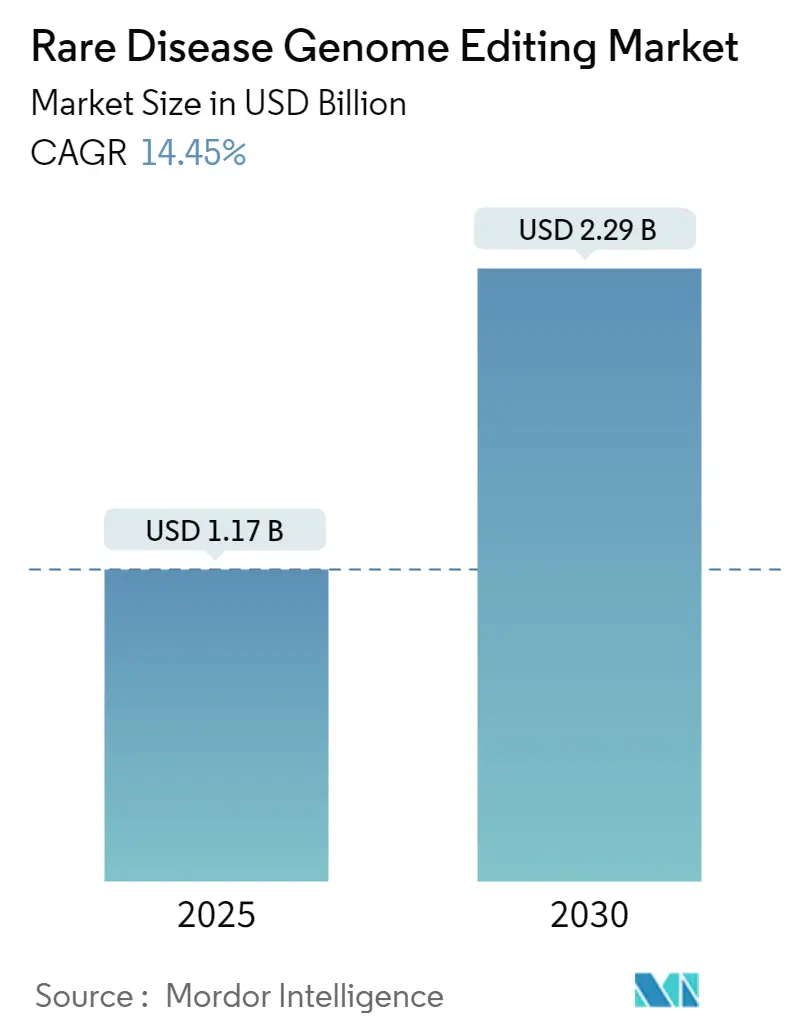
The Rare Disease Genome Editing Market size is estimated at USD 1.17 billion in 2025, and is expected to reach USD 2.29 billion by 2030, at a CAGR of 14.45% during the forecast period (2025-2030).
Rare disease genome editing has opened new avenues for the research and therapeutic development of rare disease therapeutics. Factors such as the rising burden of rare genetic disorders coupled with growing demand for the development of promising therapeutics are expected to drive market growth over the study period. In addition, technological advancements in gene editing technologies and increasing demand for synthetic genes and genetically modified organisms are further expected to bolster market expansion over the coming years.
The rising incidence of rare genetic disorders, which affect a significant portion of the population, has heightened the demand for innovative treatment solutions. As awareness of these conditions grows, there is an urgent need for effective therapies that can address the underlying genetic causes, and this trend is anticipated to boost the need for genome editing tools.
Rare genetic disorders such as chromosomal disorders and monogenic disorders are on the rise, and their high burden is likely to fuel market growth. For instance, according to the April 2024 updated data of McGill University, Huntington’s disease has emerged as a significant disease in Canada, and it affects around 1 in 7,000 people in Canada. Similarly, according to November 2022 data from the United Kingdom Parliament, Huntington’s disease affects around 8,000 people in the United Kingdom, and an estimated 32,000 people have a risk of developing this condition.
Therefore, the significant burden of rare diseases like Huntington’s disease is likely to foster demand for genome editing tools as genome editing strategies have shown behavioral improvement in Huntington’s disease.
Moreover, rapid developments in genome editing technologies, particularly CRISPR-Cas9 and other precision editing tools, have revolutionized the ability to modify genes with high specificity and efficiency. These advancements enhance research capabilities and accelerate the development of targeted therapies for rare diseases.
For instance, according to an article published in Advanced Drug Delivery Reviews in May 2024, CRISPR-based gene editing has several advantages over other genome editing tools as it offers a tailored editing strategy to the affected gene. In addition, according to the same source, the recent approvals of CRISPR-based gene therapies have created a strong promise for market growth. Hence, such advancements in genome editing are projected to bolster market growth over the study period.
Therefore, the above-mentioned factors are projected to drive the genome editing market growth, whereas several challenges associated with gene editing technologies and high-cost procedures are projected to hamper market growth over the forecast period.
Note: Market size and forecast figures in this report are generated using Mordor Intelligence’s proprietary estimation framework, updated with the latest available data and insights as of January 2026.
Global Rare Disease Genome Editing Market Trends and Insights
The (CRISPR)/Cas9 Segment is Likely to Exhibit Lucrative Market Growth Over the Study Period
The (CRISPR)/Cas9 segment is expected to register significant market growth over the forecast period owing to factors such as the precision and efficiency of CRISPR/Cas9 segment in editing of genetic sequence, increasing investment in research and development, and growing awareness of genetic disorders. In addition, the growing adoption of CRISPR/Cas9 in therapeutics development are further expected to propel segment expansion over the coming years.
The enhanced precision and efficiency associated with CRISPR/Cas9 in the management of rare and complex diseases have led to increased research and development activities to develop CRISPR-based therapeutics. For instance, according to an article published in Frontiers in Medicine in February 2024, CRISPR-Cas9 has easier and faster operations than other gene-editing tools like ZFN and TALENs.
In addition, a similar article highlighted that CRISPR technology presents significant promise for treating rare genetic disorders through precise gene editing. Hence, such potential promises offered by CRISPR/Cas9 are anticipated to bolster demand for this technology, which, in turn, is projected to drive segment uptake over the study period.
Moreover, the profound role of CRISPR/Cas9 in the development of promising gene therapies for the management of rare diseases is further projected to bolster their adoption in therapeutic development. For instance, according to an article published in Life in November 2022, the CRISPR system has a precise genome manipulation capability, and this unique capability of CRISPR emerged as a powerful genome engineering tool for the development of gene therapies for rare diseases. Hence, such unique capabilities associated with CRISPR for genome editing are likely to bolster segment uptake over the forecast period.
Furthermore, supportive government initiatives in the form of grants and research funding to support the development of CRISPR-based therapeutics are expected to benefit segment growth over the study period. For instance, in October 2023, the National Institutes of Health (NIH) awarded a grant of USD 40 million to Yale School of Medicine to support the development of a CRISPR-based gene therapy platform for the management of genetic brain disorders. Hence, such funding programs for CRISPR-based research are likely to benefit segment uptake over the study period.
Therefore, the above-mentioned factors, such as enhanced precision and efficiency associated with CRISPR/Cas9, growing awareness of genetic disorders, and ongoing funding activities for CRISPR based research are anticipated support segment growth over the study period.
North America Is Projected to Witness a Healthy Growth in the Rare Disease Genome Editing Market During the Forecast Period
North America is expected to exhibit a lucrative growth rate over the forecast period owing to factors such as the rising burden of rare genetic disorders, increasing efforts to develop promising genome editing tools and the presence of key market players and various organic and inorganic initiatives undertaken by them. Moreover, a growing number of research activities and a robust demand for synthetic genes are further projected to bolster regional market growth over the coming years.
The high burden of rare genetic disorders in North America is expected to accelerate the need for innovative therapies and, in turn, fuel the need for genome editing technologies. For instance, according to May 2024 data from the Centers for Disease Control and Prevention, sickle cell disease has a significant burden in the United States and affects around 100,000 people.
In addition, according to an article published in PLOS ONE in April 2022, the prevalence of mitochondrial disease was estimated to be 1 in 4000. Therefore, such a profound burden of genetic disorders is likely to fuel the need for innovative therapies, which in turn is projected to foster the need for genome editing.
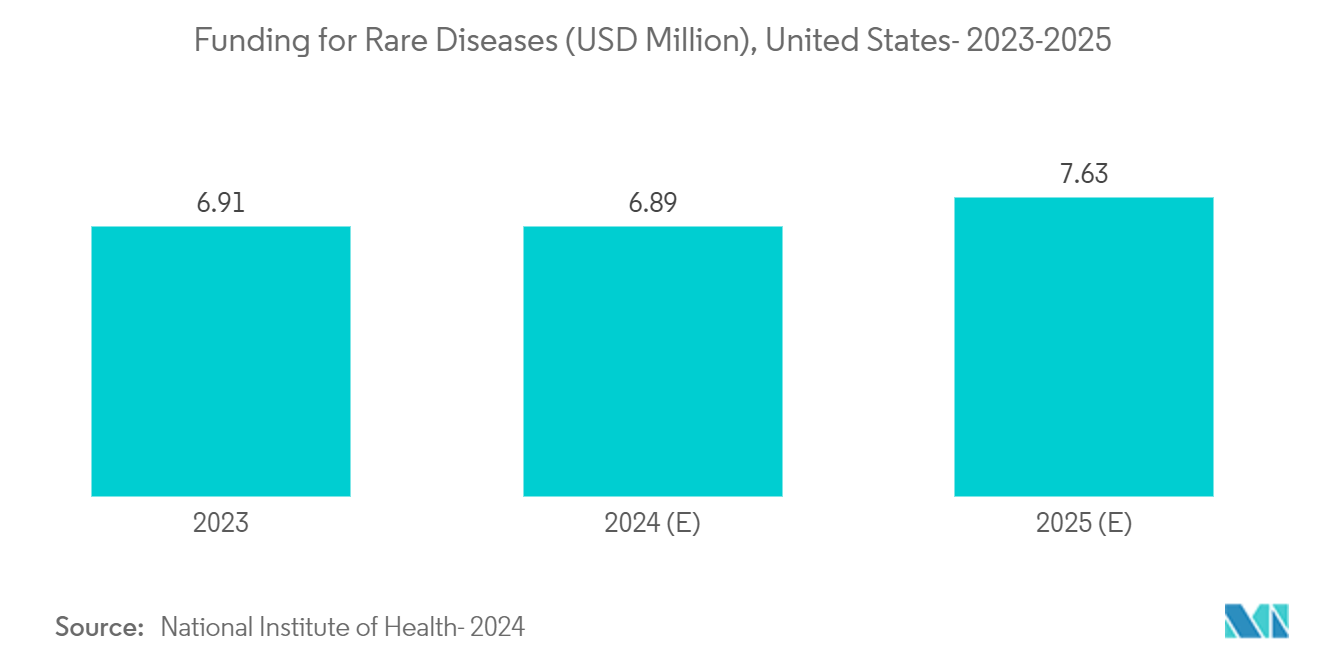
The market is further expected to benefit from supportive government legislation and ongoing funding activities for rare disease research. For instance, according to May 2024 data from the National Institute of Health, the research funding for rare disease research is projected to increase from USD 6,890 in 2024 to 7,637 in 2025. Therefore, such increased funding is likely to propel need for genome editing tools like CRISPR among others for therapeutics development, thereby supporting market growth.
Furthermore, the growing demand for synthetic genes and increasing demand for high-quality synthetic genes are further expected to propel demand for genome editing tools thereby supporting regional market growth. For instance, in September 2024 the Center for Health Security launched Gene Synthesis Screening Information Hub to prevent intentional misuse of synthetic nucleic acids owing to their increased need. Hence, such activities are further projected to foster market expansion over the coming years.
Therefore, factors such as, surge in burden of rare genetic disorders, growing funding activities and increasing demand for synthetic genes are expected to accelerate market expansion over study period.
Competitive Landscape
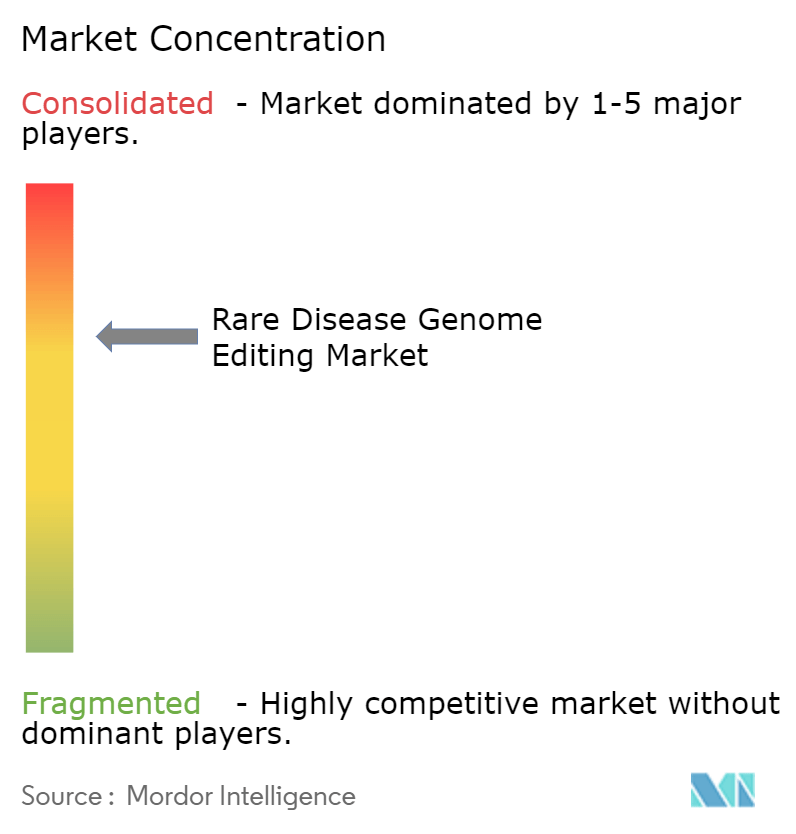
The rare disease genome editing market is semi-consolidated in nature with few market players. Companies operating in the market are engaged in several organic and inorganic developments to bolster their business avenues. Some of the key players operating in the rare disease genome editing market include, Danaher, Merck KGaA, Thermo Fisher Scientific Inc., New England Biolabs., Precision Biosciences among others.
Rare Disease Genome Editing Industry Leaders
-
Danaher
-
Thermo Fisher Scientific Inc.
-
Merck KGaA
-
New England Biolabs.
-
ACROBiosystems.
- *Disclaimer: Major Players sorted in no particular order
Recent Industry Developments
- January 2024: Danaher formed a partnership with the Innovative Genomics Institute (IGI) to advance the development of CRISPR-based therapies for rare genetic disorders. This collaboration will combine Danaher's extensive technological resources with IGI's academic expertise to drive innovation in this critical area.
- November 2023: Immune Deficiency Foundation demonstrated advancements in gene editing technologies, particularly CRISPR, indicating a promising pathway for developing effective treatments for Wiskott-Aldrich syndrome.
Global Rare Disease Genome Editing Market Report Scope
As per the scope of the report rare disease genome editing refers to the application of advanced techniques, such as CRISPR/Cas9, to directly modify genetic material in order to correct mutations associated with rare genetic disorders. This innovative approach aims to provide targeted therapies that address the root causes of these conditions, offering new hope for affected individuals.
The market is segmented based on technology, disease type, application, and end user. By technology, the market is segmented as (CRISPR)/Cas9, TALEN (Transcription Activator-Like Effector Nucleases), ZFN (Zinc Finger Nucleases), and others. Based on disease type the market is segmented as monogenic disorders, multifactorial disorders, and chromosomal disorders. Based on end user the market is segmented as biotechnology and pharmaceutical companies, and academic and government research institutes. Based on application, the market is segmented as therapeutics and research. By geography the market is segmented as, North America, Europe, Asia Pacific, Middle East and Africa and South America. The report also covers the market sizes and forecasts for the rare disease genome editing market in major countries across different regions. For each segment, the market size is provided in terms of value (USD).
| (CRISPR)/Cas9 |
| TALEN (Transcription Activator-Like Effector Nucleases) |
| ZFN (Zinc Finger Nucleases) |
| Others |
| Monogenic Disorders |
| Multifactorial Disorders |
| Chromosomal Disorders |
| Therapeutics |
| Research |
| Biotechnology and pharmaceutical companies |
| Academic and government research institutes |
| Hospitals |
| North America | United States |
| Canada | |
| Mexico | |
| Europe | Germany |
| United Kingdom | |
| France | |
| Italy | |
| Spain | |
| Rest of Europe | |
| Asia-Pacific | China |
| Japan | |
| India | |
| Australia | |
| South Korea | |
| Rest of Asia-Pacific | |
| Middle East and Africa | GCC |
| South Africa | |
| Rest of Middle East and Africa | |
| South America | Brazil |
| Argentina | |
| Rest of South America |
| By Technology | (CRISPR)/Cas9 | |
| TALEN (Transcription Activator-Like Effector Nucleases) | ||
| ZFN (Zinc Finger Nucleases) | ||
| Others | ||
| By Disease Type | Monogenic Disorders | |
| Multifactorial Disorders | ||
| Chromosomal Disorders | ||
| By Application | Therapeutics | |
| Research | ||
| By End User | Biotechnology and pharmaceutical companies | |
| Academic and government research institutes | ||
| Hospitals | ||
| Geography | North America | United States |
| Canada | ||
| Mexico | ||
| Europe | Germany | |
| United Kingdom | ||
| France | ||
| Italy | ||
| Spain | ||
| Rest of Europe | ||
| Asia-Pacific | China | |
| Japan | ||
| India | ||
| Australia | ||
| South Korea | ||
| Rest of Asia-Pacific | ||
| Middle East and Africa | GCC | |
| South Africa | ||
| Rest of Middle East and Africa | ||
| South America | Brazil | |
| Argentina | ||
| Rest of South America | ||
Key Questions Answered in the Report
How big is the Rare Disease Genome Editing Market?
The Rare Disease Genome Editing Market size is expected to reach USD 1.17 billion in 2025 and grow at a CAGR of 14.45% to reach USD 2.29 billion by 2030.
What is the current Rare Disease Genome Editing Market size?
In 2025, the Rare Disease Genome Editing Market size is expected to reach USD 1.17 billion.
Who are the key players in Rare Disease Genome Editing Market?
Danaher, Thermo Fisher Scientific Inc., Merck KGaA, New England Biolabs. and ACROBiosystems. are the major companies operating in the Rare Disease Genome Editing Market.
Which is the fastest growing region in Rare Disease Genome Editing Market?
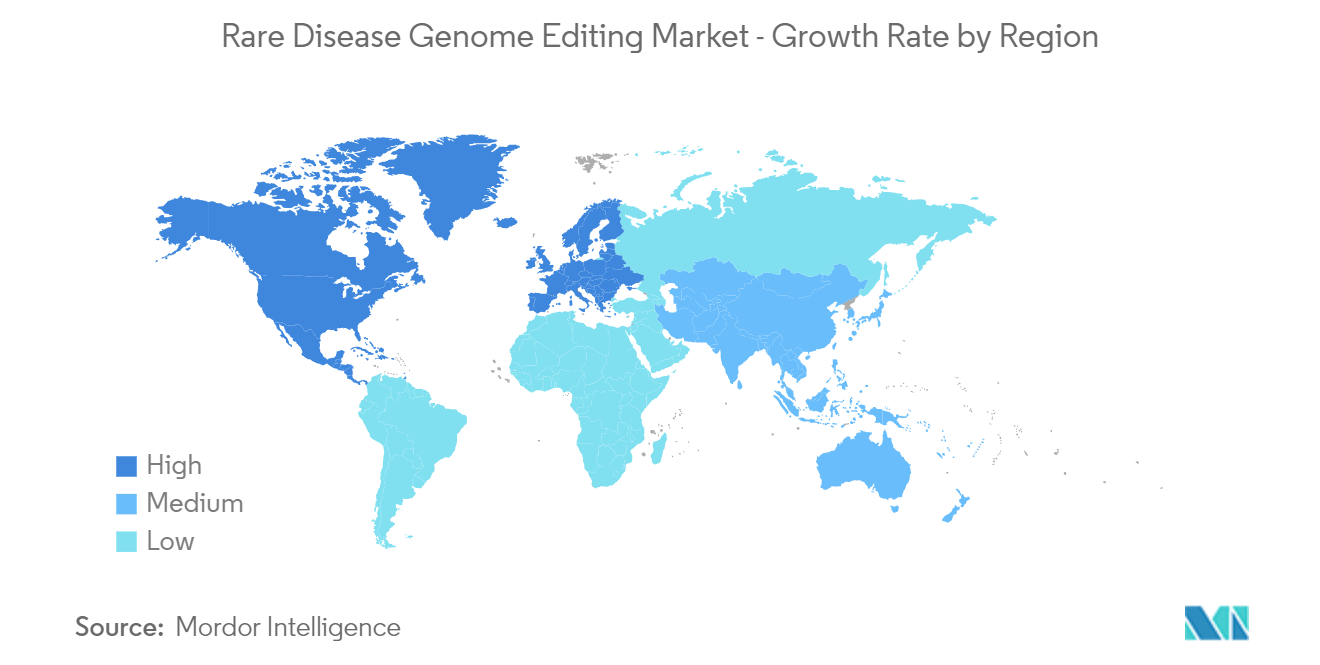
Asia Pacific is estimated to grow at the highest CAGR over the forecast period (2025-2030).
Which region has the biggest share in Rare Disease Genome Editing Market?
In 2025, the North America accounts for the largest market share in Rare Disease Genome Editing Market.
What years does this Rare Disease Genome Editing Market cover, and what was the market size in 2024?
In 2024, the Rare Disease Genome Editing Market size was estimated at USD 1.00 billion. The report covers the Rare Disease Genome Editing Market historical market size for years: 2019, 2020, 2021, 2022, 2023 and 2024. The report also forecasts the Rare Disease Genome Editing Market size for years: 2025, 2026, 2027, 2028, 2029 and 2030.
Rare Disease Genome Editing Market Report
Statistics for the 2025 Rare Disease Genome Editing market share, size and revenue growth rate, created by Mordor Intelligence™ Industry Reports. Rare Disease Genome Editing analysis includes a market forecast outlook for 2025 to 2030 and historical overview. Get a sample of this industry analysis as a free report PDF download.