
Probiotic Ingredients Market Size and Share
Market Overview
| Study Period | 2021 - 2031 |
|---|---|
| Market Size (2026) | USD 5.93 Billion |
| Market Size (2031) | USD 7.29 Billion |
| Growth Rate (2026 - 2031) | 4.22 % |
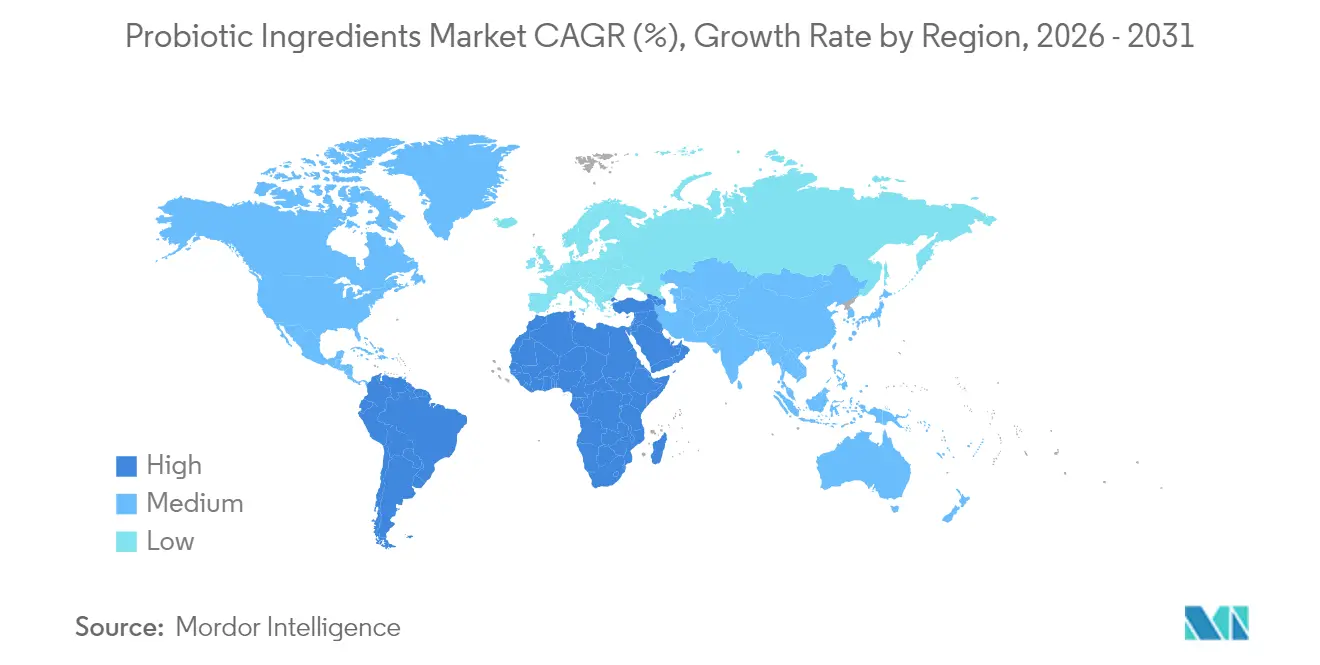
| Fastest Growing Market | South America |
| Largest Market | Asia Pacific |
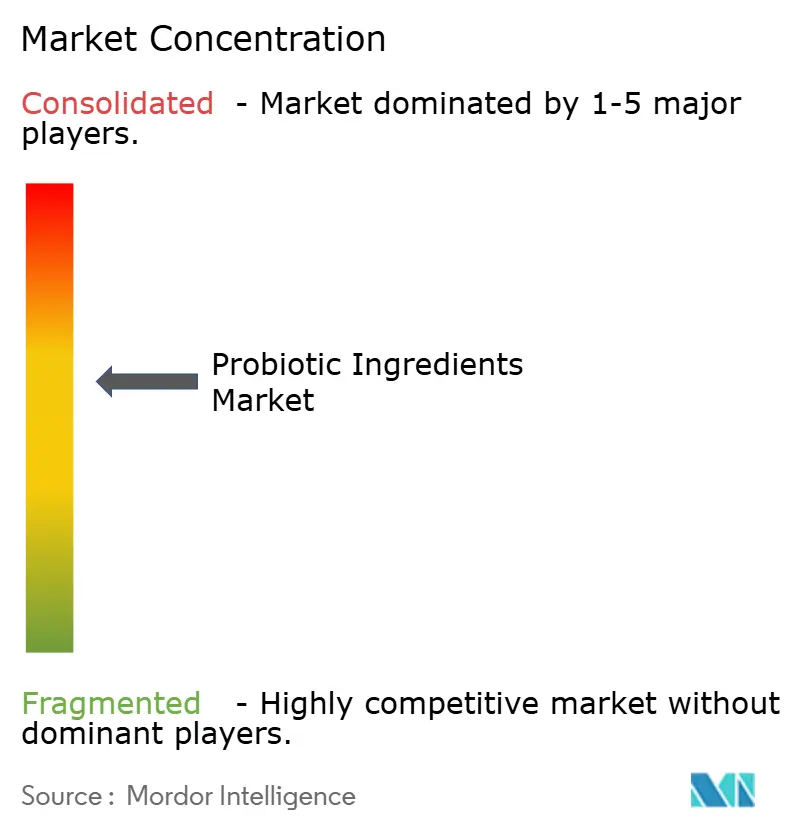
| Market Concentration | Medium |
Major Players
*Disclaimer: Major Players sorted in no particular order Image © Mordor Intelligence. Reuse requires attribution under CC BY 4.0. |
|
Probiotic Ingredients Market Analysis by Mordor Intelligence
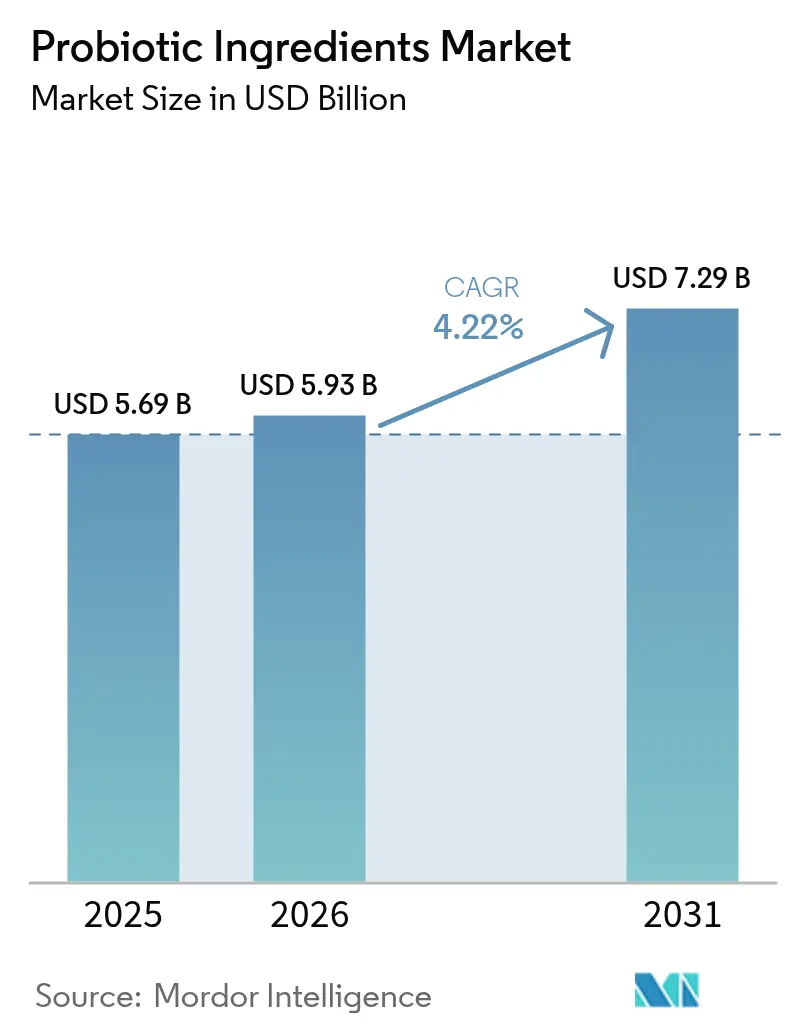
The probiotic ingredients market size is expected to grow from USD 5.69 billion in 2025 to USD 5.93 billion in 2026 and is forecast to reach USD 7.29 billion by 2031 at 4.22% CAGR over 2026-2031. The market growth is attributed to increased consumer adoption of preventive healthcare, continuous scientific validation of strain-specific benefits, and supportive regulatory frameworks. The dietary supplements segment is projected to grow at a 7.33% annual rate through 2030, driven by demand for personalized nutrition solutions. Besides, Asia-Pacific remains the primary market by volume, supported by an established consumer base and manufacturing infrastructure. Additionally, South America is forecasted to demonstrate the highest growth rate due to rising consumer awareness and increased purchasing power. Manufacturers are implementing technologies such as microencapsulation to enhance product stability and longevity. Industry consolidation continues, as demonstrated by the January 2024 formation of Novonesis, highlighting the requirement for operational scale in research, manufacturing, and distribution to maintain market competitiveness.
Key Report Takeaways
- By product type, bacteria-based formulations captured 77.05% of the probiotic ingredients market share in 2025, while yeast-based alternatives are projected to expand at 7.02% CAGR through 2031.
- By form, powder formats held 54.02% share of the probiotic ingredients market in 2025; liquid formats are forecast to post a 6.17% CAGR to 2031.
- By application, food and beverage accounted for 25.40% revenue in 2025, whereas dietary supplements are progressing at a 7.08% CAGR between 2026 and 2031.
- By geography, Asia-Pacific commanded 33.12% of revenue in 2025, and South America is expected to grow 4.95% annually from 2026 to 2031.
Note: Market size and forecast figures in this report are generated using Mordor Intelligence’s proprietary estimation framework, updated with the latest available data and insights as of 2026.
Market Trends and Insights
Drivers Impact Analysis of Probiotic Ingredients Market*
| Driver | (~) % Impact on CAGR Forecast | Geographic Relevance | Impact Timeline |
|---|---|---|---|
| Rising demand for digestive health products | +1.5% | Global, with higher impact in North America and Europe | Medium term (2-4 years) |
| Growing demand for functional foods and beverages | +1.0% | Global, with significant impact in Asia-Pacific | Short term (≤ 2 years) |
| Expanding application in animal feed for gut health | +0.6% | North America, Europe, Asia-Pacific | Medium term (2-4 years) |
| Popularity of plant-based and fermented probiotic products | +0.8% | Global, with higher impact in Europe and North America | Short term (≤ 2 years) |
| Innovations in probiotic formulations | +0.9% | Global, with higher impact in developed markets | Medium term (2-4 years) |
| Favorable regulations boost probiotic credibility | +0.7% | Europe, North America, with spillover to Asia-Pacific | Long term (≥ 4 years) |
| Source: Mordor Intelligence | |||


Rising Demand for Digestive Health Products
The increasing awareness of the integral relationship between gut health and overall wellness has significantly boosted the demand for digestive health products, with probiotics at the forefront of this growth. This paradigm shift from reactive to preventive healthcare has firmly established probiotics as a staple in daily wellness regimens. Advancements in scientific research continue to reveal their multifaceted benefits, extending beyond digestive support to include immune system enhancement and potential mental health improvements through the gut-brain axis. For instance, studies conducted by Stanford University have highlighted the evolving role of probiotics, uncovering new opportunities for market expansion [1]Source: Stanford University, "Probiotics, Prebiotics, and Postbiotics: What Are They and Why Are They Important?", stanford.edu . This scientific backing resonates with a more informed and health-conscious consumer base, which increasingly favors strain-specific probiotics designed to address targeted health concerns over generic, one-size-fits-all solutions. As the trend toward personalized nutrition accelerates, companies are strategically adapting their product development strategies to focus on clinically validated probiotic strains with proven efficacy. This approach not only meets consumer demand but also positions businesses to thrive in an increasingly competitive and dynamic market.
Growing Demand for Functional Foods and Beverages
The probiotic market has expanded beyond traditional dairy products into functional foods and beverages, reflecting consumer demand for health-enhancing food products. The market growth is driven by new product development, including probiotic-enriched granola bars, salad dressings, plant-based yogurts, and fermented beverages such as kombucha and kefir. Companies like Danone and PepsiCo are diversifying their probiotic product portfolios with convenient formats for health-conscious consumers, while new market entrants focus on specific consumer segments with gut health products. Also, advancements in microencapsulation technology have enhanced probiotic stability during manufacturing, extended product shelf life, and improved survival through digestion. This technology enables the integration of live cultures into products with high heat or acidity, such as baked goods and citrus beverages, while maintaining their efficacy. Companies like Ganeden, acquired by Kerry Group, have developed shelf-stable probiotic products, improving distribution efficiency and market penetration, particularly in developing regions. The integration of convenience, taste, and digestive health benefits is increasing consumer adoption of probiotic products.
Expanding Application in Animal Feed for Gut Health
Driven by regulatory pressures to curtail antibiotic use in livestock, the shift towards probiotics in animal nutrition is carving out a significant market opportunity. Research from Penn State University in 2024 highlights that probiotic feed additives not only bolster intestinal health in poultry but also enhance growth rates, positioning them as a credible substitute for traditional growth-promoting antibiotics [2]Source: The Pennsylvania State University, "Probiotic Feed Additive Boosts Growth, Health in Poultry in Place of Antibiotics", psu.edu. This trend gains momentum as global regulations tighten their grip on antibiotic use in animal husbandry, amplifying the demand for alternatives that uphold production efficiency and address rising consumer concerns over antibiotic resistance. The animal feed probiotics market is evolving, with a pronounced emphasis on strain selection and formulation, tailoring products to meet the unique needs of specific species and production hurdles. Illustrating the segment's strategic significance, recent collaborations, like the April 2024 partnership between BIO-CAT and Caldic North America, aim to roll out OPTIFEED-branded probiotic solutions in the companion animal health arena.
Popularity of Plant-based and Fermented Probiotic Products
As plant-based diets gain traction and probiotics showcase their health benefits, a burgeoning market segment emerges, catering to diverse consumer needs. These innovative products resonate with lactose-intolerant individuals, vegans, and those pursuing sustainable diets, broadening the market's reach beyond the conventional dairy-centric probiotic audience. Noteworthy innovations include probiotic-infused plant milks, fermented vegetables, and even fresh produce, with Israeli startup Wonder Veggies set to debut the world's inaugural probiotic-infused fresh produce in 2025. Additionally, advancements in fermentation technology are enabling the development of more stable and effective probiotic strains, ensuring longer shelf life and enhanced functionality. Fermenting plant foods not only boosts their nutritional value but also enhances nutrient absorption, offering a plethora of health advantages beyond just probiotics. The growing consumer awareness of gut health and its link to overall well-being further drives demand in this market segment.
Restraints Impact Analysis of Probiotic Ingredients Market*
| Restraint | (~) % Impact on CAGR Forecast | Geographic Relevance | Impact Timeline |
|---|---|---|---|
| Limited shelf life and stability challenges | -0.7% | Global, with higher impact in regions with less developed cold chain infrastructure | Short term (≤ 2 years) |
| Storage and distribution challenges in hot climates | -0.5% | Middle East and Africa, South Asia, Latin America | Medium term (2-4 years) |
| Alternative health solutions overshadow probiotics | -0.4% | Global, with higher impact in developed markets | Long term (≥ 4 years) |
| Premium pricing limits adoption in price-sensitive markets | -0.6% | Asia-Pacific emerging markets, Latin America, Africa | Medium term (2-4 years) |
| Source: Mordor Intelligence | |||
Limited Shelf Life and Stability Challenges
Maintaining probiotic organism viability throughout shelf life represents a significant operational challenge that limits market growth. The World Health Organization (WHO) and Food and Agriculture Organization (FAO) require probiotics to contain 10^6 to 10^7 CFU of viable bacteria to provide health benefits. However, maintaining these levels from production through consumption remains a key operational issue. Besides, real-time PCR stability analyses demonstrate that viable counts frequently decrease below stated label claims, particularly in expired products, impacting consumer trust and product performance. This operational constraint specifically affects smaller manufacturers with restricted access to stabilization technologies, while larger companies leverage their established formulation capabilities. The industry has implemented technical solutions, including microencapsulation, protective delivery systems, and moisture-controlling packaging, to improve probiotic viability. However, these solutions increase operational complexity and manufacturing costs.
Storage and Distribution Challenges in Hot Climates
In regions with hot climates and limited cold chain infrastructure, temperature sensitivity poses significant barriers to market expansion. Elevated temperatures during transportation and storage compromise probiotic viability. Research highlights that fluctuations in temperature are among the most significant stressors impacting product efficacy. This challenge is especially pronounced in emerging markets located in hotter regions. These markets, however, present substantial growth opportunities, driven by rising health awareness and increasing disposable incomes. Thus, manufacturers, aiming to broaden their geographic reach, have made the development of thermostable probiotic formulations a strategic priority. Their research emphasizes strain selection for heat resistance and innovative formulation techniques. Furthermore, recent advancements in biopolymer encapsulation methods hold promise for enhancing probiotic delivery in challenging conditions, potentially alleviating this market constraint. Economically, these challenges not only lead to missed sales opportunities but also escalate production costs. This is due to the need for overages (adding excess probiotics to counteract die-off) and specialized packaging solutions.
*Our forecasts treat driver/restraint impacts as directional, not additive. The impact forecasts reflect baseline growth, mix effects, and variable interactions.
Probiotic Ingredients Market Segment Analysis
By Product Type:
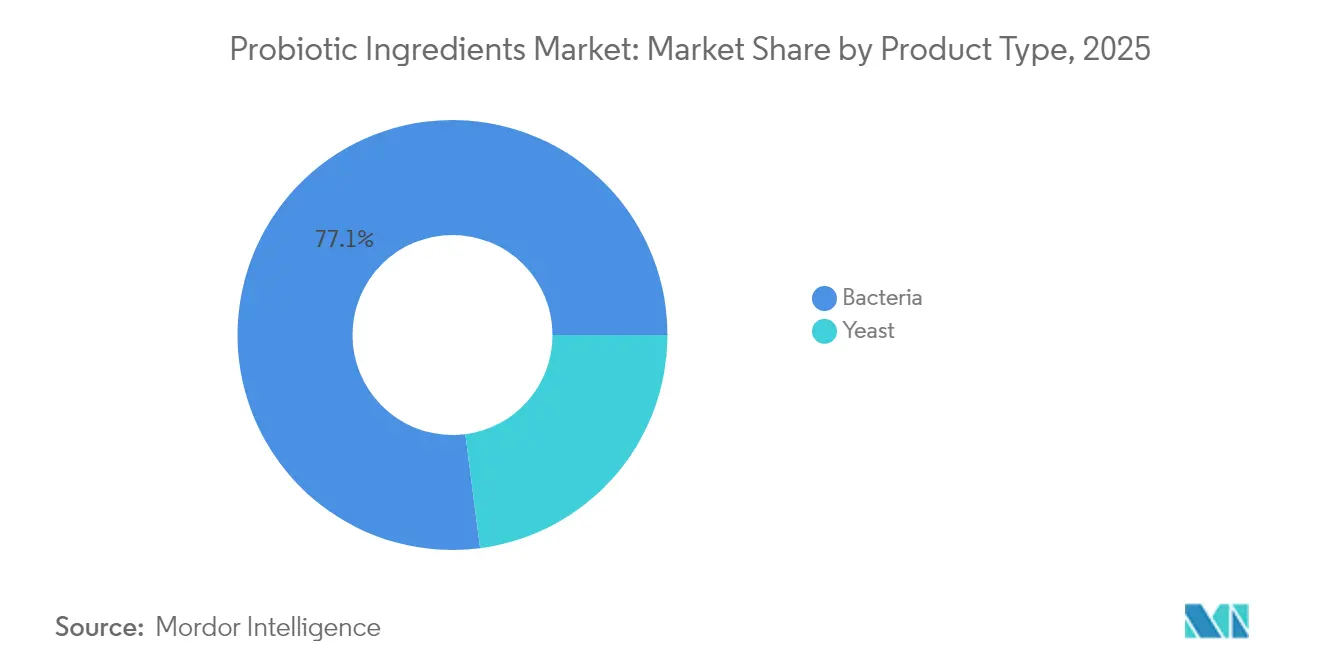
Bacteria Dominates Through Established ApplicationsIn 2025, bacteria-based probiotics dominate the market, holding a commanding 77.05% share. Lactobacillus and bifidobacterium strains, known for their safety and health benefits, are the backbone of most commercial formulations. This stronghold of bacterial probiotics is rooted in their extensive research history and consumer trust, especially in traditional uses like yogurt and fermented foods. Recent breakthroughs in identifying and characterizing bacterial strains have broadened their application scope. Next-generation probiotics (NGPs) are now emerging, targeting specific health issues beyond just digestive wellness. A notable frontier in this realm is the rise of precision microbiome therapies. Here, researchers harness cutting-edge technologies, including genomics and AI, to scrutinize microbiota, crafting personalized treatments that pinpoint specific core probiotics to bolster health and tackle diseases.
Yeast-based probiotics, though commanding a smaller slice of the market, are on an upswing, boasting a robust 7.02% CAGR from 2026 to 2031. This growth is attributed to their unique advantages in select applications. Leading this yeast segment are Saccharomyces cerevisiae and Saccharomyces boulardii. Research underscores their resilience in gastrointestinal settings and their potential to ease lactose intolerance. Yeast cells come with inherent stability perks, showcasing resistance to antibiotics, bile salts, and acidic environments. This resilience gives them an edge in applications where bacterial probiotics might struggle. Current studies on yeast-based probiotics in dairy highlight the critical nature of strain selection, focusing on gastrointestinal survival, safety, and unique probiotic traits, hinting at a vibrant future for innovation in this domain.


By Form:
Powder Formats Maintain Market LeadershipIn 2025, powder forms command a dominant 54.02% share of the probiotics market, largely owing to their extended shelf stability and manufacturing benefits. The stronghold of powder formats is underscored by a well-established production infrastructure and consumer familiarity, especially in dietary supplements. Here, capsules, tablets, and sachets are the go-to delivery systems. Additionally, technological strides, such as lyophilization (freeze-drying) and microencapsulation, have bolstered powder stabilization, reinforcing this segment's market leadership by overcoming past stability hurdles. A May 2024 study in Plant Foods for Human Nutrition highlighted the innovative potential of powders, showing that microencapsulated probiotics can remain viable for up to five months at room temperature when paired with low water activity fillings like peanut butter.
Liquid probiotics, on the other hand, are on a rapid ascent, boasting a 6.17% CAGR from 2026 to 2031. This surge is fueled by emerging studies underscoring their enhanced bioavailability and effectiveness. A pivotal December 2024 study in the Journal of Biochemistry and Physiology unveiled that juice-based probiotics outshine their dry powder counterparts in acidic stomach conditions. The findings were striking: juice-based probiotics exhibited a 50-fold better survival rate immediately, a staggering 3,700 times better after 30 minutes, and 2,188 times better after an hour, as reported by SciTechnol. This superior survivability is linked to factors like cellular hydration, the juice's buffering capacity, and the presence of glucose, highlighting the inherent advantages of liquid delivery systems. Innovations in the liquid segment are noteworthy, with advancements like shelf-stable liquid formulations and unique product offerings such as probiotic-infused beverages, salad dressings, and cooking oils, broadening consumption opportunities beyond the conventional supplement realm.
By Application:
Food and Beverage Maintains Market LeadershipIn 2025, food and beverage applications dominate the probiotics market, holding a 25.40% share. Traditionally, this category has served as the primary gateway for probiotic consumption. While yogurt has long been the flagship product, recent innovations have broadened the probiotic landscape to encompass a variety of food categories. These now include beverages, infant formulas, and even non-dairy options. This shift towards embedding probiotics in everyday foods resonates with consumers' preferences for deriving nutrients from their diet rather than relying on supplements. This trend has opened avenues for manufacturers to craft functional foods boasting enhanced value propositions. Noteworthy innovations, such as probiotic-infused salad dressings and new whole milk kefir flavors, were unveiled by Lifeway Foods at the 2025 Natural Products Expo West, underscoring the segment's dynamic evolution.
Dietary supplements are emerging as the fastest-growing segment, boasting a 7.08% CAGR from 2026 to 2031. This surge is fueled by a more discerning consumer base, increasingly aware of specific probiotic strains and their associated health benefits. This trend underscores a broader movement towards personalized nutrition, with consumers now gravitating towards supplements tailored for distinct health concerns, rather than generic wellness. The dietary supplement format stands out for its dosage precision and stability, empowering manufacturers to provide clinically significant amounts of targeted probiotic strains. Regulatory milestones, like the Food Safety Authority of Ireland's directives on probiotics in food supplements in 2024, highlight the segment's burgeoning prominence. These guidelines set forth safety benchmarks for probiotics, emphasizing criteria such as a proven history of safe use, precise species-level identification, and the absence of infectious traits, potentially shaping global regulatory standards.

Geography Analysis
APAC Probiotic Ingredients Market
In 2025, the Asia-Pacific region commands a dominant 33.12% share of the probiotic ingredients market, fueled by cultural affinities for fermented foods, heightened health awareness, and brisk economic growth. Within this landscape, China, Japan, and India emerge as the primary growth engines, each showcasing unique market dynamics and consumer inclinations. Japan's deep-rooted probiotic traditions pave the way for ongoing innovations. In contrast, China's burgeoning middle class is opening doors to premium probiotic offerings. Unlike Europe, where regulations can be stringent, the Asia-Pacific's more lenient regulatory stance facilitates broader probiotic marketing, bolstering market growth. A July 2024 study in Frontiers in Microbiology underscores the pivotal role of gut microbiota and probiotics in leukemia treatments among Asian demographics. The findings hint at probiotics' potential in alleviating chemotherapy's side effects and enhancing patient recovery. Such insights not only broaden the perception of probiotics beyond mere digestive aids but also spotlight burgeoning avenues in medical nutrition and adjunctive therapies.
South America Probiotic Ingredients Market
South America, starting from a smaller market size than Asia-Pacific or North America, is on a rapid ascent, projected to grow at a 4.95% CAGR from 2026 to 2031. Brazil, with its strong dairy sector and a populace increasingly attuned to health, stands as the region's probiotic powerhouse. While the South American market is buoyed by rising yogurt consumption and a burgeoning functional food segment, economic fluctuations in certain nations pose hurdles. As the probiotic market burgeons, South American regulatory bodies are adapting, with Brazil often leading the way and influencing its neighbors. A special feature in SciELO Press Releases spotlights the innovative edge of probiotic-infused functional foods, underscoring their pronounced health benefits. This sentiment resonates strongly in Brazil and Argentina, where a surge in gut health awareness is prompting manufacturers to roll out products that align with local tastes and dietary habits.
North America and EMEA Probiotic Ingredients Market
In North America, the probiotic ingredients market is bolstered by high consumer awareness of digestive and immune health, a strong presence of functional food and supplement brands, and ongoing innovations in delivery formats that appeal to diverse consumer groups. Moreover, the United States market exhibits substantial growth in probiotic supplement consumption. According to the Council for Responsible Nutrition, 74% of Americans utilized dietary supplements, including probiotics, in 2023 . This market behavior reflects the systematic integration of probiotic ingredients into mainstream dietary supplement formulations, driven by increasing consumer demand for digestive health products. Additionally, Europe constitutes a significant market segment due to its established fermented food industry and regulatory framework supporting probiotic health claims, contributing to growth in both mainstream and specialty segments. The Middle East and Africa market demonstrates substantial growth potential, driven by heightened health awareness, increasing urbanization, and strategic investments from food and beverage manufacturers responding to consumer demand for gut health products.

Regulatory Landscape
Regulation for probiotic ingredients hinges on product classification (food, dietary supplement, novel food, animal feed additive) and the type of claim made, which results in different compliance paths across regions. In the European Union, probiotic-related communications are constrained by the health-claims framework under Regulation (EC) No 1924/2006, with authorized claims listed through Commission Regulation (EU) No 432/2012 and assessed by the European Food Safety Authority (EFSA). This structure pushes suppliers toward strain-level characterization and dossiers aligned to EFSA expectations, particularly when companies pursue differentiated, strain-specific positioning.
In the United States, the FDA does not define probiotics as a distinct category, so requirements depend on intended use and the claims made, and foods or dietary supplements generally do not require premarket approval for probiotics when they comply with applicable rules. FDA draft guidance (2018) on quantitative labeling for dietary supplements containing live microbials adds a practical consideration for CFU-based declarations. In China, national food safety standards such as GB 2760-2024 govern food additive safety, while additional standards and health food raw material definitions are used for probiotic preparations, which increases the importance of aligning strain documentation and permissible-use conditions to the relevant standard pathway.
Value Chain Analysis
The probiotic ingredients value chain starts with strain discovery, selection, and IP, then moves to strain identification and the creation of master and working cell banks. Midstream activities focus on industrial-scale fermentation and biomass harvesting, followed by downstream stabilization steps such as freeze-drying/lyophilization, blending, and microencapsulation to protect viability through processing and shelf life. The chain ends with packaging (often moisture- and oxygen-barrier formats), cold chain or controlled logistics where required, and distribution to application manufacturers in food and beverage, dietary supplements, and animal nutrition.
Key value-chain pressure points include viability loss during handling, moisture sensitivity during storage and transit, and capacity constraints in specialized drying and stabilization. Regulatory documentation has also become more embedded into the chain as a non-tariff requirement, particularly for cross-border trade and for differentiated claims. EFSA adoption of horizontal guidance for characterization and risk assessment of microorganisms in September 2025 is a concrete anchor that affects dossier strategy and supporting data packages. Ingredient leaders increasingly pair upstream strain assets with formulation and application know-how, while contract manufacturers and regional fill-finish networks are used to reduce lead times and manage temperature and humidity exposure.
Competitive Landscape
The probiotic ingredients market is moderately consolidated, with a few players vying for a market share. Some of the leading players in the market, including Novonesis A/S, Kerry Group plc, DSM-Firmenich, and International Flavors & Fragrances Inc., dominate the probiotic ingredients market. These industry leaders are heavily investing in research and development, with a focus on unveiling groundbreaking products. Their efforts are concentrated on pioneering next-generation probiotic microorganisms and refining delivery systems. Innovations abound in the sector, ranging from nano-encapsulated probiotic cultures to multi-strain formulations and tailored probiotic solutions.
In response to rising demand, companies are ramping up production capabilities, establishing new manufacturing units, and forming strategic partnerships. Aligning with evolving consumer preferences, market leaders are emphasizing the development of vegan-friendly, non-GMO, and clean-label probiotic ingredients. Their agility is underscored by investments in advanced fermentation facilities and state-of-the-art production technologies. Moreover, they're expanding not just through organic growth but also via strategic acquisitions.
Emerging application areas like skin health, mental wellness, and metabolic health present white space opportunities. While preliminary research hints at the probiotic potential in these domains, commercial development remains sparse. The U.S. Food and Drug Administration (FDA) oversees animal food products under the Federal Food, Drug, and Cosmetic Act (FD&C Act). The Center for Veterinary Medicine (CVM) plays a pivotal role, ensuring these products meet safety standards. Such regulatory oversight shapes competitive strategies in the probiotics market's animal feed segment, highlighting the critical nature of proper labeling and safety assessments.
Probiotic Ingredients Industry Leaders
-
Novonesis A/S
-
Kerry Group plc
-
DSM-Firmenich
-
International Flavors & Fragrances Inc.
-
Lallemand Inc.
- *Disclaimer: Major Players sorted in no particular order
Probiotic Ingredients Market Companies Covered in this Report
- Novonesis A/S
- Kerry Group plc
- International Flavors & Fragrances Inc.
- DSM-Firmenich
- Lallemand Inc.
- Archer Daniels Midland Company
- Lactina Ltd.
- Probiotical S.p.A.
- Symrise AG (Probi AB)
- Advanced Enzyme Technologies Ltd.
- Royal FrieslandCampina N.V.
- Synbio Tech Inc.
- Sami-Sabinsa Group
- Greenfiber International S.A.
- Winclove Probiotics B.V.
- Marubeni Corporation (Orffa International Holding B.V.)
- Associated British Foods PLC
- Nutris
- Sanzyme Biologics Private Limited
- Rajvi Enterprise

Market Opportunities and Future Outlook
Expanding capacity and local manufacturing for probiotic ingredients, along with finished format development, is an active opportunity as brands tighten control of viability, lead times, and compliance. In the United States, Vitaquest opened a new probiotics manufacturing suite in Parsippany, New Jersey in February 2026 and reported a 100% increase in probiotic manufacturing capacity. Vidya also opened a 28,750-square-foot probiotic manufacturing facility in Bunnell, Florida in April 2026, with separated production for spore-forming and non-spore-forming lines. These investments support faster iteration across powder and liquid formats and improve handling for stability-sensitive strains and blends.
Another opportunity is strain and format innovation aimed at reducing stability constraints and widening applications beyond traditional fermented dairy. Product and regulatory anchors support this direction: Novonesis launched Bovacillus in April 2026 as a feed-stable Bacillus probiotic for lactating dairy cows in Europe, reflecting continued supplier focus on animal nutrition where heat stability and measurable performance attributes drive adoption. At the same time, regulatory rigor in major markets creates whitespace for suppliers that can standardize strain characterization and safety packages across jurisdictions, supported by EFSA updating its QPS list in January 2026 based on notifications received in 2025. Together, capacity build-out, format engineering (including split-production and stabilization), and strain-specific documentation improve the path to commercialization across dietary supplements, functional foods, and feed applications.
Recent Industry Developments in Probiotic Ingredients Market
- June 2026: Novonesis signed a Memorandum of Understanding with UndoAge in Beijing to advance commercialization of proprietary strains in China, including Pylopass-based postbiotics for digestive wellness and Urex-based probiotics for womens health. The collaboration strengthens local route-to-market options and supports product development aligned to Chinas strain documentation and commercialization requirements.
- March 2026: Kerry Group plc received regulatory approval in Indonesia for BC30 (Bacillus coagulans GBI-30, 6086) to carry a live culture claim under PERBPOM No. 38/2023. The approval enables broader functional food and beverage and supplement positioning in a large Asia-Pacific market where label claims influence brand differentiation and ingredient pull-through.
- November 2024: Symrise completed the acquisition of a 90% stake in a Swedish probiotics company, expanding its capabilities in probiotics and functional ingredients. The move deepened Symrises platform in gut health and immunity-oriented solutions and improved its ability to serve global customers with integrated flavor, nutrition, and probiotic ingredient offerings.


Probiotic Ingredients Market Report Scope and Research Methodology
Market Definition and Coverage
The probiotic ingredients market is defined as revenues earned from selling live probiotic cultures and related microbial inputs that are used by manufacturers to make food, beverage, dietary supplement, and animal nutrition products.
Scope exclusions: We exclude finished consumer products where the probiotic ingredient value cannot be separated cleanly from the final retail price.
Segments Covered in This Report
-
By Product Type
-
Bacteria
- Lactobacillus
- Bifidobacterium
- Others
-
Yeast
- Saccharomyces Cerevisiae
- Saccharomyces Boulardi
- Others
-
Bacteria
-
By Form
- Powder
- Liquid
-
By Application
-
Food and Beverage
- Yogurt
- Infant Formula
- Probiotic Drinks
- Other Food and Beverages
- Dietary Supplements
- Animal Feed
-
Food and Beverage
-
By Geography
-
North America
- United States
- Canada
- Mexico
- Rest of North America
-
South America
- Brazil
- Argentina
- Colombia
- Chile
- Peru
- Rest of South America
-
Europe
- Germany
- United Kingdom
- Italy
- France
- Netherlands
- Poland
- Belgium
- Sweden
- Spain
- Rest of Europe
-
Asia-Pacific
- China
- India
- Japan
- Australia
- Indonesia
- South Korea
- Thailand
- Singapore
- Rest of Asia-Pacific
-
Middle East and Africa
- South Africa
- Saudi Arabia
- United Arab Emirates
- Nigeria
- Egypt
- Morocco
- Turkey
- Rest of Middle East and Africa
-
North America
Data Sources, Market Sizing, and Validation
Desk Research
Desk research is used to build the fact base around probiotic culture production, trade, and usage, and to map how value flows from ingredient suppliers to end product makers. We referred to public sources such as FDA and USDA pages for food and supplement context, European Commission and EFSA materials for claims and safety guidance, FAOSTAT for livestock and feed indicators, and UN Comtrade for cross-border movements that can signal ingredient shipments.
Alongside that, we reviewed company annual reports, investor presentations, press releases, and reputable business press to understand capacity expansions, strain portfolios, and shifts in application mix. We also used select paid subscriptions for company financials and intelligence, patent databases, and shipment-level import and export data to check coverage gaps where public statistics are not reported at the cut needed for the ingredient market. These desk sources are not exhaustive, and we used additional public references for data collection, validation, and clarification during the study.
Primary Interviews and Surveys
Primary work focused on validating demand by application, price realization by form, and the practical split between bacteria-based and yeast-based probiotic ingredients. We spoke with ingredient suppliers, contract manufacturers, food and supplement formulators, and animal nutrition stakeholders across APAC, EMEA, and the Americas, then we re-checked any large variances against the secondary inputs before finalizing assumptions.
Distribution of primary research fieldwork respondents
| Company type | Respondent position | Region |
|---|---|---|
| Top tier: 32% | CXOs: 13% | APAC: 50% |
| Mid tier: 53% | Functional/Unit leaders: 30% | EMEA: 30% |
| Smaller Players: 15% | Managers: 57% | Americas: 20% |
Market-Sizing & Forecasting
Sizing starts with a top-down build where food, supplement, and feed output indicators are used to reconstruct the demand pool for probiotic culture inputs by region, and then spend is converted into value using realistic inclusion rates and average pricing. To keep the totals grounded, we corroborate the result with selective bottom-up approximations, such as rolling up a sampled set of supplier revenues and using channel checks on typical price per kilogram for powder versus liquid formats.
Key inputs used in the model include the mix of applications (food and beverage, dietary supplements, and animal feed), the split between bacteria and yeast based ingredients, form factors (powder versus liquid), regional adoption patterns, and observed price movement tied to strain complexity and stability requirements, including microencapsulation where relevant. Where direct observations are thin for smaller countries, we bridge gaps using proxy indicators like packaged food output, supplement category growth signals, and livestock feed production, and then we adjust after expert feedback.
For forecasting, scenario analysis is used around adoption and price progression, since growth is not only volume-driven and regulatory and claims practices can influence uptake. Assumptions are aligned to what practitioners expect for strain pipelines, manufacturing scale-up timing, and application expansion, and then they are rolled into annual projections with clear steps that can be replicated.
Data Validation & Update Cycle
Validation is done through multiple checks so that one data stream does not drive the final number by itself. We compare model outputs with independent signals like regional supplement sales direction, fermented food activity, and trade and shipment patterns, then we investigate any outliers that break known price or usage logic.
A second analyst review is used to re-check formulas, currency conversions, and year alignment, followed by targeted re-contact with interviewees when the variance remains material. Reports are refreshed annually, and interim updates are made when major events occur such as large mergers, capacity additions, or regulatory changes. Before delivery, a final pass is completed so clients receive the latest updated view.
Mordor Intelligence's Probiotic Ingredients Market Sizing Compared With Other Published Estimates
Published market values for probiotic ingredients can differ even when everyone is looking at the same industry, because the scope and the pricing logic are not always set up in the same way. Differences usually show up around what is counted as an ingredient versus a finished product, which end uses are included, and how regional pricing is converted into USD for a given year.
In this market, the largest gap drivers are whether estimates include finished probiotic supplements and retail probiotic foods, how they handle non-bacterial categories like yeast, and how they treat forms like powders versus liquids when pricing is averaged. The update cadence also matters, since ingredient ASPs can shift with strain mix and stability requirements, and older assumptions can overstate or understate the current year total.
Benchmark comparison
| Source | Market Size | Gaps in Research Methodology |
|---|---|---|
| Mordor Intelligence | USD 5.93 B (2026) | |
| Global Consultancy A | USD 8.20 B (2026) | This figure uses a wider ingredient interpretation that can also capture capsule-ready inputs and adjacent probiotic related value streams, which tends to lift the 2026 total versus a stricter culture-ingredient only cut. |
| Industry Publisher B | USD 6.10 B (2025) | This estimate is anchored on a 2025 base year with a different regional weighting and may apply a broader dry versus liquid price average, which can shift the total when converted into USD at a single-year exchange rate. |
The spread is mainly explained by how tightly the model separates ingredient revenue from finished probiotic products, plus the year used for currency and pricing alignment, and these choices are applied consistently in the probiotic ingredients build by Mordor Intelligence.


Key Questions Answered in the Report
What is the current size of the probiotics market?
The probiotics market stands at USD 5.93 billion in 2026 and is projected to reach USD 7.29 billion by 2031.
Which application is growing the fastest?
Dietary supplements are expanding at a 7.08% CAGR through 2031 as consumers pursue personalized strain-specific benefits.
Why are yeast-based probiotics gaining attention?
Yeast strains like Saccharomyces boulardii show superior gastric resilience and are advancing at 7.02% CAGR, opening avenues in gut, immune, and skin health.
Which region leads the probiotics market?
Asia-Pacific accounts for 33.12% of global revenue owing to strong cultural acceptance of fermented foods and rising disposable incomes.
Page last updated on:


 Your data is secure and never sold or shared.


