
Photo Interrupter Market Size and Share
| Study Period | 2019 - 2030 |
| Market Size (2025) | USD 6.23 Billion |
| Market Size (2030) | USD 13.67 Billion |
| CAGR (2025 - 2030) | 17.03% |
| Fastest Growing Market | North America |
| Largest Market | Asia Pacific |
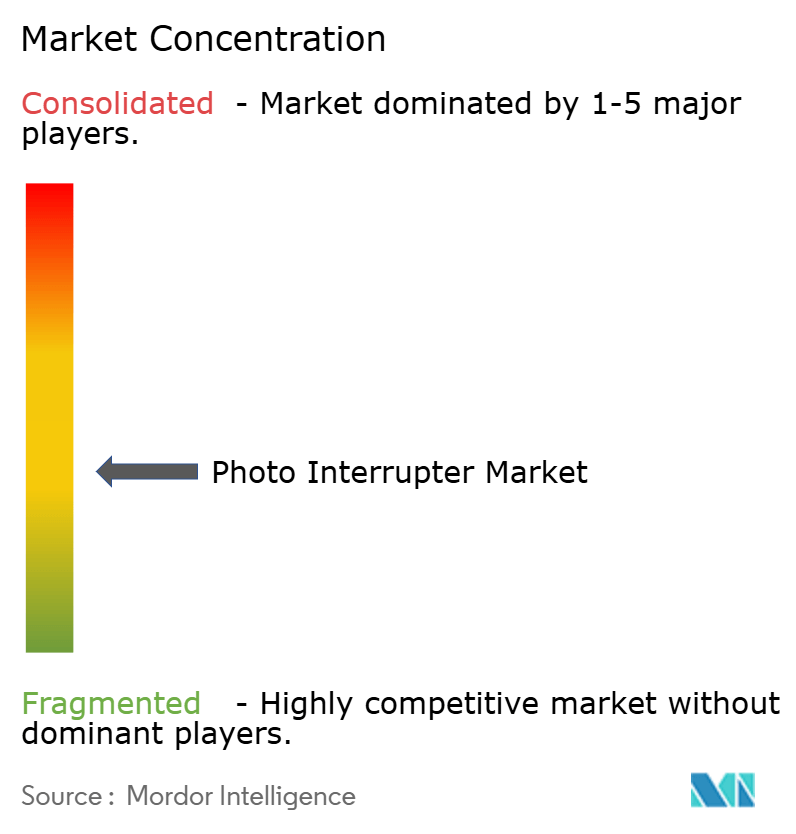
| Market Concentration | Medium |
Major Players *Disclaimer: Major Players sorted in no particular order |
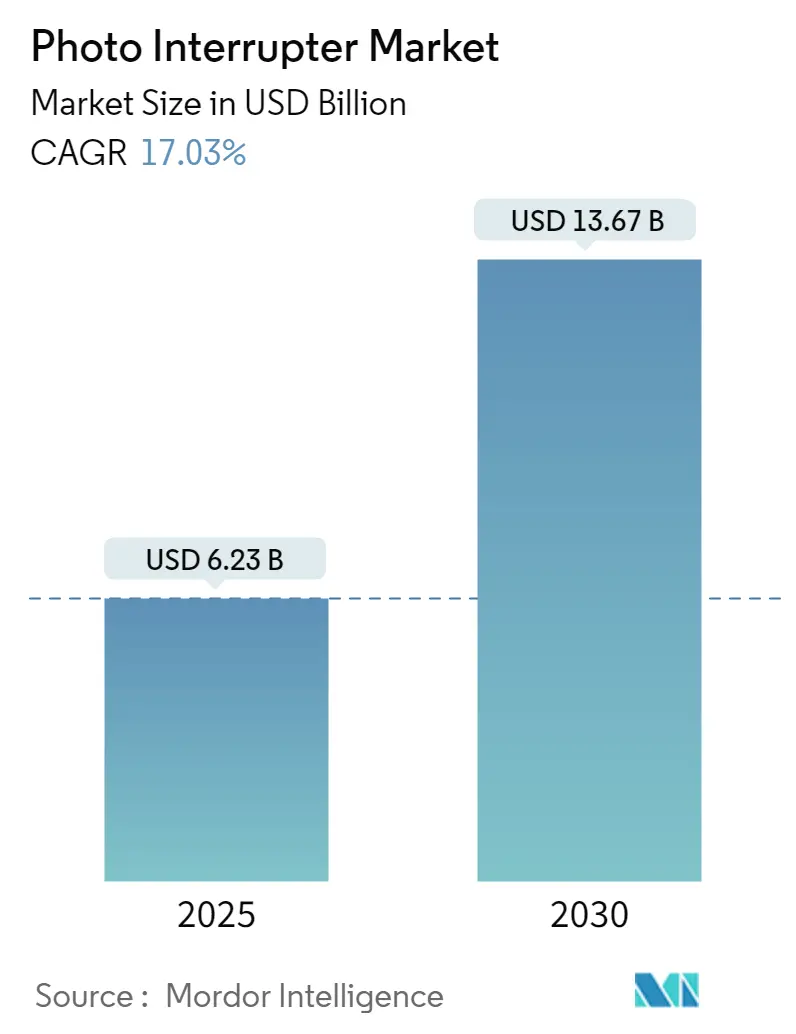
Photo Interrupter Market Analysis by Mordor Intelligence
The Photo Interrupter Market size is estimated at USD 6.23 billion in 2025, and is expected to reach USD 13.67 billion by 2030, at a CAGR of 17.03% during the forecast period (2025-2030).
- The photo interrupter market is experiencing steady growth due to its broad applications across industries such as consumer electronics, automotive, healthcare, and industrial automation. A photo interrupter is a sensor device that detects the presence, absence, or position of an object by interrupting a light beam. Its compact design and high precision make it a preferred choice for a wide range of applications, including object detection, counting, and motion control. With the growing demand for automated and smart systems, the adoption of photo interrupters is rising, especially in systems requiring accurate feedback and control.
- In consumer electronics, photo interrupters play a crucial role in devices like printers, scanners, and optical drives, where precise position and motion detection are essential. The increasing integration of such devices into homes and offices is driving demand for these sensors. Similarly, in the automotive sector, photo interrupters are used in applications such as gear position sensing, pedal position detection, and anti-lock braking systems. The push toward electric vehicles (EVs) and advanced driver-assistance systems (ADAS) is further fueling their adoption in the automotive industry.
- The industrial automation sector is another significant driver of the photo interrupter market, as these sensors are used in conveyor belt systems, robotic arms, and assembly lines to ensure operational efficiency and safety. With the growing trend of Industry 4.0, the adoption of smart manufacturing technologies is increasing, boosting the demand for high-performance sensors like photo interrupters. Additionally, advancements in sensor technology, such as miniaturization and improved durability, are making photo interrupters more versatile and suitable for harsh industrial environments.
- Despite the growth prospects, the photo interrupter market faces challenges such as competition from alternative sensing technologies like ultrasonic and capacitive sensors, which offer similar functionalities in specific applications. Additionally, fluctuations in raw material prices and the complexity of integrating these sensors into certain systems may pose hurdles for market expansion. However, continuous innovation by manufacturers and the growing adoption of automation and IoT across sectors are expected to drive the market's growth trajectory in the coming years.
Global Photo Interrupter Market Trends and Insights
Transmissive Photo Interrupters Account For Major Share
- Transmissive photo interrupters account for the major share of the photo interrupter market due to their wide range of applications and superior performance in various industrial and consumer electronics systems. These photo interrupters operate by emitting light through a gap between the emitter and detector, allowing them to sense objects passing through this space. The high accuracy and reliability of transmissive photo interrupters make them ideal for applications requiring precise object detection, such as in printers, copiers, and other automated machinery.
- The demand for transmissive photo interrupters is particularly strong in industries such as robotics, automation, and medical devices. Their ability to detect the position, speed, and movement of objects in a non-contact manner makes them essential in conveyor systems, assembly lines, and testing equipment. Moreover, their ability to function in harsh environments where mechanical switches may wear out or fail has contributed significantly to their dominance in the market. The reliability and cost-effectiveness of transmissive photointerrupters make them a preferred choice for many manufacturers seeking durability and precision.
- One of the key factors driving the dominance of transmissive photo interrupters is their simplicity in design, which leads to lower production costs compared to other types of photointerrupters. This cost efficiency, combined with high performance, has made them a go-to solution in consumer electronics, where they are widely used in devices like computer mice, keyboards, and smartphones. The ease of integration with other components and systems further enhances their appeal across various industries, driving continued market growth.
- The growing demand for automation, smart appliances, and robotics is expected to further propel the use of transmissive photo interrupters. As industries continue to invest in precision machinery and automated systems, the need for reliable and efficient sensing solutions will increase. Additionally, innovations in sensor technology, such as the integration of transmissive photo interrupters with IoT devices and other smart technologies, will open up new applications and markets, cementing their dominance in the photointerrupter sector.
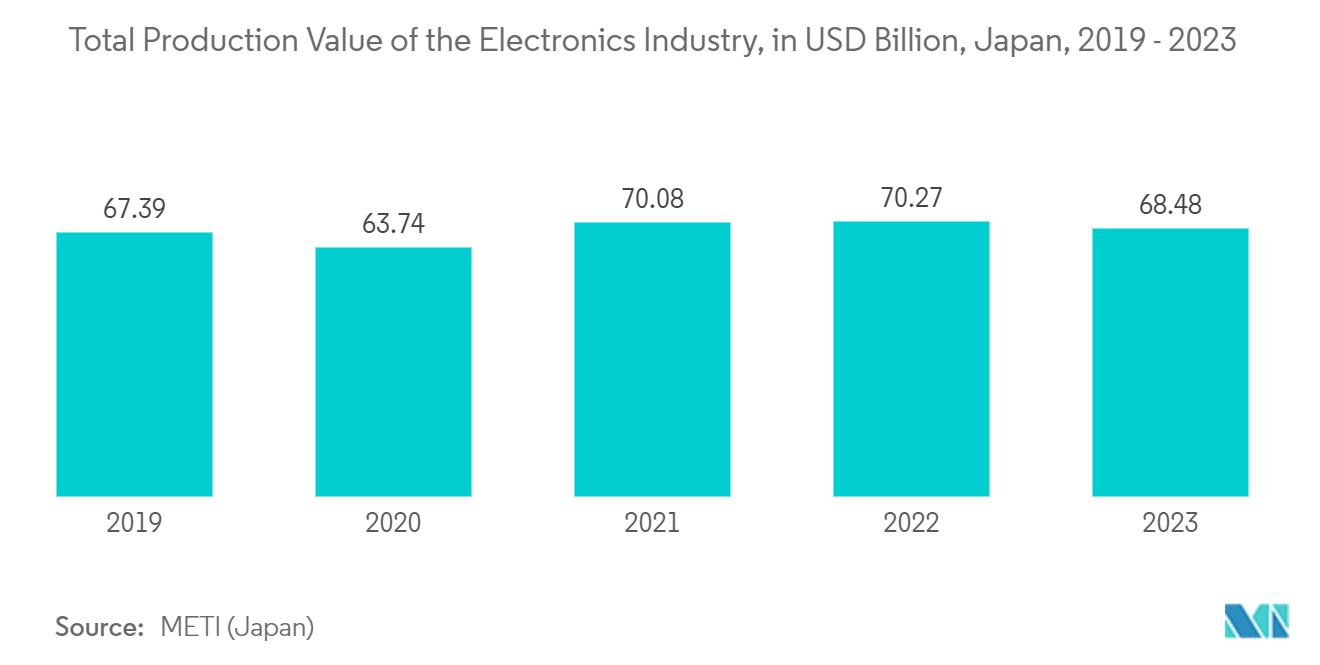
- According to METI (Japan), the total production value of the electronics industry in Japan reached approximately USD 68.48 billion in 2023, encompassing a wide range of consumer and industrial electronic equipment, as well as electronic components and devices. This significant growth in the electronics sector directly correlates with the increasing demand for photointerrupters, which are essential components in various electronic applications. Photointerrupters are widely used in consumer electronics, such as printers, computer peripherals, and mobile devices, as well as in industrial automation systems and robotics. As Japan continues to innovate and expand its electronics manufacturing industry, the demand for photointerrupters is expected to rise, supporting the growth of the photointerrupter market in the region.
Asia Pacific Dominates The Market
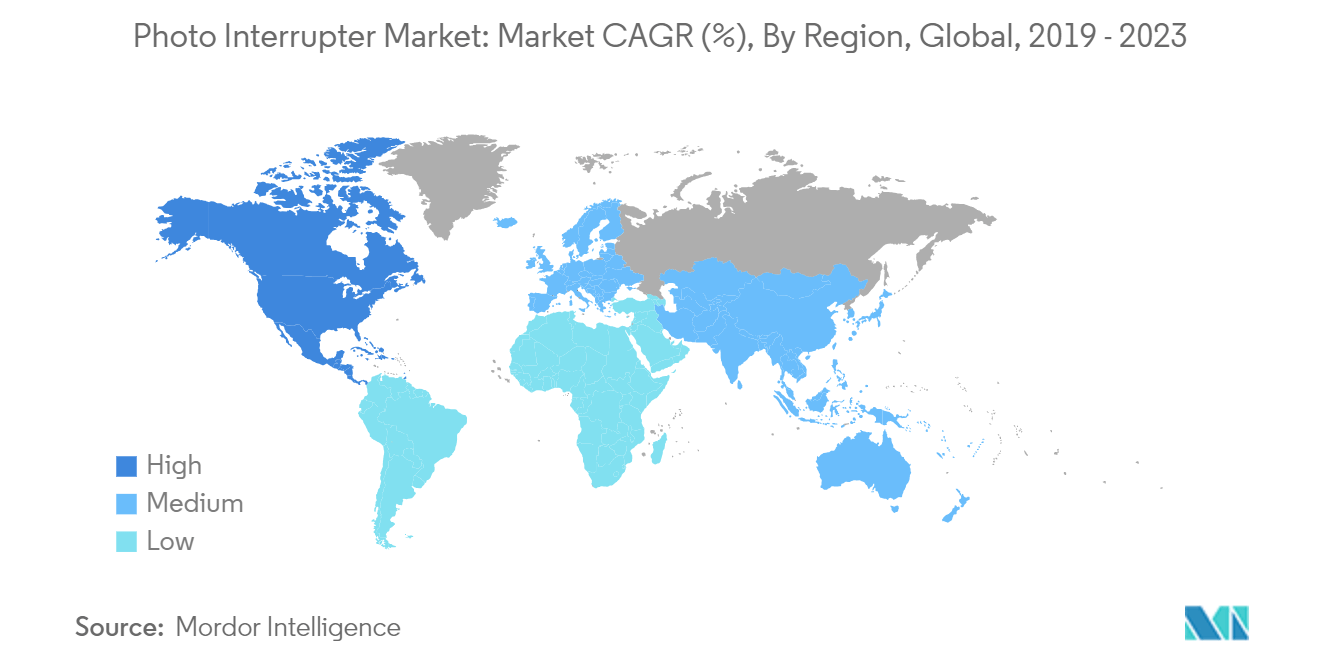
- The Asia-Pacific region dominates the photointerrupter market, primarily driven by the rapid industrialization and technological advancements in countries like China, Japan, South Korea, and India. Asia-Pacific is a hub for manufacturing consumer electronics, automotive components, and industrial automation systems, which are key drivers for the demand for photointerrupters. The region's robust electronics manufacturing industry, combined with increasing investments in automation and robotics, significantly contributes to the growing adoption of photointerrupters across various applications.
- China, in particular, plays a significant role in this dominance, as it is a global leader in electronics production and assembly. The country's large-scale manufacturing facilities, especially in consumer electronics and automotive industries, heavily rely on photointerrupters for precise object detection and position sensing. Furthermore, the rapid adoption of smart technologies and the push for Industry 4.0 in countries like Japan and South Korea are expected to drive sustained demand for photointerrupters in the region.
- The Asia-Pacific region's competitive advantage in the photointerrupter market is also supported by the presence of major manufacturers, who benefit from cost-effective production processes and a well-established supply chain. These companies not only cater to domestic demand but also supply to global markets, enhancing the region's position in the global photointerrupter market. Additionally, the rise of the automotive sector, especially in electric vehicles, further boosts the demand for photointerrupters for applications like position and speed detection.
- As the region continues to lead in manufacturing, technological innovation, and the adoption of automation, the Asia-Pacific market is poised to maintain its dominant position in the global photointerrupter market for the foreseeable future. The ongoing advancements in robotics, consumer electronics, and IoT technologies will further fuel the region's growth and innovation in photointerrupter applications.
Competitive Landscape
The photo interrupter market is fragmented, with key players such as Omron Corporation, Sharp Corporation, Honeywell International Inc., Rohm Semiconductors Co. Ltd., and TT Electronics leading the competition. These companies focus on product innovation, providing highly reliable and cost-effective photointerrupters for various applications across industries. Additionally, players are investing in research and development to enhance the performance and miniaturization of their products, addressing the evolving needs of automation and consumer electronics markets. Strategic collaborations, mergers, and partnerships are common in this market as companies seek to expand their product offerings and geographic reach. Furthermore, the market is witnessing a rise in competition from regional manufacturers, particularly in the Asia-Pacific region, where low manufacturing costs and a strong electronics production base provide an edge. As demand for automation and smart technologies grows, the competitive landscape is expected to become even more dynamic.
Photo Interrupter Industry Leaders
-
Omron Corporation
-
Sharp Corporation
-
Honeywell International Inc.
-
Rohm Semiconductors Co. Ltd.
-
TT Electronics
- *Disclaimer: Major Players sorted in no particular order
Recent Industry Developments
- December 2023: Backed by financial support from the Japanese government, electronic powerhouses ROHM and Toshiba teamed up in the power semiconductor sector. The collaboration between ROHM and Toshiba in advancing Silicon Carbide (SiC) and Silicon (Si) power semiconductors highlights a growing focus on enhancing efficiency and performance in electronic components. This drive for innovation and capacity expansion in the semiconductor sector is likely to influence the development of advanced photo interrupters, which rely on similar technological advancements for improved precision and reliability in various industrial applications.
- January 2021: AUE Co. Ltd., part of the KODENSHI Group and specializing in optical sensors unveiled a cost-effective, slim photo interrupter. This versatile sensor finds applications in diverse fields, including printers and copiers. It's a high-performance, transmissive photo interrupter, featuring a powerful GaAs Infra-red LED paired with a highly sensitive Si Photo Transistor.
Global Photo Interrupter Market Report Scope
The photo interrupter market refers to the industry focused on the production and supply of optical sensors that detect the interruption of light between a transmitter and receiver. These sensors are widely used in applications such as position sensing, speed detection, and object counting in consumer electronics, industrial automation, and automotive systems. Photo interrupters are valued for their precision, non-contact operation, and reliability in diverse environments.
The Photo Interrupter Market is segmented by type (transmissive photo interrupters, reflective photo interrupters), end user (consumer electronics, automotive, industrial automation, medical devices, office equipment, robotics, home appliances, and other end users), and geography (North America, Europe, Asia Pacific, Latin America, Middle East and Africa). The market sizes and forecasts are provided in terms of value (USD) for all the above segments.
| Transmissive Photointerrupters |
| Reflective Photointerrupters |
| Consumer Electronics |
| Automotive |
| Industrial Automation |
| Medical Devices |
| Office Equipment |
| Robotics |
| Home Appliances |
| Other End Users |
| North America |
| Europe |
| Asia |
| Australia and New Zealand |
| Latin America |
| Middle East and Africa |
| By Type | Transmissive Photointerrupters |
| Reflective Photointerrupters | |
| By End User | Consumer Electronics |
| Automotive | |
| Industrial Automation | |
| Medical Devices | |
| Office Equipment | |
| Robotics | |
| Home Appliances | |
| Other End Users | |
| By Geography*** | North America |
| Europe | |
| Asia | |
| Australia and New Zealand | |
| Latin America | |
| Middle East and Africa |
Key Questions Answered in the Report
How big is the Photo Interrupter Market?
The Photo Interrupter Market size is expected to reach USD 6.23 billion in 2025 and grow at a CAGR of 17.03% to reach USD 13.67 billion by 2030.
What is the current Photo Interrupter Market size?
In 2025, the Photo Interrupter Market size is expected to reach USD 6.23 billion.
Who are the key players in Photo Interrupter Market?
Omron Corporation, Sharp Corporation, Honeywell International Inc., Rohm Semiconductors Co. Ltd. and TT Electronics are the major companies operating in the Photo Interrupter Market.
Which is the fastest growing region in Photo Interrupter Market?
North America is estimated to grow at the highest CAGR over the forecast period (2025-2030).
Which region has the biggest share in Photo Interrupter Market?
In 2025, the Asia Pacific accounts for the largest market share in Photo Interrupter Market.
What years does this Photo Interrupter Market cover, and what was the market size in 2024?
In 2024, the Photo Interrupter Market size was estimated at USD 5.17 billion. The report covers the Photo Interrupter Market historical market size for years: 2019, 2020, 2021, 2022, 2023 and 2024. The report also forecasts the Photo Interrupter Market size for years: 2025, 2026, 2027, 2028, 2029 and 2030.
Photo Interrupter Market Report
Statistics for the 2025 Photo Interrupter market share, size and revenue growth rate, created by Mordor Intelligence™ Industry Reports. Photo Interrupter analysis includes a market forecast outlook for 2025 to 2030 and historical overview. Get a sample of this industry analysis as a free report PDF download.